UN: no ‘credible pathway’ to Paris climate goals

air pollution

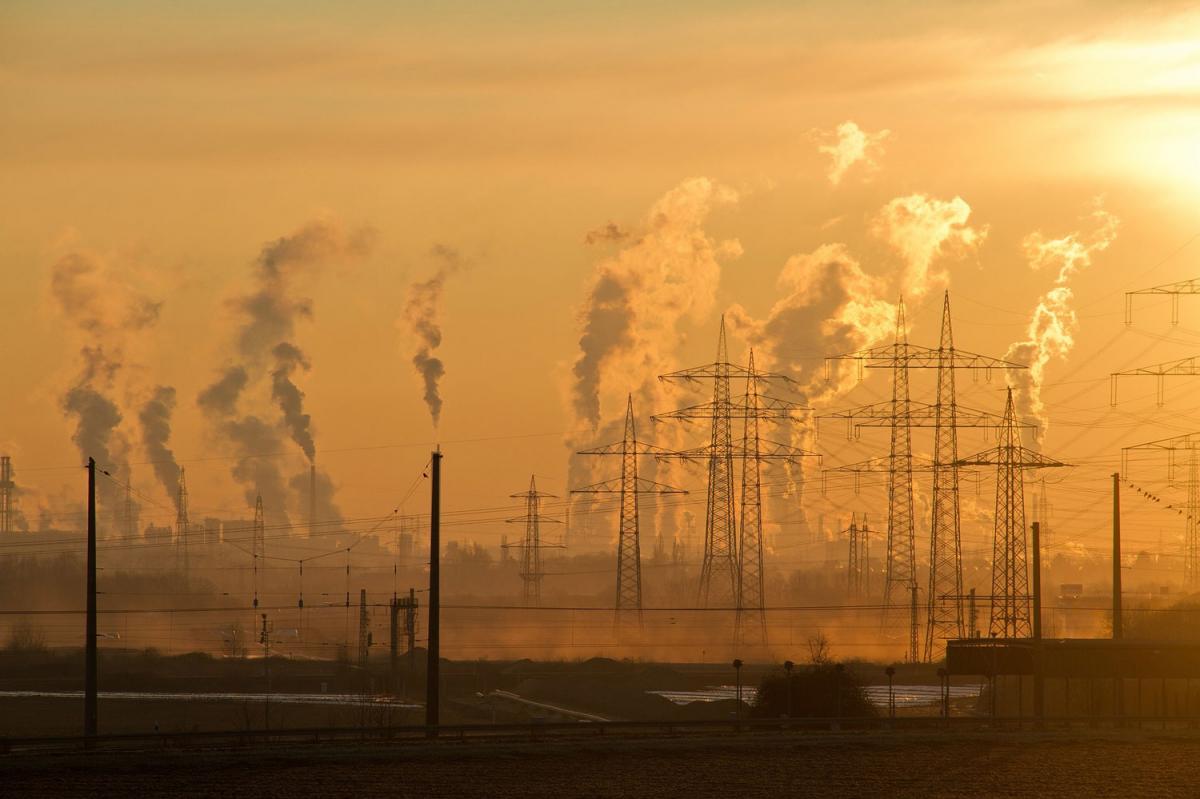
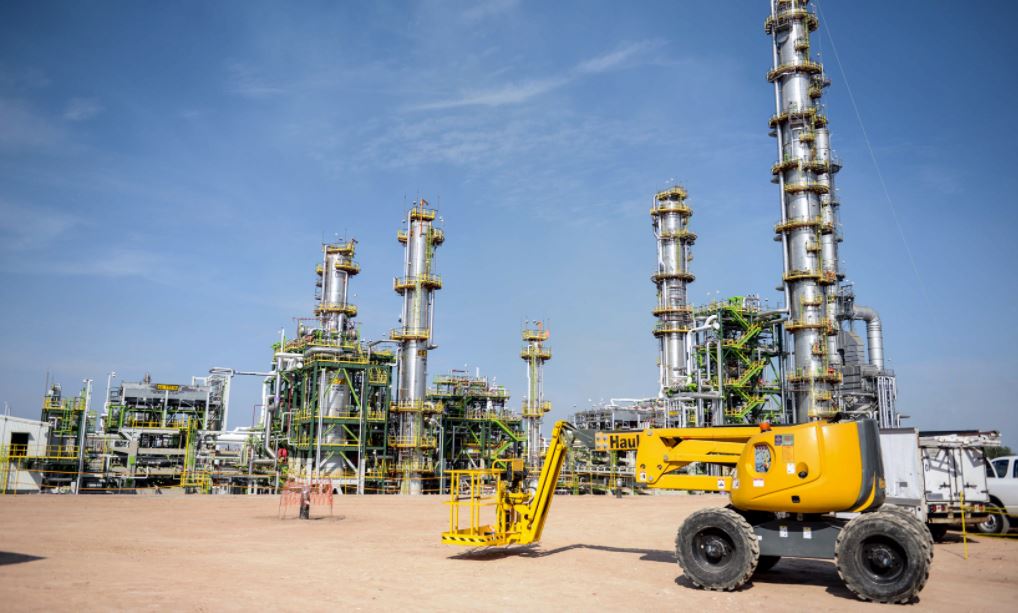
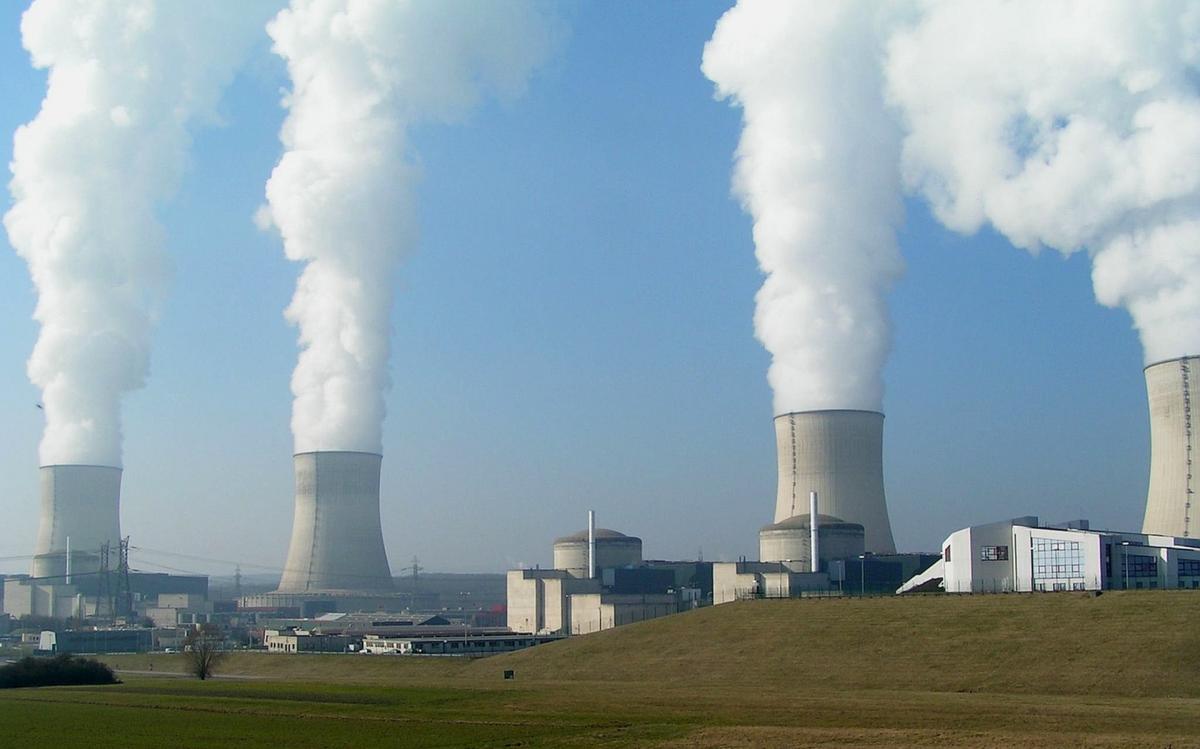
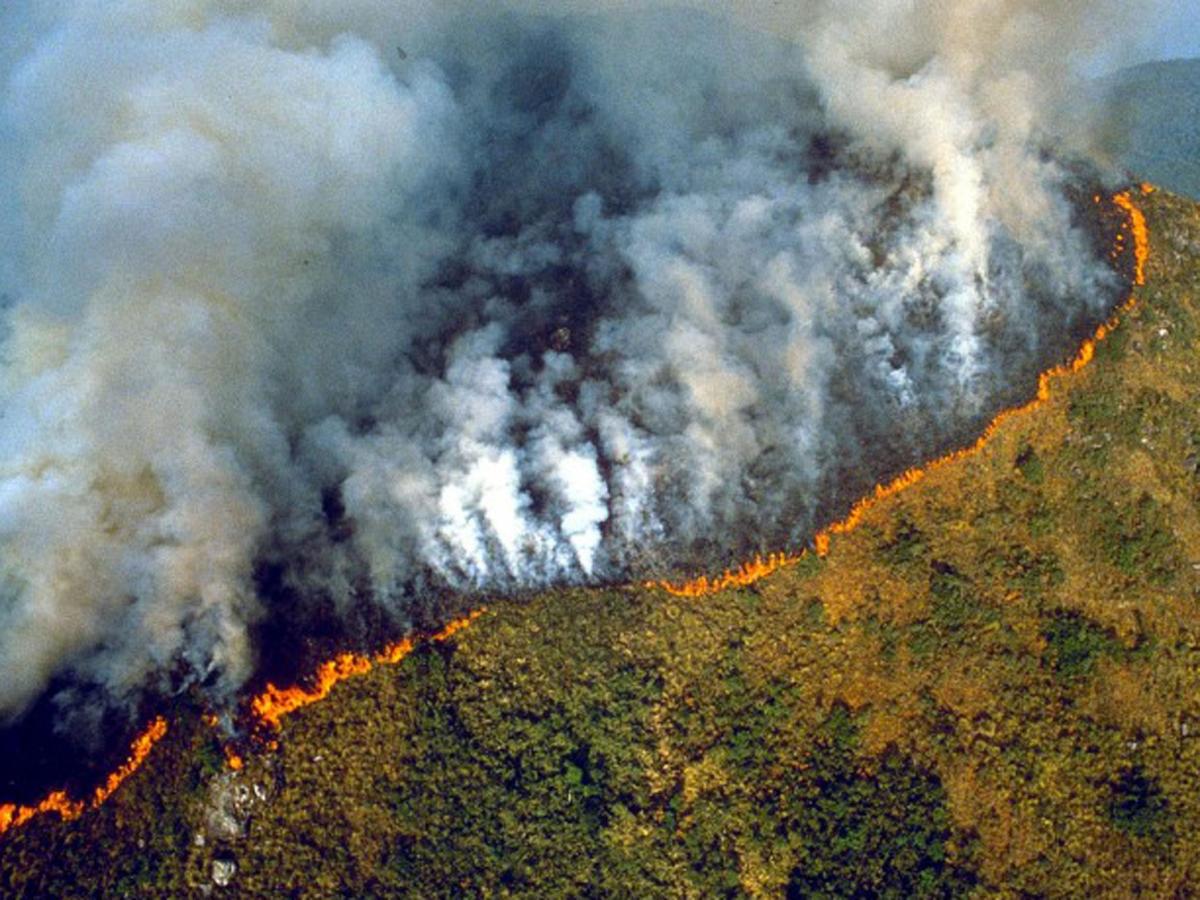
There is "no credible pathway to 1.5C in place" today, the UN Environment Program (UNEP) states in its new Emissions Gap Report 2022, despite legally binding promises made at the 2015 Paris Climate Conference to prevent average temperatures rising by more than 1.5C above pre-industrial levels. "This report tells us in cold scientific terms what nature has been telling us all year, through deadly floods, storms and raging fires: we have to stop filling our atmosphere with greenhouse gases, and stop doing it fast," said Inger Andersen, executive director of UNEP. "We had our chance to make incremental changes, but that time is over. Only a root-and-branch transformation of our economies and societies can save us from accelerating climate disaster."

Despite Nationally Determined Contributions (NDC) promises made by governments in favor of reducing their carbon footprint, pledges made since the last climate summit in Glasgow in 2021 will lead to cuts of less than one percent of projected 2030 greenhouse gas emissions, according to UNEP. This is the equivalent of just 0.5 gigatonnes of CO2, UNEP calculated, adding that only a 45% emissions reduction will limit global warming to 1.5C.

The latest data indicates that the world is on track for a temperature rise of between 2.4C and 2.6C by the end of this century.

"In the best-case scenario, full implementation of unconditional NDCs and additional net-zero emissions commitments point to only a 1.8C increase, so there is hope. However, this scenario is not currently credible based on the discrepancy between current emissions, short-term NDC targets and long-term net-zero targets," UNEP said. (UN News)

UN agencies have repeatedly issued dire warnings of imminent climate destabilization over the past years.

See our last report on the Paris accords.

Photo: Ralf Vetterle, Pixabay

Massive military drills from North Sea to Caucasus

Stratofortress

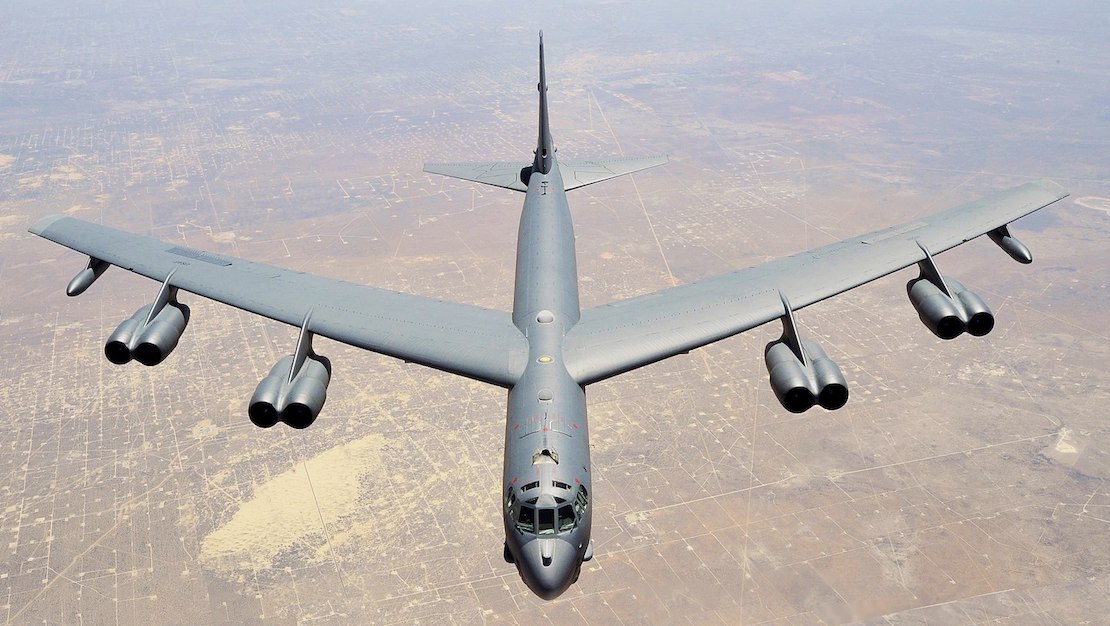
NATO on Oct. 17 opened an annual exercise to test nuclear deterrence capabilities in Europe, with the participation of 14 of the 30 member countries. The drill, this year dubbed "Steadfast Noon," will run two weeks and involve 60 aircraft. "As in previous years, US B-52 long-range bombers will take part; this year, they will fly from Minot Air Base in North Dakota," NATO said in a statement. "Training flights will take place over Belgium, which is hosting the exercise, as well as over the North Sea and the United Kingdom."

While Steadfast Noon comes amid rising tensions in Europe and Vladimir Putin's nuclear threats against Ukraine and the West, NATO said the exercise was planned before the Russian invasion and "is not linked to any current world events." 

Russia's own nuclear deterrence drills, known as GROM (Thunder), are expected to begin later this month—which means they will overlap with the NATO exercise. (IFL Science, Air & Space Forces)

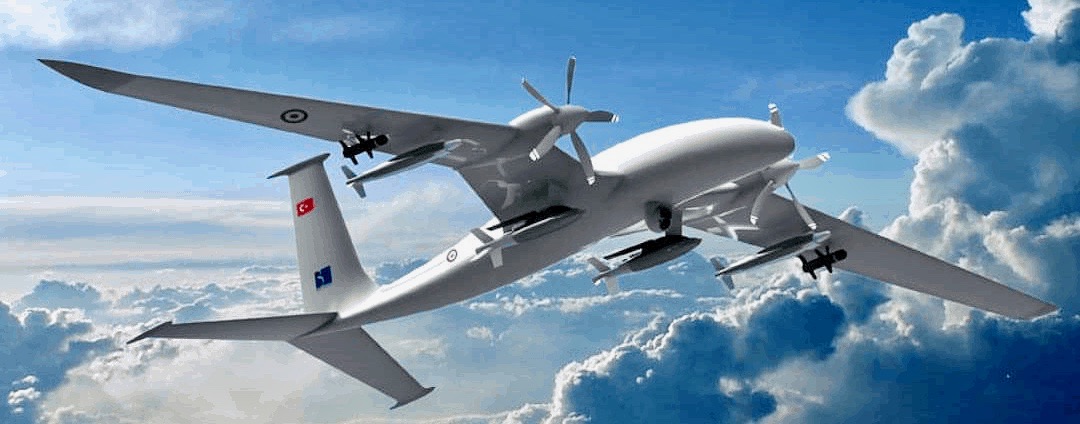
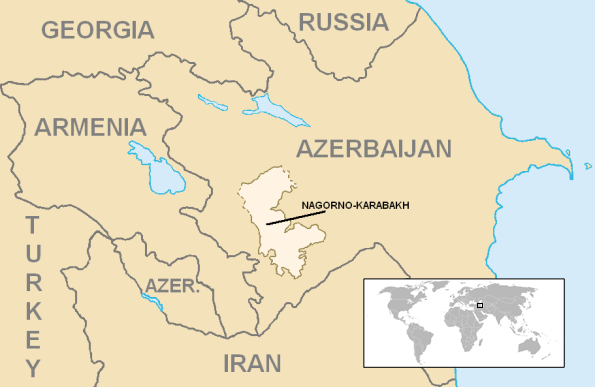
Iran's Islamic Revolutionary Guards Corps (IRGC) has meanwhile launched a large-scale military drill along the borders of Armenia and Azerbaijan. The three-day exercise—codenamed "IRGC Ground Force Might"—is taking place in the northern sectors of Iran's East Azarbaijan and Ardabil provinces. It involves parachute operations, night raids, helicopter combat maneuvers, and drone attack simulations. It has also seen construction of a temporary pontoon bridge, allowing passage of tanks and armored vehicles, over portions of the Araz River that separates Iran from Armenia and Azerbaijan. But the threat seems aimed at the latter country. Last month, Tehran warned that it would not tolerate any seizure of territory from Armenia by Azerbaijan after border clashes broke out between its two northern neighbors. (Iran International, Iran International, JAM News)

cropped).jpg”>Wikimedia Commons

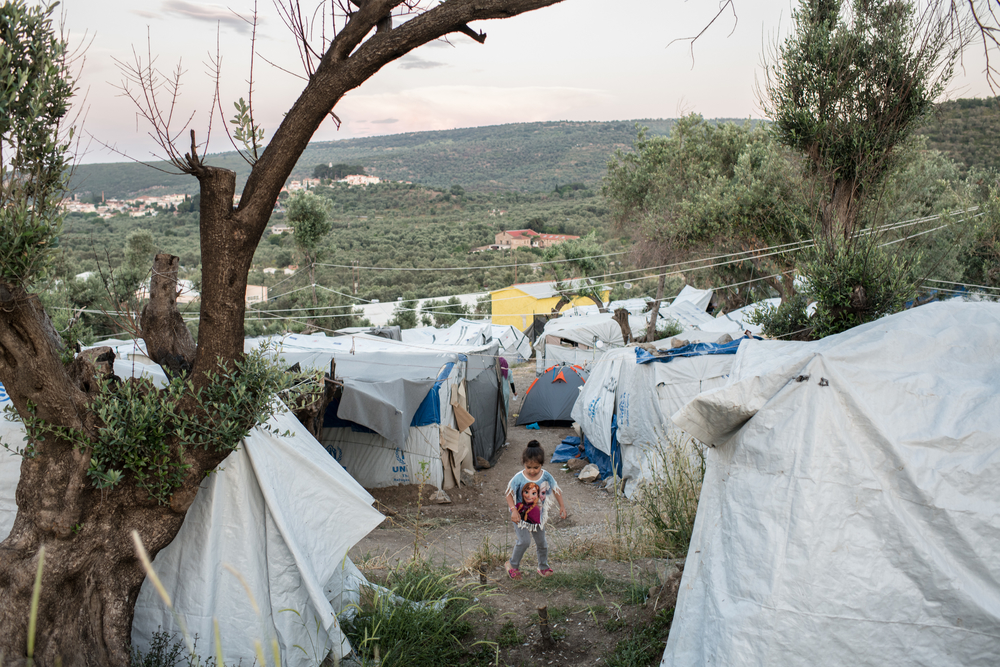
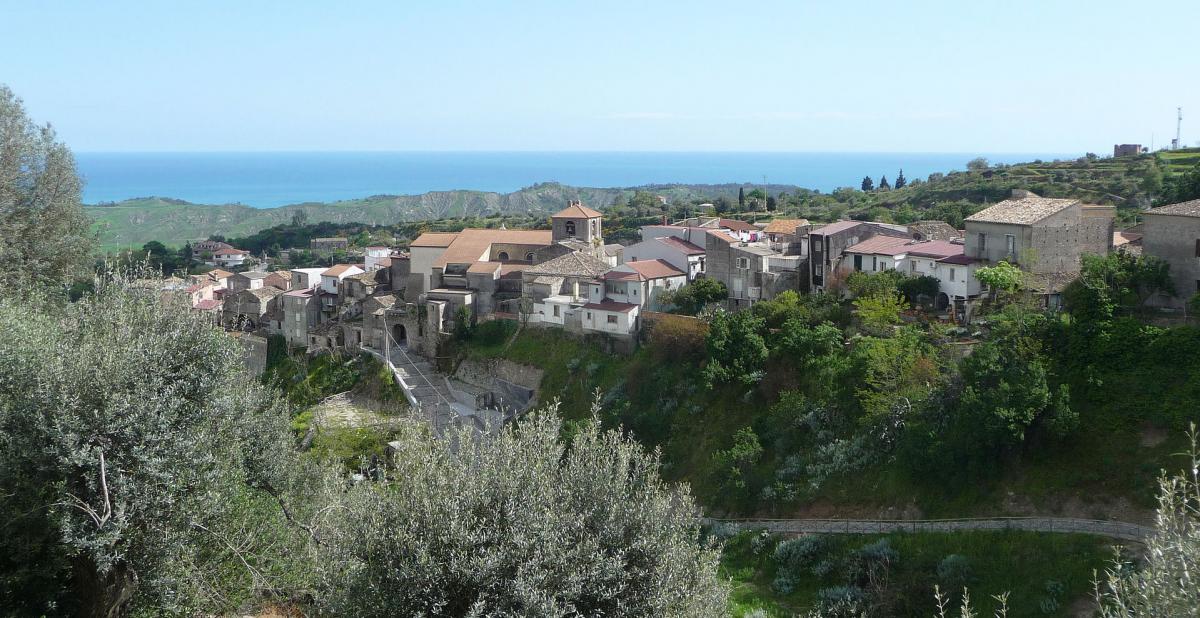
EU doubles down on asylum double standards

Lampedusa

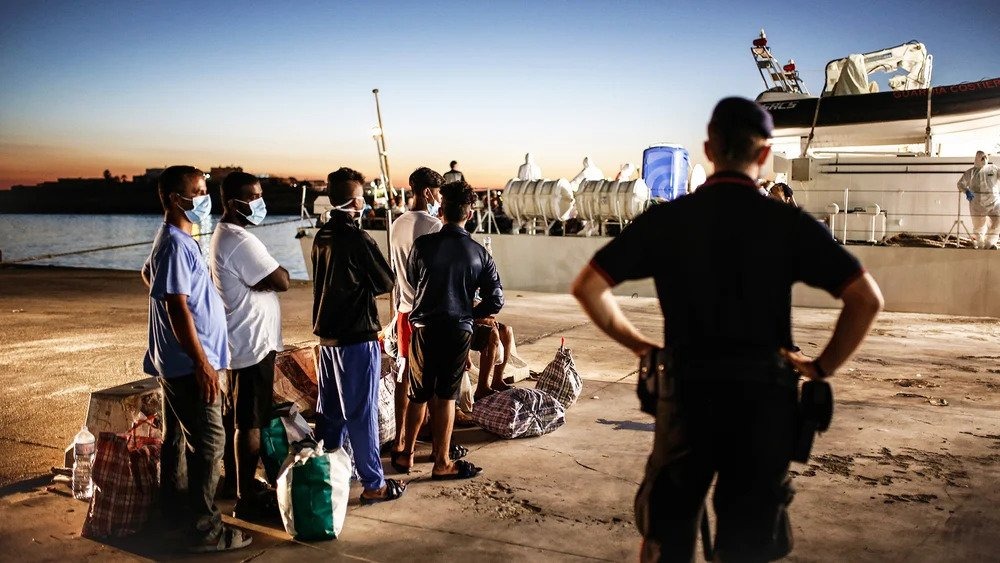
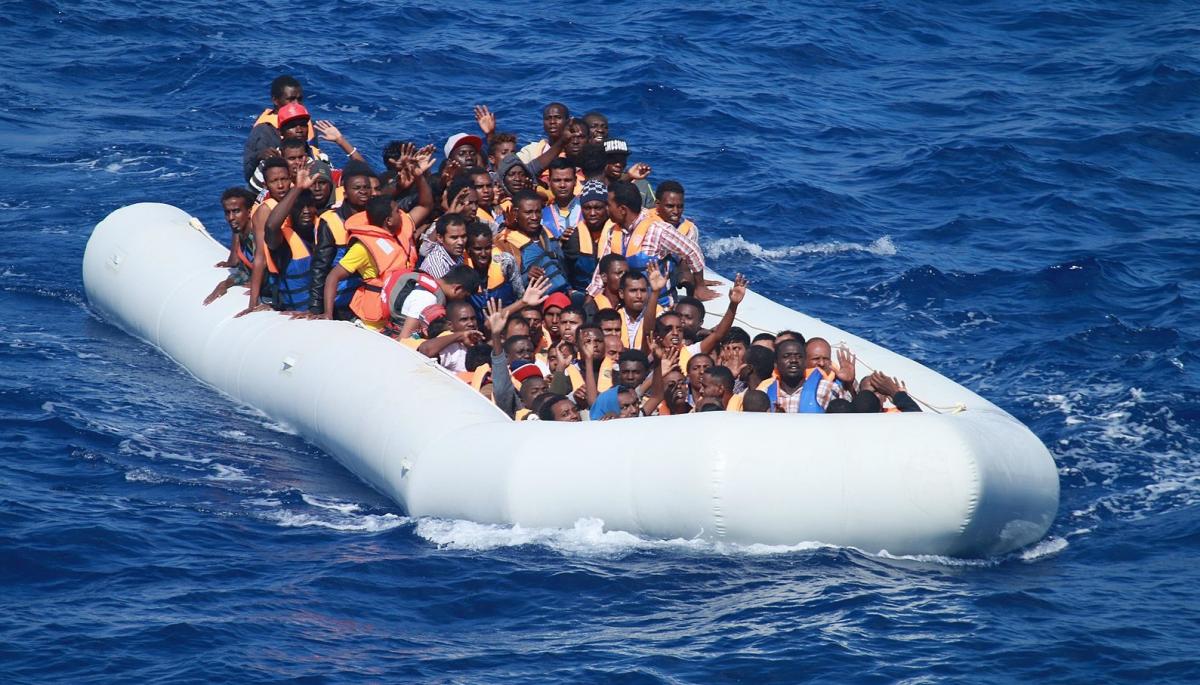
More than 1.1 million refugees and asylum seekers have entered Germany this year—outpacing the 890,000 that arrived during the Mediterranean migration crisis in 2015. Back then, the vast majority were Syrians. This year, around one million of those who have entered are Ukrainians, although Syrians, Afghans, and others continue to arrive. For Ukrainians, the EU Commission this week extended the Temporary Protection Directive—first activated in March, and allowing them to live, work, and access services throughout the EU. Some 4.2 million Ukrainians have registered under the directive, which is now valid until March 2024. Meanwhile, the EU is pursuing much less welcoming policies for asylum seekers and migrants from other parts of the world. These include the the Dublin Regulation, that since 2003 has required asylum seekers to apply for protection in the member state they first entered—often prolonging perilous journeys to reach sanctuary beyond countries with harsh immigration policies, such as Poland and Hungary.

Member states are now urgently trying to curb an uptick in arrivals along the Western Balkans route (through Albania and Serbia). And, in the latest push to try to externalize asylum processing, Spain, Greece, Italy, and Malta plan on floating a proposal to have the EU border agency Frontex set up asylum processing centers in countries outside the EU.

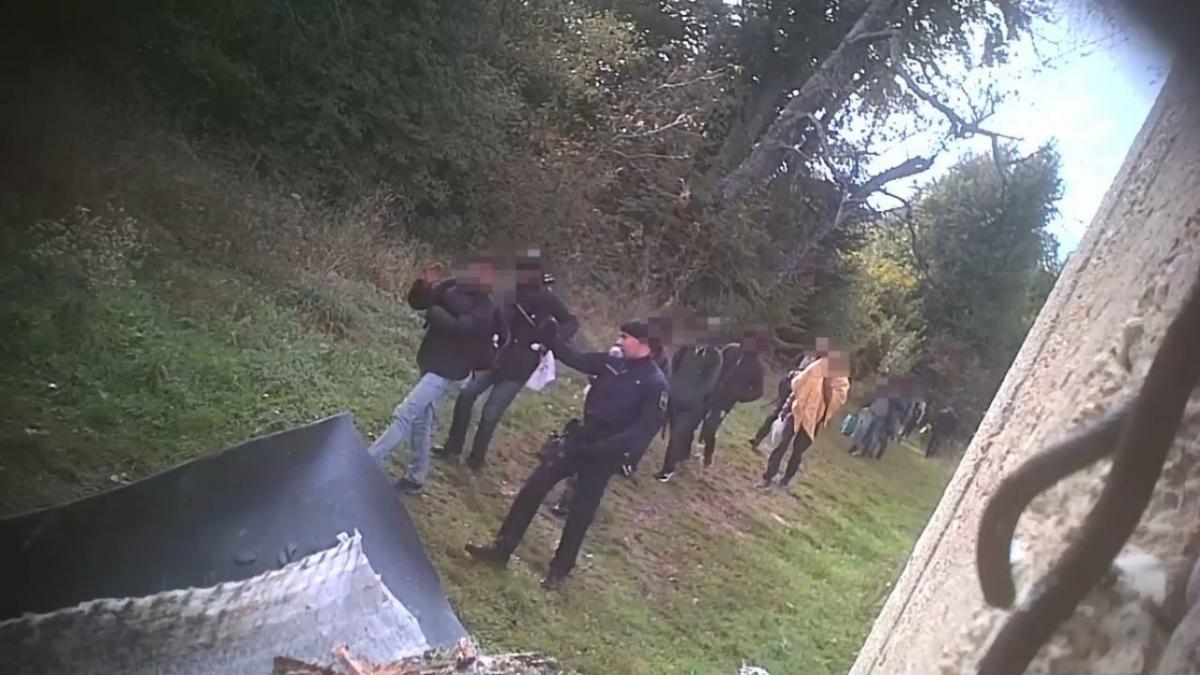
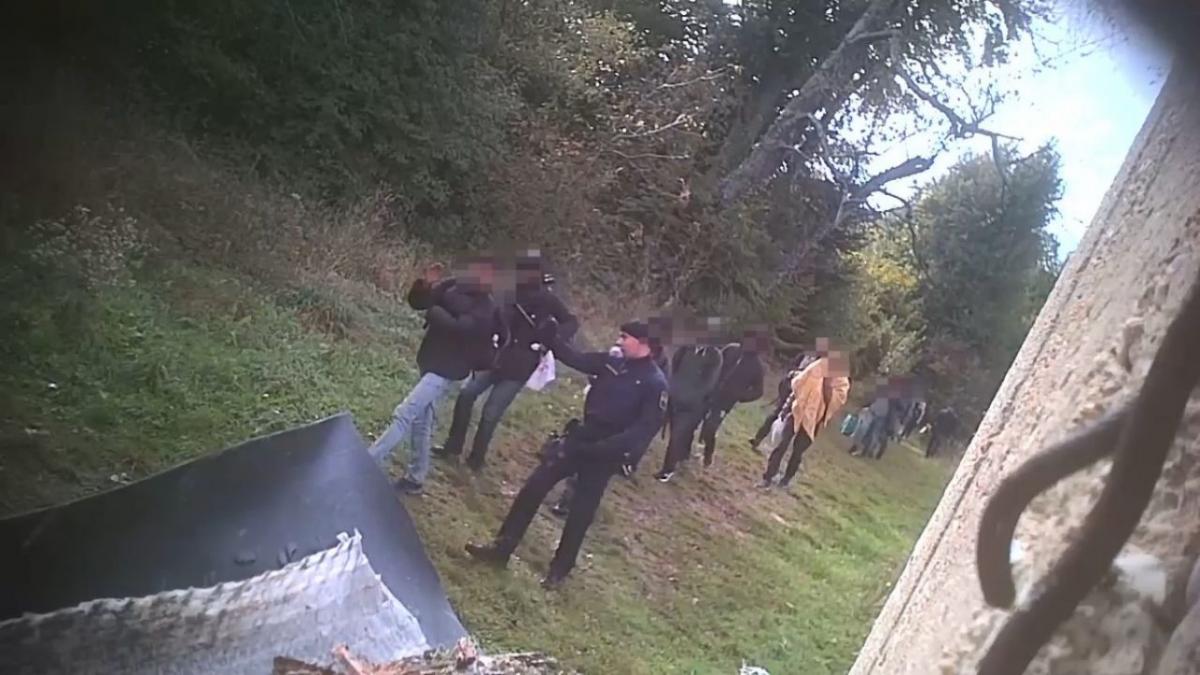
However, a recently leaked report from the EU's anti-corruption watchdog OLAF paints a damning picture of the agency's disregard for fundamental rights. The report, which prompted Frontex director Fabrice Leggeri to resign, revealed that the agency has been covering up violence against asylum seekers by the Greek coast guard in the Aegean sea.

From The New Humanitarian, Oct. 14

Photo: Sara Creta/TNH

NYC: island emergency camp for asylum seekers

Randall’s Island

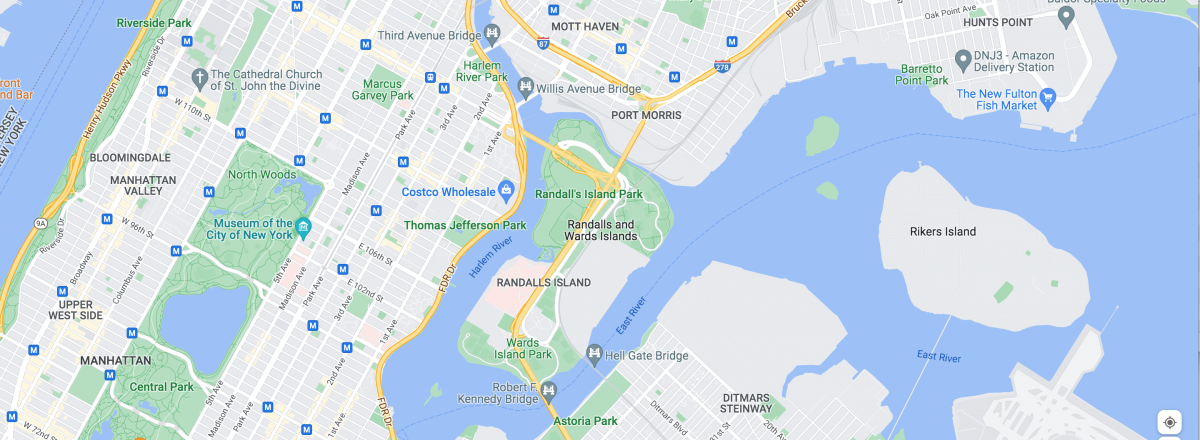
New York City workers have started erecting a series of sprawling tents in vacant parking lots on Randall's Island, between the East and Harlem rivers, to house undocumented migrants and asylum-seekers. The so-called "Humanitarian Emergency Response and Relief Centers" are to hold some 500, officially for no more than five days. At least two more tent cities are planned, with Orchard Beach in the Bronx named as another possible location. Gov. Kathy Hochul has ordered National Guard troops to help staff the centers. Since the spring, some 17,000 asylum-seekers have arrived in New York—many sent to the city on buses by authorities in Texas. The city has already opened 42 emergency shelters to deal with the influx, and on Oct. 7 Mayor Eric Adams declared a state of emergency.

"This is a humanitarian crisis that started with violence and instability in South America and is being accelerated by American political dynamics," said Adams in announcing the emergency declaration. "Our right-to-shelter laws, our social services, and our values are being exploited by others for political gain." (Gothamist, Gothamist, NYP, NY1)

On Oct. 13, activist groups held a protest against the "tent city" plan at City Hall, led by Housing Justice for All, New York Communities for Change, and Make the Road New York. State Sen. Jabari Brisport, speaking at the rally, said: "To Mayor Adams and his administration, I say, winter is coming and tents are not housing. We must use creative solutions, we must use hotels, we must use whatever we can to get people into housing that can actually shelter them." (AMNY)

Map via Google

Iran: oil workers strike, join protests

Asalouyeh

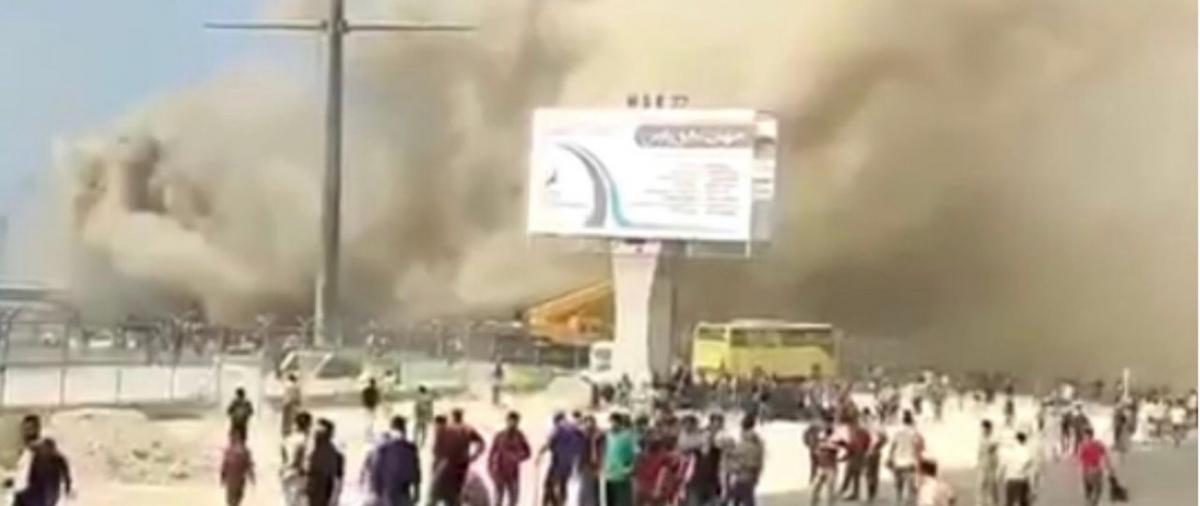
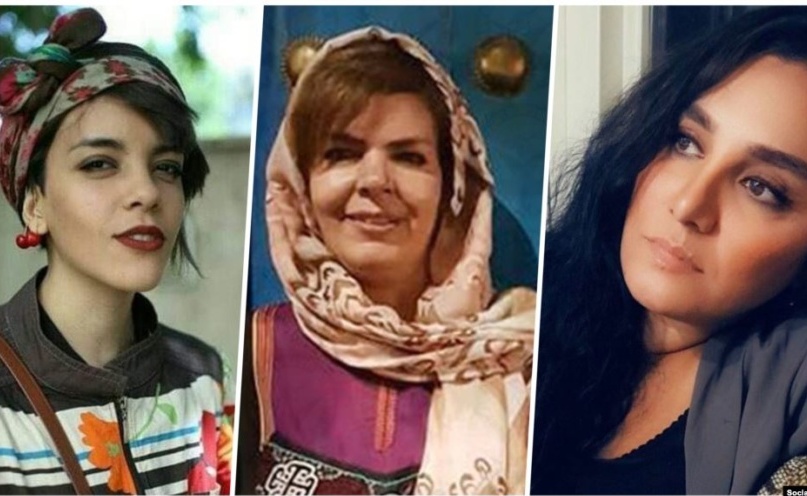
The national uprising in Iran continued to spread over the past week, with petrochemical workers walking off the job at the major Asalouyeh plant on the Persian Gulf coast of Bushehr province—shortly followed by a similar wildcat strike at Abadan refinery in the neighboring restive province of Khuzestan. Videos posted to social media show workers at the Asalouyeh complex chanting "This year is the year of blood, Seyed Ali Khamenei is done!" and "Down with the dictator!"—both references to Supreme Leader Ayatollah Khamenei. (Iran International) Security forces fired on protesters in Sanandaj, capital of Kordestan, another traditionally restive province, killing at least five. (BBC News) Lawyers in Tehran gathered in front of the Iranian Central Bar Association to protest the repression, and were themselves dispersed by tear-gas.  (Jurist) In scenes across the country, schoolgirls held protests in which they removed their hijabs in defiance of authorities. In the southern city of Shiraz, Fars province, dozens of schoolgirls blocked traffic on a main road while waving their headscarves in the air and shouting "Death to the dictator!"  (BBC News)

While details remain sketchy, there was apparently a rebellion at Tehran's notorious Evin Prison. At least four inmates died with many more injured after a fire broke out at the facility Oct. 16. (BBC News, Iran International)

The death toll since the protest wave began last month is now placed by rights monitors at 224, with at least 23  children among the slain. (Al Arabiya, Amnesty International) 

The current uprising now far surpasses the nationwide wave of protests over economic grievances in 2019.

Photo via Iran International

Yemen’s imperfect truce expires

Yemen

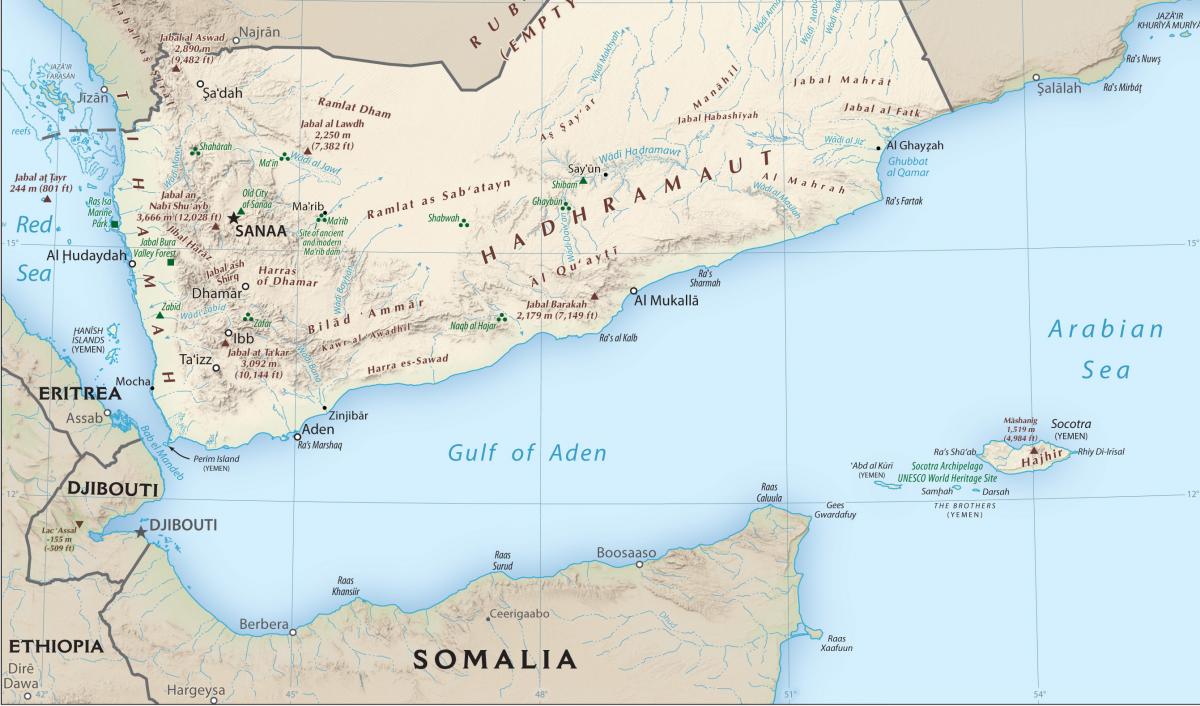
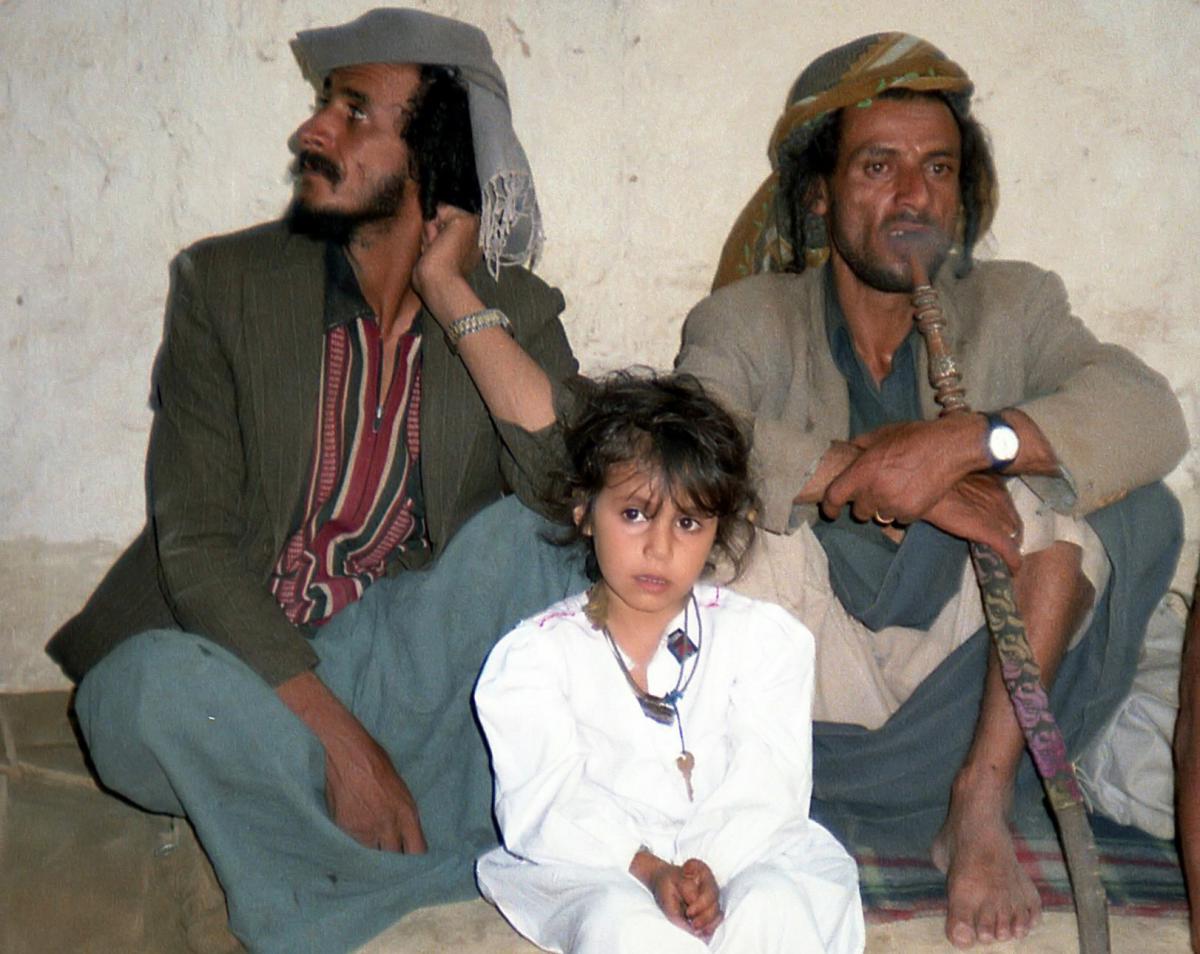
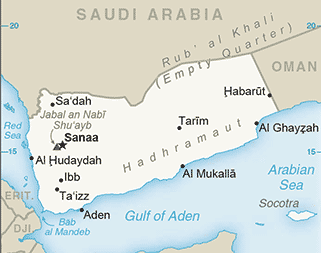
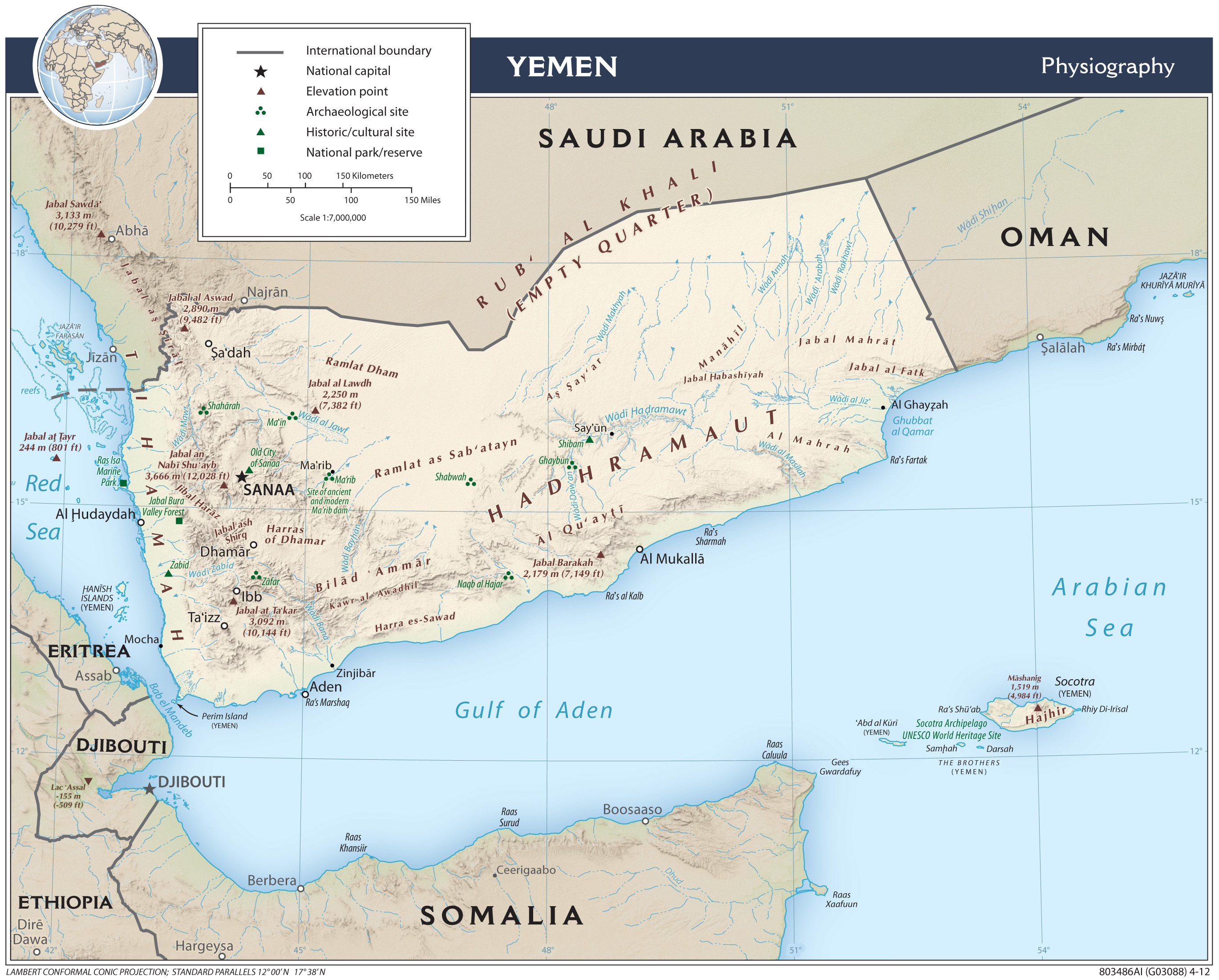
Yemen's nationwide truce expired on Oct. 2, as warring parties failed to agree on terms for a renewal. With each side blaming the other for the failure and negotiations ongoing to find common ground, there's concern that fighting will erupt once again on familiar front lines, especially in the central province of Marib and the southwestern city of Taiz. While the gunfire and shelling never completely stopped over the past six months—in some places it got worse—the truce did offer some real respite for Yemenis who have suffered through seven and a half years of war.

The UN says the monthly rate of people who were forced to flee their homes decreased by 76% during the truce, and the number of civilians killed or injured in fighting went down by 54%. While roads to besieged Taiz didn't open up, and food prices continued to soar,  there were also some serious diplomatic wins—such as the reopening of Sanaa airport and an easing of the blockade on the port of Hodeida. 

As Yemeni photojournalist Nabil Alawzari told The New Humanitarian: "When you ask any Yemeni… 'What do you think about the war?' He’ll say 'It's enough… We need peace, we need safe roads, we need food… we need schools for our children, we need a salary, jobs… only these things; normal things.'"

From The New Humanitarian, Oct. 7

Note: While Hodeidah is held by the Houthi rebels and blockaded by pro-government forces, Marib and Taiz are held by pro-government forces and besieged by the Houthi rebels. Sanaa, the capital, is itself held by the Houthis.

Map via University of Texas

ICC war crimes trial for CAR militia leader opens

Central African Republic

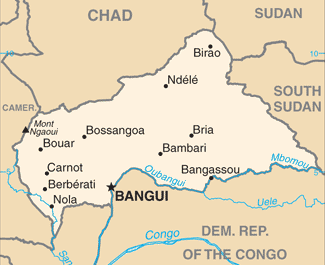
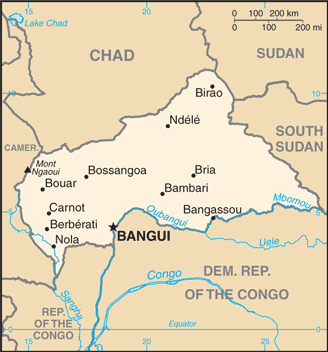
The International Criminal Court (ICC) opened a trial Sept. 26 against Mahamat Said Abdel Kani, a leader of the Séléka rebel group, for crimes humanity and war crimes in violation of the Rome Statute. Said allegedly committed these crimes in Bangui, capital of the Central African Republic (CAR), in 2013. Said pleaded not guilty to all charges.

The ICC issued a warrant of arrest against Said in January 2019. The Pre-Trial Chamber II partially confirmed the charges brought by the prosecutor and found that there is sufficient evidence to "establish substantial grounds of belief that Mr. Said was a senior member of the 'Séléka' coalition." Said surrendered to the ICC in January 2021.

Séléka is an armed movement that emerged in 2012 amid widespread dissatisfaction with then-president François Bozizé Yangouvonda. The group captured Bangui in 2013, forcing Bozizé into exile in Cameroon; Séléka leader Michel Djotodia proclaimed himself as president of the CAR. The militia then conducted search operations for supporters of Bozizé and executed an unknown number of residents, including a pregnant woman and family members of armed forces personnel.

From Jurist, Sept. 26. Used with permission.

Note: The Central African Republic is also to carry out its own war crimes trials related to the internal conflict. There are currently four standing convictions for war crimes by the ICC.

Map via Perry-Castañeda Library Map Collection

Russia keeps escalating nuclear war threats

ICBM

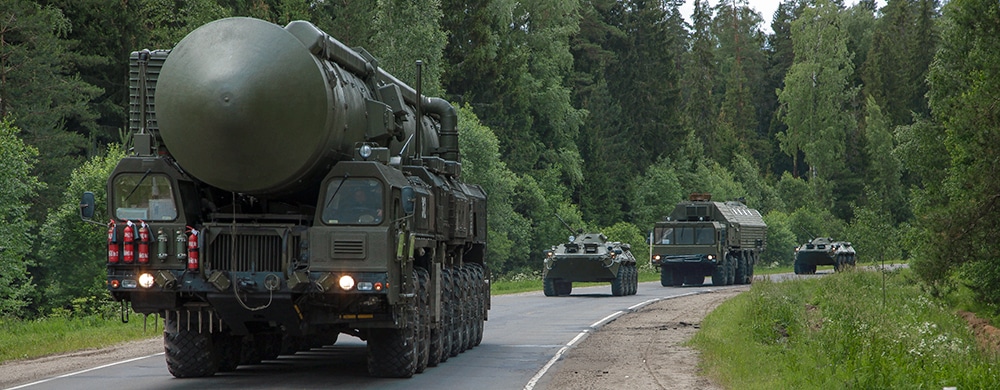
As Russia suffers more territorial losses on the ground in eastern Ukraine, figures close to the Putin regime are escalating both the frequency and blatancy of their threats to use nuclear weapons. Ramzan Kadyrov, head of Russia's region of Chechnya who has mobilized his regional forces to fight in Ukraine, stated on social media platform Telegram Oct. 1: "In my personal opinion, more drastic measures should be taken, right up to the declaration of martial law in the border areas and the use of low-yield nuclear weapons." (Reuters) 

Kadyrov's comment came as Russian forces retreated from Lyman, a key city in Donetsk oblast—mere days after Putin had declared the entire oblast as annexed. "In connection with the creation of a threat of encirclement, allied troops were withdrawn from the settlement of Krasny Liman to more advantageous lines," Moscow's Defense Ministry said, using the Russian name for the city. (CNN)

Former president Dmitry Medvedev, who has repeatedly made blatant nuclear threats in recent weeks, on Sept. 27 wrote on Telegram that such threats are "certainly not a bluff." He said that if Kyiv continues its offensive on annexed territory, Russia could be "forced to use the most fearsome weapon against the Ukrainian regime which had committed a large-scale act of aggression that is dangerous for the very existence of our state."

Medvedev expressed his confidence that the West would not retaliate in kind to a Russian nuclear strike on Ukraine: "I believe that NATO will not directly intervene in the conflict even in this situation. After all, the security of Washington, London, Brussels is much more important for the North Atlantic Alliance than the fate of a dying Ukraine that no one needs." He added: "The supply of modern weapons is just a business for Western countries. Overseas and European demagogues are not going to perish in a nuclear apocalypse. Therefore, they will swallow the use of any weapon in the current conflict."

Ukrainian President Volodymyr Zelensky said on Oct. 2 that he believes the Russian threats "could be a reality." In Washington, US National Security Advisor Jake Sullivan only stated vaguely that the US will "respond decisively" to any Russian use of nuclear weapons. (Reuters, The Hill)

Photo: Russian Ministry of Defense via BAS

Russia: anti-draft uprising spreads

Dagestan

More than 2,000 people have been detained in protests across Russia since President Vladimir Putin announced a mobilization of military reserve troops to fight in Ukraine, according to human rights monitor OVD-Info. The demonstrators are risking long prison terms under laws passed shortly after the Ukraine invasion was launched, which have facilitated a harsh crackdown on dissent.

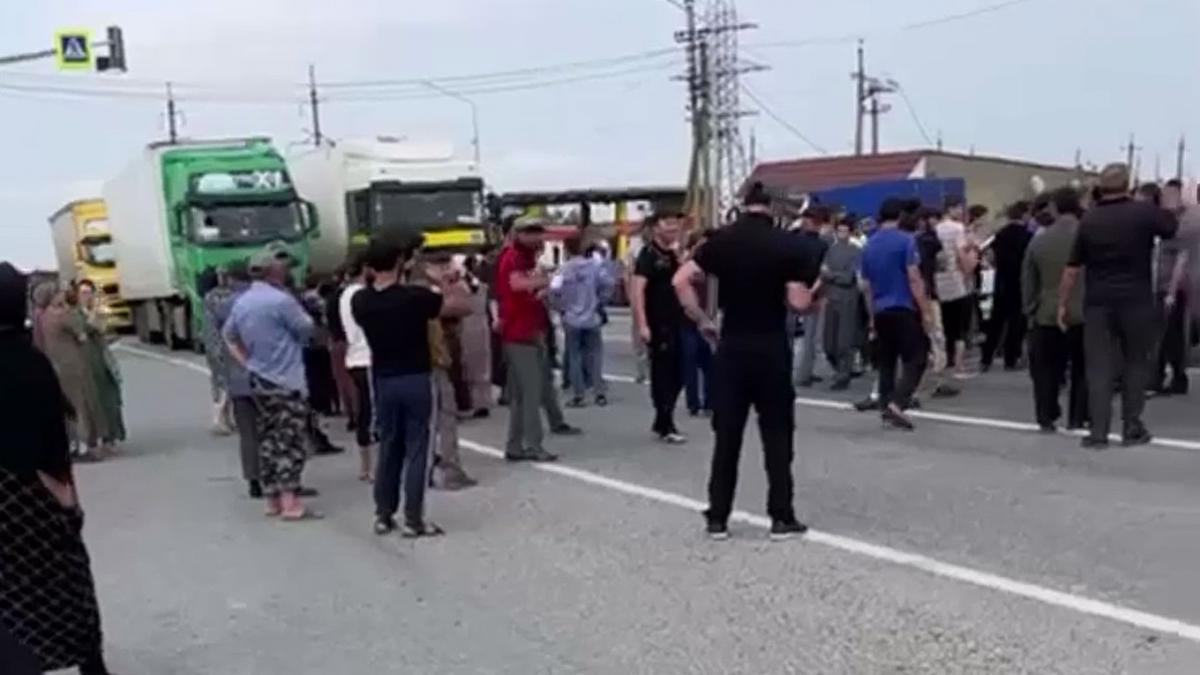
At least 20 were detained Sept. 25 in the North Caucasus republic of Dagestan, where police fired in the air to disperse local residents who were blocking a highway at the village of Babayurt. But the following day, the protests spread to the regional capital of Makhachkala, where demonstrators shouting "No to war" were attacked by riot police. Dagestan's regional leader Sergei Melikov dismissed the demonstrations as foreign-fomented, saying: "Obviously, the protests in Makhachkala were prepared and controlled from abroad." (The Guardian, Moscow Times, Moscow Times, Radio Australia, Meduza, BBC News)

Reports indicate that it is not only military reservists who are being called up, and that a general conscription is actually underway in some areas. There are also reports of disproportionately high numbers called up in poor regions populated by ethnic minorities, such as the North Caucasus republics and Buryatia. 

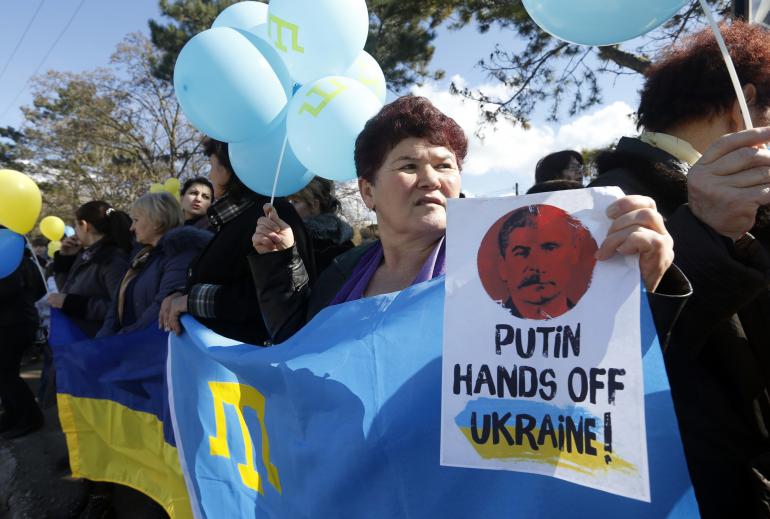
Rights activists in Crimea say the call-up is disproportionately targeting Crimean Tatars, an ethnic group that has overwhelmingly opposed Russian rule since the peninsula was unilaterally annexed in 2014. "This is a conscious effort to destroy the Crimean Tatar nation," Ukraine's President Volodymyr Zelenskiy said in his nightly TV address Sept. 24.

Tamila Tasheva, Zelenskiy's top official for Crimea, also said she believes Russia is targeting the group deliberately. "Crimean Tatars are the least loyal segment of the population to Russia, and it was clear they were very buoyed by recent Ukrainian military successes. Now they are being punished," she said. (The Guardian)

Photo via Moscow Times

El Salvador: Bitcoin flop, pseudo-war on gangs

#NoAlBitcoin

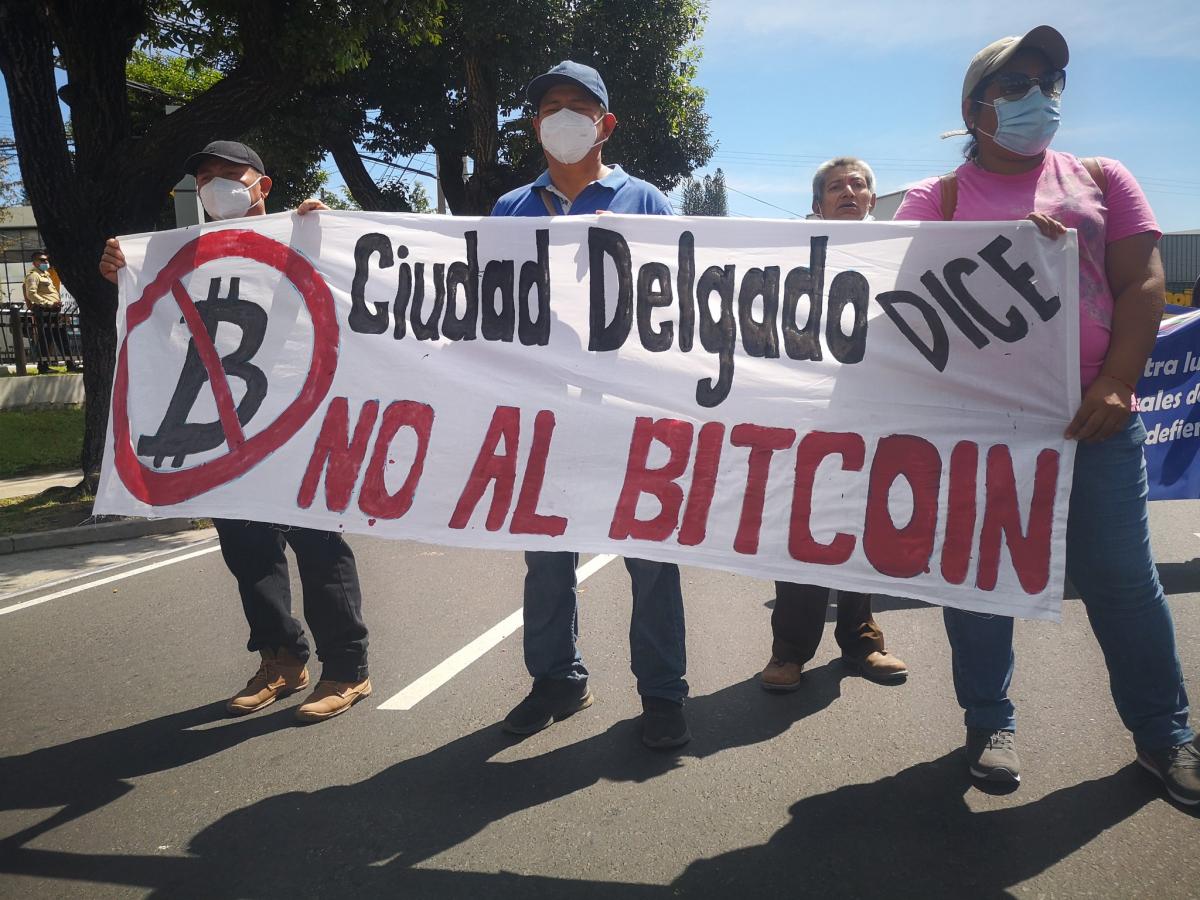
A year ago, El Salvador's baseball cap-donning president Nayib Bukele declared Bitcoin legal tender in the country—a global first that has been a flop. Since then, Bitcoin has lost half its value. Many Salvadorans, who were dubious on the plan to begin with, cashed in on a $30 government bonus offered as an incentive to download a dedicated Bitcoin app, only to delete it once they received the money. The lack of enthusiasm may have protected people from losses due to Bitcoin's volatility. But many in the country have still sunk deeper into poverty in the past year. One reason—in addition to the country's overall financial struggles—is a crackdown on gang violence by the self-described "dictatorial" president that has seen more than 52,000 alleged gang members rounded up since March. Instead of catching criminals, innocent people are being arrested to meet quotas. The majority of those detained may not even have links to gangs, according to local media, and the arrests have left many poor families without breadwinners.

From The New Humanitarian, Sept. 16.

Photo via Twitter

EU calls for war crimes trial over Ukraine mass graves

Izium

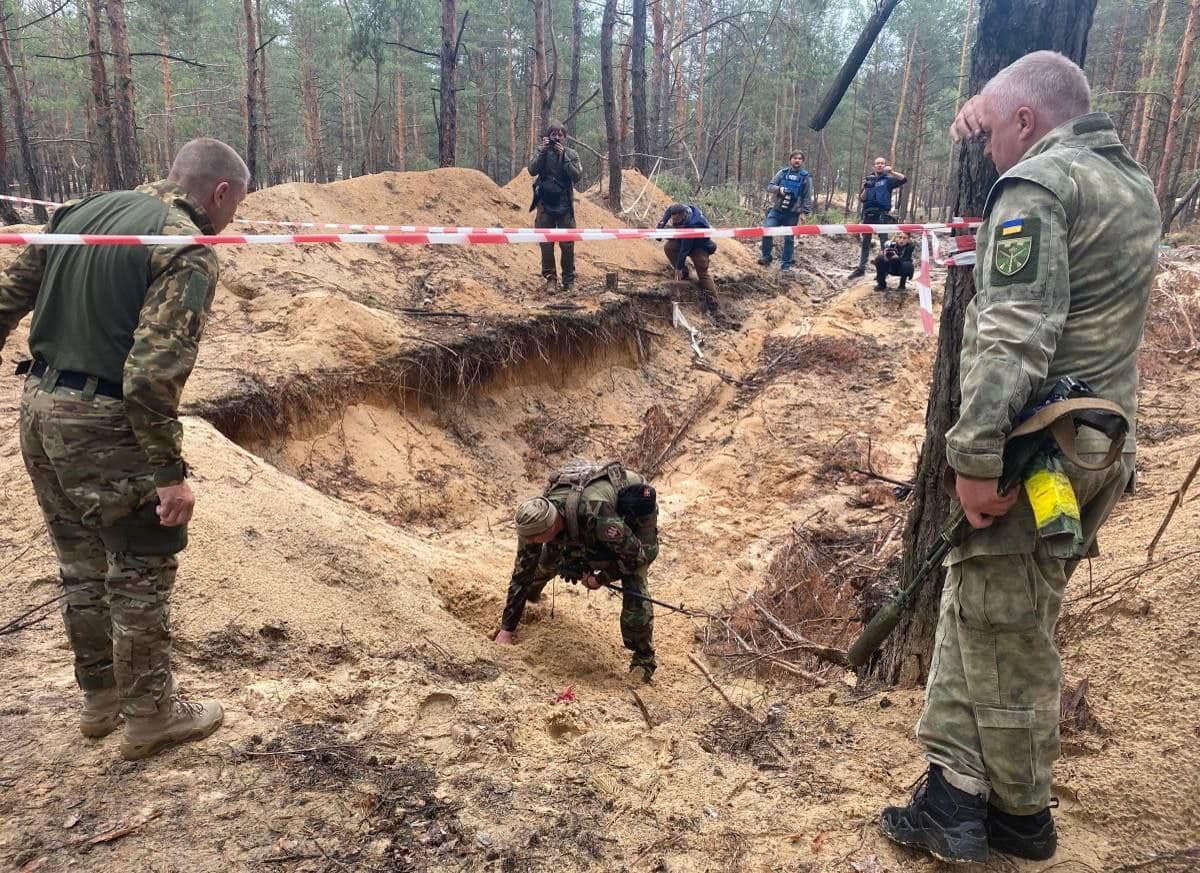
Following last week's discovery of mass graves containing some 450 bodies in the Ukrainian town of Izium, the European Council presidency has issued a call for "the speedy establishment of a special international tribunal that will prosecute the crime of aggression." Foreign Affairs Minister Jan Lipvasky of the Czech Republic, which currently holds the Council's rotating presidency, wrote on Twitter Sept. 18: "Russia left behind mass graves of hundreds of shot and tortured people in the Izium area. In the 21st century, such attacks against the civilian population are unthinkable and abhorrent. We must not overlook it. We stand for the punishment of all war criminals."

Ukrainian forces uncovered the bodies in a wooded area after driving Russian forces from Izium, Kharkiv oblast. The Ukrainian Defense Ministry stated: "A non-stop exhumation of hundreds of corpses in Izyum continues… It will take many long and exhausting hours for investigators to reveal the magnitude of the genocide perpetrated by russian [sic] murderers." The Defense Ministry said the bodies are believed to be overwhelmingly those of civilians. 

Ukrainian President Volodymyr Zelensky added: "Exhumation work continued today in Izium, Kharkiv region, at the site of the mass burial that had been found. Examinations of the bodies are being conducted. New evidence of the torture used against the people buried there has been found. More than ten torture chambers have already been found in the liberated areas of Kharkiv region…"

Marie Struthers, Amnesty International's director for Eastern Europe, reacting to the discovery of thes unmarked mass graves, said:

Back in March, Amnesty International sounded the alarm bell over the fate of civilians in Izium which had been under relentless attack by Russian forces since day four of Russia's all-out invasion of Ukraine. These newly reported discoveries confirm our darkest fears. The people of Ukraine and the world deserve to know how exactly those buried in the forest near Izium have died. For every unlawful killing or other war crime, there must be justice and reparation for victims and their families and a fair trial and accountability for suspected perpetrators.

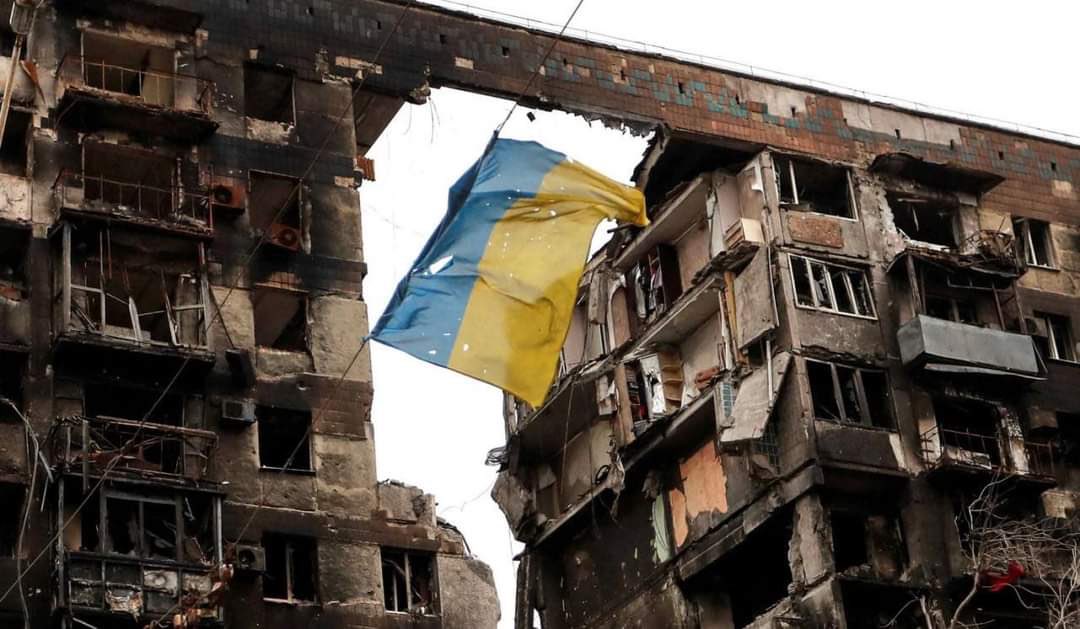
As of the UN's latest count this week, 5,916 civilians—including more than 300 children—have been killed in the Ukraine hostilities since the Russian invasion was launched on Feb. 24. Documented injuries total 8,616—more than 400 of them children.

From Jurist, Jurist, Sept. 19. Used with permission.

Note: Both the International Criminal Court and UN Human Rights Council have opened investigations into possible war crimes in Ukraine. Russia is already accused of mass killings of civilians at Bucha and other towns in the Kyiv area. 

Photo: Myroslava Il'to/KHPG

DPRK law authorizes preemptive nuclear strikes

ICBM

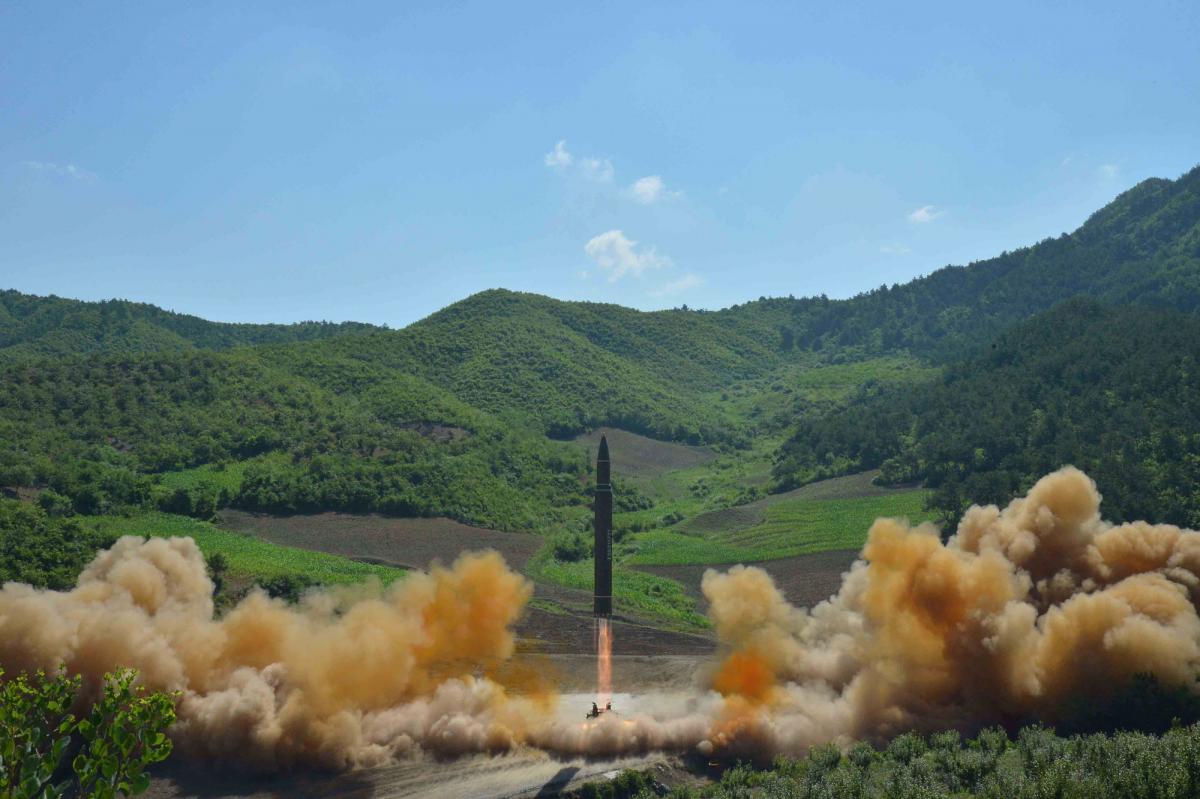
North Korea passed a law Sept. 9 enshrining its right to launch pre-emptive nuclear strikes. According to the official Korea Central New Agency (KCNA), the law states that "if the command and control system of the national nuclear force is in danger of being attacked by hostile forces, the nuclear strike will be carried out automatically and immediately." The KCNA added that "by promulgating a law on a policy of the nuclear forces, our country's status as a nuclear-weapons state has become irreversible." The new law replaces a 2013 law that allowed for the use of nuclear weapons only in retaliation or to repel invasion.

This move appears to rule out any possible negotiations with the South, despite the recent efforts of South Korean President Yoon Suk-Yeol. On Aug. 15, Yoon used his speech marking the 77th Liberation Day (celebrated in both the South and North) to put forth an initiative offering a large aid program to the North in exchange for de-nuclearization. Yoon stated that "de-nuclearization of North Korea is essential for sustainable peace on the Korean Peninsula and the world."

Pyongyang conducted a series of missile tests in 2022, including a suspected ICBM.

From Jurist, Sept. 12. Used with permission.

Photo: MissileThreat

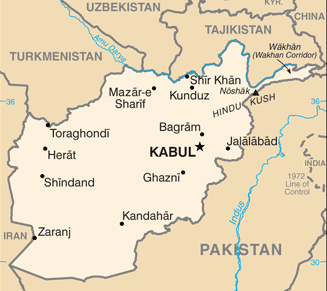
Afghanistan: a year of worsening crisis

Afghanistan

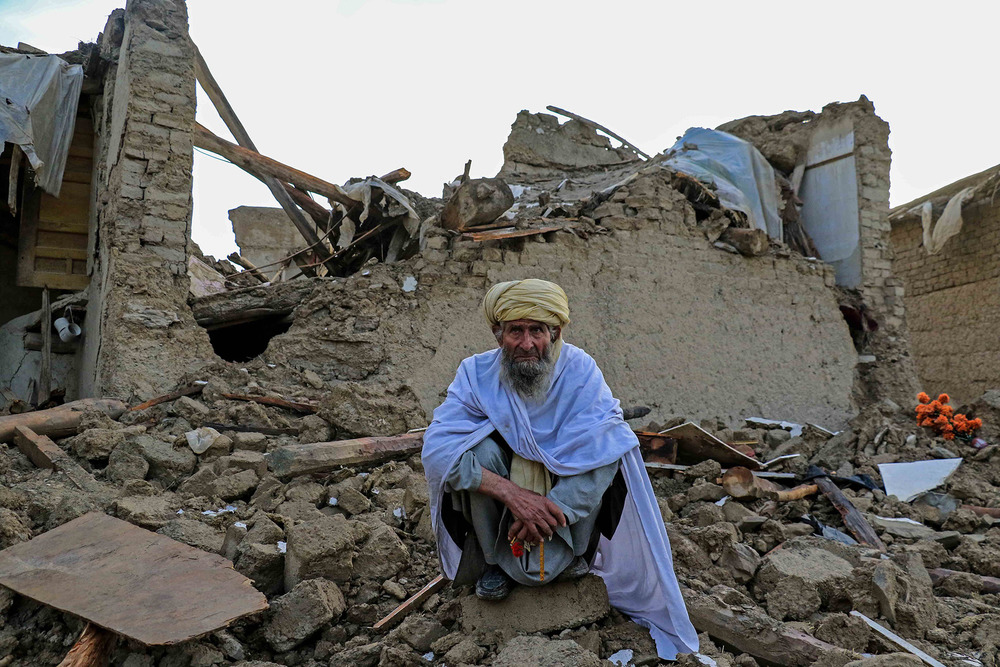
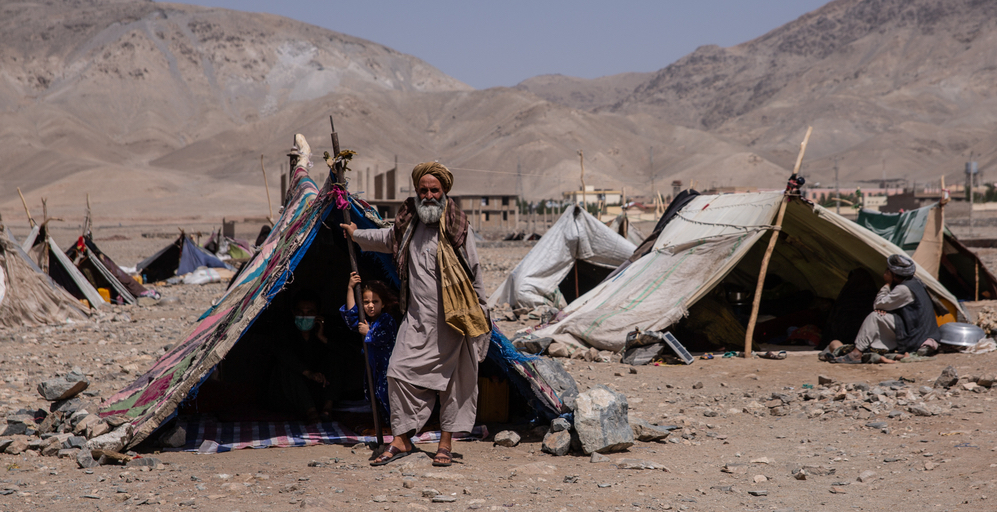
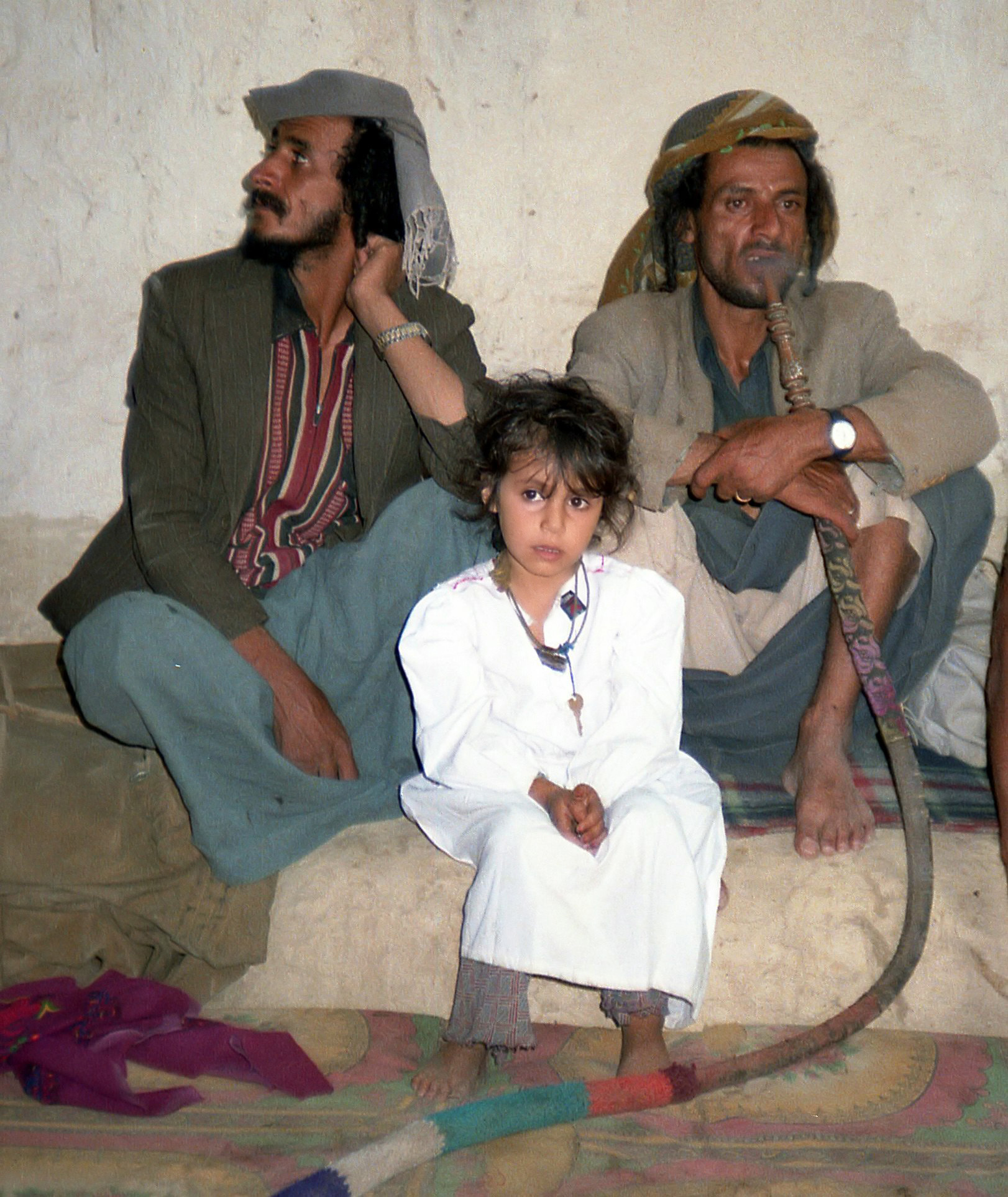
It has been a year since the Taliban took back power—a year since desperate images at Kabul airport went around the world. Over those 12 months, Afghanistan has seen a reduction in conflict, but its economy has collapsed, record numbers are facing hunger, and it's projected that most of the population will soon be below the poverty line.

Aid groups have been calling for unprecedented amounts of donor funding, while also urging foreign governments to release frozen Afghan assets and look at how to constructively engage with the Taliban government to address the crisis.

COVID-19 hasn’t been the only epidemic hitting a shattered health system. A massive measles outbreak is putting children at risk. and aid workers are trying to fill the gap of a lack of health services.

The dire situation is driving more and more people to flee the country. Each day, thousands are risking their lives to cross into Iran.

Though Afghans have always moved across the border for seasonal work, and precise figures are difficult to come by, UN officials note it’s clear the number has been rising since the Taliban took control last August.

In the wake of the takeover, women have been hit particularly hard. The Taliban have increased restrictions on women's education, jobs, and clothing. They have also closed down many shelters.

In June, one of Afghanistan's deadliest earthquakes in two decades struck. As aid began to reach survivors, many feared it would dry up long before the brutal winter months.

From The New Humanitarian, Aug. 30. 

Photo: Samiullah Popal/TNH

Libya: new fighting between rival governments

Libya

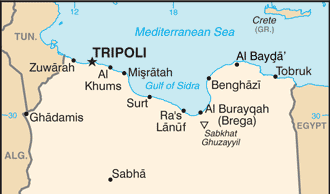
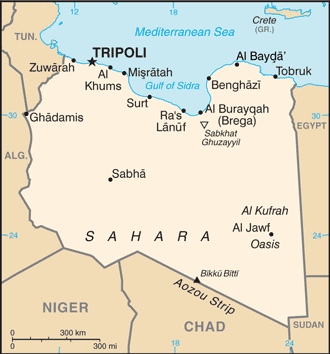
Heavy fighting broke out in Libya's capital city of Tripoli on Aug. 27, killing at least 32 people and raising concerns of a return to all-out war.  Civilians were reportedly among those killed and injured in the clashes between forces loyal to Libya's two rival governments: a Tripoli-based Government of National Unity headed by Prime Minister Abdulhamid al-Dbeibah, and a House of Representatives based in the eastern city of Tobruk that chose its own prime minister for the country, Fathi Bashagha, in February.

Al-Dbeibah—who was selected in an interim capacity to lead a UN-backed political transition—has refused to step down, saying he will only hand over power to an elected parliament. The Tobruk legislature was elected in 2014 in national polls that had extremely low turnout, and rivals have since questioned its validity.

National presidential and parliamentary elections were planned for last December but indefinitely postponed due to disagreements over election rules, including who was eligible to run.

The Tripoli fighting is the worst Libya has seen since an October 2020 ceasefire brought an end to more than a year and a half of fighting, mostly focused on the capital city, during which hundreds of thousands of civilians were forced to flee their homes. The country as a whole has seen little real peace since the 2011 ousting of dictator Moammar Qaddafi.

Condensed from The New Humanitarian, Aug. 29

The Government of National Unity is a new effort to unite the former Government of National Accord (GNA) and its rivals. See our last report on the political crisis in Libya.

Map: Perry-Castañeda Library

Russia slammed for use of cluster munitions

cluster bomb

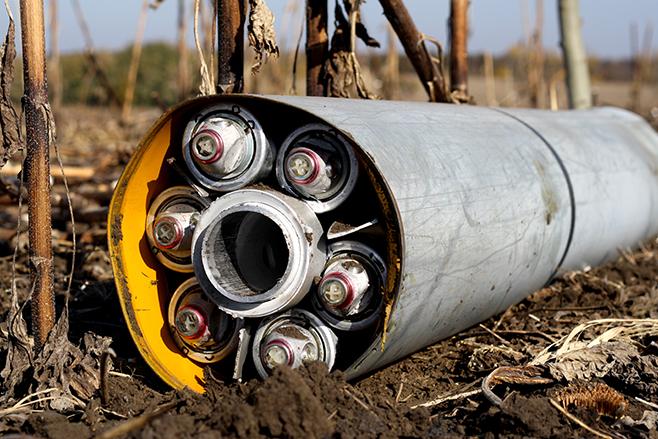
This year alone, Russian forces are believed to have launched hundreds of cluster munition attacks in contravention of various principles of international humanitarian law, according to a scathing report released Aug. 25 by the Cluster Munition Coalition (CMC), an international advocacy group. Cluster munitions are weapons that contain dozens to hundreds of explosive submunitions. They open mid-air, flooding massive areas with explosions, making it effectively impossible to limit destruction to an intended target.

"Russia's extensive use of internationally banned cluster munitions in Ukraine demonstrates a blatant disregard for human life, humanitarian principles, and legal norms… Unequivocally condemning ongoing use of cluster munitions in Ukraine is crucial to strengthen the stigma against these weapons and bring an end to the threat they pose," Human Rights Watch arms advocacy director Mary Wareham said in a statement accompanying the release of the report, Cluster Munition Monitor 2022.

The CMC advocates for the eradication of cluster munitions in line with the 2008 Convention on Cluster Munitions, to which neither Russia nor Ukraine is a party. According to the International Committee of the Red Cross, while international humanitarian law lacks rules specific to cluster munitions, these weapons fall under the purview of the broader rules of armed conflict, which require combatants to distinguish between civilian and military targets, prohibit indiscriminate strikes, and require proportionality in attacks.

Hundreds of Russian cluster munition attacks have been documented, reported, or alleged in recent months in Ukraine, which at present is the only country in the world where cluster munitions are being used. Preliminary data indicates at least 689 casualties reported during cluster munition attacks in Ukraine for the first half of 2022. Many casualties may have gone unrecorded.

Ukrainian forces are also accused of having engaged in cluster munition attacks, albeit at a far lower frequency than Russia. "Russia has used cluster munitions extensively since invading Ukraine on 24 February 2022, while Ukrainian forces appear to have used them at least three times in the war," the report states.

Since Russia launched its unprovoked invasion of Ukraine, international organizations, foreign government officials, and human rights advocacy groups have sounded the alarm over the ensuing violations of international law.

From Jurist, Aug. 26. Used with permission.

Note: Rights groups first reported Russian use of cluster munitions in Ukraine in early March. Both the International Criminal Court and UN Human Rights Council have opened investigations into possible war crimes in Ukraine.

Photo: Ole Solvang/HRW

UN protests illegal Russian trial of Ukrainian POWs

Mariupol

The UN Office of the High Commissioner for Human Rights (OHCHR) on Aug. 23 denounced apparent plans by Russian-backed authorities to try Ukrainian prisoners of war (POWs) in the port city of Mariupol. The OHCHR believes that the trials may begin within days, and could themselves could amount to a war crime.

According to the UN, a number of Russian-affiliated armed groups in Donetsk and potentially the Russian Federation itself are planning an "international tribunal" in Mariupol. Despite there being no formal announcement from the Russian government about the trials, the OHCHR stated that there is sufficient evidence to support that trials are being prepared. The OHCHR notes that "photos and video footage published in the media and on social media appear to show metal cages being built in Mariupol's philharmonic hall, apparently to restrain prisoners of war during proceedings."

Under international law, anyone granted POW status has combatant immunity and therefore cannot be prosecuted for having participated in "lawful acts of war" committed in the course of an armed conflict. Importantly, these protections still apply if a POW's action would otherwise constitute an offense under a nation's domestic law. Furthermore, if POWs are charged with crimes, they are entitled to due process and fair trial guarantees.

The OHCHR also warned Russia that "international humanitarian law prohibits the establishment of courts solely to judge prisoners of war and that willfully depriving a prisoner of war of the rights of fair and regular trial amounts to a war crime." Officials went on to add that they are "concerned that prisoners of war have generally been held without access to independent monitors, exposing them to the risk of being tortured to extract a confession."

The OHCHR officials closed by once again calling for Russia to "grant independent monitors full access to all individuals detained in relation to the armed conflict in Ukraine… including those held by Russian-affiliated armed groups."

Russia has not yet responded to these allegations.

From Jurist, Aug. 23. Used with permission.

Photo via Twitter

Podcast: India’s forgotten wars

Naxals

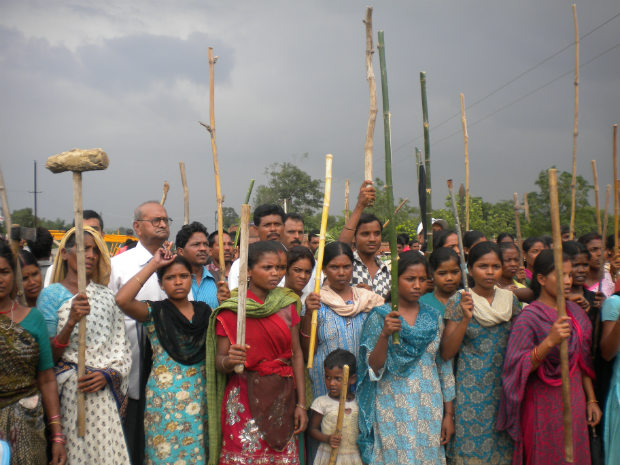
In Episode 137 of the CounterVortex podcast, Bill Weinberg explores two of the many under-reported internal conflicts in India, which are rooted in unresolved issues left over from the colonial era in spite of 75 years of Indian independence. In the east-central interior, the Naxalite insurgency has been met with harsh repression from the security forces—especially against the Adivasis, or indigenous peoples who make up the movement's support base. In the remote Northeast, the long struggle of the Naga people is still met with massacres at the hands of the military today. For three generations the Naga have been fighting for their independence, keeping alive their indigenous culture, and protesting the genocide of their people—to the silence of the international community. Listen on SoundCloud or via Patreon.

Books discussed: Colonial Institutions and Civil War: Indirect Rule and Maoist Insurgency in India by Shivaji Mukherjee; The Naga Nation and its Struggle against Genocide, compiled by the International Working Group on Indigenous Peoples (IWGIA); The Nagas: An Unknown War by Gavin Young

Production by Chris Rywalt

We ask listeners to donate just $1 per weekly podcast via Patreon—or $2 for our special offer! We now have 45 subscribers. If you appreciate our work, please become Number 46!

Photo via MIM

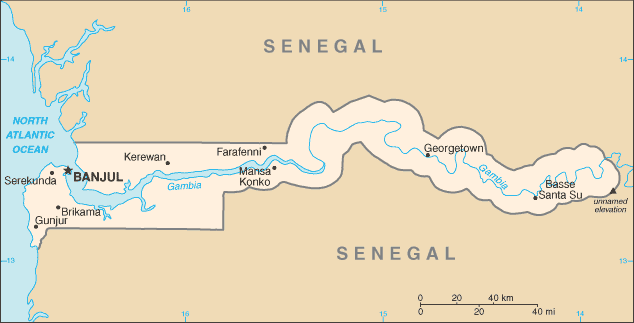
Senegal: peace process with Casamance rebels

Senegal

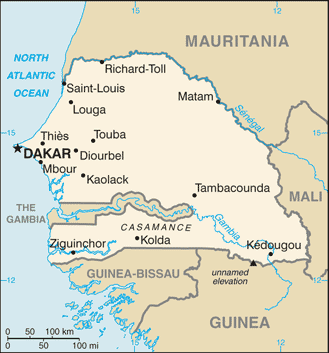
The concluding of a peace agreement between Senegal and separatist rebels in Casamance is being hailed by the government as "an important step" toward ending the 40-year conflict in the southern region. The deal was signed Aug. 5 in neighboring Guinea-Bissau by a delegate from President Macky Sall's administration and Cesar Atoute Badiate, leader of the Movement of Democratic Forces of Casamance (MFDC), which has waged an insurgency since 1982. The long-simmering conflict was re-ignited in January 2021 when the Senegalese army launched a major offensive against the rebels. The Casamance rebels, accused of trafficking in timber and cannabis, have often taken refuge in Guinea-Bissau or Gambia. But Seydi Gassama, director of Amnesty International Senegal, noted that the MFDC is now but one of several rebel factions. "The negotiations must expand to include these factions so that a peace deal can be quickly signed with all the factions and peace can be established throughout all of Casamance," Gassama said. (North Africa Post, VOA)


Map: PCL Map Collection

Far-right threats mount against US authorities

FBI

After a US federal judge unsealed documents related to the FBI's search of former president Donald Trump's Mar-a-Lago residence in Florida, fears have grown over increased threats of violence. Magistrate Judge Bruce Reinhart unsealed the search warrant and attachments Aug. 12, following a motion from the Department of Justice (DoJ). Since unsealing the documents, Reinhart has become the target of violent and anti-Semitic threats, with his personal information, including home address, shared across Twitter and far-right platforms. Threats against Reinhart have prompted the federal judiciary to renew calls for Congress to pass legislation aimed at increasing security for judges.

According to the unsealed warrant and attachments, the FBI seized 11 sets of classified documents in the Aug. 8 search. They also revealed that the DoJ is investigating Trump for violating federal laws. Trump has said that the documents were declassified, although nothing suggests there is any bureaucratic record of this.

Media outlets have confirmed that the FBI and Department of Homeland Security released a joint intelligence bulletin after the warrant was unsealed, noting an increase in threats against FBI officials. On Aug. 13, armed protesters gathered outside the FBI offices in Phoenix, Ariz., ultimately dispersing without incident. On Aug. 11, an individual was killed after attempting to enter the FBI office in Cincinnati, Ohio, armed with an AR-15-style rifle and a nail gun.

From Jurist, Aug. 15. Used with permission.

Note: The unsealed court papers show that FBI agents seized one box containing "Various classified/TS/SCI documents." That’s shorthand for "Top Secret/Sensitive Compartmented Information," the type of material that the government normally requires to be read only in a protected room by people with high-level security clearances. These included classified documents related to nuclear weapons, the Washington Post reported, citing sources familiar with the investigation.

On his Truth Social platform, Trump retorted that "Nuclear weapons is a hoax, just like Russia, Russia, Russia was a hoax," referring to then-special counsel Robert Mueller's investigation into the Trump campaign's ties to Russia.  (The Hill. NBC, Bloomberg)

We have been monitoring the post-presidency investigations into Donald Trump here.

Photo: Wikimedia Commons

Al-Shabab’s Ethiopia front collapses

Ogaden

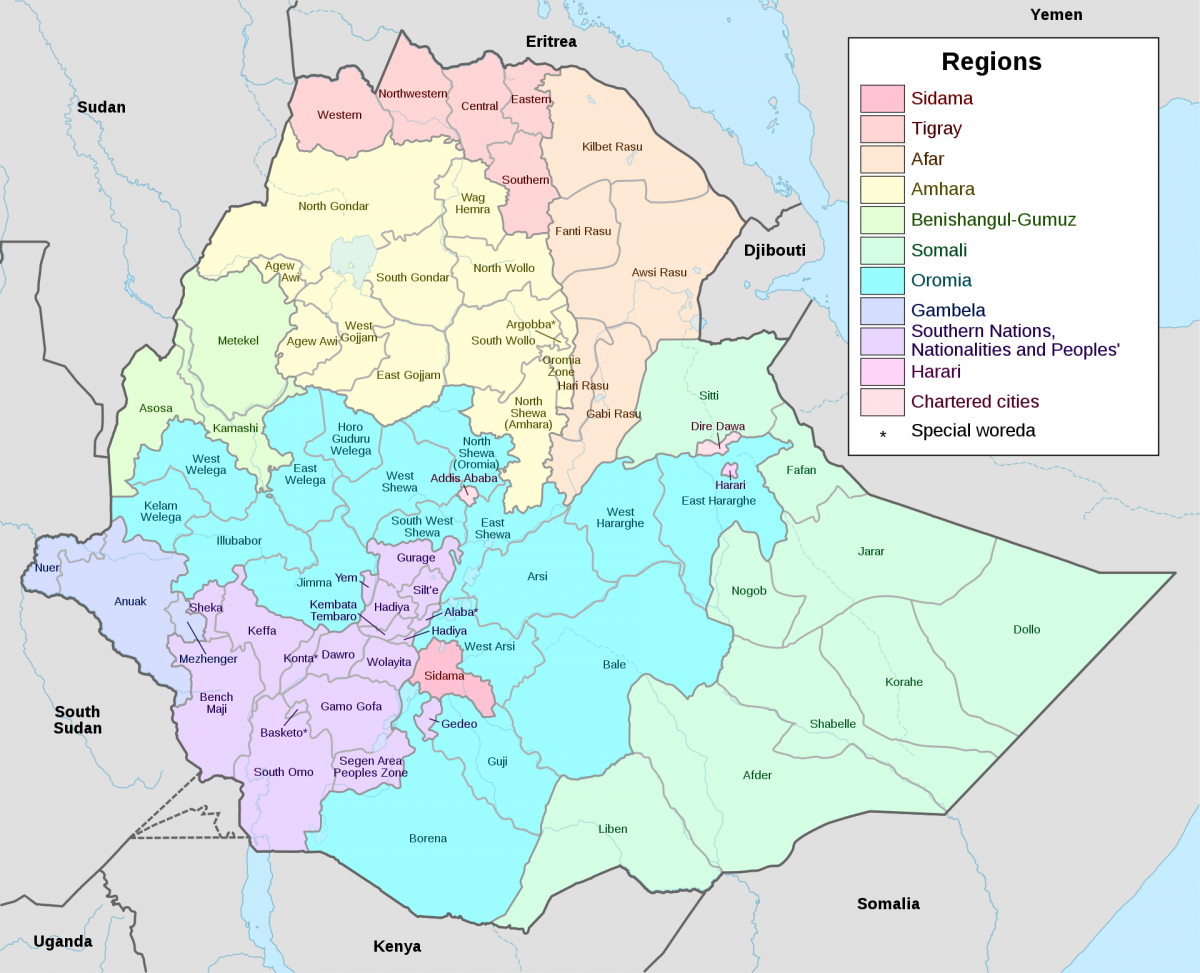
A large-scale incursion by the Somali jihadist group al-Shabab into eastern Ethiopia has been defeated. The government claims to have killed more than 800 militants in heavy fighting that began at the end of July. The attempt to open a new front in Ethiopia was not only a military defeat for al-Shabab, but also a political failure. Although some of al-Shabab's leaders are from the area, ideologically the Somali region of Ethiopia is known for its religious tolerance. Local community and religious leaders rallied to oppose the group, and have pledged to resist future infiltration.

From The New Humanitarian, Aug. 12

Map: Hiiraan Online

Taiwan expands rights for indigenous peoples

Paiwan

Taiwan's President Tsai Ing-wen on Aug. 3, speaking at an Indigenous Rights Forum in Taipei held to mark Indigenous Peoples' Day, pledged new measures to protect and promote the languages, cultures and territorial rights of the island nation's Aboriginal communities. Tsai noted that the new Indigenous Peoples Basic Act seeks to bring Taiwanese law and policy into conformity with the UN Declaration on the Rights of Indigenous Peoples (UNDRIP), and calls for re-assigning the country's place names to reflect Aboriginal languages. Her office has established a Transitional Justice Committee to oversee implementation of the law in collaboration with Aboriginal communities.

"These steps to improve human rights also go toward endorsing and safeguarding the rights of indigenous peoples to their land, language, culture and their group identity," Tsai told the forum, which was organized by the National Human Rights Commission and the Council of Indigenous Peoples.

Photos showed Tsai speaking at a podium with a sign proclaiming "Indigenous Rights Forum" in both Chinese characters and Roman-character transliteration of the Atayal Aboriginal language. (Taipei Times, Taipei Times)

Later that same day, US House Speaker Nancy Pelosi arrived in Taiwan for a high-profile visit, above the vociferous objections of China. The People's Republic responded to the visit by launching unprecedented naval maneuvers including live-fire exercizes, surrounding Taiwan with warships and firing missiles within 10 miles of its coastline. Taipei says the war games are tantamount to a naval blockade of Taiwan. (PRI, The Diplomat, Reuters, 1945)

Taiwan is not a signatory to the UNDRIP, as it does not hold a UN seat. However, its principles are enshrined in the Indigenous Peoples Basic Act, and have been invoked in struggles by Aboriginal peoples to reclaim ancestral lands. (Ketagalan Media) In an historic address last September, Tsai apologized for mulitple forms of damage inflicted on Taiwan's indigenous peoples over "four centuries of pain and mistreatment," and outlined measures for restitution. (Jakarta Post)

This article was published in thejakartapost.com with the title "Taiwan transitions and tribal tongues: the language of reconciliation". Click to read: https://www.thejakartapost.com/life/2021/09/06/taiwan-transitions-and-tribal-tongues-the-language-of-reconciliation.html.

Download The Jakarta Post app for easier and faster news access:
Android: http://bit.ly/tjp-android
iOS: http://bit.ly/tjp-ios

Tsai apologized for multiple forms of damage inflicted during “four centuries of pain and mistreatment”, and outlined actions her government proposed to take as forms of redress.

This article was published in thejakartapost.com with the title "Taiwan transitions and tribal tongues: the language of reconciliation". Click to read: https://www.thejakartapost.com/life/2021/09/06/taiwan-transitions-and-tribal-tongues-the-language-of-reconciliation.html.

Download The Jakarta Post app for easier and faster news access:
Android: http://bit.ly/tjp-android
iOS: http://bit.ly/tjp-ios

Tsai apologized for multiple forms of damage inflicted during “four centuries of pain and mistreatment”, and outlined actions her government proposed to take as forms of redress.

This article was published in thejakartapost.com with the title "Taiwan transitions and tribal tongues: the language of reconciliation". Click to read: https://www.thejakartapost.com/life/2021/09/06/taiwan-transitions-and-tribal-tongues-the-language-of-reconciliation.html.

Download The Jakarta Post app for easier and faster news access:
Android: http://bit.ly/tjp-android
iOS: http://bit.ly/tjp-ios

China actually voted in favor of the UNDRIP in the General Assembly in 2008, but promptly disavowed any obligation under the declaration, asserting there are no indigenous peoples in the People's Republic. (E-International Relations) 

See our last reports on Taiwan's indigenous peoples, and China's escalating military threat to Taiwan.

Photo: President Tsai on visit to harvest festival of the Paiwan and Rukai peoples, Sandimen township, Pingtung county, via Wikipedia

Podcast: can Russia foment civil war in the US?

League of the South

In Episode 135 of the CounterVortex podcast, Bill Weinberg examines Russia's obvious attempt to bring about a return to power by MAGA-fascism in the US, or to have the country collapse into civil war—leaving Moscow considerably freer to carry out its campaign of reconquest in Ukraine and possibly beyond. This is the evident design of the FSB (neo-KGB) in coordination with a political network in the orbit of Alexander Dugin, the intellectual mastermind of Vladimir Putin's revanchist imperial project, and the strategy of building a "Red-Brown alliance" of the radical right and radical left against the "liberal order" of the West. How is it possible that Black Nationalists and supposed "progressives" are being taken in by the same FSB-backed astroturf organizations that are also grooming white supremacists and neo-Confederates? Listen on SoundCloud or via Patreon.

Production by Chris Rywalt

We ask listeners to donate just $1 per weekly podcast via Patreon—or $2 for our new special offer! We now have 44 subscribers. If you appreciate our work, please become Number 45!

Photo: Wikimedia Commons

FBI raids Russian-backed Black Nationalists?

Black Hammer

Federal agents executed search warrants July 29 at a Black Nationalist meeting place in St. Petersburg, Fla. The agents were seen carrying out unidentified boxes for hours at Uhuru House, local headquarters of the Uhuru Movement, an arm of the African People's Socialist Party (APSP). This is a pan-Africanist formation with separatist inclinations dating back to the early '70s. The Uhuru Movement is evidently the "US Political Group 1" named in a federal indictment unsealed that same day, formally charging a Russian national with spearheading a multi-year "influence campaign" in the United States. Aleksandr Viktorovich Ionov is accused using three unnamed "political groups" to spread pro-Russian propaganda in the US and interfere in elections. Ionov, a Moscow resident, is founder and leader of the Anti-Globalization Movement of Russia (AGMR), which the indictment says operates "in conjunction with" the Russian Federal Security Service (FSB, successor agency to the KGB).

The indictment, brought by a Tampa-based grand jury, claims that Ionov funded an all-expense paid trip to Moscow in May 2015 for an unidentified leader of "US Political Group 1" to "communicate on future cooperation" with the AGMR. Over the intervening seven years Ionov "exercised direction and control over senior members" of the "US Political Group 1."

Akile Anai, director of the APSP Department of Agitation & Propaganda, speaking to local media after the raid (in which her laptop and phone were apparently seized), certainly did nothing to dispell the notion that she is in the sway of Kremlin indoctrination: "What we know this to really be, one, is a propaganda war is being waged against Russia every single day throughout the news. The US has a hold on what is being propagated about the war on—the defensive war—Russia's defensive war against Ukraine, against world colonial powers because that's what's happening right now." (Sic)  (WTSP, Tampa, Tampa Bay Times, Politico)

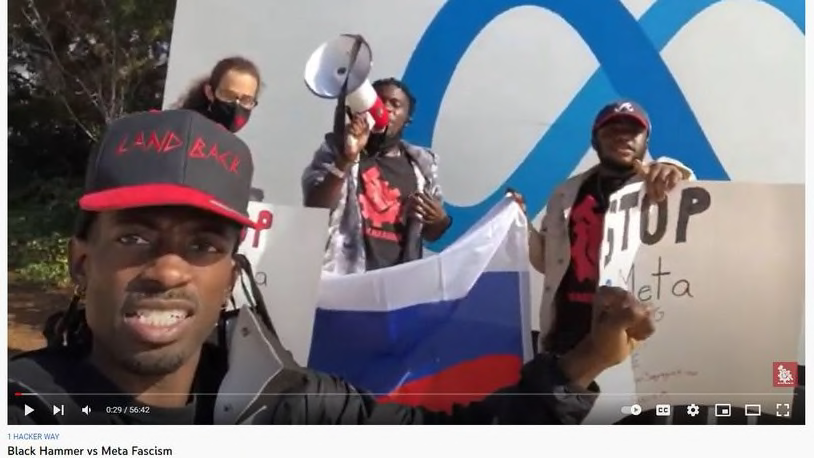
"US Political Group 2" appears to be the Atlanta-based Black Hammer Party. The indictment asserts that Ionov paid for members of Black Hammer to travel to San Francisco in March to protest Facebook's removal of posts supporting Russia's invasion of Ukraine—and even directed them on the design of signs for the demo, which was livestreamed on the group's YouTube channel. The protesters can be seen standing outside the headquarters of Meta (Facebook's parent company), holding up a Russian flag. (AJC, AJC, PC Mag)

Black Hammer seems particularly cultish. Just days before the federal indictment was unsealed, the group's leader Augustus C. Romain AKA "Gazi Kodzo" was arrested on kidnapping charges following a stand-off with a SWAT team in an Atlanta suburb. The affair was apparently related to internecine rivalries in the organization, in which one "hostage" lost his life, although this was deemed a suicide and no murder charges have been brought. (WXIA, Atlanta, Daily Dot)  

In May 2021, Black Hammer members got in a brief armed standoff with local residents in a remote area of the Colorado Rockies, where they hoped to build a utopian community to be called "Hammer City"—on lands they had apparently not legally acquired. They were finally removed form the land by San Miguel County deputies. (AJC, Colorado Sun)

Black Hammer also evidently sought to intentionally game online outrage to build their following with ugly social-media posts—such as dissing Holocaust victim Anne Frank as a "colonizer," "parasite" and "bleach demon," and threatening to burn copies of her diary to keep warm in their Colorado compound. (The Forward)

"Political Group 3" appears to be the now-defunct Yes California, which in 2018 led a campaign for a "CalExit"—the Golden State's secession from the United States. The group's leader Louis Marinelli, named as an "Unindicted Co-Conspirator," evidently used to reside in Yekaterinburg, Russia, before relocating California to stir up trouble with a vague populism that veered erratically from right to left. (He started out as a vocal opponent of same-sex marriage, but flipped to appropriating anti-Trump rhetoric to fuel his secessionist initiative.) 

According to the indictment, Ionov sent Marinelli $500 to pay for posters for a February 2018 CalExit rally outside the state capitol building in Sacramento. Ionov also apparently urged Marinelli "to physically enter the governor's office," which was then occupied by Democrat Jerry Brown. The storming of the governor's office did not come to pass, but Ionov reportedly passed on photos and media reports of the demonstration to an unnamed FSB officer. An accompanying note mentioned that the officer had requested "turmoil," and proudly proclaimed: "There you go." (Business Insider, The Script)

Beyond the headlines
We have noted before the efforts by AGMR to co-opt both the radical left and radical right in the United States. In December 2014, AGMR hosted an international conference in Moscow on the "Right of Peoples to Self-Determination and Building a Multi-Polar World," drawing participants from groups on the US "anti-war left" (sic) including the United National Antiwar Coalition (UNAC) and the International Action Center (IAC)—both spin-offs of the retro-Stalinist Workers World Party. Also in attendance were representatives of Russian and European neo-fascist formations—and white nationalists from an Alabama-based group, the neo-Confederate League of the South.

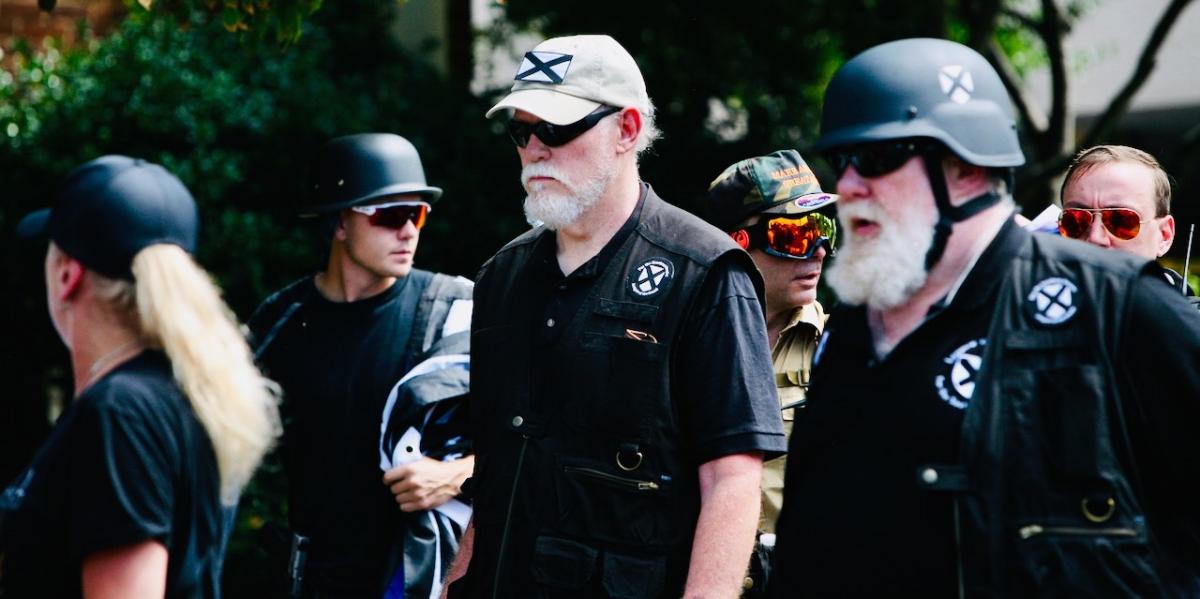
The League of the South was one of the prominent groups at the the August 2017 "Unite the Right Rally" in Charlottesville, Va., which notoriously turned deadly. We noted at the time the vocal expressions of support for Syria's Russian-backed genocidal dictator Bashar Assad among the far-right knuckleheads at Charlottesville. The Centre for Analysis of the Radical Right notes the special affinity that the League of the South has for Putin's Russia. In an essay on their website entitled "To Our Russian Friends," the League's president Michael Hill writes: "We understand that the Russian people and Southerners are natural allies in blood, culture, and religion." Another essay on their site urges followers to prepare for "The Coming Civil War in America."

Workers World and its various spin-off groups (UNAC, IAC, ANSWER) actually march with portraits of Bashar Assad at their hypocritical "anti-war" rallies. Yet these same groups have the unmitigated chutzpah to affect an anti-racist posture in order to draw in followers, pretending to oppose the very radical-right nexus that they actually overlap with.

We take some perverse amusement in in a video on the Black Hammer YouTube channel showing their militants disrupting a Hands Off Cuba rally in Atlanta led by another Workers World offshoot, the ironically named Party for Socialism & Liberation (PSL), baiting them as "white-led."

It is always odious to learn of police targeting of Black political groups in the US, which inevitably recalls the FBI's murderous "COINTELPRO" against the Black Panthers in the late 1960s, and the 1985 police massacre of followers of the MOVE organization in Philadelphia. In fact, we fear that the indictment and St. Petersburg raid will give the Uhuru Movement, APSP and Black Hammer a cachet that could fuel their popularity in certain sectors.

Still, we do have to wonder if these groups are suffering from a deep cynicism or an even deeper naivete. Are they unaware that the same FSB-AGMR network apparently supporting them is also supporting their ostensible worst enemies on the racist right? Are they unaware of racist persecution of Crimean Tatars and Chechens in the white-supremacist Russia of Vladimir Putin?

This affair manifests one of the more egregious examples of the fast-mounting and incredibly dangerous phenomenon of Red-Brown Politics (left-fascist convergence). We can imagine Aleksandr Viktorovich Ionov, Vladimir Putin and the FSB wetting their pants with laughter as the United States descends into civil war in the years or possibly even months to come…

Photo of Black Hammer protest at Meta offices in San Francisco: YouTube via AJC

India: high court rejects probe of Adivasi killings

adivasis

The Supreme Court of India on Juy 14 dismissed a petition seeking an independent investigation into extra-judicial killings of Adivasis, or tribal people, in villages in Chhattisgarh state. The petition charges that state security forces, including the Chhattisgarh Police and affiliated paramilitary groups, were responsible for the deaths of villagers during anti-Naxalite operations that took place in September and October 2009. The petition was filed by Gandhian social activist Himanshu Kumar and 12 relatives of the slain villagers.

The petitioners sought an investigation by India's Central Bureau of Investigation (CBI) or the National Investigation Agency (NIA). In rejecting the petition, the court observed that these agencies had already investigated the villagers' deaths, and had filed charges in the Chattisgarh courts for offenses including murder and banditry. However, these charges were all against members of Naxalite insurgent groups, rather than the security forces.

The Indian government opposed the petition, and sought perjury charges against the petitioners for supposedly false accusations against the security forces. The Supreme Court left it to the Chhattisgarh state government to decide on the perjury charge and other possible charges against the petitioners, such as criminal conspiracy. It also imposed costs of 500,000 rupees, more than 6,000 US dollars, on Kumar.

From Jurist, July 14. Used with permission.

Photo: IMPRI

China: can authorities contain unrest after Henan protests?

Zhengzhou

China's banking regulator on July 24 announced that it has opened an investigation into officials at its bureau in Henan province, which this month saw protests by depositors unable to withdraw funds. The China Banking & Insurance Regulatory Commission said a local inspector is suspected of "serious disciplinary violations" concerning fraud and embezzlement at five rural lenders. Several members of a "criminal gang" accused of taking control of the banks have been arrested. The situation turned violent on July 10, after some 1,000 depositors protested outside the People's Bank of China branch in Zhengzhou, demanding access to their savings in frozen accounts. The protesters were assaulted by a group of unidentified men in matching white outfits, as police held back and did not intervene. Video of the incident went viral on social media.

A video of tanks in the streets also distributed on social media (drawing parallels to the Tiananmen Square repression in 1989) was found by fact-checkers to be decontextualized—it was actually footage from Rizhao, Shandong province, with the tanks deployed as part of a military exercise. But the affair reveals the threat of popular unrest at a critical moment in China, especially among the country's struggling peasant class.

The trouble began in April after banks in the central provinces of Henan and Anhui—the Yuzhou Xinminsheng Village Bank, Shangcai Huimin County Bank, Zhecheng Huanghuai Community Bank, New Oriental Country Bank of Kaifeng and Guzhen Xinhuaihe Village Bank—denied depositors access to their funds. Videos from the July 10 protest showed the depositors lined up in rows, holding banners that read "No deposits, no human rights" and "We are against Henan government's corruption and violence," while chanting, "Henan banks, give me my money back" and "[Premier] Li Keqiang, investigate Henan."

In the aftermath of the incident, it was revealed that local officials gamed the health-code system instituted as part of the COVID-19 response to limit the mobility of depositors and prevent them from taking part on any further demonstrations. Affected depositors improperly had their codes turned to "red," despite not having been exposed to the virus. Some who participated in the protest have apparently continued to face harassment from local authorities in their villages.

In addition to the banking imbroglio, China's central government faces a growing mortgage payment boycott across the country—and it is all happening in a politically sensitive year. President Xi Jinping is widely expected to secure a third leadership term at the upcoming 20th National Congress of the Communist Party of China. (CNA, CNA, CNA, France24, ORF, NDTV, SCMP, SCMP, SCMP, SCMP, SCMP, SCMP)

Chinese authorities have been instating a harsh crackdown on the media and human rights defenders amid growing outbursts of social protest since the start of the pandemic.

Photo via Twitter

Burma: prison protests after execution of activists

Insein

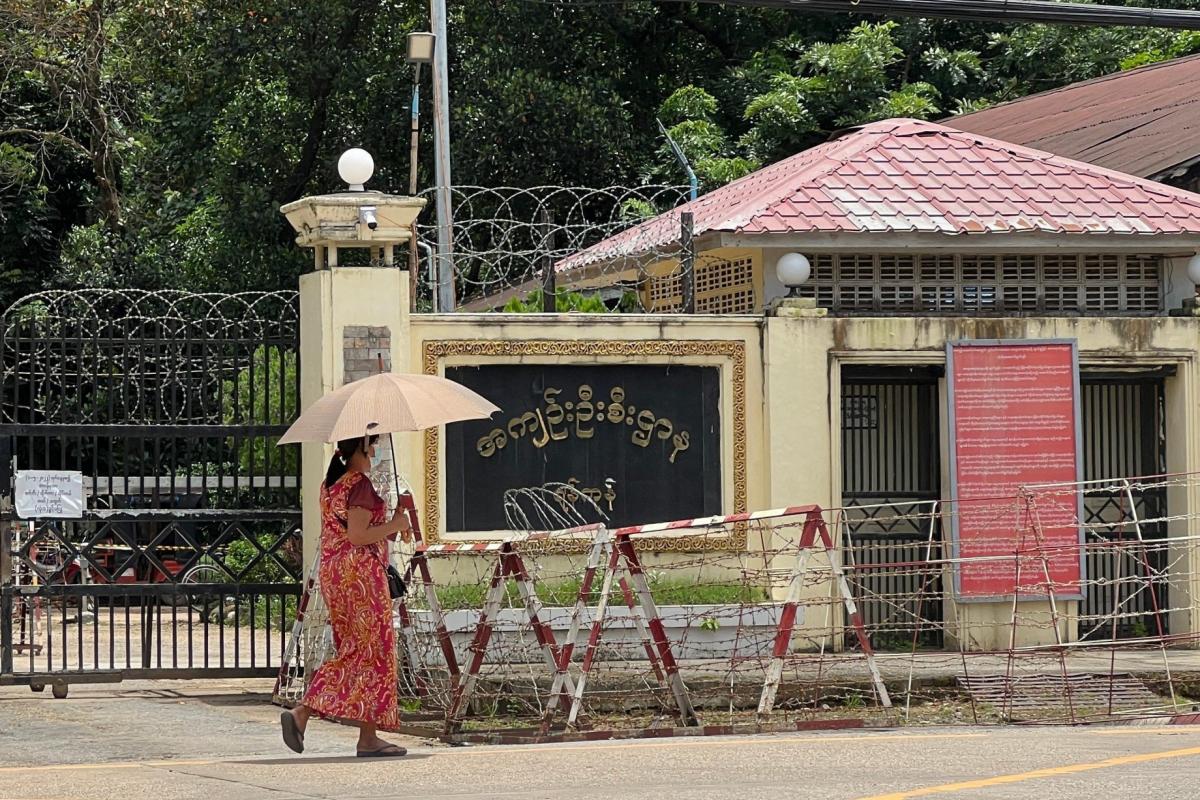
Inmates at Burma's Insein Prison launched a protest on July 25 in response to the announcement by the ruling junta that four political prisoners who had been held in the Yangon facility were executed. Several people who took part in the uprising were physically assaulted by prison authorities, and some 15 were removed to isolation cells separate from the general population, according to a source within the facility. Among the executed were two of Burma's leading dissidents—Ko Jimmy, 52, a veteran of the 1988 pro-democracy uprising, and Phyo Zayar Thaw, 41, a hip-hop star and former MP with the National League for Democracy (NLD). The two longtime activists were sentenced to death in January for allegedly plotting to carry out attacks on regime targets. Amnesty International said it believes the charges against them were politically motivated.

The two other men put to death were Hla Myo Aung and Aung Thura Zaw, both convicted in the murder of a suspected junta informant. These were Burma's first executions since 1988. Executions in Burma are traditionally carried out by hanging. (Myranmar Now, Myanmar Now, Amnesty International, BBC News, First Post)

Photo: Myanmar Now

Afghanistan: UN report details Taliban abuses

Taliban

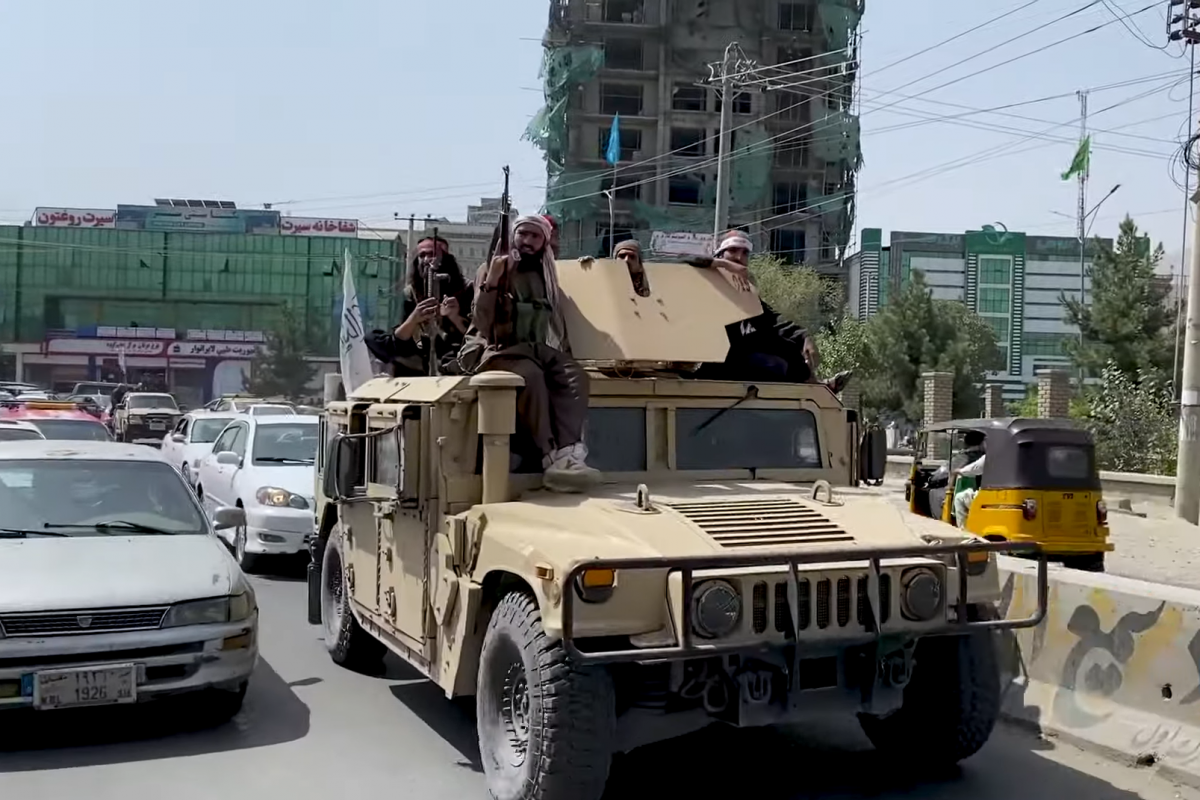
The United Nations Mission in Afghanistan (UNAMA) on July 20 released a report holding the ruling Taliban regime responsible for extrajudicial killings, torture, arbitrary arrests, and inhumane punishments in the first 10 months since they seized power. In total, UNAMA found that Taliban forces engaged in 239 extrajudicial killings, 313 arbitrary arrests and detentions, 46 cases of incommunicado detention, and 73 instances of torture. Most of the incidents targeted former Afghan National Defense & Security Forces (ANDSF) soldiers, officials from the previous government, ISIL-KP members, or National Resistance Front fighters. UNAMA also identified an additional 217 instances of degrading punishments and 118 uses of excessive force against civilians. Finally, Taliban forces also engaged in at least 163 rights violations targeting journalists and 64 targeting human rights defenders.

UNAMA additionally documented an additional 2,106 civilian casualties (700 killed, 1406 wounded), most of which were caused by improvised explosive device attacks attributed to ISIL-KP and unexploded ordnances from the multitude of past conflicts in the country. UNAMA also found that of six journalists who were killed during the last ten months at least five of them were killed by self-identified ISIL-KP members.

The report also focused on the rights of women and girls, and the restriction of fundamental freedoms. It states that the decision not to allow girls to return to secondary school means that a generation of girls will not complete their full 12 years of basic education. At the same time, access to justice for victims of gender-based violence has been limited by the dissolution of dedicated reporting pathways, justice mechanisms and shelters.

Markus Potzel, acting UN special representative for Afghanistan, called on the Taliban to rein in their forces and adhere to international law:

As reflected by the United Nations Security Council in the extension of UNAMA's mandate, Afghanistan as a state remains party to a number of instruments concerning human rights and fundamental freedoms. With this in mind, I urge the de facto authorities to do their utmost to address the concerns outlined in our report and meet their international obligations to protect and promote the human rights of all Afghans.

From Jurist, July 20. Used with permission.

Notes: ISIL-KP refers to the "Islamic State in Iraq & the Levant—Khorasan Province," also rendered ISIS-K or ISKP. The National Resistance Front is a rebel group in the Panjshir Valley, mostly made up of soldiers and political figures from the old regime. Since the Taliban seizure of power last August, rights for women have been dramatically rolled back in Afghanistan. 

Photo: VOA via Jurist

European Commission sues Hungary over civil rights

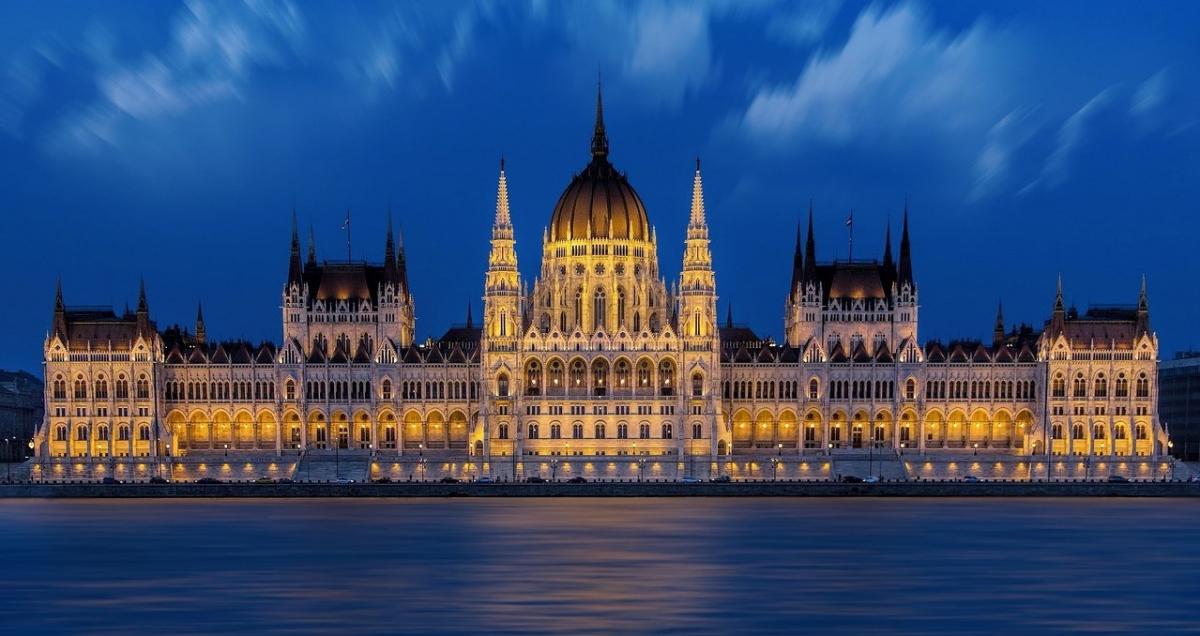
Budapest

The European Commission on July 15 announced that it will sue Hungary in the EU's Court of Justice over an anti-LGBT law and Hungary's refusal to allow a dissident radio station to broadcast. Hungary adopted a law in June 2021 that prevents companies from featuring LGBTQ couples in educational or advertising content intended for children. The legislation was swiftly condemned by EU Commission President Ursula von der Leyen, who later initiated infringement proceedings against Hungary. The Commission's case also concerns Hungary's refusal to renew broadcaster Klubradio's license, taking them off the air. Infringement proceedings were also launched against Hungary in that matter. The Commission charges that "the decisions of the Hungarian Media Council to refuse renewal of Klubradio's rights were disproportionate and non-transparent and thus in breach of EU law." Klubradio is highly critical of Hungarian Prime Minister Viktor Orban's government. Hungary is being sued on the basis of violating the EU's Audiovisual Media Services Directive, e-Commerce Directive and the Charter of Fundamental Rights. 

From Jurist, July 15. Used with permission.

Photo: Pixabay

North Korea recognizes Donetsk and Luhansk ‘republics’

Ukraine

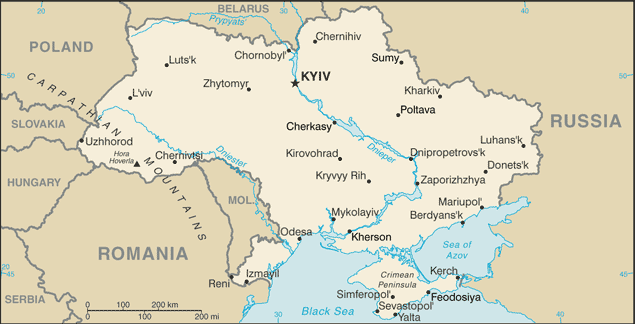
North Korea's government on July 13 recognized two breakaway states claiming independence from internationally-recognized Ukrainian territory. North Korea is the third country to recognize the "Donetsk People's Republic" and "Luhansk People's Republic," after Russia and Syria. On Feb. 22, two days before Russia invaded Ukraine, Moscow recognized the Donetsk and Luhansk "republics," and moved troops to the regions. In controversial 2014 referenda held by rebel authorities, close to 90% of Donetsk voters and 96% of Luhansk voters opted for independence.

Since Russia's invasion in February, North Korea has defended Russia and has blamed the crisis on "the hegemonic policy of the US." At an April UN General Assembly vote to suspend Russia's membership in the UN Human Rights Council, North Korea voted against the measure. North Korea joined 23 other countries, including Russia and several former Soviet Republics. A further 58 countries abstained, while 93 voted in favor of Russia's removal.

Ukraine cut diplomatic ties with North Korea immediately after the recognition.

From Jurist, July 13. Used with permission.

Map: PCL

Cuba: dissident artists get prison terms

Otero Alcantara

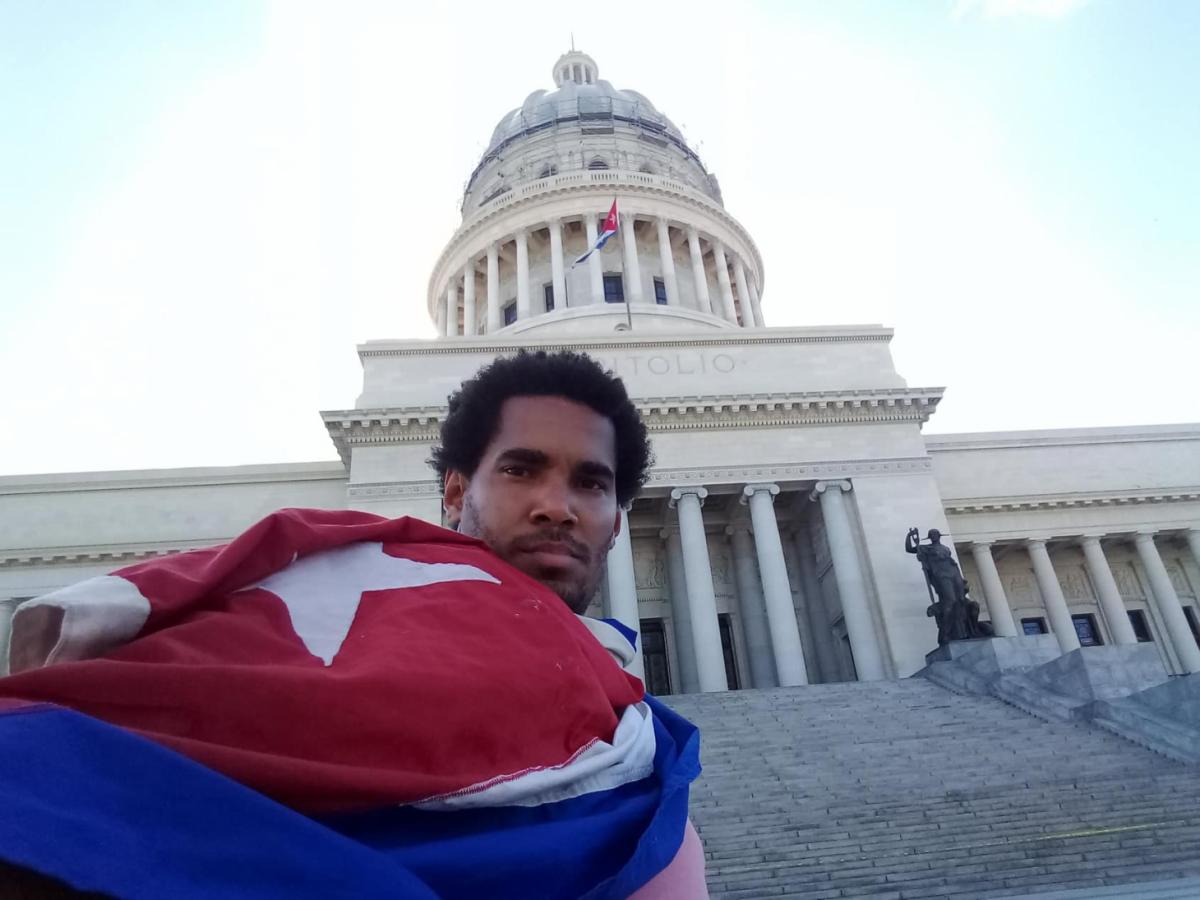
The Popular Municipal Court of Central Havana on June 24 sentenced artists Luis Manuel Otero Alcántara and Maykel Castillo Pérez to five and nine years in prison, respectively. Activist artist Otero Alcántara was sentenced for contempt, public disorder, and "insulting symbols of the homeland"—a reference to his public performances involving the Cuban flag. Rapper Maykel Castillo was found guilty of contempt, public disorder, and "defamation of institutions, heroes and martyrs." The latter charge relates to a meme Castillo posted on social media last year criticizing Communist Party leaders. The two have 10 days to appeal their sentences.

Erika Guevara-Rosas, Americas director at Amnesty International, said: "Both Luis Manuel and Maykel are artists who have used art as a means of expressing their views on the social, political and economic conditions in Cuba. They are two emblematic examples of how Miguel Díaz-Canel's government uses the judicial system to criminalize critical voices… The international community must continue to publicly condemn these practices, which openly undermine the full exercise of human rights in the country."

Otero Alcántara and Castillo are just two of several hundred Cubans sentenced to prison in recent weeks on charges related to last year's mass protests. Earlier this month, the Cuban government announced that it had "sanctioned" 381 people in such cases, with 297 sentenced to prison terms of between five and 25 years. (ArtNet News)

Photo: Hyperallergic

Wagner Group named in massacres on Sudan-CAR borderlands

Sudan

Russian mercenaries are accused of carrying out a series of deadly attacks on artisanal miners in the lawless border zone between Sudan and the Central African Republic, in an apparent effort to establish dominance over outlaw gold mining operations with allied paramilitary factions. Dozens of local miners are said to have been killed in at least three major attacks on their encampments this year, allegedly involving mercenaries working for the Kremlin-linked Wagner Group.

Witnesses interviewed by The Guardian described "massacres" by fighters they identified as being from Wagner, who swept through encampments full of migrant miners between the northeastern CAR town of Am Daga and the frontier over a six-week period starting in mid-March. The fighters reportedly shot indiscriminately with automatic weapons, smashed equipment, destroyed structures and stole motorbikes. One witness described a mass grave containing more than 20 victims. Together, hundreds may have been killed in the attacks.

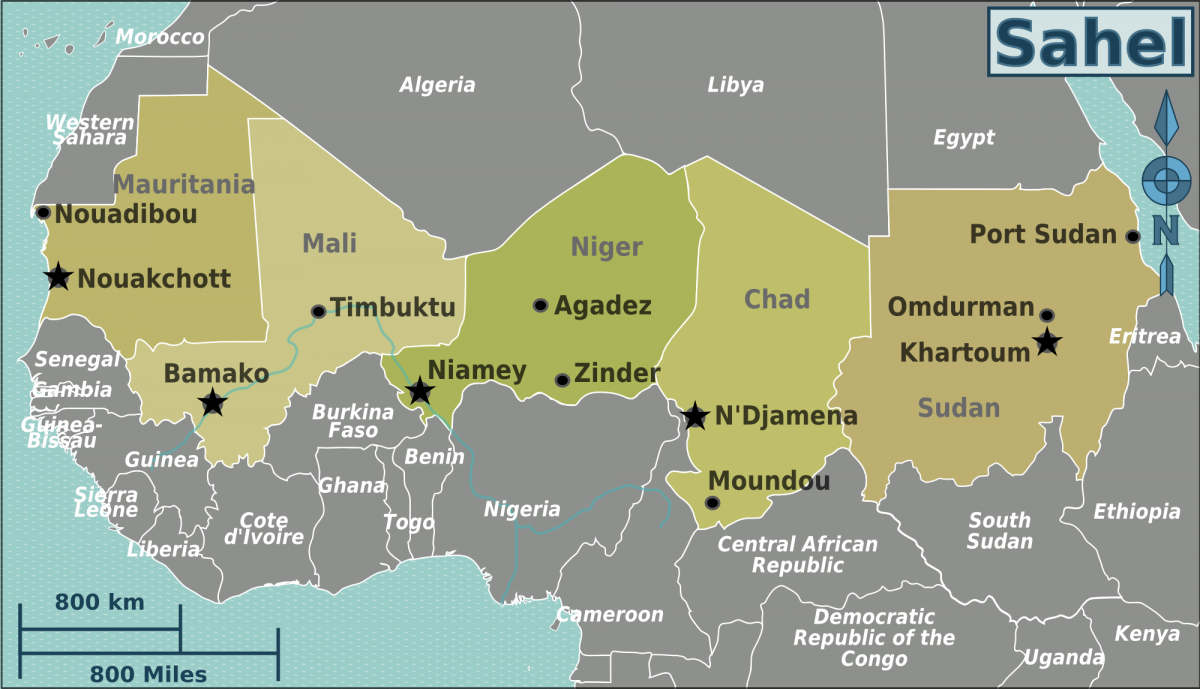
The "Troika" US-UK-Norway diplomatic group that helps oversee the Sudan peace process released a report in March charging that the Wagner Group is engaged in illegal gold mining in collaboration with the Rapid Support Forces (RSF), a paramilitary group backed by the Sudanese regime. Sudan's Ministry of Foreign Affairs responded with a statement denying the presence of the Wagner Group in the country. (Sudan Tribune, Sudan Tribune)

The Wagner Group has been repeatedly accused in atrocities in the CAR.

Map: Perry-Castañeda Library Map Collection

El Salvador: warning for post-Roe US

abortion

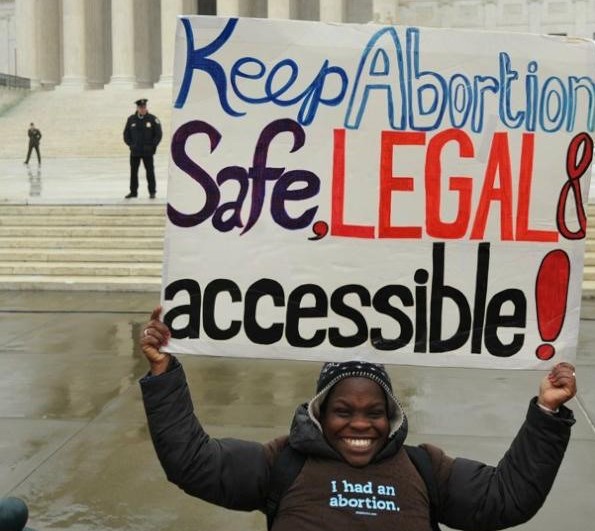
The June 24 US Supreme Court decision overturning Roe v. Wade comes six weeks after a court in El Salvador sentenced a woman to 30 years in prison after she suffered an obstetric emergency that resulted in termination of her pregnancy, according to a local advocacy group that was assisting in her defense. The Citizen Group for the Decriminalization of Abortion (Agrupación Ciudadana por la Despenalización del Aborto-ACDATEE) denounced the sentence and said it would appeal the conviction. The woman, identified only as "Esme," was held in pre-trial detention for two years following her arrest when she sought medical care at a public hospital. She already had a seven-year-old daughter. (DW, May 11)

Just a week before the US high court ruling, another Salvadoran woman imprisoned for a similar "crime," Teodora del Carmen Vásquez, had a warning for women in the United States. "From the moment we get pregnant, we become incubators," she told the Associated Press. "We lose our rights, because the only possibility that we have of a life is taking care of the product inside us. It's violence against us."  

Vásquez was released in 2018 after serving nearly 11 years of a 30-year term. Her sentence was commuted by El Salvador's Supreme Court of Justice on the grounds that there was insufficient evidence to determine that she had intentionally caused the stillbirth. Her conviction was not overturned.

Vásquez was one of "Las 17"—Salvadoran women imprisoned after their pregnancies were terminated by obstetric problems. The other 16 remain in prison, and "Esme" may return the number to 17. Many more women have been prosecuted for suffering a miscarriage. 

Abortion was generally available in El Salvador until the late 1990s, when conservative lawmakers changed the penal code—followed by a 1998 constitutional amendment defining life as starting at conception.  While abortion carries a maximum eight-year term, prosecutors have the option of charging women with "aggravated homicide," punishable by 30 years in prison.

While some Latin American countries have decriminalized abortion over the past years, El Salvador, Honduras and Nicaragua continue to have total bans. On March 6, some 2,000 women marched in San Salvador to demand legalization of abortion, and to protest "femicides." In 2021, the country saw 132 documented cases of women slain in targeted attacks for their gender. (NPR, May 4; AFP, March 6)

Photo: Debra Sweet/WikiMedia via Jurist

UN officials concerned by Iran executions

executions

At the 50th session of the UN Human Rights Council in Geneva, UN Deputy High Commissioner for Human Rights Nada Al-Nashif expressed concern June 21 over the increase in human rights violations occurring in Islamic Republic of Iran. In accordance with Resolution 76/178 of the UN General Assembly, the Secretary-General of the United Nations was required to prepare an interim report on the human rights situation in Iran and submit it to the 50th session of the Human Rights Council.

Speaking on behalf of the Secretary-General, Al-Nashif especially noted the continued execution of individuals who have been convicted of minor offenses. The UN report found that the death penalty is used for offenses, and that fair trial procedures were not being followed. Al-Nashif reported that:

While 260 individuals were executed in 2020, at least 310 individuals were executed in 2021, including at least 14 women. This trend continued: between 1 January and 20 March 2022, at least 105 people were executed, many of whom belonging to minority groups. In March, 52 individuals convicted to death on drug-related charges were transferred for execution to Shiraz Central Prison.

Additionally, at least two children were executed between August 2021 and March 2022, and over 81 child offenders remain on death row.

From Jurist, June 23. Used with permission.

Photo: ICHRI

Turkey arrests 16 Kurdish journalists

MLSA

Turkish officials formally arrested and jailed 16 Kurdish journalists on June 16 after detaining 21 journalists for eight days without charges. Five of the original 21 were released. According to Turkey's Media & Law Studies Association (MLSA), the 21 journalists were originally detained on suspicion of "terrorism." The MLSA's Mehmet Ali Birand dismissed the validity of the charges, saying: "Most of these colleagues were working in media organs such as DİHA [news agency] and Özgür Gündem [newspaper]… None of these journalists participated in terrorist activities. None of these journalists carried a gun, pulled a trigger, or killed anyone." Turkish officials claimed the arrests were part of an investigation into the "press committee" of the militant Kurdistan Workers Party (PKK).

Turkey consistently ranks low on Reporters Without Borders' Press Freedom Index. It is currently ranked 149 out of 180 countries, a four point drop between 2021 and 2022.

From Jurist, June 16. Used with permission.

See our last posts on the PKK and the political crackdown in Turkey.

Image: MLSA

Tanzania: troops fire on Maasai herders

Maasai

Tanzanian security forces on June 10 fired on Maasai herders in a dispute over seizure of traditional grazing lands for a new game reserve. The trouble started when hundreds of troops of the Field Force Unit arrived in Wasso village of Loliondo division, in northern Ngorongoro district, to demarcate a 1,500 square-kilometer area for the new reserve. Maasai gathered to protest, and were met with bullets. Some 30 were reportedly shot, and two killed. Video footage shared on social media shows residents running from live fire. Other images show some Maasai with gunshot wounds. Afterwards, troops went house-to-house in local villages, beating and arresting those they believed took part in the protests, or distributed images of the violence. Thousands of Maasai have fled their homes into the bush following the raids.

UAE-based Otterlo Business Company, which runs hunting excursions for the Emirates' royal family, is to reportedly operate trophy-hunting concessions in the new reserve, which is near the famous Serengeti National Park. "The arrival of a heavy police force signals the government has moved forward with plans to change the status of the Loliondo Game Controlled Area into a Game Reserve, which would trigger mass evictions of Maasai living in legally registered villages within the area," read a statement on the incident from the Oakland Institute.

Loliondo is an important area for Maasai grazing in the dry season because it contains the only permanent water point in the area. Climate change is forecast to lead to more erratic rainfall and longer drought periods in northern Tanzania, making access to water sources critical to the survival of the Maasai pastoralist tradition. "By attacking pastoralism, you are attacking the Maasai cultural and spirituality," said Joseph Oleshangay, a spokesman for the people. (Climate Home News, Inside Climate News, Survival International, Down to Earth)

The Maasai face similar pressures in Kenya, as we have noted here, here, here and here.

Photo: Survival International

Colombia: pending presidency ‘between two populisms’

Colombia Humana

Following a first round of presidential elections May 29, "between two populisms" is the catchphrase being used by Colombia's media for an unprecedented moment. A pair of political "outsiders" are to face each other in the June 19 run-off: Gustavo Petro, a former guerilla leader and Colombia's first leftist presidential contender, versus Rodolfo Hernández, a construction magnate whose pugnacious swagger inevitably invites comparison to Donald Trump. Hernández, an independent candidate and the former mayor of Bucaramanga, rose precipitously in an ostensibly anti-establishment campaign driven by social media, winning him the epithet "King of TikTok." But Colombia's political establishment is now lining up behind him to defeat Petro. The former mayor of Bogotá and a veteran of the demobilized M-19 guerillas, Petro is the candidate of a new progressive coalition, Colombia Humana, emphasizing multiculturalism and ecology as well as more traditional social justice demands.

Early polling had favored former Medellín mayor Federico "Fico" Gutiérrez, running on the ticket of Equipo Por Colombia, a coalition of the country's more traditional political parties, including the once-hegemonic Conservatives and Liberals. But he was overtaken by the upset surge for Hernández. 

Despite railing against official corruption, Hernández himself is under criminal investigation by the Prosecutor General's office for allegedly intervening as Bucaramanga mayor in a garbage collection contract to benefit a company that his son had lobbied for. Hernández, of course, says the accusations were trumped up to derail his presidential bid.

But Hernández has faced other scandals. In 2019, he resigned as mayor after being censured by the Prosecutor General for improper participation in politics while in office. He also got in hot water for slapping a city council member and calling him a "son of a whore." He has openly called himself a "follower of Adolf Hitler," and says he will declare a state of emergency if elected. (Cuetión Pública, Bogotá, June 3; El Heraldo, Barranquilla, June 2; El Colombiano, Medellin, Reuters, Colombia Reports, May 31; NYT, May 30; WOLA, May 25; Council of the Americas, May 20; Bloomberg, April 27)

On the ongoing armed conflict and narco-violence, Hernández says he will take a "zero impunity" approach to crime, and beef up the security forces to retake areas "where armed actors exercise forms of political and territorial control."

Petro, in contrast, would reform the security forces and purge their leadership at the highest levels, do away with military conscription, and revise the "national security doctrine." He says the "war on drugs" has been a failure, and calls for re-focusing enforcement efforts from peasant producers and low-level couriers to the financial and business sectors that facilitate trafficking and launder the proceeds. (El Tiempo, Bogotá, May 31) 

Violence and irregularities
While Colombia's Electoral Observation Mission (MOE) ultimately said the polls passed muster for legitimacy, the MOE reported over 400 possible irregularities. The Defensoría del Pueblo, the official human rights monitor, reported that 521 of Colombia's 1,123 municipalities were vulnerable to violence that could interfere with the vote, especially naming the departments of Cauca , Nariño and Chocó. In Vista Hermosa, Meta department, poll worker Nelly Bedoya Vásquez was killed, apparently by a "dissident" faction of the FARC guerillas. (Contagio Radio, June 1; El Espectador, Bogotá, May 31; El Colombiano, May 29; El Tiempo, May 20)

In the Montes de María region of Bolívar and Sucre departments, community leaders reported that the Clan del Golfo criminal network was threatening campaign workers with the Pacto Histórico, the broader coalition of Colombia Humana and other parties supporting Petro's candidacy. (El Tiempo, May 6)

Immigration authorities also appeared to interfere with the entry of election observers. Three were deported, while two were barred entry to the country at the Bogotá airport, and only allowed to proceed following intervention by the MOE. (Cambio, Bogotá, Contagio Radio, May 26)

Death threats against Petro
After launching his candidacy last year, Gustavo Petro began receiving threats—and these only escalated as the campaign proceeded. In early May, Cuestión Pública reported that a criminal band known as "La Cordillera" had hired three sicarios to assassinate Petro at a campaign stop in Dos Quebradas, Risaralda department. (Contagio Radio, May 3; El Espectador, May 2)

Petro's running mate Francia Márquez, an Afro-Colombian environmental campaigner from Cauca, reported that pamphlets threatening her with death, signed by the Aguilas Negras paramilitary group, were appearing around the country. She called on incumbent President Iván Duque to take measures to assure her protection. (El Espectador, March 28)

In the wee hours of April 11, the Bogotá offices of the Petro-Márquez campaign were breached by unknown intruders, who broke wndows and overturned furniture. (El Espectador, April 16)

Other controversies
One of Petro's most prominent supporters, Piedad Córdoba, a longtime leader of Colombia's left recently elected to a senatorial seat, was detained by authorities in Panama on May 25, accused of attempting to fly out of the country with $68,000 in undeclared cash. Petro has since been distancing himself from his longtime ally. (El Colombiano, May 31; El Colombiano, May 27)

Petro won some unlikely support with his proposal for a "social pardon," a wider amnesty than that allowed under the current special justice system established by the peace process. Salvatore Mancuso, notorious patriarch of Colombia's far-right paramilitary movement, issued a letter expressing his approval of the idea. Mancuso completed a prison term in the United States in 2020, but is still being held by US authorities as he fights a Colombian extradition request. He has testified to Colombia's Peace & Justice Tribunal via video link from his prison cell in Atlanta, Ga. (CNN Español, May 30; Caracol Radio, May 27; InfoBae, May 26; El Espectador, April 27)

Photo via Twitter

Russian mercenaries accused in Libya atrocities

Libya

A report to the Security Council by a panel of UN human rights experts finds that foreign fighters and private military companies are responsible for grave abuses in Libya—especially naming Russia's Wagner Group. The report was classified "confidential," but a copy was leaked to the Associated Press. It finds that both Turkish-backed militias loyal to the Tripoli-based Government of National Accord (GNA) and the Wagner Group, apparently contracted by eastern warlord Khalifa Haftar, have employed mercenaries who were veterans of the internal war in Syria. The GNA-aligned militias are implicated in abuses of migrants, who have been "regularly subjected to acts of slavery, rape and torture." The Wager Group is accused of planting unmarked anti-personnel mines on the southern periphery of Tripoli, when the city was besieged by Haftar's forces from April 2019 to an October 2020 ceasefire.

The Wager Group contingent has now retreated with the bulk of Haftar's forces to the port city of Sirte (Surt), east of Tripoli, which has become the new front line.

The report also finds that Chadian rebel groups operate from Libyan territory, and that Sudanese fighters have been recruited by Haftar.  

The Wagner Group portrays itself as a private military contractor, and the Kremlin denies any link to the outfit. But the US State Department identifies Wagner's financer as Yevgeny Prigozhin, an oligarch with close ties to Russian President Vladimir Putin. (More at EuroNews, The Guardian, HRW)

Russia and China blocked official release of a similar report to the Security Council in September 2020, documenting violations of the Libya arms embargo by foreign powers. (AP)

Map: Perry-Castañeda Library

Leaked documents reveal abuse of Uyghurs

Xinjiang

China's President Xi Jinping held a video call with UN High Commissioner for Human Rights Michelle Bachelet during her visit to Xinjiang May 25. But Bachelet's fact-finding tour co-incided with new evidence of crimes against the Uyghur people of the province. A hacker broke into a network of computers in Xinjiang's so-called "Vocational Skills Education & Training Centers," releasing a cache of files that document significant abuses. The Xinjiang Police Files, published by the Journal of the European Association for Chinese Studies, include images from inside the camps, as well as thousands of detainee records. Many of these are run by the BBC in a photo essay, "The faces from China's Uyghur detention camps."

The records indicate that 12% of the 2018 adult Uyghur population of some counties was in camps or prisons. The files also include a 2017 internal speech by Chen Quanguo, then Communist Party secretary for Xinjiang, in which he apparently ordered guards to shoot to kill anyone who tried to escape the camps, and called for officials in the region to "exercise firm control over religious believers."

The documents include detailed instructions on how to run the internment camps—from what kinds of force can be used against prisoners to details on equipping watchtowers with sniper rifles and infantry-grade machine guns.

They also expose demands for new camps from Xi Jinping "because existing ones are overcrowded," tweeted the study's author, Adrian Zenz of the Victims of Communism Memorial Foundation. (BAS, Jurist, Al Jazeera)

Image: Xinjiang Police Files

Russia imprisons still more Crimean Tatars

Tatars

A court in Russia has sentenced another group of Crimean Tatars to lengthy prison terms on charges of belonging to a banned political organization. The Southern District Military court in the southwestern city of Rostov-on-Don on May 12 sentenced Bilyal Adilov to 14 years, while Izzet Abdullaev, Tofik Abdulgaziev, Vladlen Abdulkadyrov and Mejit Abdurakhmanov each received 12-year sentences. The men are accused of being members of Hizb-ut-Tahrir, an organization that advocates for the peaceful restoration of an Islamic Caliphate. It operates freely in Ukraine but is banned in Russia as an "extremist" organization. The men, arrested in March 2019 in a sweep along with more than a dozen other Tatars, were also members of the group Crimean Solidarity, formed to oppose the illegal Russian annexation of the Crimean Peninsula in 2014. Since the annexation, over 30 Crimean Tatars have been sentenced to lengthy prison terms, more than half this year alone. (Al Jazeera, RFE/RL)

Shirts read: "Truth cannot be imprisoned, killed, or hidden!" Photo via RFE/RL

Ukraine preparing multiple war crime cases

Bucha

Ukrainian prosecutor general Iryna Venediktova announced May 14 that her office is preparing war crimes cases against 41 suspects, on charges including "the bombing of civilian infrastructure, the killing of civilians, rape and looting." Venediktova has said that her office is investigating more than 10,700 potential war crimes involving more than 600 suspects.

The first war crime trial since the start of the invasion opened in Kyiv a day earlier. The suspect is a 21-year-old Russian soldier accused of killing a Ukrainian civilian in the northeastern village of Chupakhivka, Sumy oblast, on Feb. 28. Sgt. Vadim Shysimarin is accused of shooting a 62-year old man who was riding his bicycle. Shysimarin has been charged under both international war crimes statutes and with premeditated murder under Ukraine's penal code. The Ministry of Defense has also identified 10 Russian soldiers who may be charged with war crimes for mass killings in the city of Bucha.

International war crime trials are also expected. According to a press release April 22 from the UN high commissioner for human rights, Michelle Bachelet, the UN Human Rights Monitoring Mission in Ukraine (HRMMU) has "received more than 300 allegations of killings of civilians in towns in the regions of Kyiv, Chernihiv, Kharkiv and Sumy" in late February and early March. Bachelet emphasized: "Wilful killing of protected persons, including summary executions, are gross violations of international human rights law and serious violations of international humanitarian law, and amount to war crimes." (DW, Jurist)

Both the ICC and UN Human Rights Council have opened investigations into possible war crimes in Ukraine.

Photo: Vigilant News via Twitter

Libya: militia accused of grave abuses against migrants

Libya detention

A May 4 report from Amnesty International finds that a militia funded and backed by Libya's Tripoli-based Government of National Unity is responsible for a litany of crimes, including unlawful killings, torture, rape, forced labor, and the interception and return of migrants and refugees to the country's notoriously harsh detention centers. Created by government decree in January 2021, the Stability Support Authority (SSA) is commanded by one of the most powerful militia leaders in Tripoli, Abdel Ghani al-Kikli AKA "Gheniwa," who was appointed despite a well-documented history of crimes and serious human rights violations committed by forces under his command.

"Legitimizing abusive militia leaders and putting them on state payroll with no questions asked only empowers them to continue trampling on the rights of more people with complete impunity. It can come as no surprise that Abdel Ghani al-Kikli's new militia is yet again involved in horrific crimes—whether against migrants and refugees or Libyans," said Diana Eltahawy, deputy regional director for the Middle East and North Africa at Amnesty International.

"For over a decade, militias under his command terrorized people in the Tripoli neighborhood of Abu Salim through enforced disappearances, torture, unlawful killings and other crimes under international law. He should be investigated and, if there is enough admissible evidence, prosecuted in a fair trial."

See our last reports on the migrant crackdown in Libya, and the country's ongoing political crisis.

Photo: Alessio Romenz/UNICEF

Russian mercenaries accused in CAR atrocities

Central African Republic

Forces in the Central African Republic, identified by witnesses as Russian mercenaries, "appear to have summarily executed, tortured, and beaten civilians since 2019," Human Rights Watch finds in a new report. On April 15, the United Nations announced it wil investigate the circumstances in which at least 10 people were killed in the CAR's northeast, with initial reports alleging involvement by Russian forces from the paramilitary Wagner Group. In the attacks three days earlier, up to 15 civilians were killed at the villages of Gordil and Ndah, some 1,000 kilometers northeast of the capital Bangui. Local officials and aid workers told AFP the attacks were carried out by elements of the "FACA [Central African Armed Forces] and their allies"—the term used by both the authorities and the UN for Russian mercenaries. HRW documents other such claims. On July 21, 2021, apparently Russian-speaking forces killed at least 12 unarmed men near the town of Bossangoa, some 300 kilometers north of the capital. HRW is calling upon the CAR's Special Criminal Court (SCC) or the International Criminal Court to "investigate these incidents as well as other credible allegations of abuse by Russia-linked forces with a view to criminal prosecution."

The CAR government has reportedly contracted the Wagner Group to help beat back the new rebel alliance calling itself the Coalition of Patriots for Change (CPC).

Map via Perry-Castañeda Library Map Collection

Malaysia: calls to end mass detention of refugees

detention

Rights groups in Malaysia are calling for the release of thousands of detained refugees and asylum-seekers, after a deadly incident in the northern state of Penang April 20. Six Rohingya refugees were reportedly struck by vehicles and killed when hundreds fled a detention center after breaking through barriers and attempted to escape across an adjacent highway. "There is no discernible reason as to why so many of them were cramped into a makeshift depot in the first place," stated advocacy group Lawyers for Liberty. Malaysia has long been a destination for Rohingya fleeing persecution in Myanmar, but the government has cracked down on asylum-seekers during the COVID-19 pandemic.

From The New Humanitarian, April 22

See our last report on the Rohingya genocide.

Photo: Hasnoor Hussain/TNH

Protests over fuel price hikes shake Mauritius

Camp-Levieux

The African island nation of Mauritius exploded into angry protests April 22, with residents of poor Kreol communities erecting roadblocks and fighting the police. The island had seen days of peaceful demonstrations over a sudden and drastic increase of petrol and gas prices, centered on the town of Camp-Levieux. Things turned violent after the arrest of "Darren," a young protest leader, on charges of "participation in illegal demonstrations." The police headquarters where he was being held was besieged, and protests spread quickly to other towns across the island. Police deployed anti-riot units and armored vehicles against youth hurling stones and Molotov cocktails. Things calmed the following day when Darren was released on bail. But it remains to be seen if the increasingly debt-burdened government can strike a deal with the newly mobilized popular movement. (Jurist)

World oil prices have surged to $100 a barrel in the wake of Russia's invasion of Ukraine.

Photo: Zinfos Moris

Pipeline plans threatened by Af-Pak border clashes

Kunar

Afghanistan authorities say some 60 civilians, including five children, were killed as Pakistan launched air-strikes across the border on Khost and Kunar provinces April 15 and 16. The strikes, carried out by both missiles and warplanes, follow a series of attacks by the Tehreek-e-Taliban Pakistan (TTP) in Pakistan's borderlands, including an April 14 ambush on a military convoy in North Waziristan district in the volatile Khyber Pakhtunkhwa province.

The strikes were harshly condemned both by the Taliban regime, officially the "Islamic Emirate of Afghanistan," and the Afghan permanent mission in the United Nations. However, more than six months after the Taliban takeover, the status of the UN mission is still contested—it is staffed by holdovers from previous regime, but it is unclear whether that government or the new Taliban regime formally holds the UN seat.

The tensions over the air-strikes come a week after top diplomats from China, Pakistan, Turkmenistan and other regional states met for a summit at Tunxi, in China's Anhui province, on reviving the long-stalled Turkmenistan-Afghanistan-Pakistan-India (TAPI) pipeline, which would deliver Central Asian gas to world markets through Afghan territory. (Al Jazeera, ANI, Khaama Press, Khaama Press, Khaama Press, Khaama Press, Hindustan Times, The Diplomat)

Photo via Khaama Press

Russian crackdown on Ukrainian… composers

Lubimov

Moscow police on the night of April 13 broke up a concert by pianist Aleksey Lyubimov and singer Yana Ivanilova at the city's Rassvet Cultural Center. The official reason for the raid was an anonymous bomb threat on the venue. But concert organizers noted that the program included songs by the Ukrainian composer Valentin Silvestrov, which had apparently been chosen as an implicit anti-war statement. Lyubimov continued to play the song he was in the middle of even as uniformed police took over the stage and hovered over him menacingly. As the classical music news site Slipped Disc stated: "Lyubimov's final chord was an act of defiance." Moscow Times reports that police then ordered the premises cleared, but applause from the audience drowned out the officers' words. After the theater was evacuated, police brought in dogs and had it searched for two hours. No explosives were found.

Russians have been detained for displaying Ukrainian flags and symbols since Moscow launched its "special military operation" on Feb. 24. Some have been detained for carrying balloons or wearing nail polish with the blue-and-yellow of the Ukrainian flag.

See our last report on the fast-escalating crackdown on dissent in Russia.

Photo via Facebook

Protests in Baltistan amid Pak political crisis

Kashmir

Pakistan has seen mass mobilizations both in protest and celebration since parliament on April 10 voted to remove Imran Khan as prime minister. The vote took place three days after the Supreme Court of Pakistan held that an order by Khan to dissolve the parliament was unconstitutional. Parliament's lower house appointed the leader of the opposition, Shehbaz Sharif, as the new prime minister. Khan's party, Pakistan Tehreek-i-Insaaf, staged a walkout from the Assembly ahead of the vote.

Opposition to Khan has been mounting in the remote and contested Himalayan region of Baltistan. April 6 saw a protest outside government offices in the Baltistan town of Skardu, with residents demanding the return of properties they say have been usurped by local officials. Protesters accused the Khan administration of illegal and forceful acquisition of their properties on behalf of "land mafias" dominated by regional oligarchs.

Baltistan is part of the territory claimed by India as within the disputed province of Kashmir. However, Islamabad has had it administratively severed from the rest of Pakistan-held Kashmir, together with the adjacent region of Gilgit. The governor of the "autonomous territory" of Gilgit-Baltistan, Raja Jalal Hussain Maqpoon, resigned after Khan was removed from power. (Jurist, Indian Express, Hindustan Times, Dunya News, ANI)  

Map via Wikipedia

Senegal: new offensive against Casamance rebels

Senegal

Senegal's military has launched a new offensive against a faction of the separatist Movement of Democratic Forces of Casamance (MFDC). The operation follows the death of four soldiers and the capture of seven others in fighting weeks earlier with the MFDC faction led by Salif Sadio, which has remained in arms in defiance of a 2014 ceasefire. A military statement said the offensive aims to "destroy all armed gangs conducting criminal activities" and "preserve the integrity of the national territory at all costs." Casamance—the narrow southern strip of Senegalese territory sandwiched between Gambia to the north and Guinea-Bissau to the south—has seen a pro-independence insurgency since 1982, making it Africa's longest-running conflict. Tens of thousands have been displaced, the rural economy is devastated, and large stretches of territory have become no-go zones due to landmines. (TNH)


Map: PCL Map Collection

Inauspicious start for Chad peace talks

Chad FACT

Chad's junta on March 13 opened delayed peace talks with rebel and opposition groups in Qatar. But things got off to a bad start when one of the main rebel outfits–the Front for Change & Concord in Chad (FACT)–walked out amid confusion over Doha's role as a mediator. Chad was plunged into uncertainty last April when long-time ruler Idriss Déby was killed while commanding troops combating a FACT offensive. Power was then seized by Déby's 38-year-old son, Mahamat Idriss Déby, who outlined an 18-month transition. The Doha talks are considered a precursor to a national dialogue that the younger Déby is organizing before planned elections. But in a country that has experienced decades of rebellion and state repression, things are unlikely to proceed smoothly. Just last month a phone conversation surfaced in which Timan Erdimi—head of the Union of Resistance Forces (UFR), one of the rebel groups present in Doha—discussed plans to oust Déby using the Kremlin-linked mercenary Wagner Group. (The New Humanitarian)


Image via Twitter

Russia imprisons more Crimean Tatars

Tatars

A Russian military court on March 22 sentenced two Crimean Tatar men to long prison terms for peaceful activities. Timur Yalkabov received 17 years and Lenur Seidametov received 13. Both were active in the Crimean Solidarity movement, formed to advocate for Tatar rights after the illegal annexation of the Crimean Peninsula by Russia in 2014. They were charged with membership in Hizb ut-Tahrir, a transnational Muslim civic organization that is legal in Ukraine. Seidametov and Yalkabov were arrested, with four other Crimean Tatars, in night raids on their homes by Russia's FSB secret police in February 2021, in which "prohibited" literature was supposedly found. Seidametov's wife has said that the FSB agents planted the literature. Russia's Supreme Court declared Hizb ut-Tahrir a "terrorist" organization in 2003, a ruling that has been widely used to prosecute Crimean Tatars for "involvement" in the group. Both men are recognized as political prisoners by the Memorial Human Rights Center, Russia's leading rights organization. (Kharkiv Human Rights Protection Group)

The Memorial Human Rights Center is itself now threatened with closure by Russian authorities amid a fast-escalating crackdown on dissent.

Photo via Kharkiv Human Rights Protection Group. Shirts read: "Faith is not terrorism" and "Deportation continues"

Belarus ‘votes’ to abandon nuclear-free status

Belarus

Belarus on Feb. 28 voted in a referendum to approve constitutional changes that include dropping the country's nuclear-free status. On the eve of the vote, President Alexander Lukashenko expressed his willingness to redeploy nuclear arms in the country's territory, saying: "If [the West] transfers nuclear weapons to Poland or Lithuania, to our borders, then I will turn to [Vladimir] Putin to bring back the nuclear weapons that I gave away without any conditions." 

After the break-up of the Soviet Union in 1991, Belarus ceded the nuclear weapons deployed on its territory to Russia, and the Belarusian constitution declared that the country would remain a "nuclear-free zone." This clause has now been expunged from the document.

The constitutional changes also further consolidate the power of Lukashenko, who has ruled the country since 1994. The amendments strengthen the All-Belarusian People's Assembly, an appointed body of industry leaders and government officials. Under the changes, the assembly is to become the "highest representative body of democracy," with the power to elect and dismiss judges, and acquires parliament's authority to impeach the president.

The country's central elections commission said that 65.2% of those who took part in the referendum voted in favor of the constitutional changes. Western governments have already stated they will not recognize the results of the referendum, which came amid a continued crackdown on opposition in Belarus. 

The vote actually coincided with the first outbursts of street protests in Belarus since the wave of repression that put down the mass demonstrations following the evidently fraudulent elections on August 2020. As the referendum results came in, some 800 people were arrested in unpermitted protests across Belarus against the Russian invasion of Ukraine. Russian anti-war protesters have also faced repression and mass arrests in recent days.

In response to the new outbreak of protest, Belarus' exiled opposition leader Sviatlana Tsikhanouskaya stated from Lithuania: "I'm so proud that Belarusian people—despite two years of repressions—managed to go out onto the streets…to show our support for the Ukrainian people." (Euronews, Euronews, Al Jazeera, CEPA)

Russian President Putin ordered his nuclear forces on high alert after the Ukraine invasion was initiated last week. Russian nuclear submarines are currently carrying out drills in the Barents Sea, while mobile missile launchers are conducting exercises in Siberia. (AP)

Map via PCL Map Collection

Ukraine war’s fallout on global wheat supplies

wheat

One knock-on effect of the war in Ukraine has been a jump in the global price of wheat—to its highest level since 2008. Russia and Ukraine account for a third of the world wheat supply, and Ukraine's most productive regions lie in the path of the conflict. If Ukrainian wheat is taken off the market, or ports are badly damaged, prices could possibly double. That would especially hurt the Middle East and North Africa—but also places as far afield as Bangladesh and Nigeria, which are major importers of Russian and Ukrainian wheat. The real test for the world supply will be the next harvest in four months' time. If Western sanctions target Russian production—or Moscow angrily responds to pressure by squeezing wheat supplies—then shortages could really bite, potentially worsening global huger.

Price stability may depend on what China decides to do, analysts say. If it buys up Russia's wheat, that would free up supplies in other markets that China had previously relied on, which could take the heat off global prices.

From The New Humanitarian, Feb. 25.

Image: Wikimedia Commons

Libya’s two prime ministers

Libya

On Feb. 10, Libya's eastern-based parliament chose a new prime minister for the country, former interior minister Fathi Bashagha. The only problem… Libya already has an interim prime minister: Abdul Hamid Dbeibah, who was chosen by a UN-led process to head the Tripoli-based Government of National Accord. Dbeibah was supposed to guide the fractured country through presidential elections in late December, but they were postponed after confusion and contestation over the rules governing the process. Among the issues: Dbeibah, who had promised not to run for president but put his hat in the ring anyway, would apparently have to step away from his duties three months before the polls—which he did not do. The Tobruk-based parliament says the December deadline means Dbeibah's time is up, but he says he won't hand over power until elections take place. He also reportedly survived an assassination attempt shortly before the parliament's move to replace him, but details on what really happened remain thin. None of this appears to bode well for Libyans' long quest for a united country.

From The New Humanitarian, Feb. 11

Note: Not at all surprisingly, Russia has thrown its support behind Bashagha. Somewhat more surprisingly, Turkey—the strongest backer of the GNA—has stated its neutrality on the question. (Al-Monitor, The Arab Weekly)

See our last report on the political crisis in Libya.

Map: Perry-Castañeda Library

Control of oil behind Mexico-Spain tensions

Pemex

Mexico's President Andrés Manuel López Obrador on Feb. 9 called for a "pause" in relations with Spain, in a speech that explicitly invoked the legacy of colonialism going back to the Conquest. But the speech was clearly aimed principally at Spanish oil company Repsol, which had been favored during the presidential term of Felipe Calderón. Specifically, López Obrador questioned the granting of gas contracts in the Burgos Basin, in Mexico's northeast. He charged that Repsol operated the fields less productively than the state company Pemex had. "In the end, less gas was extracted than Pemex extracted" before the contracts, he charged.

The director of Pemex, Octavio Romero Oropeza, added that the Spanish firm had "all the advantages" in the Burgos contracts.

López Obrador also made reference to the Camisea project, which delivers gas to the Mexican port of Manzanillo from fields operated by a consortium including Repsol in the Peruvian Amazon. According to the Mexican president, the 2007 Camisea contract had not even been signed when "Repsol was already buying the gas in Peru, assuring that it had already been sold in Mexico." (Europa Press)

On Feb. 7, Spain's high court, the Audiencia Nacional, accepted appeals to re-open formal investigations into Repsol chair Antonio Brufau and Isidro Faine, former chair of Valencia's Caixabank. The investigation, which had been suspended by a lower court, was exploring charges that Repsol and Caixabank hired Grupo Cenyt, a security firm belonging to Spain's former national police chief Jose Manuel Villarejo, to spy on the then chair of Madrid construction company Sacyr, Luis del Rivero, in 2011 and 2012. The alleged aim was to block a joint takeover bid for Repsol launched by Sacyr and Pemex. (Jurist, Reuters, EuroNews)

The chronically mismanaged Burgos fields were opened to private development followiing a 2013 reform of the energy sector in Mexico. The initial Repsol contract was for exploitation in the onshore portion of the basin, straddling the states of Coahuila, Nuevo León and Tamaulipas. In 2018, Repsol won leases in the offshore section as well. (S&P Global)

The onshore section had been particularly subject to the phenomenon of "narco-oil," with criminal organizations pirating petrol and gas for sale on the illicit market. This remains a serious problem today. At least one person was killed and over a dozen injured when a Pemex pipeline in the central state of Puebla exploded last October, after it was breached by suspected fuel pirates. (Digital Journal)

Repsol is also currently under fire in Peru following a devastating oil spill at a refinery it operates outside Lima. 

Photo via Digital Journal

Ukraine’s already existing humanitarian crisis

Ukraine

Amid the ongoing Russian military build-up and apparently faltering diplomatic efforts to prevent an invasion of Ukraine, one thing is clear: any incursion will worsen the dire humanitarian situation in the country. The latest overview from the UN's emergency aid coordination body, OCHA, published Feb. 11, makes for sobering reading: 2.9 million in need, 13% children. This includes almost 300,000 people still displaced by an eight-year war that has claimed more than 13,000 lives. Particularly affected are the elderly in the separatist-occupied, Russian-backed east. Since March 2020, when COVID-19 effectively rendered the so-called "contact line" impassable, they've been unable to cross to access their pensions and social services. On Feb. 8, eight trucks delivered the latest crossline international aid—COVID-19 prevention equipment, medicines, and construction materials. But how long these humanitarian convoys will be able to continue remains to be seen.

From The New Humanitarian, Feb. 11

Photo: The New Humanitarian

Submarine incident in flashpoint Kuril Islands

Kurils

Amid quickly escalating tensions over Ukraine, Russia has lodged a diplomatic protest with the US embassy in Moscow, claiming that a US nuclear submarine penetrated Russian territorial waters near the Kuril Islands. According to Moscow's Defense Ministry, a Virginia-class US Navy submarine was detected Feb. 12 off Urup Island, where Russia's Pacific Fleet was conducting exercises. The Defense Ministry said the submarine was chased off by Russian vessels, and retreated at "maximum speed." The statement accused the US of a "violation of Russia's state border." The Pentagon issued a statement, saying: "There is no truth to the Russian claims of our operations in their territorial waters." US President Joe Biden and Russia's Vladimir Putin spoke by phone for an hour later that day to discuss Ukraine, but according to the Kremlin the Kurils incident was not brought up. (TASS, Reuters)

Media accounts did not emphasize that whether this purported incident indeed took place in Russian waters is questionable, as the Kurils are in part claimed by Japan. At the February 1945 Yalta Conference, the US supported Soviet claims to the Kuril Islands, which were seized from the Japanese in the closing days of World War II that August. However, Japan continued to claim four islands in the chain. A Soviet-Japanese Joint Declaration on outstanding border conflicts in 1956 put off the question of the disputed islands to a future peace treaty. At this time, the US stated that the southernmost islands of Etorofu and Kunashiri have historically been sovereign Japanese territory, and therefore should be considered excluded from terms of the Yalta Declaration. Tokyo still refuses to recognize Russian rule over the disputed islands, which has effectively prevented Russia and Japan from ever entering a treaty to formally end their World War II hostilities. (Modern Diplomacy, EU Reporter, Centre for Security & Strategy Studies, New Delhi)

Urup is the next island to the north of the Japanese-claimed Etorofu (Iturup to the Russians), separated by just some 25 kilometers.

Two days before the supposed incident off Urup, a Russian Foreign Ministry representative accused Tokyo of fueling "hysteria" over the Kuril Islands question. Last year, Russia passed sweeping legislative reforms that, among an array of other measures, made it unconstitutional to cede territory to a foreign power. (WION News, India)

Russia over the past weeks has conducted naval maneuvers in the Mediterranean, the North Sea, and northeast Atlantic Ocean, as well as the Pacific and Sea of Okhotsk. The drills together involved 140 warships and support vessels, 60 planes, and about 10,000 troops. (Al Jazeera) The Kuril Islands form the barrier separating the Sea of Okhotsk from the open Pacific Ocean.

Map: International Kuril Island Project

Podcast: Nuclear power? No thanks!

nuclear

In Episode 110 of the CounterVortex podcast, Bill Weinberg rants against the current greenwashing of nuclear power, and hype about a supposedly "safe" new generation of reactors. Every stage of the nuclear cycle is ecocidal and genocidal. Uranium mining has poisoned the lands of indigenous peoples from Navajo Country to Saskatchewan to West Africa. The ongoing functioning of nuclear plants entails routine emissions of radioactive gases, factored in by the bureaucrats in determining "acceptable" levels of cancer. Disposal of the waste, and the retired reactor sites themselves, is a problem that inherently defies solution. These wastes will be deadly for exponentially longer into the future than biblical times stretch into the past. The Waste Isolation Pilot Project (WIPP) in New Mexico, hyped as secure for hundreds of millennia, leaked plutonium after only 13 years. And finally there is the "sexiest" issue, the one that actually gets some media play, at least—the risk of accident. It is a mark of capitalism's depravity that even after the nightmares of Fukushima and Chernobyl, we periodically get media campaigns about an imminent "nuclear renaissance." Meanwhile, virtually ongoing smaller accidents go by with barely a media ripple. Nuclear versus fossil fuels is the false choice offered us by industry. The imperative is to get off the extraction economy and on to one based on sustainability and resource conservation.

Listen on SoundCloud or via Patreon.

Production by Chris Rywalt

We ask listeners to donate just $1 per weekly podcast via Patreon—or $2 for our new special offer! We now have 28 subscribers. If you appreciate our work, please become Number 29!

Photo: Wikimedia Commons

UN: Syria must come clean on chemical weapons

Khan Sheikhoun

Syria's declaration to the United Nations of its chemical weapons program cannot be considered accurate due to gaps, inconsistencies and discrepancies, the High Representative for Disarmament Affairs told the Security Council on Jan. 4. Izumi Nakamitsu urged the country to cooperate with the Organization for the Prohibition of Chemical Weapons (OPCW), adding that "full cooperation" is "essential to closing these outstanding issues." The UN disarmament chief was presenting an update on the implementation of Security Council Resolution 2118 (2013) regarding the elimination of Syria's chemical weapons program.

According to Nakamitsu, Syria has submitted 17 amendments and several supplements to its initial declaration. Yet 20 of the 24 outstanding issues remain unresolved.  She told Council members that these outstanding points are "of concern" and involve undeclared research, production, and the arming of unknown quantities of chemical weapons.

There are also "significant quantities" of chemical warfare agents or precursors, and chemical munitions, whose fate has not yet been fully verified.

Nakamitsu listed for ambassadors all the information the OPCW has not yet received, such as a declaration on all heretofore undeclared types and quantities of nerve agents produced at a former production facility, details of damage caused during an attack on a facility in June 2021, and the unauthorized movement of the remains of two destroyed cylinders.

Once the Syrian National Authority provides sufficient information and explanations, Nakamitsu assured, a team from OPCW will assist, if needed, in amending the initial declaration.

Nakamitsu also stated that the OPCW has not been able to schedule the 25th round of consultations in Damascus because of the "continued refusal" by the Syrian Arab Republic to issue an entry visa for one member of the team. Efforts to convene a limited meeting with Syrian experts at the OPCW's headquarters at The Hague were also unsuccessful. (UN News)

Israel, which has for years carried out sporadic air-strikes in Syria, is believed to have struck chemical weapons facilities near Damascus and Homs on June 8 of last year. (Jerusalem Post)

Resolution 2118, the first resolution on chemical weapons in Syria, emerged from the Russian-brokered deal to avoid air-strikes after the Ghouta chemical attack of August 2013. Syria was stripped of its voting rights at the OPCW following evidence of the regime's use of poisonous gas throughout the nation's civil war.

Photo from April 2017 Khan Sheikhoun attack via EA Worldview

Nagaland: cross-country march against ‘special powers’

Nagas

Hundreds in India's conflicted eastern state of Nagaland began a two-day cross-country march Jan. 10 to protest the Armed Forces Special Powers Act (AFSPA), which gives the military broad power to use deadly force in areas where it is declared to be in effect. Some 200 set out from Dimapur, the state's largest city, and the march had swelled to over a thousand by the time it reached state capital Kohima, 75 kilometers away. The action was called in response to last month's massacre of 14 residents in the village of Oting, where army troops fired on what proved to be truck filled with coal-miners on their way home after work—not separatist guerillas, as had apparently been suspected. The march was organized by the Global Naga Forum and the Naga Mothers' Association, whose spokesperson Rosemary Dzüvichü accused the Indian government of viewing the Naga people as "the other." She lamented: "We still have this colonial attitude being shown to us." (Nagaland Post)

On Dec. 20, two weeks after the Oting massacre, Nagaland’s assembly unanimously passed a resolution demanding the repeal of AFSPA. But the federal government 10 days later extended the act for another six months. (Al Jazeera)

After the cross-country march, Army Chief Gen. MM Naravane called the Oting incident "highly regrettable," and said "appropriate action" would be taken based on the reaults of an internal military investigation. (Nagaland Post)

See our special feature on the Oting massacre.

Photo: Nagaland Express

Russia designates Pussy Riot members ‘foreign agents’

pussy riot

In the latest escalation of its crackdown on opposition, Russia on Dec. 30 designated a disparate group of activists, satirists, and others as "foreign agents." A statement released by the Ministry of Justice listed the high-profile figures as designated "foreign agents," a controversial term with Cold War-era implications of espionage that carries burdensome reporting responsibilities and exposes designees to hefty fines. Among those named were Nadezhda Tolokonnikova and Veronika Nikulshina of the activist group Pussy Riot.

Tolokonnikova gained international prominence in 2012 as she faced prosecution for a political protest that she and other group members staged in a Moscow cathedral. The list also named prominent satirist and political commentator Viktor Shenderovich, as well as journalists Taisiya Bekbulatova, Ivan Belyaev and Elena Vladykina; filmmaker Andrey Alekseev; and former media executive and politician Marat Gelman.

In its statement, the Justice Ministry said: "These individuals have been systematically spreading materials to [large audiences], while receiving foreign financing."

Under the Federal Law N 2124-1 ("On Mass Media"), any media outlet involved in the creation and dissemination of materials while receiving foreign financing can be designated as a foreign agent. The government registry lists 117 such individuals and entities. Apart from media, non-profit organizations (NPOs), unregistered public associations (UPAs) and even individuals may be designated as "foreign agents" under different laws. According to a recent report by Russian human rights initiative OVD-Info—itself designated as a "foreign agent" in September—217 NPOs and three UPAs were listed starting in 2013, of which 98 NPOs have since been shut down.

"Foreign agents" face a labelling requirement, where all their statements on social media or otherwise, must be accompanied by a message indicating their designation. "Foreign agents" are also required to file elaborate reports on the purposes of their expenditures and sources of funding and conduct expensive internal audits more frequently than other NPOs and UPAs. Individuals are required to register a legal entity for the purposes of such reporting. The OVD-Info report describes the privacy violations and practical difficulties they face in tracking each personal purchase, and the impossibility of tracing small online donations. Additionally, the designations turning away readers and potential donors, employers or partners. "Foreign agents" are also prohibited from transferring or receiving funds for organizing public events, and from contesting, campaigning or nominating in elections and referenda. Failure to comply invites fines in millions of rubles and could culminate in court orders to liquidate the entity itself.

These measures were harshly criticized by the Venice Commission of the Council of Europe (officially the European Commission for Democracy through Law).

This latest spate of designations comes in spite of international condemnation of Russia's recent attempts to shutter human rights groups and LGBT+ organizations under these laws. Pussy Riot, however, tweeted that it would not label its posts and would "appeal in court."

From Jurist, Dec. 31. Used with permission.

Note: We have been following the civil rights crackdown in Russia here.

See more on the "foreign agents" laws here.

Photo: Wikipedia

War on Christmas (yes, really) in Modi strongholds

Jesus in India

Hindu militant groups disrupted Christmas celebrations and vandalized decorations in parts of India this season, local media report. The most serious incident was in Silchar, in the northeastern state of Assam, where apparent followers of the Bajrang Dal "manhandled" Hindu youth who attempted to join observances at a Presbyterian Church on Christmas Day. In a video posted on social media, one follower said: "We have nothing against the Christians who have every right to celebrate Christmas. Our issue is with the Hindus who went against their dharma to sing Merry Christmas instead of observing Tulsi Divas." Dec. 25 is recognized by some Hindus as Tulsi Divas, dedicated to the spiritual significance of the basil plant—although it appears to be a recent invention, aimed at helping Hindus resist the lure of Christmas. Bajrang Dal is the youth arm of the Vishva Hindu Parishad (VHP), a right-wing organization allied with the ruling Bharatiya Janata Party (BJP). The VHP has been named as one of the groups involved in the 2002 Gujarat genocide.

A life-size statue of Jesus Christ was also desecrated at the Holy Redeemer Church at Ambala, Haryana, a northern state governed by the BJP. In Varanasi—Prime Minister Narendra Modi's parliamentary constituency and Hinduism's holiest city—an unidentified group torched a model of Santa Claus, while chanting slogans against Christmas celebrations and religious conversions outside a church. (DW, The Hindu)

So it turns out that in one country on Earth where there really is a "War on Christmas," it is being carried out by followers of Donald Trump's good friend and ally Narendra Modi. Another one to file under "Life's little ironies."

Photo via Article 14

Tunisia: political crisis deepens

Angola

Tunisia's former president Moncef Marzouki was sentenced in absentia to four years in prison by the Tunis Court of First Instance on Dec. 21. Marzouki was convicted of "undermining the external security of the State," according to Tunisia's national press agency. Marzouki served as Tunisia's president from 2011 through 2014. Most recently, Marzouki has received attention for his criticism of Tunisia's current President Kaïs Saied.

Saied was elected as president in 2019. In July 2021, he suspended parliament and fired the prime minister amid national unrest over economic turmoil and the COVID-19 pandemic. Saied has since tightened his grip on power.

Marzouki has called Saied a "dictator," arguing that he conducted a coup in July. Marzouki frequently takes to social media platforms to condemn Saied's regime and encourage protests. He has also called upon the French government to end support of Saied's regime.

In October, Marzouki urged the Francophonie Summit, a major international meeting of French-speaking countries, to be moved from Tunisia. Following these comments, the Tunis Court of Appeal opened an investigation into Marzouki. The decision sentencing Marzouki to four years in prison reflects the findings of that investigation. According to the TAP, Marzouki "has harmed the interests of Tunisia, particularly at the diplomatic level."

In a statement to Al Jazeera, Marzouki rejected the ruling as illegitimate and vowed to continue fighting Saied's regime. Marzouki, however, does not intend to appeal the ruling.

From Jurist, Dec. 24. Used with permission.

See our last post on the political crisis in Tunisia.

Image: Pixabay

UN chief calls for action against autonomous weapons

killer robot

UN Secretary General António Guterres on Dec. 13 called upon member states to devise "an ambitious plan for the future to establish restrictions on the use of certain types of autonomous weapons" ahead of the Sixth Review Conference of the Convention on Certain Conventional Weapons (CCW). He called on the CCW to "swiftly advance its work on autonomous weapons that can choose targets and kill people without human interference."

The CCW seeks to restrict the use of weapons that are excessively injurious or have indiscriminate effects. It is based on the principles of proportionality and distinguishing between civilians and combatants. In recent years, it has become the forum for discussions on the humanitarian, ethical, military and legal implications of the use of lethal autonomous weapons (LAWS).

The potential framework for addressing LAWS has been debated by members of the CCW since 2013. CCW members have adopted conflicting positions on the issue. Concerns regarding the dangers of these "killer robots" have heightened since the Panel of Experts on Libya in March 2021 reported to the UN Security Council that a military-grade autonomous drone had been used in an armed conflict.

SpaceX CEO Elon Musk and Google vice president for artificial intelligence policy Mutafa Suleyman are among the foremost AI experts who have urged the UN to ban the development of autonomous weapons. In 2020, Human Rights Watch issued a report proposing the fundamental elements of a treaty to ban the use of such weapons.

A coalition of over 65 CCW states has endorsed the proposed ban on LAWS. Certain member states, including the US and Russia, have opposed the ban. The US has expressed preference for a "non-binding code of conduct" instead of a treaty banning the use of LAWS. States such as the US, Israel, India, the Netherlands, and France are believed to oppose the ban owing to their heavy investments into the development of AI for military use.

From Jurist, Dec. 14. Used with permission.

Photo: Future of Life Institute

Afghanistan: Taliban kill, ‘disappear’ ex-officials

Afghanistan

Taliban forces in Afghanistan have summarily executed or forcibly disappeared more than 100 former police and intelligence officers in just four provinces since taking over the country in August, despite a proclaimed amnesty, Human Rights Watch said in a report released Nov. 30. The report, 'No Forgiveness for People Like You'—Executions and Enforced Disappearances in Afghanistan under the Taliban, documents the killing or disappearance of 47 former members of the Afghan National Security Forces (ANSF)—military personnel, police, intelligence service members, and militia—who had surrendered or were apprehended by Taliban forces between Aug. 15 and Oct. 31. HRW gathered credible information on more than 100 killings from Ghazni, Helmand, Kandahar, and Kunduz provinces alone.

"The Taliban leadership's promised amnesty has not stopped local commanders from summarily executing or disappearing former Afghan security force members," said Patricia Gossman, associate Asia director at Human Rights Watch. "The burden is on the Taliban to prevent further killings, hold those responsible to account, and compensate the victims' families."

Human Rights Watch interviewed 40 people in-person in the four provinces and another 27 by telephone—witnesses, relatives and friends of victims, former government officials, journalists, healthcare workers, and Taliban members. A Taliban commander said that those responsible for atrocities "cannot be forgiven."

The Taliban leadership has directed members of surrendering security force units to register to receive a letter guaranteeing their safety. However, Taliban forces have used these screenings to detain and summarily execute or forcibly disappear people within days after they register, leaving their bodies for their relatives or communities to find.

The Taliban have also been able to access employment records that the former government left behind, using them to identify people for arrest and execution. In just one example, in Kandahar city in late September, Taliban forces went to the home of Baz Muhammad, who had been employed by the National Directorate of Security, the former state intelligence agency, and arrested him. Relatives later found his body.

The Taliban have also carried out abusive search operations, including night raids, to apprehend and, at times, forcibly disappear suspected former officials.

"Taliban night raids are terrifying," a civil society activist from Helmand province said. "They are conducted on the pretext of disarming ex-security forces who have not surrendered weapons. Those that 'disappear' are [victims] of night raids. The family can't report or confirm. The families can't even ask where [the person has been taken]."

During searches, the Taliban often threaten and abuse family members to make them reveal the whereabouts of those in hiding. Some of those eventually apprehended have been executed or taken into custody without acknowledgment that they are being held, or information about their location.

The Taliban's intelligence department in Helmand detained Abdul Raziq, a former provincial military officer, after he had surrendered in late August. Since then, his family has been unable to find out where he is being held, or if he is still alive.

The executions and disappearances have generated fear among former government officials and others who might have believed that the Taliban takeover would bring an end to the revenge attacks that had been characteristic of Afghanistan's long armed conflict.

Particularly in Nangarhar province, the Taliban have also targeted people they accuse of supporting the Islamic State of Khorasan Province (ISKP, an affiliate of the Islamic State, also known as ISIS). As the United Nations has reported, Taliban operations against ISKP "rely heavily on extra-judicial detentions and killings." Many of those killed have been targeted because of their Salafist views, or their particular tribal affiliations.

On Sept. 21 the Taliban announced the establishment of a commission to investigate reports of human rights abuses, corruption, theft, and other crimes. The commission has not announced any investigations into any reported killings, although it did report on the arrest of several Taliban members for stealing, and the dismissal of others for corruption. In a Nov. 21 response to Human Rights Watch's findings, the Taliban said that they have dismissed those responsible for abuses but provided no information to corroborate their claim.

"The Taliban's unsupported claims that they will act to prevent abuses and hold abusers to account appears, so far, to be nothing more than a public relations stunt," Gossman said. "The lack of accountability makes clear the need for continued UN scrutiny of Afghanistan’s human rights situation, including robust monitoring, investigations, and public reporting."

From Human Rights Watch, Nov. 30

Map: Perry-Castañeda Library

Gambia Truth Commission calls for prosecutions

Gambia

The Truth, Reconciliation & Reparations Commission (TRRC) of Gambia on Nov. 25 delivered its report to President Adama Barrow. The report, while not indicting any specific individual, recommends prosecutions for anyone who was associated with atrocities committed during the 22-year presidency of Yahya Jammeh. Based on nearly three years of inquiry and testimony from some 400 witnesses, the report details systemic crimes including widespread incidents of rape, killing, and torture. Officials of the National Investigative Agency and Jammeh's alleged personal hit squad known as "Junglas" were the main focus of the inquiry. At least 250 people were confirmed to have been killed by the state under Jammeh's rule.

Currently, Jammeh is living in exile in Equatorial Guinea, where he fled after he claimed the 2016 election results were rigged. Gambian law only allows for the prosecution of a former head of state after a two-thirds approval of the parliament.

New presidential elections are scheduled for Dec. 4, and there are six contenders including the incumbent Barrow. The National Peoples Party, founded by Barrow, has entered into an alliance with Jammeh's party, the Alliance for Patriotic Reorientation & Construction. However, the alliance has not been endorsed by Jammeh, who has encouraged his supporters to vote for the opposition.

Barrow or his successor have six months to take action on the report.

From Jurist, Nov. 26. Used with permission.

Map: CIA

‘Absurd’ trial of Lesvos migrant helpers

Lesvos

The Greek trial of 24 aid volunteers accused of people-smuggling got off to a shambolic false start on Nov. 18. The defendants were members of Emergency Response Center International (ECRI), an NGO that performed rescue activities in the Aegean Sea and provided humanitarian assistance to people in Moria refugee camp on the Greek island of Lesvos between 2016 and 2018. Human rights groups say the accusations are part of a broader trend of governments across Europe criminalizing people providing humanitarian assistance to asylum-seekers and migrants. They have called on Greece to drop the charges, describing the case as "absurd."

The first trial hearing was halted soon after it started due to an apparent lack of English translation for defendants. When the proceedings resumed, the court ruled it did not have jurisdiction over the case—sending it to a higher court and delaying the start of the trial, likely by months.

From The New Humanitarian, Nov. 19

See our last report on Moria refugee camp

Photo: Robin Hammond/Witness Change via TNH

Cuba: pre-emptive repression stifles protests

Plainclothes State Security agents began to gather in downtown Havana early on Nov. 15, the day a "Civic March" had been called by opposition networks. In addition to heavy deployment in the parks and squares, armed agents were stationed on the rooftops around the iconic Capitolio building. What the opposition website 14ymedio called pro-regime "vigilante groups" also gathered on street corners. According to the Havana-based independent human rights organization CubaLex, police arrested 11 people, while some 50 identified as key organizers were effectively "besieged" inside their homes to forestall any public gathering. Those arrested had apparently attempted to gather in defiance of the pre-emptive security measures. Some went out into the streets dressed in white, the color that organizers of the call had promoted. A small group of young people were detained on the Paseo del Prado while shouting "Patria y Libertad", slogan of the protest wave that shook Cuba in July.

Foreign Minister Bruno Rodríguez described the protest call as a "failed operation" in a speech live-streamed from the streets of Havana on Facebook. Displaying social-media savvy, he emphasized the #CubaVive hashtag used by the regime to indicate that the Island is living under "normal tranquility." The slogan has also been used on posters displayed by the pro-regime Rapid Response Brigades in rallies against the opposition network that issued the protest call, known as Archipiélago.

Launched by arist and playwright Yunior García Aguilera, Archipiélago claims followers in every region of Cuba. Based in the Havana district of La Coronela, García Aguilera seems very distinct from the Cuban opposition leaders based in Miami. He worked for years in state-run theater and TV productions, is critical of the US embargo on the island, and says he considers himself more liberal than Cuba's "conservative" leadership. He has been effectively confined to his home by security forces since the morning of Nov. 15.

In a sign of significant cracks in the pro-regime consensus, the legendary singer-songwriter Pablo Milanés on the morning of Nov. 15 posted to Facebook a message in support of García Aguilera and "all the Cubans he represents, who are struggling within and outside of Cuba." (Havana Times, Havana Times, CNN, CNN, El País, Uruguay) 

Photo: 14ymedio

Tunisia: uprising over waste disposal crisis

Sfax

Anger over a regional garbage crisis in Tunisia exploded into street clashes Nov. 9 after a man died following exposure to tear-gas during protests against the reopening of a landfill site. Abderrazek Lacheheb, 35, died in the town of Aguereb in the coastal region of Sfax, punctuating weeks of demonstrations over a growing waste and public health crisis. The powerful UGTT trade union confederation announced a general strike for the day after his passing in Aguereb, condemning the "savage intervention by security forces."

Public pressure forced the closure of the massive Agareb garbage dump in September, with residents saying it was spreading disease. Municipalities in the region have since refused to collect garbage, complaining that the government has not provided workable alternatives. This has caused thousands of tons of waste to accumulate in the streets for weeks throughout Sfax region, further enflaming popular anger. Finally, the Ministry of Environment on Nov. 8 reopened the Aguereb landfill, in defiance of a judicial order mandating that it remain closed. (AFP, Al Jazeera, Bansoro, The New Arab)

Photo: Leaders.com.tn

Podcast: anarchism and the climate crisis

ERPA

With the inauspicious opening of the Glasgow climate conference, activists around the world are increasingly looking to local action as an alternative to the moribund United Nations process on addressing what has been called a "Code Red for humanity." In Episode 95 of the CounterVortex podcast, Bill Weinberg explores the ideas of Social Ecology and radical municipalism, developed by the late Vermont anarchist thinker Murray Bookchin, and how they provide a theoretical framework for localities struggling to lead from below on the climate question. Examples discussed include the Zapatistas in Chiapas, the Rojava Kurds in Syria, and the community gardens and ongoing struggles for reclaimed urban space on New York’s Lower East Side. Listen on SoundCloud or via Patreon.

Erratum: The activists who chained themselves to a tree to demand protection of East River Park did not do so in ERP itself, but at City Hall Park.

Production by Chris Rywalt

We ask listeners to donate just $1 per weekly podcast via Patreon—or $2 for our new special offer! We now have 25 subscribers. If you appreciate our work, please become Number 26!

Photo: East River Park Action

ISIS claims Uganda bomb attacks

Kampala

A suicide bomber killed himself and injured several others on a bus as it travelled to the Ugandan capital, Kampala, on Oct. 25. The blast, on the road from the Democratic Republic of Congo, followed a bomb attack in a Kampala café two days earlier that killed a worker and injured three others. The police described the devices as "crude." Both attacks were claimed by the Islamic State in Central Africa, which is said to be operating in both Uganda and Congo through the former Uganda-based opposition group, the Allied Democratic Forces, although exact links are uncertain. (TNH)

The US State Department earlier this year added the Allied Democratic Forces to the official list "foreign terrorist organizations."

Photo: Travel Aficionado via Flickr

Israel outlaws human rights organizations

DCIP

Israeli Defense Minister Benny Gantz on Oct. 19 declared six Palestinian human rights groups to be "terrorist organizations," effectively outlawing their activities. The declaration was based on a military finding that they are "secretly linked" to the Popular Front for the Liberation of Palestine (PFLP)–a leftist resistance group that Israel has long designated a "terrorist organization." The named groups are Addameer, al-Haq, the Bisan Center, Defense for Children Palestine (DCIP), the Union of Agricultural Work Committees (UAWC), and the Union of Palestinian Women's Committees (UPWC). 

International rights groups Humans Rights Watch and Amnesty International released a joint statement calling the announcement a "brazen attack on human rights." The Israeli rights group B'Tselem called the declaration "an act characteristic of totalitarian regimes, with the clear purpose of shutting down these organizations."

On July 29, DCIP, which documents Israeli rights violations against Palestinian children, was targeted in a military raid, in which Israeli soldiers broke into their offices in the West Bank town of al-Bireh, confiscating computers and files. At the time, DCIP's director, Khaled Quzmar, called the raid part of "an ongoing campaign to silence and eliminate Palestinian civil society and human rights organizations." (Palestine Chronicle)

Photo of raid on DCIP office via YouTube

Afghan women protest barring of girls from schools

Afghan-Women

A group of women took to the streets of Kabul on Oct. 26 to protest the continued barring of girls from schools since the Taliban takeover, and accused the international community of being silent about what is going on in Afghanistan. The women gathered at the gates of the UN Assistance Mission in Afghanistan (UNAMA), demanding an audience with the agency's head Deborah Lyons and calling UNAMA's silence on the situation for women and girls in the country "shameful." The women chanted "Right to education, right to work, are fundamental rights of women" and "History will be ashamed of the silence of the UN." (Khaama)

Following the Taliban’s takeover of Afghanistan, teenage girls were ordered to stay home from school until a "safe learning environment" could be established. But boys in all grades and girls of primary-school age were told to return to classes. The Taliban's new Ministry of Interior Affairs said last week that girls will be allowed to return to secondary schools soon, but did not set a date. (Al Jazeera)

In the continuing protests since the Taliban seizure of power, women have been in the vanguard.

Photo: Khaama

Paramilitary violence escalates in Chiapas

Ciapas

Tensions are fast mounting in Mexico's conflicted southern state of Chiapas following a new outbreak of paramilitary violence. Protests have been held in the state capital Tuxtla Gutierrez over the past weeks to demand the return alive of 21 residents of the highland village of Pantelhó, who were abducted July 26 amid raids by a self-proclaimed "self-defense force" in which houses and vehicles were also set on fire. On Aug. 10, the state prosecutor who was assigned to investigate the case, Gregorio Pérez Gómez, was himself gunned down on a street in the highland city of San Cristóbal de Las Casas. An anonymous defector from "El Machete" self-defense force told national TV news program En Punto on Oct. 7 that 18 of the 21 missing men were publicly beaten to death in the Pantelhó village square. He said their bodies were buried near San José Tercero, the outlying hamlet that is the paramilitary group's principal stronghold. Family members of the abductees have adopted the slogan from the infamous Ayotzinapa case, "They were taken alive, we want them back alive."

El Machete reportedly accused the abducted men of being members of Los Herrera, a criminal gang that allegedly has links to the Pantelhó municipal government. The paramilitary group is demanding the ouster of Pantelhó's mayor, Raquel Trujillo Morales of the center-left PRD, and instatement of a system based on usos y costumbres, a taditional indigenous model of government without elected leaders. (Mexico News Daily, La Jornada, Animal Politico, Proceso, Chiapas Support Committee)

Receiving far less coverage from Mexico's national media, paramilitary violence is also escalating against followers of the Zapatista rebel movement, which continues to observe a truce with the government. The Zapatista National Liberation Army (EZLN) issued a communiqué Sept. 19 listing a series of recent attacks on members of their support base. In the most serious, two members of the Zapatista base community of Patria Nueva (in the "official" municipality of Oxchuc) were said to have been abducted by gunmen from the local ORCAO paramilitary group on Sept. 11. The two men were freed eight days later following mediation by the parish priest of Oxchuc, but 6,000 pesos in cash belonging to the Patria Nueva autonomous administration was stolen. The EZLN communiqué warned that Chiapas is at "the brink of civil war." (Enlace Zapatista, Radio Zapatista)

Photo: Chiapas Paralelo

Uyghur Tribunal in UK hears testimony on abuses

Uyghur Tribunal

The Uyghur Tribunal, an "independent people's court" convened by exile and human rights groups, concluded last week after months of hearings in London. Following a request from the World Uyghur Congress,  the Tribunal was organized last year by Sir Geoffrey Nice­, the lead prosecutor for the International Criminal Tribunal for the former Yugoslavia (ICTY). The Uyghur Tribunal heard testimony from some 500 witnesses, including survivors of the detention camps in Xinjiang, on torture, sexual abuse, coerced labor, and forced sterilization.

Chinese authorities attempted to block witnesses from appearing at the Tribunal, or intimidate their family members—as did the government of neighboring Kazakhstan. Xinjiang camp survivor Erbakit Otarbay was barred by Kazakh authorities from getting on a flight to London at the Almaty airport, and had to cross by land into Kyrgyzstan before continuing by air to England. His parents in Altay, Xinjiang, subsequently received visits from Chinese security agents, threatening them about the consequences if their son gave evidence.

During the September hearings, Chinese ambassador to the UK Liu Xiaoming held a press conference in which he accused the Tribunal of lying and claimed it was conducting a "pseudo-trial" and a "political manipulation aimed at discrediting China." He also played graphic videos of terrorist attacks in Xinjiang to show that the Chinese government's measures there are "necessary and important." (Coda, The Hill, Haaretz, WaPo)

International Criminal Court (ICC) prosecutors last December rejected a complaint filed by exiled Uighurs calling for an investigation of China on charges of genocide and crimes against humanity. The complaint was dismissed on jurisdictional grounds; the People's Republic of China, like the United States, does not recognize the ICC.

Photo via Coda

Italian mayor imprisoned for sheltering immigrants

Riace

Hundreds of residents in the southern Italian town of Riace took to the streets Oct. 1 to express support for their mayor, Domenico (Miimmo) Lucano, after he was sentenced to 13 years in prison on charges related to his policy of providing safe harbor for immigrants. Following a probe dubbed "Xenia" (ironically, the ancient Greek word for hospitality), Lucano was charged with "aiding and abetting illegal immigration" among other crimes.

Riace, on the Ionian coast of Calabria region, was facing population decline, like many small towns in Italy's South, and Lucano sought to arrest this trend by welcoming migrants and asylum-seekers to settle there. Under his proclaimed modello di accoglienza (model of welcoming), the municipal government helped hundreds of migrants and asylum-seekers from Africa and the Middle East to establish themselves in Riace, providing aid in securing employment and legal residency. Prosecutors accused him of "irregularities in managing asylum seekers." Despite his conviction, Lucano remains a candidate for regional president in Calabria's upcoming elections.

Migrant advocacy group Mediterranea Saving Humans decried the conviction of Lucano as "shameful" and "the gravest repressive attack on the culture and the practice of solidarity in our country." (EuroNews, The Local, Italy, QuiCosenza, Cosenza, il Fatto Quotidiano, Rome)

Photo: Wikipedia

Turkish drones decisive in regional wars

drone

The Turkish military is unveiling a new upgraded "unmanned combat aerial vehicle," the Bayraktar Akıncı, developed by private drone manufacturer Baykar Defense, which is owned by President Recep Tayyip Erdoğan's son-in-law Selçuk Bayraktar. The Akıncı, which is Turkish for "raider," is a more advanced version of Turkey's iconic Bayraktar TB2, able to fly higher and stay in the air longer as well as carry more missiles. The TB2, developed in collaboration with another Turkish defense contractor, Roketsan, has been used by Ankara against Kurdish PKK guerillas in northern Iraq, and against Syrian regime forces in Idlib provice. Turkey is said to have 75 of the TB2 drones in its own fleet.

Ankara has also provided the TB2 to various foreign militaries; it is held to have been decisive in Azerbaijan's victory over Armenian forces in last year's Nagorno-Karabakh war, as well as the Libyan government's victory over the warlord Khalifa Haftar. Ukraine, having already tested an initial dispatchment of the drone purchased two years ago, is now ordering 24 more for use in its war against Russian-backed separatists. Poland recently became the first EU member state to purchase the Turkish drone (AhvalNews, MEMO)

Another Turkish-manufactured drone, the Kargu, produced by STM company, One of these drones may have been used in the world's first fully autonomous armed strike, in which artificial intelligence was used to "hunt down" targets. The March 2020 strike came in the context of the Tripoli government's "Operation Peace Storm" against Haftar's forces, which were then beseiging the city. A UN report on the strike issued this March found: "Logistics convoys and retreating HAF [Haftar-affiliated forces] were…hunted down and remotely engaged by the unmanned combat aerial vehicles or the lethal autonomous weapons systems such as the STM Kargu-2…and other loitering munitions." (IFL Science)

Photo: Wikipedia

India: tribal rights activists accused as ‘Naxals’

The Bombay High Court on Sept. 13 issued a notice to India's National Investigation Agency (NIA), directing it to file a reply to the bail plea of Anand Teltumbde, a Goa-based professor and civil rights activist who faces charges under the draconian Unlawful Activities Prevention Act (UAPA) in relation to the notorious Bhima Koregaon case. In the case, dating to 2018, several advocates for Dalits ("untouchables") and Adivasis (tribal peoples) are accused of links to the Maoist guerillas known as the Naxalites. Fifteen face lengthy prison terms and are still being denied bail. The case was back in the news in July, when a 16th among the accused, Jesuit priest Father Stan Swamy, 84, died in a hospital in Mumbai after taking ill in jail. His medical bail plea was still pending when he expired.

The case concerns the Jan. 1, 2018 Elgar Parishad, or celebration, commemorating the 200th anniversary of the Battle of Bhima Koregaon in Maharashtra state. In the 1818 battle, an army of Dalit foot-soldiers raised by the British East India Company defeated the Peshwas, a military caste of the Maratha Confederacy. The battle has today emerged as a symbol of Dalit pride. At the 2018 Elgar Parishad (literally "declaration assembly," or "congress for speaking out"), clashes broke out between Dalit and Maratha groups, resulting in the death of at least one person and injuries to several others. In the aftermath, several of the event's speakers and organizers were rounded up by the NIA, and charged under the UAPA with being Naxalite collaborators. The Naxalites' Communist Party of India-Maoist is outlawed under the UAPA.

Father Stan Swamy had been a tribal rights activist in Jharkhand for some 30 years, particularly advocating for the land and forest rights of the state's Adivasis. He had also been demanding implementation of the long-delayed Fifth Schedule of the Indian constitution, which calls for establishment of a Tribes Advisory Council, made up of representatives of officially recognized Scheduled Tribes, to secure their rights and dignity.

In a statement two days before the NIA took him into custody, Swamy protested the "indiscriminate" arrest of thousands of young Adivasis, with authorities unjustly labeling them as "Naxals."

The NIA charged that Swamy was a member of the Persecuted Prisoners Solidarity Committee, which it considers a front organization of the CPI-Maoist.

Also charged in the Bhima Koregaon case are writer and poet Varavara Rao, attorney Sudha Bhardwaj, academic Vernon Gonsalves, and human rights advocates Arun Ferreira and Gautam Navlakha. (PTI, India Today, Indian Express, LiveLaw, The Print)

Photo via Intercontinental Cry

French firm charged with abetting ISIS atrocities

ISIS

France's highest court on Sept. 7 overturned a lower-court decision to dismiss charges of complicity in crimes against humanity by cement company LaFarge, which is accused of paying ISIS and other militant groups at least 13 million euros to keep its factory in northern Syria running. The ruling by the Court of Cassation marks a major setback for Lafarge, which contested its responsibility for acts committed with funds it provided to the extremists.

Lafarge, which merged in 2015 with Swiss group Holcim, acknowledged that its Syrian subsidiary paid middlemen to negotiate with armed groups to allow movement of staff and goods within the war zone. The Paris Court of Appeal in 2019 dismissed the charges related to crimes against humanity, accpeting the company's argument that the payments were not aimed at abetting ISIS atrocities. It did allow prosecution to proceed on three other charges—financing terrorism, violating an EU embargo. and endangering the lives of others. Eleven former employees of Lafarge Cement Syria challenged the decision at the Court of Cassation.

But the Cassation Court rejected the lower court's finding on complicity, finding that "one can be complicit in crimes against humanity even if one doesn't have the intention of being associated with the crimes committed."

"Knowingly paying several million dollars to an organization whose sole purpose was exclusively criminal suffices to constitute complicity, regardless of whether the party concerned was acting to pursue a commercial activity," the ruling added. (AFP)

Photo via MEMO

Putin rejects Ukraine law on indigenous rights

Crimean Tatars

A Law on Indigenous Peoples passed last month by Ukraine's parliament, the Verkhovna Rada, has aroused rage from Russian President Vladimir Putin, whose forces have been occupying the Crimean Peninsula since 2014. Bill No. 5506 was introduced by President Volodymyr Zelensky on May 18, the day that the Crimean Tatars commemorate Stalin's 1944 deportation of the entire people from their homeland. The law recognizes three indigenous peoples of Ukraine—the Tatars, Karaites and Krymchaks. It guarantees these peoples collective and individual enjoyment of all cultural, educational and linguistic rights, in accordance with the UN Declaration on the Rights of Indigenous Peoples.

Putin in an interview after passage of the law asserted that the present leaders of Ukraine are clearly hostile to Russia. "Otherwise, how can you explain a law where Russians are a non-indigenous people? What will this lead to? Some people will simply leave." He then compared these imagined "consequences" with the effects of a "weapon of mass destruction." In another interview, he said that the bill "reminded" him of Nazi Germany, that it divides people into "indigenous, first-class and second-class people and so forth."

Condensed from Kharkiv Human Rights Protection Group, July 2

See our last posts on the wartime deportation of the Crimean Tatars, and the propaganda device of fascist pseudo-anti-fascism.

Image: One of the last demonstrations in Crimea in March 2014, before the Russian occupiers crushed almost all protest. Via Kharkiv Human Rights Protection Group

Ethiopia: conflict widens on multiple fronts

Ethiopia

Despite hopes for a ceasefire in Tigray region last month, the Ethiopian conflict is expanding. The Oromo Liberation Army (OLA), the main rebel group in the country's largest region, Oromia, warned on Aug. 14 that it is close to cutting off a major highway to Kenya—a move that could disrupt trade with the largest economy in East Africa. Having announced a pact with the government's arch-adversary, the Tigray People's Liberation Front, the OLA claims it is advancing on the western and southern fronts of Oromia region, and holds parts of the southern Borena zone bordering Kenya. Meanwhile, as the humanitarian crisis deepens and Tigrayan rebels push on into Amhara and Afar regions, there has been a relaunch of diplomatic efforts to halt the fighting. US special envoy Jeffrey Feltman arrived in Ethiopia last weekend, and Sudan's Prime Minister Abdalla Hamdok—rebuffed once by Addis Ababa—said he is still willing to mediate. Sudan, however, has its own dispute with Ethiopia over the contested al-Fashaga border region—an issue Khartoum reiterated is non-negotiable.

From The New Humanitarian, Aug. 20

The Grand Fashaga, in Sudan's breadbasket Gedaref state, is adjacent to Ethiopia's Tigray region, and has seen an influx of refugees from the fighting across the border.

Map via Wikipedia

Mounting massacres across Africa’s Sahel nations

Sahel

The tri-border region where the Sahel countries of Burkina Faso, Niger and Mali come together is the scene of fast-mounting massacres by presumed Islamist militants. At least 80 people were killed in an ambush in Burkina Faso on Aug. 18. The target was a  convoy near the town of Arbinda, but scores of civilians were slain along with 17 soldiers and members of a pro-government militia. On Aug. 4, presumed militants killed 30 civilians, soldiers and militiamen in an attack near the town of Markoye. The assailants first attacked civilian villagers, and then fired on soldiers responding to the raid. State media reported that government troops killed 16 of the attackers. (The Hill, Al Jazeera, AP, France24, Reuters)

In Niger, gunmen killed 37 civilians, including 14 children, in an Aug. 16 attack on the village of Banibangou. The victims were peasants gunned down working in their fields. Authorities blamed the Islamic State of the Greater Sahara (EIGS) for the attack, which brought to 450 the number slain in Niger's Tillabéri region this year. (EuroNews, Market Research)

In Mali, ongoing deadly attacks have caused a massive population exodus in several regions of the country, including Menaka, Mopti, Gao, Timbuktu and Sikasso. "Violence is spreading so rapidly across Mali that it threatens the very survival of the state," said UN human rights expert Alioune Tine after a visit to the country earlier this month. (ReliefWeb, UN News)

Map: Wikivoyage

Afghanistan: Taliban seize provincial capitals

Afghanistan

Taliban forces dramatically stepped up their rapid advance across Afghanistan over the past days, seizing 11 capitals of the country's 34 provinces. First, on Aug. 6, Zaranj, capital of Nimruz province in the southern Taliban heartland, fell to the insurgents. But then they switched the offensive to the north, taking Sheberghan, Jawzjan province; Sar-e-Pul and Kunduz, of their respective eponymous provinces; Taluqan, Takhar province; Aybak, Samangan province; Farah, Farah province; Pul-e-Khumri, Baghlan province; and Faizabad, Badakhshan province. Herat and Ghazni, a strategic southern gateway to the national capital Kabul, were the most recent to fall, on Aug. 12. The northern city of Mazar-e-Sharif is besieged, and India's military is mobilizing an airlift to evacuate the country's nationals there. Kandahar, back in the Taliban's southern heartland, is also the scene of heavy fighting, as is Lashkar Gah, capital of adjoining province of that name.

Disturbing reports of Taliban violence against communities now under their control were condemned by UN rights chief Michelle Bachelet, who on issued an urgent call for a return to peace negotiations in Doha. The High Commissioner for Human Rights said in a statement that there is "fear and dread" across Afghanistan. Women have been flogged and killed in areas overrun by the Taliban, while journalists and human rights defenders had also been attacked and slain. 

Reports of violations that "could amount to war crimes and crimes against humanity" have emerged, including "deeply disturbing reports" of the summary execution of surrendering government troops. Thousands of civilians are fleeing toward Kabul ahead of the Taliban advance. More than 359,000 Afghans have been displaced this year, bringing the total internally displaced in the country to over 5 million. (Al Jazeera, Al Jazeera, Reuters, CNN, LiveMint, UN News)

Map: Perry-Castañeda Library

China: rapid expansion of nuclear missile silo fields

PLARF

Satellite images have revealed that China is building two new nuclear missile silo fields. The Federation of American Scientists reports that the People’s Liberation Army Rocket Force (PLARF) appears to be constructing new missile silos near Yumen, Gansu province, and at another site some 380 kilometers to the northwest, near Hami in Xinjiang. The construction at Yumen and Hami constitutes the most significant expansion ever of China's inter-continental ballistic missile silos. China has for decades operated about 20 silos for its DF-5 ICBMs. With 120 silos under construction at Yumen, another 110 at Hami, a dozen silos at Jilantai, Inner Mongolia, and possibly more being added in existing DF-5 deployment areas, the PLARF appears to have approximately 250 silos under construction—more than 10 times the number of ICBM silos currently operational in China.

The number of new Chinese silos under construction exceeds the number of silo-based ICBMs operated by Russia, and constitutes more than half of the size of the entire US ICBM force. The Chinese missile silo program now constitutes the most extensive silo construction since the US and Soviet silo construction during the Cold War.

The 250 new silos under construction are in addition to the force of approximately 100 road-mobile ICBM launchers that the PLARF deploys at more than a dozen bases. It is unclear how China will operate the new silos, whether it will load all of them with missiles, or if a portion will be used as empty decoys. If they are all loaded with single-warhead missiles, then the number of warheads on Chinese ICBMs could potentially increase from about 185 warheads today to as many as 415. If the new silos are loaded with the new MIRVed DF-41 ICBMs, then Chinese ICBMs could potentially carry more than 875 warheads (assuming three warheads per missile) when the Yumen and Hami missile silo fields are completed.

Although significant, even such an expansion would still not give China near-parity with the nuclear stockpiles of Russia and the United States, each of whom maintain  nuclear stockpiles of close to 4,000 warheads.

Condensed from Federation of American Scientists, July 26

Note: China is currently adding to its nuclear arsenal faster than any country on Earth.

Photo: Federation of American Scientists

US imposes sanctions on Syria prisons, rebels

Saydnaya

The Office of Foreign Assets Control (OFAC) of the US Treasury Department on July 28 imposed sanctions on eight prisons run by Syrian President Bashar al-Assad's intelligence unit, for human rights abuses against political prisoners and other detainees. Additionally, OFAC added five senior security officials of al-Assad's regime who control the detention facilities to the Treasury’s Specially Designated Nationals & Blocked Persons List. According to OFAC, the regime has imprisoned hundreds of thousands of Syrians during the war, of whom at least 14,000 have been tortured to death, with a further 130,000 missing and believed to be under arbitrary detention. OFAC also placed sanctions on Syrian armed rebel group Ahrar al-Sharqiya and two of its leaders for abuses against civilians.

One of the prisons sanctioned by OFAC is the Saydnaya Military Prison, which has a well-documented history of serious human rights abuses. OFAC stated that just two buildings at this prison could contain as many as 10,000 to 20,000 detainees between them, and that many prisoners have been denied food and water for prolonged periods of time as well as being subjected to extensive beatings.

Thousands of dissidents have allegedly been extrajudicially executed through mass hangings at the prison, and buried in mass graves. OFAC pointed to reports by rights groups estimating between 5,000 and 13,000 executions at Saydnaya Military Prison between 2011 and 2015. The reports also indicate an acceleration in the rate of extrajudicial killings since then.

OFAC stated that Ahrar al-Sharqiya has committed numerous crimes against Syrian civilians, especially those of Kurdish origin, including unlawful killings, abductions, torture, and seizures of private property. The group has allegedly recruited former ISIS fighters into its ranks.

The sanctions against the listed individuals and entities effectively freeze all their property and assets in the US, and prohibit all US nationals from engaging in transactions with them..

These sanctions were imposed under the authority of Executive Orders 13572 and 13894, which mandate such sanctions on those who are "responsible for, complicit in, or have engaged in" commission of serious human rights abuses in Syria.

OFAC director Andrea Gacki said: "Today’s designations promote accountability for abuses committed against the Syrian people and deny rogue actors access to the international financial system… This action demonstrates the United States' strong commitment to targeting human rights abuses in Syria, regardless of the perpetrator."

From Jurist, July 30. Used with permission.

Notes: The Syrian Observatory for Human Rights found that in the period between May 2013 and October 2015, some 30,000 were killed in Saydnaya prison alone. The campaign of extermination in the regime's prisons may have reached the point of genocide.

Ahrar al-Sharqiya is a constituent militia of the Turkish-backed Syrian National Army.

Image: Syria Untold

Angola: drought threatens traditional pastoralists

Mumuila

Millions of people in southern Angola are facing an existential threat as drought continues to ravage the region, Amnesty International said July 22. The organization highlighted how the creation of commercial cattle ranches on communal lands has driven pastoralist communities from their territories since the end of the civil war in 2002. This shift has left huge sections of the population food-insecure, and especially vulnerable as the acute drought persists for over three years. As food and water grow increasingly scarce, thousands have fled their homes and sought refuge in neighboring Namibia.

"Millions of people in southern Angola are on the brink of starvation, caught between the devastating effects of climate change and the land diversion to commercial cattle farming," said Deprose Muchena, Amnesty's director for East and Southern Africa. "This drought—the worst in 40 years—has torn through traditional communities who had been struggling to survive since they were dispossessed of vast swathes of grazing land. The Angolan government must take responsibility for its own role in this dire situation, and ensure reparations to affected communities, and take immediate steps to address food insecurity in the rural areas of Cunene and Huíla provinces."

According to the Building Communities Association (Associação Construindo Comunidades, ACC), a local NGO, traditional pastoralist families in Gambos municipality of Huíla province are facing hunger. ACC reported that dozens of people have died of malnutrition since 2019, with children and elders particularly vulnerable. The ACC, which has been distributing food baskets in the area, reports that people have resorted to eating leaves to survive. 

Hunger has driven thousands across the Namibian border since the start of March 2021, according to the International Federation of Red Cross & Red Crescent Societies (IFRC). The IFRC reported that Namibian local authorities had recorded a total of 894 Angolan nationals in the Omusati and Kunene regions by March 2021.

On March 14, the Namibian Broadcasting Corporation reported that large numbers of pastoralist families from Huíla and Cunene provinces had abandoned their homes to seek refuge in northern Namibia. In May, Angolan NGOs estimated that over 7,000 Angolans, mainly women with children, had fled to Namibia, with the number still rising. Angolan NGOs referr to those who are fleeing to Namibia as "climate refugees." 

The Intergovernmental Panel on Climate Change (IPCC) has observed that "frequency and intensity of droughts has increased in some regions," including in southern Africa, due to global warming, and that "the frequency and intensity of droughts are projected to increase particularly in the Mediterranean region and southern Africa."

The situation in Huíla and Cunene provinces was precarious even before the drought. Food insecurity has increased due to the diversion of communal grazing land to commercial farmers over the past two decades after the civil war. In 2019, Amnesty International exposed how the Angolan government had diverted communal grazing land in the Gambos to commercial cattle farmers without due process. 

Photo of Mumuila woman: Pixabay

Syria: Russia plays ‘political games’ with aid access

refugees

The UN Security Council on July 9 unanimously voted to extend the sole humanitarian aid crossing into Syria—one day before it was set to close—following a deal between the US and Russia. The White House said presidents Joe Biden and Vladimir Putin finally discussed the matter in a phone call. The vote on the Bab al-Hawa (Gate of the Winds) crossing came after weeks of intense negotiations between Washington, which wants to expand the number of aid corridors into Syria, and Moscow, which had threatened to block continuation of the aid program altogether in the name of protecting Syrian sovereignty.

The Assad regime has been seeking the sole right to oversee aid delivery throughout the country. But aid groups say closing the Bab al-Hawa crossing, on the Turkish border, would mean yet greater disaster for the millions of Syrians in desperate need in the remaining rebel-controlled zone in the north—principally Idlib province, which already faces a "hunger emergency" and "humanitarian catastrophe." 

Some 1,000 truckloads of aid pass through Bab al-Hawa each month—and humanitarian agencies say this is insufficient to address the scale of the disaster in Syria's north.

In 2014, the Security Council approved four border crossings for aid into Syria. But Russia has repeatedly used its veto power to restrict aid access to the rebel-held north. In January 2020, Russia used a veto threat to close two crossings. Seven months later, under pressure from Russia and China, the UN closed a third crossing, leaving only Bab al-Hawa open.

The new agreement extends the status quo for six months, with a possible six-month renewal. Officials praised the deal. Washington's UN Ambassador Linda Thomas-Greenfield stated: "It's a moment for millions of Syrians who will not have to worry about starving to death in the coming weeks. It's important that the United States and Russia were able to come together on a humanitarian initiative that serves the interests of the Syrian people."

But Sherine Tadros, head of Amnesty International's UN office, took a more cynical view. stating: "This compromise resolution is once again an example of Russia ignoring the humanitarian needs of Syrians, and instead playing political games with the lives and welfare of millions of people… The closing of two additional crossings last year has exacerbated the humanitarian crisis in both northwest and northeast Syria. Authorizing just the single crossing at Bab al-Hawa once again, for one or possibly two six-month periods, is essential but minimal and remains woefully insufficient to meet the overwhelming humanitarian needs of the civilian population."

An unnamed former US National Security Council official put it even more bluntly, telling The Media Line: "The Russians held a gun to the heads of millions of desperate Syrians, and the US patted Moscow on the back for not pulling the trigger."

Meanwhile, Russian and Assad regime bombardment continue to deepen the humanitarian crisis in the north. In recent weeks, Russian air-strikes have repeatedly destroyed offices and facilities of the Syrian humanitarian rescue group the White Helmets. The air-strikes have killed numerous civilians, many of them children.

(More at PBS NewsHour)

Photo: UNICEF via UN News

Ethiopia: ceasefire over humanitarian concerns

Debre Marqos

Ethiopia's federal government announced a ceasefire in Tigray region on July 2. The Ethiopian National Defense Force and the federally-recognized Provisional Tigray Administration left Tigray's capital Mekelle as part of the ceasefire, pausing eight months of war. The Tigray Defense Force, loyal to the ousted regional government and now in rebellion, has not agreed to the government's ceasefire. Rosemary DiCarlo, the UN Under-Secretary-General for Political & Peacebuilding Affairs, said "we urge the TDF to endorse the ceasefire immediately and completely."

The government cited humanitarian concerns in declaring the ceasefire. According to DiCarlo, "civilians have paid the heaviest price" for Tigray's armed conflict. The UN estimates that the war has displaced 1.7 million persons. In addition, it estimates that 400,000 face famine, with 1.8 million more "on the brink of famine" due to the conflict.

DiCarlo said "strict respect for international humanitarian law and human rights law" is necessary for civilians' protection and wellbeing. DiCarlo also called for the conflicting parties to "offer all necessary assistance" to the investigation jointly undertaken by the UN and the Ethiopian Human Rights Commission, which began in March. She stated that accountability is necessary for "the grievous human rights violations committed during the conflict, including acts of sexual violence against children and adults and mass killings."

Additionally, the UN Acting Under-Secretary-General for Humanitarian Affairs and Emergency Relief Coordinator, Ramesh Rajasingham, encouraged the conflicting parties to "stop fighting to allow humanitarian aid to get through unimpeded and to protect civilians."

Rajasingham specifically urged humanitarian aid be guaranteed safe road access in and out of Tigray, including bypassing checkpoints. 

But Rajasingham noted that the provision of humanitarian aid is not a panacea. He warned that unless Tigray can return to pre-war normality, "famine will take an even tighter grip on Tigray."

From Jurist, July 5. Used with permission.

See our last post on the Tigray conflict.

Photo of youth peace demonstration in Debre Marqos by Yonas Bosco via VOA

Tbilisi Pride cancelled after right-wing attacks

#TbilisiPride

LGBT activists in Georgia cancelled a Pride march in the capital Tbilisi after violent attacks from right-wing groups July 5. Activists began five days of Pride celebrations last week which were to culminate in a "March for Dignity" in central Tbilisi, despite opposition from the Orthodox Church and conservatives who said the event had no place in Georgia. But as marchers were gathering, they were set upon by counter-protesters, who ransacked the office of the organizers. "The situation is really bad," Tbilisi Pride director Giorgi Tabagari told the Thomson Reuters Foundation by phone, saying he is still being stalked and threatened by mobs, and that some members of his team have gone into hiding in fear for their lives. (EuroNews, Openly)


Photo: Openly

HK police thwart Handover anniversary demos

leafelt

Hong Kong police arrested 11 people for distributing "seditious publications" on July 1, as the force erected tight cordons across the city on the 24th anniversary of its handover to China. Citing pandemic restrictions, the Security Bureau warned that those taking part in unauthorized demonstrations may face jail. Police pre-emptively sealed off Victoria Park—the traditional starting point for pro-democracy marches on that date—saying there had been calls online for people to join an unauthorized assembly there. But there were scattered small gatherings at other points around the city. The 11 arrests took place in Mong Kok commercial district, where a group of activists distributed leaflets. They were detained under the Crimes Ordinance, which dates to the British colonial era. Those arrested include Student Politicism leaders Wong Yat-chin and Chan Chi-sum.

In Causeway Bay, police also took away renowned activist Alexandra "Grandma" Wong after she waved a large Union Jack. Police have yet to confirm whether Wong was arrested. 

Also in Causeway Bay, a man stabbed himself to death immediately after stabbing a police officer, leaving him injured in the shoulder. (HKFP, HKFP, RTHK)

Meanwhile in Beijing, President Xi Jinping uncharacteristically donned a Mao suit as he presided over a massive rally in Tiananmen Square celebrating the 100th anniversary of the founding the Chinese Communist Party. In a speech laden with revanchist grievances, he warned that foreign powers will "get their heads bashed bloody against the Great Wall of steel forged by over 1.4 billion Chinese people" if they attempt bully China.

"We have never bullied, oppressed or subjugated the people of any other country, and we never will," he added, seemingly without intentional irony, before warning of the party's "unshakeable commitment" to resolving the "Taiwan question." (BBC News, Newsweek, Reuters)

July 1 marked the anniversary of the 1921 founding of the CCP, the 1997 Handover of Hong Kong, and the passage of the National Security Law last year.

Photo: HKFP

Syria: regime bombs first responder headquarters

Hama

Assad regime forces on June 20 shelled a White Helmets civil defense center in northwest Syria, killing a rescuer and wounding three others. The destroyed center was in the town of Qastoun in the al-Ghab Plain of western Hama province. Local sources said that Russian-made Krasnopol guided missiles were used, indicating the deliberate targeting of the rescuers. Regime forces have escalated shelling of southern Idlib and western Hama provinces this month, as civilians return to their homes from displaced persons camps near the Turkish border. At least nine people have been killed, a school destroyed, and crops burned. (EA Worldview, AP)

Regime forces destroyed a hospital in Idlib on June 1.

Photo via EA Worldview

Colombia: ex-prez apologizes for ‘false positives’

false positives

Colombia's ex-president Juan Manuel Santos, who won a Nobel Peace Prize for bringing an end to the country's long internal war, publicly apologized June 11 for his role in the practice of "false positives"—extrajudicial executions by the armed forces, in which the victims were reported as guerillas slain in combat. The apology came in testimony before Colombia's Truth Commission, created under the peace process that Santos himself initiated. Santos admitted that most of the "false positives" took place when he served as defense minister under the hardline president Álvaro Uribe, and that he initially turned a blind eye to the practice.

In his testimony, Santos particularly mentioned the case of  Soacha, a town in Cundinamarca department where several local youths were executed after having been recruited as laborers—apparently in a ruse by the armed forces.

Said Santos: "I am left with remorse and deep regret that during my ministry many, many mothers, including those from Soacha, lost their children to this ruthless practice—innocent young people who should be alive today. That should never have happened. I acknowledge it and ask the pardon of all the mothers and all their families, victims of this horror, from the depths of my soul."

A recent report by Colombia's Special Jurisdiction for Peace (JEP) concluded that 6,402 non-combatant civilians were killed by soldiers who had to meet combat casualty quotas between 2002 and 2008. (El Tiempo, BBC Mundo, Al Jazeera)

Photo: Contagio Radio

UN report blames EU and Libya for migrant deaths

migrants

Policy decisions of European Union member states and Libya have caused thousands of deaths along the central Mediterranean migrant route, according to a report from the UN Office of the High Commissioner for Human Rights released May 26. The report, covering the period from January 2019 to December 2020, is based on interviews with migrants, government officials and relevant experts. At least 2,239 migrants died during this period while crossing the Mediterranean Sea from Libya to Europe. In 2021 alone, at least 632 have died along the route. According to the report, the deaths were not a "tragic anomaly," and could have been prevented. The lack of human rights protection for migrants during their journey is a consequence of the "concrete policy decisions and practices" of Libyan authorities, the EU and its member states, and other actors.

The report, entitled "Lethal Disregard," confirmed that the EU and its member states have substantially reduced their maritime search and rescue (SAR) capacity in the last two years. Further, numerous humanitarian NGOs have been forced to suspend or reduce their operations. Simultaneously, the threat of being "pushed back" from European shores or interception and forcible return by the Libyan Coast Guard has increased. If returned to Libya, the migrants face the risk of human rights abuses by both state and non-state forces.

The report recommends that the states in the region, the European Border & Coast Guard Agency (Frontex), the EU Naval Force, the European Commission, and other stakeholders should "urgently reform their SAR policies, practices, funding and cooperation to promote more principled and effective migration governance that prioritizes the protection of migrants" and is consistent with the requirements of international law.

UN High Commissioner for Human Rights Michelle Bachelet urged the Libyan government, along with the EU and its member states, to change their policies to safeguard the human rights of migrants. Earlier, Bachelet described the Mediterranean crisis as one of "lethal disregard for desperate people."

From Jurist, May 27. Used with permission.

DDG-64)_in_the_Mediterranean_160729-N-EU999-004.jpg”>Wikimedia Commons

Keystone XL pipeline cancelled —struggle continues

Lakota

Calgary-based TC Energy Corporation (formerly TransCanada) confirmed June 9 that it has terminated the Keystone XL Pipeline Project. Construction on the project, a partnership with the Alberta provincial government, was suspended following the revocation of its US presidential permit on Jan. 20. The company said in a statement that it will "continue to coordinate with regulators, stakeholders and Indigenous groups to meet its environmental and regulatory commitments and ensure a safe termination of and exit from the Project."

The pipeline, which was to transport tar sands oil from western Canada to a hub at Steele City, Nebraska, has been a critical concern in the fight against climate change. It has been especially opposed by Native American peoples whose lands lie along the project's path. Dallas Goldtooth (Mdewakanton Dakota) of the Indigenous Environmental Network reacted to the announcement on Twitter: "We took on a multi-billion dollar corporation and we won!!" (Indian Country Today)

The original Keystone pipeline, which went on line in 2010, brings oil from the tar sands fields of Alberta to the Steele City hub. Keystone XL was intended to both to provide a secondary route from Alberta and to extend the pipeline to the Gulf Coast. The Gulf Coast extension has already been completed, running between Cushing, Oklahoma, and Port Arthur, Texas. It opened in 2014, with a link connecting the hubs at Cushing and Steele City. The now cancelled secondary route from Hardisty, Alberta, to Steele City would have pumped 830,000 barrels of tar sands oil per day to refineries on the Gulf Coast of Texas. (NRDC)

Currently, Canada exports about 3.8 million barrels of crude (mostly tar sands oil) per day to the United States, according to US Energy Department data. Analysts expect that to rise to between 4.2 million and 4.4 million barrels per day over the next few years. Pipeline expansions already currently in progress will add more than 950,000 bpd of export capacity for Canadian producers before 2025. (Reuters, Jan. 22) In 2004, Canada surpassed Saudi Arabia as the largest single exporter of oil to the United States, providing 1.6 million barrels per day compared to the Saudi's 1.5 million barrels. (Council on Foreign Relations)

And with the hydrocarbon industry recovering from the pandemic-induced paralysis, US domestic shale oil output is expected to climb by 26,000 barrels per day in June to 7.73 million bpd. (Reuters, May 17)

Photo of Lakota protest against Keystone pipeline: Victor Puertas/Deep Roots United Front via Intercontinental Cry

Biden admin grants protected status for Haitians

immigrants

US Secretary of Homeland Security Alejandro Mayorkas announced May 23 an 18-month designation of Haiti for Temporary Protected Status (TPS). This humanitarian protection allows an estimated 100,000 individuals to apply to remain lawfully in the US. There are three statutory grounds for TPS designation: ongoing armed conflict, environmental disasters, or other extraordinary and temporary conditions. Haiti faces political crisis and human rights abuses, security concerns, and the exacerbation of a "dire economic situation and lack of access to food, water, and healthcare" due to COVID-19, Mayorkas found.

In January, the UN Office of the High Commissioner for Human Rights warned of possible violent uprisings and government crackdowns amid the deepening political unrest in Haiti. In February, the UN High Commissioner for Human Rights expressed concern over the threat to judicial independence in Haiti after the arbitrary arrests of a supreme court justice and 22 other individuals.

Mayorkas cited these conditions in designating Haiti for TPS. Haitian nationals, and individuals without nationality who last resided in Haiti, who were residing in the US as of May 21 are able to file initial applications for TPS, provided they meet eligibility requirements. The individuals must file with US Citizenship & Immigration Services within the registration period beginning with publication of the decision in the Federal Register.

From Jurist, May 24. Used with permission.

Note: TPS was first granted for Haitians by the Obama administration in January 2010, and extended several times beginning in May 2011. It was revoked by the Trump administration in November 2017, although the revocation never took effect due to legal challenges.

See our April feature story, "Biden Must Stop Deporting Haitians" 

39095574184).jpg”>WikiMedia Commons

Migrant kids languish at Fort Bliss

Fort Bliss

Advocacy groups for migrants on the US southern border are protesting conditions at Texas' Fort Bliss, an Army base that the Biden administration has opened as an emergency holding facility. Nearly 5,000 minors who crossed the border without a parent or guardian are currently being held in large tents at the base. This is about a quarter of the total number of minors in the care of the Office of Refugee Resettlement, a body of the US Department of Health & Human Services (HHS). As of late May, nearly 600 of these had spent 40 days or longer at the "megasite." Nearly 1,700 minors had been there for at least a month, according to government data. Unlike traditional HHS shelters for migrant children, Fort Bliss and other emergency "influx" sites are not licensed by state authorities to care for minors, and have lower standards of care.

Another 5,000 or so minors are being held by US Customs & Border Protection (CBP), awaiting transfer to HHS facilities. Several new "influx" sites were established to deal with a large surge of unaccompanied minors arriving at the border since the change in administration earlier this year.

"This is exactly what we hoped would not happen," said Luz Lopez-Ortiz, attorney with the Southern Poverty Law Center. "[T]his new administration [was] coming out and saying 'No more,' 'We are not going to cage children'… many of us believed that. It seems that it's not the case at this point. It seems like the Biden administration has unfortunately slid back into a page from the Trump playbook." (CBS News, May 22; El Paso Matters, May 20; AP, May 11; AP, El Paso Times, March 30; Border Report, March 25)

On April 30, some 30 activists walked the nearly eight miles from El Paso's main port of entry to the gates of Fort Bliss, to draw attention to conditions at the facility. Organizers included the groups Witness at the Border, the Border Network for Human Rights and the Hope Border Institute. Participants urged Biden to do away with Title 42, a Centers for Disease Control order that allows immigration officials to immediately expel individuals and families crossing the US Mexico border without authorization. Advocates say the order, a pandemic emergency measure, is prompting migrant families to send their children across the border alone, knowing that unaccompanied minors are exempt from the rule. (Border Report, April 30)

The Biden administration has also re-opened the detention center at Carrizo Springs, Tex., a former camp for oil-field workers now run by run by Immigration & Customs Enforcement (ICE) to hold minors arriving at the border unaccompanied. The Trump administration shuttered the facility in late July 2019, less than one month after it opened. Its re-opening this year led to charges that the new administration was again holding "kids in cages."

However, it should be noted that the Trump-era photos that sparked outrage of minors in "cages" ("chain-link partitions" in official parlance) were from other detention facilities, run by CBP. Carrizo Springs, in contrast, had much more humane conditions, with beds, classrooms and dining areas—if not up to the standards of the licensed HHS shelters. It should also be noted that Trump's family separation policy has been overturned by the new administration, and the kids being held at Carrizo Springs and Fort Bliss today arrived at the border without an adult—they were not taken from their parents or guardians by force, as under Trump.

The surge of unaccompanied minors does face authorities with difficult decisions. Many can be united with family members already in the United States. But some have no family in the US, and cannot be released without an adult sponsor taking custody. Releasing them to the wrong person holds risks of its own; in 2014, for instance, there was outrage after traffickers took some youths who were released from HHS custody to go work on an egg farm in Ohio, evidently against their will. (AP, Feb. 26; WaPo, Feb. 23)

Photo via Border Report

Colombia: Duque unleashes army on protesters

paro

Colombian President Iván Duque on May 28 announced the deployment of military forces to put down the protests that have been rocking the country since a national strike was called a month ago. Speaking from violence-torn Cali as some 1,400 soldiers arrived in the city, he said army troops would focus on "nerve centers where we have seen acts of vandalism, violence and low-intensity urban terrorism." An additional 7,000 troops were sent to break up roadblocks in the local department of Valle del Cauca. "Islands of anarchy cannot exist," Duque declared.

Cali's Mayor Jorge Iván Ospina said that at least 13 people had been killed in the city over the past day. Among the deaths was an agent of the Fiscalía, Colombia's investigative police, who was supposedly set upon and beaten by a "lynch mob" after opening fire on protesters who were blocking an avenue.

Since the uprising began in late May, more than 40 people have been killed and some 2,200 injured, according to human rights groups. Among the dead are two police agents. Many more activists are reported missing and feared "disappeared." (BBC Mundo, France24, DW, El País, Cali, El País, Madrid) 

Duque's move to send in the army comes just days after the National Strike Committee (Comité Nacional de Paro) had reported progress in talks with the president, saying a preliminary accord to lift the strike was within reach. The Strike Committee is made up Colombia's major trade union federations, including the Unitary Workers' Central (CUT), the General Confederation of Labor (CGT), the teaches union FECODE, student and community groups, and campesino organizations such as Dignidad Agropecuaria. The dialogue is being brokered by Miguel Ceballos, Colombia's high commissioner for peace, as well as representatives of the Catholic Church and United Nations.

The Strike Committee is presenting the government with 100 demands related to economic relief for workers, campesinos and the poor; reform of the National Police force; and implementation of the moribund peace process with demobilized guerillas. They are also demanding the resignation of Carlos Camargo, Colombia's human rights ombudsman (Defensor del Pueblo), for his failure to act on reports of abuses over the course of the strike.

Road blockades connected to protests have paralyzed Colombia's exports and caused shortages of gasoline and food in the cities, although more than 500 had already been lifted before the new escalation, according to the government. (Reuters, TeleSUR, BBC Mundo, InfoBae, Argentina, Juventud Rebelde, Cuba)

Photo: Colombia Informa

Fascist pseudo-anti-fascism in Belarus

Belarus cops

Let's start by stating the obvious. Under long-ruling dictator Alexander Lukashenko, a fascistic order has long obtained in Belarus—and it may now be going over the edge into outright fascism. Since 1994, Lukashenko has maintained power through the usual admixture of electoral fraud, party patronage and state terror. When the fraud became a bit too blatant in last August's presidential race, the country exploded into protest. Lukashenko unleashed riot squads and army troops on the protesters, but the movement stayed strong—for months holding weekly demonstrations demanding the fall of the regime. This movement was finally beaten back in a wave of harsh repression earlier this year; tens of thousands have been detained, and hundreds have been subject to torture. Anti-fascists and anarchists have been particularly singled out for persecution under Lukashenko, and the current wave of terror has been no exception. Regime propaganda has been periodically punctuated by paranoid anti-Semitism. And this machinery of repression has, of course, been amply lubricated by foreign capital, which has invested heavily in the regime.

Which is why it's particularly sickening that Lukashenko and his propaganda machine are now playing to anti-fascism in the international flare-up over his latest outrage.

This erupted May 23, when Lukashenko sent a MiG-29 fighter jet to intercept an Irish commercial flight from Athens to Lithuania as it passed through Belarusian airspace. The airliner was forced to land at Minsk, the capital, where security forces arrested passenger Roman Protasevich, a Belarusian national. Also arrested was his girlfriend Seofia Sapega, a Russian citizen studying in Lithuania. The regime's official press service initially cited a bomb threat in justification for the move, but no explosives were found on the plane.

The UN Office of the High Commissioner for Human Rights (OHCHR) is demanding the immediate release of Protasevich and Sapega. Protasevich, 26, appears to have been targeted for his leading role in last years' protests, both as a popular blogger and co-founder of the NEXTA Telegram Messenger channel which was widely used to coordinate the demonstrations. Media had dubbed the protest movement "the world's first Telegram revolution."

Protasevich, who had been exiled to Lithuania since the wave of repression, is being charged with "inciting public disorder and social hatred," potentially carrying a prison term of up to 12 years. He has also been placed on the Belarusian KGB's list of "terrorists." If he is formally charged with "terrorism," he could face the death penalty. His father, Dmitri Protasevich, told the BBC he is "really afraid" his son will be tortured to extract a confession.

To justify this terrorist-branding, the regime is touting Protasevich's supposed involvement in the Azov Battalion—a unit of the Ukrainian armed forces now fighting in the breakaway Donbas region and notorious for its Nazi-nostalgist imagery and politics. 

Belarusian State Security Committee chairman Ivan Tertel told parliamentarians and other high officials: "There is no doubt that the person fully matches the definition of a terrorist, a mercenary, a participant of bloody events as part of the notorious Azov Battalion and abuses and murders of civilians in Ukraine's southeast. It is not only our information and information of the investigators but facts readily available in mass media. These include personal confessions of Roman Protasevich, which are publicly available."

The regime's official newspaper, Belarus Segodnya, is also portraying Protasevich as a mercenary who fought with the Azov Battalion.

Ukraine's independent EuroMaidan Press, dissecting these claims, notes that Protasevich confirmed in an interview last year that he had spent a year in the Donbas and was wounded—but said he was covering the conflict as a journalist and photographer.

Lukashenko's official media and its Western mouthpiece blogs (and, of course, RT), are making much of a photograph that appeared on the cover of an Azov Battalion publication in July 2015, showing an armed man in fatigues who bears a resemblance to Protasevich. BBC News emphasizes: "But neither the image nor the claim of his involvement with the Azov regiment have been independently verified."

Also circulating on social media is a photo of uncertain origin showing a man presumed to be Protasevich wearing a helmet with the double lightning-bolt symbol of the Nazi SS.

EuroMaidan Press stresses that since becoming an official regiment of the Ukrainian National Guard, the Azov Battalion has been downplaying its radical-right politics. We are by no means certain this conversion is sincere, but it is worth noting EuroMaidan's addendum: "A second necessary side remark, is that far-right fighters can be found on both sides of the Russian-Ukrainian war. Choosing to criticize only one side for this, as has frequently happened in investigations of the far-right in Ukraine, is not a sign of great virtue."

Yeah, no kidding! We have pointed out (repeatedly) the resurgent fascist elements on both sides in the conflict that pits Kiev against Moscow, its satellite forces, and Minsk. But contrary to the Moscow-Minsk propaganda (eagerly swallowed by psuedo-left fools in the West) of a "Nazi coup" in Kiev in 2014, in fact it is Ukraine that has been going in a more democratic and progressive direction since the Maidan Revolution.

It is Ukraine that has seen a Jewish prime minister since 2014, seen peaceful transfers of power, and now has a Jewish president who just attended a ceremony for the opening of a synagogue at Babi Yar, the site of a massacre of thousands of Jews by Nazi troops and local collaborationist forces in September 1941. And this as Belarus is becoming a more closed dictatorship than ever.

Lukashenko's Protasevich ploy is an exercise in an alarming phenomenon that we call paradoxical fascist pseudo-anti-fascism. This particularly noxious form of propaganda is much in evidence these days. We recently saw it here in the US when Georgia's wacky-right Rep. Marjorie Taylor Greene compared pandemic mask mandates to the Holocaust.

The unseemly rush on the part of psuedo-left useful idiots in the West to convict Protasevich—while turning a blind eye to Lukashenko's unfolding fascist order—is dangerous and demoralizing in the extreme.

Photo Libcom.org

Greece urged to end pushback of asylum seekers

Lesvos

In a May 3 statement, the Council of Europe Commissioner for Human Rights urged the Greek government to end its practice of illegal "pushbacks" of asylum seekers at both the land and the sea borders with Turkey. Commissioner Dunja Mijatovic said she had "received a number of consistent and credible allegations concerning acts of the Greek Coast Guard to prevent boats carrying migrants reaching the Greek islands." Following reports of verbal and physical abuse inflicted on migrants being pushed back to Turkey, she indicated that acts of the Greek state may be in breach of Article 3 of the European Convention on Human Rights, on prohibition of torture. (Jurist)

But the practice is not confined to Greece. An analysis by The Guardian, based on United Nations and European Union figures, finds that EU member states have used illegal operations to push back at least 40,000 asylum seekers from Europe's borders during the COVID-19 pandemic, linking these methods to the death of more than 2,000 people. According to the International Organization for Migration (IOM), in 2020 almost 100,000 migrants arrived in Europe by sea or by land compared with nearly 130,000 in 2019 and 190,000 in 2017. Since January 2020, despite the drop in numbers, Italy, Malta, Croatia and Spain as well as Greece have accelerated a hardline migration agenda.These countries have paid non-EU states such as Libya and enlisted private vessels to intercept boats in distress at sea and push back passengers into detention centres. There have been repeated reports of people being beaten, robbed, stripped naked at frontiers or left at sea. 

Photo: WikiMedia Commons

Algeria: police disperse Friday Hirak protests

Algiers police

Security forces in Algeria put down weekly pro-democracy protests in the capital and cities across the country May 21, detaining hundreds of would-be demonstrators. "March prevented and suppressed in Algiers and Annaba, confrontations in Bouira, arrests in several provinces," reported Said Salhi, head of the Algerian League for Human Rights (LADDH), adding that demonstrations had gone ahead in Bejaia and Tizi Ouzou. He said nearly 500 people had been detained across 15 provinces, but mostly in Algiers. Protests had been held every Friday since the Hirak pro-democracy movement emerged in February 2019. In early May, just as the weekly protests were starting to re-mobilize after a period of abeyance due to the pandemic, the Interior Ministry announced new rules barring unauthorized demonstrations. This past Friday marked a second consecutive week that police flooded the streets of the capital to head off the protests. Said one activist on the scene: "For the 118th Friday [since the first Hirak protests], 'Algiers the White' has turned police blue." (TRT World, Al Jazeera)


Photo via Twitter
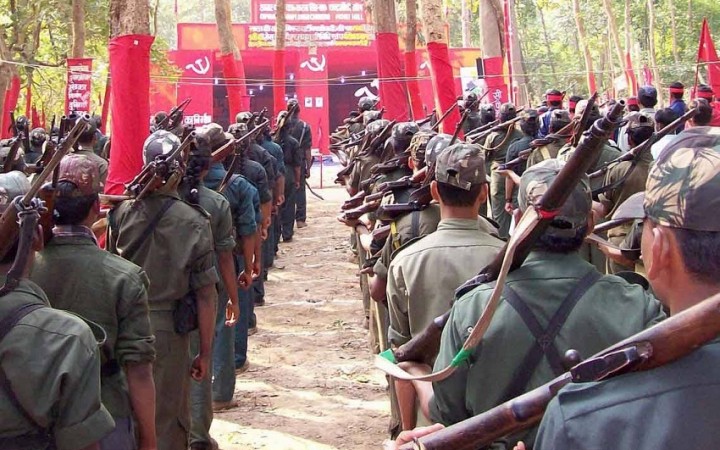
Syrian Kurdish militia fire on Arab protesters

Qamlishi

Five are reported dead after Kurdish militiamen on May 18 opened fire on local residents protesting against a hike in fuel prices imposed by the Kurdish-led autonomous administration in northern Syria. Protests were reported in several towns in al-Hasakah province, including Qamishli, al-Haddaja, al-Rashidiya and al-Haddadiya, although reports were unclear on which towns saw militiamen open fire. At least one death was in the town of Shadadi, where armed protesters stormed a Kurdish militia base.

Reports were also unclear on whether the units in question were from the Syrian Democratic Forces (SDF), the military alliance supported by the autonomous administration, or its affiliated police force, the Asayish. The Autonomous Administration of North & East Syria (AANES) overturned the planned price hikes in response to the protests. However, the SDF General Command issued a statement warning that "protesting activities should not be turned into means to strike at peace and security," and implying that the demonstrations had been stirred up by "outside propaganda." (UrduPoint News, Enab Baladi, Arab News, Kurdistan24, ANHA)

A similar incident was reported Jan. 31 in Hasakah city, where one was killed as Kurdish militiamen fired on protesters. The protesters were reportedly supporters of the Bashar Assad regime, who chanted "With our souls, our blood, we sacrifice for you, Bashar." (AFP)

Kurdish forces also fired on protesters in Deir ez-Zor province in May 2019. There were also reports that Kurdish militiamen fired on a a protest by local Assyrian Christians in Qamishli in September 2018.

Qamishli is a remnant AANES stronghold after most of the Rojava region (Kurdish northeast Syria) was seized by Turkish-led forces in the intervention of late 2019. The other towns that saw protests this week are in Arab-majority territory to the south that was taken by the SDF when they drove out ISIS in a years-long US-supported campaign ending in early 2019.

So in the bizarre state of affairs since 2019, Arab and Turkish forces are occupying Kurdish-majority regions of northeast Syria, while Kurdish forces are occupying Arab-majority regions—a reality convenient to the intended Great Power carve-up of Syria, but certain to exacerbate Arab-Kurdish tensions.

Photo of Qamlishi protest: Ekrem Salih/Kurdistan24

Gaza bombardment displaces 58,000 Palestinians

Gaza Strip

The United Nations Office for the Coordination of Humanitarian Affairs (UNOCHA) announced May 18 that the Israeli bombardment has resulted in over 58,000 Palestinians being displaced from their homes in the Gaza Strip. Of these, 47,000 are currently seeking shelter in facilities run by UNRWA, the UN agency for Palestinian refugees. The bombardment has also led to the destruction of health infrastructure such as COVID-19 testing labs and clinics. The destruction exacerbates privation imposed by the ongoing blockade of the Strip.

The UNOCHA stated:

The UN acknowledges the opening of the Kerem Shalom crossing today, which has allowed dozens of fuel trucks from the UN Relief and Works Agency for Palestine Refugees (UNRWA) to enter Gaza. Regrettably, other essential humanitarian cargo was unable to cross. It is critical that the Erez crossing is also opened for the entry and exit of critical humanitarian staff.

Amnesty International has urged the International Criminal Court (ICC) to investigate the continuing air-strikes by Israel, which have led to the death of over 200 people, including some 60 children, as they could potentially amount to war crimes and crimes against humanity. The organization further observed:

The Israeli army claims that it only attacks military targets and has justified airstrikes on residential buildings on that basis. However, residents told Amnesty International that there were no fighters or military objectives in the vicinity at the time of the attacks documented.

Amnesty International added that the rocket attacks by armed groups in Gaza, which have killed several civilians in Israel, should also be investigated by the ICC as violations of international humanitarian law.

From Jurist, May 18. Used with permission.

Note: ICC prosecutor Fatou Bensouda has already stated that the war crimes investigation opened earlier this year into the Israeli-Palestinian conflict may be extended to include the current bombardment.

Photo: Maan News

Palestine: ICC prosecutor warns of ‘war crimes’

Gaza

Individuals involved in the new outbreak of Israeli-Palestinian fighting may be targeted by an International Criminal Court investigation now underway into possible war crimes in earlier eruptions of the conflict, top prosecutor Fatou Bensouda said in an interview with Reuters May 13. Bensouda said she would press ahead with her inquiry even without the cooperation of Israel, which rejects the ICC's jurisdiction. "These are events that we are looking at very seriously," Bensouda told Reuters. "We are monitoring very closely and I remind that an investigation has opened…" She also warned in a tweet of the "possible commission of crimes under the Rome Statue."

The ICC in March announced a formal investigation into possible war crimes in the Palestinian territories. The investigation names both the Israeli Defense Force and Hamas as possible culprits. Israel has dismissed the investigation, calling it "undiluted anti-Semitism and the height of hypocrisy." The investigation was also opposed by the US government, with Secretary of State Anthony Blinken stating that "the ICC has no jurisdiction over this matter. Israel is not a party to the ICC and has not consented to the Court's jurisdiction." (Jurist)

Since the investigation was announced, more than 200 prominent Israelis have signed a letter to the ICC, requesting that the Court engage with human rights groups for the investigation instead of the Israeli government. The letter states:

Sadly, despite Israel’s image as a state that maintains a proper and professional legal system, the reality paints a different picture–harsh, discriminatory, and outrageous. The law imposed on the Occupied Territories and the manner in which it is applied by the Israeli enforcement and security agencies effectively allow ongoing acts of moral injustice and prima facie war crimes.

The letter has been signed by 10 Israel Prize recipients and 35 professors, in addition to senior reserve army officers, authors, activists and intellectuals. (Haaretz)

Health authorities in Gaza now report 126 deaths since the fighting began May 10, including 31 children and 20 women. In Israel, a total of eight people, including a soldier and a 6-year-old, have been killed. (Haaretz, ABC)

Photo: Maan News

Colombia: gunmen fire on indigenous protesters

paro

Colombian President Iván Duque flew to Cali in the middle of the night after street clashes in the southwestern city left several indigenous protesters injured May 9. Amid a national strike sparked by Duque's proposed burdensome tax reform, some 5,000 indigenous activists from the nearby administrative department of Cauca had been holding a "Minga," or protest gathering, on the outskirts of Cali, when unknown gunmen in civilian dress arrived in a pickup truck and opened fire. The Regional Indigenous Council of Cauca (CRIC) reported that at least 10 activists were wounded, and that the gunmen were intermingled and cooperating with uniformed police. It remains unclear if they were plainclothes agents or vigilantes.

There was a similar incident May 6, four days after the Minga gathered in Cali, in which gunmen arrived in the back of a truck and fired on the protesters. After that incident, the Cali Metropolitan Police, who are under the command of Colombia's National Police, acknowledged that the truck belonged to them, but asserted that the protesters had initiated the violence. The CRIC denied that any members of the Minga had engaged in violence. (El Espectador, May 11; Anadolu Agency, Bloomberg, May 10, El Espectador, El Espectador, InfoBae, May 6)

Duque spoke with Cali municipal leaders in the late-night meeting, even as violence continued in the streets. Troops from the feared National Police anti-riot squad ESMAD flooded the streets of Siloé, the outlying district where the shootings occurred. (El Tiempo, May 10)

No accord with National Strike Committee
Duque met the next day at the Casa de Nariño, the presidential palace in Bogotá, with leaders of the National Strike Committee, but no accord was reached. Strike leaders are demanding not only cancellation of the tax reform, but an emergency vaccination campaign to address the COVID-19 crisis, cancellation of a planned neoliberal reform of the health sector, and a hike in the minimum wage to meet the needs of basic income. (El Tiempo, May 11; El Tiempo, May 10)

At least 24 protesters have been killed since the national strike began April 28, mostly in Cali. Members of the Congressional Peace Commission, which is overseeing Colombia's  process of demilitarization, also flew to the city last week, to help "guarantee the right to protest, that the Public Force respects human rights, and that the violence is halted." (El Tiempo, El Tiempo, May 6)

Nationwide mobilization —despite state terror
But the capital itself also saw street clashes last week that left some 30 protesters and half as many police troops injured. Bogotá Mayor Claudia López said some 100 buses were torched by protesters, and several police stations attacked. She decried the "tragic and painful" situation in the city. (El Espectador, Contagio Radio, May 5) Misak indigenous protesters in Bogotá last week toppled a statue of the conquistador Gonzalo Jiménez de Quesada, emulating the example of indigenous protesters in Cali the week before that who tore down a statue of the conquistador Sebastián de Belalcázar. (El Tiempo, May 7)

According to local reports, an ongoing street festival, with music and dancing as well as marches, is being maintained by strike supporters in Medellín—despite police repression that has led to hundreds of detentions. (Colombia Informa, May 6)

The Search Unit (Unidad de Búsqueda), a body established by the government to investigate "disappearances" as part of the peace process, has registered over 370 reports of "forced disappearance" since the national strike began. (El Espectador, May 6)

Outlying areas of Valle del Cauca, the department of which Cali is the capital, have also seen a wave of terror. Since the strike began, authoriites in the rural municipality of Restrepo have reported six assassinations of local residents, by presumed right-wing paramilitaries. (El Espectador, May 3)

The indigenous Minga has been pressing its own demands for local autonomy and restoration of usurped territories, including that Colombia formally adopt the UN Declaration on the Rights of Peasants, approved by the General Assembly in 2018. (Blu Radio, Oct. 19)

Photo: Colombia Informa

Gitmo ‘forever prisoner’ petitions United Nations

Gitmo

Guantánamo Bay detainee Abu Zubaydah, who has been held for 19 years without charges or a trial, filed a complaint on April 30 with the UN Working Group on Arbitrary Detentions (UNWGAD) requesting intervention in his case. Zubaydah was captured in Pakistan after the September 11 attacks and was held and tortured by the CIA in various top-secret "black sites." The CIA originally believed that Zubaydah was a close associate of al-Qaeda, but after four years of interrogation, they concluded that he was not linked to the group. He was then moved to Guantánamo in 2006. The US government has justified Zubaydah's continued detention by asserting its broad authority under the Authorization for Use of Military Force (AUMF). Under the AUMF, passed after 9-11, detainees can be held until the "cessation of hostile activities." But Zubaydah asserts in his complaint that this "law of war" rationale is in conflict with international human rights laws.

The complaint lists three reasons Zubaydah's detention is arbitrary: there is no lawful basis for his continued detention, he has been denied access to procedural safeguards against such arbitrary detentions, and that this deprivation of human rights is discriminatory. Although his case has been reviewed in military tribunals, the US Supreme Court has held that these do not amount to the same procedural right as a habeas corpus proceeding. He argues that this lack of adequate review is a violation of international human rights laws.

Additionally, Zubaydah claims that "black sites," secret detention facilities allegedly used for "unfettered information gathering" outside of the courts' jurisdiction, also violate human rights laws. He claims that the existence of these facilities fall "outside of all national and international legal regimes pertaining to the safeguards against arbitrary detention."

Just last week, the US Supreme Court heard oral arguments in a separate case involving Zubaydah, which concerns whether CIA documents related to his detention at a black site in Poland can be classified as a state secret.

UNWGAD has the authority to investigate these claims but no ability to sanction nations found to be in violation of human rights principles.

From Jurist, May 3. Used with permission.

Note: The Supreme Court cases at issue here are Rasul v Bush, 2004, and Boumediene v. Bush, 2008.

Photo: Wikimedia

Italy: Salvini to stand trial on kidnapping charges

open arms

Former deputy prime minister and current leader of Italy's right-wing League party Matteo Salvini must stand trial for kidnapping, a Palermo judge ruled April 17. The charges concern an incident in August 2019 in which he barred 147 migrants who had been rescued by Barcelona-based NGO Open Arms from disembarking at a Sicilian port. An indictment of the former minister was requested by prosecutor Francesco Lo Voi as well as 23 civil parties acting as representatives of Open Arms. A civil action was also filed by nine migrants who were on board the vessel, which had been blocked for 19 days off the coast of Lampedusa.

According to a brief filed by Salvini, he was simply following orders for the "redistribution of migrants in Europe." He further cited Article 52 of the Italian Constitution, aserting in a tweet that "the defense of the homeland is the sacred duty of the citizen," and saying that he will go on trial with his "head held high." In the tweet, he also declared "Prima l'Italia"—Italy First, slogan of the League party.

Òscar Camps, founder of Open Arms, countered: "Violating a fundamental right such as the protection of human beings at sea for political propaganda is shameful and hurts me as a rescuer." He said he views the trial an opportunity to put the democratic principles on which European constitutions are based back at the center of the discussion.

The prosecution is to base its case on a January announcement of the UN Human Rights Committee, which condemned the Italian government for having acted too late in the rescue of a stricken vessel in 2013, despite numerous distress calls, amounting to a violation of the right to life of more than 200 migrants onboard, many of whom drowned.

The defense has stated that "the accusatory hypothesis is completely unfounded," as Salvini was under "no obligation to provide a safe haven."

Further, the municipality of Barcelona has opted to become a civil party to the proceedings, "for any damage to the values and image of Barcelona" caused by Salvini's accusations, and also due to "an increase in costs and a slowdown in the mission and activities subject to municipal funding" of Open Arms.

From Jurist, April 19. Used with permission.

Note: A prosecutor in Catania argued April 10 that Salvini should not stand trial for a similar incident in July 2019, concerning the detention of rescued migrants aboard the Italian coastguard ship Gregoretti for six days. (Reuters)

Photo via Twitter
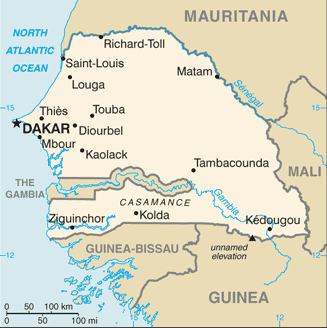
Somalia: drought compounds political crisis

Somalia

The political heat is rising in Somalia over the determination of President Mohamed Abdullahi Mohamed, known as Farmajo, to cling to power despite his term having ended in February. On April 12, he embraced a decision by the lower house of the Federal Parliament to extend his (and their) stay in office for an extra two years, to allow the running of delayed elections. The move was rejected by the Senate as "unconstitutional. The Senate called on Farmajo to rejoin UN-led talks—which he has rejected. As the crisis deepens, there are reports of a troop build-up in the capital and the fragmentation of the security forces. Yet this political tussle is being played out in the Mogadishu bubble. In the countryside, where the government holds little sway, a new drought emergency is underway. Almost 40,000 people have been forced from their homes in the first three months of the year due to poor rains, joining the 1.3 million displaced in 2020 by combined humanitarian disasters. Another bad rainy season is forecast for April-June, but donor funding is roughly $1 billion short of the appeal target.

From The New Humanitarian, April 16

Note: Farmajo was elected by parliament in 2017, and his rule has never been put to a popular vote. Regular elections for a president in Somalia have been repeatedly postponed, due to the reality that the government has no effective control over its claimed territory.  

Photo: Joe English/UNICEF

Afghan pullout: unanswered questions for civilians

Afghanistan

Afghanistan now has a clearer timeline for when US and international troops will leave, but the questions surrounding what this means for civilians and aid operations in the country remain the same. US President Joe Biden on April 14 confirmed plans to withdraw American forces before Sept. 11—the 20th anniversary of the terrorist attacks that led to the Afghanistan invasion. NATO also said 9,500 international soldiers—including 2,500 US troops—would leave, beginning May 1. But the implications of the pullout are as volatile as they were when Biden's predecessor first inked a peace deal with the Taliban last year. Will the Taliban pursue a decisive military victory or continue with sporadic peace negotiations with the government? How will women and minorities fare? How will this affect local and international aid operations, and the roughly 16 million Afghans—more than 40% of the population—who rely on humanitarian relief? Will there be a future for reconciliation after decades of war? And what about the militias still active in many areas? More than 1,700 civilians were killed or injured in conflict in the first three months of 2021, the UN said the same day as Biden's announcement.

From The New Humanitarian, April 16

Note: The White House deal with the Taliban actually called for a withdrawal of US forces by May 1. Taliban talks with the Afghan government are meanwhile stalled, without the status of women and minorities having even been broached. The UN mission for Afghanistan actually finds that there has been an increase in the number of civilian casualties since the intra-Afghan talks began.

Photo of displaced persons camp in Herat: Stefanie Glinski/TNH

Biden admin defers to courts on Dakota Access

DAPL

The Biden administration's Army Corps of Engineers on April 9 indicated at a federal court hearing that they would not stop the flow of oil through the Dakota Access Pipeline (DAPL) despite the threat it poses to the Standing Rock Sioux Tribe's water supply. The project is currently operating without a federal permit as the matter is contested in the courts.

DC District Court Judge James Boasberg shut down the project last July and ordered operators to drain the oil supply running through the pipeline while the government conducted an environmental review to determine the risk to Lake Oahe, the primary water source for the tribe and other residents downstream. The pipeline runs underneath the lake, and a leak has the potential to poison the water supply. However, subsequent court rulings overturned this order and allowed the pipeline to continue operating without addressing the environmental risk.

Then in January, the DC Court of Appeals again ruled that the US Army Corps of Engineers violated federal regulations when they issued a permit that allowed the pipeline to run underneath the lake. But while ordering new environmental study, the court did not require the DAPL to cease operations during the study, leaving it up to the Biden administration to decide whether to stop the flow of oil through the pipeline.

The Army Corps of Engineers signaled at an April 9 court hearing that they did not intend to require the pipeline to be drained during the environmental impact study period. Army Corps lawyer Ben Schifman stated the agency is "essentially in a continuous process of evaluating" the pipeline and that the decision may change based on "continuing discretion."

Mike Faith, chairman of the Standing Rock Sioux Tribe, said, "We are gravely concerned about the continued operation of this pipeline, which poses an unacceptable risk to our sovereign nation. In a meeting with members of Biden’s staff earlier this year, we were told that this new administration wanted to ‘get this right.’ Unfortunately, today’s update from the US Army Corps of Engineers shows it has chosen to ignore our pleas and stick to the wrong path."

Pipeline operator Energy Transfer now has until April 19 to argue in favor of allowing oil to continue to flow. The court will then decide whether to allow pipeline operation during the review period.

From Jurist, April 12. Used with permission.

248, 249, 250

Russian rights groups protest Syria war crimes

Aleppo

The first-ever extensive report on the Syria war by Russian human rights groups was released on April 2, highlighting the role of Moscow's military intervention in the conflict and its impact on civilians. The report, "A Devastating Decade: Violations of Human Rights & Humanitarian Law in the Syrian War," is the result of two years of research by Russian rights groups, including Memorial Human Rights Center, the Civic Assistance Committee, Soldiers' Mothers of Saint Petersburg, and the Youth Human Rights Movement. The 198-page report provides chilling first-hand testimonials of life inside besieged areas, aerial bombardment, chemical weapons attacks, as well as the widespread use of torture and deprivation in regime prisons. The report is critical of all parties in the conflict—including the US-led coalition—but especially focuses on the impacts of the Russian intervention.

The report is based on interviews with survivors of the conflict carried out in Lebanon, Jordan, Turkey, Germany, Belgium, the Netherlands and Russia.

Responding to accusations that Russian warplanes targeted hospitals and other civilian infrastructure, the report found: "Based on our interviews and the review of documentation, there was a clear pattern of indiscriminate and targeted attacks that did not correspond to the presence of military targets. Many of our witnesses insisted that in most cases residential areas, located far away from any military objects, were targeted."

The report also includes horrifying testimony from former detainees in Syrian regime prisons, where starvation and overcrowding appear to be a deliberate and systematic tactic. The authors state that they "document major violations of international humanitarian law and international human rights law including arbitrary detentions; enforced disappearances; torture and inhumane treatment in prisons; extrajudicial executions; unlawful attacks including the use of indiscriminate and prohibited weapons; and the use of sieges, starvation, sexual violence and denial of medical care as methods of warfare."

The report is clearly aimed at counteracting saturation war propaganda in Russia. In 2019, after a string of successes by the Moscow-backed Damascus regime, the Russian Defense Ministry organized a propaganda campaign dubbed "Syrian Breakthrough," with a train carrying weaponry and trophies touring the country. The exhibition was widely reported by Russian media and attended by a million people.

“Russian state media does not report on the victims of bombardments, nor the forced displacement of civilians resulting in part from Russia’s military actions in Syria,” the authors of the report state. “As a result, the Russian public does not have sufficient knowledge to judge whom and what we are supporting in Syria, how much this war costs us, and how much suffering the war has inflicted upon civilians – people who have never taken up arms.”

"Russians know very little about Bashar al-Assad's internal policies, the root causes of the conflict, and the massive human rights violations in Syria," the authors add. "The report is a way for us to start a dialogue about this in Russian society and with all interested parties. We would also like to further develop contacts with Syrian activists and civil society organizations and work together to protect human rights in Syria, ultimately working towards the goals of peace and reconciliation." (The New Arab, The Guardian)

Photo of Aleppo ruins from UNHCR

Podcast: requiem for the Yemeni Jews

In Episode 68 of the CounterVortex podcast, Bill Weinberg offers a meditation on the final demise of the millennia-old Jewish community in Yemen, as the last families of Yemeni Jews are deported by the Houthi rebels that hold the capital and much of the country's north. Largely ignored by the world media amid the ongoing horrors in Yemen, this grim passage poses challenges to some fundamental assumptions of both Zionism and anti-imperialism. Listen on SoundCloud or via Patreon.

Production by Chris Rywalt

We ask listeners to donate just $1 per episode via Patreon. We have made it to our initial goal of $30 per episode! Thank you for your support, and please keep it coming!

Photo via Wikimedia Commons

Houthis deport last of the Yemeni Jews

Yemeni Jews

The Houthi rebels who control much of Yemen's north, including the capital Sanaa, last week deported 13 Jews from three families—effectively ending the millennia-old Jewish community in the country. The group was reportedly transferred to Egypt as part of a deal to free Jewish prisoner Levi Salem Marhabi, who has been held by Houthi authorities for over four years. One of the 13 deported Jews told London-based Arabic international newspaper Asharq Al-Awsat: "They gave us a choice between staying in the midst of harassment and keeping Salem a prisoner or having him released. History will remember us as the last of Yemeni Jews who were still clinging to their homeland until the last moment. We had rejected temptations time and time again, and refused to leave our homeland, but today we are forced."

While some reports claimed the group of 13 were the last Jews in Yemen, others stated that a handful may remain. Among those is certainly Marhabi, who is believed to remain in prison in spite of the supposed deal for his release. 

Marhabi was arrested by the Houthi militia for allegedly assisting a Jewish family in removing a centuries-old Torah scroll from the country. A group of Yemeni Jews who emigrated to Israel in 2016 apparently brought the scroll with them, and presented it to Prime Minister Benjamin Netanyahu when they were invited to meet with him. Press photos of Netanyahu inspecting the scroll evidently angered the Houthis, who said the artifact had been smuggled out of the country illegally.

Marhabi was sentenced to a lengthy prison term by a Houthi court for his supposed role in the removal of the scroll. Reports over the years indicate that he has been subjected to torture, and left partially paralyzed by a stroke.

In November 2020, shortly before the end of his term in office, US Secretary of State Mike Pompeo issued a press release saying, "The United States stands with the Yemeni Jewish community in calling for the immediate and unconditional release of Levi Salem Musa Marhabi." (Al Monitor, Jewish Chronicle)

The Jewish presence in Yemen dates back thousands of years. But the majority of the country's Jewish community—some 45,000—were brought to Israel in the "Operation Magic Carpet" airlift in 1948. The Israeli operation followed local riots in which scores of Jews were killed. The country's Jewish community had dwindled to some 200 when a new wave of pogroms sparked a second exodus beginning 12 years ago. Since they took over Sanaa in 2014, the Houthis have been pressuring the few Jews still remaining in the country to leave.

Photo: Yemeni Jews celebrating Passover in Israel in 1946, via Wikipedia

Podcast interview: Alexander Reid Ross

Alexander Reid Ross

In Episode 66 of the CounterVortex podcast, Bill Weinberg interviews Alexander Reid Ross, author of Against the Fascist Creep and a fellow at the Network Contagion Research Institute (NCRI), who has faced threats of litigation as well as relentless online harassment for his exposés of Russian propaganda and Red-Brown Politics. After his recent piece in the Daily Beast on leftist flirtation with the far right around conspiracy theories concerning COVID-19 and the war in Syria, the odious Max Blumenthal quickly retaliated with a piece on his Grayzone website charging in its headline that Reid Ross "works with ex-cops, CIA spies, and DHS agents." This refers to the fact that former CIA, Homeland Security and NYPD officials are now also researchers with the NCRI. The accusation is hilariously ironic given that Blumenthal himself has shared platforms with former CIA analyst (and now a star of the conspiracy set) Ray McGovern. As well as (of course) avidly cooperating with Russian and Chinese state propaganda efforts.

Among examples discussed in the interview… A new report from the Australian Strategic Policy Institute (ASPI), "Strange bedfellows on Xinjiang: The CCP, fringe media and US social media platforms," names Grayzone as "amplified by Chinese and Russian state-affiliated entities" in "state-sponsored disinformation…campaigns." In addition to practicing "junket journalism" to serve the propaganda interests of the Bashar Assad regime, Blumenthal has also poked vicious fun at Syrian chemical attack victims.

But apart from the dizzying hypocrisy of Blumenthal painting Reid Ross as a CIA collaborator, it constitutes what was known in the COINTELPRO era of the 1960s as "snitch-jacketing"—a phenomena that led to the cannibalization of the radical opposition movements of the day. 

Listen on SoundCloud or via Patreon.

Production by Chris Rywalt (with help from Dawn Rywalt)

We ask listeners to donate just $1 per episode via Patreon. We have made it to our initial goal of $30 per episode! Thank you for your support, and please keep it coming!

Photo: Wikipedia

New York City passes major police reforms

NYPD

The New York City Council on March 25 passed five bills and three resolutions aiming to increase the transparency and accountability of the New York Police Department (NYPD). One bill ends qualified immunity for police officers, meaning that individual officers may be sued for rights violations. The move makes New York the first US city to ban the use of qualified immunity for police officers. The legislation also creates a new "local civil right," protecting residents from unreasonable searches and seizures as well as from the use of excessive force. Another measure requires the NYPD to issue quarterly reports on vehicle stops, including information on the demographics of targeted drivers, whether vehicles were searched with or without consent, and other information.

Another bill shifts primary responsibility for traffic safety from NYPD to the Department of Transportation (DoT) through the creation of a "crash investigation and analysis unit" in the DoT.

Further, the Civilian Complaint Review Board (CCRB), which is empowered to investigate complaints of abuses such as racial profiling and bias-based policing, now has the final authority on disciplinary actions for officers facing civilian complaints. The Police Commissioner previously held this authority.

Police Commissioner Dermont Shea expressed concern over the shift of final authority to discipline officers, stating: "Right now, the commissioner hires [officers], trains them, asks them to go in harm's way to keep New Yorkers safe and if an officer breaks the rules, I discipline them and if necessary fire them. If I am not doing that the right way, I am accountable. The buck stops here. To take that away from the Commissioner, ask yourself who has the accountability then?"

Mayor Bill de Blasio supported the reform measures, stating, "These reforms will confront centuries of overpolicing in communities of color and strengthen the bonds between police and community. Together, we'll make our city safer and fairer for generations to come."

From Jurist, March 27. Used with permission.

Note: The reforms come as the NYPD is facing a federal suit brought by the New York State Attorney General over use of excessive force during last year's Black Lives Matter protests.

Photo: CounterVortex

Turkey: 200 soldiers arrested for alleged Gülen ties

Turkey coup

Turkish security forces arrested 203 soldiers March 23 in nationwide raids targeting military personnel accused of links to an exiled Muslim cleric, Fethullah Gülen, accused by Ankara of being behind a 2016 coup attempt against President Recep Tayyip Erdoğan. The 2016 episode led to crackdowns and mass arrests, resulting in more than 250 deaths. Thousands of soldiers were rounded up in the wake of attempted coup. The new raids targeted personnel across ranks; colonels, lieutenants, majors, captains, sergeants, and specialist sergeants were sought out. Operations were held across 53 provinces in the country and the Turkish Republic of Northern Cyprus. Authorities alleged that the arrested soldiers are linked to the Fethullah Terrorist Organization (FETO), a supposed network infiltrating the police and security forces. The suspects are accused of communicating with Gülen's "covert imams" via payphone. "Covert imams" is a term used by the government to refer to FETO operatives.

Tens of thousands of people have been detained on similar grounds since the coup attempt.

From Jurist, March 25. Used with permission.

Note: Opposition activists and journalists as well as soliders have been detained on charges of links to Fethullah Gülen, the Gülen movement, or the supposed Fethullahist Terrorist Organization.

See our last post on the crackdown in Turkey.

Photo: Mstyslav Chernov via Jurist

Burma: thousands displaced as junta bombs villages

Karen

More than 3,000 villagers from Burma's Karen state have fled their homes following a series of air-strikes by the military on territory controlled by the Karen National Union (KNU). Many fled to the Ei Tu Hta camp, which already holds some 2,400 internally displaced persons. Others fled across the Salween River, which separates Burma and Thailand. The air-strikes centered on Kho Kay village in Karen state's Mutraw (Hpapun) district. The strikes came after fighters from the KNU’s Brigade 5 overran the military's Thee Mu Hta base on March 27, capturing at least eight soldiers. (Myanmar Now)

See our last posts on the Karen and the struggle in Burma.

Photo: Myanmar Now

FARC ultra-dissidents in Venezuela clashes?

Apure

Some 3,000 Venezuelans have fled across the border into Colombian territory to escape an outbreak of fighting between the military and an unnamed armed faction. The fighting broke out March 21 in the sprawling rural municipality of Paez, in Venezuela's western Apure state, along the Colombian border. Colombian authorities in the border town of Arauquita, Arauca department, have hurriedly erected makeshift shelters for the refugees. Venezuelan Defense Minister Gen. Vladimir Padrino López said that in an operation dubbed Bolivarian Shield, troops have arrested 32 people, destroyed six camps, and seized weapons. There have also been reports of two Venezuelan soldiers killed in the fighting.

Padrino did not name the armed group targeted in the operation, only identifying a supposed commander by his nom de guerre "Nando." But regional media reports indicate the targeted group is one of the "dissident" factions of the Colombian FARC rebels that have remained in arms despite a peace accord. Bogotá accuses Venezuela of providing shelter to both dissident FARC groups and the ELN guerillas; the principal dissident FARC leaders Jesús Santrich and Iván Márquez are both allegedly living in Venezuela under protection of the Nicolás Maduro regime. It is hypothesized that the group targeted in Bolivarian Shield is a dissident faction refusing to accept the leadership favored by Caracas. (AP, El Tiempo, El Tiempo, Bogotá, RCN, Colombia, El Universo, Guayaquil, InfoBae, Argentina, Caracas Chronicles, Venezuela)

The Bogotá government and the UN High Commissioner for Refugees announced last month that Colombia would provide the 1.7 million displaced Venezuelans within the country with a new form of legal status, providing them with essential basic security while living in Colombia as refugees. The new initiative offers 10-year temporary status to displaced Venezuelans living in Colombia, a population that makes up nearly 40% of the estimated 4.6 million Venezuelan refugees and migrants in Latin America and the Caribbean. (Jurist)

Colombia continues to face its own internal displacement crisis. Colombia's ombudsman office, the Defensoria del Pueblo, reported March 8 that more than 11,000 individuals have been displaced by fighting between armed groups in the country so far in 2021. (Jurist)

Map: Sofía Jaimes Barreto via Caracas Chronicles

Indigenous water protector slain in Honduras

Cerros Escalante

On March 21—the eve of World Water Day—an indigenous activist who was leading the fight against construction of a hydroelectric dam was shot dead in front of his family in Honduras. Juan Carlos Cerros Escalante, a member of the Lenca indigenous people, was gunned down directly outside the church at the pueblo of Nueva Granada, in the Caribbean coast department of Cortés. He was on his way to visit his mother, and his children were beside him. Cerros Escalante led the local group Communities United, which is mobilizing residents along the Rio Ulúa to oppose El Tornillito hydro-dam. The pending project would displace 10 communities in the departments of Cortés and Santa Bárbara.

"We condemn the killing of yet another comrade and activist," said Betty Vásquez, coordinator of the Santa Bárbara Environmental Movement. "It is not conceivable, it is not right, that they criminalize people, persecute people and later kill them for defending the land. We consider this a political assassination." In 2020 alone, a dozen indigenous rights and environmental activists were slain in Honduras. (AP, Radio Progreso, La Prensa)

Berta Cáceres, another Lenca leader, was slain in 2016 while leading a campaign against the Agua Zarca dam, another hydroelectric project in the Ulúa watershed which was ultimately completed. Tomás García Domínguez, another indigenous opponent of the Agua Zarca project, was slain in 2013.

Photo: Radio Progreso

Nicaragua: armed colonists invade indigenous lands

Bosawas

In a video conference with representatives of the Inter-American Commission on Human Rights (IACHR) March 18, indigenous leaders from Nicaragua's eastern rainforest protested an illegal "invasion" of their titled territories by armed campesino colonists, who seize lands, clear trees and terrorize their communities. The four-way computer link brought together IACHR representatives in Costa Rica and Washington DC, Nicaraguan government officials in Managua, and Miskito and Mayangna indigenous leaders in the rainforest town of Bilwi, North Caribbean Coast Autonomous Region. The Miskito and Mayangna leaders said 13 indigenous residents were killed by settlers last year, with eight wounded and hundreds forcibly displaced. One of the worst attacks was in January 2020, when colonists burned 16 houses in the community of Alal, and killed six inhabitants. As recently as this March 4, an attack on the Mayangna community of Kimak Was left one resident wounded and another missing.

"The displacement of communities under siege to larger towns like Puerto Cabezas, Waspam or to Honduras has created a very serious situation, because they do not have access to food or health services," said Lottie Cunningham of the Center for Human Rights & Justice of the Atlantic Coast of Nicaragua (CEJUDHCAN). "They live in terrible conditions," added Cunningham, who won the 2020 Right Livelihood Award for her work in defense of indigenous rights in the region.

Cunningham said some 30,000 hectares have been expropriated, and the colonists often work in league with timber and mining interests—illegal operations that nonetheless have total impunity in the lawless region. Among the impacted areas is the ostensibly protected Bosawas Biosphere Reserve.

"The settlers have violently stolen our land and the authorities have allowed that," said Juan Carlos Ocampo of the Prilaka Community Foundation, and NGO working for indigenous rights in the region.

He said residents temporarily evacuated the hamlet of Sangni Laya after colonists destroyed crops and chopped down the community's coconut trees, leading to what he called "a food crisis" for the inhabitants.

Nicaragua's Prosecutor General Wendy Morales denied that the government has tolerated human rights violations, and said her office has opened investigations into 18 complaints of illegal land take-overs. But Cunningham countered that the government "has not shared information about the investigations of these cases."

Speaking of the timber, mining and cattle enterprises in the region, Cunningham said, "For us, the Nicaraguan state has motivated and incentivized these companies." She accused the government of violating 2011's Law 757, or the Law for Dignified & Equitable Treatment for Indigenous Peoples & Afro-descendants. (Expediente Publico, March 19; AP, AP [in Spanish], March 18; CafeConVoz, March 4)

Image: CafeConVoz

US steps up drone ops as Sahel violence flares

Dirkou

In the latest outbreak of fast-escalating violence across Africa's Sahel, gunmen in southwestern Niger on March 15 killed at least 58 people when they intercepted a convoy of four commercial transport vehicles carrying local civilian residents from a weekly market, and attacked nearby villages. The passengers were summarily executed, and homes and granaries put to the torch in the villages. The attacks took place in the Tillabéri region, near the flashpoint "tri-border area" where Niger, Mali and Burkina Faso come together. Militant groups linked to ISIS and al-Qaeda cross back and forth between all three countries.

Attackers killed at least 100 civilians on Jan. 2 in raids on two villages in Tillabéri, one of the deadliest episodes in Niger's recent history. (Al Jazeera, TRT World)

The New York Times reports that the CIA is stepping up drone surveillance flights from a base established three years ago at Dirkou, in Niger's northeastern Agadez region. MQ-9 Reapers are stationed at the base, and armed strikes on militant targets are said to be under consideration pending a review by the Biden administration.

This escalation is taking place amid a political crisis in Niger. Angry protests and clashes with the police erupted in the capital Niamey last month after contested election results named ruling-party candidate Mohamed Bazoum the winner. At least two protesters were killed, and hundreds detained. (AfricaNews, Reuters, Feb. 24)

Neighboring Mali is also facing a political crisis at this moment.

Both militant groups and security forces have been accused of war crimes in the Sahel nations as the conflict has mounted over the past months.

Photo: Airman Michelle Ulber via Israel Defense

Ecuador: protests in wake of contested elections

Yaku Perez

Hundreds of indigenous protesters rallied outside the offices of Ecuador's National Electoral Council (CNE) in Quito Feb. 23 to demand a recount of the presidential vote. Third-place finisher Yaku Pérez of the indigenous-based Pachakutic party, eliminated from the run-off election to be held in April, led a week-long cross-country march of his supporters from Loja province in the south which repeatedly blocked traffic on the Pan-American Highway before arriving in the capital for the rally. He then led a delegation to the CNE office, carrying boxes with more than 16,000 statements purporting to show irregularities. At the demonstration, his supporters chanted, "Transparency yes, fraud no!"

Official results of the Feb. 7 poll showed left-populist Andres Arauz, former head of the Central Bank under then-President Rafael Correa, with nearly 33% of the vote, followed by right-wing candidate Guillermo Lasso, also a former banker, with 19.74%—enough to narrowly edge out Pérez, who got 19.39%. Pérez is demanding a recount in 17 of Ecuador's 24 provinces, involving some 6 million ballots—about 45% of the country's registered voters.

When the CNE failed to act on the complaints, Pérez supporters again erected flaming barricades to block traffic on the Pan-American through Loja province on March 1. (El Comercio, Quito, March 1; Al Jazeera, El Comercio, Feb. 23; PRI, Feb. 22; El Universo, Guayaquil, Feb. 17)

Deadly prison uprisings
As the rally was underway in Quito, Latin America's deepening prison crisis came to Ecuador in no uncertain terms, as simultaneous riots at four facilities left 79 people dead. Government Minister Patricio Pazmino stepped down in the wake of the uprisings, which hit prisons in the cities of Guayaquil, Cuenca and Latacunga. The fighting between rival gangs was seemingly set off by the Dec. 28 assassination in Manta of Jorge Luis Zambrano AKA "Rasquiña," leader of a prominent criminal network known as Los Choneros. The port city of Manta has become an important hub for cocaine trafficking to Central America. 

In 2019, President Lenín Moreno declared a state of emergency in Ecuador's prison system after at least 24 were killed in a wave of incidents. The system, designed for some 27,000 inmates, still houses about 38,000, despite a reduction in response to the COVID-19 pandemic. (Al Jazeera, March 6; InSIght Crime, Feb. 27; Al Jazeera, NYT, Feb. 23)

Photo of Yaku Pérez, on bicycle, via Wikipedia

Podcast: US robo-imperialism hands off Mars!

Mars probe

In Episode 64 of the CounterVortex podcast, Bill Weinberg notes the maddening and telling irony that while we're all supposed to be ga-ga with triumphalism over NASA's latest Mars probe, it has received practicailly no attention that Afro-Brazilian peasant communities are being forcibly removed from their traditional lands to make way for a US-backed expansion of the Alcântara Satellite Launch Center in impoverished Maranhão state. This juxtaposition of news stories is paradigmatic of the whole global struggle—sustainable, Earth-rooted cultures against a hypertrophing technosphere that is now colonizing the very heavens. Meanwhile, there are already so many satellites in orbit that near-Earth space is experiencing a fast-growing "space junk" problem. And economic austerity down here on terra firma is compounding the agonizing impacts of the pandemic. Whatever useful knowledge may be gleaned from the Mars probe, accounts don't note that Halliburton is drawing up plans for mining operations on Mars. We recall Gil Scott Heron's wry reaction to the 1969 Moon landing ("Whitey on the Moon"), and say with Marvin Gaye: "Spend it on the have-nots!"

Listen on SoundCloud or via Patreon.

Production by Chris Rywalt

We ask listeners to donate just $1 per episode via Patreon. We have made it to our initial goal of $30 per episode! Thank you for your support, and please keep it coming!

Image adapted from NASA photo

Saudi women’s rights activist freed after three years

Loujain al-Hathloul

Saudi women's rights activist Loujain al-Hathloul was released Feb. 10 after spending a total of 1,001 days—almost three years—in prison. Al-Hathloul had been championing women's rights since 2013. She lobbied especially for the right to drive, as well as for an end to male guardianship laws in the Saudi kingdom. While women were granted the right to drive in 2017, advocates for the change were detained by authorities weeks before it took effect.

Al-Hathloul was detained in May 2018. She had spent more than 950 days in prison before being sentenced in December to five years and eight months under the kingdom's Law of Terrorism Crimes & Financing. The charges against her included "incitement to change the Kingdom's government system, seeking to carry out a foreign agenda from inside the Kingdom using the Internet with the aim of jeopardizing public order, and cooperating with individuals and entities that have committed terrorist criminal acts." These charges were denounced as "spurious" by UN human rights experts. Two years and 10 months of her sentence were suspended, and her release was expected this month.

The activist will remain on probation for three years and is banned from traveling for five years; an unconditional release is being demanded by her family and rights groups, as she faces the risk of arrest at any time during the probation period. Her sisters said that the terms of her release cannot be disclosed. Her family claims that she had been held in solitary confinement and subjected to torture and abuse, including electric shocks, waterboarding, flogging, sexual assault, and deprivation of sleep during her hunger strikes against her imprisonment. An appeals court on Feb. 9 dismissed her suit alleging torture, citing a lack of evidence supporting the claims. Amnesty International said, "Saudi Arabia's authorities must ensure those responsible for her torture and other ill-treatment are brought to justice."

Al-Hathloul was among at least a dozen women's rights activists arrested at the time, a few of whom still remain in prison. Saudi Arabia's foreign minister claimed in October that the detentions did not stem from the women's activism, but rather from charges related to the commission of serious crimes.

Calls for the release of the activists continue.

From Jurist, Feb. 11. Used with permission.

Photo of al-Hathloul in Madrid before her arrest: Emna Mizouni/Wikimedia Commons

‘Apartheid’ Israel: semantic implications

apartheid wall

Last month, the Israeli human rights group B'Tselem issued a report with the provocative title: This is Apartheid: A Regime of Jewish Supremacy from the Jordan River to the Mediterranean Sea. It documents systematic discrimination against Palestinians in the spheres of land, citizenship, freedom of movement, and political participation—on both sides of the Green Line. It echoes the 2017 findings of the UN Economic & Social Commission for Western Asia (ESCWA) in its report, Israeli Practices towards the Palestinian People and the Question of Apartheid. But the fact that this time the comparison between Zionism and South African apartheid is being made by an Israeli organization poses a challenge to the increasingly entrenched dogma that all anti-Zionism is anti-Semitism.

It particularly throws into question the "Working Definition of Anti-Semitism" drafted by the International Holocaust Remembrance Alliance (IHRA), which lists "Contemporary Examples of Anti-Semitism." On this list is the item: "Denying the Jewish people their right to self-determination, e.g., by claiming that the existence of a State of Israel is a racist endeavor." The definition was officially invoked by a Trump executive order of December 2019, ostensibly on extending civil rights protection to Jewish students on college campuses.

Trump's EO was actually issued over the protests of some in the IHRA. Kenneth Stern, who himself wrote the text cited by Trump's EO, proclaimed in The Guardian after its issuance: "I drafted the definition of antisemitism. Rightwing Jews are weaponizing it." Stern, director of the Bard Center for the Study of Hate and author of The Conflict Over the Conflict: The Israel/Palestine Campus Debate, stated: "This order is an attack on academic freedom and free speech, and will harm not only pro-Palestinian advocates, but also Jewish students and faculty, and the academy itself."

The contradiction becomes clearer with the new B'Tselem report. Commentator Nasim Ahmed, wrting in Middle East Monitor, states: "Claiming…that the existence of a state of Israel is a 'racist endeavour' can get you branded as an anti-Semite. As ridiculous as this sounds, B'Tselem is thus, according to the IHRA, an anti-Semitic organisation."

Photo: Filippo Minelli

Indigenous candidate upsets Ecuador elections

Yaku

Ecuador is heading to a run-off presidential race in April after leftist candidate Andrés Arauz of the Union of Hope (UNES) coalition won a first-round victory Feb. 7, following years of economic austerity made more painful by the pandemic. However, in a surprise development, his rival leftist Yaku Pérez Guartambel of the indigenous-based Pachakutik party emerged neck-to-neck with conservative banker Guillermo Lasso of the right-wing Creating Opportunities (CREO) party. The vote is still too close to call which challenger Arauz will face in the April run-off. (The Guardian, Al Jazeera, CNN, El Comercio, LexLatin)

There is a sense of deja vu here. Arauz is considered the protege of the exiled ex-president Rafael Correa, who has maintained some left-populist credibility despite his embroilment in the Odebrecht scandal. When the incumbent Lenín Moreno came to power four years ago, he was similarly perceived as Correa's chosen successor, having served as his vice preisdent. UNES split from Correa's former vehicle, the Alianza PAIS, as it tilted right under Moreno's leadership.   

The governments of both Correa and Moreno have been challenged by Ecuador's powerful indigenous movement, of which Yaku Pérez has been a prominent leader. Recently elected as prefect of Azuay province, he was longtime leader of the Kichwa Confederation of Ecuador (ECUARUNARI). He recently changed his given name from Carlos to Yaku, which means "water" in the Kichwa language, to honor the indigenous struggle to protect Ecuador's water resources from extractivism.

The indigenous movement had also been an early supporter of Correa, but broke with him over his embrace of an economic model based on resource extraction—if this time offering favorable terms to China rather than the US, but still enforced through repression. In the 2017 election, Pérez actually supported Lasso over Moreno, saying, "We prefer a banker rather than a dictatorship that has stripped us of our territories, declared a state of emergency and locked us up in jail."

Reflecting the current division on Ecuador's left, People's Dispatch, supporting Arauz, writes that Pérez's "political views fuse ultra-leftist, anarchistic critiques of existing left-wing states with an objectively right-wing political agenda." Pérez is called out for saying he "would not think twice" about signing a trade deal with the United States. However, in the original source—an interview last month with Guayaquil's El Universo—he actually said "would not think twice" about a trade deal with the US "if [it] favored the majority" in Ecuador. "It is not a bad idea per se, it depends on the clauses," he added. Now, there's a good case that Pérez should be called out for this statement, but it should be done honestly.

In an interview with Ecuador's anarchist-oriented Revista Crisis, Pérez portrays CREO, UNES and PAIS alike as parties of the right: "Neoliberalism is advancing, the right has not lost currency. The right has been [in power] since Correa, despite the fact that he disguised himself as a leftist. There is also a resurgence of the left; Pachakutik is configured within this line, but not within an orthodox fundamentalist line, but open… The hope…is truly placed on Pachakutik, because there is no other political movement or party of the left with social and political force at this moment… Socialism is practically non-existent." 

Photo: Revista Crisis

UN tribunal rejects UK rule of Chagos Islands

Chagos

The International Tribunal for the Law of the Sea ruled Jan. 28 that the United Kingdom does not hold sovereignty over the Chagos Islands, allowing the dispute between Mauritius and Maldives in regards to the delimitation of their boundaries to proceed. The ruling follows a preliminary objection from the Maldives government, which claimed that the tribunal could not decide the matter due to the existing dispute between Mauritius and the United Kingdom regarding the sovereignty of the archipelago. The tribunal rejected the objection.

The judges’ 8-1 decision further confirms the advisory opinion of the International Court of Justice (ICJ) in 2019. In that opinion, the ICJ determined that the United Kingdom had unlawfully detached the archipelago from Mauritius when it incorporated the islands into the British Indian Ocean Territory (BIOT) in 1965, during the decolonization of Mauritius. While the ruling is not binding, it puts further pressure on the United Kingdom to complete the process of decolonization by handing back the Chagos Archipelago to Mauritian control.

The UK has consistently rejected calls for returning the islands to Mauritius, holding that it is committed to "cede sovereignty of the territory to Mauritius when it is no longer required for defence purposes." The Chagos Archipelago, which hosts a US military base on the island of Diego Garcia, is considered as strategic to the security interests of the UK, due to existing agreements with the US on joint defence use.

From Jurist, Jan. 30. Used with permission.

Photo: WILPF

Colombia: ex-FARC leaders accused of war crimes

FARC

Eight former commanders of the demobilized Revolutionary Armed Forces of Colombia (FARC) were accused of war crimes and crimes against humanity on Jan. 28 by Colombia's Special Jurisdiction for Peace (JEP). Rodrigo Londoño, Pablo Catatumbo, Pastor Alape, and Milton de Jesús Toncel (Joaquín Gómez) are among the eight former leaders facing the accusations. They are held responsible for the kidnapping of thousands of people during Colombia's internal armed conflict that spanned decades. Murder and torture are specific war crimes related to the treatment of hostages. The kidnappings funded FARC's war against the state and were used to press for the release of imprisoned rebels. The hostages included soldiers and police officers, as well as politicians and other civilians.

The JEP indictment is based on the testimony of victims and ex-combatants. JEP magistrate Julieta Lemaitre stated that "depriving people of their freedom and setting conditions for their release, as well as their wellbeing, integrity, and life, was a war crime."

Until these eight leaders were accused of war crimes, the JEP had not attributed criminal responsibility to former FARC leaders since the 2016 peace agreement was signed.

The accusations of war crimes and crimes against humanity must be accepted or rejected within 30 days. If accepted, the former leaders' freedoms will be restricted for five to eight years. If rejected, they may face up to 20 years in prison per the 2016 peace agreement.

From Jurist, Jan. 30. Used with permission.

See our last post on Colombia's transitional justice system.

Image via Colombia Reports

Europe rights court finds abuses in Maidan protests

Maidan

The European Court of Human Rights (ECHR) on Jan. 21 unanimously held that there had been multiple violations of the European Convention on Human Rights during the 2013-14 Maidan protests in Kyiv and other Ukrainian cities that led to the removal and flight of President Viktor Yanukovych. The court gave judgments in five cases having a total of 38 applicants who were either present at or played a role in the protests. They had all faced the police or non-state agents under police control (or titushky), and alleged police brutality, unjustified detention, and the denial of their right to protest.

The court found multiple violations of Articles 3 (prohibition of torture and inhuman and degrading treatment), 5 (right to liberty and security) and 11 (freedom of assembly and association) of the Convention. It also found single violations of Articles 2 (right to life) and 8 (right to respect for private and family life).

The ECHR stated that law enforcement officials and non-state agents had used "excessive and sometimes brutal force" against peaceful protesters, resulting in the escalation of violence. The court particularly noted the use of stun grenades, tear-gas and plastic bullets for crowd control or dispersal. Many protestors at the Maidan vigil were beaten to the point of losing consciousness. The court said that such interference in the enjoyment of the right to freedom of assembly was "disproportionate and unwarranted in a democratic society," and discouraged participation in open political debate.

The court also stated that "much of the ill-treatment had been a deliberate strategy on the part of the authorities." Investigation is still pending in many cases of alleged abuse by authorities, including police officers and judges. The ECHR found that the Ukrainian state has failed to investigate these claims adequately or expediently. The ruling held Ukraine liable to pay pecuniary and non-pecuniary damages to some of the applicants, as well as costs and expenses as set out in the judgments.

From Jurist, Jan. 23. Used with permission.

Photo: Sasha Maksymenko via Flickr

Harsh abuses seen at Tigray refugee camps

Tigray camps

The UN High Commissioner for Refugees (UNHCR), Filippo Grandi, on Jan. 14 expressed concern over the humanitarian conditions in Ethiopia's Tigray region and its impact on civilians, particularly Eritrean refugees living in four camps. Grandi said he continues to receive reliable reports and first-hand accounts of ongoing insecurity in the region and "grave and distressing human rights abuses including killings, targeted abductions and forced return of refugees to Eritrea." He also cited open-source satellite imagery from California-based company Planet Labs which indicates fires and other fresh signs of destruction at the two camps located in Shimelba and Hitsats. Grandi termed these "concrete indications of major violations of international law."

There are nearly 25,000 Eritrean refugees living in these camps, who are now in danger of military incursions by Eritrean troops. They fled political persecution and compulsory military service in Eritrea before the conflict between the Ethiopian government and regional forces of the Tigray People's Liberation Front (TPLF) that began in early November 2020.

Both countries have denied the presence of Eritrean troops in Tigray, but multiple requests for access to the camps by the UNHCR have gone unanswered. In December 2020, a United Nations security team was shot at for attempting to reach the Shimelba camp.

Grandi emphasised to Ethiopia's leadership the urgency of protecting refugees, preventing refoulement, and keeping camps safe from attacks and other threats from armed actors. In his statement, he reiterated the UN's call for "full and unimpeded access" to refugee camps. 

From Jurist, Jan. 16. Used with permission.

See our last post on the Tigray conflict.

Photo: Chris Melzer/UNHCR

Huawei ethnicity-recognition tech tracks Uighurs

Uighurs

Top Chinese technology firms have registered patents for tools apparently designed to detect, track and monitor Uighurs, according to research by the Pennsylvania-based video surveillance watchdog group IPVM. A 2018 patent filed by Shenzhen-based tech giant Huawei with the State Intellectual Property Office (since reorganized as the China National Intellectual Property Administration, CNIPA) lists attributes by which an individual may be targeted, including "race (Han, Uighur)." This comes a month after IPVM released details of a document issued by Huawei and its Beijing-based corporate partner Megvii, "Huawei Video Cloud Solution and Megvii Dynamic Face Recognition Interoperability Test Report," which boasted of a "Uighur alarm" among the "basic functions of Megvii's facial recognition system."

"We cannot ignore the fact that these technologies have been developed in order to be able to efficiently carry out…brutal oppression," Rushan Abbas, executive director of the DC-based Campaign for Uyghurs, told the Thomson Reuters Foundation. The Chinese embassy in Washington DC said cameras operated in public places in China and Xinjiang do not "target any specific ethnicity." (More at BBC News, BBC News, WaPo)

Photo: Mvslim.com

US slaps ‘terror’ label on Yemen’s Houthis

Yemen

The United States has announced it will designate Yemen's Houthi rebels as a terrorist organization, a move aid groups and diplomats have long warned will make getting assistance to people trapped in the "world's worst humanitarian crisis" even harder. In a Jan. 10 statement, Secretary of State Mike Pompeo said he was officially notifying the US Congress of his intent to designate Ansar Allah, the official name of the Houthis, a "Foreign Terrorist Organization." The change is go into force on Jan. 19, and three Houthi leaders will also be blacklisted. NGOs have lobbied heavily against the designation, saying it will seriously hamper efforts to bring aid to the estimated 80% of Yemen's 30 million people who live in parts of the country controlled by the Houthis. It's already hard to deliver aid in Yemen, in part because of obstacles put up by the Houthis themselves. 

For nearly six years, Houthi rebels and their allies have been fighting the government of President Abd Rabbu Mansour Hadi, which is backed by Saudi Arabia and the United Arab Emirates. More than 128,000 people have been killed in the violence, and the war has also led to economic collapse and fears of famine. 

The Houthis have called Pompeo's move itself "terrorist," saying, "We reserve the right to respond to any designation issued by the Trump administration or any administration."

Hadi's government, meanwhile, issued a statement in support of the designation. It said that while it understands apprehensions about "unintended consequences" for the peace process and humanitarian efforts, "it is the continuous and callous interference of the Houthis that has obstructed such crucial efforts."

Condensed from The New Humanitarian, Jan. 11

Map: Perry-Castañeda Library

China-Turkey extradition treaty to target Uighurs

Uighurs

China announced Dec. 26 the ratification of an extradition treaty with Turkey that it intends to use, inter alia, to accelerate the return of refugees and Uighur Muslims suspected of "terrorism." Since the 1950s, Turkey has welcomed Uighurs fleeing persecution in China. Uighurs and Turks have linguistic, cultural and religious ties. Currently, more than 50,000 Uighurs call Turkey home. While the treaty does provide grounds for refusal of extradition on the basis of Turkish citizenship, it is feared by many Uighurs that Chinese persecution will follow them to Turkey. "This extradition treaty will cause worry among Uighurs who have fled China and do not yet have Turkish citizenship," Dilxat Raxit, spokesman for the Germany-based World Uyghur Congress, told AFP.

It is uncertain whether the Turkish parliament will ratify the deal. President Recep Tayyip Erdogan's Justice and Development Party (AKP) does not possess a majority in the parliament and relies on support from the Nationalist Movement Party (MHP). During Turkey's 2019 local elections, the AKP lost control of nine provincial capitals. Before the election, large pan-Turkic solidarity rallies were held in protest over the AKP's inaction against the crackdown on Uighurs in China's Xinjiang province.

If Erdogan delays ratification, China may withhold investment and shipments of COVID-19 vaccines. If he pushes for ratification, he could stand to lose the support of the MHP.

From Jurist, Dec. 29. Used with permission.

Photo of Uighur women in Xinjiang: mikepryan via Wikimedia

Turkey convicts ex-editor on ‘terrorism’ charges

Cumhuriyet

Can Dündar, the former editor-in-chief of newspaper Cumhuriyet, was convicted Dec. 30 on charges of terrorism in Turkey and sentenced in absentia. The Istanbul court found Dündar guilty of aiding a terrorist organization and espionage, sentencing him to 27 years and six months in prison. Dündar was first sentenced to five years in 2016 on espionage charges and attempting to overthrow the government for publishing footage that allegedly showed Turkey's state intelligence agency transporting weapons to Syrian rebels in 2014. Dündar was later released when the matter went to appeal. Upon his release, Dündar fled the country while another Turkish court ordered the seizure of his property and froze his bank accounts in October. He is now living in exile in Germany.

The case has brought international condemnation and raised concerns about free speech in Turkey. The Committee to Protect Journalists lists Turkey as one of the top jailers of journalists after China. Reporters Without Borders' Pauline Adès-Mével said in a statement after the verdict, "This insane and shocking decision confirms that President Erdogan's regime is unable to halt its headlong flight into ever-greater authoritarianism."

In defense of the government's actions, Fahrettin Altun, Erdogan's communications director, stated on Twitter:

Can Dündar was convicted on charges of espionage and assisting a terrorist organization. To call him a journalist —and his sentence, a blow to free speech— is an insult to real journalists everywhere. Instead of endorsing his crimes, our counterparts should extradite him to Turkey.

Dündar's lawyers had boycotted the hearing over concerns that he would be unable to get a fair trial. Germany has denied Turkey's extradition request on the grounds that the charges against him are politically motivated.

From Jurist, Dec. 26. Used with permission.

Cumhuriyet editors and reporters have faced persecution and imprisonment before.

See our last post on the ongoing crackdown on political opposition in Turkey.

Photo: WikiMedia via Jurist

Azerbaijan arrests four soldiers for war crimes

Nagorno-Karabakh

The Azerbaijan Prosecutor General's Office announced Dec. 14 that it has detained four soldiers accused of war crimes against Armenians in the recent Nagorno-Karabakh conflict. The office denounced the alleged actions of the soldiers, calling them "unacceptable" and contradictory to "the mentality of the Azerbaijani people." The Prosecutor General's report was careful to exonerate Azerbaijani officials, including President Ilham Aliyev. The report claims that the alleged war crimes were due to a "regrettable" misunderstanding "of the methods and techniques" condoned by Aliyev in "the struggle against the enemy by some servicemen under the influence of the severe psychological state caused by the war."

Two of the detained servicemen are accused of recording their "offensive acts" against the bodies of killed Armenian soldiers and sharing the videos via social media. The other two are accused of destroying Armenian gravestones in a village cemetery. They also apparently recorded their actions and shared the videos through social media.

According to the report, "necessary research will be conducted" to authenticate the videos of these alleged crimes. The Prosecutor General claims that some videos depicting other war crimes "were found to be fake, and there are serious doubts as to whether some of them are true and reflect reality."

The announcement follows a report from Human Rights Watch condemning the treatment of Armenian prisoners of war by Azerbaijani forces. The Dec. 2 report stated that "there are serious grounds for concern about their safety and well-being" of Armenian prisoners.

Azerbaijan and Armenia signed a ceasefire agreement on Nov. 10. The Russian-brokered ceasefire was seen as a victory for Azerbaijan, as it called for the return of formerly Armenian-occupied territory back to Azerbaijan. However, on Dec. 12 and 13, both countries accused the other of breaching the ceasefire. Aliyev said that if fighting with Armenia broke out again, "this time, we will fully destroy them."

Several prominent Armenian activists have spoken out about the conflict, including the heavy metal band System of a Down whose Armenian-American members have been vocal on Armenian humanitarian issues in the past. The band released two songs, their first new music in 15 years, to "spread awareness about this humanitarian catastrophe." Singer Serj Tankian claimed that Azerbaijan, aided by Turkey, exploited the COVID-19 pandemic to retake the contested territory: "Who attacks a country during COVID?"

From Jurist, Dec. 15. Used with permission.

Map: Wikipedia

Iran: sweeps target Ahwazi women activists

Ahwazi women

Rights advocates in Iran's Khuzestan province, homeland of the marginalized Ahwazi Arab people, report another wave of sweeps and incommunicado detention of local activists. Agents of the Islamic Revolutionary Guards Corps (IRGC) on Dec. 11 detained Zeinab Sawari, a teacher and prominent Ahwazi advocate for women's and children's rights. Sawari's younger siblings were also detained when they came to her defense during the raid on the family's home in Neysan district of Howeyzeh shahrestan (county). Agents simultaneously raided the nearby home of their aunt, Fatema Sawari. Zeinab Sawari had recently been involved in fundraising to help victims of the severe flooding that devastated the region both this year and in 2019. Both Zeinab and Fatema Sawari remain in detention at an undisclosed location.

Maryam Ameri, an activist in provincial capital Ahwaz, was twice detained by IRGC agents late last month. The first time on Nov. 26, she was released after a few hours of questioning. But two days later she was arrested again and held for several days. She later told her family that IRGC agents threatened her with being "left to rot" in solitary confinement if she refused to sign a document stating falsely that her friend and fellow activist, Fatema Tamimi, had been receiving support from "enemy states" overseas via anti-regime groups in exile. She was released after steadfastly refusing to sign.

Fatema Tamimi was herself arrested by IRGC agents Dec. 9—this time armed with assault rifles and wearing balaclavas to hide their faces. The agents also searched and ransacked her home in Ma'shour city, confiscating personal belongings including her phone, books, laptop, a voice recorder and DVDs. Her husband and two young children were held at gunpoint during the raid. She was taken away blindfolded and handcuffed, and her family  has not been able to obtain any information about her whereabouts since. 

After the raid on Tamimi's home, Maryam Ameri was arrested yet a third time, and her whereabouts likewise remain unknown. Maryam and Fatema had worked on Ahwazi cultural programs together, cataloguing traditional folk songs and producing short documentaries about Ahwazi music, lore and history. On Dec. 11, Azhar Alboghbiesh, a young activist also involved in the project, was arrested in a raid on her home in Falahiyeh town, in which agents reportedly fired in the air to intimidate her family. (Dur Untash Studies Center)

Photo of Azhar Alboghbiesh and Maryam Ameri via Dur Untash Studies Center

‘Abraham Accords’ betray Palestinians… and now Sahrawis

Sahrawis

President Donald Trump announced Dec. 10 that Morocco and Israel have agreed to normalize relations, adding that the US will formally recognize Moroccan sovereignty over the occupied territory of Western Sahara. Trump's official  proclamation states that "as of today, the United States recognizes Moroccan sovereignty over the entire Western Sahara territory." The blatant quid pro quo makes Morocco the third Arab state to join Trump's vaunted "Abraham Accords," which have already seen the United Arab Emirates and Bahrain recognize Israel this year. Israel's Prime Minister Benjamin Netanyahu thanked Morocco's King Mohammed VI for his "historic decision" to sign the deal, and pledged a "very warm peace" between the two countries.

A "very warm" relationship between Israel and Morocco would indeed be appropriate, as both nations are illegally occupying the territory of a colonized Arab people. Until Trump's proclamation, not one country on Earth has recognized Morocco's claim to sovereignty over Western Sahara, which it seized after Spain withdrew from its colony of Spanish Sahara in 1975. Some 60 countries recognize the exile government that has been declared over Western Sahara by the Polisario Front, the national liberation movement of the territory's Sahrawi Arab people. This government, the Sahrawi Arab Democratic Republic (SADR), is based in the massive refugee camp at Tindouf, just over the Algerian border.

Responding to Trump's move, the SADR noted the irony that it came on International Human Rights Day, and four days before the 60th anniversary of UN General Assembly Resolution 1514, "On the Granting of Independence to Colonial Countries and Peoples." The SADR statement condemned "in the strongest possible terms the decision taken by the outgoing US President Donald Trump to recognise that which Morocco does not possess, namely 'sovereignty over Western Sahara'… The position announced by Trump constitutes a flagrant violation of the Charter of the United Nations and its resolutions and the precepts of international legality. It hampers the efforts of the international community to find a peaceful solution to the conflict between the Sahrawi Republic and the Kingdom of Morocco. It also comes in the wake of the rupture by the Moroccan occupying state of the ceasefire as a result of its blatant aggression on 13 November 2020."

After a years-long truce between Morocco and the Polisario Front, fighting broke out again on that day, as Moroccan forces moved to clear a contested enclave within the UN-patrolled buffer zone that divides the territory.

Trump's statement also stipulates that "the United States will encourage economic and social development with Morocco, including in the Western Sahara territory, and to that end will open a consulate in the Western Sahara territory, in Dakhla, to promote economic and business opportunities for the region." The coastal town of Dakhla is the location recently chosen by US-based Soluna Technologies for a massive wind farm to power bitcoin mining operations—leading to accusations of "conflict bitcoins." (Haaretz, Western Sahara Resource Watch, Sahara Press Service)

Just two days before Trump's announcement, the African Union held a virtual summit on addressing the continent's ongoing conflicts. Speaking at the 14th Extraordinary Summit on Silencing the Guns, Namibia's Vice President Nangolo Mbumba called for "ridding the continent from vestiges of colonialism; the Sahrawis for instance should be accorded their inalienable right to self-determination and national independence." (SPS) Since South Africa's 1990 withdrawal from Namibia, Western Sahara has been Africa's last colonized territory.

Photo: Kirby Gookin via Western Sahara Resource Center

Azerbaijan to investigate possible war crimes

Nagorno-Karabakh

The prosecutor-general of Azerbaijan announced Nov. 25 that his office is looking into allegations of war crimes during the recent conflict between his nation and Armenia over the contested Nagorno-Karabakh region. United Nations Human Rights Chief Michelle Bachelet has already raised the alarm about possible war crimes, issuing a statement on Nov. 2 decrying indiscriminate artillery shelling of populated areas, use of cluster munitions by both sides, and videos on social media that appear to show summary executions of captured Armenian soldiers by Azerbaijani troops. The two nations agreed to a Russian-brokered peace agreement on Nov. 10, under which several districts that Armenia had seized from Azerbaijan after the fall of the Soviet Union would be returned by December.

Azerbaijan's Prosecutor General Kamran Aliyev said that his investigators would be looking at the video footage closely, saying: "There are many fake videos. But we must say frankly that there also are videos which could be authentic."

He said his office is similarly looking at footage appearing to show inhumane treatment of Azerbaijani prisoners and the defilement of dead soldiers' bodies by Armenian troops. The office is also initiating criminal cases involving Armenian shelling of Azerbaijani civilians.

From Jurist, Nov. 28. Used with permission.

Map: Wikipedia

Brazil carbon emissions rise as Amazon burns

Amazon burning

Brazil's carbon emissions surged last year due to rising deforestation in the Amazon, jeopardizing the country's commitments under the Paris climate accord, an environmental group warns in a new study. Brazil spewed a total of 2.17 billion tons of CO2 into the atmosphere in 2019, an increase of 9.6% over 2018, according to the Brazilian Climate Observatory. That coincided with the first year in office for President Jair Bolsonaro, a far-right climate-change skeptic who has presided over a sharp increase in forest-clearing and wildfires in the Amazon. 

The report found that 72% of the country's emissions were caused by agriculture and land use, including deforestation, which rose 85% last year. Under the 2015 Paris accord, Brazil agreed to cut its emissions by 37% from 2005 levels by 2025.

But last year's emissions came in 17% over target, the Climate Observatory found. It warned that the country is also on track to miss a 2010 commitment to cut emissions by at least 36.8% by the end of 2020. The actual figure is likely to come in nine percent higher.

"The significant increase in Brazilian emissions is happening because of the high rates of devastation in the Amazon and the disregard for the environmental policy that took place in the Bolsonaro administration's first year," commented Ane Alencar, director of science at the Institute of Environmental Research of the Amazon (IPAM). 

Brazil's per capita emissions also remain higher than the world average. Last year, the average Brazilian citizen emitted 10.4 gross tons of CO2 and other greenhouse gases, compared to the global mean of 7.1 gross tons. (MercoPress, Latin America Reports)

Image via Veganist

Mozambique conflict draws in neighboring countries

Cabo Delgado

Jihadist insurgents variously calling themselves "al-Shabaab" or the "Islamic State Central Africa Province" (ISCAP) are fast escalating brutal attacks in Mozambique's oil-rich Cabo Delgado province, in the north of the country. In twin attacks Nov. 9, more than 50 residents were beheaded in Muatide village, where militants turned a football field into an "execution ground," while several more were beheaded and houses put to the torch in Nanjaba village. 

On Oct. 14, hundreds of insurgents crossed the Ruvuma River into Tanzania, and attacked the border village of Kitaya, in Mtwara region, beheading 20 residents. They gathered villagers at gunpoint and harangued them before fingering several for summary execution and retreating back across the border. 

Landlocked Zimbabwe, which depends on unimpeded passage through Mozambique for access to the sea, has broached military intervention. Defense Minister Oppah Muchinguri-Kashiri said on the sidelines of a Zimbabwe Defense Forces planning conference in Nyanga: "We are really worried with the situation prevailing in Mozambique, particularly in the Cabo Delgado region. The situation is no longer affecting Mozambique only… and that is worrisome to Zimbabwe because Mozambique is our lifeline." She added that Zimbabwe is prepared to act with approval of the Southern African Development Community (SADC).

The conflcit in Mozambique has displaced more than 300,000 people and claimed more than 2,000 lives since it broke out in 2017. The Mozambican Armed Defense Forces are also accused of grave rights abuses in the conflict. International rights groups are calling for an investigation into a grisly incident caught on video in September, showing the apparent summary execution of an unarmed and naked woman by men wearing army uniforms. (BBC News, AllAfrica, Defense Post, AP, Mozambique News Agency, HRW, Trouble Spots)

Photo via ISS Africa

Poland: mass uprising for reproductive rights

Warsaw

Warsaw and other Polish cities have seen mass protests since the country's Constitutional Tribunal issued a ruling that will virtually end legal abortion. Tens of thousands of protesters—the majority of them women—have taken to the streets of cities and towns across the country, in defiance of pandemic restrictions harshly limiting the size of gatherings. Their anger has been directed against the ruling conservative Law & Justice Party (PiS) and the Catholic church, which are seen as being behind the decision. Protesters have disrupted services and sprayed graffiti on the walls of Warsaw churches. On Oct. 27, clashes broke out in a number of cities between the demonstrators and far-right groups ostensibly organized to defend churches. Two women were also injured that day when a car drove through a group of protesters who were blocking a road in Warsaw.

In its Oct. 22 ruling, the Constitutional Tribunal found that abortion in cases where the foetus has serious and irreversible birth defects—which make up around 98% of all legal terminations in Poland—is unconstitutional. The effect will be to dramatically tighten Poland's abortion law—already the strictest in the European Union other than Malta's—by leaving women entitled to legal terminations only if the pregnancy threatens their life or health, or results from rape or incest. (Notes from Poland, Notes from Poland, BBC News)

Photo: Notes from Poland

Iran: demand release of imprisoned rights defenders

Narges Mohammadi

UN High Commissioner for Human Rights Michelle Bachelet called for Iran to release imprisoned human rights defenders, lawyers and political prisoners, citing COVID-19 concerns. Iran is the country worst-affected by the pandemic in the region, and the overcrowded and unsanitary conditions in its prisons create a breeding ground for the virus. There are reports of "shortages of water, hygiene products and disinfectant, insufficient protective equipment and testing kits as well as a lack of isolation spaces and inadequate medical care, which have led to an increase in cases.

Since February, the Iranian judiciary has allowed the temporary release of 120,000 prisoners to reduce the prison population and slow the spread of the virus. However, it refused to release people with greater than five-year sentences, for "national security" reasons. This includes many human rights defenders, lawyers and political prisoners.

Bachelet said in her statement, "People detained solely for their political views or other forms of activism in support of human rights should not be imprisoned at all, and such prisoners should certainly not be treated more harshly or placed at greater risk." She went on to highlight the case of Nasrin Sotoudeh, a human rights lawyer who has been sentenced to more than 30 years in prison and is at a higher risk from the virus because she has a heart condition.

Three days after Bachelet's statement, Iran authorities released rights activist Narges Mohammadi, a campaigner against the death penalty and former vice president of the Defenders of Human Rights Center. She was sentenced to prison in 2016 on charges of "forming an illegal group." The UN called for her release in July after she began experiencing symptoms of COVID-19.

From Jurist, Jurist, Oct. 9. Used with permission

Photo of Narges Mohammadi via Twitter

Mexico City: militant protest for reproductive rights

A march for abortion rights turned violent in Mexico City Sept. 27, as a group of women wearing ski-masks and armed with hammers clashed with police. Members of the Bloque Negro feminist collective joined the protest after departing from the headquarters of the National Human Rights Commission (CNDH), which they had been occupying for weeks and had turned into a shelter for victims of gender violence. With their path to the city's historic center blocked by riot police, some threw paint balloons and Molotov cocktails, and charged the police lines. Some of the women also bared their breasts, even as they wore goggles and helmets. Authorities said 11 police were injured in the confrontation. The demonstration was part of a Day for Decriminalization of Abortion in Latin America & the Caribbean on the eve of International Safe Abortion Day, Sept. 28. In Mexico, abortion is only legal in the Federal District and southern state of Oaxaca during the first 12 weeks of pregnancy. In the rest of the country, it is only permitted under limited circumstances, such as in the case of rape. (Mexico News Daily, Yucatan Times)


Photo via Mexico News Daily

Nicaragua: sweeps target opposition activists

Sandra Ramos

Over 30 opposition figures were detained by the National Police in nationwide sweeps across Nicaragua on Sept. 26. Most were released after questioning, but some are still being held. The majority of the detained were members of a newly formed opposition body, the National Coalition, which brings together three political parties and several dissident organizations. Among those detained were 17 indigenous Rama and Kriol (Afro-Nicaraguan) activists from the Caribbean coastal department of Río San Juan. Included in this group were prominent Kriol environmentalist Princess Barberena and Jaime McCrea Williams, president of the Territorial Government of Rama & Kriol. In Managua, police surrounded the offices of the Maria Elena Cuadra Movement, which advocates for the rights of working women, and interrogated the group's representative Sandra Ramos when she arrived on the scene.

Ramos later told reporters she believed the group was targeted for its work representing the mothers of political prisoners since the protest wave of 2018. "We're not a terrorist organization or anything resembling one," said Ramos. "We're a shitload of women who defend other women."

The Maria Elena Cuadra Movement is a part of the National Coalition, which was formed in June. It also includes three political parties, the Liberal Constitutionalist Party (PLC), the Democratic Restoration Party (PRD) and the indigenous-led Yatama; and several popular organizations, most prominently the Civic Alliance for Justice & Democracy, the Blue & White National Unity (UNAB) and the Campesino Movement. (Global Voices, Sept. 28; Rio Times, Havana Times, Nicaragua Confidencial, Sept. 27; La Prensa, Sept. 4, CNN Español, June 26)

The sweeps came days after official commemorations of Central American independence, celebrated Sept. 15. Amid a strong police deployment, President Daniel Ortega received the "Torch of Freedom & Fraternity," which was being runs through the five Central American republics to mark the 199th anniversary of their independence. Ortega received the torch three days before its arrival in Costa Rica's capital on the 15th. He was criticized for not wearing a mask at the event, exacerbating opposition claims that he has denied the gravity of the COVID-19 pandemic. (Nicaragua Today, Sept. 13) The Citizens' COVID-19 Observatory, an independent group monitoring the coronavirus in Nicaragua, reported 9,998 suspected cases as of Sept. 2, nearly three times the official count of 3,659 cases, as well as 2,680 deaths—way above the government's figure of 137. (The New Humanitarian, Sept. 2)

The opposition as well as international rights groups charge that political space is rapidly closing in Nicaragua. Legislation introduced by Ortega's ruling FSLN would require entities receiving any funds from abroad to register as "foreign agents" with the Interior Ministry. The proposed law is assailed by Amnesty International as an "instrument of repression." Ortega has also proposed a legal reform to allow life sentences for "hate crimes," and explicitly threatened to use the measure against protesters accused of attacking police. (Tico Times, Sept. 27; Associated Press, Sept. 15)

Photo of Sandra Ramos confronting police via Nicaragua Confidencial

Cop spied on NYC Tibetans for China: feds

New York marks Tibetan National Uprising

An NYPD officer and Army reservist was arrested by federal authorities Sept. 22 on charges that he has been acting as an agent of China's government and surveilling Tibetans living in the New York City area. Baimadajie Angwang of Nassau County worked as a community liaison officer at the 111th Precinct in Queens and held a "secret" security clearance as a member of the Army Reserves at Fort Dix, according to documents filed by prosecutors in the Eastern District of New York federal court. Court papers say Angwang, a native Tibetan and naturalized US citizen who reportedly served three tours in Iraq and Afghanistan as a Marine, sent information to officials at the Chinese consulate in Manhattan about the activities of ethnic Tibetans in New York.

Angwang had allegedly been working with two officials at the consulate since 2014, including one who was part of the Chinese Communist Party's United Front Work Department, responsible for "neutralizing sources of potential opposition to the policies and authority" of China, court documents state.

Angwang allegedly offered "information from NYPD systems" and provided access to police officials by inviting consular officials to NYPD events. He also sent information about "Chinese ethnic minorities who likely harbored anti-PRC views" to his handler.

"As alleged in this federal complaint, Baimadajie Angwang violated every oath he took in this country. One to the United States, another to the US Army, and a third to this Police Department," said NYPD Commissioner Dermot Shea. "From the earliest stages of this investigation, the NYPD's Intelligence and Internal Affairs bureaus worked closely with the FBI's Counterintelligence Division to make sure this individual would be brought to justice."

Angwang is currently suspended without pay, the NYPD said. Federal prosecutors asked that Angwang be detained because he poses a significant flight risk.

Angwang first came to the US on a cultural visa and then sought asylum, saying he had been arrested and tortured in China because of his Tibetan ethnicity. Prosecutors say he's since traveled several times back to China, which someone fearing torture or persecution would not do—"thus showing that his US citizenship was secured through false pretenses."

Angwang is also charged with wire fraud, making false statements, and obstructing an official proceeding. He did not reveal his contacts with a foreign government when he submitted to a federal background check in 2019, according to the criminal complaint.

If convicted, Angwang faces up to 55 years in prison.

Condensed from Gothamist, Sept. 21

Photo: Central Tibetan Administration

Jordan forcibly deports Syrian refugees

Rukban

Over the past months, dozens of Syrian refugees have been deported by the Jordanian government to Rukban, a desolate camp across the Syria-Jordan border. Authorities say those targeted for deportation have "security" issues, but returnees to the camp deny having had any problems with law enforcement in Jordan. Amnesty International said Sept. 16 that at least 16 refugees had been "forcibly transferred" to Rukban over the past month alone. Watchdog groups say the deportations are a violation of asylum-seekers' rights, and that sending a refugee back to likely harm—known as refoulement—is prohibited under international law. While Jordan has been quietly deporting asylum-seekers for several years, this is the first time it has been accused of forcible transfers to the desert no-man's-land, which experiences scalding temperatures and is largely cut off from food and medicine supplies. "[I]t's still a human rights violation regardless of what [the refugees] are accused of," said Sara Kayyali, a Syria researcher at Human Rights Watch. "These deportations have happened with no fair trial or due process." 

Condensed from The New Humanitarian, Sept. 16

Photo: Omar al-Homsi/TNH

Solidarity with striking Sudan sugar workers

Sudanese workers

Over a thousand workers at Kenana Sugar Company in Sudan are starting their second month on strike to demand basic trade union rights, increased wages to offset the spiralling cost of living, the removal of figures associated with the old regime from company management, and the reinstatement of 34 workers sacked for taking part in the uprising against dictator Omar el-Bashir last year. Other demands raised by the strikers include renovating the workers' canteen, improvements to health services in the company town, and investment in education for workers' children.

According to Sudan Labour Bulletin, an independent monthly publication based in Sudan documenting workers' struggles, the strike is now the longest in Sudan's history as an independent republic—and the longest ever since a railway workers strike in 1948.

Sudan Labour Bulletin states that an "Empowerment Removal Committee" has been formed by the government "with the declared goal of dismantling al-Bashir's regime, but in effect has been seizing what al-Bashir and his cronies owned and further consolidating the monopolies of the junta that rose to power after ousting the former military dictator."

Kenana Sugar is one of the largest producers of white sugar in Africa. The company employs around 6,000 people and processes 400,000 tons of sugar a year, alongside 65 million liters of ethanol and 80,000 tons of animal fodder. The company has major export markets in the Middle East and further afield, and counts the government of Saudi Arabia and Public Investment Authority of Kuwait as well as the government of Sudan among its major investors.

"The significance of the Kenana Sugar factory workers' strike lies in the fact that it mirrors the struggle of the Sudanese people at large in their fight against multinational capital for self-determination," Sudan Labour Bulletin told the Middle East & North Africa Solidarity Network. "It also demonstrates how the government colludes with its Gulf allies/patrons in oppressing and exploiting the population."

Sudanese activists say that solidarity is urgently needed, warning that "the government may be contemplating the option of breaking up the workers' strike by the force of arms."

Condensed from MENA Solidarity Network, Sept. 22

Photo via MENA Solidarity Network

Forced sterilizations in ICE custody: reports

ICE detention

More than 170 members of the House of Representatives are demanding that the Department of Homeland Security carry out an immediate investigation into claims of "mass hysterectomies" at an Immigration & Customs Enforcement facility in Georgia. The allegations stem from a whistleblower complaint filed by advocacy group Project South on behalf of Dawn Wooten, a nurse who formerly worked full-time at the Irwin County Detention Center. She was demoted in July, she believes, out of retaliation for raising concerns about COVID-19 within the facility. "We are horrified to see reports of mass hysterectomies performed on detained women in the facility, without their full, informed consent and request that the Office of the Inspector General (OIG) conduct an immediate investigation," a bloc of Democratic lawmakers wrote in the Sept. 15 letter.

The Irwin County Detention Center (ICDC) is operated by LaSalle Corrections, a private prison company. The complaint was filed with the DHS Inspector General by the groups Project South, Georgia Detention Watch, Georgia Latino Alliance for Human Rights, and the South Georgia Immigrant Support Network.

Multiple women came forward to tell Project South about what they perceived as the inordinate rate at which women in ICDC were subjected to hysterectomies—a surgical operation in which all or part of the uterus is removed. Additionally, many of the immigrant women who underwent the procedure were reportedly "confused" when asked to explain why they had the surgery, with one detainee implicitly likening their treatment to that of prisoners in Nazi concentration camps.

"Recently, a detained immigrant told Project South that she talked to five different women detained at ICDC between October and December 2019 who had a hysterectomy done," the complaint states. "When she talked to them about the surgery, the women 'reacted confused when explaining why they had one done.' The woman told Project South that it was as though the women were 'trying to tell themselves it's going to be OK.'"

"When I met all these women who had had surgeries, I thought this was like an experimental concentration camp. It was like they're experimenting with our bodies," the detainee said.

Responding to claims, Denise Bell, researcher on refugee and migrant rights at Amnesty International, said: "The reports of hysterectomies performed on women detained in Irwin County without their full consent are deeply alarming. According to the report, some women were reportedly unsure why the procedure was performed, or they were not fully informed of what procedures would be performed on them."

She emphasized that "forced sterilization can constitute a crime against humanity under international law."

Bell concluded: "No one should be sterilized without their full consent, and people should be not be detained for seeking asylum. As a first step, Congress and the DHS must both urgently investigate these allegations. These horrifying allegations demonstrate that the abusive practice of immigration detention in the United States cannot be continued. We renew our call to the administration to free people in immigration detention." (Law & Crime, Law & Crime, Amnesty International)

Photo via Texas Impact

Moment of truth for Sudan peace process

Sudan

Sudan’s power-sharing government reached a peace deal with an alliance of rebel groups this week, sparking hopes of an end to decades of conflict in the country. The agreement will see rebels given government posts, power devolved to local regions, and displaced people offered a chance to return home. Prime Minister Abdalla Hamdok dedicated the deal—one of his main priorities following the ousting of Omar al-Bashir 14 months ago—to children born in refugee camps, while the UN commended an "historic achievement." But there are reasons to be cautious. Two of Sudan's main armed groups in Darfur and the southern states of Blue Nile and South Kordofan refused to sign. Abdul Wahid, leader of a faction of the holdout Sudan Liberation Movement, said the deal was "business as usual" and unlikely to address root causes of conflict. With Sudan's economy in freefall, it's also unclear how the transitional government will be able to afford the hundreds of millions of dollars needed to make it workable. Previous agreements in 2006 and 2011 came to little. However, with al-Bashir now out of the picture—perhaps soon facing the ICC—things could be different this time around. With violence rising in Darfur and in other parts of the country, there's a lot riding on it.

From The New Humanitarian, Sept. 4

Note: Omar al-Bashir is currently on trial in Khartoum in connection with the 1989 military coup that brought him to power.

Map: Perry-Castañeda Library Map Collection

Mexico: Zapatista community attacked in Chiapas

Ocosingo

A communal coffee warehouse in one of the rebel Zapatista base communities in Mexico's southern state of Chiapas was burned down Aug. 22, in an attack by a rival campesino group that operates a paramilitary force in the area. The New Dawn of the Rainbow Commercial Center, maintained by small coffee cultivators loyal to the Zapatista rebel movement, was attacked by followers of the Regional Organization of Ocosingo Coffee Growers (ORCAO), according to a statement from the National Indigenous Congress (CNI). The warehouse was located at the community of Cuxuljá, part of the Zapatista autonomous municipality of Moisés Gandhi, which lies within the "official" municipality of Ocosingo.

In response to the attack, a group of prominent Mexican cultural and intellectual figures, including popular singer Julieta Venegas, issued a statement, protesting: "This new aggression is part of the intensification of the war of attrition in the state of Chiapas, characterized by an increase in violence by paramilitary groups and organized crime." (Chiapas Support Committee, ContraLinea, Diario de Chiapas, Expreso Chiapas, La Jornada)

On June 14, following mediation by the Diocese of San Cristobal de Las Casas, three adherents of the  National Front of Struggle for Socialism (FNLS) were released after being held for several days in Ocosingo by the ORCAO-linked paramilitary group Los Petules. Local FNLS followers in turn handed over an ORCAO adherent who had been seized in retaliation. The exchange took place in the nearby city of San Cristobal, seat of the diocese. (SiPaz)

Chiapas has for years suffered ongoing low-level paramilitary violence. ORCAO has been repeatedly involved in violent land disputes with Zapatista base communities, some of which have turned deadly. 

Photo via EspoirChiapas

Colombia: Duque denies ongoing massacres

paramilitaries

Amid the relentless and escalating wave of massacres and assassinations of social leaders in Colombia, President  Iván Duque is adopting openly euphemistic terminology in an attempt to downplay the crisis. On Aug. 22, he acknowledged that massacres at various points around the country over the past days had left more than 30 dead—but refused to call them "massacres." Visiting Pasto, capital of Nariño department which has been the scene of several recent attacks, he said: "Many people have said, 'the massacres are returning, the massacres are returning'; first we have to use the precise name—collective homicides."

Just over the previous 24 hours, 17 people had been killed in three separate attacks. Armed men murdered six young men at La Guayacana in the municipality of Tumaco, Nariño. Six people were killed in a remote rural area of ​​El Tambo municipality, Cauca department. And five were killed in the city of Arauca, in the department of the same name along the Venezuelan border.

In all cases it was unclear who the perpetrators were. All three regions continue to see armed activity by remnant right-wing paramilitary forces, narco gangs, "dissident" FARC factions, and the ELN guerillas. (Colombia Reports, Colombia Reports, DW, DW)

Colombia is meanwhile undergoing a reckoning with the legacy of political violence and serial massacres over the past generation. The country's former chief prosecutor announced Aug. 25 that he has turned over evidence to the Supreme Court proving that ex-president Alvaro Uribe was complicit in two massacres in the 1990s. Former Prosecutor General Eduardo Montealegre said the 93-page document he submitted establishes Uribe's involvement in the 1996 La Granja massacre and the 1997 El Aro massacre. (Colombia Reports) Both took place in Ituango municipality in Antioquia department, where Uribe served as governor. Right-wing paramilitaries were named as responsible in the twin massacres, and the Inter-American Court of Human Rights has held the Colombian government responsible in both cases. 

Photo via Contagio Radio

Hare Krishna Nazis (yes) strike in Los Angeles

Krishna Nazis

So, a banner with the phrase "THE JEWS WANT A RACE WAR" was hung from an overpass above the heavily trafficked Interstate 405 in Los Angeles on Aug. 22. As JTA reports, an accompanying banner plugged the perpetrators' website, Goyimtv.com. The site prominently displays a video of their followers standing on the overpass with the banners. Verbiage on the site also reads: "All members of the community and wider society should be treated as equals with the same rights, regardless of their race, age, sex, religion, political beliefs, or any other immutable attribute or self assigned designation UNLESS YOU'RE A JEW or THE SHABBOS EQUIVALENT." This appears to be a reference to the phrase "Shabbos goy," originally meaning a non-Jew who carries out certain tasks that religious Jews are barred from doing on the Sabbath, but now taken up the radical right to mean a dupe of the Jews.

This would appear to be standard run-of-the-mill neo-Nazi bullshit of the kind much in evidence today. Note that the G in "Goyim" on the site's masthead is stylized to look like a swastika. Jewish News of Northern California identifies the main perp as a Marin County man, Jon Minadeo Jr of the "Goyim Defense League," who goes by the online handle of Handsome Truth. 

But the especially surreal twist is the evident involvement of some renegade Hare Krishna devotees. The site heavily promotes the vloggery of one Mukunda Dasa, who has videos with names like "Why A Powerful National Socialistic Movement Will Arise In America" and "Hitler Fought For The Man To Come. He Fought For The One. He Fought For Prabhupada"—this last one portraying the Führer as a kind of paraclete of the late Hare Krishna movement founder Swami Prabhupada. Another, "HITLER A GOOD MAN & JEWISH HOLOHOAX," purports to include an audio clip by Swami Prabhupada casting doubt on the veracity of the Holocaust. 

Mukunda Dasa also has his own website, apparently based in Britain (his accent also indicates this), called Prabhupada Truth, a weird amalgam of Hare Krishna and Nazi propaganda and imagery. You can see more such at his Twitter account. (He should not be confused with another Mukunda Dasa, better known as Mukunda Goswami, who is of far greater provenance in the Hare Krishna movement. They are both white guys who converted to Krishna, but the elder Mukunda Dasa is from Oregon, and untainted by Nazism. This newbie is seemingly British, and an unabashed balls-out Nazi.)

This creepy convergence is not as strange as it may superficially seem, given the Hindu fascism of India's Prime Minister Narendra Modi—which has been embraced by others influenced by the Hare Krishna movement, such as Rep. Tulsi Gabbard. Now happily primaried out, Tulsi is objectively pro-Trump despite her pseudo-left pretensions, and has been probably the best friend on Capitol Hill of both Narendra Modi and Syria's genocidal dictator Bashar Assad. A particularly slippery exponent of the odious phenomenon of hippie fascism. The kind that might take root in places like Marin County…

But while the totally ongepotchket types like Mukunda Dasa are doubtless attracted by the undertones of Aryan supremacy in Modi's "Hindutva," the reign of terror it has unleashed on Muslims, secularists and "untouchables," the xenophobic police state and moves toward a concentration camp system in India… they presumably balk at Modi's embrace of Israel as an ally against the Muslim menace…

Photo via JTA

Thai authorities arrest pro-democracy activists

Bangkok

Thai authorities on Aug. 19  arrested six activists who took part in ths month's pro-democracy demonstrations in Bangkok. Among the six activists arrested is lawyer Anon Nampa, who called for reform of the monarchy, marking the second time he has been arrested this month. Previously charged with sedition, Anon joined the student rallies demanding constitutional reform, the dissolution of parliament, and an end to the intimidation of activists. Prime Minister Prayuth Chan-ocha said that the "Harry Potter-themed" rally on Aug. 3 went "too far" and urged protesters "not to create chaos." Speaking against the monarchy carries the risk of a 15-year prison term in Thailand. Demonstrators have been asserting that democracy is "impossible" without limiting the monarchy's constitutional role.

Anti-government rallies by students have been occurring on a daily basis for over a month, with the prime minister only confirming that he would consider protester concerns regarding the constitution.

From Jurist, Aug. 21. Used with permission.

Note: Thailand was ruled by a military junta for years after a 2014 coup d'etat, with powers curtailed for the country's parliament, known as the Legislative Assembly. New elections in June 2019 were mostly a formality, with junta leader Prayuth Chan-ocha becoming prime minister. The army and King Maha Vajiralongkorn still have broad emergency powers. The lèse-majesté law, imposing criminal penalties for insulting the king, has been used to persecute dissidents. Thai protesters have often appropriated themes from poular culture.

Photo of student protest at Bangkok's Democracy Monument via Wikipedia

Russian mercenaries occupy Libyan oil terminals

Libya refinery

Libya's eastern warlord Khalifa Haftar, his long siege of Tripoli broken by the city's defenders in June, continues to hold the country's principal oil terminals, and has established effective control over the Petroleum Facilities Guard. The UN this week brokered a ceasefire between Haftar and the Tripoli-based Government of National Accord, seeking to re-open exports from the terminals. Haftar agreed to the ceasefire after the US threatened sanctions against him. Russia, in turn, is apparently backing Haftar, sending arms and mercenaries to help his forces secure the terminals. Russia's paramilitary Wagner Group is especially said to be present at Es-Sider terminal, outside the port city of Ras Lanuf. (Argus Media, Libyan Express, OilPrice.com, Middle East Eye)

The US Africa Command (AFRICOM) said last month that it "has mounting evidence that Russia, through the Wagner Group, continues to position military equipment in Libya capable of conducting kinetic operations there." The statement accused Russia of violating UN Security Council Resolution 1970 by "actively providing military equipment and fighters to the front lines of the conflict in Libya." (Libya Observer)

See our last post on the struggle for Libya's oil.

Photo via Libyan Express

Syria: US troops clash with Assad regime forces

Qamlishi

US troops clashed this week with an Assad regime unit in northeast Syria, an incident that illustrates the uneasy patchwork of power in the region. One regime soldier was reportedly killed and two wounded. No US personnel were injured, according to a Pentagon Central Command spokesman. Central Command said a joint convoy of US personnel and Kurdish forces were fired upon near the city of Qamishli in Hasakah province Aug. 18: "Coalition and Syrian Democratic Forces, conducting a routine anti-ISIS security patrol near Tal Al-Zahab, Syria, encountered a checkpoint occupied by pro-Syrian regime forces. After receiving safe passage from the pro-regime forces, the patrol came under small arms fire from individuals in the vicinity of the checkpoint. Coalition troops returned fire in self-defense."

The statement said US helicopters were overhead on escort duty but did not carry out air-strikes. The regime's SANA news agency gave a different version of events, claiming the US patrol "opened several rounds of fire" when it was prevented from passing the checkpoint. The SANA account said that the regime casualties occurred when "after about 30 minutes, two US warplanes attacked the army personnel at the checkpoint with heavy machine guns."

An opposition source identified the slain soldier as a member of the regime's 54th Regiment.

Kurdish autonomous authorities, with the US-backed SDF, have controlled much of northeast Syria since removing the Islamic State between 2017 and 2019. However, the Assad regime, supported by Russia, also occupied part of the area as ISIS was defeated.

Convoys have regularly passed through checkpoints with few clashes. But in February, one man was killed and another injured in a similarly confused incident, also near Qamishli, when Russian and Assad regime troops surrounded a US convoy. Over the course of the war, there have been only a handful of times that the US has engaged Assad forces (EA Worldview)

Photo: QalaatM via Twitter

Chile: Mapuche mobilize after racist mob attacks

Curacautín

Chile's Mapuche indigenous people are holding emergency community meetings in their territory to discuss how to respond to a wave of racist attacks. The most serious incident occurred Aug. 1 in Curacautín, Araucanía region, where a group of Mapuche protesters were holding an occupation of the municipal building. The protest had been called in solidarity with Celestino Córdova, a Mapuche leader imprisoned in relation to a conflict over land rights, and now on hunger strike to demand his freedom. The protesters were set upon by a mob, who ejected them from the municipal building before beating them in the street and setting several of their vehicles on fire. The attackers used racist slurs and slogans such as "¡Querían terrorismo, acá tienen terrorismo!" (You wanted terrorism, now you have terrorism!). The Carabineros looked on but did not interfere, only acting afterwards to remove remnant protesters from the building. (Resumen, Concepción; BiobioChile.cl, BiobioChile.cl, Cooperativa, Santiago; Amnesty International)


Photo: Resumen, Concepción

Troops to Darfur as war re-escalates

Darfur rebels

The Sudanese government is sending more forces to the restive Darfur region, following a new escalation in violence there. Prime Minister Abdalla Hamdok said the troops are to protect people during the farming season. Dozens of people have been killed and several villages destroyed in Darfur over the past weeks. The most recent outburst came on July 25, when some 500 armed men attacked Masteri village, West Darfur, killing at least 60 people from the Masalit ethnic group. In a separate incident that same day, another armed group attacked the Um Doss area in South Darfur, killing at least 20 people.

The precarious security situation in Darfur has been a major challenge for Sudan's new government. Violence has been intensifying in Darfur since January when clashes between Arab and Masalit communities near El Geneina, capital of West Darfur state, resulted in at least 70 people killed and 40,000 displaced. Since the beginning of July, people throughout Darfur have protested against the growing insecurity, calling on the government to protect vulnerable civilians. The government declared a state of emergency after an armed group attacked a protest camp in Kutum, North Darfur, on July 13, killing 13 people.

Darfur has a long history of violence between nomadic herdsmen, who largely identify as Arabs, and Black African farmers over access to water, land and other resources. According to the UN Office for the Coordination of Humanitarian Affairs, recent violence has jeopardized the agricultural season and is exacerbating Darfur's ongoing humanitarian crisis. Nearly 2.8 million people are estimated to be severely food-insecure across Darfur.

The former military dictatorship in Sudan was held responsible for war crimes, crimes against humanity and genocide in Darfur. Hundreds of thousands of civilians were killed and key figures in the government, including President Omar al-Bashir, were indicted by the International Criminal Court. Last week, Bashir went on trial in Khartoum in connection with the 1989 military coup that brought him to power.

Despite increasing conflict in Darfur, the UN Security Council  is currently discussing an "exit strategy" for the African Union-UN Hybrid Operation in Darfur (UNAMID). The Security Council is expected to decide on a possible drawdown process before the end of December.

Ironically, efforts to instate the peace implementation process in Darfur may have contributed to the new surge in violence. With government encouragement, those displaced by the conflict  finally started returning home in time for this year's July-November planting season. But this has led to new disputes over land rights between returnees and people who took over their farms in the intervening years.

Juliette Paauwe, senior researcher at the Global Centre for the Responsibility to Protect, said: "The protection of civilians must remain central to any proposed UN mission to replace UNAMID. The UNSC should continue to support Sudan's democratic transition and assist the transitional authorities as they attempt to stabilize the security situation, uphold human rights and resolve ongoing inter-communal conflicts." (ReliefWeb, BBC News, AP)

Photo: Libya Observer

Bolivia: general strike to protest postponed elections

COB cabildo

A thousands-strong march through the Bolivian highland city of El Alto on July 28 was followed by a cabildo, or mass meeting, in which unions and popular organizations agreed to immediately begin an "indefinite" general strike, demanding that new elections be held on schedule. The country's first elections since the ouster of president Evo Morales last year were slated for Sept. 6, but the government of interim president Jeanine Añez has postponed them to Oct. 18, citing the COVID-19 pandemic. The cabildo was called by the Bolivian Workers Central (COB), the country's main trade union bloc, and included representation from campesino organizations such as the Túpac Katari Federation and Ayllus de Norte Potosí, as well as El Alto's powerful alliance of working-class neighborhood organizations, FEJUVE. COB leader Juan Carlos Huarachi affirmed: "If we join together as miners, campesinos, the middle class and El Alto, we can be dynamite." (Latino USA, Guerrerxs del Arcoiris, Los Tiempos de Cochabamba, Opinión, La Paz)

Añez is running in the election, while the exiled Morales' Movement to Socialism (MAS) is fronting candidate Luis Arce. Ostensibly, the decision to postpone was made by the Supreme Electoral Tribunal. This is the second postponement of elections initially scheduled for Aug. 2. (NYT, Al Día)

Photo: ERBOL via Opinión

Syria: controlled elections amid deepening crisis

refugees

To nobody's surprise, Syrian dictator Bashar Assad's bloc won a majority of seats in the country's parliamentary election, dismissed as a farce by the exiled opposition. Assad's "National Unity" list won 177 seats in the 250-member parliament, the electoral commission announced July 22. As in the presidential elections that just as predictably confirmed Assad's hold on the presidency in 2014, millions of people displaced by the war were not able to vote. "Simply put, these are illegitimate elections. The regime chose the candidates, even the independent ones, and they elected them," said Yahya al-Aridi, a member of the opposition committee at UN peace talks in Geneva. "The people in Syria did not have the freedom to vote… This was a theater play by the regime." (Al Jazeera, DW)

The elections were held amid a deepening economic crisis in the country. Syrian communities devastated by years of civil war now face an acute hunger crisis, just as urgent action is needed to prevent COVID-19 from spreading, UN humanitarian leaders warned ahead of a major donor pledging conference late last month.

"Syria today is facing an unprecedented hunger crisis as the prices of basic foods reach levels unseen even at the height of the nine-year conflict,” said World Food Program representative Elisabeth Byrs, noting a 200% food price hike in under a year. "We'll continue our work, we're on the ground… We're helping 4.8 million people who need food assistance from WFP in Syria's 14 governorates. We’re going to carry on, but to do that we need $200 million urgently."

With more than half of Syria's pre-war population—over 13 million people—now displaced across the country or refugees, UN humanitarian coordinating body OCHA echoed the need for international support at the funding summit in Brussels. "A generation of children has known nothing but hardship, destruction and deprivation," said Jens Laerke of the Office for the Coordination of Humanitarian Affairs. "Now over 11 million people still inside Syria need aid and protection. The economy across the region is imploding, in Syria it is imploding, not least due to the impact of COVID-19."

To date, the $3.8 billion Humanitarian Response Plan for Syria is only 30% funded, Laerke added.  (UN News)

A controversy over UN aid deliveries to areas not under regime control was temporarily resolved with passage of Security Council resolution 2533 on July 11, allowing delivery of food, medicine and other assistance through the Bab al-Hawa border crossing with Turkey. Russia and China, which had vetoed proposals for wider aid deliveries, abstained on 2533. (UN News, Reuters)

With the lines of control in contested Idlib governorate in the north largely frozen since the COVID-19 crisis, Israel continues to carry out sporadic air-strikes in the southwest. In its latest operations inside Syria, the IDF warplanes struck targets across from the Israeli-occupied Golan Heights July 24, allegedly in response to mortar fire from the over the line. "A number of targets were struck, including SAF [Syrian Armed Forces] observation posts and intelligence collection systems located in SAF bases," a statement said. (EA Worldview)

Photo: UNICEF via UN News

Iran high court suspends execution of protesters

#DontExecute

Iran's Supreme Court on July 19 suspended the execution of three men who faced charges following the November 2019 anti-government protests. The Revolutionary Court in Tehran had in February convicted the three men of moharebeh (waging war against God), and "destroying and setting fire to public property with the aim of confronting the political system of the Islamic republic," in addition to other charges. The high court confirmed their death sentences last week, citing supposed evidence on the phones of the accused that they set fire to banks, buses and public buildings during the protests. Following a request from the lawyers representing the accused, the Supreme Court has decided to review their case.

Amirhossein Moradi, Saeed Tamjidi and Mohammad Rajabi, all in their 20s, were among the demonstrators at anti-government protests that erupted on Nov. 15. The death toll from the protests has remained uncertain, but it is believed that the number is in the hundreds. UN High Commissioner for Human Rights Michelle Bachelet in December said Iran's measures in cracking down on protesters constituted "clear violations of international norms and standards on the use of force, and serious violations of human rights."

The past week saw massive outrage around Iran and the world, demanding a halt to executions in the country. The hashtag #DontExecute had been used seven million times over the course of the week. International organizations and human rights groups, including UN human rights experts, Amnesty International and Human Rights Watch, had condemned the court's decision and demanded quashing of the death sentences.

Iran, which already ranks second in the world in terms of the number of executions, has only continued to escalate its use of death penalty, especially against protesters, dissidents and members of minority groups. The accused men's lawyers hope that the verdicts will be overturned, a process that could take months.

From Jurist, July 21. Used with permission.

Note: The charge of moharebeh has been repeatedly used against members of ethnic minorities such as Ahwazi Arabs, other Sunnis, and Kurds. These were the first such charges to emerge from last November's protests.

Image via Twitter

OPCW condemns Assad regime over chemical attacks

Khan Sheikhoun

Member states of the Organization for Prohibition of Chemical Weapons (OPCW) on July 9 voted 29-1 to condemn Syria's Bahsar Assad regime over chemical attacks on civilians in opposition-held areas. Overriding a sustained propaganda campaign by Russia, the regime and their supporters, the member states endorsed the conclusions by the OPCW Investigation & Identification Team (IIT) that regime forces used sarin and chlorine gas in attacks on al-Lataminah, Hama governorate, in March of 2017. Russia and Iran, the primary backers of the Assad regime since the Syrian uprising began in March 2011, voted no. The only other country joining them was China. There were nine abstentions.

The member states' Executive Council decision expressed "deep concern" that the IIT conclusion "by direct implication, establishes that the Syrian Arab Republic failed to declare and destroy all of its chemical weapons and chemical weapons production facilities, and demands that the Syrian Arab Republic immediately cease all use of chemical weapons."

Syria joined the OPCW in 2013 after it was blamed for a deadly gas attack in the Damascus suburb of Ghouta. The Assad regime then declared some 1,300 tons of chemical weapons and precursor chemicals that were subsequently destroyed. But questions have remained about whether the regime disposed of its entire stockpile. 

The OPCW decision gives the regime 90 days to declare "the facilities where the chemical weapons, including precursors, munitions, and devices, used in the 24, 25, and 30 March 2017 attacks were developed, produced, stockpiled, and operationally stored for delivery." The OPCW's Conference of States Parties, convenes in late November to consider further action, including the referring of the issue to the UN Security Council.

UN and OPCW inspectors have found the Assad regime responsible for at least 33 chemical attacks since 2014.

The regime's Foreign Ministry responded to the OPCW in a statement that did not address the charges but made counter-charges: "The resolution will allow the US and some Western states to use that organization [the OPCW] as a tool to make more fabrications against the Syrian Arab Republic and other states under the pretext of using the chemical weapons in order to achieve political purposes and known agendas."  (EA Worldview, EA Worldview, NYT, France Diplomatie, Syrian Network for Human Rights)

Photo from April 2017 Khan Sheikhoun attack via EA Worldview

Lawsuits as feds detain Portland protesters

Portland

The US Attorney for the District of Oregon on July 17 called for an investigation into allegations that unidentified federal agents are arresting people in the city of Portland. US Attorney Billy Williams noted that federal agents have been in the city for the past 50 nights, to defend the federal courthouse and other federal buildings from protestors. While defense of the buildings was lawful, Williams said reports had reached him of federal agents, including from Customs and Border Patrol (CBP), driving in unmarked vehicles and arresting at least two protestors without identifying themselves. The agents were not wearing any identifying insignia and were masked. Williams referred to these arrests as "questionable conduct," while Lisa Hay, Oregon's federal public defender, said, "It's a fundamental constitutional value that people in this country are free to walk the streets without fear of secret arrest."

Williams had already called for an investigation earlier in the week after a protestor was shot in the head with an "impact munition" fired by an officer of the US Marshals Service. That investigation has been turned over to the Department of Justice Office of the Inspector General.

Later on July 17, Oregon Attorney General Ellen Rosenblum announced that the state would file charges in federal court against the Department of Homeland Security (DHS), the Marshals Service, the Federal Protection Service, and CBP. The lawsuit will allege that the agencies have violated the civil rights of Oregonians by arresting and holding them without probable cause. In a statement Rosenblum accused the Trump administration of using "scare tactics to stop our residents from protesting police brutality and from supporting the Black Lives Matter movement. Every American should be repulsed when they see this happening. If this can happen here in Portland, it can happen anywhere."

Also on July 17, Oregon Senators Jeff Merkley and Ron Wyden, and Representatives Earl Blumenauer and Suzanne Bonamici, issued a joint statement in which they wrote that the administration's actions "are chillingly reminiscent of autocratic governments that 'disappear' critics and opponents." They demanded the removal of all federal agents who have been recently deployed to Portland. Oregon Gov. Kate Brown also tweeted that she had told DHS Acting Secretary Chad Wolf to "remove all federal officers from our streets," but that "[h]is response showed me he is on a mission to provoke confrontation for political purposes." Wolf had said that removal of agents from Portland would not "happen on my watch."

Additionally, the American Civil Liberties Union (ACLU) has filed a lawsuit against DHS in federal court, seeking to block federal agents from arresting or using physical force against journalists and legal observers. "What is happening in Portland is an unconstitutional nightmare," said ACLU staff attorney Vera Eidelman. "The ACLU will not let the government respond to protests against police brutality with still more brutality."

From Jurist, July 18. Used with permission.

Photo via Reddit

Bahrain upholds death penalty for protesters

Bahrain

The highest court of Bahrain on July 14 upheld a lower court decision to execute two protesters, despite evidence that suggests their confessions were unlawfully extracted. Hussain Moosa and Mohammed Ramadan, members of Bahrain's traditionally excluded Shiite majority, were sentenced to death in 2014 for planting a bomb in the village of al-Deir that killed a police officer involved in repression of a riot in the village. After multiple appeals, the high court, known as the Court of Cassation, overturned the death sentences in 2018. The court accepted evidence of medical records showing injuries on Moosa, supporting witness statements that the two men were beaten and tortured into pleading guilty to crimes they did not commit. However, in January a lower court successfully reinstated the death penalty, which the Cassation Court has now reaffirmed. 

In the retrial, the prosecution put forward evidence of text messages showing that the two protesters had been planning to commit the crimes, and argued that there was no causation between the treatment causing the injuries to Moosa and any forced confession.

Concern has been voiced by rights observors and by the UK, which has funded Bahrain's security and justice system since 2012, that the executions of government critics could threaten internal dissent.

From Jurist, July 15. Used with permission.

Photo of 2011 protests in Bahrain: Wikipedia

Greece: violent ‘pushbacks’ of asylum seekers

Lesvos

Documentation is mounting of Greek authorities carrying out violent "pushbacks" of asylum-seekers and migrants at the country's land and sea borders with Turkey. The practice violates EU and international law, but in the past four months human rights groups and media outlets have documented an uptick in its use at the Greece-Turkey land border. Rights groups have also documented the abandonment of asylum-seekers in "floating tents" without any means of propulsion in the Aegean Sea, and masked men sabotaging boats carrying asylum-seekers. The UN refugee agency, UNHCR, has urged Greece to investigate.

The spike in pushbacks began in March following a highly politicized showdown between Turkey and the European Union over refugee hosting. This was sparked when Turkish President Recep Tayyip Erdoğan abrogated his deal with the EU, declaring he would no longer prevent asylum-seekers from leaving the country. In response, Greek Prime Minister Kyriakos Mitsotakis vowed to turn people back from the country's border.

Mitsotakis' government has taken a hardline approach to migration policy since coming into office last summer. Oxfam International and the Greek Council for Refugees jointly said that Greece's overhauled asylum law, which came into effect in January, is "designed to deport people rather than offer them safety and protection."

From The New Humanitarian, July 7

Photo: WikiMedia Commons

Colombia: court orders suspension of US military ops

Colombian army

In an unprecedented move, a Colombian judge on July 2 gave President Ivan Duque 48 hours to suspend the participation of US troops in counternarcotics operations. The legal challenge was brought after 53 soldiers from the Pentagon's Southern Command arrived June 1 as part of a "Security Force Assistance Brigade" (SFAB), to back up Colombian troops in conflicted areas. When opposition lawmakers protested that they had not been consulted, Defense Minister Carlos Holmes Trujillo told Congress he didn't need their permission. Left-opposition Sen. Ivan Cepeda responded by taking the matter to the Cundinamarca Administrative Tribunal. The judge ruled that if Trujillo wants the US troops to continue their operations he must either receive permission from Congress or successfully appeal the ruling within 72 hours. (Colombia Reports, July 2)

Trujillo said in a virtual press conference after the decision: "The government will contest this ruling and continue carrying out, for reasons of national security, all of the work of binational cooperation with the United States, which includes the betterment of our capacities through training and technical advice." (Reuters, July 3)

The SFAB is to operate in the so-called "Future Zones" newly created by Duque to "improve security in the territories and change illicit economies for licit economies." The first Future Zones have been announced in five regions of the country, equivalent to 2.4% of Colombian territory: the Pacific coast of Nariño department, the Bajo Cauca and south of Córdoba department, Arauca department, the Catatumbo Valley, and Chiribiquete National Park in the eastern rainforest. (QColombia, June 3)

The legal decision comes amid outrage in Colombia over the gang-rape of a 13-year-old indigenous girl by soldiers. Seven soldiers pleaded guilty on June 25 to the assault, which took place three days earlier in Pueblo Rico, a municipality in Risaralda department. The local indigenous community is demanding that the soldiers be turned over to their traditional authorities to be tried under their autonomous system of justice before facing the national criminal courts. The National Indigenous Organization of Colombia (ONIC) said in a statement that "what is in the news today constitutes a serious violation of the rights of the minor, and collectively victimizes her family, the Embera Katío people and the indigenous peoples of the country."

The National Army refused to cooperate with the indigenous authorities and jailed the soldiers at a military compound, after closing a plea deal with the Prosecutor General's office in record time. (Colombia Reports, June 26)

Photo via Colombia Reports

Destruction of nature linked to new pandemics

Gambela

Leaders from the UN Convention on Biological Diversity, the World Health Organization and the World Wide Fund for Nature joined to issue a stark warning that pandemics such as COVID-19 are a direct result of the destruction of nature caused by human activity. In an op-ed published by The Guardian June 17, top figures from each organization state that the destruction of forests and other habitats for wildlife, coupled with trafficking in wildlife, is causing a growing number of animal diseases to migrate to human hosts. In their call to action ahead of the UN Biodiversity Summit to be held in New York in September, the three senior representatives cite examples from prior incidents of environmental destruction that triggered new virus outbreaks in humans.

"We have seen many diseases emerge over the years—such as Zika, AIDS, SARS and Ebola—and although they are quite different at first glance, they all originated from animal populations under conditions of severe environmental pressures," the authors write, adding that those examples "all illustrate that our destructive behavior toward nature is endangering our own health."

As the Washington Post noted, the original host of the novel coronavirus was probably a bat—the same host that was also linked to SARS, Ebola and MERS, among other viruses. The Guardian editorial recalled the 1997 emergence of the Nipah virus, which "spilled over from infected bats to pigs, and from pigs to pig farmers," as agriculture ate into rainforest in Southeast Asa. "Over the next two years, the disease would kill more than 100 people. This should have served as a warning."

The three authors call for a post-pandemic recovery that heeds such warnings. They note the importance of ending agricultural practices that destroy nature, and the need to change meat-intensive diets. Yet they see signs that the world could go precisely the wrong way.

"Worryingly, while COVID-19 has given us yet another reason to protect and preserve nature, we have actually seen the reverse take place," the authors write. "From the Greater Mekong to the Amazon and Madagascar, alarming reports have emerged of increased poaching, illegal logging and forest fires, while many countries are engaging in hasty environmental rollbacks and cuts in funding for conservation. This all comes at a time when we need it most."

A WWF report entitled "COVID 19: Urgent Call to Protect People and Nature" was also published June 24. It warns: "The risk of a new [wildlife-to-human] disease emerging in the future is higher than ever, with the potential to wreak havoc on health, economies and global security."

As Oceanographic Magazine adds, the WWF report shows that 60 to 70 percent of new diseases since 1990 started in wildlife. During the same time period, an area of forests measuring roughly seven times the area of the UK has been destroyed.

"We must urgently recognize the links between the destruction of nature and human health, or we will soon see the next pandemic," states a WWF press release announcing the new report. "There is no debate, and the science is clear; we must work with nature, not against it. Unsustainable exploitation of nature has become an enormous risk to us all."

Source: EcoWatch

Photo: Schadomski/DW, used with permission

African countries urge UN: investigate racism in US

BLM

African countries are urging the UN Human Rights Council to investigate systemic racism and police violence in the United States, according to a draft resolution revealed June 16. Diplomats received the resolution ahead of a debate at the Human Rights Council in Geneva that will be held this week on the question, convened at the request of Burkina Faso. The debate is a response to the death of George Floyd and others in police custody, as well as the ongoing protests across the US. The draft resolution calls for the establishment of an independent international commission of inquiry (COI)—a measure normally used in response to a major crisis, such as the armed conflict in Syria. The resolution states that the COI should be empowered to "establish facts and circumstances related to the systemic racism, alleged violations of international human rights law and abuses against Africans and of people of African descent in the United States."

The resolution additionally states that the commission should investigate "the federal, state and local government responses to peaceful protests, including the alleged use of excessive force against protesters, bystanders and journalists."

A vote by the 47-member council is due once a final text version of the resolution is tabled for 24 hours.

From Jurist, June 16. Used with permission.

Note: The Trump administration withdrew the US from the Human Rights Council in June 2018, accusing it of "political bias."

Photo: The Village Sun

Sahel security forces accused of war crimes

Sahel security forces

Soldiers rampaging through villages in Mali, Niger and Burkina Faso have unlawfully killed or forcibly disappeared at least 199 people between February and April 2020, Amnesty International said in a new briefing published June 10. Some of the killings amount to extrajudicial executions and among the victims are internally displaced persons. The briefing, "'They Executed Some and Brought the Rest with Them': Civilian Lives at risk in the Sahel," calls on the governments of Mali, Burkina Faso and Niger to put an end to the impunity by their security forces, and to ensure that military operations are in conformity with human rights and international humanitarian law. In Mali and Burkina Faso, where the situation amounts to a "non-international armed conflict," the deliberate killings of unarmed civilians by security forces could meet the qualification of war crimes.

"Insecurity is rife in the Sahel where the general population is trapped between attacks by armed groups and ongoing military operations. While arbitrary arrests by security forces sweep up dozens of people at a time, some aren’t seen again, and the true scale of the violations committed by the armies is unknown," said Samira Daoud, Amnesty International West and Central Africa director. (ReliefWeb)

Similar claims were raised last month by the UN Mission in Mali. 

French troops and advisors are embedded with and overseeing the Sahelian forces. French forces announced June 4 that they had killed the leader of al-Qaeda in the Islamic Maghreb (AQIM), Algerian national Abdelmalek Droukdel, in a raid in northern Mali. France also announced the capture the following day of Mohamed el Mrabat, a prominent leader of the Islamic State in the Greater Sahara (EIGS). (AFP)

On June 5, thousands of people took to the streets of Mali's capital demanding the resignation of President Ibrahim Boubacar Keita. Urged by opposition parties, demonstrators gathered in a central square in Bamako to condemn what they call the president's mishandling of the multiple crises facing the country. (Al Jazeera)

5954087853).jpg”>Wikimedia Commons

Protesters sue Trump over constitutional violations

Lafayette Park

Black Lives Matter DC and other protesters have filed a lawsuit asserting that their ouster from Lafayette Square near the White House on June 1 violated both their First Amendment rights to free speech and assembly and their Fourth Amendment right of freedom from unreasonable search and seizure. The complaint states that the US Secret Service, US Park Police, DC National Guard and US Military Police unleashed tear gas, pepper spray, rubber bullets and flash bombs on peaceful protesters, without provocation, in order to clear a path for President Donald Trump to walk to a photo opportunity at a nearby church. In addition, plaintiffs argue that this action was intentional as evidenced by Trump's statements about protesters, referring to them as "THUGS" in his tweets. Further, in his phone call with governors, Trump stated they must take harsher actions to "dominate" protesters, and his Secretary of Defense Mark Esper stated that governors need to "dominate the battlespace."

The complaint states:

The police violence that Plaintiffs and other lawful, peaceful demonstrators were met with on June 1, 2020 is a continuation of an unlawful history of oppression of civil rights activists. The peaceful assembly of people seeking systemic change in the criminal justice system, like the assembly of Plaintiff and others on June 1, 2020 in Lafayette Square, is based on a decades-old history of civil rights activism in this nation. Following the long tradition of those who marched for voting rights on Sunday, March 7, 1965, in Selma, Alabama, Plaintiffs seek to address racial inequities. But like that "Bloody Sunday" fifty-five years ago, Plaintiffs' peaceful, lawful assembly was met by police violence.

Scott Michelman, legal director of the American Civil Liberties Union of the District of Columbia, stated, "the President's shameless, unconstitutional, unprovoked, and frankly criminal attack on protesters because he disagreed with their views shakes the foundation of our nation's constitutional order. And when the nation's top law enforcement officer becomes complicit in the tactics of an autocrat, it chills protected speech for all of us."

The suit seeks an injunction prohibiting the president and his agents from infringing on the constitutional rights of protesters. Protests have spread across the country in response to the death of George Floyd and institutional racism in law enforcement.

From Jurist, June 5. Used with permission.

Note:  Trump, in a tweet on June 4, shared a letter from a former Marine that referred to the protesters who were forcibly dispersed from Lafayette Park as "terrorists."

Nearly all federal police forces are receiving expanded powers to target protesters.

See our last post on the national uprising.


Photo: GGWash.org

Kremlin in new drive to co-opt US ‘alternative’ voices

Kremlin

In a truly surreal irony, your trusty CounterVortex chief blogger (me, Bill Weinberg) just got e-mail from RT.com editor-in-chief Igor Ogorodnev, saying he's impressed with our website and inviting me to contribute to RT! Can this possibly be real? All I ever do is diss RT—an organ of Russian state propaganda that is openly serving the Putin-Trump agenda. Is this some "gotcha" thing, where Igor (or some imposter?) waits for me to take the bait by responding and then doxes me as a hypocrite? Or do they really think I'd sell out? Or are they just fishing around all lefty and "alternative" seeming websites without actually bothering to pay any attention to the content?

This news item may indicate it is actually for real. Media columnist Keith J. Kelly writes in the New York Post, May 7:

The Russians are coming — and this time they’re looking to recruit US journalists who have lost their jobs because of the coronavirus.

RT America, a newsgathering unit of Moscow-based media company RT, is looking to beef up its US staffing ahead of the 2020 election, a flurry of recent job postings shows. Formerly called Russia Today, it's the same stateside operation that was accused by intelligence agencies of spreading misinformation in the US prior to the 2016 election.

In September 2017, RT was forced by the Justice Department to register as a foreign agent of the Russian government. At the time, RT representatives disputed the Justice Department's findings but said they agreed to register to avoid charges.

Currently, the company is posting on journalism job boards under the name RT — without disclosing its Russian roots or its alleged ties to Vladimir Putin's government.

One source who responded to an ad was called from a number in Moscow by a person identified as Igor Ogorodnev, the Web editor-in-chief in the US.

Ogorodnev told our source that he was interested in stories that can investigate the "rumor" that COVID-19 deaths are being exaggerated by US media outlets.

"No anti-Trump coverage," Ogorodnev told our source. "We're not The Washington Post."

Again, we didn't need "intelligence agencies" to tell us RT was spreading disinfo to lubricate Trump's victory in 2016, thanks very much. As someone put it long ago, you don't need a weatherman to know which way the wind blows. And spare us the "alleged ties" bet-hedging. RT is directly owned and controlled by the Russian state. In case this reality has escaped you, the BBC News broke it down in its coverage of RT being forced to register as a foreign agent in the US in 2017:

RT, originally Rossiya Segodnya (Russia Today), began broadcasting internationally in 2005 in English, Arabic and Spanish as a subsidiary of RIA Novosti, one of three Russian state-owned news broadcasters.

The broadcaster focused on Russia-related news reports and said its goal was to improve the image of the country in the US. At its launch, it promised a "more balanced picture" of what Russia is.

Several years later, it shortened its name to RT and began focusing on US news, positioning itself as an alternative to US mainstream media on both online and US cable television.

In late December 2013, Russian President Vladimir Putin dissolved RIA Novosti and transferred all its subsidiaries to a new organisation, International News Agency Russia Today.

On the same day, Putin appointed a well-known but controversial media figure, Dmitry Kiselev, as the general director of the new organisation.

Mr Kiselev was placed on the EU's individual sanctions list in 2014 for being a "central figure of the government propaganda supporting the deployment of Russian forces in Ukraine"…

He is also known for his homophobic views, including saying gay people should be banned from being blood or organ donors. "In case of car accidents, their hearts must be buried or burnt and never used to save someone's life," he told Russian TV show in 2012.

So talking about RT's "alleged ties to Vladimir Putin's government" is like talking about the New York Post's "alleged ties" to Rupert Murdoch's News Corp! Of course it's an irony that Murdoch's principal stateside propaganda organ, Fox News, and RT share the same agenda: the Trump-Putin agenda. However much mutual suspicion there may be between the White House and Kremlin, however fragile their commonality of interest may actually be, it is certainly clear that Putin has everything invested on Trump's re-election. Operation Barbarossa did not mean that the Hitler-Stalin Pact did not exist, if you get our drift. And while their modus operandi persists, they share a mutual aim—along with their lesser collaborators and clients, from Bashar Assad to Viktor Orban to Rodrigo Duterte—of imposing a Fascist World Order.

But RT and Fox are playing to different crowds. Fox is playing to the American right, and RT (with its dizzyingly hypocritical kicker "Question More") to the American left. This way they control both sides of the debate. It's a total scam.

Which is why no opprobrium is too harsh for those figures on the American left who have sold out to RT. We'll name a couple. Most obvious is Chris Hedges, who somehow maintains his "leftist" creds while openly shilling for Trump, and whose primary platform is now his RT program, On Contact.

But we'll name another: Alex Rubinstein, who we called out for writing up a puff piece for RT on so-called "anti-war [read: pro-war] protesters" who disrupted a pop-up orchestral and choral performance of Beethoven's Ode to Joy in Manhattan's Grand Central Station that had been called to support Syria's White Helmets volunteer rescue group and promote the documentary about them. Before Rubinstein was swept up by RT, and affiliated propaganda outlets such as Sputnik, he was a figure of some prominence in New York's left activist circles.

These sell-outs are a digrace to the "left," who have betrayed everything it supposedly stands for. But don't worry, RT. You aren't getting Bill Weinberg. 

Photo: Wikipedia

Sahel insurgency reaches Ivory Coast borderlands

Ivorian troops

In another sign of the Islamist insurgency in the Sahel reaching West Africa's littoral states, the armed forces of Ivory Coast announced on May 24 the completion of a joint operation with the military of neighboring inland Burkina Faso, to clear out a Qaedist camp that had been established on the border between the two countries. Some 1,000 Ivorian soldiers took part in the operation, in which eight militants were reported killed and 38 others detained—24 in Burkina Faso and 14 in Ivory Coast. More are thought to have escaped on motorbikes through the bush of Comoé  National Park, which lies along the northern border of Ivory Coast. The militants are said to be followers of the Group for the Support of Islam and Muslims (JNIM), al-Qaeda's West African franchise. Automatic weapons, motorbikes and other equipment was seized in the raid outside Alidougou, a border town in southern Burkina Faso.

Although Ivory Coast is not a member of the G5 Sahel anti-terrorist coalition, the country is increasing its involvement in the regional counterinsurgency effort. At the end of 2019, the Ivorian government announced creation of an International Counter-Terrorism Academy, outside the country's principal city of Abidjan, with French backing. (Ecofin Agency, Bloomberg, Anadolu Agency)

G5 Sahel, which is accused of mounting human rights abuses, has recently been integrated into a French-coordinated Coalition for the Sahel.

Photo: Ecofin Agency

Trump tears up arms control treaties

warplane

Secretary of State Michael Pompeo announced on May 21 that the United States would formally submit notice the following day of its intent to withdraw from the Treaty on Open Skies, a post-Cold War trust-building measure signed in 1992 by the US, Russia and 33 other countries. The treaty, which took effect in 2002, allows each state-party to conduct unarmed reconnaissance flights over each others' entire territories to collect intelligence on military forces and activities. In accordance with Article XV, the US withdrawal will take effect six months after formally submitting notice. In a letter addressed to Pompeo, Defense Secretary Mark Esper and President Trump, Representatives Eliot Engel (D-NY) and Adam Smith (D-WA) protest that the withdrawal is in violation of Section 1234 of the Fiscal Year 2020 National Defense Authorization Act, which requires the president to notify Congress at least 120 days before giving formal notice of intent to withdraw from the treaty. (Jurist)

Engel and Smith acknowledged Russian violations, especially in restricting US access to the strategic Kaliningrad enclave and Russian-occupied zones of Georgia, but insisted that withdrawal is nonetheless dangerous: 

The Open Skies Treaty has played a critical role in advancing transatlantic security by providing transparency and concrete, shareable, unclassified intelligence… To be clear, we recognize ongoing concerns about Russia’s conduct when it comes to flights over Kaliningrad and occupied territories in Georgia—and the US government should continue to exercise diplomacy and press Moscow on these disagreements both bilaterally and through the Open Skies Consultative Commission. However, these concerns do not overshadow the value of the Treaty to America's national security. The United States and its allies and partners have flown three times as many surveillance flights over Russian territory than the Russians have flown over US territory since Open Skies entered into force, providing the United States and its allies with significantly more tangible intelligence.

The New York Times account of the move, which presumably originated with Trump, suggests that is really about golf… 

American officials also note that Mr. Trump was angered by a Russian flight directly over his Bedminster, NJ, golf estate in 2017. And in classified reports, the Pentagon and American intelligence agencies have contended that the Russians are also using flights over the United States to map out critical American infrastructure that could be hit by conventional weapons or cyberattacks.

US withdrawal from the Open Skies Treaty will permanently ground two photo reconnaissance jets that have been housed at Offutt Air Force Base in Nebraska. The treaty will of course remain in force for other signatories (including most European nations and Canada), but few actually have the capacity to conduct reconnaissance flights over Russia. (Omaha World Herald, Arms Control Association)

Having last year withdrawn from the 1987 Intermediate-range Nuclear Forces (INF) Treaty (with Russia promptly following suit), the White House is now threatening to similarly abandon New START, the 2010 agreement that limits the US and Russia to 1,550 deployed nuclear missiles each. It is to expire next February, weeks after the presidential inauguration, and Trump is now insisting that China must join New START as a condition of US renewal. This is an obviously bogus demand, as China only has some 290 total nuclear missiles. 

In an unsubtle message to China, the Pentagon's Indo-Pacific Command in March submitted a budget to Congress requesting over $20 billion in additional funding to "regain the advantage" in the region. This includes money for intermediate-range weapons such as the Navy's Tomahawk cruise missiles. The INF Treaty only applied to ground-based intermediate-range missiles (in effect, those placed in Europe in the 1980s), rather than the Navy's sea-based ones. But the request may be seen as a response to China's recent deployment of the DF-21D, a new  ground-based intermediate-range missile of its own, which could potentially reach US bases on Guam. (Nikkei Asian Review, NYT)

Most alarmingly, all this comes as members of the Trump administration have broached carrying out the first US nuclear test since 1992—a move that would mean abandoning a decades-long freeze on such tests.

A senior administration official and two ex-officials aware of the deliberations told the Washington Post that discussions were held at a meeting of leaders of the top national security agencies May 15. The option was supposedly raised in response to accusations that Russia and China are conducting low-yield nuclear tests, although no evidence has emerged to support the claims. One of the unnamed officials told the Post that the US could conduct a "rapid test" to give Washington leverage in seeking a trilateral nuclear pact. (The Hill)

The US and China are both among eight signatory nations that have failed to ratfy the Comprehensive Test Ban Treaty, preventing it from reaching the number necessary to come into force. China is currently adding to its nuclear arsenal faster than any country on Earth, but it still lags far behind both the US and Russia—which each have the permitted 1,550 deployed warheads with some 2,000 more in reserve. 

Trump's 2021 proposed budget, now under preparation, is said to call for $28.9 billion for the Pentagon to modernize nuclear delivery systems, and $19.8 billion for the National Nuclear Security Administration—a nearly 20% increase over his previous budget request. The NNSA is the Energy Department agency that oversees nuclear weapons production, and this request is again for "modernizing the nuclear weapons stockpile." (Axios, The Conversation)

The NNSA was actually founded as part of a drive toward "nuclear modernization" that began under Obama. But the escalation of this drive is especially frightening as the Trump administration is tearing up the rules that have placed restraints and a semblance of accountability on the nuclear weapons program. 

The total number of nuclear weapons on Earth has been significantly reduced since the 1980s, but there is still a sufficient number to bring about nuclear winter and destroy human civilization. The US, Russia and China are clearly all gaming each other to determine how best to gain the advantage against the other two. With all three lurching headlong into ever-deeper authoritarianism, they could come to some accommodation, in a kind of fascist world order. This is a grim enough possibility, but the alternative could be literally unthinkable.  

Image: Lockheed Martin

‘Super Cyclone’ Amphan compounds COVID-19 crisis

Amphan

Tropical Cyclone Amphan unexpectedly intensified into a rare "Super Cyclonic Storm" on May 18—becoming the northern hemisphere's strongest tropical cyclone yet in 2020. Amphan made landfall two days later, leaving a trail of destruction along coastal areas both in India and Bangladesh, impacting tens of millions of people. At least 77 deaths in India and 25 in Bangladesh have been reported so far. Over three million people in both countries remain displaced from their homes, taking refuge in community shelters—obviously placing them at risk of contracting COVID-19. In India's West Bengal state, thousands of people evacuated from their homes are crammed inside buildings that were being used as COVID-19 quarantine centers, because there is no other shelter available. (ReliefWeb, The Watchers, ThirdPole)

There was special concern for how Amphan could affect the hundreds of thousands of Rohingya refugees who have fled Burma for Bangladesh. Although the main refugee camp at Cox's Bazar was spared the worst impacts, the storm also brought attention to the plight of some 300 refugees who had been intercepted at sea by Bangladeshi forces and taken to isolated Bhasan Char Island (also rendered Thengar Char) in the Bay of Bengal. As the cyclone approached, authorities rushed the island-bound refugees to storm shelters where they of course faced cramped conditions—a grim irony, since they had been brought to the island ostensibly as a quarantine measure for fear they were infected with COVID-19. Human Rights Watch asserts the refugees have faced abuses including torture at the hands of Bangladeshi soldiers on the island. (Reuters, CNN, HRW)  

Climate change is making tropical cyclones more intense, with stronger maximum sustained winds, according to a new study led by scientists at the NOAA and the University of Wisconsin Cooperative Institute for Meteorological Satellite Studies (CIMSS), based on an analysis of nearly 40 years of enhanced infrared satellite imagery. This study, published May 18 in the Proceedings of the National Academy of Sciences (PNAS), found a significant increase in tropical cyclone intensity across the globe over the period from 1979 to 2017. (TWC)

See our last post on the mega-storm phenomenon.

Photo via Wikipedia

SCOTUS: Sudan liable for terrorism damages

Sudan

The US Supreme Court ruled May 18 in Opati v. Republic of Sudan that the Foreign Sovereign Immunities Act (FSIA) permits a punitive damages award against Sudan for the role it played in 1998 al-Qaeda bombings at the US embassies in Kenya and Tanzania. Following the bombings, victims and family members sued Sudan under the "state-sponsored terrorism exception" to the FSIA, but the act at the time included no provision for punitive damages in suits filed under the "exception." Congress amended the act in 2008 to allow punitive damages in such cases. A district court in 2017 awarded a $6 billion judgment against Sudan, but the US Court of Appeals for the District of Columbia ruled that the amendment did not allow plaintiffs to seek damages for attacks that occurred before its enactment. The Supreme Court disagreed, and held that Congress intended the amendment to apply retroactively.

Plaintiffs in the case argued that Sudan had harbored al-Qaeda leaders who plotted the attacks, including Osama bin Laden. Officials in Khartoum have been seeking a settlement with the victims outside the court for much lesser amounts. The precarious economic situation of Sudan following the ouster of long-ruling strongman Omer Hassan al-Bashir, now exacerbated by the COVID-19 pandemic, may spur the plaintiffs to agree to a settlement.

The Trump administration has made it clear that Sudan must settle all terrorism-related claims to get off the US list of "state sponsors of terrorism" (SSOT). Sudan says the designation is denying it much-needed US support for debt relief from international financial institutions such as the World Bank and International Monetary Fund. US law prohibits the president from supporting any loans or debt relief for countries that are on the SSOT blacklist (Sudan Tribune, Jurist, National Law Review)

To date, more than 20 people have been charged in connection with the embassy bombings. Several of these individuals have been killed. Six are serving life sentences in US prison, while others are awaiting trial. (FBI)

Map: Perry-Castañeda Library Map Collection

Sahel security forces accused of extrajudicial killings

Sahel security forces

Security forces in Mali, Niger, and Burkina Faso have been accused in a rising toll of extrajudicial killings committed in the context of their battle against jihadist groups in the Sahelian region. In Mali, soldiers allegedly conducted 101 executions, 32 forced disappearances, and 32 cases of torture in the first three months of the year, the UN Mission in Mali reported—a significant increase over the last quarter of 2019.

Most of the violations occurred in heavily contested central Mali. In Niono Circle, in the Ségou region, the army reportedly killed 53 people on Jan. 27. The executions followed an attack by the jihadist group Nusrat al-Islam the day before that left some 20 gendarmes dead in Sokolo, in the same region. The army was also accused of summarily executing 46 people in Mondoro, Mopti region, near the border with Burkina Faso. Nigerien forces in Mali, under the umbrella of the multinational G5, were also responsible for 34 executions, the UN said.

On home soil, the Nigerien military are accused of killing 102 people and burying their bodies in a mass grave in an area between Inates and Ayorou in the northern Tillabéri region. Defense Minister Issoufou Katambe denied the incident, which allegedly occurred between March 27 and April 2. Inates, close to the Malian border, is where 71 Nigerien soldiers were killed in a jihadist attack on their base in December last year.

In Burkina Faso, Human Rights Watch reported the alleged execution of 31 detainees by the security forces on April 9 in the northern town of Djibo. The men were apparently killed just hours after being arrested—unarmed—during a government counterterrorism operation.

Corinne Dufka, Sahel director at HRW, labelled the incident a "brutal mockery of a counterterrorism operation that may amount to a war crime and could fuel further atrocities."

The region's security forces are struggling to contain a surge in jihadist attacks across the Sahel, which last year killed more than 4,000 people—up from 770 people in 2016. Inter-communal violence, in which some communities are labelled as jihadist sympathisers, has added to the toll, and to sky-rocketing numbers of displaced people.

"The security forces are mandated to protect, and protect equally," Dufka told The New Humanitarian. "And yet we see them far too often engaging in collective punishment, in retaliatory attacks against communities for their real or perceived affiliation with armed Islamist groups."

From The New Humanitarian, May 5

5954087853).jpg”>Wikimedia Commons

Saudi Arabia abolishes flogging, execution of minors

KSA

Saudi Arabia's Supreme Court announced on April 25 that it has abolished flogging as a form of punishment, part of a series of reforms to advance human rights in the kingdom. These reforms follow "unprecedented international criticism" that Saudi Arabia received in 2019 for its human rights record, which included 184 executions, 84 of which were for non-violent drug crimes. Court-ordered floggings sometimes extended to hundreds of lashes, and the punishment could be imposed for offenses ranging from extramarital sex and breach of the peace to murder. In the future, the courts will have to choose between fines, imprisonment, or non-custodial alternatives, such as community service.

The high court decision follows years of condemnation from rights groups, especially following the high-profile flogging of Saudi blogger Raif Badawi in 2015. Badawi was sentenced to 1,000 lashes and 10 years in prison.

The decision is the latest step in a modernization of the country's legal system. On April 26, Saudi Arabia issued a royal decree ending the death penalty for individuals convicted of crimes when they were minors. This decree could prevent six men from receiving the death penalty. According to Amnesty International, use of the death penalty declined worldwide in 2019, but Saudi Arabia remained one of the world's top executioners. 

The president of Saudi Arabia's Human Rights Commission, Awwad Alawwad, celebrated the royal decree, saying this measure is indicative of "critical human rights reforms."

Combined from Jurist, April 26 and Jurist, April 28. Used with permission.

Photo: Pixabay via Jurist

Global COVID-19 police state escalates

PNP

Mounting police-state measures in response to the COVID-19 pandemic are now resulting in stand-offs between executive and judicial authorities. In El Salvador, President Nayib Bukele, for the third time in 10 days on April 16 publicly dismissed Supreme Court rulings to respect fundamental rights while enforcing quarantine regulations. First, on March 26, the court ordered the government to release individuals who had been detained while grocery shopping. Then on April 8, the court explicitly provided that the government lacked proper statutory backing to detain citizens. After both rulings, Bukele took to Twitter, urging security forces to be strict with the lockdown and reiterating that violators will be placed in a containment facility. The third order states that the Bukele administration must respect the COVID-19-related rulings. Again, Bukele responded on Twitter, declaring that "five people will not decide the death of hundreds of thousands of Salvadorans." Security forces have already arbitrarily detained hundreds of people in the containment centers, where rights observers charge they face an increased risk of spreading COVID-19. (HRW, CISPES, Jurist)

Israel's High Court of Justice on April 27 ruled that the government may not continue using tracking capabilities developed by the internal security service Shin Bet in efforts to contain COVID-19. Methods long used by Shin Bet to monitor Palestinian militants are now being used to track the movements and social contacts of those who have tested positive for the virus. The high court ordered that the practice must halt unless the government "starts the process of legislation" to set its terms within four days. (Haaretz) The ruling came a week after some 2,000 people defied lockdown orders by gathering in Tel Aviv's Rabin Square to protest anti-democratic measures imposed by Prime Minister Benjamin Netanyahu in response to the crisis. The mixed Jewish and Arab protesters, including lawmakers from the center-left Knesset bloc, were careful to maintain "social distance." (Haartez)

Philippines on brink of 'martial law'
In the Philippines, President Rodrigo Duterte, already threatening to shoot lockdown violators, has escalated to warning of an imminent declaration of martial law. Last week, an Air Force internal memo ordering personnel to prepare for an expanded military role in enforcing lockdown orders was leaked online. The one-page document, dated April 17, instructs unit commanders to "prepare for strict implementation [of an] extensive enhanced community quarantine." Duterte responded to the leak by openly stating: "I'm asking them [the military] now to be ready. It will be like martial law." Philippine security forces have arrested thousands of lockdown violators. (SCMP, Straits Times)

Duterte on April 24 went further, explicitly threatening to declare martial law. In comments directed at guerillas of the New People’s Army (NPA), who he accused of stealing relief aid, Duterte said: "Now I am warning everybody and putting notice to the armed forces and the police, I might declare martial law and there will be no turning back." Telling the NPA he will "kill them all," Duterte also threatened to hunt down members of legal left-wing groups that allegedly support the rebels. "All you legal fronts better hide," he warned. "You'd better hide." (Inquirer, CNN Philippines)

Deadly repression of lockdown violators
At least six people were killed by security forces during the first 10 days of Kenya's dusk-to-dawn curfew, imposed March 27, according to Human Rights Watch. "The police, without apparent justification, shot and beat people at markets or returning home from work, even before the daily start of the curfew. Police have also broken into homes and shops, extorted money from residents or looted food in locations across the country." On March 30, following criticism from civil groups over abuses in Mombasa, President Uhuru Kenyatta apologized generally about police use of force, but did not instruct the police to end the abuses.  (HRW)

At least one person was killed April 23 when security forces fired on looters at a supermarket in Venezuela, where lockdown orders and a deep economic crisis have left millions in desperate need of food. After the shooting in the eastern town of Upata, the words "KILLED BY HUNGER" were scribbled in chalk on the asphalt by his body, images circulating on social media show. (NYT, NYT, El Carabobeño)

Restrictions on freedom of information
In Bolivia, interim president Jeanine Añez signed a decree March 25 extending the nationwide lockdown and imposing new restrictions on freedom of information. The text states that "individuals who incite non-compliance with this decree or misinform or cause uncertainty to the population will be subject to criminal charges for crimes against public health." The decree states that violators of that article could face one to 10 years in prison. (CPJ)

In Jordan, the military on April 10 arrested two journalists following a public prosecutor's order to detain them for 14 days over a news report highlighting workers' complaints about the economic impact of the lockdown. Fares Sayegh and Mohammad Alkhalidi are respectively general manager and news director of Roya TV. (CPJ)

'Under the skin' surveillance
In Canada, Alberta's government has quietly expanded its own powers under the Public Health Act. Bill 10, which was rushed through the legislature in less than 48 hours and became law April 2, gives cabinet ministers new powers to instate de facto laws and create new penalties without the approval of the legislative assembly. It allows authorities to conscript people to help deal with an emergency, and to enter into any building or property without a warrant. (National Post)

More jurisdictions in the United States are putting sweeping surveillance measures in place. In New Jersey, cities are deploying drones to monitor public places. In Elizabeth, the drones broadcast automated voice messages reminding people to keep their distance. Drones now under development will be equipped not only with cameras, but high-tech sensors that can help determine if people are ill, or not observing social distancing rules. (ABC-NY)

Authorities in the United Kingdom are preparing to use trained dogs to sniffing out subtle odors produced by the virus within the human body. The London School of Hygiene & Tropical Medicine is crowdfunding a project to train canines to detect the infected. The dogs could be deployed across the UK by summer. (Bloomberg)

Writing in the Financial Times, Yuval Noah Harari warns: "You might argue that there is nothing new about all this. In recent years both governments and corporations have been using ever more sophisticated technologies to track, monitor and manipulate people. Yet if we are not careful, the epidemic might nevertheless mark an important watershed in the history of surveillance. Not only because it might normalise the deployment of mass surveillance tools in countries that have so far rejected them, but even more so because it signifies a dramatic transition from 'over the skin' to 'under the skin' surveillance."

Amnesty International is expressing urgent concerns over the sweeping emergency measures being imposed in response to the pandemic worldwide. Daniel Balson, Amnesty director for Europe and Central Asia, called the emergency responses "fertilizer" for human rights violations in a recent interview with Radio Free Europe. "[M]any governments have viewed the pandemic as a carte blanche to roll out even more draconian methods and overtly telegraph their abuses," he said. (Jurist)

Photo: Philippine National Police via Wikipedia

Hong Kong arrests leading pro-democracy figures

Hong Kong police arrested 15 leading pro-democracy figures on April 18, in connection with allegedly "organizing and participating in unlawful assemblies" last year. Among those arrested were two former chairs of the Democratic Party, Martin Lee and Albert Ho, former Democratic Party councilors Yeung Sum and Sin Chung-kai, and sitting district councilor Richard Tsoi; forner Labour Party councilors Lee Cheuk-yan and Cyd Ho; sitting council member Leung Yiu-chung of the Neighbourhood & Worker's Service Centre; two leaders of the Civil Human Rights Front, Au Nok-hin and Figo Chan; three leaders of the League of Social Democrats, Raphael Wong, Leung Kwok-hung and Avery Ng; Civic Party leader Margaret Ng; and pro-democracy media tycoon Jimmy Lai.

The arrests are apparently related to demonstrations on Aug. 18 and Oct. 1, 2019. During the August protest, demonstrators occupied main roads following a large-scale assembly at Causeway Bay's Victoria Park. During China's National Day on Oct. 1, the police declared demonstrations to be "riots," making the organizers subject to criminal charges. The incidents came amid months of "leaderless" demonstrations against a now-withdrawn extradition bill.

Following the arrests, activists gathered outside Cheung Sha Wan police station to protest. Police on the scene warned the crowd that they may be in violation of the Prevention & Control of Disease ordinance, which bans public gatherings of more than four people. The group chanted protest slogans such as "Hongkongers resist!" and "Five demands, not one less"—a reference to the five demands of last year's protest movement. (HKFP)

Photo: inmediahk.net

Netherlands to pay over Indonesia atrocities

Sulawesi atrocities

The Hague District Court on March 25 ordered the Netherlands to pay compensation to the relatives of 11 men executed by Dutch soldiers in South Sulawesi in 1946 and 1947, during the 1945-49 Indonesian War of Independence. Ten of the cases under consideration were found to be summary executions; there was one case in which a man was randomly shot. The largest compensation, in the form of intangible damages of €10,000, was awarded to a man who witnessed his father's summary execution when he was a child. The relatives of other men were awarded material compensation for lost livelihood, varying from €123.48 to €3,634. The court explained that the amounts are low because many of the executed men were farmers who only earned about €100 a year. This judgment follows a series of “Indonesia cases,” which the Dutch courts have been hearing since 2011.

From Jurist, March 27. Used with permission.

Photo: KITLV

UN panel: ‘highly likely’ Assad bombs hospitals

White Helmets

A report by a special UN Headquarters Board of Inquiry ordered by the Secretary-General finds that it is "highly probable" that the Bashar Assad regime and allied forces have bombed hospitals and other civilian targets in Syria. The report, turned in April 6, cited air-strikes last year on a hospital, a clinic, and a childcare facility in opposition-held areas of Idlib and Hama provinces. All three were on a "deconfliction list" of protected sites that the UN had provided to Damascus. The Board of Inquiry also found it "plausible" the regime targeted another healthcare center. Yet the report failed to specifically mention Russia, which has also been engaged in the air-strikes, referring only to "the Government of Syria and/or its allies." The Assad regime has claimed that the targeted sites were being used by "terrorists."

It was also determined to be "probable" that opposition forces were behind a May 2019 mortar attack on the Palestinian refugee camp at Nayrab in Aleppo province. The camp was apparently being used as a base by Iranian forces, but five of the 10 killed in the attack were children. This attack was found to have been carried out by "armed opposition groups or by Hayat Tahrir al-Sham." HTS is the former Qaeda-affiliated Nusra Front, and not a part of the general rebel alliance. (BBC News, NYT, ReliefWeb)

A separate UN Commission of Inquiry on Syria report last month did find substantial evidence that Russian warplanes were directly involved in "war crimes," including the bombing of civilian areas. 

Photo via EA Worldview

COVID-19 threatens Amazonian peoples

uncontacted

As COVID-19 spreads around the globe, with more than 200 deaths already reported in Brazil, an evangelical Christian organization has purchased a helicopter with plans to contact and convert isolated indigenous groups in the remote Western Amazon. Ethnos360, formerly known as the New Tribes Mission, is notorious for past attempts to contact and convert isolated peoples, having spread disease among the Zo’é living in northern Pará state. Once contacted in the 1980s, the Zo’é, lacking resistance, began dying from malaria and influenza, losing over a third of their population. Ethnos360 is planning its conversion mission despite the fact that FUNAI, Brazil's indigenous affairs agency, has a longstanding policy against contact with isolated groups. The so-called "missionary aviation" contact plan may also violate Brazil's 1988 constitution and international treaties such as the American Declaration on the Rights of Indigenous Peoples.

Advocates fear Brazil may be about to overturn its "no contact" FUNAI policy under the hard-right administration of President Jair Bolsonaro. In February, Bolsonaro put Ricardo Lopez Dias in charge of the Coordination of Isolated and Recently Contacted Indians (CGIIRC), a FUNAI department. Dias was a missionary for New Tribes Mission for over a decade, doing conversion work. (Mongabay, March 17)

Deadly attacks on Amazon indigenous leaders continue to mount in Brazil. Another leader of an officially protected tribe in Maranhão state was found slain April 1. The body of Zezico Guajajara, a member of the Guajajara tribe, was discovered with bullet wounds near the Arariboia indigenous territory, home to both the Guajajara and "uncontacted" members of the Awá people. The reserve is increasingly encroached upon by illegal loggers. (Thomson Reuters, Survival International)

Photo: "Uncontacted" tribe in Acre state photographed from FUNAI helicopter in 2011. Via Mongabay.

Cuba improvises under oil sanctions

Havana garden

On Cuba's farms, oxen are again tilling the soil as tractors are paralyzed by oil shortages. President Miguel Díaz-Canel has imposed fuel rationing, among other emergency energy-saving measures and price controls on food. As in the "special period" a generation ago, Cubans are having to line up for gasoline and public transport. The island has been running on just 30% of petroleum deliveries since last September, as the US Treasury Department has imposed sanctions on more maritime firms and vessels shipping Venezuelan oil to Cuba. In February, the Cuban government resorted to purchasing a ship carrying fuel after its owner refused to put into port on the island for fear of incurring US sanctions. "We have reached the point of having to buy a ship in the immediate vicinity of our shores…because the ship owner has refused to dock," Transportation Minister Eduardo Rodriguez told state television.

The sanctions are also taking a grave toll in Venezuela. Also in February, Caracas asked the prosecutor of the International Criminal Court (ICC) to investigate US officials for crimes against humanity. Foreign Minister Jorge Arreaza charged that sanctions constitute "a death sentence for tens of thousands of Venezuelans per year." (COHA, March 28; The Guardian, March 18; Havana Times, Feb. 26; Reuters, Sept. 24)

Photo: CounterVortex

Demand urgent action to protect Syrian detainees

Syria prisoners

The Syrian regime has announced the first case of COVID-19 in the country after weeks of denial, and advocates in the diaspora believe the real number of cases is likely higher. The UK-based Syria Campaign writes that an outbreak in Syria could mean "horror beyond imagination." Thousands of displaced families living in overcrowded camps simply cannot self-isolate. Health infrastructures in the country have collapsed due to the systematic targeting of hospitals and medical workers by the regime and Russia. Especially vulnerable are the nearly 100,000 detainees and forcibly disappeared, many of whom are held in cramped underground centers where they are exposed to horrific conditions including torture and deprivation of proper food, water, hygiene, and medical care. These cells are already perfect breeding grounds for viruses and illnesses, and if coronavirus spreads containment will be impossible.

Families of Syrian detainees are demanding urgent action to release all those held in prisons and unofficial detention centers amid the rapid global spread of COVID-19. At a minimum, the UN Special Envoy for Syria Geir Pedersen, with the representatives of the World Health Organization and Red Cross in Damascus, must do everything in their power to prevent the spread of coronavirus among detainees. This includes ensuring that international medical and humanitarian organizations are allowed to regularly access detention facilities, to improve health conditions and provide critical sanitary supplies and medical treatment.

The Syria Campaign states: "For years Syrians have experienced every kind of death: by barrel bombs, chemical weapons, starvation, drowning, and torture. Unless the UN grows a backbone and acts now, countless detainees will experience death by coronavirus in underground dungeons."

An online petition appealing to the UN, WHO and Red Cross has been launched.

Photo of hunger strikers at Syrian prison via Foreign Policy. Credit: Louai Beshara/AFP/Getty Images

Mexico: arrest orders issued for Ayotzinapa investigators

desaparecidos

A Mexican judge on March 18 issued an arrest warrant for Tomas Zerón, the former head of criminal investigations for the Prosecutor General's Office, and five other former officials for alleged violations in the investigation of the case of 43 college students who disappeared in 2014. The students from the rural teacher's college at Ayotzinapa, Guerrero state, were determined to have been seized by police in September of that year. Although DNA testing only successfully identified one missing student from unearthed remains, officials presumed in 2015 that all 43 were dead. Many of the suspects arrested in the case were later released, and several claimed they had been tortured by police or the military.  The investigation was widely criticized, and the current administration pledged to re-open the case.

Zerón and five other former officials face charges that include torture, forced disappearance, and judicial misconduct. Three of the officials have been arrested, while Zerón and two others remain at large. Interpol was notified, in the event that Zerón is outside of Mexico. There were some indications that he may have left for Canada in 2019.

From Jurist, March 20. Used with permission.

See our last posts on the Ayotzinapa case and the human rights crisis in Mexico.

Photo: WikiMedia

Somalia clashes escalate regional tensions

Jubaland

Somali troops clashed with forces from the country's semi-autonomous Jubaland region last week in a flare-up of violence that is raising tensions with neighboring countries and may play into the hands of the militant group al-Shabab. Tensions have been rising since August, when Jubaland's incumbent president, Ahmed Madobe, won regional elections that Mogadishu described as "not free and fair." The central government wanted a loyalist candidate to win, as it seeks greater control over Somalia's regions ahead of upcoming national elections. Kenya, which has troops deployed as part of an African Union peace enforcement operation, is on the side of Madobe, who it sees as an ally against al-Shabab, while Ethiopia has aligned with Mogadishu. Kenya accused Somali troops of encroaching on its territory and destroying property during last week's violence, while the US said that the clashes are a distraction in efforts against al-Shabab. An estimated 56,000 people have been uprooted by the recent fighting. according to the UN.

From The New Humanitarian, March 6

Map: African Executive

Italy: prisons in revolt over COVID-19 restrictions

Italy prison revolt

A total of 12 inmates have been killed in prison riots across Italy, triggered by emergency restrictions imposed in response to the COVID-19 outbreak. The riots began March 8 in response to regulation changes that include the suspension of family visits. Uprisings have been reported from the facilities at Modena, near Bologna; Rieti, outside Rome; Poggioreale in Naples; Foggia in Apulia; and Palermo, Sicily. In Modena's Santa Ana prison, fires were started and guards taken hostage. Soldiers and Carabinieri surrounded the facility to prevent inmates from escaping. Relatives of the inmates have also staged demonstrations outside the prisons. Protests and riots have been reported at a total of 27 prisons across Italy.

The travel restrictions, initially imposed in Italy's north, have now been extended nationwide. On March 10, the government revealed that 168 people had died in a single day as 10,000 people are now confirmed to have contracted the virus. (EuroNews, Al Jazeera)

Image: Anarchists Worldwide

Mexico: crisis, militarization on both borders

Mexico police

There were scenes of chaos in Mexico's northern border towns Feb. 29 in response to rulings in rapid succession by a US federal appeals court on the Trump administration's "Remain in Mexico" policy. First, the Ninth Circuit Court of Appeals in San Francisco ruled against the administration's policy, (euphemistically dubbed the Migrant Protection Protocols) that forces migrants and refugees seeking asylum to wait in Mexico while their claims are reviewed, and severely limits the number of migrants eligible for asylum. Thousands of asylum-seekers who had been camped out for weeks in Matamoros, Ciudad Juárez, Nogales and Tijuana immediately amassed at the border crossings, hoping to gain entry to the US. But the crossings were closed, and hours later, the Ninth Circuit granted an emergency stay on the injunction, as requested by the administration, effectively reinstating the MPP while further arguments are heard. The gathered migrants were dispersed by Mexican security forces.

Some 60,000 asylum-seekers are believed to waiting along the border, from Matamoros in the east to Tijuana in the west. In Matamoros, a city torn by narco-violence, a refugee camp of some 2,500 has sprung up, filled with families displaced by still greater violence in Central America. 

Mexico has meanwhile deployed its new National Guard force to the southern border with Guatemala, to halt the flow of migrants though its territory, under pressure from the White House. Jan. 20 saw a clash on the southern border as hundreds of migrants waded across the Río Suchiate into the Mexican border town of Ciudad Hidalgo, Chiapas state. Most were driven back to the Guatemalan side by National Guard troops, although some are believed to have passed into Mexican territory. 

US Homeland Security Department acting secretary Chad Wolf issued a statement in response to the incident, saying: "I commend the Government of Mexico for upholding their commitment to increased security and law enforcement at their southern border. The efforts by the Mexican National Guard and other officials have thus far been effective at maintaining the integrity of their border, despite outbreaks of violence and lawlessness by people who are attempting to illegally enter Mexico on their way to the United States." 

The episode sparked anger at Mexico's left-populist President Andrés Manuel López Obrador. Political commentator Carlos Bravo Regidor charged: "Trump is dictating Mexican migration policy… Mexico has agreed to become Trump's wall." (The Guardian, Global Sisters, March 2; Jurist, USA Today, NYT, Feb. 29; Al Jazeera, Feb. 12; The Hill, Feb. 4; The Guardian, Jan. 26; Mexico News Daily, Jan. 21; AP, Jan. 20)

Photo: Mexico News Daily

Sri Lanka regime intransigent on war crimes

Sri Lanka disappeared

Sri Lanka's Prime Minister Mahinda Rajapaksa announced Feb. 19 that his government will withdraw from co-sponsorship of a 2015 UN Human Rights Council resolution calling for an investigation into war crimes committed on the island during the internal conflict with Tamil rebels. UNHRC Resolution 30/1 was actually a compromise measure, after the Sri Lanka government rejected calls for creation an international tribunal. Withdrawal from the resolution is seen a response to the US imposing a travel ban on Sri Lanka's army commander Shavendra Silva and his family over complicity in human rights violations during the conflict, which ended in 2009 after 26 years. (Jurist, NYT, Feb. 19)

The move comes weeks after Sri Lanka's president acknowledged for the first time that more than 20,000 people who disappeared during the civil war are dead. President Gotabaya Rajapaksa (the prime minister's brother) made the remark in a meeting with a UN envoy in the capital, Colombo. Steps would be taken to issue death certificates for those missing, a statement from his office said. Hundreds of families of the missing have been holding rallies demanding to know the whereabouts of their loved ones. (BBC News, Jan. 20)

Sri Lankan security forces and intelligence agencies have meanwhile intensified surveillance and threats against families of victims of enforced disappearance and activists supporting them since Gotabaya Rajapaksa became president in November 2019, according to Human Rights Watch. Activists working in six locations in the northern and eastern parts of the country on behalf of relatives of the forcibly disappeared told HRW that there has been a significant increase in government surveillance and intimidation. One activist said that prior to a recent victims' meeting, "every one of the mothers got at least six telephone calls from different intelligence agencies asking, 'Where is the meeting?' 'Who is organizing the meeting?' 'What is being said?'" Another activist said, "We can't do any visible programs.… We've stopped everything."

"The families of Sri Lanka’s 'disappeared' have spent years waiting for answers, but with the Rajapaksas back in power, security forces are threatening them to drop their demands for truth and accountability," said Meenakshi Ganguly, HRW's South Asia director. "The government needs to stop the harassment immediately and abide by Sri Lanka's pledges to the UN to uncover the fate of the ‘disappeared’ and provide justice to victims' families." (HRW, Feb. 16)

Photo: UK Tamil News

Mexican farmers protest water diversion to US

More than 3,000 farmers and residents of four rural municipalities in Mexico's northern state of Chihuahua clashed with Mexican National Guard troops on Feb. 4 in a protest over the federal government's plan to divert water from a dam into the Rio Grande for the use in the United States. Protesters from the municipalities of Camargo, La Cruz, Delicias and San Francisco de Conchos confronted troops guarding La Boquilla Dam on the Rio Conchos with the aim of occupying the facility and preventing the water diversion. The National Water Commission (Conagua) intends to open the sluices of the dam to divert hundreds of millions of cubic meters of water to the Rio Grande, in order to comply with a 1944 Water Treaty between Mexico and the US. Mexico has a 220-million-cubic-meter "water debt" to the US, but farmers say that the massive diversion will leave them with insufficient water.

The National Guard and the army were deployed to La Boquilla last month after protesters broke into the facility on Jan. 10. The protests came after the Camargo farmers' association called for the dam to be seized from authorities in order to prevent the "robbery of farmers' assets."

Under the 1944 treaty, Mexico and the US are supposed to allow cross-border flows of water, but Mexico has fallen badly behind and now has to catch up on "payments." Local farmers question the accounting by the International Boundary & Water Commission, and are demanding a transparent audit. (Mexico News Daily, AP, Heraldo de Chihuahua, Opción de Chihuahua, Informador, La Jornada)

Photo: Opción de Chihuahua

Pre-electoral violence deepens Cameroon crisis

Cameroon soldier

Cameroon's two western regions saw a dramatic surge in political violence ahead of parliamentary and municipal elections held Feb. 9. Amnesty International has accused the army of dozens of killings, the burning of villages, and the displacement of thousands of people in operations over the past weeks against the separatist movement in Northwest and Southwest regions. (See map) The anglophone militants demanding independence from the rest of francophone Cameroon vowed to disrupt the polls and also stepped up their attacks. They ordered the closure of schools and markets in the western regions, and told people to stay indoors between Feb. 7-12. The crisis has shuttered more than 40% of the health centers in the two regions, and more than 600,000 children are out of school. At least 3,000 civilians have died since the conflict began in 2016, and 730,000 people have been displaced.

From The New Humanitarian, Feb. 7.

Photo via Jurist

Hui Muslims targeted in Kazakhstan ethnic clashes

Kazakhstan

At least eight people were killed, dozens injured and nearly 50 homes and shops set on fire in ethnic clashes that broke out in a border region of Kazakhstan Feb. 8. The fighting was centered in Masanchi village in Kordai district of southern Zhambyl province (also rendered Jambyl), near the border with Kyrgyzstan. Ethnic Kazakhs reportedly set upon members of the Dungan minority group and Hui Muslims, related groups that migrated from China in the 19th century and are more numerous across the border in Kyrgyzstan. Rioters also fought with police when they tried to intervene. While it is unclear what sparked the violence, rumors and incitement on social media appear to have played a role. Interior Minister Yerlan Turgumbayev said: "Provocateurs…called for violence through social networks. Hooligans used rebar, stones and other implements. Police officers sustained numerous injuries, two received gunshot wounds. Seven people have been detained and two hunting rifles have been confiscated." (BBC News, Al Jazeera, Reuters, EurasiaNet)


Map: Perry-Castañeda Library

Africa mining confab urged to address human rights

Amnesty International on Feb. 3 urged participants in an international mining conference in South Africa to address human rights violations. African Mining Indaba, a conference centered on promoting the industry on the continent, is set to run this week, but several civil organizations, including Amnesty, are holding their own conference for the eleventh time to bring attention to claims of rights violations in the mining industry in Africa. Amnesty director for East and Southern Africa Deprose Muchena said in statement: "From child labour in the Democratic Republic of Congo to squalid living conditions for workers at South Africa's Marikana mine, the mining industry is tainted with human rights abuses. Mining firms have often caused or contributed to human rights abuses in pursuit of profit while governments have been too weak in regulating them effectively."

Mining Indaba is the world's largest mining investment conference. This year's theme is "Optimising Growth and Investment in the Digitised Mining Economy."

Amnesty's statement called attention to several particular cases, including an incident in which dozens of protesters were killed by the South African Police Service and have yet to see justice. Other violations involved fatalities from flash-flooding in Mozambique that was likely caused by mining operations, and incidents in which military units were deployed to clear lands for mining operations in the Democratic Republic of the Congo. These mines in the DRC have also caused the deaths of dozens due to tunnel collapses.

Throughout Mining Indaba, Amnesty and its partner organizations will be holding an Alternative Mining Indaba, their counter-conference, to bring "to the fore stories of injustice and socio-economic rights violations in mining communities, including in the DRC, Mozambique and South Africa."

From Jurist, Feb. 3. Used with permission.

Note: Following the 2012 massacre at the Marikana platinum mine in South Africa, a group of survivors were actually put on trial for murder, on the specious basis that they had provoked the police repression. The military land clearances in the Democratic Republic of the Congo concerned the multinational Glencore. Survivors of child laborers killed or injured in DRC cobalt mines are currently suing US tech companies. Anti-mining protests were also recently seen in Sudan's Nuba Mountains.

UN calls for accountability in Libya air-strikes

Libya

A report published Jan. 27 by the UN Support Mission in Libya (UNSMIL) and the UN Human Rights Office reveals that at least 53 migrants and refugees were killed in the July 2019 air-strikes on the Tajoua detention center outside Tripoli. Those killed were determined to be citizens of Algeria, Chad, Bangladesh, Morocco, Niger and Tunisia. The report also determined that 87 male migrants and refugees were injured in the attack. The strikes were found to have been conducted by aircraft belonging to a "foreign state" that might have been under the command of the Libyan National Army (LNA) or operated under the command of that foreign state in support of the LNA. The report found that in addition to the internal conflict in Libya, a "parallel situation of international armed conflict" may also exist between outside states supporting the LNA and rival Government of National Accord (GNA).

The report urged Libyan authorities to investigate the air-strikes as well as claims that migrants attempting to flee the facility were shot by troops of the GNA's Department of Combatting Illegal Migration (DCIM). The report also called on Libya to  close all migrant detention centers and ensure that released migrants and refugees promptly receive protection and assistance. It especially called on authorities to give urgent priority to closing detention centers located on or next to compounds controlled by parties to the conflict.

From Jurist, Jan. 28. Used with permission.

Note: Multiple powers have been sporadically carrying out air-strikes on Libyan territory for years. The LNA is commanded by the warlord Khalifa Haftar and opposes the UN-recognized GNA. At talks currently underway in Geneva, the 5+5 Libyan Joint Military Commission, made up of five commanders each from the LNA and GNA, are attempting to negotiate a truce with international mediation. An arms embargo that has been in place for all parties to the Libyan conflict since 2011 has been broken "incessantly," according to UNSMIL. World powers meeting in Berlin last month pledged to honor the embargo, but the UN says arms have continued to flow into Libya. The GNA is believed to be principally backed by Turkey, while Russia is said to be arming the LNA. Migrant detention centers in Libya are being run by both the GNA and a profusion of unaccountable militias. (Libya Herald, UN News, TRT World, NYT)

Map: CIA

US sanctions ex-soldiers for 1989 Salvador killings

Jesuit massacre

The US State Department on Jan. 29 announced sanctions against 13 former Salvadoran military officials for their involvement in the 1989 killings of eight individuals. The former officials were found to be implicated in gross human rights violations when they planned and carried out the extrajudicial execution of six Jesuit priests and two others on the campus of Central American University in El Salvador on Nov. 16, 1989. The officials were designated under Section 7031(c) of the Department of State, Foreign Operations, and Related Programs Appropriation Act 2019. Section 7031(c) states that when the Secretary of State has credible information that current or former foreign government officials have been involved, whether directly or indirectly, with human rights violations or corruption, those individuals and their immediate family members are ineligible for entry into the US.

In its press statement, the State Department said that: "The United States supports the ongoing accountability, reconciliation, and peace efforts in El Salvador. We value our ongoing working relationship with the Salvadoran Armed Forces, but will continue to use all available tools and authorities, as appropriate, to address human rights violations and abuses around the world no matter when they occurred or who perpetrated them. Today's actions underscore our support for human rights and our commitment to promoting accountability for perpetrators and encouraging reconciliation and a just and lasting peace."

From Jurist, Jan. 30. Used with permission.

Note: Nine former Salvadoran military officials accused in the 1989 massacre were arrested in 2011 following the issuance of an Interpol "red notice" at the request of judicial authorities in Spain, but El Salvador's supreme court refused to approve extradition. In another new reckoning with the horrific bloodshed in El Salvador in the 1980s, a retired general on Jan. 20 for the first time acknowledged state responsibility for the Mozote massacre. Juan Rafael Bustillo, a former commander of the Air Force, told a court in Morazán department that the elite US-trained Atlacatl Battalion carried out the December 1981 slaying of some 1,000 unarmed peasants at the village. (Al Jazeera)

Image: Salt and Light Media

Modi and Bolsonaro: twin threat to tribal peoples

adivasi

India's Prime Minister Narendra Modi and Brazilian President Jair Messias Bolsonaro met in New Delhi Jan. 26, pledging a "new chapter" in cooperation between their two countries, especially naming counter-terrorism and exploitation of minerals, hydrocarbons and other natural resources. (India Today, PTI) The juxtaposition of security concerns and extractivism is telling, as both leaders prepare to repress opposition to their plans to open the traditional territories of indigenous peoples to industrial interests.

The meeting comes as protests are sweeping India over Modi's new citizenship law—which has grave implications for the status of India's tribal peoples, or Adivasis. The newly passed Citizenship Amendment Act and plans for a National Register of Citizens together amount to "legislative genocide," according to Survival International–an attempt to extinguish Adivasi peoples through laws and policies. The CAA sets a religious test for citizenship application—and Adivasis generally do not conform to any of the recognized major organized religions. State governments are preparing mass detention camps for those on Indian territory but unable to prove citizenship.

"The CAA/NRC will have terrible effect on the Adivasis," said Adivasi activist and writer Gladson Dungdung. "Adivasis will be denied their citizenship, detained in the detention camps and intruders will be rehabilitated in their land and territories. This is unacceptable. Adivasis are first settlers of the country, they must be kept out of the CAA/NRC, and their land, territories and resources must be protected."

Constitutional challenges to ​the CAA are still pending before India's Supreme Court. But the high court last February upheld a government order calling for the mass eviction of people dwelling in forested territory who have failed to prove their legal ownership or tenancy of their lands under the Forest Rights Act. The order was made in the ironic guise of a conservation measure, and has the support of groups such as the Wildlife Trust of India. Up to 8 million Adivasis could be displaced by the order, according to Survival International.

The meeting also comes just as Bolsonaro, also facing accusations of genocide for aggressive opening of the Amazon rainforest to industrial interests, is under fire for yet another of his many statements portraying indigenous peoples as sub-human. In a live Facebook presentation made just before he left for India, Bolsonaro said: "O indio mudou, tá evoluindo. Cada vez mais o indio é um ser humano igual a nós. Então vamos fazer com que o indio se integre na sociedade e seja realmente dono da sua terra. É isso que queremos aqui." Our translation: "The Indian is changing, he is evolving. The Indian is becoming all the time more like a human being equal to us. We want the Indian to be integrated into society and become a true owner of his land. That is what we want here."

This obviously refers not to indigenous title, which Bolsonaro is trying to exterminate, but to "fee simple" ownership, which can be alienated.

Sonia Guajajara, leader of the Association of Indigenous Peoples of Brazil (APIB), tweeted in response to the quip that "we will bring charges against Jair Bolsonaro for the crime of racism. We indigenous people, who are native to this land, demand respect! Bolsonaro once again tears up the Constitution by denying our existence as human beings. This perverse man must be stopped!" (Brasil de Fato, Carta Capital, Folha de Sao Paulo, Estadao, Sao Paulo, VDigital, Lisbon, Jornal de Noticias, Porto, Infobae, Buenos Aires,  El Tiempo, Bogotá)

Photo: Survival International

Colombia: ex-army chief called to trial over killings

false positives

The former commander of Colombia's armed forces, retired general Mario Montoya, was summoned late last month to appear before a trial to take place under the Special Jurisdiction for Peace (JEP) concerning the grisly practice of "false positives"—the killing of non-combatants in the guise of military operations against the guerillas. Montoya has been called to testify in Case 03, officially dubbed "muertes ilegítimamente presentadas como bajas en combate por agentes de Estado" (deaths illegitimately presented as fallen in combat by agents of the State). The testimony is scheduled for Feb. 12.

Under terms of the JEP, Montoya will receive leniency if he confesses the full truth. However, if he is caught lying or trying to conceal even a portion of the truth, he may be expelled from the transitional justice court and could face a 40-year prison term. Montoya has always maintained his innocence in the "false positives" scandal, but the JEP judicial authorities say this is contradicted by evidence and the testimony of 11 of his former subordinates. (Colombia Reports, Dec. 30; El Colombiano, Dec. 23)

A book released in 2018, co-authored by former National Police colonel Omar Rojas Bolaños, purports to reveal the true extent of the practice. Entitled Ejecuciones Extrajudiciales en Colombia 2002–2010: Obediencia ciega en campos de batalla ficticios (Extrajudicial Executions in Colombia, 2002-2010: Blind Obedience on Fictitious Battlefields), the book puts the number killed in "false positive" slayings at approximately 10,000—more than three times the number tallied by human rights groups. (The Guardian, May 2018)

Outrage over the revelations helped scuttle a proposal by the army last year to loosen the protocols for battlefield killings. Under the guidelines issued in May by the new army commander, Major Gen. Nicacio Martínez Espinel, soldiers were instructed not to "demand perfection" in the targeting of deadly attacks, and to "double results" in the campaign against remnant guerilla forces. After an outcry in the press, Martínez Espinel said the new orders would be withdrawn for re-evaluation. (NYT, May 18; NYT, May 21)

Photo: Contagio Radio

Colombia: UN protests slaying of rights activists

paramilitaries

The Office of the UN High Commissioner for Human Rights expressed concern in a Jan. 14 statement over the killings of human rights defenders in Colombia last year. The statement said the commission is "deeply troubled by the staggering number of human rights defenders killed in Colombia during 2019." The commission asserted that there were between 107 and 120 killings of rights activists in Colombia over the course of the year. It called on the "Colombian Government to make a strenuous effort to prevent attacks on people defending fundamental rights, to investigate each and every case and to prosecute those responsible for these violations, including instigating or aiding and abetting violations."

The statement did acknowledge some government efforts to address the problem, such as the convening of a National Commission on Security Guarantees, but urged that "much more needs to be done."

"This vicious and endemic cycle of violence and impunity must stop," said Marta Hurtado, spokesperson for the high commissioner. (Jurist, Jan. 16; The Guardian, Jan. 14)

In the ongoing wave of assassination of social activists in Colombia, leaders of the demobilized FARC guerillas have been especially targeted. On Jan. 12,  the Colombian National Police announced that they had foiled an attempt to assassinate FARC leader Rodrigo Londoño Echeverri, better known as Timochenko. Gen. Oscar Atehortua, director of the National Police, told reporters that officers acting on a tip intercepted the two paid assassins near a farm where Timochenko was staying on the border of the departments of Quindio and Valle del Cauca. (BBC News, Jan. 12)

Among the more prominent figures targeted for assassination last year was renowned environmental activist and Goldman Prize winner Francia Márquez, who survived an attack on a meeting of Afro-Colombian rights defenders by unknown gunmen. The attack came during a meeting of prominent rights activists on a farm in Santander de Quilichao municipality, Cauca department, on May 4. Two government-assigned bodyguards were wounded when an unknown number of armed men tried to push in. The activists were discussing agreements made between the government and Afro-Colombian communities following a massive land rights protest the previous month. (Mongabay, May 9)

The protest campaign was part of a "minga" that brought indigenous and Afro-Colombian communities together across several regions of the country to demand land restitution, with key highways blocked for days. The departments of Huila and Tolima were heavily affected as well as Cauca. (El Tiempo, March 28)

Photo via Contagio Radio

Trump and Soleimani: clash of barbarisms

Soleimani

Donald Trump and the man he executed in a targeted assassination on Jan. 3, Iranian Revolutionary Guards Quds Force commander Qassem Soleimani, mirror each other as war criminals who treat the people of Iraq and the greater region as pawns in their power game. And, in fact, they were long de facto allies—Soleimani had been overseeing a "dirty war" in Iraq against Sunni militants and suspected ISIS sympathizers. His allied paramilitary forces have serially massacred anti-government protesters in Baghdad over the past months. In less explicit alignment with Washington, Soleimani also provided similar services on a far greater scale to the Bashar Assad dictatorship in Syria. As overall commander of Iranian forces in Syria backing up Assad's genocidal counter-insurgency campaign (and by no means just against ISIS and jihadists, but the secular opposition as well) Soleimani is probably responsible for the loss of hundreds of thousands of Syrian lives.

This is why all of the media talk (echoing Trump) about how he "killed Americans" reeks of racism and imperial narcissism. However many US troops Soleimani may have been responsible for killing in Iraq, this was the least of his massive crimes. Similarly, calling him a "terrorist," implying he was responsible for attacks on Westerners (always the connotation of that label in mainstream Western discourse), is a vast understatement. He was worse than a terrorist: he was a war criminal.

And if the reports are true that he was in Baghdad on a diplomatic mission to broker some kind of rapprochement between the equally tyrannical regimes of Iran and Saudi Arabia, it doesn't make him any the less a war criminal.

And so, of course, is the man who ordered his assassination. In response to the drone strike that killed Soleimani, UN Special Rapporteur on Extrajudicial Executions Agnes Callamard tweeted that the assassination "likely" violated international law. "Outside the context of active hostilities, the use of drones or other means for targeted killing is almost never likely to be legal," she wrote, entirely too generously. 

Soleimani could only have been heartened over the past few years, as Trump's warplanes turned the ISIS-held cities of Raqqa and Mosul into ruins and rubble. But now Trump is threatening to unleash US firepower on Soleimani's homeland. Wedding utter moral depravity to schoolyard vindictiveness, he tweeted a warning to Iran that he has "targeted 52 Iranian sites (representing the 52 American hostages taken by Iran many years ago), some at a very high level & important to Iran & Iranian culture, and those targets, and Iran itself, WILL BE HIT VERY FAST AND VERY HARD." 

Human Rights Watch quickly responded that "Trump's public threat to attack Iranian sites of cultural importance would be war crimes if carried out." The Los Angeles Times thankfully noted in an editorial:

A part of the Hague Convention of 1907, signed over a century ago, says that "all necessary steps must be taken" to spare "buildings dedicated to religion, art, science, or charitable purposes, historic monuments, hospitals, and places where the sick and wounded are collected." Similarly, the Geneva Convention Protocol I, signed in 1949 and amended in 1977, renders unlawful "any acts of hostility directed against the historic monuments, works of art or places of worship which constitute the cultural or spiritual heritage of peoples."

Even amid the relentless horrors of World War II, Japan's ancient capital of Kyoto was spared US bombardment due to its cultural significance. Trump's threat is, of course, redolent of the crimes against cultural heritage sites by ISIS (Palmyra, Hatra, Nimrud) and the Taliban (the Bamiyan Buddhas).

Fortunately, the Pentagon itself says it has ruled out striking Iranian cultural sites as violating "the laws of armed conflict," contradicting Trump, the New York Times reports.

All this makes clearer than ever what secular-left forces in the Greater Middle East have been saying for nearly 20 years now: that the region is caught between two poles of terrorism—that of the US and that of political Islam.

There are plenty of signs that things are escalating toward a confrontation. The Iranian government announced it will no longer honor its commitment under the 2015 nuclear deal to limit its enrichment of uranium. (NYT) Iraq's parliament has voted to expel the US military from the country, although the measure is non-binding and it is unclear if it will really lead to the withdrawal of the 5,000 US troops now stationed there. The US has announced that it is suspending operations against ISIS. (CNBC, The Hill)

And ominously, the strike on Soleimani came as Iran's armed forces were holding joint naval exercises with Russia and China in the Indian Ocean—the first such trilateral maneuvers. (CNBC)

Amid all this, Iraqi protesters flooded the streets of Baghdad and other cities the day after Soleimani's death to denounce the US and Iran alike as "occupiers," chanting "No to Iran, no to America!" (AFP).

A similar neither/nor position is taken in a statement from the Anarchist Union of Afghanistan and Iran. Noting that Soleimani's death closely follows a wave of murderous repression of protesters in Iran, they write: "On the one hand, the viciousness of the criminal Islamic regime became more apparent and on the other hand, it further showed the corrupt nature of US state terrorism, which does not care about the lives of their own nor those of the people in the Middle East… We reiterate that the contemporary Middle East is shaped by wars, massacres, displacement, and famine because of religious fanatics and terrorists on the one hand and the interference of international capitalists and backers (Eastern and Western Imperialism) on the other."

Photo: Iran Briefing

Sudan to investigate Darfur war crimes

Darfur

The state prosecutor of Sudan, Tagelsir al-Heber, on Dec. 22 announced the launch of an investigation into the crimes committed in the Darfur region under former President Omar al-Bashir. Al-Bashir has already been arrested by the Sudanese government for corruption and is wanted by the International Criminal Court (ICC) for war crimes and grave rights violations committed in the Darfur region of Sudan as early as 2002.

Al-Herber said that "former regime leaders" would be investigated for crimes including murder and rape. Al-Bashir and other figures from his regime that are being investigated cannot be tried by the ICC unless the Sudanese government allows it. Al-Herber noted that trials for these crimes could take place abroad, which implied a willingness by Sudan to allow the ICC to pursue their claims against al-Bashir as well as four other Sudanese wanted in connection with the Darfur violence.

Al-Herber also spoke of an investigation into former intelligence chief Salah Gosh, who quit just two days after al-Bashir was ousted from the presidency in April, and is now in exile. The prosecutor said that the Sudanese government was in the process of bringing Gosh back to Sudan.

Over 300,000 people died in Sudan as a result of the crimes allegedly committed by al-Bashir and his counterparts.

From Jurist, Dec. 23. Used with permission.

Note: The other four Sudanese suspects wanted by the ICC are Ahmed Haroun, who was acting head of the Bashir's National Congress Party and former governor of Southern Kordofan state; Abdulraheem Mohammed Hussein, the former defense minister; Ali Kosheib, a militia leader; and Abdallah Banda Abakaer, leader of the Justice and Equality Movement (JEM), a rebel group in Darfur. (HRW, April 18)

Photo: Dabanga

Killings of ecological defenders rise in Philippines

Lumad

Named the most dangerous country in the world for land and environmental defenders, the Philippines has become an even deadlier place for activists in 2019, with 46 recorded deaths so far this year, according to the Kalikasan People's Network for the Environment (Kalikasan PNE), a local NGO. The same organization recorded 28 killings of land and environmental defenders in 2018. Global Witness, an environmental watchdog, tallied 30 such killings in the Philippines that year and designated the country the most dangerous in the world for defenders based on sheer number of deaths.

Small farmers and agricultural workers accounted for the majority of the deaths recorded by Kalikasan PNE this year with 29, or 63%. This was followed by forest rangers or other government officials involved in environmental oversight, with 16 deaths, or 35%. Next were members of the Philippines' indigenous peoples at 20%, and finally lawyers and church workers at four percent.

Philippine enviornmentalists are calling for immediate passage of the pending Human Rights Defenders Bill, which will accord defenders, including those fighting for their lands and environment, freedom from intimidation and reprisal, establish sanctuary for victims and their families, and provide for effective remedy and reparation. (Mongabay, Dec. 10)

Image of man from the Manobo tribe of Mindanao via Mongabay

Congolese survivors sue US tech companies

Congo mining

Families of young children from the Democratic Republic of Congo who have been injured or killed while mining cobalt launched a lawsuit against Apple, Google, Tesla, Dell and Microsoft on Dec. 15. Cobalt is used in batteries for the electronic devices that technology companies manufacture and is abundant in the Congo. The complaint, filed with the US District Court for the District of Columbia, details the dangerous conditions in which children are working, and makes comparisons with the conditions during the 16-19th century slave trade. The impoverished children are digging with rudimentary equipment and without adequate safety precautions for USD $2-3 a day.

The complaint states the defendant companies "all have specific policies claiming to prohibit child labor in their supply chains. Their failure to actually implement these policies to stop forced child labor in cobalt mining is an intentional act to avoid ending their windfall of getting cheap cobalt mined by forced child labor that they are acutely aware of."

The plaintiffs assert claims for forced child labor in violation of the Trafficking Victims Protection Reauthorization Act and seek relief based on unjust enrichment, negligent supervision and intentional infliction of emotional distress.

Lead counsel International Rights Advocates issued a statement saying, "We will do everything possible to get justice quickly for the children we represent."

From Jurist, Dec. 17. Used with permission.

Note: Mining of cobalt, coltan and other minerals in the DRC is often under the control of militias and paramilitary armies responsible for grave human rights abuses.

Photo: Julien Harneis/WikiMedia Commons

UN documents rights abuses in Chile protests

Santiago protests

The Office of the UN High Commissioner for Human Rights (OHCHR) said in a report published Dec. 13 that international human rights norms had been violated by both police and army personnel during the recent mass protests in Chile which led the government to declare a state of emergency. The report said that these rights violations should be prosecuted. The 30-page report, based on research during the first three weeks of November, extensively details multiple allegations, including of torture, and rape and other forms of sexual violence, against people held in detention. The leader of the OHCHR mission in Chile, Imma Guerras-Delgado, told journalists in Geneva that the overall management of demonstrations by the police "was carried out in a fundamentally repressive manner."

When a student protest in October over transit prices turned into a nationwide movement against the government, peaceful demonstrations swept across the country. Although the great majority of detainees have now been released, official figures reveal that more than 28,000 people were arrested between Oct. 18 and Dec  6—many arbitrarily.

The research team conducted 235 interviews with victims and 60 more with police officers, including some of those injured during the protests. "The police have regularly failed to distinguish between people demonstrating peacefully and violent protesters," the report found.

Moreover, it documented 113 specific cases of torture and ill-treatment, and 24 cases of sexual violence against women, men and adolescent girls and boys, perpetrated by members of the police and army, while noting that the National Human Rights Institution (INDH) had filed criminal complaints relating to hundreds of other such cases.

Citing Ministry of Justice figures, the OHCHR report found that up to Dec. 10, nearly 5,000 people were injured, including nearly 2,800 police officers—but OHCHR noted that other sources had indicated higher numbers had suffered injuries.

Citing some 350 people with injuries to their eyes or faces, the report said that "alarmingly high number…provides a strong basis to believe that 'less-lethal weapons' have been used improperly and indiscriminately, against international principles on minimizing the risk of injury." It noted that while eye injuries mainly resulted from shotgun pellets, some cases were "due to the use of chemical irritants, in particular tear gas and, in some instances, from impacts from tear gas canisters."

Pointing out that the authorities "had information regarding the extent of the injuries as early as 22 October," the report maintained that those responsible failed to adopt timely measures to stop the use of less-lethal weapons. "Prompt action by the relevant authorities could have prevented other people suffering serious injuries," it stated. (UN News)

Photo: KaosEnLaRed

UN releases bleak report on ’emissions gaps’

warming

The UN Environment Program (UNEP) has released its tenth annual report on "emissions gaps," finding that the current rate of global carbon emissions will lead to an average temperature rise of 3.5 degrees Celsius over pre-industrial levels by 2100. The report was completed by international scientists and specialists to assess where countries are in terms of their emissions levels versus where they need to be to avoid the worst damage from climate change. Inger Andersen, the executive director of the program, wrote in the foreword that "[o]ur collective failure to act strongly and early means that we must now implement deep and urgent cuts… This report gives us a stark choice: set in motion the radical transformations we need now, or face the consequences of a planet radically altered by climate change."

For the last decade, UNEP has released findings that countries are not on track to protect from the worst effects of climate change through greenhouse gas (GHG) emissions reductions despite increasing dire warnings and commitments to change. According to the report: "There is no sign of GHG emissions peaking in the next few years; every year of postponed peaking means that deeper and faster cuts will be required. By 2030, emissions would need to be 25 per cent and 55 per cent lower than in 2018 to put the world on the least-cost pathway to limiting global warming to below 2˚C and 1.5°C respectively."

The report emphasizes the lack of progress over the peast years: "Each year, the report has found that the world is not doing enough. Emissions have only risen, hitting a new high of 55.3 gigatonnes of CO2 equivalent in 2018. "that even if all unconditional Nationally Determined Contributions (NDCs) under the Paris Agreement are implemented, we are still on course for a 3.2°C temperature rise."

Furthermore, seven G20 countries, including Australia, Brazil, Canada, Japan, the Republic of Korea, South Africa and the US are either not on track to meet their 2020 Cancun Pledge emissions goals, or are projected with substantial certainty to miss them. Although more countries have been expressing commitments to reaching net zero emissions by 2050, few have released long-term strategies for achieving this goal.

The report is constructed with calculations primarily aimed at achieving a temperature increase between 1.5 and 2 degrees Celsius. To achieve their nationally determined contributions, countries must increase their ambitions threefold for the 2 degree goal and more than fivefold for the 1.5 degree goal. Since G20 countries contribute over three-quarters of global emissions, their efforts will be the most significant. Selected opportunities for improvement in various areas were also included in the report. For instance, it was suggested that the US:

● Introduce regulations on power plants, clean energy standards and carbon pricing to achieve an electricity supply that is 100 per cent carbon-free
● Implement carbon pricing on industrial emissions
● Strengthen vehicle and fuel economy standards to be in line with zero emissions for new cars in 2030
● Implement clean building standards so that all new buildings are 100 per cent electrified by 2030

The report also generally emphasized the importance of phasing out coal, increasing energy efficiency, and heightening electrification of heating and transport. While Andersen wrote that the necessary cuts may seem "shocking," she urged the importance of collective focus and effort on the changes that must be made to avoid the worst outcomes.

From Jurist, Nov. 26. Used with permission.

Note: The Paris Agreement, adopted at a December 2015 UN summit, permits a 2°C increase by 2030, but calls upon signatories to work towards a 1.°C increase. The safe concentration of carbon dioxide in the atmosphere is estimated at 350 parts per million; the planet recently surpassed 410 ppm, unprecedented in millions of years. The Cancun Pledges were adopted at the November 2010 Cancún Climate Change Conference.

Photo: Chris LeBoutillier, Pixabay

China, India border disputes spark Nepal protests

Kalapani

Nepal over the past weeks has repeatedly seen both anti-India and anti-China protests, concerning charges that both of the country's giant neighbors are claiming pieces of its territory. On Nov. 19, President Xi Jinping was burned in effigy at one protest. Confusingly, nearly all accounts (seemingly drawing from one report by Asian News International in Hindustan Times) placed the protest in "Saptari, Bardiya, Kapilvastu district," but these are actually three different districts, not even bordering each other, and all along the border with India rather than China. (See Wikipedia entries for Saptari, Bardiya and Kapilvastu districts.) This may loan credence to claims that the anti-China protests were fomented by India. A week earlier, protesters in Kathmandu burned a map of India, Al Jazeera reports.

All this comes in response to a report released by Nepal's Survey Department finding that China has encroached upon 36 hectares of Nepalese territory, largely due to expansion of roads along the border in Chinese-administered Tibet. The enroachments are said to have taken place in Karnali zone, and Rasuwa and Sindhupalchowk districts. But the survey was undertaken in response a new map issued by Delhi with India's change to the administrative status of Kashmir. This map showed a 35-square-kilometer area of territory controlled by India but claimed by Nepal as part of India's Uttarakhand state. This is the strategic Kalapani area, at the juncture of the borders of China, India and Nepal, controlled by India since the Sino-Indian War of 1962. It was last at issue in 2015, when India blocked roads into the area, sparking a brief crisis with Nepal.

Nepalese media have speculated both that the anti-China protests were fomented by India and that the anti-India protests were fomented by China. (Swarajya, Nov. 19; Kathmandu Post, Nov. 4)

Multiple ethnic struggles may come into play here. The Madhesi people of Nepal's south held a "Unity Rally Against Color Discrimination" in Kathmandu Nov. 24. India has long supported Madhesi demands for changes to Nepal's constitution granting them greater autonomy and political power.  (Nagarik Network, Nov. 24)

Last month, during Xi Jinping's visit to India and Nepal, protests by Tibetans living in Nepal were headed off by pre-emptive arrests. Among 22 "Free Tibet" actvists detained, 11 were said to be Tibetan refugees. (The Himalayan, Kathmandu, Oct. 13)

Map via Kathmandu Post

UN rights office protests Trump military pardons

Afghanistan troops

A spokesman for the UN Office of the High Commissioner for Human Rights (OHCHR) said Nov. 19 that he is "very concerned" by President Donald Trump's pardons of two US army officers and the restoration of rank of a Navy SEAL. The president last week granted full pardons to Army First Lieutenant Clint Lorance and Army Major Mathew Golsteyn, and restored Special Warfare Operator First Class Edward Gallagher to his previous rank of chief petty officer. Rupert Colville, spokesman for the OHCHR, said the pardons sent "a disturbing signal to militaries" around the globe, noting that international law requires the investigation and prosecution of war crimes, and that the pardons "simply void[ed]" the legal process. Colville was "particularly troubled" by the pardon issued to Golsteyn, who was still awaiting trial on charges of murdering an unarmed Afghan man during his deployment in 2010.

Lorance had served six years of a 19-year sentence for second-degree murder. In 2012, while leading an Army platoon in Afghanistan, he ordered his men to open fire on three unarmed Afghan men on a motorcycle. Nine of his own men testified against him that the Afghans presented no threat when Lorance gave the order to shoot. Gallagher had been charged with the murder of a captured Islamic State fighter and attempted murder of civilians during a 2017 deployment in Iraq. He was acquitted of those charges but found guilty of posing for photos with the captive's corpse, for which he received the demotion.

From Jurist, Nov. 19. Used with permission

Note: Trump earlier this year granted a full pardon to former Army 1st Lt. Michael Behenna, who was convicted by a military court in 2009 for killing an Iraqi prisoner.

Photo: Army Amber via Pixaby

CIA-backed Afghan forces commit ‘grave’ abuses

Afghan paramilitary

Human Rights Watch said on Oct. 31 that US Central Intelligence Agency-backed Afghan forces have committed summary executions, disappearances, attacks on medical facilities, and other "grave" offenses. These paramilitary forces are officially under the Afghan National Directorate of Security (NDS), but have been recruited, trained, equipped and overseen by the CIA. The CIA provides logistical support, as well as intelligence and surveillance for targeting during "kill-or-capture" operations. US special forces personnel, usually Army Rangers, often are deployed alongside the paramilitary forces.

US military officials want to retain these forces to counter al-Qaeda and ISIS. However, abuses by these forces, as well as coordinated "indiscriminate" air-strikes, have become "a daily fact of life for many communities" in Afghanistan. In its report, Human Rights Watch documented 14 cases between 2017 and mid-2019 in which these forces committed serious abuses. Most often, the targeting of non-comabatants is the result of mistaken identity, poor intelligence, or political rivalries.

As noted in the report:

Afghan National Defense and Security Force (ANDSF) officials and their US counterparts contend that night raids backed by air operations are necessary in a war in which insurgent forces deploy among the civilian population. But Taliban forces unlawfully putting civilians at risk does not justify Afghan and US military operations that cause indiscriminate or disproportionate loss of civilian life, nor attacks on medical facilities. The deliberate killing of civilians or combatants in custody is never lawful.

Among other recommendations, Human Rights Watch suggested that the Afghan government immediately disarm and disband pro-government militias and that the government should cooperate with investigations into these allegations. Human Rights Watch recommended that the US clarify its responsibility for operations of the Afghan paramilitary forces, as well as comply with international humanitarian law to protect civilians from attack.

From Jurist, Nov. 1. Used with permission.

Photo: IRIN

Uganda: military crackdown on student protests

Uganda protests

Human Rights Watch (HRW) reported Nov. 4 that the Ugandan police and military have responded harshly to students protesting fee increases at Makerere University in Kampala. Police and military troops have "fired tear-gas into student residences, raided dormitories, and beaten and arrested students." Security forces have also been arresting journalists and detaining students for days without charge. The demonstrations began Oct. 22, when 12 female students held a campus protest over the fee increases and were arrested. They were released later that day, but one received threatening text messages. The next day, she was reported missing and later found unconscious near the university.

A military spokesperson stated on Nov. 1 that a board of inquiry has been set up to look into the campus violence. HRW demanded a full and transparent investigation.

From Jurist, Nov. 5. Used with permission.

Photo: Nile Post, Kampala

Iraq: Turkish jets attack Yazidi villages

Sinjar

The Yazidi village of Bara in northern Iraq was struck by Turkish warplanes for the second time in two days Nov. 5, injuring at least three. There were also strikes on the nearby village of Khanasor, targeting a base of the Shingal Protection Units (YBS), a Yazidi militia. The YBS played a key role in liberating the area from ISIS after the Islamic State's genocide against the Yazidis in 2014. Turkey believes the YBS to be affiliated with the Kurdistan Workers' Party (PKK), and justifies its strikes by claiming the area is host to PKK positions. The area of Shingal, also known as Sinjar, was subject to a spate of air-strikes in 2018, which killed YBS commander Zaki Shingali as well as four fighters. (Provisional Government of Ezidikhan)

Turkey has been for years targeting presumed PKK positions in northern Iraq.

Photo: Provisional Government of Ezidikhan

Trump makes grab for Syrian oil-fields

convoy

A US military convoy was spotted headed back into Syria from Iraqi territory—just days after the US withdrawal from northern Syria, which precipitated the Turkish aggression there, had been completed. The convoy was traveling toward the Deir ez-Zor area, presumably to "guard" the oil-fields there, now under the precarious control of Kurdish forces. (Rudaw) Following up on President Trump's pledge to secure the oil-fields, Defense Secretary Mark Esper now tells USA Today that the troops being mobilized to Deir ez-Zor "will include some mechanized forces." USA Today also reports that Esper broached sending armored vehicles now based in Kuwait to defend the Syrian oil-fields.

This development raises many questions. The most obvious is whether the US will be able to arrive at a modus operandi with the Kurdish forces for control of the oil-fields after Trump's betrayal of the Kurds. It will certainly be clear that the US forces are going back in to grab the oil, not to protect Kurds—now that the damage has been done, the Rojava autonomous zone effectively crushed, much of its former territory occupied by Turkish and proxy forces, and 180,000 Kurds are displaced.

Trump apparently discussed the matter with Kurdish commander Mazloum Abdi. In a tweet, he said: "I really enjoyed my conversation with General @MazloumAbdi. He appreciates what we have done, and I appreciate what the Kurds have done. Perhaps it is time for the Kurds to start heading to the Oil Region!"

So Trump actually has the chutzpah to broach using the Kurds as a proxy force to secure the oil after he sold them out to Turkish aggression. But Turkey, as we might imagine, is having none of it. President Recep Tayyip Erdogan reacted to the tweet by demanding Trump "hand over" Abdi, calling him and his fighters "terrorists."  (Bloomberg)

Of course this is all being cloaked in the guise of protecting the oil-fields from ISIS. Trump tweeted that the fields that "were held by ISIS until the United States took them over with the help of the Kurds. We will NEVER let a reconstituted ISIS have those fields!" (Of course it is more accurate to say that the Kurds took over the fields with the help of the US.)

And indeed, the threat of a reconstituted ISIS is not to be dismissed. Snce the Turkish invasion, there have been reports of detained ISIS militants escaping. Worse, ISIS is now reported to have "taken control" of one of the camps where captive fighters and suspected collaborators were being held by Kurdish forces, at al-Hawl.  (London Times)

But the greater threat by far to US control of the oil is the Assad regime—which is also sending forces to the region, in collaboration with the Kurdish forces. And Assad control of the oil-fields would effectively mean Russian control, as the regime has already pledged to turn Syria's oil over to Putin in exchange for military protection. Under a Moscow-Damascus deal announced last year, Russia is to have exclusive rights to exploit hydrocarbons in Syria.

So the Kurds are now in the unenviable position of having to choose between two utterly untrustworthy patrons—the US (which has already betrayed them) or Assad and his Russian sponsors (also with no interest in Kurdish autonomy).

Russia is clearly anticipating a show-down over the oil. Moscow is already accusing the US of pirating petrol from the Kurdish-held fields for sale on the black market. "Tank trucks guarded by US military servicemen and private military companies smuggle oil from fields in eastern Syria to other countries. In the event of any attack on such a convoy, US special operations forces and combat aviation are immediately used to protect it," Russian Defense Ministry spokesperson Igor Konashenkov charged Oct. 26. (Rudaw)

And Russia's recent pact with Turkey for joint control of the occupied zone in Syria's north also appears fragile. In an ultimatum to Moscow to expel all Kurdish forces from its area of control, Erdogan thundered on Oct. 26: "If this area is not cleared from terrorists at the end of the 150 hours, then we will handle the situation by ourselves and will do all the cleansing work."  (Haaretz)  A clear threat of military aggression, with obvious hints of ethnic cleansing. Trump also used the term "clean out" in regard to this situation, evoking obvious memories of the Bosnia genocide.

Evidence continues to mount of atrocities against Kurds by Turkish-backed forces. A new video posted to social media shows fighters of "al-Majd Division” mutilating the body of a Kurdish militiaman near Kobani. "The bodies of the PKK and PYD pigs are underneath our feet," the fighter says, using the acronyms of the Kurdish revolutionary parties in Turkey and Syria. Amid shouts of "Allahu Akbar" from his comrades, he adds laughing: "This is one of your prostitutes you sent us." (SOHR)

Erdogan's plan to resettle areas cleansed of Kurds with Arab refugees from elsewhere in Syria is already under preparation. Amnesty International reports that hundreds of refugees have been "tricked or forced" into returning to Syria from Turkey in recent months—some actually taken handcuffed in buses into Syrian territory. Refugees have reportedly been beaten into signing "voluntary return" documents, with others told they were signing to receive blankets and other aid. These methods are now to be employed in the Orwellianly named "safe zone" Turkey has established in the (formerly) Kurdish northeast. (So much for Ankara's official lip service to "safe and voluntary" repatriation.)

All of this of course holds the grave threat of an Arab-Kurdish ethnic war in northern Syria. Reports have already emerged of street clashes in Manbij, an Arab-majority town now jointly occupied by Assadist, Russian and Kurdish forces. All three forces were apparently invovled in repression after local residents declared a "Manbij Day of Rage." (Syria Call)

So, the forces on the ground could be manipulated into a horrific ethnic war, while the Great Powers fight over the oil.

Photo: Rudaw

Catalan independence leaders get prison terms

Catalan leaders

Spain's Supreme Court on Oct. 14 ordered imprisoned nine Catalan political leaders—with sentences ranging from nine to 13 years for the crimes of sedition and misuse of public funds—over their role in organizing the 2017 independence referendum. The sentences are each followed by equal periods of absolute ineligibility for public office. Oriol Junqueras—the former vice-president of Catalonia and the highest-ranking of the defendants—received the longest sentence. Three others were found guilty of disobedience and fined. The sentences have sparked protests in the region, with assembled crowds causing flights to be canceled at Barcelona's airport. Police used batons and rubber bullets to regain control of the facility. Demonstrators also gathered at Barcelona's Plaça San Jaume, the seat of the Catalan government, and erected barricades across roads and rail lines elsewhere in the city. Catalonia's feared anti-riot force, the Mossos d'Esquadra, has been mobilized to clear the streets. (BBC Newsround, Jurist, The Local, Spain; infoLibre, Spain)


Image via Twitter

Judge blocks Trump border wall funding plans

border wall

A judge for the US District Court for the Western District of Texas issued a preliminary injunction Oct. 11 against President Donald Trump's proposed plan for funding the border wall, finding that it exceeds executive branch authority under the Appropriations Act. Trump issued a proclamation in February declaring a national emergency on the southern border of the US, as both a humanitarian and security crisis. El Paso County, Tex., and the Border Network for Human Rights sued to challenge the proclamation. Going further than previous rulings against the border wall plans, Judge David Briones specifically declared Trump's emergency proclamation to be "unlawful."  (Jurist, Politico, Oct. 11)

Photo: WikiImages via Jurist

Death of water activist sparks Bangladesh protests

Bangladesh protest

Thousands of university students have held protests in Bangladesh, blocking roads in Dhaka and other cities, since the Oct. 6 killing of an undergraduate student, Abrar Fahad, who was beaten to death at the prestigious Bangladesh University of Engineering Technology (BUET). Several campus militants of the Chhatra League, youth wing of the ruling Awami League, have been arrested in the slaying. BUET administrators initially said Fahad died while being "interrogated" on suspicion of belonging to the Islami Chhatra Shibir, youth wing of the Jamaat-e-Islami, an oficially banned opposition group. But protesters say what was really at issue was Fahad's recent Facebook post critical of a water-sharing agreement just signed between Bangladesh and India during Prime Minister Sheikh Hasina's visit to New Delhi. Under the agreement, signed one day before the murder, India is granted the right to withdraw 1.82 cusec (185,532 liters per hour) of water from Feni River. 

Apportioning the waters of Feni, Ganges, Brahmaputra and other rivers shared by the two nations has long been a point of contention between Bangladesh and India. Despite recent moves to protect these rivers, flow is now gravely threatened by the receding of the Himalayan glaciers due to climate change. (BBC News, The Guardian, The Thrd Pole, Al Jazeera, AFP, Daily Star, Bangladesh) 

Photo: AJ+ via Twitter

Turkey prepares ‘humanitarian’ genocide of Kurds

Rojava

Turkey launched its assault on the Kurdish autonomous zone in northern Syria Oct. 9, with air-strikes and artillery pounding areas along the Syrian-Turkish border. Hundreds of civilians have fled the bombardment, headed south into areas still held by the Kurdish-led Syrian Democratic Forces (SDF). The Turkish offensive comes days after President Trump announced that he is withdrawing US forces from Kurdish-held territory in Syria, a move widely condemned by Washington's allies. "The [US] statement was a surprise and we can say that it is a stab in the back for the SDF," said militia spokesman Kino Gabriel. (MEE, BBC News)

Turkish President Recep Tayyip Erdogan said in a tweet, reported by Hurriyet Daily News: "Our Turkish Armed Forces with Syrian National Army has started the #OperationPeaceSpring against the PKK/YPG and Daesh terrorist organizations, in northern Syria. Our aim is to wipe out the terror corridor, trying to be implemented in our southern border, and bring peace and security to the region… With Operation Peace Spring, we will eliminate the terror threats towards our country. With the SAFE ZONE we will establish, we will provide the return of Syrian refugees to their countries. We will protect the territorial integrity of Syria and save the region's people from the claws of terror."

A few comments. First, a scorecard, for those who have not closely followed the various factions. The Syrian National Army is not actually the Syrian national army, that of the Assad regime, which is called the Syrian Arab Army. It is the alliance of Syrian rebel militias that have joined with Turkish forces and accepted Ankara's leadership. The PKK is the Kurdistan Workers Party, the Kurdish rebel group in Turkish territory, which Erdogan considers the Syrian Kurdish movement to be a mere extension of. The YPG is the People's Protection Units, the main Kurdish militia and core of the SDF. Daesh is the popular Arabic pejorative for ISIS.

So again we have Turkey's ultra-cynical propaganda trick of conflating the secular-democratic Kurdish forces that defeated ISIS with ISIS.

But note the truly special perversity of cloaking this aggression in the guise of a "safe zone" for refugees, a humanitarian operation. In reality, Erdogan is exploiting the refugees as demographic cannon fodder, using them to populate areas Kurds are now to be displaced from, creating a new class of refugees, pitting Arabs against Kurds, and establishing the conditions for potentially generations of Arab-Kurdish ethnic war in northern Syria.

Adding to the Orwellian nature of all this is the moniker "Operation Peace Spring." Note that the first Turkish aggression against the Syrian Kurds, the taking of Afrin canton in January 2018, was similarly dubbed Operation Olive Branch.

Genocide Watch warns that "Kurds, Christians, and Yezidis in Northeast Syria are at grave risk of genocide" in the wake of the Turkish intervention.

Turkey has declared its intention to "resettle" millions of Syrian Arab refugees now in Turkey into Kurdish northeastern Syria. This forced displacement and refoulement of refugees is a crime against humanity and a violation of UN refugee conventions. It would "resettle" Syrian Arab refugees in a region that was not their former home. Turkey's goal is to forcibly displace a million Kurds on Turkey's southern border and replace them with Syrian Arabs, just as the Turks have done in Afrin. Turkey intends this demographic change to destroy Kurdish autonomy in "Rojava" a self-governing Kurdish region of northeastern Syria.

Erdoğan has vowed to continue the Turkish invasion further east to Manbij and Kobane in Syria as well as to the Sinjar and Nineveh regions of Iraq, ostensibly to destroy the PKK, but actually to drive Kurds out of all Syrian border areas with Turkey. Turkey's aggression into neighboring states threatens the long-term security of all Kurdish, Christian, and Yezidi populations in the region. Turkey’s intention is genocide.

The Assad regime has wasted no time in exploiting the situation, of course. Assad's deputy foreign minister Faisal Mekdad called on the Kurds to join the government side rather than "plunge into the abyss." (Haaretz)

But of course a Kurdish separate peace with the mass-murdering regime would also mean abrogating their hard-won autonomy—and yet further advance the trajectory toward ethnic war.

The betrayal of the Syrian Kurds is one that was long foretold. It is now upon us, and urgently demands worldwide protest. The stakes for the future peace of the entire region could not be higher.

Map: Genocide Watch

Anti-mining protests in Sudan’s Nuba Mountains

Nuba protest

For the past several weeks, residents of Sudan's conflicted Nuba Mountains have waged a protest campaign demanding the closure of unregulated gold mines in the region. Villagers from the communities of Talodi and Kalog, South Kordofan state, have been holding a sit-in outside one of the facilities, where they charge cyanide is contaminating local water sources. The mining operation is said to be protected by fighters from the Rapid Support Forces paramilitary headed by warlord Mohammed Hamdan Dagolo AKA "Hemeti," who is owner of the facility. Twelve people were killed by security forces at another gold mine near Talodi in April. The sit-in has won the support of the Sudanese Professionals Association, the main force behind nationwide protests that toppled strongman Omar Bashir earlier this year. Sit-ins have also spread to other areas affected by cyanide gold mining, including in Sudan's Northern State, Radio Dabanga reports. (Middle East Eye, Sept. 26)


Photo: Radio Dabanga

Insurgency mounts on Mali-Burkina borderlands

MINUSMA

At least 25 Malian soldiers are dead and more than 60 others missing after two assaults on bases in central Mali, near the border with Burkina Faso. On Sept. 30, jihadist forces simultaneously targeted the Malian army base in Mondoro and the G5 Sahel force camp at Boulikessi. The G5 Sahel group includes Mali, Burkina Faso, Niger, Chad and Mauritania, and receives logistical support from the UN Stabilization Mission in Mali (MINUSMA). Malian officials say the insurgents used "heavy weapons" in the assaults, and that at least 15 militants were killed. Local reports indicate the militants were able to briefly hold the bases and capture large amounts of weapons and equipment. Mali has now launched a joint operation with Burkina Faso and French forces in the region to hunt down the militants.

No group has yet to claim the raids, but Malian authorities have blamed the Burkinabe jihadist group Ansaroul Islam, said to be an offshoot of the Qaeda-linked Group for Support of Islam and Muslims (GSIM, or JNIM by its Arabic acronym). (LWJ, UN News, BBC News)

Photo:  UN News

Security forces fire on Baghdad protesters

Baghdad protest

Security forces opened fire on protesters in central Baghdad on Oct. 1, with some witnesses reporting more than 10 killed and over 250 wounded. Hundreds had gathered at the city's Tahrir Square to protest lack of services, rampant corruption, and high unemployment. Several Iraqi provinces have seen mass protests in response to online campaigns to express anger over the deteriorating situation in the country, despite the defeat of ISIS. At least three protesters and one police officer were also killed in Iraq's southern city of Nasiriya. (IraqNews, IraqNews, The Independent, Al Jazeera)

Photo via Twitter

Kurds iced from Syria constitution talks

Rojava

UN Secretary-General Antonio Guterres has announced formation of a constitutional committee on Syria that will include members of the Bashar Assad regime and opposition representatives. Mustafa Bali, spokesman for the US-backed Kurdish-led Syrian Democratic Forces (SDF), protested that no representatives from the organization have been invited to join the committee. UN Syria envoy Geir Pedersen told Al Jazeera that although the main Kurdish militia in Syria was not represented, "it is important for me to emphasize that of course also we have Kurdish representatives on the committee." Bali responded on Twitter that Pedersen "must know that having a couple of Kurds…who [are] allied with the Syrian government or the opposition doesn't mean Kurds [are] represented in the committee."

Representatives of the Kurdish autonomous zone in northern Syria had been iced from the summit in Sochi, Russia, in January 2018, where the decision was taken to draft a new constitution. 

This development comes as the Assad regime's official news agency SANA has issued a spate of stories accusing the SDF of such abuses as raiding villages to "forcibly recruit" abducted youth. (EA Worldview)

Whether or not there is any truth to these claims, it is certainly hilarious irony to hear them from the genocidal Assad regime, which has been committing crimes against humanity in its bombardment of Idlib over the past months.

All of this is further evidence that the Kurds have been betrayed by all sides in the Great Power game, and that Kurdish efforts to seek a separate peace with the regime are now definitively dead. And that normalization of the Assad regime is a part of the emerging international consensus.

Photo: ANF

Bangladesh: ‘climate of fear’ in Rohingya camps

Rohingya

Rights groups say there's a "climate of intense fear" in the Bangladesh refugee camps for Rohingya who have fled Burma, following the killings of six refugees by police officers. Police officials say the men were involved in the murder of a local Bangladeshi man and killed in "crossfires"; critics say such language is often used to cover up extrajudicial killings. Tensions with the host community in southern Bangladesh have risen over the last two years as the refugee emergency evolves into a long-term crisis. This week, six UN rights watchdogs warned of escalating restrictions in the refugee camps following the Bangladeshi man's murder, a failed attempt to kickstart refugee returns to Burma, and a large protest marking two years since more than 700,000 Rohingya were forced out of Burma. What the watchdogs call a "sudden crackdown" includes a ban on mobile phone services, suspensions of some NGOs working in the camps, and renewed discussions on surrounding the massive camps with barbed-wire fences. Most Rohingya say they want to return to Burma if their safety and citizenship are guaranteed. But a UN rights probe released this week noted that little has changed in the Rohingya homeland of Rakhine State: "If anything, the situation of the Rohingya in Myanmar [Burma] is worse," investigators reported.

From The New Humanitarian, Sept. 20

Photo: UNHCR

Calabrian connection in Brazil narco busts

Italy

Brazilian police on Sept. 18 arrested a man accused as a leader of the notorious First Capital Command drug gang, who was named as a top contact in South America of southern Italy's 'Ndrangheta crime network. Andre de Oliveira Macedo AKA "Andre do Rap," detained in Sao Paolo in an operation that included US DEA agents, is said to have overseen massive cocaine exports to Europe via Italy's southern region of Calabria. (Gazzetta del Sud, Calabria, Sept. 18) In July, police arrested two Italian nationals at a luxury seaside apartment in Sao Paulo state, who were also said to be 'Ndrangheta operatives. Nicola Assisi and his son were held in an undisclosed location to await extradition to Italy. A month earlier, accused top 'Ndrangheta figure Rocco Morabito escaped from a prison in Uruguay—angering Rome, which had been awaiting his extradition. (The Local, Italy, July 9)

The 'Ndrangheta is now thought to traffic much of Europe's cocaine trade through Calabria, using Bitcoin to launder payments. Last December, 90 supposed operatives of the network were arrested in Italy, Germany, the Netherlands, Belgium and Colombia. Italy's press warned of the emergence of a "global 'Ndrangheta." (Gazzetta del Sud, Dec. 5, 2018)

Map: Perry-Castañeda Library Map Collection

Ex-FARC commander calls for return to arms

FARC

Top FARC leaders Iván Marquez and Jesús Santrich appeared in a YouTube video on Aug. 29, alongside some 20 other veteran fighters, all in battle fatigues, to announce they are returning to guerilla insurgency and will launch "a new stage of armed struggle." Reading the manifesto, Marquez, standing beside notorious FARC rebel leaders such as "El Paisa," charged that "the state has betrayed the Havana Accords," the 2016 peace deal under which the FARC has laid down arms. "We announce to the world that the second Marquetalia has begun," he said, referring to the village in Tolima department where the FARC was founded in May 1964. He said they would seek to join forces both with the FARC "dissidents" who have remained in arms despite the peace deal, as well as the rival National Liberation Army (ELN).

Marquez had actually been a lead negotiator of the Havana Accords, but withdrew from the seat he had been granted in the House of Representatives last year, accusing the government of breaching the peace deal. One of the things he was protesting was the arrest of Santrich on cocaine trafficking charges, in spite of the Accords' amnesty provisions. Santrich disappeared last month after being released to await a court appearance. Santrich ends the video statement by shouting "¡Vivan las FARC-EP!"—the full abbreviation for the Colombian Revolutionary Armed Forces-Popular Army, as the group wa known before the peace deal.

Last week, Interpol issued a "red notice" for Santrich, who may face extradition to the United States if apprehended.

FARC leader Rodrigo Londoño AKA "Timochenko" responded to the statement by calling on President Ivan Duque to join him in expressing support for the peace process, asserting that more than 90% of the 13,000 FARC guerillas who demobilized in 2017 continue to honor the accords. Instead, Duque said has is mobilizing a new army unit to hunt down Marquez, Santrich and all remnant guerilla forces. "I have ordered the creation of a special unit for the persecution of these criminals with reinforced intelligence, investigation and mobility capabilities throughout Colombian territory," Duque said. (Colombia Reports, Colombia Reports, Al Jazeera, Al Jazeera, BBC News, Alerta Bogotá, The City Paper, Bogotá, Aug. 29)

Photo via La Vanguardia

Detained Uighurs face forced sterilization: reports

Uighur women

Just after Chinese officials announced that the detention camps for Muslim Uighurs in Xinjing region had been mostly emptied, reports emerge that women in the camps are facing forced sterilization. Dubious claims of the camps' closure were made by Alken Tuniaz, vice chairman for Xinjiang, who told reporters July 30 that "the majority of people who have undergone education and training have returned to society and returned to their families." He used the official characterization of the camps as "education and training" centers, and of their inmates as "students." He added: "Most have already successfully achieved employment. Over 90 percent of the students have returned to society and returned to their families and are living happily." Both he and Shohrat Zakir, party chairman for Xinjiang, refused to say how many people have been held in the camps.

The New York Times noted that the quotes from the officials had been rendered inconsistently in Chinese media, suggesting that perhaps what was meant was that 90% of those released had found work. (NYT, July 30)

As Uighur organizations in the exile diaspora expressed skepticism over tha claim that the camps were being emptied, women who had survived the camps and fled China came forward with accounts of forced sterilization. Gulbahar Jalilova, a Uighur woman who was detained for more than a year before being released to Kazakhstan, where she had taken up residence,  told France24: "They injected us from time to time… We had to stick our arms out through a small opening in the door. We soon realized that after our injections we didn't get our periods any more."

A similar account was given by ex-detainee Mehrigul Tursun in a video call to an Amnesty International event in Tokyo, as reported by the Nikkei Asian Review. Tursun, who now lives in exile in the US, told of being given unknown drugs and injections while detained in 2017. Doctors in the US later told her that she had been sterilized. (The Independent, Aug. 12)

Militarization of Xinjiang only seems to be escalating. The paramilitary People's Armed Police have just unveiled a new counter-terror special operations unit called the "Mountain Eagle Commando"  in the province. It joins China's two other counter-terrorism commando units—the Guangzhou-based Snow Leopard Unit, established in 2002, and the Beijing-based Falcon Unit, established in 1982.  The Mountain Eagle Commando is to crack down on the supposed East Turkistan Islamic Movement (ETIM). (Indian Express, Aug. 21)

Leaders of the Uighur diaspora have welcomed Qatar's decision to withdraw its signature from a letter signed last month by 37 countries expressing support for China's policies in Xinjiang, Qatar's UN ambassador said in a letter to the Human Rights Council that remaining signatory to the letter "would compromise our foreign policy key priorities." (Al Jazeera, Aug. 21)

Uighur exile leaders last month marked the 10th anniversary of the Urumqi Massacre, a wave of repression that followed an outbreak of riots in Urumqi, Xinjiang's capital in 2009. The death toll is still disputed, and the episode marked the beginnning of the Chinese government's current militarization of Xinjiang. (New Bloom, Aug. 7)

Photo: Uyghur Women Association

Indigenous target in Colombia human rights crisis

minga

The Colombia office of the UN High Commissioner for Human Rights on Aug. 11 urged the government to effectively protect the lives and physical and cultural integrity of the Nasa indigenous people amid a wave of assassinations in their territory in the southern department of Cauca. The statement noted attacks on members of the Nasa Indigenous Guard over the past 24 hours, in which two were killed—Gersain Yatacué in the community of Toribio and Enrique Güejia in the community of Tacueyo. These brought to 36 the members of the Nasa people killed so far this year, according to Alberto Brunori, the UN human rights officer for Colombia. That is nine more than in the same period last year, which Brunori said points to an "alarming situation" in Cauca. (Prensa Latina, Aug. 11)

The wave of violence in Cauca follows a protest mobilization or minga held by the Nasa and their allies earlier this year. After 27 days, the Minga was suspended April 6, when the government agreed to dialogue, and the blockades that had been maintained on the Pan-American Highway between the cities of Cali and Popayán were lifted. The Minga was called by the Regional Indigenous Council of Cauca (CRIC) and National Indigenous Organization of Colombia (ONIC) to press for resolution of land disputes in the region and demand the government's compliance with the Havana peace agreements. The peace accords with the FARC rebels, including provisions for restoration of usurped lands, are opposed by Colombia's right-wing president, Iván Duque. (TeleSur, April 6)

The Minga was punctuated by several violent incidents. On March 19, a member of the feared National Police riot squad, ESMAD, was killed in a clash that erupted when troops tried to clear the highway blockade. Duque said the killing revealed "infiltration by armed groups in the indigenous demonstrations." But indigenous leaders said the officer, Boris Alexánder, was killed by armed but non-uniformed provocateurs within the police ranks. They also noted that two indigenous activists were wounded in the clash. (El Espectador, March 19)

Two days later, eight were killed when a bomb blast went off at the indigenous community of Dagua, in the neighboring department of Valle del Caua. Community leaders said the blast targeted members of the Indigenous Guard who had been participating in the Minga. The Indigenous Guard is a self-defense patrol armed only with traditional staffs, or bastónes. (El Tiempo, March 22; Semana, March 21)

In early April, the Aguilas Negras paramilitary group distributed leafets around Cauca offering a bounty of  $30,000 for the killing of indigenous and campesino leaders—a favorite tactic of the paramilitary networks. (Colombia Reports, April 17) The call appears to have been answered.

In the early hours of April 10, Policarpo Guzmán Mage, a campesino leader in the corregimiento (hamlet) of El Plateado, in Cauca's Argelia municipality, was slain by unknown gunmen in a road ambush as he was riding his motorcycle to work. (Contagio Radio, April 12) On April 15, the body of Jhon Jader Cayapú, an indigenous community leader in  Corinto, Cauca, was found slain on a roadside. (Contagio Radio, April 16)

Killings of social leaders continue across country
This was part of a mere spike in the ongoing deadly attacks on community leaders and human rights defenders across Colombia. On April 13, Aquileo Mecheche, a teacher in the indigenous community of Riosucio, Chocó department, was slain near his home. He had received numerous threats, which had been reported to the Defense Ministry. ONIC called his slaying a "death announced" (muerte anunciada). (Semana, April 13) On April 27, Diofanor Montoya, an elderly campesino and community leader in Maceo, Antioquia department, was gunned down while working his plot of land. (Contagio Radio, April 30)

The UN human rights office in Colombia announced in March that the number of assassinations of social leaders and rights defenders in the country in 2018 was 110 (a smaller figure than that of Colombia's own official human rights body, the Defensoría del Pueblo, which counted 172), Of these, 27% targeted members of indigenous groups (18 cases) or Afro-Colombian communities (12 cases). The figures are a significant increase over 2017, and are on track to be supreceded in 2019. Last year also saw a 165% jump in the number massacres (defined as slayings of four or more persons), from 11 such cases in 2017 to 29 in 2018. (Nuevo Siglo, Bogotá, March 14)

Duque bottlenecks peace process
In his latest blow to the peace process in March, President Duque said he objected to several articles in legislation implementing the Special Jurisdiction for Peace (JEP), created by the 2016 agreement with the Revolutionary Armed Forces of Colombia (FARC). The JEP is to establish a tribunal to investigate, judge and sentence those responsible for grave crimes during the five-decade internal war. The International Criminal Court broached re-opening its investigation into Colombia if the JEP tribunal was not established. (Jurist, March 11)

In what was widely seen as a capitulation to international pressure—and a defeat for Duque—the president finally gave in and signed the legislation establishing the JEP tribunal in June. (Colombia Reports, June 7)

Uribe in the dock
Duque's political mentor, Alvaro Uribe, who was president during the bloodiest period of the war between 2002 and 2010 and has bitterly opposed the peace process, is now standing trial on charges related to his ties to the illegal paramilitary networks. Colombia's Supreme Court on Aug. 12 ruled that a witness tampering case against Uribe will proceed, rejecting an appeal for annulment by his defense. Uribe is accused of attempting to influence witnesses who testified that he formed a paramilitary death squad when he was governor of Antioquia department in the 1990s. The charges are based on the testimony of two ex-paramilitaries who claimed Uribe helped found the Medellín-based Bloque Metro of the paramilitary network, which he then ordered to carry out massacres and assassinations during his tenure as president.

The case was brought by left-opposition lawmaker Ivan Cepeda, who has detailed the charges against Uribe in his book, A Las Puertas del Ubérrimo (At the Gates of Ubérrimo)—a reference to the leader's private estate in Antioqia. 

The Supreme Court also denied a request to suppress evidence against Uribe from telephone conversations that were apparently intercepted by accident in an investigation against lawmaker Nilton Cordoba and his ties to the so-called "Toga Cartel," a corruption network within the Colombia government. (Colombia Reports, Aug. 13; Colombia Reports, April 12; El Espectador, April 10, Canal1, Bogotá, March 7)

In April, as the case was being brought against Uribe, his former security chief and ex-police general Mauricio Santoyo was deported to Colombia from the US, where he had served seven years of a 13-year sentence for collaborating with illegal paramilitary groups. Convicted by a Virginia federal court in 2012, he was returned to Colombia to face similar charges there. He was immediately taken into custody upon landing in Bogotá. (Semana, April 29

Photo: Colombia Informa

Iran: women’s rights activists get 16 years

Tehran rights activists

Three women in Iran have been given prison sentences of at least 16 years, for offenses such as not wearing hijab and handing out flowers on a Tehran subway train on International Women's Day. Civil rights activists Yasaman Aryani, Monireh Arabshahi and Mojgan Keshavarz were condemned July 31 by a Revolutionary Court in Tehran. Each was given 10 years for "encouraging and promoting corruption by de-veiling," five years for "collusion and assembly to act against national security," and one year for "propaganda against the state." Keshavarz was given an additional seven years and six months for "blasphemy." The attorney for Aryani and Arabshahi, Amir Reissian, said lawyers were not allowed to attend the trials, which were scheduled without any notice. The Revolutionary Court  said no access by attorneys would be granted until an appeal is scheduled. Reissian said that, if the verdict is upheld, his clients will serve at least 10 years behind bars.

Aryani, an actress, and her mother Arabshahi were arrested in early April. Their "crime" was to take off compulsory headscarves and hand out flowers on March 8, International Women's Day, in a Tehran subway car. Iranian authorities were embarrassed when video of the event spread on social media.

Aryani had been involved in the White Wednesdays campaign, launched last year, in which women wear a white headscarf in public as a symbolic protest of the compulsory hijab. She was initially arrested in August 2018, with 17 other women and about 50 men, after they helped a woman in downtown Tehran who was thrown to the ground by riot police during protests over economic conditions. Just before her last detention, she was barred from performing at a Tehran theater owned by the Culture & Islamic Guidance Ministry.

Early this year Arabshahi traveled to western Iran to help flood victims. She returned to Tehran on hearing that her daughter had been arrested, and was seized as soon as she arrived at the detention center.

Keshavarz was arrested on April 25. She was transferred to Qarchak Prison, east of Tehran, a week later.

From EA Worldview, Aug. 3.

See our last post on the politics of the hijab.

Photo via HRANA

US allies maintain lead over Taliban in civilian deaths

warplane

The UN Assistance Mission in Afghanistan (UNAMA) released a midyear report July 30 detailing the 3,812 civilian casualties in Afghanistan since Jan. 1, 2019. According to this report, Afghan government forces and their allies killed 717 civilians, while the Taliban and other militant groups have killed 531 civilians. Nonetheless, there was an overall 27% decrease in civilian casualties from the same period of 2018, with the decrease being attributed to a shift away from ground engagements and suicide bombers. Aerial operations continue to be a rising cause of civilian casualties. The report also states that women are disproportionately affected by the ongoing attacks, not only due to loss of life or serious injury, but also secondary effects such as economic insecurity and displacement. In addition, women are at a higher risk of sexual violence and gender-based violence.

Children are also a vulnerable group: they are exposed to the attacks, as well as to recruitment and to sexual violence. They also make up the majority of casualties from "explosive remnants of war." This is due in part to the Taliban attacking schools and health care facilities. The Taliban has also banned activities by the World Health Organization, stopping polio vaccinations in a country where polio is endemic.

The report notes that there is deliberate targeting of civilians. UNAMA documented 985 civilian casualties as a result of "Anti-Government Element" attacks which targeted civilians. "UNAMA reiterates that the killing, by any party to the conflict, of persons taking no active part in hostilities is explicitly prohibited by Common Article 3 of the Geneva Conventions at any time and any place, and may amount to a war crime." 

The report also makes note of the use of irregular paramilitary forces by the government, including the Khost Protection Force and Shaheen militia. In closing, UNAMA "calls on the Afghan authorities to immediately disband and disarm all illegal armed groups and militias…and investigate all allegations of human rights abuses and international humanitarian law violations with a view to ensuring accountability."

From Jurist, Aug. 2. Used with permission.

Note: A premilinary report issued by UNAMA earlier this year likewise found that pro-government forces had overtaken the Taliban in overall civilian deaths. Victims of war crimes in Afghanistan have filed an appeal with the International Criminal Court (ICC) challenging the court's recent decision not to pursue a war crimes investigation in the country.

Photo: USAF

China: dissident journalist Huang Qi gets 12 years

Huang Qi

Huang Qi, a Chinese journalist and "cyber-dissident," was sentenced July 29 to 12 years in prison for illegally disclosing state secrets abroad. Huang Qi is founder of 64 Tianwang, a Chinese news site that has reported frequently on protests and human rights abuses in the People's Republic. His site has run articles on the 1989 pro-democracy protests in Tiananmen Square. He supported families in Sichuan in their case against the government for children who died in schoolhouses during the 2008 earthquake there. He reported on Tiananmen Square again in 2013 when a rare demonstration was held there, and in 2014 when a woman tried to self-immolate there to protest the opening of the National People’s Congress. Each of these reports led to prison time for Huang Qi.

Huang Qi's new sentence for "disclosing state secrets and illegally providing state secrets abroad" carries 12 years in prison, four years deprivation of political rights, and confiscation of 20,000 yuan of personal property. His supporters fear that after developing heart disease, kidney disease, and high blood pressure during his last prison sentence, this new one will serve as a death sentence. A number of human rights organizations including the UN Office of the High Commissioner for Human Rights have called for Huang Qi’s release on these grounds. There has been no response to these calls so far.

From Jurist, July 29. Used with permission.

See our last post on the crackdown on dissent in China.

Photo: Reporters Without Borders

SCOTUS overturns injunction on border wall funds

border wall

The Supreme Court on July 26 reversed a lower court decision that blocked President Trump from using $2.5 billion from military accounts to build a portion of his pledged border wall. The order lifts an injunction from a federal judge in a case brought by the Sierra Club and the Southern Border Communities Coalition challenging Trump's February declaration of a national emergency to access more than $8 billion to build the wall. US District Judge Haywood Gilliam in Northern California issued the permanent injunction blocking the administration from accessing $2.5 billion in diverted military funds, finding that construction would cause "irreparable harm" to the challengers' interests at the border. The Ninth Circuit Court of Appeals earlier this month declined to lift that injunction. The Supreme Court's conservative majority found that the administration had "made a sufficient showing at this stage" that the challengers do not have standing to block the diversion of the funds.

The case concerns $2.5 billion the administration says will be used to used to build more than 100 miles of fencing. One project would replace 46 miles of barrier in New Mexico for $789 million. Another would replace 63 miles in Arizona for $646 million. The case remains pending before the Nonth Circuit. (Courthouse News Service, AP, Reuters, The Hill)

Photo via Jurist

Brazil: Yanomami lands overrun by illegal miners

Yanomami

Thousands of illegal gold-miners (garimpeiros) have invaded Yanomami Park, one of Brazil's largest indigenous reserves, demarcated in 1992, and covering 96,650 square kilometers of rainforest in the states of Roraima and Amazonas, near the border with Venezuela. An incursion of this scale has not occurred for a generation, bringing back memories among Yanomami elders of the terrible period in the late 1980s, when some 40,000 garimpeiros moved onto their lands and about a fifth of the indigenous population died in just seven years due to violence, malaria, malnutrition, mercury poisoning and other causes.

Davi Kopenawa, a Yanomami leader, estimates that some 20,000 miners are now within the park. They are well-funded and backed by entrepreneurs who supply dredges, earth-moving equipment, and airplanes. Three illegal air-strips and three open-pit mines are now in operation within the Yanomami territory.

The operations are polluting the reserve's rivers with mercury and silt, eroding the river banks, and clearing forest. There are also social impacts, such as indigenous women being enticed or coerced into prostitution. Both the Mucajaí and Uraricoera rivers have become so polluted that people living in Boa Vista, the capital of Roraima state, located 570 kilometers downstream, have complained about the deteriorating water quality in the Rio Branco, which is formed by the confluence of these two tributaries. 

Until recently, the Brazilian army had two monitoring bases along the Mucajaí and Uraricoera, both used by miners as entry routes. Although the Yanomami complained that the army did not do enough to keep miners out, the presence of these bases deterred some invaders. But at the end of last year, the army closed the bases, saying that its resources were overstretched by the tens of thousands of refugees flooding into Brazil from Venezuela. With the army gone, the miners took advantage, swarming unimpeded into Yanomami Park.

Emboldened by President Jair Bolsonaro's openly anti-indigenous policies and his administration's major budget reductions for Amazon conservation enforcement efforts, the miners have now even established a settlement within the reserve, in an area called Tatuzão do Mutum.

Yanomami leaders charge that, even before his election, Bolsonaro encouraged the invasion by talking about his father's experience as a gold-miner, repeatedly saying that indigenous groups have too much land. Then on April 17, in a live interview on Facebook, the president, accompanied by a few Yanomami, announced that large-scale mining and agribusiness should be allowed on indigenous territory, including Yanomami Park. "Indians should not continue to be poor living above rich land. In Roraima, there are trillions of reais [Brazilian currency] under their land," Bolsonaro said. (Mongabay, July 12)

In a move that may slow the destruction, Brazil's Supreme Court last month suspended Bolsonaro's plan to transfer power over indigenous land demarcation to the agriculture ministry. Justice Luis Roberto Barroso halted Bolsonaro's provisional measure, meaning responsibility for demarcation of indigenous territory will remain with the National Indigenous Affairs Agency (FUNAI) for the time being. In May, Brazil's Congress blocked Bolsonaro's first attempt to transfer power from FUNAI to the Ministry of Agriculture, but the president issued a second decree in an attempt to bypass lawmakers. (Al Jazeera, June 25)

Photo via Mongabay

Ecuador: oil lease threatens ‘uncontacted’ peoples

Yasuni

The high court of Ecuador's Pastaza province on July 12 upheld a lower court ruling to protect the land rights of the Waorani indigenous people from oil drilling. The Pastaza Court of Justice rejected the Environment Ministry's appeal of the lower court decision to bar plans to open 180,000 hectares of Amazon rainforest to oil development before "prior consultation" with the Waorani is carried out. (AFP, July 12) Simultaneously, however, the Ministry approved the environmental assessment plans to drill for oil in a sensitive area of Yasuni National Park, where isolated or "uncontacted" indigenous peoples are believed to be living.

The site at Ishpingo is the last field of the controversial Ishpingo-Tambococha-Tiputini (ITT) project within the borders of the park. Saving Yasuni from oil extraction has been a priority for conservationists since then-president Rafael Correa launched the ITT initiative in 2007, seeking international donations in return for keeping the oil in the ground. The initiative collapsed in 2013.

Ishpingo is the most controversial of the three ITT fields, as it overlaps with the reserve's Intangible Zone, created to protect two "uncontacted" indigenous communities of the Tagaeri and Taromenane peoples. The government claims it will not expand into this area, and has dropped the oil lease from 125 to 25 hectares. But conservationists are alarmed by any encroachment on the area. In May, President Lenín Moreno signed a new decree that allows oil platforms to be built within the 10-kilometer-wide buffer area of the Tagaeri-Taromenane Intangible Zone (known by its Spanish acronym ZITT).

Tiputini was the first oil-field of the ITT project to be opened for oil extraction in 2016, and the Tambococha field followed in 2018. From these two fields alone, the ITT currently produces 66,268 barrels of oil per day. With Ishpingo finally open, the government’s goal is to extract 90,000 barrels of oil per day from ITT by the end of the year.

Environmentalists thought they saw a hope of salvaging part of the Yasuni conservation project in a popular referendum held in February 2018. The new government of Lenín Moreno asked Ecuadorans seven questions addressing economic, political, judicial and environmental policy. Question seven read: "Are you in favor of increasing the Intangible Zone by at least 50,000 hectares and reducing the oil extraction area in Yasuní National Park from 1,030 to 300 hectares?” More than 67% voted yes on this question.

Then in May, President Moreno finally signed Decree 751, which ordered the expansion of the ZITT by 59,000 hectares in the east—but said nothing about scaling back oil extraction activity. Instead, it included an extra clause that allows oil platforms to be built within the buffer zone of the ZITT.  (Mongabay, July 5; El Universo, Guayaquil, May 22)

In another move that angered environmentalists, the Moreno government signed a "cooperation" agreement with Washington in June to allow US military planes to use the airport of San Cristobal, in the Galápagos Islands, for "anti-drug" operations in the Pacific. (TeleSur, June 12)

These developments come after the International Monetary Fund approved a $4.2 billion three-year loan for Ecuador. IMF managing director Christine Lagarde said the aid will support the government's economic reforms, including a wage "realignment," gradual lowering of fuel subsidies, and reduction of public debt. "The Ecuadoran authorities are implementing a comprehensive reform program aimed at modernizing the economy and paving the way for strong, sustained, and equitable growth," Lagarde said. (AFP, March 12)

But there are concerns about who will bear the cost of these "reforms" and "modernizations." Last year, a UN human rights expert called on Ecuador's government to "protect the rights of indigenous peoples as a surge in demand for extractive resources and new development projects puts additional pressure on the indigenous population."

UN Special Rapporteur on the rights of indigenous peoples, Victoria Tauli-Corpuz, urged the government to take action to build the plurinational and multicultural society that was envisioned in the 2008 constitution. "A plurinational state has not yet been achieved. True plurinationality requires respect of indigenous peoples' rights to their lands, territories and resources as well as permanent institutions that allow for the participation and autonomy of indigenous peoples and nationalities in shaping their self-determined development," said Tauli-Corpuz. (OHCHR, Nov. 29)

Photo via Mongabay

Congo rebel leader convicted of war crimes

Congo displaced

The International Criminal Court (ICC) on July 8 convicted Bosco Ntaganda, a notorious Congolese rebel commander known as "The Terminator," of 18 counts of war crimes and crimes against humanity. These crimes were committed in Ituri, Democratic Republic of Congo (DRC), from 2002 to 2003. Ntaganda was found guilty of "murder and attempted murder, rape, sexual slavery, persecution, forcible transfer and deportation" of populations, along with war crimes such as "intentionally directing attacks against civilians." Ntaganda maintained his innocence throughout the trial. He was indicted in 2006 but served as a general in the DRC's army before turning himself in in 2013.

The presiding judge of the court described one massacre that Ntaganda led in a banana field: "The bodies of those killed—men women and children and babies—were found in the banana field over the next days. … Some bodies were found naked, some had their hands tied up and some had their heads crushed. Several bodies were disemboweled or otherwise mutilated."

The ICC will schedule a separate hearing regarding the sentence. Ntaganda has 30 days to appeal.

From Jurist, July 9. Used with permission.

Note: The conviction of Bosco Ntaganda marks the third standing conviction by the ICC—all of defendants from the DRC.

Photo via UN News

Darfur at issue in Sudan transition talks

Darfur camp

A new agreement was announced July 5 between Sudan's opposition coalition, the Forces of Freedom and Change (FFC), and the ruling Transitional Military Council (TMC). The agreement, brokered by the African Union and Ethiopia, provides for power to be shared through a Sovereign Council, to be made up of five members of the FFC, five members of the military, and one chosen jointly as a nominal president. (Jurist) Among the FFC's constituent groups are two armed rebel factions active in the conflicted Darfur region, the Sudanese Revolutionary Front (SRF) and the Justice and Equality Movement (JEM). After the new transition deal was announced, these two groups both issued statements denying Sudanese media reports that they had dropped out of the FFC—claims that may originate in a TMC stratagem to remove the Darfur question from the opposition agenda. (Sudan Tribune)

Having long receded from world headlines, the situation in Darfur is again escalating. Last month, the joint African Union-UN Mission in Darfur (UNAMID) suspended the handover of camps for displaced civilians in Darfur to the Sudanese military, citing new attacks on civilians in the region. The recent attacks, revealed by satellite imagery to indicate a "scorched earth" campaign, are believed to have been carried out by the paramilitary Rapid Support Forces (RSF)—the same which recently made headlines in the June 3 massacre of some hundred protesters in Khartoum, now under investigation by the regime.

The Darfur conflict, which began in 2003, has claimed some 300,000 lives, and displaced an estimated 2.7 million. Recently ousted president Omar al-Bashir was indicted for war crimes, including genocide, in relation to the Darfur conflict nine years ago. The bulk of the killing was carried out by the irregular pro-government militia network known as the Janjaweed, which was formally reconstituted and brought under armed forces command as the RSF in the 2011 Darfur peace agreement. (UN News, Amnesty International)

The JEM and SRF (then known as the Sudan Liberation Army) boycotted the peace talks in protest of the plan to have the Janjaweed reconstituted rather than demobilized. They have remained in arms since the deal took effect.

Photo: UN News

Judge blocks indefinite detention of asylum seekers

detention facility

A US district court judge ruled on July 1 that the Department of Homeland Security cannot hold migrants seeking asylum indefinitely as was previously ordered by Attorney General William Barr. Judge Marsha Pechman, of the Western District of Washington in Seattle, held that section 235(b)(1)(B)(ii) of the Immigration and Nationality Act, which prohibits releasing on bond persons who have been found to have a credible fear of persecution in their home country, violates the US Constitution. Pechman's decision stated that the plaintiffs in the case, Padilla vs ICE, have established that asylum seekers have "a constitutionally protected interest in their liberty" and a "right to due process, which includes a hearing."

Granting a preliminary injunction, Judge Pechman ordered the Department of Homeland Security to arrange for asylum seekers to have a bail hearing within seven days of their initial request. If a hearing is not provided within seven days, then the individual must be released.

The case factors into the Trump administration's attempt to limit the entry of asylum seekers into the US. Judge Pechman noted that the government will likely appeal the decision. White House press secretary Stephanie Grisham said, "No single district judge has legitimate authority to impose his or her open borders views on the country." She added that the injunction was "at war with the rule of law."

From Jurist, July 3. Used with permission.

Note: This was one of the Trump administration's several moves to discourage asylum-seekers and steps toward indefinite detention. Rights abuses in the detenton system have been amply documented.

Photo of Homeland Security's Otay Mesa Detention Center from BBC World Service via Flickr

Vietnam: ‘free trade’ advances; free speech retreats

Nguyen Ngoc Anh

The European Council announced June 19 that it has approved the European Union-Vietnam Free Trade Agreement (EVFTA) and the EU-Vietnam Investment Protection Agreement (EVIPA), both to be formally signed this week in Hanoi. EVFTA and EVIPA are hailed as the most ambitious agreements concluded between the EU and a developing country. Under EVFTA, upwards of 99% of tariffs on goods from both sides will be lifted. (Asia News Network, June 26) The deals were approved just two weeks after a Vietnamese environmental activist was sentenced to six years in prison for "anti-state" Facebook posts. Nguyen Ngoc Anh, a shrimp farming engineer, is accused of writing posts that urged people to take part in peaceful protests in June over corporate pollution. The posts especially noted the Formosa Plastics disaster in 2016, in which a Taiwanese-owned steel plant dumped toxic waste into the ocean off the coast of central Vietnam, killing millions of fish. Vietnam's government has accused Facebook of violating a draconian new cybersecurity law that came into effect in January by allowing the posts. (The Guardian, June 7)

Photo of Nguyen Ngoc Anh via Human Rights Watch. Sign reads: "Fish Need Clean Water, People Need Transparency."

Peru: more indigenous protests over oil spills

North Peru Pipeline

A new rupture on the disaster-plagued North Peruvian Pipeline fouled local water sources that several indigenous communities depend on in Peru's rainforest region of Loreto. The spill occurred June 19 at kilometer 227 on the pipeline, in Manseriche district, Datem del Marañón province. The government's Environmental Evaluation & Fiscalization Organism (OEFA) is overseeing recovery efforts, but the local communities of Nuevo Progreso and Saramiriza are demanding emergency potable water deliveries, saying they have been without clean water since the spill. Pipeline operator PetroPeru is blaming the rupture on "an act of delinquency" by local residents. (Gestión, EFE, June 23; InfoRegion, Gestión, June 19)

The rupture comes days after indigenous protesters occupied the Bloc 192 oil-field, halting operations by Canadian company Frontera Energy. Protesters seized four tank batteries at the installation on June 14 to press their demands for clean-up and reparations following the numerous spills in the area in recent years. The protests were relaxed four days later, when the company agreed to negotiations. (Gestión, June 14; La República, June 10)

At the start of 2019, Peru's government announced it would assign a new operator for Bloc 192, which covers some 4,900 square kilometers in the river basins of the Pastaza, Corrientes and Tigre,  near the border with Ecuador. The area is mainly inhabited by communities of the Achuar, Kichwa and Urarina indigenous peoples, who are demanding their right to "prior consultation" on the future of the oil-field. 

Four indigenous federations known collectively as the "Four Basins"—FEDIQUEP from the Pastaza, FECONACOS from the Corrientes, OPIKAFPE from the Tigre and ACODECOSPAT from the Marañón—submitted a proposal for a prior consultation process to the Ministry of Energy & Mines on Jan. 17.  Among their demands is that the government fulfill its obligation to clean up the 32 highest-priority spill sites affected by earlier oil operations in the area dating back to the 1970s. (Mongabay, June 14)

June 20 saw street clashes with riot police in Iquitos, the regional capital, as civil construction workers occupied the city center in a strike organized by the CGTP trade union federation. In addition to demands for greater social spending and development programs for remote Loreto region, the unionists called for a declaration of emergency over the lack of potable water for thousands of residents. (El Comercio, June 20)

Photo: PetroPeru via Gestión

Violence sweeps Mali-Burkina Faso borderlands

Fulani

At least 38 people were killed and many more wounded in attacks on two ethnic Dogon villages in the Mopti region of central Mali on June 17—seemingly the latest in escalating reprisals pitting the Dogon and Fulani peoples against each other. No group immediately claimed responsibility for the attacks, but Mali has this year seen a spate of inter-ethnic violence between the Dogon and Fulani communities. The attacks targeted the villages of Gangafani and Yoro near the border with Burkina Faso. (Defense Post) The following day, presumed jihadist fighters killed 17 civilians in a night-time raid on a village in the north of Burkina Faso. Authorities say a "massive" military operation is underway to hunt down the perpetrators of the attack on the village of Belehede. Although there was again no claim of responsibility, both the Group to Support Islam and Muslims (GSIM) and the Islamic State in the Greater Sahara are active in the area. (AFP)


Photo of Fulani herders in Mali from KaTeznik/Wikimedia Commons via Defense Post

General Assembly: UK must return Chagos Islands

Chagos

The UN General Assembly on May 22 passed a resolution demanding the United Kingdom return control of the Chagos Islands to Mauritius within six months. There were 116 votes for the motion, with more than 50 abstentions, and just six votes against—the UK, United States, Hungary, Israel, Australia and the Maldives. The non-binding resolution follows an advisory opinion issued by the International Court of Justice in February, finding that the UK is "under an obligation" to end its administration of the islands "as rapidly as possible." The UK retained control over the islands after Mauritius gained its independence from Britain in 1968, following a supposed compensation deal between the two states. Mauritius now rejects the deal as having been imposed unilaterally.

The archipelago is designated by the UK Foreign Office as the British Indian Ocean Territory. The entire Chagossian population was forcibly removed from the territory between 1967 and 1973 to make way for a joint US-UK military base, which is still in place on the island of Diego Garcia. The Chagossians remain in exile on the island of Mauritius today, where they constitute the "poorest of the poor." Diego Garcia has been used as a base for US bombing runs in Afghanistan and Iraq. The facility was also reportedly used as a "black site" by the CIA to interrogate terrorism suspects. In 2016, the lease for the base was extended until 2036. Before the UN vote, Mauritian Prime Minister Pravid Kumar Jug-Nauth told the General Assembly the forcible eviction of Chagossians was akin to a crime against humanity. (UN News Centre, BBC News, International Forum on Globalization)

Photo: WILPF

Burkina Faso faces ‘unprecedented’ crisis

Burkina Faso militiaman

Attacks by Islamist militants, military operations, and waves of inter-communal violence have left hundreds dead and tens of thousands displaced since January in the West African nation of Burkina Faso, triggering an "unprecedented" humanitarian crisis that has caught many by surprise. Homegrown militant groups, as well as extremists linked to al-Qaeda and the so-called Islamic State group, had been operating in the country's north since 2016, but have expanded to new fronts in eastern and southwestern Burkina Faso, threatening the stability of neighboring countries. Militants now launch near-daily attacks on Burkina Faso's embattled security forces, which have responded by committing numerous abuses against civilians in "counter-terrorism" operations, including mass summary executions and arbitrary arrests, according to witness accounts and rights organizations. As the state struggles to protect civilians, a growing number of "self-defense" militias have mobilized, escalating ethnic tensions in a country once considered a beacon of coexistence and tolerance in West Africa.

"It is unprecedented," said Metsi Makhetha, the top UN official in Burkina Faso. "The country has never had to deal with such massive displacement."

The crisis, which has now displaced 135,000 people, is part of a wave of violence currently sweeping across Africa's Sahel—a belt of land below the Sahara desert that is experiencing an alarming increase in violent extremism despite the presence of UN peacekeepers and Western and regional forces.

In Burkina Faso, more than two thirds of those displaced have been uprooted since the start of the year, the equivalent of roughly 1,000 people every day, according to UN figures. At this rate, Daouda Djouma, an official at the UN's emergency aid coordination body in Burkina Faso, has said the number of displaced could reach more than 380,000 by December.  

Though all communities have been targeted by militants, the majority of recent killings have affected members of the Bella, Foulsé and Mossi groups, according to Human Rights Watch. This has increased ethnic tensions between these groups and members of Burkina Faso's cattle-herding Fulani community, which has been targeted for recruitment by the militants. A Mossi citizen's militia known as the Koglweogo is held responsible for a string of recent atrocities against the Fulani community.

Mali, bordering Burkina Faso on the north, has seen a wave of paramilitary attacks on Fulani. There are now fears the crisis could spread into countries bordering Burkina Faso on the south—Ivory Coast, Ghana, Benin and especially Togo.

Condensed from The New Humanitarian, April 17

Photo: The New Humanitarian

Orwellian ironies of US Persian Gulf war moves

aircraft carrier

Amid alarmingly sketchy accounts of Iranian attacks on Saudi oil tankers in the Strait of Hormuz, which are said to have caused damage but no casualties, Trump has dispatched the USS Abraham Lincoln Carrier Strike Group to the Persian Gulf, and ordered a partial evacuation of US diplomatic staff from Iraq. An oil pipeline that runs across Saudi Arabia was also hit by drones, according to the kingdom's energy ministry.  Meanwhile, Iran-backed war crimes and "sectarian cleansing" in Syria and Iraq are safely invisible to the outside world. Well, oil matters; people do not. We already knew that. But adding to the Orwellian nature of it all—the US and Iran are on the same side in Syria and Iraq. De facto in the former (where the US has tilted to Assad, rhetoric notwithstanding), de jure in the latter (where Washington and Tehran alike openly back the Baghdad regime). Let's hope that Trump's mutuality of interest with the ayatollahs (however sinister) will compel both sides to retreat from the brink before they blunder into total disaster. As always, US war moves put the civil opposition in Iran in a more difficult position, making it easier for the regime to paint them as pawns of Washington. Any anti-war position must be clear on solidarity with the people of Iran, including in their democracy struggle—emphatically not with the regime.

Photo via Stars & Stripes

Syrian Democratic Forces fire on Arab protesters

SDF

The final defeat of ISIS in Syria's northeast has left many Arab-majority areas of the region under occupation by the Kurdish-led Syrian Democratic Forces (SDF)—a situation obviously fraught with political risks. Over the past weeks, protests have mounted in Arab villages across Deir ez-Zor province against the SDF, with residents demanding better services, employment and a greater role in decision-making. On May 9, SDF fighters apparently opened fire on protesters in the village of Shheil, killing one person. This first fatality of the protest wave was reported by Associated Press, citing the DeirEzzor24 activist collective. The protest came after an overnight raid in the village, in which SDF fighters killed six people.

Despite reports that the SDF is seeking a tactical alliance with Assad, the regime's SANA news agency reported the overnight raid as a "massacre." SANA cited local sources saying that SDF forces besieged the district of al-Katef in the village for more than two hours, before storming the neighborhood with "heavy and random shooting, claiming the lives of six civilians, injuring others and arresting a number of the locals."

The fact that the SDF are backed by the US, and fears of imperialist designs on the region's oil, have also apparently fueled the protests. Al Jazeera reports that in the town of Greinej, near oil-fields now in the hands of the SDF, protesters chanted "No to the theft of our oil."

The SDF have pledged to turn control of areas taken from ISIS over to civilian control, but this process has been hindered by political conflct. Raqqa, the former ISIS capital, is now contested by rival councils—one put in place by the SDF, and one made up of civil resistance activists who were in control of the city before ISIS took over there. 

The new conflict is all the more worrisome given past claims of "ethnic cleansing" of Arabs by the SDF's constituent Kurdish miltia forces. An Arab-Kurdish ethnic war in northern Syria looms nearer following this escalation. 

Image via Rudaw

Mexico: double assassination of indigenous leaders

Guerrero assassinations

The Emiliano Zapata Popular and Indigenous Council of Guerrero (CIPOG-EZ) is calling upon the United Nations to investigate following the assassination of two leaders of the organization. The bodies of José Lucio Bartolo Faustino and Modesto Verales Sebastián were found May 5 in the town of Chilapa de Alvarez, where they had days earlier been abducted on a road by unknown gunmen. Both were leaders of the Nahua indigenous community in Chilapa municipality, had served as representatives to the National Indigenous Congress (CNI), and had promoted the 2017 presidential candidacy of María de Jesús Patricio Martínez, known as "Marichuy," a Nahua woman who won the support of both the CNI and Mexico's Zapatista rebels. Both were abducted when they were returning to their communities in outlying villages of Chilapa municipality from a meeting of indigenous leaders in the Guerrero state capital, Chilpancingo. (Enlace Zapatisa, Somos el Medio, Prensa Latina)

The neighboring state of Oaxaca had days earlier seen the latest in the ongoing wave of killings of journalists in Mexico. Telésforo Santiago Enríquez, a retired teacher and founder of community radio station El Cafetal in the politically divided village of San Agustín Loxicha, was found shot to death in a car in Juchitán. He was also politically active and a member of local Section 22 of the National Coordinator for Education Workers (CNTE). Perversely, he was killed on the eve of World Press Freedom Day, May 3. He was the seventh media worker to be killed during President Andres Manuel Lopez Obrador's administration, by the government's own count. (Committee to Protect Journalists, TRT World)

Image: Somos el Medio

Ecuador court win for indigenous territorial rights

Waorani

The Waorani indigenous people of the Ecuadoran Amazon won a legal victory hailed as historic April 26, as the provincial court of Pastaza Pilar Araujo blocked the opening of their traditional territories to oil exploitation. The case was brought last month by 16 Waorani communities, who charged that their right to "free, prior and informed consent," guaranteed by both Ecuador's constitution and international law, was violated when the government divided much of the province into oil exploitation blocs. One, Bloc 22, overlaps almost entirely with Waorani territory. The communities charges that technicians from the Ministry of Energy & Non-renewable Resources sent to the communities to conduct a prior consultation on the oil bloc instead attempted to bribe them with "gifts" of food and promises of education and other aid, wthout making clear that the offers were in exchange for opening the territory to oil companies. The ruling suspends auctions for Bloc 22 while the case is on appeal.

"Today, the courts recognize that the Waorani people, and all indigenous peoples, have rights over our territories that must be respected," said Nemonte Nenquimo, one of the plaintiffs and leader of the Coordinating Council of the Waorani Nationality of Ecuador-Pastaza (CONCONAWEP). "The government's interests in oil is not more valuable than our rights, our forests, our lives."  (El Universo, Guayaquil, Al Jazeera, Mongabay)

Photo: Mongabay

US allies overtake Taliban in Afghan civilian deaths

warplane

Afghan government and international forces, including NATO, killed more civilians in the first three months of this year than the Taliban and other insurgent groups, according to the latest UN report on casualties in the conflict. The findings from the UN Assistance Mission in Afghanistan (UNAMA), released April 24, indicate that at least 305 civilians were killed by pro-government forces between January and March, constituting 52.5% of total civilian deaths in this period. There was a 23% decrease in overall civilian casualties as compared to the same period last year, with the total standing at 1,773 civilian casualties (581 deaths and 1,192 injured), including 582 child casualties (150 deaths and 432 injured).

"UNAMA notes with concern that Pro-Government Forces were responsible for more civilian deaths than Anti-Government Elements during the first quarter of 2019," the report states. "UNAMA attributed 17 per cent of civilian casualties to the Afghan national security forces, 13 per cent to international military forces, two per cent to pro-Government armed groups, and two per cent to multiple Pro-Government Forces."

Insurgent forces continued to be responsible for the greatest number of overall civilian casualties. The report found: "Ground engagements were the leading cause of civilian casualties, causing approximately one third of the total. A single mortar attack incident by Daesh/Islamic State Khorasan Province (ISKP) on 7 March 2019 in Kabul caused approximately one-fifth of all civilian casualties from ground engagements."

Improvised explosive devices (IEDs) constituted the second leading cause of civilian casualties, while aerial operations were named as the third. Aerial operations were the leading cause of civilian deaths.

The report attributed 963 civilian casualties (227 deaths and 736 injured) to anti-government armed elements, and 608 civilian casualties (305 deaths and 303 injured) to pro-government forces. Among those attributed to pro-government forces, 228 civilian casualties (145 deaths and 83 injured) were specifically attributed to air-strikes, with 219 of these (140 deaths and 79 injured) to air-strikes conducted by foreign forces. (Khaama Press, Al Jazeera)

The last such report, issued in July, found that civilian deaths had reached a new high since record-keeping began. The decrease in casualties over the past quarter is likely explained in part by the fact that "fighting season" in Afghanistan is in the spring and summer. Earlier this month, the International Criminal Court rejected an investigation into war crimes in the Afghanistan conflict.

Photo: USAF

Saudi Arabia executes 37 for terror-related crimes

Saudi Arabia

The Kingdom of Saudi Arabia executed 37 men on April 23 for terrorism-related crimes. Among those killed, 11 were accused of spying on behalf of Iran. Fourteen were convicted for offenses pertaining to anti-government protests. Most of the convicts identified as Shi'ite, and were predominantly from the country's Shia-majority eastern province. Most of the defendants were arrested between 2011-2. One was arrested when he was 16 years old.

[BBC reports that one of the executed was "crucified," although this seems to refer to public display of the body after execution. The executions were by beheading.]

Amnesty International harshly criticized Saudi Arabia for the mass execution. Amnesty reports the Kingdom utilized torture to secure forced confessions in some of the cases. Families of the victims were not notified of the executions beforehand. Amnesty also said Saudi Arabia's executing of those who were under the age of 18 at the time the offense was committed constitutes a violation of international human rights law. The rights group notes that three individuals who were under the age of 18 at the time of the offenses they are accused of currently remain on death row in Saudi Arabia.

From Jurist, April 24. Used with permission.

Photo: Pixabay via Jurist

Bahrain court sentences 139 on terrorism charges

Bahrain

Bahrain's High Criminal Court on April 16 sentenced 139 terror suspects to prison terms ranging from three years to life in prison. The court also revoked the citizenship of all but one of those convicted. The accused were sad to be part of a network organized and trained by Iran’s Revolutionary Guard (IRGC), an arm of the Iranian state recently designated by the US Treasury Department as a "terrorist organization." Bahrain's ruling family is Sunni and most of those sentenced are believed to be Shia.

The mass sentencing was immediately condemned by Amnesty International's Middle East research director, Lynn Maalouf, who stated: "With these outrageous sentences, Bahrain’s authorities have once again demonstrated their complete disregard for international fair trial standards." In February, Bahrain convicted 167 people of participating in a non-violent sit-in, and in a separate May 2018 trial 115 people were stripped of their citizenship.

UN High Commissioner for Human Rights Michelle Bachelet also expressed concern over the mass sentencing. Bachelet stressed that the right to nationality is protected under the UN Universal Declaration of Human Rights. The UN has called for Bahrain to reform its counter-terrorism legislation to allow revocation of nationality only in extreme circumstances, and to ensure careful judicial review under international fair trial standards.

From Jurist, April 18; Jurist, April 16. Used with permission. 

Photo: Pixabay via Jurist

ICC rejects investigation of Afghanistan war crimes

warplane

Judges at the International Criminal Court (ICC) on April 12 rejected a request to open an investigation into allegations of war crimes and crimes against humanity in Afghanistan. The request by ICC prosecutor Fatou Bensouda was turned down by Pre-Trial Chamber II, which decided that pursuing this investigation would not be an efficient use of the court's resources. The statement from the Pre-Trial Chamber noted that the prosecutor has not obtained cooperation from sources in Afghanistan, which bodes poorly for any further investigation. The decision also came four days after the US State Department revoked the entry visa for Fatou Bensouda. In March, Secretary of State Mike Pompeo said that the US would deny visas to ICC personnel investigating any allegations against the US or its allies. Bensouda had been making inquiries into allegations of war crimes against all participants in the Afghanistan conflict since the fall of 2017.

The US did not take part in the creation of the ICC, instead passing the American Service-Members' Protection Act that forbids the US from assisting the ICC in investigations that involve members of the US military or allied forces. Bensouda and other ICC representatives are restricted entry into the US, only allowing them to visit the UN.

From Jurist, April 12; Jurist, April 8. Used with permission.

Note: In September, the White House announced that the US would consider imposing sanctions against the ICC judges and prosecutors if the court opened an investigation into the actions of United States service members and intelligence personnel in Afghanistan.

Following last year's acquittal of former Congolese warlord Jean-Pierre Bemba by an ICC appeals chamber, there are only two standing convictions by the court since its creation in 2002. Both are also Congolese ex-warlords: Thomas Lubanga Dyilo and Germain Katanga. A third, former jihadist militant Ahmad al-Faqi al-Mahdi, pleaded guilty in 2016 to cultural crimes during the jihadist occupation of Timbuktu, Mali.

Former Côte d'Ivoire president Laurent Gbagbo and Charles Blé Goudé, his former youth minister, were acquitted by the ICC last year. President Omar Bashir of Sudan, wanted by the ICC for genocide, remains at large and was just removed from power. Former Chad dictator Hissène Habré was convicted of crimes against humanity by an African Union court in 2016.

Photo: USAF

‘Rehabilitation center’ planned for Crimean Tatars

FSB

Russia has announced plans for a "rehabilitation center" in the annexed Crimean Peninsula to "re-educate" Muslims considered to be under the influence of "extremist ideology." The move comes less than a week after Russia's Federal Security Service (FSB) carried out raids targeting Crimean Tatars thought to be linked to Hizb ut-Tahrir, a pan-Islamist party that is legal in Ukraine. Detained in the raids were 23 civic activists and journalists, all now facing what monitoring group Human Rights in Ukraine calls "fundamentally flawed charges." Human Rights in Ukraine calls it "profoundly disturbing" that the Crimean Muftiate, or Spiritual Directorate of Muslims of Crimea, is apparently cooperating in the "rehabilitation center" plan, which was announced this week by Ruslan Balbek, a member of the State Duma's Social and Religious Organizations Committee. Human Rights in Ukraine calls Balbek "one of the first Crimean Tatars to have collaborated with the Russian occupation regime." The plan is moving ahead despite that fact that Russia’s Human Rights Commissioner pledged last month to review the legality of a 2003 court order labeling Hizb ut-Tahrir a terrorist organization. Hizb ut-Tahrir is banned in 13 countries around the world, including countries, including Egypt, Jordan, Saudi Arabia, Turkey, and Uzbekistan. It operates legally in the United States and United Kingdom. (More at Moscow Times)

Note that the Crimean Muftiate appears to have two websites—one in Ukrainian, and prominently displaying the Ukrainians national colors; the other in Russian, with a notable absence of any Ukrainian symbology. This may point to a split in the organization.

More at Moscow Times

Dutch anti-ISIS volunteer arrested in Netherlands

Andok

Authorities in the Netherlands have arrested a Dutch volunteer—known by the nom de guerre Andok—who fought with the Kurdish-led People's Protection Units (YPG) against ISIS in northern Syria's Raqqa in 2017. The Dutch Public Prosecution said in a statement April 2 that Andok, 24, had traveled to France in December 2016 and later went to the Syrian battle zone. He was identified in a broadcast for the Dutch TV program EenVandaag in September 2017, the prosecutor's office said. However, in the interview he did not show his face nor reveal his real name. He was detained upon his arrival at Amsterdam's  Schiphol airport, and appeared the following day before an examining judge in Rotterdam, who placed him in custody for two weeks pending formal charges.

This is not the first time a Dutch citizen who returned to the Netherlands after fighting against ISIS has faced criminal charges. Andok is the fourth Dutch citizen to face trial for joining the YPG's fight against the Islamic State. In 2016, the Public Prosecution dropped a case against the most well-known Dutch YPG volunteer, 47-year-old Jitse Akse, due to a lack of evidence. In 2018, a Dutch national of Kurdish background named as Devin, 28, faced trial for fighting with the YPG during the battle for Tabqa in 2016.  (Kurdistan 24)

Anti-ISIS volunteers have also faced terrorism charges in Turkey and Spain.

Photo: Kurdistan 24

Repression in wake of Turkish elections

HDP

Turkey's eastern province of Muş has banned protests and demonstrations for 15 days following the March 30 nationwide local elections amid objections by the country's pro-Kurdish party to the reported results. The announcement from the governor's office came following an official victory by Turkey's ruling Justice and Development Party (AKP) in the Kurdish-majority province by a narrow margin over the pro-Kurdish Peoples' Democratic Party (HDP). The HDP is preparing to appeal the results, citing irregularities. Muş is one of numerous provinces in Turkey's east where government-appointed administrators (kayyim) have been running municipalities since the July 2016 coup attempt. (Ahval)

The election results have seen several important setbacks for the AKP, and could constitute the first challenge to President Recep Tayyip Erdoğan's grip on the country since he became prime minister in 2003. Control of Ankara was lost to the People's Republican Party (CHP), and preliminary results suggest Istanbul will be lost as well. But there are fears that opposition winners even in these major cities could be removed from their posts and caretaker officials installed.   (The Guardian, CNN)

See our last post on the crackdown in Turkey.

Photo via Twitter
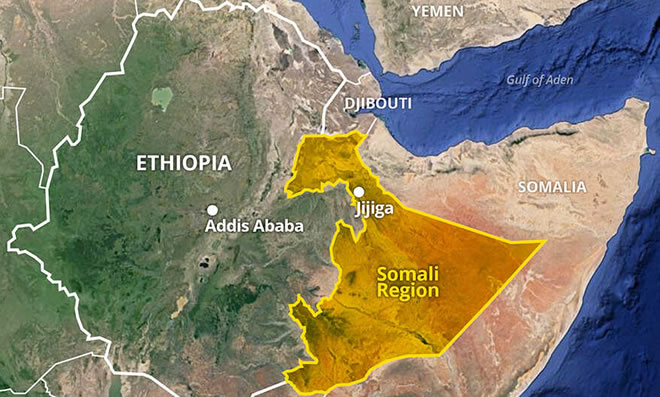
Algeria’s victory: Arab Revolution reawakens?

Algiers

Algerians flooded into the streets in celebration April 2 as long-ruling President Abdelaziz Bouteflika announced his resignation following weeks of protests in cities across the country. The ailing Bouteflika clearly stepped down to avoid being deposed by armed forces. Just hours before his announcement, Lt. Gen. Ahmed Gaid Salah, commander of the National Popular Army, called for "immediate" application of Article 102 of the constitution, which calls for the removal of a president who is too incapacitated to serve. The resignation also came four days after some million protesters filled the streets of Algiers for a "Friday of the Steadfastness"—the sixth consecutive Friday of demonstrations calling for an end to Bouteflika's rule. But a popular chant at the protests was "We want the implementation of Article 7 of the constitution"—which stipulates that "the people are the source of all power." The movement is demanding an end to the entrenched military-dominated regime altogether.

Under the constitution, the Senate speaker is to take over as interim head of state until new elections are held. But there are clearly fears that the ruling regime will remain intact. One demonstrator in Algiers held a sign reading: "We don't want another Sisi in Algeria. The Egyptian scenario won't be repeated here."

Protesters have thus far emphasized nonviolence and even appealed to the security forces for support. Favored chants have included: "silmiya, silmiya" (peaceful, peaceful), "sha‘b wa shorta, khawa, khawa" (people and police; brothers, brothers) and "jaish wa sha'b, khawa, khawa" (army and people; brothers, brothers). (MEO, Algeria Watch, North Africa Post, Wyvern Report, BBC News, AP)

Photo via Twitter
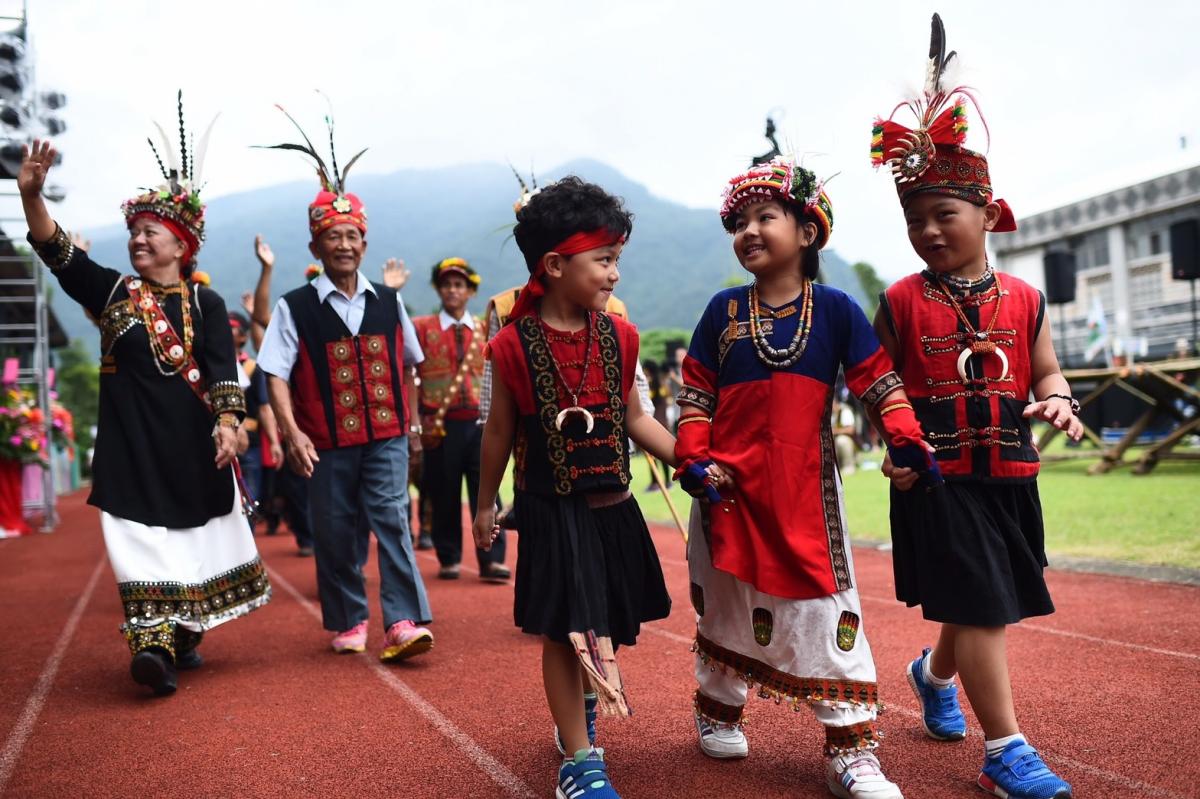
Russia tightens screw on Crimean Tatars

Tatar

Russia's Federal Security Service (FSB) raided the homes of several Crimean Tatars on March 27, officially as part of an investigation of activities linked to Hizb ut-Tahrir, banned as a "terrorist" organization in Russia although operating lawfully in Ukraine. FSB agents carried out at least 25 searches and detained at least 20 people. The searches were conducted in the Crimean capital Simferopol, the nearby village of Strohonivka, and the village of Volodymyrivka in the Bilohirsk district. In Simferopol's Kamyanka district, officers of the Russian Ministry of Internal Affairs cordoned off the neighborhood and ordered residents who assembled during the operation to disperse. According to reports, residents were not allowed to enter their homes and their lawyers were not permitted to be present during searches.

Oksana Pokalchuk, Amnesty International Ukraine's executive director, said: "The crackdown on the Crimean Tatar community, whose members are regarded as disloyal to the de facto Russian authorities, has continued unabated for five years. The Russian authorities will use any means to suppress dissent, real or perceived, casting their net wide to target the Crimean Tatar community and silence dissenting voices. The latest crackdown is one of the biggest acts of brazen intimidation of the whole community in recent months." (AI)

Advocates for the Crimeans continue to protest the abrogation of fundamental cultural rights since Russian annexation of the Crimean Peninsula in 2014. Almost two years after the International Court of Justice ordered Russia to "ensure the availability of education in the Ukrainian language" in occupied Crimea, there is not one school teaching all subjects in either Ukrainian or Tatar. (Human Rights in Ukraine)

Photo: Crimean News Agency

Burma sentences Arakan leader to 20 years

U Aye

A Burmese court in Sittwe on March 19 sentenced prominent Rakhine ethnic leader Aye Maung to 20 years in prison for treason and defamation stemming from a January 2018 speech made one day before deadly riots broke out in Mrauk-U township. Maung, a member of parliament and former chairman of the Arakan National Party, was arrested along with writer Wai Hin Aung days after giving "inflammatory" speeches. Maung is said to have accused the ethnic Bamar-dominated ruling National League for Democracy (NLD) government of treating the ethnic Rakhine people (also known as the Arakan) like "slaves." Seven people were killed the evening after the speeches, when Rakhine protestors seized a government building and police opened fire. Maung’s lawyers are unsure if he will appeal at this time, as a new trial in the case could result in a death sentence. Both Maung and Aung received 18 years for treason and two for defamation.

From Jurist, March 20. Used with permission.

Note: The sentence comes amid new fighting between Burmese government forces and the Arakan Army rebel militia. A report from Burma Task Force upon Aye Maung's April 2017 election to parliament calls him a "genocidalist" who ran on a platform demonizing Rakhine state's persecuted Rohingya people.

Photo via Myanmar Times

Amnesty: EU complicit in violence against refugees

Croatia border

European governments are complicit in the systematic, unlawful and frequently violent "pushback" or collective expulsion of thousands of asylum-seekers to squalid and unsafe refugee camps in Bosnia and Herzegovina, Amnesty International charges in a new report. Entitled Pushed to the Edge: Violence and Abuse Against Refugees and Migrants along Balkan Route, the report details how, by prioritizing border control over compliance with international law, European governments are not merely turning a blind eye to vicious assaults by the Croatian police, but actually funding such activities. In so doing, they are fueling a growing humanitarian crisis on the edge of the European Union.

"To understand where the priorities of European governments lie, one only needs to follow the money. Their financial contribution towards humanitarian assistance is dwarfed by the funds they provide for border security which includes equipping Croatian border police and even paying their salaries," said Massimo Moratti, research director for Amnesty International's Europe Office. "Meanwhile people fleeing war and persecution are beaten and robbed by the Croatian police and forcibly pushed back to legal limbo, left at the mercy of a failing asylum system in Bosnia and Herzegovina."

Currently some 5,500 women, men and children are trapped in two small Bosnian towns near the Croatian border, Bihac and Velika Kladusa, living in abandoned factories without basic amenities. Bureaucratic obstacles, inadequate legal assistance and limited administrative capacity mean that potential asylum-seekers are unlikely to get their asylum claims processed in Bosnia and Herzegovina. Most attempt to proceed to other European countries.

Having previously entered the EU through Greece and Bulgaria and been denied asylum there, many exit the EU to continue the journey along the "Balkan Route." In order to reach Slovenia or Italy, where the EU Schengen free-movement regime begins, they have to navigate dense forests, fast-moving rivers and, in some places, live minefields. In the first ten months of 2018, at least 12 people drowned in the Western Balkans, most of them trying to cross the river border from Croatia to Slovenia. Dozens more died in other ways. 

Nearly all in the camps in Bihac and Velika Kladusa had been pushed back into Bosnia and Herzegovina from Croatia or Slovenia, and nearly one third of those interviewed by Amnesty had experienced violence at the hands of the Croatian police. Many described how they were beaten, had their documents destroyed and possessions stolen, in what appears to be a "systematic and deliberate policy" by Croatian authorities to deter future attempts to enter the country.

Those apprehended in Italy or Slovenia are often subject to "chain pushbacks," summarily handed over to Croatian police and the forcibly expelled back to camps in Bosnia and Herzegovina, without having their asylum claims considered.

As the allegations of violent pushbacks on the borders have mounted, Croatian authorities have increasingly discouraged public scrutiny of country's migration practices. NGO volunteers have been harassed, held for hours by police without formal charges and threatened with criminal prosecution. The Ministry of Interior has even accused some NGOs of assisting people to enter Croatia irregularly, resulting in a "chilling effect" on those working to support refugees.

In spite of these appalling practices at the border, the European Union has continued to allocate significant funds to assist Croatia in border security. The EU has also wilfully ignored the failures of the European asylum system that make these journeys necessary.

"As temperatures rise and the snows melt, the number of people attempting to cross Croatia will swell. But with Bosnia and Herzegovina ill-equipped to handle the arrival of an increasing number of people seeking protection, action must be taken to avoid a humanitarian crisis on the edge of the EU," said Moratti. "European leaders can no longer wash their hands of responsibility for the continued collective expulsions and violent pushbacks along the Balkan route that are the result of their determination to fortify EU borders, no matter what the human cost is." (AI, March 13)

Photo Border Violence Monitoring

Iran: lawyer convicted for representing protesters

Nasrin Sotoudeh

The Center for Human Rights in Iran (CHRI) announced March 5 that human rights lawyer Nasrin Sotoudeh had been convicted in absentia by Judge Mohammad Moghiseh of Iran's Revolutionary Court, described as a "hardline" jurist. She refused to appear in court because she was denied the right to choose her own lawyer. Sotoudeh had been charged with crimes including "collusion against national security," "propaganda against the state," "encouraging corruption and prostitution," "appearing before the judiciary without Islamic hijab," "disturbing public peace and order," and "publishing falsehoods with the intent to disturb public opinion." Prosecution cited her membership in the Defenders of Human Rights Center, the Legam group against capital punishment, and the anti-militarist National Peace Council. 

Sotoudeh has been detained in Tehran’s Evin Prison since June when she was taken from her home by security agents. This is not her first time in Evin Prison; Sotoudeh previously served three years from 2010-2013 for taking on other political cases as a defense lawyer.

CHRI's executive director Hadi Ghaemi stated, "The Iranian judiciary prosecuted Sotoudeh under national security charges to send a clear message that it will not tolerate the peaceful defense of human rights by activists or their lawyers. We should all speak out against this travesty of justice."

In 2012 Sotoudeh won the Sakharov Prize for Freedom of Thought, Europe's highest human rights award, and recently defended women accused of removing their hijab to protest the law requiring that women wear the traditional Muslim head covering.

From Jurist, March 7. Used with permission.

Photo: Center for Human Rights in Iran

  1. Nasrin Sotoudeh gets 38 years in prison with 148 lashes

    Iranian human rights lawyer Nasrin Sotoudeh’s husband Reza Khandan posted on Facebook that his wife has been sentenced to 38 years in prison and 148 lashes.

    Amnesty International criticized the Islamic Republic in an urgent letter on March 4 and called for the immediate release of the 55-year-old human rights lawyer. "The charges against her stem solely from her peaceful human rights work, including her defence of women protesting Iran’s abusive forced hijab laws, and her outspoken opposition to the death penalty," said the letter addressed to Ebrahim Raisi, the head of Iran's judiciary. (Jurist)

Iraq prosecuting children suspected of ISIS ties

Iraqi soldiersIraqi and Kurdistan Regional Government (KRG) authorities have charged hundreds of children with terrorism for alleged Islamic State (ISIS) affiliation based on dubious accusations and forced confessions obtained through torture, Human Rights Watch (HRW) reported March 6. The 53-page report claims that Iraqi and KRG authorities often arrest children with “any perceived” connection to ISIS, use torture to coerce confessions and prosecute them in “hasty and unfair trials.” International law observes children recruited by armed groups as victims who should be rehabilitated and reintegrated into society.

HRW claims that the screening, investigation, and prosecution of children as IS suspects is deeply flawed. Once children are suspected of IS involvement, many are afraid to go home and are vulnerable to attacks in their communities.

The consequences of these punitive policies are profound, creating long-term stigma, family separation, displacement, and severely limiting youths’ ability to reintegrate into society and support themselves. Once branded as ISIS, these children fear revenge attacks if they return home after their release from detention.

Among a number of solutions, HRW urges Iraq and the KRG to significantly change their approach to children suspected of ISIS affiliation. “To uphold the rights of children, they should recognize children recruited by ISIS primarily as victims, end the detention of children solely for ISIS membership, and prioritize their rehabilitation and reintegration.”

From Jurist, March 6. Used with permission.

Photo: WikiMedia via Jurist

Afghan women advocates wary of ‘peace’ talks

Direct talks between US officials and the Taliban are advancing in Qatar, aimed at ending the decades-long conflict in Afghanistan. Taliban co-founder Mullah Abdul Ghani Baradar for the first time met the US special representative, Zalmay Khalilzad, on March 4. (Al Jazeera)  In a parallel process being brokered by Russia, Taliban representatives and Afghan politicians opposed to President Ashraf Ghani met in Moscow last month. The Taliban refuse to recognize Ghani's government, calling it a "puppet" of the US. (Al Jazeera) But advocates for Afghan women view both these sets of talks with increasing skepticism, voicing their concern that hard-won rights could be bargained away.

"After the 1996-2001 oppressive Taliban rule, the women of Afghanistan came out of the dark. We will never go back," said Mary Akrami Sahak, director of the Afghan Women's Network (AWN). "It is unthinkable that the Afghan Women's Network would take part in any kind of discussion or negotiation without carefully listening to women in all corners of the country and bringing their concerns and demands to the table. So far, the so-called peace talks lack this kind of democratic legitimacy."

Afghan Women's Network is calling upon the Taliban to take trust-building measures such as the re-opening of girls' schools in areas they control, So far, the group sees few signs of improvement. Forced displacement, indiscriminate violence on civilians, stoning of women and men, closing of schools, and the erasure of women from public life are common in Taliban-controlled areas, according to the AWN. (ReliefWeb)

Photo: Wikimedia Commons

ICJ urges UK to end rule over Chagos islands

Chagos Islands

Chagos

The International Court of Justice issued an advisory opinion Feb. 26 outlining the legal consequences of separation of the Chagos Archipelago from Mauritius in 1965. The UK and Mauritius, by virtue of the Lancaster House agreement, detached the Chagos Archipelago form Mauritius and established the British Indian Ocean Territory (BIOT). The British subsequently allowed the United States to establish a military base on the island Diego Garcia, with many inhabitants forcibly removed, and those who left voluntarily prevented from returning. The ICJ opinion, which is nonbinding, says the UK did not lawfully decolonize the islands through the Lancaster House agreement. The court urged the UK to end its continued administration over Chagos Archipelago: “[T]he United Kingdom has an obligation to bring to an end its administration of the Chagos Archipelago as rapidly as possible." The opinion states that "all Member States must cooperate with the United Nations to complete the decolonization of Mauritius."

The opinion follows requests from the UN General Assembly and Mauritius to return the Chagos Archipelago to the country and end British control.

From Jurist, Feb. 26. Used with permission.

Photo: WILPF
Photo: WILPF

Venezuela: troops fire on indigenous protesters

Venezuelan army troops reportedly opened fire on indigenous protesters who were blocking a road near the Brazilian border Feb. 23, leaving several dead. Opposition lawmaker Américo de Grazia, from the southern state of Bolívar, announced on his Twitter feed that morning that soliders opened fire as protesters, including many from the local Pemón indigenous group, contended with troops attempting to bar the passage of trucks filled with aid coming in from Brazilian territory. The first victim was said to be a Pemón woman who was on the scene as a food vendor. A second Pemón was slain shortly later, and another 14 wounded, de Grazia said. He added that several troops, including the commander on the scene, were subsequently taken captive by Pemón warriors and are being held at the nearby indigenous community of Kumarakapay. De Grazia tweeted later in the day that the 14 Pemón who had been taken to a nearby hospital after being shot also succumbed to their wounds.

De Grazia warned that paramilitary forces in civilian dress are gathering at the army barracks in the vicinity, and that an attack on Kumarakapay may be imminent. (El Comercio, El Comercio, Peru, Miami Herald)  

De Grazia is a member of La Causa Radical party, a part of Venezuela's dissident left that has broken with President Nicolás Maduro. His version of events is backed up by the local Bolívar human rights group Kapé Kapé.

Prominent Venezuelan commentator Colette Capriles accused Maduro of intentionally escalating the situation in an attempt to divide the international coalition backing right-wing opposition leader Juan Guaidó. "He is betting that the discussion will get stuck on possible military action to remove hm from power. The costs to his reputation are very high, but acts of violent resistance will place use of force in the foreground, and he is betting that the discussion this generates will lead to the defection of the European Union and its allies," she told website Efecto Cocuyo.

Guaidó, meanwhile, is now openly alluding to military intervention, saying on his own Twitter feed: "I've been forced to take a decision: formally propose to the international community that we should have all options open to achieve the liberation of this motherland which is fighting and will continue to fight." (Bloomberg)

Photo: Américo de Grazia via Twitter
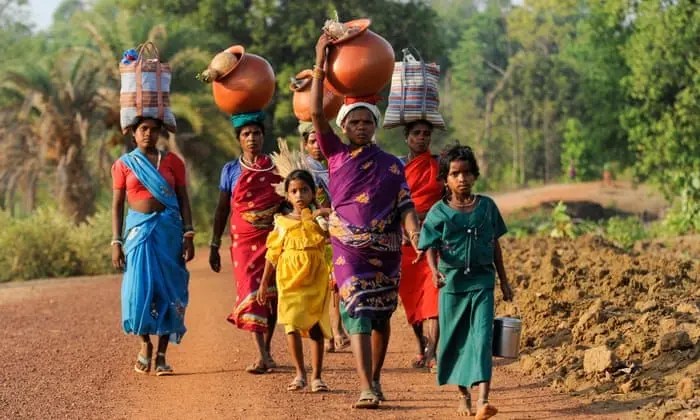
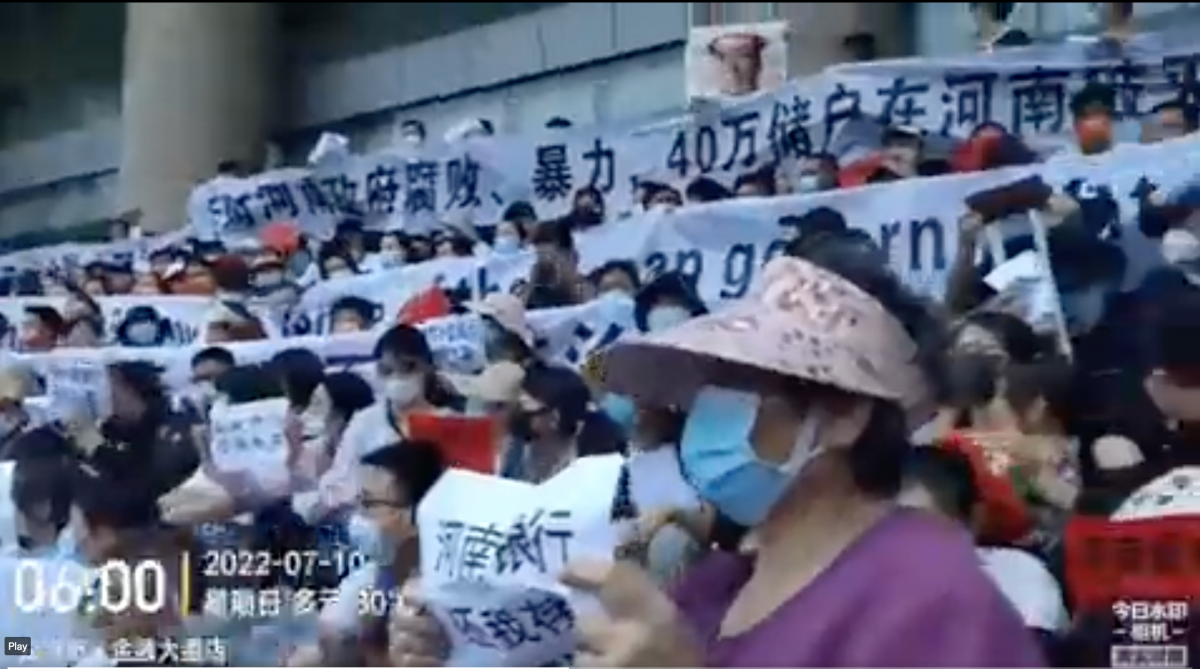
  1. Politics of Américo de Grazia, death toll at Santa Elena

    Américo De Grazia, the lawmaker who made the claims about 14 dead in the violence on the Brazilian border, seems to be provisionally supporting Guaidó, but with caveats—such as that he should refrain appointing cabinet positions while overseeing the period of transition. (Caraota Digital) 

    Some reports are now placing the death toll in the confrontation at the border post of Santa Elena at 25. (Al Jazeera) UN High Commissioner for Human Rights Michelle Bachelet has denounced the violence along Venezuela's borders with Colombia and Brazil, saying it has resulted in "at least" four deaths and more than 300 injuries. (Jurist)

    The Maduro government appears to be trying to blame the Pemón for the violence. "What happened has nothing to do with the versions that have circulated," his foreign minister, Jorge Arreaza, said in New York at UN headquarters. "In fact, some of the wounded were wounded by knives, machetes, even arrows." (RT)

South Africa to leave ICC: reports

A South African deputy minister said Oct. 10 that the nation will leave the International Criminal Court (ICC), opining that the court has "lost its direction." Following criticism for ignoring an ICC directive to arrest the president of Sudan, Obed Bapela of the ruling African National Congress (ANC) told reporters that South Africa will continue to uphold "the flag of human rights" independent of the ICC. Bapela indicated that powerful ICC member nations "trample" human rights and pursue "selfish interests," and some African leaders have questioned the ICC's indictment of Sudanese President Omar al-Bashir as being another in a long line of decisions biased against Africans.

In March the ICC requested assistance from the UN Security Council in affecting the arrest of Bashir. In asking the Council to take "necessary measures" to force Sudan to comply with the ICC investigation, the court noted that without such assistance, the Council's decision to request an investigation into Bashir in 2005 would "never achieve its ultimate goal." Bashir spent two days in South Africa in mid-June, during which time a judge for South Africa's highest court issued an order barring Bashir from leaving the country.

From Jurist, Oct. 13. Used with permission.

Note: Bashir was allowed to leave South Africa despite the court order, eliciting protests from some of the country's most respected figures, including Justice Malala and Desmond Tutu. (AFP, June 17; The Guardian, June 16) Bashir last appeared publicly outside Sudan when he was in Beijing last month for the Victory Day celebrations.

World War 4 Report on semi-hiatus

World War 4 Report editor and chief blogger Bill Weinberg will be traveling for the next 10 days, so the blog will be at a reduced level of activity and there will be no headlines mailing next weekend. The mailing should resume Monday Aug. 3. If you wish to be added to the weekly list, please be in touch. Your address will NEVER be shared with any third parties, and you will receive only one mailing per week. Meanwhile, please consider supporting our ongoing work by becoming a sponsor on Patreon. We will happily accept between $0.25 and $5.00 per post. Payments can be discontinued at any time. Remember: World War 4 Report receives no foundation sponsorship; we depend on our readers to support our work.

Our goal: With a reliable hundred dollars per month from our supporters, we will remove those annoying Google ads from the website. Please help us to give the Google-Borg the heave ho! We already have two $10-per-month subscribers. Can we get eight more and kiss Google Ads good-bye? You can donate on Patreon or PayPal.

  1. Another reader testimonial

    In another reader testimonial, Kevin Anderson of The International Marxist-Humanist says: "Bill Weinberg's WW4 Report [is] a very good site for non-authoritarian radical politics with a lot of emphasis on indigenous movements."

    WW4 Report receives no foundation funding. Our continued work depends on our readers

    We finally took the plunge and removed the damn Google Ads from the website. We were encouraged by the fact that one reader signed up to sponsor us on Patreon. We now have one Patreon sponsor, and one monthly subscriber on PayPal. Both are paying around $10 per month. The Patreon sponsor pays $1.50 per "paid" material from World War 4 Report. We pledge to keep "paid" posts to Patreon within the range five-to-ten a month. We hope we can gain more subscribers and make up for the modest earnings we got from Google Ads. Will you help our ultra-dissident voice survive?

    Please support our ongoing work by becoming a sponsor on Patreon. We will happily accept between $0.25 and $5.00 per post. Payments can be discontinued at any time.

    Or become a monthly subscriber on PayPal.

    Thank you!

Japanese fishermen strike over fuel costs

Japan’s fishing industry, one of the world’s largest, will stage a mass strike July 15 to protest soaring fuel costs. Some 200,000 fishing boats will cancel their trips for one day to demand government action. “Many fishermen cannot make ends meet. The industry as a whole is falling apart,” said an official of the National Federation of Fisheries Cooperative Associations. “We are asking for emergency measures from the government, just for one or two years, to help us pull through this difficult period.” Fuel now accounts for up to half of the fishermen’s operating costs, compared with just 10% a few years ago, he said. (Thomson Financial, July 14)

See our last posts on Japan, peak oil and peak food.

Iraq: more sectarian massacres

Two suicide bombers killed 76 people in a crowded market in Baghdad’s Shi’ite Shaab district March 29, as three suicide car bombs exploded within minutes of each other in Khalis, a Shi’ite town north of the capital, killing 53 and wounding 103. (Reuters, March 30) A bomb planted under a parked car also tore through a market in Baghdad’s mixed Al-Bayaa district, killing three and wounding 26. And a car bomb exploded near a Shi’ite mosque in Mahmoudiyah, 20 miles south of Baghdad, killing six persons and wounding 19. (AP, March 29)

In Fallujah, two suicide car bombs, including a truck carrying Chlorine toxic gas, struck the main US base in Fallujah, killing eight Iraqi policemen and wounding more than 20 others, local police said. (Xinhua, March 29)

The bombings took place as Ryan C. Crocker was sworn in as US ambassador to Iraq in the Green Zone, taking over from Zalmay Khalilzad. (AP, March 29)

The Reuters report on the Baghdad and Khalis attacks reads:

The upsurge in sectarian violence threatens all-out civil war and Prime Minister Nuri al-Maliki, a Shi’ite, called for restraint and urged Iraqis to work with security forces to prevent the violence spiralling out of control.

When do we decide that this is a civil war already? Of course we have been asking that for a very long time…

See our last posts on Iraq and the sectarian cleansing.

Iraq: slaughter of the innocents

On the same day as the “Soldiers of Heaven” battle in Najaf—and eclipsed from the headlines by it… From The Scotsman, Jan. 5:

7 pupils killed as schools in Iraq are targeted

SEVEN children died and 30 were wounded in Iraq yesterday when one school came under mortar fire and another was hit by a suicide bomb blast.

Mortar shells rained down on the playground of a girls’ secondary school in a mostly Sunni area of western Baghdad during breaktime, killing five pupils and wounding 20.

And there were reports that two primary children were killed at a school in Ramadi, north-west of Baghdad, when a suicide bomber attacked a military base. Ten pupils were hurt and three guards killed.

Elsewhere, US and Iraqi forces killed 250 gunmen from an apocalyptic Muslim cult in a battle near the Shiite holy city of Najaf yesterday. A US helicopter was said to have been shot down. It also emerged that the mayor of Baqouba and 1,500 policemen in Diyala province have been sacked in a bid to end the raging violence in the region northeast of Baghdad.

The mortar attack occurred at about 11am at the Kholoud Secondary School in the Adil neighbourhood of western Baghdad.

A Sunni group accused Shiite militias and said markings on the mortars indicated they were manufactured in Iran.

One pupil, Ban Ismet, 15, who was hospitalised with leg injuries, said: “I saw my friend Maha. There was blood all over her face… she was dead.”

In Najaf, officials said the joint US-Iraqi operation which killed 250 militants was launched after reports insurgents planned to assassinate Shiite clerics and pilgrims during the Ashura festival, which reaches its climax today.

An Iraqi army source said some of the dead wore headbands declaring themselves to be a “Soldier of Heaven”.

The fighting began as hundreds of thousands of pilgrims converged on the other main Shiite holy city of Kerbala, 40 miles to the north of Najaf.

Shiite security sources said the gunmen were both Sunni Arabs and Shiites loyal to Ahmed Hassani al-Yemeni. He is described apocalyptic cult leader convinced he leads the vanguard of the Mahdi – a messiah-like figure in Islam whose coming heralds the start of perfect world justice.

Governor Asaad Abu Gilel said authorities had uncovered a plot by the gunmen to kill some powerful clerics today.

In Diyala province, police chief Ghanim al Qureyshi said the 1,500 officers were sacked because the force had fled rather than fight when Baqouba was attacked by insurgents in November.

He added that he was determined to create a police force free of corruption.

Al Queyshi took over police operations in the violent province after his predecessor was sacked last month over suspicions he was collaborating with Sunni insurgent fighters.

Meanwhile, two car bombs exploded within a half-hour of each other in the northern city of Kirkuk, killing a total of 11 people and wounding 34.

A high-ranking Shiite official at the Iraqi industry and mines ministry, along with his 27-year-old daughter and two other people, was shot dead in a drive-by shooting.

• Des Browne, the Defence Secretary, arrived in Baghdad yesterday for an unannounced visit.

He is due to meet the Iraqi prime minister, Nuri al Maliki, president Jalal Talabani and other officials. “I’m here to discuss progress we have made, challenges we face and what we need to do in the crucial months ahead,” Mr Browne said.

See our last post on Iraq and the sectarian cleansing.

  1. And now a word from the forces of stability and secularism…
    And, oh yeah, more slaughter of the innocents… From the New York Times, Jan. 26:

    Iraq Leader and Sunni Officials in Clash on Security

    BAGHDAD, Jan. 25 — Iraq’s Shiite prime minister and Sunni lawmakers hurled insults at one another during a raucous session of Parliament on Thursday, with the prime minister threatening a Sunni lawmaker with arrest and the Sunni speaker of Parliament threatening to quit.

    The uproar revolved around the new Baghdad security plan, but it came as the prime minister, Nuri Kamal al-Maliki, is under increasing pressure to demonstrate evenhandedness. President Bush’s new strategy for Iraq hinges in large measure on the Iraqi government’s ability to rein in both Shiite and Sunni militants.

    In Parliament on Thursday, Mr. Maliki focused his anger on Sunni lawmakers, accusing one of being involved in sectarian kidnappings. The confrontation erupted after Mr. Maliki described the outlines of the new Baghdad security plan and pledged there would be no “safe haven” for militants.

    The leader of a powerful Sunni bloc, Abdul Nasir al-Janabi, provoked Mr. Maliki, saying over jeers from Shiite politicians, “We cannot trust the office of the prime minister.”

    His microphone was quickly shut off, and Mr. Maliki lashed into him, essentially accusing him of being one of the outlaws he had just said would not be granted sanctuary.

    “I will show you,” Mr. Maliki said, waving his finger in the air. “I will turn over the documents we have,” implying that the legislator was guilty of crimes.

    While the politicians battled in Parliament, the sectarian battle on the streets went on unabated, with 25 people killed by a suicide car bomb in a Shiite neighborhood in Baghdad.

    It was the latest in a series of attacks directed at Shiites, claiming more than 200 lives in little more than a week and increasing pressure on Mr. Maliki to restrain his supporters from exacting revenge. Sunni leaders and critics of the administration’s strategy remain deeply skeptical about Mr. Maliki’s ability or desire to confront the Shiite militias, particularly the Mahdi Army of Moktada al-Sadr, one of his most important political backers.

    American military officers say they have seen evidence in the past of the Maliki government using its influence with Iraq’s security forces to further a sectarian agenda, turning a blind eye to Shiite militia death squads while cracking down on Sunni insurgents.

    Mr. Maliki spent much of his speech before Parliament trying to counter that image, going further than he has before by promising to stop sectarian militias from driving rivals out of their neighborhoods and to return houses to their rightful owners. It is a daunting challenge given that the map of Baghdad has been almost completely redrawn along sectarian lines over the past year, displacing hundreds of thousands of people.

    “Let it be known today or tomorrow, we will start arresting anybody who took by force the house of a displaced family,” he said.

    The prime minister’s claims were challenged by Mr. Janabi, who leads the Sunni-dominated Tawafiq Party.

    Mr. Janabi, over jeers from the Shiite politicians in the room, said that the government should suspend executions, which he said were being used for political purposes, and called for parliamentary oversight of the new security plan to be sure Sunnis were not unfairly singled out.

    It was when he questioned Mr. Maliki’s trustworthiness that the prime minister issued his vague threat to turn over incriminating information about Mr. Janabi. With that, the speaker of Parliament, Mahmoud al-Mashhadani, a Sunni, slammed his gavel down and condemned the prime minister and those who applauded him.

    “That is unacceptable, Mr. Prime Minister,” Mr. Mashhadani said over the tumult. “It is unacceptable, Mr. Prime Minister, to make such accusations against a lawmaker under the dome of Parliament.”

    But Mr. Maliki pressed on.

    “What about the 150 people kidnapped near Al Bairaat?” he said, referring to an area by a lake south of Baghdad where Mr. Janabi has his base of support.

    Mr. Janabi could not be reached for comment but another member of his party, Dhafer al-Ani, said Mr. Maliki was trying to “terrify” his opponents into silence. “If there are documents against him showing crimes, why were they not revealed until this session?” he said in an interview. “What kept him silent all this time?”

    In the Parliament room, politicians shouted over one another trying to be heard. Mr. Mashhadani finally yelled for everyone to “shut up.” He then used an ancient Arabic phrase, literally meaning to “put your stuff on the camel,” which roughly translates as, “We expect more of this body.” He said in disgust, “I cannot see how it is possible that a new security plan can work.”

    The session of Parliament was attended by nearly all members, a rarity in recent months, and was broadcast live on Iraqi national television.

    The lawmakers had their shouting match while sitting beneath a banner with a phrase from the Koran that extols the importance of a civil debate in making good decisions.

    Shatha al-Mousawi, a lawmaker from the Mr. Maliki’s leading Shiite bloc, the United Iraqi Alliance, said some politicians were simply grandstanding for the cameras. But she said the fighting continued after Mr. Mashhadani abruptly called an end to the session and the cameras were turned off.

    Mr. Mashhadani demanded that the prime minister apologize to Mr. Janabi. Members of Mr. Maliki’s party said Mr. Janabi was the one who should apologize, Ms. Mousawi said.

    Mr. Mashhadani then threatened to quit.

    “Someone said you do not need to quit, we will dismiss you,” she said.

    Mr. Mashhadani called a Shiite politician a “psychopath,” as the bitter exchanges continued.
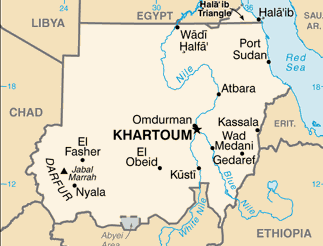
    Eventually, though, the tensions eased and Parliament approved the security plan.

    No sooner had they finished their business than three rockets exploded in the heavily fortified Green Zone, where Parliament is housed. Lou Fintor, a spokesman for the United States Embassy, said that no one was killed in the attacks.

    The car bomb attack occurred just outside the Green Zone, ripping apart a market area in the heavily Shiite neighborhood of Karrada.

    Um Mohammed, a woman who lives across the street from the site of the bombing, said she saw two buses full of people burn with the passengers trapped inside, dying agonizing deaths.

    The attack occurred as people were leaving work, the streets crowded with traffic and local clothes stores packed with customers.

    Her neighbor had just sent her 9-year-old boy, Amar Ali Habib, out to play with friends, she said.

    “He took his ball and left the house.”

    Moments later, he was dead. The explosion was so powerful, she said, that pieces of one man’s body were blown about 50 yards from where the car detonated.

    Afterward, she said, many young men took to the streets. Some called for vengeance against Sunnis while others condemned the government for failing to do anything.

Bigotry unites monotheistic faiths

Kinda heartwarming, eh? From The Telegraph, Nov. 8:

Jews and Muslims unite against homosexuals
Jews and Muslims in Jerusalem have found common ground in their fierce opposition to a gay rights rally due to be held in the city this week. Leaders from both faiths have united to denounce the parade, which has prompted nights of street protest by ultra-orthodox Jews, who regard homosexuality as an “abomination”, and death threats against those taking part.

After Israeli police found and defused a bomb bearing the message “sodomites out”, orders were given for 12,000 officers to deploy across Jerusalem during the march, which is planned for Friday. Last night, lawyers from both sides were wrangling at the High Court over whether the parade should be allowed to take place and, if so, where. With the court expected to convene another hearing today, it appeared that the parade would take place but at a new location near the parliament, a safe distance from orthodox neighbourhoods.
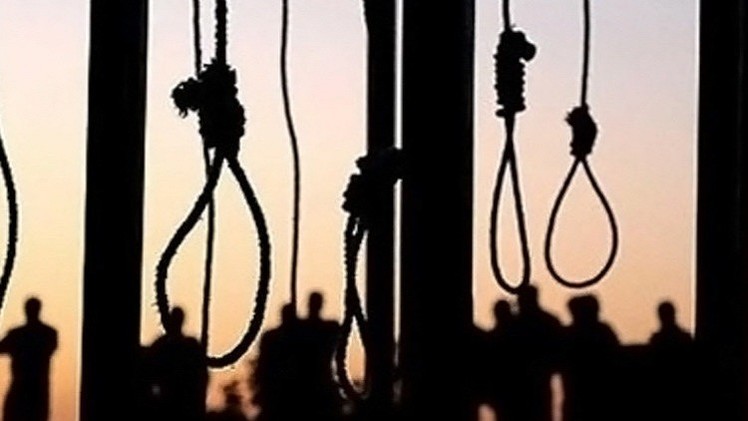
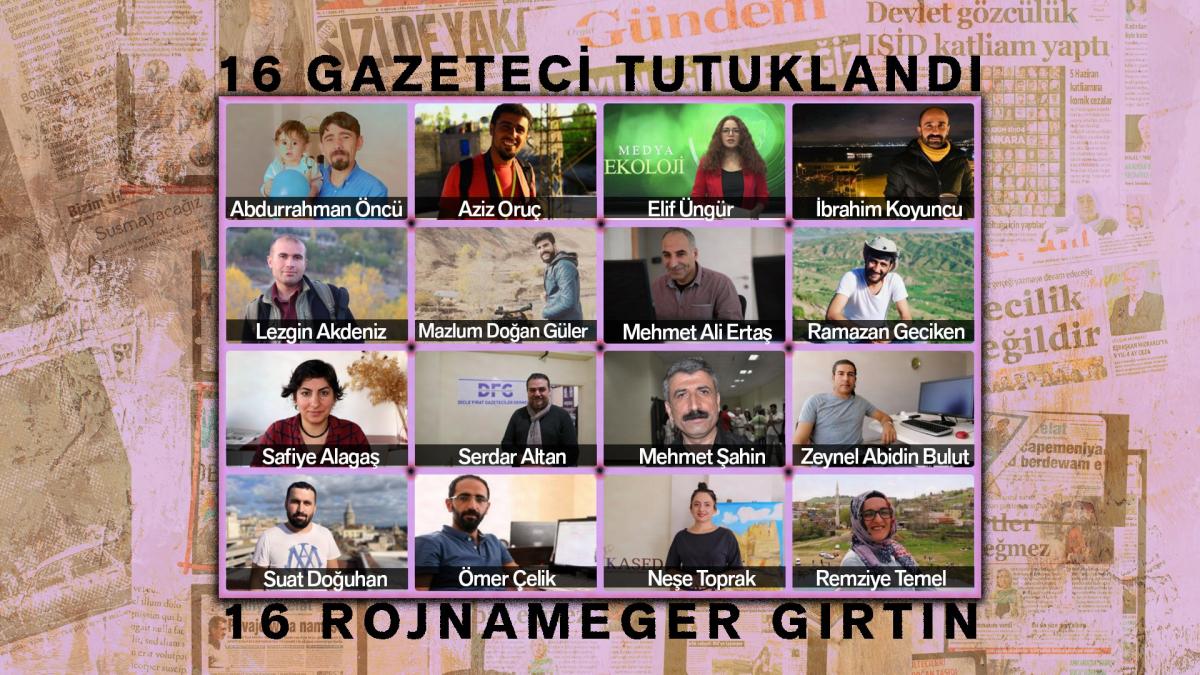
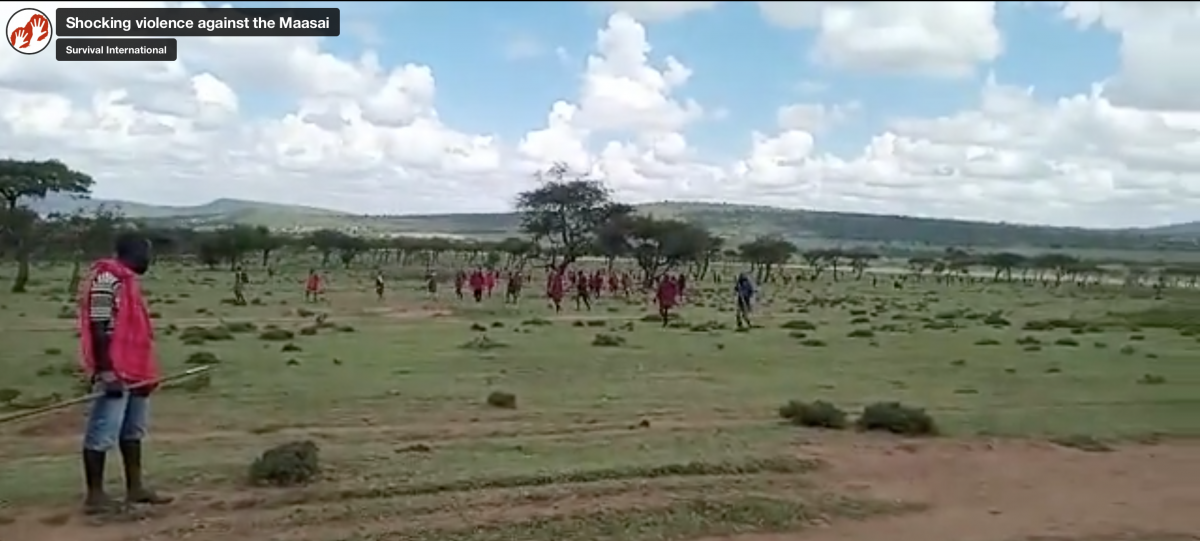
The issue of the parade is generating more media coverage than the Israeli military incursion into Gaza, which has left more than 50 Palestinians dead.

The city’s Islamic leadership is opposed to the parade, with Tayseer Tamimi, the head of the Palestinian supreme council of Sharia litigation, leading Muslim opposition. “This march tries to destroy the moral and spiritual values for youths,” he said. “All religions discredit gays because it is against the decent human nature created by God.”

Ultra-orthodox Jews have protested for three nights, setting up burning barricades and throwing rocks at police. Thirty protesters were arrested and six policemen hurt as water cannon was deployed to put out fires and disperse crowds.
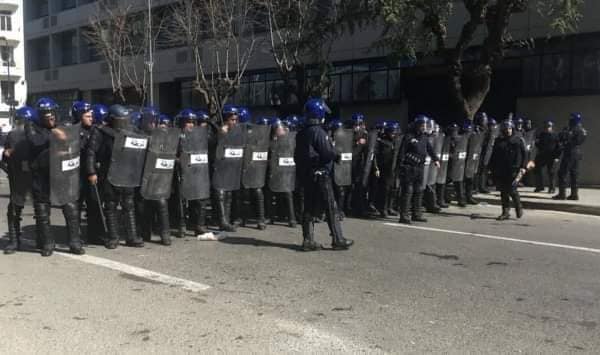
“This isn’t the gay pride parade but the disgrace parade,” said Yaakov Cohen, an MP from the United Torah Judaism party. Ben Yizri, an MP for the ultra-orthodox Shas party, part of Israel’s ruling coalition, said: “We believe God will be very upset.”

Homosexuality was legalised in Israel 18 years ago, but gay rights campaigners said many homosexuals were intimidated by Jerusalem’s strongly homophobic atmosphere. Noa Satath, of Open House, the group planning the parade, said it marked an important step in bringing homosexuality “out of the closet” in Jerusalem.

See last posts on Israel/Palestine and the unifying effects of anti-gay bigotry.

Afghanistan: US kills more civilians

From page 5, below the fold, of the New York Times, Aug. 25:

8 Killed in Raid by U.S. Forces in Afghanistan

KABUL — Eight civilians, including a child, were killed in an operation by American forces in eastern Afghanistan on Thursday, an Afghan police official said. United States forces acknowledged killing a child and injuring a woman but said the seven men also killed were “Qaeda facilitators” who had opened fire on them as they approached a compound.

The Afghan government has sent a team to investigate the killings, said Abdul Sabour Allah Yar, deputy police chief of Kunar, the province where the raid took place. He said the men killed were elders who had gathered in the house to resolve a family dispute. Four other civilians were arrested in the raid, he said.
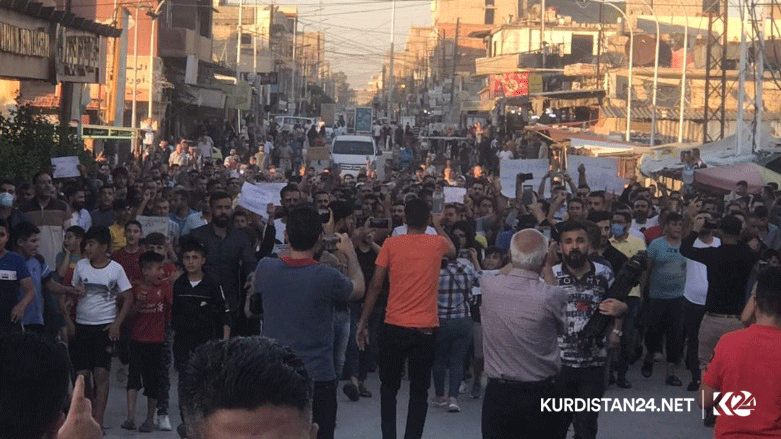
A spokesman for United States forces in Afghanistan, Col. Tom Collins, said the forces were conducting an early morning operation against a compound housing “suspected terrorists” to capture a “known Al Qaeda facilitator.”
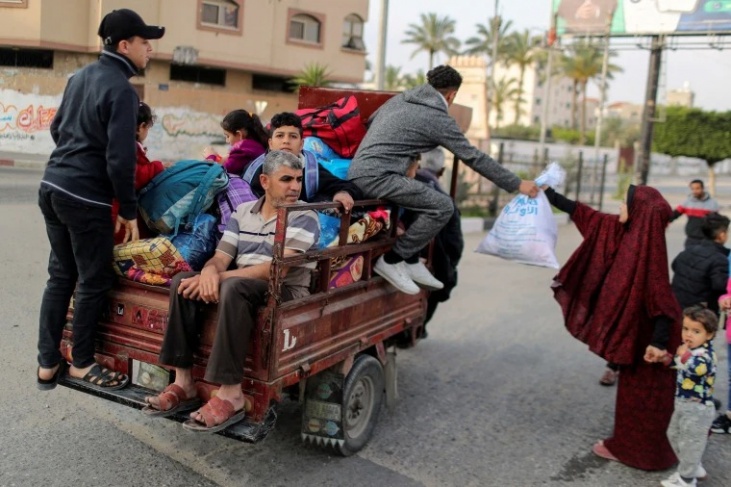
“Seven suspected Al Qaeda facilitators were killed during the operation, including we believe, the lead facilitator,” Colonel Collins said. “There were two civilian casualties during the operation.” No American or Afghan soldiers were wounded in the operation, he said.

“Credible intelligence linked the targeted individual to suspected terrorist activities and attacks against Afghan and coalition forces in Kunar Province,” Colonel Collins said at a news briefing in Kabul. He said weapons and ammunition had been found in the compound but he did not provide details on how the people inside were linked to Al Qaeda.

Colonel Collins said the child who was killed was 10 to 12 years old. Mr. Yar said the child was 10.

Mr. Yar said the local government district chief had informed him that the men killed were civilians and elders of two families. He said that judging from his own conversation with American commanders, they had been wrongly informed that the meeting was a Qaeda gathering.

He also said the provincial authorities had not been told of the operation, something President Hamid Karzai has repeatedly requested in an effort to avoid civilian casualties.

See our last post on Afghanistan.

Paraguay: march against US troops

Some 500 people, mostly students, marched in Asuncion, Paraguay, on June 17 to protest the presence of US troops in the country. The protesters marched along the Avenida Mariscal Lopez; they tried to reach the US embassy but were blocked by some 100 riot police. The marchers instead rallied at the intersection of two avenues, where they burned US flags and an effigy of US president George W. Bush and demanded the departure of US troops from Paraguay and Latin America. The protesters held signs reading “Yankees tapeho,” meaning “Yankees go home” in Guarani, the main indigenous language of Paraguay. Protests against the US troops are held on the 17th of every month; the June action was larger than usual because it coincided with the final day of the Paraguayan session of the Bolivarian People’s Congress, which began in Asuncion on June 13.

Last year President Nicanor Duarte gave permission for 400 US troops to be in Paraguay on 13 different missions between June 1, 2005, and Dec. 1, 2006. Congress ratified the decision in May 2005, provoking ongoing protests by student, grassroots, union and social organizations. (Congreso Bolivariano de los Pueblos, June 18 from EFE; La Gaceta, Tucuman, June 17 from DPA; AP , June 17)

From Weekly News Update on the Americas, June 18

See our last post on Paraguay.