Southeast Asia
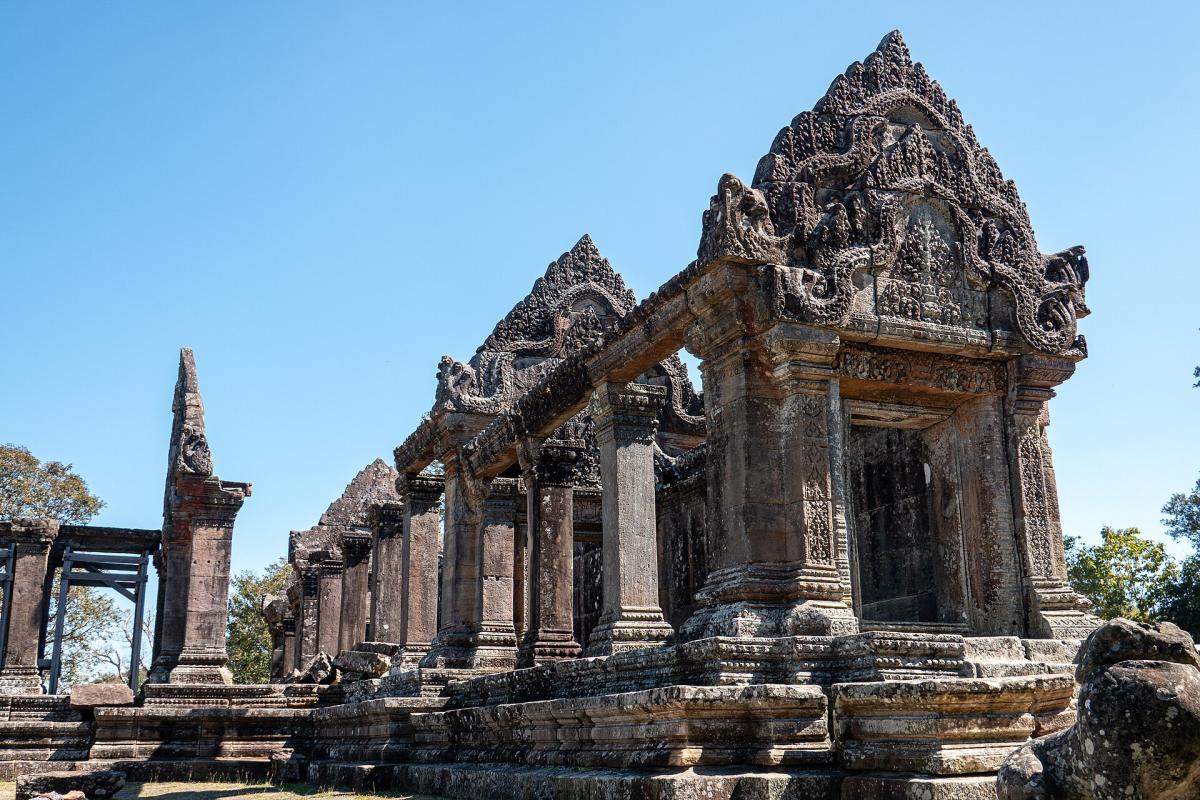
Preah Vihear

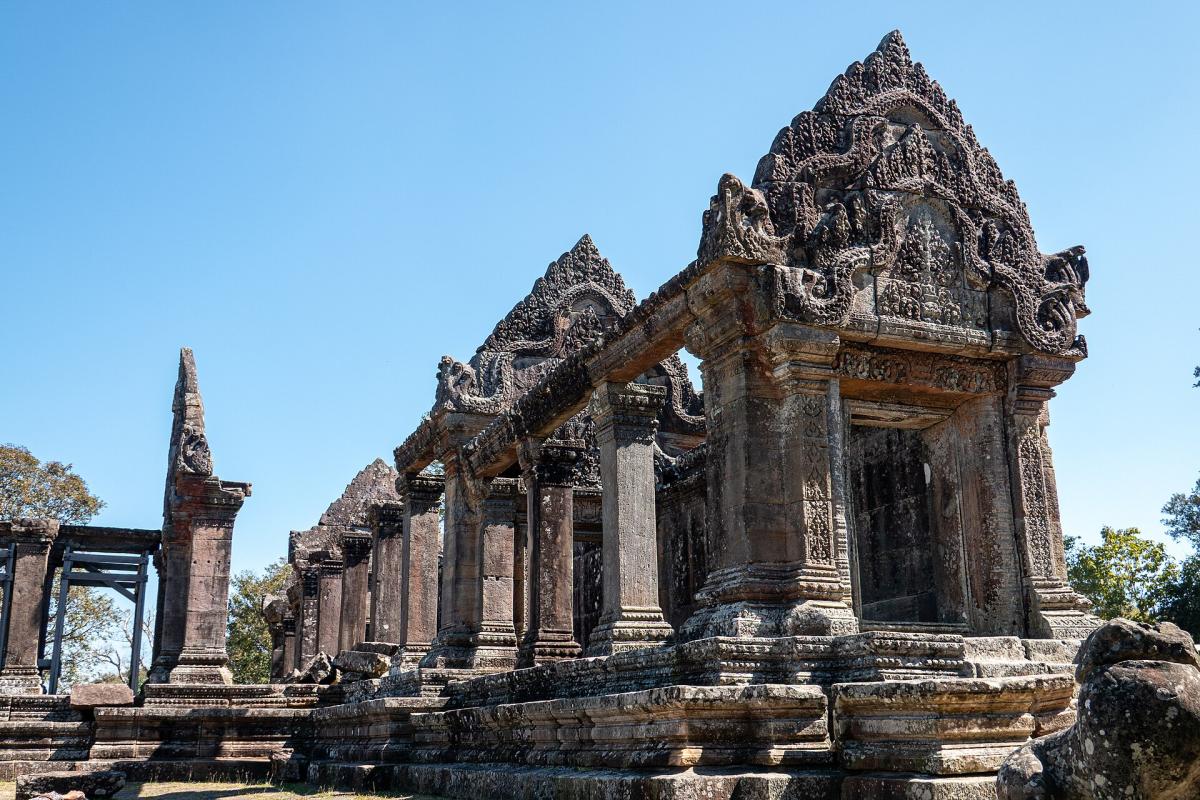
Orwell and the Thai-Cambodia conflict

Cambodia’s prime minister, Hun Manet, nominated Donald Trump for the Nobel Peace Prize on Aug. 7, citing his “crucial role” in restoring peace after bloody border fighting with Thailand. The gushy statement praised Trump’s “extraordinary statesmanship” and “innovative diplomacy.” (NYT) Cambodia now… Read moreOrwell and the Thai-Cambodia conflict

North America
Canada

Podcast: MAGA-fascism and the struggle in Canada

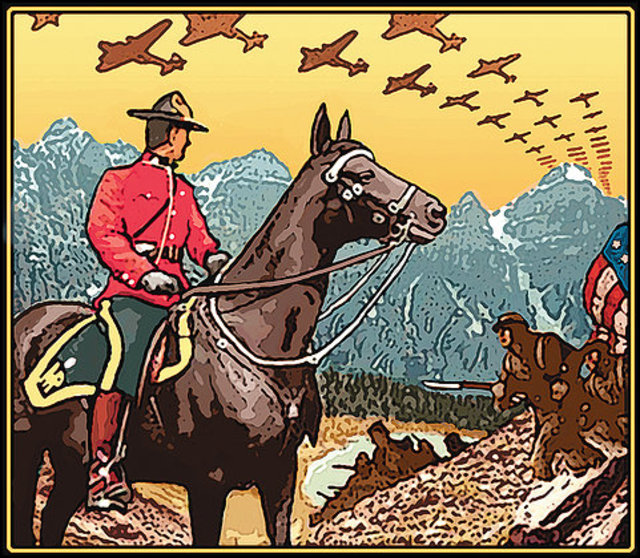
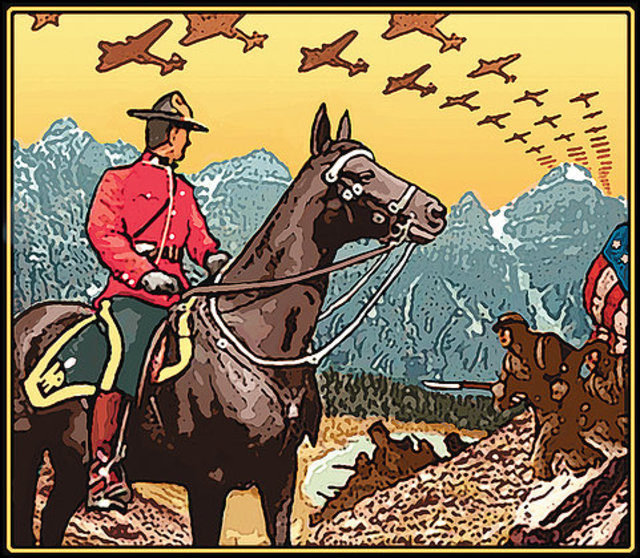
Trump’s annexationist designs on Canada were the central issue in the country’s elections this past week, which saw a victory for the intransigently anti-Trump candidate, Mark Carney. While this seems surreal after a generation of economic integration under NAFTA, the vast resources of Canada—especially hydrocarbons, water and energy—provide a long-term goad of conflict between the two giants of North America. The Pentagon does in fact have a contingency plan for an invasion of Canada, dating back to the 1930s. In Episode 276 of the CounterVortex podcast, Bill Weinberg explores the strategic and corporate agendas behind Trump’s bellicose bluster. (Image: source unknown, lifted from Art & Architecture, Mainly)

Central America
salvador

MAGA-fascism and the struggle in El Salvador

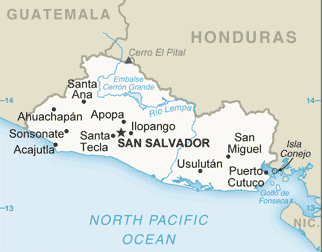
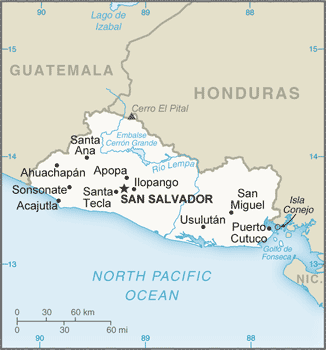
US-directed repression and counter-insurgency in El Salvador in the 1980s allowed the imposition of “free trade” or “neoliberal” regimes in the generations since then—ultimately culminating in the adoption of CAFTA. This, in turn, has exacerbated the expropriation of the traditional lands of the peasantry by the agro-export oligarchy. It also led to the hypertrophy of the narco economy and a new nightmare of violence, which Nayib Bukele has exploited to establish a new dictatorship. This dictatorship is now openly in league with Donald Trump, and has in fact become critical to his fascist agenda. In Episode 275 of the CounterVortex podcast, Bill Weinberg breaks down El Salvador’s historical role as a laboratory of genocide and police-state methods for US imperialism, and the imperative of trans-national resistance. (Map: University of Texas)

Mexico
operativo frontera norte

Mexico launches ‘Operativo Frontera Norte’

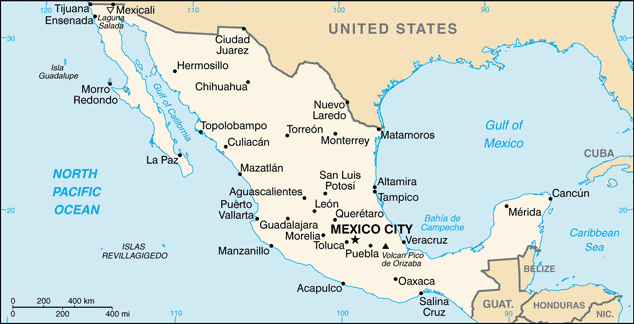
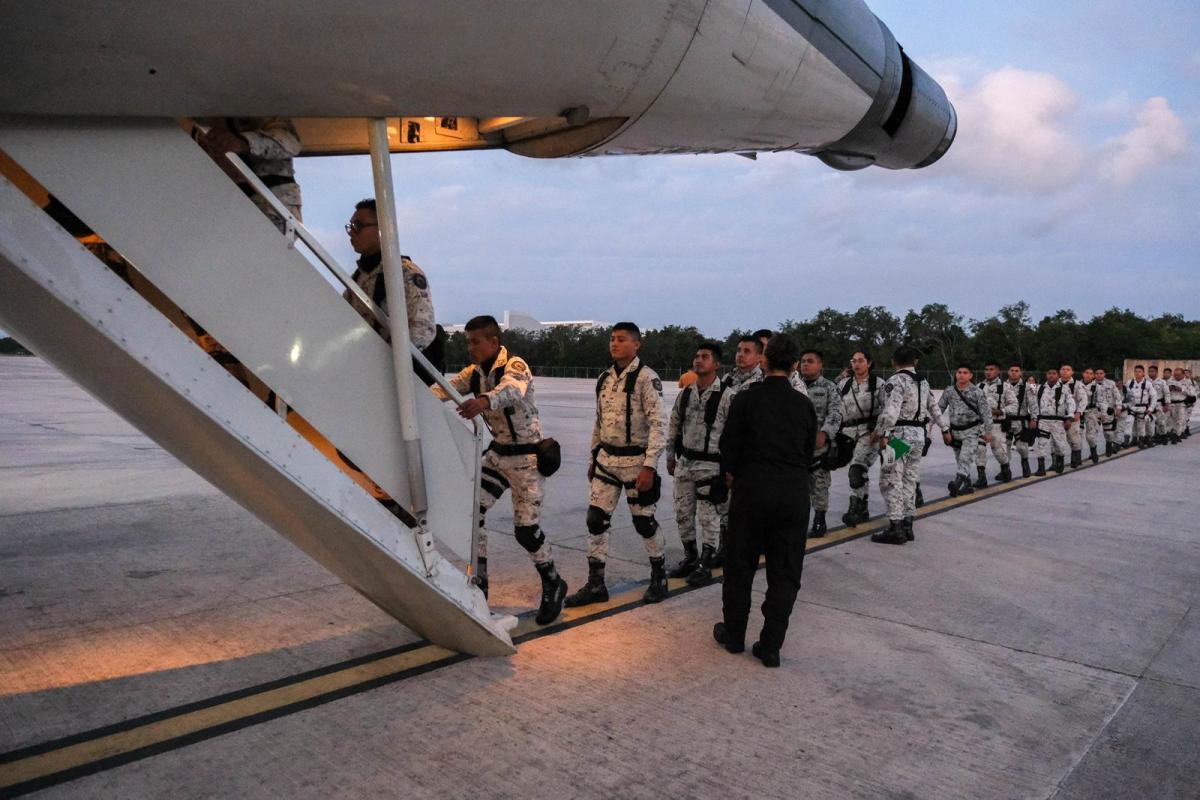
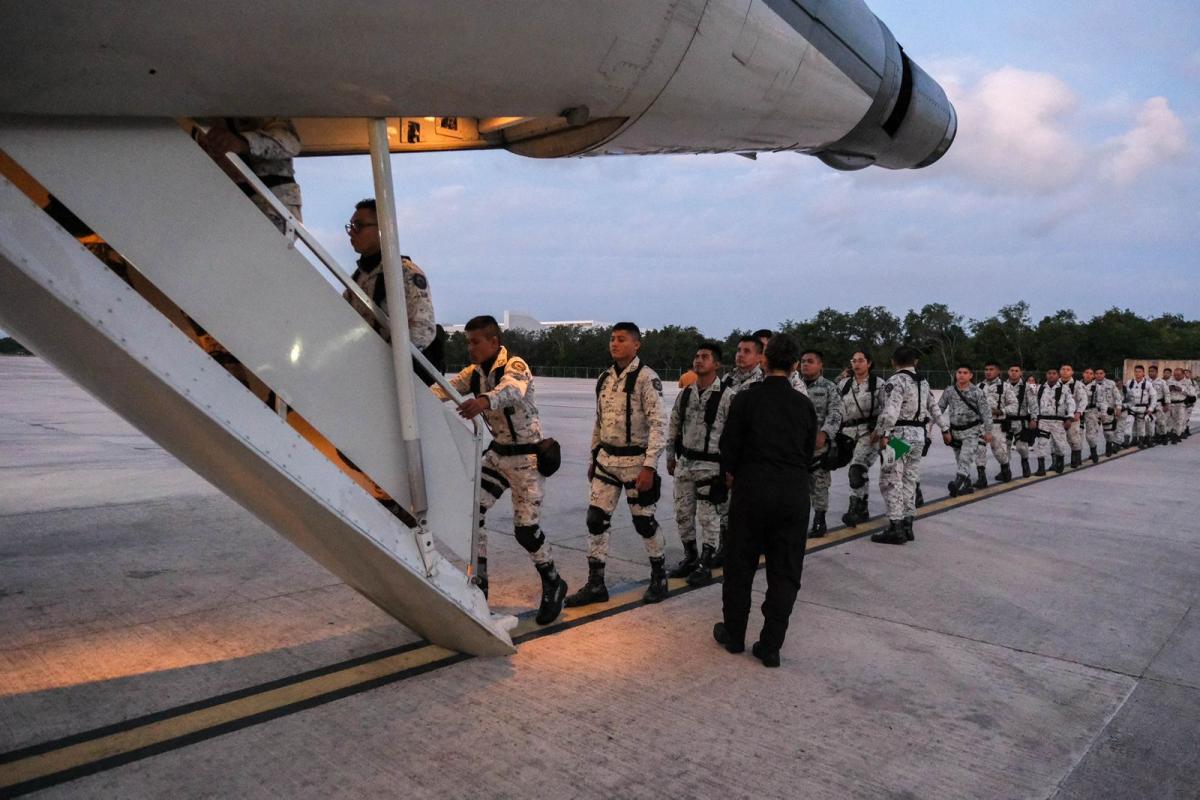
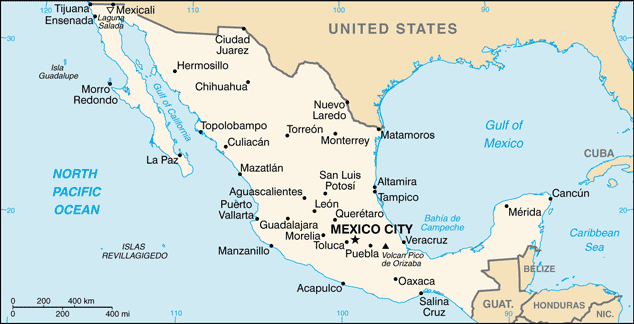
Mexico has launched a massive deployment of 10,000 troops to cities and towns on the border with the United States. Videos and photos posted on social media by Mexico’s Secretariat of National Defense (SEDENA) showed military and National Guard troops lined up boarding transport planes and rows of army trucks rolling out from bases in Mexico City, Tlaxcala and other cities. The response—dubbed “Operativo Frontera Norte”—is part of an agreement reached between US President Donald Trump and Mexican President Claudia Sheinbaum postponing trade tariff threats for a month. (Photo: SEDENA via Peninsula360)

The Andes
Chancay

Peru: local dissent to China’s ‘megaport’ scheme

China and Peru are set to sign an updated free-trade agreement at the Asia-Pacific Economic Cooperation (APEC) summit, which opens this week in Lima. President Xi Jinping also inaugurated a Chinese-financed “megaport” in Chancay, a fishing town some 60 kilometers up the coast from Lima. The $1.3 billion project is to be overseen and majority-owned by the Chinese shipping giant COSCO, with an overland link to Brazil foreseen, providing an exit port for resources from throughout the continent. But the official boosterism is being met with a skeptical response by impoverished local villagers, who say the project is cutting them off from fishing waters and bringing them no economic benefit. Dredging for the port has already destroyed fish breeding grounds, locals say. (Photo: CADAL)

East Asia
Legislative Yuan

Protesters surround Taiwan parliament

Some 30,000 Taiwanese demonstrators surrounded the Legislative Yuan, the island’s parliament, one day after Lai Ching-te of the Democratic Progressive Party (DPP) was sworn in as president. They were protesting against the legislative majority’s attempts to enact new laws they say would unconstitutionally limit the power of the executive. Three days before the inauguration, physical conflict broke out among lawmakers on floor of the Legislative Yuan, with five briefly hospitalized. The DPP, while winning the presidency, failed to maintain a legislative majority in the January election, leaving the opposition Kuomintang to form a majority coalition. The Kuomintang favors closer ties with China, while the DPP upholds Taiwan’s de facto independence. Beijing responded to Lai’s inauguration with menacing naval maneuvers, completely surrounding Taiwan with warships. The protest at the Legislative Yuan evokes memories of the 2014 Sunflower Movement, when activists occupied the parliament chamber for 24 days to oppose a free trade agreement with China being pushed by the then-Kuomintang government. (Photo: Kanshui0943 via WikimediaCommons)

Mexico
maiz

Podcast: Mexico and the struggle for the genetic commons

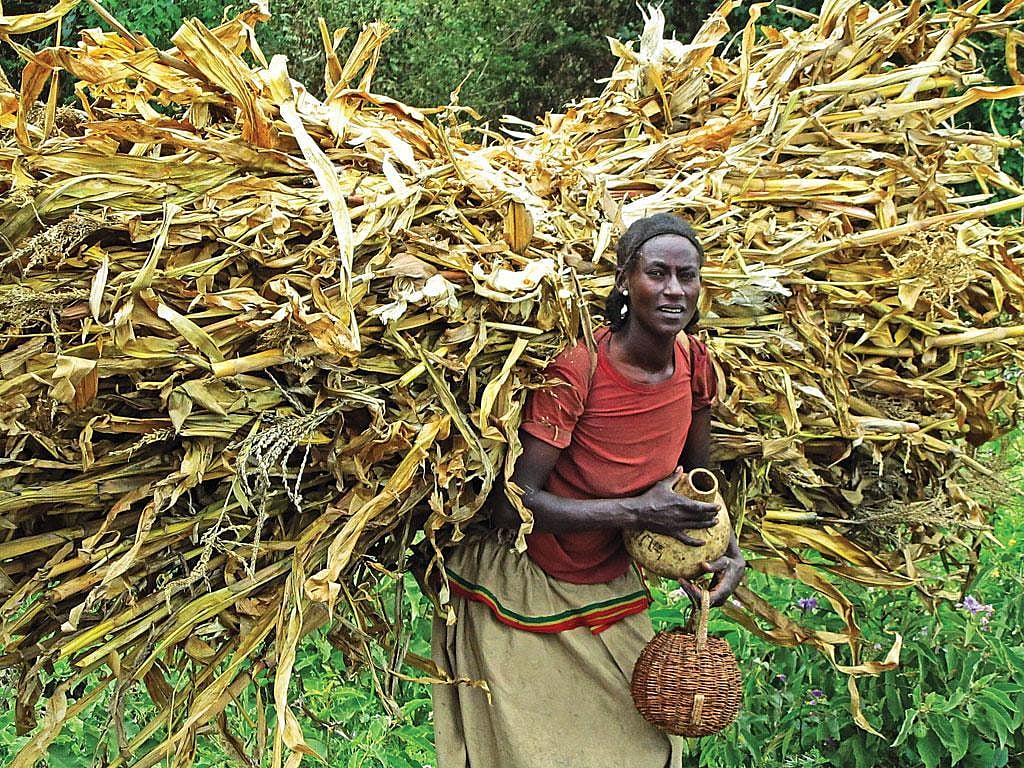
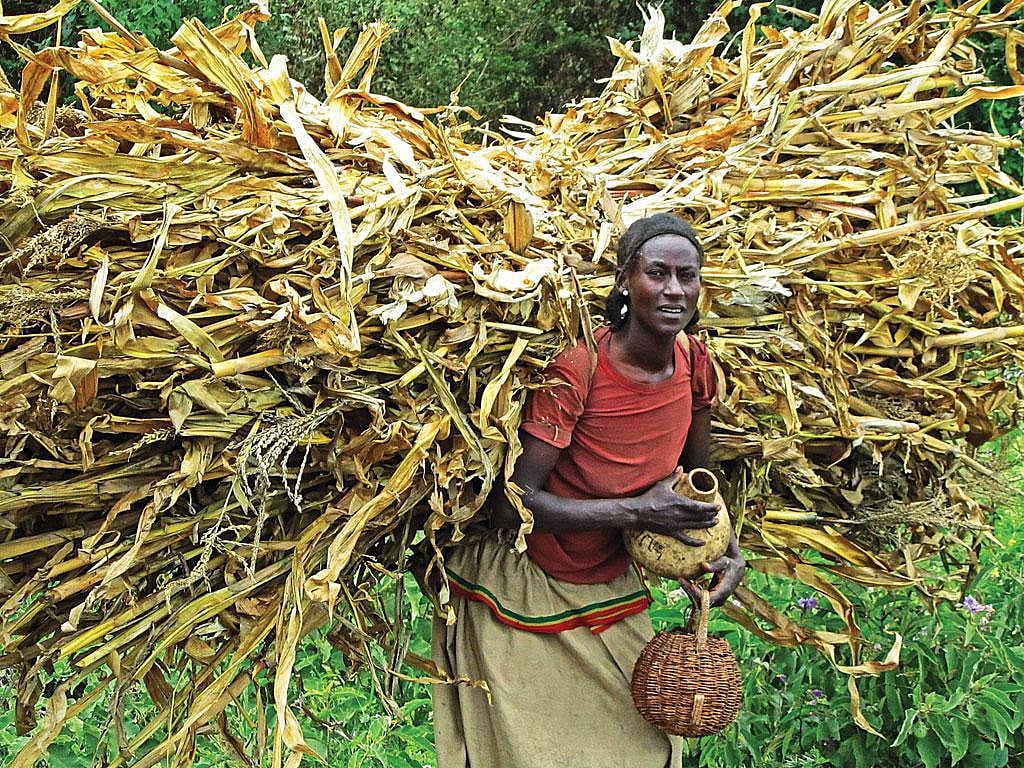
In Episode 166 of the CounterVortex podcast, Bill Weinberg discusses how a little-noted US-Mexico dispute on trade and agricultural policy has serious implications for the survival of the human race. Washington is preparing to file a complaint under terms of the US-Mexico-Canada Agreement over Mexico’s decree banning imports of GMO corn, slated to take effect in January 2024. Concerns about the (unproven) health effects of consuming GMO foods miss the real critique—which is ecological, social and political. GMO seeds are explicitly designed as part of an “input package” intended to get farmers hooked on pesticides and petrochemical fertilizers, and protect the “intellectual property” of private corporations. Agribusiness, which can afford the “input package,” comes to dominate the market. Eased by so-called “free trade” policies, agbiz forces the peasantry off the market and ultimately off the land—a process well advanced in Mexico since NAFTA took effect in 1994, and which is related to the explosion of the narco economy and mass migration. The pending decree holds the promise of regenerating sustainable agriculture based on native seed stock. It is also a critical test case, as countries such as Kenya have recently repealed similar policies in light of the global food crisis. Listen on SoundCloud or via Patreon. (Image: Sin Maíz No Hay País)

The Amazon
bloc 58

Peru: indigenous opposition to Chinese gas project

A new coalition of Amazonian indigenous groups and environmentalists has come together in Peru to demand oversight and accountability in the development of a huge new hydrocarbon exploitation bloc in the rainforest. The China National Petroleum Corporation (CNPC) won exploitation rights in 2017 at Bloc 58, in the Upper Urubamba zone of Cuzco region, after explorations revealed some 3.9 trillion cubic feet of natural gas reserves, enough to increase Peru’s total gas reserves by nearly 28%. But Bloc 58 overlaps with the traditional territories of the Asháninka and Machiguenga indigenous peoples. The newly formed Amazon Indigenous Platform for Monitoring Chinese Investment in Peru is demanding that exploitation proceed at Bloc 58 only in compliance with the internationally recognized right to “prior and informed consent” of impacted indigenous peoples. (Photo via Andina)

The Andes
yaku

Indigenous candidate upsets Ecuador elections

Ecuador is heading to a run-off presidential race in April after leftist candidate Andrés Arauzof the Union of Hope (UNES) coalition won a first-round victory, following years of economic austerity made more painful by the pandemic. However, in a surprise development, his rival leftist Yaku Pérez Guartambel of the indigenous-based Pachakutik party emerged neck-to-neck with conservative banker Guillermo Lasso of the right-wing Creating Opportunities (CREO) party. The vote is still too close to call which challenger Arauz will face in the April run-off. Pérez portrays UNES and CREO alike as parties of the right that have embraced an economic model based on resource extraction. (Photo: Revista Crisis)

Mexico
guardianacional

Mexico: narco-dystopia amid Trump-AMLO schmooze

Mexico’s President Lopez Obrador met with Trump at the White House to inaugurate the new trade treaty that replaces NAFTA. Embarrassingly, the meeting was punctuated by horrific new outbursts of narco-violence in Mexico. And the country’s promised cannabis legalization—mandated by the high court and looked to as a de-escalation of the dystopian drug war—is stalled by a paralyzed Congress. (Photo: Secretaría de Seguridad y Protección Ciudadana)

The Amazon
Manuin

Peru: Bagua survivor succumbs to COVID-19

A revered leader of Peru’s Awajún indigenous people, Santiago Manuin Valera, 63, died of COVID-19 at a hospital in the coastal city of Chiclayo. Head apu (traditional chief) of Santa María de Nieva in Amazonas region, Manuin was gravely wounded in the Bagua massacre of June 2009, when National Police opened fire on indigenous protesters. Hit with eight bullets, he was left for dead. Against all expectations, he recovered—although he had to use crutches or a wheelchair for the rest of his life. He continued to be an outspoken advocate for the territorial rights of the Awajún and other indigenous peoples of rainforest. His daughter, Luz Angélica Manuin, warned of a dire situation in the Awajún communities and across the Peruvian Amazon, with COVID-19 taking a grave toll. “There are many dead,” she said. “We keep vigil over them and we bury them. The government has forgotten us.” (Photo: Andina)

Greater Middle East
NEOM

Tribesman killed for resisting Saudi robot city?

Saudi activists and dissidents are disputing official accounts alleging that a tribesman who refused government orders to surrender his home to make way for a new mega-project was killed in a shoot-out with security forces. Authorities say Abdul Rahim Ahmad al-Hwaiti, from Tabuk province on the Red Sea, was a “wanted terrorist” who opened fire on State Security agents who arrived at his home. But the incident came two days after al-Hwaiti posted a video statement saying he and other local residents were being pressured by the government to give up their properties and accept relocation. Al-Hwaiti, a member of the powerful al-Huwaitat tribe, accused the government of a policy of “forced displacement.” The project at issue is the NEOM, a planned “special economic zone” for high-tech industry, to cover an area bigger than Belgium, where robots will outnumber human residents. (Image via NeoScribe)