

Planet Watch
Roberto Sánchez

Podcast: Hungary, Peru & the electoral struggle

In Episode 323 of the CounterVortex podcast, Bill Weinberg offers a comparison of the simultaneous elections in Hungary and Peru—in which questions of democratic norms versus authoritarian rule both stood in the balance. The defeat of long-ruling quasi-dictator Viktor Orbán is being hailed as a blow to the emerging authoritarian bloc in Europe. But the incoming center-right prime minister Péter Magyar may not mean a complete de-Orbánification. In Peru, the outcome is still pending, as the perennial candidate of the hard right, Keiko Fujimori, faces a run-off with a contender from the populist left, Roberto Sánchez. Keiko is the unapologetic daughter of the late ex-dictator Alberto Fujimori; her victory could mean a re-Fujimorification of the country, and a fatal blow to Peru’s deeply troubled democracy. A Sánchez victory, meanwhile, would heighten the social contradictions in Peru—with both opportunities for a more meaningful democracy, and dangers of a backlash from the conservative establishment. (Photo: Anali Marquez Huanca via Facebook)

Planet Watch
Lima

Reversal for hard right in Hungary; Peru in the balance

The defeat of Hungary’s quasi-dictator Viktor Orbán in the recent elections has heartened progressive forces around the world—despite the fact that the victorious Péter Magyar is a creature of the center-right. A more stark contest is emerging in Peru, where the right-wing authoritarian presidential candidate Keiko Fujimori faces a run-off with a contender from the populist left, Roberto Sánchez, who has broad support from the traditionally excluded campesinos of the country’s Andean interior. (Photo: Wikipedia)

Europe
UGV

Ukrainian robots break through Russian lines

Ukrainian forces have captured a Russian position using only drones and unmanned ground vehicles (UGVs), President Volodymyr Zelensky boasted, describing the operation as a milestone in the evolution of modern warfare. “For the first time in the history of this war, an enemy position was taken exclusively by unmanned platforms—UGVs and drones. The occupiers surrendered, and this operation was carried out without the participation of infantry and without losses on our side,” Zelensky said in a video statement. The video showed Zelensky speaking in a room full of various drones and UGVs. He did not give a precise location for the territory taken in the operation. (Photo via Nashaniva.com)

Europe
Kremlin

Russia: UN experts decry repression of civil society

UN Special Rapporteurs condemned an ongoing strategy by Russian authorities to silence dissent, human rights advocacy, and anti-war expression. They warned that this represents a “systematic dismantling” of civil society under the guise of protecting national security and public safety. Over 343 organizations have been deemed “undesirable,” 1,173 individuals and groups have been designated as “foreign agents,” and 830 organizations and 20,813 individuals have been put on “terrorist” and “extremist” watch lists. This has recently escalated with the targeting of several key Russian human rights organizations, feminist groups and advocates for indigenous peoples. (Photo: Pavel Kazachkov via Wikipedia)

Europe
Lampedusa

EU expands migrant detention and deportation rules

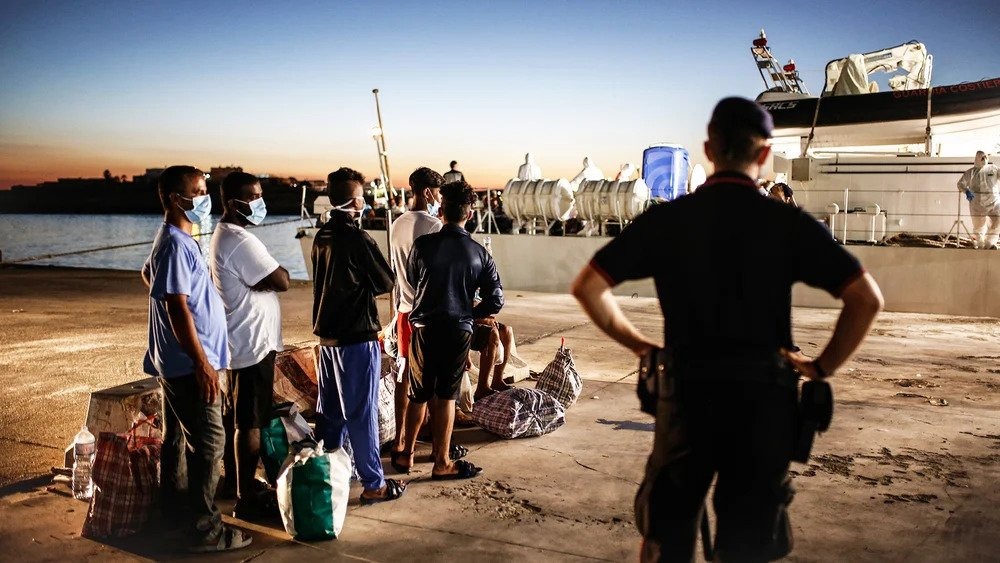
The European Union took a significant step toward adopting a Trump-like approach to migration when the EuroParliament approved a new law expanding the power of security agencies to track, detain and deport migrants. Amnesty International criticized the revised “Return Regulation” as “punitive” and a threat to fundamental rights. The law also allows for people to be deported to countries other than their country of origin—a controversial policy used by the Trump administration. Greece, an EU member, is even working directly with US officials to ramp up deportations. (Photo: Sara Creta/TNH)

Europe
Komyagin

Podcast: the other Russia —from Tolstoy to Komyagin

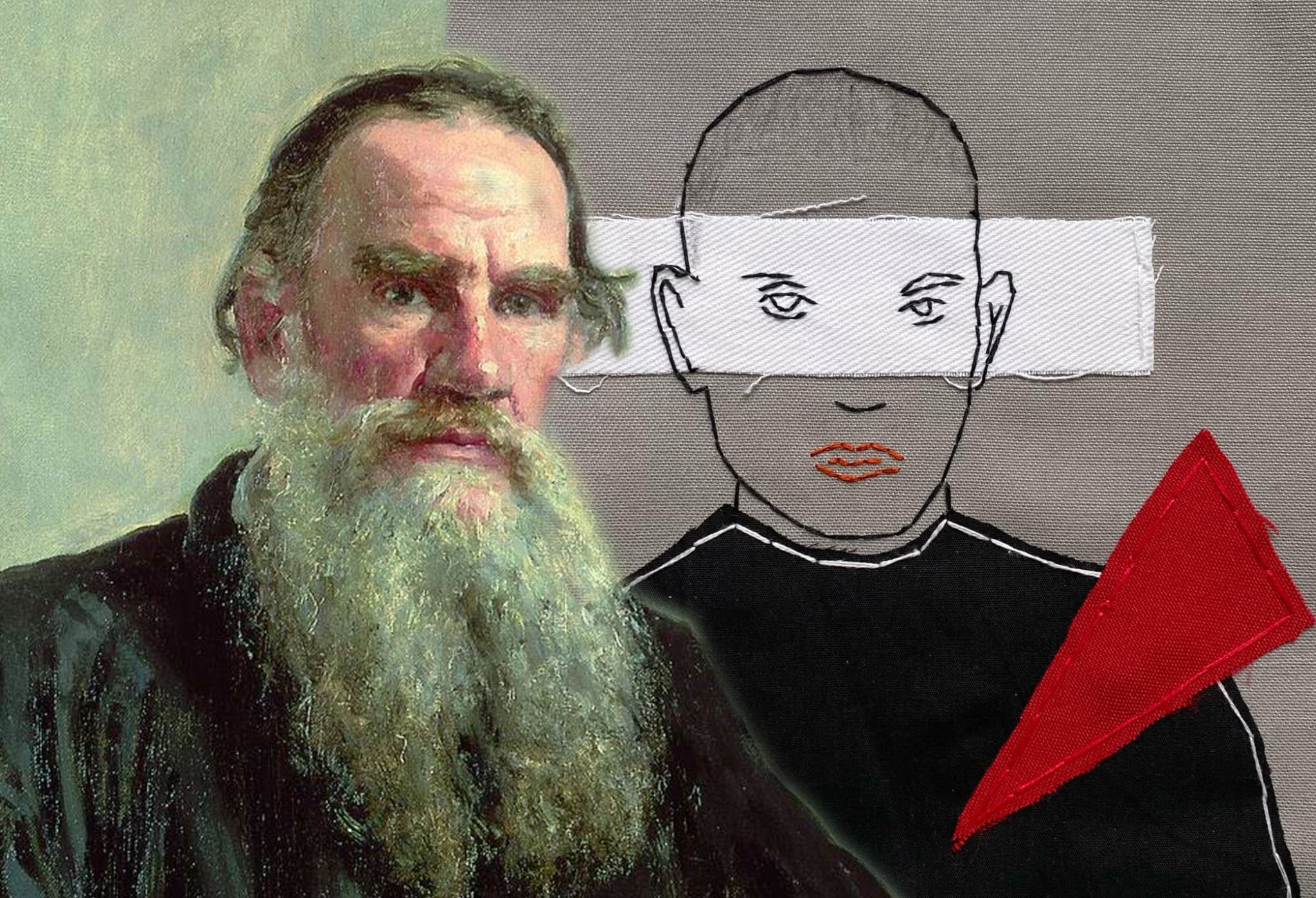
Eclipsed from the headlines by the war in the Middle East, Russia launches a new offensive in Ukraine with an unprecedented wave of drone and missile strikes across the country—even hitting an historic monastery in Lviv. Meanwhile, two young Russian poets, Artyom Kamardin and Yegor Shtovba, remain imprisoned on “state subversion” charges related to public readings of anti-war poetry. They join other imprisoned anti-war poet-activists, such as Daria Kozyreva, and numerous artists and activists imprisoned for opposing the new dictatorship of Vladimir Putin. The recently passed Russian rocker Nikolay Komyagin, frontman for the post-punk band Shortparis, was also an icon of artistic resistance. Long known for their defiant sound, after the 2022 invasion of Ukraine they released the music video “Apple Orchard,” on an anti-war theme—getting them being blacklisted from major venues in Russia. In Episode 320 of the CounterVortex podcast, Bill Weinberg places these courageous voices in the context of a dissident tradition in Russia under the dictatorships of the czars, the Soviets, and now Putin—from Leo Tolstoy to Shortparis. (Composite image by CounterVortex from Ilya Efimovich Repin via Wikimedia Commons and Sasha Braulov via Instagram)

Europe
migrants

‘Invisible’ shipwrecks hide Mediterranean death toll

Italy, Tunisia and Malta are withholding information about the true death toll from stricken vessels carrying migrants in the central Mediterranean, according to an AP report. The beginning of 2026 has been the deadliest start to a year in the Mediterranean since the UN began keeping track in 2014, with nearly 700 lives lost to date. But phone calls from people looking for missing relatives, bodies washing ashore, and other clues suggest there have been numerous “invisible” shipwrecks, and the true toll is significantly higher. (Photo: US Navy via Wikimedia Commons)

Europe
Russian Embassy

Global commitment crucial for Ukraine justice: Amnesty International

On the fourth anniversary of Russia’s invasion of Ukraine, Amnesty International called on the international community to maintain a steadfast commitment to hold Russia accountable under international law for its crimes and aggression. The statement noted diminishing pressure on Russia, raising concerns about rights protections and prospects for peace in Ukraine. Amnesty’s senior director for research and advocacy Erika Guevara-Rosas commented that “commitments to justice and human rights are weakening as powerful actors grow emboldened to disregard international law and further erode the rules-based order.” (Photo of Russian embassy in London: Kwh1050 via Wikimedia Commons)

Europe
Bydgoszcz

Belarus: renewed call to release political prisoners

Belarusian prisoner of conscience and opposition politician Mikalai Statkevich was released from imprisonment weeks after suffering a stroke. Following his release, Amnesty International reiterated the need for justice for victims of human rights violations in Belarus. Statkevich, imprisoned for his role in the 2020 post-electoral protests, was one of 52 Belarusian prisoners released in September following a deal with the US. Upon their release, Belarusian authorities attempted to deport the 52 former prisoners. While they were being brought to the Lithuanian border, Statkevich forced his way out of the bus, declaring, “I will keep fighting.” Statkevich was then detained again and transported to a penal colony. The stroke precipitated his release, but Amnesty stressed that being released due to failing health does not constitute justice. The Belarusian Human Rights Centre Viasna reports that 1,142 political prisoners remain incarcerated in Belarus. (Image: Monument to Belarusian political prisoners in Bydgoszcz, Poland. Source: Паўлюк Шапецька via Wikimedia Commons)

Europe
Kremlin

UN denounces Russian conviction of ICC prosecutor

UN human rights experts decried Russia’s conviction of nine International Criminal Court (ICC) officials, calling the ruling a “flagrant violation of international law.” After a trial held in absentia, the Moscow City Court sentenced Prosecutor Karim Khan and eight ICC judges under the Russian Criminal Code for “unlawfully prosecuting Russian citizens in The Hague,” and subsequently placed them on an international wanted list. Prosecutor Khan received a 15‑year prison term, with the others receiving sentences of between three and 15 years. The case concerns the arrest warrants issued by the ICC for President Vladimir Putin and one of his cabinet members on war crimes charges. (Photo: Wikipedia)

Europe
#NoWords

Danish veterans stage silent protest at US embassy

Hundreds of Danish veterans and supporters staged a silent march from the historic Kastellet fortress to the US Embassy in Copenhagen as part of a “No Words” mobilization to protest recent US rhetoric that organizers said demeans Denmark’s combat contributions alongside American forces. Organizers also linked the march to the status of Greenland, upholding the right of self-determination for the Danish island territory. Recent demands by President Donald Trump for US annexation of Greenland, and comments seeming to question the courage of Danish soldiers, have stirred a sense of betrayal for many in Denmark, particularly those who fought alongside US troops in Iraq and Afghanistan. (Image: No Words)

Planet Watch
Bonaire

Dutch court orders climate measures for Bonaire

The Hague District Court ruled that the Netherlands has failed to meet its international obligations on climate change. The court ordered the government to adopt adequate measures to better protect Bonaire, a Dutch Caribbean island, within 18 months. The court concluded that the government had violated the rights of the residents of Bonaire under the European Convention of Human Rights. The recent advisory opinion by the International Court of Justice significantly influenced the Dutch court in determining the state’s obligations in regard to climate change. (Photo: Dialogue Earth)