

The Caribbean
Esequibo

Podcast: geopolitics of the Essequibo dispute

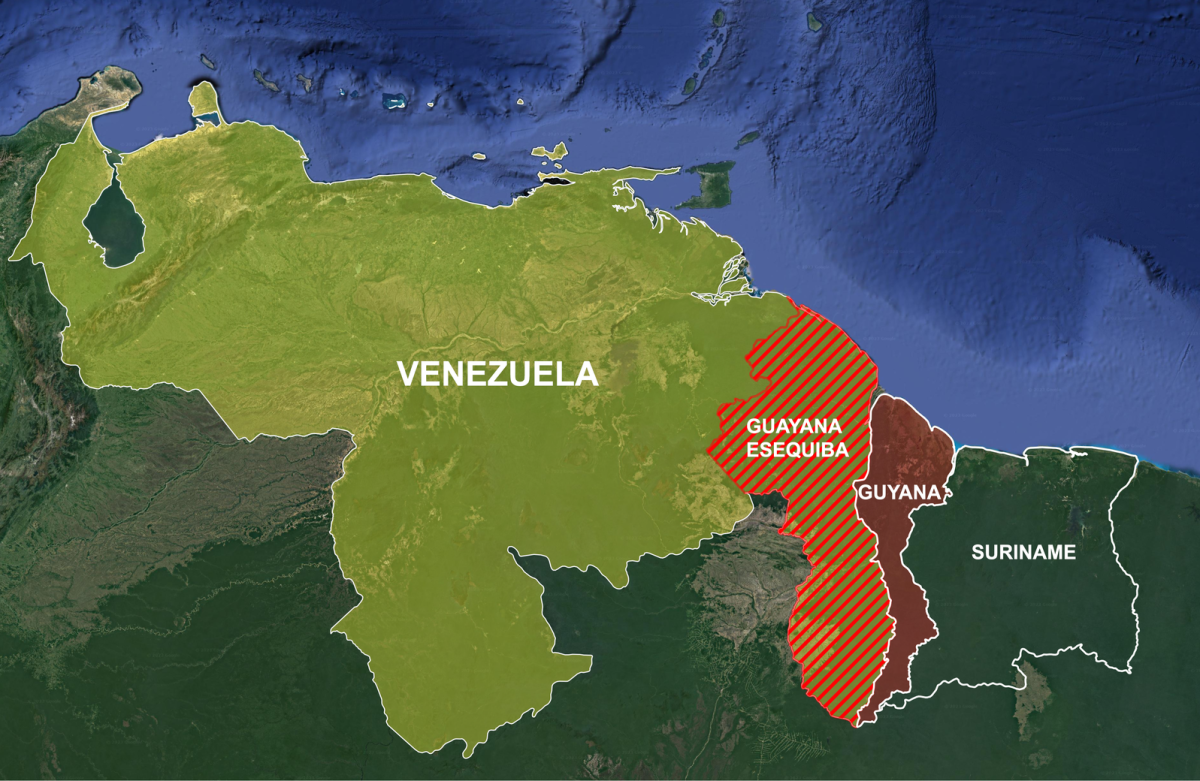
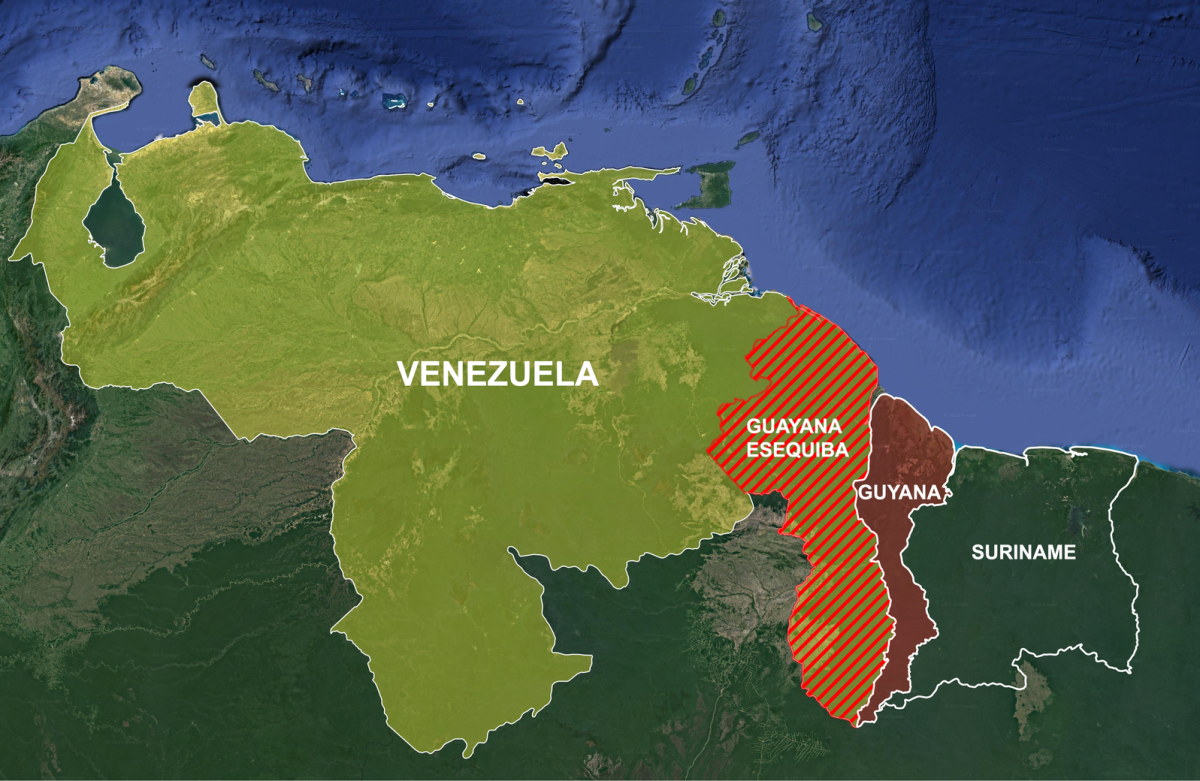
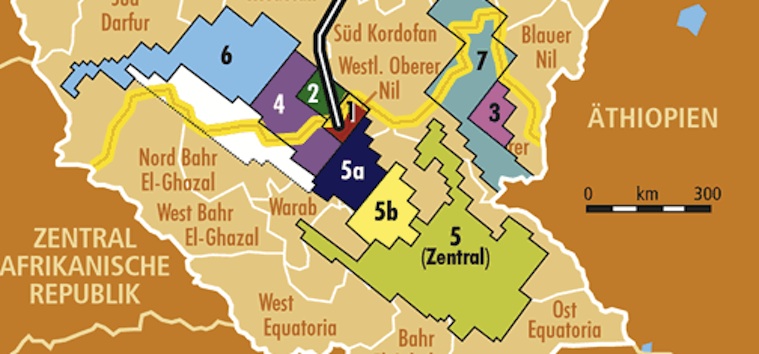
In Episode 205 of the CounterVortex podcast, Bill Weinberg looks at the recent re-escalation and (hopefully) denouement of the dispute over Esequibo—an oil-rich territory controlled by Guyana and claimed by Venezuela. Ironically, this claim was first asserted by the conservative, anti-communist Venezuela of the 1960s to help destabilize the anti-imperialist Guyana of Cheddi Jagan. Today, the left-populist but increasingly nationalistic regime of Nicolás Maduro even entertains hubristic claims to sovereignty over Venezuela’s other much larger neighbor, Colombia. But this revanchism appears to mask the fact that “revolutionary” Venezuela largely remains a petro-state with a rentier economy, vulnerable to drops in the global oil price, even if Chinese corporate exploiters have been replacing gringo ones. With the recent easing of sanctions, US giants like Chevron have even returned to Venezuela—while the extractivist model results in indigenous resistance. Contrary to the dogmas of left and right alike, the real root of the Venezuelan crisis is that the country is insufficiently socialist. Listen on SoundCloudor via Patreon. (Map: SurinameCentral via Wikimedia Commons)

The Amazon
Secoya

Ecuador: court orders return of Siekopai homeland

In what is being hailed as an historic decision, an appeals court in Ecuador ordered the return of a 42,360-hectare expanse of the Amazon rainforest to the Siekopai indigenous people, generations after they were driven from the territory by the military. The Provincial Court of Sucumbios ruled that the Siekopai retain indigenous title to their ancestral homeland, known as Pë’këya, which lies along the border with Peru in remote country. The lands were seized by Ecuador’s army during the war with Peru in 1941, and remained a military-controlled zone until being incorporated into Cuyabeno Wildlife Reserve in 1979. Ecuador’s Ministry of Environment has been given 45 days to deliver a property title to the Siekopai Nation, and make public apologies for the usurpation of their homeland. (Photo: Amazon Frontlines)

The Andes

Oil intrigues behind Ecuador auto-golpe

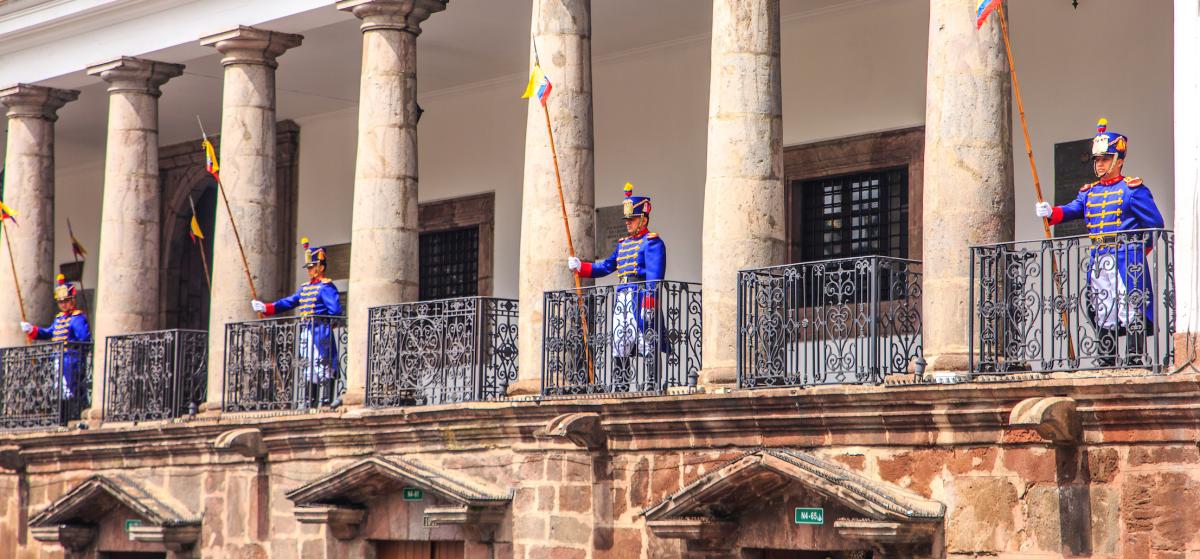
President Guillermo Lasso dissolved Ecuador’s opposition-controlled National Assembly—just one day after his impeachment trial began. Lasso is to rule by decree until new elections are held. In the impeachment proceeding, Lasso stood accused of extortion and embezzlement related to alleged corruption at parastatal oil company Petroecuador and hydrocarbons transporter Flopec, allowing unprofitable contracts to benefit “third parties.” The country’s oil industry has been in crisis for nearly a year, repeatedly placed under force majeure by protests and sabotage of the trans-Andean pipeline. (Photo: Wikimedia Commons)
Inner Asia
Kashagan

Kazakhstan: environmental suit against Caspian consortium

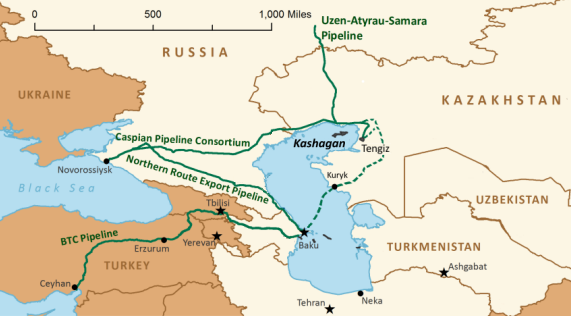
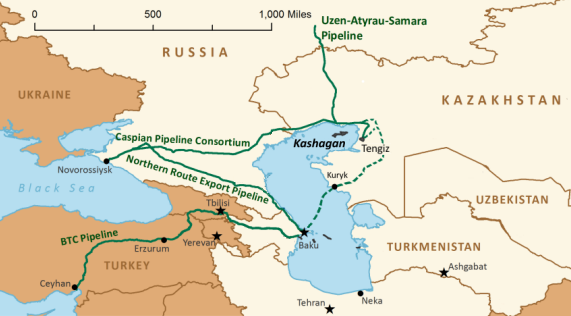
The government of Kazakhstan has brought a legal action for violation of environmental protection laws against the North Caspian Operating Company (NCOC), the consortium leading development of the country’s massive Kashagan oil field, seeking $5.14 billion in fines. In the complaint, the Ministry of Ecology & Natural Resources cites storage of sulfur on site in excess of permitted limits, burning of crude gas on flares without a permit, improper discharge of wastewater, and other violations. Kashagan is one of the largest oil-fields discovered on Earth over the past 40 years, with recoverable reserves estimated at up to 13 billion barrels. The consortium includes the Italian Eni, French Total, US-based ExxonMobil, Anglo-Dutch Shell, Chinese CNPC, Japan’s Inpex, and KazMunayGas, the Kazakh national operator. (Map: US Energy Information Administration via Jurist)

Planet Watch
Chiquitania

Podcast: climate change and the global struggle III

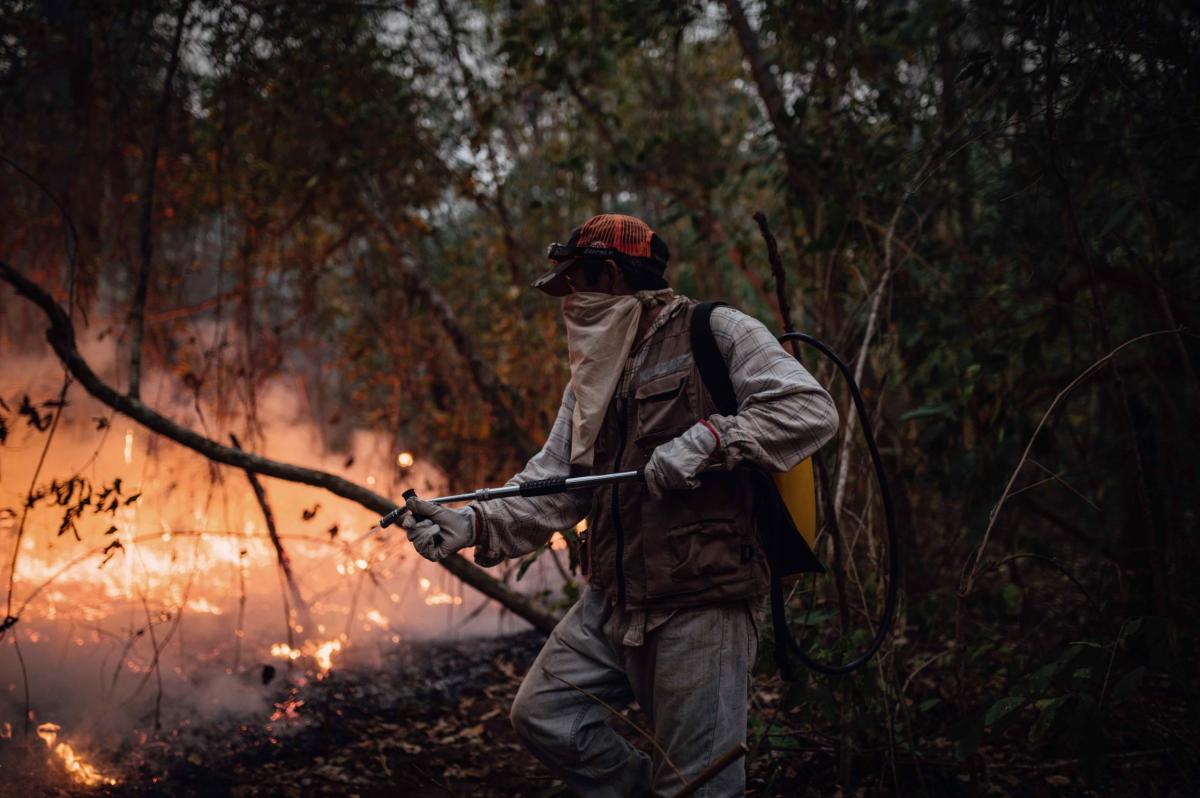
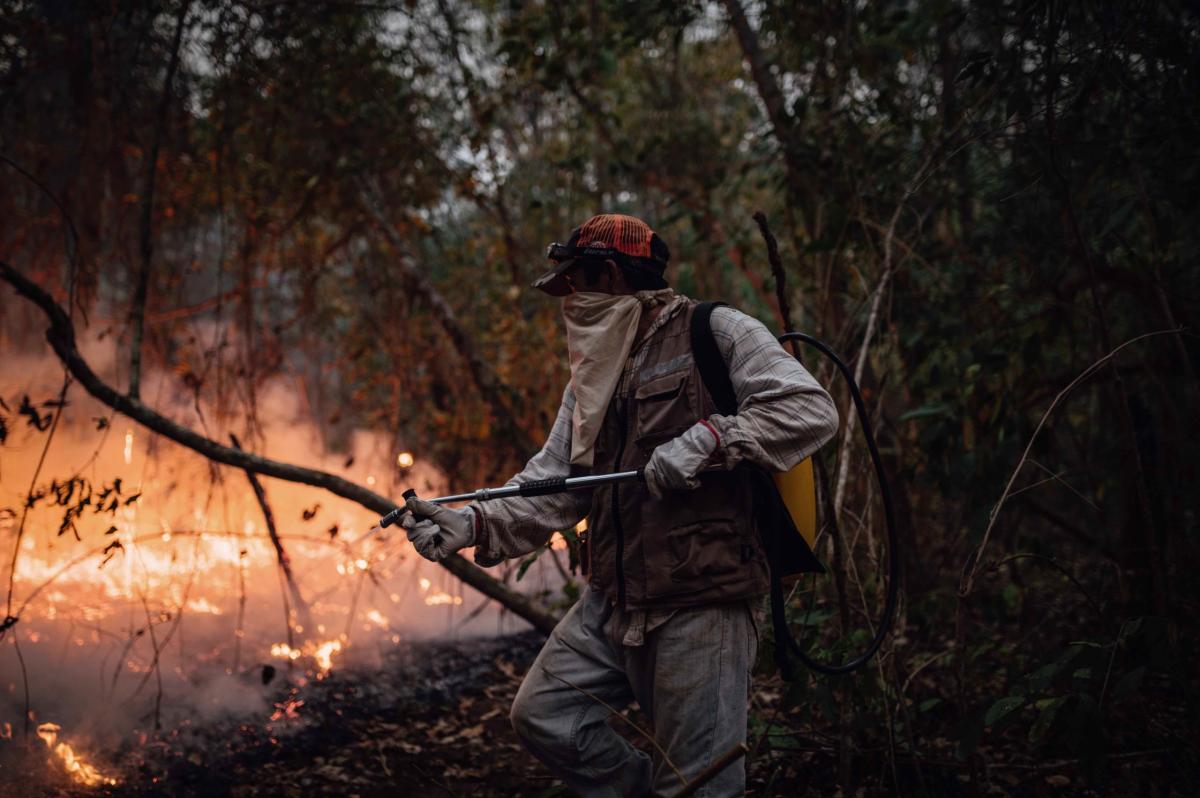
In Episode 151 of the CounterVortex podcast, Bill Weinberg notes a tellingly ironic juxtaposition of simultaneous news stories: the COP27 global climate summit in Egypt and the World Cup games in Qatar—where mega-scale stadium air-conditioning betrays the fundamental unseriousness of our civilization in addressing the impending climate apocalypse. The COP27 agreement for a “loss and damage” fund stopped short of demands for climate reparations—a critical question for island nations that stand to disappear beneath the waves, flood-devastated Pakistan, and indigenous peoples of the fire-ravaged Bolivian Amazon. Petro powers like Russia and Saudi Arabia formed a bloc to bar any progress on limiting further expansion of oil and gas exploitation, while the Ukrainian delegation called for a boycott of Moscow’s hydrocarbons, and pointed to the massive ecological toll of Russia’s war of aggression. Meanwhile, the world population reached 8 billion, providing an excuse for groups like PopulationMatters to proffer the Malthusian fallacy even as the rate of population growth is actually slowing. Worldwide indigenous and peasant resistance to hydrocarbon exploitation points to a revolutionary answer to the crisis. Listen on SoundCloud or via Patreon. (Image: Bolivian campesino volunteer fire-fighter. Credit: Claudia Belaunde via Mongabay)

Planet Watch
Chad

Podcast: climate change and the global struggle II

In Episode 147 of the CounterVortex podcast, Bill Weinberg notes the recent statement from the UN Environment Program that “only a root-and-branch transformation of our economies and societies can save us from accelerating climate disaster.” Studies from similarly prestigious global bodies have raised the prospect of imminent human extinction. An International Energy Agency report released last year warned that new fossil fuel exploration needed to halt by 2022 in order to keep warming within the limits set by the 2015 Paris Agreement. Adoption of new technologies and emissions standards does mean that CO2 emissions from energy generation (at least) are likely to peak by 2025. But the IEA finds that this would still lead to global temperatures rising by 2.5 C above pre-industrial levels by century’s end—exceeding the Paris Agreement limits, with catastrophic climate impacts. And the catastrophic impacts, already felt in places like Chad and Cameroon, win but scarce media coverage. Climate-related conflict has already escalated to genocide in Darfur. Climate protests in Europe—at oil terminals and car shows (as well as, less appropriately, museums)—do win some attention. But the ongoing resistance to oil mega-projects in places like Uganda and Tanzania are comparatively invisible to the outside world. The dire warnings from the UN and IEA raise the imperative for a globalized resistance with an explicitly anti-capitalist politics. Listen on SoundCloud or via Patreon. (Photo of Tantaverom region of Chad via UNDP)

The Andes
paro

Oil spike sparks national uprising in Ecuador

Ecuador’s national indigenous alliance CONAIE announced an “indefinite” paro (general strike), in response to a sudden jump in petrol prices. Things escalated when CONAIE leader Leonidas Iza was arrested in Cotopaxi province, where he was apparently participating in a blockade of the Panamerican highway. He was held at a military base, but released the next day following angry protests over his detention and a CONAIE call for “radicalization” of the campaign. Roadblocks are reported in at least 14 of the country’s 24 provinces, including Pichincha, where the capital Quito is located. CONAIE has presented the government of President Guillermo Lasso with a list of 10 demands. These include, in addition to a drop in fuel prices, a  moratorium on new oil and mineral leases, and reparations to communities impacted by extractive projects. (Photo: Kawsachun News)

Planet Watch
fracking

Ukraine war windfall for US fracking industry

US President Joe Biden and European Commission president Ursula von der Leyen announced a joint Task Force to reduce Europe’s dependence on Russian hydrocarbons and “strengthen European energy security as President Putin wages his war of choice against Ukraine.” The press release states: “The United States will work with international partners and strive to ensure additional LNG volumes for the EU market of at least 15 bcm [billion cubic meters] in 2022, with expected increases going forward.” This means liquified natural gas from the US fracking industry. Environmental group Global Witness reacted with alarm to the announcement, stating: “If Europe truly wants to get off Russian gas the only real option it has is phasing out gas altogether.” (Image: FracTracker)

The Andes
Playa Cavero

Peru demands Repsol pay in coastal oil spill

Peru’s authorities declared an environmental emergency after announcing that 21 beaches around the Lima area were contaminated by an oil spill at a refinery run by Spanish multinational Repsol, calling it the “worst ecological disaster” in the city’s history. The Environmental Evaluation & Control Organism (OEFA) estimated some 6,000 barrels of crude had spilled—dramatically above the mere seven gallons that Repsol had initially reported to authorities when the disaster occurred days earlier. Some 1,740,000 square meters of coastline and 1,1187,000 square meters of sea have been covered in sludge that has blackened beaches and killed marine life. Peru is demanding compensation from Repsol, accusing the company of trying to cover up the scale of the disaster and not having a contingency plan in place. (Photo: Andina)

Planet Watch
anthropocene

Glasgow: ‘climate-vulnerable’ protest ‘compromise’ pact

The COP26 UN climate summit concluded a deal among the 196 parties to the 2015 Paris Agreement on long-delayed implementation measures. UN Secretary-General Antonio Guterres called the deal a “compromise,” and indeed it was saved through eleventh-hour haggling over the wording. Just minutes before the final decision on the text of the Glasgow Climate Pact, India, backed by fellow major coal-producer China, demanded weaker language on coal, with the original call for a “phase-out” softened to “phase-down.” And even this applies only to “unabated” coal, with an exemption for coal burned with carbon capture and storage technology—a technofix being aggressively pushed by Exxon and other fossil fuel giants, in a propaganda blitz clearly timed for the Glasgow summit. Another corporate-backed fix that allows polluters to go on polluting was also embraced at Glasgow: the pact calls for establishment of a global carbon-trading market in 2023. (Photo: CounterVortex)

Africa
beja

Sudan: ethnic protesters paralyze oil port

Sudan is at the brink of a nationwide fuel shortage as Beja ethnic protesters in the country’s east have for weeks blocked roads and oil arteries—including the critical pipeline that pumps crude from South Sudan to the Port Sudan terminal on the Red Sea, and a second that brings imported petroleum products from the terminal into the country. The High Council of Beja Nazirs & Independent Chieftains is demanding cancellation of the 2020 Juba Peace Agreement, asserting that the Beja people were excluded from the negotiations. Shortages of fuel have sparked large counter-protests against the blockades. (Photo via Dabanga)

The Amazon
awajun

Peru: indigenous protesters shut down pipeline

On the sixth day of a declared civil strike (paro) in Peru’s Amazon rainforest, hundreds of indigenous protesters armed with spears seized oil installations, effectively shutting down the NorPeruano Pipeline. Station 5 on the pipeline, as well as oil exploitation blocs 192, 95 and 8, are under occupation. State company PetroPerú admitted that personnel have been evacuated from the pumping station, and that seizure of the installation has “paralyzed the operations” of the pipeline. Awajún apu (traditional leader) James Pérez, speaking for the Indigenous Association for the Development & Conservation of the Bajo Yurimaguas, said the paro will continue until the central government responds to protesters’ demands for environmental remediation following hundreds of oil spills.  (Photo via Gestión)