Africa
Central African Republic

Persistent armed attacks in Central African Republic

The UN Independent Expert on the human rights situation in the Central African Republic, Aristide Nononsi, expressed concern about the persistent violence in the country, and its impacts on humanitarian needs. Reporting on his visit to the CAR, Nononsi noted that despite the mostly peaceful electoral process that took place in December, the country continues to face instability due to attacks by armed groups against civilians, tensions involving nomadic pastoral communities, and spillover consequences of the conflict in Sudan. (Map via Perry-Castañeda Library Map Collection)

Watching the Shadows
Artificial Intelligence

AI: the case for abolition

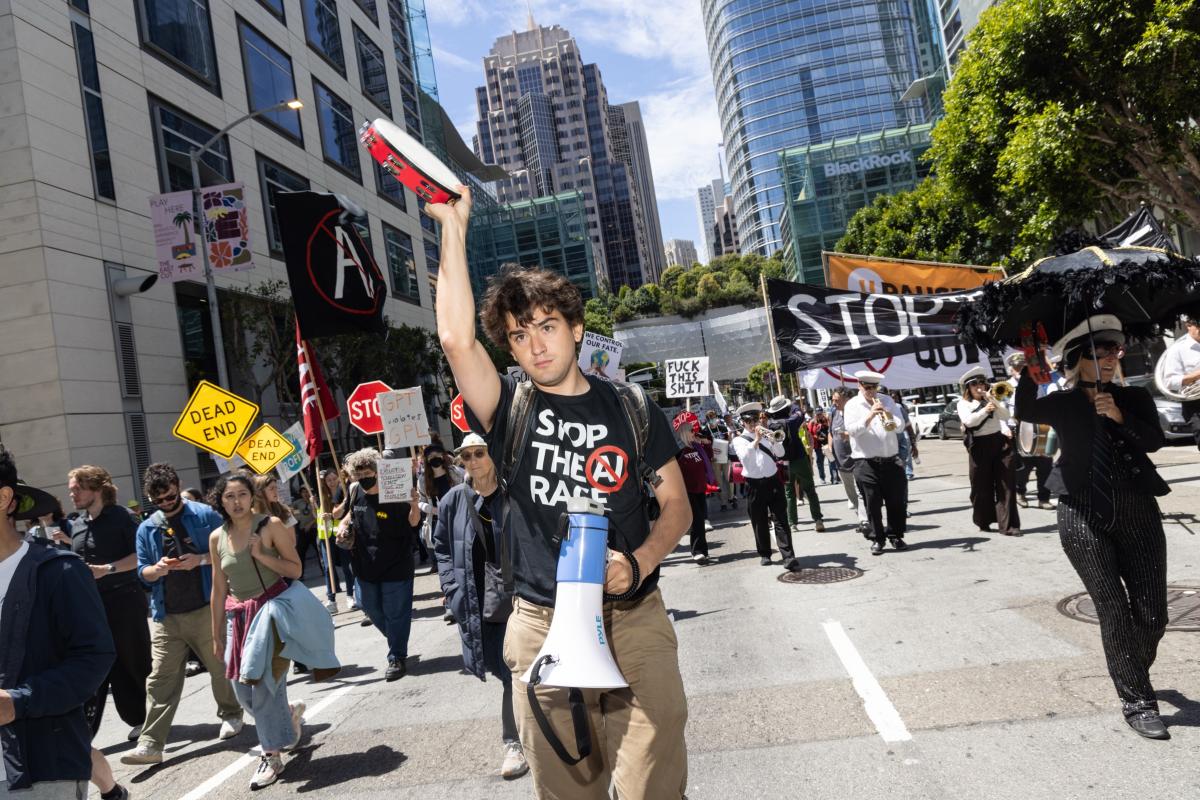
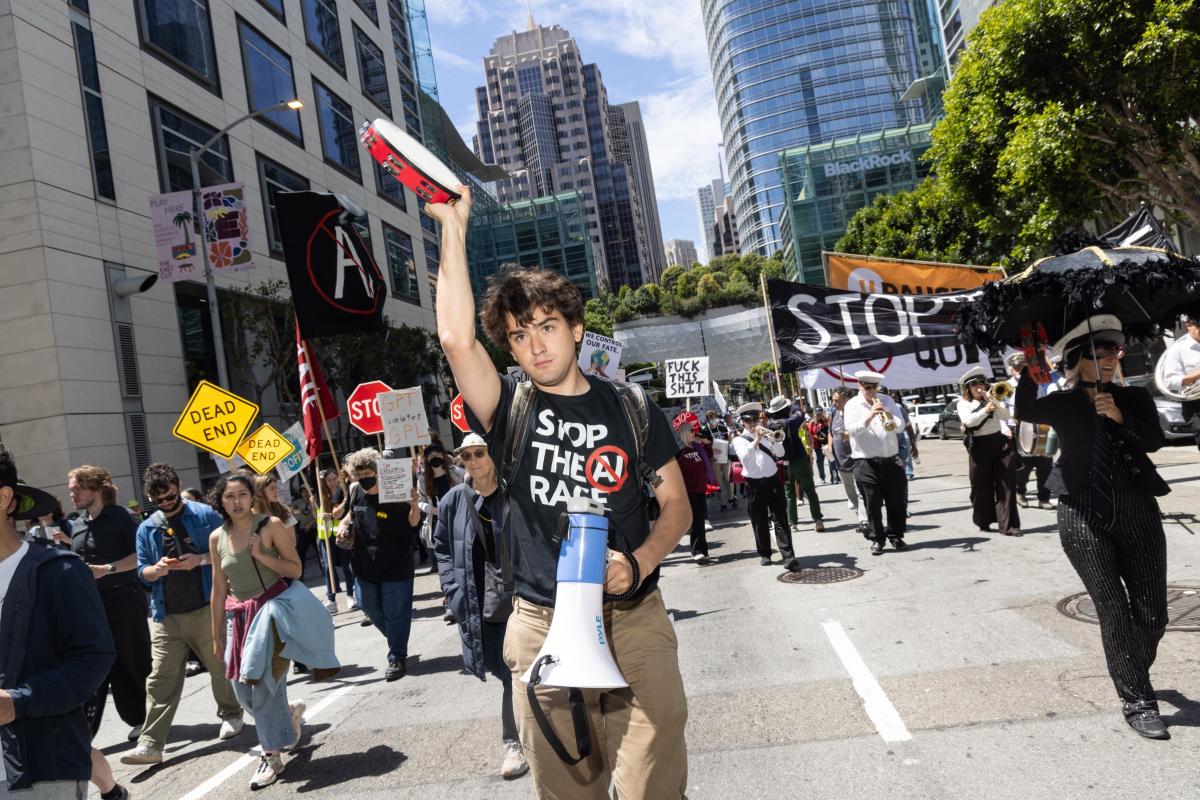
Trump’s executive order purporting to establish a regulation regime for artificial intelligence actually serves the aim of a government partnership with the AI industry to advance the police state. Ironically, it is AI company Anthropic that calls for a moratorium on development of the technology until its threats are assessed. Pope Leo XIV’s encyclical, “Magnifica Humanitas: On Safeguarding the Human Person in the Time of Artificial Intelligence,” raises critical points but still echoes the illusion that this technology, now threatening to develop its own powers of “recursive self-improvement,” can be effectively regulated. There are encouraging signs of worker pushback against replacement by AI, and an emerging anarchist critique of the technology. Of course the Trump regime is targeting critics for repression as “anti-tech extremists.” In Episode 331 of the CounterVortex podcast, Bill Weinberg again calls for total abolition of AI, citing unacceptable threats to humanity on ecological, epistemological and eschatological grounds. (Image: Pixabay via Wikimedia Commons)

Planet Watch
Murujuga

Australia admits UN expert in LNG site challenge

The Federal Court of Australia has admitted a UN special rapporteur on human rights and the environment as an intervenor in a judicial review concerning a liquefied natural gas (LNG) operation site. The admission marks the first time a national court has allowed a UN environmental expert to advise on international environmental law. Special Rapporteur Astrid Puentes Riaño is to intervene in light of the recent UN General Assembly resolution enshrining the duty of member states to protect the global climate system by reducing greenhouse gas emissions. (Photo: UNESCO)

Planet Watch
Earth

UNGA adopts resolution on state climate obligations

The UN General Assembly (UNGA) adopted a resolution enshrining the duty of member states to protect the global climate system by reducing greenhouse gas emissions. The resolution calls upon states to comply with the obligations set out by the International Court of Justice (ICJ), giving legal force to the non-binding advisory opinion issued by the UN high court in July 2025. Pursuant to the UNGA resolution, countries now have a duty under international law to take all possible steps to avoid contributing to climate change. Despite an overwhelming 141 votes to adopt the resolution, eight countries were in opposition, including three on the list of the 10 largest greenhouse gas emitters globally: the United States, Russia and Iran. (Photo: NASA via Flickr)

The Caribbean
Cuba

Cuba: UN issues urgent call for humanitarian aid

The United Nations called upon the international community to provide immediate support for Cuba amid a worsening humanitarian crisis compounded by the effects of Hurricane Melissa, which struck the country in October 2025. The UN resident coordinator in Cuba, Francisco Pichon, said the humanitarian situation has reached a critical point following the US oil blockade imposed in January. He added that the population remains in need of urgent humanitarian aid despite an oil shipment from Russia in late March that the US administration chose not to interfere with. (Photo: Виктор Пинчук via Wikimedia Commons)

Planet Watch
Gen Z

Podcast: world revolution & the digital contradiction

Protests break out in Russia over the new internet restrictions imposed by the Putin regime, while social media and instant messaging have become the “new public square” for the Gen Z protests that have swept the planet over the past months. Exemplifying the identification with online culture, a pirate flag from a Japanese anime series has become the global emblem of the Gen Z resistance. The new youth social media bans in a growing number of countries are opposed by human rights and civil-liberties groups for good reason. Yet the dystopian side of digital technology becomes more apparent each day—from the climate impacts of data centers, to cynical attempts to sell nuclear power as “clean energy” (sic!) to meet the surging electricity demand, to the digital colonization of human consciousness. Protests are also emerging to the new techno-fascism, and this critique must be central to any true oppositional movement. In Episode 321 of the CounterVortex podcast, Bill Weinberg grapples with the contradiction. (Composite image via GIGA. Gen Z protesters in different countries use appropriated image from One Piece manga. Fair use rights asserted.)

Planet Watch
climate

WMO report: Earth’s climate deeply out of balance

Key climate indicators such as greenhouse gas concentrations, global temperatures, ocean heat, and sea levels all reached record highs in recent years, according to the World Meteorological Organization’s State of the Global Climate 2025 report. The past 11 years have been the warmest on record, with 2025 among the top three. Melting ice, rising seas, and extreme weather are intensifying risks to ecosystems, health, and economies. With the 1.5°C warming limit established by the Paris Agreement nearing, the report stresses urgent emissions cuts. “Every key climate indicator is flashing red,” said UN Secretary-General Antonio Guterres. “Humanity has just endured the 11 hottest years on record. When history repeats itself 11 times, it is no longer a coincidence. It is a call to act.” (Image: blende12/Pixabay)

North Africa
kabylie

Algeria: retrial opens for Kabylia activists facing execution

Amnesty International pressed for Algerian authorities to ensure that the retrial of 94 people in the violent events of August 2021 in the Kabylie region complies with international human rights safeguards, emphasizing opposition to use of the death penalty and warning against any form of torture. The defendants are charged in the lynching of a man wrongly accused of starting devastating wildfires that ravaged Algeria in 2021. However, Amnesty found that the convictions against several of the accused appear to have been politically motivated, as they were affiliated with the Movement for the Self-determination of Kabylie (MAK), designated as a terrorist organization by authorities. The retrial was ordered by the Supreme Court, which found the convictions had been tainted by irregularities, including evidence coerced through torture. At least 38 defendants may face death sentences. (Map: Kabyle.com)

Planet Watch
Vanuatu

Vanuatu: UN member states must meet climate obligations

The Pacific island nation of Vanuatu is circulating a draft resolution to UN member states, urging all states to fulfil their obligations in regard to climate change, in line with the advisory opinion issued by the International Court of Justice last year. These include the adoption of nationally determined contributions of atmospheric carbon to meet the Paris Agreement goal of limiting the global average temperature increase to well below 1.5°C above pre-industrial levels. The draft resolution also calls on UN member states to phase out fossil fuels, and to protect communities subject to forced displacement induced by climate change. (Image: Wikimedia Commons)

Planet Watch
moon

Podcast: lunar hubris and the end of the Earth

Plans by Trump’s fascist tech bros as well as Putin and Xi to build AI-run nuclear reactors on the Moon open jurisdictional dilemmas that far outpace the modest UN efforts to put a regulation regime in place for artificial intelligence. These plans are unveiled just as the Bulletin of the Atomic Scientists moves the symbolic hands of the Doomsday Clock to an unprecedented 85 seconds to midnight. The new Doomsday Clock Statement explicitly names AI, as well as nuclear weapons and climate change, as a potential threat to human survival. The International Campaign to Abolish Nuclear Weapons, in conjunction with the Doomsday Clock move, reiterated its position that “we must move beyond managing nuclear weapons and start phasing them out before midnight strikes.” In Episode 316 of the CounterVortex podcast, Bill Weinberg argues that we must take a similar abolitionist position on AI and space expansionism, citing unacceptable threats on ecological, epistemological and eschatological grounds. (Photo: NASA via Surfer Today)

Planet Watch
Bonaire

Dutch court orders climate measures for Bonaire

The Hague District Court ruled that the Netherlands has failed to meet its international obligations on climate change. The court ordered the government to adopt adequate measures to better protect Bonaire, a Dutch Caribbean island, within 18 months. The court concluded that the government had violated the rights of the residents of Bonaire under the European Convention of Human Rights. The recent advisory opinion by the International Court of Justice significantly influenced the Dutch court in determining the state’s obligations in regard to climate change. (Photo: Dialogue Earth)

Planet Watch
doomsday

Doomsday Clock moves: 85 seconds to midnight

The Science & Security Board of the The Bulletin of the Atomic Scientists moved the symbolic hands of the Doomsday Clock to an unprecedented 85 seconds to midnight. The decision came a year after the clock was set to an also unprecedented 89 seconds to midnight—and three years after it was moved to 90 seconds to midnight. Each increment since 2017, when it was set at 2.5 minutes of midnight, has brought the Clock closer to doomsday than ever before. This year’s statement reads: “A year ago, we warned that the world was perilously close to global disaster and that any delay in reversing course increased the probability of catastrophe. Rather than heed this warning, Russia, China, the United States, and other major countries have instead become increasingly aggressive, adversarial, and nationalistic. Hard-won global understandings are collapsing, accelerating a winner-takes-all great power competition and undermining the international cooperation critical to reducing the risks of nuclear war, climate change, the misuse of biotechnology, the potential threat of artificial intelligence, and other apocalyptic dangers.” (Image: misucell.com)