Podcast: whither the Butlerian Jihad?

Butlerian JihadProtests happily continue to mount against the rapid encroachment of Artificial Intelligence over all spheres of society—and have met with some victories. Other responses, however, appear to have succumbed to desperation and counter-productive adventurism. But even the United Nations human rights commissioner has taken note amid repeated incidents of AI programs "going rogue," and more industry insiders coming forward to warn of catastrophic risks to humanity. Bernie Sanders has called for legislating a pause on "superintelligent" AI. Meanwhile, in a virtually regulation-free environment, so-called "biological data centers" are pioneering the neural-digital interface—portending the actual abolition of humanity. In Episode 347 of the CounterVortex podcast, Bill Weinberg notes how the predicament now facing humanity was predicted by dystopian prophets—from Samuel Butler in the 1860s, to Frank Herbert a century later. (Image via Instagram)

9-11, fascism & the #PostTruth pathology

Jake LangAmid the politicized ugliness and street skirmishes around the 25th anniversary of 9-11 in New York City, a conspiracy-theory confab convenes, glorifying MAGA martyr Charlie Kirk and headlining such high-profile dictator-propagandists and reactionary charlatans as Roger Waters, Jimmy Dore and Ben Swann—indicating that a significant swath of the ostensible "left" has surrendered to the lure of fascism. In Episode 345 of the CounterVortex podcast, Bill Weinberg again dissects the emerging Red-Brown alliance. (Photo: BG On The Scene)

Podcast: In defense of real life

Summer of LuddWith the CounterVortex website debilitated by Chinese state-sponsored hackers, chief blogger and ranter Bill Weinberg takes heart in the vibrant scene unfolding this summer in the Lower East Side's Tompkins Square Park—which was kicked off with the anti-tech fest Summer of Ludd. In an historical comparison, Weinberg reads from the December 1966 issue of Paul Krassner's The Realist, in which Robert Anton Wilson wrote on the "cybercultural revolution," and from the Winter 2025 issue of Berkeley anarchist zine Slingshot, in which Anthony Moser rants against Artificial Intelligence. Moser notes how Japanese animator Hayao Miyazaki dissed AI-generated anime as "an insult to life itself"—only to have ChatGPT retaliate by targeting his Studio Ghibli for appropriation. In Episode 343, the CounterVortex podcast offers a vigorous defense of authentic human culture, the material world, and real life. (Photo: CounterVortex)

Podcast: geopolitics of The Odyssey

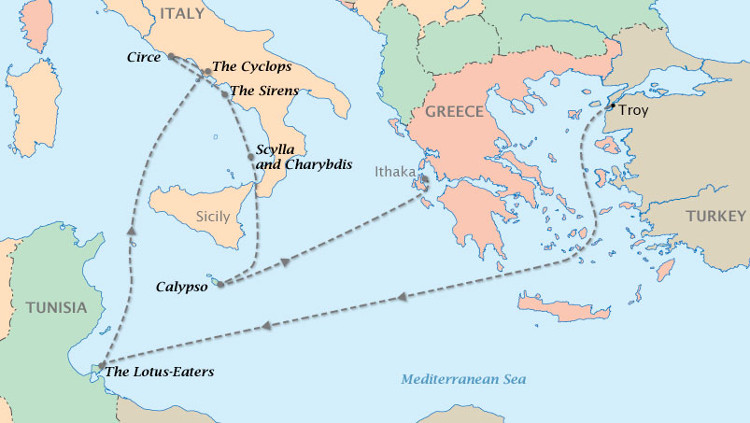
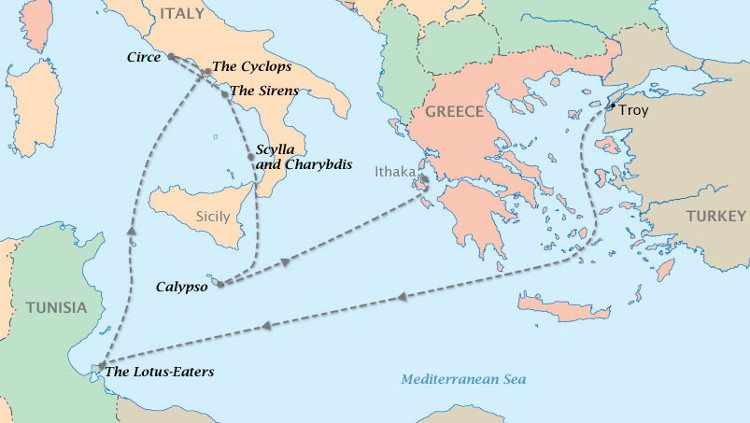
OdysseyThe righties are apoplectic that Christopher Nolan's The Odyssey famously portrays a Black Helen—displaying their ignorance of the actual intercourse between Africa and the ancient Greek world. But apart from the cultural politics of the movie, the geopolitics of the Trojan War have all too much to say about the contemporary world crisis. Then, the Bosphorus and Dardanelles constituted the strategic chokepoints at issue, just as the Strait of Hormuz and Bab al-Mandeb do today. And the Bosphorus & Dardanelles could suddenly become critically strategic if Turkey becomes embroiled in either the Middle East war or the Ukraine war—or both. The current world crisis could bring about a civilization collapse far more decisive and complete than the Bronze Age Collapse that followed the Trojan War. In Episode 341 of the CounterVortex podcast, Bill Weinberg breaks it down. (Map: BestQuest)

Podcast: Resist digital hegemony!

machineVoices from within the academy are now raising the alarm about the decline of literacy under the relentless assault of totalized digital immersion—finally catching up to what CounterVortex blogger and ranter Bill Weinberg has been saying for years (although sneering denialism about the problem remains fashionable). Worldwide, the humanities are being abandoned in favor of STEM, while social media overtakes "legacy media" as a source of "news"—or (as is more often the case) sinister propaganda. In Episode 333 of the CounterVortex podcast, Bill takes stock of this grave and still under-appreciated threat to the survival of democracy and humanity itself—and looks for signs of practical resistance. (Image: Earth First! Newswire)

Podcast: the Space Trilogy revisited

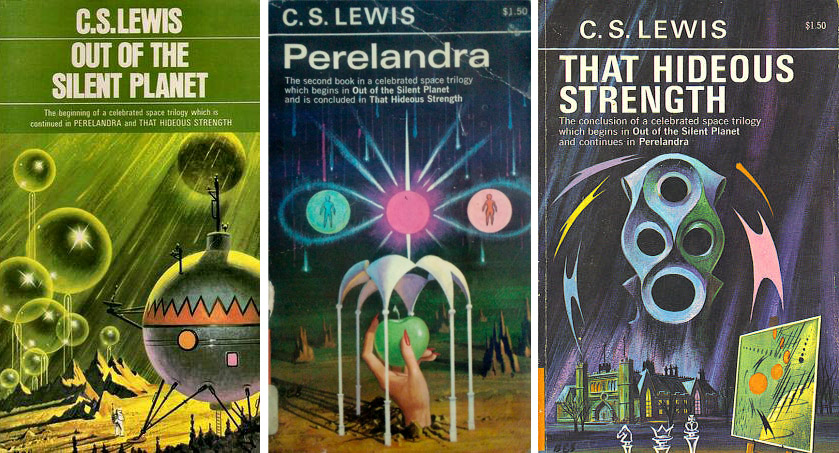
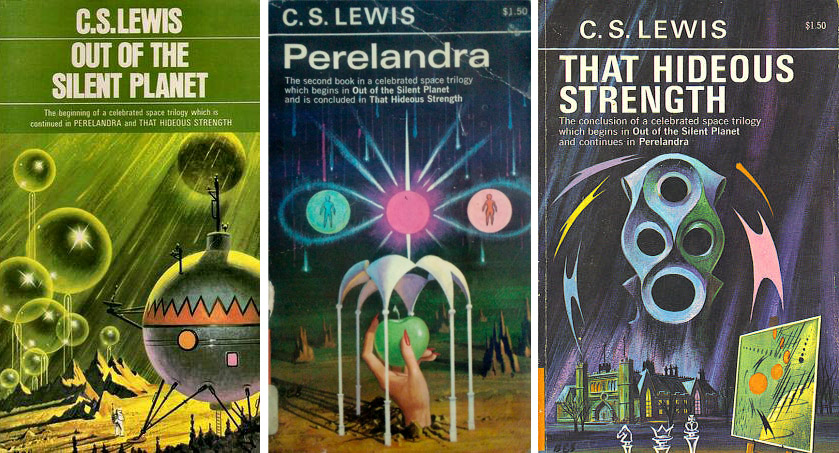
Space TrilogyCS Lewis is mainly seen as either a purveyor of goopy children's literature or a Christian moralist fuddy-duddy. But Lewis' Space Trilogy—fantastic literature for adults, or "philosophical science fiction"—also reveals him as a dystopian prophet in the tradition of Orwell. The first two books in the series, Out of the Silent Planet and Perelandra, are a critique of space imperialism that anticipated the Avatar movies. But the final one, That Hideous Strength, is particularly relevant for our historical moment, as it anticipated rule by fascist tech bros with hubristic visions of remaking (or abolishing) humanity. In Episode 332 of the CounterVortex podcast, Bill Weinberg makes the case that Lewis offered a vital critique of technocracy and "transhumanism" that is now urgently needed, as humanity stands at the cusp of his worst nightmares. (Image via Diary of an Autodidact)

Podcast: world revolution & the digital contradiction

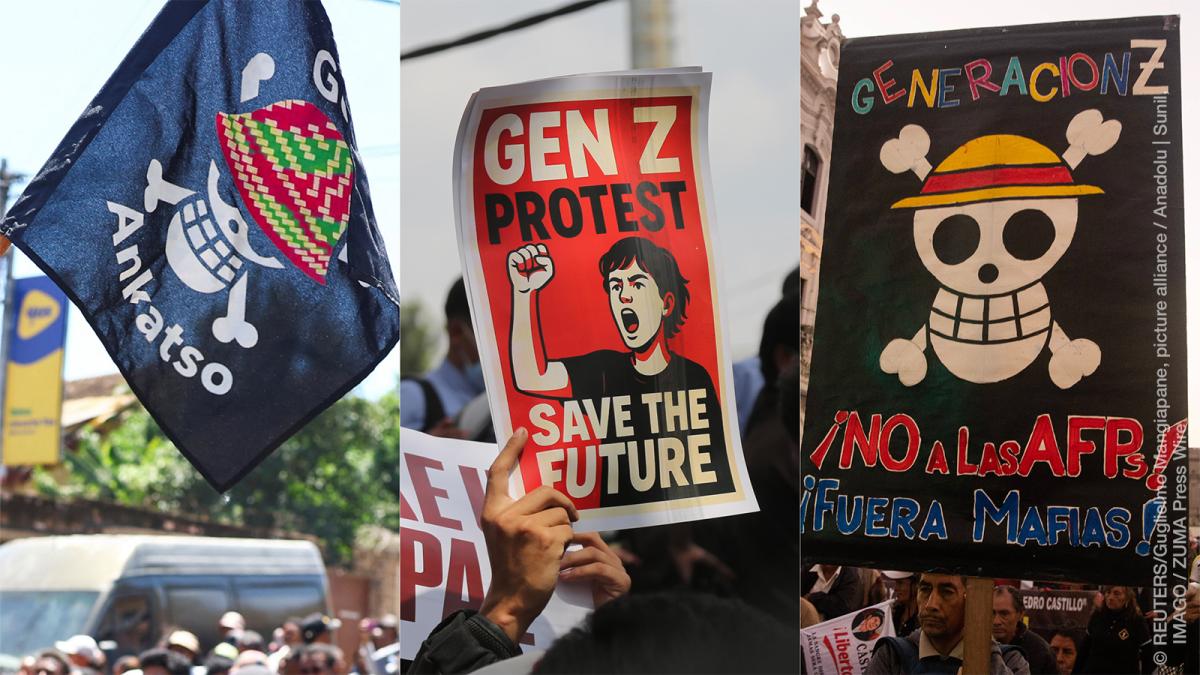
Gen ZProtests break out in Russia over the new internet restrictions imposed by the Putin regime, while social media and instant messaging have become the "new public square" for the Gen Z protests that have swept the planet over the past months. Exemplifying the identification with online culture, a pirate flag from a Japanese anime series has become the global emblem of the Gen Z resistance. The new youth social media bans in a growing number of countries are opposed by human rights and civil-liberties groups for good reason. Yet the dystopian side of digital technology becomes more apparent each day—from the climate impacts of data centers, to cynical attempts to sell nuclear power as "clean energy" (sic!) to meet the surging electricity demand, to the digital colonization of human consciousness. Protests are also emerging to the new techno-fascism, and this critique must be central to any true oppositional movement. In Episode 321 of the CounterVortex podcast, Bill Weinberg grapples with the contradiction. (Composite image via GIGA. Gen Z protesters in different countries use appropriated image from One Piece manga. Fair use rights asserted.)

Podcast: the other Russia —from Tolstoy to Komyagin

TolstoyEclipsed from the headlines by the war in the Middle East, Russia launches a new offensive in Ukraine with an unprecedented wave of drone and missile strikes across the country—even hitting an historic monastery in Lviv. Meanwhile, two young Russian poets, Artyom Kamardin and Yegor Shtovba, remain imprisoned on "state subversion" charges related to public readings of anti-war poetry. They join other imprisoned poetic anti-war activists, such as Daria Kozyreva, and numerous artists and activists imprisoned for opposing the new dictatorship of Vladimir Putin. The recently passed Russian rocker Nikolay Komyagin, frontman for the post-punk band Shortparis, was also an icon of artistic resistance. Long known for their defiant sound, after the 2022 invasion of Ukraine they released the music video "Apple Orchard," on an anti-war theme—getting them being blacklisted from major venues in Russia. In Episode 320 of the CounterVortex podcast, Bill Weinberg places these courageous voices in the context of a dissident tradition in Russia under the dictatorships of the czars, the Soviets, and now Putin—from Leo Tolstoy to Shortparis. (Composite image by CounterVortex from Ilya Efimovich Repin via Wikimedia Commons and Sasha Braulov via Instagram)

Podcast: resist cellular hegemony!

anti-cellularAs the architecture of total surveillance falls inexorably into place, cellular technology comes to colonize more and more of daily human existence. Accepted in the banal interest of "convenience," this trajectory ultimately ends in not only the extinction of human freedom, but the abolition of humanity itself—an idea openly embraced by the fascist tech bros as "transhumanism," and warned of by CS Lewis in his eerily prescient 1943 work The Abolition of Man. In Episode 317 of the CounterVortex podcast, Bill Weinberg urges a revolution of everyday life, in which we start saying no to the relentless encroachment of cellular and digital technology. (Image: Wikipedia, modified by CounterVortex)

‘Swan Lake’ anti-Putin protest in St Petersburg

Swan Lake CooperativeHundreds of young Russians gathered in a square in the center of St. Petersburg to defy censorship by performing a banned song that calls (in barely veiled terms) for the overthrow of Vladimir Putin. The crowd converged on the city's iconic Palace Square to sing "Swan Lake Cooperative" by exiled rapper Noize MC, which was outlawed in May when judicial authorities labeled it "extremist." The song title refers to the practice in Soviet times of suspending all regular TV and radio broadcasts to play Tchaikovsky's ballet "Swan Lake" continuously whenever the old leader died or was deposed and the transition to a new one was underway. The lyrics go: "The old man still clings to his throne… When the czar dies, we'll dance again, 'Swan Lake' on every screen… I want to watch the ballet… Let the old man shake in fear…" (Photo: Kanal13)

‘Gen Z’ uprisings in Morocco, Madagascar

MadagascarYouth-led protests demanding better education and healthcare in Morocco escalated into violent clashes with security forces. The protests were organized online by a loose network calling itself "GenZ 212," after Morocco's country code. In the southern cities of Tiznit, Inzegane and Ait Amira, as well as the eastern city of Oujda and Temara near the capital Rabat, hundreds of protesters hurled stones at security forces attempting to disperse the gatherings. At least two protesters were killed when police opened fire in Lqliaa, near the coastal city of Agadir. But there was far worse violence in Madagascar, where President Andry Rajoelina announced the dissolution of the government in response to youth protests over power and water shortages. The UN criticized Malagasy authorities' response to the demonstrations, reporting at least 22 people killed and hundreds injured. The Madagascar demonstrations were also organized under the banner of "Gen Z." (Photo via Mika R/Twitter. Madagascar protesters use appropriated image from One Piece manga series.)

Podcast: The Twenty-Fifth Hour revisited

Virgil GheorghiuThe case of Kilmar Abrego García, shunted from detention in one country to another, with no end in sight, recalls the World War II-era classic of dystopian fiction The Twenty-Fifth Hour by Romanian writer C. Virgil Gheorghiu. The wartime transnational detention system, harrowingly depicted in the novel, was seen by Gheorghiu as an inevitable manifestation of our technocratic civilization that exalts the machine above humanity, ultimately resulting in the treatment of human beings as mere cogs in the state-industrial apparatus. This process is more advanced today with the current hypertrophy of the technosphere, which is related to the re-emergence of abuses approaching those of the fascist era, and ultimately bodes poorly for humanity's future. In Episode 294 of the CounterVortex podcast, Bill Weinberg takes an unsparing look at this grim juncture for the human race. (Image via Cocosse)