Mexico
Pemex

Control of oil behind Mexico-Spain tensions

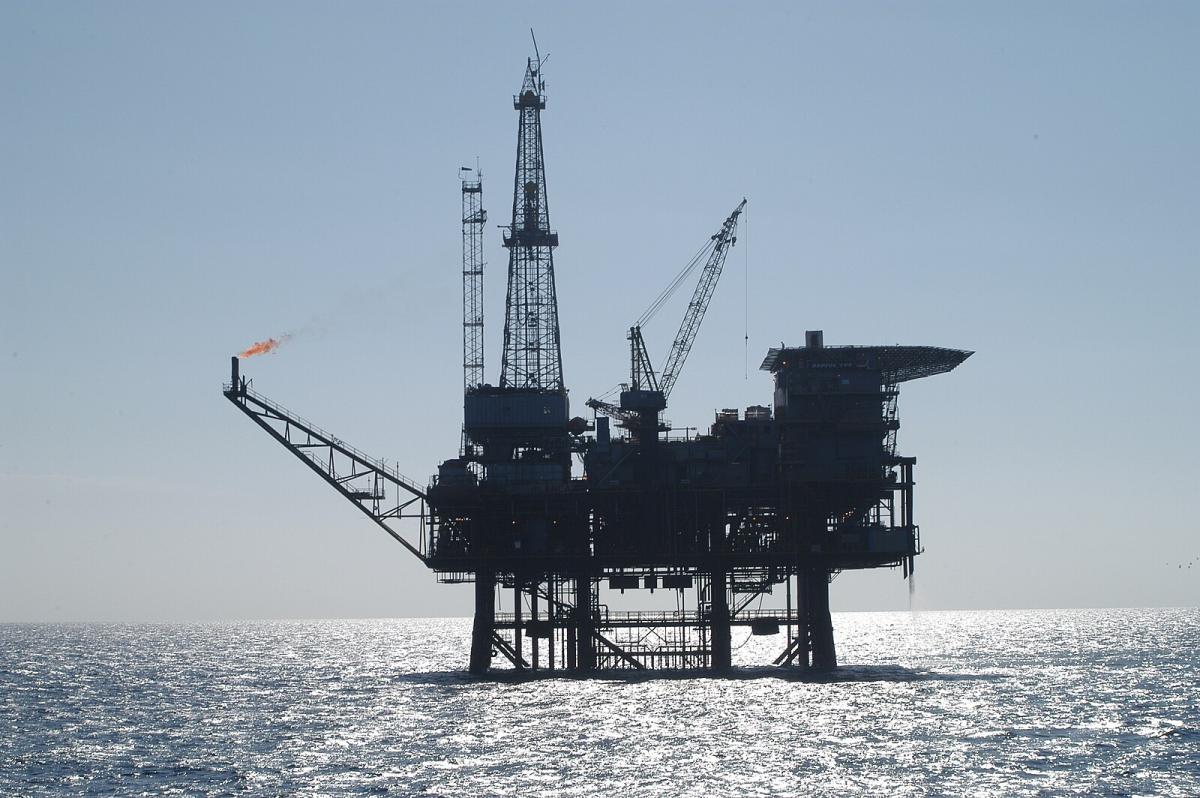
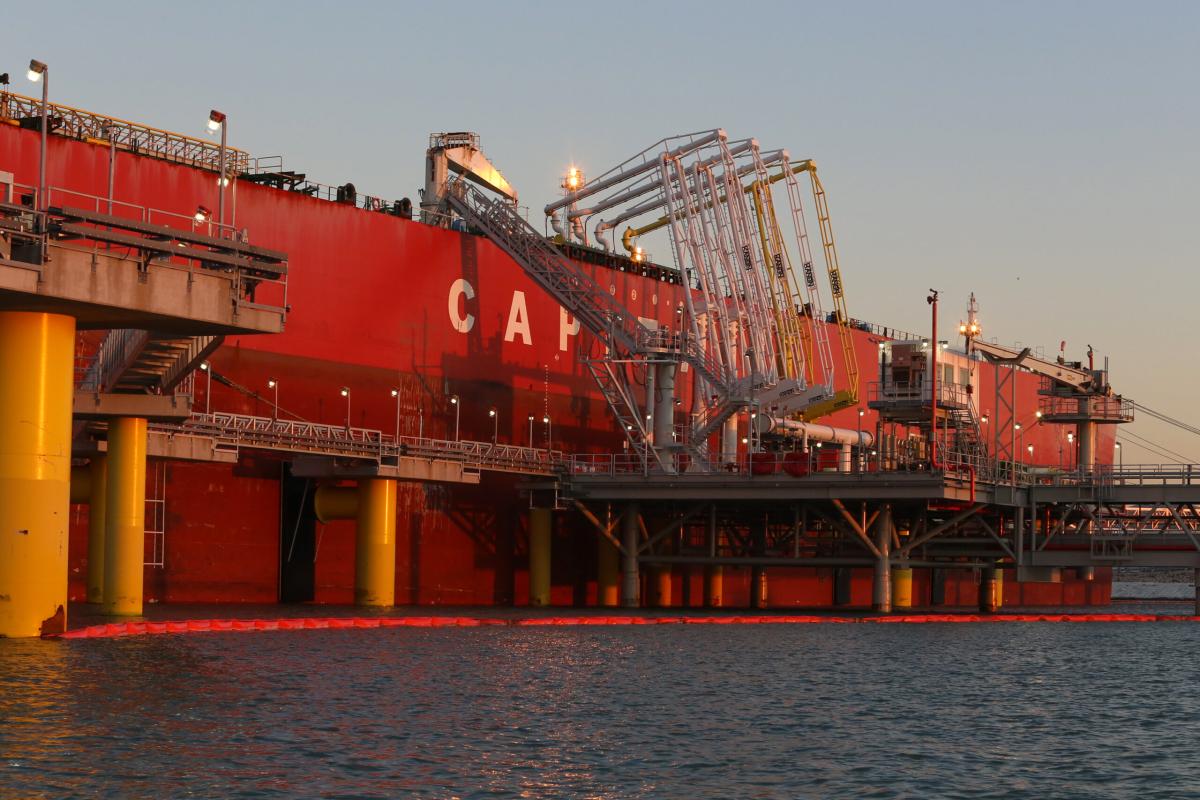
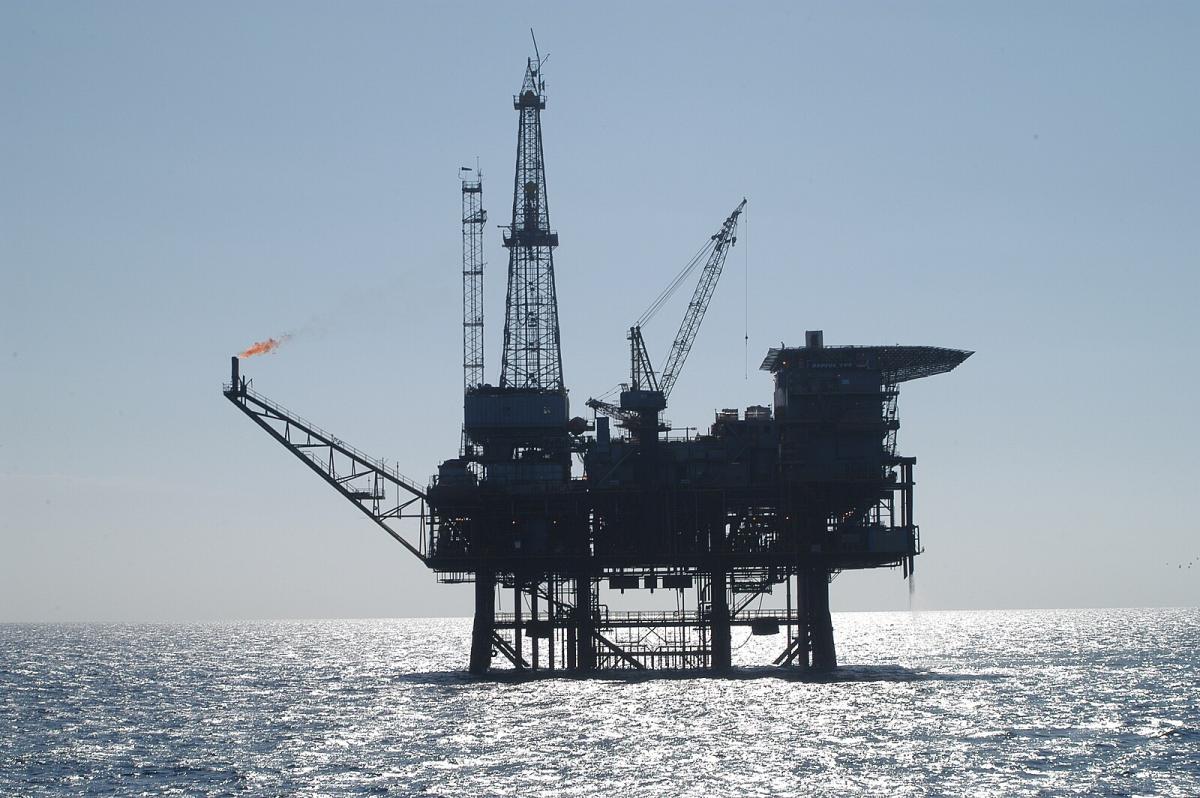
Mexico’s President Andrés Manuel López Obrador called for a “pause” in relations with Spain, in a speech that explicitly invoked the legacy of colonialism going back to the Conquest. But the speech was aimed principally at Spanish oil company Repsol, which had been favored during the presidential term of Felipe Calderón. Specifically, López Obrador questioned the granting of gas contracts in the Burgos Basin, in Mexico’s northeast. He charged that Repsol operated the fields less productively than the state company Pemex had. “In the end, less gas was extracted than Pemex extracted” before the contracts, he charged. Repsol is meanwhile under investigation by Spanish prosecutors on charges of graft related to the company’s efforts to fend off a take-over bid by Pemex. (Photo via Digital Journal)

Planet Watch
freeway

Podcast: against ‘normalcy’

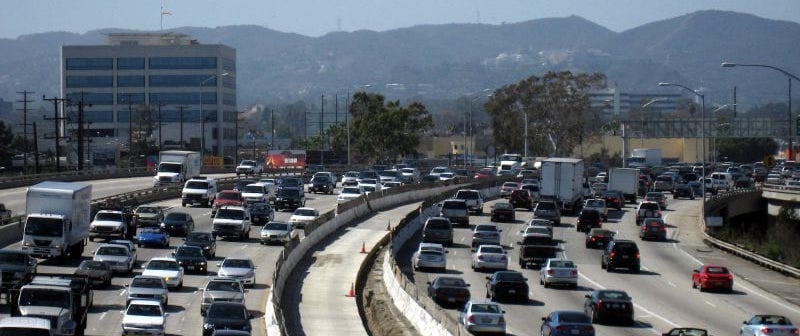
In Episode 105 of the CounterVortex podcast, Bill Weinberg rants against the ubiquitous propaganda that normalizes the oppressive and dystopian pre-pandemic normality. Amid the relentless COVID-19 denialism, even mainstream voices are calling for a return to “normalcy” (sic)—which is not even a word. The opportunity for a crash conversion from fossil fuels that was posed by 2020’s pandemic-induced economic paralysis, when already depressed oil prices actually went negative, is now being squandered. President Biden just released oil from the Strategic Reserves to control soaring prices. Simultaneously, the administration is moving ahead with the largest offshore oil lease sale in US history. While during the 2020 lockdown. the usually smog-obscured Himalayas became visible from northern India for first time in decades, Delhi is now choked with emergency levels of toxic smog. During the 2020 lockdown, the total US death rate actually dropped because people were staying off the roads; US traffic deaths are now soaring. New York’s new Mayor Eric Adams wants to stake the city’s economic future to the cryptocurrency industry, even as China is cracking down on Bitcoin “mining” (sic) because of its “extremely harmful” carbon footprint. And amid all the empty hand-wringing about climate change, airlines are flying thousands of empty “ghost flights” in order to keep their slots at congested airports. The “return to normalcy” must be urgently resisted. As Bruce Cockburn observed long ago, the trouble with normal is it always gets worse. Listen on SoundCloud or via Patreon. (Photo: malingering via The Source Metro)

Planet Watch
Greenland

Greenland suspends oil exploration, citing climate crisis

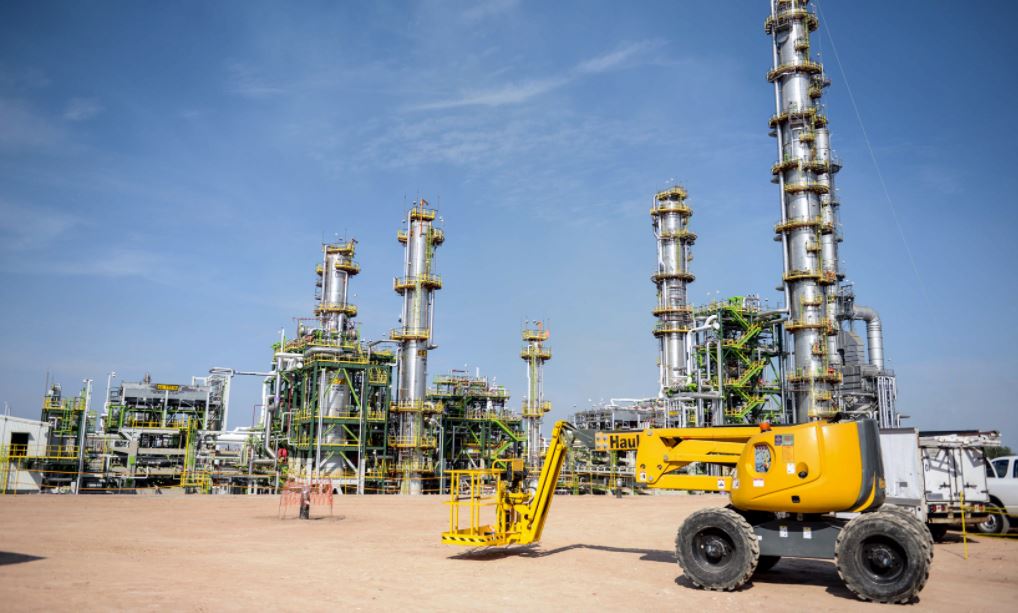
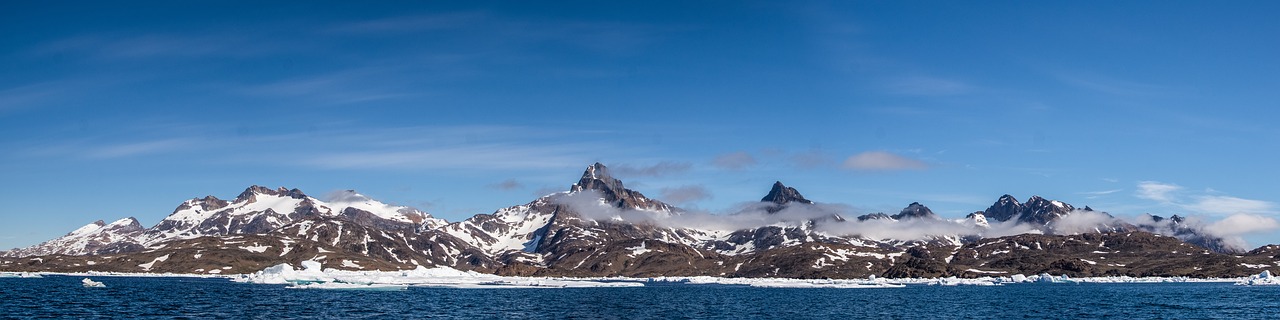
The government of Greenland announced that it will suspend all oil exploration, saying the territory “wants to take co-responsibility for combating the global climate crisis… The future does not lie in oil. The future belongs to renewable energy, and in that respect we have much more to gain.” The US Geological Survey estimates there could be 17.5 billion undiscovered barrels below the territory’s lands and waters. Many had hoped potential reserves could allow Greenland to acheive independence, compensating for the annual subsidy of 3.4 billion kroner ($540 million) the territory receives from Denmark. (Photo: Pixabay)

North America
detrumpification

Podcast: for total de-Trumpification

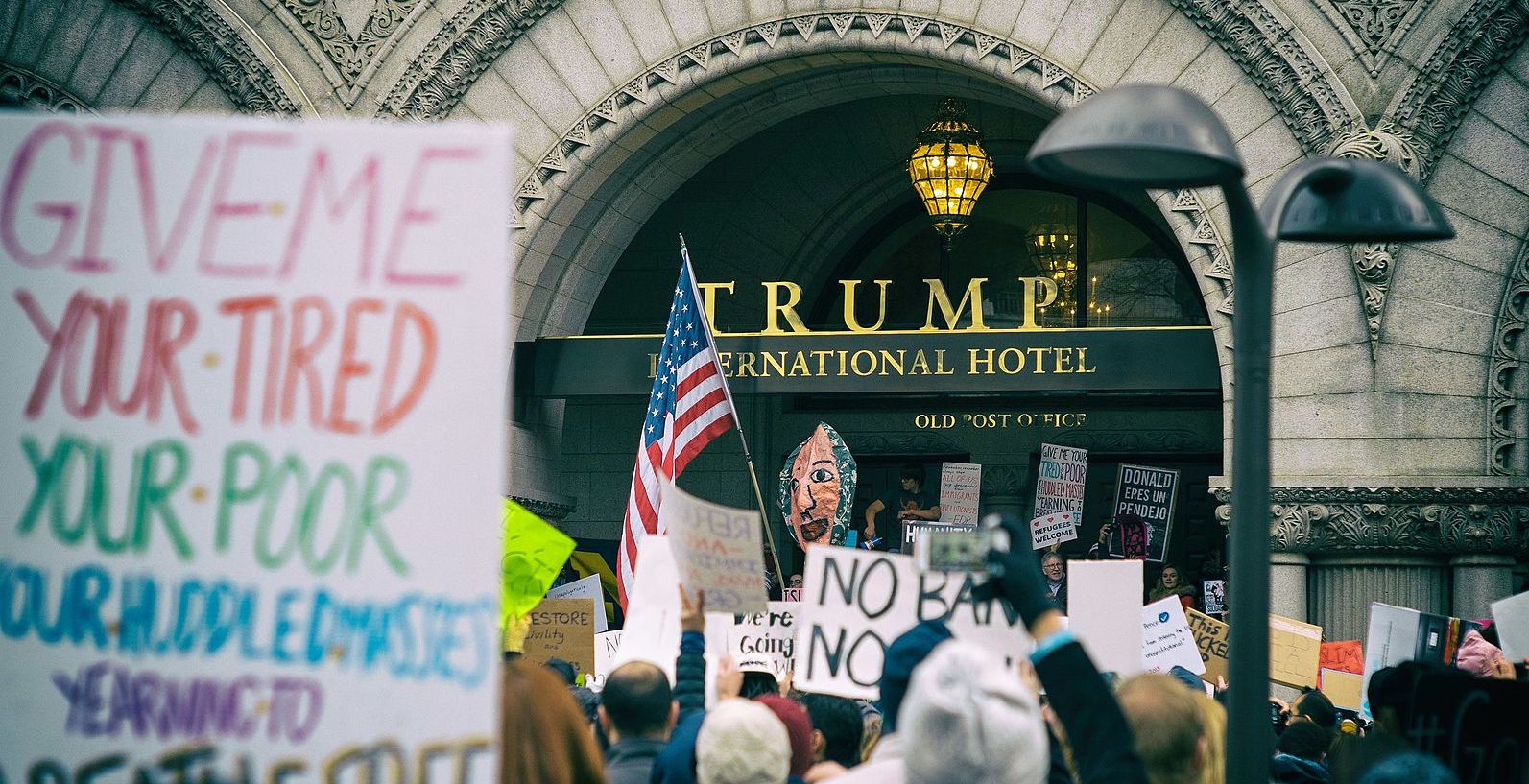
In Episode 62 of the CounterVortex podcast, Bill Weinberg grimly notes that, even with 400,000 Americans dead to COVID-19, the worst potentialities of the Trump presidency were not realized. Trump never (quite) established a dictatorship, and we didn’t (quite) go over the edge into civil war. The critical task now for the country’s progressive forces is to push for a maximal and thoroughgoing detrumpification—akin to the denazification of Germany after World War II. We may truly hope that the Capitol insurrection will prove to have been the last gasp of Trumpism. However, it may have been his Beerhall Putsch—and, as last time, there could be a second act. The more thoroughly Trumpism is reversed, the more likely it will be defeated and broken politically—especially given its glorification of “winning” and denigration of “weakness.” The risk of sparking a backlash is not to be dismissed, but the greater risk is that of appeasement. Listen on SoundCloud or via Patreon. (Photo: Mike Maguire/WikiMedia)

Planet Watch
Line 3

Global petro-resistance greets 2021

As the year comes to a close, Native American activists and their allies in Minnesota are launching a weekly protest vigil against the planned Line 3 pipeline, that would bring more Canadian shale-oil to US markets. The self-proclaimed “water protectors” pledge to continue the campaign into the winter. The Conservation Council of Western Australia meanwhile launched legal challenge against approval of the new Burrup Hub liquified natural gas facility, asserting that it is the “most polluting fossil fuel project ever to be proposed in Australia,” and “undermines global efforts [to mitigate climate change] under the Paris Agreement.” While Denmark has pledged to end North Sea oil exploitation by 2050 as a step toward meeting the Paris accord goals, other Scandinavian governments remain intransigent. The Supreme Court of Norway has upheld a judgment allowing the government to grant oil licenses in new sections of the country’s continental shelf. The decision was challenged by environmental groups including Nature & Youth Norway, who claimed that it violates the European Convention on Human Rights. (Photo: Stop Line 3)

The Caribbean
Esequibo

Venezuela revives claim to Guyana territory

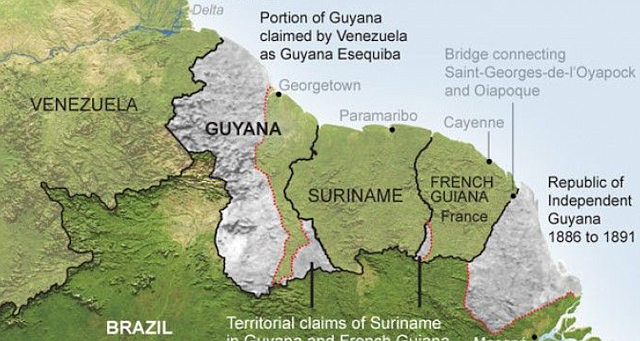
Venezuelan prosecutors finally announced charges against opposition leader Juan Guaidó for “high treason”—but not for colluding with foreign powers to overthrow the government. No, Guaidó is to face charges for his apparent intent to renounce Venezuela’s claim to a disputed stretch of territory that has been controlled by neighboring Guyana since the end of colonial rule. The Esequibo region covers 159.000 square kilometers—nearly two-thirds of Guyana’s national territory. The old territorial claim languished for generations—until  2015, when ExxonMobil announced discovery of a big offshore deposit in waters off the Esequibo coast. This came just as Venezuela was sliding into crisis, providing President Nicolás Maduro with a nationalist rallying cry. (Map via El Tiempo Latino)

North America

Bay of Fundy flashpoint for US-Canada war?

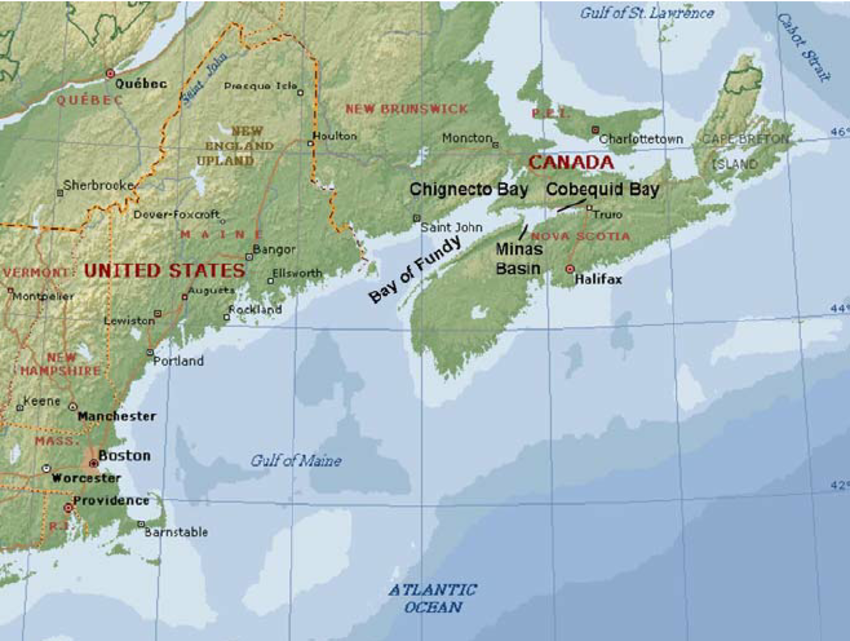
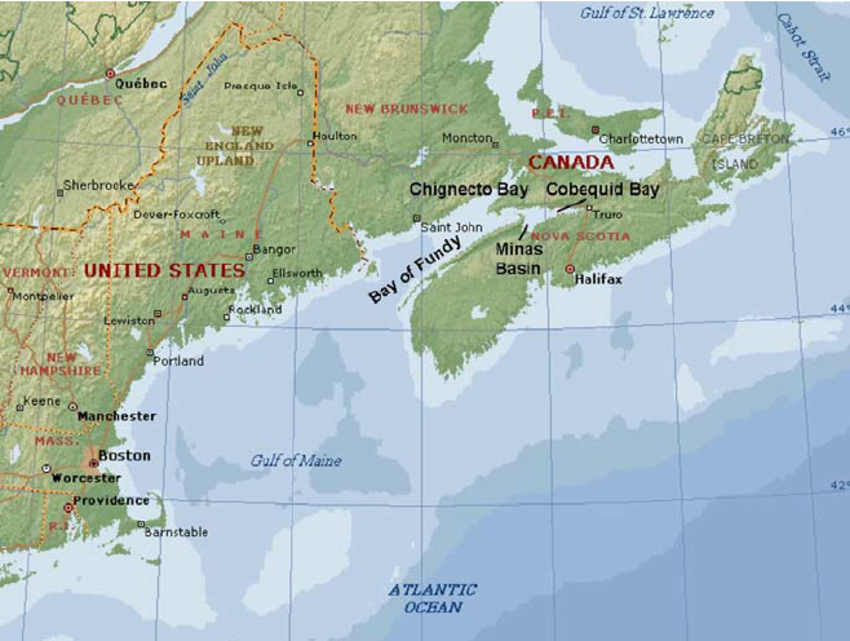
In what the New York Times somewhat hyperbolically calls a “clash,” US Border Patrol vessels have over the past two weeks stopped at least 10 Canadian fishing boats in the Bay of Fundy between Maine and New Brunswick. Canada has responded by beefing up its Coast Guard patrols in what is being termed a “disputed gray zone” between the two countries’ territories. The maritime dispute dates back to the 1783 Treaty of Paris that ended the American Revolution, and is one of several between the US and Canada—including fishing waters at Dixon Entrance between Alaska and British Columbia, and areas of the petroleum-rich Beaufort Sea, near the Arctic Ocean. (Map: ResearchGate)

The Andes

Oil contracts at issue in Peru political scandal

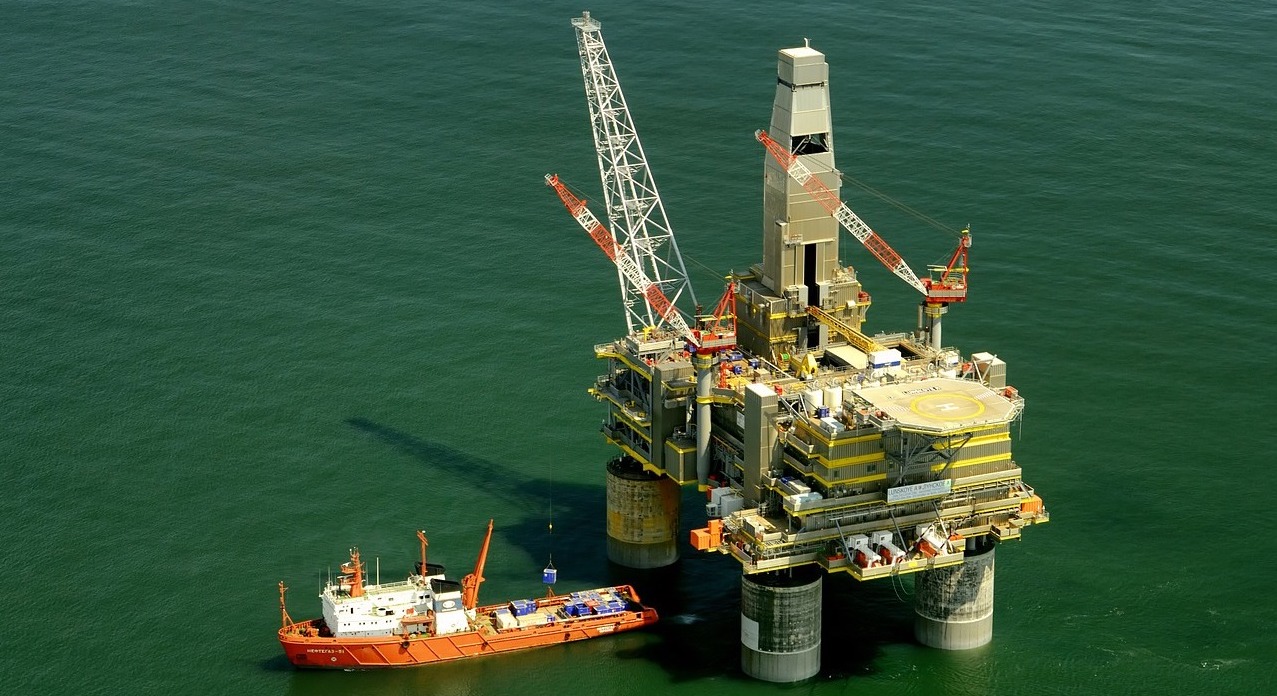
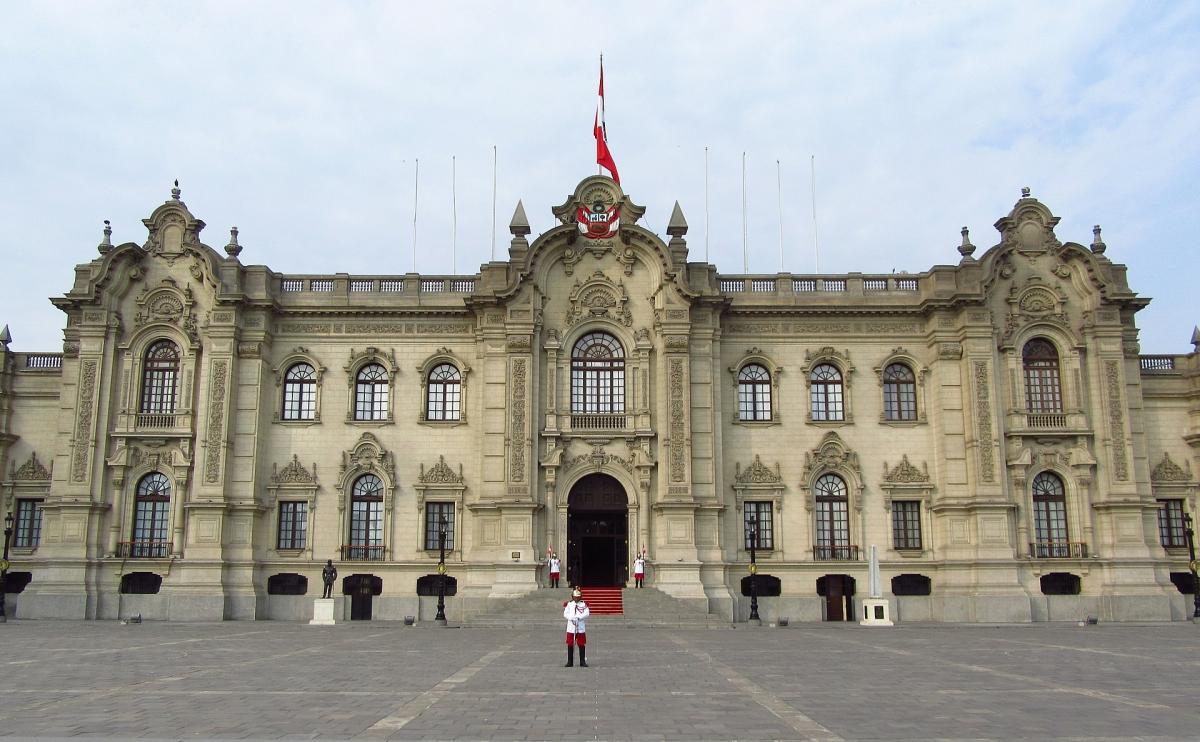
Seemingly irregular oil contracts have emerged as a factor in the ongoing political scandal that last week brought down Peru's president Pedro Pablo Kuczynski. Following accusations from left-opposition congressmembers, state agency PeruPetro admitted that hours before leaving office, Kuczynski had issued a Supreme Decree initiating the process of approving five offshore oil concessions with a private company—but without the involvement of PeruPetro in vetting the contracts, as required by law. Calling the deals "lobista," Dammert is demanding that new President Martín Vizcarra declare the contracts void. (Photo: Gestión)

Planet Watch

Victory for Inuit sea rights in Canadian high court

The Supreme Court of Canada ruled unanimously in favor of the Inuit community of Clyde River, Nunavut, which has for the past three years fought to stop seismic testing in their Arctic waters. The Court found that the Inuit were not properly consulted on the oil exploration project off Baffin Island. The decision nullified a seismic testing permit issued by the National Energy Board.

Watching the Shadows

Obama’s final year: a CounterVortex scorecard

With a Trump despotism looming, CounterVortex offers its final assessment of Barack Obama's record in addressing the oppressive legacy of the Global War on Terrorism.

Planet Watch

A ‘New Oil Order’?

Experts declare a "new oil order" in which hydrocarbons will lose market share to renewables. But is it market conditions or geopolitics that explain the current price slump?