

The Andes
Colombia

Colombia’s new government authorizes joint US strikes

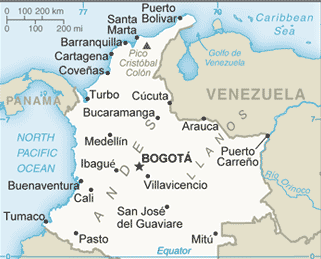
Colombia formally joined the Americas Counter Cartel Coalition (A3C), a US-led regional initiative under the rubric of the so-called “Shield of the Americas.” US Secretary of Defense Pete Hegseth announced that new far-right President Abelardo de la Espriella had authorized joint “counter-terrorism” operations, a move that opens the door to US-led strikes on Colombian territory, which Hegseth said has already been discussed. De la Espriella’s granting of permission to US troops to operate within Colombia is likely unconstitutional—the transit and operation of foreign troops on Colombian soil requires Congressional approval. The agreement was formalized in Panama, where Hegseth spent two days meeting with the A3C’s 19 partner members, deepening ties, and rallying opposition to the International Criminal Court, which he accused of launching a “lawless power grab” by potentially investigating US strikes in the region, a step it has not yet taken. (Map: PCL)
Watching the Shadows
Honduras

‘Hondurasgate’ leaks reveal Israeli destabilization scheme

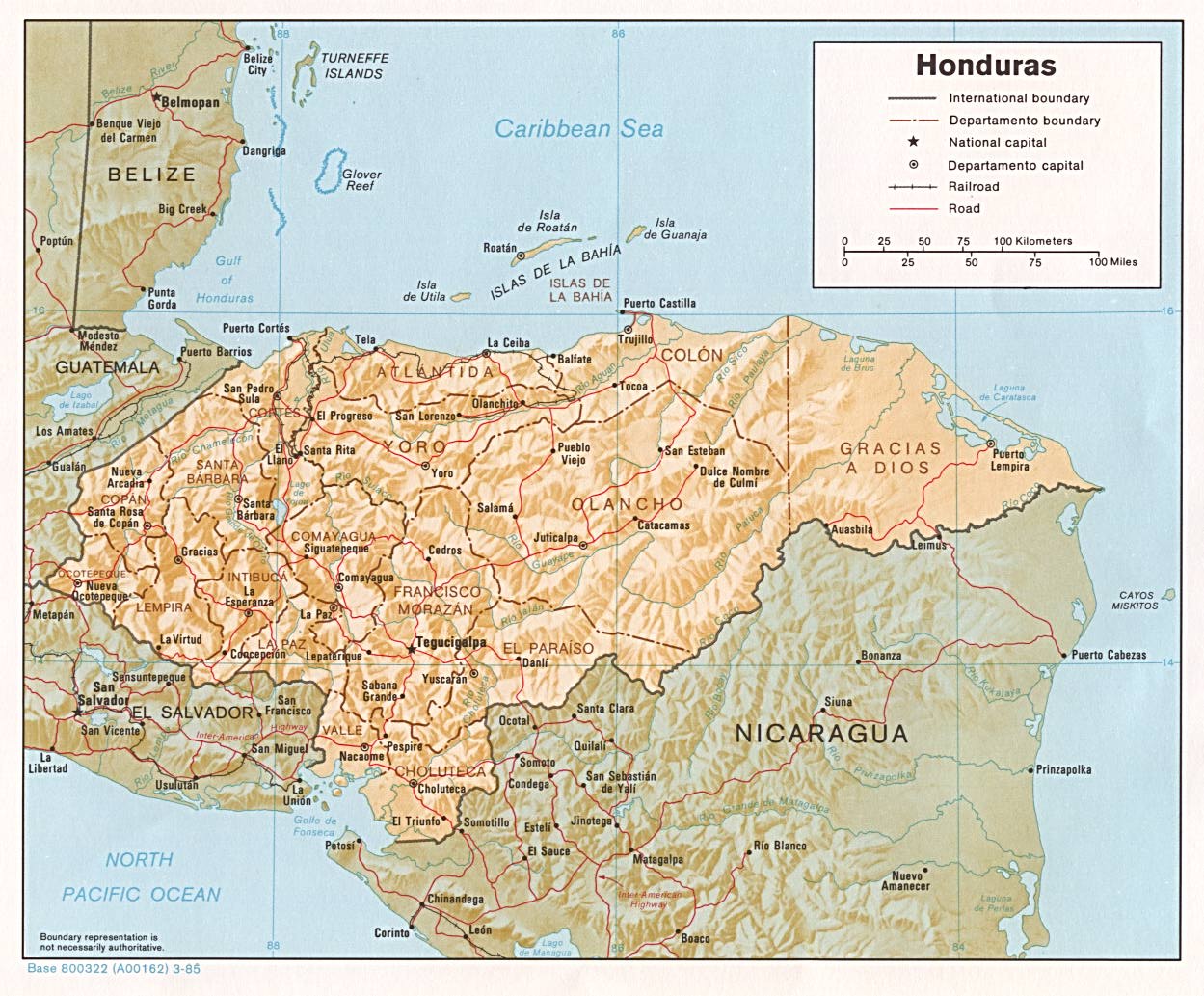
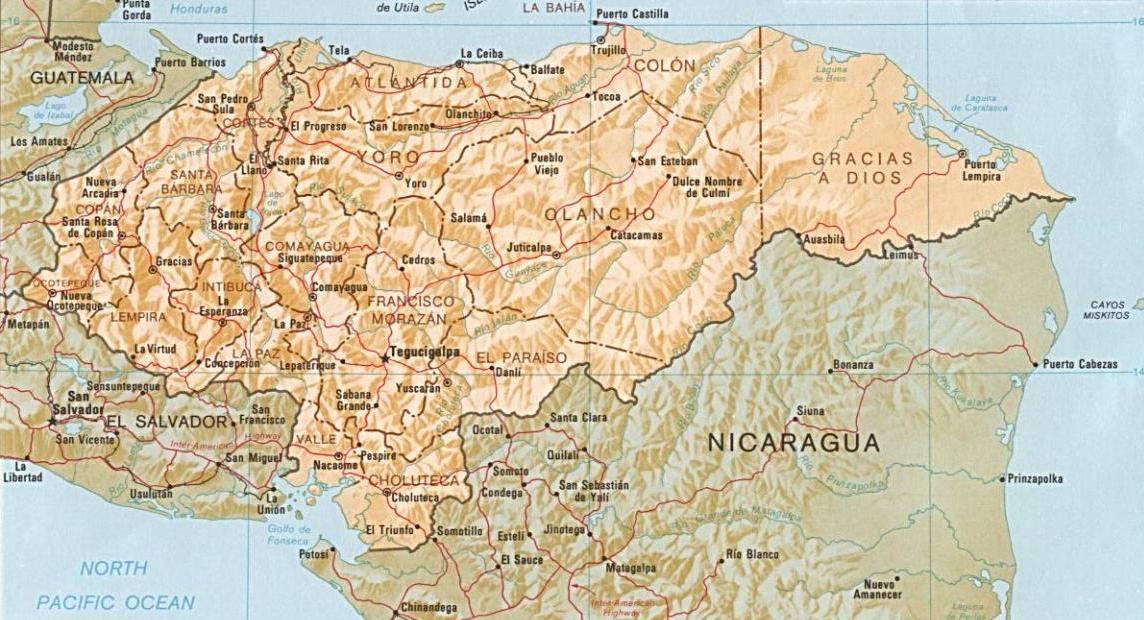
“Hondurasgate”—an alleged plot involving Israel, the United States, and former Honduran President Juan Orlando Hernández to destabilize Latin America’s progressive governments through disinformation—has thrust the region’s ties to Israel back into the spotlight. The scandal emerged ahead of a diplomatic visit by Israeli President Isaac Herzog to Central America as part of a push to consolidate alliances with the region’s newly ascendant right-wing leaders. (Map: Perry-Castañeda Library)

Watching the Shadows
NSS

Trump Corollary: spheres of influence, white supremacy

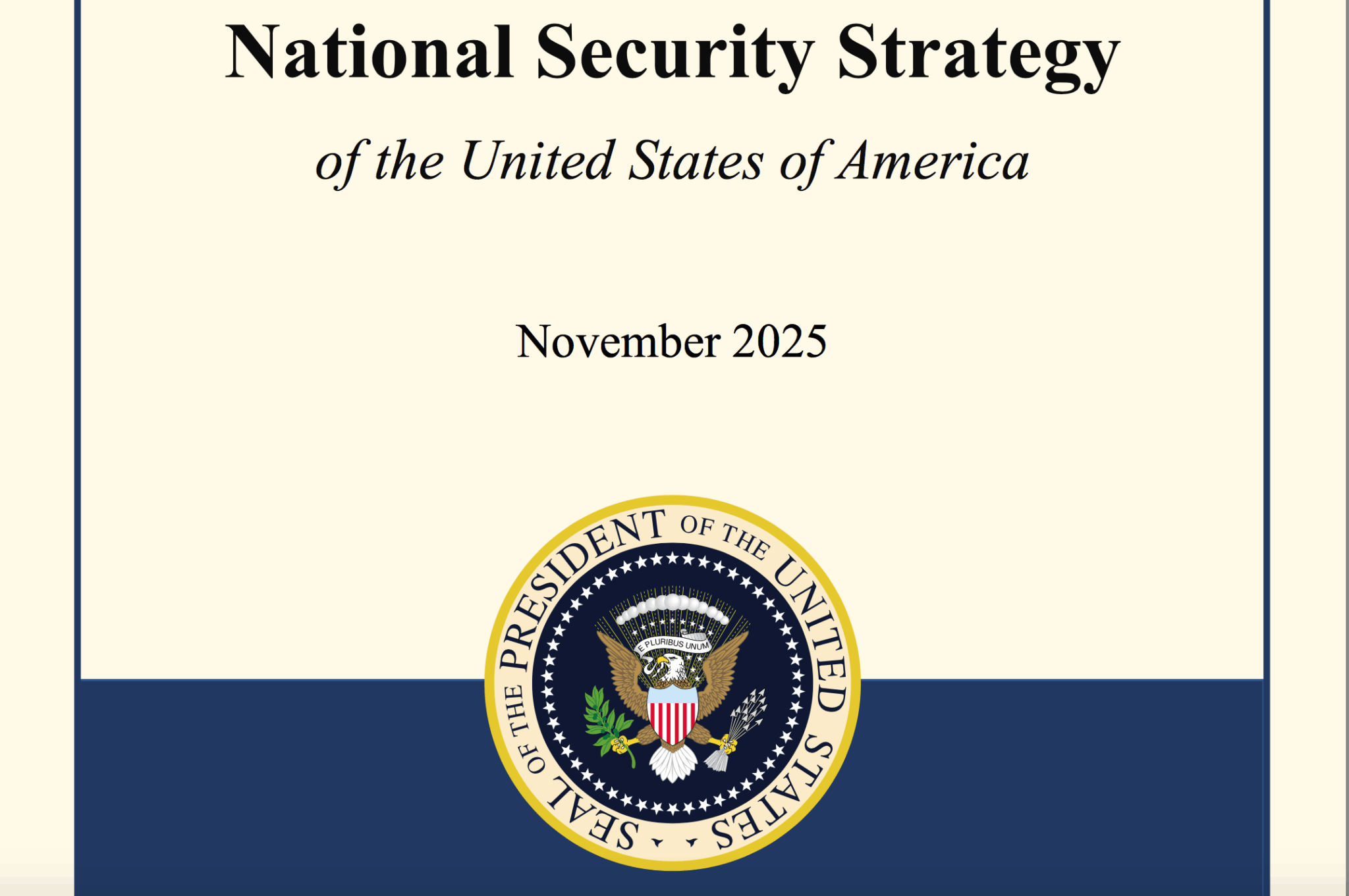
Donald Trump’s new National Security Strategy instates a “Trump Corollary” to the Monroe Doctrine. Like the Roosevelt Corollary of 1904, which was used to justify the “gunboat diplomacy” of that era, this new corollary openly calls for dividing the world into spheres of influence—with the Western Hemisphere assigned to the US. Russia is obviously pleased as punch over this, as it implicitly gives Moscow a free hand in Ukraine—and Putin will likely consider this an acceptable pay-off for his betrayal of Venezuela. However, China is less likely to surrender its massive investments and mega-projects in Latin America in exchange for a free hand to take over Taiwan. The document’s text on Europe is even more sinister, revealing a white supremacist agenda that looks not to Washington’s traditional allies to counter Russia, but to the continent’s Russian-backed far-right movements to counter Washington’s traditional allies. In Episode 308 of the CounterVortex podcast, Bill Weinberg exposes the NSS as a further step toward consolidation of a Fascist World Order. (Image: White House)

Central America
SUNTRACS

Panamanian workers on indefinite strike

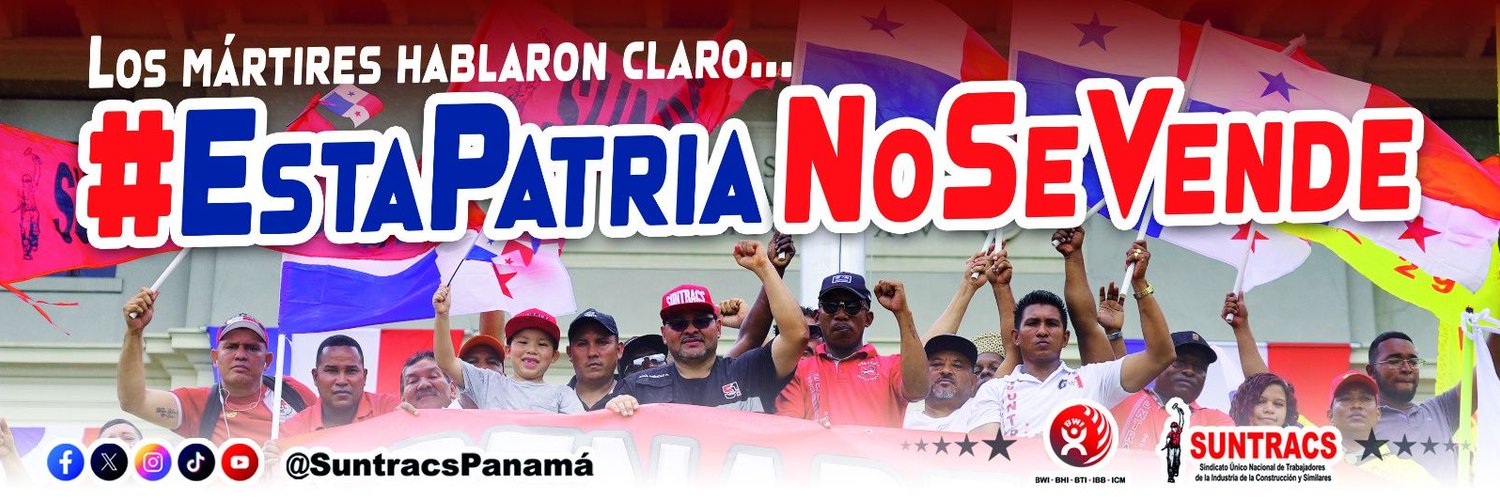
Panamanian construction workers, teachers’ unions, and popular organizations launched an indefinite strike to protest the government’s proposed reforms to the pension system and to demand an end to US interference in the country. Protestors, led by the construction union SUNTRACS, were met by police repression in various parts of the country, including tear gas aimed directly at students. In addition to fears that reforms to the country’s social security system will lead to its privatization, the country’s grassroots organizations believe that President José Raúl Mulino has undermined Panamanian sovereignty by not being firm enough in his negotiations with the Trump administration over control of the Panama Canal. (Image: SUNTRACS)

Central America
Darién

Panama feels pain of Trump migration crackdown

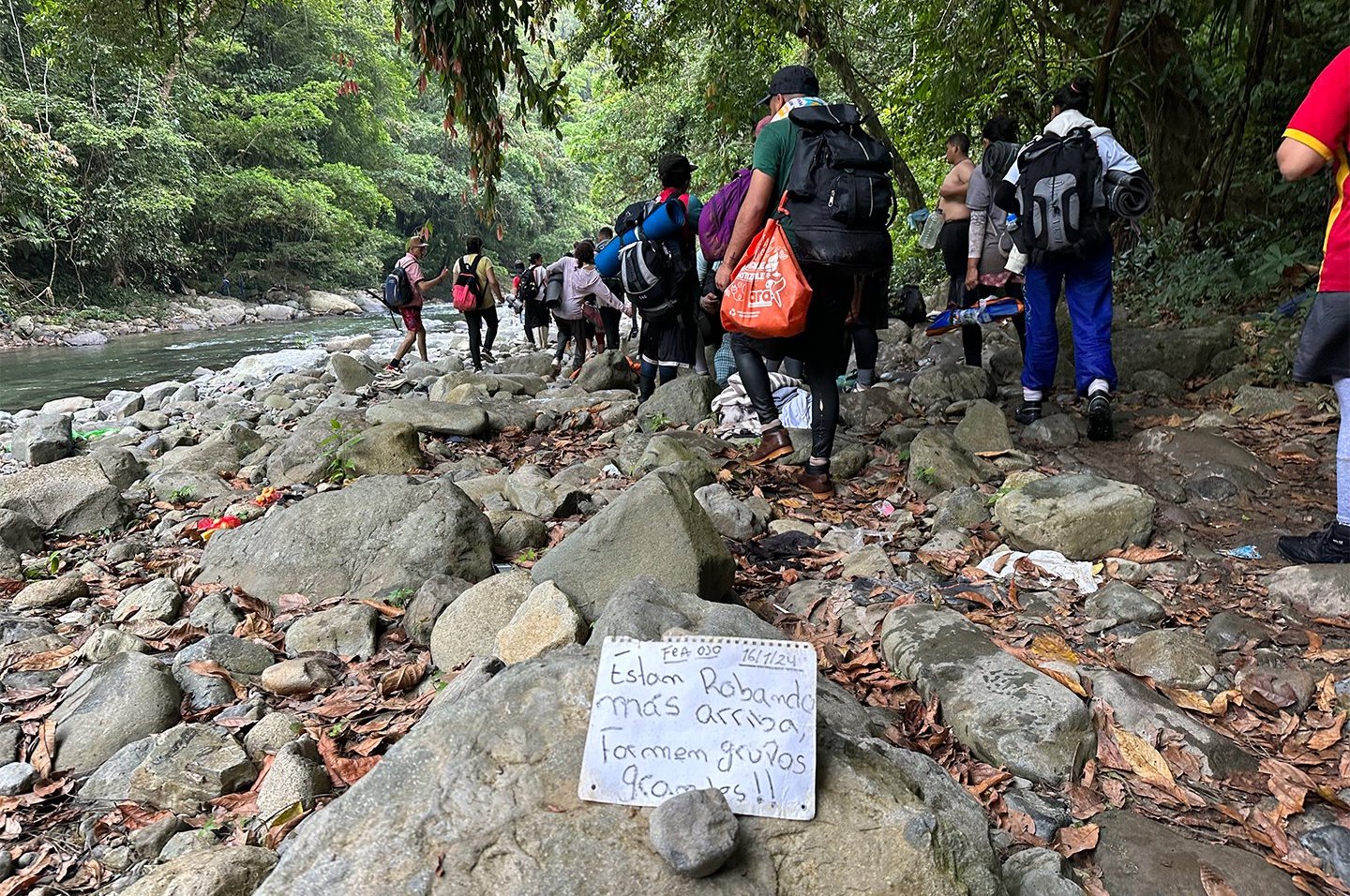
An eight-year-old Venezuelan girl died and 20 survivors were rescued by Panamanian authorities from a shipwreck during a journey from Panama’s northern port of Llano Carti to the Colombian border. Trump’s crackdown on migrants has triggered a “reverse flow” that is leading a growing number of asylum seekers to take a sea route back to South America to avoid crossing the Darién Gap—the perilous jungle trek connecting Panama to Colombia. (Photo: Note left on Darién Gap trail reads: “They’re robbing further up, form big groups!!” Credit: Peter Yeung/TNH)

North America
14thNow

Podcast: nullify the election! VI

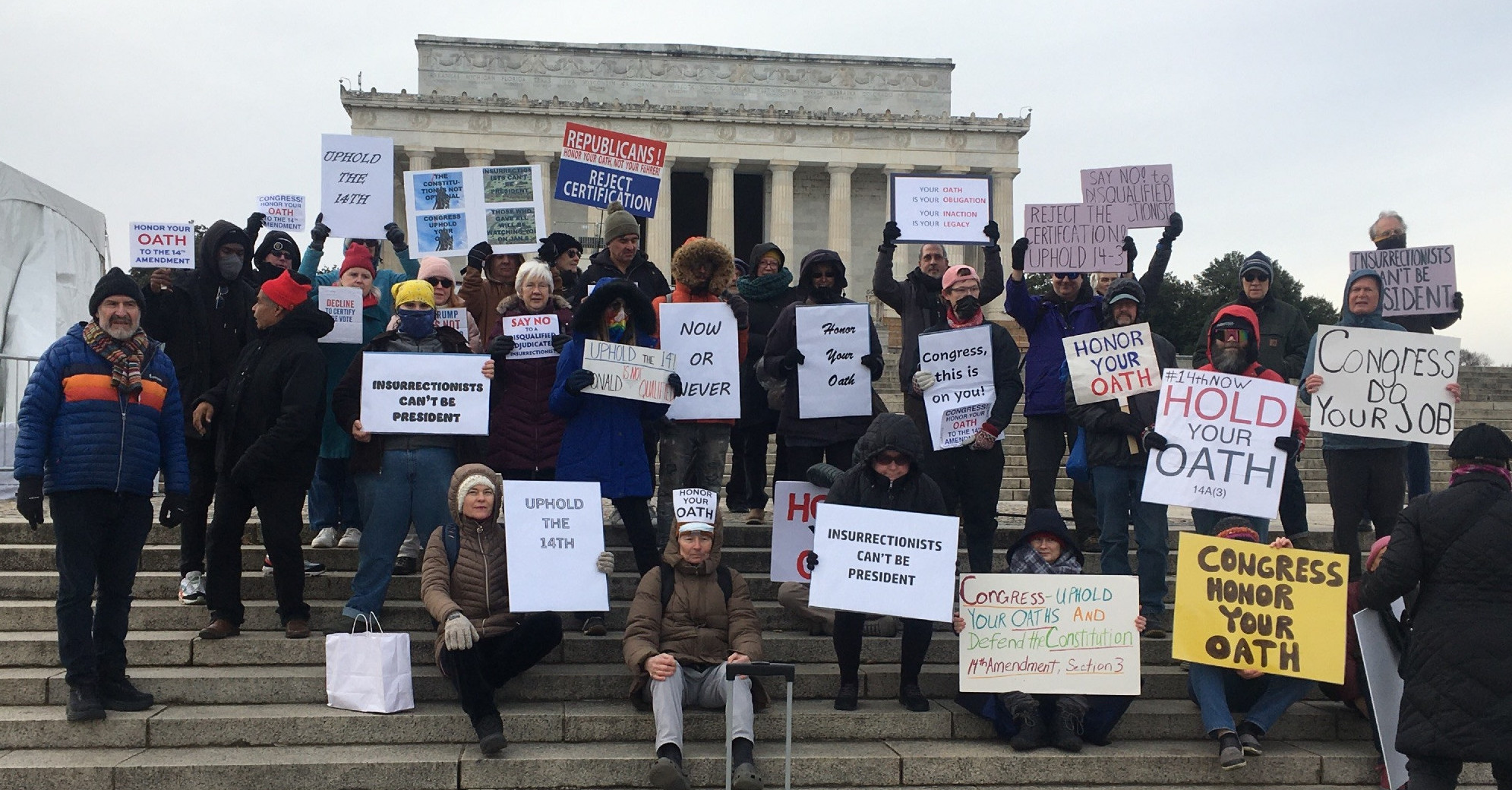
Mere days before Donald Trump is to be inaugurated, Bill Weinberg continues to raise the demand for nullification of his election on 14th Amendment grounds. As Congress certified his victory last week, a demonstration calling for this was held in Washington, organized by podcaster (and former Trump campaign worker) Jessica Denson. But the centrist establishment—including Kamala Harris, who presided over the certification—is utterly capitulating to the fascist takeover of the country. In vivid contrast, protesters courageously take to the streets and politicians refuse cooperation to defend democracy from authoritarian power-grabs in South Korea, Georgia, Romania, Slovakia and Mozambique. In Episode 260, the CounterVortex podcast urges a last-ditch line of defense: pressure on Chief Justice John Roberts to refuse to administer the oath of office. Listen on SoundCloud or via Patreon. (Photo via BlueSky)

Central America
Darién

US-Panama deal to shut down Darién Gap migration route

Immediately upon taking office, Panama’s new President José Raúl Mulino struck a deal with the United States to shut down the migration route through the Darién Gap, which sees thousands annually making the perilous jungle trek while seeking to reach North America. The US has committed to cover the cost of repatriation of migrants who illegally enter Panama and to deploy Homeland Security teams on the route. Last year, a record 520,000 migrants risked their lives, often at the hands of human traffickers, to traverse the Darién Gap, an expanse of roadless jungle stretching some 100 kilometers from Panama’s border with Colombia. (Photo: David González/TNH)

Central America
Panama

Protests prompt Panama mining moratorium

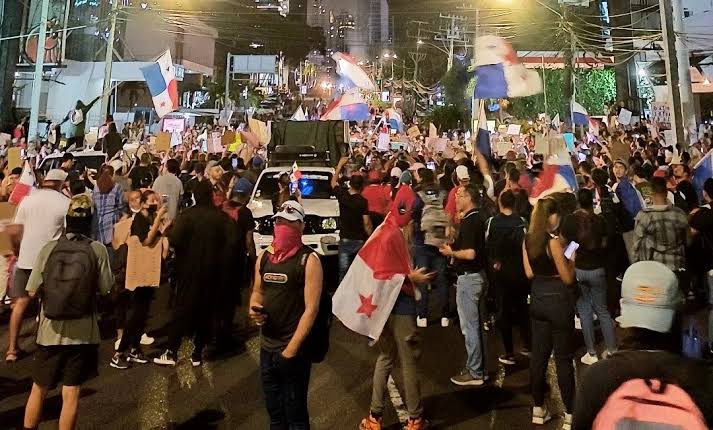
Panama’s President Laurentino Cortizo announced that he will hold a referendum to determine the fate of a contentious mega-mining contract, after several days of the country’s largest protests in decades. Cortizo also said he would instate a moratorium on any new mining projects in response to the protests, a move signed into law on Panama’s independence day. The protests, driven by environmental concerns, were sparked by the National Assembly’s earlier vote to award an extended concession to Canadian company First Quantum, allowing it to operate the largest open-pit copper mine on the Central American isthmus for another 20 years. The Cobre Panamá mine, in Colón province, has faced strong opposition from local residents since it opened in 2019, but extension of the contract brought thousands of angry demonstrators to the streets of Panama City. The protests reached the doors of the capital’s Marriott Hotel, where regional environment ministers were meeting for the Latin America & the Caribbean Climate Week summit. (Photo via Twitter)

The Andes
Francia-Petro

Colombia: pending presidency ‘between two populisms’

Following a first round of presidential elections, “between two populisms” is the catchphrase being used by Colombia’s media for an unprecedented moment. A pair of political “outsiders” are to face each other in the run-off: Gustavo Petro, a former guerilla leader and Colombia’s first leftist presidential contender, versus Rodolfo Hernández, a construction magnate whose pugnacious swagger inevitably invites comparison to Donald Trump. Hernández, an independent candidate and the former mayor of Bucaramanga, rose precipitously in an ostensibly anti-establishment campaign driven by social media, winning him the epithet “King of TikTok.” But Colombia’s political establishment is now lining up behind him to defeat Petro. The former mayor of Bogotá and a veteran of the demobilized M-19 guerillas, Petro is the candidate of a new progressive coalition, Colombia Humana, emphasizing multiculturalism and ecology as well as more traditional social justice demands. (Photo via Twitter)

Central America

Honduras transition in the New Cold War

Hondurans elected self-proclaimed “democratic socialist” Xiomara Castro to be the country’s first woman president. The wife of Manuel Zelaya, the populist president who was removed in a coup in 2009, Castro pledges to revive his program—and take it much further, instating far-reaching reforms. Castro also announced that she will “open diplomatic and commercial relations with continental China,” which was widely taken as meaning a switch of diplomatic recognition. Honduras is currently one of only 14 countries that recognize Taipei rather than Beijing.  It is tragic to see the Central American republics, in their struggle to break free of Washington’s orbit, acquiesce in Beijing’s design to incorporate Taiwan into its own orbit—or, more ambitiously, its national territory.  (Map: Perry-Castañeda Library)

Central America
Darién

Danger grows on Darién Gap migrant route

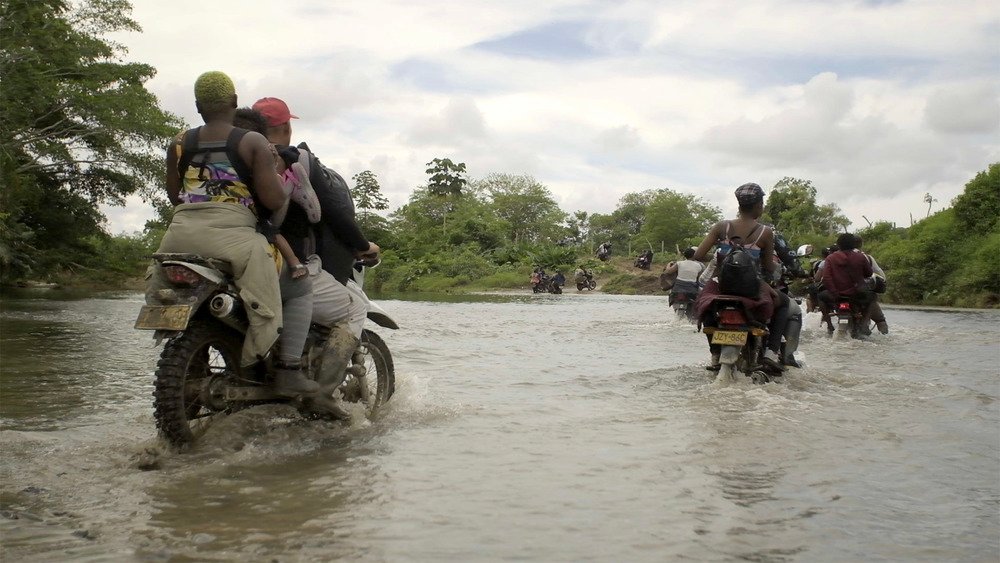
The Darién Gap, a dangerous jungle route used by a growing number of migrants trying to reach the United States from South America, has become even deadlier, according to Panama’s Forensic Sciences Institute. It reports over 50 migrant deaths to date in 2021, although the figure is believed to be far higher. Towns on the Colombian side of the border are swelling with migrants waiting to cross the Gap—mostly Haitians, Cubans and Venezuelans, but some from as far as Afghanistan and Burkina Faso. Colombian authorities say 67,000 migrants have passed through the border zone so far this year, more than 15 times the number in 2020. Former paramilitaries operating in the area are now preying on the migrants, who face rape, armed violence and extortion. (Photo: David González/TNH)

Central America

Taiwan sacrificed to Central America geopolitics

Panama is the latest Central American nation to switch diplomatic recognition from Taipei to Bejing—under pressure of China's fast-growing economic presence on the isthmus.