Planet Watch
EZLN

Zapatistas: ‘nation-state under attack’
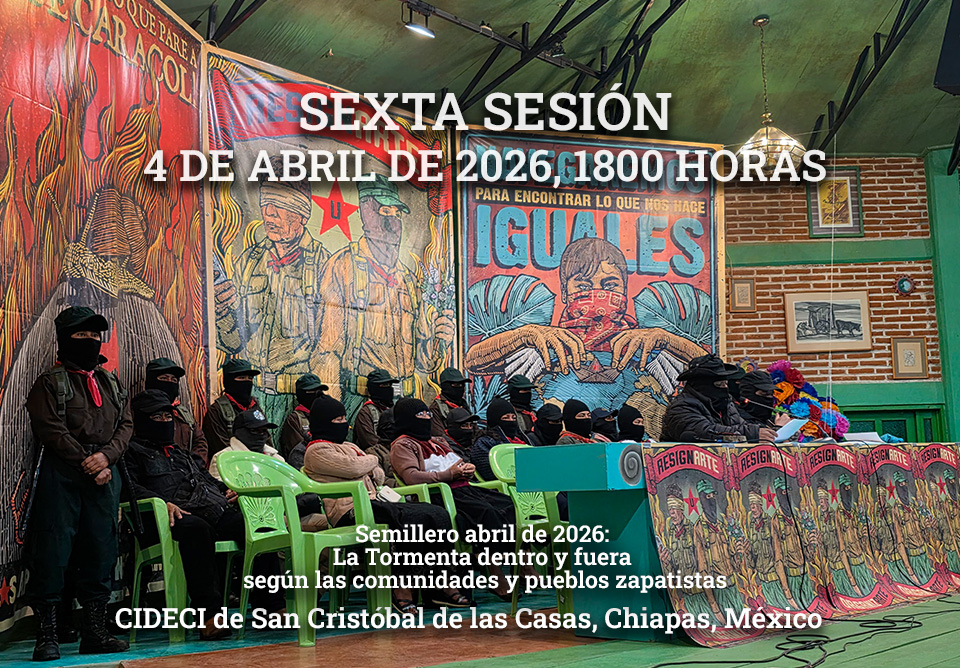
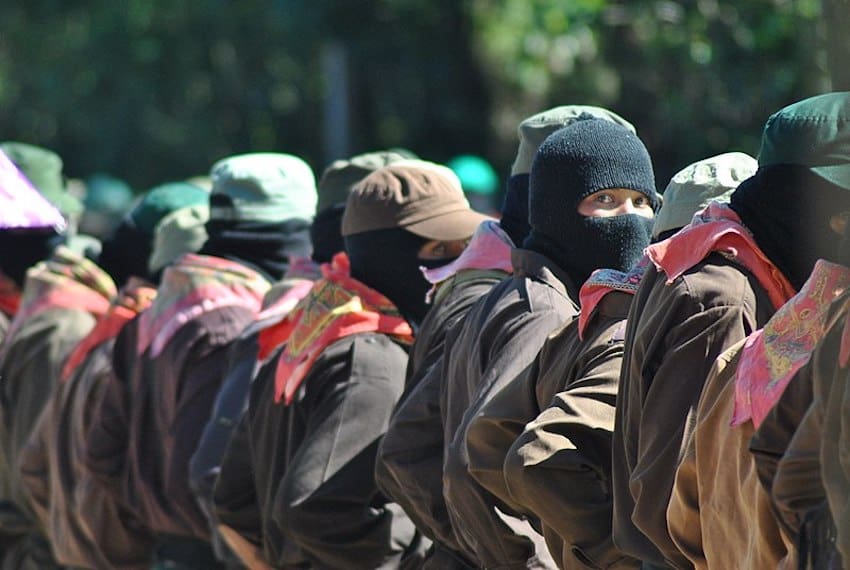
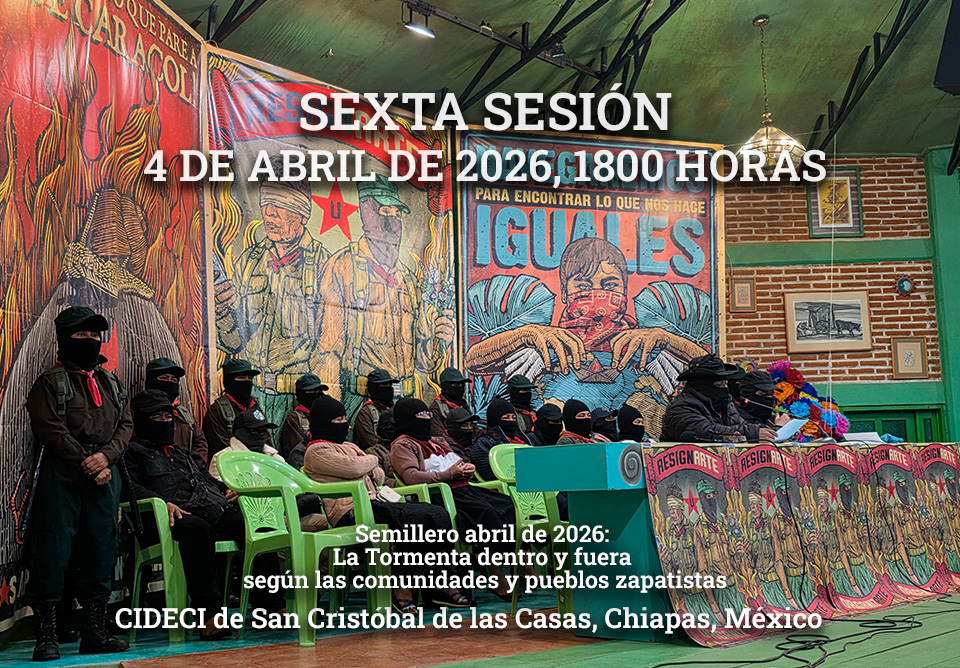
Mexico’s Zapatista rebels鈥攚ho have observed a long ceasefire but still have a zone of control in the back-country of Chiapas state鈥攈eld an international gathering in the highland city of San Crist贸bal de Las Casas. Featured speaker was a ski-masked “Captain Marcos,” presumably the same charismatic spokesman once known as “Subcommander Marcos.” He delivered an exegesis entitled “A Peephole into the Storm in the World: Nation-States Under Attack” (Una mirilla a la Tormenta en el Mundo: Los Estados-Naci贸n bajo ataque). Marcos portrayed a supra-national imperialism under Donald Trump, in which “the nation-state has no decision-making power.” Marcos decried the “kidnapping” of Nicol谩s Maduro from Venezuela, and the US oil blockade on Cuba, noting that Mexico has been effectively barred from shipping oil to the Caribbean island nation. He also asserted that in the US-Israeli war against Iran, the big oil companies are the ones who benefit, as the price of oil rises. “That’s what needs to be discussed: who is profiting from these wars?” (Image: Enlace Zapatista)
Mexico
Tapachula

Trump-induced migration crisis in Mexico

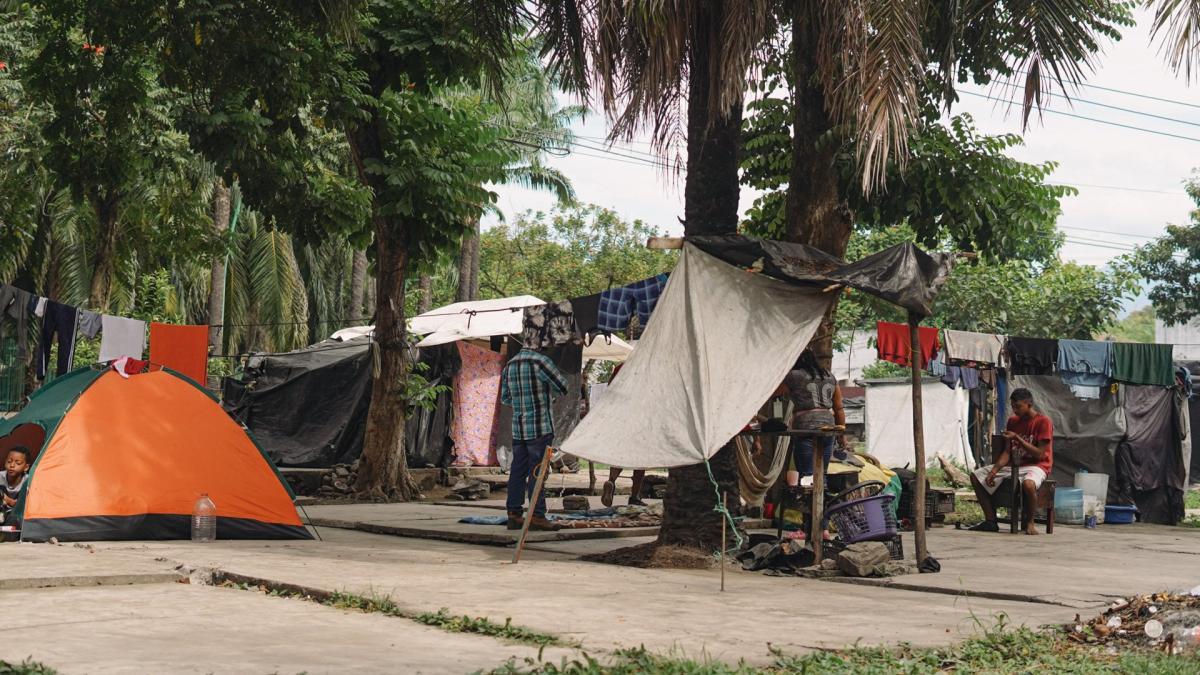
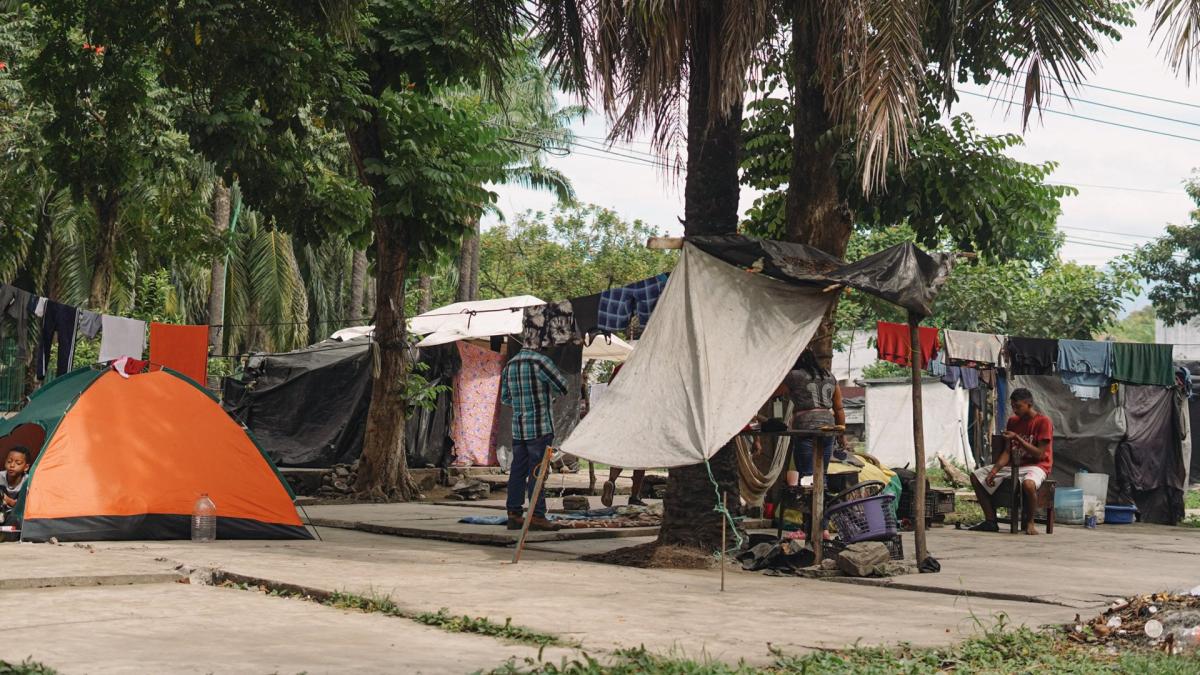
President Donald Trump’s migration crackdown has been credited with reducing flows northward towards the United States, but it is leaving hundreds of thousands of migrants and asylum seekers trapped in a legal limbo further south, anxiously wrestling with what to do next.聽People on the move are now stranded in precarious living conditions across Mexico, more exposed than ever to violence, abuse聽and privation.聽(Photo of Tapachula migrant camp:聽Daniela D铆az for The New Humanitarian)

Mexico
Marcelo P茅rez

Indigenous pastor assassinated in Chiapas

Father Marcelo P茅rez, an indigenous Tzotzil Maya priest with the Diocese of San Crist贸bal de las Casas in Mexico’s conflicted southern state of Chiapas, was assassinated immediately after celebrating Mass. He was returning to his car from the church at the barrio of Cuxtitali in the highland city of San Crist贸bal when he was shot by gunmen on a motorcycle. Hundreds of mourners attended his funeral the following day in the village of his birth, San Andr茅s Larr谩inzar, chanting “Long live Father Marcelo, priest of the poor.” He had received threats for his outspoken opposition to the criminal organizations and paramilitary groups fueling violence in Chiapas. The murder was condemned in a statement by the Mexican Bishops’ Conference, which said the act “not only deprives the community of a dedicated pastor but also silences a prophetic voice that tirelessly fought for peace with truth and justice in the region of Chiapas.”聽(Credit: Diocese of San Crist贸bal de las Casas via CNA)

Mexico
Mexico

Mexican elections see record number of assassinations

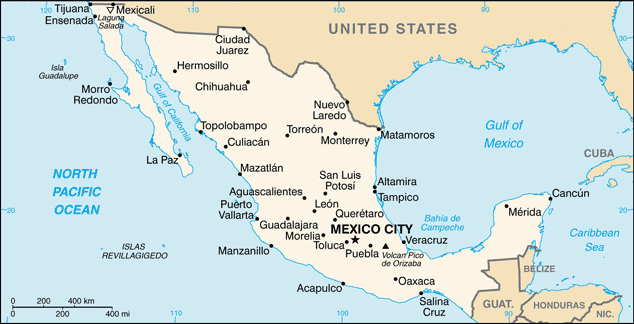
The results are in from Mexico’s聽presidential election and Claudia Sheinbaum of the ruling left-populist National Regeneration Movement (MORENA) has won by some 60%, handily defeating a rival backed by an alliance of the country’s more traditional political parties. But the ongoing human rights crisis in Mexico that will obviously pose a grave challenge for Sheinbaum was dramatically exemplified by the record number of political assassinations that marred the elections. (Map: PCL)

Planet Watch
anthropocene

2023: ‘bonkers year’ for global climate

Records were once again broken last year for greenhouse gas levels, surface temperatures, ocean heat and acidification, sea level rise, and retreat of glaciers, according to a new global report issued by the World Meteorological Organization (WMO). The WMO State of the Global Climate 2023 report finds that on an average day in 2023, nearly one third of the ocean surface was gripped by a marine heatwave, harming vital ecosystems and food systems鈥攆ar beyond the already inflated levels seen in recent years. Antarctic sea ice reached its lowest extent on record鈥攁t one million square kilometers below the previous record year of 2022, an area equivalent to the size of France and Germany combined. One leading oceanographer wryly stated: “The scientific term is bonkers year.” (Photo: CounterVortex)

Mexico
EZLN

Zapatistas reorganize autonomous zone structure

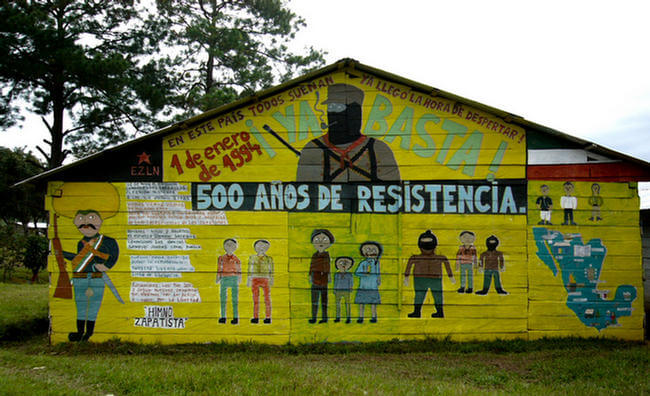
The Zapatista Army of National Liberation (EZLN) indigenous rebel group in southern Mexico has announced the dissolution of its “autonomous municipalities” in the mountains and jungle of Chiapas state. A statement signed by Zapatista leader Subcomandante Mois茅s said the decision was taken “after a long and profound critical and self-critical analysis.” The Zapatista Rebel Autonomous Municipalities (MAREZ), overseen by rotating Good Government Juntas, have been maintained since the Zapatistas’ initial uprising in 1994. Mois茅s said that future communiques “will describe the reasons and the processes involved in taking this decision,” as well as “what the new structure of Zapatista autonomy will look like.” The communique did, however, mention a new pressure in the growing power of “disorganized crime cartels” in Chiapas, a reference to the narco-gangs seeking to control “the entire border strip with Guatemala.” (Wikimedia Commons聽via聽Mexico New Daily)

Mexico
Mexico

US leans on Mexico to increase deportations

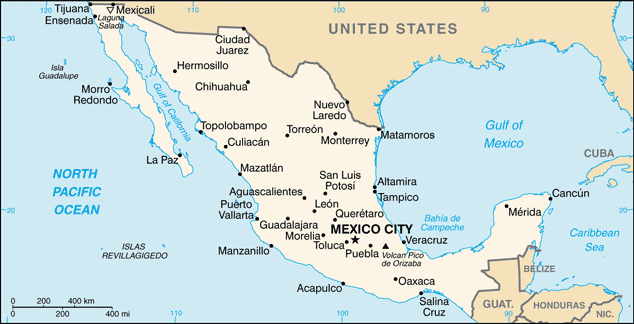
Mexico will step up efforts to deport asylum-seekers and migrants to their countries of origin in order to “depressurize” northern cities bordering the United States, the country’s National Migration Institute announced following a meeting with US officials. Texas border cities such as El Paso and Eagle Pass are scrambling to find shelter space as thousands now cross the border on a daily basis, overwhelming reception capacity. But thousands more聽still wait in northern Mexico,聽trying to make appointments using a government cell phone application to enter the US and lodge asylum claims. (Map: PCL)

Mexico
Mois茅s Gandhi

Protest paramilitary attacks on Zapatistas

An international mobilization was held, with small protests聽in cities across the world, in response to a call for support by the Zapatista rebel movement in Mexico’s southern state of Chiapas. According to the statement,聽the Zapatista base community of Mois茅s Gandhi is coming under renewed attack by the local paramilitary group ORCAO. In a May armed incursion at the community, a resident was struck by a bullet and gravely injured. Several families were displaced as ORCAO gunmen briefly occupied parts of the community. The statement charges: “Chiapas is on the verge of civil war, with paramilitaries and hired killers from various cartels fighting for the plaza [zone of territorial control]…with the active or passive complicity of the governments of [Chiapas governor] Rutilio Escand贸n Cadenas and [Mexican president] Andr茅s Manuel L贸pez Obrador.” (Photo: Chiapas Support Committee)

Mexico
Chimalapas

Mexico border change leaves locals ‘stateless’

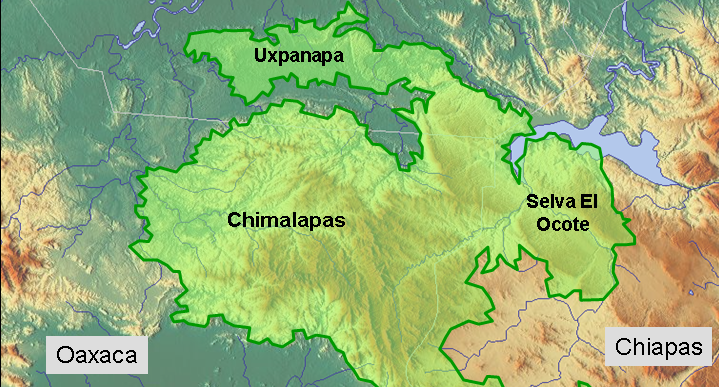
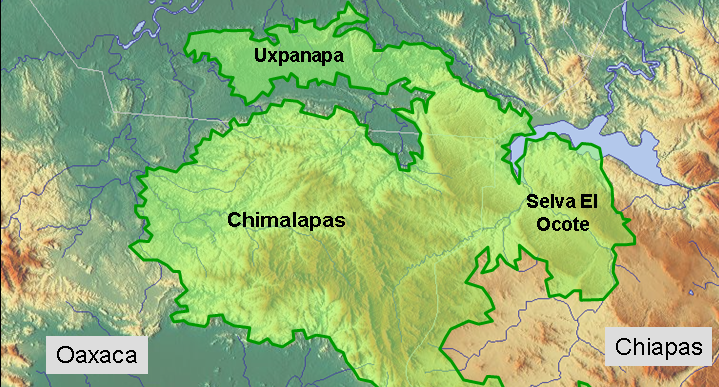
The Oaxaca state congress voted to modify the border with neighboring Chiapas state, complying with a March 2022 order from Mexico’s Supreme Court of Justice (SCJN). A 162,000-hectare territory of montane forest known as the Chimalapas is ostensibly to be returned to Zoque indigenous communities of Oaxaca, who have protested to demand that the state comply with the SCJN ruling. The decision came as the result of a decades-long campaign by the Zoque communities, who filed a case with the SCJN in 2012, arguing that their rightful lands had been invaded by ranchers and loggers from Chiapas聽with approval of that state’s government. However, the border change also impacts campesino communities that have since settled in the area from the Chiapas side. Mexico’s National Electoral Institute has stopped issuing credentials to 20,000 residents of these settlements until it is determined whether they are legally citizens of Oaxaca or Chiapas. (Map via Wikimedia Commons)

Mexico
maiz

Podcast: Mexico and the struggle for the genetic commons

In Episode 166 of the CounterVortex podcast, Bill Weinberg discusses how a little-noted US-Mexico dispute on trade and agricultural policy has serious implications for the survival of the human race. Washington is preparing to file a complaint under terms of the US-Mexico-Canada Agreement over Mexico’s decree banning imports of GMO corn, slated to take effect in January 2024. Concerns about the (unproven) health effects of consuming GMO foods miss the real critique鈥攚hich is ecological, social and political. GMO seeds are explicitly designed as part of an “input package” intended to get farmers hooked on pesticides and petrochemical fertilizers, and protect the “intellectual property” of private corporations. Agribusiness, which can afford the “input package,” comes to dominate the market. Eased by so-called “free trade” policies, agbiz forces the peasantry off the market and ultimately off the land鈥攁 process well advanced in Mexico since NAFTA took effect in 1994, and which is related to the explosion of the narco economy and mass migration. The pending decree holds the promise of regenerating sustainable agriculture based on native seed stock. It is also a critical test case, as countries such as Kenya have recently repealed similar policies in light of the global food crisis. Listen on SoundCloud or via Patreon. (Image: Sin Ma铆z No Hay Pa铆s)

Planet Watch
extinction rebellion

Podcast: anarchism and the climate crisis

With the inauspicious opening of the Glasgow climate conference, activists around the world are increasingly looking to local action as an alternative to the moribund United Nations process on addressing what has been called a “Code Red for humanity.” In Episode 95 of the CounterVortex podcast, Bill Weinberg explores the ideas of Social Ecology and radical municipalism, developed by the late Vermont anarchist thinker Murray Bookchin, and how they provide a theoretical framework for localities struggling to lead from below on the climate question. Examples discussed include the Zapatistas in Chiapas, the Rojava Kurds in Syria, and the community gardens and ongoing struggles for reclaimed urban space on New York鈥檚 Lower East Side. Listen on SoundCloud or via Patreon.聽(Photo: East River Park Action)

Mexico
machete

Paramilitary violence escalates in Chiapas

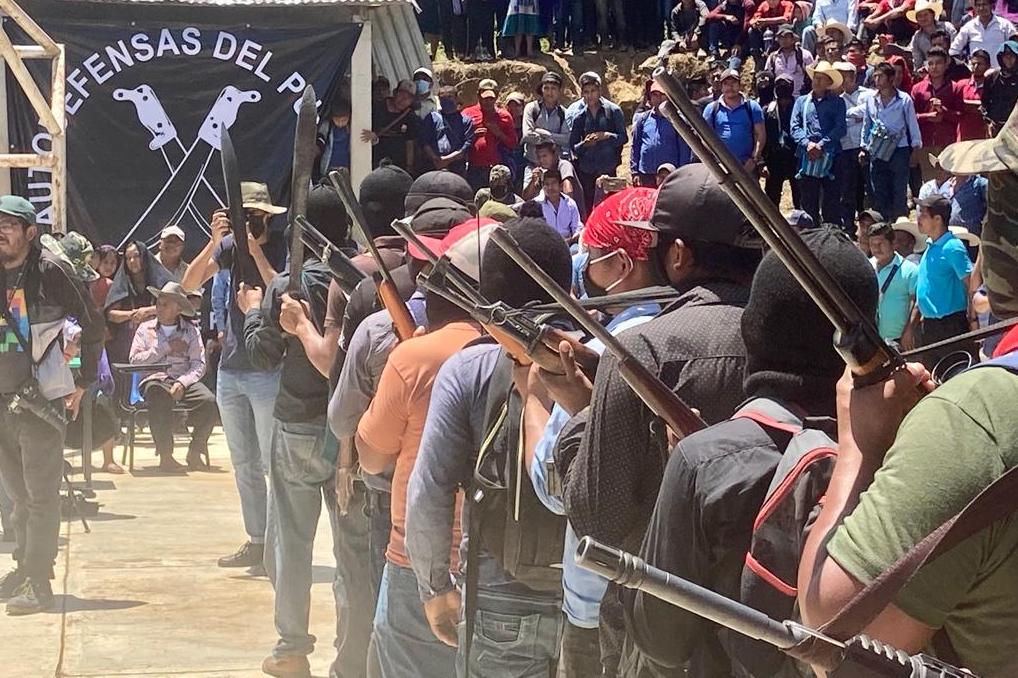
Tensions are fast mounting in Mexico’s conflicted southern state of Chiapas following a new outbreak of paramilitary violence. Protests have been held in the state capital Tuxtla Gutierrez over the past weeks to demand the return alive of 21 residents of the highland village of Pantelh贸, who were abducted in July amid raids by a self-proclaimed “self-defense force” in which houses and vehicles were also set on fire. The state prosecutor who was assigned to investigate the case was himself gunned down on a street in the highland city of San Crist贸bal de Las Casas. The Zapatista National Liberation Army (EZLN) issued a communiqu茅 warning that Chiapas is at “the brink of civil war.” (Photo: Chiapas Paralelo)