

The Andes
paramilitaries

Colombia: UN experts welcome anti-mercenary law

UN experts welcomed Colombian President Gustavo Petro’s ratification of the 1989 International Convention against Recruitment, Use, Financing & Training of Mercenaries. The experts praised the signing of what amounts to a new anti-mercenary legislative package, calling it an essential step toward protecting human rights and upholding international legal obligations. Colombia has experienced a decades-long armed conflict that began with the formation of guerrilla groups, notably the FARC and the ELN. Paramilitary groups later emerged to fight the guerrillas. Following a landmark peace agreement with the FARC in 2016 and ongoing negotiations with the ELN that began in 2018, violence levels have been reduced. But the protracted conflict has led to a profusion of armed actors and fueled the growth of private military and security companies (PMSCs). (Photo: Contagio Radio)

Greater Middle East
Iran

Air-strikes target Iraqi paramilitary force

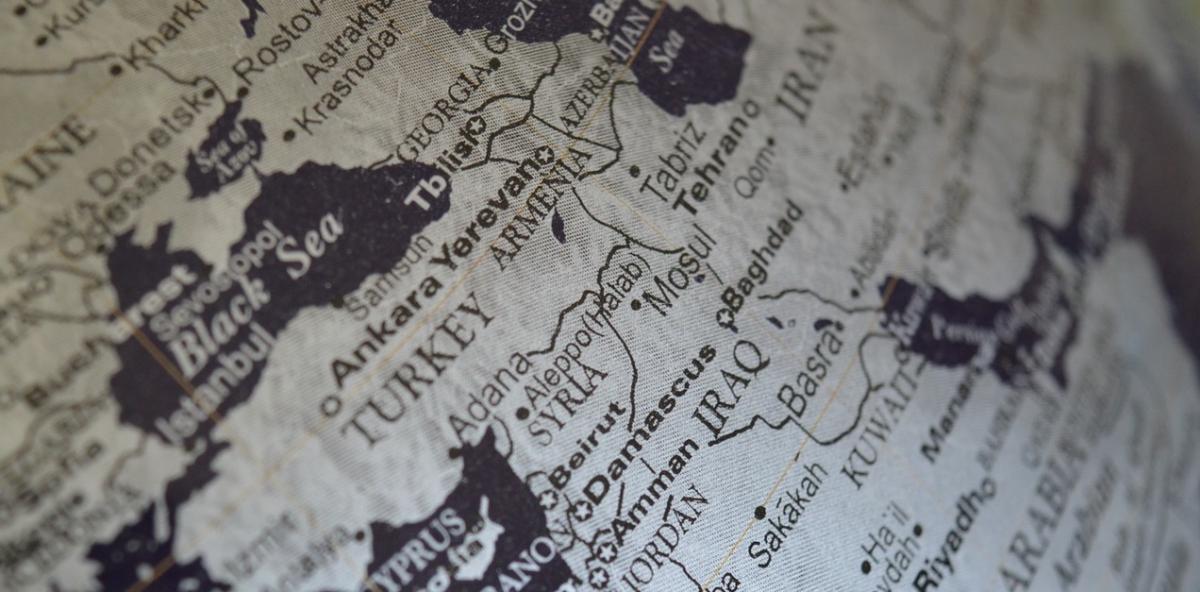
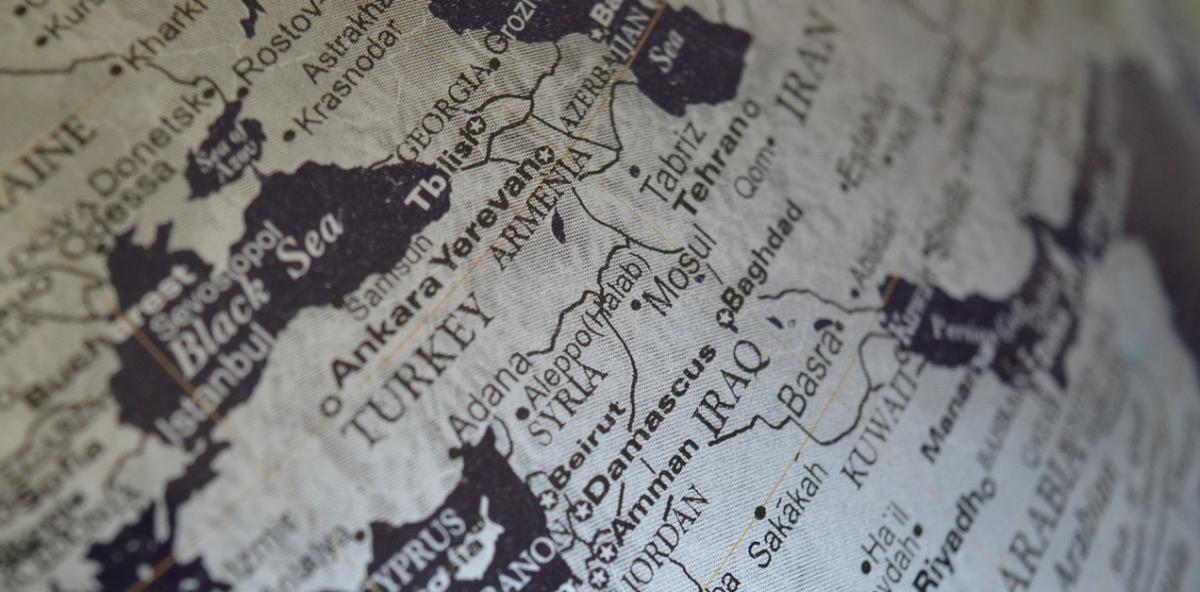
Air-strikes on an Iraqi military base killed seven and wounded 13, ramping up diplomatic tension between Baghdad and Washington. The Popular Mobilization Forces (PMF)—a network of militias that are officially part of Iraq’s military structure but including groups with strong links to Iran—said the US was responsible for the first strike on Habbaniyah airbase in Anbar province. Iraq’s Defense Ministry said the second strike hit a medical clinic on the base, which is shared with PMF units. (Image: Pixabay)

Africa
Sudan

RSF border attacks bring Sudan’s war to Chad

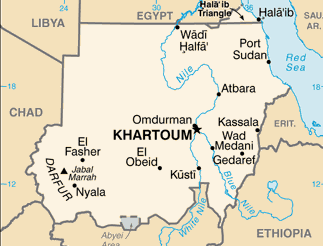
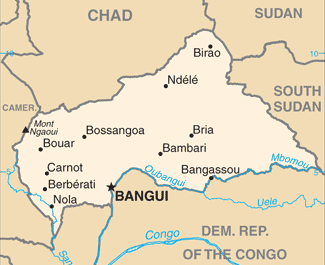
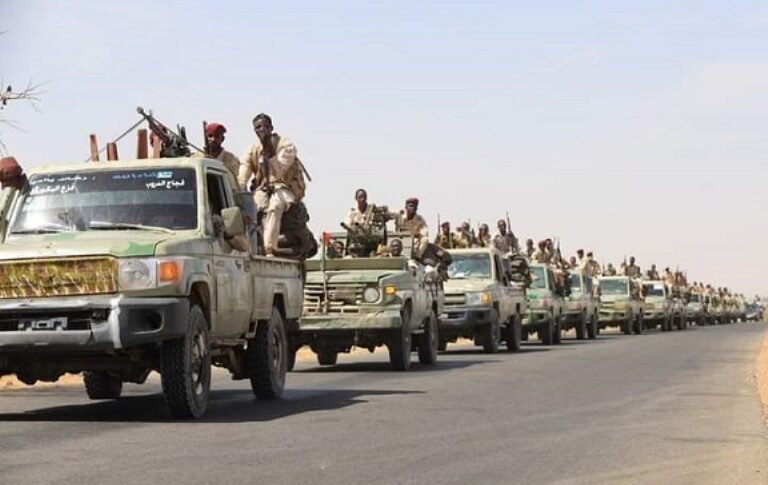
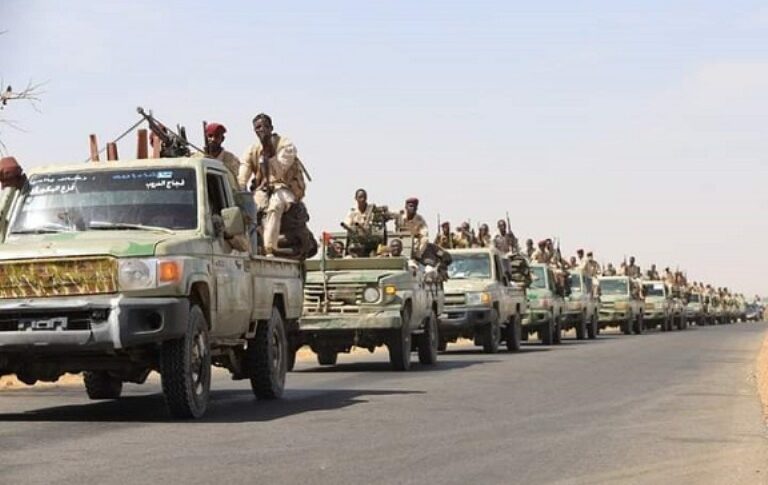
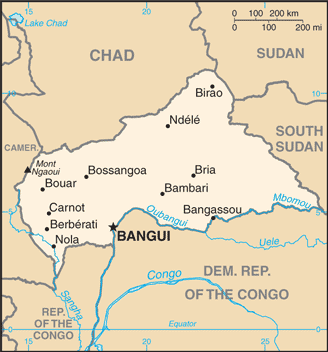
Sudan’s paramilitary-turned-rebel Rapid Support Forces (RSF) have repeatedly attacked the Darfur border town of Tina, with more than 123 injured people arriving at a hospital supported by MĂ©decins Sans Frontières near the Chad frontier. A drone strike—with responsibility still unclear—also killed 17 people on the Chadian side of the border. Tina has been hosting large numbers of displaced Darfuris fleeing RSF attacks elsewhere. (Map: PCL)

Africa
RDF

US sanctions Rwanda military

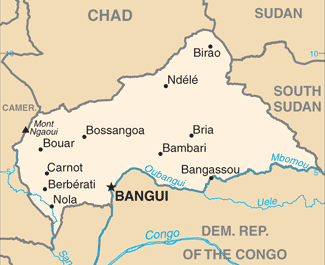
The US Treasury Department imposed sanctions on the Rwanda Defense Force (RDF) and four of its top military officials over their support, training, and fighting alongside M23 rebels in the Democratic Republic of Congo (DRC). The RDF have reportedly provided direct operational support to the M23 and its affiliates by introducing advanced military equipment to eastern DRC, including GPS jamming systems, air defense equipment, and drones. According to US Treasury Secretary Scott Bessent, the US seeks the immediate withdrawal of RDF troops, weapons and equipment. (Photo: US Air Force via Wikimedia Commons)

Africa
INPACT

Africa pushes back against Russian military recruitment

Facing a manpower shortage in its war with Ukraine, Russia is increasingly turning to recruitment networks in the Global South—especially Africa—to help fill its ranks. Fast-track visas, the promise of good salaries as well as citizenship are the lures, in contrast to growing official immigration hostility in the rest of Europe. But the problem is surviving the front line. In a report released this week, the investigative collective INPACT obtained a single list of 1,417 Africans hired by Russia and found a death rate of over 20%. Those killed lasted an average of just six months. There are also reports of racism and brutality. While many young men volunteer, others are duped, promised work or scholarships, but then forcibly enlisted. Kenya and South Africa are two countries that have complained. Nairobi wants a ban on the conscription of Kenyans, while South Africa said Moscow had agreed to the return of 17 mentricked into serving in Ukraine. (Image: INPACT)

North Africa
Libya

Another mass grave discovered in Libya

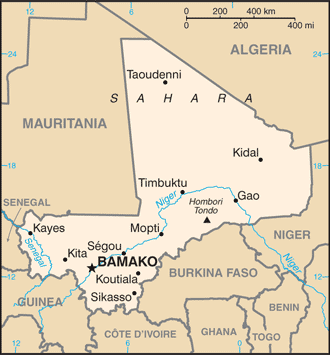
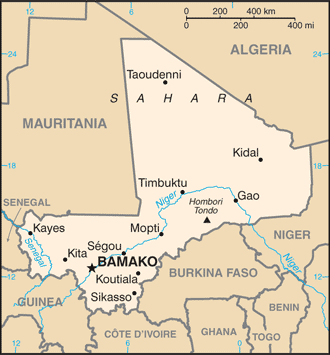
The Libyan Attorney General’s Office announced the discovery of a mass grave containing the remains of 21 bodies near Benghazi. Investigators have ordered that DNA samples be collected from the remains to identify the deceased and that full autopsies be carried out to determine causes of death. Refugees in Libya, a Libyan-run organization registered in Italy that provides support for refugees, urged the International Criminal Court prosecutor, Karim Khan, to “assess this case within the Court’s mandate.” The group further implicated EU policies: “The killings…occurred within a system where people are blocked, intercepted, returned, and abandoned in Libya after being denied safe pathways to protection. This demands accountability beyond Libya.”  (Map: Perry-Castañeda Library)

Africa
Sahel summit

Sahel states launch new joint counter-insurgency force

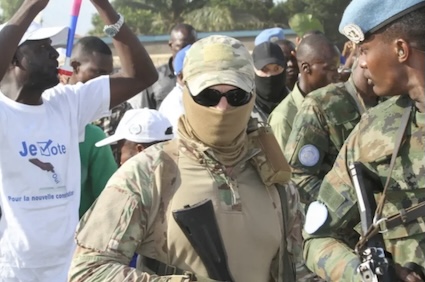
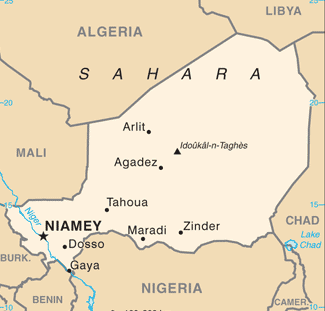
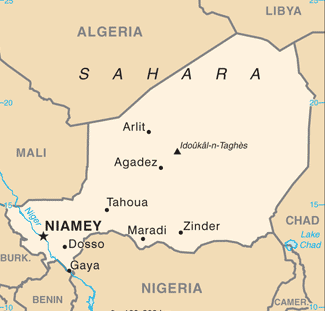
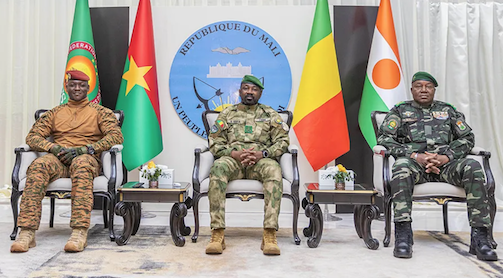
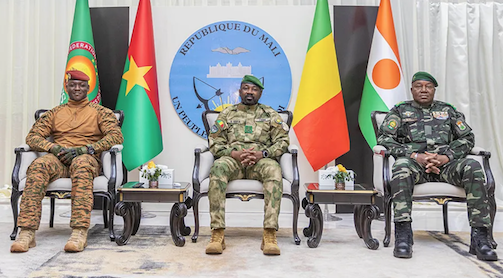
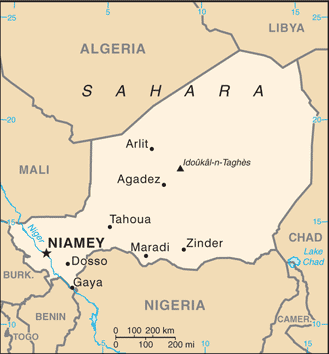
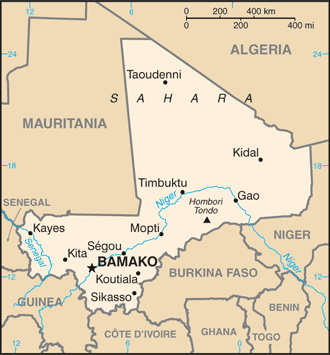
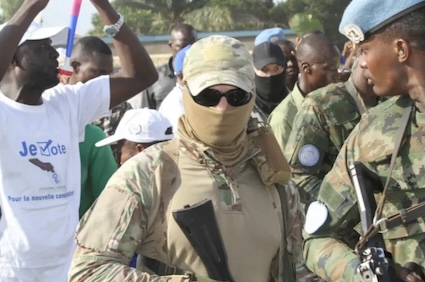
At an air base in Bamako, Mali’s military ruler Gen. Assimi Goita presided over a ceremony marking the launch of a unified force for three Sahel states to fight the rising tide of jihadist insurgency across their borders. The move comes after the three countries—Mali, Niger and Burkina Faso, all now ruled by military juntas—collectively withdrew from the West African regional bloc ECOWAS to form their own Alliance of Sahel States (AES). This new body has deepening ties to Russia, which has maintained paramilitary forces in the AES countries under the rubric of the Wagner Group or Africa Corps. These forces are increasingly accused of atrocities, with Malian refugees in Mauritania reporting rapes, beheadings and mutilation of civilians at the hands of Russian mercenaries. (Photo: PrĂ©sidence de la RĂ©publique du Mali)

Africa
Tomahawk

Podcast: MAGA-fascism and the struggle in Nigeria

With his Christmas air-strikes on Nigeria, Trump is blundering into a conflict fundamentally driven by desertification related to the very climate change that he denies, and which now threatens democratic rule throughout the West African region. And while the Muslim-Christian sectarian strife that Trump hypes is a large element of the situation, the violence has gone both ways. Furthermore, making Christians the perceived beneficiaries of imperialist intervention is only likely to exacerbate the tensions and make Christians more of a target. In Episode 310 of the CounterVortex podcast, Bill Weinberg takes an in-depth and unsparing look. (Photo: AFRICOM via Long War Journal)

Africa
Zamzam

Sudan: UN reports atrocities at Darfur IDP camp

The UN Human Rights Office published a report detailing its findings of atrocities committed during a three-day assault by the paramilitary Rapid Support Forces (RSF) on the Zamzam camp for internally displaced persons (IDPs) in Sudan’s Darfur region. The wave of attackstook place in April of this year, when the camp fell to the RSF, and were found to constitute grave violations of international humanitarian law and human rights law. The report’s key findings include the killing of at least 1,013 civilians. The report documented widespread summary executions, torture, sexual and gender-based violence, abductions, and enforced disappearances. During the assault, the RSF pillaged food and livestock, looted shops and homes, and burned down houses. UN High Commissioner for Human Rights Volker TĂĽrk called for an “impartial, thorough, and effective” investigation to hold those responsible for the atrocities accountable. (Photo via UN News)

Africa
Fasher

Sudan: evidence of mass killings in El Fasher

Satellite imagery analysis reveals widespread evidence of systematic mass killings and body disposal by the Rapid Support Forces (RSF) in El Fasher, Sudan, following the paramilitary group’s capture of the North Darfur state capital in late October, according to a report released by Yale University researchers. The Yale School of Public Health’s Humanitarian Research Lab (HRL) identified at least 150 “clusters of objects consistent with human remains” in and around El-Fasher between Oct. 26, when the RSF claimed to have taken full control of El-Fasher, and Nov. 28. They identified the clusters as likely human remains, based on their size, the timing of their appearance, and proximity to reddish ground discoloration that later turned brown, consistent with blood oxidation. In some cases, the RSF’s own social media posts corroborated the presence of human remains at the locations. By late November, 38% of the identified body clusters were no longer visible in satellite imagery, suggesting systematic disposal operations, the researchers said. (Photo: Google/Airbus via JURIST)

Africa
Sudan

Sudan: hollow truces, blood theft

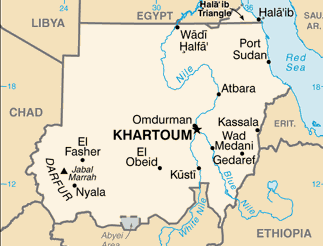
In a move that will shock absolutely nobody following the war in Sudan, the Rapid Support Forces (RSF) declared a three-month unilateral humanitarian truce—and then promptly broke it with an attack on an army position in the West Kordofan town of Babanusa. RSF leader Hemedti billed the pause as a first step towards a political solution, but it looks like just another attempt to con mediators and journalists. As ever, those attempts have been drowned out by a stream of grim revelations, including reports that RSF fighters forcibly took blood from civilians fleeing El Fasher—prompting one commentator to label them “literal vampires.” A Doctors Without Borders update found that many of the 260,000 civilians still alive in El Fasher before the RSF takeover in October are now dead, detained, trapped, or unable to access lifesaving aid. (Map: PCL)

Watching the Shadows
Trump

Trump vows ‘reverse migration’ —after CIA blowback?

President Trump called for “reverse migration” and a “major reduction in illegal and disruptive populations” in a racist late-night online rant. In the bizarre Thanksgiving message, Trump vowed to “permanently pause migration from all Third World Countries” and revisit immigration decisions made under his predecessor, Joe Biden. He said deportations will target “anyone who is not a net asset to the United States, or is incapable of loving our Country” or “non-compatible with Western Civilization.” Trump’s message followed the shooting of two National Guard soldiers in Washington DC, apparently by an Afghan refugee, Rahmanullah Lakanwal. In Afghanistan, Lakanwal reportedly served in the Zero Units: paramilitary forces backed by the CIA—notorious for conducting night raids on the homes of suspected Taliban collaborators. Rights groups have accused them of extrajudicial executions, enforced disappearances, indiscriminate airstrikes, and attacks on medical facilities. According to the New York Times, the brutality of the Zero Unit tactics took a toll on Lakanwal’s mental health, with a childhood friend recalling how he was disturbed by the casualties his unit had caused. (Image: Twitter)