The Andes
Colombia

US ‘decertifies’ Colombia as drug war partner

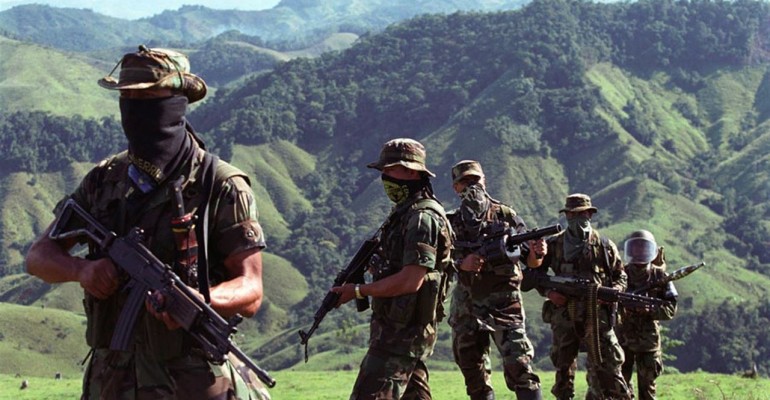
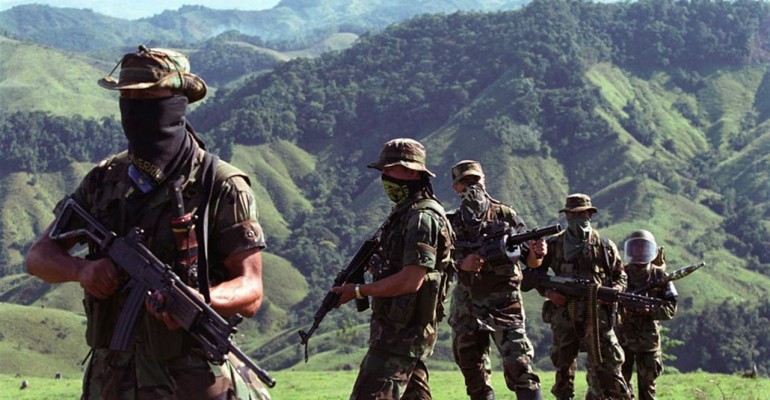
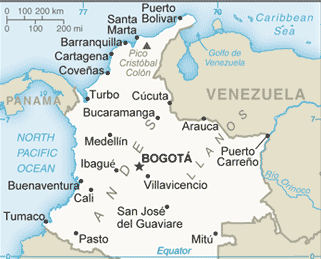
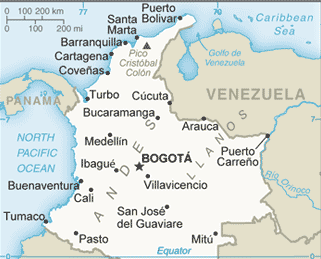
The United States decertified Colombia as a reliable partner in the War on Drugs, citing a rise in coca cultivation and cocaine production. While the White House waived the crushing sanctions that usually come with decertification, the decision underscores the strained relations between the US and Colombia under Trump. The administration was quick to blame Colombian President Gustavo Petro directly, arguing in its submission to Congress that the “failure of Colombia to meet its drug control obligations over the past year rests solely with its political leadership.” The administration also decertified Venezuela, Bolivia, Afghanistan and Burma. While these latter countries have been frequently decertified over the years, this marks the first time Colombia has been decertified since 1997. (Map: PCL)

Palestine
GREAT Trust

White House plans revealed for mass displacement of Gazans

Future plans for the Gaza Strip currently circulating among United States government officials call for the relocation of the entire population to make way for construction of tourist resorts and tech industry hubs under a decade of US administrative control, according to a Washington Post exclusive. The 38-page document obtained by the newspaper includes full-color artist renderings of the envisioned “Riviera of the Middle East.” The prospectus, yet to be officially approved, would see the US take the Strip under trusteeship for at least 10 years, overseeing “voluntary departures” of the residents to third countries or into “restricted” zones within the territory. A “Gaza Reconstitution, Economic Acceleration & Transformation Trust” (GREAT Trust) would be established to coordinate the effort. (Image via Mada Masr)

The Caribbean
Aegis

US destroyers menace Venezuela

Three US Aegis guided-missile destroyers have been dispatched to waters off the coast of Venezuela, as part of what the Trump administration calls an effort to counter threats from Latin American drug cartels. The mobilization follows Washington’s decision to increase the bounty for the capture of Venezuelan leader Nicolás Maduro, doubling it to an unprecedented $50 million. In response to the increased US military presence in the Caribbean, President Maduro announced plans to mobilize 4.5 million members of the territorial militia across the country. “Rifles and missiles for the rural forces! To defend Venezuela’s territory, sovereignty and peace,” he proclaimed. (Photo: US Navy via Latin America Reports)

The Caribbean
Cherizier

US mercenaries to fight gangs in Haiti

The US indicted Jimmy Chérizier AKA “Barbecue,” leader of the gang coalition in control of most of the Haitian capital Port-au-Prince, and offered a $5 million reward for information leading to his arrest. Chérizier and an alleged stateside collaborator, Bazile Richardson, are charged with sanctions violations related to arms sales. Meanwhile, private military contractor and Trump ally Erik Prince told Reuters he has signed a 10-year deal with the Haitian government to fight armed groups and help collect taxes—a move some observers fear could further weaken the Haitian security forces and lead to rights violations. Prince’s new security firm, Vectus Global, has been operating in Haiti since March. (Photo: Haiti Liberte)

Iraq
KRG

Iraq: mysterious drone strikes on Kurdistan oil-fields

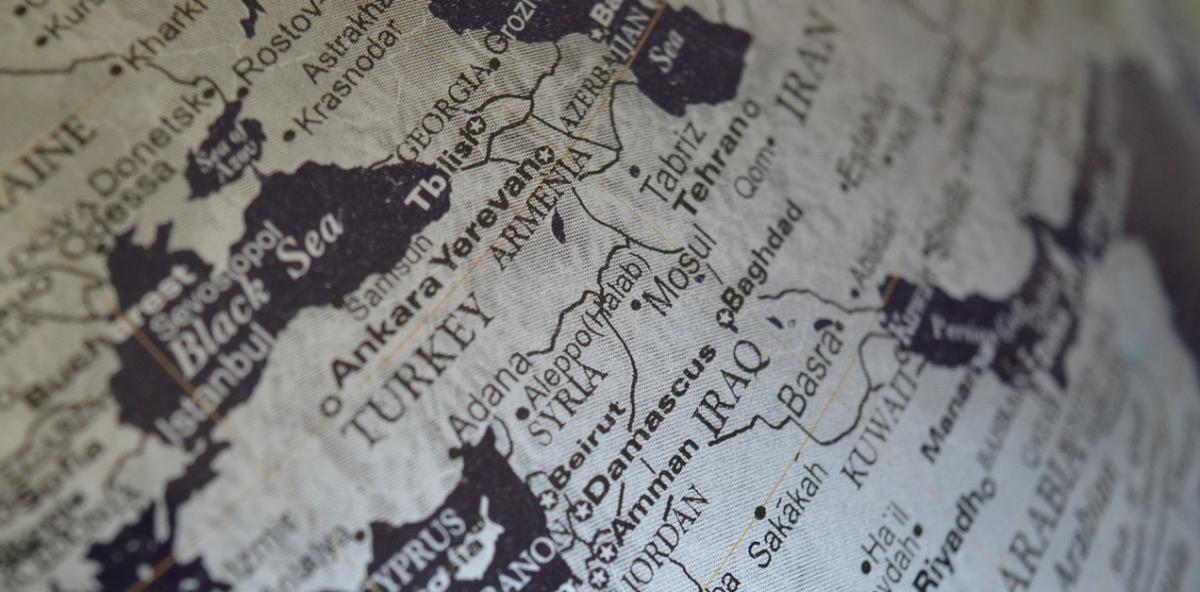
Three days of drone attacks on oil-fields in Iraq’s autonomous Kurdistan region have brought operations at several facilities to a halt and slashed crude output. The targeted sites include fields at Zakho, operated by Norway’s DNO; the Sarsang field, operated by US-based HKN Energy; and the Ain Sifni field, operated by Hunt Oil, all in Dohuk governorate. Kurdistan authorities also said a drone was downed near Erbil airport, which hosts US troops. Nobody has claimed responsibility for the attacks, but Kurdish authorities blamed the Hashd al-Shaabi, or Popular Mobilization Units, a paramilitary network aligned with the Baghdad government and backed by Iran. The attacks come amid renewed dispute between Baghdad and the Kurdistan Regional Government over whether the KRG may enter into hydrocarbon contracts with foreign firms. In May, the central government filed a complaint against the KRG for signing gas contracts with two US companies, including HKN Energy, asserting that all oil and gas deals must go through Baghdad. (Map: UNHCR via ReliefWeb)

North Africa
SSA

Mass graves found at Libya detention centers

The United Nations is demanding an urgent investigation after several mass graves were discovered at detention sites in Libya. UN High Commissioner for Human Rights Volker Türk said: “Our worst held fears are being confirmed: dozens of bodies have been discovered at these sites, along with the discovery of suspected instruments of torture and abuse, and potential evidence of extrajudicial killings.” About 80 bodies, some of them partially charred, were found at sites around Tripoli used for detention of migrants by a semi-official militia, the Stabilization Support Apparatus (SSA). The SSA leader, who went by the nom de guerre Gheniwa, was killed last month in an apparent purge of potentially disloyal elements by the Tripoli government, and his detention sites taken over. Türk called for the sites to be immediately “sealed off” and for Libyan authorities to conduct “prompt, independent, impartial and transparent investigations.” (Photo: Alessio Romenzi/UNICEF via UN News)

Africa
DRC

Trump prepares arms-for-minerals deal with DRC

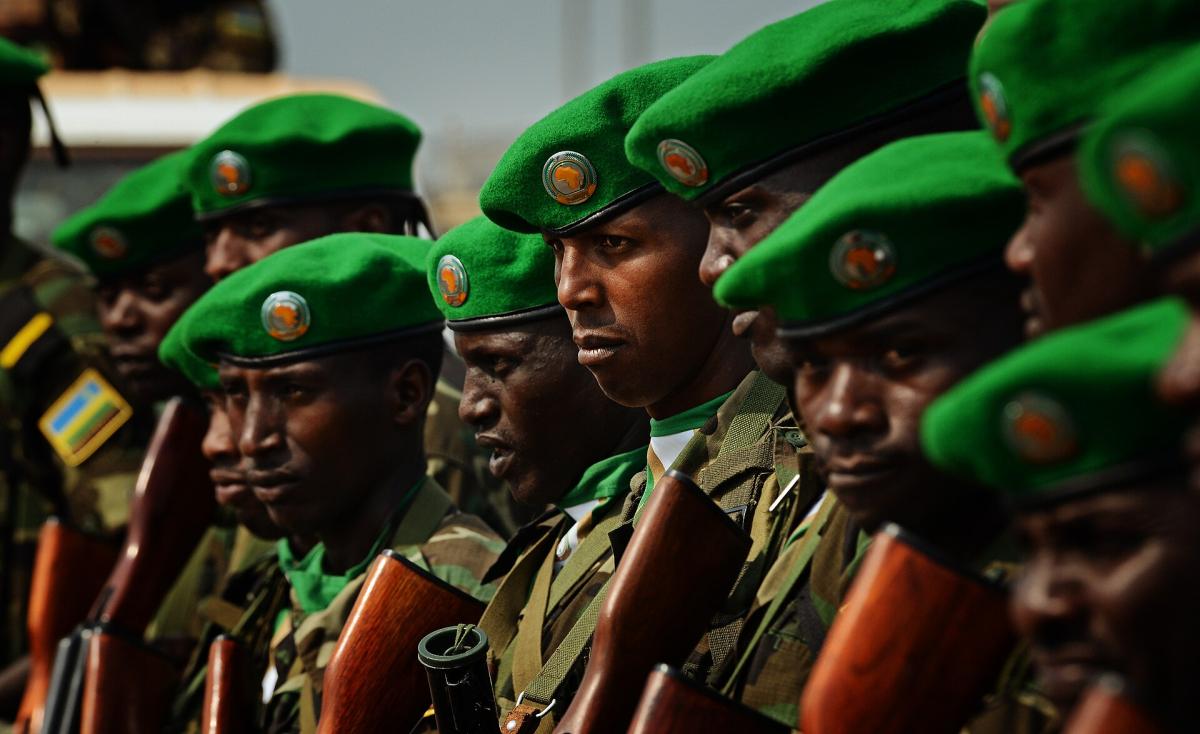
Former Blackwater CEO and and mercenary boss Erik Prince is to lead a team helping the Democratic Republic of Congo (DRC) secure and tax its extensive mineral wealth, news reports reveal. The deal, reached before the M23 rebels launched a major offensive in January, was just confirmed to Reuters by Congolese officials and diplomats. M23 has since January seized the eastern DRC’s two largest cities, Goma and Bukavu, and is threatening to march on Kinshasa, the capital. The Prince-led initiative runs parallel to a broader minerals-for-security deal being negotiated between the DRC and the Trump White House. (Photo: Abel Kavanagh/MONUSCO via Wikimedia Commons)

Africa
Plateau

Massacres mount in Nigeria’s Plateau state

Communal violence in Nigeria’s troubled north-central state of Plateau has killed more than 100 people in just under two weeks. Plateau has a history of tensions between Muslim pastoralists and mostly Christian farmers over access to land. The state governor described the latest killings as “coordinated acts of terror” and has blamed armed Fulani herders for the violence. In what seems like an abdication of responsibility for security by the police—a trend across much of Nigeria—he said every community “must defend itself.” (Map: Google)

Watching the Shadows
Salvador

Trump-Bukele detention deal heads for clash with courts

The Trump administration’s deportation policies took center stage this week as Salvadoran President Nayib Bukele visited the White House, courts continued challenging the legality of the deportations, and a Maryland senator travelled to El Salvador in an attempt to make contact with a man known to have been wrongfully deported. With Trump now openly defying the federal courts—and, in fact, seeking to expand indefinite detention of deportees in El Salvador’s prison system—the long-awaited showdown between the executive and judiciary appears to have arrived. (Photo: WikiMedia via Jurist)

Syria
Syria

External, internal challenges for Syrian Revolution

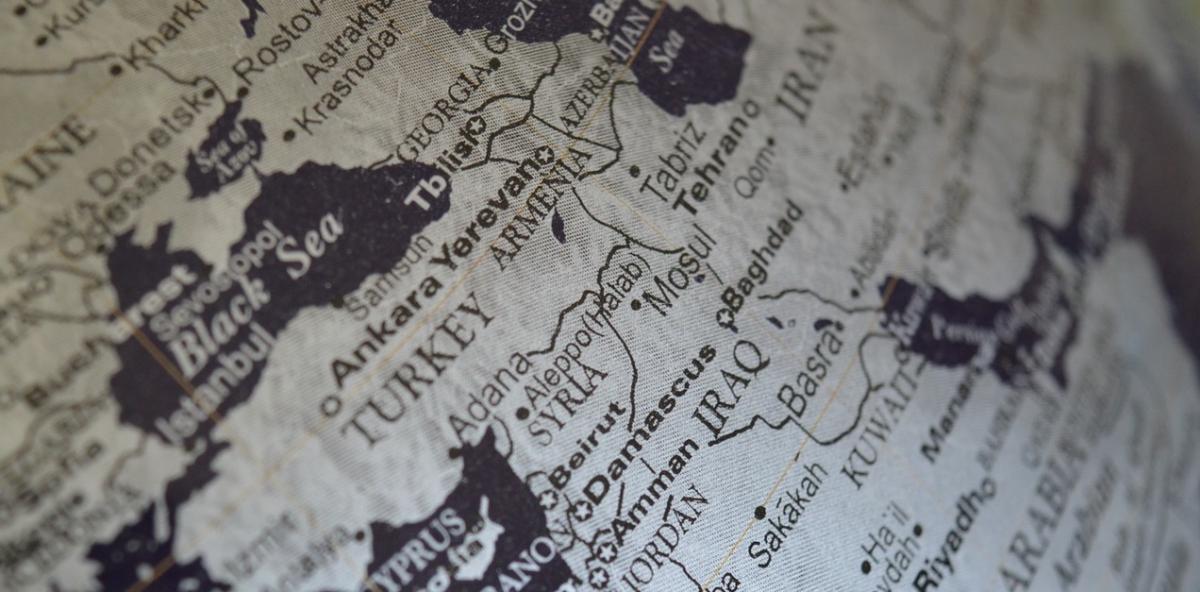
Apparent Assad loyalists have taken up arms against Syria’s transitional government in the Alawite heartland of Latakia on the Mediterranean coast. Fighting meanwhile continues between the Turkish-backed Syrian National Army (SNA) and Kurdish-led Syrian Democratic Forces (SDF) in the northeast, while Israel grabs a “security zone” in the south and continues intermittent air-strikes. Elsewhere in the south, the Druze of Suweida protest their perceived exclusion from the transition process. All this as Russia opens talks with the new authorities in a bid to keep its military bases in Syrian territory. (Map: PCL)

Africa
DRC

Chaos in Congo as M23 seize Goma

In a dramatic escalation of the ongoing conflict in eastern Democratic Republic of Congo (DRC), the M23 rebels seized Goma, the capital of North Kivu province on the Rwandan border. The UN Security Council held an emergency meeting to discuss the situation, with the DRC accusing Rwanda of sending hundreds of troops across the border to support the M23. The DRC is calling for an arms embargo on Rwanda, and sanctions on its mineral exports. The fall of Goma has sparked protests in the DRC capital, Kinshasa, with foreign embassies vandalized and set on fire, including those of Rwanda, South Africa, the US, Belgium and France. Amid the turmoil, President Felix Tshisekedi has promised a counter-offensive to retake Goma. The DRC’s reliance on foreign mercenaries in the war in the east has drawn sharp criticism. Reports indicate that around 2,000 mercenaries, mostly from Eastern European countries such as Romania, have been hired to fight the M23. (Map: PCL)

Africa
Sahel

Human rights crisis deepens under Sahel juntas

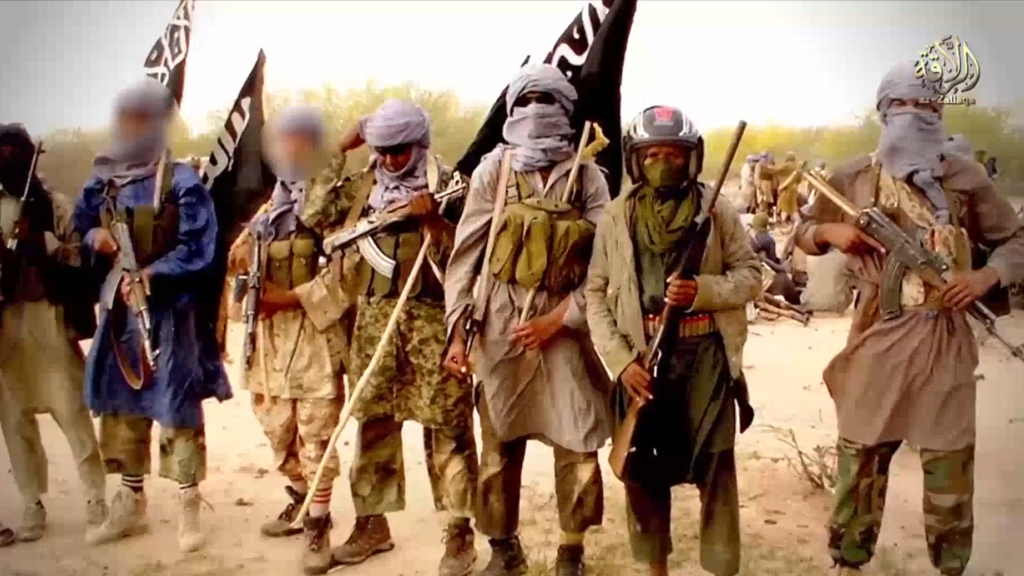
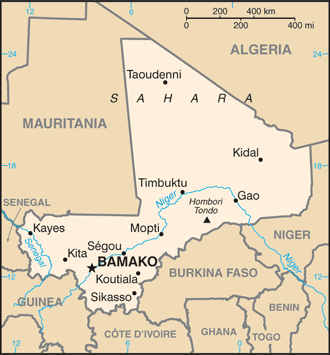
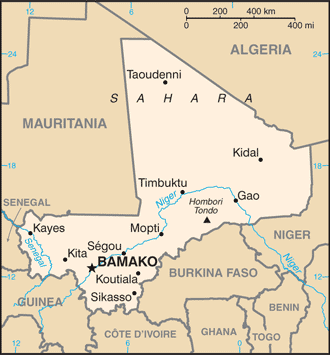
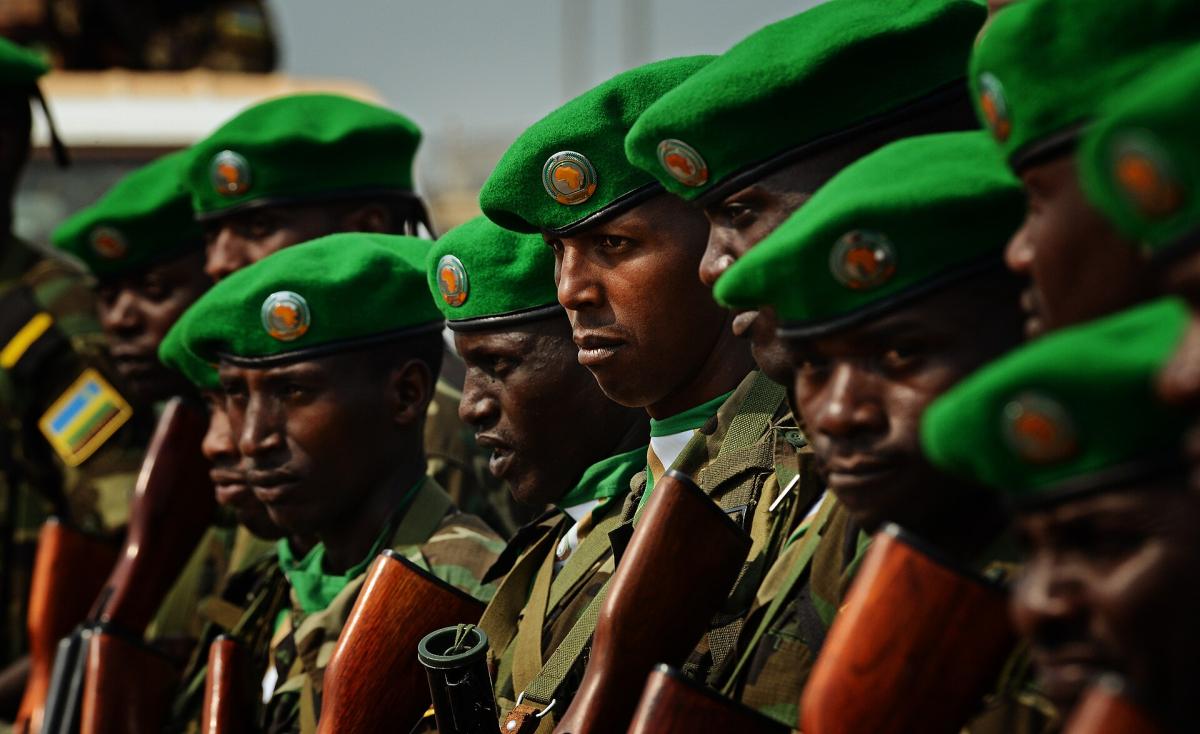
Two attacks on “defenseless civilian populations” along Niger’s border with Burkina Faso left some 40 dead, authorities said. Niamey’s defense ministry said 21 were killed in Libiri village and 18 in Kokorou, both in Tillabéri region. The statement blamed “criminals,” but the borderlands are a stronghold of jihadist insurgents. An even worse attack was reported days earlier, but is being denied by Niger’s ruling junta. Authorities suspended the operations of the BBC in Niger after it reported that jihadists had killed 90 soldiers and upwards of 40 civilians at Chatoumane, also in Tillabéri. According to the monitor Armed Conflict Location & Event Data (ACLED), at least 1,500 have been killed in jihadist attacks in Niger in the past year—more than double the 650 killed from July 2022 to July 2023. Human Rights Watch meanwhile released a report detailing killings of civilians and other serious abuses committed by Mali’s armed forces in collaboration with Russian mercenaries of the Africa Corps following the withdrawal of a UN peacekeeping mission last year. (Map: Wikivoyage)