Watching the Shadows
space trilogy

Podcast: The Space Trilogy revisited

CS Lewis is mainly seen as either a purveyor of goopy children’s literature or a Christian moralist fuddy-duddy. But Lewis’ Space Trilogy—fantastic literature for adults, or “philosophical science fiction”—also reveals him as a dystopian prophet in the tradition of Orwell. The first two books in the series, Out of the Silent Planet and Perelandra, are a critique of space imperialism that anticipated the Avatar movies. But the final one, That Hideous Strength, is particularly relevant for our historical moment, as it anticipated rule by fascist tech bros with hubristic visions of remaking (or abolishing) humanity. In Episode 332of the CounterVortex podcast, Bill Weinberg makes the case that Lewis offered a vital critique of technocracy and “transhumanism” that is now urgently needed, as humanity stands at the cusp of his worst nightmares. (Image via Diary of an Autodidact)

Planet Watch
Birobidzhan

Podcast: is the Jewish homeland in outer space?

The escalating global crisis and the very real crimes of the “Jewish state” make the world a more precarious place for Jews—as recent events demonstrate all too clearly. The contradictions underlying Zionism make its promise of dignity and security for Jews illusory. Earlier efforts also proved to be empty dreams—such as the Jewish Autonomous Oblast of Birobidzhan in Soviet-era Siberia. A new book (facetiously or not) seeks a solution to the interminable “Jewish Question” in space colonization. In Episode 328 of the CounterVortex podcast, Bill Weinberg discusses The Luftmenschen of Planet Birobidzhan by Zvi Baranoff.

Planet Watch
moon

Podcast: lunar hubris and the end of the Earth

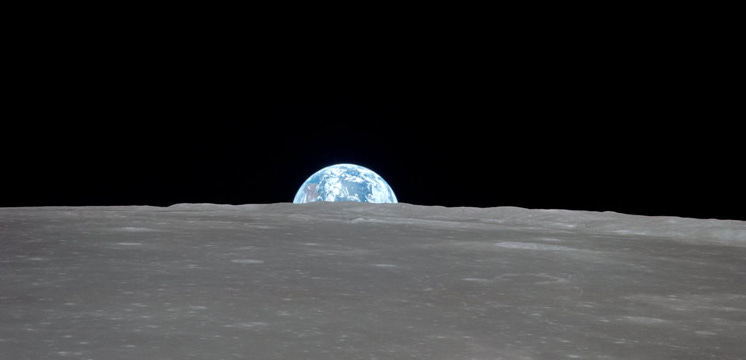
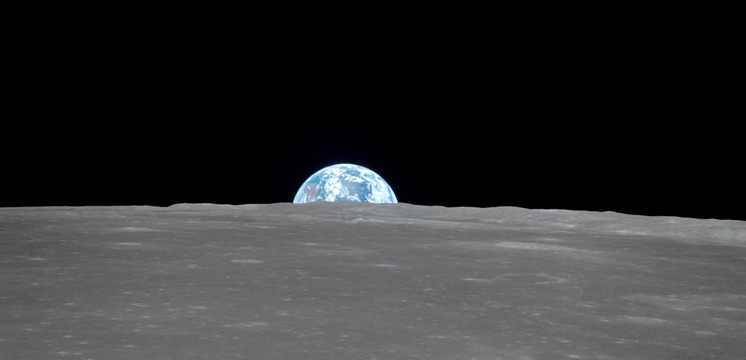
Plans by Trump’s fascist tech bros as well as Putin and Xi to build AI-run nuclear reactors on the Moon open jurisdictional dilemmas that far outpace the modest UN efforts to put a regulation regime in place for artificial intelligence. These plans are unveiled just as the Bulletin of the Atomic Scientists moves the symbolic hands of the Doomsday Clock to an unprecedented 85 seconds to midnight. The new Doomsday Clock Statement explicitly names AI, as well as nuclear weapons and climate change, as a potential threat to human survival. The International Campaign to Abolish Nuclear Weapons, in conjunction with the Doomsday Clock move, reiterated its position that “we must move beyond managing nuclear weapons and start phasing them out before midnight strikes.” In Episode 316 of the CounterVortex podcast, Bill Weinberg argues that we must take a similar abolitionist position on AI and space expansionism, citing unacceptable threats on ecological, epistemological and eschatological grounds. (Photo: NASA via Surfer Today)

Planet Watch
climate

Podcast: Meanwhile, the planet is dying….

Two landmark rulings on the urgent responsibility of states to address the climate crisis are issued—by the Inter-American Court of Human Rights in a proceeding brought by Chile and Colombia, and by the World Court in a proceeding brought by the threatened Pacific Island nation of Vanuatu. Meanwhile in the USA, the Trump regime withdraws from the Paris Agreement, removes greenhouse gases from EPA oversight, drops subsidies for solar energy—and even destroys NASA’s climate-monitoring satellites! This as receding Arctic ice sheets and sea ice begin to destabilize the climate-regulating Atlantic Meridional Overturning Circulation (AMOC), melting glaciers unleash deluges from the Swiss Alps to the Himalayas of Nepal, wildfires rage from Canada to California to the Mediterranean, and ocean acidification crosses a “‘planetary boundary” that portends global biosphere collapse. In Episode 290 of the CounterVortex podcast, Bill Weinberg takes an unflinching look at the long odds for humanity’s future—even if we manage to avoid nuclear war. (Image: blende12/Pixabay)

The Amazon
Ibama

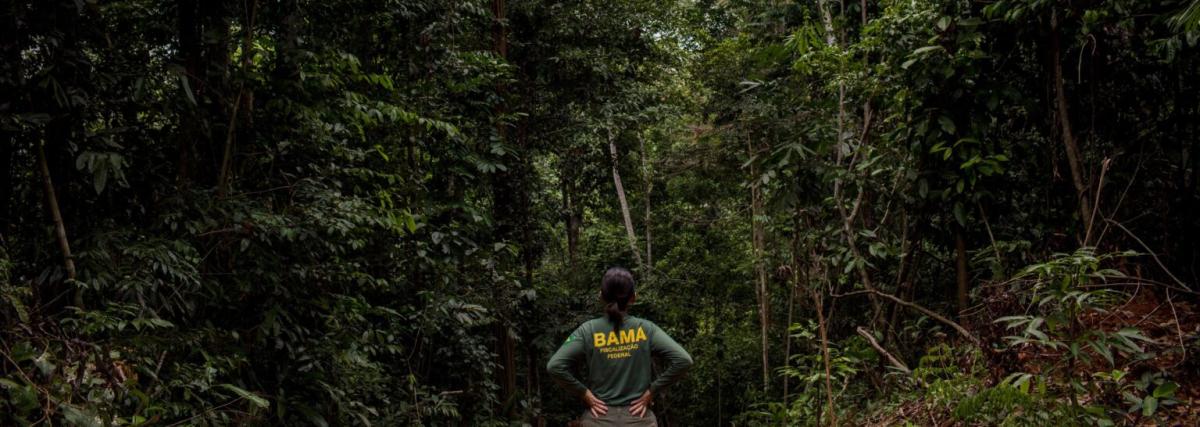
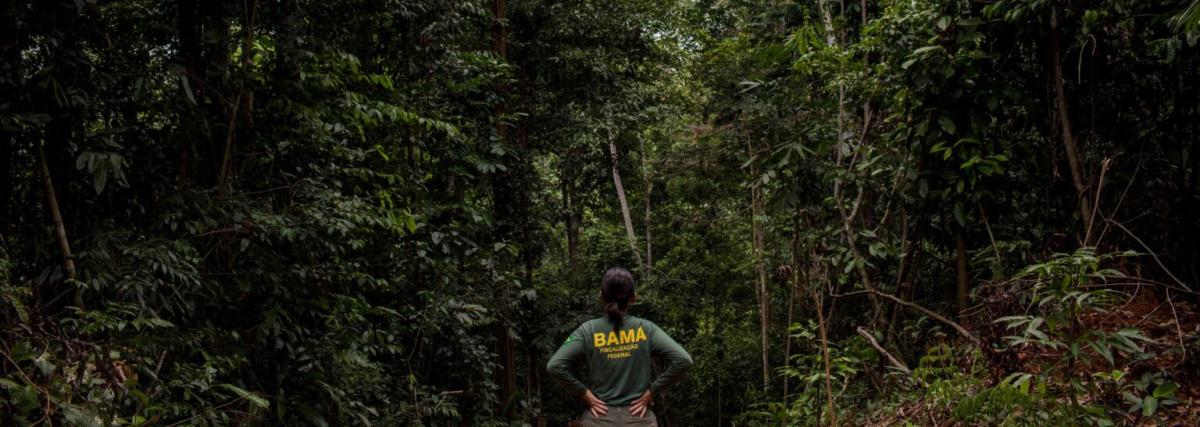
Brazil: Amazon deforestation drops rapidly under Lula

The rate of deforestation in the Brazilian Amazon has fallen significantly since President Luiz Inácio “Lula” da Silva took office in January 2023, according to government data. The area of deforestation detected by space agency INPE‘s forest monitoring system amounted to 2,649 square kilometers in the first half of the year, a 34% decline from the same period last year. The loss in the first six months of 2023 is the lowest since 2019, according to the satellite-based tracking system. Lula has prioritized reining in deforestation since assuming the presidency. Last month, he announced his administration’s plan to eliminate deforestation by 2030 as part of Brazil’s pledge to reduce greenhouse gas emissions. (Photo: Mongabay)

Planet Watch
anti-artemis

Podcast: against space imperialism

In Episode 146 of the CounterVortex podcast, Bill Weinberg protests the unprovoked imperialist attack on the asteroid Dimorphos, and rants against the sacrosanct dogma of space expansionism. The much-hyped asteroid threat is being used as a cover for militarization of space to achieve global hegemony on Earth—and eventual corporate pillage of the heavenly bodies. Finally, a long-overdue voice of space skepticism emerges from academe, with the book Dark Skies: Space Expansionism, Planetary Geopolitics, and the Ends of Humanity by Daniel Deudney. But hubristic notions of “space communism” have been seen on the political left, as discussed in the book I Want to Believe: Posadism, UFOs and Apocalypse Communism by AM Gittlitz. Listen on SoundCloud or via Patreon. (Image altered from NASA)

Planet Watch
spacedebris

Dangerous debris from Russian space kablooie

Russia destroyed one of its own satellites with a ground-based missile, in a test of its PL-19 Nudol DA-ASAT (direct-ascent anti-satellite) system. The blast created thousands of pieces of debris that have spread out into Earth orbit. The US says it has identified more than 1,500 trackable pieces of debris from the strike, and many thousands of smaller ones. That same day, the Russia’s RosCosmos space agency reported that the astronauts aboard the International Space Station had to shelter in place due to a cloud of debris passing by the station every 90 minutes, the time it takes for the ISS to orbit the Earth. It was unclear if the debris threatening the space station came from Russia’s ASAT test. But Washington charges that the new debris field poses a danger to the space station. (Image: MIT News)

Planet Watch
Mars probe

Podcast: US robo-imperialism hands off Mars!

In Episode 64 of the CounterVortex podcast, Bill Weinberg notes the maddening and telling irony that while we’re all supposed to be ga-ga with triumphalism over NASA’s latest Mars probe, it has received practicailly no attention that Afro-Brazilian peasant communities are being forcibly removed from their traditional lands to make way for a US-backed expansion of the Alcântara Satellite Launch Center in impoverished Maranhão state. This juxtaposition of news stories is paradigmatic of the whole global struggle—sustainable, Earth-rooted cultures against a hypertrophing technosphere that is now colonizing the very heavens. Meanwhile, there are already so many satellites in orbit that near-Earth space is experiencing a fast-growing “space junk” problem. And economic austerity down here on terra firma is compounding the agonizing impacts of the pandemic. Whatever useful knowledge may be gleaned from the Mars probe, accounts don’t note that Halliburton is drawing up plans for mining operations on Mars. We recall Gil Scott Heron’s wry reaction to the 1969 Moon landing (“Whitey on the Moon“), and say with Marvin Gaye: “Spend it on the have-nots!” Listen on SoundCloud or via Patreon. (Image adapted from NASA photo)

Southern Cone

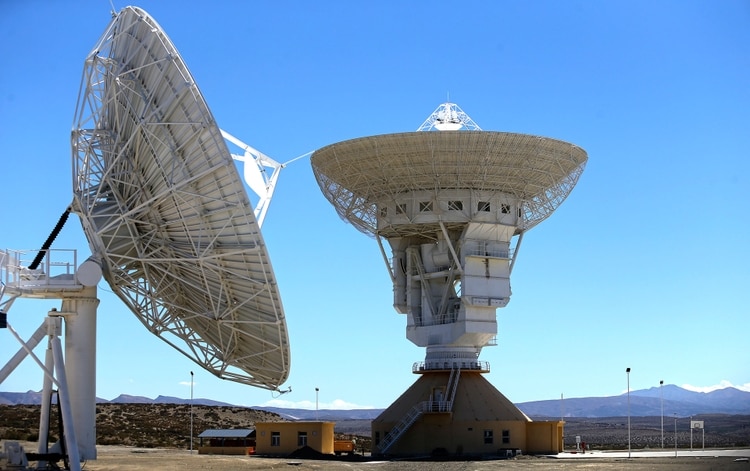
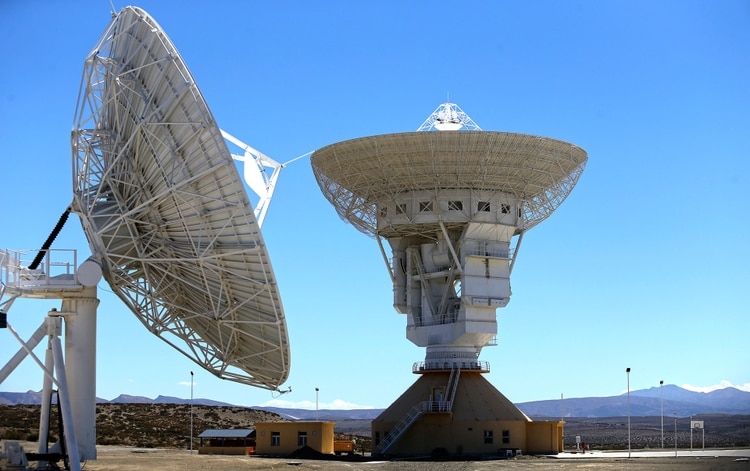
Chinese ‘spaceport’ military outpost in Argentina?

Announcement of a joint Chinese-Argentine satellite production company comes amid growing concern within Argentina about activities at the Chinese-operated "spaceport" at Bajada del Agrio in Patagonia—and the apparent role of the People's Liberation Army in the facility. The Bajada del Agrio facility played a part in tracking China's recent lunar probe, but is overseen by companies that answer directly to the PLA's General Armaments Department. Only personnel authorized by Beijing have access to the facility, arousing much suspicion about the site in Argentina's news media. (Photo via InfoBae)

Planet Watch

Will world war be October surprise?

Will an "October surprise" in the prelude to the mid-term elections in the US be the outbreak of world war—that is, direct superpower conflict? Things are escalating fast on the frontlines with both of the United States' major imperial rivals. The US Navy's Pacific Fleet is preparing to carry out a "global show of force" as a warning to China, after a near-skirmish between a US warship and a Chinese destroyer in the disputed South China Sea. Meanwhile, NATO is planning to conduct its largest military exercises since the end of the Cold War, Trident Juncture 2018, along Norway's border wth Russia. This comes as Washington and Moscow are odds over missile deployments, accusing each other of violating the 1987 Intermediate-range Nuclear Forces Treaty. (Image: Lockheed Martin)

The Amazon

Peru: satellite to monitor rainforest

Peru launched its first satellite into space this month, to monitor illegal mining, logging and other extractive activities in the country's vast stretch of the Amazon rainforest.

Southern Cone

Argentina: Chinese spaceport plan protested

Protesters marched to a construction site in Argentina's Neuquén province where plans are moving ahead for a spaceport to be overseen by China's space agency.