Iran
ICC

Podcast: Trump to The Hague! II

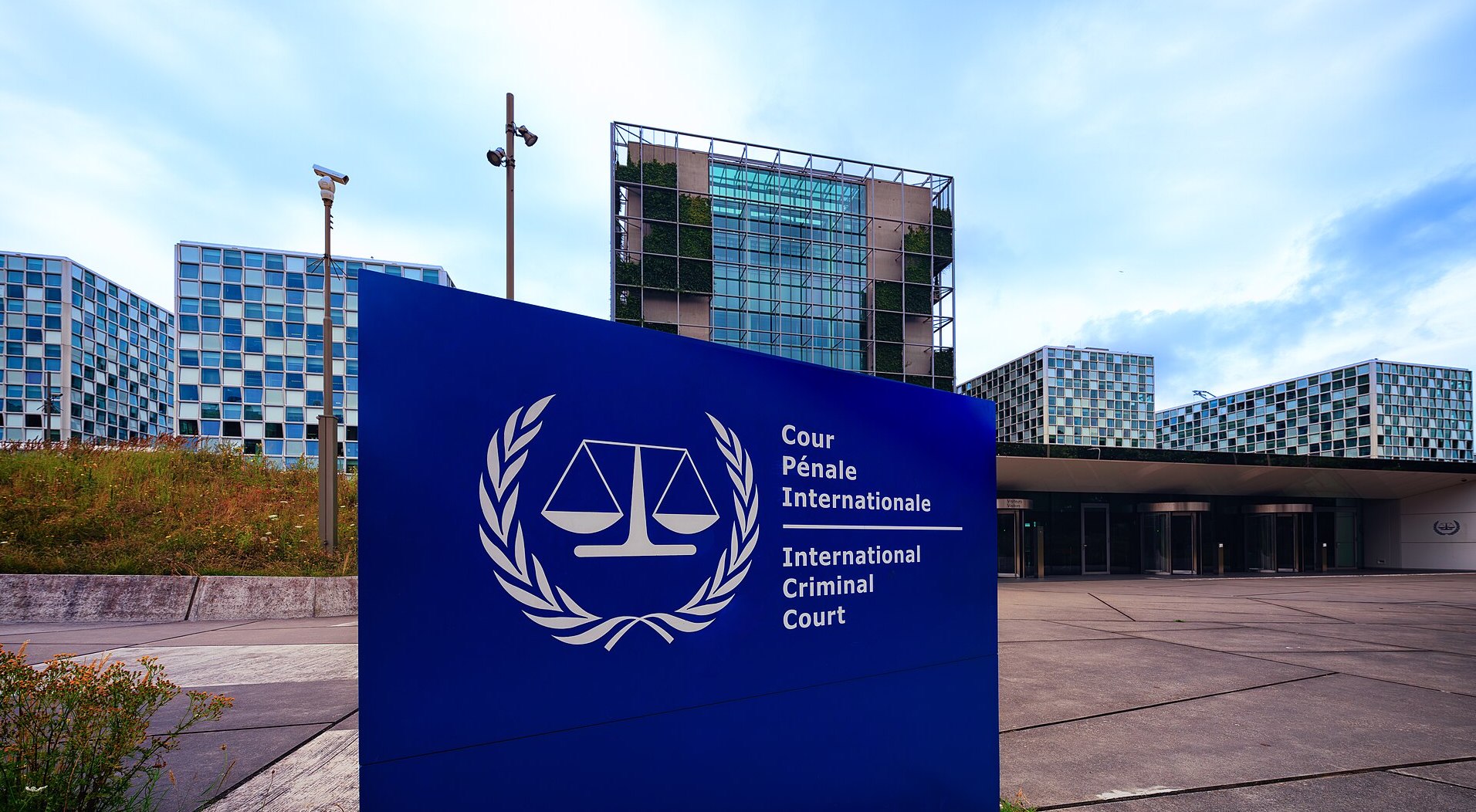
International law scholars are warning that Trump may have committed war crimes in Iran, and that his ongoing threats to bomb civilian targets may constitute self-incrimination—by the same standards that US prosecutors used to gather evidence against Russia in Ukraine (before Trump suspended cooperation). Additionally, his exterminationist rhetoric may represent a step on the ladder of escalation toward genocide. In Episode 324 of the CounterVortex podcast, Bill Weinberg continues to make the case—political, legal and practical—for sending Trump to a prison cell at The Hague. (Photo: Tony Webster via Wikimedia Commons)
Afghanistan
afghanistan

Afghanistan: no, the war is not over

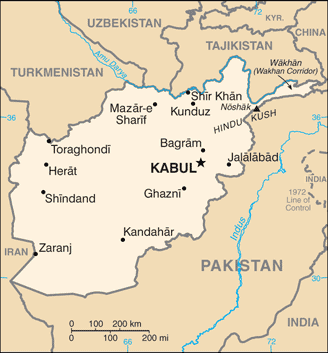
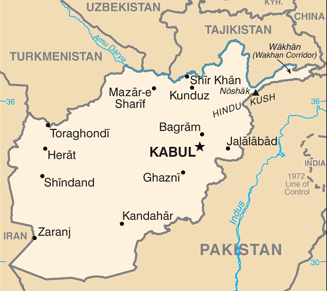
With absurd hubris, Biden in his speech as the last US troops left Kabul declared that “the United States ended 20 years of war in Afghanistan.” It’s perverse enough that he called the US evacuation of some 120,000 Afghans and Americans an “extraordinary success”—despite the fact that more than 100 US nationals and many thousands of desperate Afghans were left behind. But this reality-denying “ended the war” rhetoric is being uncritically echoed by media accounts. The war in Afghanistan began in 1979, with the massive Soviet military intervention to put down the Mujahedeen, and the country hasn’t seen a moment of peace since then. Nor is there much prospect for peace any time in foreseeable future. This is the same imperial narcissism we heard with the much-hyped US “withdrawal” from Afghanistan in 2014, and the “withdrawal” from Iraq in 2011. But this time, Afghanistan is essentially being turned over to the Taliban as a US-collaborationist or even near-proxy force to fight ISIS. The Taliban remain a brutal, intolerant and ultra-reactionary Islamist entity, but are now baited as co-opted moderates by the even more extremist ISIS. (Map: Perry-Castañeda Library)

Syria
Raqqa

Survivors struggle four years after battle of Raqqa

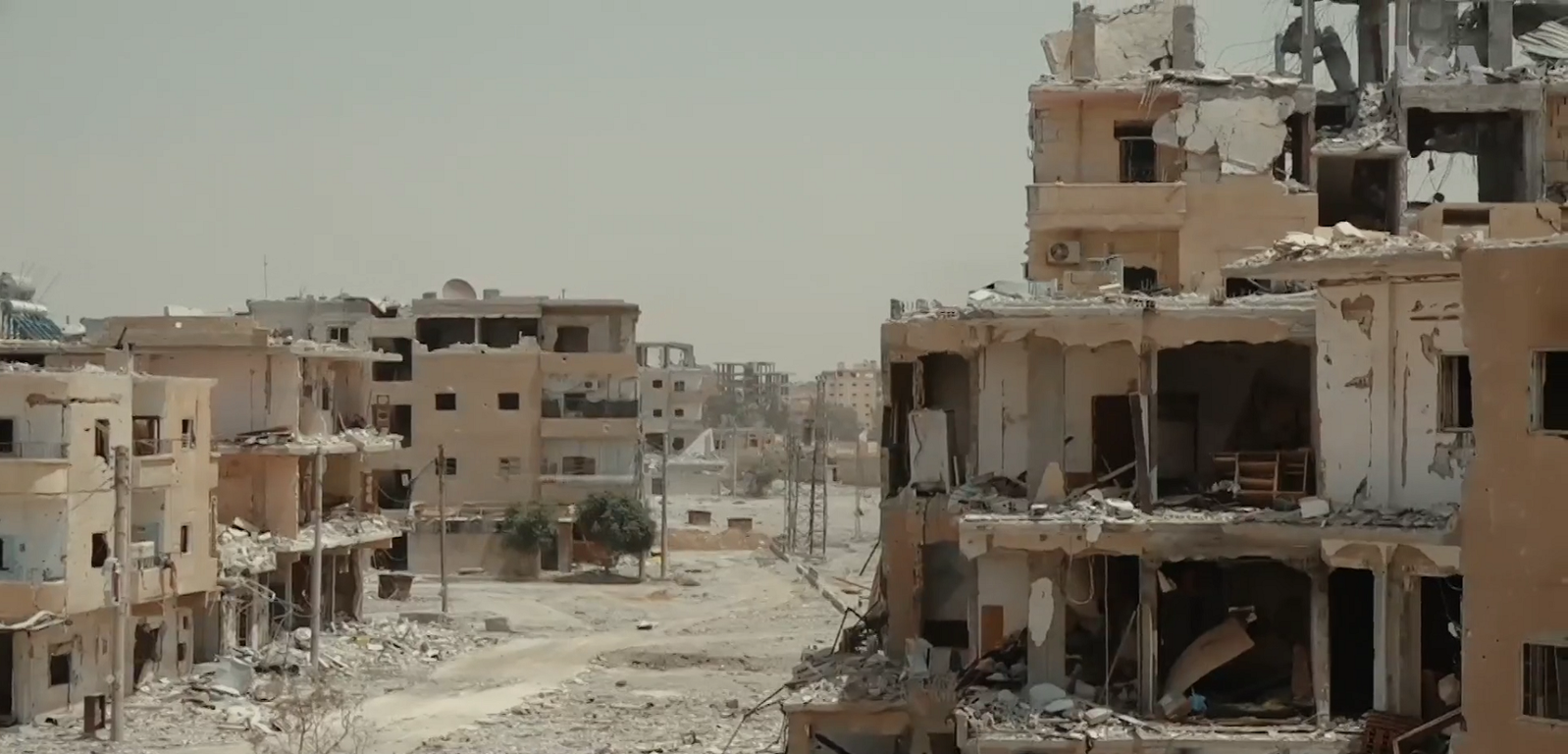
Children in Raqqa, northeast Syria, are still living among ruins, with limited water, electricity, and access to education, four years after the city was taken from ISIS, according to a new report by Save the Children. Thousands of people have returned to Raqqa since the battle for the city ended in 2017. But levels of rebuilding and rehabilitation of housing remain low, with children living in constant fear of their homes collapsing on top of them. Research estimates that 36% of the city’s buildings remain entirely destroyed. At the peak of the bombing campaign, Raqqa faced 150 air-strikes a day. (Photo: Mahmoud Bali/VOA via Wikimedia)

Afghanistan
afghanistan

‘Imminent humanitarian crisis’ in Afghanistan

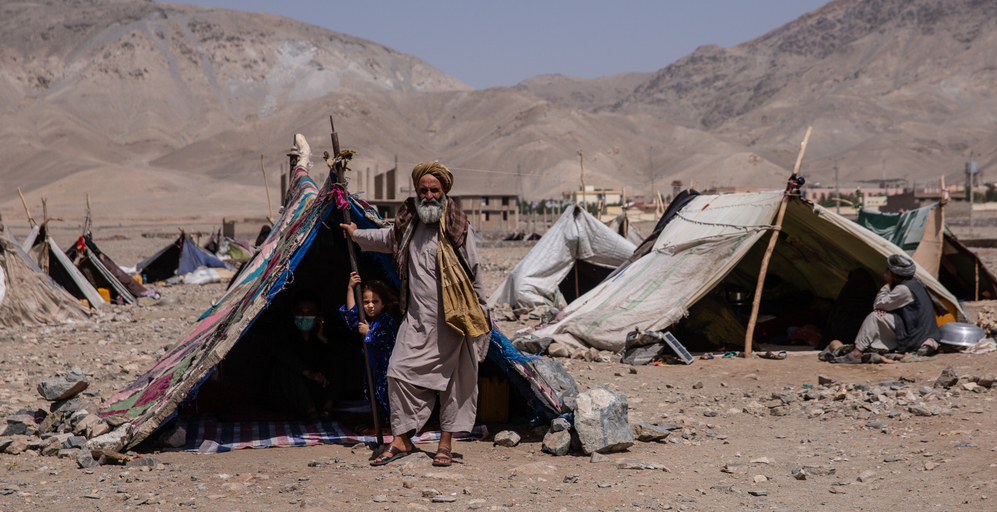
The Office of the UN High Commissioner for Refugees (UNHCR) warned of an “imminent humanitarian crisis” in Afghanistan as mounting conflict gives rise to suffering and displacement. An estimated 270,000 have been newly displaced since January, bringing the total uprooted population to over 3.5 million. The number of civilian casualties has risen 29% during the first quarter of this year compared to 2020. The UNHCR stressed its underfunded financial appeal for Afghanistan, which now stands at 43% of the total $337 million required. The agency urged the international community to support Afghanistan “in a spirit of solidarity and burden-sharing.” (Photo of displaced persons camp in Herat: Stefanie Glinski/TNH)

Europe
orwell

Podcast: George Orwell’s wartime dilemma

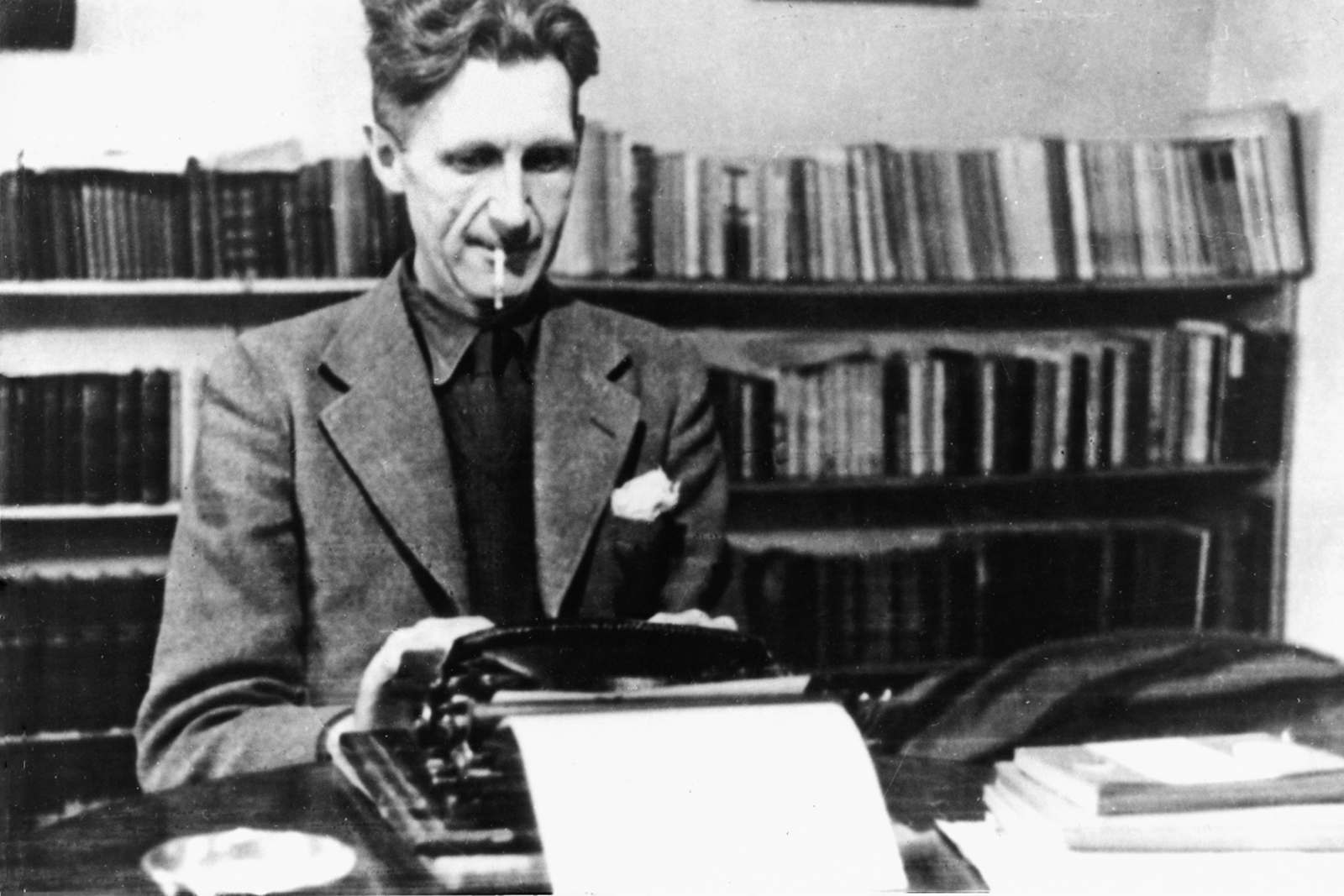
In Episode 76 of the CounterVortex podcast, Bill Weinberg discusses and critiques The Duty to Stand Aside: Nineteen Eighty-Four and the Wartime Quarrel of George Orwell and Alex Comfort by Eric Laursen. Orwell and Comfort were divided on the question of Allied bombardment of Germany in World War II—although they both united to support the free-speech rights of anarchist anti-war dissidents. With fascism and genocide again emerging on the world stage, their quarrell sheds light on the contemporary wars in Syria, Libya and elsewhere—and how progressives and especially anarchists in the West should respond. Listen on SoundCloud or via Patreon. (Photo: The Orwell Archive)

Syria
Atareb

Protest WHO board seat for Syrian regime

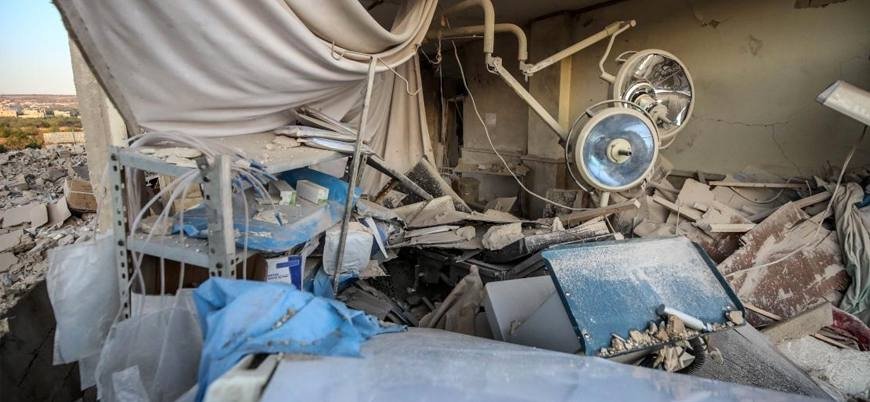
Doctors and healthcare workers held a demonstration outside a hospital in the Syrian city of Idlib, to protest the election of the Bashar Assad regime to the executive board of the World Health Organization (WHO)—the latest coup for normalization of the regime. “How can we trust WHO [when] one of its executive board members is the murderer who is killing my colleagues?” said Dr. Salem Abdan, head of health services for opposition-administered Idlib. Read a banner at the protest: “We reject that he who destroyed our hospitals be represented on the executive board.” Idlib province is part of a remaining rebel-held pocket in the northeast of the country, where Assad regime warplanes have for years been bombing hospitals and clinics. (Photo of bombed hospital in northern Syria via Daily Sabah)

Syria
Atareb

Syria: outrage after Assad regime attack on hospital

Aid groups working in besieged northern Syria are expressing outrage after a hospital in the town of al-Atareb was destroyed by artillery fire. Six people were killed in the strikes, including a child, and at least 16 injured. The hospital was within the rebel-held pocket of Aleppo province, which has come under renewed bombardment by the Assad regime and Russia in recent weeks after a year-long lull in the fighting. The hospital was jointly supported by the International Rescue Committee and the Syrian-American Medical Society (SAMS). All the casualties were civilians. The IRC said in a statement: “Although SAMS shared the hospital’s coordinates through the UN’s notification system, it came under attack and has now been damaged so severely that it can no longer be used.” (Photo via Daily Sabah)

Afghanistan
afghan army

Afghanistan: US withdrawal on hold?

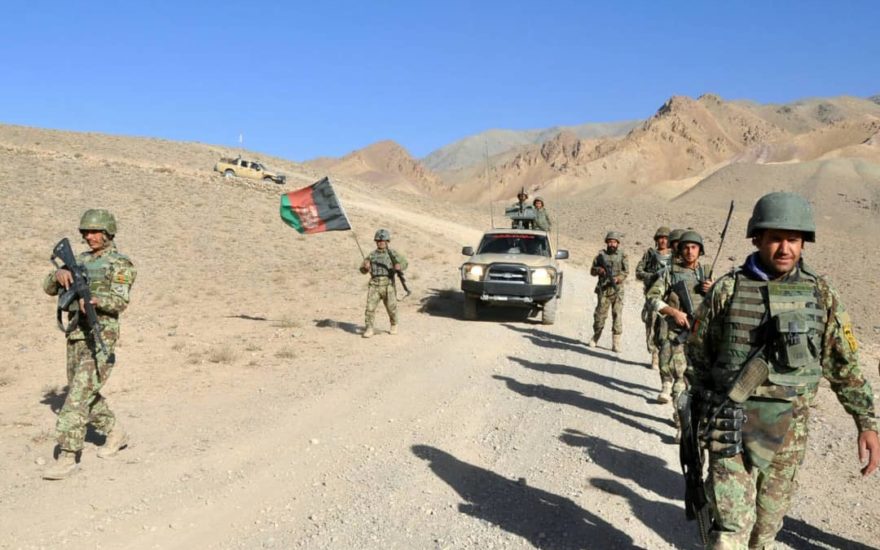
With a May 1 deadline for withdrawal of US forces from Afghanistan approaching but a final peace deal stalled, the White House is said to be considering an extension beyond this date for removal of its 2,500 troops remaining in the country. “Intra-Afghan” negotiations between the Taliban and Kabul opened in Doha in September, but remain deadlocked over fundamentals of the power-sharing deal—with the Taliban rejecting President Ashraf Ghani’s insistence on remaining in office for the remainder his five-year-term. Predictably, they haven’t even got around to discussing protection of minority and women’s rights, or the role of sharia law in the new order. Meanwhile, civilian casualties are mounting, and the Taliban has just launched a spring offensive. (Photo: Khaama Press)

Iran
Iran

Biden’s first air-strikes: the Great Game in Syria

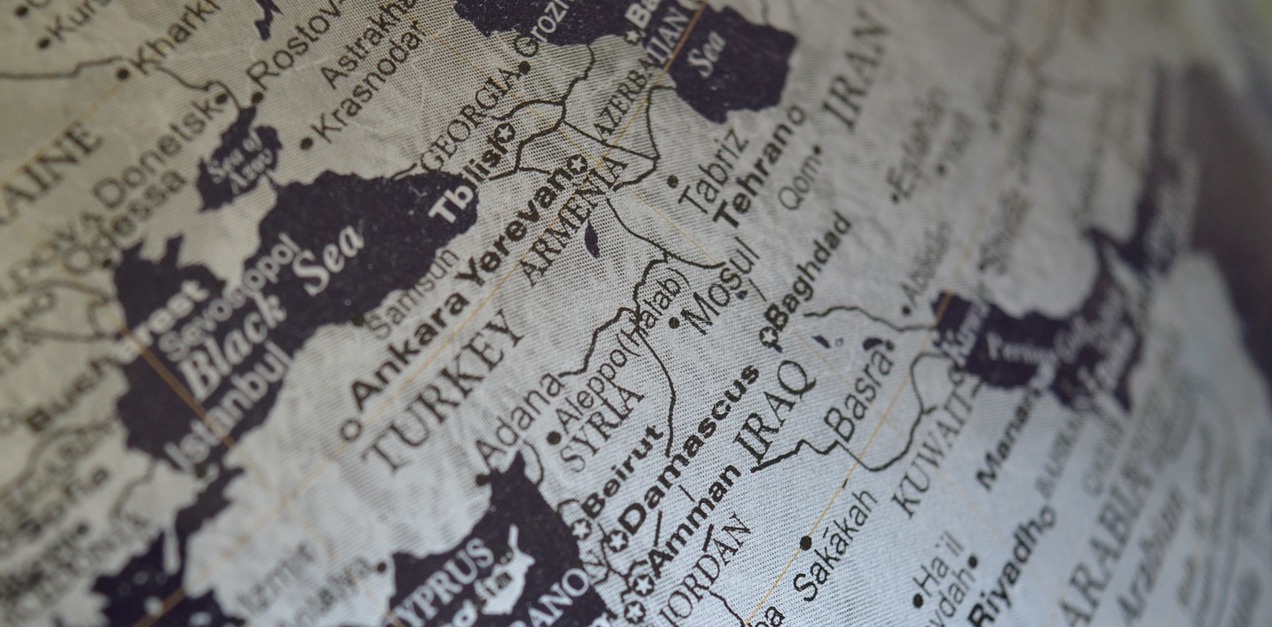
In the first air-strikes on Syria under the Joseph Biden administration, US warplanes struck positions of Iran-backed militia forces at a Revolutionary Guards base near the Iraqi border in the country’s desert east. The Pentagon said the strikes “destroyed multiple facilities at a border control point used by a number of Iranian-backed militant groups,” including Kataib Hezbollah. It was also a Tehran-backed paramilitary formation that claimed responsibility for last week’s missile attack on the US airbase at Erbil, in northern Iraq. The US bombing an Iran-backed militia in retaliation for an attack in Iraq is a textbook example of how Syria has been turned into a playing field in the Great Power game. (Image: Pixabay)

Africa
Mali

UN to investigate ‘crimes against humanity’ in Mali

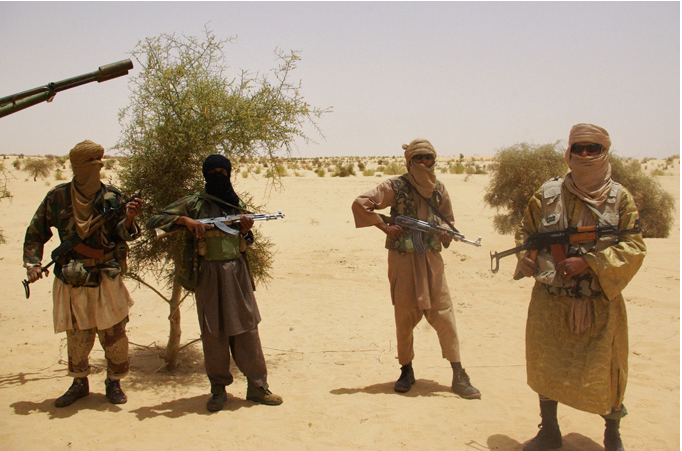
UN investigators into political violence in Mali reported to the Security Council that they found evidence that government forces have committed “war crimes,” while jihadists and other armed groups perpetrated “crimes against humanity.” The allegations are made in a 338-page report compiled by the International Commission of Inquiry, a panel examining events in Mali over the six years after it spiralled into conflict in 2012. The report, which has not yet been made public, recommends establishing a special court to try accused perpetrators. But the recommendations are being met with some wariness in Mali. The opposition Rally of Patriotic Forces demands that foreign militaries operating in the country be covered in the scope of the investigation—including France. (Photo via Andy Morgan Writes)

Africa
Somalia

Trump announces (pseudo-) withdrawal from Somalia

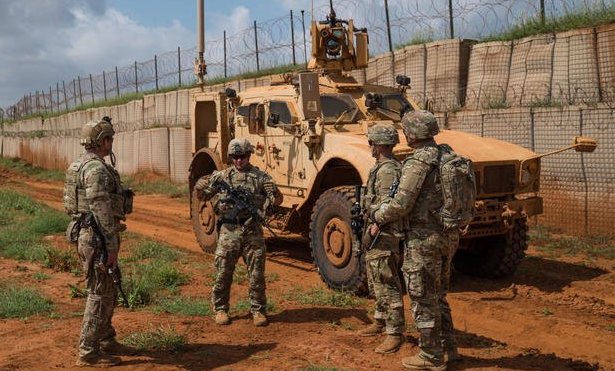
President Trump has ordered the withdrawal of nearly all the approximately 700 US troops in Somalia by mid-January. But the troops are not coming back to the US—they will be stationed just outside Somalia’s borders, in Kenya and Djibouti, ready to go back in as circumstances mandate. Air-strikes and drone warfare are to continue. Also remaining in Somalia will be a team of Pentagon advisors and a significant force of private contractors from the DC-based firm Bancroft Global, working with a US-trained elite commando unit to fight al-Shabaab and ISIS insurgents. (Photo: Nick Kibbey/US Air Force via Military Times)

Afghanistan
Afghanistan

Will human rights be betrayed in US-Taliban deal?

More than a year of US-Taliban negotiations bore formal fruit with the signing in Doha of what is being called a “peace deal” by Washington’s envoy Zalmay Khalilzad and Mullah Abdul Ghani Baradar. The pact calls for the US to withdraw its forces from Afghanistan in 14 months if the Taliban fulfills its commitments under the agreement. “Intra-Afghan” talks are to follow, with the aim of negotiating a permanent ceasefire. Amnesty International, however, raised concerns about what the  deal could mean for Afghanistan’s women and religious minorities, urging: “Any peace process involving the parties to the conflict in Afghanistan must not ignore the voice of victims.” (Map: Perry-Castañeda Library)