UN documents damage of cultural sites in Ukraine

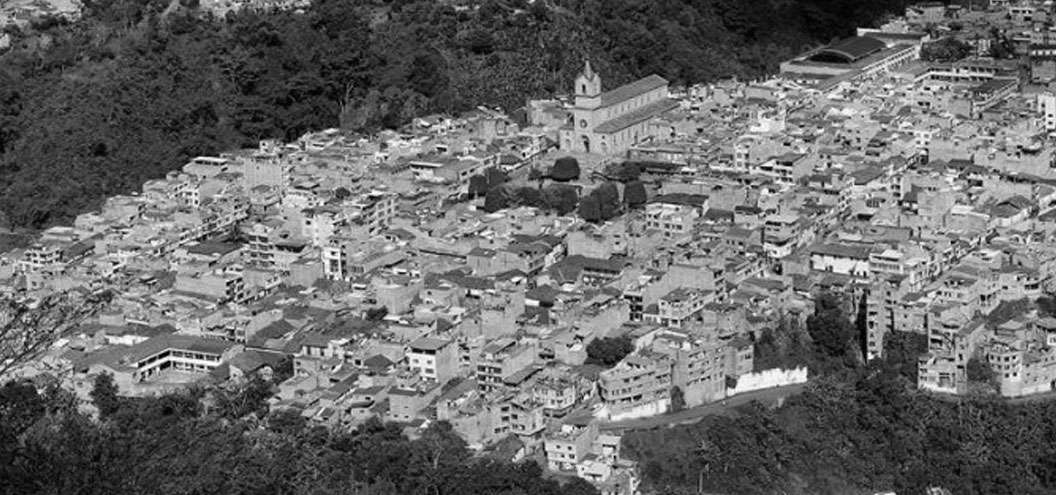
Borodyanka

A preliminary report from the United Nations Educational, Scientific & Cultural Organization (UNESCO) on Oct. 25 revealed the extent of damage to Ukraine's cultural heritage since Russia invaded in February. UNESCO verified damage to 207 cultural sites, including 88 religious sites, 15 museums, 76 buildings of historic or artistic interest, 18 monuments, and 10 libraries.  The report is sourced from satellite images taken before and after the start of the war by both the UN and private companies. UNESCO defines cultural properties under Article 1 of the 1954 Hague Convention (Convention for the Protection of Cultural Property in the Event of Armed Conflict). The worst damage was found to be in Donetsk region, now declared annexed by Russia, with 59 damaged sites. 

No UNESCO World Heritage sites were found to have yet been damaged.

The latest figures from the UN Office of the High Commissioner for Human Rights (OHCHR) documented 16,150 civilian casualties in Ukraine since the invasion, including 6,374 killed and 9,776 injured.

From Jurist, Oct. 27. Used with permission.

Note: Both the International Criminal Court and UN Human Rights Council have opened investigations into possible war crimes in Ukraine. Russia's annexation of Donetsk and three other regions of Ukraine was condemned by an overwhelming majority of the UN General Assembly last month.

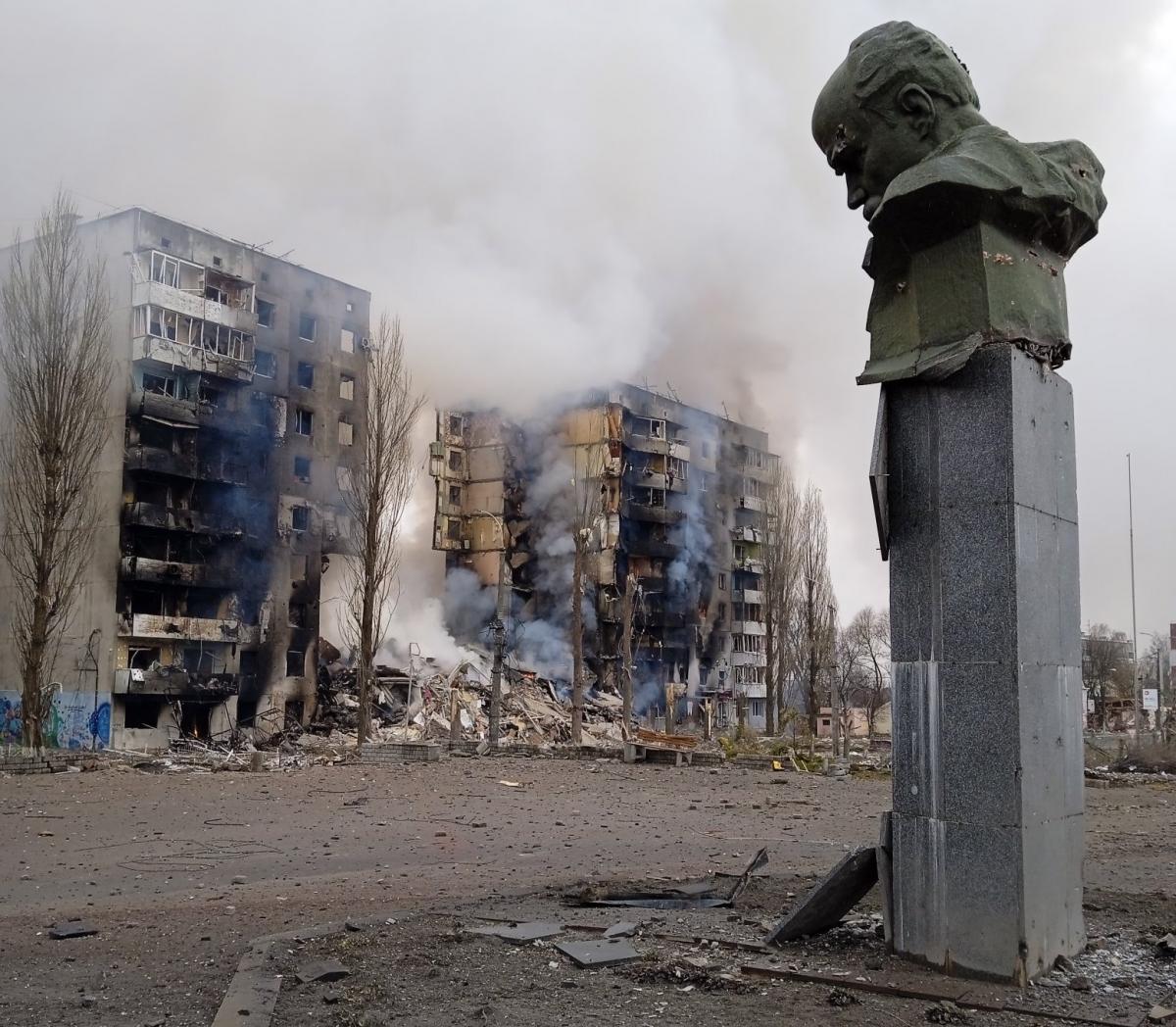
Photo: damaged statue of Ukrainian national poet Taras Shevchenko in Borodyanka. Via Euromaidan Press

Internet censorship laws advance worldwide

internet ban protest

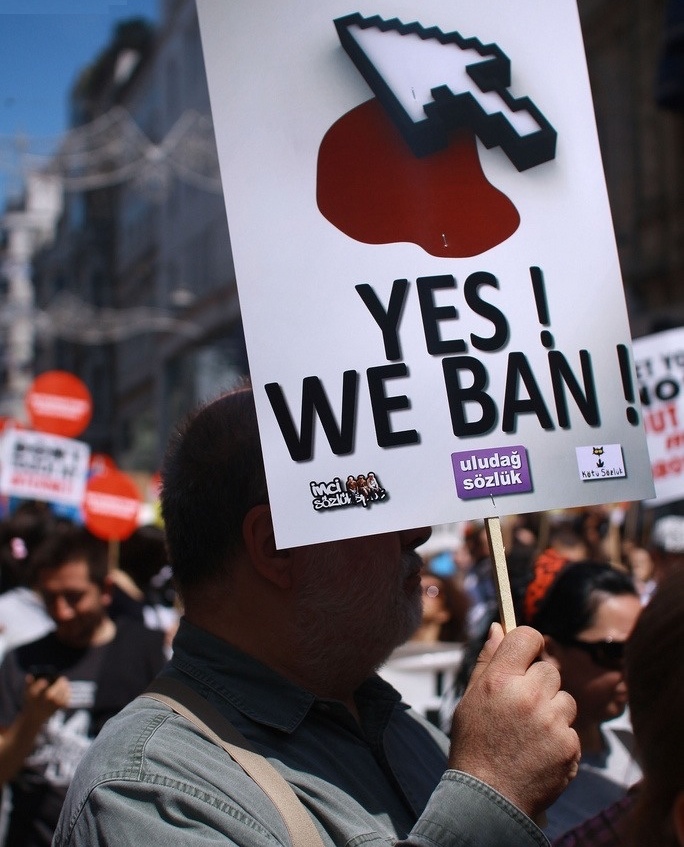
The United Nations Human Rights Office on Oct. 14 expressed concern over Turkey's adoption of legal measures "that risk substantially curtailing freedom of expression in the country." One day earlier, the Turkish parliament passed a package of laws that could see journalists and activists imprisoned for up to three years for spreading "disinformation." (Jurist) The day before that, Ugandan President Yoweri Museveni signed the Computer Misuse (Amendment) Act into law, which advocacy group Unwanted Witness called a "looming nightmare to the freedom of expression and speech." (Jurist) Last month, Tunisian authorities promulgated Decree No. 54 on Combating Crimes Related to Information & Communication Systems, imposing five years imprisonment for spreading "fake news." (Jurist)


Photo of Turkish free-speech demonstration via Wikimedia Commons

Podcast: anarchist voices on Ukraine

anti-z

In Episode 145 of the CounterVortex podcast, Bill Weinberg contrasts statements from anarchists in Ukraine and Russia—who call unequivocally for Putin's defeat and removal from power—with the relentless lecturing from stateside "leftists" that the Ukrainians must cede territory in exchange for "peace." These stateside voices include (inevitably) Medea Benjamin and (of course) Noam Chomsky on (predictably) Amy Goodman's Democracy Now. They actually call for the United States to "negotiate" with Russia—the Great Powers deciding the fate of Ukraine, without the participation of the Ukrainians (exactly as in the 1938 Munich Agreement, in which Czechoslovakia was betrayed to the Nazis). Both these ostensible leftist positions line up with figures from the political establishment. On Chomsky's and Benjamin's side are Elon Musk and Donald Trump. On the side of the intransigent Ukrainian and Russian anarchists are Ukraine's former defense minister Andriy Zagorodnyuk writing in Foreign Affairs, and President Joe Biden, who told CNN: "Nothing about Ukraine without Ukraine." Is it possible that Joe Biden has a more progressive position than Noam Chomsky? Actually, yes. Listen on SoundCloud or via Patreon.

Production by Chris Rywalt

We ask listeners to donate just $1 per weekly podcast via Patreon—or $2 for our special offer! We now have 44 subscribers. If you appreciate our work, please become Number 45!

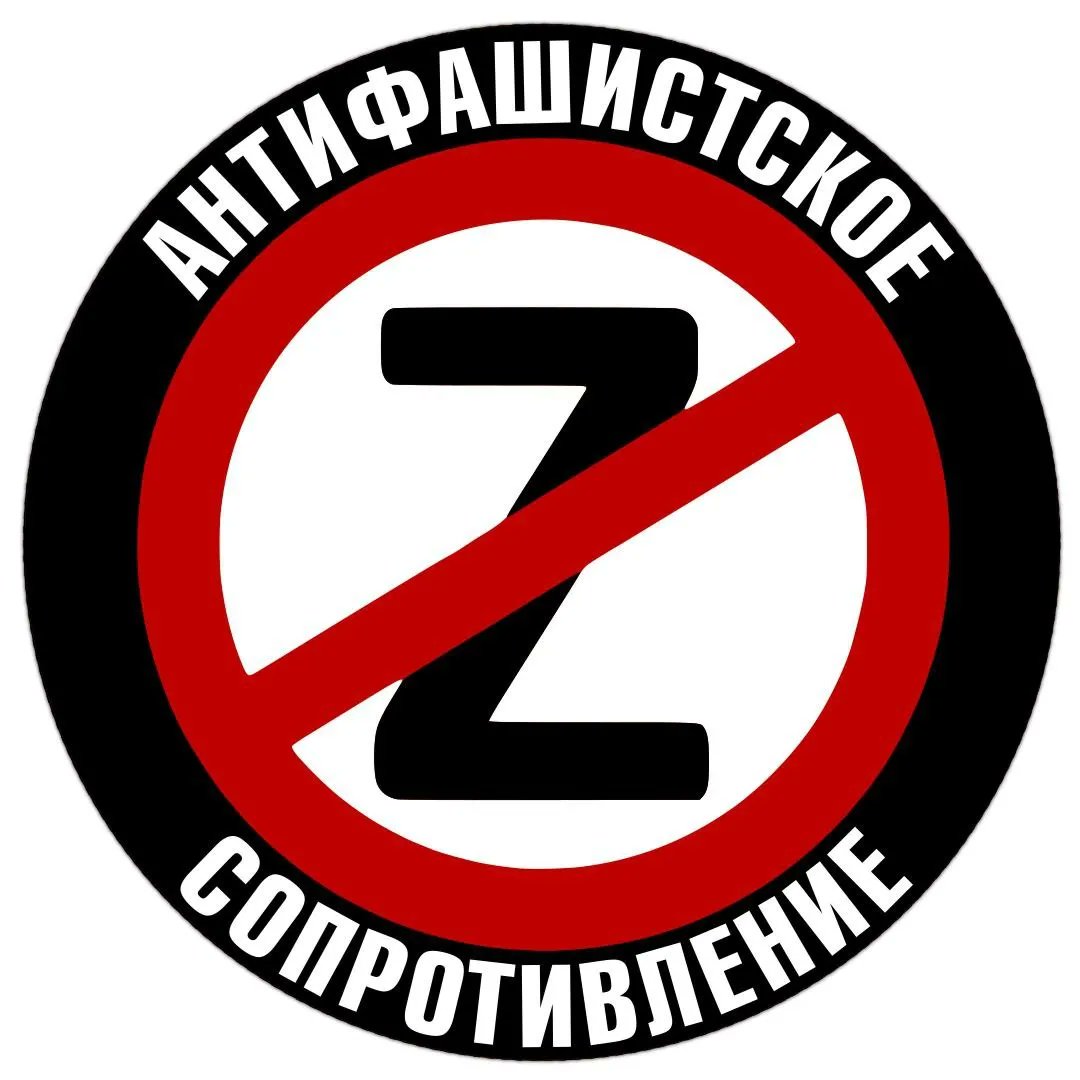
Image: "Anti-fascist resistance" logo via Russian anarchist group Autonomous Action

Eritrea in mass mobilization for Tigray offensive

Ethiopia

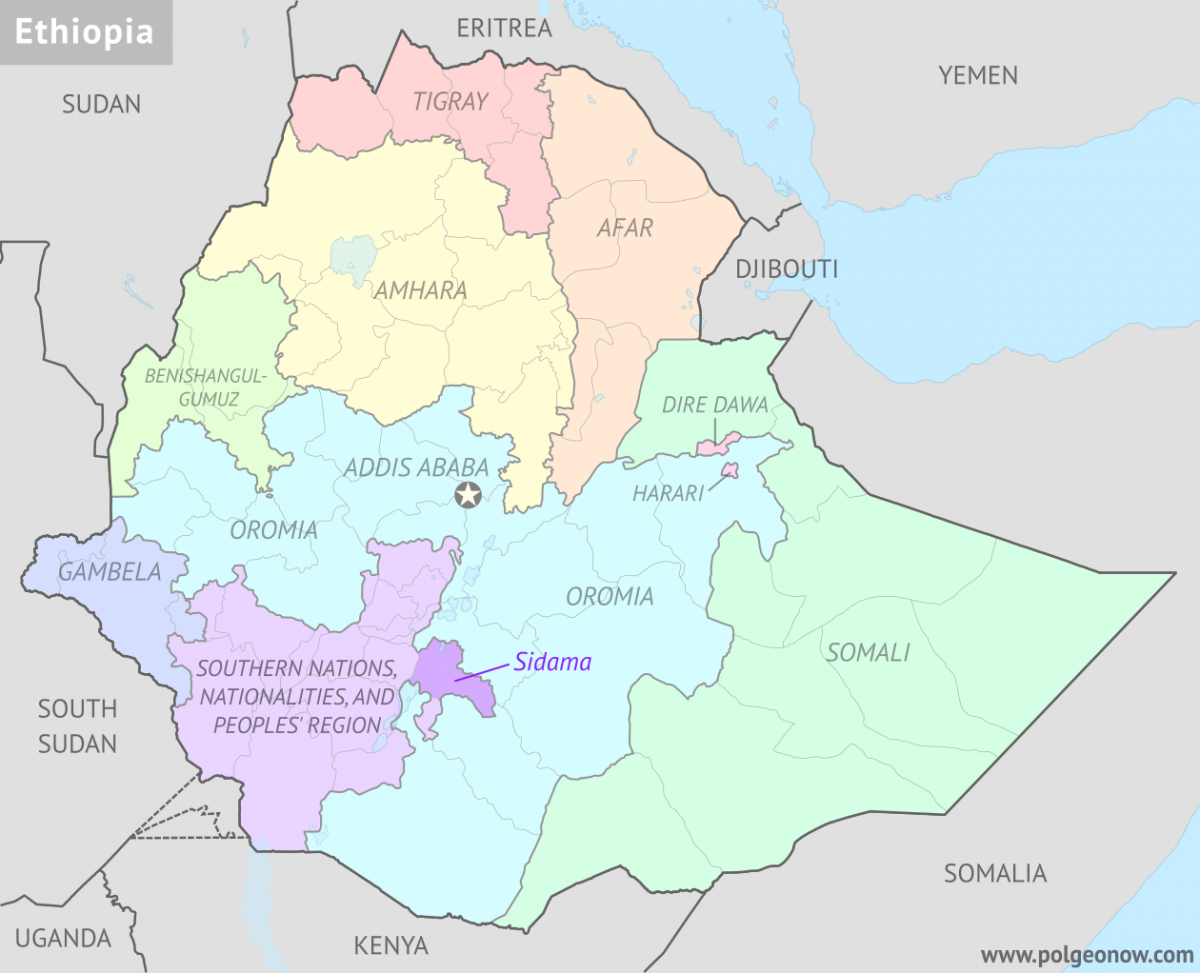
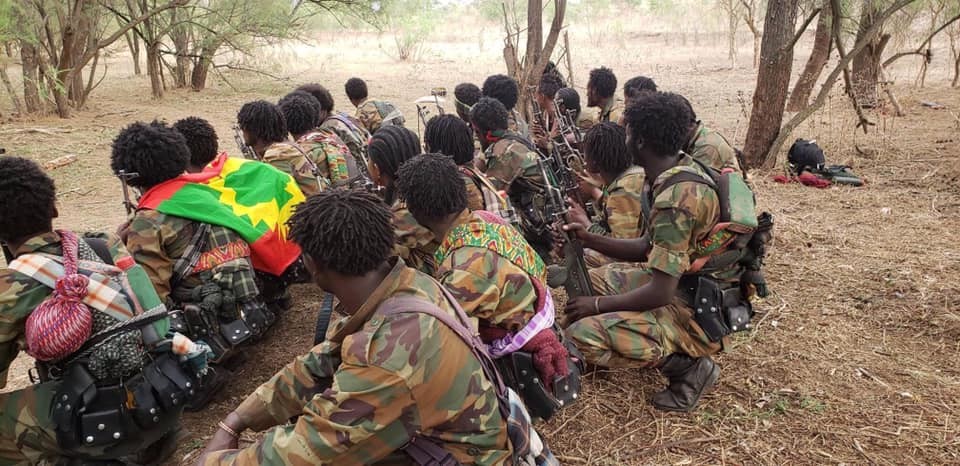
More than a month after renewed clashes broke out in Ethiopia's northern Tigray region, there are few signs of de-escalation. A new air-strike hit Tigray's capital of Mekelle on Sept. 23, while the region's ruling party, the Tigray People's Liberation Front (TPLF), accused Eritrea of launching a full-scale offensive in support of the Ethiopian government. There are reports that Eritrea (which has a historical enmity against the TPLF) is mobilizing army reservists, with notices handed out in Asmara, the capital. The return to combat came after a five-month truce that saw back-channel meetings between Mekelle and Addis Ababa but no formal talks. The risk that fresh fighting poses to civilians was underscored by UN investigators, who submitted their first report on the two-year conflict. The investigators accused Ethiopia's government of war crimes in Tigray, and of using starvation as a counterinsurgency tool. Tigrayan forces were also accused of serious human rights abuses.

From The New Humanitarian, Sept. 23

Map: Political Geography Now

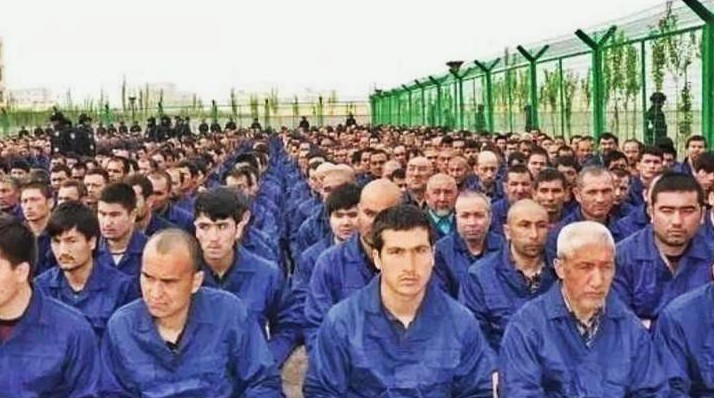
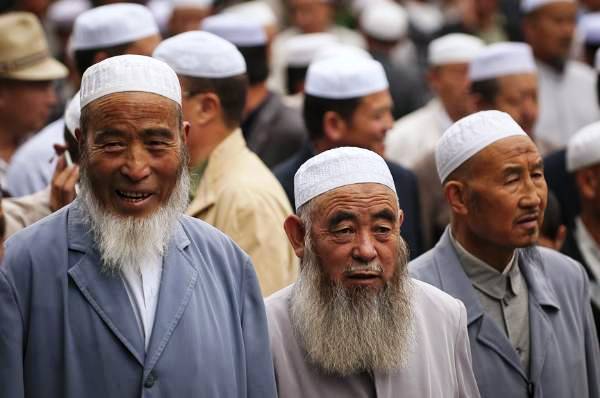
Uyghur Tribunal accuses China of genocide

Uyghurs

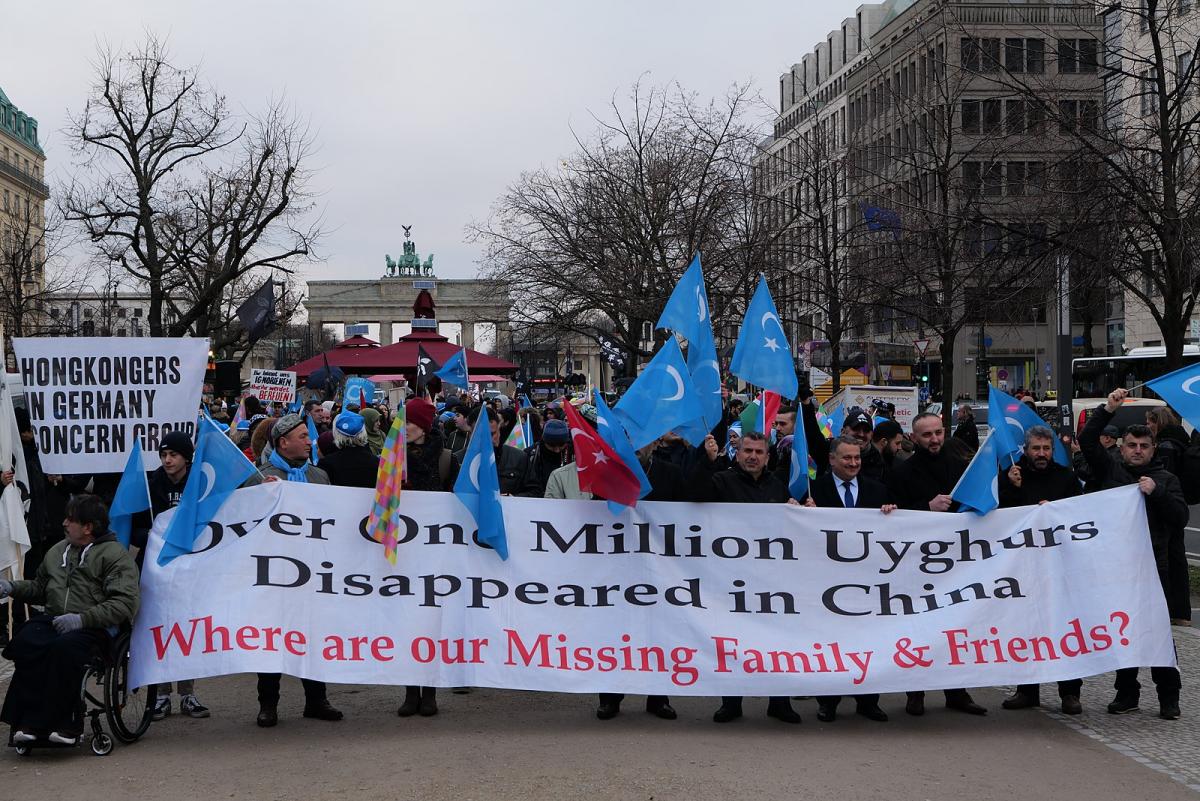
The Uyghur Tribunal, a "people's tribunal" established in the UK, on Sept. 27 appended a December 2021 judgment, incorporating nearly 300 additional pages of historical background, legal definitions and evidence. The stated purpose of the tribunal is to investigate "ongoing atrocities and possible genocide against the Uyghur people" in the People's Republic of China, although the tribunal has no force of law.

The initial judgment found that "in Xinjiang and at the hands of some part or parts" of the Chinese government and the Chinese Communist Party, hundreds of thousands of Uyghur Muslims have been detained. Many of the detained have been tortured: beaten with sticks, fingernails pulled off, some shackled by heavy weights, immobilized for months on end. Detained women and men have been raped and starved, and those fortunate enough to avoid crowded cages are subjected to solitary confinement.

Genocide is defined by the UN in Article II of the Convention on the Prevention and Punishment of the Crime of Genocide as killing, harming, or imposing measures to prevent births among members of a "national, ethnical, racial or religious group" with intent to destroy. The convention was the first human rights treaty adopted by the UN General Assembly.

While the alleged acts were sufficient for the tribunal to initially conclude that crimes against humanity have been committed, genocide was found more difficult to prove as there is no evidence of mass killings.

The appended judgment acknowledges that, in contrast to treatment of Jews during the Holocaust, the detained Uyghurs are allowed to eventually return to society in most cases. However, the judgment notes that, coinciding with mass detention, mosques have been destroyed and religious activity suppressed. Those who use the Uyghur language in public are punished, and child separation from families is common. In many cases, Han Chinese men are "imposed on Uyghur households" to monitor and report behavior. The appended judgment concludes that taken together, these practices constitute genocide.

Implicitly acknowledging the isolated position of Xinjiang, in the remote far west of the People's Republic, the judgment states: "[I]f humanity is single across the globe, then universal human rights anywhere engage obligations not just of governments but of citizens everywhere… Geographical proximity does not strengthen, and geographical distance does not dilute, the duty humans owe to humans anywhere; at most distance affects ability to act."

From Jurist, Sept. 21. Used with permission.

See our last report on the Uyghur Tribunal.

Photo: Leonhard Lenz/Wikimedia Commons

UN inquiry sees Russian war crimes in Ukraine

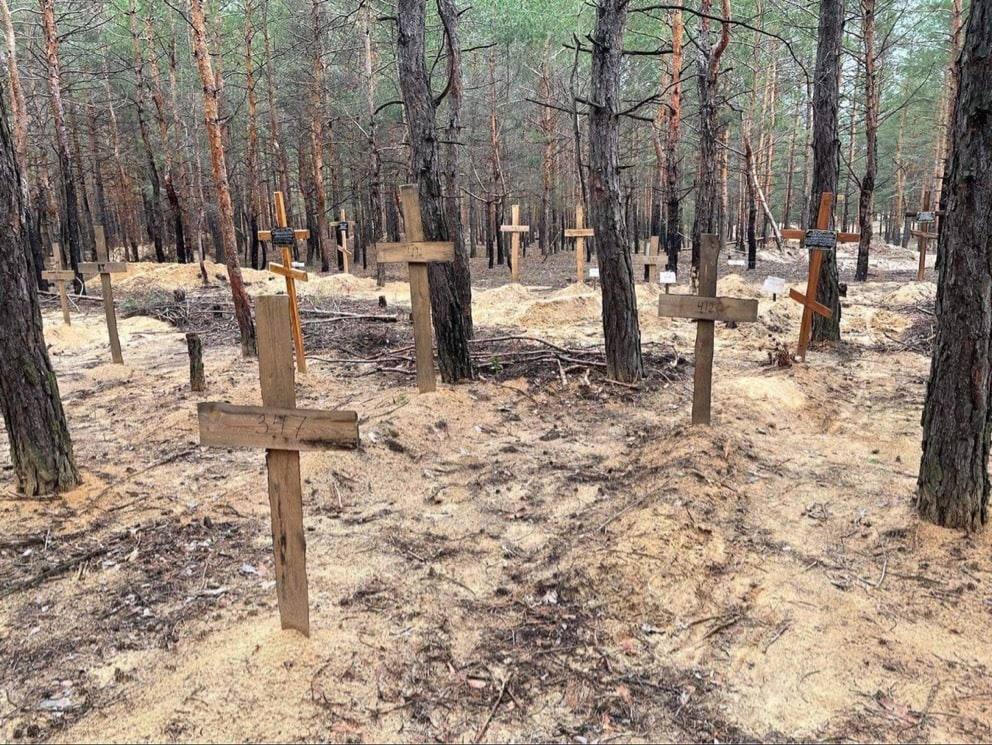
Izyum

The UN Independent International Commission of Inquiry on Ukraine on Sept. 23 informed the Human Rights Council that based on the evidence gathered, Russia has committed war crimes in Ukraine. The Commission had been set up in March through General Assembly Resolution 49/1 with a mandate to investigate possible violations of human rights and related crimes "stemming from the Russian aggression" in Ukraine. Subsequently, in May, through Resolution S-34/1, the Commission was tasked to particularly investigate the areas of Kyiv, Chernihiv, Kharkiv and Sumy, where serious allegations of rights abuses by Russian forces were made.

The Commission chair, Norwegian jurist Erik Møse, briefed the Council that the commission visited 27 towns, interviewed more than 150 victims and witnesses, and inspected "sites of destruction, graves, places of detention and torture, as well as weapon remnants." The Commission noted that the use of explosive weapons in populated areas has been a source of immense harm and suffering. The Commission also commented that a number of attacks investigated had been carried out without "distinguishing between civilians and combatants."

Møse said that the Commission was concerned by a large number of probable executions carried out in the areas it visited, noting that it is presently investigating such deaths in 16 towns and settlements. Møse reported "visible signs of executions on bodies, such as hands tied behind backs, gunshot wounds to the head, and slit throats."

The Commission also found that some Russian Federation soldiers had committed sexual and gender-based violence, and that it had documented cases in which children had been raped, tortured, unlawfully confined, and killed or injured in indiscriminate attacks.

This update is in line with a recent report by the Office of the High Commissioner for Human Rights (OHCHR), which found that the Russian aggression against Ukraine had led to grave deterioration of human rights in the country.

From Jurist, Sept. 24. Used wth permission.

Note: Both the International Criminal Court and UN Human Rights Council have opened investigations into possible war crimes in Ukraine.

Photo via Twitter

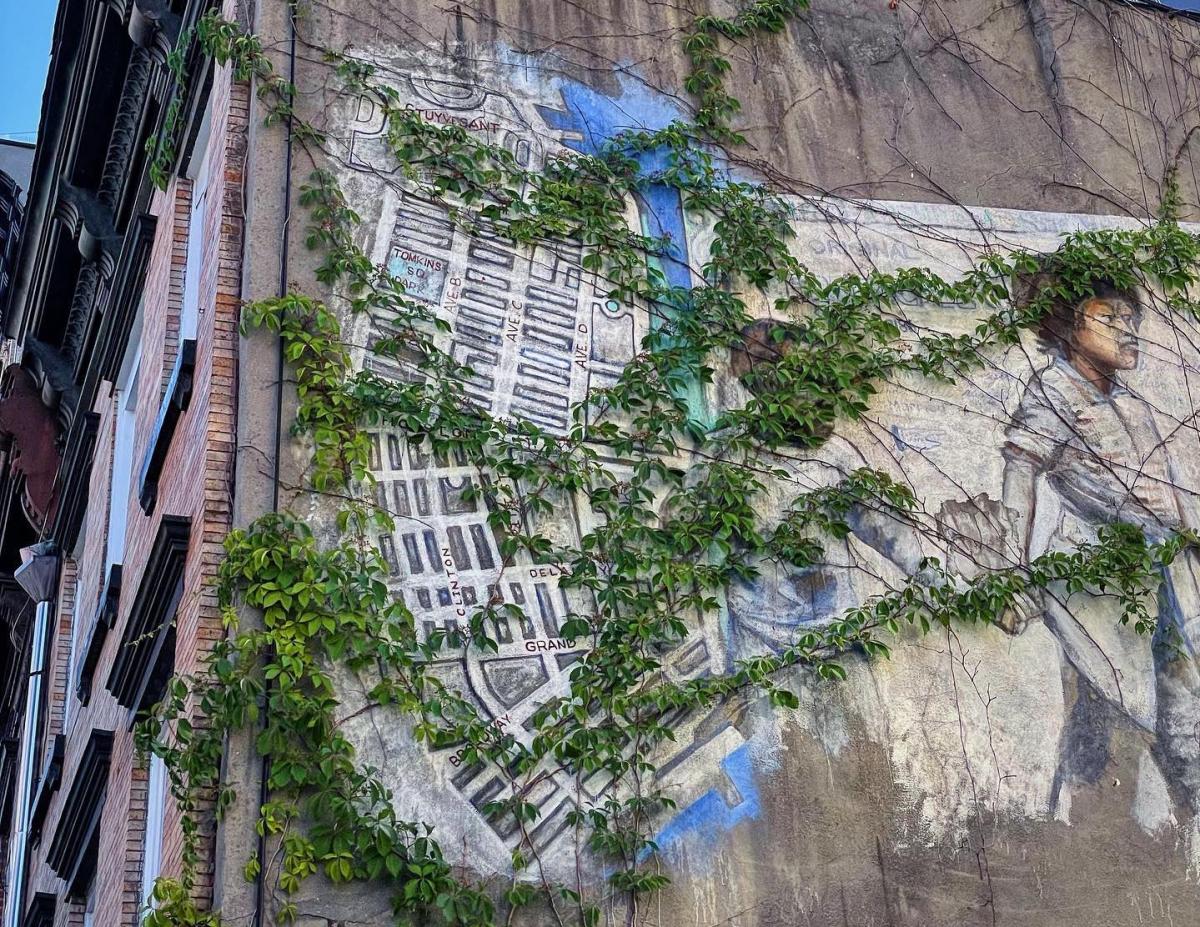
Political geography of the Lower East Side

Loisaida

In Episode 141 of the CounterVortex podcast, Bill Weinberg defends the notion that he lives on New York's Lower East Side, repudiating those who would insist that his neighborhood is actually the East Village or (worse) NoHo. Weinberg traces the nomenclature controversies going all the way back to the Lenape indigenous villages of the area, Dutch and English colonial settlement, the riots and uprisings of the "Gangs of New York" era, the neighborhood's Puerto Rican identity as Loisaida, the origin of the name "East Village" in the hippie explosion of the 1960s, its cooptation by the real estate industry in the gentrification of the 1980s, and the resultant last gasp of anarchist resistance. Weinberg counts himself among a surviving coterie of old-timers who still consider the entire area to be the Lower East Side. Listen on SoundCloud or via Patreon.

Book discussed: The Gangs of New York: An Informal History of the Underworld by Herbert Asbury

Production by Chris Rywalt

We ask listeners to donate just $1 per weekly podcast via Patreon—or $2 for our special offer! We now have 44 subscribers. If you appreciate our work, please become Number 45!

Photo: Carmen Pabón del Amanecer Jardín

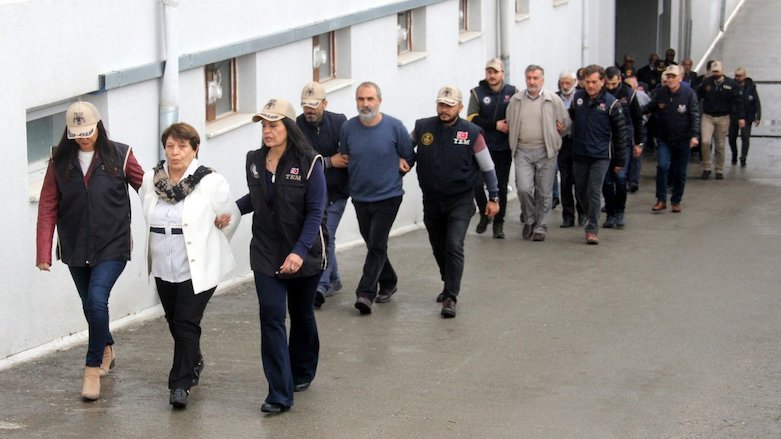
Iran: high-tech crackdown on hijab resistance

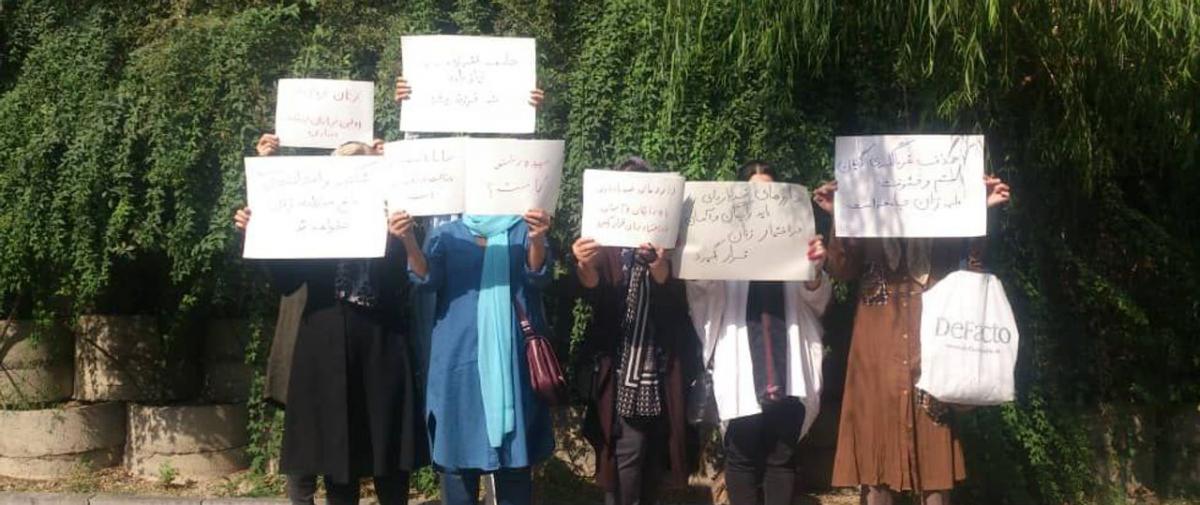
hijab protest

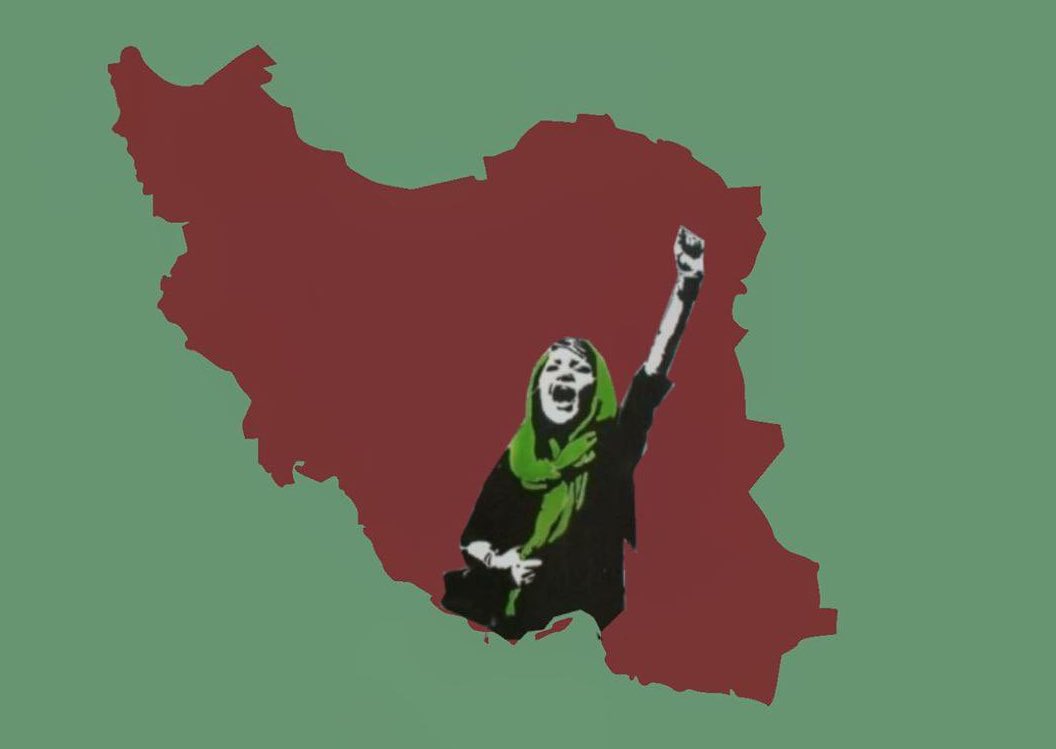
An Iranian government entity enforcing Islamic rules says the Intelligence Ministry has arrested 300 anti-hijab activist "ringleaders" working "for the enemy." A spokesman of the Enjoining Good & Forbidding Evil Headquarters said Sept. 11 that the activists were arrested in accordance with the new Hijab & Chastity Regulations, which officially extend the mandatory hijab to social media posts. This is to be monitored by the government's facial recognition software that was previously used during the pandemic to track if people were wearing face masks.

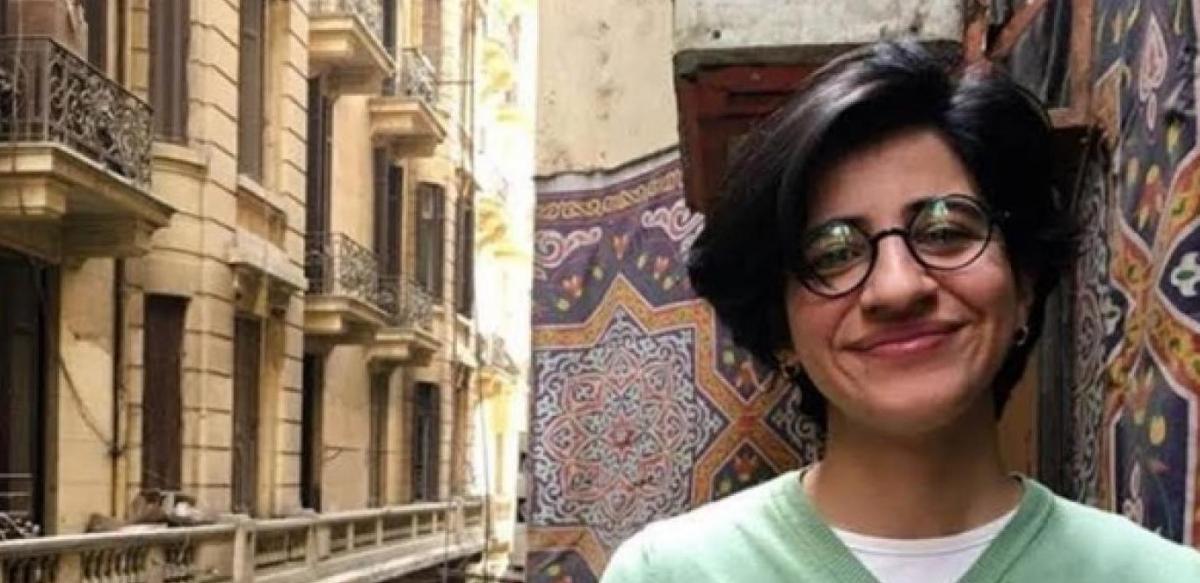
There were "flash mob" protests in Tehran last month after a woman who was arrested for defying the new regulations appeared on state television to give what rights monitors say was a forced confession as a result of torture. Sepideh Rashno, 28, was arrested in July after footage circulated online of her being harassed on a bus over "improper clothing." According to the Hrana human rights group, she was taken to hospital with internal bleeding shortly after her arrest. Rashno remains in custody. 

On Sept. 16, a 22-year-old woman who had been arrested for defying the hijab rules died in custody—officially of a heart attack. But eye-witnesses said Mahsa Amini was beaten while inside a police van when she was picked up in Tehran three days earlier.

The day the new regulations were issued, July 12, has now been designated "Hijab & Chastity Day." (Iran International, PRI, The Guardian, BBC News)

See our last report on the politics of the veil.

Image: Iran International

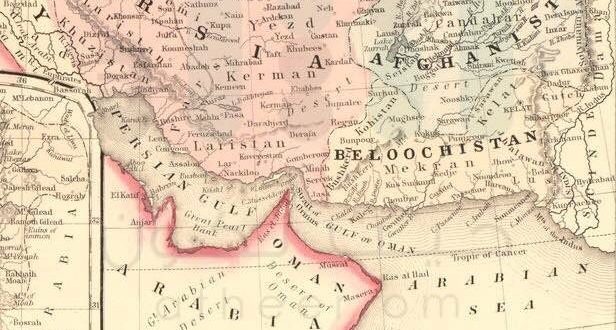
‘Cleansing’ of Armenian culture in Azerbaijan exclave

Nakhichevan

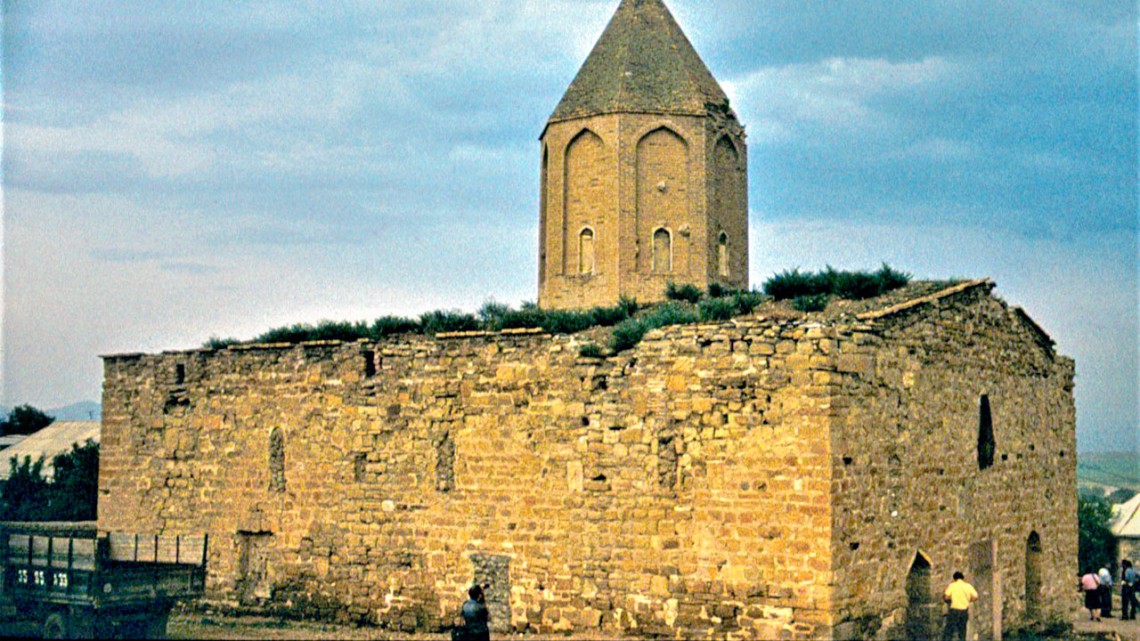
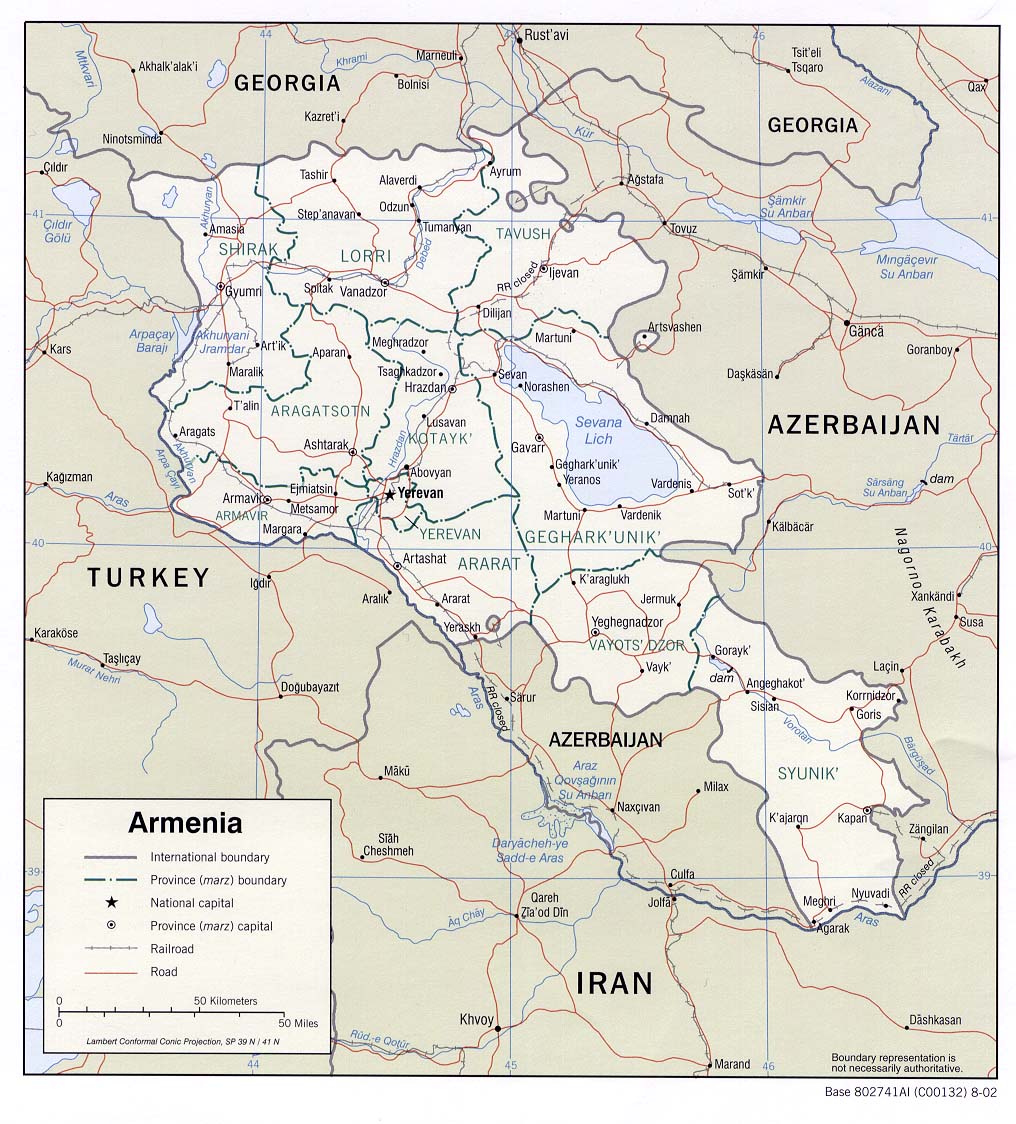
New clashes broke out on the border of Armenia and Azerbaijan Sept. 13, with each side accusing the other of violating the ceasefire. Fighting was first reported near the Lachin Corrdior, which connects Armenia to the autonomous ethnic Armenian enclave within Azerbaijan, Nagorno-Karabakh. But attacks on the Armenian border have also been launched from the Azerbaijani exclave of Nakhchivan (also rendered Nakhichevan or Naxçıvan), which is cut off from the rest of Azerbaijan by Armenian territory. A land corridor through Armenia to Nakhchivan is one of Azerbaijan's key outstanding demands in the conflict. (See map)

Days before the fighting erupted, a new report was released by the group Caucasus Heritage Watch at New York's Cornell University, using decades of high-resolution satellite imagery to document the "complete destruction" of Armenian cultural heritage in the Nakhchivan Autonomous Republic, beginning in the late 1990s. According to the report, of the 110 medieval and early modern Armenian monasteries, churches and cemeteries identified from archival sources in Nakhchivan, 108 were destroyed between 1997 and 2011. The report accused Azerbaijan of "a systematic, state-sponsored program of cultural erasure." (Daily Sabah, OC Media, JAM News, JAM News, Cornell Chronicle)

Photo: CHW

UN documents Russian rights abuses in Ukraine

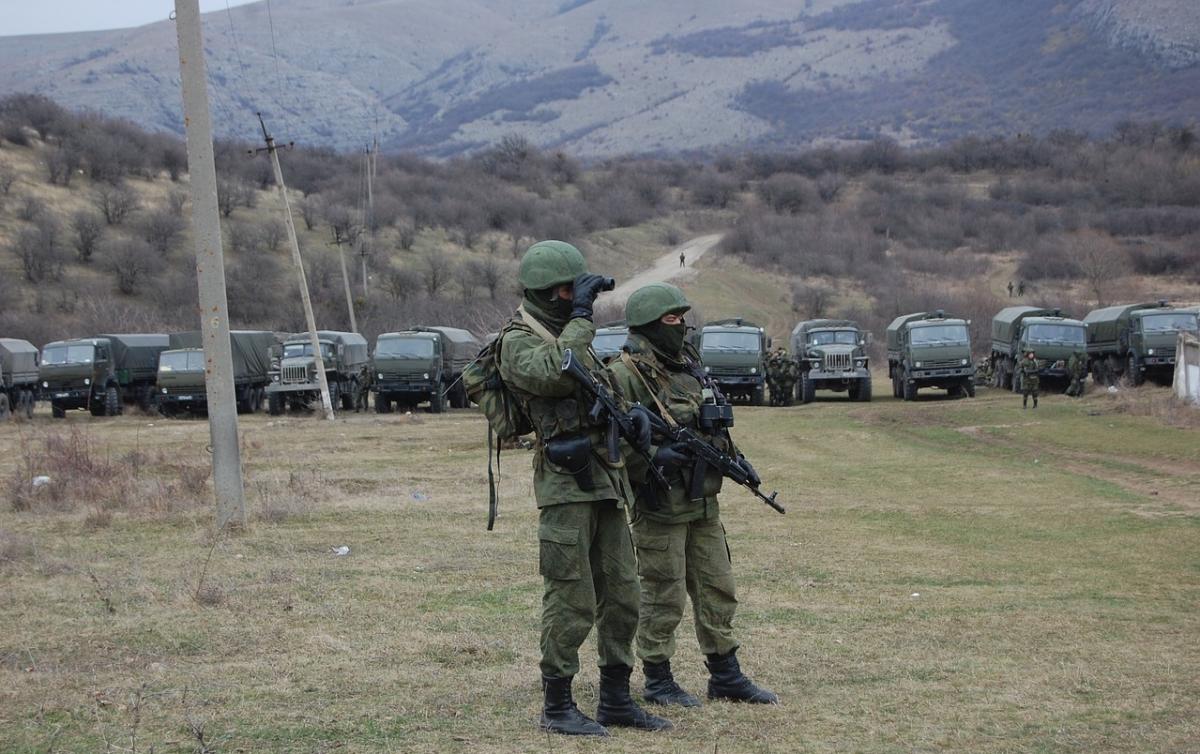
Crimea

The United Nations Human Rights Monitoring Mission (UNHRMM) on Sept. 9 accused Russia of arbitrary detentions and forced disappearances in Ukrainian territory, and violating the basic human rights of Ukrainian war captives. The UNHRMM documented numerous cases of torture and ill-treatment of prisoners of war. Russian authorities have also prevented Ukrainian prisoners of war from contacting their relatives or sharing their locations or health conditions with loved ones.

Matilda Bogner, head of the UNHRMM, reported:

We documented that prisoners of war in the power of the Russian Federation and held by the Russian Federation's armed forces have suffered torture and ill-treatment, and in some places of detention lack adequate food, water, healthcare and sanitation. UNHRMM also received information about a dire health situation in the penal colony in Olenivka, where many Ukrainian prisoners of war reportedly have been suffering from infectious diseases, including hepatitis A and tuberculosis.

Further, the UNHRMM documented deteriorating human rights conditions in the Russian-annexed Crimean Peninsula. Reports show that the Russian Federation has clamped down on freedom of expression by implementing vague and ill-defined statutes, penalizing real or perceived criticism of Russia, and prosecuting 89 individuals for such charges in Crimea alone.

The UNHRMM has been monitoring and documenting violations of human rights in Ukraine since 2014. Since the Russian invasion of this year, the UNHRMM has documented 14,059 civilian casualties in Ukraine, inlcuding 5,767 civilian deaths and 8,292 civilian injures. Further, the UNHRMM finds that at least 416 persons in Ukraine have been victim of arbitrary detention or forced disappearance. Of that figure, 16 civilians were found dead, and 166 civilians have been released.

The UNHRMM will release its full report on the impact of the Russian invasion on human rights in Ukraine on Sept. 27.

From Jurist, Sept. 10. Used with permission.

Note: The UN has also protested Russian plans to hold trials for Ukrainian war prisoners in contravention of international norms. Both the International Criminal Court and UN Human Rights Council have opened investigations into possible war crimes in Ukraine.

Seven nations, including the US, have now filed "declarations of intervention" in support of the International Court of Justice (ICJ) case of Ukraine v. Russian Federation, accusing Russia of genocide during its invasion of Ukraine. (Jurist)

Photo: chief39/Pixabay

Podcast: remembering the Daraya massacre

Daraya

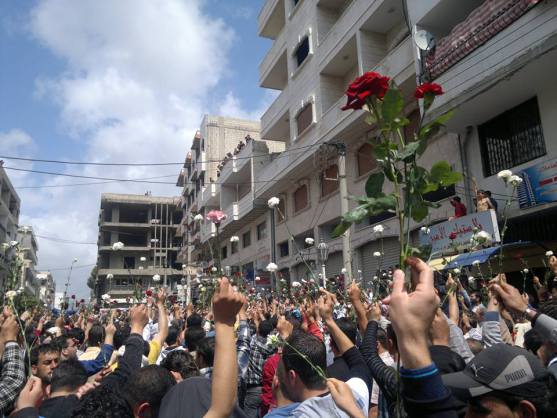
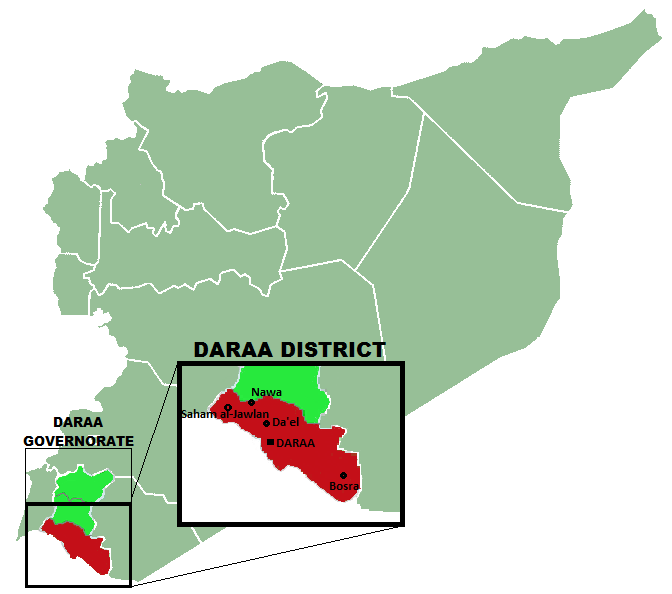
In Episode 139 of the CounterVortex podcast, Bill Weinberg marks the 10th anniversary of the 2012 Daraya massacre, in which the regime of Syrian dictator Bashar Assad killed some 700 civilians while taking back the city from the secular pro-democratic revolutionary forces that had seized power there. These early Syrian revolutionaries were inspired by the grassroots-democratic vision of the anarchist thinker Omar Aziz, and the ethic of nonviolent resistance propounded by Jawdat Said, the "Syrian Gandhi." Daraya was re-taken by rebels later that year, but fell a second time in August 2016, putting an end to the experiment in parallel power and direct democracy. Most of the remaining inhabitants were evacuated to Idlib province in the north, which remained in rebel hands, and the model of parallel power survived there for another two years—before extremist factions linked to the Nusra Front began to take over. The November 2018 assassination of civil resistance leader Raed Fares was another turning point. The following year saw a popular uprising in idlib by the pro-democratic resistance against jihadist rule. But the legacy of Daraya, once the frontline of a peaceful revolution, is largely forgotten history, its true heroism betrayed by the world.

Listen on SoundCloud or via Patreon.

Book discussed: Burning Country: Syrians in Revolution and War by Robin Yassin-Kassab and Leila Al-Shami

Production by Chris Rywalt

We ask listeners to donate just $1 per weekly podcast via Patreon—or $2 for our special offer! We now have 45 subscribers. If you appreciate our work, please become Number 46!

Photo: Daraya, 2011 via Leila's Blog

Russia ‘weaponizing’ gas supplies to Europe

Nord Stream

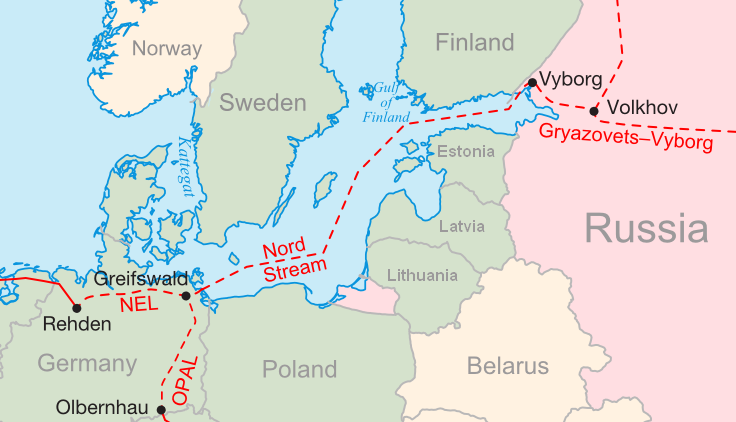
Russian energy giant Gazprom cut off the flow of natural gas to Germany and other European markets via the Nord Stream pipeline on Aug. 31, calling it a three-day shut-down for maintenance purposes. But Western governments charge that Russia is "weaponizing" gas supplies amid the Ukraine war. (EuroNews) Days earlier, Germany's government broached allowing the blocked Nord Stream 2 pipeline to begin pumping Russian gas. Wolfgang Kubicki, vice president of the Bundestag, said the move is necessary so "people do not have to freeze in winter and that our industry does not suffer serious damage." His comment prompted a harsh response from Kyiv, where Foreign Minister Dmytro Kuleba said that "addiction to Russian gas kills." (Politico)


Map: Wikipedia

Econo-protests rock Sierra Leone

Freetown

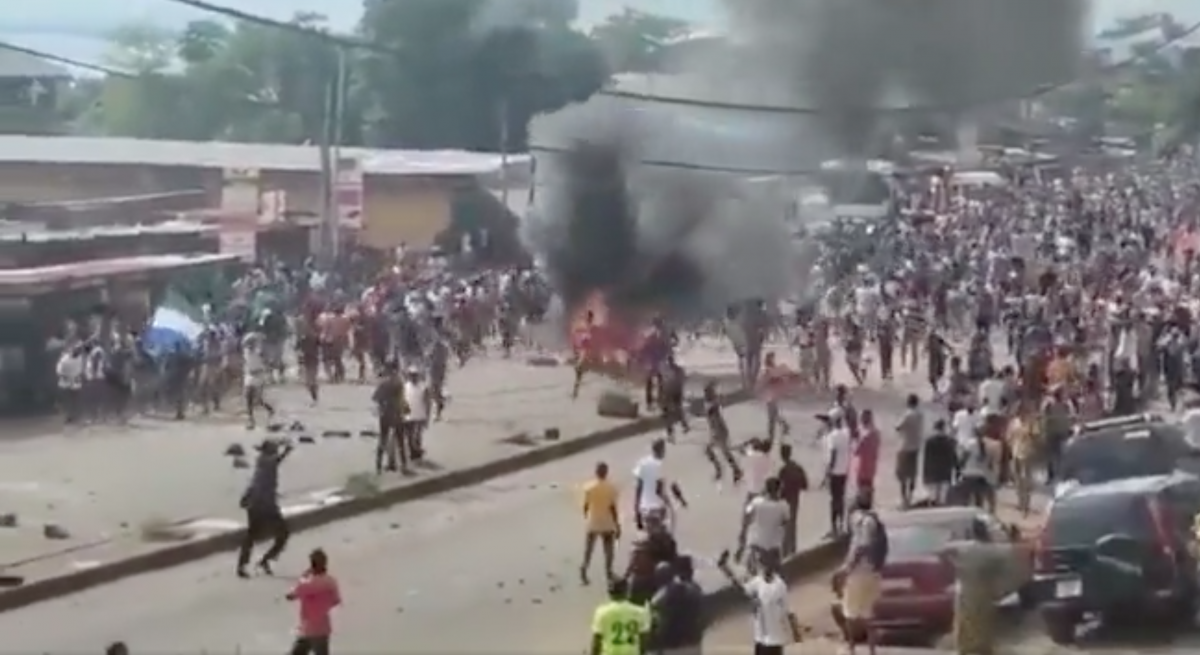
Authorities in Sierra Leone imposed a nationwide curfew on Aug. 10, amid anti-government protests, in which a still undetermined number of people have been killed, apparently including at least four police officers. In the capital Freetown, protesters barricaded the streets and clashed with security forces, enraged at a 40% spike in the cost of living. A key demand is the resignation of President Julius Maada Bio, who is on a month-long vacation with his family in London—a trip apparently paid for with misappropriated public funds. The government has shut down internet access in the country to prevent activists from issuing calls to protest and spreading images of the repression. President Bio has long been accused of rampant corruption and human rights abuses. (AllAfrica, NYT)

Food and fuel prices are spiking worldwide due to the Ukraine war, sparking protests in countries across the planet.

Image: Africa Facts Zone via Twitter

Nagasaki mayor: ‘tangible and present crisis’ of nuclear warfare

Nagasaki

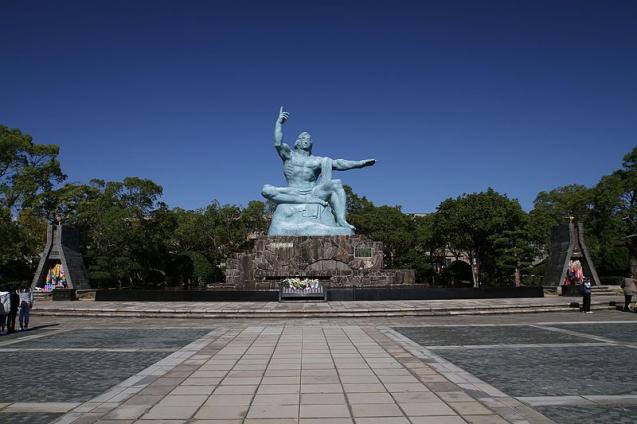
In official comments on the anniversary of the Aug. 9, 1945 US atomic bombing of the Japanese city, the mayor of Nagasaki sounded a note of alarm. Mayor Tomihisa Taue stated: "In January this year, the leaders of the United States, Russia, the United Kingdom, France and China released a joint statement affirming that 'a nuclear war cannot be won and must never be fought.' However, the very next month Russia invaded Ukraine. Threats of using nuclear weapons have been made, sending shivers throughout the globe. The use of nuclear weapons is not a groundless fear but a tangible and present crisis." (Japan Today)


Photo: Pop Japan

UN: ‘real risk of nuclear disaster’ in Ukraine

Chernobyl

The UN nuclear chief warned Aug. 3 that the situation at Europe's largest nuclear power plant "is completely out of control," and issued an urgent call for Russian occupation forces to immediately allow experts to visit the sprawling Zaporizhzhia complex. Rafael Grossi, director general of the International Atomic Energy Agency (IAEA), told the Associated Press: "Every principle of nuclear safety has been violated… What is at stake is extremely serious and extremely grave and dangerous." The six-reactor Zaporizhzhia plant has been under Russian military control since early March, although it is still being operated by Ukrainian engineers.

Two days after Grossi's warning, Ukrainian and Russian officials blamed each other for a series of blasts within the Zaporizhzhia complex, which damaged transmission lines and other equipment. Ukrainian President Volodymyr Zelensky said that Russian forces shelled the plant in what he called "an act of terror." The Russian military responded by claiming a Ukrainian artillery strike was responsible, calling the attack "nuclear terrorism."

Kyiv has been accusing Russian forces of using the plant as a "shield," firing on Ukrainian positions from within the complex. Ukraine's Foreign Ministry said the "possible consequences of hitting an operating reactor are equivalent to the use of an atomic bomb."

Grossi responded to this escalation by warning of a "very real risk of a nuclear disaster." Again demanding that the IAEA to be granted access to the plant, he added: "Any military firepower directed at or from the facility would amount to playing with fire, with potentially catastrophic consequences." (BBC News, BBC News, 1945)

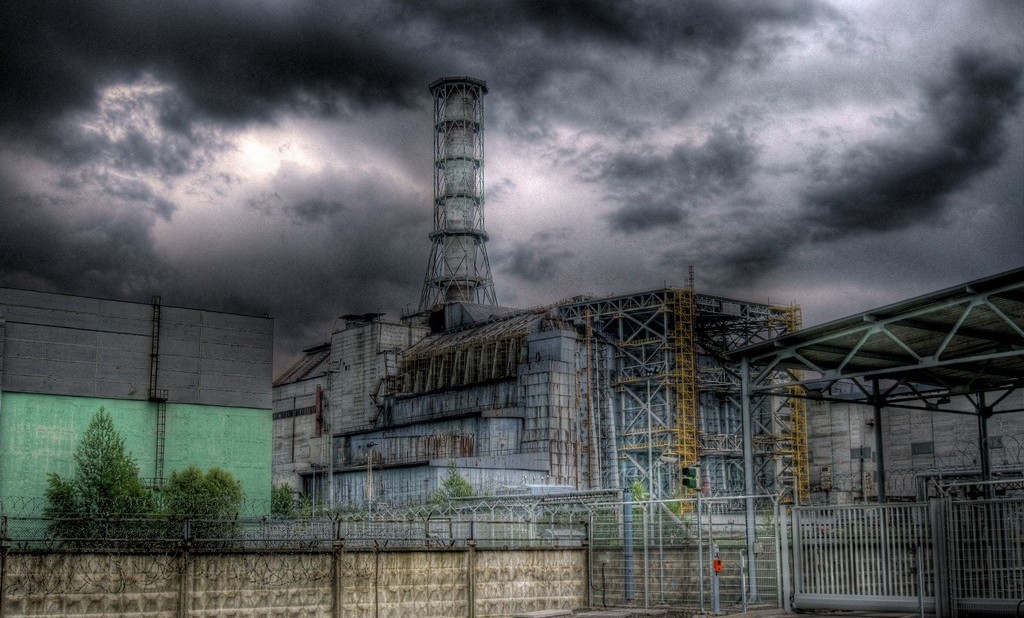
Meanwhile, Greenpeace has accused the IAEA of downplaying the damage caused at the stricken Chernobyl plant, which was seized by Russian forces on Feb. 24 and returned to Ukrainian control on March 31. The environmental organization conducted a survey of the Chernobyl complex to check what it called the "very limited data" from the IAEA concerning increased radiation levels. The survey was conducted in cooperation with scientists from the Ukrainian State Agency on the Exclusion Zone Management (SAUEZM). Drones were emplloyed in areas of the complex where Russian forces had planted landmines. Greenpeace reported radiation levels three times higher than those reported by a previous IAEA survey in areas where Russian troops had dug trenches in contaminated ground.

Greenpeace said it is concerned that the IAEA has been "severely compromised" due to its ties to Russia's state nuclear agency, ROSATOM. Greenpeace stated that current IAEA deputy director Mikhail Chudakov, is "a long term ROSATOM official." (Greenpeace, Newsweek)

Photo: Wikipedia

Jury nullification at issue in federal case

Second Circuit

The US Court of Appeals for the Second Circuit on July 27 reinstated a New York law that limits protest near courthouses. The reinstated law, New York Penal Law § 215.50 (7), prohibits people from engaging in conduct "concerning the conduct of a trial being held" within 200 feet of a courthouse. Should someone be found in violation of the law, they could face criminal contempt charges. The case, Picard v. Magliano, concerned activist Michael Picard, who was arrested for distributing "jury nullification" literature outside of a New York courthouse. In 2017, Picard stood outside of the Bronx County Hall of Justice holding a sign that said "Jury Info." Picard had flyers that read "No Victim? No Crime. Google Jury Nullification" and "'One has a moral responsibility to disobey unjust laws' – Martin Luther King Jr." Picard claimed he was not trying to influence juror votes, nor was he aware of "any particular cases in which jurors were being impaneled or serving at the time."

Picard challenged the law on First Amendment grounds, claiming it violated his right to free speech. At trial in a district court, a federal judge struck down the New York law, finding it infringed upon First Amendment rights.

In a 2-1 decision written by US Circuit Judge Gerald Lynch, the Second Circuit found that the New York law could be found to further a compelling state interest. The court vacated the decision and remanded the case back to the district court to "craft a narrower injunction prohibiting the application of NYPL § 215.50(7) only in the circumstances presented by Picard's conduct in this case."

In a partial dissent, US Circuit Judge Jon Newman stated:

[The law] is overbroad in that it creates a 200-foot zone around a courthouse in which verbal or written speech concerning the conduct of trials may not be expressed. A distance of 200 feet is 67 yards, two-thirds the length of a football field…Keeping speakers that far away from potential listeners and readers renders the provision overbroad.

From Jurist, July 28. Used with permission.

Photo: Wikipedia

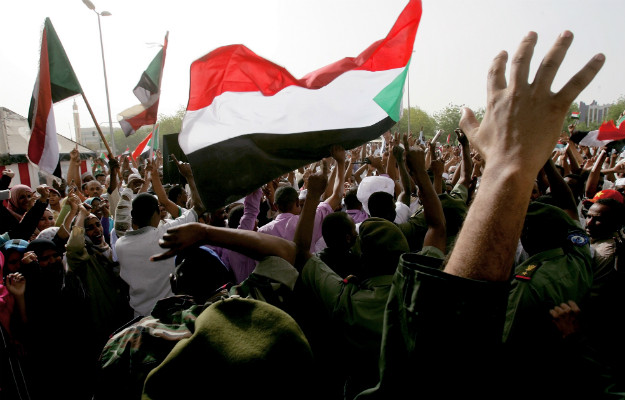
Sudan: regime spurring ethnic violence?

Sudan

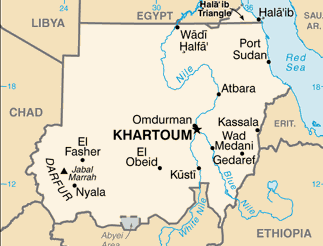
Fighting between Hausa and Berta tribespeople broke out in Sudan's Blue Nile state last week, leaving dozens dead. The clashes, centered on the localities of Gaissan, Roseiris and Wad Al-Mahi, apparently began in a land dispute. Tensions were elevated following calls to recognize a chiefdom for the Hausa people, who originate from Nigeria but have been settling lands in the region for generations. Authorities have imposed a curfew and mobilized the army and paramilitary Rapid Support Forces (RSF) to the state, ostensibly to restore calm. But the Forces for Freedom & Changes (FFC) opposition coalition accused the military of instigating the conflict by encouraging Hausa demands to establish a chiefdom in territory traditionally inhabited by the Hamaj, a clan of the Berta people. Before a 2020 peace deal, many Hausa served in paramilitary forces to help the regime fight the SPLM-N rebels. "The…FFC hold the coup authority fully responsible for the successive renewal of these events in most parts of the country," the opposition group said in a statement. (Sudan Tribune)


Map: Perry-Castañeda Library Map Collection

Indonesian islanders sue corporation over climate change

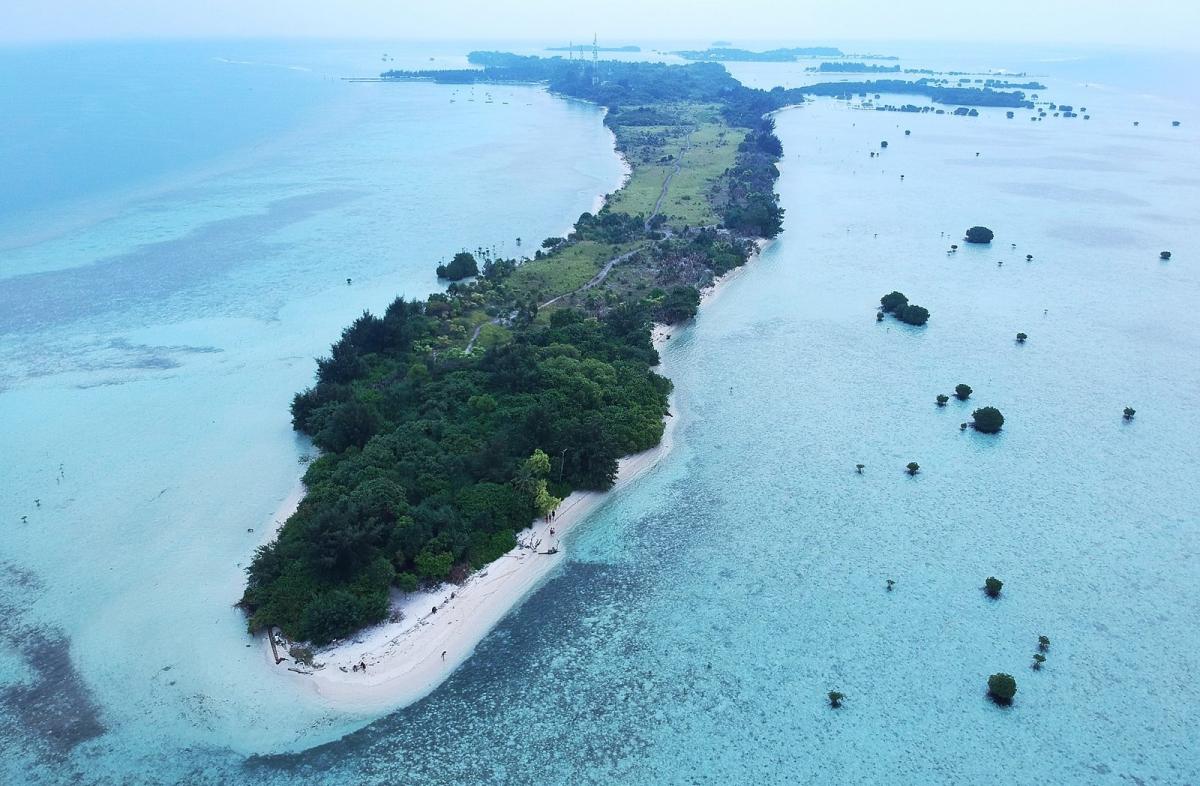
Pulau Pari

Four residents of the Indonesian island of Pulau Pari on July 12 filed a lawsuit against Swiss cement giant Holcim over the effects of climate change on the island. Swiss Church Aid (HEKS), the European Center for Constitutional and Human Rights (ECCHR) and the Indonesian Forum for Environment (WALHI) are backing the suit brought in the Swiss courts. The residents claim that climate change has caused rising tides and devastating floods. One plaintiff, Edi, stated: "I find it very unjust that a handful of people are destroying the environment and are doing so for their own person[al] benefit."

HEKS warns that the island will be underwater by 2050 if nothing changes. Another plaintiff, Bobby, stated: "I am extremely worried about the people in Pari should these floods become more frequent. The biggest concern is: if Pari is submerged, where are we to go, where are we to live?"

According to a study from the University of Massachusetts, Holcim is the 48th biggest global polluter. A report from the Climate Accountability Institute finds that Holcim emitted seven billion tons of CO2 from 1950 to 2021. HEKS notes this is more than twice as much as the entire country of Switzerland.

ECCHR pointed out that the suit is "noteworthy as they are urging the company to pay compensation for loss and damages already incurred, as well as to finance urgently needed flood protection measures."

Holcim responded to the suit, saying: "We significantly reduced our footprint over the last decade and will cut it further by 2030."

From Jurist, July 12. Used with permission.

Similar suits have been launched by other island-dwellers and small island nations.

Photo: Wikimedia Commons

Against pseudo-left disinformation on Ukraine

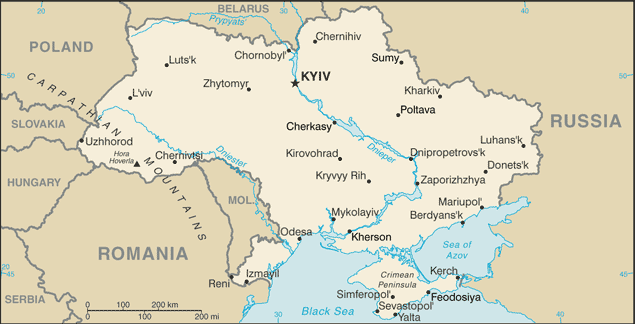
Ukraine

In Episode 131 of the CounterVortex podcast, Bill Weinberg calls out the ironically named Fairness & Accuracy in Reporting (FAIR) for openly spreading Russian disinformation. FAIR serially portrays the 2014 Maidan Revolution as a US-instrumented, Nazi-tainted, unconstitutional "coup." FAIR commentators Luca Goldmansour, Gregory Shupak and Bryce Greene are all guilty of this. They do not bother to consult voices of Ukrainian civil society—academics, media watchdogs and human rights groups—that refute this notion. Glomming onto the notorious Nuland phone call to dismiss a grassroots pro-democracy uprising as a Washington "regime change" intrigue reveals chauvinistic contempt for the Ukrainians. And hyping the supposed "Nazi" threat in Ukraine (while ignoring the Nazi-nostalgist and neo-fascist elements on the Russian side) abets Putin's ultra-cynical propaganda stratagem of fascist pseudo-anti-fascism. Rather than calling out Fox News for its propaganda service to Putin, FAIR instead joins them. How did a supposed progressive media watchdog become a de facto arm of Kremlin war propaganda? Listen on SoundCloud or via Patreon.

Production by Chris Rywalt

We ask listeners to donate just $1 per weekly podcast via Patreon—or $2 for our new special offer! We now have 41 subscribers. If you appreciate our work, please become Number 42!

Map: PCL

Bill Weinberg slams ‘tankie’ pseudo-left on YouTube

anti-tankie

In a series of brief interviews with vlogger and activist songster Geof Bard, CounterVortex producer Bill Weinberg dissects the sinister "tankie" phenomenon on the contemporary Western "left," which paradoxically supports Russian imperialism in the name of a misguided "anti-imperialism." This absurd double standard is enabled by the so-called "Chomsky Rule," which holds that we are only permitted to protest the crimes of US imperialism—and thereby renders the crimes of rival imperialisms invisible to the activist-left milieu. The pseudo-left betrayal of Ukraine to imperialist aggression actually undermines our moral authority to oppose the crimes of the US and its client states in places like Gaza and Yemen.

See our last rants against Chomskyism and Red-Brown Politics (left-fascist convergence)

Massacres escalate in Ethiopia’s Oromia state

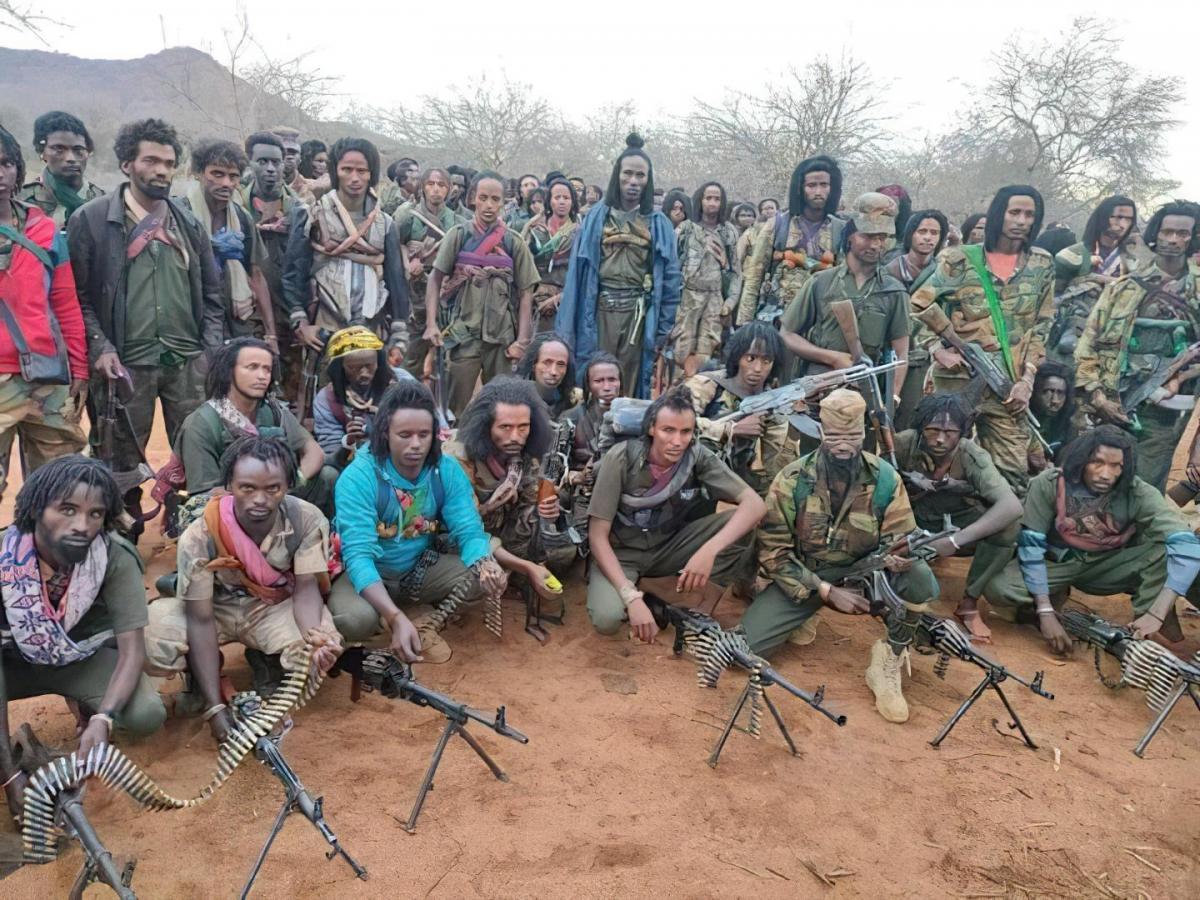
OLA

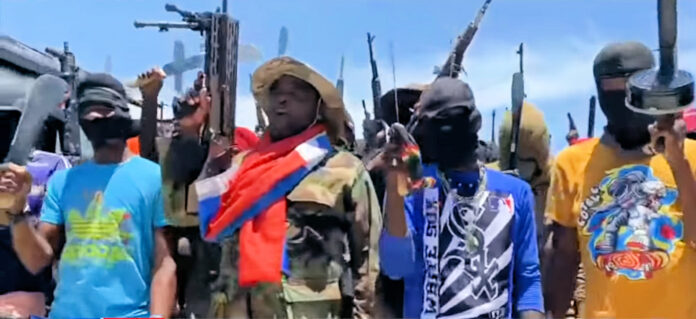
More than 200 civilians were killed June 18 at the village of Tole Kebele in the West Wollega zone of Ethiopia's Oromia regional state. The massacre, which targeted members of the Amhara ethnicity, is being blamed by authorities on the rebel Oromo Liberation Army (OLA). Amhara militias in the region have been cooperating with the official security forces in counterinsurgency operations against the OLA, resulting in reprisal attacks on villages. However, OLA commander Kumsa Dirriba denies that his forces carry out attacks on civilians, claiming that the national army is "solely responsible" for the killings of Amhara civilians in Oromia. Whatever the truth of the matter may be, the dynamic is spreading into neighboring Gambella regional state, which has seen heavy fighting in recent days between the army and joint rebel forces of the OLA and Gambella Liberation Front (GLF), with dozens of civilians among the slain. (Addis Standard, NYT, BBC News, Ethiopia Insight, Ethiopia Insight)

The OLA, referred to by the government as "OLF-Shene," is remnant faction of the disarmed Oromo Liberation Front which has continued to wage an insurgency in rejection of a 2018 peace deal.

Photo: Ethiopia Insight

Podcast: Rojava and Ezidikhan in the Great Game

Rojava

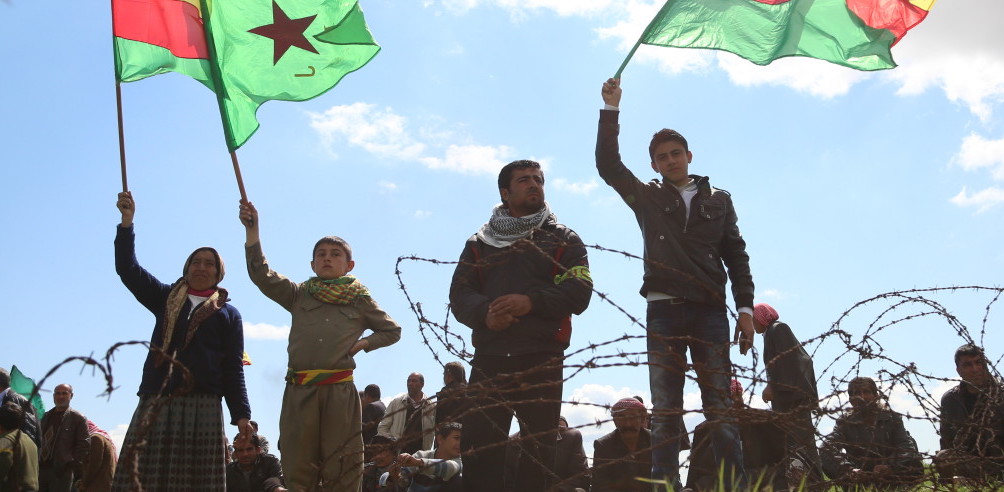
In Episode 127 of the CounterVortex podcast, Bill Weinberg notes that the Kurdish-controlled Syrian city of Kobani, which became a global icon of resistance to ISIS in 2014, is now under threat of Turkish aggression. The Syrian Kurds were betrayed in 2019, when their autonomous zone of Rojava was greatly reduced by Turkey's first thrust into their territory. Erdogan is now threatening to extinguish it altogether, and incorporate all of Rojava into his "security zone." There is growing speculation that the US could "green light" this aggression in exchange for Turkey dropping its objections to Sweden and Finland joining NATO. Meanwhile, the Yazidis of northern Iraq, who were subjected to genocide and slavery at the hands of ISIS in 2014, are facing extermination of their hard-won autonomous zone Ezidikhan at the hands of Baghdad's military—acting under pressure from Turkey. Great Power meddling in Syrian and Iraqi Kurdistan alike is pitting the peoples of the region against each other, portending a potentially disastrous Arab-Kurdish ethnic war. How can activists in the West help break this trajectory? Listen on SoundCloud or via Patreon.

Books discussed: A Road Unforeseen: Women Fight the Islamic State by Meredith Tax; The Impossible Revolution: Making Sense of the Syrian Tragedy by Yassin al-Haj Saleh; Indefensible: Democracy, Counterrevolution, and the Rhetoric of Anti-Imperialism by Rohini Hensman

Production by Chris Rywalt

We ask listeners to donate just $1 per weekly podcast via Patreon—or $2 for our new special offer! We now have 41 subscribers. If you appreciate our work, please become Number 42!

Photo: Rojava Solidarity NYC

Rights experts accuse Russia of incitement to genocide

Mariupol

A group of 33 legal scholars and genocide experts on May 27 released a report accusing Russia of incitement to genocide in Ukraine, and calling on the international community to prevent a genocide from occurring. The report, released by the New Lines Institute for Strategy & Policy n Washington DC and the Raoul Wallenberg Centre for Human Rights in Montreal, used "open-source evidence" to assert that Russia has breached the UN Genocide Convention, a treaty to which Russia and Ukraine are both parties.

The report is broken down into sections detailing Russian incitement to genocide, genocidal intent, and a "genocidal pattern of destruction targeting Ukrainians." Among other evidence, the authors cite denial of "the legitimacy of a distinct Ukrainian identity to the Russian public," efforts to label Ukrainians as "Nazis," and the many allegations of war crimes against civilians carried out by Russian forces. The authors' note that Russia's 64th Separate Guards Motor Rifle Brigade was publicly celebrated in Russia after being accused of mass killings in Bucha, Kyiv oblast.

The authors further note that every state party to the Genocide Convention has a legal obligation to prevent genocide in Ukraine.

Russia has been accused of numerous crimes against Ukranian civilians. On May 7, Amnesty International released a report which detailed their findings of Russian war crimes in Kyiv oblast.

The Genocide Convention has been a point of contention since the beginning of Russia's invasion of Ukraine on Feb. 26. Ukraine filed a complaint with the International Court of Justice (ICJ) asserting that Russian claims of "genocide" in Donetsk and Luhansk oblasts were illegitimate, and that Russia should be obligated to halt its invasion. The ICJ ruled on March 16 that Russia must halt its invasion, but Russia failed to follow the court's order.

From Jurist, May 27. Used with permission.

Both the International Criminal Court and UN Human Rights Council have opened investigations into possible war crimes in Ukraine.

Photo via Twitter

UN: record 100 million people displaced worldwide

refugees

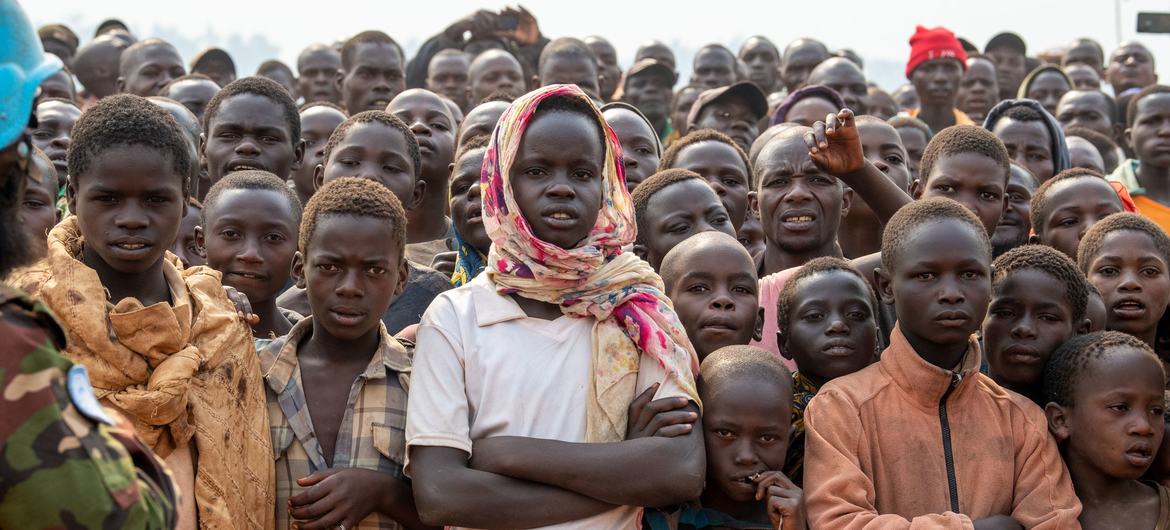
According to UNHCR, the UN refugee agency, the number of forcibly displaced people worldwide rose to 90 million by the end of 2021, propelled by new waves of violence or protracted conflict in countries including Ethiopia, Burkina Faso, Burma, Nigeria, Afghanistan and the Democratic Republic of the Congo. In 2022, the war in Ukraine has displaced 8 million within the country and forced some 6 million to flee the country as refugees. This has pushed the total displaced to over 100 million for the first time.

"One hundred million is a stark figure—sobering and alarming in equal measure. It’s a record that should never have been set," said UN High Commissioner for Refugees, Filippo Grandi. "This must serve as a wake-up call to resolve and prevent destructive conflicts, end persecution, and address the underlying causes that force innocent people to flee their homes." (UN News, May 23)

The UNHCR figure for total global refugees and displaced persons has broken previous records for several years running.

Photo: Eskinder Debebe/UN News

Argentina: state liable for 1924 massacre

Napalpi

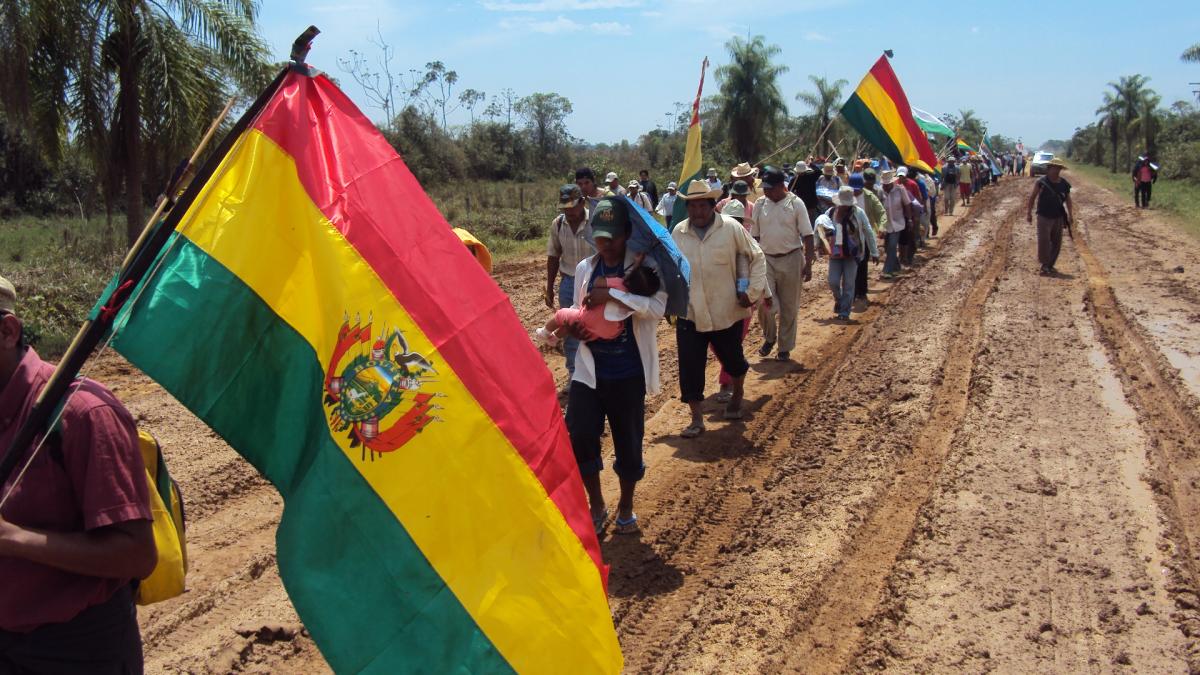
A federal judge in Argentina's Chaco province on May 19 ruled that the national state bears responsibility for the 1924 massacre of some 500 indigenous laborers in the region, and ordered that reparation measures be instated. On July 19, 1924, national police and vigilantes linked to the area's landowners fired on a large group of indigenous protesters, who were marching over harsh conditions on the cotton plantations where they had been reduced to forced labor. A case seeking justice in the Napalpí Massacre was brought by Argentina's Secretariat of Human Rights and the local Chaqueño Aboriginal Institute. The verdict was read in the indigenous languages Qom and Moqoit as well as Spanish. (Secretaría de Derechos Humanos, BBC Mundo)

See our last report on the historical reckoning with the genocide of indigenous peoples in Argentina.

Photo: Secretaría de Derechos Humanos

US troops ‘back’ to Somalia —but did they ever leave?

Somalia

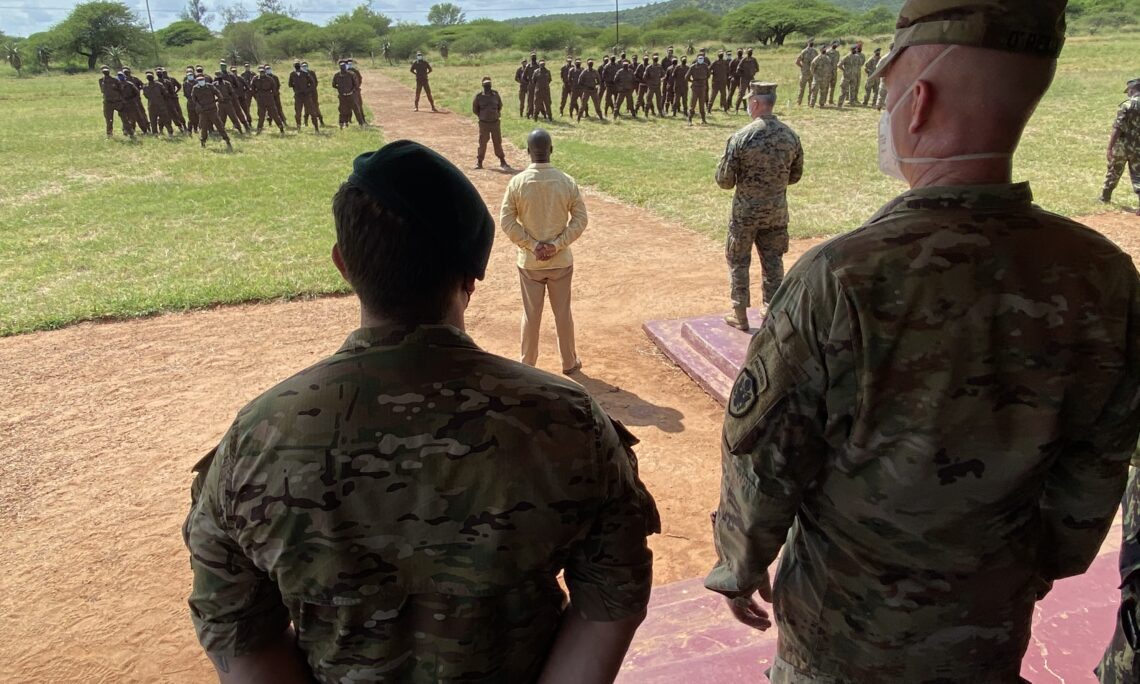
The Pentagon announced May 16 that a "small, persistent US military presence" of around 500 troops is to return to Somalia, to assist ongoing operations against the Shabaab insurgents. Media commentators widely portrayed this as a policy reversal, with some incorrectly stating that Present Trump "brought the troops home" from Somalia in 2020. However, the Pentagon press release implicitly acknowledges that the so-called "withdrawal" had been largely a fiction: "This decision was based on a request from [Secretary of Defense Lloyd J. Austin III] and included advice from senior commanders and, of course, concern for the safety of our troops who have incurred additional risk by deploying in and out of Somalia on an episodic basis for the past 16 months."

The troops were never "brought home"; they were redeployed to neighboring Djibouti and Kenya, and sent back in to Somalia as mandated by contingency. The new press release said Pentagon spokesperson John Kirby "told reporters the Department recognizes that al-Shabab has increased in strength and so poses a heightened threat. The existing model of US assistance moving into and out of the country as needed, he said, is inefficient."

Trump had removed some 700 troops from Somalia. So the new force is somewhat reduced—but, by comparison, not exactly "small."

Even if the announcement doesn't mean very much, it is being met with some trepidation by human rights advocates. "US officials should be very clear on how their forces will avoid harming Somali civilians during military operations," said Laetitia Bader, Horn of Africa director at Human Rights Watch. "They will need to work closely with Somali and African Union authorities to avoid repeating past laws of war violations and promptly and appropriately respond to civilian loss."

The US has been involved in military operations against al-Shabaab and predecessor insurgent groups since at least 2007. Since 2017, US air-strikes in Somalia have increased significantly.

Somalia's new president, Hassan Sheikh Mohamud, welcomed the decision to return US troops to the country. His election, one day before the Pentagon announcement, was looked to as resolving the country's long political crisis. But he had been president during a previous crisis-wracked administration from 2012 to 2017, when he had faced widespread calls for his resignation. And he has not been elected by a popular vote (due to lack of effective government control over most of the country), but by the parliament. And the parliamentarians themselves are less elected than appointed by clan elders—and then only in those parts of the country where the government has enough control to hold some semblance of polls. As VoA states: "The distribution of power in Somalia is on a clan-based system locally known as the 4.5 system, where majority clans are allocated majority seats in parliament while the smaller clans, grouped together, get the remainder."

Photo: Patrick Crosley/USMC via CommonDreams

Cuba approves harsh new penal code

Havana

The National Assembly of People's Power, Cuba's parliament, on May 15 approved a new penal code as part of judicial reforms initiated after the adoption of a new constitution in April 2019. President Miguel Diaz-Canel and former President Raul Castro, who governed from 2008 to 2018, attended the session. The new penal code reinforces sanctions for acts linked to economic and administrative corruption, with broadened scope for new economic actors. It also incorporates new penalties to address gender-based and family violence. Controversially, the new code tightly controls unauthorized contacts with foreign organizations and individuals, and explicitly bans foreign financing of civic activities. Under the new code, those who give information to international organizations, associations or other individuals who have not been authorized by the government, face severe penalties. These include 10-30 years imprisonment and, in extreme cases, the death penalty.

Human rights groups criticized the new legislation, warning it could have "catastrophic effects." Ana Cristina Núñez, senior researcher for the Committee to Protect Journalists, said, "In a country where private media is illegal and journalists have no possibility of obtaining local funding, prohibiting foreign funding is a death sentence to independent journalism."

The new legal code will go into effect within 90 days of being published in the Official Gazette of the Republic.

From Jurist, May 17. Used with permission.

Photo: Pixabay via Jurist

Podcast: Somalia in the Great Game

Somalia

In Episode 122 of the CounterVortex podcast, Bill Weinberg examines the ongoing conflict in Somalia in light of both climate change and Great Power politics. Despite a pseudo-withdrawal of US forces, the Pentagon continues drone strikes against the Shaabab insurgents—as the Horn of Africa faces it worst drought in a generation, with millions on the brink of extreme hunger and possible starvation. A paradox of the situation is that "government-controlled" Somalia (the southern third of the country) is not controlled by any government, but wracked by insurgency. In contrast, the unrecognized de facto independent state of Somaliland in the north is a bastion of comparative stability and even social progress. Reports of Russian designs on Somaliland as a potential site for a naval base threaten to draw it into the imperial contest for control of the strategic Horn. Progressives in the West can demand international recognition for an independent and non-aligned Somaliland. We can also loan solidarity to the Sufi resistance now fighting both the Shaabab and the "recognized" Mogadishu quasi-government. Most importantly, we can support the secular and pro-democratic voices of civil society that are standing up for human rights and basic freedoms at great risk to themselves, and in spite of everything. Listen on SoundCloud or via Patreon.

Production by Chris Rywalt

We ask listeners to donate just $1 per weekly podcast via Patreon—or $2 for our new special offer! We now have 34 subscribers. If you appreciate our work, please become Number 35!

Map via Wikimedia Commons

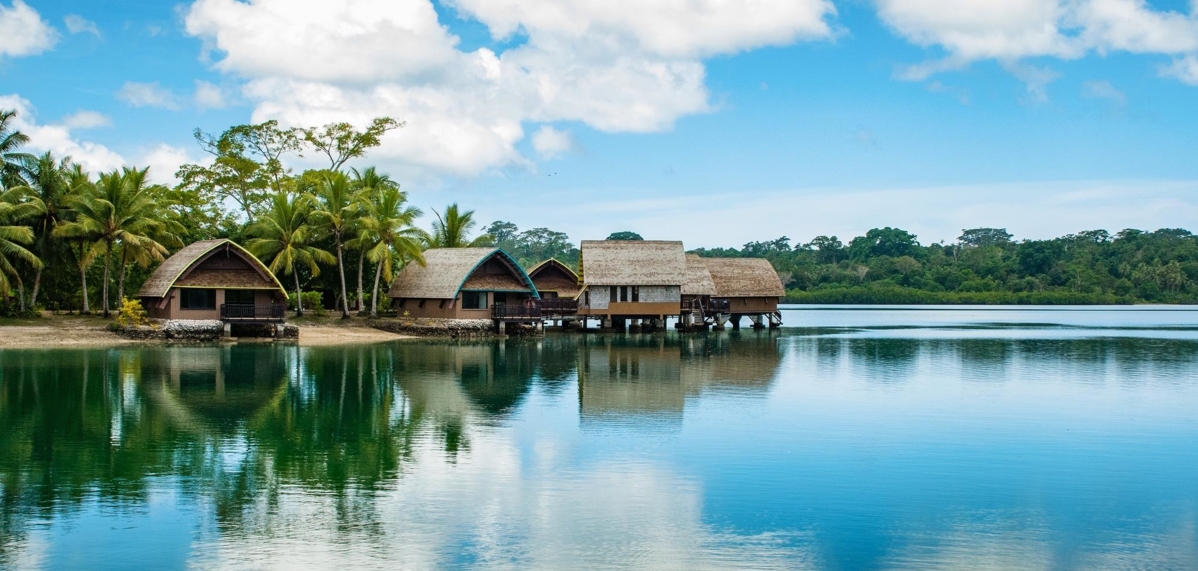
Coalition backs Vanuatu case on climate justice

Vanuatu

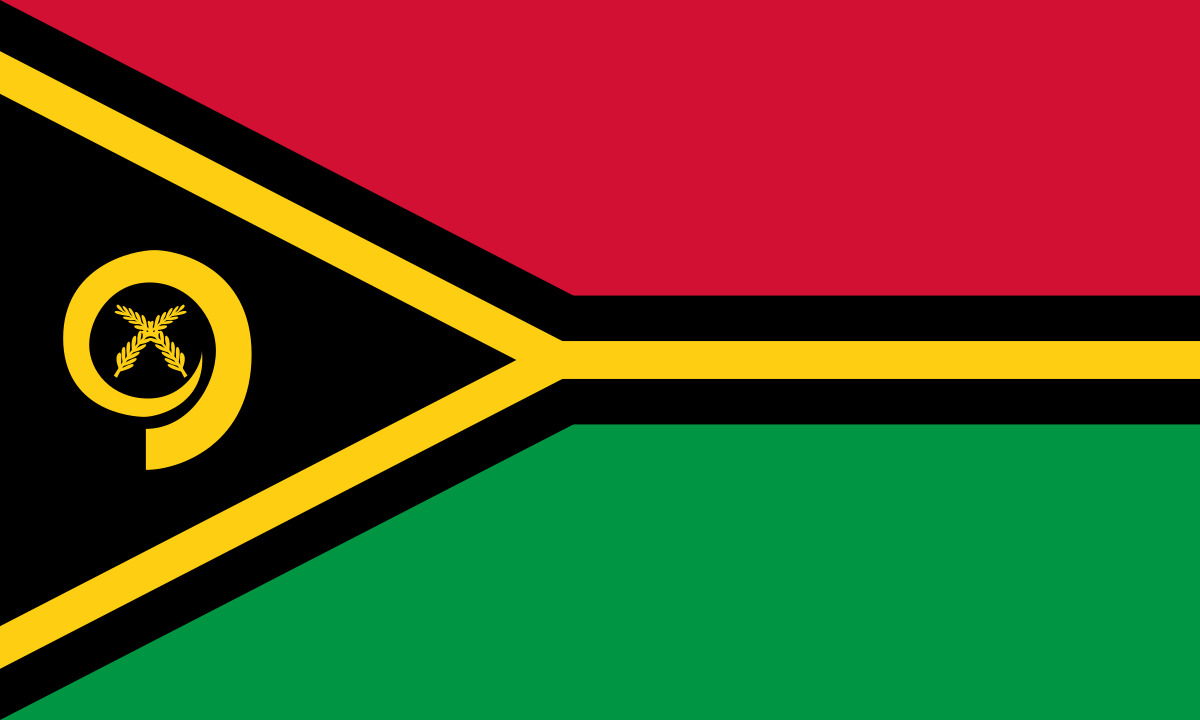
Some 1,500 advocacy groups from over 130 countries have formed a global alliance to support a Vanuatu government proposal seeking an advisory opinion from the International Court of Justice on climate change. The government plans to put the proposal to the UN General Assembly for a vote later this year. Prime Minister Bob Loughman said the Pacific Island nations can't survive if rich corporations and governments continue to put profits ahead of people and the planet. Addressing members of the new International Court of Justice Advisory Opinion (ICJAO) coalition, including the Climate Action Network, Greenpeace Australia Pacific and 350 Pacific, he said: "The climate crisis is a human rights crisis. Civil society and friends, this is not a crisis that I or my people will continue to accept; not before we have done everything within our powers to stop it. We, the smallest nations of the world do have power." (Climate Action Network International, Radio New Zealand)

Image: Wikimedia Commons

Podcast: Chernobyl and nuclear fear in Ukraine

Chernobyl

In Episode 121 of the CounterVortex podcast, Bill Weinberg notes the grim irony that on the week of International Chernobyl Disaster Remembrance Day, Russian regime and state media figures issued blatant threats to use nuclear weapons in the Ukraine war. This follows criminal recklessness by Russian forces at the Chernobyl and Zaporizhzhya nuclear plants, which itself constituted an escalation on the ladder of nuclear terror. These events clearly illustrate how nuclear power and weapons constitute a single unified threat. Weinberg continues his deconstruction of the industry propaganda about how the "no safe dose" dictum is now obsolete (no, it isn't, actually), and sophistries such as the "Banana Equivalent Dose."  Amid the relentless efforts to revive the nuclear industry in the US, China is undertaking a major thrust of nuclear development, with similar plans afoot in France. And this as economies are increasingly based on energy-intensive and socially oppressive activities like "crypto-mining." Nonetheless, respected environmentalists such as acclaimed climate scientist James Hansen and Charles Komanoff of the Carbon Tax Center now advocate a continuance of reliance on nuclear power as an alternative to fossil fuels. This false choice is predicated on the continuance of dystopian "normality"—exactly what needs to be challenged. Listen on SoundCloud or via Patreon.

Reading: "The Long Death" by Marge Piercy

Production by Chris Rywalt

We ask listeners to donate just $1 per weekly podcast via Patreon—or $2 for our new special offer! We now have 34 subscribers. If you appreciate our work, please become Number 35!    

Photo: Wikipedia

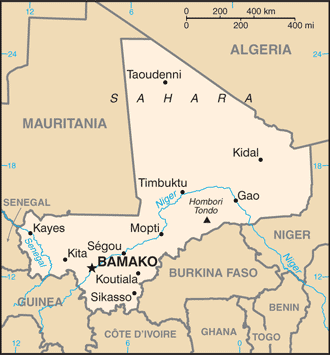
‘False flag’ plot behind Mali mass grave?

Mali

The junta in Mali is accusing France of spying and subversion after the French military used a drone to film footage that Paris says shows Russian mercenaries burying bodies in a mass grave near a military base. The French government says the bodies were buried outside the base at Gossi, Tombouctou region, in a scheme to falsely accuse its departing forces of leaving behind mass graves. Video from the drone was released after pixelated images appeared on social media of corpses being buried in sand, with text accusing France of atrocities in Mali. France claims the bodies were brought to Gossi from Hombori, immediately to the south, where Malian troops and Russian mercenaries have been carrying out an operation against jihadist insurgents. The junta has acknowledged that 18 militants were killed in the operation. (The Guardian, AfricaNews, BBC News, Al Jazeera)

Mercenaries from Russian private military company Wagner Group have been accused in massacres in Mali since being brought in to replace the departing French and European Union forces earlier this year.

Map: PCL

Sudan: 150 killed in new Darfur massacre

Darfur

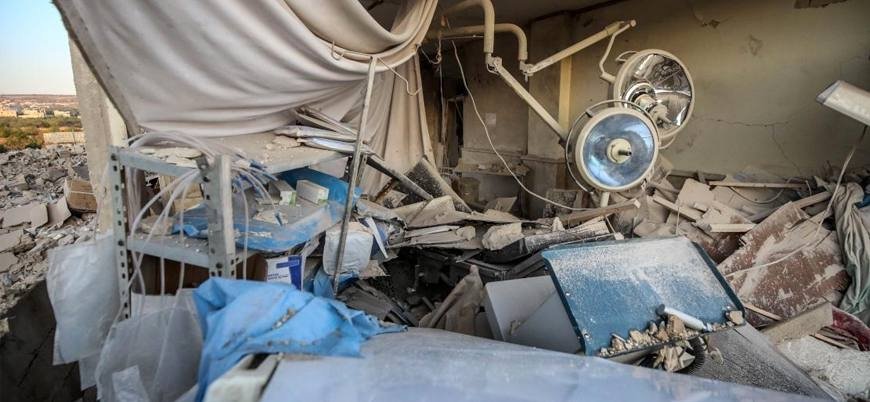
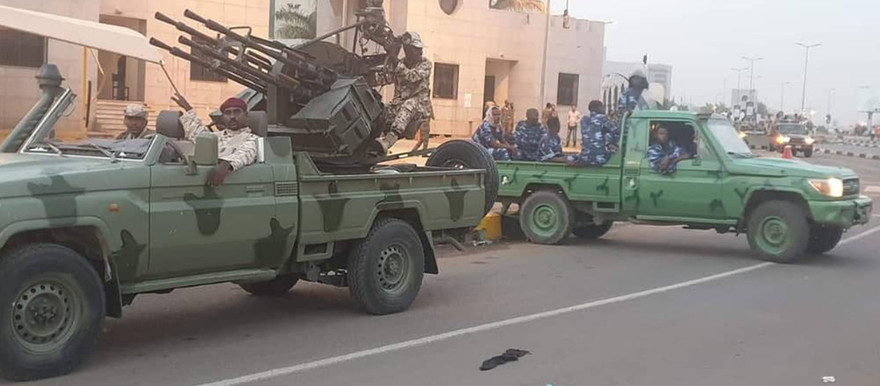
At least 150 were killed April 24 as paramilitary troops attacked a village in Sudan's conflicted Darfur region. Fighters from the Rapid Support Forces (RSF), many riding motorbikes or driving vehicles mounted with machine-guns, swept in on the village of Kereinik, torching houses and shops and firing on residents. More than 80,000 families fled their homes to seek refuge at the army headquarters in the village center. Hostilities between the Arab-dominated RSF and Masalit villagers began days earlier, after two Arab herders were reportedly killed by former rebel fighters. The fighting has since spread to the nearby town of  Geneina, capital of West Darfur state. Sudan's central government is said to be sending in military reinforcements and warplanes to contain the situation. (NYT, Dabanga, Sudan Tribune, NRC)

Photo: Sudan Tribune

Ukraine formally accuses Russia of ‘genocide’

Mariupol

Ukraine's parliament, the Verkhovna Rada, adopted a resolution April 14 formally recognizing the actions of the Russian armed forces in the country as genocide of the Ukrainian people. Said the MPs in a statement upon passage of the resolution: "The actions committed by the Russian armed forces are not just a crime of aggression, but pursue the goal of systematic…destruction of the Ukrainian people, their identity, and deprivation of their right to self-determination… This requires immediate recognition of the actions committed by the Russian armed forces during the last phase of the Russian armed aggression against Ukraine, which started on February 24, 2022, with the genocide of the Ukrainian people."

The resolution calls upon the UN, the European Parliament, the OSCE and NATO to similarly recognize the actions of the Russian military in Ukraine as genocide of the Ukrainian people. (Interfax Ukraine)

These bodies do appear to be weighing such a determination.

The Office for Democratic Institutions & Human Rights (ODIHR) of the Organization for Security & Co-operation in Europe (OSCE) on April 13 found that Russia has violated international humanitarian law and committed human rights abuses in its invasion of Ukraine. The report confirmed that Russian forces have committed "violations concerning even the most fundamental human rights," including the "right to life, prohibition of torture and other inhuman and degrading treatment and punishment." (Jurist)

International Criminal Court (ICC) chief prosecutor Karim Khan on April 13 told reporters during his visit to Bucha, the Kyiv suburb where a massacre of hundreds was carried out last month, that "Ukraine is a crime scene." The ICC opened an investigation into possible war crimes in Ukraine on March 2, one week after Russia began its invasion of the country. At that point, 39 ICC state parties had referred the situation in Ukraine to the Court. The investigation will also investigate crimes committed in Ukraine since November 2013. (Jurist)

Seventeen Holocaust museums across the world on April 11 released a statement condemning Russian atrocities in Ukraine. Representatives from museums in the United States, Canada, South Africa, and the United Kingdom wrote:

We at Holocaust museums around the world have a particular mission. The stories we tell are ones of destruction and pain, and of the nobility of upstanders who risked their lives to do what was right and help others. We not only aim to educate, to honor our Survivors’ wishes that their stories are not forgotten, but to make a better future where the stories we tell are no longer repeated.

The statement specifically mentions the "Holocaust by Bullets," a period in the summer and fall of 1941 during which German forces shot over 1.5 million Jews. According to the New Orleans-based National World War II Museum, 25% of all Jewish victims in the Holocaust were murdered in the territory which is now Ukraine.

The museums lamented the present-day "horrific reports of rape and wanton destruction of lives by the Russian army. These are war crimes, and if we, as the bearers of history, do not speak out, then we have failed in our mission."

The museums also pledged support for the ICC investigation of Russian war crimes, crimes against humanity, and genocide in Ukraine. (Jurist)

Ukrainian prosecutors say they have documented thousands of Russian war crimes since the invasion was launched on Feb. 24. Both the ICC and UN Human Rights Council have opened investigations into possible war crimes in Ukraine.

Photo via Twitter

Russian mercenaries accused in Mali massacre

Mali

Malian armed forces and associated foreign soldiers are believed to have summarily executed an estimated 300 civilian men in a town they occupied in late March, Human Rights Watch says in a new report April 5, calling it "worst single atrocity reported in Mali's decade-long armed conflict." The men were detained at a marketplace in the central town of Moura, Mopti region, during a military operation that began March 27. Army troops and foreign soldiers—identified by several sources as Russians—are said by witnesses and survivors to have broken the detainees up into small groups and marched them to an area outside town before putting them to death. 

One local trader interviewed by Human Rights Watch said he was drinking tea outside a house with his two brothers while waiting for the market to open when he heard shooting. "Seven Russians approached, gesturing for us to get up. There were no Malian soldiers with them. They searched us and the house, then took us east of the village, near the river, where we found another 100 men," he told HRW. "Another group of Russians pointed at my brothers and another man. I thought they were going for interrogation. They took them several meters away and executed them, point blank." 

The large majority of those killed were traders from the pastoralist Peuhl, or Fulani, ethnic group. It is unclear if any had affliation with militant groups.

Mali's defense ministry said in an April 1 statement that from March 23 to 31, the army killed 203 "terrorists" and arrested 51 more. The statement said the army had acted on intelligence suggesting that armed Islamists were planning a "meeting with different Katibats [battalions]" in Moura.

The Malian regime is battling an insurgency by jihadist groups linked to ISIS and al-Qaeda with the help of private military contractors from Russia's Wagner Group.

"Abuses by armed Islamist groups is no justification at all for the military's deliberate slaughter of people in custody," said Corinne Dufka, Sahel director at Human Rights Watch. "The Malian government is responsible for this atrocity, the worst in Mali in a decade, whether carried about by Malian forces or associated foreign soldiers." (HRW, The Guardian)

Map: PCL

Tatars demand return of Crimea to Ukraine

Crimea

Crimean Tatar community leaders on March 29 issued a demand that return of the Crimean Peninsula, unilaterally annexed by Russia in 2014, be a condition imposed by Kyiv in its talks with Moscow to end the war in Ukraine. The decision to adopt this demand was taken in a virtual meeting of the Mejlis—the traditional assembly of the Crimean Tatars, which has now been suppressed within Crimea by the Russian occupation forces. "The re-establishment of the territorial integrity of Ukraine within its internationally recognized borders, including the republic of autonomous Crimea and Sevastopol, should be an obligatory condition for official negotiations between Ukrainian representatives and the aggressor state," said the chief of the Mejlis, Refat Chubarov. The online meeting of the Mejlis took place ahead of a new round of talks between Russia and Ukraine in Istanbul. (The Moscow Times, Interfax Ukraine)


Map via Wikimedia Commons

Podcast: is ‘Neither East Nor West’ still possible?

Stalin

In Episode 117 of the CounterVortex podcast, Bill Weinberg recalls the history of the Neither East Nor West position taken by anarchists and anti-authoritarians in the Cold War—seeking to build solidarity between anti-war and left-libertarian forces on either side of the East-West divide. With the world now arguably closer to military confrontation between nuclear-armed powers than it ever was in the (first) Cold War, is such a position still possible? The recent controversy surrounding a planned art show in New York City featuring the work of Russian anti-war artists crystalizes the dilemma. Weinberg also explores the paradoxically parallel thoughts of democratic socialist George Orwell and conservative moralist CS Lewis, both writing in the era of fascism, on the dangers of a "pacifist" position that abets aggressive war and totalitarianism. It is critical that progressives in the West avoid this trap by supporting the courageous Russian anti-war protesters—not (as some have) the war criminal Vladimir Putin. Listen on SoundCloud or via Patreon.

With reading from Neither East Nor West: Selected Writings, 1939 to 1948 by Marie-Louise Berneri, the World War II-era anarchist anti-war militant.

Production by Chris Rywalt

We ask listeners to donate just $1 per weekly podcast via Patreon—or $2 for our new special offer! We now have 31 subscribers. If you appreciate our work, please become Number 32!

Photo: Budapest 1990, Reddit

Israel: detention of ‘terror suspects’ without charge

Israel police

Israeli Prime Minister Naftali Bennett instructed security services March 28 to hold any "terror suspects" in "administrative detention," even without charge. The order extends to Palestinians within Israeli a policy long applied to Palestinians on the West Bank. Bennett cited "a new situation that requires suitable preparations and adjustment by the security services to the circumstances within which extremist elements of Arab society, directed by extremist Islamic ideology, are carrying out terror attacks and taking lives." The order came a day after two Border Police officers were killed in a shooting attack at the coastal city of Hadera by two Israeli citizens who were said to be supporters of the so-called "Islamic State." The assailants were both shot dead by security forces.

The day after the order was issued, five were killed in shootings in two different areas of Bnei Brak, an Orthodox Jewish suburb of Tel Aviv. The shooter, armed with an assault rifle, was later shot dead by police.

A week earlier, on March 22, four Israelis were killed in a stabbing attack at a gas station in Beersheba. The assailant, who was said to have served time in an Israeli prison for promoting ISIS, was likewise slain by police.

'Summit of Shame'
The Hadera attack took place as US Secretary of State Antony J. Blinken flew to southern Israel's Kedma resort, in the Negev Desert, to join his counterparts from Israel, the United Arab Emirates, Egypt, Bahrain and Morocco for a diplomatic summit, at which the Israel-Palestinian conflict is not on the agenda. Blinken is also to meet with Palestinian President Mahmoud Abbas in Ramallah. 

The Hadera attack was condemned by the Abbas administration, but praised as "heroic" by Hamas and Islamic Jihad, with latter saying it was in response to the Negev Summit "of humiliation and shame." 

Most of the Arab states participating in the summit recognized Israel as a part of the so-called "Abraham Accords," an initiative of the Trump White House. (Times of Israel, ToI, ToI, Jerusalem Post, Middle East Eye, NYT, BBC News)

Photo: Wikimedia

El Salvador: state of emergency over gang violence

Salvador

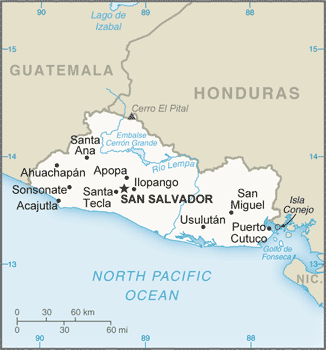
El Salvador's Legislative Assembly approved a state of emergency March 27 at the request of President Nayib Bukele, in response to a sharp increase in the number of killings by criminal gangs. The emergency regimen seeks to dismantle criminal structures by prohibiting associations and disrupting their communications. It also extends the "administrative detention" period, and suspends certain constitutional freedoms.

The declaration invokes Article 29 of El Salvador's Constitution, which allows for the suspension of constitutional guarantees in times of "serious disturbance of public order." This includes the right to freedom of association and presumption of innocence. The state of emergency will remain in effect for 30 days, in conformity with Article 30, after which it may be renewed.

El Salvador is currently experiencing a dramatic upsurge in gang-related killings. The National Civil Police reported 62 homicides on March 26 alone. MS-13 and Barrio-18 are the chief gangs named by the authorities as perpetrators of the homicides.

President Bukele has ordered a 24-7 lockdown in all high-security and maximum-security prisons. He also announced that almost 600 arrests had been made in just the first two days of the state of emergency.

Human Rights Watch investigator Juan Pappier expressed concerns regarding suspension of fundamental rights under the emergency regime. Upon the measure's approval, he said, "Today's state of emergency in El Salvador is very worrying—especially because there are no independent institutions in the country."

From Jurist, March 28. Used with permission.

See our last post on El Salvador’s mara wars.

Map: University of Texas

Peru: pueblos divided on Bambas mega-mine

Bambas

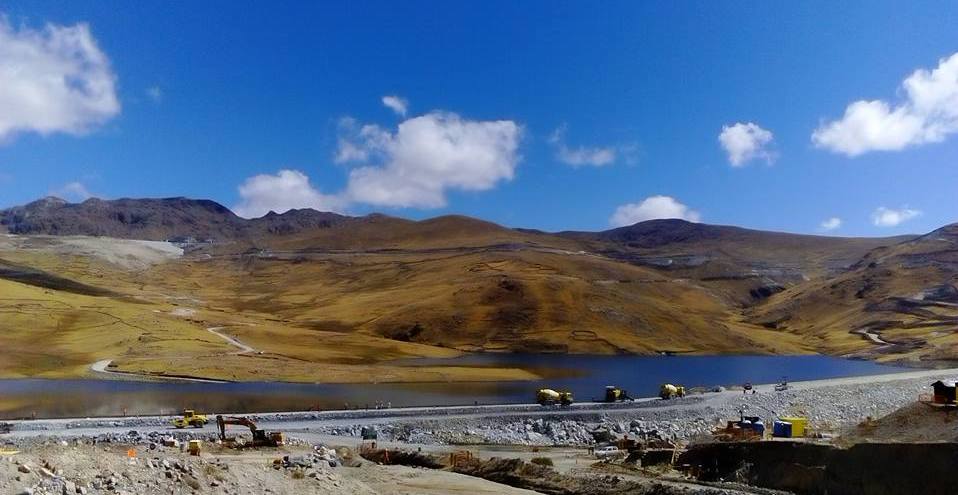
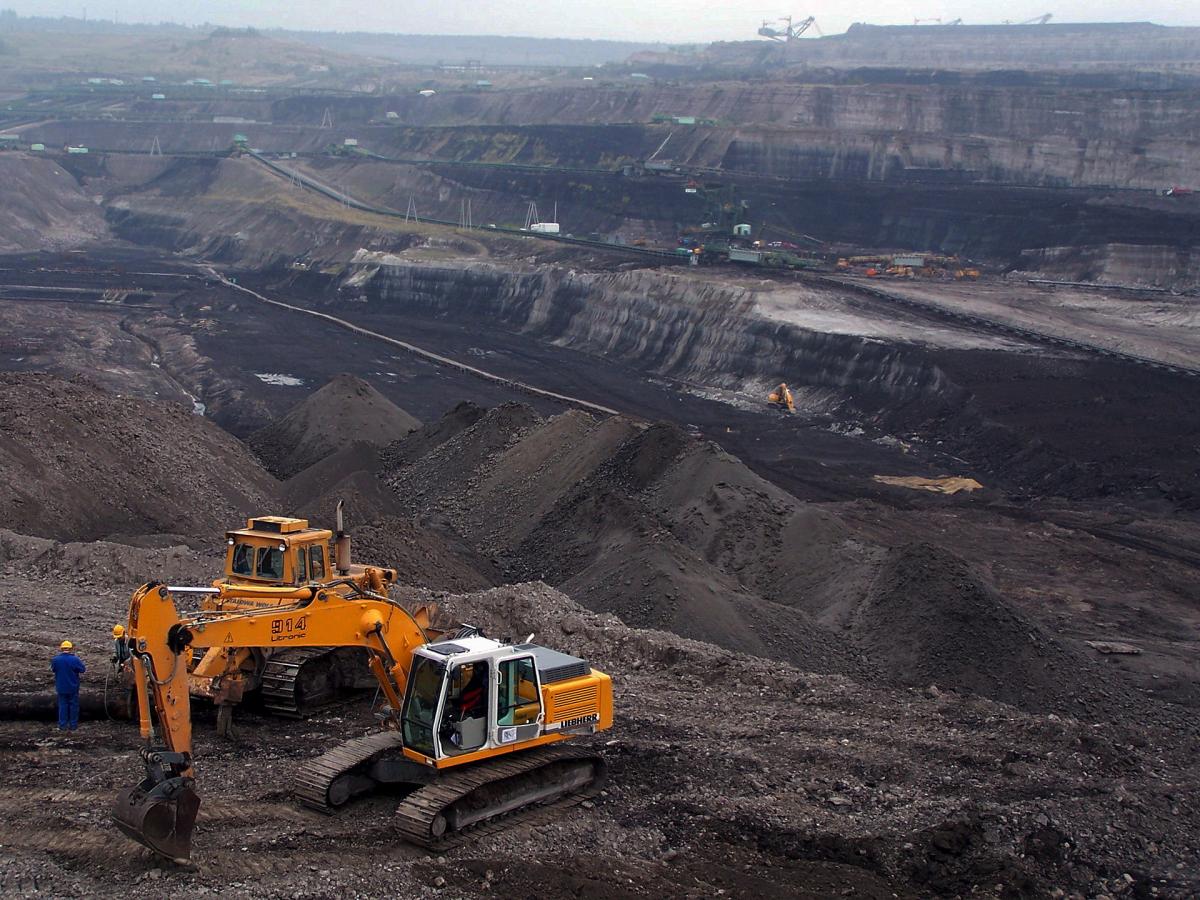
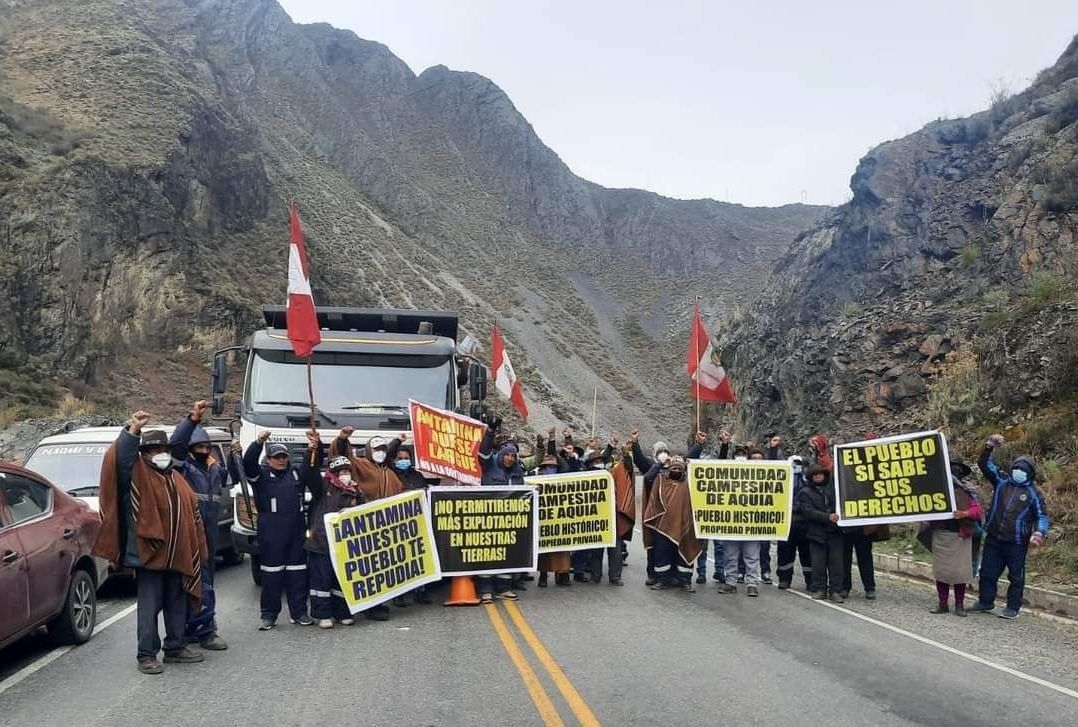
Chinese-owned MMG Ltd on March 24 announced that it has secured approval from Peru's Ministry of Energy & Mines (MINEM) to expand its copper mine at Las Bambas,  despite ongoing outrage from local campesino communities. The country's fourth-largest copper mine and the world's ninth-largest, Las Bambas has been repeatedly shut down by peasant protests since it opened in 2016. The most recent blockades were launched in February by residents of Chumbivilcas, Paruro and Espinar provinces, Cuzco region, to oppose excavation of a second open pit at the facility, at a locale called Chalcobamba. Ahead of approval of the expansion, MINEM secured a pledge by some 20 communities to lift their blockades and refrain from further protest actions in exchange for agricultural aid, including two new tractors for pueblos in Coporaque district, Espinar province. However, the pueblo closest to the Chalcobamba pit rejected the deal. Huancuire pueblo, in the district of Cuyllurqui, Cotabambas province, Apurímac region, said the community had agreed to take all necessary "legal and social" measures to prevent excavation of the Chalcobamba pit. (Reuters, EFE, Gestión, El Comercio, Mining.com)

MMG Ltd also faces a challenge in labor actions. Workers at Las Bambas staged a one-day strike March 26, demanding a hike in wages. The Unitary Syndicate of Las Bambas Workers (SUTEMLB-MMG) charged that the company is not complying with a deal under which wages are to keep pace with profits.  (Perú21)

Photo: Wikimedia

Podcast: Ukraine & ‘the Russian menace to Europe’

Crieman War

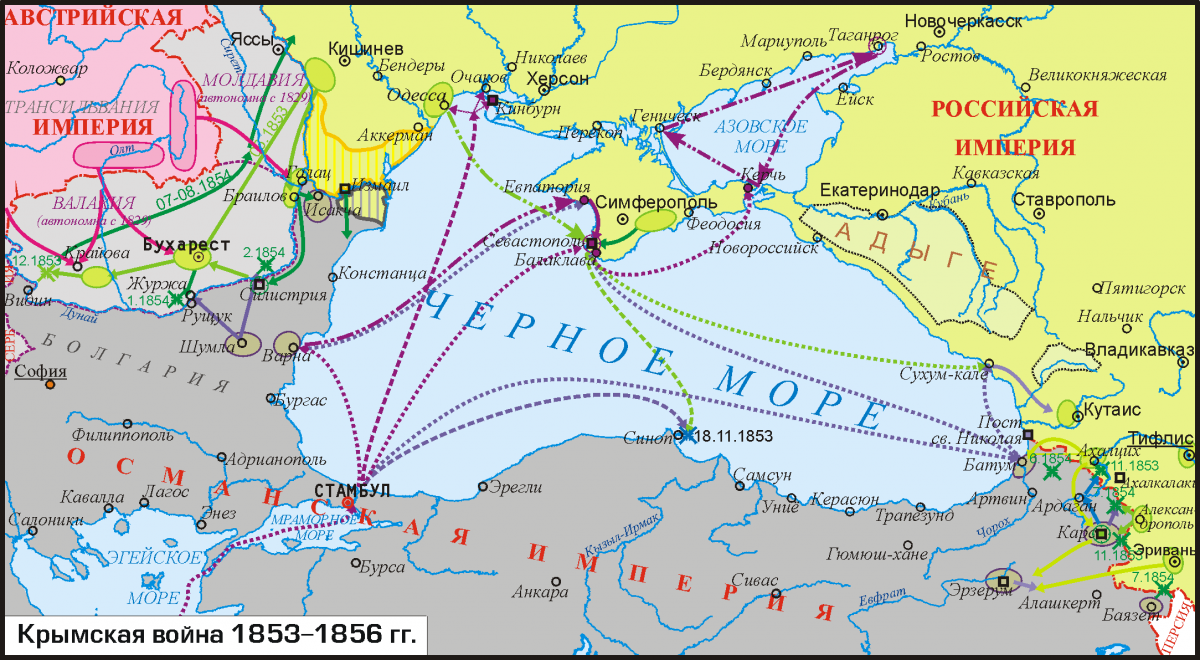
In Episode 116 of the CounterVortex podcast, Bill Weinberg provides an overview of geostrategic and political thinking on the criticality of Eastern Europe and especially Ukraine, from the Crimean War to the contemporary catastrophe. Despite contemporary misconceptions, Karl Marx and Frederick Engels shared the perception of a "Russian menace to Europe" with theorists of Western imperialism such as Halford John Mackinder, Lord Curzon, Alfred Thayer Mahan, Nicholas J. Spykman, and Zbigniew Brzezinski. Arch-reactionary or openly fascist conceptions of "Eurasianism" were taken up by the German Karl Haushofer and the Russians Mikhail Katkov and Ivan Ilyin—the latter a formative influence on Alexander Dugin, the intellectual mastermind of Vladimir Putin's revanchist imperial project.

Listen on SoundCloud or via Patreon.

Production by Chris Rywalt

We ask listeners to donate just $1 per weekly podcast via Patreon—or $2 for our new special offer! We now have 31 subscribers. If you appreciate our work, please become Number 32!

Map of Crimean War theaters via Wikimedia

Belarus: ‘partisans’ sabotage rail lines to Ukraine

Belarus

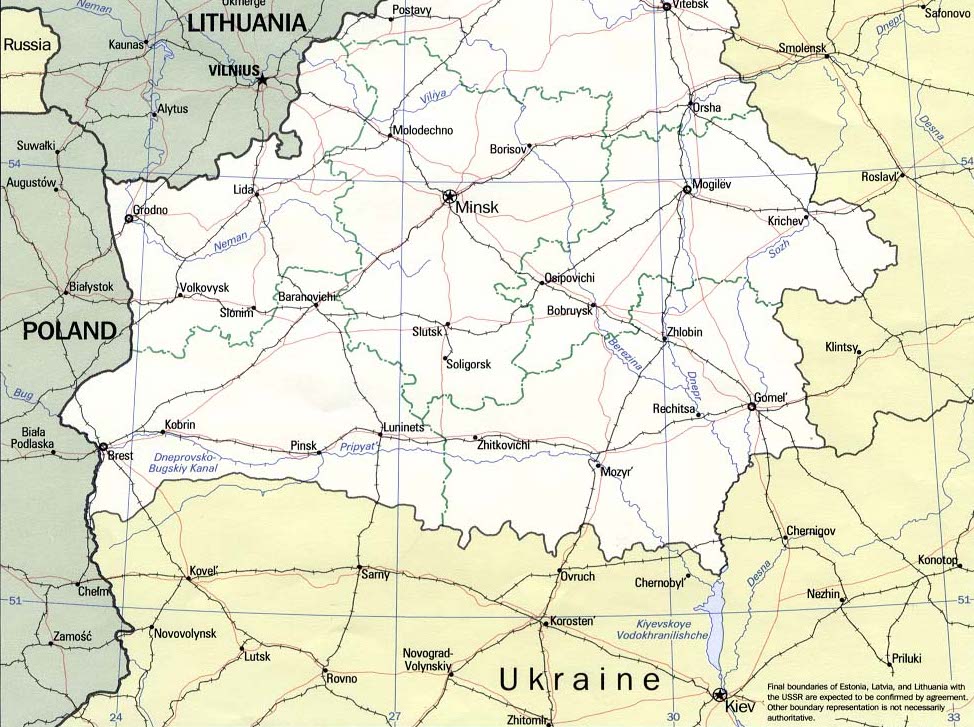
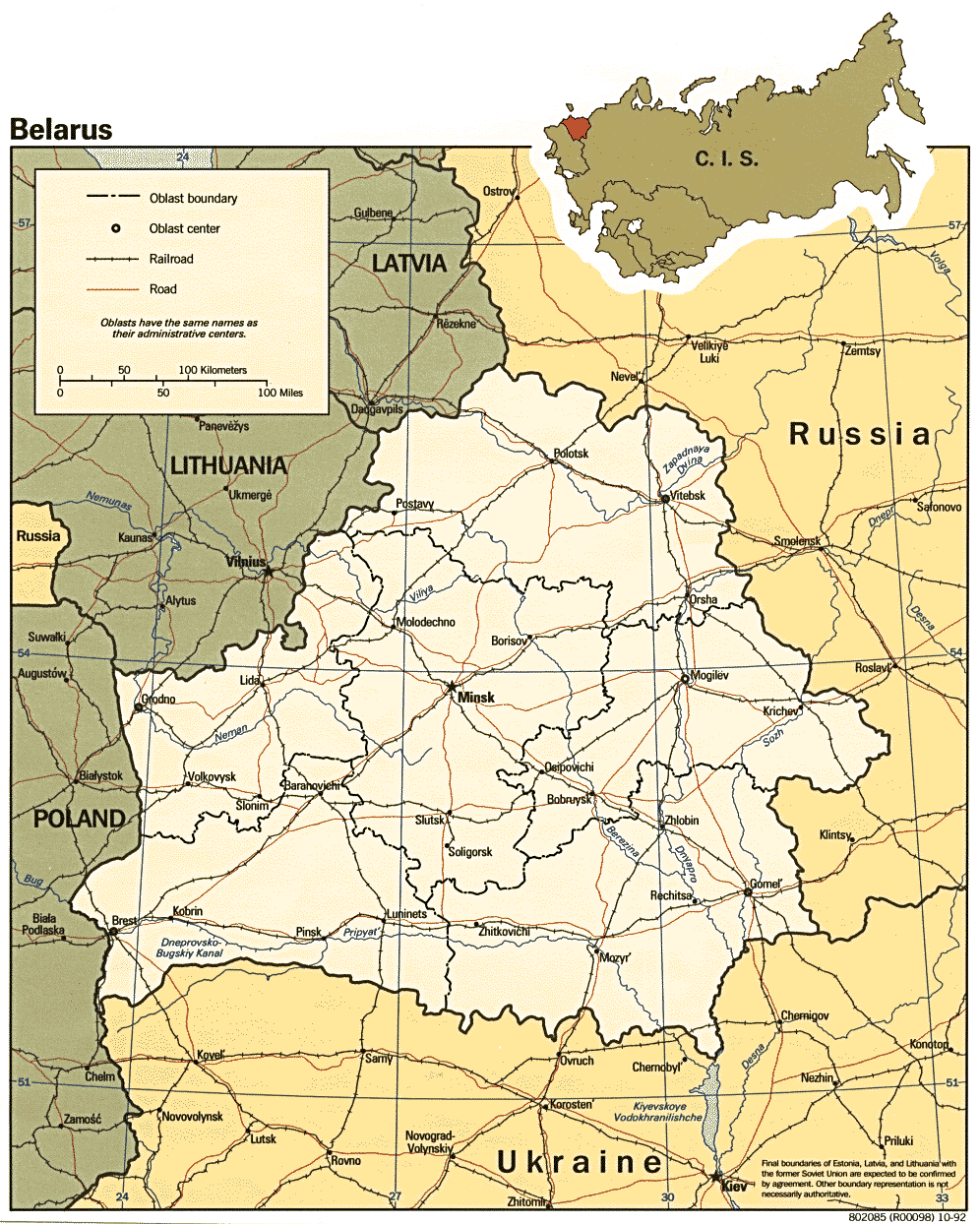
Belarus has served as a staging ground for one leg of the Russian invasion of Ukraine, and Kyiv officials warn that Belarusian forces may join Putin's war effort. But resistance to the Russian aggression is emerging in Belarus—apparently including acts of sabotage. Ukrainian Railways (Ukrzaliznytsia) announces that the rail links into Ukraine from Belarus have been effectively cut, preventing the transport of Russian reinforcements and equipment. Belarusian news site Zerkalo reports that "in the Mogilev, Gomel and Minsk regions three cases of destruction of signaling equipment, blocking of railways were recorded." Belarusian security forces acknowledge the sabotage was motivated by opposition to the war in Ukraine. Named as behind the sabotage are the banned groups Busly Lyatsyats, a pro-democracy social-media network ordered suppressed by the regime last year, and BYpol, a union of dissident Belarusian security officers. A representative of exiled opposition leader Sviatlana Tsikhanouskaya saluted the work of these "partisans," adding: "Ukraine will win! Belarus will also be liberated!" (EuroMaidan Press)

Note: Mogilev is also rendered Mahilyou; Gomel is also rendered Homyel.

Map via Perry-Castañeda Library

Podcast: against Putin’s Big Lie

Kremlin

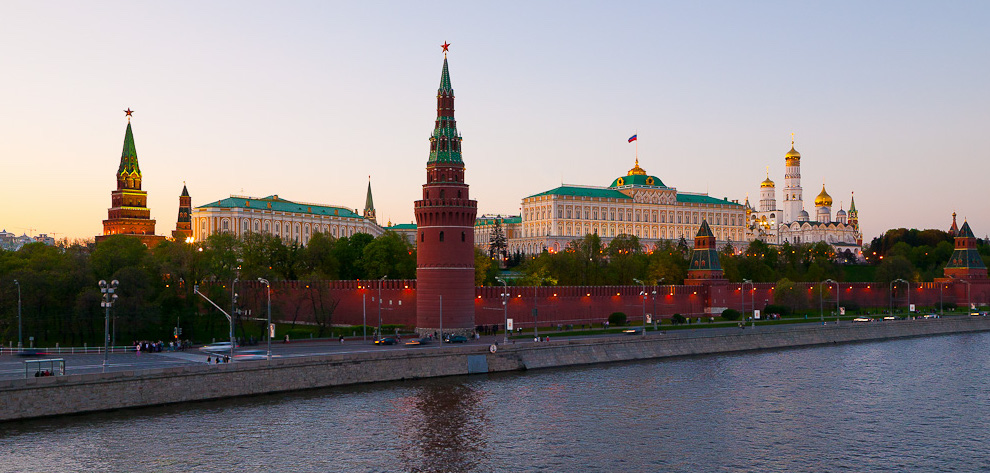
In Episode 115 of the CounterVortex podcast, Bill Weinberg continues to dissect Vladimir Putin's ultra-cynical fascist pseudo-anti-fascism. Putin presides over Nuremberg-type mass rallies celebrating war and conquest, spews overtly genocidal rhetoric, and prepares concentration camps for the Crimean Tatars. Alexander Dugin, "Putin's Rasputin" and the intellectual mastermind of his revanchist imperial project, has openly called for "genocide" of the Ukrainians. In areas of Ukraine occupied by Russia, a forced mass deportation of the populace is reported. Putin is clearly approaching a genocidal threshold in Ukraine—while imposing a totalizing police state within Russia. Yet, with unimaginable perversity, all this is done in the name of a campaign  to "denazify" Ukraine. The painting of Ukraine as a "Nazi" state on the (dubious) basis of a few ugly right-wing paramilitaries on the Ukrainian side is vigorously repudiated by the leadership of Ukraine's Jewish community. Yet this "Big Lie" is credulously (or cynically) echoed by elements of the "left" as well as far right in the United States—who arrogantly refuse to listen to Ukrainians. Listen on SoundCloud or via Patreon.

With reading from Indefensible: Democracy, Counterrevolution, and the Rhetoric of Anti-Imperialism by Rohini Hensman

Production by Chris Rywalt

We ask listeners to donate just $1 per weekly podcast via Patreon—or $2 for our new special offer! We now have 29 subscribers. If you appreciate our work, please become Number 30!

Photo: Wikipedia

World Court orders Russia to halt invasion of Ukraine

ICJ

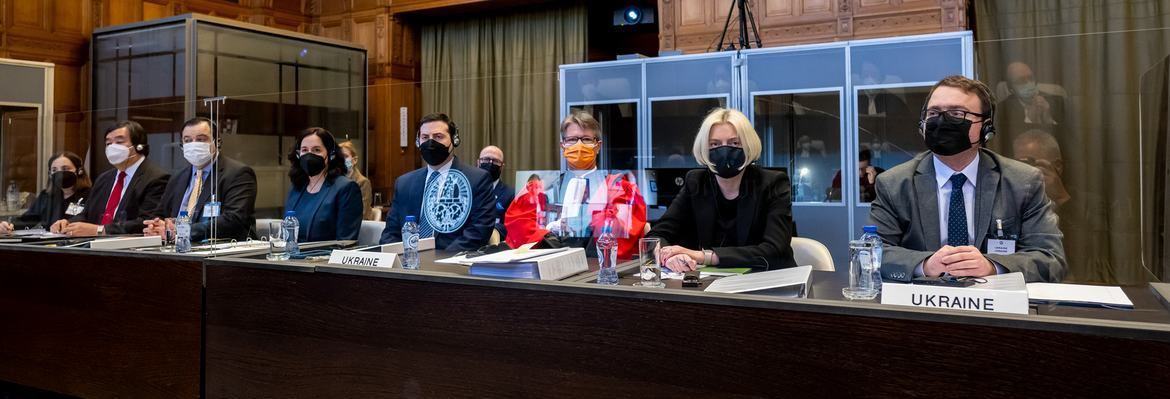
By a vote of 13 to two, the International Court of Justice at The Hague ruled March 16 that Russia "shall immediately suspend…military operations" in Ukraine. The two dissenting votes were from ICJ Vice President Kirill Gevorgian of Russia and Judge Xue Hanqin of China. The court's ruling is in response to a suit filed by Ukraine on Feb. 27, accusing Russia of manipulating the concept of "genocide" to justify its military aggression. Although the ICJ's verdicts are binding, the court has no direct means of enforcing them.

Russia chose not to participate in oral proceedings, but later presented a document setting out its position that the ICJ lacks jurisdiction in the case. In delivering the ruling, the ICJ president, Joan Donoghue of the United States, outlined the necessary conditions that were met to give the court authority. She especially stressed that Ukraine's assertions are plausible, and the condition of urgency was met in that acts causing irreparable harm can "occur at any moment." 

"Attacks are ongoing and are creating increasingly difficult living conditions for the civilian population," Donoghue stated. "Many persons have no access to the most basic foodstuffs, potable water, electricity, essential medicines or heating. A very large number of people are attempting to flee from the most affected cities under extremely insecure conditions." (UN News)

Photo of Ukrainian delegation at hearings: UN News

Crimean Tatars take up arms for Ukraine

Crimean Tatars

The Tatar people, whose homeland on the Crimean Peninsula was illegally annexed from Ukraine by Russia in 2014, are now mobilizing across their diaspora to resist the Russian invasion of the Ukrainian heartland. The World Congress of Crimean Tatars released a statement calling the Russian invasion "banditry," and calling on Tatars everywhere to "fight against this immoral attack of Russia." The statement reads: "Our Congress recognizes its humanitarian and moral obligation to stand in solidarity with the Ukrainians, Crimean Tatars, and all other heroes and civilians who are victims of attacks and war, and so help them in all ways they are capable."

In a second appeal, the Congress directed a message to Russians, and especially Muslims, urging them to protest, and demand an end to the war that has created a "threat to world security." (Ahval)

Crimean Tatars have also organized a volunteer battalion to resist the Russian invasion. The battalion is commanded by Isa Akayev, who was among the Crimean Tatars who escaped the occupation of Crimea in 2014 and settled in Vinnytsia, Ukraine. In a video statement, he taunted that "there is enough land in Ukraine to bury all invaders—and don't forget to put seeds in the pocket so sunflowers grow." This is a reference to the viral video in which a Ukrainian woman confronted a Russian soldier, and offered him sunflower seeds, saying: "Take these seeds and put them in your pockets so at least sunflowers will grow when you all lie down here."

The Tatars had an autonomous government under Ukraine's rule, and the Ukrainian parliament adopted a law on indigenous peoples in 2021, further recognizing their identity and rights. The law, introduced by President Volodymyr Zelensky, recognized the Crimean Tatars, Karaites and Krymchaks as "indigenous peoples of Ukraine." Both the law and the autonomous Tatar government were abrogated by Russia after the annexation. (Daily Kos)

A Russian court in Rostov-on-Don has meanwhile sentenced five Crimean Tatars to lengthy prison terms on charges of membership in the banned organization Hizb ut-Tahrir. The five include journalist Remzi Bakirov and rights activist Riza Izetov, who each received 19 years. Numerous Crimean Tatars have faced persecution on the basis of their supposed membership in Hizb ut-Tahrir, part of an ongoing crackdown targeting the ethnic group since the Russian seizure of Crimea. (RFE/RL)

Image via Twitter

Chechen rebels take up arms for Ukraine

Chechen volunteers

The long-simmering conflict in the Russian Federation's Chechen Republic appears to now be playing itself out in the war in Ukraine. As Vladimir Putin launched his invasion, the "official" (Moscow-installed) Chechen president Ramzan Kadyrov declared: "We will support any decision of the Commander-in-Chief [Putin]. We won't let you down. We will follow any order." The next day, Kadyrov announced on Telegram that elements of the Russian National Guard (Rosgvardiya) from Chechnya are taking part in the war. Reports shortly broke that Magomed Tushayev, head of the 141 Motorized Regiment of the Chechen Rosgvardiya, was killed in fighting with Ukraine's elite Alpha Group outside Kyiv. Tushayev was named as a key architect of the campaign of terror against the LGBTQ community in Chechnya.

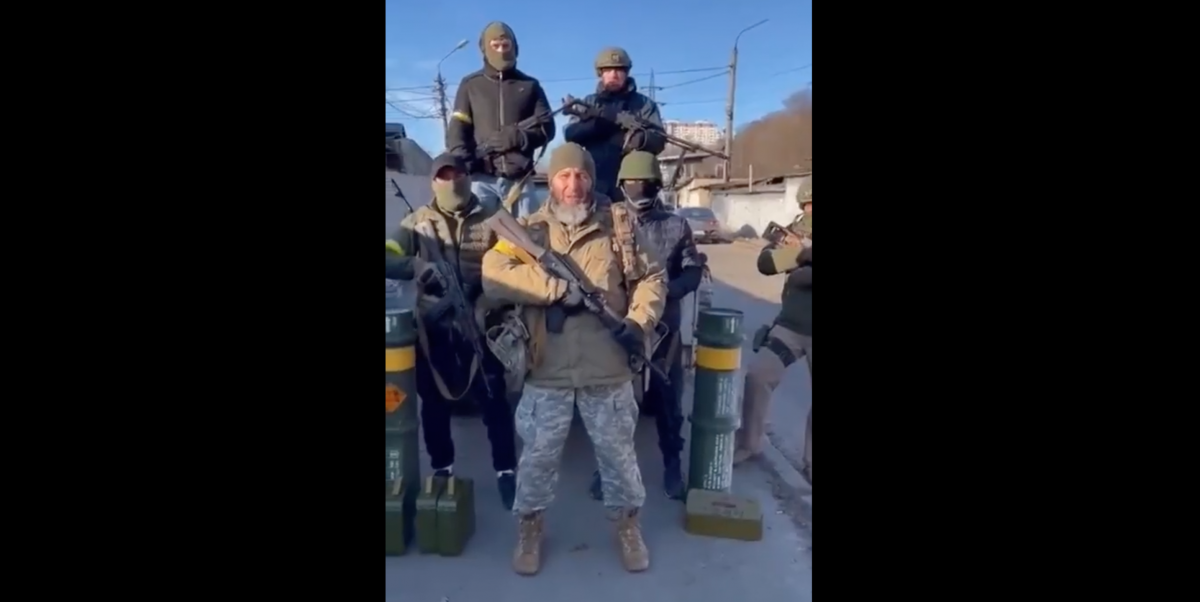
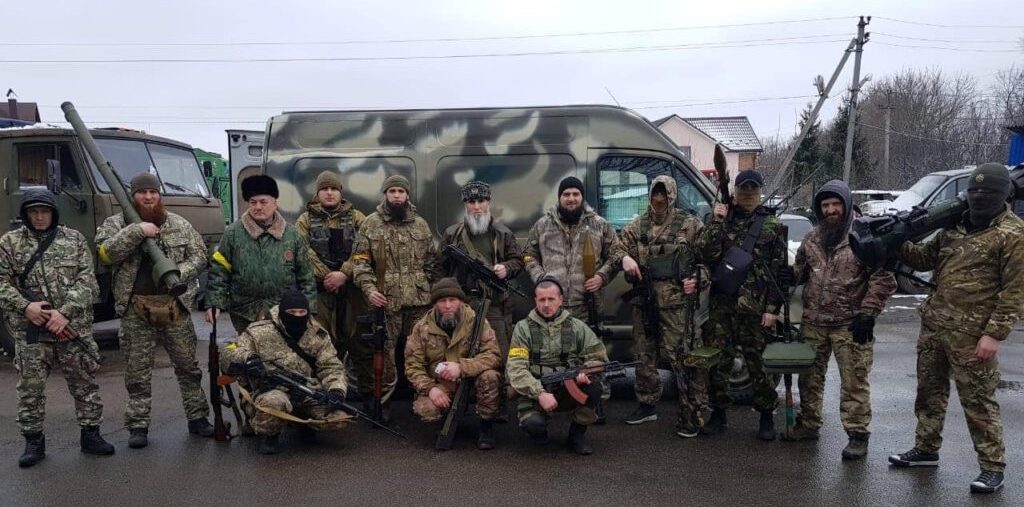
Meanwhile, the Chechen rebels who have for years been waging a sporadic insurgency against Kadyrov's regime have declared that they are mobilizing to support the Ukrainian government. Adam Osmayev, commander of the Dzhokhar Dudayev Battalion, stated in a video message, in which he posed with armed fighters: "I want to tell Ukrainians that real Chechens, today, are defending Ukraine. We have fought, and will continue to fight for Ukraine until the very end."

In another address on Feb. 28, Osmayev appealed to Chechens fighting in the Rosgvardiya to switch sides: "[T]he whole civilized world helps Ukraine. Therefore, I also urge them to go over to the side of Ukraine… It is generally unthinkable that Chechens, who were several times subjected to genocide from Russia, today fight on the side of Russia—this is unacceptable by any…concept."

Akhmed Zakayev, former head of the Chechen Republic of Ichkeria rebel government-in-exile, said in a statement that volunteers from across the Chechen diaspora are preparing to fight for Ukraine: "Members of the State Committee for the De-occupation of Ichkeria have been approached by Chechens from several European countries who want to go to fight for the freedom of the Ukrainian people."

Two Chechen volunteer battalions have fought against Russian-backed separatists in Ukraine's Donbas region since 2014—the Sheikh Mansur and Dzhokhar Dudayev battalions. Most of their fighters fled Russia after the fall of the Chechen Republic of Ichkeria, the de facto independent government that controlled Chechnya between 1996 and 2000. (OC Media, Washington Blade)

Photo of the the Sheikh Mansur Battalion: OC Media

UN Human Rights Council to investigate Russian violations in Ukraine

Kharkiv

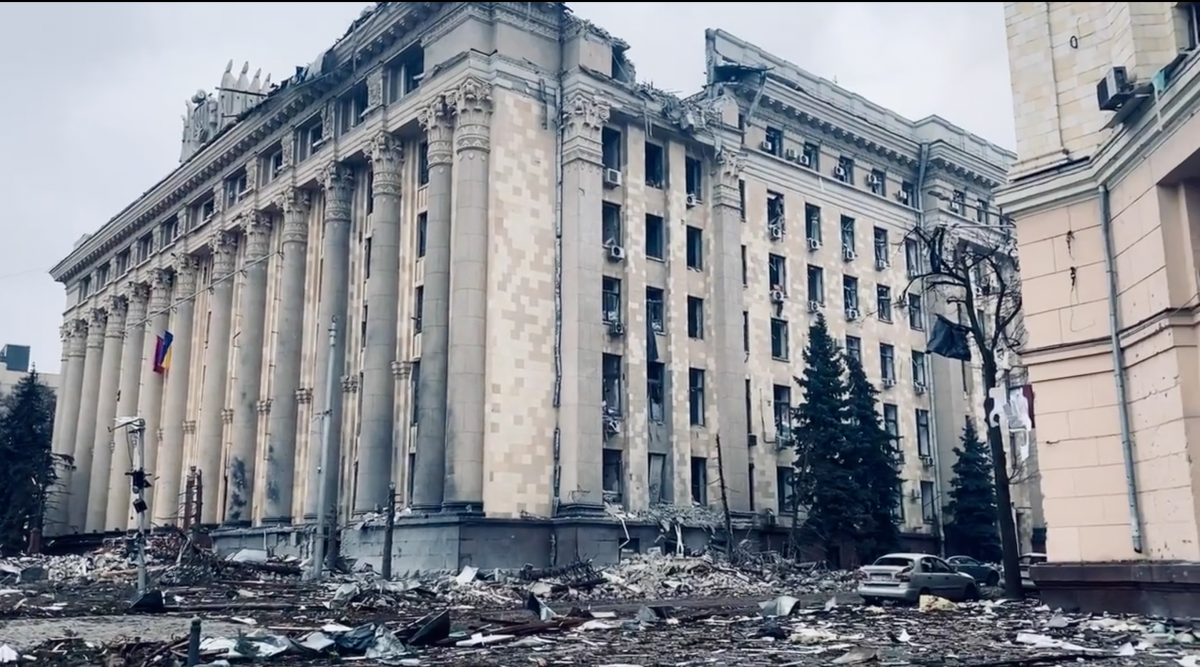
The UN Human Rights Council (HRC) on March 4 adopted a resolution to establish an Independent International Commission of Inquiry to investigate charges of gross violations by Russian forces in Ukraine. After holding a moment of silence for Ukrainian victims, HRC members passed the resolution overwhelmingly, in a 32–2 vote. Among the 32 countries voting in favor of the resolution were France, Germany, Japan, Mexico, Ukraine, the UK, and the US. The only two countries voting against were Russia and Eritrea. Several other countries, including Bolivia, Cameroon, China, and Cuba, abstained.

The resolution strongly condemns "the human rights violations and abuses and violations of international humanitarian law resulting from the Russian Federation's aggression against Ukraine." It also calls on Russia to withdraw its troops from Ukraine. Pursuant to the resolution, the HRC president will appoint three human rights experts to the newly established investigative commission. These experts must:

investigate all alleged violations and abuses of human rights and violations of international humanitarian law, and related crimes, in the context of the Russian Federation’s aggression against Ukraine, and to establish the facts, circumstances, and root causes of any such violations and abuses; and to make recommendations, in particular on accountability measures, all with a view to ending impunity and ensuring accountability.

Prior to the Council’s vote, over 18 countries and several organizations commented on the resolution, which Ukraine presented to the HRC. The Council noted that during the debate, speakers "said they stood in solidarity with the Ukrainian people and expressed deep concerns about the situation in Ukraine." Speakers also called on the HRC to "send the message that there would be no impunity for the crimes of Russia" and "to suspend Russia's Council membership." Speakers also accused Vladimir Putin of being a "war criminal" who "must be held accountable for his crimes against humanity."

Earlier this week, US lawmakers introduced a resolution calling on the International Criminal Court (ICC) and International Court of Justice (ICJ) to investigate Russian war crimes in Ukraine. The UN High Commissioner for Human Rights (OHCHR) has confirmed 802 civilian casualties in Ukraine during the first week of the conflict. Among those casualties, 249 were killed and 553 injured.

From Jurist, March 5. Used with permission.

Note: Also March 4, the General Assembly voted in an emergency session to condemn the "Aggression against Ukraine." The HRC voted to hold an emergency debate on the situation Feb. 28, after the ICC warned of possible war crimes in Ukraine.

Photo of Kharkiv's Freedom Square via Twitter

Fascist pseudo-anti-fascism: Moscow’s propaganda offensive

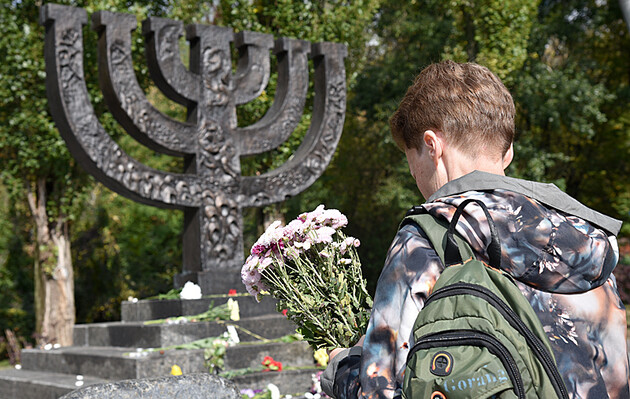
Babi Yar

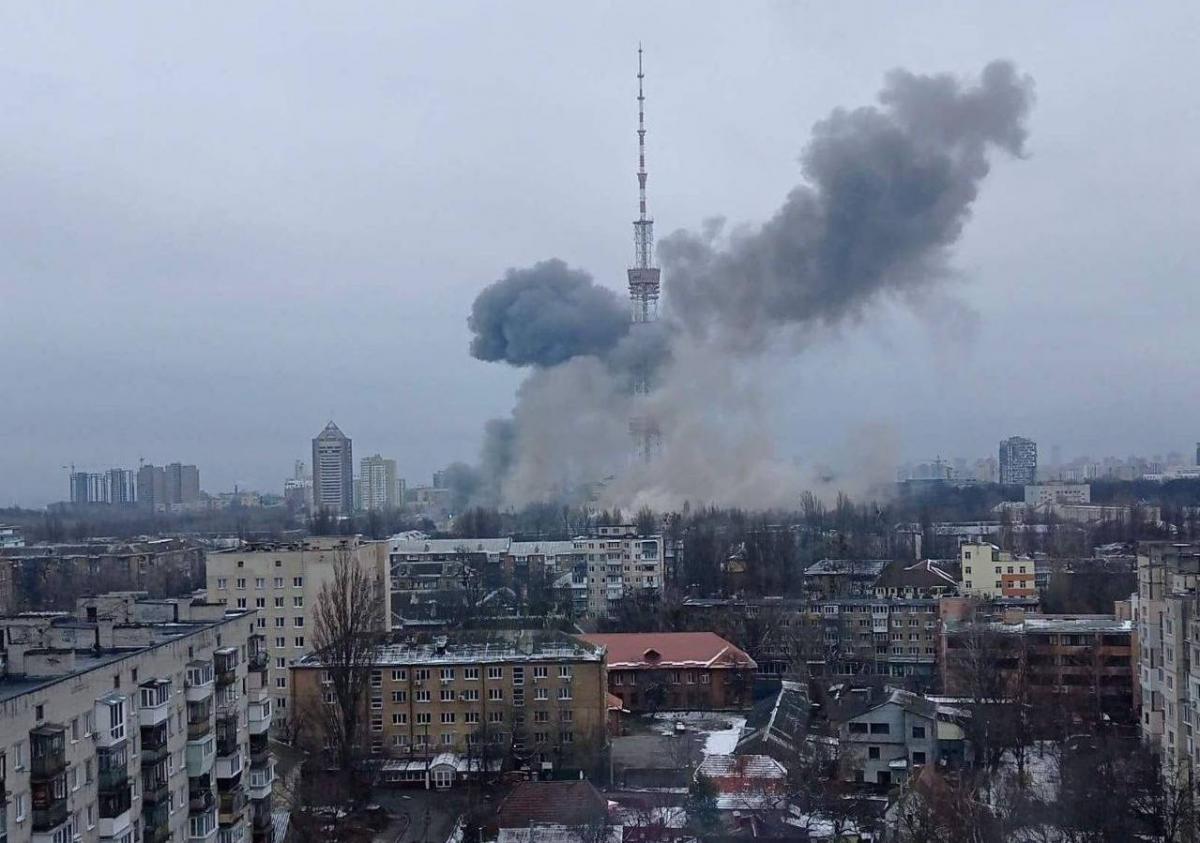
Russia announced on March 1 that it intends to host an international "Anti-Fascist Conference"—with hideous irony, on the same day its forces bombarded a Holocaust memorial site in Kyiv. Russia struck the Babi Yar Holocaust Memorial in a raid apparently targeting a nearby TV tower, killing five people. The memorial marks the site of the murder of 33,771 Jews by the Nazis in one of the most heinous acts of World War II. Volodymyr Zelensky, Ukraine’s first Jewish president, last year attended a ceremony for the opening of a synagogue at the site. He responded to the missile attack on the monument by tweeting: "To the world: what is the point of saying «never again» for 80 years, if the world stays silent when a bomb drops on the same site of Babyn Yar? …History repeating…"

The surreal announcement came from Russian Defense Minister Sergei Shoigu, who said Moscow will hold the "Anti-Fascist Conference" in August, in conjunction with an arms expo sponsored by his ministry, dubbed the Army-2022 International Military-Technical Forum. Shoigu said the conference aims to "unite the efforts of the international community in the fight against the ideology of Nazism and neo-Nazism in any form of its expression in the modern world."

Among the countries invited to the confab are China (accused of genocide in Xinjiang), India (now emulating China's mass detention policies), Pakistan (a fast-consolidating police state), Saudi Arabia (similarly moving toward a mass detention state), the UAE (a burgeoning police state), Azerbaijan (accused of war crimes in last year's war with Armenia), Uzbekistan (a long-entrenched dictatorship), and Ethiopia (accused of crimes against humanity in the Tigray war).

Announcement of the "Anti-Fascist Conference" has received limited coverage in English. Those that have reported it include (with harsh criticism) pro-democracy platform The New Arab, (with open approval) right-wing mouthpiece Breitbart, and (with no spin) generic news portals Zoma, The News 24 and GWN. Most accounts cite Russian state media outlet RT, where news of the announcement only appears in Russian.

Russian President Vladimir Putin, who in launching his invasion made the absurd claim that his war aim is to "denazify" Ukraine, is of course now accused of horrific war crimes. Nor only in his new war on Ukraine, but going all the way back to his 1999 war on Chechnya, launched just as he was first taking power, his 2008 war in Georgia, and his ongoing bombardment of Syria.

Not to mention the totalizing police state now unfolding within Russia. Moscow's communications regulator Roskomnadzor (RKN) on Feb. 28 blocked access to more than six different media outlets, including Russian investigative outlet The New Times, and dissident student newspaper Doxa.

At least five journalists are facing charges and dozens more have been detained across Russia following their coverage of anti-war protests, which have sprung up across the country since Putin launched his invasion of Ukraine on Feb. 24. RKN has ordered that media organizations only publish official government reports about the war in Ukraine—which do not even call it a "war" or "invasion," but only a "military operation." If outlets fail to comply, RKN has threatened to block their websites. (CEPA, CPJ)

This "Anti-Fascist Conference" is yet another manifestation of the ultra-cynical propaganda stratagem of fascist pseudo-anti-fascism. Do not fall for it.

Photo of Babi Yar memorial in Kyiv via Kharkiv Human Rights Protection Group

ICC to investigate alleged war crimes in Ukraine

Kyiv

International Criminal Court (ICC) chief prosecutor Karim AA Khan announced Feb. 28 that he will open an investigation into the situation in Ukraine. In light of Ukraine's acceptance of the ICC's jurisdiction on an open-ended basis to address alleged crimes committed on its territory since 2014, Khan said the ICC may proceed despite Ukraine not being a state party to the Rome Statute. On reviewing the preliminary examination by the Office of the Prosecutor, Khan affirmed that there is a reasonable basis to proceed with an investigation of alleged war crimes and crimes against humanity committed in Ukraine.

Ukraine's Ambassador to the UN Yevheniia Filipenko that same day called for an inquiry into possible war crimes perpetrated by Russia as its invasion of the country unfolds. Filipenko said: "Russian forces attempt to sow panic among the population by specifically targeting kindergartens and orphanages, hospitals and mobile medical aid brigades, thus committing acts that may amount to war crimes."

Emergency meeting of Human Rights Council
The UN Human Rights Council (UNHRC) also voted that day to hold an emergency debate regarding Russia's military actions. Filipenko informed the UNHRC that, according to the Ukrainian Ministry of Health, 352 Ukrainians have lost their lives during the invasion. This figure includes 16 children, while an additional 160 children have been injured.

According to Reuters, Ukraine will present a draft resolution during the UNHRC debate. If the resolution is accepted, "a commission of three independent experts would investigate all alleged violations of international law in Crimea and the Donetsk and Luhansk regions since 2014 and in other areas of Ukraine since Russia's invasion last week."

War crimes evidence mounts
The UN defines war crimes according to the Rome Statute of the International Criminal Court. The statute's definition includes "intentionally directing attacks against the civilian population as such or against individual civilians not taking direct part in hostilities."

The UN Office for the Coordination of Humanitarian Affairs (OCHA) reported "at least 240 civilian casualties, including at least 64 dead" as of Feb. 26. Additionally, infrastructure damage has forced the internal displacement of at least 160,000 people and caused at least 116,000 people to flee across an international border. The OCHA estimates that Russia's invasion could generate 5 million refugees in the "worst-case scenario." Several specific attacks have raised allegations of warm crimes.

In one instance, Amnesty International accused Russian forces of using cluster munitions during a Feb. 25 attack on a pre-school in Okhtyrka, a northeastern Ukrainian city. Three civilians died in the attack, including one child. Another child was wounded. Secretary-general of Amnesty International Agnès Callamard said: "There is no possible justification for dropping cluster munitions in populated areas, let alone near a school." Sha added that the attack "shows flagrant disregard for civilian life." 

Nearly 100 nations joined a 2008 Convention on Cluster Munitions, prohibiting their use. However, Ukraine and Russia have not joined the treaty. According to the International Committee of the Red Cross, cluster munitions explode in the air, scattering "large numbers of explosive submunitions." The submunitions cannot be guided to a specific target and therefore "pose a significant danger to civilians."

In another instance, Oleh Synehubov, head of the Kharkiv Regional State Administration, called attacks on residential areas of Kharkiv a "war crime" in a Feb. 28 Telegram message. He noted that Kharkiv does not house any "critical infrastructure" that may jusitfy a strategic attack. At the time of his message, Synehubov reported 11 dead civilians and dozens wounded in the city.

Combined from Jurist, Jurist, March 1. Used with permission.

Photo of March 1 air-strike on Kyiv TV tower: Kyiv Independent via Twitter

ICC warns of possible ‘war crimes’ in Ukraine

Kyiv

Karim AA Khan, chief prosecutor for the International Criminal Court (ICC), released a statement Feb. 25 on the Russian invasion of Ukraine, asserting the ICC's jurisdiction over "any act of genocide, crime against humanity or war crime committed within the territory of Ukraine." Khan recalled that Ukraine's parliament granted the ICC jurisdiction over such matters in 2015 when it passed a declaration addressing "crimes against humanity and war crimes committed by senior officials of the Russian Federation."

Khan also addressed questions over the applicability of the Crime of Aggression amendment to the Rome Statute, the 1998 multinational treaty that established the ICC. Khan stated that the 2010 amendment is not applicable to the current conflict, as "neither Ukraine nor the Russian Federation are State Parties to the Rome Statute."

Khan's statement comes as reports from the conflict strongly suggest the possibility of Russian war crimes. Ukraine's Foreign Minister, Dmytro Kuleba, claims that Russian attacks have targeted a kindergarten and orphanage, vowing to send evidence of these attacks to The Hague.

As of Feb. 25, the UN Human Rights Office said it had been informed of at least 127 civilian casualties, with 1000,000 displaced, but warned the true number is likely significantly higher. UN Human Rights Chief Michelle Bachelet urged respect for international humanitarian law, and warned: "The protection of the civilian population must be a priority. The use of explosive weapons in populated areas should—at all costs—be avoided." Social media posts from Kyiv show footage of smoke billowing from residential housing complexes apparently hit by Russian forces.

On Feb. 24, Russian President Vladimir Putin announced a "special military operation" in Ukraine. Since then, Ukraine has faced a multi-pronged attack from land, air, and sea as Russian forces push closer to Kyiv. The US and other western nations have already announced economic sanctions, with more said to be on the way.

Combined from Jurist, Jurist, Feb. 25. Used with permission.

Photo: Jurist

Russian anarchists call for anti-war resistance

russo-anarchist

As Putin finally ordered his forces across the Ukrainian border into the breakaway Donbas region, the Russian anarchist group Autonomous Action issued a statement to the world, entitled "Against annexations and imperial aggression." It reads: "We urge you to counter the Kremlin's aggression by any means you see fit. Against the seizure of territories under any pretext, against sending the Russian army to the Donbas, against militarization. And ultimately against the war. Take to the streets, spread the word… Do not be silent. Take action. Even a small screw can jam the gears of a death machine."

The Belarusian anarchist group Pramen similarly issued a statement, specifically addressed to troops in the country's armed forces, entitled "Soldier! The enemy is in Minsk, not Kiev!" It reads: "Putin, with his imperialist ambitions, threatens to invade Ukraine. Lukashenko is ready to support his Kremlin master by sending Belarusian soldiers to war in another country… Soldiers will have to die for the Russian czar. But…every soldier has a choice… Dictator Lukashenko and Emperor Putin are the true enemies of the peoples of Belarus, Ukraine and Russia… Soldiers, in your hands is a weapon that can free you and your comrades from useless bloodshed and war. Revolt against the officers and the greedy politicians. If anyone should perish in all this conflict, it is the Belarusian dictatorship and the Russian empire!"

Mechanics of seizure
Russian President Vladimir Putin signed decrees on Feb. 21 recognizing the independence of the Donetsk People's Republic (DPR) and the Luhansk People's Republic (LPR), the two separatist enclaves in the Donbas. The lower house of the Federal Assembly of Russia, the State Duma, had voted six days earlier to approve a resolution calling upon Putin to recognize the DPR and the LPR as independent states. 

In a televised speech upon signing the deecrees, Putin stated: "I consider it necessary to take a long overdue decision to immediately recognize the independence and sovereignty of the Donetsk People's Republic and the Lugansk People's Republic." The openly bellicose speech charged that Ukraine itself no has historical right to exist, calling it a "colony with a puppet regime." He asserted that Ukraine is "an integral part of our [Russian] history, culture, and spiritual space," and refered to the "shame" of Ukrainian independence.

Later that day, Putin met with the DPR and LPR leaders to sign treaties of cooperation and mutual aid between Russia and the two enclaves.

Following these decrees, Putin ordered Russian troops to the two enclaves to "keep the peace." Ukraine's Minister of Foreign Affairs Dmytro Kuleba responded by requesting an urgent meeting of the UN Security Council.

International opposition
Putin's actions have been met with strong international opposition. European Commission president Ursula von der Leyen and European Council president Charles Michel issued a joint statement calling the move "a blatant violation of international law as well as of the Minsk agreements. The [European] Union will react with sanctions against those involved in this illegal act." 

UN Secretary-General António Guterres similarly condemned the action, stating: "We remain fully supportive of the sovereignty, independence & territorial integrity of Ukraine, within internationally recognized borders." 

The 2015 Minsk Agreements, brokered by France and Germany and aimed at limiting the Donbas conflict, now appears to be dead. (Jurist, Mediaite)

There have been few voices of anti-war dissent in Russia since Putin's new war drive on Ukraine began last year, a testament to the current atmosphere of totalizing repression within the Russian Federation.

Banner reads: "No war between peoples, no peace between classes." Via Autonomous Action

Peru: police pop presidential palace in petro-corruption probe

Presidencia

On Feb. 14, special anti-corruption prosecutors backed up by National Police troops raided 15 properties around Peru's capital Lima—including the presidential palace. The raids came as part of Megaoperation Resplandor 2022, an investigation into alleged irregularities in tenders for the purchase of biodiesel between parastatal PetroPerú and the private firm Heaven Petroleum Operators. Also raided were the homes of PetroPerú director Hugo Ángel Cháves Arévalo, HPO manager Samir Abudayeh, and prominent entrepreneur Karelim López. (TeleSur, CNN, InfoBae, Biofuel Digest, El Linea) The administration of President Pedro Castillo, a populist political outsider who was elected last year, has been wracked by repeated crises and scandals since he took office in July.


Photo: Wikipedia

Polish-Czech agreement on border coal mine

Turow

The government of Poland announced Feb. 4 that it has agreed to pay compensation in a dispute over the Turów open-pit lignite mine that lies close to the border with the Czech Republic. In return, Prague has withdrawn its complaint at the Court of Justice of the European Union. The dispute concerns the complaints of local farmers on the Czech side of the border that their water sources are going dry due to the mine's operations. The Turów Brown Coal Mine, owned by Poland's parastatal power company PGE, must pump water from the pit into the Lusatian Neisse River, draining the local aquifer. The mine has been expanding closer to the border, further enflaming the fears of the Czech farmers. The deal was protested by Greenpeace for failing to provide sufficient guarantees for protection of the watershed. (EuroNews, Jurist, Expats.cz, BBC News, EUReporter)

Photo: Wikipedia

Dutch citizen detained in Suriname war crimes case

Suriname

A Netherlands court on Feb. 7 set aside a bid for amnesty and ruled to continue pre-trial detention of a Dutch ex-army member suspected of war crimes, including the murder of civilians, during Suriname's internal war. The 55-year-old Suriname-born Dutchman was arrested in Amsterdam in October 2021 on the basis of an investigation indicating that he murdered several Surinamese civilians in 1987 in the area of Brownsweg, Brokopondo district.

The Surinamese Interior War was a conflict waged in the inland rainforest of the South American nation and former Dutch colony between 1986 and 1992. During the war, the Surinamese National Army fought the Jungle Commando guerillas, killing hundreds of civilians and displacing thousands. The Jungle Commando won a base of support among the interior's Maroon population, giving an ethnic cast to the conflict.

The suspect, who was not named, is accused of violating Article 8 of the Criminal Law in Wartime Act for the killing of people not partaking or no longer partaking in combat. The Netherlands' Public Prosecution Service believes he was a member of the infantry of the National Army of Suriname during the war, and told others that he killed several people in June 1987.

Initially, the suspect's lawyer invoked amnesty under terms of Surinamese law. This was rejected by the court on the basis that in exceptional cases, Dutch courts can overrule foreign amnesty provisions. The court determined that this case fell under the exception, due to the severity of the crimes involved.

From Jurist, Feb. 8. Used with permission.

Map: University of Texas

US judge invalidates massive offshore oil sale

BOEM

A judge on the US District Court for the District of Columbia on Jan. 27 invalidated an oil and gas lease sale in the Gulf of Mexico, finding that the Biden administration failed to properly account for the auction's environmental impact. In 2017, the Outer Continental Shelf Oil & Gas Leasing Program issued a five-year plan which proposed 10 region-wide lease sales. One of those was Lease Sale 257, for 80.8 million acres of Gulf waters, the largest offshore oil and gas lease sale in United States history.

Under the National Environmental Policy Act and the Outer Continental Shelf Leasing Act, federal agencies—specifically the Bureau of Ocean Energy Management and the Department of the Interior—must review all oil and gas leases to determine the environmental impact of the lease. During the final days of the Trump administration, BOEM and the Interior Department concluded that Lease Sale 257 sufficiently complied with federal law on its environmental impact and the lease should go ahead.

However, just a few days into taking office, President Biden issued Executive Order 14008, which paused new oil and natural gas leases on public lands or in offshore waters pending completion of a comprehensive review and reconsideration. This decision temporary blocked Lease Sale 257 from going into effect.

Louisiana, along with a coalition of states, challenged Executive Order 14008 in the Western District of Louisiana, and the court preliminarily enjoined Interior officials from "implementing the pause of new oil and natural gas leases on public lands or in offshore waters." Thus, in August 2021, Lease Sale 257 moved forward.

Immediately after the decision to move forward with Lease Sale 257, plaintiffs Friends of the Earth, Healthy Gulf, Sierra Club and the Center for Biological Diversity brought suit against the Secretary of the Interior, the Assistant Secretary of the Interior for Land & Minerals Management, the Department of the Interior, and the BOEM, alleging that they violated both the National Environmental Policy Act and the Administrative Procedure Act.

In this week's ruling, US District Judge Rudolph Contreras agreed with the plaintiffs. The judge found that the Interior Department acted "arbitrarily and capriciously in excluding foreign consumption from their greenhouse gas emissions," and the "error was indeed a serious failing."

The decision is not the first time a court has cited faulty environmental analyses in blocking oil and gas development on federal lands. In August 2021, a federal judge reversed the government's approval of a $6 billion ConocoPhillips development in Alaska, a decision that was cited in Judge Contreras' ruling.

From Jurist, Jan. 28. Used with permission.

Photo: Pixabay

Iran: political prisoners on hunger strike

Six political prisoners began a hunger strike at Tehran's notorious Evin Prison Jan. 12, four days after poet and filmmaker Baktash Abtin died of COVID-19 at the facility. Abtin, who expired after being put into an induced coma during temporary transfer to a hospital, had been serving a five-year sentence on the charge of "assembly and collusion against national security." Ardeshir Zarezadeh, director of the Toronto-based International Centre for Human Rights (ICHR), said in a statement: "The government of Iran must immediately and unconditionally release the political prisoners and prisoners of conscience, especially due to the serious concern over the spread of coronavirus (COVID-19) in Iran's overcrowded jails." (Asranarshism, ICHR, HRW, Al Jazeera)

Abtin was the second known political prisoner to die in Iran in the first days of 2022. On Jan. 1, writer Kian Adelpour died at Sheiban Prison in Ahvaz province after going on hunger strike a week earlier to protest being imprisoned without a fair trial. Hadi Ghaemi, director of the New York-based Center for Human Rights in Iran (CHRI) said: "We are extremely concerned for all prisoners in Iran and call on the UN and governments worldwide, especially those now in negotiations with Iran, to demand that political prisoners be freed and that all prisoners be allowed fair trials and access to proper medical treatment, food and safe shelter." (CHRI)

Photo: Center for Human Rights in Iran

Egypt: rights group closes under regime pressure

The Arabic Network for Human Rights Information (ANHRI), one of Egypt's last independent human rights organizations, officially closed Jan. 10. ANHRI made the announcement in a statement posted to its website, citing government pressure as the reason for its closure.The group charged that in today's Egypt there is an "absence of the bare minimum of the rule of law and respect for human rights."

ANHRI was founded by a team of lawyers and activists in 2004 with a mission of defending freedom of expression and the press in Egypt and the Arab world. As part of its mission, ANHRI provided legal defense to victims of rights violations. The organization also documented violations against citizens, journalists, and political prisoners.

In its statement, ANHRI described political repression and expansion of arrests against human rights defenders, journalists and political activists as reasons for the organization's closure. The statement was accompanied by a list of attacks that ANHRI members have suffered over recent years, including thefts, violent physical assaults, and illegal summonses.

ANHRI's executive director, Gamal Eid, said: "We are suspending our institutional work and activities today, but we continue to be lawyers who have a conscience, and as individual, independent human rights defenders will work side by side with the few remaining independent human rights organizations, independent human rights defenders and the entire movement."

ANHRI's closure comes amid an increasingly severe crackdown on journalists and human rights organizations. In December 2021 Egypt ranked as one of the five worst jailers of journalists in a report issued by the Committee to Protect Journalists.

The AP reached out to an Egypt government media officer for comment on the ANHRI's statement. There was no response.

From Jurist, Jan. 11. Used with permission.

Image: Facebook via AlBawaba

Chile: Boric faces Mapuche challenge

Mapuche

Gabriel Boric, a young leftist lawmaker and former student protest leader from Punta Arenas, is celebrating his victory over far-right rival José Antonio Kast in Chile's Dec. 19 presidential run-off election. His declaration "La esperanza le ganó al miedo" (Hope triumphed over fear) has gone viral over social media in the South American country. He was the candidate of Apruebo Dignidad (Approve Dignity), a new coalition that came together to press for progressive reforms under Chile's new constitution. The constitutional redrafting process was set in motion by incumbent President Sebastian Piñera in response to a wave of popular protest two years ago.  (TeleSur, NYT, The Wire, Al Jazeera)

But Boric, who is to take office in March, will face an immediate challenge from the mounting armed resistance movement of the Mapuche indigenous people in Chile's south. Following his electoral victory, the group Lavkenche Mapuche Resistance (RML) issued a statement claiming responsibility for 35 arson attacks on trucks and equipment of timber and mining operations on traditional indigenous lands in Arauco province, Biobío region. The statement said, in Spanish studded with Mapuche words: "El weichan no parará. Ni con Piñera ni con Boric." (The struggle will not cease. Neither with Piñera nor with Boric.) (MercoPress, Pauta)

A state of emergency in four provinces of Biobío and La Araucania regions has been extended by Piñera's government every two weeks since it was first imposed in October. On Dec. 24, a court in Cañete, Arauco province, sentenced eight Mapuche men to 20 years in prison in the December 2019 killing of a local farmer in a land dispute. The anticipated sentence prompted the Dec. 22 communique from RML, pledging to "punish the racist oppressor state." That same day, a contracted bush plane in the service of the regional timber and mining company Forestal Mininco was shot at while flying over Lago Lanalhue, Arauco, damaging one wing. (Al Jazeera,  El Dinamo, Televisión Universidad de Concepción, El Desconcierto)

Hope for de-escalation may lie in the constitutional reform process, which is to be led by a Mapuche linguist and academic, Elisa Loncón. She was voted as president of the Constitutional Convention in July by delegates who had themselves been chosen in a popular election in May that saw a sweep for progressive forces.

The 155-member Convention must approve a new charter by a two-thirds majority, before it is put before the voters next year. It is to be Chile's first new constitution since the long right-wing dictatorship of Augusto Pinochet. The current Pinochet-era constitution is one of the few in Latin America with no provision for the autonomy of indigenous peoples. (The Conversation, MeroPress, BBC News)

Photo via Twitter

UN urges reform of Colombia National Police

ESMAD

The UN human rights office says a "profound change" is needed in how Colombia's National Police force, run by the Defense Ministry, handles protests, after concluding that law enforcement agents were responsible for at least 28 deaths during anti-government demonstrations earlier this year. A Dec. 15 report by the UN body's Colombia representative said the response to the widespread protests, which began in April, involved "unnecessary or disproportionate force." Aside from murder, police forces were accused of arbitrary detentions and sexual violence against civilians. The unrest began in reaction to a tax reform bill—that was later ditched—but was fuelled by anger over broader economic and social inequalities. Amnesty International recently reported that the number of eye injuries (more than 100) sustained by protesters was an "indication of intentionality" by the police force.

From The New Humanitarian, Dec. 17

See our last report on this year's protest wave in Colombia.

The National Police Mobile Anti-Disturbances Squadron (ESMAD) appears to engage in a pattern of aiming "non-lethal" rounds at the eyes of demonstrators.

5558756759).jpg”>WikiMedia

Uganda-DRC joint offensive against ISIS franchise

Uganda

Uganda and the Democratic Republic of Congo are continuing to pursue a joint military offensive launched late last month against the Allied Democratic Forces (ADF), a rebel group that is now said to be integrated into the Islamic State Central Africa Province (ISCAP). The ironically named ADF has carried out a string of recent attacks in Uganda, and has for years been terrorizing the DRC's North Kivu province. The Ugandan and DRC militaries say they have captured some 35 fighters and "neutralized" four rebel camps in the province. The campaign has included air raids and artillery strikes. (AfricaNews, Al Jazeera)

An analysis by the Pretoria-based Institute for Security Studies Africa notes that the French firm Total this year had to suspend operations at its natural gas facility in Mozambique's Cabo Delgado province due to an ISCAP-linked insurgency. The French major is now looking hopefully to the Tilenga oil and gas fields, on Uganda's border with the DRC. The  Tilenga project, which seeks to exploit reserves lying under Lake Albert, is being developed in a joint venture the China National Offshore Oil Corporation (CNOOC). ISS Africa asks: "Will Total confront another Islamic State-linked insurgency in Uganda?"

Photo via Africa Institute for Security Studies

China factor in New Caledonia independence vote

New Caledonia

In a referendum Dec. 12, voters in the French overseas territory of New Caledonia rejected independence by an overwhelming 96%. The vote was the final of three mandated by the 1998 Nouméa Accord with the Kanak Socialist National Liberation Front (FLNKS), which had for years been waging an armed resistance. But this may not end the matter—the vote was this time boycotted by the FLNKS and its indigenous Kanak followers, who vowed to carry on the struggle. "We are pursuing our path of emancipation," Louis Mapou, New Caledonia's pro-independence president, told the New York Times.

In sharp contrast to the last two polls, in 2018 and 2020, voter turn-out was under 44%.

Kanak leaders had called for a postponement of the referendum until next year because a late-breaking COVID-19 wave had disproportionately affected their people. They argued that lengthy Kanak mourning traditions made political campaigning impossible. "The French state is disrespecting the relationship between the Kanak living and dead," said Daniel Goa, head of the Union Calédonienne, the largest member of the FLNKS independence coalition. "The decolonization process is going ahead without respecting the people who must be decolonized."

After more than 150 years of French colonization, the Kanaks make up only some 40% of the population.

Coverage of the vote almost uniformly stressed fears by the métros (recent arrivals from France) of Chinese designs on the archipelago—and especially its mineral resources. New Caledonia has one of the world's largest reserves of nickel, vital for production of the batteries used in electric cars. Earlier this year, Tesla signed a deal to become a partner in New Caledonia's Goro nickel mine. But China is now the top destination for the territory's mineral exports, and the third destination for its nickel, after South Korea and Japan.

The fast-growing Chinese role in the archipelago is noted in a recent report by the Overseas Issuing Institute (IEOM). This is the body that issues the CFP franc, the currency for French holdings in the Pacific—now known only by its initials, as the original name, "French Colonial Pacific," is something of an embarassing archaism. The report notes that in 2010, China accounted for 4% of overall New Caledonian exports; the figure now stands at 57%. The nickel company that is majority-owned by the government of the territory's North Province, the Société Minière du Sud Pacifique, recently entered into a partnership with China's Yichuan Nickel Industry, a subsidiary of Jilin-based Tonghua Jianxin Technology.

The Kanak pro-independence forces evidently view Chinese designs as (at the very least) no worse than French. "We are not afraid of China. It is France, not it, which colonized us. It does not bother us too much," independence leader Roch Wamytan, now president of New Caledonia's congress, told Le Monde last year.

In contrast, the loyalist president of the South Province, Sonia Backès, told Politico: "We know well the way the Chinese work: It’s little by little, with small economic installations to finally generate a dependence on Chinese funds and presence. And then this dependence generates a form of blackmail…and economic colonization."

The New Caledonia question has also become a political ballon de football in the French métropole. Far-right presidential aspirant Eric Zemmour released a video bashing the political elite for not fighting hard enough to keep the archipelago, and for generally allowing French influence in the Pacific to decline. In a completely unsubtle reference to China, Zemmour warned that New Caledonia and its natural resources are "coveted by foreign powers."

It is painful to see the Kanak self-determination struggle become a pawn in the Great Power game. Foreign coverage of the vote reveals how (as usual) distorted perceptions on the question cut both ways. The otherwise good and informative Politico account goes with the regrettable headline: "Chinese bogeyman looms over New Caledonia's independence vote." Is China really just a "bogeyman," given its fast-growing and neo-mercantilist footprint throughout the Asia-Pacific region, and its evident ambitions to establish hegemonic control over critical new-tech resources such as nickel, lithium and rare earths?

On the other side of the coin, NBC News slapped this headline on an AP story: "New Caledonia votes to stay in France amid boycott by separatists." We could see calling pro-independence forces "separatists" if they were in Bordeaux, Brittany or even Corsica. But Melanesia? C'mon.

Map via Geology.com

Nigerian army accused of #EndSARS ‘massacre’

#EndSARS

A judicial panel of inquiry has found the Nigerian army killed at least 11 people when soldiers opened fire on unarmed protestors at the Lekki toll gate in Lagos just over a year ago—a politically seismic event that still reverberates. The panel's report, submitted Nov. 15 to the Lagos state government, describes the shootings as a "massacre." The findings cast a shadow over repeated denials by the government and the army that any killings occurred—consistently labelling such reports "fake news."

The sit-in at the Lekki toll gate on Oct. 20, 2020 was one of many across the country against police brutality, which initially focused on the notorious Special Anti-Robbery Squad (SARS). But the #EndSARS protests transformed into a much broader social movement demanding political reform. Decentralized, and led by young people, it condemned all political parties equally. The government has continued to hound activists, claiming they are "anarchists." Rights groups are demanding President Muhammadu Buhari act on the panel's findings—including a recommendation that compensation be paid to victims and their families.

From The New Humanitarian, Nov. 19

See our last report on the Lekki Massacre

Photo: Sahara Reporters

Imprisoned Cuban rapper on hunger strike

Osorbo

Supporters of imprisoned Cuban rap artist Maykel Castillo Pérez, better known by his stage name "El Osorbo," warn that his life is in danger one week into a hunger strike, and that he has been removed to a "punishment cell" where he is being held incommunicado. Academic and fellow dissident Anamely Ramos said that when she last heard from him, he was being taken to a prison doctor with swollen lymph nodes. Castillo is a leader of the San Isidro Movement, a collective of Cuban dissident artists and intellectuals, and co-author of the viral song "Patria y Vida," which became an anthem of the mass protests across the island in late July. He has been repeatedly arrested since 2015, including for protesting the controversial Decree 349, which places restrictions on artistic expression. He has been held at the maximum-security Pinar del Río prison since his May 31 arrest for the vague crimes of "resistance" and "contempt." He launched his total hunger and thirst strike on Nov. 11, in protest both of his own detention and the general crackdown on freedom of expression in Cuba. (CiberCuba, Periódico Cubano, PEN America)


Image: FreeMuse

Dangerous debris from Russian space kablooie

space junk

Russia destroyed one of its own satellites with a ground-based missile Nov. 15, in a test of its PL-19 Nudol DA-ASAT (direct-ascent anti-satellite) system. The blast created thousands of pieces of debris that quickly spread out into Earth orbit. The US says it has identified more than 1,500 trackable pieces of debris from the strike, and many thousands of smaller ones that cannot be traced. That same day, the Russian space agency, RosCosmos, reported that the astronauts on board the International Space Station had to shelter in place due to a cloud of debris passing by the station every 90 minutes, the time it takes for the ISS to orbit the Earth. It was unclear if the debris threatening the ISS came from Russia's ASAT test.

But the US State Department charged that the new debris field does pose a danger to the space station. "This test will significantly increase the risk to astronauts and cosmonauts on the International Space Station, as well as to other human spaceflight activities," State Department representative Ned Price told reporters. "Russia's dangerous and irresponsible behavior jeopardizes the long-term sustainability of our space and clearly demonstrates that Russia's claims of opposing the weaponization of space are disingenuous and hypocritical."

US Space Command chief Gen. James Dickinson added: "The debris created by Russia's DA-ASAT will continue to pose a threat to activities in outer space for years to come, putting satellites and space missions at risk, as well as forcing more collision avoidance maneuvers. Space activities underpin our way of life and this kind of behavior is simply irresponsible." 

Russia carried out the ASAT test from Plesetsk Cosmodrome, about 800 kilometers north of Moscow. The missile destroyed an old Soviet spy satellite, called Kosmos 1408, that was once part of Russia's Tselina radio signals surveillance program. Maj. Gen. (Ret.) Vladimir Dvorkin, former head of the 4th Central Research Institute (TsNII) of the Russian Defense Ministry, stated: "There is no direct violation of any international agreements. And we should not warn anyone when we test our systems—anti-missile or anti-satellite. We are not obliged to warn anyone about this, there is nothing like that."

But Victoria Samson of the Secure World Foundation, a US-based group focused on space policy issues, commented on social media that Russia is bound by Article 9 of the Outer Space Treaty, which states that parties undertaking activities in space shall do so "with due regard" to the interests of other parties of the treaty, and take due measures to avoid "harmful contamination." (The Verge, SpaceNews, The Diplomat, BBC News)

Hundreds of millions of pieces of "space junk" orbit the Earth daily, from chips of old rocket paint, to shards of solar panels, and entire dead satellites. This cloud of high-tech detritus spins around the planet at about 17,500 miles per hour. At these speeds, even pieces as small as a pebble can rip through a passing spacecraft. NASA and the US Defense Department are using ground-based telescopes and laser radars (ladars) to track more than 17,000 "orbital debris objects" to prevent collisions with operating missions. (MIT News)

Image: MIT News

India: press freedom at stake amid communal violence

Tripura

The Supreme Court of India ordered the Tripura police Nov. 17 to refrain from taking any coercive measures, including arrest, against two lawyers and one journalist booked under the Unlawful Activities (Prevention) Act of 1967 (UAPA) for their social media posts and reports on the recent communal violence in the northeastern state.

In October, news emerged from Bangladesh of unidentified Muslim men committing acts of violence against the Hindu minority during the Durga Puja festival, with at least six killed and hundreds injured. In response, the Vishwa Hindu Parishad and other right-wing Hindu organizations held anti-Musilm rallies in Tripura. During these rallies, mosques were vandalized, and numerous shops and houses belonging to the Muslim minority were ransacked.

The Tripura police initially dismissed the reports as fake and stated that no mosques or shops were vandalized. Later, the police said they had arrested six people for their role in "various communal incident cases," and four for "spreading malicious propaganda." 

India's Ministry of Home Affairs also stated that there had been no reported cases of damage to any mosque in Tripura.

However, a fact-finding report prepared by human rights advocates found that during the rallies in Tripura, 12 mosques were attacked, as well as nine shops and three houses belonging to Muslims. The report called for the formation of an official inquiry commission to investigate communal violence in Tripura. 

On Nov. 3, one day after the fact-finding report was made public, the Tripura police sent a legal notice to two of its authors—Mukesh Kumar of the People's Union for Civil Liberties (PUCL) and Ansar Indori of the National Confederation of Human Rights Organizations (NCHRO)—informing them that a case has been filed against them under the UAPA for their statements and social media posts. The Tripura police also booked journalist Shyam Meera Singh for tweeting "Tripura is burning."

The accused have filed a writ with India's Supreme Court to quash the proceedings. The petition also challenges the constitutionality of several provisions of the UAPA. Chief Justice NV Ramana issued notice to the Tripura state government that "no coercive steps including arrest shall be taken against the petitioners" while the matter is pending.

From Jurist, Nov. 18. Used with permission.

Photo via Twitter

Corporate sponsors of Beijing Olympics under pressure

Beijing olympics

Human Rights Watch on Nov. 12 accused the corporate sponsors of the Beijing 2022 Winter Olympics of ignoring China's crimes against humanity in its far western region of Xinjiang, thus "squandering the opportunity" to pressure China to address its "appalling human rights record." Coca-Cola, Intel, Toyota and Airbnb are among the 13 Olympic Partners who were accused by name of overlooking China's mass detention of ethnic Uyghurs and members of other Muslim ethnic groups, as well as the repression of free speech in Hong Kong. 

At least 1 million Muslims have been detained in camps in Xinjiang since 2017, according to UN rights experts. China denies accusations of abuse of the Uyghurs and states the camps are vocational training facilities aiming to combat religious extremism.

Human Rights Watch asserted that the Olympic Partners should press China's government and the International Olympics Committee (IOC) on China's rights violations. HRW wrote letters to the 13 sponsors, asking them to confirm whether they had "conducted human rights due diligence for the 2022 Beijing Olympics" and to explain what work was done to ensure their supply chain does not "contribute to human rights violations."

"There are just three months until the Beijing 2022 Winter Olympics, but corporate sponsors remain silent over how they are using their influence to address China's appalling human rights record," Sophie Richardson, China director at HRW, stated. "They are squandering the opportunity to show their commitment to human rights standards and risk instead being associated with an Olympics tainted by censorship and repression."

In July, a bipartisan US Congressional panel accused US-based sponsors of the Olympic Games of putting profits ahead of human rights. Rights groups and US lawmakers have called on the IOC to postpone the Olympic Games and relocate them unless China ends what the US has determined is a genocide in Xinjiang.

In response, China's foreign ministry spokesperson, Wang Wenbin, accused HRW of lying to undermine the Chinese games. "To politicize sports by fabricating lies and rumors and undermining the Olympic cause is unpopular and will never succeed," he said.

From Jurist, Nov. 13. Used with permission.

Photo: CounterVortex

Podcast: Ilshat Kokbore on the Uyghur struggle

Ilhsat Kokbore

In Episode 96 of the CounterVortex podcast, Bill Weinberg interviews Ilshat Kokbore, former president of the Uyghur American Association and current director for China affairs with the World Uyghur Congress. Kokbore relates the story of his exile from his homeland in East Turkistan, known to its current Chinese rulers as Xinjiang, for petitioning against the purge of the Uyghur language from the educational system in 2003. Since then, of course, the situation has escalated to mass detention and even, in the opinion of many international legal experts, genocide. Kokbore discusses the history of the independence struggle in East Turkistan and the current campaign to boycott the 2022 Beijing Winter Olympics. Listen on SoundCloud or via Patreon.

Production by Chris Rywalt

We ask listeners to donate just $1 per weekly podcast via Patreon—or $2 for our new special offer! We now have 23 subscribers. If you appreciate our work, please become Number 24!

Photo: CounterVortex

Protests shut down Peru’s largest copper mine

Antamina

Peru's massive Antamina copper mine had to halt operations Oct. 31 due to protest blockades on an access road by local campesinos. The company, owned by the Australian BHP Billiton and the Swiss Glencore, urged the government "to restore order" and open dialogue with the protesters, stating that as long as "these conditions are not met, we cannot continue to operate." Residents of the local Aquia district (Bolognesi province, Áncash region) charge that Antamina "usurped" campesino lands for the project, which brings no benefit to the community. After a week of blocking the access roads, the campesinos on Nov. 2 agreed to lift the protest following intercession by the Ministry of Energy & Mines. However, they pledged to maintain the blockades until Antamina signs a formal agreement recognizing them as dialogue partners. (MercoPress, Mining.com, Caretas, Reuters) 

Ayacucho region has simultaneously seen an explosion of angry anti-mining protest. At least 10 people were injured Oct. 30 when local campesinos set fire to the mining sites of Apumayo (Chaviña district) and Brea Pampa (Parinacochas district) in Lucanas province. Equipment and offices were destroyed in the blazes, which sent columns of smoke high into the sky.  (Gestión, Gestión, EFE, Prensa Latina)

Despite monies from the Antamina lease funding local municipalities, the mine has been the focus of considerable local anger over its ecological impacts. 

Photo via MercoPress

State of emergency lifted in Egypt —charade?

Egypt police

The ending of Egypt's nearly four-year state of emergency, announced by President Abdel Fattah al-Sisi on Oct. 25, was hailed by international human rights groups as a positive step. But Sisi is now trying to make permanent a more recent, and officially temporary, national security law that would give the military powers normally used during a state of emergency. The amendments to the national terrorism law, which were approved by the House of Representatives on Oct. 31, would give the president the authority to take "measures necessary to preserve security and public order," including the ability to impose curfews. It would also expand the purview of military courts, giving them power over any crimes concerning "public infrastructure." A related measure passed by the House would impose penalties for conducting "research" on the military.

Sisi declared the nationwide state of emergency in April 2017 following a major terrorist attack that killed dozens of Christians. Since then, he has renewed it every three months—despite Article 154 of the constitution, which limits a state of emergency to three months, renewable once. The current and previous parliaments, overwhelmingly pro-Sisi, have acted as a rubber stamp for those decisions. (PRI, HRW)

Photo via Wikipedia

Somalia: Sufi militia takes up arms against regime

ASWJ

Fighting in Somalia's central Galmudug state has killed 120 people and displaced 100,000 in recent days. Two hospitals were shelled, presumably by government forces, in the town of Guri-El, causing aid groups to suspend operations in the area. The conflict pits government forces against the regional militia group Ahlu Sunna Wal Jamaa (ASWJ)–former allies in the fight against the jihadist al-Shaabab insurgency. A moderate Sufi sect, ASWJ has been fighting the Shaabab since 2008, and forged a pact with the government two years later. But Mogadishu is now denying the group's bid for a regional power-sharing deal, and demanding that the militia be integrated into the national armed forces. (TNH, ReliefWeb, VOA)

The ASWJ is presumably unrelated to the jihadist-oriented Mozambican group of the same name, although it may share common origins.

Photo via Strategic Intelligence

Paraguay violates indigenous rights: UN committee

Guarani

Paraguay's failure to prevent toxic contamination of an indigenous people's traditional lands by commercial farming violates their rights and sense of "home," the UN Human Rights Committee found in a landmark ruling Oct. 13. The Committee, made up of 18 independent experts from across the world, monitors countries' adherence to the International Covenant on Civil & Political Rights. The decision on Paraguay marks the first time it has affirmed that for indigenous peoples, "home" should be understood in the context of their special relationship with their territories, including their livestock, crops and way of life.

"For indigenous peoples, their lands represent their home, culture and community. Serious environmental damages have severe impacts on indigenous people's family life, tradition, identity and even lead to the disappearance of their community. It dramatically harms the existence of the culture of the group as a whole," said Committee member Hélène Tigroudja.

The decision stems from a complaint filed more than a decade ago on behalf of some 200 Ava Guarani people of the Campo Agua'e indigenous community, located in Curuguaty district of eastern Paraguay. The area where they live is surrounded by large commercial farms which produce genetically modified soybeans, with heavy use of aerial pesticide spraying. Fumigation wth dangerous pesticides took place continuously for more than 10 years, affecting the indigenous community's whole way of life, killing livestock, contaminating waterways. and harming people's health.

The damage also had severe intangible repercussions, according to the UN committee. The disappearance of natural resources needed for hunting, fishing and foraging resulted in the loss of traditional knowledge. For example, ceremonial baptism (mitãkarai) is no longer taking place, as necessary materials no longer exist.

"By halting such ceremonies, children are denied a rite crucial to strengthening their cultural identity," the Committee said. "Most alarmingly, the indigenous community structure is being eroded and disintegrated as families are forced to leave their land."

Members found Paraguay did not adequately monitor the fumigation and failed to prevent contamination, adding that "this failure in its duty to provide protection made it possible for the large-scale, illegal fumigation to continue for many years, destroying all components of the indigenous people's family life and home."

The Committee recommended that Paraguay complete criminal and administrative proceedings against all parties responsible and make full reparation to the victims. Authorities are also urged to take all necessary measures, in close consultation with the indigenous community, to repair the environmental damage, and to work to prevent similar violations from occurring in the future. (UN News) 

Photo: WHO via UN News

Danger grows on Darién Gap migrant route

Darien Gap

The Darién Gap, a dangerous jungle route used by a growing number of migrants trying to reach the United States from South America, has become even deadlier, according to Panama's Forensic Sciences Institute. It has reported over 50 migrant deaths to date in 2021, although the figure is believed to be far higher. Towns on the Colombian side of the border are swelling with migrants waiting to cross the Gap—mostly Haitians, Cubans and Venezuelans, but some from as far afield as Afghanistan and Burkina Faso. Colombian authorities say 67,000 migrants have passed through the border zone so far this year, more than 15 times the number in 2020. Former paramilitaries operating in the area are now preying on the migrants, who face rape, armed violence and extortion. (TNH)


Photo: David González/TNH

Peru: indigenous protesters shut down pipeline

Awajun

On the sixth day of a declared civil strike (paro) in Peru's Amazon rainforest, hundreds of indigenous protesters armed with spears seized oil installations Oct. 6, effectively shutting down the NorPeruano Pipeline. Station 5 on the pipeline, as well as oil exploitation blocs 192, 95 and 8, all in Loreto region, are under occupation. State company PetroPerú admitted that personnel have been evacuated from the pumping station, in Manseriche district, and that the seizure of the installation has "paralyzed the operations" of the pipeline. Awajún apu (traditional leader) James Pérez, speaking for the Indigenous Association for the Development & Conservation of the Bajo Yurimaguas, said the paro will continue until the central government responds to protesters' demands.

Protesters are insisting on a personal audience with President Pedro Castillo and his minister for energy and mines, Iván Merino, to discuss their demands for environmental remediation following hundreds of oil spills, and more investment in health and education programs for the region. The paro is being supported by the Native Awajún Federation of the Río Apaga (FENARA) and the coalition Peoples Affected by Oil Activity (PAAP).  (Gestión, Andina, EFE)

Photo via Gestión

Vanuatu seeks ICJ opinion on climate justice

Vanuatu

The South Pacific nation Vanuatu announced Sept. 25 its intention to seek an advisory opinion from the International Court of Justice on the rights of present and future generations to be protected from the adverse consequences of climate change. Speaking at the UN General Assembly, Vanuatu's Prime Minister Bob Loughman warned that the climate crisis is "increasingly eluding the control of individual national governments," and stressed the need for a global solution. The announcement set out his government's plan to coordinate the efforts of Pacific Island states and other vulnerable nations to seek clarification on the legal duties of large emitters of greenhouse gases. Its immediate goal is to establish a Pacific states coalition to drive the initiative.

While ICJ advisory opinions are not binding, they can be instrumental in the development of international law. Previous advisory opinions have concerned the right to self-determination and the legality of nuclear weapons. With the growing number of climate-related lawsuits being brought worldwide, it is also hoped that an advisory opinion could add significant weight to plaintiffs' cases.

The push to seek an advisory opinion has primarily come from the youth-led organization, Pacific Islands Students Fighting Climate Change (PISFCC), which has been campaigning for World Court action since 2019.

PISFCC president Caleb Pollard welcomed the government's announcement:

Global responses to the climate crisis in the Pacific, and other front-line communities, by the international community have been mostly "band-aid" solutions that are in reality just buying more time and failing to provide actual meaningful change. For the sake of Pacific peoples and other front-line communities, we must address the crisis by systematically targeting the root causes of one of the biggest and most imminent threats we face today.

The campaign intends to put its proposal to the UN General Assembly, where member states will be asked to vote. PISFCC's campaign director Solomon Yeo has stressed that cooperation and leadership from Australia and New Zealand, as the "big brothers of the Pacific," will be crucial in securing international support.

From Jurist, Sept. 27. Used with permission.

Note: The Pacific Islands Forum at their 49th summit on Nauru in September 2018, issued a statement asserting that "climate change presents the single greatest threat to the livelihood, security and wellbeing of Pacific people."

Photo: David Cobbin via NUPI

Court: Facebook must reveal role in Burma genocide

Rohingya

A US federal judge ordered Facebook on Sept. 22 to produce documents relating to its involvement in violence against the Rohingya people in Burma. The Gambia brought a claim against Facebook, Inc before the International Court of Justice alleging that the social media platform played a key role in the genocide of the Rohingya, a Muslim ethnic minority. The Gambia then filed suit against Facebook in the District of Columbia, under 28 USC § 1782, seeking certain documentation related to the World Court case. Facebook admitted that it failed to respond in a timely manner to concerns about its role in the Rohingya genocide. The Gambia's case contended that it was only in 2018, six years into the genocide, that Facebook began deleting accounts and content used by Burmese government officials to enflame attacks on the Rohingya.

In court, the Gambia sought access to the deleted Facebook content. It alleged that as the genocide was occurring, Facebook continued exposing millions of people in Burma with poor digital-media literacy skills to disinformation and rumors about the Rohingya.

Facebook countered that Gambia's request for deleted documents violated the right to privacy under the Stored Communications Act. Judge Zia Faruqui rejected this argument, stating: "Facebook taking up the mantle of privacy rights is rich with irony." Hence, the court allowed the Gambia to access to Facebook's "de-platformed content and related internal investigation documents," which could prove "significant to The Gambia's ability to prove genocidal intent."

In April, the group Muslim Advocates also sued Facebook, alleging that the company violated the DC Consumer Protection Procedures Act by allowing fraudulent and negligent misrepresentation of Muslims on its platform. That same month, US senators introduced the Rohingya Genocide Determination Act, requiring the State Department to investigate whether the Burmese military's "clearance operations" against the Rohingya constituted genocide.

From Jurist, Sept. 23. Used with permission.

See our last reports on the Rohingya, and Facebook's enabling of genocide and connivance with oppressive regimes.

Photo: UNHCR

Afghanistan: women protest Taliban rule

Mazar

Women marched in Afghanistan's northern city of Mazar-e-Sharif Sept. 6, demanding that their rights be protected and their voices heard in the new government now being formed. Signs read  "We want political participation at all levels." They also declared that they would refuse to take the burqa, the full-body covering that was compulsory for women the last time that the Taliban were in power. Thus far, officials of the Taliban's self-declared "Islamic Emirate of Afghanistan" have only demanded that women wear the abaya in public—a less restrictive covering that may be worn with either a niqab or hijab.

At a Kabul press conference that day, Taliban spokesperson Zabiullah Mujahid said that protest is the right of all Afghans, but also called on women to be "cautious." Mujahid said that women will be given their "Islamic rights," while adding that they will have to wait for announcement of the new government to see exactly what that will mean. (Khaama)

Two days earlier, a women's protest raising similar demands in Kabul was dispersed by Taliban fighters who fired their rifles in the air. AP reports that the demonstrators laid a wreath outside the Defense Ministry to honor Afghan soldiers who died fighting the Taliban, and then marched on toward the presidential palace. Before they could reach the palace, Taliban fighters barred their way. Activist Nargis Sadaat appeared on the local Khaama Press with a bloodied face, saying she had been beaten by the Taliban fighters.

Women also held a protest demanding their rights to work and education in the western city of Herat on Sept. 2. (Khaama, Al Jazeera)

Last month, the Taliban unleashed deadly repression on protesters in Jalalabad and other cites. There were reports of women being flogged and killed as the Taliban overran the country in August. In the first fatwa issued by Taliban officials in Herat, mixed-gender classes have been prohibited at the colleges and universities.


Photo: Khaama

Paiute and Shoshone oppose Nevada lithium mine

Thacker Pass

Local indigenous peoples and their environmentalist supporters have rallied outside the federal courthouse in Reno, Nev., as they await a decision on their request for an injunction to stop the Thacker Pass Lithium Mine Project, set to be developed on public lands within the ancestral territory of the Paiute and Shoshone. Opponents have also established a protest camp near the mine site. If the injunction is denied, Lithium Nevada, a subsidiary of Canada-based Lithium Americas, will be able to move ahead with an archaeological survey in preparation for breaking ground on the mine. 

The request for the injunction was filed by the Reno-Sparks Indian Colony, the Burns Paiute Tribe and a group of Paiute and Shoshone residents from the Fort McDermitt, Pyramid Lake and Duck Valley reservations calling themselves Atsa koodakuh wyh Nuwu, or People of Red Mountain. They charge that the Bureau of Land Management (BLM) failed to properly consult with impacted indigenous peoples before approving the project.

Thacker Pass is named Peehee mu'huh, or Rotten Moon, in Paiute, and litigants assert it was the site of a massacre of Paiute people in the 19th century. In June, the Reno-Sparks Indian Colony sent a letter to the BLM Winnemucca District Office calling on the agency to halt construction of the mine "until meaningful government-to-government consultation with all of the tribes that are connected to Thacker Pass has concluded." The letter states: "To disturb this massacre site…would be like disturbing Pearl Harbor or Arlington National Cemetery. Destroying these sites destroys our history."

The BLM approved the Thacker Pass project in January, just five days before the end of Donald Trump's presidency. It was one of several projects fast-tracked in the final days of the administration to advance energy and mining projects on public lands, including an Arizona copper mine set to be built on sacred Apache land. (Nevada Current, Reno News & Review, This Is Reno, Nevada Indpendent, Earth Island Journal, First Voices Indigenous Radio)

See our last post on the global lithium wars.

Photo: Protect Thacker Pass

Podcast: Afghanistan and the Great Game

Afghanistan

In Episode 85 of the CounterVortex podcast, Bill Weinberg discusses the implications for world peace and the prospects for survival of basic freedoms as the Taliban consolidate their second period of rule in Afghanistan. There are already signs that Russia and China are seeking to groom the Taliban as proxies against the US and the West, with (inevitably) the dream of a trans-Afghanistan pipeline route still a part of the agenda. The US, in turn, could start backing the incipient armed resistance, already organizing in the Panjshir Valley. The task for progressives in the West now is to loan what solidarity we can with the civil resistance—the secularists and feminists who are already defying Taliban rule on the ground across Afghanistan. Listen on SoundCloud or via Patreon.

Production by Chris Rywalt

We ask listeners to donate just $1 per weekly podcast via Patreon—or $2 for our new special offer! We now have 27 subscribers. If you appreciate our work, please become Number 28!

Map: Perry-Castañeda Library

Afghanistan: ousted VP launches resistance

Afghanistan

The first vice president of Afghanistan under the government just ousted from Kabul by the Taliban, Amrullah Saleh, has taken refuge in the Panjshir Valley north of the capital and declared himself the country's legitimate president. Citing the constitution, he said that in the event of incapacitation, resignation or death of the president, the first vice president becomes caretaker president. President Ashraf Ghani fled the country as the Taliban advanced on Kabul. "I am currently inside my country and am the legitimate caretaker president. I am reaching out to all leaders to secure their support and consensus," Saleh said in a staement.

Defense Minister Bismillah Mohammadi has reportedly joined Saleh in the Panjshir Valley, as has Ahmad Massoud—son of the martyred resistance commander Ahmad Shah Massoud. Many ethnic Tajiks in the Afghan army are said to have arrived with their equipment, including armored vehicles and tanks, after withdrawing from the nearby frontlines. Ethnic Hazara families have reportedly walked 200 kilometers to reach the Valley, fearing persecution as the Taliban seize their homeland in Bamiyan province. (The Tribune, Chandigarh, Punjab and Haryana)

Amrullah Saleh, former head of the National Security Directorate, is an implacable opponent of the Taliban, and has been the target of numerous assassination attempts. Of Tajik background, he was born in the  in Panjshir Valley. In the rugged Hindu Kush range north of Kabul, the Panjshir Valley has rarely been under the real control of any central government in the 40 years that Afghanistan has been at war. Ahmad Shah Massoud, also born in Valley, waged an insurgency there against first the Soviets and then the Taliban. Assassinated days before 9-11, he has since been venerated in a posthumous personality cult.

Map: Perry-Castañeda Library

Sectarian massacre in Nigeria’s Plateau state

Nigerian authorities imposed a curfew in Jos, capital of north-central Plateau state, after at least 20 Muslim travelers passing through the city were massacred by a presumed Christian militia Aug. 14. The Muslims, mostly of the Fulani ethnicity, were in a convoy of vehicles, returning to their homes in Ondo and Ekiti states from a celebration in neighboring Bauchi state marking the start of Muharram, the Islamic new year. In Jos, the convoy was caught in a traffic jam, and the vehicles set upon by militiamen—the occupants slain with machetes, daggers and other weapons. The assailants were apparently Christians of the Irigwe ethnicity. Northern and central Nigeria have for years seen growing violence between Muslim semi-nomadic herders and Christian farmers over control of land and water.

However, authorities are saying that this attack was not spontaneous, but planned in advance. "It is clear this was a well-conceived and pre-arranged assault on a known target, location and religious persuasion of the travellers, not an opportunist ambush," President Muhammadu Buhari said. Several arrests have been made. (BBC News, Reuters, WION, Sahara Reporters, Daily Trust, Abuja)

Syria: starvation threat seen in Daraa siege

Daraa

The siege imposed by Syrian government forces on Daraa al-Balad enclave since June 24 could lead to serious humanitarian repercussions if it continues, Euro-Mediterranean Human Rights Monitor said in a statement on July 15. Russian-backed regime forces are trying to get remnant rebel fighters in the district of Daraa city to surrender their medium and light weapons, and accede to installation of military checkpoints. The statement urgently called for lifting the siege and allowing delivery of humanitarian aid, noting that shipments from the World Food Program have been barred entry to the district. It also stressed that all roads to the hospitals in government-controlled parts of Daraa have been cut off by regime troops, leaving district residents without access to medical facilities, except for a single insufficient clinic within the encircled area. Food, medicines and other basic materials are already running low, threatening 40,000 residents with starvation.

Euro-Med Monitor's chief operations officer, Anas Aljerjawi, said: "The international community's silence on these heinous acts encourages the Syrian regime to continue these practices. The regime has not yet felt real pressure to respect the rights of Syrians and stop killing, displacing and punishing them collectively."

The truce agreement concluded in July 2018 between the Syrian regime and Russia on the one hand, and the opposition factions in Daraa and its countryside on the other, stipulated that the opposition fighters give up their heavy weapons but may keep their medium and light weapons. (ReliefWeb)

At the UN, Russia is meanwhile supporting the Assad regime's assertion that it has the sole right to oversee aid delivery throughout Syria.

Daraa is where the first protests against the Assad regime broke out in March 2011, marking the start of the Syrian Revolution.

Map: Wikimedia Commons

Podcast: climate change and the global struggle

Ahwazi

In Episode 81 of the CounterVortex podcast, Bill Weinberg takes stock of the fast-mounting manifestations of devastating climate destabilization—from Oregon to Siberia, from Germany to Henan. In Angola, traditional pastoralists are joining the ranks of "climate refugees" as their communal lands are stricken by drought. In Iran's restive and rapidly aridifying Ahwazi region, protests over access to water have turned deadly. These grim developments offer a foreboding of North America's imminent future. Yet media commentators continue to equivocate, asking whether these events are "linked to" or "caused by" climate change—rather than recognizing that they are climate change. And the opportunity for a crash conversion from fossil fuels that was posed by last year's pandemic-induced economic paralysis, when already depressed oil prices actually went negative, is now being squandered. Oil prices are again rising, with the return to pre-pandemic dystopian "normality."

Listen on SoundCloud or via Patreon.

Production by Chris Rywalt

We ask listeners to donate just $1 per weekly podcast via Patreon. We now have 25 subscribers. If you appreciate our work, please become Number 26!

Erratum: This podcast was, of course, recorded on July 23, 2021—not (as erroneously stated) Feb. 23.

Photo of Ahwazi protesters in Iran: Ahwazna

Foreign troops deploy in Mozambique

Mozambique

Mozambique's President Filipe Nyusi is usually wary of foreign military intervention. But the grim situation in Cabo Delgado seems to have forced his hand. Last week, Rwanda began deploying a 1,000-strong police and military force to the insurgency-hit northern province. And troops from the Southern African Development Community regional bloc are also set to arrive in the coming days. Some reports suggest the Rwandans will set up around the Afungi peninsula, where a multi-billion dollar gas project is located. Their battlefield enemy—known locally as al-Shabab—is formidable and entrenched, as Mozambique's army and its mercenary allies know well. Lost in the military chatter is much mention of Cabo Delgado's worsening humanitarian crisis: More than 700,000 people have been uprooted—68,000 since late March—and close to a million are now facing severe hunger.

From The New Humanitarian, July 16

Note: Russia's paramilitary Wagner Group has also been sent in to Cabo Delgado, beating South African private military firms to the contract. (Moscow Times)

Map via Moscow Times

UN investigator: Israeli settlement is ‘war crime’

West Bank

A UN human rights investigator announced July 9 that Israeli settlement of the West Bank and East Jerusalem meets the definition of a war crime. Special rapporteur on the Palestinian Territories, Michael Lynk, addressed a Geneva meeting of the Human Rights Council, in which he gave a report on whether the settlements violate the 1998 Rome Statute of the International Criminal Court (ICC). Three elements must be satisfied to meet the definition of the war crime of transferring a civilian population into an occupied territory. The material elements are transfer of the population into the territory, and that the transfer took place arising from an international armed conflict. This element was met when Israel captured East Jerusalem, the West Bank and Gaza in 1967 as part of an international armed conflict.

The third element is "mental," and requires that the perpetrator was "aware of factual circumstances that established the existence of an armed conflict." The report noted that the Israeli government has a long history of supporting the growth of the settlements and that the government "has been fully aware of the clear direction from the international community" that its policy is in direct violation of international law.

Lynk concluded that Israeli behavior meets the definition of a war crime and therefore falls under the jurisdiction of the ICC. He accused Israel of not being "serious about peace" because of its ongoing defiance of the Rome Statute.

Lynk also said that the international community "cannot be serious about its own laws" if it does not hold violators accountable. He included a list of recommended actions for the international community to take, including a review of trade, cultural, and investment agreements with Israel, and a ban on arms sales to Israel. His recommendations also included holding accountable Israeli political, military, and administrative officials responsible for the violations of international law.

Israel, which does not recognize the special rapporteur's mandate nor cooperate with his office in any way, was not present at the meeting.

From Jurist, July 11. Used with permission.

Note: An ICC investigation into possible Israeli war crimes was formally opened earlier this year—over the protests of Israel, which refuses to recognize the Court's authority.

Photo: delayed gratification via New Jewish Resistance

Haiti: president killed amid paramilitary strife

Port-au-Prince

An apparent squad of mercenaries, arriving in nine brand-new Nissan Patrol vehicles, staged a night raid on the home of Haiti's President Jovenel Moïse in the upscale Port-au-Prince suburb of of Pèlerin in the wee hours of July 7, and shot him dead. His wife, Martine, was also gravely wounded. The seemingly professional hit job followed weeks of rapidly rising violence in Haiti. On June 29, three gunmen on motorcycles killed at least 15 people in the Delmas 32 area of Port-au-Prince. Shortly later, gunmen believed to be from the same group carried out the targeted assassinations of prominent women's rights activist Marie Antoinette "Netty" Duclaire and Radio Télé Vision 2000 journalist Diego Charles, who were together at Charles' home in the Christ-Roi neighborhood.

The next day, Haitian National Police (PNH) chief Léon Charles and interim Prime Minister Claude Joseph stated that the killing spree was the work of Fantôme 509, a shadowy paramilitary organization believed to be made up of current and former police officers, which over the past months has carried out jailbreaks, burned shops and vehicles, and exchanged fire with PNH units.

However, the National Human Rights Defense Network (RNDDH) issued a press release stating that "according to certain residents of Delmas 32…the individuals implicated in…these attacks were part of the Base Krache Dife," or Spit Fire Gang. This outfit is affiliated with the Revolutionary Forces of the G-9 Family & Allies (FRG-9), a network of neighborhood vigilante militias led by Jimmy "Barbecue" Cherizier. RNDDH director Pierre Espérance called the PNH declaration blaming Fantôme 509 "hasty and irresponsible."

Ironically, the same day PNH chief Charles made his accusation, Cherizier gave a press conference in which he called for peace and "calm among everyone implicated in the armed confrontations" in Port-au-Prince's poor neighborhoods. In early June, a year-long truce between the city's gangs was broken when those in the neighborhoods of Grand Ravine and Village de Dieu attacked that of Ti Bois enclave, a FRG-9 stronghold. That conflict touched off neighborhood battles across the capital.

A scheduled June 27 referendum on constitutional reform, aimed at resolving Haiti's political crisis, was indefinitely postponed in response to the outbreak of violence, and the COVID-19 surge currently wracking the country. The proposed reform would have centralized more power in the hands of the president. 

The G-9 Family & Allies, founded a year ago, added the words "Revolutionary Forces" to their name and said that they would use their weapons to "deliver the country [from its travails] once and for all," in a dramatic televised ceremony on June 23 in the Port-au-Prince shantytown of La Saline. (Haiti Liberte, Haiti Liberte, WLRN, Miami)

Photo: Haiti Liberte

Turkish police disperse Istanbul pride parade

Pride

On June 27, Turkish riot police used tear-gas and rubber bullets to disrupt Istanbul's annual pride parade after the the governor's office refused to grant a permit for the event. The police arrested dozens of marchers, as well as journalists who were covering the event. The police attack comes amid a period of mounting hostilities against the nation's LGBTIQ+ community. The pride parade has been held annually since 2003, despite being officially banned since 2014. Videos shared on social media show hundreds of people gathered on Istiklal Avenue, a popular tourist destination, chanting "Rainbow is not a crime, discrimination is."

President Recep Tayyip Erdogan, who voiced support for the LGBTQ community prior to being elected, and senior members of his government have recently voiced strong anti-LGBTIQ+ sentiment in an effort to appeal to more conservative voters. In early 2021, President Erdogan was widely condemned for comments made in an address to members of his government where he claimed that "there was no such thing as LGBT" and labeled LGBT student protestors as "terrorists."

While the government stands by the police action as a justified response in line with COVID-19 protocols, advocacy groups believe, in line with recent government behavior, it was another method of silencing the LGBTIQ+ community.

From Jurist, June 28. Used with permission.

Note: Earlier this year, Turkey wthdrew from the Istanbul Convention on violence against women, on the specious grounds that it promotes homosexuality.

Image via Madonna Turkey

Protest WHO board seat for Syrian regime

Atareb

Doctors and healthcare workers held a demonstration outside a hospital in the Syrian city of Idlib June 1, to protest the election of the Bashar Assad regime to the executive board of the World Health Organization (WHO). Syria was elected to the board for a three-year term by the 22 countries of WHO's Eastern Mediterranean region—the latest coup for normalization of the Assad regime. "How can we trust WHO [when] one of its executive board members is the murderer who is killing my colleagues, my friends?" said Dr. Salem Abdan, head of health services for opposition-administered Idlib, in a WhatsApp message. Read a banner at the protest: "We reject the idea that our killer and he who destroyed our hospitals be represented on the executive board." Idlib province is part of a remaining rebel-held pocket in the northwest of the country, where Assad regime warplanes have for years been bombing hospitals and clinics.

"Hospitals, schools and homes have all been targeted during Syria’s brutal and long-running conflict,” a UN report from last summer found. The report from the UN Commission of Inquiry on Syria examined abuses both by pro-regime forces and Hayat Tahrir al-Sham (HTS), the most significant rebel faction in Idlib. It detailed how from November 2019 to June 2020, a total of 52 documented attacks by all parties included 17 on hospitals and medical facilities; 14 on schools, 12 on homes and nine on markets.

"It is completely abhorrent that, after more than nine years, civilians continue to be indiscriminately attacked, or even targeted, while going about their daily lives," said commission chair Paulo Pinheiro. "Children were shelled at school, parents were shelled at the market, patients were shelled at the hospital…entire families were bombarded even while fleeing. What is clear from the military campaign is that pro-government forces and UN-designated terrorists flagrantly violated the laws of war and the rights of Syrian civilians." (Public Radio International, Daily Sabah)

Photo of bombed hospital in northern Syria via Daily Sabah

Uganda to hear first rights case concerning climate

bududa

A case has opened before the High Court of Uganda at Mbale, brought by citizens charging the central government with failing to uphold its human rights obligations to protect threatened communities from the effects of climate change. Forty-eight survivors of a deadly landslide assert that the Ugandan government violated their "rights to life, property, and the right to a clean and healthy environment" in its failure to act on the known landslide risk.

Following torrential rains in December 2019, the landslide killed more than 30 people and destroyed hundreds of homes in the Bududa district of Uganda, in the Mount Elgon region. The suit alleges that the government knew of the risk of life-threatening landslides for years. In the Mount Elgon region alone, there were more than 400 landslides recorded between 2008 and 2018.

The region is reported to have one of the highest occurrences of landslides in the country, and the citizen suit argues that the government failed to act on this knowledge. A 2016 study found that "deep rooted links to poverty, culture and unsatisfactory knowledge on disaster preparedness were responsible for failure to overcome the effects to landslides and floods in disaster prone communities of Uganda."  

A press release from ClientEarth—a London-based legal charity supporting the lawsuit—emphasizes that the Ugandan government has "acknowledged that it expects climate change to contribute to increased rain and extreme weather, which is likely to worsen landslides in the country."

In 2010, the Ugandan government implemented a "resettlement plan" for at-risk communities in response to one of the worst landslide disasters in the country's history, also in Bududa district. The plan, however, has been poorly managed. After the 2019 landslide, more than 100 families appealed to the government to speed up the relocation process. In a tweet, Ugandan climate activist Vanessa Nakate called on policy-makers to "relate this to climate change."

"Climate change is increasingly posing a threat to the human rights of climate-vulnerable communities around the world," said April Williamson, a ClientEarth environmental lawyer. Speaking about the citizen-suit, she said that "this kind of litigation will increase if governments fail to help their populations adapt to climate-related natural disasters."

From Jurist, May 26. Used with permission.

Photo via The Watchers

Mexico: apology for 1911 massacre of Chinese

Torreon

Mexico's President Andrés Manuel López Obrador on May 24 officiated over a ceremony in Torreón, Coahuila, where he issued a formal apology for the 1911 massacre of more than 300 members of the northern city's Chinese community at the hands of revolutionary troops. The president said the objective of the apology was to ensure "that this never, ever happens again." Also on hand was Coahuila Gov. Miguel Ángel Riquelme, who said racist ideas fueled "genocidal killings" during a "convulsive" period of Mexico's history. Also attending the ceremony was Chinese Ambassador Zhu Qingqiao. (Mexico News Daily)

What makes this a particularly sensitive question is the fact that the massacre was carried out by forces officially celebrated as the good guys in the Mexican Revolution. This was reflected in local press coverage, which was especially quick to disassociate Pancho Villa, the great leader of revolutionary forces in the north, from the massacre. 

Torreón's Noticias del Sol de la Laguna quotes a joint statement by historians Fernando Ibarra Favela and Sotomayor Garza, who wrote: "There are those who say it was Pancho Villa who carried out this massacre. It is not true; Pancho Villa was a thousand kilometers away when this situation occurred…" They also stated that many torreonenses (residents of Torreón) came to the defense of the Chinese.

And it is true that while the massacre was taking place, Villa was far to the north, fighting in the Battle of Ciudad Juárez (actually a distance of some 800 kilometers). The Wikipedia page on the Torreón massacre makes no mention of Pancho Villa.  An account on McClatchy says it was "a division of Pancho Villa's army" that took Torreón in May 1911. But this is probably not accurate. Villa would not take command of the famous Division of the North until 1913.

Historian Alan Knight in his exhaustive study, The Mexican Revolution, vols 1 & 2 (University of Nebraska 1990), citing local news accounts of the day, names the revolutionary commander at Torreón in May 1911 as one Jesús Flores, who reportedly said of the city's Chinese once his troops were in control, "It would be best to exterminate them." (Vol. 1, p. 207)

Complicating all this is that there were numerous battles of Torreón over the course of Mexico's long and chaotic revolutionary war. First, revolutionary forces took the city from forces loyal to long-ruling dictator Porfirio Díaz in May 1911 (with little resistance), precipitating the massacre. But what history records as the First Battle of Torreón was in September-October 1913—this time Villa's Divsion of the North taking the city from forces loyal to Gen. Victoriano Huerta, who had come to power in a counter-revolutionary coup d'etat in Mexico City (ousting the first revolutionary president, Francisco Madero). There was a  Second Battle of Torreón in March-April 1914, with Villa's army again taking the city from Huerta's forces, who had regained it.

And, finally, there was a Third Battle of Torreón in late December 1916. This was Villa's last gasp. This time his diminished forces took the city from those of his former ally, the more bourgeois revolutionary leader Venustiano Carranza, who had since turned on him. The carrancistas would ultimately emerge victorious, and establish the modern Mexican state.

However, it can't be denied that Villa also committed atrocities against northern Mexico's Chinese. In fact, biographer Friedrich Katz in The Life & Times of Pancho Villa  (Stanford University 1998) writes that when Villa's forces briefly held Torreón after taking it in the closing days of 1916, there was a second massacre of the city's remnant Chinese community, who were "hunted down and killed." (p. 630)

And a report in El Financiero (admittedly, voice of Mexico's business establishment) blames local followers of the anarchist leader Ricardo Flores Magón for stirring up hatred against the Chinese in Torreón, apparently brandng them "migrantes indeseables." 

An interesting addendum to all this is that there was a contingent of Chinese immigrants in US Gen. John J. Pershing's "Punitive Expedition" against Villa in 1916, as recalled by Chinese American Heroes website. They only received US residency for their service—not citizenship—and they had to agitate to get even that. Many of these veterans later settled in San Antonio, Tex., becoming the nucleus of the city's Chinese community, according to Texas Hill Country. 

Lest we forget, there were many massacres of Chinese immigrants in the United States in the late 19th century, and if none were as deadly as what happened in Torreón (nor carried out by military forces), the collective toll likely numbers in the hundreds. Among the most notorious such eruptions of violence were the Los Angeles Chinese massacre of 1871, the San Francisco pogrom of 1877, the Rock Springs massacre of 1885 in Wyoming, and the Hells Canyon massacre of 1887 in Oregon. None have received any apology from a US president, nor much attention in the history books.  

Finally, we can not fail to note the morally equivocal position of Ambassador Zhu Qingqiao at Torreón, given his own government's current racist persecution of the Uighurs of Xinjiang.

Photo of 1911 taking of Torreón via Wikipedia

Podcast: Gaza and genocide

Gaza

In Episode 72 of the CounterVortex podcast, Bill Weinberg repudiates the propaganda line that "Israel has a right to defend itself," exposing this as justification of war crimes, and obfuscation of the reality of apartheid both sides of the Green Line. He also examines the United Nations definition of "genocide" to ask whether Israel's war on Gaza may now be crossing the "genocidal threshold" that Israeli society has long been approaching, in both rhetoric and action that dehumanize the Palestinians. Listen on SoundCloud or via Patreon.

Production by Chris Rywalt

We ask listeners to donate just $1 per episode via Patreon. We are grateful to our subscribers. Thank you for your support, and please keep it coming!

Photo: Ma'an News Agency

‘Clear and convincing’ evidence of Yazidi genocide

Yazidi genocide

The head of a UN team investigating the atrocities by the Islamic State in Iraq & the Levant (ISIL), Special Advisor Karim Khan, reported to the UN Security Council May 10 that the team has established "clear and convincing" evidence of genocide against the Yazidi religious minority. The UN Investigative Team to Promote Accountability for Crimes Committed by Da'esh/ISIL (UNITAD) has finalized preliminary case briefs on two key priorities: the attacks against the Yazidi community in the Sinjar region of Iraq starting in June 2014, and the mass killing that month of predominantly Shia unarmed cadets and military personnel at Iraq's Tikrit Air Academy.

In his sixth and final preliminary report, Khan noted that the ISIL's crimes, especially its ultimatum to convert or die, have "shocked the conscience of humanity." The evidence collected by UNITAD confirms crimes of murder, rape, torture, enslavement, sexual slavery, and persecution against the Yazidis.

With respect to the mass executions at Tikrit Air Academy, Khan reported that UNITAD has identified video evidence of direct and public incitement to commit genocide against Shia Muslims. The investigations also uncovered the ISIL's "demonstrated capacity" to manufacture and deploy chemical and biological weapons, especially by weaponizing chlorine from water treatment plants and testing biological agents on prisoners.

Khan emphasized that it is not sufficient to only document ISIL's crimes, but also to support legislation for the prosecution of its members:

Legislation of course is needed to ensure that Iraq has the legal architecture in place to prosecute this haemorrhage of the human soul: not as common crimes of terrorism, heinous though they are, but as acts of genocide, crimes against humanity and war crimes.

From Jurist, May 11. Used with permission.

Note: "Daesh" is the popular Arabic pejorative for the "Islamic State."

Photo via Ezidikhan Public Information Bureau

Joshua Wong pleads guilty to Tiananmen vigil charge

HK Tiananmen vigil

Hong Kong activist Joshua Wong and three others pleaded guilty on April 30 to charges related to their participation in last year's June 4 vigil commemorating the Tiananmen Square massacre. Wong, one of the city's most prominent pro-democracy advocates, is already serving a term of 17 months in prison. Last December, he was sentenced to 13 months imprisonment for organizing an illegal assembly during the height of the 2019 anti-government protests. This sentence was extended by four months on April 13 after Wong pleaded guilty to fresh charges of unauthorized assembly and violating an anti-mask law.

The other activists who pleaded guilty in the District Court on April 30 were Lester Shum, Jannelle Leung and Tiffany Yuen.

The vigil has been an annual event in Hong Kong ever since the 1989 massacre. However, the gathering was banned in 2020 , ostensibly on COVID-19 concerns. When thousands took to the streets in defiance of the ban, 26 were arrested and charged with holding and knowingly taking part in an unauthorized assembly. Two of them have since fled Hong Kong.

According to Hong Kong Free Press, the gathering has been banned again this year. Though an application to hold the vigil in Victoria Park was not explicitly rejected, the Leisure & Cultural Services Department said that it "has suspended processing of booking applications for free recreational and sports venues for non-designated activities until further notice."

From Jurist, May 3. Used with permission.

Note: Joshua Wong and Lester Shum have repeatedly faced charges for their political activities. Jannelle Leung is a member of Hong Kong's Kwun Tong District Council. Tiffany Yuen, a member of the Southern District Council, was a leader of the Demosisto organization before it formally dissolved in response to enactment of the National Security Law last year.

See our last post on the contested legacy of Tiananmen Square. 

Photo: HKFP

Chad: president killed as rebels advance

Chad FACT

President Idriss Déby of Chad died following injuries sustained in fighting against rebels in the country's north, authorities announced April 20. The president's son, Gen. Mahamat Kaka, is said to be serving as interim president. Déby had just been declared provisional winner of another presidential term, with nearly 80% of the vote in the April 11 election. He had been in power for three decades. The rebel Front for Change & Concord in Chad (FACT) invaded the country from its bases across the border in Libya, in an attempt to disrupt the elections. Both sides are claiming victory after clashes in the northern region of Kanem, and FACT says that its forces are advancing on the capital, N'Djamena.

FACT, led by defectors from Chad's army, has been fighting to overthrow Déby since 2016. It is mostly made up of members of the Goran ethnic group (also known as the Dazagada, a branch of the Toubou people), to which Déby's deposed predecessor Hissène Habré belonged. Déby is a member of the Zaghawa ethnic group, and came to power in 1990 when his own rebel alliance, the Patriotic Salvation Movement, invaded from Sudan with Libyan backing and drove Habré into exile. 

As Hissène Habré faced war crimes charges before an Africa Union-backed tribunal, Déby consolidated his own authoritarian state in Chad. Under his rule, the Zaghawa have been favored and the Goran excluded from power—merely reversing the situation under Habré. In 2018, Déby pushed through a new constitution allowing him to remain in power until 2033.

In Libya, FACT has been aligned with Misrata-based militia forces, which were in turn aligned with the Government of National Accord (GNA). It has fought against the forces of warlord Khalifa Haftar, who has been backed by foreign powers including France.

France had backed both Déby and Habré, with Chad's former colonial ruler changing sides to adopt to political realities on the ground. Déby had in recent years become a key regional ally for Paris in its pan-Sahel counterinsurgency effort against jihadist militant groups, Operation Barkhane. (AP, NPR, NYT, AllAfrica, Africa Times, Africa News, Bloomberg, FranceInfo, RFI, BBC News, BBC News, TRAC, Global Security, Small Arms Survey)

Image via Twitter

Northern Mexico: aid efforts struggle to keep pace

buen pastor

Humanitarian response networks in northern Mexico are stretched thin between the growing number of people fleeing violence, poverty, and climate disasters in Central America, the continued expulsion of asylum seekers and migrants who enter the United States irregularly, and the lingering effects of Trump-era migration policies.

Nowhere is this pressure being felt more acutely than in Ciudad Juárez, a Mexican city of around 1.5 million bordering El Paso, Texas.

Many of the more than 20 migrant shelters in the city are already operating beyond the limits set by COVID-19 social distancing requirements. And civil society organizations are struggling to provide aid and additional housing spaces, while support from the Mexican government and international NGOs lags behind the growing needs.

In March, US Border Patrol, the federal agency tasked with preventing irregular migration, carried out more than 172,000 apprehensions at the US-Mexico border—the highest figure in at least 15 years and one that includes a record number of unaccompanied children.

The uptick in apprehensions is a predictable outcome of pent-up demand, seasonal migration patterns, increasing need to migrate for many in Central America, and double-counting as people who are expelled attempt to cross multiple times.

US Border Patrol also carried out more than 101,000 expulsions last month under Title 42—an order issued in March 2020 by the US Centers for Disease Control & Prevention that allows authorities to immediately expel anyone who crosses the border to prevent the spread of COVID-19.

Critics say the policy unfairly targets asylum seekers and migrants while other forms of cross-border travel have been allowed to continue.

Since the end of January, President Joe Biden's administration has carved out an exception to Title 42 for unaccompanied children—and the Mexican government has been refusing to accept some families turned away from the US—but the majority of people crossing the border irregularly are still being expelled.

In recent weeks, around 80 to 100 people—mostly families—have been arriving in Ciudad Juárez every day after being expelled from the United States, according to Enrique Valenzuela, coordinator of the Chihuahua State Population Council, which oversees migrant shelters in the city.

"Some Mexican states are not welcoming migrants… They are not receiving them back, and that's why US immigration officials are sending them to Ciudad Juárez," Juan Fierro, the director of El Buen Samaritano, a migrant shelter in the city, told The New Humanitarian. "We have to be ready to receive them all with dignity," he added.

That is proving difficult, as people being expelled are augmented by large numbers of new arrivals from Central America as well as with thousands of asylum seekers who have become stranded at the border—in some cases for years—due to policies enacted during the presidency of Donald Trump.

"I must acknowledge it is challenging. Our capacities are being challenged," Valenzuela told The New Humanitarian. "It is not a good time for migrants to travel north… The situation at the border is not good."

'Quickly running out of space'
Ciudad Juárez has long had a reputation as one of the most violent cities in the world. It sees around five murders a day, according to the latest state figures. Asylum seekers and migrants are often targeted by criminals and cartels for kidnapping, robbery, and extortion.

Police patrols have been stepped up close to the border in recent weeks to help with security, and officers often bring the asylum seekers and migrants they find to shelters.

"But that also has led to human rights abuses by authorities," said Diana Morales, director of the Institute for the City & Human Rights (ICIDHAC), an NGO involved in the humanitarian response in Ciudad Juárez. Extortion and robbery are the most common violations committed by police, Morales added.

Mexican authorities, with support from the UN's migration agency, IOM, are operating a quarantine facility at a hotel in Ciudad Juárez where people who have been expelled are recommended to stay for 14 days before being sent to NGO-run shelters. People who test positive or show symptoms stay longer and receive treatment. But the quarantine facility can only hold 108 people and is currently overwhelmed.

"As soon as [people] are sent back to Mexico through our ports of entry, we offer them water, food, and the option for a shelter," Valenzuela said. "It is a reality that our shelters are quickly running out of space. But we are coordinating efforts to open new ones so migrants have a proper place to stay during their journey."

The local government in Ciudad Juárez recently announced that it is converting an old gymnasium into a shelter for around 400 asylum seekers and migrants to help increase housing capacity in the city. State and federal authorities also provide support to NGO-run shelters in the city, but funding from all three levels of government has not been enough to keep pace, according to Morales.

Another quarantine facility, the Leona Vicario Collective Center, which can house up to 800 people, has been operating in Ciudad Juárez with the support of IOM since mid-2019.

El Buen Samaritano
Like other shelters along the US-Mexico border, El Buen Samaritano is supported by a mix of international NGOs, faith-based organizations, cross-border aid groups, and Mexico's local, state, and federal governments. With funding failing to keep up with the increased number of people in the shelter, some days there is not enough food for everyone to get a meal.

"It is a big challenge to feed and attend to all of these people," Fierro said.

The longest-term residents of El Buen Samaritano have been in the shelter for over two years. They are asylum seekers—mostly from Central America—who were placed in the Migrant Protection Protocols (MPP), a controversial Trump-era policy, also known as "Remain in Mexico," that sent more than 70,000 non-Mexicans seeking protection in the United States to wait across the border while their claims were processed.

The Biden administration, which promised to end MPP during last year's campaign, has started to wind down the program. Since the end of February, US officials have been gradually allowing people in MPP to enter the United States, but up to 25,000 are still waiting in places like Ciudad Juárez for their turn to cross, according to the UN's refugee agency, UNHCR.

Alejandro Gutierrez, 14, and his mother are enrolled in MPP. They left their home in Joyabaj, Guatemala, after their crops were destroyed last November by Cyclone Eta, one of the most powerful and destructive storms to ever hit their hometown. The storm left them with no source of income or food. When they reached the US border, they were placed in MPP and sent back to Mexico.

Unlike more recent arrivals, Gutierrez and his mother now have a date on which they'll be legally allowed to enter the United States to complete their asylum process. In the meantime, they are staying at El Buen Samaritano.

"I have been here since last year staying at this shelter. I can't say this is home, but it is as close as it gets for now," Gutierrez said. "I try not to think too much about it because it makes me sad to say goodbye to my friends and to the people at the shelter. But at the same time I'm excited for the future. I can't wait to get the call to leave."

When he does, a spot will open up at El Buen Samaritano.

With the numbers of people arriving in Ciudad Juárez—both from the north and from the south—showing no sign of slowing down, the opening will quickly be filled: perhaps by someone like Juana, the Guatemalan woman expelled from the United States with her three-year-old daughter at the end of March.

Luís Chaparro for The New Humanitarian, April 14 (condensed)

Note: The "Remain in Mexico" was officially suspended pending review under a Biden executive order in February.

Photo: Luís Chaparro/The New Humanitarian

Strategic strait at issue in Turkish naval purge

Dardanelles

Turkish prosecutors on April 5 issued arrest warrants for 10 retired senior navy officers a day after 104 officers released a letter defending the Montreux Doctrine. The Montreux Doctrine is an agreement made in 1936 concerning critical waterways that run through Turkey, most notably the straits of the Bosphorus (also known as Strait of Istanbul) and the Dardanelles. The terms of the international convention provide that Turkey may control the straits, but must permit civilian vessels to pass through the waterways in times of peace. In addition, the treaty regulates passage of warships and foreign cargo ships on the waters. The treaty was designed to "prevent the militarization of the Black Sea."

The open letter was also critical of Turkish President Recep Tayyip Erdoğan's Istanbul Canal project, a plan to construct a waterway between the Black Sea and the Sea of Marmara, running parallel to the Bosphorus Strait. Although Erdoğan announced plans for the new canal in 2011, they were not confirmed until last month, due in part to the economic downturn the country took in 2018. Officials insist that the new canal would not be subject to the Montreux Doctrine.

The admirals' letter was met with "fury" by Erdoğan, who said that the timing and nature of the letter demonstrated that the admirals had ulterior motives. Turkey has had a history of military coups, including an attempted overthrow of Erdoğan in 2016, and the Turkish president said that the letter released April 4 was reminiscent of that history, and that it was "unacceptable for 104 retired admirals to attempt such an endeavor."

Erdoğan also stated that Turkey is committed to remaining in the Montreux treaty but stressed that the attempt to link construction of the new canal to the treaty is "fundamentally misguided." He stated, "While easing its heavy maritime load in the Bosphorus thanks to Canal Istanbul, Turkey will also get an alternative under its full sovereignty outside the limitations of Montreux. This is [part of] our struggle for sovereignty."

According to the statement released by the retired naval officers:

Montreux provided Turkey the possibility to maintain its neutrality during the second world war. We are of the opinion that there is a need to avoid any statements and actions that could cause the Montreux convention, an important treaty in terms of Turkey's survival, to be brought up for discussion.

The arrested navy officials are being investigated to determine whether they conspired to commit "a crime against the security of the state and the constitutional order."

From Jurist, April 5. Used with permission.

Map: French Navy via PopulationData.net

Duterte under fire after ‘Bloody Sunday’ massacre

Bloody Sunday

In the wake of the "Bloody Sunday" killings of nine activists in the Philippines, advocates are demanding passage of the Philippine Human Rights Act (PHRA) in the US Congress, which would suspend United States aid to the Manila government until the rights crisis in the archipelago nation is addressed. In a supposed operation against the New People's Army (NPA) guerillas on March 7, national police troops backed up by the army killed nine members of Bagong Alyansang Makabayan (New Patriotic Alliance, BAYAN) civil organization in the southern Calabarzon region of Luzon island. Among those killed was Emmanuel "Manny" Asuncion, secretary general of BAYAN in Cavite province, and an important mass organizer in Calabarzon region (also known as Southern Tagalog).

Police said in their report that the slain had resisted when officers attempted to carry out search warrants, but BAYAN and regional rights groups describe the killings as extrajudicial executions. Six other BAYAN supporters were arrested in the raids.

The killings came just two days after President Rodrigo Duterte ordered government forces to "kill" and "finish off" all communist rebels in the country. "I've told the military and the police, that if they find themselves in an armed encounter with the communist rebels, kill them, make sure you really kill them, and finish them off if they are alive," Duterte told a March 5 meeting of the National Task Force to End Local Communist Armed Conflict (NTF-ELCAC) in Cagayan de Oro City. "Ignore human rights," he added. "That's my order."

Since Duterte took office in 2016, the US has sent over $550 million in military aid to the Philippines, as well as making  $2 billion in arms sales to his government in 2020 alone. (Inquirer, Inquirer, Al Jazeera, Rappler, HRW, OCCRP)

The Philippines Supreme Court on March 16 dismissed a petition challenging the legal validity of Duterte's unilateral withdrawal from the International Criminal Court (ICC) in 2019, claiming that the issue had become "moot and academic."

The Philippines officially withdrew from the ICC on March 17, 2019, a year after Duterte publicly announced the nation's intention to withdraw. Two separate petitions were filed challenging the withdrawal. The first, filed in May 2018 by opposition party senators, argued that withdrawal from the Rome Statute (and the ICC by extension) required a two-thirds majority concurrence in the Senate. The second petition, filed in June 2018 by the Philippine Coalition for the ICC, claimed that Duterte overstepped the powers of his office when he unilaterally withdrew, as "there was no basis in fact, law or jurisprudence." (Jurist)

Duterte, who has overseen thousands of killings, faces complaints before the ICC.

Photo via Twitter

US, Portugal send special forces to Mozambique

JCET

A week after the US State Department added the Islamist insurgents in northern Mozambique to its list of "foreign terrorist organizations," the Pentagon is now preparing to send a team of military advisors into the conflict zone. The US Embassy in Maputo announced March 15 that the two-month Joint Combined Exchange Training (JCET) program will see US Special Forces troops instructing Mozambican marines. This follows an announcement weeks ealier by Portugal, the former colonial power in Mozambique, that it is dispatching an elite military unit to help fight the insurgents, known locally as the Shabaab. Lisbon is also petitioning the European Union to send an international military mission to the region to back up the Mozambique Armed Defense Forces (FADM).

The fighting in Cabo Delgado province is fast becoming a world-scale humanitarian crisis, with 670,000 people now displaced, and a further 2,600 killed over the past year. The Shabaab have taken control of several villages and towns, including the port of Mocimboa da Praia. These seizures of territory have seen general massacres of the inhabitants. Children as young as 11 have been beheaded by the militants, aid agency Save the Children says in a new report. FADM soldiers have also committed atrocities against the civil population, Amnesty International stated in a report issued in September.

However, for foreign powers, the conflict appeared to reach a turning point at the end of December, when the Shabaab carried out attacks for the first time just a few kilometers from a multibillion-euro gas project operated by the French oil company Total. The liquefied natural gas facility at Afungi was forced to suspend operations. The insurgency erupted last year just after some of the world's biggest oil and gas reserves were discovered in Cabo Delgado. (DefenceWeb, South Africa, Atalayar, Madrid, AfricaNews, Thomson Reuters, NYT, AP)

Photo: US Embassy in Mozambique

Ethiopia: Oromo rebels behind new ethnic massacre?

OLA

At least 29 were killed, including women and children, when gunmen attacked a church at Debos Kebele, a village in Horo Guduru zone of Ethiopia's Oromia regional state on March 5. Local residents were gathered in the church to celebrate the start of the two-month Lent fast by followers of the Ethiopian Orthodox Tewahdo rite. The massacre was the bloodiest in a wave of attacks on residents of the Amhara ethnicity in the region over the past months.  The National Movement of Amhara (NaMA) blames the attacks on the rebel Oromo Liberation Army (OLA), but also accuses the central government of complicity. NaMA said that at rallies in support of Prime Minister Abiy Ahmed in the region, Amhara are stigmatized and referred to by the pejorative "neftegna"—meaning "rifleman" or "musketeer," a reference to armed settlers in Oromia under the Amhara-dominated Abyssinian monarchy.

After a long insurgency, the Oromo Liberation Front (OLF) laid down arms and reorganized as a legal political party in 2018, when Abiy Ahmed, Ethiopia's first Oromo prime minister, came to power. But one OLF commander, Kumsa Diriba AKA "Jaal Maro," has refused to honor the peace deal and remained in arms. His faction continues to carry out attacks in the name of the OLA, which had been the armed wing of the OLF. 

The OLA issued a statement denying responsibility for the massacre at Horo Guduru, asserting: "[W]e do not target anyone based on ethnicity or religion… [T]he vast majority of our forces in Horo Guduru are Orthodox Christians themselves. Furthermore, as stated before, our troops face stiff penalties for killing civilians; there is no tolerance for such acts." 

The OLF, meanwhile, just announced that it has withdrawn from the upcoming election in Ethiopia, charging the Oromia regional government with raiding its offices and arresting its leaders, making it impossible to freely campaign. (Addis Standard, Addis Standard, Addis Standard, Borkena, Borkena, Satenaw, BBC News)

Photo via Addis Standard

China: rights defender detained in ‘quarantine’

Li Qiaochu

Li Qiaochu, a feminist, labor researcher, and human rights defender who has especially advocated for the rights of migrant workers in China, is being held incommunicado following her arrest for "subversion of state power." Li was detained Feb. 6 in Beijing, where she lives, and taken to Linyi city in Shandong province, where her partner and fellow human rights defender Xu Zhiyong is also detained and facing the same charge. Li's detention follows her disclosure of Xu's torture and mistreatment in detention. On Feb. 19, Li's lawyer formally requested that the Linyi Municipal Public Security Bureau grant access to her, and was told she is being held in quarantine at a local hospital. She is apparently to be transferred to the Linyi Municipal Detention Center once the quarantine is completed.

Xu Zhiyong, who was detained over a year ago, was only first allowed a visit from his attorney on Feb. 5. He had previously been allowed two video meetings with lawyers. He was apparently held under Residential Surveillance at a Designated Location (RSLD) in Yantai, Shandong, before being transferred to the Linyi Detention Center.

Li Qiaochu was especially active in documenting abuses and demanding accountability from authorities after the forcible eviction of migrant workers from their residences in Beijing in the winter of 2017. She was also briefly detained after speaking out about Xu's arrest last year. (FrontLine Defenders, China Change, HRW)

See our last post on the crackdown on dissent in China.

Image: FrontLine Defenders

South Sudan: ‘localized’ violence despite ceasefire

South Sudan

In a report published Feb. 19, the UN Commission on Human Rights in South Sudan found that over two years after the signing of a peace agreement officially ending a seven-year civil war, the country is still experiencing extreme levels of violence. South Sudan gained independence from Sudan in 2011 after decades of armed struggle. But civil war erupted in the new nation in December 2013 following President Salva Kiir's dismissal of then-Vice President Riek Machar—respectively belonging to the largest rival ethnic groups, the Dinka and the Nuer. The war ended in 2020, after claiming over 400,000 lives.

The commission noted that attacks against civilians by armed groups and militias along ethnic lines escalated between February and November last year, with a large number of human rights violations—including murders and the displacement of thousands of people. Commission chair Yasmin Sooka said that the violence is at its highest level at any time since the beginning of the civil war. Commission member Andrew Clapham said that many of the acts being committed may be tantamount to crimes under international law, as provided in the draft statute of the Hybrid Court for South Sudan.

Sooka stated:

The Commission has documented some of the most brutal attacks carried out over the past seven years, particularly in Central Equatoria, Warrap, Jonglei, and Greater Pibor Administrative Area which have seen an escalation in conflict, resulting in homes being systematically and deliberately torched, civilians are forced to flee, many are killed, and women and girls are abducted, raped, gang-raped, and sexually enslaved, and in some instances are forcibly married. Women and girls have been targeted by all sides, while abducted boys were forced to fight, and in some instances forcibly assimilated into rival groups with their identities completely erased.

Despite the Revitalized Agreement on the Resolution of the Conflict in South Sudan that led to the end of the civil war and establishment of a transitional government a year ago, hostilities at the local level continue. More than three-quarters of the country currently face brutal localized violence that "threaten[s] to spiral out of control across several regions in the country." The report also notes that South Sudan has witnessed widespread suppression of the rights to freedom of speech, expression, peaceful assembly, and association since 2011. Attacks continue to cause displacement; more than 1.4 million people are internally displaced, and 2.2 million have been driven to seek asylum by the conflict.

The commission called for full implementation of the Revitalized Agreement, "in particular with regard to transitional justice mechanisms and the hybrid court for South Sudan." It will present the report to the UN Human Rights Council on March 10.

From Jurist, Feb. 21. Used with permission.

Photo: Wikimedia Commons

Nunavut hunters blockade Baffin Island mine

Baffinland

After a week of blockading an airstrip and road to an iron mine on north Baffin Island, a small group of Inuit protesters packed up their tents Feb. 11, agreeing to give dialogue with authorities a chance after the mining company won an injunction ordering them to disband their encampment. The self-declared Nuluujaat Land Guardians began blocking access to Baffinland Iron Mines Corp’s Mary River mine on Feb. 4. The group of seven men travelled by snowmobile from the communities of Pond Inlet and Arctic Bay, journeys of approximately 12 hours and 36 hours, respectively. The protesters oppose a proposal for expansion that would see the mine's output of iron ore double to 12 million metric tons per year, as well as construction of a 110-kilometer railway to the facility. The Land Guardians say the expansion would drive caribou away and harm other wildlife in the area, including narwhal, upon which their communities depend for subsistence.

The camp was disbanded the day after the Nunavut Court of Justice in Iqaluit issued an order, demanding access to the airstrip so employees stuck at the mine could go home.

The Nunavut Impact Review Board recently held public hearings about the expansion proposal in Pond Inlet. The village's Mayor Joshua Arreak has proposed a plan to end the blockade and open a dialogue between the protesters, community leaders, Nunavut Premier Joe Savikataaq and Inuit organizations.

Baffinland Iron Mines Corp says the weeklong blockade cost the company a total exceeding $14 million, based on information in documents filed in court. (Mining.com, Nunatsiaq News,  Nunatsiaq News, Nunatsiaq News)

Photo: Baffinland Iron Mines Corp via Nunatsiaq News

Hundreds killed in new Darfur violence

Darfur

Just weeks after the UN Security Council voted unanimously to terminate the mandate of the joint UN-African Union peacekeeping mission (UNAMID) in Darfur, a new outbreak of violence in the region has left hundreds dead and injured. At least 159 people died–including three aid workers–and tens of thousands were displaced following militia attacks on camps for those already displaced in West Darfur's El Geneina in January. Dozens more lost their lives in South Darfur amid clashes between Arab Rizeigat and Fallata groups. During more than 13 years on the ground, UNAMID has often been criticized for failing to protect people. But many Dafuris protested against its withdrawal and have little faith in the Sudanese government, even with the old regime out the door. Addressing the new violence, Jonas Horner, a Sudan analyst with the International Crisis Group, said the new administration had "comprehensively failed its first real test of maintaining security."

From The New Humanitaran, Jan. 22. 

Photo: UNAMID via UN News

Treaty on prohibition of nuclear arms takes force

United Nations

The first nuclear disarmament treaty in more than two decades came into force on Jan. 22, following its 50th ratification last October, which triggered the 90-day period required before the treaty entered into effect. The UN completed negotiations on the Treaty on the Prohibition of Nuclear Weapons at its New York headquarters in July 2017. The treaty constitutes "a legally binding instrument to prohibit nuclear weapons, leading to their total elimination." Following negotiations, the treaty was open to signatories beginning in September 2017.

The treaty includes undertakings not to develop, test, produce, acquire, possess, stockpile, use or threaten to use nuclear weapons. The treaty prohibits the deployment of nuclear weapons on national territory and prohibits the provision of assistance to any state in the conduct of prohibited activities. It further obliges states party to the treaty provide adequate assistance to individuals affected by the use or testing of nuclear weapons.

In a statement, UN Secretary-General António Guterres hailed the achievement as "an important step towards a world free of nuclear weapons." He added: "Nuclear weapons pose growing dangers and the world needs urgent action to ensure their elimination and prevent the catastrophic human and environmental consequences any use would cause." 

So far, however, the US and the world's eight other nuclear powers—Russia, China, Britain, France, India, Pakistan, North Korea and Israel—have not signed the treaty. The International Campaign to Abolish Nuclear Weapons (ICAN), which played a major role in the negotiations for the treaty, set a more optimistic tone, stating:

Once the treaty is in force, all states parties will need to implement all of their positive obligations under the treaty and abide by its prohibitions. States that haven't joined the treaty will feel its power too—we can expect companies to stop producing nuclear weapons and financial institutions to stop investing in nuclear weapon producing companies.

From Jurst, Jan. 22. Used with permission.

See our feature story on the Treaty on the Prohibition of Nuclear Weapons.

Photo: Pixabay

Uganda: disputed elections amid net silence

Uganda

Ugandan authorities on Jan. 18 allowed restoration of some internet services in the country, five days after a shutdown that hit as last week's election approached. Connectivity was restored to 90% of ordinary levels following the announcement of the election result—a landslide victory for President Yoweri Museveni, who has held office since 1986. Biut Ugandans can only access social media via virtual private networks (VPNs). Through VPNs, users can bypass internet censorship by having their IP address appear as if based overseas. However, VPNs are not a panacea, given that governments could take the measure of blocking all overseas IP addresses. "As internet connectivity partly returns to #Uganda, metrics show a similar pattern of extensive social media and messaging restrictions as prior to election day with some new additions. Hence, where service is back it remains less than usable," NetBlocks, an internet freedom monitoring group, stated on Twitter, where it has implored Ugandan authorities to restore full inet access.

The BBC reported that Museveni is believed by the opposition National Unity Platform (NUP) to have shut off internet access "to prevent [the NUP] from sharing evidence of fraud." The NUP's claim is rejected by Museveni, who commented that last week's election might have been the country's "most cheating-free" election to date.

NetBlocks stated that the internet shutdown left "citizens in an information vacuum," and non-governmental organization UN Watch sarcastically tweeted, "Congratulations to Uganda President Yoweri Museveni on winning re-election after murdering, imprisoning & silencing opponents, shutting down the internet, and committing widespread voter fraud."

Opposition candidate and leader of the NUP, Robert Kyagulanyi Ssentamu (also known as Bobi Wine), who has rejected the country's election result, is entitled to challenge it within 15 days following its announcement at the Supreme Court.

From Jurist, Jan. 19. Used with permission.

Photo via Twitter

CAR: disputed polls spark rebel offensive

Central African Republic

At least 100,000 people have fled their homes in Central African Republic as a rebel coalition calling for the resignation of the president launches attacks around the county, throwing into question almost two years of peace efforts. The capital city, Bangui, has come under fire and major towns are occupied by the coalition of some of CAR's strongest rebel groups, which formed shortly before December elections won by President Faustin-Archange Touadéra but contested by the opposition. By capturing the western town of Bouar, the rebels—known as the Coalition of Patriots for Change, or the CPC—have cut off the main trade route linking Cameroon to Bangui in what could be a strategy to "asphyxiate" the city, according to Hans De Marie Heungoup, a Central Africa analyst at the International Crisis Group.

Juan-José Aguirre Muñoz, the bishop of Bangassou, estimates that 80% of the southeastern town's population left their homes—many fleeing across the border to neighboring Democratic Republic of Congo—when the CPC attacked it earlier this month.  Muñoz said the latest offensive came just as life had begun to return to normal in Bangassou, a town hit hard by conflict in recent years. "This coalition puts fear back in our stomachs," Muñoz told The New Humanitarian. "We want to be able to continue our projects of social cohesion, our projects for the future."

The UN refugee agency, UNHCR, said 60,000 people have now fled to neighboring countries due to the latest fighting, and 58,000 more have been internally displaced within CAR, which already has some of the highest humanitarian needs per capita of any state in the world.

Condensed from The New Humanitarian, Jan. 18

Photo: Adrienne Surprenan/TNH

New York AG sues NYPD over excessive force

BLM

New York State Attorney General Letitia James filed suit in federal court against the New York City Police Department (NYPD) Jan. 14 over its handling of peaceful protests and use of excessive force. In her complaint, James charged that the NYPD unjustifiably used pepper-spray and batons against Black Lives Matter protesters in violation of official department policies, asserting that such action caused protesters to suffer both physical and psychological harm. Additionally, James charged that officers corralled protesters without an opportunity to disperse, resulting in mass arrests without probable cause. James stated that this use of excessive force violated protesters' First, Fourth, and Fourteenth Amendment rights.

James asked the Manhattan district court to issue an order stating that the NYPD's practices of using excessive force and false arrests violate free expression and qualify as retaliation "against people engaged in their constitutionally protected rights." James asked the court to require the NYPD to take affirmative steps to ensure that the department complies with the Constitution.

In a press release, James stated:

There is no question that the NYPD engaged in a pattern of excessive, brutal, and unlawful force against peaceful protestors. Over the past few months, the NYPD has repeatedly and blatantly violated the rights of New Yorkers, inflicting significant physical and psychological harm and leading to great distrust in law enforcement. With today's lawsuit, this longstanding pattern of brutal and illegal force ends. No one is above the law—not even the individuals charged with enforcing it.

The lawsuit follows an investigation carried out by the Office of the Attorney General at the request of Gov. Andrew Cuomo into police misconduct that occurred during protests following the killings of George Floyd, Breonna Taylor and Ahmaud Arbery. The killings sparked many thousands of New York residents to protest against the ongoing pattern of police officers killing unarmed Black Americans. The investigation revealed more than 1,300 complaints of police misconduct.

From Jurist, Jan. 15. Used with permission.

Photo: The Village Sun

Pakistan: Hazara massacre sparks hunger strike

Hazara

Members of Pakistan's Hazara people have launched a sit-in and public hunger strike after a massacre targeted the Shi'ite minority at a coal-field in a remote area of Balochistan province on Jan. 3. Hundreds have been blocking a major thoroughfare through the provincial capital, Quetta. Interior Minister Sheikh Rashid was sent in to meet with a delegation of the Majlis-e-Wahdatul Muslimeen (MWM), the organization leading the sit-in, but his offer of compensation to victims' families was rebuffed as insufficient. In the attack, armed men rounded up miners from worker housing at the Machh coal-field in mountainous Bolan district. Those determined to be Hazara, 11 in all, were marched into the hills and summarily shot. Many had their throats slit or were otherwise mutilated. The local franchise of the "Islamic State" claimed responsibility for the massacre. Families of the victims are refusing to bury their loved ones, but have brought the bodies to the site of the sit-in, demanding the Balochistan government either arrest the killers or resign. (IANS, ANI, Dawn, Al Jazeera)


Photo via Twitter

Libya: Turkish troop presence threat to ceasefire

Libya

Libya's eastern warlord Gen. Khalifa Haftar, who launched an offensive last year to capture the capital Tripoli from the UN-recognized Government of National Accord (GNA) led by Prime Minister Fayez al-Sarraj, threatened Dec. 24 to launch attacks on Turkish forces if Ankara doesn't withdraw troops and mercenaries sent in to back up the GNA. The ultimatum is a theat to the ceasefire that has largely held since it was signed in October. Haftar's comments came in response to the Turkish Parliament's move to extend for 18 months a law that allows the deployment of Turkish troops in Libya. "There will be no security or peace as long as the boots of the Turkish military are desecrating our immaculate soil," Haftar said in comments from his eastern stronghold of Benghazi on the 69th anniversary of Libya's independence. "We will carry weapons to bring about peace with our own hands and our free will."

The Turkish defense minister responded that any attack by Haftar on Ankara's personnel would be met with force. "A war criminal, murderer Haftar and his supporters must know that they will be seen as a legitimate target in case of any attack on Turkish forces," Hulusi Akar said in an address to Turkish units in Tripoli.

Senior Egyptian security officials visited Tripoli for the first time since 2014 on Dec. 27 to discuss the situation with the GNA leadership. While the GNA is backed by Turkey, Haftar and his self-declared Libyan National Army (LNA) are backed by Russia, the United Arab Emirates and Egypt. (Daily Sabah, Al Jazeera, Al Jazeera)

Map: CIA

ICC prosecutor to open investigation into Ukraine

Ukraine

The International Criminal Court (ICC) chief prosecutor said Dec. 11 that a preliminary examination has found that there is a reasonable basis to believe crimes against humanity and war crimes have been committed in Ukraine, justifying the opening of an investigation. The preliminary examination was opened in April 2014 when Ukraine, not formally a member of the ICC, lodged a declaration under Article 12(3) of the Rome Statute, accepting the jurisdiction of the court over possible crimes committed on its territory from November 2013 to February 2014.

The preliminary examination initially focussed on alleged crimes against humanity committed in the context of the Maidan Square protests against the government of then-president Viktor Yanukovych. In January 2014, Yanukovych signed a series of laws restricting the right to protest. Hundreds of thousands of civilians took to the streets in response, and a sometimes violent conflict between protesters and the police ensued. Yanukovych was forced to resign the following month.

In September 2015 the Ukrainian government lodged a second declaration pursuant to Article 12(3), accepting the exercise of jurisdiction by the court over alleged crimes committed in Ukraine since February 2014, in the context of the war that broke out in the country's east. The prosecutor therefore decided to extend the temporal scope of the existing preliminary examination to include any alleged crimes committed from February 2014 onwards.

The prosecutor said that the next step will be to request authorization from the judges of the Pre-Trial Chamber to open full investigations.

From Jurist, Dec. 15. Used with permission.

Note: Some of the war crimes allegations concern Crimea, a Ukrainian territory that was unilaterally occupied and annexed by Russia in March 2014. Ukraine is accepting the court's jurisdiction while Russia does not, which could open a dilemma for the ICC. (PBS) Ukraine has a case challenging the legality of Russia's Crimea annexation pending before the European Court of Human Rights (ECHR).

Map via Perry-Castañeda Library Map Collection

Farmers march on Delhi amid general strike

Chalo Delhi

Thousands of farmers from across India's north marched on Delhi despite efforts by police to block them with road barricades, tear-gas and baton charges Nov. 27. The cross-country march, which converged from Punjab and Haryana states, entered the capital one day after several Indian states were shut down by a general strike in support of the farmers' demands. This was called by a newly formed Joint Platform of Central Trade Unions bringing together 10 of the country's major organized labor federations. Leaders claimed 25 crore (250 million) workers participated in the strike. The "Chalo Delhi" (Go to Delhi) mobilization was called to protest a package of agricultural reform laws passed in September that lifts requirements for government purchases of grain at guaranteed prices. (IndustriAll, FirstPost, PTI, Al Jazeera, NDTV, AP, NewsClick)


Photo via @FightAnand

Syrian draft-resister wins landmark asylum case

CJEU

The Court of Justice of the European Union (CJEU) on Nov. 19 ruled that foreign military draft evaders may be entitled to asylum in the EU. In what was technically a preliminary ruling in an ongoing case, the court held that there is a "strong presumption" that people escaping military service under authoritarian regimes are entitled to asylum, if evasion is motivated by "political opinions, religious beliefs or…by membership of a particular social group." The ruling follows a referral from the Administrative Court (Verwaltungsgericht) of Hanover, Germany, seeking an interpretation of the EU Directive on International Protection. The Directive provides the standards for the qualification of third-country nationals or stateless persons to be beneficiary of international protection in the European Union.

The referral comes as a result of an action filed by a Syrian national against the German Federal Office for Migration & Refugees in the Hannover court, challenging the denial of his asylum application. The applicant had fled Syria in 2014 in order to avoid being drafted into the Syrian military. The migration office had refused the application on the grounds that applicant "had not himself been subject to persecution which induced him to leave and, since he only fled the civil war…would not have to fear persecution if he returned to Syria." The migration office further argued that regardless of possible persecution, the applicant "did not qualify for any of the five reasons for persecution which may give rise to entitlement to recognition as a refugee, namely race, religion, nationality, political opinion or membership of a particular social group."

The CJEU rejected this argument, finding that:

In a number of situations, refusal to perform military service reflects an expression of political opinions—whether they consist of the rejection of any use of military force or of opposition to the policy or methods of the authorities of the country of origin—or of religious beliefs, or is motivated by membership of a particular social group.

Thus, there is a strong presumption that refusal to perform military service under the conditions of the case submitted to the Court relates to one of the five reasons which may give rise to entitlement to recognition as a refugee.

While the case has been sent back to the Administrative Court of Hannover to be decided on the merits, the German court will be obliged to follow the interpretation of the directives laid out in the CJEU ruling.

The decision of the EU court in this case could also affect future and ongoing asylum applications by other men who have fled Syria in order to escape the military draft. In Syria, male citizens between the ages of 18 and 42 are obliged to perform military service, which may last from 18 to 21 months. Failure to comply with the provision constitutes a criminal offence under Syrian law.

From Jurist, Nov. 22. Used with permission.

Image: CJEU

Polisario declares end to Western Sahara truce

Western Sahara

The Polisario Front has declared the 1991 Western Sahara ceasefire defunct after Morocco launched a military operation within the UN-patrolled buffer strip through the disputed territory Nov. 13. At issue is a road linking the territory to Mauritania, which passes through the buffer zone just before the border. Polisario considers the road illegal, claiming it was built in violation of the 1991 truce. What are variously called protesters or Polisario-linked militia have been blocking the road at the locality of Guerguera, within the buffer zone. Morocco's Royal Armed Forces say they are seeking to secure the flow of goods and people along the road; Polisario contends the road is being used to smuggle drugs and contraband. Polisario's armed wing, the Sahrawi People's Liberation Army, claims to have launched attacks on Moroccan forces. It is unclear if the renewed conflict has yet claimed any lives. (Sahara Press Service, WSRW, Maghreb Daily News, MEO, NYT, NYT, UN News, Al Jazeera)


Photo: MINURSO via Yabiladi

Fracking threat to southern Africa elephant refuge

KAZA

Reports indicating that a Canadian oil and gas firm is planning to start hydraulic fracturing (fracking) in one of Africa's most critical remaining elephant habitats areas along the Namibia-Botswana border is raising alarm among global environmentalists. In August, Vancouver-based Reconnaissance Energy Africa Limited (Recon Africa), announced that it is planning to drill oil and gas wells in the newly proclaimed five-nation Kavango-Zambezi (KAZA) Transfrontier Conservation Area, which supplies water to the Okavango Delta, the largest inland delta in the world, shelters Africa's largest migrating elephant herd.

The firm says it has acquired rights to drill in more than 35,000 square kilometers of northeast Namibia and northwest Botswana. According to site maps, the proposed drilling location sits along the banks of the Kavango River, straddling the border between Namibia and Botswana, within the KAZA reserve. Maps from both the Namibian and Botswana ministries of mines confirm that Recon Africa—which is listed on the Canadian TSX Venture Exchange—has been granted petroleum-prospecting licences in the area.

On its website, Recon Africa claims that this new discovery could actually dwarf the Eagle Ford shale basin in Texas, which is celebrated as one of the largest terrestrial oil and gas finds in the world. Discoveries like the Eagle Ford basin helped make the United States the largest oil and gas producer in the world, but not without creating massive environmental problems.

There are fears that fracking, which requires lots of water (a scarce resource in the two arid countries), would lead to human and animal populations suffering from water scarcity, water pollution and soil pollution as well as habitat loss and other environmental degradation.

While the Namibian ministry of Mines & Energy denied that any fracking would take place, Recon Africa’s chief executive officer, Scot Evans—a former vice-president of US industry giant Halliburton—revealed in a statement in June that they had hired fracking pioneer Nick Steinsberger to run the Namibian drilling project, saying: "Nick is the pioneer of 'slick water fracs.'" Evans went on to laud hydraulic fracturing as "a technique now utilised in all commercial shale plays worldwide."

Condensed from Fair Planet, Oct. 16

See our last post on land conflicts in Botswana.

Photo: WWF

Algeria: Berbers boycott constitution vote

Kabyle

Amid low turn-out and a boycott in regions of the country, Algerians approved a new constitution pushed by President Abdelmadjid Tebboune in a Nov. 1 referendum. The referendum took place on the anniversary of the start of Algeria's war for independence from France in 1954, with the government adopting the slogan "November 1954: Liberation. November 2020: Change." The preamble to the new charter actually invokes last year's Hirak or "revolution of smiles" protest movement, and the reform was clearly intended as a response to the movement's demands. But in the northeastern Kabylie region, heartland of the country's Amazigh (Berber) people and a bastion of support for the Hirak, demonstrators blocked polling stations to enforce a boycott. In response, election authorities annulled the votes from 63 of the 67 towns in the region.

The new charter recognizes Tamazight, the Berber language, as a "national" and "official" language, reiterating provisions of previous constitutional reforms in 2016 and 2002. It also adds a call for "promotion" of Tamazight, but states that Arabic is to "remain" the language of "state." Berber activists rejected this secondary status, as well as continuing provisions recognizing Islam as the official religion; Berbers have often faced prosecution for promoting "atheism."

However, religious conservatives called for a "no" vote in the referendum, with the Association of Algerian Ulemas asserting that greater protections for the Tamazight language pose a threat to the country's Islamic identity.

The new constitution includes a two-term limit for the president and members of parliament. It devolves some powers from the executive to parliament and the judiciary. It also calls for creating an anti-corruption body; limiting state-of-emergency decrees to 30 days; and making it easier to form new political parties. 

However, it does little to circumscribe the power of the military, which remains the central institution in Algerian politics. In fact, the new constitution gives the military powers to intervene outside Algeria's borders, with the generals concerned about unrest in neighboring Libya and Mali. (Jurist, North Africa Journal, Arab Reform Initiative, VOA, Econostrum, Pledge Times, Morocco World News)

Map: Kabyle.com

Cameroonian asylum-seekers ‘tortured’ by ICE

Let Them In

A group of Cameroonian asylum-seekers has alleged that officers from US Immigration & Customs Enforcement (ICE) tortured them into signing deportation orders. The men say they were choked, beaten, and pepper-sprayed into fingerprinting or signing removal papers in a Mississippi detention center. The migrants had refused to sign, fearing death at the hands of Cameroonian government forces, and because they had asylum hearings pending. The 60 asylum-seekers were placed on a deportation flight to Cameroon on Oct. 13. 

Lawyers and activists told The Guardian that efforts to speed up US deportations have "accelerated" in the run-up to the Nov. 3 presidential election, which could bring new leadership to ICE and a potential change of policy.

Thousands of Cameroonians have been killed and hundreds of thousands forced from their homes since a separatist conflict broke out in 2016 in the country’s western anglophone regions. Witness at the Border, a rights group, said the 60 Cameroonians deported from the United States on Oct. 13 are from the country's English-speaking minority, and most claimed they had previously been tortured by the Cameroonian military.

From The New Humanitarian, Oct. 23

80987).jpg”>Wikimedia Commons

Bangladesh rings Rohingya camps with barbed wire

Rohingya camp

Authorities in Bangladesh are surrounding the Rohingya refugee camps with barbed-wire fencing and watchtowers, turning them into what refugees and rights groups liken to a "prison." Southeast Asia-based NGO Fortify Rights says construction on some 28 kilometers of fencing is nearly complete around parts of the camps, which are home to some 900,000 Rohingya pushed out of Myanmar. Humanitarian workers fear the fencing could hamper aid delivery and block access to medical clinics. Bangladeshi officials say the fencing is a response to growing concerns about crime and gang violence; humanitarian groups say any security measures must be proportionate. "The civilian and humanitarian character of the camps must be maintained," the UN refugee agency, UNHCR, warned in December.

Rights groups and aid workers also say the fencing appears to redraw the camp boundaries and leaves thousands of refugees on the outside—sparking concern it's part of a plan to push families to the disaster-prone Bhasan Char island camp, to where most refugees have refused to relocate. 

Meanwhile, aid agencies are preparing for a donor pledging conference for the Rohingya refugees. Less than half of this year's $1 billion response plan has been funded.

From The New Humanitarian, Oct. 16

Photo: Dhaka Tribune

Protests break out in Bolivia’s Oriente

Santa Cruz

In Bolivia's eastern lowlands, known as Oriente, the regionally powerful right-wing social networks have responded rapidly to the victory of socialist candidate Luis Arce in the weekend's presidential elections. Hundreds filled the streets of the region's principal city, Santa Cruz, on Oct. 21, and some 5,000 the previous day, waving Bolivian flags, honking car horns and chanting "¡Anulación, Anulación, Anulación!" However, the protesters' accusation that Arce won through "fraud" was explicitly rejected by Manuel González, head of the OAS mission in Bolivia. He said in a statement: "The people voted freely and the result was clear and overwhelming, which gives great legitimacy to the incoming government, the Bolivian institutions, and the electoral process."

Santa Cruz was the only Bolivian department to hand a majority to Luis Fernando Camacho, the region's longtime right-wing civic leader, who placed a distant third in the presidential race. His followers have now called for a "paro cívico" (civic strike) to demand annulment of the election results. Protests against Arce's victory have also been held in Cochabamba, Sucre and other cities. 

Marianela Paco, a longtime leader of Arce's Movement to Socialism (MAS), called for the protesters to desist. "Learn how to lose, learn to respect the Bolivian people and the decision of the majority to live in peace," she told Radio Fides. "To continue with these violent, racist and intolerant attitudes that respond to oligrachical logic—I believe this is not an option in Bolivia." (InfoBae, InfoBae, ATB Digital, La Razón, Eju!)

Indigenous voices on election integrity
Ironically, the most serious questions about the integrity of the vote concerned the lack of ballots in poor indigenous communities within Santa Cruz department—those least likely to have supported the right-wing candidates. Such claims were especially raised by Aida Micaela Gil, candidate for the lower-house Chamber of Deputies with the Chiquitana Indigenous Organization (OICH), who was running on a platform of titling indigenous lands. (Prensa Latina, EFE)

Another concern about the election was raised by Rafael Quispe, vice-minister for decolonization with the interim government, who cited the requirement under Article 234 of Bolivia's 2009 Constitution that all candidates for public office be able to speak at least two of the country's 36 official languages. In practice, this means Spanish and at least one of the country's many indigenous tongues. Arce is of mestizo background, and it is not clear that he speaks any indigenous language. Quispe sent a letter to the Supreme Electoral Tribunal demanding clarity in the matter. (Erbol)

Oriente in flames —again
All this takes place amid devastating forest fires across Oriente, which prompted the interim government to declare a state of emergency a week before the elections. In 2019, wildfires destroyed more than 6 million hectares in the Bolivian Amazon. So far this year, 1.1 million hectares have burned, according to official figures. The non-governmental Friends of Nature Foundation (FAN) says the area destroyed is twice as large. Authorities report more than 50 active fires across the region, but a far greater area is subject to smoke hazard. Hundreds of indigenous communities have been impacted, especially of the Chiquitano people. More than 120 fires have been reported since August—and, alarmingly, many have been within protected areas, including Noel Kempff Mercado National Park, a UNESCO World Heritage Site. Conditions have been exacerbated by the worst drought Bolivia has experienced in years. (TRT World, Mongabay, Mongabay, Mongabay)

Photo: Nuevo Sur Bolivia

Humanity’s affluent 1% drive climate change

freeway

The richest one percent of the world's population are responsible for more than twice as much carbon pollution as the 3.1 billion people who made up the poorest half of humanity during a critical 25-year period of unprecedented emissions growth, according to a new study by the aid group Oxfam. The report, "Confronting Carbon Inequality," is based on research conducted with the Stockholm Environment Institute and has been released as world leaders prepare to meet at the UN General Assembly to discuss global challenges including the climate crisis. The report assesses the "consumption emissions" of different income groups between 1990 and 2015—the 25 years when humanity doubled the amount of carbon dioxide in the atmosphere. It found:

  • The richest 10 percent accounted for over half (52 percent) of the emissions added to the atmosphere between 1990 and 2015. The richest one percent were responsible for 15 percent of emissions during this time—more than all the citizens of the EU and more than twice that of the poorest half of humanity (7 percent).
     
  • During this time, the richest 10 percent blew one third of our remaining global 1.5 C carbon budget, compared to just 4 percent for the poorest half of the population. The carbon budget is the amount of carbon dioxide that can be added to the atmosphere without causing global temperatures to rise above 1.5 C—the goal set by governments in the Paris Agreement to avoid the very worst impacts of uncontrolled climate change.
     
  • Annual emissions grew by 60 percent between 1990 and 2015. The richest 5 percent were responsible for over a third (37 percent) of this growth. The total increase in emissions of the richest one percent was three times more than that of the poorest 50 percent.

Tim Gore, head of climate policy at Oxfam and author of the report, said: "The over-consumption of a wealthy minority is fuelling the climate crisis, yet it is poor communities and young people who are paying the price. Such extreme carbon inequality is a direct consequence of our governments' decades-long pursuit of grossly unequal and carbon-intensive economic growth."

Carbon emissions are likely to rapidly rebound as governments ease COVID-related lockdowns. If emissions do not keep falling year on year and carbon inequality is left unchecked, the remaining carbon budget for 1.5 C will be entirely depleted by 2030. However, carbon inequality is so stark that the richest 10 percent would blow the carbon budget by 2033 even if all other emissions were cut to zero.

During 2020, climate change has fuelled deadly cyclones in India and Bangladesh, huge locust swarms that have devastated crops across Africa, and unprecedented heatwaves and wildfires have swept across Australia and the US. No one is immune, but it is the poorest and most marginalized people who are hardest hit. For example, women are at increased risk of violence and abuse in the aftermath of a disaster.

The report estimates that the per capita emissions of the richest 10 percent will need to be around 10 times lower by 2030 to keep the world on track for just 1.5 C of warming—the equivalent of cutting global annual emissions by a third. Even reducing the per capita emissions of the richest 10 percent to the EU average would cut annual emissions by over a quarter.

Gore said: "Simply rebooting our outdated, unfair, and polluting pre-COVID economies is no longer a viable option. Governments must seize this opportunity to reshape our economies and build a better tomorrow for us all. Governments must curb the emissions of the wealthy through taxes and bans on luxury carbon such as SUVs and frequent flights. Revenues should be invested in in public services and low-carbon sectors to create jobs, and help end poverty."

The poorest 50 percent of humanity comprised approximately 3.1 billion people on average between 1990 and 2015, the richest 10 percent comprised approximately 630 million people, the richest 5 percent approximately 315 million people, and the richest one percent approximately 63 million people.

In 2015, around half the emissions of the richest 10 percent—people with net income over $38,000—are linked to citizens in the US and the EU, and around a fifth to citizens of China and India. Over a third of the emissions of the richest one percent—people with net income over $109,000—are linked to citizens in the US, with the next biggest contributions from citizens of the Middle East and China.

The research is based on estimations of "consumption emissions" from fossil fuels, i.e. emissions from consumption within a country, including emissions embodied in imports but excluding emissions embodied in exports. National consumption emissions were divided between individual households based on the latest income distribution datasets and a functional relationship between emissions and income. This assumes, on the basis of numerous studies, that emissions rise in proportion to income above a minimum emissions floor, until a maximum emissions ceiling is reached. National household consumption emissions estimates for 117 countries from 1990 to 2015 were then sorted into a global distribution according to income.

From Oxfam, Sept. 21

Note: Recent studies have found that the 1.5 C rise set as a maximum by the Paris Agreement will be reached within five years.

Photo: malingering via The Source Metro

New Caledonia: one more shot for independence

New Caledonia

The results are in for the Oct. 4 independence referendum in New Caledonia and, as in 2018, the majority has voted against seceding from France. However, the proportion of "yes" to "no" votes changed. Support for independence rose from 43% in 2018 to 47% this time, indicating that more residents than ever before want an independent country for their island home. Voter turnout was also even higher than last time, rising from 81% to 85%. And the archipelago could still become independent in the coming years. The 1998 Nouméa Accord [translation] that paved the way for this referendum also allows for one more independence vote, in 2022, for a total of three. One-third of the region's legislature must vote in favor of holding the final referendum—and that body already has a pro-independence majority.

On the other hand, anti-independence politicians have called for a change of script now that secession has failed twice. One argument says the final referendum should instead give residents the option of going the other direction: further integration with France. But that could be very controversial, with many calling it a violation of the Nouméa Accord.

Condensed from Political Geography Now, Oct. 4

Note: New Caledonia was given a unique semi-autonomous status as a special form of French "oveseas territory" by the Nouméa Accord. Before that it had been an "overseas collectivity" (COM), along with French Polynesia, with a lesser degree of autonomy. The "oveseas territories" with the least degree of autonomy are the "overseas departments and regions" (DROM), such as French Guiana, Guadeloupe and Réunion. The "oveseas territories" (TOM) were formed out of the former "colonial empire" with the 1947 Constitution of the Fourth Republic. All the "oveseas territories" are technically considered part of France.

Flag image via Wikipedia

Hydrocarbons at issue in Israel-Lebanon dispute

Levant Basin

US-mediated talks opened Oct. 14 between Israel and Lebanon, aimed at resolving the long-standing maritime border dispute between the two countries. At issue in the talks, held in Lebanon's coastal border town of Naqoura, is an 860-square-kilometer patch of the Mediterranean Sea where each side lays territorial claim. The conflict stems from differing demarcation methods: Israel marks the border as being at a 90-degree angle to the land border, while Lebanon marks it as a continuation of the land borderline. The issue grew more pressing with the discovery of abundant hydrocarbon reserves in the Eastern Mediterranean's Levant Basin. Lebanon, which sought to pursue gas drilling off its coast, submitted its demarcation of the maritime borders to the UN a decade ago, claiming this area as within its Exclusive Economic Zone. Israel called this an infringement of its rights, and submitted its own version of the border demarcation to the UN.

According to an estimate by the US Geological Survey published in March 2010, unexplored potential reserves in the Levant Basin amount to 1.7 billion barrels of recoverable oil and 122 trillion cubic feet (3,450 billion cubic meters) of recoverable gas. These represent the world's largest gas finds in decades. 

Lebanese authorities insist the talks will not be a prelude to any general normalization of ties with Israel. The two counties remain technically at war. (Al Jazeera, Foreign Policy, NYT, TRT, INSS, Israel Defense, Jerusalem Center for Public Affairs)

Israel meanwhile plans to begin offshore gas drilling in waters claimed by Cyprus—an extension of its controversial drilling in waters off the Gaza Strip. The pending Israeli concessions in  Cypriot waters are being contested by Turkey.

Photo: US Energy Information Administration

Colombia: paramilitary boss returns to face justice

Jorge 40

Rodrigo Tovar AKA "Jorge 40," one of Colombia's most wanted paramilitary leaders, was flown back to his home country Sept. 28 after spending 12 years in US prisons for drug trafficking. Once a local official in his hometown of Valledupar, Tovar became commander of the feared "Bloque Norte" of Colombia's right-wing paramilitary network in the first decade of this century. Revelations upon his demobilization in 2006 triggered the so-called "parapolitics" scandal, with his testimony implicating top government figures in the officially illegal armed networks. But Tovar stopped cooperating with Colombian justice after his brother was assassinated in 2009, a year after his extradition to the US. He now faces multiple charges of war crimes and human rights violations in Colombia, most notoriously the February 2000 massacre of 60 civilians at the village of El Saldado, in the Medio Magdalena region. His one-time mentor in the paramilitary movement, Salvatore Mancuso, is currently fighting deportation to Colombia after also serving a drug trafficking sentence in the US.

Tovar has requested to be allowed to be tried under the Special Jurisdiction for Peace (JEP), the tribunal created for the peace process with the FARC guerillas, which offers leniency in exchange for cooperation. Only if the JEP grants him this request will Tovar be able to avoid a lengthy prison term; his refusal to cooperate with justice from his US prison got him stripped of the judicial benefits granted after his demobilization.

Tovar's son Jorge joined the administration of President Iván Duque as a consultant last year. In May he was put in charge of an office in the Interior Ministry that works on restitution policies for victims of the nation's generations-long conflict. (AP, Colombia Reports)

Photo via Colombia Reports

Yazidis call Middle East indigenous alliance

Yazidis

In a meeting hosted by the Yazidi autonomous territory of Ezidikhan in northern Iraq last month, representatives of tribal peoples and ethnic minorities from across the Middle East and North Africa agreed on a framework for a region-wide alliance of stateless nations struggling for self-determination and autonomy. The meeting at the Ezidikhan seat of Shingal (also rendered Sinjar) was attended by representatives of the Mandaeans and Zoroastrians as well as Yazidis. Messages of support were also sent by the Shabaks of Iraq, Ahwazi Arabs of Iran, Berbers of Libya, and Palestinian Bedouins residing in the state of Israel. Delegates announced formation of a Confederation of Indigenous Nations of the Middle East open to all stateless peoples of the region. "We are are expecting even more indigenous nations to sign on," said Ezidikhan Minister of Justice Nallein Sowilo. She noted that the Kawliya and Yarsanis, whose territory is divided between Iraq and Iran, have also expressed interest in joining. "We are all natural allies. That is why we call this an alliance of First Peoples. We represent the Middle East's ancient heritage of ethnic and religious diversity."

"Ezidikhan is firmly committed to serve justice to all victims of genocide, whether they are Yezidis or indigenous minorities of whatever nation," Sowilo declared at the conclusion of the conference. "This idea came to me on the very day of the ISIS attack on Ezidikhan on Aug. 3, 2014." For the following 16 months that ISIS occupied Ezidikhan, Yazidis were subject to genocide and slavery.

Under the new Shingal Treaty, the Confederation pledges to seek greater recognition for stateless peoples of the Middle East at the UN Permanent Forum on Indigenous Issues. "Foremost in everyone's mind was how to obtain justice for wrongs including the genocidal policies of nation states," said Sowilo. "On behalf of this Confederation, Ezidikhan will begin to raise these issues at international forums, including the United Nations."

Condensed from Ezidikhan.net, Sept. 16

Photo of Yazidi delegates: Ezidikhan.net

Rights groups warn: Uighurs face ‘genocide’

Uyghurs

Several human rights organizations signed an open letter Sept. 15 declaring that China's treatment of Uighur Muslims in Xinjiang province "strongly suggests that crimes against humanity and genocide are taking place." The letter cited a November 2019 UN report that raised concerns over "increasing practices of arbitrary detention, enforced disappearance, absence of judicial oversight and procedural safeguards…within an increasingly securitized environment, particularly for designated minorities, notably Uyghurs."

The open letter further described the practices of the Chinese government:

Under the guise of curbing religious and political extremism, the Chinese government has intensified widespread and systematic policies to repress Uyghurs and other Turkic peoples on the basis of their religious and ethnic identities. The atrocities include arbitrary detention of between 1 and 1.8 million people in internment camps, a widespread program of political indoctrination, enforced disappearances, destruction of cultural sites, forced labour, disproportionate rates of prison incarceration, and coercive birth prevention campaigns and policies…

Observers have referred to "a notable trend of enforced disappearances of Uyghurs," the widespread destruction of Uyghur mosques, graveyards and other cultural sites, and the subjection of at least 80,000 Uyghurs to conditions that strongly indicate forced labour since 2017. Most recently, reports have documented Chinese government policies intending to reduce birth rates among Uyghurs including involuntary abortions and sterilizations. In 2018, 80 percent of all IUD placements in China were performed on women in the Uyghur Region, despite the region making up only about 1.8 percent of China's total population. The forced separation of an unknown number of Uyghur children from their parents has also been documented by human rights groups since 2018.

The letter states that this conduct violates both the Genocide Convention and the Rome Statute, which prohibit enforced disappearances, measures intended to curb birthrates, or persecution of a group based on race, religion, or ethnicity. The authors of the letter urge states to call on the UN Human Rights Council to appoint a Commission of Inquiry to investigate these rights violations.

Twenty-three human rights organizations and 16 practitioners from the international human rights community signed the letter. Signatory organizations include the Asia-Pacific Centre for the Responsibility to Protect, the Atrocity Forecasting Project, the Coalition for Genocide Response, Genocide Watch, the Global Centre for the Responsibility to Protect, the Holocaust Memorial Day Trust, the Institute for the Study of Genocide, the Raoul Wallenberg Centre for Human Rights, Remembering Srebrenica, the Jo Cox Foundation, and the Cohen Center for Holocaust and Genocide Studies.

From Jurist, Sept. 16. Used with permission.

Photo: Xinjiang Judicial Administration via The Diplomat

Trump wades into Egypt-Ethiopia fight over Nile

GERD

Reportedly at the direct instigation of President Donald Trump, the US State Department has ordered a suspension of aid to Ethiopia over its move to begin capturing water behind a controversial new mega-dam on the Blue Nile that has been opposed by Egypt and Sudan. A State Department spokesperson said the decision to "temporarily pause" some aid to Addis Ababa "reflects our concern about Ethiopia's unilateral decision to begin to fill the dam before an agreement and all necessary dam safety measures were in place." The statement said the decision was taken by Secretary of State Mike Pompeo "based on guidance from the president." The freeze could affect as much as $100 million in aid. The reservoir behind the Grand Ethiopian Renaissance Dam (GERD) began filling in July, over the protests of Egypt and Sudan. (Al Jazeera, Sept. 3; AP, Sept. 2)

Egypt, almost entirely dependent on the Nile for its freshwater supplies, is demanding a legally binding agreement that would guarantee minimum flows and a mechanism for resolving disputes before the dam begins operation. A draft deal was arrived at between Ethiopia, Egypt and Sudan in January after four days of US-brokered talks in Washington. The agreement called for the filling of the GERD to be executed in stages, and undertaken in a cooperative manner that takes into consideration the hydrological conditions of the Blue Nile and the potential impact on downstream reservoirs and communities. The filling was to take place during the wet season, from July to August.

But in July, Ethiopia began filling the reservoir before a formal pact had been finalized. "We will go ahead with the filling of the dam next month even if there's no agreement reached," Foreign Minister Gedu Andargachew said at the time, adding that "Egypt's insistence on controlling the river flow" was hampering progress in the talks.

Sudan responded with a letter to the UN Security Council, protesting Ethiopia's move. Among other factors, Khartoum's Water Ministry said that the filling of the GERD would "compromise the safety of Sudan's Roseires Dam and thus subject millions of people living downstream to great risk."

If the volume of water arriving from the Blue Nile decreases, particularly in time of drought, the turbines of the Roseires Dam could be damaged, the statement said. Conversely, increased pressure on the Roseires Dam due to sudden release from the GERD could surpasses its capacity and potentially cause its collapse. (Egypt Today, Aug. 4; Al Jazeera, June 26; Water Power & Dam Construction, Jan. 17)

Photo: Water Power & Dam Construction

China: resistance to curbs on Mongolian language

Mongolian

Thousands of ethnic Mongolians in the remote north of the People's Republic of China have gathered outside schools to protest a new policy that would restrict the use of their language in the public education system—a rare display of mass discontent. The policy change in Inner Mongolia means all schools in the region will now be required to teach core subjects in Mandarin, mirroring similar moves in Tibet and Xinjiang to assimilate local indigenous peoples. Students have walked out of classes and assembled outside school buildings shouting, "Mongolian is our mother language!" The protests, which have mounted over the past week, have been centered on Tongliao and Ulaanhad municipalities, where hundreds of students and parents have faced off against police.

The demonstrations have been the largest in Inner Mongolia since 2011, when the killings of two ethnic Mongolians by Han truck drivers sparked protests  across the region.

"Our way of life has already been wiped out," Enghebatu Togochog, director of the New York-based Southern Mongolian Human Rights Information Center, told reporters. "So what is left is just Mongolian language—it is the only symbol left of Mongolian identity. That's why Mongolians are rising up and protesting these policies."

The Inner Mongolia regional education bureau has sought to reassure parents by issuing a statement saying the changes will only apply to three subjects: language and literature, politics, and history. In all other subjects, the textbooks and medium of instruction in Mongolian and Korean, another "minority language" in the region, are to remain unchanged.

But statements from protesters are circulating on social media, despite the best efforts of authorities to censor them. "The fate of Mongolian language education seems to be sealed. We argued to defend our rights to mother tongue that are guaranteed by the Chinese Constitutions and the Ethnic Minority Autonomy Law," a Mongolian teacher who remained unidentified said in an audio statement. "This not only is unconstitutional but also is a flagrant violation of the basic human rights of the Mongolian people…" (Channel News Asia, Sept. 1; NYT, Aug. 31; UNPO, SMHRIC, Aug. 20)

Photo: Student holds banner reading "Foreign language is a tool, own language is soul," via SMHIRC

Students massacred in Colombian village

Samaniego

Eight young people at a social gathering were killed in Colombia's southern Nariño department when unknown gunmen barged in and opened fire Aug. 15. The victims, between the ages of 17 and 25, were university students who had returned to the village of Samaniego due to the pandemic. They were enjoying a small party at a family farm on the edge of the village when the attack took place. One woman and one minor were among the dead. Nariño Gov. Jhon Rojas said the massacre was probably related to a struggle for control of narcotrafficking networks in the region. He did not name any group as responsible for the attack, but noted the presence in the area of ELN guerillas, "dissident" FARC factions that have remained in arms despite the peace accord, and the Clan del Golfo drug cartel.

Just days earlier, on Aug. 11, two students, aged 15 and 17, were slain by unknown gunmen while walking to class in the Nariño village of Leyva.

The governor called on national authorities to "return tranquility to the region" by fulfilling terms of the 2016 peace accords, which President Ivan Duque has opposed. "After the signing of the peace accords, there was tranquility in Nariño," Rojas said. "Three years have passed, and the armed conflict is beginning to flare up again. The civil population is caught in the cross-fire." (El Tiempo, Aug. 19; RNC, El Espectador, Aug. 18; Caracol Radio, Colombia Reports, Aug. 16; El Tiempo, Aug. 11)

Photo: Colombia Reports

Flooding, fighting threaten South Sudan ‘catastrophe’

Jonglei

President Salva Kiir declared a state of emergency Aug. 13 in South Sudan's central Jonglei and Pibor regions following flooding and communal violence. More than 200,000 people have been forced from their homes as water levels rose by 1.5 meters in some areas after heavy rains. Flooding has also affected neighboring Upper Nile and Unity states. The government has called on humanitarian agencies to provide immediate aid, but inter-communal unrest in Jonglei and Pibor—in which aid workers have been killed—will complicate operations. The conflict between Lou Nuer and Murle ethnic militias has displaced 100,000 people since the beginning of the year. They will miss the current planting season—deepening their food insecurity. Pre-positioned food stocks were also looted in the violence. South Sudan is in the lean period before the November harvest, and "emergency" levels of food need are widespread. The US-funded Famine Early Warning System Network is anticipating their highest "catastrophe" level in some areas of Jonglei affected by fighting, and says "urgent and sustained food assistance" will be needed even after the harvest.

From The New Humanitarian, Aug. 14

Photo: Elizabeth Stuart/UNHCR

US court rules against Bolivian ex-prez in rights case

Manami

The US Court of Appeals of the Eleventh Circuit in Miami vacated a lower court judgment that had exonerated former Bolivian president Gonzalo ("Goni") Sánchez de Lozada and his defense minister Carlos Sánchez Berzaín of responsibility for the killing of protesters during the 2003 "Gas War."  The pair fled to exile in the United States after repression that led to the deaths of at least 58 protesters failed to put down the protests. In 2007, surviving relatives of eight killed in the repression brought suit against the two exiled leaders in a US district court under the Torture Victim Protection Act. The case, Mamani et. al v. Sánchez de Lozada and Sánchez Berzaín, marked the first time a former head of state has stood trial for human rights violations in a US court. In April 2018, the jury found the two liable under the TVPA and awarded plaintiffs $10 million in damages after a month-long trial that included six days of deliberations. But in an unusual move, Judge James I. Cohn set aside the jury verdict and entered its own judgment in May 2018, holding the defendants not liable based on insufficient evidence. The Eleventh Circuit has now reversed Cohn's ruling, and remanded the case to the district court. The lower court is instructed to weigh whether the jury verdict should be reinstated.

Also at issue in the appeal was evidence favorable to the defendants from US Embassy cables. The appeals court ruled this evidence was prejudicial and inadmissible hearsay that was provided to the jury improperly, delegitimizing the acquittal on a second "wrongful death" charge in the case, that was brought under Bolivian law. A new trial has been ordered on the "wrongful death" charge.

The plaintiffs have been represented in the case by the Center for Constitutional Rights, Harvard Law School's International Human Rights Clinic, and the DC-based Akin Gump as well as Bolivian human rights lawers. (Harvard Law Today, Carwil Without Borders, CCR)

Note: Under the former government of President Evo Morales, who was ousted last year, Bolivia had been seeking the extradition of Sánchez de Lozada and Sánchez Berzaín to face "genocide" charges.

Photo of plaintiffs Eloy and Etelvina Mamani, center, and legal team via Harvard Law Today

Mexico: narco-dystopia amid Trump-AMLO schmooze

Guardia Nacional

Mexico's President Lopez Obrador met with Trump at the White House this month to inaugurate the new trade treaty that replaces NAFTA. Embarrassingly, the meeting was punctuated by horrific new outbursts of narco-violence in Mexico. And the country's promised cannabis legalization—mandated by the high court and looked to as a de-escalation of the dystopian drug war—is stalled by a paralyzed Congress.

Mexican President Andrés Manuel López Obrador, once a left-wing firebrand, won criticism at home over his July 8 meeting with Trump at the White House, called to inaugurate the renegotiated "NAFTA 2.0," which just took effect.

Top CEOs from both countries were in attendance at the White House dinner, including Apple's Tim Cook and Mexican magnate Carlos Slim.

López Obrador, popularly known as AMLO, heaped effusive praise on Trump, even saying the US president has "treated us [Mexicans] with kindness and respect." This seemed a peculiar thing to say of the man who has built a political career out of demonizing Mexicans.

"The forecasts failed," AMLO told reporters after the meet. "We didn't fight. We are friends, and we’re going to keep being friends."

Unfortunately for AMLO, the days leading up to the meeting saw eruptions of spectacular bloodshed across Mexico—grisly evidence that there is no end in sight for the narco-violence that has engulfed the country for the past 15 years. And the day after the meet, US border agents shot a man to death at the Mexicali-Calexico crossing in California.

Most disappointing for many Mexican activists who once placed high hopes in AMLO, the cannabis legalization ordered by the country's supreme court back in October 2018 has been delayed yet again. Many are looking hopefully to the new law as a first step toward ameliorating the violence and bringing at least one element of the underground economy into a legal, regulated market. But delays to its passage are starting to seem interminable.

Kicking the cannabis can down the road —this time thanks to COVID
In its 2018 ruling, the Supreme Court of Justice of the Nation (SCJN) gave Mexico's Congress 90 days to amend the Health Code to allow for legal personal use, possession and cultivation of cannabis. AMLO gave his full support, but lawmakers deadlocked over to what degree to allow a legal market, and whether it should be in the hands of the state or private sector. So the 90 days ran out, and since then the SCJN has given Congress repeated deadline extensions to pass the law.

This February, the deadline was extended to April 30, and lawmakers were ambitiously pledging to beat it. The bill, dubbed the Law for the Regulation of Cannabis, called for permitting individual possession of up to 28 grams, and cultivation of up to 20 plants per household, depending on how many family members reside under the roof. It also called for creation of a Mexican Institute of Cannabis under the Governance Secretariat to oversee a legal market. In March, the bill did pass the key Senate committees on Justice and Health, and lawmakers appeared to finally be racing to the finish line.

And then COVID-19 happened. Just as progress seemed imminent, Congress shut down in response to the pandemic. Days before the new deadline ran out, Congress shook down the high court for yet another. And this one is far more flexible. Lawmakers now have until the end of the next scheduled legislative session—a window from mid-September to mid-December. That means it will almost certainly be at least two years after the SCJN imposed its 90-day deadline before the law is passed.

Compounding the frustration, a planned expansion of Mexico's medical marijuana program is also stalled. Lawmakers revised the Health Code to allow for medical use in June 2017. The law ordered the Health Secretariat to issue regulations establishing norms for cannabis use by qualifying patients. But this deadline came and went without action. Mexican patients have since been confined to use of CBD-only products imported from the United States—certainly an historical irony, as illicit cannabis has long gone north from Mexico to the US.

With the legalization bill on hold, the Health Secretariat has just announced that is preparing, at long last, to release the medical marijuana regs. If they actually follow through in a timely manner, this could provide at least a limited legal market for herbaceous marijuana (high-THC cannabis flower) while full legalization is delayed.

Nightmarish violence unabated
If more evidence were needed that Mexico's endemic narco-violence is meanwhile unabated, some was conveniently provided by headlines from the days around the AMLO-Trump lovefest. July 3 saw a bloody shoot-out just across the border from Texas, involving government troops and presumed gunmen from the Cartel of the Northeast, a splinter faction of Los Zetas. Mexican army soldiers said they came under fire from the gunmen in the border town of Nuevo Laredo, across from Laredo, Tex. They returned fire, killing 12 gunmen.

Two days before that, there was another horrific massacre as gunmen killed 24 people after storming a drug rehabilitation facility in the city of Irapuato, in central Guanajuato state. It's unclear which faction was behind that attack, but for some reason rehab centers have become a favorite target of the warring narco-gangs.

On June 26, Mexico City’s chief of police, Omar García Harfuch, was shot and injured and two of his bodyguards killed in a dramatic assassination attempt blamed on the Jalisco New Generation Cartel. On June 16, a federal judge and his wife were assassinated in the western state of Colima.

Homicides in Mexico hit a new record last year, and are trending higher still in 2020.

And back in March, AMLO won controversy by making a visit to the mother of imprisoned Sinaloa Cartel drug lord Joaquín "El Chapo" Guzmán in his hometown of Badiraguato, Sinaloa. Chapo's conviction by a New York federal court last year drew skepticism from cynics that his imprisonment would do anything to abate the violence in Mexico. The cynics are now sadly vindicated.

Meet the New Boss?
More Mexican commentators are growing suspicious of the left-populist AMLO's schmooziness with right-populist and Mexico-bashing Trump. Some even went so far as to call the White House meeting an act of "national treason."

AMLO ostentatiously declared the drug war to be "over" after taking office in late 2018. In May 2019, he made a big deal of dropping out of the US-led anti-drug Plan Merida—but this was only after most of the military aid had already been delivered. Now his critics say AMLO's new National Guard force, ostensibly created to combat the narco-violence, is being used as proxy force for Trump, intercepting migrants before they reach the US border.

It was actually the conservative Mexican commentator Enrique Krauze who had a harsh op-ed in the New York Times ahead of the summit, entitled "Mexico's President is All In for Trump."

Wrote Krauze: "There is only one power that Mr. López Obrador…recognizes and fears, and that is the only power greater than himself—the United States… That’s why when Mr. Trump threatened to abandon the North American Free Trade Agreement or to impose tariffs on Mexican products, he agreed to turn Mexico into Mr. Trump’s wall. The new National Guard, which was supposed to prevent and combat this country’s unspeakable drug violence, has instead been deployed on our southern border turn away Central American migrants and, on the northern border, to keep them penned up in subhuman conditions."

And, not surpisingly, the National Guard is also involved in cannabis enforcement. On July 9, the force announced the decommissioning of 66 tons of illicit cannabis in a series of operations across the country, with one of the biggest hauls in the state of Sonora.

A crowning irony is that AMLO and Trump seem to be facing identical domestic crises at the moment. Drawing an explicit connection to the Black Lives Matter uprising in the US, hundreds of protesters took to the streets and clashed with riot police in Guadalajara on June 4, one month after the killing of a construction worker at the hands of local law enforcement. The rally climaxed with the storming of the Jalisco state government palace, where protesters smashed down the front door and left graffiti on the exterior walls.

Outrage was further enflamed on July 11, when police officers in Acatlán de Pérez Figueroa, Oaxaca, shot and killed a 16-year-old boy after supposedly mistaking him for a criminal. The youth, named Alexander Martínez, actually proved to be a US citizen who was in Oaxaca to visit family, and was a clean-cut aspiring soccer player. "My son had a dream! They have cut that short!" Martínez's grieving mother shouts in a video that has gone viral on social media.

Cannabis legaliztion will likely be only a small step back from the brink of social cataclysm in Mexico. But with even that first step stalled, all the trajectory is deeper into crisis.

Cross-post to Cannabis Now  and Global Ganja Report

Photo: Secretaría de Seguridad y Protección Ciudadana

Sudan reforms harsh Islamist legal code

Sudan

After more than 30 years of Islamist rule, Sudan's interim Sovereignty Council has unveiled a sweeping reform of the sharia-based legal code. Announcing the changes, Justice Minister Nasredeen Abdulbari told the BBC, "We are keen to demolish any discrimination that was enacted by the old regime and to move toward equality of citizenship and a democratic transformation." He said the amendments aim to bring Sudan's laws in line with the Constitutional Declaration that established the country's transitional government a year ago, and included guarantees for basic rights and freedoms. Most significantly, the amendments abolish the crime of "apostasy"—meaning conversion from Islam, which had carried the death penalty and was widely used to target political opposition.

Under the new laws, women no longer need permission from a male relative to travel with their children. The practice of public flogging is banned, and alcohol sales permitted to non-Muslims. Sudan earlier this year banned female genital mutilation. (BBC News, HRW, Sudan Tribune)

The reform also amends Article 148 of the Penal Code, dating to 1991, which stated that anyone convicted of sodomy three times "shall be punished with death, or with life imprisonment." This provision, which essentially imposed a death sentence for homosexuality, has been overturned. The Sovereignty Council also removed the "hundred lashes" punishment from Article 148. Consensual same-sex sexual relations in Sudan are still punishable by up to seven years in prison. The Bedayaa Organization, an LGBTQ advocacy group that works in Sudan and Egypt, pledges to fight for further reforms of the article.

Saudi Arabia and Iran are among the handful of countries where consensual same-sex sexual relations remain punishable by death. (Washington Blade)

Sudanese security forces are establishing checkpoints throughout Khartoum, as Islamist groups call for protests against reforms. (CGTN Africa)

Map: Perry-Castañeda Library Map Collection

Ninth Circuit approves drilling within Alaska reserve

Alaska pipeline

The Ninth Circuit Court of Appeals on July 9 issued a ruling in favor of the US government, allowing oil drilling to proceed in the National Petroleum Reserve-Alaska (NPRA). The court rejected a claim by environmental groups that a 2012 impact statement prepared for earlier drilling within the NPRA was inadequate to cover new planned operations by oil companies elsewhere in the reserve, a critical caribou habitat.

The reserve was first designated a source of oil for the Navy in 1923, and in 1976 management of the land was turned over to the US Department of the Interior, with a mandate to protect the area's wildlife. The NPRA is home to millions of migratory birds, beluga whales, and caribou, which are an important source of food for indigenous peoples.

The Bureau of Land Management (BLM) in 2012 issued a combined Integrated Activity Plan (IAP) and Environmental Impact Statement (EIS) regarding management of the land and its resources. In 2016 ConocoPhillips found a new source of oil in the reserve that could produce 130,000 barrels per day. The company currently runs one drilling operation within the reserve, is preparing a second operation, and has drawn up plans for a third.

A coalition of organizations including the Northern Alaska Environmental Center, Alaska Wilderness League, Defenders of Wildlife and Sierra Club brought suit in district court, claiming that the discovery required that the BLM perform a new site-specific analysis to consider the harm caused by the new project. The district court in 2018 issued a summary judgment in favor of the government.

The Ninth Circuit affirmed the lower court's judgment in its ruling. It held that the government can issue a single document that serves as both an overall management plan for the land as well as a site-specific analysis of individual projects within the land, and that the 2012 document fulfilled the National Environmental Policy Act (NEPA) requirement of preparing an EIS for lease sales, despite the fact that the study was completed four years prior to the new oil discovery.

From Jurist, July 11. Used with permission.

Note: The NPRA is across Prudhoe Bay from the Arctic National Wildlife Refuge (ANWR), which was opened to oil drilling by Congress in 2017, following four decades of contestation. 

Photo: US Geological Survey via Flickr

Canada high court dismisses case against pipeline

TransMountain

The Supreme Court of Canada dismissed an appeal by the Squamish and Tsleil-Waututh First Nations in British Columbia, ending their years-long battle against the construction of the Trans-Mountain Pipeline. The pipeline is a controversial project to carry crude oil between Alberta and British Columbia's coast. The First Nations filed their appeal after a February decision by the Canadian Federal Court of Appeals that upheld the pipeline's legality. "The consultation process initiated by Canada invited the participation of 129 indigenous groups impacted by the project," stated that ruling, "and more than 120 either support or do not oppose it." The Squamish and Tsleil-Waututh contested this. In a 2018 appeal, the Tsleil-Waututh nation asserted sovereignty over the land, and their "freestanding stewardship, harvesting and cultural rights in this area." Both nations further claimed that the pipeline's construction would obstruct access to water, game and agricultural resources.

The pipeline has existed since 1953 but the litigation has resulted from its current expansion, which began in 2013. At a cost of $7.4 billion, the new pipeline will carry up to 300,000 barrels of oil each day. Despite the promised economic benefits, the government of British Columbia has stated that it does not support the expansion project for environmental reasons. "Our government made it clear that a seven-fold increase in heavy oil tankers in the Vancouver harbour is not in BC's best interests," said Environment George Heyman in a press release. "Not for our economy, our environment, or thousands of existing jobs. We will use all available tools to protect our coastal waters and our province’s future."

Nevertheless, the Canadian Supreme Court's dismissal allows construction to go forward unhindered by further appeals.

From Jurist, July 4. Used with permission.

Note: The Supreme Court earlier this year ruled against a BC provincial effort to stop the pipeline expansion. Meanwhile, other pipeline battles are pending in British Columbia.

Photo: Mark Klotz/Flickr via  EcoWatch

Nigeria: Fulani conflict upends traditional rule

Misau

The ongoing conflict between settled farmers and Fulani herdsmen in northern Nigeria exploded into violence again this week in Bauchi state. The clash at Zadawa village left nine dead and several injured on both sides. The village is part of the Misau Local Government Area, a traditional emirate recognized by the state and national authorities. In the aftermath of the communal violence, Bauchi Gov. Bala Mohammed officially suspended the powers of the emir of Misau, Alhaji Ahmed Suleiman, finding that he had taken actions that led to the escalation. At issue were lands owned by the emirate on the periphery of the village that had long been used for grazing by Fulani herders, but which were turned over to local farmers. Restoration of the emirate's powers are pending, based on the findings of a commission called by the governor to investigate the matter. (Sahara Reporters, Vanguard, Lagos, Premium Times, Abuja, July 3)


Photo: Sahara Reporters

Bolivia: IACHR to hear TIPNIS case

TIPNIS

The Inter-American Commission on Human Rights (IACHR) formally agreed June 22 to hear a complaint filed by 64 indigenous communities in Bolivia's eastern rainforest, accusing the Bolivian state of violating their territorial rights under the administration of ousted president Evo Morales. "The proposal and actions by the Bolivian government to build the Villa Tunari-San Ignacio de Moxos highway, whose central section (section II) crosses the heart of the Isiboro-Sécure National Park & Indigenous Territory (TIPNIS), have generated multiple violations of the rights of indigenous peoples by the Plurinational State of Bolivia," according to a statement by the advocacy group EarthRights International. The complaint charges that the Bolivian state undertook to build the highway through the territory without consulting or obtaining the consent of indigenous inhabitants. It also alleges that the government illegally used force to break up the cross-country "VIII Indigenous March" that was called to protest the road construction in 2011. (Agencia de Noticias Fides)

Last May, the International Rights of Nature Tribunal, a body launched by the Global Alliance for the Rights of Nature in 2014, also heard a case by the impacted communities, ruling that the Bolivian state "violated the rights of nature and of indigenous peoples as defenders of Mother Earth and…failed to comply with its obligation to respect, protect, and guarantee the rights of Mother Earth as established under national legislation and relevant international regulations." (Mongabay)

In addition to a new constitution recognizing indigenous autonomy and territorial rights, the Evo Morales government enacted a "Law of Mother Earth" that officially recognized the "rights of nature." The current government of interim president Jeanine Añez is now accused of seeking to undermine this law with Supreme Decree 4232 issued May 7, which would weaken the Mother Earth Law's  ban on genetically modified seeds. The decree directs the National Biosecurity Committee to establish new protocols for evaluating which seeds will be allowed into the country. (La Razón)

Photo via Bolivia Diary

Hong Kong pro-democracy groups ‘dissolve’

Demosisto

Hong Kong pro-democracy group Demosisto announced it will disband following China's enactment of a "National Security Law" that extends Beijing's control over the semi-autonomous city. The decision to disband came hours after three of the group's leading activists, Joshua Wong, Nathan Law and Agnes Chow, issued statements saying they were stepping down from the organization under threat of "political imprisonment."

"From now on, Hong Kong enters a new era of reign of terror, just like Taiwan's White Terror, with arbitrary prosecutions, black jails, secret trials, forced confessions, media clampdowns and political censorship," Wong said on Twitter, in a reference to right-wing repression under the Chiang Kai-shek dictatorship. "With sweeping powers and ill-defined law, the city will turn into a secret police state. Hong Kong protesters now face high possibilities of being extradited to China's courts for trials and life sentences."

Demosisto was founded in 2016 to push for pro-democratic reforms such as universal suffrage for Hong Kong.

The pro-independence formations Hong Kong National Front and Studentlocalism also announced that they are disbanding. Both said their overseas chapters in Taiwan and the UK would carry on their work, promoting independence for Hong Kong abroad.

The National Security Law was approved by a unanimous vote of the National People's Congress Standing Committee on June 30. Under the law, acts of "secession," "subversion," "terrorism," or "collusion" with a foreign power carry a minimum of 10 years and maximum of life in prison. (HKFP, HKFP, HKFP, BBC News, NYT)

Photo: ANSA

Egyptian LGBT activist a suicide in exile

Hegazi

Three years after her arrest and torture by security forces in her native country, Egyptian LGBT activist Sarah Hegazi killed herself in exile in Canada on June 14, prompting an outpouring of sympathy and anger on social media. Hegazi, 30, an openly gay woman and rights advocate, was among a group of activists arrested in September 2017 after raising a rainbow flag at a Cairo concert of the Lebanese indie band Mashrou Leila, which includes gay members. Hegazi was charged with joining an illegal group promoting "deviant thought." She fled to Canada after being released on bail in January 2018. The incident was followed by a harsh crackdown on Egypt's LGBT community.

In an article published in 2018, Hegazi revealed that she had been subjected to electric shocks and other torture during her three months behind bars. She said she had been diagnosed with post-traumatic stress disorder (PTSD) after her release, a condition that may have been related to her suicide.

"Egypt has failed Sarah and all the LGBT community," Rasha Younes, a researcher at the Lesbian, Gay, Bisexual and Transgender Rights Program at Human Rights Watch, told Middle East Eye. "They alienated her; they forced her out of her country; they are responsible for her suffering." 

According to Younes, the climate faced by LGBT people in Egypt has worsened under the government of President Abdel Fattah el-Sisi. In 2019 alone, local rights groups documented 92 arrests of LGBT individuals, most of whom were randomly detained on the street, "indicating that the Egyptian government is profiling people based on their perceived sexual orientation and based purely on their gender expression."

Egypt does not explicitly prohibit homosexuality, but  the 1961 prostitution law is used to prosecute LGBT people. Those convicted of homosexual conduct under the law can face up to three years in jail. After the September 2017 incident, the government's Supreme Council for Media Regulation banned the appearance of LGBT people in Egyptian media, describing homosexuality as "a disease and a shame that should be hidden until it is treated, not promoted."

This March, the Egyptian government rejected recommendations made by several governments to end persecution and discrimination based on sexual orientation during its Universal Periodic Review, a mechanism for evaluating the human rights records of United Nations member states. (MEE, Gay Times)

Photo via Middle East Eye

Himalayan border conflicts escalate

Kashmir

China has mobilized thousands of troops backed up by armored vehicles to a contested area along the border with India in the Himalayas, where troops last month hurled stones at each other across the unmarked boundary known as the Line of Actual Control (LAC). The area in question is in the Galwan River valley between Ladakh, in Indian-administered Kashmir, and Chinese-administered Aksai Chin. Top generals from both sides held talks in Moldo, on the Chinese side, on June 6, but tensions remain high. India charges that Chinese forces are hindering patrols by its troops along the LAC in Ladakh and Sikkim, and refutes Beijing's claim that Indian forces have crossed to the Chinese side. (SCMP, NDTV, NDTV)

India-China stand-offs along the Himalayan border have been recurrent in recent years. Both sides have also been pressing claims to disputed territories in Nepal. India's Foreign Ministry issued a statement of protest this week after Nepal's parliament passed a constitutional amendment altering the country's official map to depict the Kalapani enclave, Lipulekh Pass and other disputed areas as definitive parts of Nepal. (FT, Republic World, Tribune India)

Map via Wikipedia

Darfur war crimes suspect transferred to Hague

Kushayb

Sudanese militia leader and war crimes suspect Ali Kushayb has been arrested, the International Criminal Court (ICC) announced June 9. Kushayb surrendered to authorities in a northern area of the Central African Republic, near the border with Sudan. This comes more than 13 years after the arrest warrant was issued. The warrant details 22 charges of crimes against humanity and 28 war crimes charges, including murder, rape and pillage. The warrant further claims Kushayb commanded thousands of Janjaweed militia fighters from 2003-4, personally taking part in the rape and murder of civilians during the Darfur conflict. He also held commanding positions in Sudan's Popular Defense Forces and the Central Reserve Police.

The ICC took custody of Kushayb the night of his arrest. In a report to the UN Security Council, the office of the prosecutor, Fatou Bensouda, said:

I hope that the suspect's transfer to the Court…sends a clear and unequivocal message that no matter how long it takes or the obstacles placed in our path, my Office will not stop until the alleged perpetrators of Rome Statute crimes are brought to justice.

The ICC has not yet set a date for Kushayb to appear.

From Jurist, June 11. Used with permission.

Note: Sudan in 2007 issued its own warrant for Ali Kushayb, but this was dismissed by advocates of justice for Darfur as a  "pseudo-indictment" that the regime never intended to act on. Deposed strongman Omar Bashir has been arrested by Sudanese authorities, but has not yet been trasferred to the ICC.

Photo via Radio Dabanga

Biological police state preparations advance

Warsaw riot

As strongmen around the world exploit the COVID-19 pandemic to grab extraordinary powers, even democratic countries are putting unprecedented police-state measure into place in the supposed interest of a return to "normality." In the latter category is New Zealand, where a bill has been passed giving police sweeping powers to enter homes without warrants while enforcing new "Alert Level 2" rules. The COVID-19 Public Health Response Act creates a new corps of "enforcement officers" to track social contacts among the populace and conduct raids on the premises of suspected violators. (NZH)

New Zealand's indigenous Maori communities, or iwi, are especially expressing fears about the new law. National Iwi Chairs Forum spokesperson Rahui Papa told Parliament's Epidemic Response Committee that provisions allowing enforcement officers to enter marae (traditional dwelling compounds) without a warrant "smacks of discrimination." (ZNH)

The twilight of real life
The private sector is also emerging as a threat to fundamental privacy rights amid the crisis. Employees now working from home are being ordered by management to install software such as Hubstaff on their personal computers so bosses can track their mouse movements and keyboard strokes, and record the webpages they visited. (NPR)

"Telecommuting" for employees and "distance learning" for students seem increasingly likely to be permanent in the "new normality." In New York, Gov. Andrew Cuomo suggested that remote learning could become a permanent part of life for students, even after the pandemic ends. "The old model of everybody goes and sits in a classroom and the teacher is in front of that classroom and teaches that class and you do that all across the city, all across the state, all these buildings, all these physical classrooms," Cuomo said during a press briefing in New York City. "Why? With all the technology you have?" (Syracuse.com)

This is not good news for college towns like upstate New York's Ithaca, where Mayor Svante Myrick is warning of "cataclysmic trouble" if Cornell University and Ithaca College do not reopen campuses this fall. Nearby Wells College said that, if it cannot reopen in the fall, it will likely have to close its doors permanently. (Cornell Sun, CNBC)

In California, authorities say that most of the more than 770,000 students at the state's two main university systems aren't likely to return to campus this fall. The California State University system, the largest in the nation, plans to cancel nearly all in-person classes through the fall semester. At the University of California, which has 10 campuses across the state, "it's likely none of our campuses will fully re-open in fall," a spokesperson told CNN.

Twitter CEO Jack Dorsey has meanwhile sent an e-mail to staff, notifying employees that they will be able to continue working from home indefinitely. (Technocrunch)

Ominously, this hypertrophy of cyberspace comes just as the US Senate has passed the FREEDOM Reauthorization Act, renewing the Patriot Act's "Section 215" provisions that allow federal law enforcement access to online communications with approval of the secretive "FISA court," which has been assailed by civil libertarians as a rubber stamp. A provision to protect citizens' online activities from such warrantless surveillance failed by one vote on May 13, with Bernie Sanders shamefully abstaining. (Jurist, The Verge, Daily Beast)

Consolidating dictatorships
The pandemic is being used to abrogate democratic norms in less insidious ways in more authoritarian countries. In Ethiopia, parliamentary elections scheduled for August were seen by the opposition as critical to the country's tentative transition to democracy; they have now been indefinitely postponed. A state emergency in the country was extended last month, and it has already been used to detain and prosecute journalists and attorneys. (Reuters, HRW)

Poland on May 10 held a surreal "ghost election," with the ruling right-wing Law and Justice Party (PIS) refusing to postpone because its presidential candidate, incumbent Andrzej Duda, was slated to win. But the turn-out was nearly 0%, forcing PIS and the opposition to agree to a deal in which the supreme court will probably annul the election. (New Statesman, CNA, Politico) Riot police in Warsaw used tear-gas on May 16 against protestors demanding the government allow businesses to reopen. (Reuters)

While in the US, anti-lockdown protests have become a rallying point for the radical right, in many other countries they are being driven by extreme economic desperation. Hunger and fear of hunger has driven protests and looting in recent weeks in countries including India, South Africa and Honduras. Police forces worldwide are girding for repression as the World Food Program warns of an unprecedented crisis of hunger and food insecurity. Already, 135 million people around the world face acute food shortages, and the number could double by year's end, according to WHO chief economist Arif Husain. "We've never seen anything like this before,”" Husain said. "It wasn't a pretty picture to begin with, but this makes it truly unprecedented and uncharted territory." (NYT)

It is clear that leaders like New Zealand's Prime Minister Jacinda Ardern are qualitatively less dangerous than leaders like Poland's PM Mateusz Morawiecki—or Donald Trump, hero of the stateside anti-lockdown protests. But it is also important not to have illusions about the prior. The outright COVID-denialism that Trump plays to is sinister and irrational in the extreme. But let's not have any illusions about the machinery falling into place to contain the pandemic either. The lure of easy answers on either side is a danger to be resisted.

Photo of Warsaw police action via Twitter

Detainee amnesty as Iraq protests re-emerge

Iraq protesters

Iraq's Supreme Judicial Council ordered courts on May 10 to release all protesters jailed since anti–government demonstrations erupted last October. The Council cited Article 38 of the Constitution, which guarantees the right to protest so long as demonstrations do not involve acts "contrary to the law." The order comes days after new Prime Minister Mustafa al–Kadhimi addressed the nation, promising to "hold to account all those who shed Iraqi blood" during months of political unrest, and urging parliament to reform the electoral laws. Al–Kadhimi's address spurred a renewed wave of nationwide protests, demanding immediate government action on political reform.

"While releasing the detainees is good, these gestures and any other cosmetic changes are not going to fool the protesters nor quell the protests," Iraqi novelist Sinan Antoon told reporters. "The protests are against decades of corruption and criminality and against a political class beholden to foreign influence, and al-Kadhimi is an insider."

Though protesters remain skeptical of al–Kadhimi's motives, the anti–corruption movement forges ahead. Protesters remain largely undeterred by police brutality and the looming threat of the COVID–19 pandemic.

From Jurist, May 13. Used with permission.

Image: Wikimedia Commons

Repression as Hong Kong protests re-emerge

Mong Kok

Some 230 people were arrested in Hong Kong May 10, as pro-democracy demonstrations again mobilized in the city after weeks of a lockdown imposed to contain COVID-19. Following "sing-along" actions at several shopping malls, some protesters gathered on the streets of Kowloon's Mong Kok commercial district before riot police were sent in to disperse them. Police were accused of brutality in the dispersal operation, and several demonstrators were hospitalized. Among those detained and hospitalized was lawmaker Roy Kwong of the Democratic Party, who was on hand to observe the police operations. Reporters were apparently targeted by police, with the Hong Kong Journalists Association issuing a statement decrying the "abuse and detention" of media workers. (HKFP, RTHK, DW, SCMP)


Photo: United Social Press via HKFP

Kremlin propaganda machine weaponizes Tara Reade

Kremlin

We at CounterVortex are not doubting (nor accepting) Tara Reade's claims of sexual assault by Joe Biden. But it is certainly instructive to note how they are being politically weaponized, and by whom. It is hardly surprising that her accusations are being widely touted by the Kremlin propaganda outlets RT and Sputnik, nor that RT and Fox News are offering nearly identical spin (the Dems and their "loyalist media" are giving Biden a free ride, despite the fact that the claims are all over the headlines). But things got considerably more interesting with the news that a prominent Trump donor has been named as Reade's attorney. This is Douglas Wigdor, who according to AP gave $55,000 in contributions to the Trump campaign in 2016. And of greater interest to followers of Russian propaganda efforts on behalf of Trump is a second attorney named in the story… 

Over the weekend, another attorney, William Moran, told the AP he was working with Reade.

Moran, who works at a law firm in Columbia, Maryland, previously wrote and edited for Sputnik, a news agency founded and supported by the Russian state-owned media company Rossiya Segodnya. A January 2017 report released by the Office of the Director of National Intelligence on Russia's interference in the 2016 campaign said Sputnik was part of "Russia's state-run propaganda machine," which "contributed to the influence campaign by serving as a platform for Kremlin messaging to Russian and international audiences."

Of course, we didn't need the Director of National Intelligence to tell us anything that obvious—we were saying it long before he was. However, making this all the more interesting is that William Moran is the same lawyer who was sicced on the Southern Poverty Law Center two years ago to get them to suppress researcher Alexander Reid Ross' exposé of Russian-lubricated fascist entryism on the American left. We blogged about this sordid affair here.

As related by New Politics, Moran contacted SPLC threatening litigation on behalf of such perennially noxious RT/Sputnik favorites as Max Blumenthal, Ben Norton, Tim Pool, Rania Khalek and Brian Becker. SPLC folded like punks, removing the report from their website and issuing a pusillanimous apology. This despite the fact that there was no admission that Ross had reported anything that was not true! The apology only vaguely stated that the complainants felt they had been "falsely described." 

Further evidence that the threat of litigation was bogus is the fact that Ross' exposé, entitled "The Left and the Right through Russian political and information operations," has been up on his own website ever since SPLC removed it from theirs—and there has been no action in the courts. 

A recent story on Medium, "The Tara Reade Case: Eight things the media won’t tell you," provides some critical context on Reade and her possible motives (despite its stupid media-bashing headline). This includes the following excerpt from Reade's embarrassing gushy love letter to Putin she wrote in November 2018, paradoxically entitled, "Why a Liberal Democrat Supports Vladimir Putin"…

President Putin has a higher approval rating in America then the American President, particularly with women. President Putin has an alluring combination of strength with gentleness. His sensuous image projects his love for life, the embodiment of grace while facing adversity. It is evident that he loves his country, his people and his job.

All we can say is, "liberal Democrat" our ass. Putin (like Trump) is a fucking fascist. And "liberal Democrats" do not support fascists. (Reade is now claiming that this gush was actually an excerpt from a novel she was writing set in Russia, but that is hardly plausible.)

None of this, of course, means that Reade's accusations aganst Biden are untrue. But those who are echoing her claims should (at least) be aware of how they are being consciously exploited, and be on guard against abetting sinister agendas. 

The bad faith of many of those now aggressively hyping Reade's claims is revealed by the fact that they rallied behind Julian Assange—an accused rapist whose Wikileaks organization has an overtly pro-fascist agenda, shilling for every Putin-supported dictator, and for the Trump-Putin agenda generally. The inevitable Caitlin Johnstone, to name but one, ran to the defense of Assange against supposed "smears" (including the rape charges!), but now writes: "The Way Liberals Smear Tara Reade Is Everything Rape Survivors Fear." You can't make this shit up.

Ever since Obama first picked Biden as his running mate way back in 2008, we have viewed Joe as a depressing choice, and there may be a good case for replacing him as the Democratic candidate, even this late in the game. But the propaganda machine now mobilizing around Reade's accusations is not interested in a more effective candidate to defeat Trump. It is interested in abetting Trump's victory. Those who don't share that aim (possibly including, we are willing to concede, the likes of Caitlin Johnstone) have got to be wary of nonetheless advancing it. Dismissing the political exploitation of Reade's claims as a "smear" constitutes complicity with that exploitation. 

Certainly, paradoxical heroes of the "left" like Max Blumenthal retaining a lawyer who is also in bed with a bigtime Trump donor points again to the strange political convergences of these dangerous times. And the weaponizing of Reade's accusations by expontents of both ends of the supposed spectrum points again to the growing hegemony of Red-Brown politics on the American and global stage. Precisely the kind of fascist entryism Alexander Reid Ross has been warning us of.


Photo: Wikipedia

India: paramilitaries deployed as clashes escalate

Gujarat

Unemployed migrant workers left stranded by the COVID-19 lockdown have repeatedly clashed with police in India's industrial hub of Gujarat state, and the situation is fast escalating. Protesters demanding transport back to their homes were again attacked by police at a market on the outskirts of Surat on May 4; tear-gas canisters were met with pelted stones. (NDTV, GulfNews) Riots yet again erupted four days later in Ahmedabad, as security forces attacked residents defying stringent lockdown orders. (AFP, FirstPost)

At the request of state authorities, Delhi has dispatched to Gujarat seven companies of 100 troops each from the paramilitary Border Security Force (BSF) and Central Industrial Security Force (CISF). (Times of India)

Indian authorities are also facing outrage over the death of 15 migrant workers, who were killed by a freight train while sleeping on railway tracks in Maharashtra state. They had apparently taken refuge in the rail-yard in Aurangabad district to avoid police harassment for violating lockdown while attempting to walk back to their home villages in Madhya Pradesh. (Outlook, Indian Express)

Photo via Twitter

Colombia: ELN ends COVID-19 ceasefire

ELN

Despite calls for an extension, Colombia's ELN guerillas announced an end to their unilateral ceasefire on April 30, saying that continued government offensives demonstrate that President Ivan Duque is not interested in peace or in combating the COVID-19 pandemic. The decision was met with disappointment by civil society groups and UN Secretary General Antonio Guterres, who in March had called for a "global ceasefire" in response to the pandemic. The UN chief's spokesperson said the month-long ceasefire "was having a positive effect" and that its extension "would have brought hope and a message of peace to communities affected by the conflict."

But the ELN said in its statement that "the Duque government had not responded in a reciprocal manner or listened to the proposals we made to advance the search for peace. On the contrary, we saw a government interested in taking advantage of the unilateral cessation, maintaining joint operations with the paramilitaries, to gain greater territorial control and continue with its plan to assassinate social leaders." (Colombia Reports)

Just days earlier, some 70 families were displaced in the rural zone of Urrao, Antioquia department, when the village of Santa María was occupied by at least 200 armed men from the Gaitanista Self-defense Forces of Colombia (AGC). (La FM)

In an interview with Caracol Radio on May 1, the ELN's former peace negotiator Pablo Beltrán, a member of the guerilla group's Central Command, said that despite the end of the ceasefire, the group "will not have attack plans, but defense plans." Beltrán called on the United Nations and Pope Francis to lobby the Colombian government for a bilateral ceasefire. "We are willing to agree on a bilateral cessation with the government, however difficult it may be; we will not abandon the path of a political solution," he said. (Colombia Reports)

Photo: Colombia Reports

Poor persecuted in COVID-19 police state

Peru exodus

In countries across the world, the impoverished are in the paradoxical position of being disproportionately impacted both by COVID-19 and by the police-state measures imposed in response to the pandemic—and consequent economic pain. In Lebanon, which had been in the midst of a national uprising before lockdown orders were imposed in March, protests have been re-ignited just as the lockdown is being eased—and with far greater rage. Violence escalated April 28 in the northern city of Tripoli as residents angered by the country's economic collapse set banks on fire and met volleys of tear-gas from security forces with barrages of pelted stones. The outburst came at the end of a massive funeral procession for a young man who died the previous day, apparently after being shot in a street clash with army troops. Mirroring a similar incident in Venezuela last week, mourners dubbed the deceased "Martyr of the Hunger Revolution." (WaPo, Foreign Policy)

More prison uprisings
On May 1, a prison in Venezuela exploded into an uprising, with 46 inmates killed and 75 injured as it was put down by security forces. The office of the UN Human Rights Commissioner said it is "gravely concerned" about the incident at Los Llanos penitentiary in Portuguesa state, questioning authorities' explanation that it began in a failed escape attempt. Local rights groups said the revolt came shortly after prison officials barred inmates' family members from bringing them food, a measure supposedly imposed to prevent the spread of the coronavirus. The restrictions are ironic in light both of the inadequate food supplied inmates and the harsh overcrowding at the facility that makes any semblance of "social distancing" impossible. Such conditions have prompted riots at prisons in several countries, including Colombia and Italy. (Reuters)

Inmates at Villa Devoto prison in Argentina staged an uprising demanding greater protection from COVID-19 on April 25, after a guard tested positive for the virus. Inmates' families also protested outside the facility, in an outlying district of Buenos Aires, demanding that their loved ones be released to finish their sentences under house arrest. The situation only de-escalated fve days later, when prison authorities agreed to a dialogue with the inmates. (Al Jazeera, InfoBae)

Migrant workers stranded
As in India, stranded migrant laborers line the highways in Peru, defying lockdown orders that have left them destitute, far from home and now without employment. The government estimates that more than 160,000 are in this situation, many attempting to walk home, across Peru's unforgiving landscape without food or money. Many have also camped out for days at overwhelmed bus stations. The government has been able to provide aid only for some 3,500. The mass exodus from Lima is a reversal of generations in which poor rural families migrated from the countryside to the capital in search of work.

Among the displaced workers are also many Venezuelan immigrants. At least 40,000 Venezuelan migrants who had sought work in Peru and elsewhere in South America are believed have returned to their own stricken country since mid-March—a sign of their desperation. (Rebelión, Living in Peru, NYT)

'Excuse for unlawful detention'
UN High Commissioner for Human Rights Michelle Bachelet on April 27 condemned the abuse of emergency powers to commit rights violations under cover of containing the pandemic. Emergency powers "need to be necessary, proportionate, and non-discriminatory," reads the statement. "They also need to be limited in duration and key safeguards against excesses must be put in place." She warned that authorities have used emergency powers as an excuse for unlawful detention and other abuses.

In Cambodia, emergency powers in response to the pandemic impose up to 10 years imprisonment for lockdown violators—a move Amnesty International called "a naked power grab which seeks to manipulate the COVID-19 crisis in order to severely undercut human rights."

The UN has released a set of policy guidelines advising states to follow principles such as legality, proportionality and non-discrimination during "humane application of emergency powers," pursuant to the International Covenant on Human Rights.

"Given the exceptional nature of the crisis, it is clear States need additional powers to cope," Bachelet's statement concluded. "However, if the rule of law is not upheld, then the public health emergency risks becoming a human rights disaster, with negative effects that will long outlast the pandemic itself." (Jurist)

Photo: Rebelión

Yemen’s southern separatists declare self-rule

Yemen

Yemen's southern separatist group declared self-rule in the parts of the country it controls on April 26, leading to fears of a new and even more dangerous conflict after five years of war. The Southern Transitional Council said in its announcement that it plans to govern several southern provinces, including the de facto capital city of Aden, which the internationally recognized government of President Abd Rabbu Mansour Hadi also claims as its seat.

Much of Yemen, including Aden, is struggling to deal with flash floods that have impacted tens of thousands of people, and led Hadi's government to deem the city a "disaster" zone.

Several months of clashes between the STC and the government ended in November with the signing of a Riyadh-brokered power-sharing deal between the two parties—both members of an increasingly fractured Saudi Arabia-led coalition fighting Houthi rebels, who control the official capital city of Sana'a and much of the north of the country.

The deal was supposed to set up an Aden-based cabinet with equal members from the country's north and south. Fighters from the STC—which is backed by another coalition member, the United Arab Emirates—were supposed to be absorbed into Yemen's national army. The group was also supposed to have a seat at national-level peace talks. Most parts of the agreement have still not been implemented.

Hadi's foreign minister has condemned the STC's move as "dangerous and catastrophic," and the coalition has called for the separatists to adhere to the November 2019 deal. On April 27, Saudi Arabia announced it is extending a unilateral ceasefire declared earlier in month to help fight COVID-19, despite the fact that Houthi rebels have rejected the truce.

From The New Humanitarian, April 27

Map of Yemen before 1990 unification via Wikipedia

Pacific megastorm complicates COVID-19 response

Cyclone Harold

A powerful storm that ripped across four Pacific Island nations this week raises an uncomfortable question for humanitarians on coronavirus lockdown: how do you respond to a disaster during a global pandemic? Cyclone Harold—the first Category-5 storm to make landfall in the Pacific since the World Health Organization declared the coronavirus a pandemic in March—tore through parts of the Solomon Islands, Vanuatu, Fiji, and Tonga. The storm swept 27 people on a ferry overboard in the Solomon Islands; parts of Vanuatu's northern islands saw extensive damage; some 6,000 people were evacuated in parts of Fiji; and Tonga's 'Eua Island was "devastated," the government said.

The pandemic has forced the global aid sector to rethink how it responds to disasters when faced with flight cancellations and closed borders. Of course, many Pacific countries are pushing back against heavy-handed international aid surges. But local responders must also adapt. Vanuatu relaxed social distancing measures so people could evacuate as Cyclone Harold approached. Fiji enforced occupancy limits on evacuation centers (and separated general evacuees from coronavirus patients and their close contacts). "We had to weatherproof our COVID-19 containment efforts," said Fiji's prime minister, Frank Bainimarama. Even as Pacific countries start to clean up, the global pandemic continues. Cyclone Harold left Fiji's waters by April 9; a day later, the country recorded its 16th coronavirus case: a nine-year-old girl.

From The New Humanitarian, April 10

See our last post on the mega-storm phenomenon.

Photo: NASA via The New Humanitarian
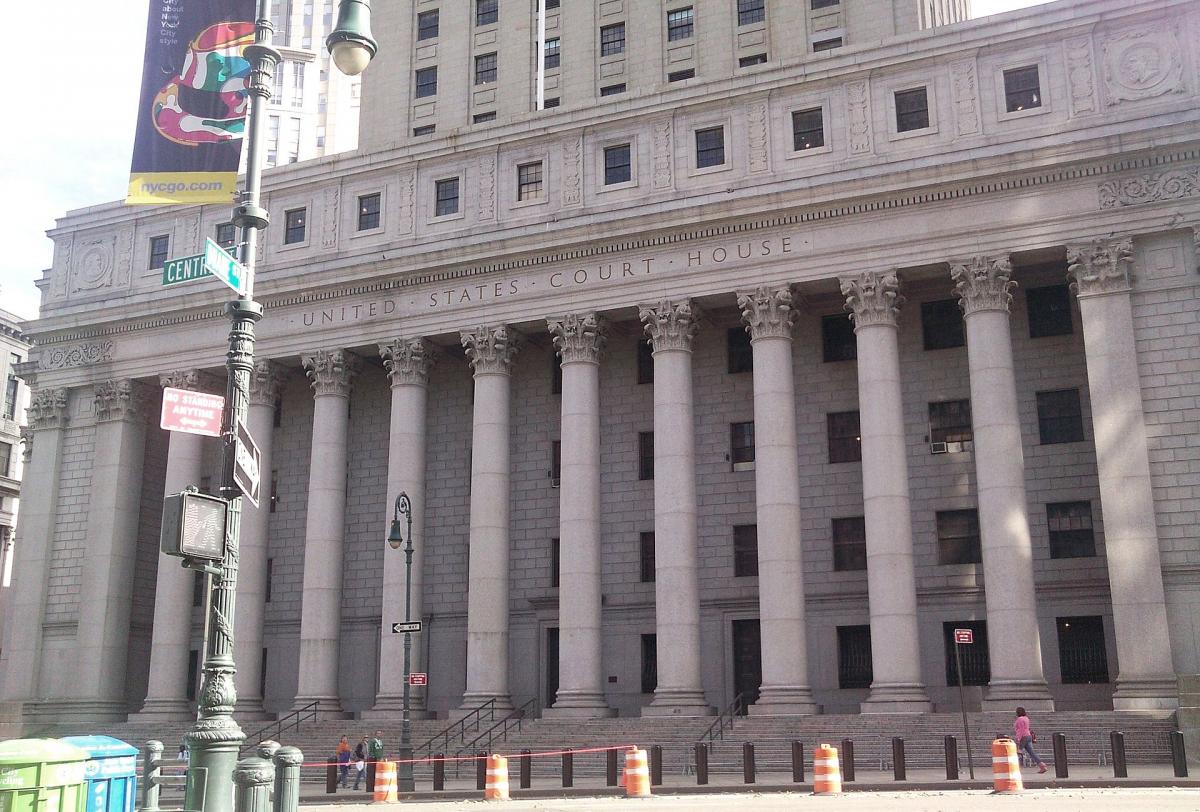
Rio Tinto accused of rights violations in Bougainville

Matbob

Mining giant Rio Tinto is responsible for multiple human rights violations caused by pollution from its former mine on the Pacific island of Bougainville, the Human Rights Law Centre concludes in a new investigative report. For 45 years, the Panguna copper and gold mine on Bougainville, Papua New Guinea, was majority-owned by the British-Australian mining company, but in 2016 Rio Tinto divested from the mine, leaving behind more than a billion metric tons of mine waste. The report, After the Mine: Living with Rio Tinto’s Deadly Legacy, documents the devastating consequences of that action for the thousands of people living around the mine site. Based on visits to 38 villages, the report reveals communities living with contaminated water sources, land and crops flooded by toxic mud, and health problems ranging from skin diseases and respiratory ailments to pregnancy complications.

Theonila Roka Matbob, a local teacher and traditional landholder from Makosi village downstream of the mine, appealed to the company to return and address these urgent problems: "The Panguna mine devastated our communities physically and culturally and we are still living with the consequences. Our land is destroyed and our rivers are poisoned. Kids are drinking and bathing in the polluted water and getting sick. New areas of land are still being flooded with the waste from the mine. We urgently need Rio Tinto to come back and deal with these problems so our communities can find healing."

Panguna was previously one of the world's largest copper and gold mines. During its operation from 1972 to 1989, the mine generated almost $2 billion in revenue for Rio Tinto and the Papua New Guinea government. In 1989, an uprising by local people over the environmental destruction caused by the mine and inequities in the distribution of its profits forced the mine's closure and triggered a brutal decade-long civil war.

Keren Adams, legal director at the Australia-based Human Rights Law Centre and author of the report, said that Rio Tinto's failure to address its legacy in Bougainville was shameful: "Rio Tinto's decision to cut and run from Panguna without addressing the massive problems created by the mine is an appalling breach of its responsibilities. During this research, we spoke to children with skin ulcers that never heal. We heard from families whose loved ones had drowned trying to cross rivers flooded with mine waste, and women who now have to walk two hours every day to lug water back to their communities because their nearby creeks are now poisoned by copper. This is not a historical issue, it is an ongoing human rights disaster and Rio Tinto must immediately act to address it."

The impacts of the mine continue to infringe nearly all the economic, social and cultural rights of local communities, including their fundamental rights to food, water, health and housing, the report concludes.

The Human Rights Law Centre has called on Rio Tinto and its former subsidiary, Bougainville Copper Limited, to immediately commit to funding an independent assessment of the mine to identify the most urgent health and safety risks to communities, and establish a substantial fund to address these problems and assist with long-term rehabilitation.

Image: Human Rights Law Centre

ICE detainees in Newark on hunger strike

Essex jail

At least 10 detainees at the Essex County Correctional Facility in Newark, NJ, began a hunger strike March 17 and dozens more have agreed to join in, according to detainees, jailhouse advocates and attorneys. They are demanding to be released on bond, possibly with ankle bracelets to track their movements, and some even said they're ready to be deported. Inside the jail, they have been following news reports on the COVID-19 pandemic, and say they'd rather die on the outside with family than locked in cells. They also say that if loved ones die, they want to be with them rather than hearing the bad news later. Essex County has a multi-million dollar contract with ICE to house detainees awaiting immigration proceedings. County officials said they are monitoring the situation. (WNYC)

According to ICE's guidelines, detainees who do not eat for 72 hours must be referred to the medical department for evaluation. Detainees who refuse food for long periods of time are held down and force-fed through tubes in the nose. (Gothamist)

Photo: Gothamist

China: internal resistance to bio-police state

Wenzhou

"Citizen journalists" and "netizens" in China who are critical of the government's handling of the COVID-19 (coronavirus) outbreak are apparently being "disappeared." Winning most attention are two cases from Wuhan, infamously the epicenter of the outbreak. Wuhan businessman Fang Bin was posting videos to YouTube (presumably through a VPN) to "report on the actual situation here," with one on Feb. 1 seeming to show eight corpses piled in a minibus outside a hospital, going viral. On Feb. 9, he posted a 13-second video with the words "All people revolt—hand the power of the government back to the people." After that, the account went silent. The other is Chen Qiushi, a human rights lawyer turned video journalist who built a reputation through his coverage of the Hong Kong protests last year and in late January traveled to Wuhan to report on the situation. He visited hospitals in the stricken city, looking at the desperate conditions and speaking with patients. Then, on Feb. 7, a video was shared on his Twitter account (currently managed by a friend) featuring his mother, who said he had gone missing the day before. His friend, Xu Xiaodong, later claimed in a YouTube video that he had been forcibly quarantined. (BBC News, Feb. 14)

The New York-based Committee to Protect Journalists is calling on the Chinese government to "immediately account for the whereabouts of journalist Chen Qiushi, and ensure that the media can cover the coronavirus outbreak in Wuhan without fear of retribution."

Wuhan has been on lockdown since Jan. 23, and harsh restrictions on movement have now spread beyond Hubei province to several provinces across central and eastern China. (Bloomberg, Feb. 11) The coastal province of Zhejiang, immediately south of Shanghai, has imposed a "draconian quarantine," according to the South China Morning Post. Some residents are being locked inside their homes. while others must present a "passport" to go out every two days for supplies.

In the south, the cities of Guangzhou and Shenzhen have imposed measures allowing the governments to seize private property under emergency powers—marking a first since the establishment of China's property law in 2007. (HKFP, Feb. 12)

In at least one city—Wenzhou in Zhejiang province—public anger over the government's reaction to the crisis has actually spilled into street protest. A YouTube video dated Feb. 5 showed crowds gathering on a roadway, chanting and shouting angrily, as riot police close in. A scuffle breaks out as the video ends.

Most of the dissent has been online—and not only on VPN-accessed officially blocked sites like YouTube and Twitter, but China's own Sina Weibo. Outcry has seemingly been so overwhelming that the government's very industrious censors are having a hard time keeping up. It is especially taking the form of homages a young Wuhan doctor, Li Wenliang, who tried to raise the alarm about the virus back in December before it was out of control—only to be silenced by police, who told him to stop "making false comments." He continued working at the overwhelmed Wuhan Central Hospital, and last week succumbed to the virus. (BBC News, Feb. 7)

It is likely that many dissident netizens have been detained or "quarantined" apart from those cases that have reached the outside word. Radio Free Asia reports that seven have been detained in Tibet for spreading "rumors" online. 

Among the items that have slipped through the censors is horrific video footage from Wuhan of men in hazmat suits apparently dragging people from their homes to be forcibly quarantined. (Daily Mail) One Wuhan resident with an ailing father in her home was able to reach BBC News. "We'd rather die at home than go to quarantine," she said. "My uncle actually died in one of the quarantine points because there are no medical facilities for people with severe symptoms. I really hope my father can get some proper treatment but no-one is in contact with us or helping us at the moment."

States a commentary in Japan Times: "For the first time since coming to power, Xi’s high-tech censorship machine is meeting with intense resistance from millions of Chinese internet users. The controlocracy is being put to the test. Most likely, though, the outbreak itself will be used to justify even more surveillance and control of the population."

Chna's leaders seem to be aware of the potential threat to the legitimacy of their rule. Xi Jinping presided over a meeting of the party's Politburo Standing Committee to discuss the crisis last week. An official statement released by state news agency Xinhua said the leaders acknowledged the epidemic poses "a major test of China's system and capacity for governance…" (SCMP, Feb. 8)

Dissident legal scholar Xu Zhangrun has written an essay entitled "Viral Alarm: When Fury Overcomes Fear," which is online in translation at the website ChinaFile. Xu blames the current national crisis on "systemic impotence" that Xi has fostered through an atmosphere of intimidation. "It is a system that turns every natural disaster into an even greater man-made catastrophe. The coronavirus epidemic has revealed the rotten core of Chinese governance; the fragile and vacuous heart of the jittering edifice of state has thereby shown up as never before." He implies that the regime may be facing the biggest challenge to its legitimacy since the aftermath of the Tiananmen Square massacre of 1989. (The Guardian. Feb. 11)

Hong Kong-based ChinaWorker website sees the crisis of legitimacy as a dual one, with the coronavirus outbreak and draconian response closely following the protests in the semi-autonomous city: "Coming in rapid succession, and further accentuated by an unprecedented superpower struggle with US imperialism (with the epidemic destined to become an additional battleground in this conflict), these crises have begun to sap the confidence of China's ruling elite and its previously rock solid belief in the CCP's authoritarian capitalist model. Xi, the 'strongman' who was charged with rescuing CCP rule, looks more likely to trigger its downfall."

Ironically and tellingly, the current panic has put a media spotlight back on Jiang Yanyong, the military surgeon who exposed the government's cover-up of the Severe Acute Respiratory Syndrome (SARS) epidemic in 2003. It now emerges that he has been under house arrest since last year, after he wrote to the top leadership asking for a reassessment of the 1989 Tiananmen pro-democracy movement and its repression. (The Guardian, Feb. 9)

We will close by recalling that two of the cities most impacted in the current crisis have been the scene of protests over the past years. Wuhan was shaken by demonstrations over placement of a waste incinerator last June. Wenzhou saw two eruptions of protest in 2012: First, in May, a migrant worker was killed in a clash with factory security guards over a wage dispute, leading to riots and street-fighting. (BBC News, May 30, 2012) Then, in November, residents in Liuliang and Fangbei villages, within Wenzhou prefecture, clashed with police in a protest against the construction of power pylons over their homes. (SCMP, Nov. 22, 2012)

And we can be sure that China's rulers are now recalling the long revolutionary legacy in Wuhan. In July 1967, it was the scene of the notorious Wuhan Incident in the Cultural Revolution, in which workers and local military commanders in the city rose up against Mao Zedong. In 1927, after the Chiang Kai-shek regime in Nanjing unleashed its brutal repression of Chiang's erstwhile allies the Communists, a rival left-wing Kuomintang-Communist government was established in Wuhan, claiming to be the legitimate capital of all China. And the historic October 10, 1911 uprising that ultimately turned into the revolution that brought down the Qing Dynasty began in Wuchang, a district of Wuhan prefecture.  

1911, 1949, 2020? You can bet that there is fear in the Zhongnanhai today….

Image via YouTube

ICJ: Burma must prevent Rohingya genocide

Rohingya

The International Court of Justice (ICJ) ruled unanimously Jan. 23 that Myanmar (Burma) must take "provisional measures" to address the "ongoing risk of genocide" faced by the remaining Rohingya people within the country's borders. The ruling also ordered Myanmar to preserve evidence of killings and to make regular reports to the court. This decision arises as part of the ongoing dispute between The Gambia and Myanmar regarding allegations of genocide against the Rohingya Muslim minority. The Gambia brought a complaint to the ICJ in November and the trial officially commenced in December with oral arguments from the two sides. The Gambia requested that the ICJ institute "provisional measures" against Myanmar to ensure the protection of the Rohingya people during the trial and to preserve evidence. The court found that given the inherent gravity of genocide allegations and the prima facie evidence already presented, provisional measures were necessary to preserve the rights of the Rohingya currently remaining in Myanmar.

The ICJ also granted The Gambia's additional requests that Myanmar should "take effective measures to prevent the destruction and ensure the preservation of evidence related to (the) allegations" and "submit a report to the Court on all measures taken to give effect to this Order within four months" as well as "thereafter every six months, until a final decision on the case is rendered." 

The ICJ found that the evidence submitted so far is "sufficient at this stage to establish prima facie the existence of a dispute between the Parties relating to the interpretation, application or fulfilment of the Genocide Convention," and that it has jurisdiction pursuant to Article IX of the Genocide Convention.

The case is expected to continue to move forward in the weeks to come, alongside its sister case in the International Criminal Court.

From Jurist, Jan. 23. Used with permission.

Note: The ICJ ruling comes two days after a Burmese government commission tasked with investigating human rights violations in Rakhine State concluded that soldiers likely committed war crimes against the Rohingya community but found no evidence of genocide. (Jurist) Some 700,000 Rohingya fled a Burmese military campaign n Rakhine in 2017, and are now languishing in refugee camps in Bangladesh. The Gambia case is one of several brought against the Burmese leadership over the purported genocide.

Photo: VOA via Jurist

CounterVortex unveils new website

CounterVortex

At long last, our new image-heavy mobile-friendly website has been unveiled. Without compromising our characteristic seriousness, comprehension and rigor, we have finally caught up with the smartphone zeitgeist. It was overdue and inevitable, and our developer has generously donated his services pro bono. HOWEVER: Our hosting costs are going up considerably to accommodate this change, effective immediately. Please help us close this gap. So far, six of you have responded to our year-end donation request, for a total of $413. And we salute these six loyal readers! But this is about half of our annual operating costs. And we only ask you for money once a year. So the time is NOW. Please come through for us. In the age of online media, it is critical that you put your money where your reading eyes are, to assure the survival and growth of the voices you support. We're depending on you.

Here's all the info you need to make a donation, either via check or Paypal:

You can become a Patreon subscriber here.

Thank you, shukran & gracias,

Bill Weinberg

Editor and senior ranter, CounterVortex

ICC prosecutor rejects Bibi’s ‘anti-Semitism’ charge

Bensouda

The chief prosecutor of the International Criminal Court responded to Israeli Prime Minister Benjamin Netanyahu, who accused her of "pure anti-Semitism" for seeking to investigate possible war crimes committed in Gaza, the West Bank and East Jerusalem. "This is a particularly regrettable accusation that is without merit," Fatou Bensouda told The Times of Israel in a Jan. 13 interview. "I, along with my office, execute our mandate under the Rome Statute with utmost independence, objectivity, fairness and professional integrity. We will continue to meet our responsibilities as required by the Rome Statute without fear or favor."

Bensouda announced Dec. 20 that she had found a basis for investigating possible war crimes by Israel in the Palestinian territories, but she is first asking the court to confirm that it has jurisdiction there—which Israel insists it does not. The announcement at The Hague  came five years after her office opened a preliminary investigation of actions by Israel that Palestinian leaders contended were war crimes—most notably during the 50-day bombardment of the Gaza Strip in 2014. "There is a reasonable basis to believe that war crimes have been or are being committed in the West Bank, including East Jerusalem, and the Gaza Strip," Bensouda's office said in a court filing.

The filing also said the investigation would examine possible war crimes by Hamas and other armed Palestinian groups in Gaza, over charges that they have been "intentionally directing attacks against civilians," using civilians as human shields, and engaging in torture and "willful killing."

Israel is not a member of the International Criminal Court, and the preliminary investigation was opened in January 2015 in response to petitioning by Palestinian authorities. This came weeks after President Mahmoud Abbas of the Palestinian Authority signed the Rome Statute, the treaty that created the court, and formally accepted its jurisdiction. Abbas' move was bitterly protested by Israel and the United States.

In a lengthy memo published 90 minutes before Bensouda's announcement, the Israeli attorney general's office reiterated its contention that the ICC lacks jurisdiction over the Palestinian territories. The memo asserted that only a sovereign state "having criminal jurisdiction over its territory and nationals" can delegate authority to the International Criminal Court. The Palestinian signing of the Rome Statute "did not settle the highly controversial question of Palestinian statehood," the memo read. (NYT, Dec. 20)

The preliminary investigation was the initial stage to find "reasonable grounds" that war crimes or crimes against humanity were committed in the occupied territories since June 13, 2014, the starting date requested by the Palestinian Authority. The full investigation, if commenced, could lead to indictments and eventual prosecutions of senior Israeli and Palestinian officials and military commanders. (+972, Jan. 13)

Netanyahu responded to Bensouda's announcement at a Likud Party event marking the first night of Hanukkah. "Pure anti-Semitism, that's what the ICC has done, and we will not bow our heads," Netanyahu said. Invoking the Hanukkah story, he added that the court "has set forth decrees that are just as anti-Semitic as the decrees of the Seleucid Greeks." (Times of Israel, Dec. 22)

UN rights experts have also decired Israel as an "apartheid regime," citing protocols of the Rome Statute. 

Photo: Wikimedia Commons via +972

Podcast: solidarity with Iran —the people, not the state

Iran protests

In Episode 46 of the CounterVortex podcast, Bill Weinberg calls out the racist imperial narcissism in coverage of the assassination of Qassem Soleimani—nearly all of which (left, right and center) is solely concerned with whether he was responsible for the deaths of "hundreds of Americans." Safely invisible is the reality that Soleimani and his militia networks were responsible for the deaths of hundreds of thousands of Iraqis and Syrians. Iranian forces in Syria have been carrying out a campaign of sectarian cleansing, with Shi'ite militia leaders usurping the lands of displaced Sunnis. Soleimani's militias in Iraq have meanwhile been serially massacring protesters. Over this same period, hundreds of protesters have been killed in state repression in Iran itself. Anti-war forces in the West must not be confused by Trump's cynical pretense of support for the Iranian protesters. Our opposition to Trump's war moves must be in explicit solidarity with Iran—meaning the people of Iran, not the state. And that includes solidarity with the struggle of the Iranian people against an oppressive regime. Listen on SoundCloud, and support our podcast via Patreon.

Production by Chris Rywalt

We ask listeners to donate just $1 per episode via Patreon. A total of $30 per episode would cover our costs for engineering and producing. We are currently up to $25.

Image: @iranprotest2019

US-Iran brinkmanship: is it still a charade?

al-Asad air-base

Missiles launched from Iran struck various targets in Iraq Jan. 7—primarily al-Asad air-base west of Baghdad, which hosts US forces. A site near the Kurdish city of Irbil appears to have been a secondary target. The Islamic Revolutionary Guard Corps quickly took credit for the strikes, and the Pentagon said it believed Iran fired with the "intent to kill." But the facts suggest otherwise. Media reports indicate Tehran gave Baghdad advance warning of the strikes, and the Baghdad regime in turn informed the US, which moved its forces out of harm's way. In spite of all the predictable misinformation and disinformation that quickly proliferated on the internet, there were apparently no casualties in strikes. (Reuters, CNN, ABC) Anonymous US and European sources even told Israeli newspaper Haaretz that the Iranians were thought to have intentionally targeted the attacks to miss US forces.

If Tehran's objective was to save face while still preventing the crisis from escalating, it appears to have worked. Trump's tweet as the news broke was not another display of his trademark bellicosity—on the contrary, he sounded uncharacteristically chill: "All is well! Missiles launched from Iran at two military bases located in Iraq. Assessment of casualties & damages taking place now. So far, so good! We have the most powerful and well equipped military anywhere in the world, by far! I will be making a statement tomorrow morning."

And when that statement came at a press conference the next morning, Trump was again waxing mellow: "Iran appears to be standing down, which is a good thing for all parties concerned and a very good thing for the world." Flanked by Secretary of State Mike Pompeo and Defense Secretary Mark Esper, Trump said nothing about military retaliation, but announced "additional punishing economic sanctions" that will "remain until Iran changes its behavior."  (NBC, CNN, Al Jazeera)

The assassination of Qassem Soleimani was a reckless and dangerous move in the US-Iran geo-strategic game for control of Iraq and the greater region. But a game, no matter how high-stakes and dangerous, is still in the end a game. Even if it is too late to rebuild the (bloody enough) status quo ante, Washington and Tehran may yet come to some unspoken accommodation. In the endless predictions of an imminent US war with Iran, we have this time come closer than ever before. For the moment, however, both sides appear to have taken at least a tentative step back from the brink of the unthinkable…

Map: Wikiwand

Who was behind new Tripoli air-strike?

Libya

The Presidential Council of Libya's internationally-recognized government issued a statement condemning the Jan. 5 air-strike on Hadba Military College in Tripoli, in which some 30 cadets were killed and many more injured. "The attackers aim to destabilize Tripoli in order to seize power via such repeated terrorist attacks, disregarding the safety of civilians," the statement read. The Tripoli-based Government of National Accord (GNA) blamed the strike on warlord Khalifa Haftar, who is loyal to the rival government based in Libya's east and has been besieging the capital for months. Haftar's forces, in turn, denied responsibility for the attack.

The United Nations Support Mission in Libya (UNSMIL) issued its own statement, saying, "Constant random air-strikes and shelling on civilians and civilian infrastructure like schools and hospitals could amount to war crimes." It added that "the perpetrators won't escape punishment" indefinitely. (Libya Observer, BBC News)

Multiple powers have been sporadically carrying out air-strikes on Libyan territory for years—including the US, which recently targeted ISIS strongholds in the desert south. There was similar confusion over the bombing of a migrant detention center outside Tripoli last July.

Map: CIA

Chile: indigenous win a round in lithium struggle

lithium

The First Environmental Tribunal in the Chile's northern city of Antofagasta on Dec. 26 ruled in favor of indigenous communities that had brought suit against Sociedad Quimica y Minera (SQM), the world's second-largest miner of lithium. The court found SQM's compliance plan for water preservation submitted to Chile's Environment Superintendency (SMA) was "insufficient," citing the "particular fragility" of the lithium-rich but extremely arid salt-flats where the company hopes to expand operations, the Salar de Atacama.  Under the ruling, SQM must submit a new compliance plan, pay multi-million fines to the SMA for being out of compliance, or suspend operations. "We must protect sensitive ecosystems even more when they constitute the ancestral habitat of our native peoples whom the State of Chile is obliged to protect," the court's chief justice, Mauricio Oviedo, said in a statement. The case was brought by the local Council of Atacameño Pueblos, representing the impacted indigenous communities of Peine and Camar. (Jurist, Al Jazeera)


Photo: First Environmental Tribunal of Antofagasta

Bolivia: regime threatens autonomous Chapare

Chapare

The new Bolivian regime's Government Minister Arturo Murillo is threatening a military invasion of the eastern lowland region of Chapare, heartland of support for ousted president Evo Morales, which has become a de facto autonomous zone outside the control of La Paz. Murillo implied to reporters earlier this month that planned new elections for Bolivia will not be able to proceed until control over Chapare has been re-established. "We cannot permit a part of Bolivian territory without presence of the state, without presence of police…  If there is no respect for the rule of law, this complicates the question of elections." He warned the region's residents: "Be careful of being too tough, or there won't be elections." (Cuidado que por ponerse duros no tengan elecciones.) He said that "narco-terrorists" are among the cocalero syndicates that have effectively seized power in the region, and that Chapare had become a "lawless territory." (Los Tiempos de Cochabamba, Dec. 11)

Morales initially took refuge in Chapare after being ousted in La Paz, before accepting temporary exile in Mexico. In the aftermath of the Nov. 11 ouster, the Six Federations of the Tropic of Cochabamba, the cocalero alliance formerly led by Morales, mobilized to resist the new regime. The region was cut off by cocalero roadblocks, and nine National Police stations were burned. The roadblocks have since been relaxed, but large areas of the province are without any National Police presence and effectively independent. Jaime Zurita, police commander of Cochabamaba department, admitted that his forces had lost control of Chapare province. "If there are no conditions, we cannot send the police to work there," he said. (Pagina Siete, La Paz, Dec. 7)

Morales arrived in Argentina Dec. 13, where the government says he has been granted asylum. President Alberto Fernandez has rejected an extradition request by Murillo, who is seeking to try Morales on "terrorism" charges. Fernandez said Dec. 19 that his government "will not hand over for any reason" the former Bolivian president. (TeleSur, Dec. 19; La Nación, Buenos Aires, Dec. 13)

Mexico's Exterior Secretary Marcelo Ebrard meanwhile accused the Bolivian regime of ramping up its police presence outside his government's embassy in La Paz, and threatened to open a case before the International Court of Justice. Bolivia's Foreign Minister Karen Longaric said such a move would be a "mistake" based on a "legal fallacy." (Global News, Dec. 26; Reuters, Dec. 23)

Photo: Ollie Vargas via Twitter

Syria: thousands flee intensified Idlib offensive

Idlib displaced

More than 235,000 people have fled from their homes in Syria's rebel-held Idlib province over the past days, as the Assad regime and Russia escalate their campaign of aerial bombardment. A report from the UN Office for the Coordination of Humanitarian Affairs (OCHA) states that Ma'arrat An Nu'man and other towns in the province are now "almost empty," while internally displaced persons (IDP) camps in the extreme northwest of the province are rapidly swelling. "Displacement during winter is further exacerbating the vulnerability of those affected," the report states. Perversely, the renewed offensive comes days after Russia and China vetoed a UN Security Council resolution that would have extended cross-border aid convoys into Idlib from Turkey for another year—essentially condemning many of those not directly killed by the bombs to death by starvation and exposure. (BBC News, Al Jazeera, The New Humanitarian, France24)
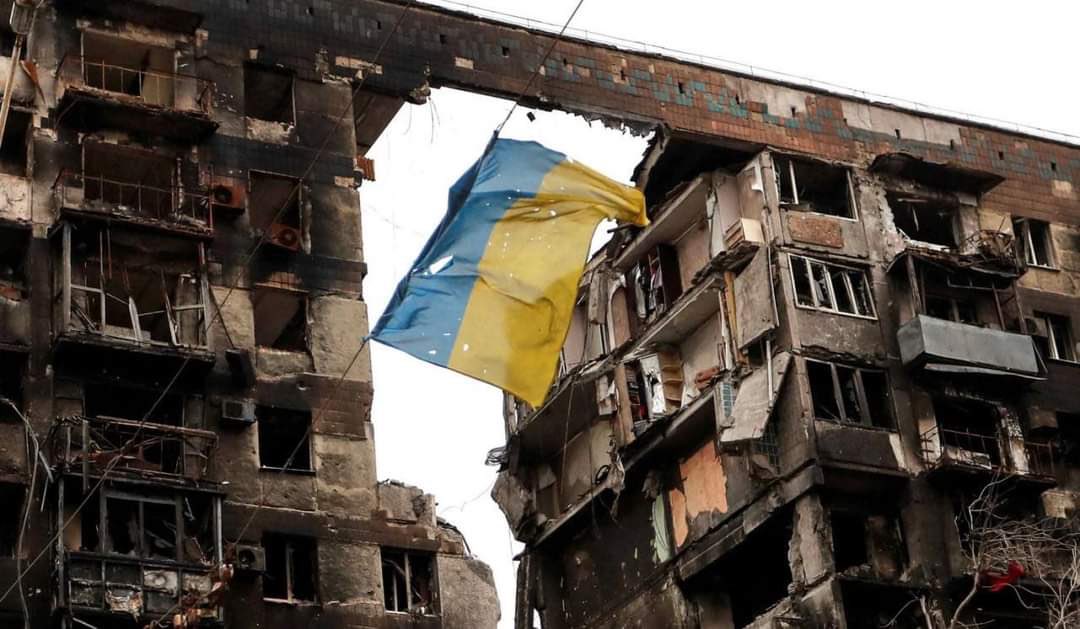
More than 300,000 had already been displaced by bombardment in Idlib this year before the new escalation, and many of those now fleeing are being displaced for a second or even third time. Nearly half of Idlib's 3 million people are themselves displaced persons who fled parts of Syria now held by the regime. When the city of Aleppo fell to regime forces after a long siege and months of aerial bombardment almost exactly three years ago, thousands of residents were evacuated to Idlib.

Amid all this comes the incredibly heartening news that new protests have broken out in Nafaa town in Daraa province, once a cradle of the revolution but now controlled by the Assad regime. The demonstrations are protresting both the bombardment of Idlib, and ongoing detentions of those suspected of opposing the regime. (Syria Call)

The protests follow reports that 174 men who had accepted relocation from the Rukban IDP camp in southeast Syria, near the Jordanian border, have been detained. The opposition Syrian Association for Citizen's Dignity reports that rather than being re-integrated into Syrian sociey, as promised, the men were taken from shelters in Homs and "transferred to 'terrorism courts', despite having previously received security clearances from the regime." (EA Worldview)

The Assad regime has detained hundreds of thousands over the past year, and is accused by the UN High Commissioner for Human Rights of carrying out a mass "extermination" of prisoners.

Donations for the displaced in Idlib can be made through the Multifaith Alliance for Syrian Refugees.

Photo: UNHCR

Podcast: against the global detention state

detention facility

In Episode 45 of the CounterVortex podcast, Bill Weinberg notes with alarm the rapid consolidation of a global detention state, extending across borders and rival power blocs. In the United States, Trump moves toward indefinite detention of undocumented migrants, with horrific rights abuses widespread in the fast-expanding camp system. In China, up to a million Uighurs have been detained in "re-education camps," and are facing such abuses as forced sterilization. As India hypocritically protests China's treatment of the Uighurs, it is also preparing mass detention of its own Muslim population. Russia's Vladimir Putin is similarly preparing mass detention of the Crimean Tatars. In Syria, the Bashar Assad regime has detained hundreds of thousands, and is carrying out a mass extermination of prisoners, almost certainly amounting to genocide. In Libya, countless thousands of desperate migrants have been detained, often by completely unaccountable militias, and an actual slave trade in captured Black African migrants has emerged. Yet Trump exploits the mass internment of the Uighurs to score propaganda points against imperial rival China—and some "leftists" (sic) in the US are so confused as to actually defend China's detention state. International solidarity is urgently needed at this desperate moment to repudiate such divide-and-rule stratagems. Listen on SoundCloud, and support our podcast via Patreon.

Production by Chris Rywalt

We ask listeners to donate just $1 per episode via Patreon. A total of $30 per episode would cover our costs for engineering and producing. We are currently up to $25.

Photo of Homeland Security’s Otay Mesa Detention Center from BBC World Service via Flickr

Philippines: convictions in Maguindanao massacre

Maguindanao massacre

More than a decade after 58 people were killed in the worst case of election-related violence in Philippine history, Quezon City Regional Trial Court Branch 221 on Dec. 19 found Datu Andal Ampatuan Jr. and his brother Zaldy Ampatuan guilty of overseeing the Nov. 23, 2009 massacre at Maguindanao. They were sentenced to reclusión perpetua (40 years without parole). The pair were convicted on 57 counts of murder in the attack on a convoy that included journalists covering an opposition figure running for the governorship of Maguindanao province. Police said 58 people were killed in the massacre, but the body of the 58th victim was never found. Their father, then-incumbent governor Andal Ampatuan Sr., was arrested in connection with the case and died in prison while awaiting trial in 2015. The court sentenced a further 15 suspects, including several more Ampatuan family members and police officials, to between six and 10 years in prison as accessories to the crime.

Amnesty International called the verdict a "critical step towards justice." However, it said the "search for justice is far from over," and called for the government to "dismantle private armies that underpin the power of political clans." Some 80 others named as suspects in the case remain at large.

Noting that 32 journalists and media workers were killed in the attack, the New York-based Committee to Protect Journalists welcomed the convictions. "While we regret it was a decade in coming, we hope that the landmark verdict heralds a genuine break in the cycle of impunity in journalist killings in the Philippines," said Shawn Crispin, CPJ's senior Southeast Asia representative. "Authorities should leverage this hard-fought precedent to pursue and achieve justice in all other unsolved media killings."

President Rodrigo Duterte's press representative also welcomed the verdict, saying it was in keeping with the government's efforts to protect the media from "violence, threat and intimidation." But Duterte himself has in the past issued public death threats against journalists, as well as human rights activists. (BBC News, PhilStar, PhilStar, Rappler)

Photo: Relatives of victims burn portraits of Ampatuan clan members during visit to massacre site. Credit: MindaNews

Peru next for regional protest wave?

Lima protest

Weeks after a nationwide uprising in Chile was sparked by protests over transit fare hikes in the capital, politicians in neighboring Peru are issuing nervous warnings in the wake of days of street demonstrations in Lima. On Nov. 29, students occupied Central Station on Lima's Metro to demand subsidized transit fares, "adjusted to the real incomes of Peruvians." The riot police were mobilized to clear the station, and a tense stand-off with protesters ensued. (EuroNews, Peru21, Nov. 29) Nov. 28 saw an angry march throughout downtown Lima by municipal water-workers and their trade-union allies, to oppose the privatization of the city's water system. The march was called by the water-workers union SUTESAL after President Martín Vizcarra signed Supreme Decree 214, calling for the sale of shares in the Lima Potable Water & Sewage Service (SEDAPAL), initiating longstanding plans to privatize the state company.  (Diario Uno, Nov. 29; Gestión, Nov. 15)

Hundreds also took to the streets of downtown Lima Nov. 25, when Peru's Constitutional Tribunal ordered the release of right-wing opposition leader Keiko Fujimori, who was arrested just over a year ago and placed under an 18-month order of "preventative detention" while corruption charges are pending against her. She was ordered freed following a habeas corpus petition brought by her sister, Sachie Fujimori. The protests against her release saw brief stone-throwing and clashes with police. The release order is scheduled to be carried out this weekend. (Peru21, Nov. 29; RPP, Al Jazeera, Nov. 25

President Vizcarra explicitly took note of the threat of widespread unrest when he told the Annual Conference of Executives (CADE) the evening of Nov. 29 that Peru "is not free of protests" and must work to fight corruption and close the wealth gap. But his prescription was for an "authentic" free market to lift all Peruvians. (InfoBae, Nov. 29) In other words, precisely the policies that are now being protested.

All this comes with Peru still in deep political crisis. The Constitutional Tribunal agreed last month to hear a challenge by right-opposition lawmakers to Vizcarra's dissolution of the corruption-plagued Congress by executive order. The Sept. 30 order sparked a brief power struggle, as some 20 opposition lawmakers refused to leave the Congressional chamber, but backed down late that night after the building was surrounded by troops and the entire downtown area filled with angry protesters.

Congress is to re-convene after new elections are held in January. Until then, only the 27-member Permanent Commission of Congress is meeting. It is empowered to vote on bills introduced by Vizcarra's cabinet, which was also purged in the wake of the shake-up. (Reuters, Oct. 29; Peruvian Times, Oct. 4; Peruvian Times, Oct. 1)

Photo: Diario Uno

Bolivia: signs of de-escalation following dialogue

Rafael Quispe

Bolivia's Plurinational Legislative Assembly on Nov. 23 passed an "Exceptional & Transitional Regime Law" that annus last month's contested elections and calls for new elections to be held within 120 days—without Evo Morales as a candidate. The date for the new polls is to be set once new members of the Supreme Electoral Tribunal are appointed. The pact follows talks mediated by the Catholic Church and the European Union between the new government of interim president Jeanine Añez and leaders of the ousted Morales' party, the Movement Toward Socialism (MAS), which continues to hold a majority in both houses of the Assembly. (EuroNews, Nov. 25; PaginaSiete, La Paz, AP, Nov. 24; Reuters, Nov. 23)

"We are going to participate in the elections and we are going to do it with young candidates, especially for president and vice-president," Henry Cabrera, MAS vice-president of the Chamber of Deputies, told Reuters before the new law approved. "We are not going to recycle candidates." (Reuters, Nov. 21)

But the day before the law was approved, the new regime's Government Minister Arturo Murillo called a press conference to announce that he is opening a criminal case against Evo Morales on "terrorism and sedition" charges, and would seek a 30-year prison term for the ousted president. Murillo presented as evidence a video recording in which Morales, now exiled in Mexico, appears to be calling on his supporters to "strangle" Bolivian cities by erecting roadblocks to cut off fuel and food. (The Guardian, Nov. 24; BBC News, Unitel, Bolivia, Nov. 22)

The video, supposedly recovered when National Police broke up an indigenous roadblock in Santa Cruz department, is said to show a speaker-phone conversation between Morales and a local supporter on the ground. The supporter is identified as Faustino Yucra Yarwui, a cocalero leader who has been fugutive from narco-trafficking charges since 2016. In the video, the voice purported to be that of Morales can be heard saying: "Brother, don't let food enter the cities, we'll block it. It's a real siege… We are going to win. If the Assembly rejects my resignation, I will try whatever it takes to get back, even if they arrest me." (PanAm Post, Nov. 26; Los Tiempos, Los Tiempos, Cochcabamba, Nov. 25; Eju!, Santa Cruz, Nov. 22; Los Tiempos, Nov. 20)

Morales responded on Twitter that the government is investigating him on the basis of "manipulated recordings," while for the "30 brothers assassinated in #Bolivia by bullet, there is no investigation, no one held responsible or detained."  

After days of unrest and deadly repression since Morales' ouster, however, there are signs of de-escalation. As a fruit of the dialogue, leaders of the Six Federations of the Tropic of Cochabamba, the coca-growers union once led by Morales, agreed on Nov. 26 to dismantle the roadblocks they had been maintaining in the Chapare region since the change of regime two weeks ago. A key concession was the government's agreement to overturn Áñez's Supreme Decree 4078, which exempted the security forces from legal responsibility for acts of repression. (ANF, Nov. 26)

In another sign of de-escalation, lawmaker Rafael Quispe, a traditional Aymara leader from La Paz department and a leading figure in the indigenous opposition to Evo Morales, was sworn in by Áñez on Nov. 26 as the new leader of Bolivia's Indigenous Fund (FONDIOC), a body formerly shaken by corruption scandals. Quispe appeared at the ceremony in full Aymara regalia—weating a lluch’u, traditional bowler-type hat, and poncho, and holding a chicote, or staff of authority, along with coca-leaf and other sacred herbs—surrounded by a delegation of indigenous leaders from across the Altiplano. (PáginaSiete, El Pais, Tarija, Nov. 26)

Photo of Rafael Quispe being sworn in via El Pais, Tarija

Duque starts dialogue after Colombia strike

Bogota protest

Colombia's President Ivan Duque on Nov. 24 convened his National Labor Concord Commission (Comisión Nacional de Concertación Laboral) to begin the "National Conversation" he pledged four days earlier in a bid to quell a fast-mounting anti-government protest wave. Social leaders, mayors and departmental governors from across the country are to participate in the talks. The protests escalated Nov. 21 when trade unions, including the giant Unitary Workers Central (CUT), called a nationwide general strike, and repressive measures by the National Police only fueled the mass mobilization.

Nov. 21, the first day of the strike, saw peaceful protesters filling downtown Bogotá. But the day ended with violence as groups of masked men among the demonstrators began smashing the windows of government buildings and defacing the statue of Simón Bolívar in the city's central square. The feared National Police riot squad ESMAD responded with force, and running street battles ensued. The masked agitators (encapuchados) also attacked transit stations, leading to a a near-total shut-down of the system. There has been widespread speculation that the encapuchados were actually paid provocateurs.

A curfew was imposed that night in Bogotá, as well as in Cali where similar scenes were reported. ESMAD also clashed with student protesters in Medellín, leaving several injured. Amid the repression, Duque announced that he had agreed to the dialogue.

But protesters continued to mobilize in Bogotá in spite of the curfew. On Nov. 23, when a young demonstrator named Dilan Cruz was struck in the head by a tear-gas canister, leaving him in critical condition, thousands filled downtown Bogotá in outrage. Peaceful demonstrators occupied the capital's central square. They also gathered outside Duque's residence and kept him awake all night with a massive cacerolazo—beating pots and pans.

The strike was called to oppose the so-called Paquetazo de Duque—the president's proposed package of neoliberal and austerity measures, including cuts to worker benefits, lowering of the minimum wage, and privatization of retirement programs. (Colombia Reports, La FM, Caracol Radio, The City Paper, Bogotá, Nov. 24; RCN Radio, Nov. 23; Colombia Reports, Notas, Nov. 22;  Colombia Reports, Colombia Reports, Colombia Reports, Colombia Reports, The City Paper, Nov. 21;  Desinformemonos, Nov. 16)

Photo: Hollman Morris via Colombia Reports

India: high court rules for Hindus in Ayodhya dispute

Ayodhya

The Supreme Court of India issued a unanimous ruling Nov. 9 in the decades-long Ram Janmabhoomi-Babri Masjid land case, finding for the Hindus. A small plot of land, of about 1,500 square yards, in the city of Ayodhya in the northern state of Uttar Pradesh has traditionally been believed by Hindus to be the birthplace of the god Ram. The location is also venerated by Muslims because it was the site of the Babri Masjid, a mosque built in the sixteenth century by the first Mughal emperor Babur. Both religious communities have fought over ownership of the site since the beginning of the British Raj in 1857. The current case came out of appeals of four different suits filed from 1950 to 1989.

The court examined extensive historical and archaeological evidence, and determined that the preponderance of the evidence favored Hindu claims for the site. The order calls for the central government to form a trust for management of the land and eventual construction of a temple to Ram. The court also held that five acres of land from elsewhere in Ayodhya must be granted to Muslims for the construction of a mosque to replace the Babri Masjid.

The conflict between the religious communities over the land has often turned violent. On Dec. 6, 1992, thousands of Hindu pilgrims descended on the mosque, tore it to the ground, and built a make-shift temple to Ram in its place. This sparked riots and violence throughout India, including the 1993 bomb blasts in Mumbai which killed over 300 people and injured a further 1,400. In 2002 a train of Hindu pilgrims returning from Ayodhya to Ahmedabad in the state of Gujarat was set ablaze, killing 58. Three days of rioting followed across Gujarat, in which up to 2,000 people, mostly Muslims, were killed, and more than 500 mosques and shrines were destroyed. Narendra Modi, current prime minister of India, was chief minister of Gujarat at the time, and was accused of intentionally failing to protect Muslims during the riots, though he was cleared of any wrongdoing by a special investigation.

There was a heavy police presence in Ayodhya leading up to the verdict, and security measures put in place throughout India. Zufar Faruqi, chairman of the Sunni Central Wafq Board, one of the main litigants in the case, issued a statement saying the board would not seek to challenge the verdict.

From Jurist, Nov. 11. Used with permission.

See our last posts on the Ayodhya dispute, the Mumbai bombing cases, and the Gujarat pogrom.

Photo: रूही via Wikimedia

‘Genocide’ charges follow Colombia massacre

Tacueyó massacre

Indigenous leaders in Colombia are raising accusations of "genocide" following the latest massacre, in which five members of the Nasa people were killed in southwestern Cauca department. Cristina Bautista, a Nasa traditional authority, or neehwesx, was killed along with four members of the Indigenous Guard, an unarmed community self-defense patrol, on Oct. 29. The incident took place at the community of La Luz on the Nasa resguardo of Tacueyó, Toribio municipality. The Indigenous Guard tried to stop a car at a checkpoint maintained in the community. The driver refused to cooperate and a stand-off ensued, bringing Bautista and others to the scene. Eventually, the occupants of the car opened fire. In addition to five slain, several were wounded in the attack, and the assailants escaped. They are believed to be members of a "dissident" band of the FARC guerillas, which has refused to honor Colombia's peace accords. The Indigenous Guard carry traditional staffs, but not firearms.

Bautista had been internationally recognized for her work in the region. She was a former "indigenous fellow" with the UN Human Rights Office and the recipient of a grant this year from the UN Voluntary Fund for Indigenous Peoples. UN Human Rights Office spokesperson Marta Hurtado said after the slaying: "We call on the authorities to establish a prompt, thorough, independent and impartial investigation into the…killings in Northern Cauca, including into possible failures on the part of the authorities that may have allowed the massacre to happen. We also urge the authorities to break the cycle of impunity relating to threats, harassment and killings targeting indigenous peoples." (ReliefWeb, Al Jazeera, Nov. 1; ReliefWeb, Oct. 31; BBC News, Oct. 30)

A second massacre in Cauca immediately followed, with the discovery of five bodies Oct. 31 in Santa Helena community, Corinto, municipality. It was not immediately clear if the victims were indigenous peoples, or the circumstances of their deaths. (El Heraldo, Oct. 31)

Indigenous peoples have been particularly targeted in the ongoing wave of deadly attacks on social leaders across Colombia. On Oct. 13, another Nasa elder, Canas Velasco, was slain by unknown assailants in an attack at his home in Tacueyó. Community leaders again blamed FARC "dissidents," who are believed to protect illicit cannabis and coca production in the region that indigenous authorities are attempting to phase out. With his death, the total of indigenous leaders slain in Cauca this year was brought to 36, by UN and government figures. The total for 2018 in the department was 26. (El Tiempo, Oct. 16; CRIC, Oct. 14)

Although Cauca has been particularly hard-hit, this is a trend throughout Colombia. On Oct. 17, Wayúu indigenous leader Oneida Epiayú was slain by unknown assailants as she ate at a popular restaurant in the town of Riohacha, La Guajira department. Her husband was among four injured in the attack. Reports noted at the time that this brought to 115 the number of indigenous people slain in Colombia over the past year. (Prensa Latina, Oct. 30; Contagio Radio, Oct. 18; El Heraldo, Oct. 17)

On Oct. 16, Embera indigenous leader Constantino Ramírez Bedoya was slain in an attack while he was riding his motorcycle on a road near the resguardo of Dachi Agore, Quindio department.  (El Colombiano, Oct. 18)

The National Indigenous Organization of Colombia (ONIC) charges a campaign of "genocide" against Colombia's indigenous peoples, and particularly names President Ivan Duque as complicit. Duque has been assailed for his refusal to talk to indigenous authorities, and his opposition to implementation of the peace deal with the FARC. (Colombia Reports, Nov. 1)

Photo: Colombia Reports

Syrian Kurds forge military pact with Assad regime

SDF

In a deal brokered by Russia, the leadership of the Rojava Kurds have agreed to cooperate with the Assad regime in resisting the Turkish incursion into northeast Syria. With Assadist forces already mobilizing to the region from the south and Turkish-backed forces advancing from the north, the Kurds have been left with little other choice. Accepting a separate peace with Assad is now their only hope to avoid outright extermination, or, at the very least, being cleansed entirely from their territory. But the sticking point in previous peace feelers between the Kurds and Assad has been the latter's refusal to recognize the Rojava autonomous zone—so its survival now is gravely in doubt, even in the improbable event that the Turkish advance is repulsed. Worse still, with the Kurds now open allies of the brutal regime that Syria's Arab opposition has  been fighting for nearly eight years, a general Arab-Kurdish ethnic war in northern Syria appears terrifyingly imminent.

Another sobering prospect is the possibility of Russian-backed Assadist forces directly engaging Turkish forces in the coming days. As Turkey is a NATO member (however isolated it may be from its alliance partners at this moment), this obviously holds potential for international escalation. Engagements on Syrian rather than Turkish soil would probably be insufficient to trigger Article 5 of the North Atlantic Treaty. But a retaliatory attack on security forces within Turkish territory by Kurdish guerillas could have grim consequences at this juncture. All the more reason we must reject the propagandistic conflation of the Rojava Kurds with the PKK, the armed Kurdish opposition group in Turkey. They are politically aligned, but not the same organization.

Then there's the question of US troops in this situation. Their announced "withdrawal," which was taken by Turkey as a green light for the invasion of Rojava, appears to be a withdrawal only from the Turkish-claimed "safe zone" along the border (although Ankara and Washington never agreed on the boundaries of this zone). US forces appear to be pulling back deeper into Syria, perhaps still within Kurdish-controlled territory. Assadist forces are now advancing into this same territory. This raises the question of how US and Assadist forces will react in immediate proximity.

Some 130,000 civilians have now fled the Turkish advance. A total death toll remains uncertain, but it must be in the triple digits by now, and Turkish forces have been apparently emulating the Assadist and Russian tactic of bombing hospitals. The hospitals in the border towns of Ras Alain and Tel Abyad have been shut as a result of Turkish air-strikes and artillery, the Kurdish Red Crescent reports. Some 800 captive ISIS militants are also said to have escaped from one of the camps where they were being held, in the town of Ain Issa.

After various name changes in an attempt to appease the Assad regime (officially dropping the name "Rojava"), the Rojava autonomous zone is now being called the Autonomous Administration of North and East Syria (NES). The NES said in a statement on the pact with the regime: "To counter and prevent this [Turkish] attack, an agreement with the Syrian government, which is responsible for protecting the borders of the country and preserving Syrian sovereignty, has been reached for the Syrian army to enter and be deployed along the Syrian-Turkish border." The statement also said the campaign would seek to recover Afrin, the Kurdish-majority town that was taken by Turkey and its allied militia forces last year.  (BBC News, BBC News, BBC News, Reuters, Kurdistan24, Rudaw, Rudaw)

Photo: SOHR

Trump’s phone call: the view from Ukraine

Ukraine

US Speaker of the House Nancy Pelosi has finally announced that the House is moving forward with an official impeachment inquiry after reports surfaced that Donald Trump called on a foreign power to intervene in the upcoming election. Trump placed a hold on $391 million in aid to Ukraine just over a week before a July phone call in which he apparently urged Ukrainian President Volodymyr Zelensky to investigate Hunter Biden—the son of former US Vice President Joe Biden, Trump's likely opponent in next year's race. The transcript of that call (not, apparently, verbatim) was released by the White House Sept. 25.  Trump of course called the impeachment inquiry "the single greatest witch-hunt in American history," and tweeted that the inquiry is PRESIDENTIAL HARASSMENT (all caps). (Jurist)

This pretty clearly constitutes use of military aid to Ukraine as a bargaining chip—or an outright bribe. Details of how Ukraine's internal war became a football in American politics are provided in a video "explainer" and related coverage by Kyiv Post.

It is now confirmed that in the July 25 phone conversation between Trump and Zelensky, they discussed a possible Ukrainian investgation into Hunter Biden as well as into Crowdstrike, the cybersecurity firm that apparently traced the 2016 DNC hacks back to Russia. This "bizarre" second item was evidently based on misinformation. CNN reporter Daniel Dale wrote on Twitter that in 2017 Trump said he had "heard" that Crowdstrike is based in Ukraine and owned by a wealthy Ukrainian. In reality, the company's headquarters are in Sunnyvale, California.

Trump specifically called upon Zelensky's government to cooperate with Rudolph Giuliani—who is Trump's personal attorney, and holds no position in the US government.

Earlier this year, Giuliani made several serious accusations against Biden and the Ukrainian government. As Kyiv Post states: "If proven, these accusations might help Trump win re-election in 2020. But there's a problem: The claims aren't backed up by any evidence." 

Giuliani claimed, first, that Biden as vice president pressured Ukraine to fire its then-prosecutor general Viktor Shokin, who was investigating corruption claims against Burisma Holdings, the country's largest oil and gas extraction company. Hunter Biden was at that time serving on the Burisma board (he stepped down earlier this year). Giuliani also claimed that Ukrainian officials conspired to help Hillary Clinton in the 2016 US elections. Kyiv Post dryly states: "For now, we will only focus on the first accusation becuase you can only disprove so much conspiracy theory in one video."

Burisma is owned by Mykola Zlochevsky, a Ukrainian businessman and Kiev's former natural resouces minister who after leaving office was investigated for money laundering, illegal enrichment and other such sleaze. However, the investigations have by now either been closed, downgraded to tax-evasion cases, or languished without action. 

There was no investgation into Hunter Biden. In 2016 Biden indeed pressured Ukraine to fire Shokin. But Biden was hardly alone in calling for the ouster of Shokin, who was widely accused of failing to prosecute official corruption. By the time Shokin stepped down in April 2016, after just 14 months in office, he was "one of the most unpopular figures in Ukraine." Anti-graft activists, non-profit government watchdogs and top members of the ruling coalition in parliament were all calling for Shokin to be fired. 

In March 2019, Yuriy Lutsenko, Shokin's successor, gave an interview to John Solomon, a "controversial" contributor to news outlet The Hill. Lutsenko told Solomon that Biden had pressured the Ukrainian government to fire Shokin in order to protect Burisma. At the time of his interview, Lutsenko was on the way out, and probably knew it. Then-President Petro Poroshenko was headed for a spectacular electoral defeat. Lutsenko "was likely angling to keep his job in a new administration by gaining the support of Trump's people. With little knowledge of Ukrainian politics, Solomon appears to have taken his claims at face value." 

For now, Ukraine has not opened an investigation into Hunter Biden, and Zelensky's administration appears to be playing down the issue. His administration has denied that there was any "pressure" from Trump.

Which may be the price of keeping US military aid coming. Given Trump's perceived closeless to Russia, it's an irony is that his administration went further with its aid to Ukraine than the Obama administration by deciding to provide Kiev with lethal weapons. In 2017, Trump announced his intent to provide Javelin anti-tank missiles. By the time the Javelins were dispatched, however, Russian armor had pulled back from the conflict in eastern Ukraine, which has stalemated into trench and bunker warfare. As Defense News states, the military assistance still sent Ukraine "a powerful signal of American support, particularly when the US is not obligated to defend it, as it would a NATO ally." Similarly, the blocking of the aid sends "a signal to Russia that the US is not as concerned about Russian occupation of Ukraine."

Ukraine has lost 13,000 of its people since its conflict with Russia began in 2014.

Map via Perry-Castañeda Library Map Collection

Amnesty accuses Hong Kong police of torture

Hong Kong police

Amnesty International on Sept. 20 demanded an investigation based upon findings of human rights abuses including torture by the Hong Kong police. Amnesty's report focuses on police brutality during arrests stemming from recent mass protests. Interviews of arrested persons and their lawyers by Amnesty revealed that while police violence most commonly occurred before and during arrest, in several cases detained protesters have also been severely beaten in custody and suffered other ill-treatment amounting to torture.

Said said Nicholas Bequelin, East Asia director at Amnesty: "The evidence leaves little room for doubt—in an apparent thirst for retaliation, Hong Kong’s security forces have engaged in a disturbing pattern of reckless and unlawful tactics against people during the protests. This has included arbitrary arrests and retaliatory violence against arrested persons in custody, some of which has amounted to torture."

Amnesty reports that the physical abuse has often been administered in response to verbal statements: "In multiple instances, the abuse appears to have been meted out as 'punishment' for talking back or appearing uncooperative."  There was also documentation by the organization of unlawful arrests of protesters over the recent months. More than 1,300 people have been arrested in the context of the mass protests that began in June.

Amnesty's report comes after UN human rights experts stated their concerns over the Hong Kong polcie brutality claims earlier this month.

From Jurist, Dec. 20. Used with permission.

Photo: United Social Press via HKFP

Trump-Taliban schmooze: don’t call it ‘peace’

Trump-Taliban

The utterly surreal news that Taliban leaders were invited to Camp David—a week before the 9-11 commemoration, no less!—will further fuel the perverse fantasy that Trump is a hippie pacifist. So it is almost comforting that the meeting was axed, and on the 9-11 commemoration in Washington, Trump was back to his blustering, bellicose self. "The last four days, we have hit our enemy harder than they have ever been hit before, and that will continue," he boasted. The Taliban responded in kind, releasing a statement saying that Trump "will soon regret" cancelling the peace talks. (Khaama Press, CBS)

An opinion piece on Afghanistan's Khaama Press warning that a "bad deal with Taliban will throw Afghanistan into the pyre," reminds us of what the actual conditions for the now seemingly aborted "peace" deal actually were: 

First, cancellation of presidential elections and formation of an "interim government." So this means that whatever semblance of a democratic process the Afghans have managed build (and recall that the country's parliament is more than one quarter women) is to be abrogated in some kind of power-sharing arrangement with theocrats who wish to impose their medieval-minded interpretation of sharia law.

Second, withdrawal of US troops within two years. It is unclear if this also means cessation of US air-srtikes. Third, assurance from the Taliban that Afghan territory will not be used for attacking US interests. Which is rather the critical point here—from the standpoint of "US interests."

And finally, direct talks between Taliban and Afghan officials. Which has still not happened—although they did finally meet face-to-face in Doha in July, if briefly. So the only people who actually have any semblance of accountability to the Afghan people have been iced from the entire process.

As Politico reports, Trump's decision to sack National Security Advisor John Bolton came after widespread reports that Bolton tried to put the kibosh on the Camp David meeting. This will also deepen the Trump-as-peacenik pathology.

There is nothing to cheer here. This is chucking Afghan women and Shi'ites overboard in the name of a "peace" crafted with no semblance of democracy or popular participation—with Afghanistan's fate to be decided by genocidal clerical-reactionaries and imperialists. (As NPR noted in a report earlier this year, Afghan women and their advocates have been protesting this farcical "peace" process.)

And we suspect that what's really at issue here for Washington is the emergence of an ISIS franchise in Afghanistan. So a domesticated Taliban can be granted their sharia tyranny if they cut their ties to al-Qaeda and fight ISIS (which they have been doing anyway). Because ISIS are now the "bad" (undomesticated) clerical reactionaries, who will not abandon their ambitions to attack the West. This only sends the message (entirely accurate, from the imperial perspective) that Western lives matter, and Afghan lives do not. 

We recall yet again the old anarchist slogan: "Neither your war nor your peace."

Photo: Khaama Press

Bolsonaro to The Hague?

Amazon burning

Brazil's President Jair Bolsonaro failed to attend the summit of leaders of seven South American countries with Amazon Basin territory to address the devastating fires now consuming the rainforest. Duque claimed a medical emergency, and was represented by his foreign minister, Ernesto Araujo, at the meeting in Colombia's Amazonian city of Leticia on Sept. 6. The presidents of Colombia, Peru, Ecuador and Bolivia as well as Araujo, the natural resouces minister of Guyana and vice president of Suriname agreed to form an "Amazonian cooperation network" to track deforestation across borders. Venezuela, despite having a large swath of Amazonian territory, was not invited, as Colombia does not recognize the presidency of Nicolas Maduro. Brazil has the largest share of the Amazon by far, and Bolsonaro's failure to attend was assailed by environmentalists worldwide. 

Just before the Leticia summit opened, a group of international attorneys specializing in human rights and environmental law announced that they will file a complaint against Bolsonaro for crimes against humanity and the environment at the International Criminal Court in The Hague, Netherlands. The attorneys, including the former French ambassador for human rights François Zimeray, will seek to have Bolsonaro indicted for his failure to respond to the Amazon fires in a timely manner.

It was only under mounting international pressure that Bolsonaro announced that he would mobilize the army to fight the flames late last month. Brazil is named by human rights groups as the deadliest country in the world for land defenders, with at least 57 murdered last year, 25 of them in three massacres. Some legal scholars maintain that the fires themselves constitute a form of genocide against the Amazon's indigenous peoples. (Colombia Reports, AFP, The Rio Times, EuroNews, Gizmodo, CNN)

Photo via Mongabay

Turkey: sweeps, unrest follow electoral dispute

Raife İnatçı

The municipalities of Diyarbakır, Mardin and Van in Turkey's east have been rocked by unrest since the central government removed their newly elected mayors from office over alleged links to a Kurdish armed group last month. "Trustees" have been appointed to govern the municipalities, as protesters have repeatedly clashed with riot police, who have deployed tear-gas, water-cannons and armored vehicles. The leftist and Kurdish-supported Peoples' Democratic Party (HDP) has refused to accept the suspension of the mayors and called for ongoing protests to uphold "the will of the people." Amid the protest wave, Ankara has launched "Operation Kıran," a new campaign against the outlawed Kurdistan Workers Party (PKK) in the region, with hundreds arrested. Among those sentenced to prison last week was Raife İnatçı, a 70-year-old Kurdish woman in Diyarbakır, whose six-month term was upheld by a local court. She was accused of spreading "terrorist propaganda" with a placard she carried at a demonstration. (Al Monitor, Turkey Purge, BIANet, Daily Sabah)

See our last post on the ongoing crackdown on political opposition in Turkey.

Photo of Raife İnatçı via Turkey Purge

Kentucky: unpaid miners block rail line

Harlan County miners protest

For over a week now, some 100 laid-off miners and their families have occupied a railroad track in Kentucky's Harlan County, blocking a train loaded with coal that the workers dug out of the earth but never got paid for. The miners want their jobs back, if possible—but first of all, they want their wages for the work they already did. Blackjewel LLC abruptly shut down all its mines July 1 and filed for Chapter 11 bankruptcy. Partway through a shift, workers were told the bad news and sent home. The miners never got their last paycheck. And their second-to-last paycheck, already deposited, disappeared from their bank accounts. The miners also never received any paper notice of their layoff, which proved a bureaucratic obstacle when they filed for unemployment. 

Besides the six mines in Harlan County, the bankruptcy closed Blackjewel's mines in Virginia, West Virginia, and Wyoming, laying off 1,800 miners in all. The stand-off took a tentative step toward resolution Aug. 6 when federal bankruptcy judge signaled approval of Tennessee-based Kopper Glo's purchase of Blackjewel's Black Mountain and Lone Mountain mines in Harlan County as part of the bankruptcy case. But another major Kentucky coal producer, Cambrian Coal LLC, also plans to sell off its assets in a Chapter 11 bankruptcy case that could impact hundreds of coal miners in Eastern Kentucky. (Labor Notes, Lexington Herald-Leader, Louisville Courier-Journal)

Photo: Megan Roark-Halcomb via Labor Notes

Idlib bombardment resumes after brief respite

Idlib bombardment

Russia and the Assad regime have resumed attacks on opposition-held northwest Syria, breaking a four-day pause declared by Damascus. Russian and regime forces, whose spring offensive shattered a "demilitarized zone" announced last September by Moscow and Turkey, again began bombing and shelling both rebel positions and civilian areas Aug. 5. The regime's military said four days earlier that it was halting operations, which have killed more than 700 civilians and wounded more than 2,200 since late April, while it gave an ultimatum to anti-Assad forces to withdraw from the 20-kilometer "demilitarized zone" through Idlib and northern Hama province. As the new air-strikes were launched, an army statement said: "The agreement to a truce was conditional… This did not happen… We resume our military operations against terrorist organizations."

The Russian military additionally stated that anti-Assad forces had fired missiles on Russia's main air-base, Khmeimim in western Syria.

Among the areas attacked was the "ghost town" of Khan Sheikhoun, in southern Idlib province, site of the 2017 chemical attack. Areas of northern Hama such as Latiminah and Kafrzita were also struck. Bombing likewise resumed on Kabani, the hilltop town in northern Latakia province which is a gateway to Idlib, and the site of repeated regime failures since early May.

Damascus claimed that both that the Turkish-backed National Liberation Front and Islamist bloc Hayat Tahrir Sham (HTS) had continued to attack regime positions.

From EA Worldview, Aug. 6

Photo via EA Worldview

Uighurs as pawns in the Great Game

Uighurs

Last week we were treated to the perverse spectacle of the Trump administration, which is establishing its own incipient concentration camp system for undocumented immigrants, feigning concern with the mass detention of the Uighurs in China's "re-education camps." Secretary of State Mike Pompeo (whose hypocrisy on this matter we have noted before) on July 18 called China's treatment of the Uighurs the "stain of the century," and accused Beijing of pressuring countries not to attend a US-hosted conference on religious freedom then opening in Washington. (Reuters)  At the conference, Donald Trump actually met at the Oval Office with Jewher Ilham, daughter of the imprisoned Uighur scholar Ilham Tothi. (SCMP)

Uighur scholars and cultural figures continue to be especially targeted for detention. A Uighur family living in Canada recently learned of the death of their relative, writer Nurmehemmet Tohti, who had been held at one of the detention camps in Xinjiang. Berna Ilchi, Tohti's grand-daughter in Calgary, told Voice of America they had not been able to confirm whether Tohti died inside the camp or later at his home because the family in Xinjiang could not speak freely for fear of reprisal. (RCI, June 25; VOA, June 14)

Further highlighting Western hypocrisy in regard to the mass internment in Xinjiang, more accounts are emerging of foreign companies profiting from Uighur forced labor. The firms Traget and Cotton On are both under pressure to confirm that the cotton yarn they source from Litai Textiles is not being produced by detained Uighurs working against their will. Litai Textiles' Korla factory is located just six kilometers from a massive re-education camp in the town. (Radio Australia, July 17)

Earlier this month, 22 ambassadors from mostly Westen countries signed a letter to the UN Human Rights Council calling for pressure on China to end the mass detention in Xinjiang. Interestingly, no Muslim countries were signatories. Promptly, a retort was drafted by 37 other countries, defending China's "vocational education and training centers" as a legitimate response to the "grave challenge of terrorism and extremism." These signatories included Russia, North Korea, Venezuela, Cuba, Belarus, Burma, the Philippines—and also such Muslim states as Saudi Arabia, Syria, Pakistan, Oman, Kuwait, Qatar, the United Arab Emirates and Bahrain. (Reuters, July 12)

It's all too obvious what's going on here. China's imperial rivals in the West are exploiting the Uighurs for propaganda purposes. States that are looking to China as a patron or ally, or wish to hide behind "counter-terrorism" to excuse their own massive crimes (or both), are exculpating Beijing. 

The new US sanctions on three members of Burma's military brass over the genocide of the Rohingya (Al Jazeera, July 17) are also to be viewed in this context. Burma tilts to China in the New Cold War. Therefore, the Rohingya are useful to Washington as an excuse to punish the Burmese regime. Note that there is no such Washington pressure on the Philippines, also now escalating to crimes against humanity in its internal repression. Manila, like Riyadh, can even be forgiven for signing on to the letter in support of Beijing's massive repression—because, when push comes to shove, these regimes are in the US camp.

The Uighur exile leadership increasingly looks to Washington as a patron—as does the Tibetan leadership. And it is hard to fault them. As we've said many times before: The oppressed are entitled to take their allies where they can find them. However, nobody should have any illusions that the increasingly fascistic Trump administration has any degree of concern whatsoever for human rights. This is all about Great Power jockeying within the emerging Fascist World Order.

Photo: Mvslim.com

Podcast: Against the Left-Fascist Convergence

Left Forum

In Episode 36 of the CounterVortex podcast, Bill Weinberg reads the full text of his presentation at the Left Forum, on the panel "Confronting the Resurgence of Authoritarianism, Right and 'Left'," held by the Marxist-Humanist Initiative. Weinberg argues the intentionally provocative but nonetheless entirely accurate thesis that the consensus position of the contemporary "left" is now pro-fascist. Sounds illogical? That's because you haven't thought it through. Listen before you judge. Some choice words for Amy Goodman, Noam Chomsky, Sy Hersh, Stephen Cohen, Jill Stein, Tulsi Gabbard, ANSWER, etc. Listen on SoundCloud, and support our podcast via Patreon.

Production by Chris Rywalt

We ask listeners to donate just $1 per episode via Patreon. A total of $30 per episode would cover our costs for engineering and producing. We are currently up to $20.

West Papua independence forces unite

West Papua Army

Rebel groups seeking independence for Indonesia's West Papua region have announced formation of a new united army under a single command. Three major factions have come together as the West Papua Army, under the political leadership of the United Liberation Movement for West Papua (ULMWP).  The three tendencies agreed to unite in a "Vanimo Border Declaration" issued in May, the ULMWP's UK-exiled leader Benny Wenda announced July 5, appealing for international support. "We welcome any assistance in helping us achieve our liberation," he said in a statement. "The ULMWP is ready to form an independent West Papua. Politically and militarily we are united now. The international community can now see without a doubt that we are ready to take over our country. Indonesia cannot stigmatize us as separatists or criminals any more, we are a legitimate unified military and political state-in-waiting." The new force unites the West Papua Liberation Army, the West Papuan National Army and the West Papua Revolutionary Army. (Al Jazeera, Radio New Zealand)


Photo via Radio New Zealand

Sudan protesters defy massacre, net silence

Sudan protest

Sudan's opposition coalition, the Forces for Freedom and Change (FFC), has renewed its call for the Transitional Military Council (TMC) to hand power to a civilian-led authority, and announced a general strike to press this demand starting July 14. The call was issued a day after the "Millions March" demonstrations of June 30—which again saw security forces firing on protesters, leaving seven dead and more than 180 wounded. The TMC has formed an investigative commission into the June 3 attack on a pro-democracy sit-in outside the army headquarters, in which over a hundred were killed. (Sudan Tribune, Al Jazeera)

FFC activist Dallia Abdel-Moniem spoke to Public Radio International about how protesters continue to mobilize despite the TMC having cut off Internet access for much of the country: "Mass text messaging, calling, door-to-door canvassing, flyers given out at open markets and the transport stops… we just manage. We just went back to the old ways. I mean, when we had a revolution in '85, we didn't have Internet. When we had the revolution in the '60s we didn't have Internet. So we were able to overthrow two governments back then. I'm pretty sure we can overthrow another one today."

Photo via Geeska Africa Online

Iran war fever: real or charade?

drone

So Iran shot down a US Navy Global Hawk surveillance drone in the Strait of Hormuz June 20, with the two sides at odds over whether it was within Iranian airspace. Trump now tweets that he was on the verge of ordering retaliatory strikes on Iranian bases when he called it off the following day due to concern about the likely death toll of some 150. We are again expected to believe that Donald "bomb the shit out of 'em" Trump is a hippie pacifist at heart. The same guy who just weeks earlier vetoed a Congressional resolution calling for the withdrawal of US military forces from Yemen, and whose bombing campaign against ISIS-held territory in Syria and Iraq jacked up an horrific toll in civilian casualties.

This last massive war crime was so invisible to the outside world that even the New York Times writes that Trump's contemplated Iran strikes "would have been the president's third military action against targets in the Middle East." This is a reference to Trump's two sets of air-strikes on Assad regime targets in response to chemical attacks in 2017 and 2018. These raids on regime airfields claimed few if any civilian casualties. Meanwhile, the cities of Raqqa and Mosul can be virtually destroyed by US air power, and it's like it didn't even happen.

Trump's supposed turn-around on the Iran strikes should come as no surprise. The  writing was already on the wall. On the same day the drone came down, he was already equivocating about whether the Islamic Republic's brass had really ordered the hit, obviously seeking a way to let Tehran off the hook.  "I think probably Iran made a mistake—I would imagine it was a general or somebody that made a mistake in shooting that drone down," Trump told reporters at the White House. (Middle East Eye)

Despite the inevitable Gulf of Tonkin invocations in places like The Intercept, we think both Washington and Tehran are playing a game for public consumption here rather than earnestly wanting to go to war. Now, certainly brinkmanship (even when performed as a ritual spectacle) is a dangerous game. (Nobody wanted war in 1914 either, famously.) But, as we've argued before, both sides have too much invested in common interests in the region to really want war with each other. The US and Iran are at odds in Yemen, but essentially allied in Iraq and Syria—both fighting ISIS and other Sunni militants. In Iraq, the alliance is nearly de jure, as both Washington and Tehran are closely backing the Baghdad regime.

This does leave open the question of who has been carrying out the attacks on tankers in the Strait of Hormuz and Gulf of Oman—which the US blames on Iran, and Iran denies. Strangely, nobody has thrown suspicion on Yemen's Houthi rebels, even though they just sucessfully launched a missile strike on Saudi Arabia's Jizan airport. (Al Jazeera)

The Houthis, while backed by Iran, may not be acting with Tehran's approval. And if we must entertain "false flag" theories, the Saudis may be more likely suspects than Washington. The Saudis and Houthis are already at war, and may feel they stand to gain from a decisive escalation. Their respective sponsors, Washington and Tehran, have other considerations. It may be a case of "let's you and him fight." And Saudi Arabia doesn't "wag the dog" (any more than Israel does).

Whatever isolationist-versus-neocon intrigues may be going on in the Beltway (with John Bolton obviously the top exponent of the latter camp) our money is on the "pragmatists" here. We've always been skeptical of the endless predictions of an imminent US attack on Iran (going back more than 15 years now). The mere fact that Tehran had the confidence to shoot down that drone (regardless of whose airspace it was in) points to this all being a game, in which both sides are at least unoficially conniving. It isn't that either Trump or the ayatollahs are peaceniks. It's just that they want to be able to wage their mutual wars in Iraq and Syria without the encumbrance of being at war with each other. 

Photo of Global Hawk drone via Wikipedia

Bill Weinberg to speak on left-fascist convergence

Left Forum

CounterVortex editor and chief blogger Bill Weinberg will speak at the Left Forum in Brooklyn, New York, on Sunday, June 30, at the panel "Confronting the Resurgence of Authoritarianism, Right and 'Left.'" Weinberg's talk will be entitled "The Consensus Position of the American 'Left' is Now Pro-Fascist: What Do We Do About It?" Other panelists include Anne Jaclard and Andrew Kliman of the Marxist-Humanist Initiative, and Jason Stanley, author of How Fascism Works: The Politics of Us and Them.

Sunday, June 30, 12:30 PM
Long Island University
1 University Plaza, Brooklyn, NY
Room H301

Attendees must register with the Left Forum.

Podcast: Voices of High Mi Madre

High Mi Madre

In Episode 35 of the CounterVortex podcast, Bill Weinberg interviews Emily Ramos, Pilar DeJesus and Kara Bhatti, members of the worker-owned marijuana consumer cooperative High Mi Madre, on their lobbying and activist efforts in support of the Marijuana Regulation and Taxation Act, still pending in the final countdown to the close of the current New York State legislative session. They especially emphasize the demand for "Day One Equity" with cannabis legalization in the Empire State—measures for reparative justice and reinvestment in the communities that had for generations been criminalized and oppressed by cannabis prohibition. Listen on SoundCloud, and support our podcast via Patreon.

Music: Another Banger by Werdz Music, produced by Beat Hogan

Production by Chris Rywalt

We ask listeners to donate just $1 per episode via Patreon. A total of $30 per episode would cover our costs for engineering and producing. We are currently up to $20.

Photo via High Mi Madre

Russia blocks UN statement against Sudan massacre

RSF

Russia, joined by China, blocked a bid at the UN Security Council on June 4 to condemn the killing of civilians in Sudan and to issue a pressing call for an immediate halt to the violence, diplomats told AFP. Russian deputy ambassador Dmitry Polyanskiy said the proposed statement was "unbalanced" and stressed the need to be "very cautious in this situation." According to the latest update by the Central Committee of Sudan Doctors, over 100 people were killed by militiamen of the Rapid Support Forces (RSF) who stormed the sit-in site in Khartoum the previous day and opened fire on the protesters. (Sudan Tribune)

Late last month, as repression mounted, several US Congress members wrote to Secretary of State Mike Pompeo protesting the $3 billion in support to Sudan by Saudi Arabia and the United Arab Emirates. Both these are US allies that have received aid from Washington for the war in Yemen. Pompeo, who has remained silent on the Khartoum massacre, ironically just criticized China for its human rights record on the 30th anniversary of the Tiananmen Square massacre. (Sudan Tribune, Politico)

Photo: Radio Tamazuj

Sudan transition deal suspended after massacre

Sudan protests

The paramilitary Rapid Support Forces and other troops under the command of Sudan's Transitional Military Council unleashed the deadliest attack yet against protestors at the sit-in site in the capital Khartoum on June 3, leaving at least 35 dead and hundreds injured. The sit-in had been called to demand a swift transition to civilian rule, and followed a two-day general strike to press this demand. In the wake of the massacre, TMC leader Abdel Fattah al-Burhan cancelled the recent power-sharing agreement with the opposition coalition and called for elections within nine months. Opposition leaders reject any elections that take place under military rule. The Sudan Professionals Association is calling for protests to continue, despite the state of siege. (Sudan Tribune, Al Jazeera, 3ayin, Amnesty International)


Photo: 3ayin

Amnesty: war crimes continue in Burma’s Rakhine

Rakhine

Amnesty International on May 29 released a report asserting that Burma's military is continuing to commit war crimes and human rights violations in the context of its campaign against the rebel Arakan Army in Rakhine state. The campaign began after the Arakan Army launched coordinated attacks on police posts in Rakhine on Jan. 4, killing several officers. The report finds that the military has fired indiscriminately in civilian areas, killing and injuring civilians and damaging homes and other property. Soldiers have at times obstructed access to medical treatment for civilians, including children, injured by such attacks.

Despite international outrage over the Burmese military's attacks on the Rohingya people in Rakhine, it now appears to be using the same methods against the Arakan people. "Less than two years since the world outrage over the mass atrocities committed against the Rohingya population, the Myanmar military is again committing horrific abuses against ethnic groups in Rakhine State," said Nicholas Bequelin of Amnesty International.

The report calls for a response from the international community–specifically the UN Security Council–to send a clear and unequivocal message that the violations by the military must stop and those responsible for atrocities be brought to justice.

From Jurist, May 30. Used with permission.

Photo via Amnesty International

Podcast: Memories of Tiananmen Square

Rose Tang

In Episode 34 of the CounterVortex podcast, Bill Weinberg interviews Rose Tang, veteran journalist, activist, artist, musician, and survivor of the Tiananmen Square massacre. In an in-depth oral history, Tang recounts her experiences as a student leader in Beijing in the spring of 1989, her witness to the June 4 repression, and her work as a public voice for Tiananmen Square survivors. Books and works discussed include: Prisoner of the State: The Secret Journal of Premier Zhao Ziyang (Simon & Schuster 2009); The People's Republic of Amnesia: Tiananmen Revisited by Louisa Lim (Oxford 2014); "Tiananmen Massacre," Tang's contribution to The Princeton Reader: Contemporary Essays by Writers and Journalists at Princeton University (2010); and Jack London's "Credo." Listen on SoundCloud, and support our podcast via Patreon.

Music: Locust Flowers Blooming, Sichuanese folk song performed by Rose Tang

We ask listeners to donate just $1 per episode via Patreon. A total of $30 per episode would cover our costs for engineering and producing. We are currently up to $20.

Photo via Rose Tang

Burma: soldiers freed in Rohingya massacre

Rohingya massacre

Seven soldiers imprisoned in Burma for killing 10 Rohingya Muslim men and boys have received an early release—serving less time than the reporters who uncovered the massacre they were convicted of. The soldiers were sentenced in 2018 to 10 years in prison for the killings at the village of Inn Din, but they "are no longer detained," prison officials told Reuters. The news agency said the men were freed in November. This means they served less than one year of their 10-year terms. They are the only people to have been convicted for atrocities committed during the 2017 military campaign against the Rohingya in western Rakhine state, in which more than 700,000 were displaced. Meanwhile, the two Reuters reporters who were imprisoned on charges of revealing "state secrets" for reporting the massacre were also just released—after serving 16 months. The reporters, Wa Lone and Kyaw Soe Oo, received a presidential amnesty on May 6.


Photo via Reuters

Podcast: genocide, propaganda and the Idlib offensive

Idlib

In Episode 33 of the CounterVortex podcast, Bill Weinberg compares coverage of the Idlib offensive from CNN and its Turkish counterpart TRT World, illustrating how the US corporate media uncritically echo the propaganda of the Assad regime. While TRT emphasizes civilian casualties, the CNN headline says "terrorists" are being killed—the propaganda technique of dehumanization and objectification of victims. Shamefully, "progressives" in the West are far more complicit with Assad's genocide. The deplorable Amy Goodman has now repeatedly allowed voices such as Phyllis Bennis and the inevitable Noam Chomsky to spew genocide-abetting propaganda on Democracy Now. Weinberg also discusses the contradictions facing the Rojava Kurds in the areas of Syria they control. He closes with a call for Syria Solidarity NYC and Rojava Solidarity NYC to hold a joint workshop at the NYC Anarchist Book Fair, to try to arrive at a unified pro-revolutionary position on Syria. Listen on SoundCloud, and support our podcast via Patreon.

Music: Free Syria New Song

Production by Chris Rywalt

Follow Syria Solidarity NYC on Twitter

We ask listeners to donate just $1 per episode via Patreon. A total of $30 per episode would cover our costs for engineering and producing. We are currently up to $20.

Photo via Freedom

Assad, Russia launch Idlib offensive

Idlib

The Assad regime and allied militias, backed by Russian air-strikes, this week launched the long-feared offensive on Idlib, the northwest Syrian province that is the last under rebel and opposition control. The offensive places at risk the lives of more than 4.5 million civilians. Just this month, a further 150,000 people have been forced to flee their homes in Idlib, joining the ranks the displaced. The UN has previously warned that an assault on Idlib could cause "the worst humanitarian catastrophe the world has seen in the 21st century." At particular risk are 350,000 people living in displacement camps, who have no protection from the bombs. The more recently displaced are now without any shelter on lands near the Turkish border, which Ankara has shut to prevent a refugee influx.
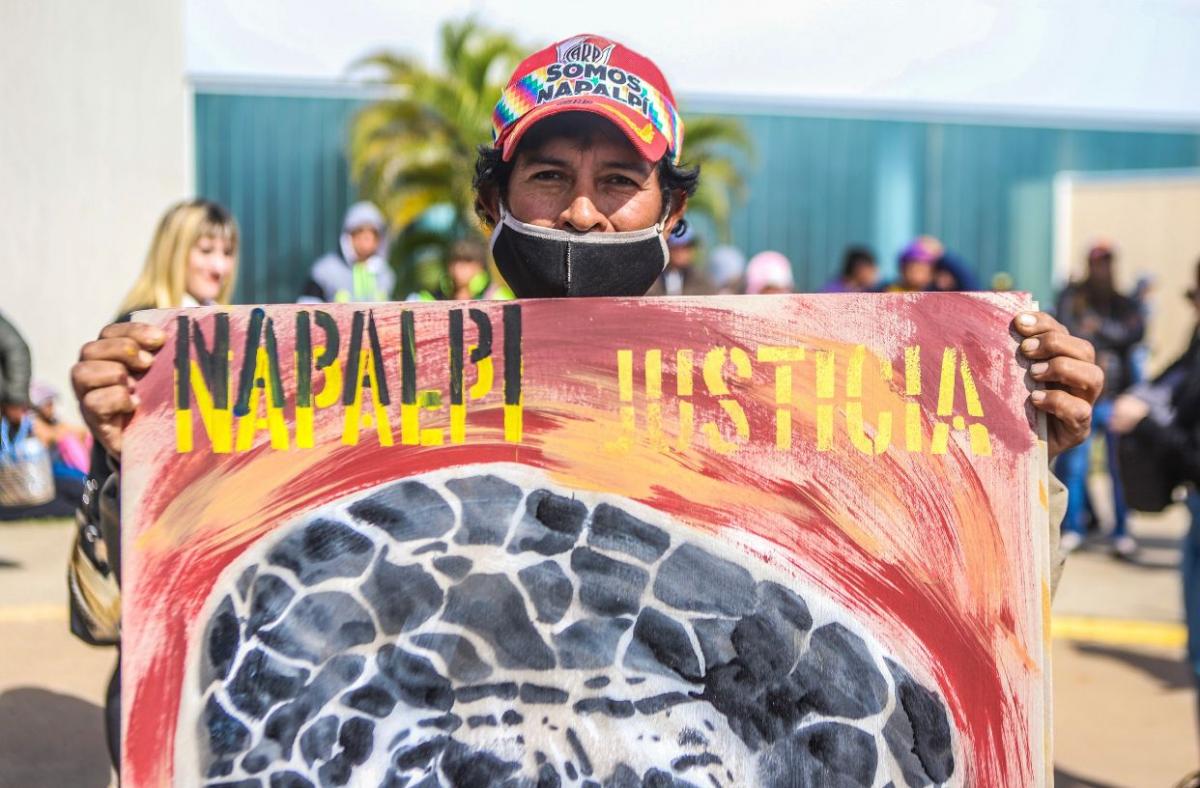
The so-called "demilitarized zone" in Idlib has been breached by the fighting. According to the Syrian Expatriates Medical Association, a Turkey-based relief organization, at least three hospitals in Idlib have already been bombed out of commission, leaving smaller health facilities struggling to cope with the influx of wounded.

In January, the hardline Hayat Tahrir Sham (HTS), which was never covered by the supposed Idlib "ceasefire," captured much of the province from other rebel groups under the umbrella of al-Jabha al-Wataniya lil Tahrir (National Front for Liberation), providing the justification for the offensive. But cvil resistance forces continue to be active on the ground, and have even organized protests against HTS rule in some areas. (Idlib Lives, EA Worldview, EA Worldview, Syrian Observer, TRT World, Reuters)

Following a recent reorganization of UN aid operations in Syria, relief work is now centralized in Damascus, which could impede aid deliveries to rebel-controlled areas.

Photo: EA Worldview

Separatists claim Baluchistan massacre

Baluchistan

Gunmen killed at least 14 passengers after forcing them off several passenger vehicles on the coastal highway through Pakistan's restive Balochistan province April 18. Some 20 militants apparently stopped vehicles, checked passangers' identification papers, and shot selected ones to death on the roadside. There was initially speculation that those marked for death were ethnic Punjabis, targeted by the region's Baloch separatists. A statement later issued by a previously unknown militant group said those targeted were determined to be members of the military or security forces. The attack was claimed by the Baloch Raji Aajoi Sangar, or Baloch People's Liberation Coalition, which is believed to have emerged from factional rivalry between the Baloch Liberation Army (BLA) and Baloch Liberation Front (BLF). Pakistan has filed a diplomatic complaint with Iran, accusing it of giving the Baloch militants harbor on its territory across the border. (Khaama Press, AP, RFE/RL, Pakistan Tribune)


Map via Atheer

Turkey arrests Kurdish politicians on election eve

HDP

Turkish police on March 30 conducted raids on 127 homes in Istanbul and arrested at least 53 people, including all candidates for the city council with the pro-Kurdish Peoples' Democratic Party (HDP). The sweeps come less than 24 hours before nationwide local elections commence. In southern Sanliurfa province, police arrested 11 other HDP candidates and campaigners on supposed "terrorism-related" charges. Some 30 more HDP candidates and supporters were arrested in the cities of Adana, Van, and Igdir. The government accuses the HDP of links to outlawed Kurdish militants, and 10 lawmakers, 40 mayors and thousands of activists remain behind bars. Before the raids, President Recep Tayyip Erdogan repeated the accusation and called the party "terror lovers." (Kurdistan 24, AP)

See our last post on the crackdown in Turkey.

Photo: Kurdistan 24

Lavalin-Libya sleaze at issue in Trudeau turpitude

Site CCanadian opposition parties are crying foul after an investigation into the corruption scandal rocking the government of Prime Minister Justin Trudeau was shut down this week by the parliamentary Justice Committee—dominated by Trudeau’s ruling Liberals. His cabinet’s justice minister, Judy Wilson-Reybould, has already stepped down over the affair, which concerns Quebec-based construction giant SNC-Lavalin‘s apparent attempts to secure leniency from the Trudeau government in various criminal investigations it faces. Buried in Trudeau’s 2018 omnibus budget bill was a provision allowing corporations charged with certain offenses to avoid prosecution by entering into “remediation agreements.” In place of convictions, fines and prison terms, companies and executives would merely be obliged to admit to wrongdoing, and return any funds involved. The amendment was adopted after an aggressive public-relations and lobbying campaign by SNC-Lavalin.

Obstruction of justice charges were stayed earlier this year against Lavalin executive Sami Bebawi, on the ostensible basis that too much time had elapsed since the offense under investigation—which involved alleged bribes to the Moammar Qaddafi regime to secure construction contracts in Libya in 2011.

The company also faces investigations into allegations of graft concerning the Padma bridge project in Bangladesh and the Kerala hydroelectric dam in India. (National Post, Financial Post, BBC News, Global News, Toronto Star, CBC, CBC)

SNC-Lavlain, best known in Canada for its involvement in controversial mega-scale hydroelectric projects such as the Site C dam on the Peace River in Brtish Columbia and the Muskrat Falls project on the Churchill River in Labrador, is now globalized. A Lavalin construction project in Algeria was the target of a terrorist attack in 2008.

Photo: BC Hydro via Journal of Commerice

Climate catastrophe in suffering Mozambique

Mozambique

A humanitarian catastrophe is unfolding in Mozambique, Zimbabwe and Malawi, as the full scale of devastation from Cyclone Idai becomes clear. The World Meteorological Organization says Idai, which made landfall March 14, could become the worst tropical cyclone on record in the Southern Hemisphere. Mozambique's President Filipe Nyusi fears that 1,000 people may have lost their lives in his country alone. The UN World Food Program calls the aftermath of the storm "a major humanitarian emergency that is getting bigger by the hour." And, as after similar "mega-storms" of recent years, the link to global climate destabilization is evident. "Cyclone Idai is a clear demonstration of the exposure and vulnerability of many low-lying cities and towns to sea-level rise as the impact of climate change continues to influence and disrupt normal weather patterns," said Mami Mizutori, the UN Special Representative for Disaster Risk Reduction. (Grist)
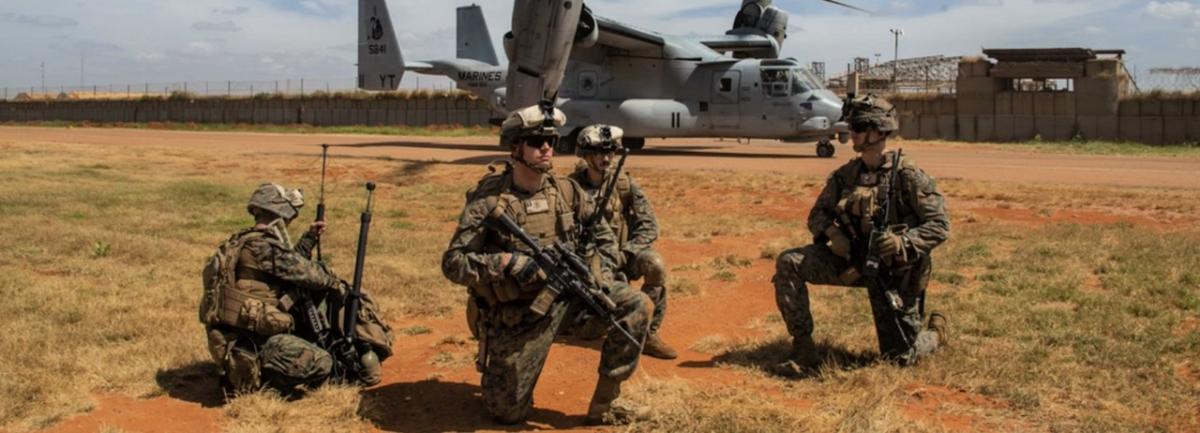
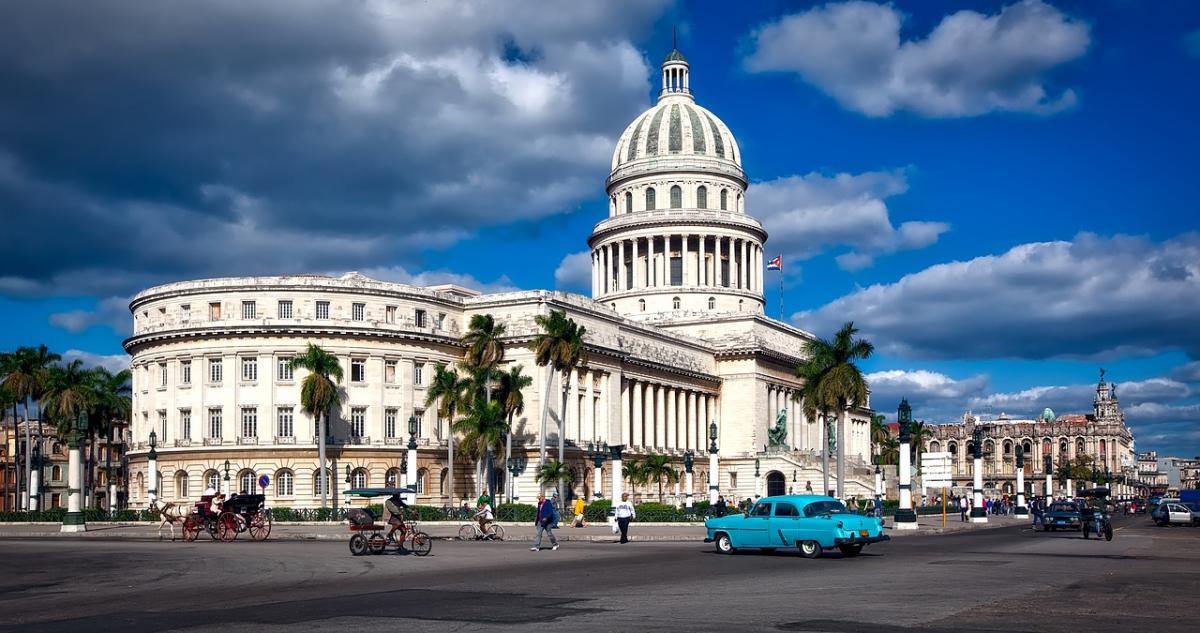
Severe drought in recent years had already been exacerbating social conflcit in Mozambique. Amnesty International last June called on Mozambican authorities to take immediate steps to end a "killing spree" in Cabo Delgado province in the northeast. Amnesty said that over the past weeks, scores had been killed by a group known as al-Shabab, although apparently unrelated to the Somalian armed group of the same name. The group's ideology was said to be "unknown," pointing to a likely agrarian conflict pitting peasants against each other. (Jurist, Africa Times, UNDP)

Photo: WikiMedia via Jurist

EU resolution suspends Turkey’s admittance

Turkey

The European Union adopted a non-binding resolution March 13 against Turkey's accession as a member of the EU. The resolution passed in the European Parliament by 370 votes in favor, 109 against with 143 abstentions. The assembly noted past and ongoing human and civil rights violations committed by Turkey. The body expressed concern over Turkey's lack of respect for minority religious and cultural rights. It mentioned the "shrinking space for civil society," arrests and suppression of journalists, and dismissal of dissident academics, as well as the treatment of refugees and migrants within its borders. The body noted that Turkey's government has violated the due process rights of its own citizens under the guise of counter-terrorism. It has also intimidated its own citizens abroad and abused Interpol arrest warrants to extradite its own nationals back to Turkey.

The European Parliament also mentioned Turkey’s fractious relationships with neighboring states such as Cyprus and Greece regarding the Akkuyu nuclear plant, as well as lack of normalization of diplomatic relations with neighboring Armenia.

[W]hereas respect for the rule of law and fundamental rights, including the separation of powers, democracy, freedom of expression and the media, human rights, the rights of minorities and religious freedom, freedom of association and the right to peaceful protest, the fight against corruption and the fight against racism and discrimination against vulnerable groups are at the core of the negotiation process [regarding Turkey's accession into the European Union].

The EU body insists the relationship between EU and Turkey be based on the the "objective of protecting and promoting democratic values and principles, human rights and the rule of law; without prejudice to Article 49 of the Treaty on European Union." Article 49 requires EU member states to abide by its values. According to the resolution, it is the EU's position that Turkey cannot continue ascension into the EU without "respect for democracy, the rule of law and fundamental rights."

From Jurist, March 15. Used with permission.

See our last post on the crackdown in Turkey.

Map: CIA
Map: CIA

Japan to proceed with relocation of US base

Okinawa

Japan's Prime Minister Shinzo Abe said Feb. 24 the relocation of the US airbase at Futenma to Henoko, elsewhere on the island of Okinawa, would continue despite a referendum vote opposing the move. Okinawa prefecture held a referendum on whether the US military base should relocate from Ginowan municipality to Henoko. After the final count, approximately 70% of voters opposed the move. The relocation has been 20 years in preparation, and has continued to face opposition over claims of noise from military activity, harm to the surrounding coral reefs, and outrag over a 1995 incident of rape of a 12-year-old Okinawan girl by US servicemen.

The referendum result is non-binding, but does show the Japanese government the Okinawa citizens' sentiment surrounding the US presence on the island. Despite the Prime Minister's insistence that the relocation to move forward, Okinawa Gov. Denny Tamaki plans to make a visit to Tokyo to reaffirm the island's position.

From Jurist, Feb. 25. Used with permission.

Photo via Alwaght
Photo via Alwaght

  1. Federal court allows US military base construction in Okinawa

    A panel of the Ninth Circuit Court of Appeals ruled May 6 that the US military can construct a base in Okinawa, Japan, despite environmental activists’ concerns over the base’s construction threatening the local dugong population. The activists filed suit under the National Historic Preservation Act (NHPA). (Jurist, BCN)

  2. Federal court allows US military base construction in Okinawa

    A panel of the Ninth Circuit Court of Appeals ruled May 6 that the US military can construct a base in Okinawa, Japan, despite environmental activists’ concerns over the base’s construction threatening the local dugong population. The activists filed suit under the National Historic Preservation Act (NHPA). (Jurist, BCN)

Podcast: Tibet and the struggle for cyberspace

anti-google

In Episode 28 of the CounterVortex podcast, Bill Weinberg notes with trepidation Google’s plans to develop a censored search engine for China, and thereby be allowed back through the Great Firewall to access the world's largest market. But the next and more sinister step is imposing China's draconian standards for control of information on all Internet users, worldwide. Harbingers of this are already seen in Facebook's censorship of the Tibetan struggle, and of the Kurdish struggle in Turkey, as well as initiatives to suppress footage of Israeli war crimes. While protesting these moves is imperative, the potential for such abuses in inherent to the technology—and this, ultimately, is a deeper and more complex problem that also urgently demands a critique. Listen on SoundCloud, and support our podcast via Patreon.

Music: Tonkha, by Tenzin Choegyal

Production by Chris Rywalt

We ask listeners to donate just $1 per episode via Patreon. A total of $30 per episode would cover our costs for engineering and producing. We are currently up to $20.

Photo: Students for a Free Tibet

‘Factually Incorrect’ with Bill Weinberg: episode 2

Bill Weinberg continues his crusade against the post-truth plague, this time calling out Ben Swann of the ironically named “Reality Check” vlog for spewing lies and propaganda on behalf of the genocidal dictatorship of Bashar Assad.

Relevant links:

National Coalition of Syrian Revolutionary and Opposition Forces

Doctors Without Borders

Amnesty International

Physicians for Human Rights

Support the White Helmets

Syrian Nonviolence Movement

Adopt a Revolution

Syrian Democratic Revolution

Thanks to Rhay Lo for production.

See the last episode of the CounterVortex vlog.

Syria: ‘peace deal’ signals escalation… of course

We've repeatedly pointed out the sinister side of Great Power cooperation in Syria: previous ceasefires and "peace deals" have only meant an escalation of the conflict—most recently, the siege of Aleppo and other regime gains. So the utmost cynicism is called for in viewing the pact announced Sept. 10 between Secretary of State John Kerry and Russian Foreign Minister Sergey Lavrov in Geneva. Another fictional "ceasefire" is to take effect in two days, dependent on compliance by Bashar Assad's Russian-backed forces and "US-supported" rebel groups (although we question how "US-supported" they really are). If the truce holds for a week, the US and Russia will actually begin coordinating on air-strikes. "We believe the plan as it is set forth—if implemented, if followed—has the ability to provide a turning point, a moment of change," Kerry said, according to AP. But a "turning point" toward what?

Ostensibly, those rebel forces that agree to break ranks with Fatah al-Sham (formerly the Nusra Front) will be free from bombardment, allowing coordinated air-strikes against ISIS and Nusra. But this assumes first that Russia will be able to rein in Assad, and secondly that Moscow and Damascus will not continue their aerial terror through the propaganda trick of simply conflating all rebel forces with ISIS. 

Certainly, there has been no slowing of the aerial terror despite the supposed peace deal. Just hours after the deal was announced, Russian and Assad regime warplanes carried out air-strikes that killed more than 100 people in Aleppo and Idlib governorates. The worst strikes were in Idlib city, where they hit a market, killing 55 civilians. (Al Jazeera)

It also appears that that Turkey is being given a free hand to establish its long-sought "buffer zone" in northern Syria—usurping the Kurdish autonomous region there. Until now, the US has been planning to cooperate with Kurdish forces for the offensive on Raqqa, the ISIS capital. According to Turkey's Hurriyet Daily News, this has now changed. According to Hurriyet, Turkish President Recep Tayyip Erdogan told journalists that Ankara and Washington are now discussing joint military action on Raqqa. He made clear that Turkey is in Syria for the long haul: "From now on, we have to show that we exist in the region. We do not have an option to step back at this point." In the same breath, he said Ankara will fight ISIS and the Kurdish YPG militia—both decried as equally "terrorist," despite the fact that the secular and leftist YPG has been waging a heroic resistance struggle against ISIS for over two years now. Isn't it funny how supposed rivals Russia and Turkey both have a propaganda interest in conflating anti-ISIS forces with ISIS.

US imperialism's practically inevitable betrayal of the Rojava Kurds has almost certainly arrived. We'll be lucky if the Arab rebel forces do any better. A "peace" deal among the imperial powers can only portend a carve-up of Syria among the most reactionary forces. Or, if they can actually manage to put the country back together again, a domesticated regime, built on the remnants of Assad's genocide state. 

How free a hand Russia will be given by Washington to attack rebel territory in the name of "peace" will indicate how deep the US tilt to Assad really goes. We fear the worst.

Erdogan exploits Istanbul terror —of course

ISIS is reported to have claimed responsibility for today's triple bomb and shooting attack at Istanbul's Ataturk Airport that left at least 36 dead and some 150 wounded. (BiaNet)  The Kurdistan Workers' Party (PKK) explicitly disavowed the attack, and stated their belief that it was carried out by "Daesh terrorists," using the popular pejorative for ISIS in the Middle East. (Sputnik) Turkish President Recep Tayyip Erdogan was constrained by these twin statements from explicitly blaming the Kurds in the attack, but still said: "I hope that the Ataturk Airport attack, especially in Western countries…will be a milestone for the joint fight against terrorist organizations, a turning point." (RT) This was a barely veiled criticism of US support for the PKK's sibling organization, the Democratic Union Party (PYD), and its military arm the People's Protection Units (YPG), in the fight against ISIS in northern Syria.

Erdogan was more explicit at the most recent display of his unseemly Ottoman nostalgia fetish. At an official spectacle held in Istanbul marking the 563rd anniversary of the conquest of then-Constantinople by the Ottomans in 1453, he said: "The Syrian regime, Daesh and PYD terror groups have become a trio which support each other in Syria; one cannot survive without the others. Unfortunately, the countries we call allies are turning a blind eye to the situation, and even supporting it." (Daily Sabah, May 29)

Of course this is an absurd exercise in illogic, as ISIS and the PYD are intransigently, militantly and diametrically opposed.

A PKK breakaway faction, the Kurdistan Freedom Hawks (TAK), claimed responsibility for the car bomb attack that targeted security forces in Istanbul earlier this month. (Al Jazeera, June 10) But the TAK, with its hardline Kurdish ethno-nationalism, is not aligned with the PKK, PYD or YPG, which have over the past years been moving in more democratic and pluralist direction. Of course none of these Kurdish organizations are in any sense aligned with ISIS. Ironically, Erdogan himself has been credibly accused of conniving with ISIS against the Kurds in Syria—even if the growing ISIS attacks in Turkey may indicate that this de facto alliance is coming to an end.

We can be sure that the new terror attack will be useful to Erdogan's consolidating dictatorship. Just days earlier, Turkey's parliament voted to grant immunity from prosecution to members of the armed forces conducting counter-insurgency operations against the PKK—essentially giving the military a license to commit war crimes. (Reuters, June 24)

As the Kurdish insurgency grows in eastern Turkey, Erdogan and his supposed enemy Bashar Assad have come to mirror each other more and more. It is hardly surprising that Erdogan is now said to be considering softening his stance against Assad based on their mutual opposition to Kurdish freedom and autonomy…

In another sign of Erdogan's rapprochement with his supposed enemies, the Turkish mandatary has now even issued an apology for his military's downing of a Russian warplane last November. (The Guardian, June 27) This comes alomg with Turkey's sudden normalization of diplomatic ties with Israel, on ice for six years over the Gaza flotilla incident. Erdogan dropped his demand for a lifting of the naval blockade of Gaza, and has agreed to deliver humanitarian aid through Israeli-controlled entry-ports. Israel's famous coziness with Russian President Vladimir Putin is some pretty obvious context here. (Reuters, The Telegraph, June 28) This unexpected lovefest may bring us back a little from the brink of World War 5. But in addition to being an obvious betrayal of the Palestinians, it bodes poorly for the survival of a Kurdish autonomous zone in northern Syria…
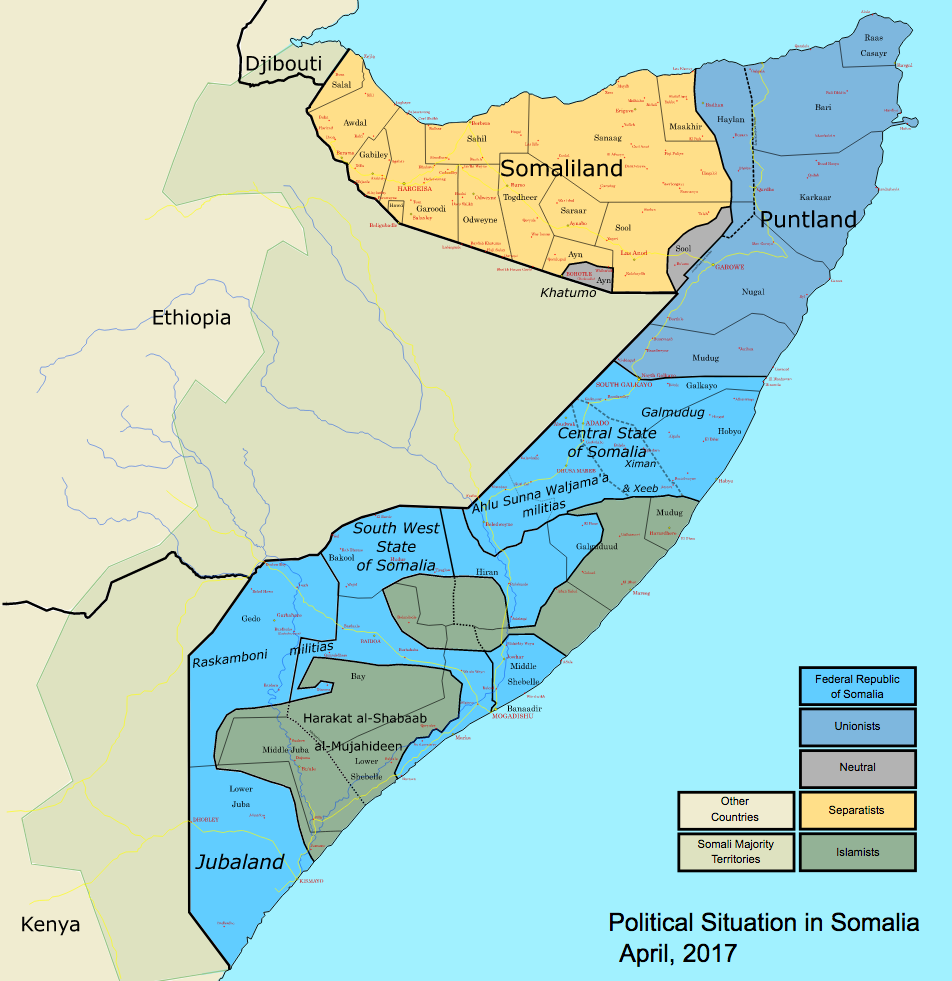
Another day, another massacre…

OK, here we go. Get ready for the tiresome semantic debate about whether the San Bernardino massacre was "terrorism," or not. As if that's the most important question we should be grappling with…. Was this yet another random "mass-shooting" motivated by some personal grudge and rooted in America's homegrown culture of vigilantism and personal revenge? (This kind of thing is so commonplace that the same day's shoot-up in Savannah, Ga., barely made the news because only four people were shot, one fatally, the WaPo says.) Or was it inspired or even directed by an extremist political tendency of one stripe or another? This question is pathologically politicized…

Ashley Feinberg on Gawker immediately jumped on the inevitable double standard. Read her sarcastic headline: "FBI: San Bernardino Shooting Suspects Are Probably Americans, Not 'Terrorists'."  She quotes FBI assistant director David Bowdich, who told the press shortly after the shooting:

I know one of your questions will be, "Is this a terrorist incident?" I will tell you right now, we do not know if this is a terrorist incident. We start from the beginning, working with our local partners. We take the presumption that it may be or it may not be..

But Gawker's commentary is every bit as problematic as the FBI statement it is critiquing. Feinberg writes:

In this case, "we do not know if this is a terrorist incident," actually means, "we do not know if this is related to Islam from overseas." Because by almost any definition of the word, the slaughtering of 14 innocent people is, of course, terrorism.

No it isn't. Feinberg accuses Bowditch of not having read the FBI's terrorism definition, when it is clear that Feinberg did not! Her Gawker piece itself links to the FBI "terrorism" definition. It makes clear that political motive is a sine qua non. So does the State Department definition. So does any sensible definition, if the word is to have any meaning at all.

The San Bernardino massacre comes fast on the heels of the deadly attack on a Planned Parenthood clinic in Colorado Springs—which assuredly was terrorism. The right-wing pundits can try to dismiss it as "mental illness" all they want, but the choice of target and the shooter's words betray a clear political motive. A New York Times profile of the shooter notes his "evangelistic" streak and penchant for Internet posts such as "Turn to JESUS or burn in hell." Whether he was a happy, well-adjusted sort or not (as if terrorists are likely to be happy and well-adjusted), this was pretty clearly an act of Christian terrorism. 

In a mirror image of the right-wing punditocracy, the left-wing commentariat has everything invested in watering down the definition of "terrorism" to the point of meaninglessness. 

So now two suspects are named in the San Bernardino attack: US-born Syed Rizwan Farook and Pakistani national Tashfeen Malik—a married couple who first met on the Internet and met in person when Farook went to Saudi Arabia to perform the Hajj pilgrimage. Both were killed by police after the massacre. Farook's surviving brother-in-law spoke at the offices of the Council on American Islamic Relations (CAIR) immediately after the news broke, in an effort to head off an Islamophic backlash. While accounts are still very vague, CNN and the LA Tmes report that (unnamed) officials say Farook had been in electronic contact with overseas figures being monitored by the FBI for terrorism connections. And ISIS (not surprisingly) is opportunistically exploiting the massacre (at least), praising the shooters on social media, Vocativ reports. 

But officially, there is still no determination about the motive. So if it turns out it was merely a work-related grudge or something psycho-sexual, the reaction from the "left" will be very interesting. They habitually rush to call such apolitical shoot-ups "terrorism," so that "terrorism" won't be perceived as a Muslim phenomenon. But now they will have to argue that this attack wasn't  terrorism.

And if it turns out to actually have been inspired by ISIS or al-Qaeda or whatever, the right-wing reaction will be equally interesting. They habitually rush to dismiss shoot-ups as apolitical—when they are perpetrated by Angry White Men, even those who are clear Christian zealots. Now they will undoubtedly jump on the very kind of evidence they typically dismiss in such cases. 

It will be a dilemma for both right and left, because they will both be forced to take positions contradictory to their usual ones. You knew this day would arrive, and they should have anticipated this dilemma. But of course they didn't—because they are reacting instead of thinking.

Note the vividly contrasting front covers from New York's twin tabloids. The execrable New York Post shamelessly goes with "MUSLIM KILLERS." The Daily News takes a more progressive and genuinely courageous approach. With a photo of Farook, they write: "HE'S A TERRORIST… (But so are these guys…)" Then follow photos of the shooters in the Colorado Springs, Charleston, Newtown and Aurora massacres. Then comes the zinger: "(AND this guy)"—beside a shot of the National Rifle Association's Wayne LaPierre!

Well, this is ballsy—but not really accurate. The Colorado Springs and Charleston attacks were terrorism. The Newtown and Aurora attacks were not. The fact that stating this obvious fact sounds like an exoneration of the massacres is just evidence of how "terrorism" is now treated as a propaganda word.

The Wikipedia entry for "terrorism" notes that the word is "politically loaded and emotionally charged." To say the least. And when we rush to call (or not call) an attack "terrorism" to serve political aims, we are helping to fuel that tendency.

Contrary to the media-fostered impression, neither convicted Boston bomber Dzhokar Tsarnaev nor Fort Hood shooter Nidal Hasan nor Omar "The Blind Sheikh" Abdel-Rahman were actually charged with "terrorism." They were charged with murder, conspiracy and other crimes prosecutors thought they could more easily convict on. So the online petition calling for the accused Colorado Springs shooter to be charged with "terrorism" smacks a little of using the law to score political points. (Oklahoma City bomber Timothy McVeigh, by the way, was also not actually charged with "terrorism"—and he is widely perceived as having been one, in an exception to the usual double standard.)

"Terrorism" is the last word in the English language that we want to treat as elastic, and subject to the popular but dangerous game of words-mean-whatever-we-say-they-mean. This game ultimately makes all communication impossible. But in the case of the word "terrorism," it is even worse than that. It contributes to the objectification of victims, which is the logic of criminal attacks on civilians.

  1. ISIS link to San Bernardino claimed

    The FBI is now investigating the shooting as "an act of terrorism," the FBI's David Bowdich now says. Wired notes the FBI claim that Tashfeen Malik pledged allegiance to ISIS under a false name on Facebook. (Does ISIS have a Facebook page?) The Daily Mail meanwhile cites unnamed sources who told the LA Times that Syed Rizwan Farook had contact with the Nusra Front and Somalia's Shabaab on Facebook. (Do Nusra Front and Shabaab have Facebook pages?) Disturbingly, Daily Mail also runs a grisly photo apparently posted to Facebook that shows Farook's body lying on the pavement in a pool of blood—handcuffed. If he was killed in combat, how did he end up handcuffed? Was he summarily executed by the police? Or did they cuff him while he was dying?

    We'd like some answers.

    1. Conspiracy vultures descend on San Bernardino (of course)

      Well, it was inevitable. CounterCurrent and other conspiranoid websites are jumping on the word of a witness to the San Bernardino massacre named Sally Abdelmageed, who told CBS News that the attackers were three tall, athletic white guys. We have to give CounterCurrent cred for at least using the singular "eyewitness" rather than arbitrarily making it plural, as many Facebook partisans are doing. They use the scam of posting mutliple media accounts to make it seem like multiple witnesses, but all the accounts go back to Abdelmageed. It is the same claim being recycled over and over. (Are these partisans actually fooling themsleves? Hard to say.) It is, of course, dishonest cherry-picking to highlight the one anomalous account. There are always anomalous accounts like this in any chaotic situaiton. Do these conspiranoid partisans really want us to think that the massacre was carried out by some deep-cover commando force, and that Farook and Malik were arbitrarily framed? Of course, if you actually spell out what the partisans merely hint at (in their cowardly way) it becomes immediately obvious how far-fetched it is…

      1. OK, two witnesses…

        To be fair, they have come up with another—one Juan Hernandez, interviewed by NBC, also says the shooters were "three white men in military fatigues." (Preserved for posterity on In Case You missed It.) Is it possible these witnesses are confusing the shooters with the police who responded?

    2. Did San Bernardino shooter declare loyalty to ISIS on Facebook?

      Um, yes.

      All of a sudden, the conspiranoids and self-appointed media watchdogs (Quis custodiet ipsos custodes?) are jumping on an apparent statement by the FBI that the accused San Bernardino shooters did not post public Facebook messages declaring their loyalty to ISIS and jihad, but used direct messages with each other. Slate is among those to sneer at other media, including the New York Times, for having reported of the Facebook posts—while using as its own source the Washington Post. But it adds in a final line at the end:

      One earlier report that does seem to be true, per the Post, is that Malik posted a "pledge of allegiance" to ISIS leader Abu Bakr al-Baghdadi on Facebook "shortly after opening fire in San Bernardino."

      Oops. Although, this does raise the question… Would Malik have had time to make a coherent Facebook post amid all the gunfire?

      1. Conspiranoids distort FBI claims on San Bernardino… again

        Conspiranoid sites like Countercurrents are jumping on the latest FBI findings in sensationalist terms: "The FBI is coming clean about the San Bernardino attackers, and it is not making local law enforcement and media very happy. For starters, the FBI head said that the media rumor about the 'terror couple' texting, tweeting or 'Facebooking' support for ISIS or even 'jihad' has absolutely no basis in fact, whatsoever. The Bureau now says there is 'no evidence a married couple who killed 14 people in California this month were part of a terrorist cell,' according to the head of the FBI."

        But if you go to a more legitimate (or "mainstream," to use the favored propaganda word) source, you get a less dramatic story. According to Reuters, "investigators believe the pair were inspired but not directed by Islamic State." 

        So, three points. First, did police ever claim the couple were part of a "cell," as stated by Countercurrents? Second, does it make that much difference, given the franchise model of ISIS and al-Qaeda? And third, authorities are saying that Malika "Facebooked" her support for ISIS after the shooting started (as noted above). Whether this is plausible or not, it is dishonest to just ignore it.

Arunachal Pradesh: pawn in the new Great Game

Last month's US-India nuclear deal obviously signaled a rise in Sino-Indian tensions, seen by Beijing (accurately) as part of an encirclement strategy. The deal called for inclusion of India in the Nuclear Suppliers Group (NSG), which drew immediate criticism from China. The NSG is comprised of 46 nuclear supplier states, including China, Russia and the US, that have agreed to coordinate export controls on civilian nuclear material to non-nuclear-weapon states. The group has up to now been made up of signatories to the Non-Proliferation Treaty (NPT)—which, as China was quck to note, does not include India (or Pakistan, or the "secret" nuclear nation Israel). More to the point, India is not a "non-nuclear-weapon state." (The Diplomat, Feb. 14; Arms Control Association)

Now India's Prime Minister Narendra Modi makes a provocative visit to the northeastern state of Arunachal Pradesh—a move guaranteed to elicit protests from Beijing, which claims part of the territory. Sure enough, China called in India's ambassador to Beijing, Ashok K. Kantha, to express  "strong dissatisfaction and staunch opposition" to Modi's visit to "the disputed area" on the China-India border. "The Chinese government has never recognized the so-called Arunachal Pradesh," a foreign ministry representative said. (Times of India, Feb. 21)

Arunachal Pradesh has long been handy for India's and China's leaders to bash each other with whenever the occassion demands, and it doesn't hurt that there is oil there. Modi's visit was a provocation, and China's response perfectly predictable: that's why they call it a Great Game. We note that neither side seems particularly interested in demands for greater autonomy by the actual residents of Arunachal Pradesh. The Arunachal Times noted in December 2013 protests by the Mon indigenous people for creation of an autonomous region in their territory along the Burmese border—to no response from Delhi.

Meanwhile, the US, which (plausibly) tells us that Iran's supposedly civilian nuclear plans really mask ambitions to join the elite "club" of nuclear-armed states, wants us to believe that providing further nucear aid to "club" member but NPT outlier India complies with the spirit of the NPT. Around it goes. 

Peru: new confrontation at Conga mine site

In a new mobilization on the contested Conga mine site in Peru's northern region of Cajamarca, hundreds of local campesinos on Jan. 16 again marched to the shores of the alpine lakes that would be destroyed by the project. National daily La Republica, citing unnamed sources, said the marchers pushed past security guards, and caused "disturbances" and "material damage" to equipment of the Yanacocha mining company. One protester was reported arrested by National Police troops. However, Cajamarca-baed popular organization Tierra y Libertad in a statement on Facebook said only that some 2,000 ronderos (members of the peasant self-defense patrols) from the local provinces of Bambamarca and Celendín marched on the site, taking a six-hour roundabout way through mountain paths to avoid the roadblocks "illegally maintained" by National Police and Yanacocha security.

The regional governor of Cajamarca, Ever Hernández, defended the right of protesters to mobilize, and said he had no power to prohibit or interfere with it. But he added that his administration would cooperate with the National Police to protect public and private property. (RPP, Jan. 15) Days earlier, he expressed support for President Ollanta Humala's plans for an expansion of mineral development in Cajamarca, charging that the region experienced negative economic growth last year. (America Economia, Dec. 30)

However, this was immediately refuted by Cajamarca's left-wing regional president, Gregorio Santos, who said, "There is no economic recession in Cajamarca." (RPP, Jan. 3) The regional president is an elected position, while governors are appointed by the national executive to coordinate security concerns. Santos, an outspoken opponent of the Conga project, recently launched a Social Affirmation Movement (MAS), as a platform to oppose President Humala from the left on the national stage. (RPP, Jan. 6)


  1. Narco card against Cajamarca ecological struggle —again

    Spurious attempts to tar the campesino movement in Cajamarca with drug-trafficking ties are once again making news in Peru. Vladimiro Huaroc, head of the National Dialogue Office for social conflicts, in a Jan. 13 interview with La Republica revived the claim that Cajamarca is emerged as a key "drug corridor," adding that there is a "very strange mix between rondas and the narco-traffic" in the region, and that it is necessary to "re-establish rule of law." The Cajamarca Regional Defense Front and the provinicial ronda federations for Hualgayoc, Celendín and Cajamarca declared Huaroc persona non grata in their territories in response to the claims. (Servindi, Jan. 17)

Colombia: surveillance scandal shakes secret police

Revelations in the Colombian newsweekly Semana that the Department of Administrative Security (DAS) illegally listened in on the telephone conversations of judges, politicians and journalists prompted the resignation Feb. 23 of DAS deputy director Jorge Alberto Lagos—and denials of involvement by President Alvaro Uribe. “I have never given a single order to monitor these people’s private lives,” Uribe said. The president blamed the eavesdropping on a “mafia gang” within the DAS. (AFP, Feb. 23)

An anonymous DAS official told the Bogotá daily El Tiempo that DAS recordings of intercepted calls would be reviewed to verify the claims of Semana. The official said the agency has three eavesdropping operations, code-named “Vino,” “Plata” and “Amarillo”—the last jointly run with the US Drug Enforcement Administration (DEA) and dedicated to tracking money-laundering networks. The official said he was confident that the DAS internal investigation would clear the agency of having undertaken the illegal intercepts—referred to colloquially as chuzadas—at the behest of a foreign intelligence agency. (El Tiempo, Feb. 22)

The DAS has been plagued by a series of scandal over the past years, with the agency’s director forced to resign last year and in 2005. The scandal has also helped stall the pending free trade agreement between Colombia and the US.

See our last post on Colombia.

Pakistan: Bhutto widower elected amid growing violence

Asif Ali Zardari, widower of assassinated former prime minister Benazir Bhutto, was elected president of Pakistan Sept. 6 by a wide margin. Zardari—who spent 11 years in prison on corruption charges that remain unproved—succeeds Pervez Musharraf, who resigned last month under threat of impeachment. He is expected to be sworn in next week. The day of his election, a suicide car bombing on a police post in Peshawar killed at least 30 people and injured dozens others. Elsewhere in the city, a suicide attack on a military checkpoint killed 16 people. At Tehsil Matta village in the Swat valley, 24 people were killed as residents foiled an attempted kidnapping by local militants. (IHT, Sept. 7; AP, Australian Broadcasting Co., Sept. 6)

Four children were among six killed Sept. 5 in a suspected missile attack from a US drone on the Pakistan-Afghanistan border in North Waziristan. “Three missiles were fired from a drone that hit two houses. Four children, a woman and a man have been killed in the attack,” anonymous Pakistani officials asserted, saying the attack occurred at Almakath village, Gorveek district, 80 kilometers west of Miranshah. The army, however, denied that the strike was carried out in Pakistan’s territory. “There was no strike on our side of the border. The news is incorrect,” chief military spokesman Maj. Gen. Athar Abbas told AFP. (Daily Times, Sept. 6)

Pakistani officials said US troops flew into Jalal Khel, South Waziristan, by helicopter in a Sept. 3 raid that left up to 20 dead, mostly thought to be civilians. The White House, State Department and Pentagon all moved to clamp down on administration discussion of the assault, but government officials confirmed the broad details provided by the Pakistani government. (LAT, Sept. 5; NYT, Sept. 3)

See our last post on Pakistan.

  1. Pakistan: US drone kills 23
    From the New York Times, Sept. 9, link added:

    U.S. Attack on Taliban Kills 23 in Pakistan
    ISLAMABAD, Pakistan — Five missiles fired from an American pilotless aircraft on Monday hit a large compound in North Waziristan belonging to one of Pakistan’s most prominent Taliban leaders, two Pakistani intelligence officials and a local resident said.

    The missile attack, about 10:20 a.m., killed 23 people, including 8 children, and wounded at least 18, according to accounts of the intelligence officials. The strike hit the compound run by Sirajuddin Haqqani, the son of Jalaluddin Haqqani, whom the United States has accused of organizing some of the most serious recent attacks in Afghanistan against American and NATO forces and of masterminding a failed assassination attempt against the Afghan president, Hamid Karzai.

    It appeared that neither man was present at the compound during the attack. Among those killed were one of Jalaluddin Haqqani’s two wives, his sister, sister-in-law and eight of his grandchildren, Pakistani intelligence officials said…

    The attack was carried out less than a week after the first publicly acknowledged ground operation by American Special Operations forces against Taliban operating inside Pakistan. The commandos struck at militants in a village in South Waziristan on Wednesday at the start of what American commanders said was likely to be a more sustained campaign against the Taliban operating in Pakistan’s tribal region.

    The attack on Monday was the third American missile strike on Taliban targets in North and South Waziristan since the ground attack on Wednesday.

Lula: give Doha a chance

Brazil’s President Luiz Inacio “Lula” da Silva said Aug. 4 he hopes an agreement may still emerge from the Doha round of World Trade Organization negotiations. “I don’t believe the round has failed. We still have enormous possibilities to negotiate,” said Silva in a weekly radio address. The round was initiated in 2001 in Doha, Qatar, but collapsed July 29 at a meeting in Geneva, when the US, India and China failed to agree on agricultural policy. (Forbes, Aug. 5)

In a July 29 statement, California’s Oakland Institute on food policy wrote:

The collapse of the Doha Round of global trade talks in Geneva today marks a victory for small farmers and workers in developing countries whose governments stood up to the pressure and arm twisting tactics of the U.S. and the EU over the last week.

While India and China are being singled out for the collapse of talks, they were not alone in standing firm. The Special Products (SP)/Special Safeguard Mechanism (SSM) issues in agriculture which took center stage, were concerns of about 100 developing countries represented by various groups (G33, Africa, ACP, LDCs, SVEs). More important, the negotiations failed because the U.S. and the EU want to continue their domination of international trade of agricultural commodities. Their responsibility is evident in their extreme market access demands, combined with a lack of commitment to real development objectives in the so called “Development” round.

The rich nations, along with the International Financial Institutions such as the WTO, World Bank, and the International Monetary Fund, presented the rapid conclusion of the Doha negotiations as a solution to the current food price crisis. However, it is widely recognized that opening of markets, removal of tariffs, and withdrawal of state intervention in agriculture, has turned developing countries from net food exporters to net food importers and burdened them with huge import bills. This process which leaves the poor dependent on uncertain and volatile global markets for their food supply, has wiped out millions of livelihoods and placed nearly half the humanity at the brink of hunger and starvation.

The collapse of talks will surely be lamented upon as a missed opportunity for the developing world, as it has been in the past. The truth is that the so called “Development ” Round marketed as a way out of hunger and poverty, would have further perpetuated an unfair and inequitable international trade system in the name of creating multilateral trade rules.

The collapse, however, presents new opportunities for the way forward.

It has resuscitated democracy where pressure from civil society organizations, social movements, trade unions, and farmers organizations could challenge and withstand “poorwashing” PR efforts, corporate interests, and even political pressure on heads of governments from President Bush and Prime Minister Brown.

It has opened the door for developing countries to regain ownership of their food and agricultural policies which should meet the needs of their people and not the dictates of the IFIs.

And finally, it shows that policy makers can prioritize human rights such as food, health, water, and education over trade agreements.

See our last posts on Brazil and peak food.

Bill Weinberg to speak in NYC on Iraq’s civil resistance

Award-winning journalist and World War 4 Report editor Bill Weinberg will present a video and discussion on the Iraq Freedom Congress (IFC), a new alliance of trade unions, women’s organizations, neighborhood assemblies and student groups opposed to both the US occupation and the sectarian militias. The IFC is leading a campaign against the pending law that would privatize Iraq’s oil, and has established self-governing zones, which both occupation forces and sectarian militias are barred from accessing, in neighborhoods in Baghdad and Kirkuk. Recently, their leaders have been targeted for attack by US forces. Solidarity efforts and coordinated actions are growing between Iraq’s civil resistance and organized labor in the US—but more is needed.
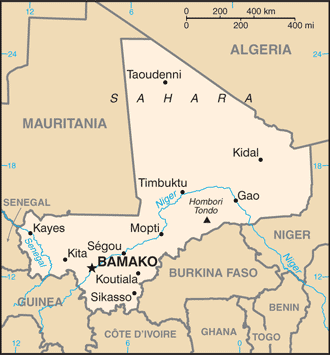
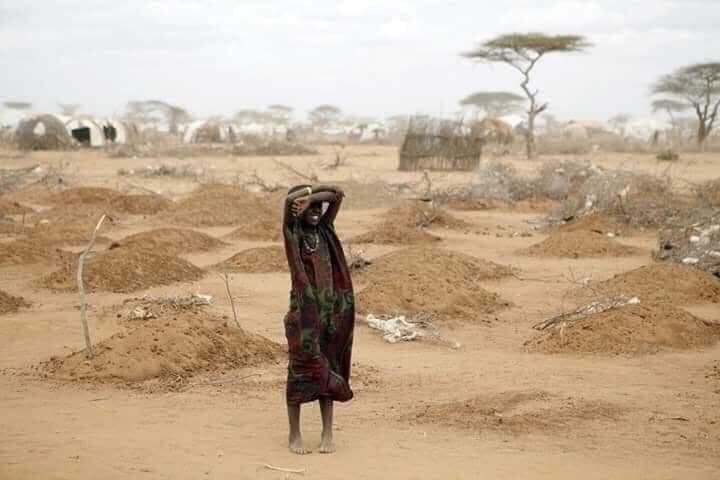
Weinberg is a founder of the New York-based National Organization for the Iraq Freedom Struggles (NO-IFS). He is the author of Homage to Chiapas: The New Indigenous Struggles in Mexico, and co-host of the Moorish Orthodox Radio Crusade on WBAI in NYC.

The event will take place Tuesday May 13, 7 PM, at The Living Theatre, 21 Clinton Street, Manhattan (just south of Houston St) (212-792-8050). Coming from uptown, take the F or V train to “2nd Avenue” (exit front of train on 1st Ave, walk east along Houston and turn right on Clinton) or coming from downtown, take the F, V, M or Z train to “Delancey – Essex” and walk east on Delancey three blocks and turn left on Clinton for 2 and a half blocks.

Everybody is welcome and invited to come and to have their say. There is no set fee for the presentation, but a contribution to aid the LBC is suggested. If you have questions, contact the Libertarian Book Club/Anarchist Forum, 212-475-7180 or e-mail:
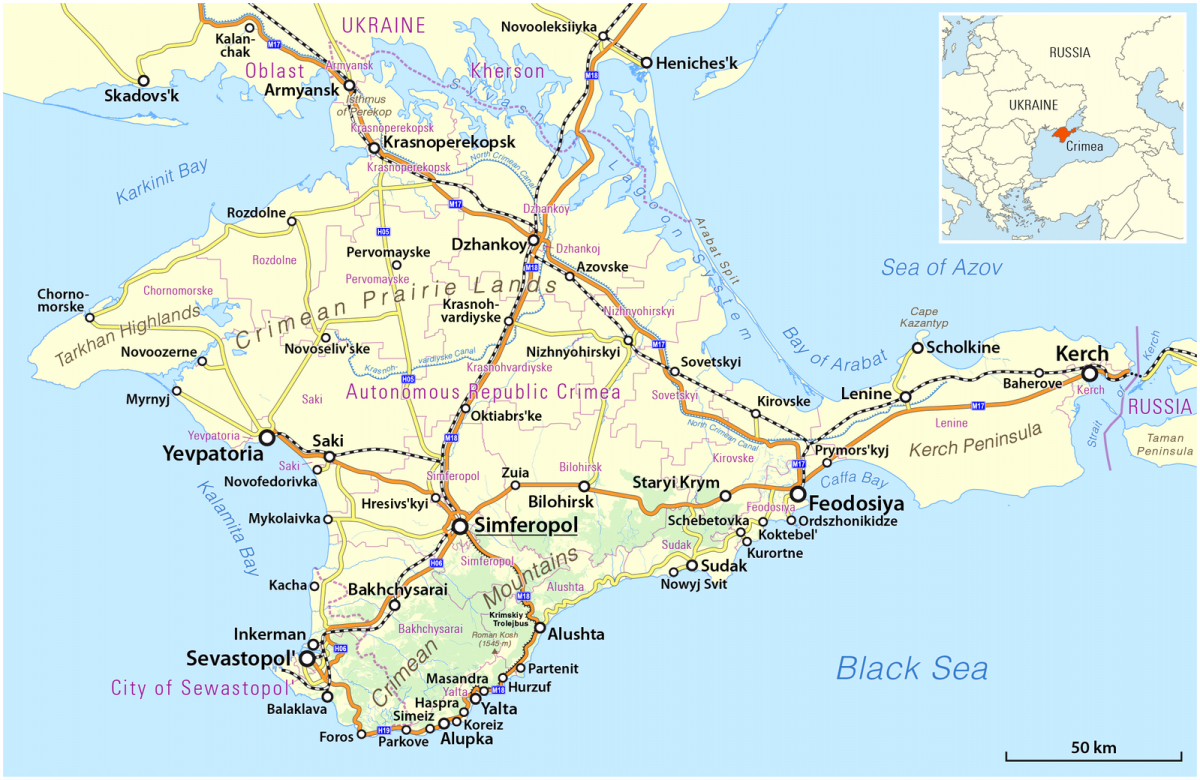
roberterler (at) erols.com

Bill Weinberg speaks on Iraqi civil resistance at the Left Forum, NYC, March 16

Iraq: oil workers threaten strike

From the International Federation of Chemical, Energy, Mine and General Workers’ Unions (ICEM), May 15:

The Prime Minister of Iraq, Nouri Al-Maliki, will meet in Baghdad with a delegation of the Iraqi Federation of Oil Unions (IFOU), led by its President, Hassan Jumaa Awad Alasady, tomorrow, Wednesday, 16 May 2007.

The meeting was hurriedly arranged by the Iraqi Prime Minister in a late attempt to avert threatened strike action that would involve all workers and technicians throughout the oil industry of the South, stopping production in all of the oil companies in Basra, Misan, Thi-Qar and Muthanna and affecting all domestic oil products as well as the export of crude oil. The strike may still take place.

The trade union delegation will return to Basra on Thursday, 17 May, where the union will decide on further steps according to the outcome of the discussions with the Prime Minister.

This is no idle threat. The IFOU, previously known as the GUOE-Basra, has over 26,000 members throughout the ten state oil companies in the south of Iraq and has a past history of strike action in defence of its members and the industry.

The union is also at the forefront of the Iraqi trade union struggle against the proposed hydrocarbons law which, as written, would benefit the multinational oil industry far more than the Iraqi people. Indeed, one demand on the table when the meeting takes place is a call for serious consultations to take place with the trade unions on the present contents of the draft law, and that the trade unions must be able to review any proposed legislation prior to any attempted introduction.

ICEM is following the situation closely and will be calling on affiliated trade unions for solidarity action in the event of a strike.

The strike threat was initially made in a 27 April public letter to the Iraqi Oil Minister, following discussion at the union’s Executive Board meeting with broad member representation the previous day in Basra. The meeting formulated a list of demands and the call for a strike was unanimously adopted if the demands were not met by 10 May 2007.

The strike date was postponed from 10 May to 14 May as the union entered negotiations with a committee formed by the Iraqi Council of Ministers. No direct negotiations with the Oil Ministry took place and a second postponement of the strike was due to the intervention of the Prime Minister, and the ICEM hopes that his decision to meet the union delegation personally will be significant.

The strike call came after numerous demands of the union that the Iraqi government had promised to implement last year had still not been met. Some outstanding commitments are unfulfilled, after having been made several years ago.

Many of the demands are related to wages and working conditions, including a demand for wage increases, the payment of a previously agreed bonus that is based on the distribution to workers of a proportion of oil revenues achieved by the company, no salary deductions to be made for granted vacation days, and the delivery of land parcels for housing to workers.

Further demands are for the recruitment of new graduates, as well as the promotion of workers where this has been stalled. The union also calls for full time permanent status to be given to workers presently classed as temporary contract workers.

Faced with increased pollution in oil facilities and evidence that there is a major increase in the incidence of cancers among the workforce the union has also tabled health and safety demands.

All of these demands and the strike call were discussed by Hassan Jumaa at a meeting in Amman, Jordan, 1 May 2007 with a delegation from ICEM, the Trades Union Congress (TUC) of the United Kingdom, and the Jordan office of the International Trade Union Confederation (ITUC). The aim of the meeting was principally to improve communication channels between Hassan Jumaa’s union and the international trade union movement, as well as to discuss future joint work and cooperation.

Discussions were detailed and wide-ranging and we look forward to increased cooperation in the future. This is already happening with Arabic speaking staff of both the ITUC and the Solidarity Center of AFL-CIO having facilitated communication between IFOU and ICEM and the TUC over recent days.

Read the letter by the IFOU to the Iraqi oil minister in English or Arabic.

See our last posts on Iraq, the struggle for the oil and labor struggles and the civil resistance.

  1. Union leaders threatened
    Via Hands Off Iraqi Oil, May 8:

    Iraqi Oil Workers to Strike Over Privatisation Law

    Iraq’s largest oil workers’ trade union will strike this Thursday, in protest at the controversial oil law currently being considered by the Iraqi parliament. The move threatens to stop all exports from the oil-rich country.

    The oil law proposes giving multinational companies the primary role in developing Iraq’s huge untapped oilfields, under contracts lasting up to 30 years. Oil production in Iraq, like in most of the Middle East, has been in the public sector since the 1970s.

    The Union, representing 26,000 oil workers, has held three previous strikes since 2003, each time stopping exports, for up to two days at a time. The announcement of the strike has spurred negotiations with the Ministry of Oil, which are ongoing.

    Imad Abdul-Hussain, Federation Deputy Chair of the IFOU said: “The central government must be in total ownership and complete control of production and the export of oil”. He warned against the controversial Production Sharing Agreements favoured by foreign companies, saying other forms of co-operation with foreign companies would be acceptable but not at the level of control and profiteering indicated in the current Oil Law.

    Federation President Hassan Jumaa Awad al Assadi said: ‘The oil law does not represent the aspirations of the Iraqi people. It will let the foreign oil companies into the oil sector and enact privatisation under so called production sharing agreements. The federation calls for not passing the oil law, because it does not serve the interests of the Iraqi people.”

    The Union is not alone in its’ condemnation of the current oil law. Opponents of the law also include all of Iraq’s other trade unions, a number of political parties, and a group of over 60 senior Iraqi oil experts.

    Hassan Jumaa went on to say: “The federation calls on all unions in the world to support our demands and to put pressure on governments and the oil companies not to enter the Iraqi oil fields.”

    Union members are also demanding an improved salary structure and a distribution of land for building homes.

    Ewa Jasiewicz of Naftana – the UK Support Committee for the IFOU said: “The Iraqi Federation of Oil Unions, like any union, has the right to engage in collective bargaining over issues important to their members. In this case, the issue of who controls Iraq’s oil and the economic future of the country is an issue which is important to all Iraqis. The Union has repeatedly called for civil society inclusion in the drafting of the oil law and has been ignored. They are now asserting their right to have a voice in the decision making process affecting their industry and Iraq’s economic future – their courage and commitment to democracy should be supported.”

    Instead of the union’s participation being welcomed, leaders have been accused of jeopardizing security and threatened with legal action.

    Farouq Al-Asadi, the Federation’s Secretary said: “The Oil Minister chooses to forget that the right to strike is guaranteed by the constitution – we have chosen the legal path.”

    Union leaders have already received a number of death threats which they are taking seriously. “As soon as the federation called for the strike, many of our members and officials were physically threatened by parties active in the political process, with the aim of thwarting the strike and undermining the message of the strike organisers.”

    Contacts

    Hassan Jumaa Awad Al Assadi, President of the Iraqi Federation of Oil Unions
    00964 7801 001 196 or 00964 7804 114 619
    http://www.basraoilunion.org

    Sami Ramadani, lecturer and writer and member of
    Naftana – UK Support
    Committee for the IFOU 0044 7863 138 748
    sami.ramadani@londonmet.ac.uk

    Ewa Jasiewicz, Naftana UK Support Group for the IFOU
    and Hands Off Iraqi Oil Campaign
    0044 7749 421 576
    freelance@mailworks.org
    http://www.handsoffiraqioil.org

    Notes

    The IFOU is an independent trade union representing workers across 4 southern provinces in Iraq: Misan, Dhi Qar, Basra and Mauthanna in nine oil and gas related companies.

    The Union has been organizing since April 2003 and has stopped oil exports and production over wages and workers rights in the past. It has also held protests against oil smuggling, former regime bosses and what the union sees as the deliberate neglect and degradation of the industry in order to justify private investment.

    Union members have carried out reconstruction work on drilling rigs, port equipment, pipelines and refineries since the invasion with minimal, mostly local resources.

    The Union is not linked to any political party in Iraq but has members which belong to various parties.

    The Union enjoys the support of trade unions and civil society organizations around the world including the International Confederation of Energy, Mining and General Workers Union (ICEM), the AFL-CIO in the US, and the Trade Unions Congress (TUC) in the UK including the NUJ and TGWU. The union is partnered with UK development charity War on Want, the 3 milllion strong US Labor Against War in the USA, and Italian NGO Un Ponte Per.
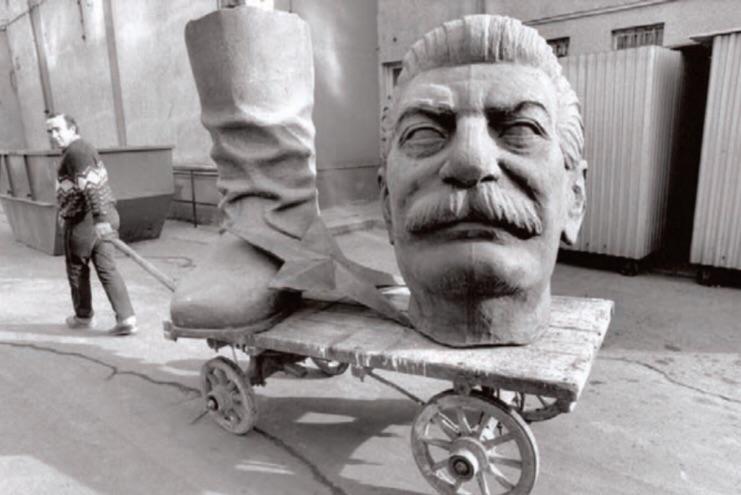
  2. Union leaders assassinated
    From ICEM, Jan 17:
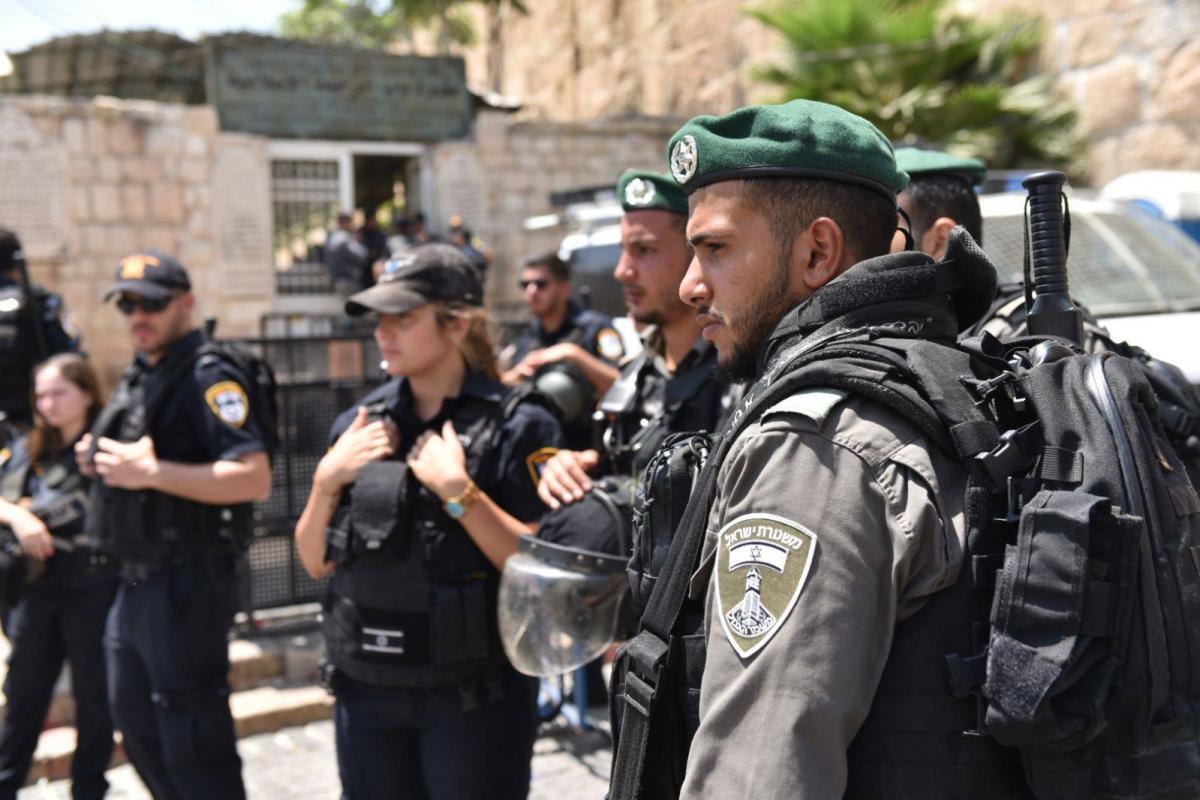
    ICEM Condemns Killings Within Iraq’s Oil Industry
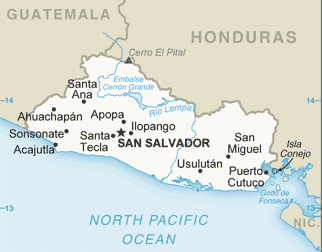
    Two recent and separate attacks by lawless militia groupings in Iraq have incensed the ICEM, the Global Union Federation for the energy sector. Both attacks, one random, on 16 January, in which a dedicated trade unionist was slain, the other, on 11 January, a targeted slaying of oil engineers in route to a union’s press conference, “reflect the failures of both the occupation forces and of the al-Maliki government,” according to ICEM General Secretary Manfred Warda.

    The ICEM was appalled to learn of the death of Mohammed Hameed, a dedicated trade union organiser of the Federation of Workers’ Councils and Unions in Iraq (FWCUI). He was among a group of 15 civilians who were randomly gunned down in an open marketplace in southern Baghdad near his home. Hameed had been out on a walk when he was caught in a hail of gunfire.
    “It hurts tremendously when a trade unionist is killed in a situation like this,” stated Warda. “Brother Hameed was a person who had the vision and fortitude to help build a just and decent civil society inside Iraq.” Hameed, who was in his 30s, scored several advances last summer for oil industry workers in the Baghdad area, who constantly attempt to escape poverty conditions in the strife-ridden area.

    He is survived by his wife, who is an active trade unionist herself inside the service sector side of the FWCUI, and two children.

    The second incident occurred five days earlier, when militia gunmen abducted eight engineers of the Iraqi Oil Ministry as they were travelling in a vehicle to a FWCUI press conference on fuel price increases. Four of the kidnapped victims were released. One engineer, Abdukareem Mahdi, was later found dead, after being tortured. The other three, Nazar Fattah, Adil Yahia and Ahmed Maulood, remain missing and are presumed dead.

    “We are disappointed with the response from the government and the lack of information given us by the authorities on these heinous crimes,” said Falah Alwan, the president of FWCUI. “The Iraqi government must take responsibility for the lawlessness that has become so prevalent in the oil industry, as well as for the obvious security deficiencies that has allowed ordinary workers to be killed every day.”

Support WW4 REPORT’s Winter fund drive

Dear Readers:

We are still trying to work out some technical bugs on our blog, which is why you cannot post comments at the moment. Please be patient. Meanwhile, we continue to appeal for your support.

In our winter fund pitch, we noted the irony that our journalism and commentary this year has won us the epithets of both “ultra-leftists” and co-opted “gatekeepers”; both “anti-Semites” and part of the “Zionist media.” We always say there’s no greater vindication than getting it from both sides, so we wear this opprobrium like a badge of pride.

But there’s another kind of vindication we need right now: the kind that pays the rent. Producing WW4 REPORT is a full-time job, and if you want us to continue we need your support. We still have $1,685 to go to make our winter fund-raising goal. If all our readers supported us with even a modest donation, we’d be there in no time.

Please send what you can today. Find your category (honestly) on our handy chart:

Minors, indigent and prisoners: FREE
Students, fixed-income and unemployed: $5
Working class Jane/Joe: $10
Professionals with health insurance: $25
Trust-fund rads: $50
Upwardly-mobile liberals: $75
Already-have-it-all liberals: $100
Just plain rich liberals: $200
Filthy rich liberals: $300
Confused Republicans who like us because we’re “anti-government”: $500
Mike Ruppert: $1,000
Michael Moore: $2,000
Barbara Streisand: $5,000
George Clooney: $10,000
Woody Harrelson: $20,000
Paul McCartney: $50,000
Teresa Heinz-Kerry: $75,000
George Soros: $100,000

Send checks to:

WORLD WAR 4 REPORT
89 Fifth Ave. #172
Brooklyn NY 11217

Please make checks payable to WORLD WAR 4 REPORT.

Or donate by credit card:

/donations.html

Thank you for your support. We can’t do it without you–really.

Bill Weinberg

WORLD WAR 4 REPORT

Dec. 23, 2006

LIT CRIT DUBS DUBYA DUCE

From Spanish TV ABC.es, Sevilla, May 26:

When I see Bush, he reminds me of Benito

Like the great humorists, who are certainly the most sad, Harold Bloom will never laugh at his own jokes nor betray the effect they produce in their interlocutor. Bloom believes the “United States has gone crazy. I cannot refer to the sitting president in any manner other than Benito Bush. When I see him on television with this rigid grimace on his face he reminds me of Benito. We find ourselves in a demented situation. Some time ago we ceased being a democracy and have been converted into a theocratic plutocracy. Its a very dangerous situation. It gives me the sensation that my compatriots are sleeping. Here we are fulfilling the prophecies of Orwell, but [20] years after they were predicted by Orwell.”

Speak of the Duce, his grandaughter’s got a brand new bag.