Turkey: hundreds of refugees deported to Syria

Turkey

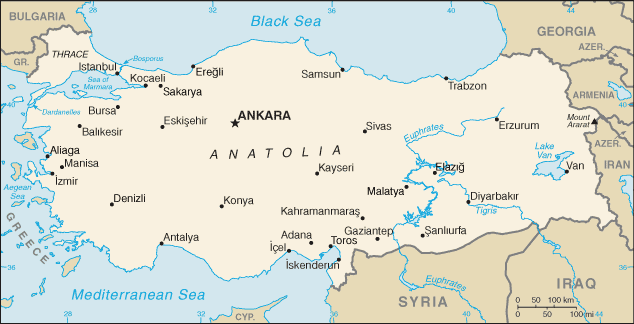
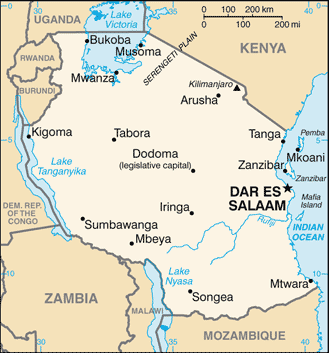
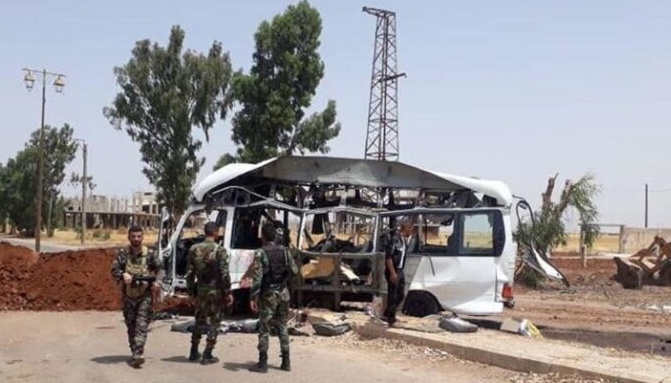
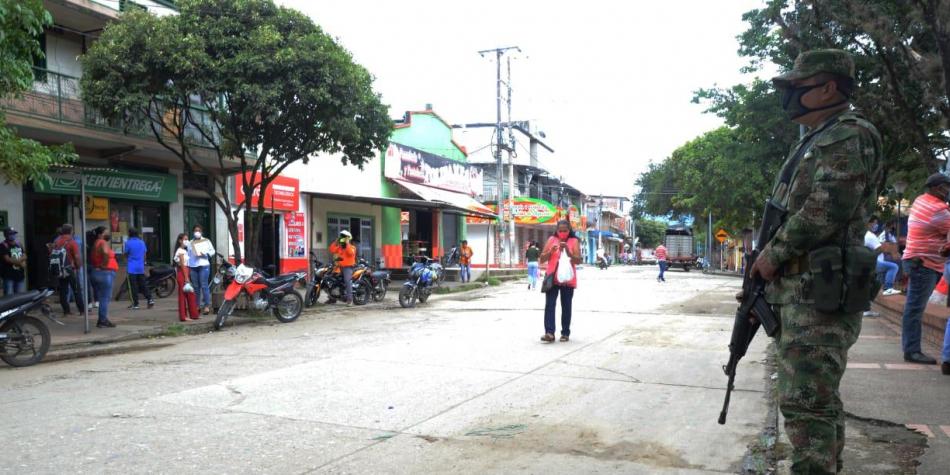
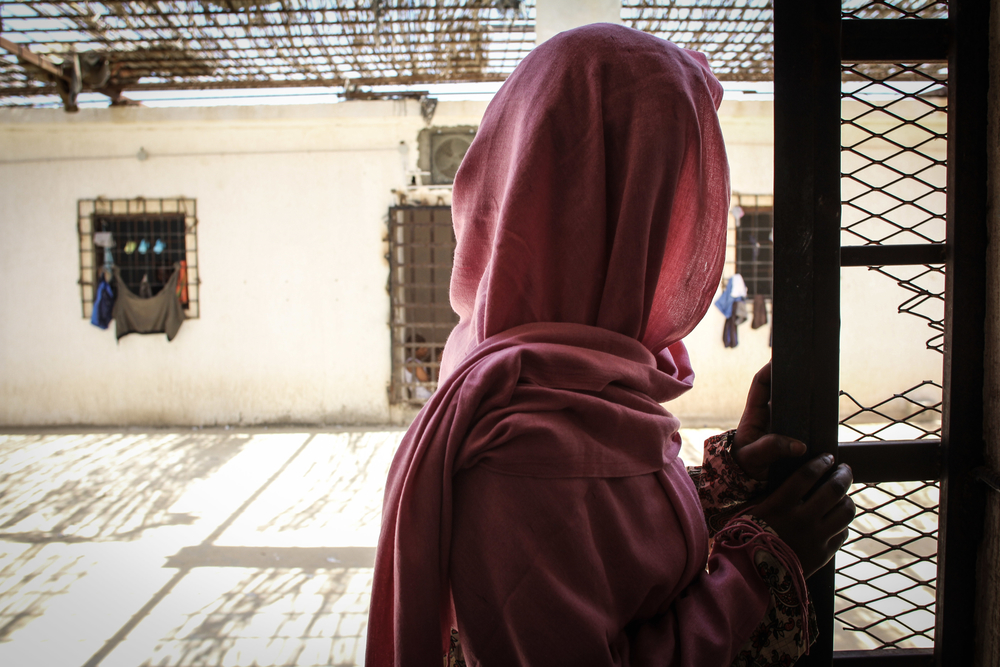
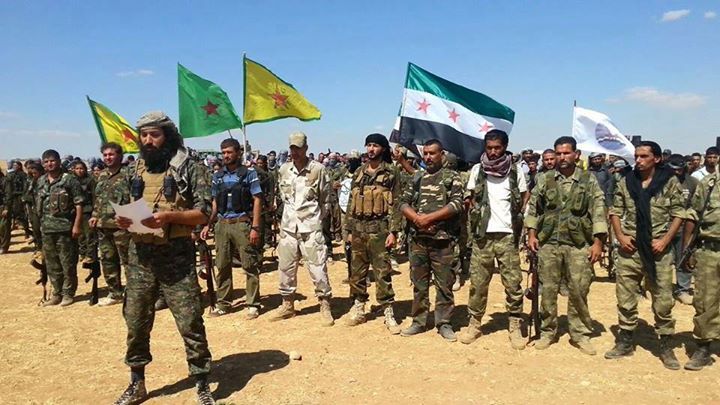
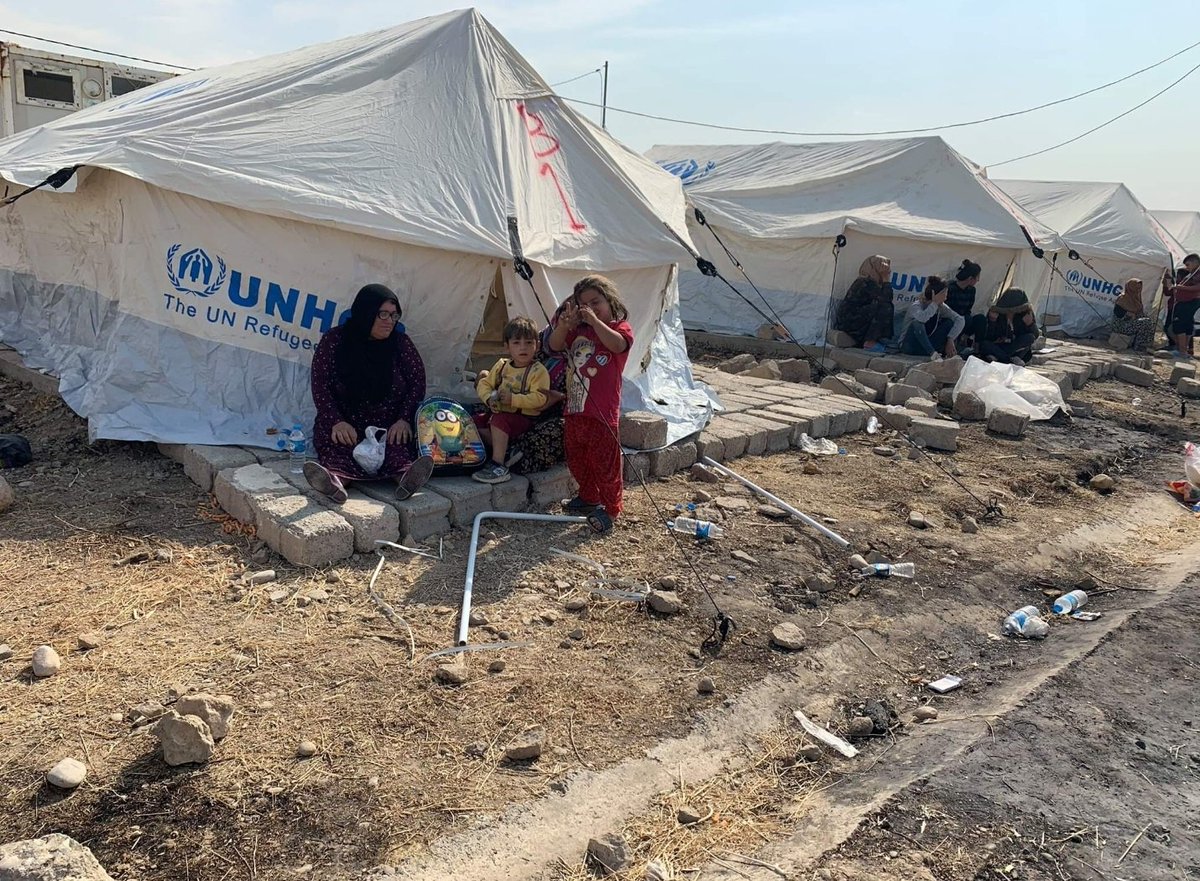
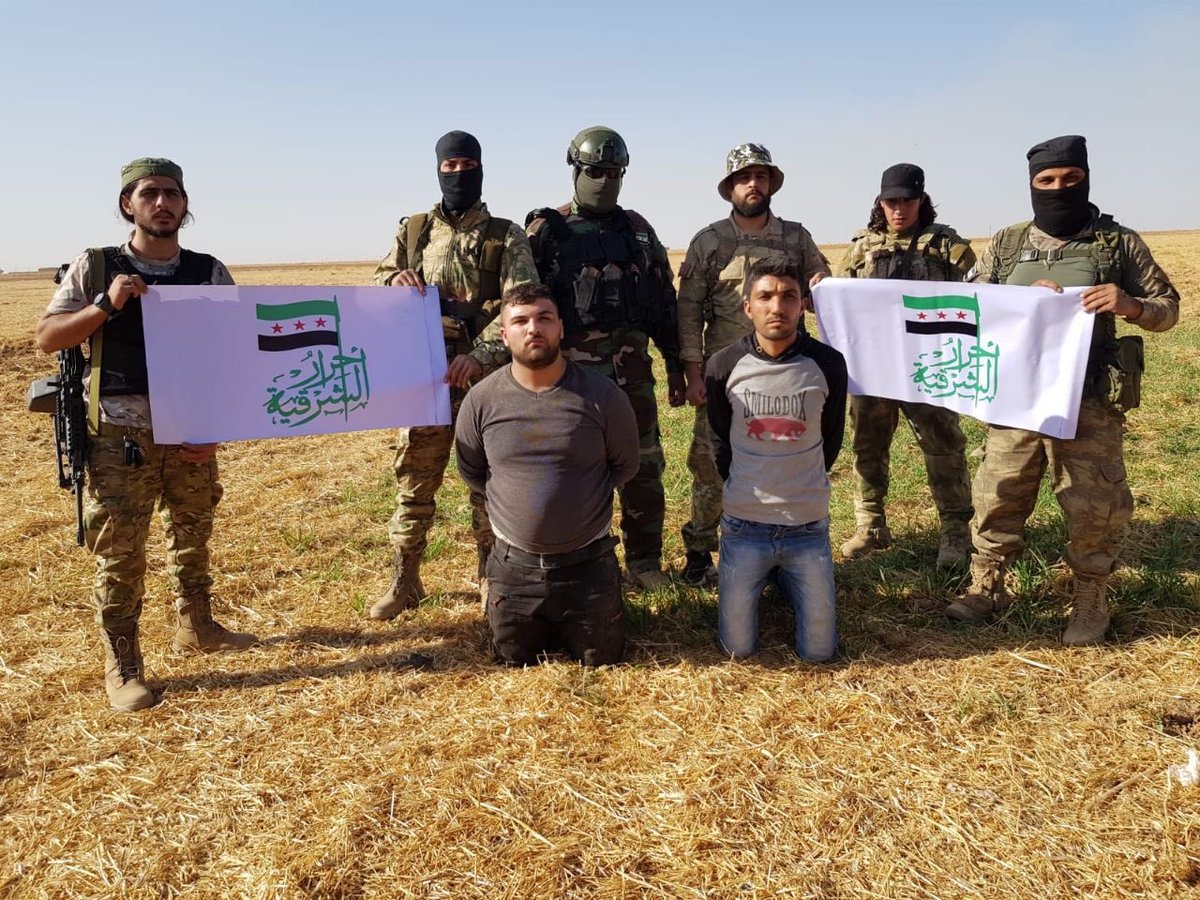
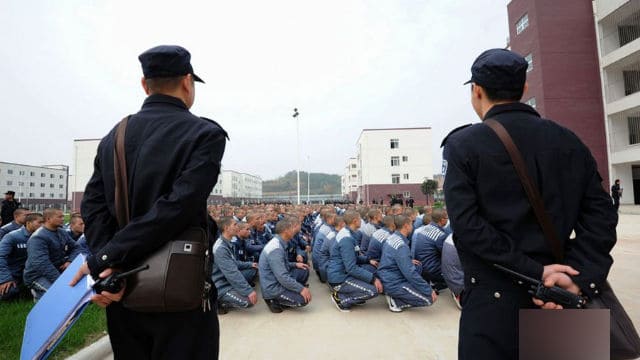
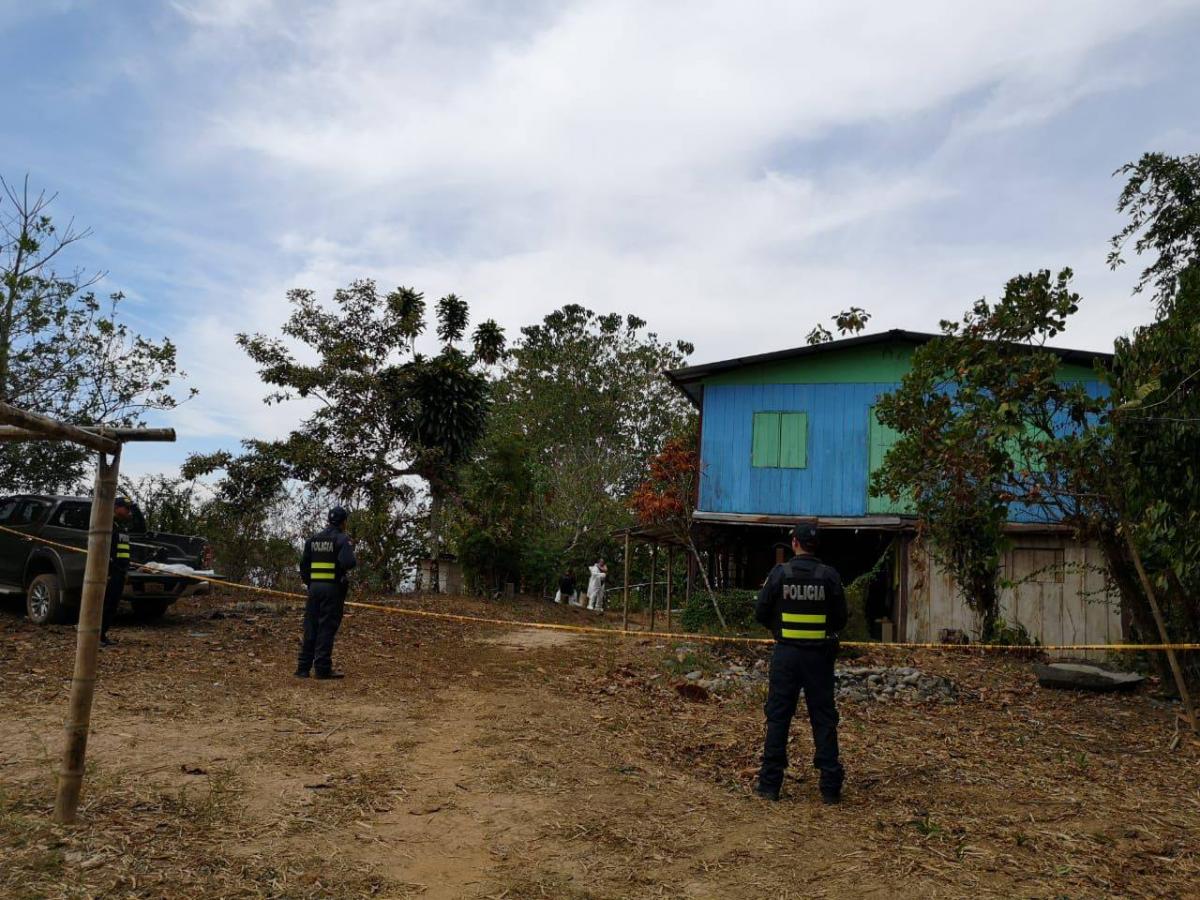
Human Rights Watch on Oct. 24 reported that Turkish authorities arbitrarily arrested, detained and deported hundreds of Syrian refugee men and boys between February and July 2022. The report found that refugees are arrested in their homes, workplaces and on the street, then detained in harsh conditions, and forced over the border to Syria.

According to the UN, Turkey hosts the world's largest refugee population with 3.7 million Syrians under temporary protection by the Turkish state and over 320,000 refugees and asylum-seekers under international protection within Turkish territory. The deportation of Syrian refugees is contrary to the prohibition of refoulement under international law—meaning the return of refugees to a place where they would face a real risk of persecution, torture or other ill-treatment, or a threat to life.

Nadia Hardman, refugee and migrant rights researcher at Human Rights Watch, says the EU must "acknowledge that Turkey does not meet its criteria for a safe third country and suspend its funding of migration detention and border controls until forced deportations cease."

In May, President Recep Tayyip Erdoğan stated that he aimed to encourage one million Syrian refugees to return to their country by building them housing and local infrastructure in "safe zones" in northern Syria outside of the government's reach. However, HRW reports that many have been returned to areas under government control.

From Jurist, Oct. 24. Used with permission.

See our last reports on Syrian refugees in Turkey, their refoulement, and Turkey's "safe zone" plan.

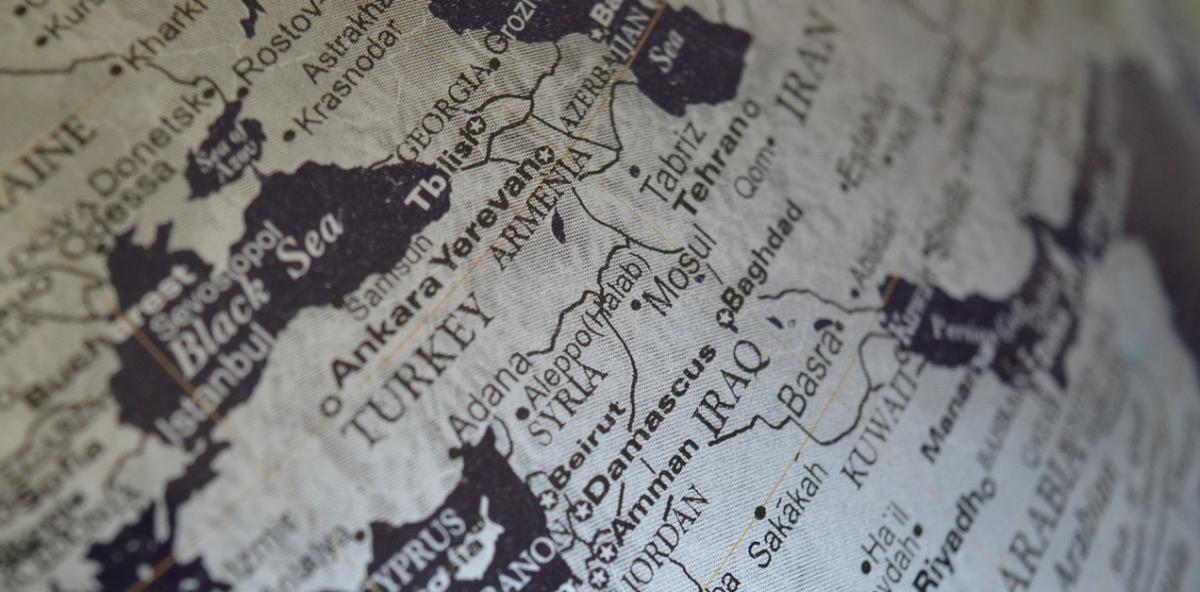
Map: CIA

Mass grave unearthed in Libya

Libya

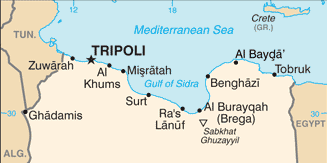
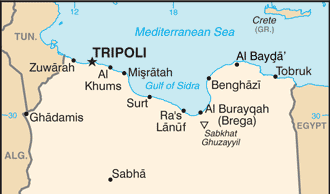
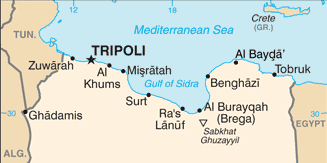
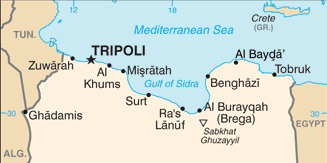
Authorities in Libya announced Oct. 2 that they had discovered a mass grave containing 42 bodies in Sirte, a city that was once the so-called Islamic State's capital in the country. Libya's Missing Persons Authority said the bodies were found in a school, and samples were taken at a local hospital so that the victims could be identified.

From The New Humanitarian, Oct. 7

Note: Sirte is also rendered as Surt.

Map: Perry-Castañeda Library

Ukraine: anarchists reject Moscow propaganda

RKAS

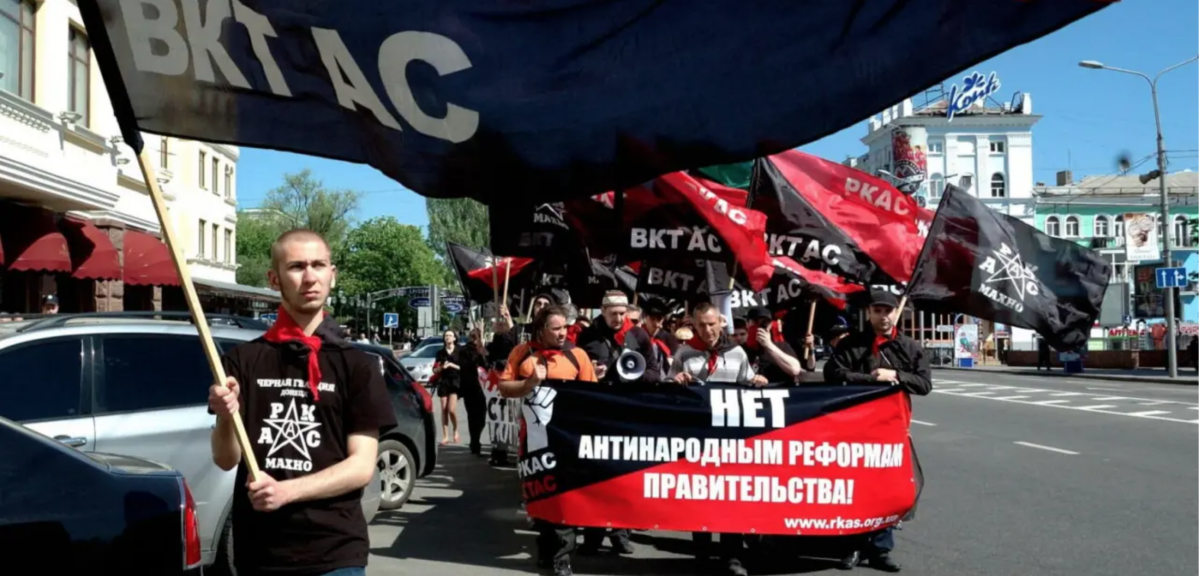
The British anarchist journal Freedom features an interview Oct. 4 with Ukraine's Revolutionary Confederation of Anarcho-Syndicalists (RKAS), challenging the hegemony of Russian propaganda on the supposed anti-war left in the West, entitled "'Leftists' outside Ukraine are used to listening only to people from Moscow." The two longtime RKAS militants interviewed are Anatoliy Dubovik, born in Russia but now living in Dnipro, and Sergiy Shevchenko, from Donetsk but forced to relocate to Kyiv after the Russian-backed separatists seized power in Donbas. Both have been involved in protests against the Ukrainian government's gutting of labor protections and other "neoliberal" reforms. But they strenuously reject the flirtation between elements of the international left and the authoritarian Donbas separatists and their Russian sponsors. They especially protest Western lecturing to Ukrainians that they must "negotiate"—which inevitably means ceding territory to Russia in exchange for "peace."

They state:

The compromise you are talking about (ceding part of the territory in order to maintain the sovereignty of the rest of Ukraine) is impossible. It's not even that surrendering a few million Ukrainians to Putin's fascist regime would be treason. You see, today’s Russia has long shown its inability to peacefully coexist with the neighbouring countries it has chosen as its victims. This was evident in the two colonial wars in the Caucasus. In the 1990s, the Chechen people inflicted a serious defeat on the Russian army and the Russian government agreed to peace. The following years were spent preparing for a new invasion of unruly Chechnya, and when a new, even more powerful force was assembled, the Russian army started all over again.

Ukrainian society remembers these events and knows that the only guarantee for peace will be the complete defeat of the Russian army, the destruction of the Putin regime…

They harshly reject the notion that Russia must be supported in the name of opposing Western imperialism.

Russia's geopolitical goal is not at all to stop Western imperialism, but to make Russia an empire again, more powerful, aggressive and inhuman than the conventional "West." The Russian state, having suppressed freedom and independence at home, cannot bring any freedom and independence to other countries.

The pro-Russian "Left" does not see this. To use the analogy of George Orwell's novel 1984, such "leftists" side with the Big Brother of Eurasia against the Big Brother of Oceania.

Such "leftists" are idiots.

Dubovik and Shevchenko note that RKAS members are fighting on the frontline in eastern Ukraine as members of the Territorial Defense Units.

RKAS

UN appoints rapporteur on human rights in Russia

memorial

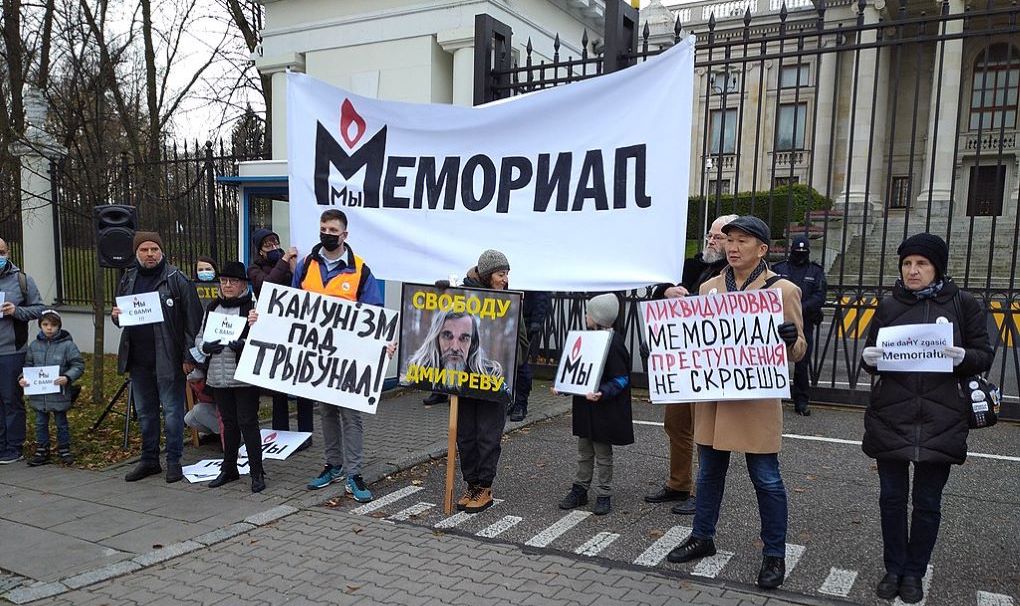
The UN Human Rights Council on Oct. 7 voted to create a special rapporteur on human rights in Russia. The resolution was adopted on a vote of 17 in favor, 6 against, and 24 abstentions. The Council authorizes the rapporteur to operate for a year, with a mandate to monitor the rights situation in the Russian Federation; to collect, examine and assess relevant information from all stakeholders; to make recommendations; and to present comprehensive reports to the Council and to the General Assembly. The Council also strongly urged the Russian authorities to comply with all obligations under international human rights law.

The move follows harsh laws instated in Russia this year that have forced the closure of human rights groups, including Memorial Human Rights Centre, which won the Nobel Peace Prize on Oct. 7 along with Ukraine's Center for Civil Liberties and imprisoned Belarusian activist Ales Bialiatski.

According to rights groups, a series of laws passed in Russia have effectively criminalized criticism of and reporting on the Ukraine war, and forced independent media to close down. Thousands now face charges for anti-war dissent, such as wearing the blue and yellow colors of Ukraine's flag. Laws on "foreign agents" and "undesirable organizations" have been used to repress civil society, and criminalize anyone associated with independent groups.

The move marks the first time that the 16-year-old Human Rights Council has set up a special rapporteur to examine the rights record of a permanent member of the Security Council.

On Sept. 20, several human rights organizations wrote to the Council to call for the establishment of a special rapporteur for Russia.

Russia's Foreign Ministry firmly rejected the resolution, saying it contained false allegations.

From Jurist, Oct. 8. Used with permission.

See our last report on Russia's harsh crackdown on dissent.

Photo via Critical Mass

Erdogan invokes burning of Smyrna

Smyrna

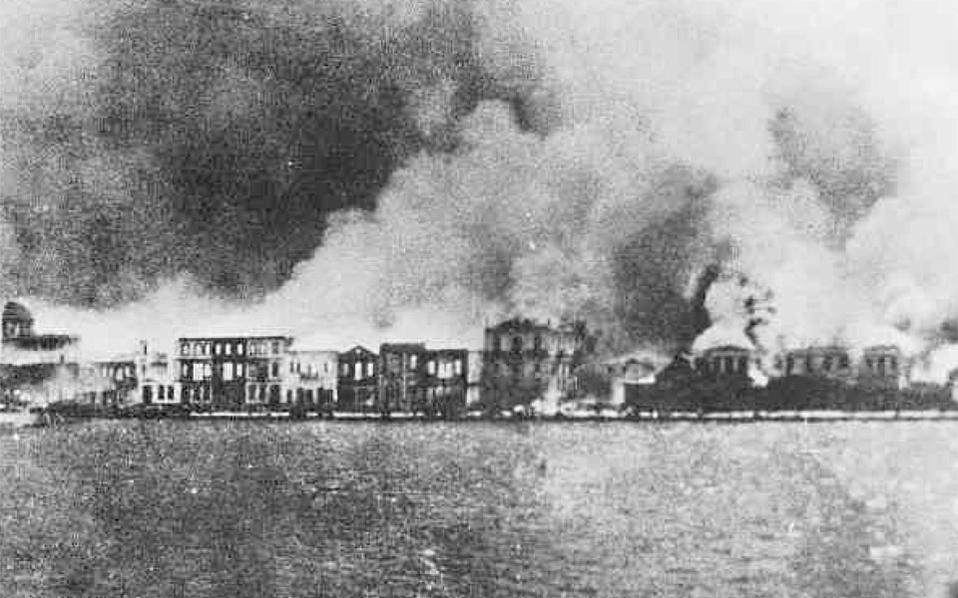
Amid rising tensions between NATO allies Turkey and Greece, Turkish President Recep Tayyip Erdogan explicitly invoked the burning of Smyrna at the end of the Greco-Turkish War. "We have only one word to tell Greece: Do not forget Izmir," Erdogan said in a speech early last month, using the Turkish name for the coastal city that was the scene of atrocities targeting the substantial Greek populace after it was taken by Turkish forces in September 1922. "We may come suddenly one night," Erdogan added, using his oft-repeated phrase when he warned of launching an operation into neighboring Syria.

The comments came on the centenary of the grim events referenced. Smyrna had been occupied by Greece in 1919, and its fall to the Turks was followed by the torching of the Greek and Armenian districts of the city, and the expulsion of the districts' inhabitants. An undetermined number were killed after being relocated into Turkey's interior.

Aug. 30 is commemorated by Turkey as Victory Day, commemorating the defeat of the Greek army in the Battle of Dumlupınar, which allowed the taking of Smyrna/Izmir days later. Greece, in turn, marks Sept. 14 as the National Remembrance Day for the Genocide of the Greeks of Asia Minor. (Greek Reporter, Greek Herald)

On Aug. 28, Turkey charged that Greece used a Russian-made missile system to harass its F-16 fighter jets carrying out a reconnaissance mission in international airspace. The S-300 missile system based on the island of Crete apparently locked on to the Turkish fighters, in what Ankara called a "hostile action." (Al Jazeera)

The current dispute stems from a treaty signed the year after the burning of Smyrna, which gave offshore islands to Greece on condition that they remain demilitarized. On Sept. 26, Ankara said Turkish drones had recorded Greek landing craft carrying military vehicles donated by the US en route to the islands of Lesbos and Samos, accusing Athens of a "covert occupation" in violation of the 1923 Treaty of Lausanne. (MEE, Daily Sabah, PRI)

Turkey and Greece are also at odds over which country has rights to drill for hydrocarbons in the Mediterranean waters around Cyprus. Turkey is also opposed to the recent US decision to lift an arms embargo on Cyprus. The island of Cyprus has been divided since a 1974 conflict between a Greek-backed internationally recognized government that controls the south and a Turkish-backed breakaway state in the north. (Al Jazeera, PRI)

Photo via HALC

Crackdown on civil society widens in Crimea

Crimea

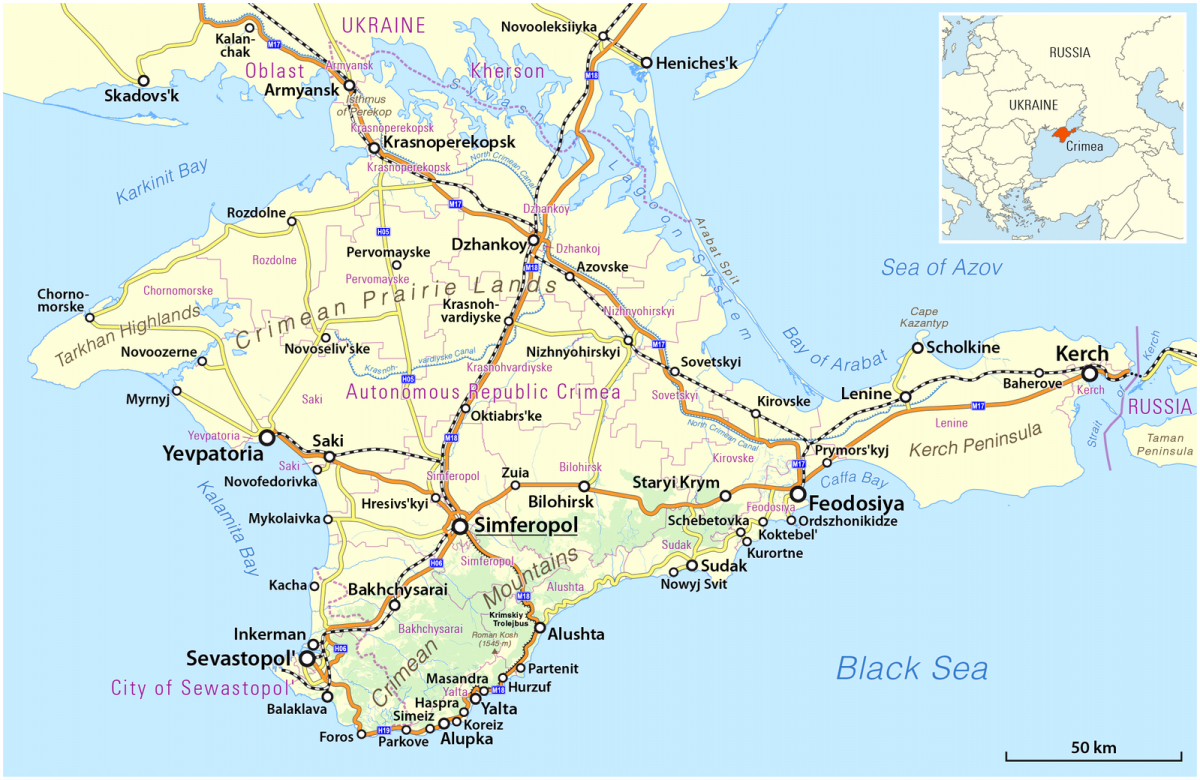
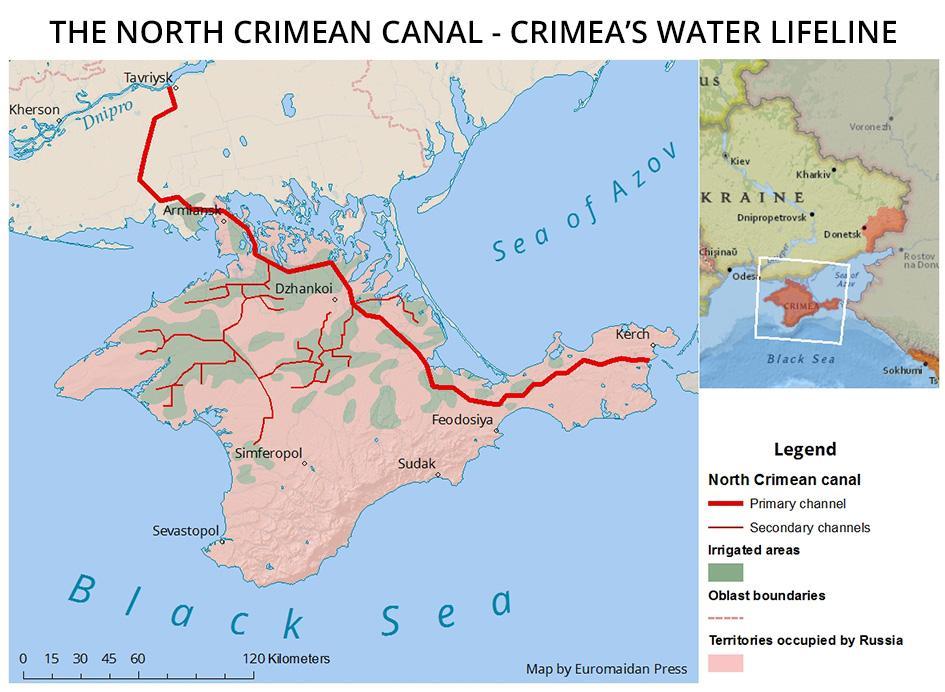
Drone strikes and unexplained explosions on the Russian-annexed Criman Peninsula have prompted the Moscow-controlled administration to urge citizens to hunt for possible saboteurs. This comes amid widening repression on civil society, especially targeting the Crimean Tatar people. On Sept. 15, a local court jailed at least four people involved in a Tatar wedding in Bakhchysarai for performing a Ukrainian patriotic song, "Red Kalyna." Each accused performer was held for several days.

On Aug. 11, officers of the FSB security agency raided the home of Vilen Temeryanov, an independent journalist working with the rights group Crimean Solidarity, in the village of Vilne. Temeryanov was detained on charges of participating in the activities of a "terrorist organization." In New York, the Committee to Protect Journalists said: "Authorities must drop all charges against journalist Vilen Temeryanov, release him immediately, and stop cracking down on Crimean Tatar journalists." (IWPR, KHPG, CPJ)

Map via Wikimedia Commons

Roger Waters: another brick in the war propaganda

Roger Waters

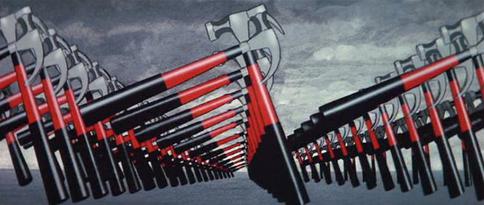
In Episode 140 of the CounterVortex podcast, Bill Weinberg calls out former Pink Floyd creative genius Roger Waters as a propaganda agent for the criminal regimes of Vladimir Putin, Xi Jinping and Bashar Assad. In his recent CNN interview, Waters blames Ukraine for getting invaded, falsely states that "Taiwan is part of China," and dismisses as "bollocks" that there are human rights abuses in China. He has the unmitigated chutzpah to send an open letter on social media to Ukrainian First Lady Elena Zelenska urging her to use her influence on her husband to "end the war"—to which she rightly responds: "If we give up, we will not exist tomorrow. If Russia gives up, war will be over." We've noted before Roger's spewing of genocide-abetting denialism about the Syria chemical attacks. And he disses his own fans who don't go along with his war propaganda. Roger Waters has become the fascist rock star he once satirized in The Wall. The public acrimony between Waters and his ex-bandmate David Gilmour has now become political, with Gimour's release (under the banner of Pink Floyd) of the song "Hey Hey, Rise Up," explicitly in support of Ukraine. David Gilmour is right, while Roger Waters is now just another brick in the wall.

Listen on SoundCloud or via Patreon.

Book discussed: Taiwan's 400 Year History by Su Beng

Production by Chris Rywalt

We ask listeners to donate just $1 per weekly podcast via Patreon—or $2 for our special offer! We now have 45 subscribers. If you appreciate our work, please become Number 46!

Image via Wikipedia

Report sheds light on Wagner Group crimes in Africa

Sahel

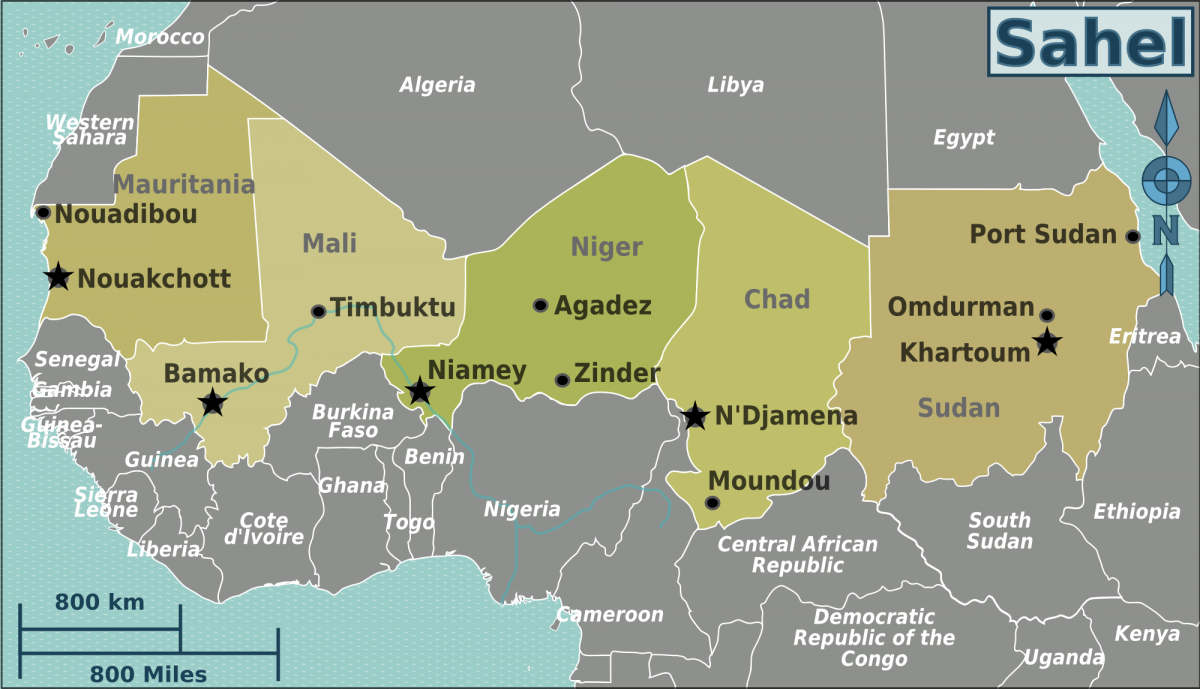
The Armed Conflict Location & Event Data Project (ACLED) issued a new report Aug. 30 on the Wagner Group's activities in the Central African Republic and Mali, and it makes for chilling reading. The Russian mercenary group has targeted civilians in more than half of its operations in CAR (where it began operating in 2018) and over 70% in Mali (where it arrived last year). Its CAR deployment was initially limited to training the national armed forces, but it took on a direct combat role in late 2020 as rebels threatened the capital. It won praise for helping the state capture major towns, but abuses have now angered large parts of the civilian population. In jihadist-hit Mali, the mercenaries have also been involved in a number of high-profile abuses—mostly notably in the central town of Moura, where hundreds of non-combatants were massacred earlier this year. 

Wagner has engaged in dozens of countries in recent years (and has stepped out of the shadows in Ukraine), yet its operations remain hard to scrutinize, and the Kremlin denies formal ties. Though Western nations have rightly called out Wagner crimes, critics charge that they rarely reflect on how their own policy failings (and abuses) have bolstered Russian influence.

From The New Humanitarian, Sept. 4. 

See our last report on the Wagner Group.

Map: Wikivoyage

Russia conniving in Israeli strikes on Syria?

SSRC

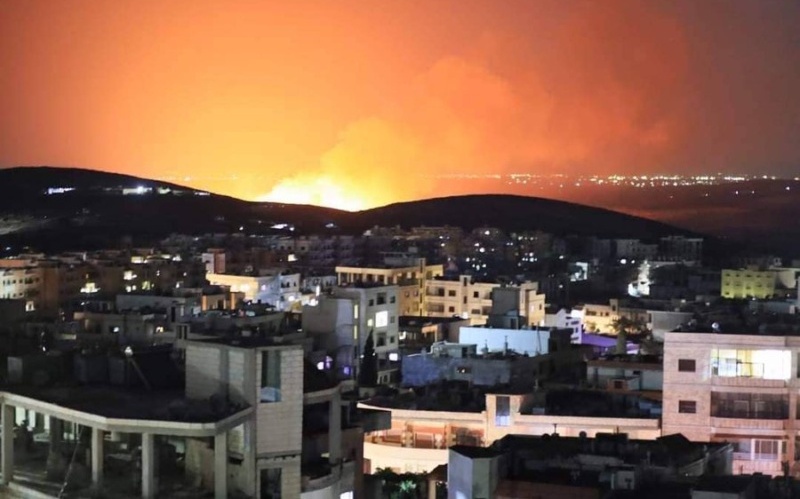
Satellite images show significant damage from an Aug. 25 Israeli air-strike on the Assad regime's main center for conventional and chemical weapons development. Nine buildings of the Scientific Studies & Research Center (SSRC) were destroyed or heavily damaged, and a military captain was reportedly killed. The attack came as Russia removed the S-300 air defense system that it had positioned near the complex. The site, near Masyaf in northwest Syria, is also reportedly a base for Iranian forces and Iran-supported militias. (EA Worldview)

Israeli has for years carried out sporadic air-strikes on Syria, generally targeting the Iranian military presence in the country. Russia largely controls Syria's air-defense forces and has been suspected of giving Israel a free hand to strike Iranian targets.

Photo via EA Worldview

Podcast: against pseudo-left disinformation on Ukraine and Syria

Aleppo

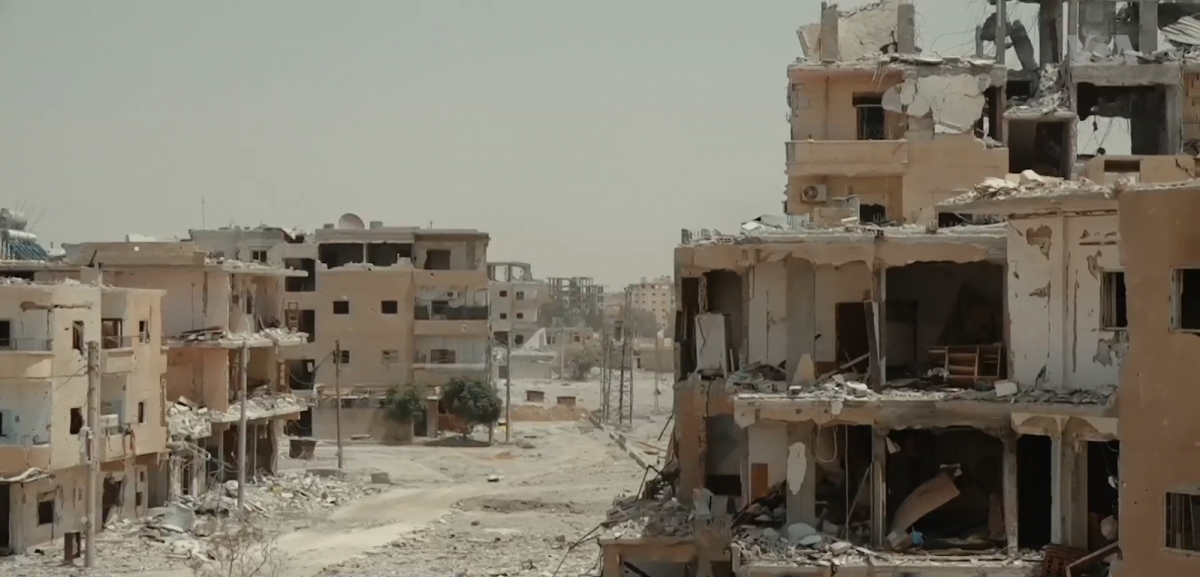
In Episode 138 of the CounterVortex podcast, Bill Weinberg is outraged that The Nation magazine marks the ninth anniversary of the Ghouta chemical massacre by engaging in glib "false flag" theorizing—the predictable response of the post-truth pseudo-left. This sinister spewing from writer David Bromwich is but the latest entry in a long and shameful litany of pro-Assad and pro-Putin propaganda to appear in The Nation. Similar chemical denialism has been dished out by James Carden, and loaned credence by Phyllis Bennis—despite the findings of bona fide human rights groups. The Nation's Bob Dreyfuss has expressed open support for the genocidal dictatorship of Bashar Assad. The Nation's late éminence grise Stephen F. Cohen has spread dishonest Russian propaganda both on Syria and on Ukraine, his spewings eagerly lapped up by Tucker Carlson. Weinberg asserts that The Nation has become a vehicle of Kremlin foreign policy aims, and calls for a complete boycott. Listen on SoundCloud or via Patreon.

Production by Chris Rywalt

We ask listeners to donate just $1 per weekly podcast via Patreon—or $2 for our special offer! We now have 45 subscribers. If you appreciate our work, please become Number 46!

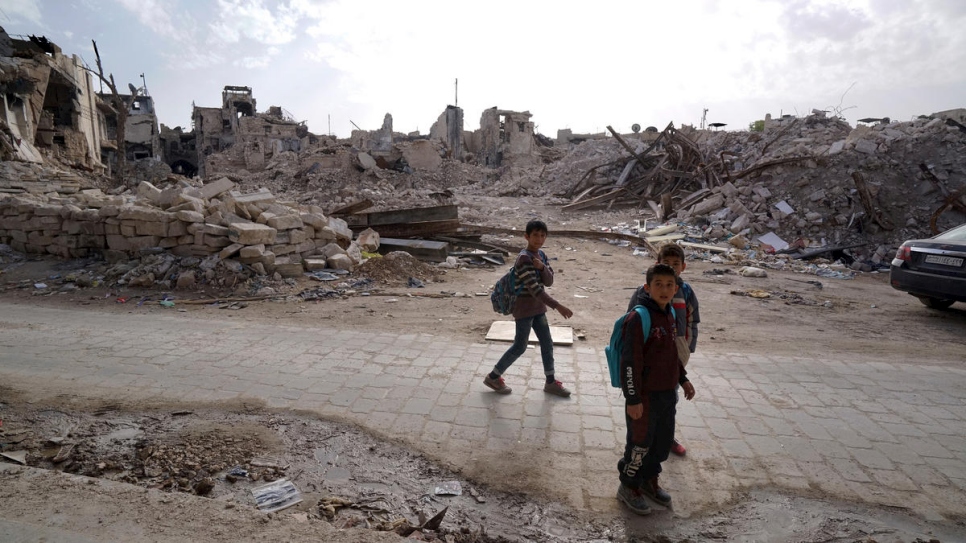
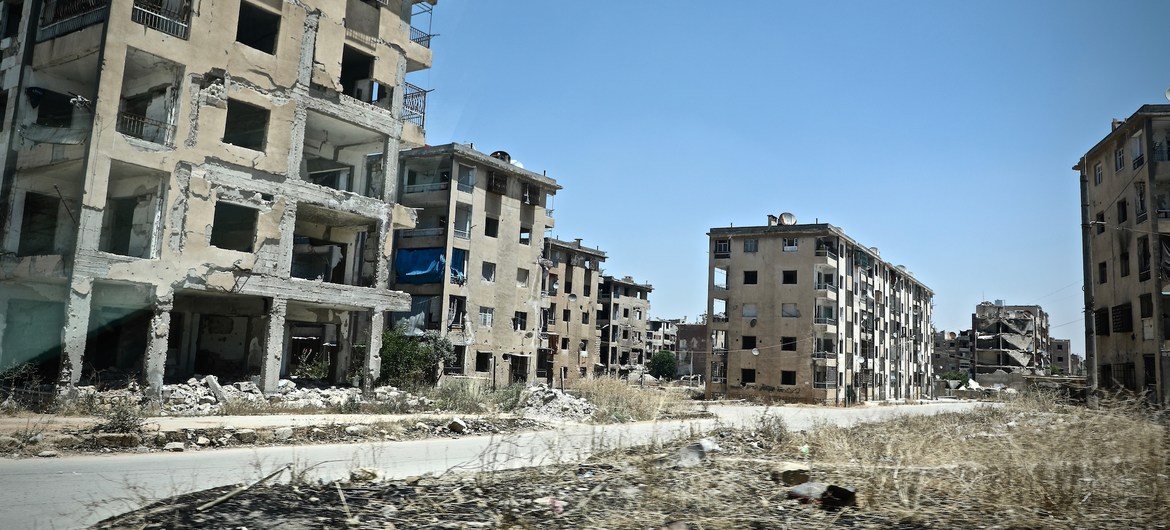
Photo of Aleppo ruins from UNHCR

US strikes Iran-backed militias in eastern Syria

Syria

The US on Aug. 24 carried out air-strikes against Iran-backed militias in Deir ez-Zor province of eastern Syria. The militias have been firing rockets on US positions, including the base at al-Tanf, which came under fire last week. US Central Command said in a statement: "Today's strikes were necessary to protect and defend US personnel." According to unconfirmed reports, the air-strikes targeted the Ayash Camp of the Fatimiyoun group of Afghan fighters. Claims are circulating that at least six Syrians and foreigners were killed. (EA Worldview)

The situation escalated the following day. Pentagon Central Command said two other US outposts, Conoco and Green Village, came under rocket fire. The US struck back with attack helicopters, killing "two or three suspected Iran-backed militants conducting one of the attacks" and destroying vehicles. (The Guardian)

This was one of but a small handful of times over the course of the 10-year Syrian war that the US has bombed targets allied with the Assad regime. These strikes have generally targeted the Iran-backed paramilitary network in the country.

Image: Pixabay

Intrigue over assassination of Daria Dugina

Dugin

Darya Dugina, Russian state media war propagandist and the daughter of ultra-nationalist ideologue Alexander Dugin, was killed when a remote-controlled explosive device planted in her SUV went off Aug. 20 as she was driving on the outskirts of Moscow. Russia's Federal Security Service (FSB) is charging that the assassination was "prepared and perpetrated by the Ukrainian special services." According to the FSB, a Ukrainian citizen, Natalya Vovk, carried out the attack and then fled to Estonia. Russian media reports are claiming she was a member of Ukraine's Azov Battalion, and that the elder Dugin was the actual target of the attack. A statement from Russia's Foreign Ministry said Dugina's killing reflects Kyiv's reliance on "terrorism as an instrument of its criminal ideology."

Kyiv has vigorously denied any involvement in the killing. In Estonia, the prosecutor general's office said in a statement that it "has not received any requests or inquiries from the Russian authorities on this topic."

Russian President Vladimir Putin has posthumously awarded Dugina the Order of Courage, one of Russia's highest honors.

In a statement, Alexander Dugin described his daughter as a "rising star" who was "treacherously killed by enemies of Russia." Calling for redoubled military efforts against Ukraine, he added: "My daughter has sacrificed her young life on the altar of victory."

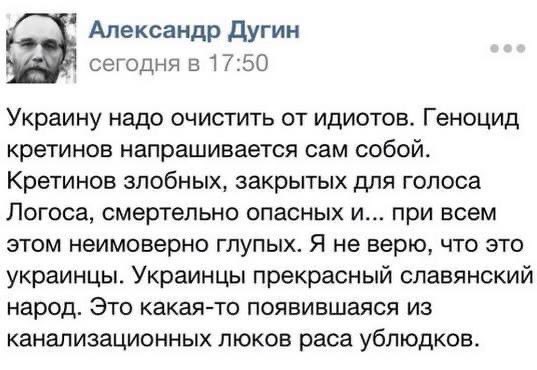
Both Dugin and Dugina are on the US and UK sanctions lists, accused of spreading "disinformation" aimed at the "destabilization" of Ukraine. On social media posts, Dugin has called Ukrainians a "race of degenerates" deserving of "genocide."

Ukrainian authorities have banned public celebrations in Kyiv to commemorate this week's 31st anniversary of independence from Soviet rule, citing an escalated threat of Russian attack. (AP, Reuters, EuroMaidan Press, CBC)

Ukraine's online partisans are calling the whole investigation an "FSB fake." And speculating that the assassination itself was an FSB "false flag" operation to justify expanding the war in Ukraine.

Russian authorities have still named no culprits in the 2015 killing of anti-Putin politician Boris Nemtsov, the 2006 killing of journalist Anna Politkovskaya who uncovered use of torture by the security forces in Chechnya, or the 2009 killing of human rights activist Natalya Estemirova.

On Aug. 22, the New York Times ran a story noting: "The FSB. has long been dogged by suspicions that, rather than solving crimes, it stages or covers them up." These claims go all the way back to the 1999 Moscow apartment-bloc bombings that ignited the second Chechnya war and consolidated Vladimir Putin's grip on power.

Image: Social media post in which Dugin called for "genocide" of the Ukrainian "race of degenerates." Via Twitter

Ukraine: debunking Russia’s war propaganda

Ukraine

In Episode 136 of the CounterVortex podcast, Bill Weinberg debunks Vladimir Putin's "de-Nazification" propaganda for his invasion of Ukraine, a paramount example of the ultra-cynical phenomenon of paradoxical fascist pseudo-anti-fascism. Putin's stated justifications for the Ukraine war are either paranoid delusions or outright lies. His real objectives are to rebuild the Russian Empire, re-establish the Russian dictatorship, and exterminate Ukraine as a cultural and political entity. These are the open aims of Alexander Dugin, the intellectual mastermind of Putin's revanchist imperial project, and the political heir of Ivan Ilyin, the 20th century theorist of "Russian Fascism." Listen on SoundCloud or via Patreon.

Production by Chris Rywalt

We ask listeners to donate just $1 per weekly podcast via Patreon—or $2 for our new special offer! We now have 45 subscribers. If you appreciate our work, please become Number 46!

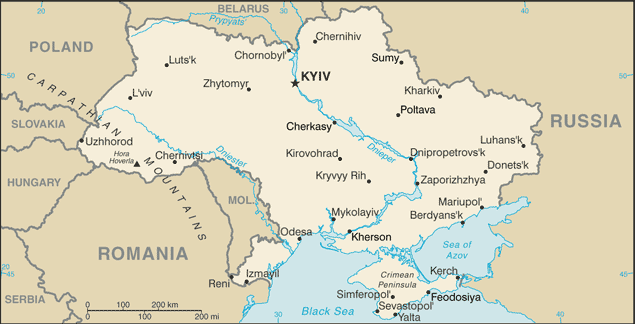
Map: PCL

Nuclear flashpoint Crimea?

Crimea

A series of explosions tore through a Russian airbase on the Crimean Peninsula Aug. 9, leaving one dead. Russia's Defense Ministry said ammunition had detonated at Saki airfield, near the village of Novofedorivka. The base is some 200 kilometers from the Ukrainian lines, and President Volodymyr Zelensky's office denied responsibility for the blasts. However, an unnamed Kyiv official anonymously told the New York Times that Ukrainian forces carried out an attack on the base. The official emphasized that "a device exclusively of Ukrainian manufacture was used."

Zelensky later stated: "Today, there is a lot of attention on the topic of Crimea. And rightly so. Because Crimea is Ukrainian, and we will never give it up. This Russian war against Ukraine and against all of free Europe began with Crimea and must end with Crimea—with its liberation."

But last month, in response to the arrival of US High Mobility Artillery Rocket Systems (HIMARS) in Ukraine to support the counter-offensive in Kherson, former Russian president Dmitry Medvedev implied that Ukrainian strikes on targets in Crimea would meet Russia's stated criteria for use of nuclear weapons. Speaking to TASS news agency, he called the refusal of Ukraine and Western powers to recognize Moscow's control of Crimea a "systemic threat" to Russia, adding: "Should anything of the kind happen, they will be faced with a doomsday, very quick and tough, immediately. There will be no avoiding it." (Moscow Times, The Telegraph, Politico, Asia Times, Reuters)

Map via Wikimedia Commons

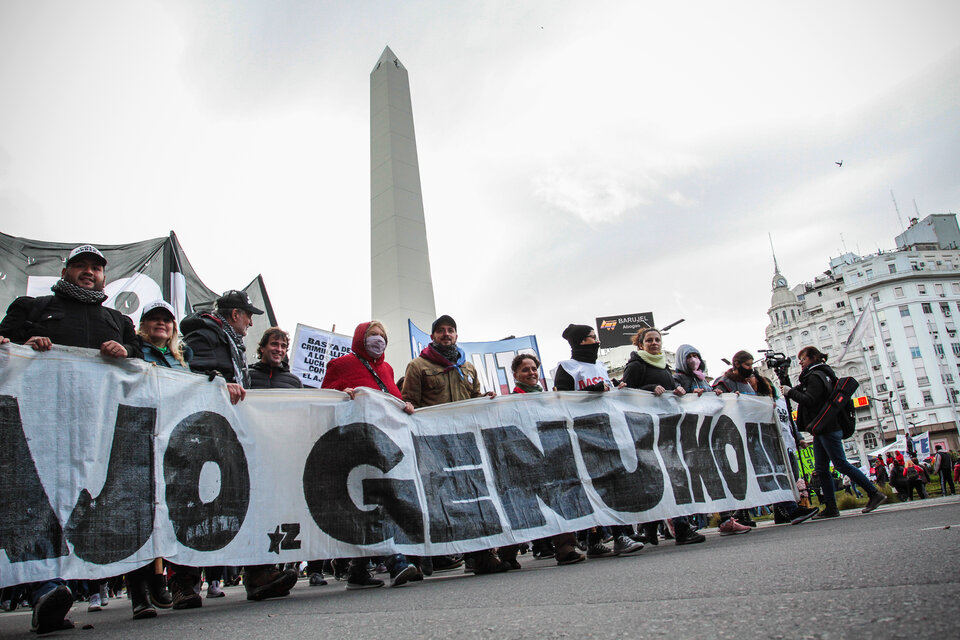
Econo-protests sweep Argentina

BsAs

Argentina has seen weeks of mass protests in response to a rapidly deepening economic crisis. Prices for basic goods are skyrocketing, leaving many struggling to make ends meet. The protest wave began on Argentina's independence day, July 9, when thousands marched on the presidential palace. Dubbed the "Argentinazo," the mobilization was held in Buenos Aires and cities across the country. Last week, center-left President Alberto Fernández named his second new economy minister in less than a month, as his own coalition has fractured over how to handle the burdensome national debt.

The country avoided defaulting on an IMF loan in March, postponing scheduled payments in exchange for pledges of belt-tightening measures. These include a slash in energy subsidies that have helped keep utility bills low—imposing further hardship on the poor amid the spiralling inflation. (More at NACLA)

Food and fuel prices are spiking worldwide due to the Ukraine war, sparking protests in countries across the planet.

Photo: Pagína12

Turkey escalates drone strikes on Rojava

drone

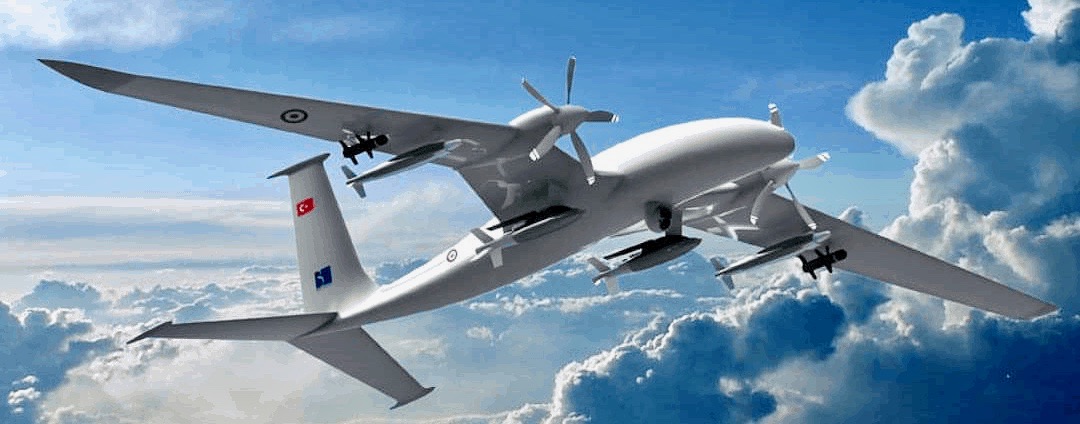
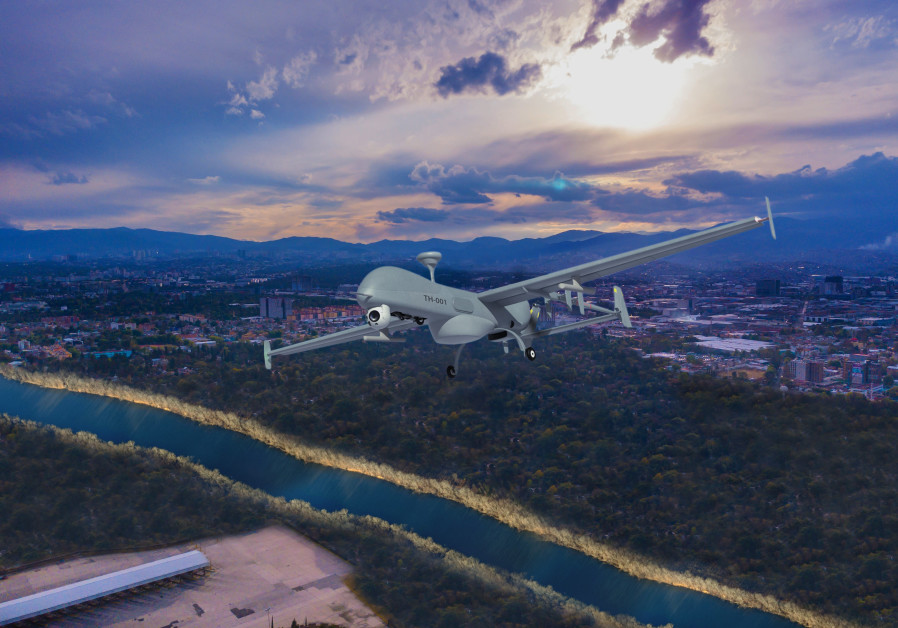
A Turkish drone strike on July 22 targeted three members of the Women's Protection Units (YPJ) who were driving in a vehicle near the northeast Syrian town of Qamishli. All three women were killed, and several passers-by injured by shrapnel. The Syrian Observatory of Human Rights (SOHR) said that it was the second drone strike on territory of the Kurdish-led Autonomous Administration in North & East Syria (AANES) in the past 48 hours. The YPJ is the women's wing of the People's Protection Units (YPG), the territorial defense force of the autonomous zone, in the region known to the Kurds as Rojava. Turkey has carried out repeated drone strikes on targets within AANES territory this year, amid apparent preparations for a new military incursion into the autonomous zone.


Photo: Wikipedia

Russia: irredentist claims on Alaska

Russian Alaska

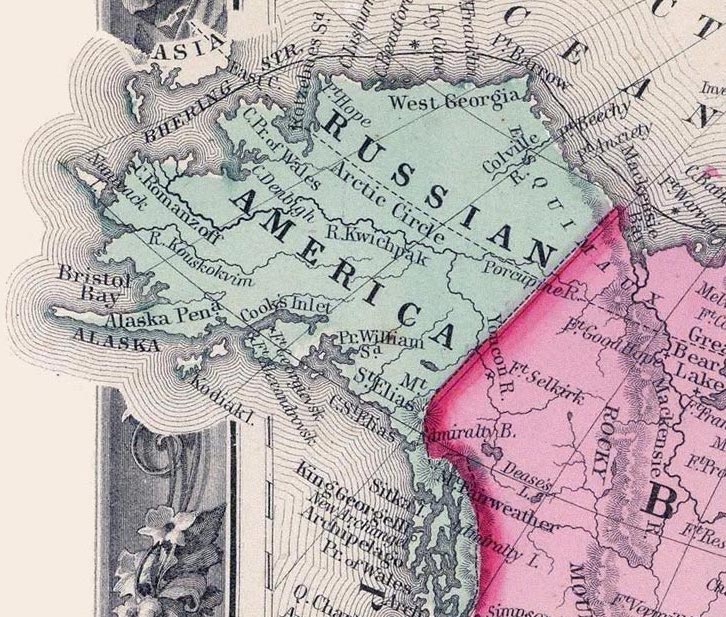
The speaker of Russia's lower house of parliament on July 6 threatened to "claim back" Alaska if the United States freezes or seizes Russian assets in retaliation for its invasion of Ukraine. "Let America always remember: there's a piece of territory, Alaska," Vyacheslav Volodin said at the last session of the State Duma before summer break. "When they try to manage our resources abroad, let them think before they act that we, too, have something to take back," Volodin said. He noted that deputy speaker Pyotr Tolstoy had recently proposed holding a referendum in Alaska on joining Russia. The day after Volodin's comments, billboards proclaiming "Alaska Is Ours!" appeared in the Siberian city of Krasnoyarsk, apparently placed by a local "patriot."

Russia, which began settling Alaska in the 1740s, sold the territory to the United States in 1867 for $7.2 million, or roughly two cents per acre. In 2014, after the Crimean vote for unification with Russia, a group disgruntled Russian descendants in Alaska launched an "Alaska Back to Russia" signature drive on the White House website. It garnered some 30,000 signatures, although it is not clear where they were all from.

On the same day as Volodin's bluster, ex-president Dmitry Medvedev took to social media to invoke the threat of nuclear war if the International Criminal Court moves to prosecute Russia for war crimes in Ukraine. "The idea to punish a country that has the largest nuclear arsenal is absurd in and of itself," Medvedev wrote on messaging app Telegram. "And potentially creates a threat to the existence of mankind." (Moscow Times, Newsweek, AFP)

This is but the latest in a recent paroxysm of nuclear threats from Russian political figures.

Pyotr Tolstoy is a direct descendent of Leo Tolstoy—certainly an irony given the literary giant's anarcho-pacifist beliefs. In May, Pyotr Tolstoy boasted of how his great-great-grandfather "slaughtered" British and French troops during the Crimean War, while insisting that Moscow will not end its war in Ukraine until it has reached the Polish border. (The Telegraph)

Vladimir Putin himself also engaged in some undisguised irredentism last month, grandiosely comparing himself to Peter the Great, the 18th-century czar who expanded Russia's borders to the west in a campaign of military conquest. After visiting an exhibition dedicated to the fabled czar, Putin said: "Peter the Great waged the Great Northern War for 21 years. It would seem that he was at war with Sweden, he took something from them. He did not take anything from them, he returned" (what was Russia's). (The Guardian)

Putin is not correct here, however. With the exception of an area of what is now Estonia conquered from the Teutonic Knights by Ivan the Terrible in the Livonian War of 1558 and held by Muscovy until 1581 (when it was taken by the Swedes), none of the large territories taken by Peter in the Great Northern War (1700–21) had ever before been under Russian rule. The Great Northern War marked the beginning of the Russian empire, with Moscow gaining control of a significant stretch of the Baltic coast for the first time.

Map via Wikipedia

Tentative peace talks for Ambazonia

Ambazonia

After three years of conflict, a tentative peace process is underway between the Cameroon government and scessionist rebels demanding independence for the country's two western anglophone regions. Cameroon is a majority francophone country, and its Northwest and Southwest regions complain that they have been deliberately marginalized by the central government in Yaounde. What began as a protest movement in 2016, calling for federalism, degenerated into fighting and a demand for full independence after the government clamped down on the movement.

The conflict has since killed more than 3,000 people, and forced over 900,000 from their homes. The security forces have been accused of widespread human right abuses—as have, to a lesser extent, the rebel forces fighting for an independent "Ambazonia."

Talks have now begun between the government and a key rebel faction headed by imprisoned leader Sisiku Julius Ayuk Tabe. But the ceasefire dialogue has been condemned by other Ambazonia scessionists in Cameroon and abroad, who argue that Sisiku does not have a mandate to negotiate.

Some secessionists charge that the dialogue is another example of Cameroon "picking and choosing" who gets to speak for "Ambazonians."

Condensed from The New Humanitarian, July 8

Map: TNH

UN releases evidence of mass graves in Libya

Libya

The United Nations Support Mission in Libya (UNSMIL) on July 4 released a report containing evidence of mass graves in the Libyan city of Tarhuna, southeast of Tripoli. The report estimates there could be as many as 100 undiscovered mass graves in the city. It claims that the al-Kaniyat militia, in power in Tarhuna from 2016 to 2020, is responsible for mass killings there. The militia is alleged to have used brutal torture methods on residents including women, children, the infirm, and the disabled.

The report graphically details these and other human rights violations by the militia, which has since been driven out of Tarhuna. UNSMIL calls on Libyan authorities to "[e]stablish a Special Tribunal for Tarhuna to prosecute international crimes" and "[c]ontinue searching for the missing and for remaining mass graves…"

The report concluded that major human rights laws have been broken, saying:

The Mission finds reasonable grounds to believe that the crimes against humanity of extermination, imprisonment, torture, persecution and enforced disappearance were committed by members of the al-Kaniyat militia against a defined population in Tarhuna since they asserted control over the town until June 2020. These crimes were committed in a widespread manner, whereby the al-Kaniyat systematically targeted and eliminated all actual and perceived opposition with total impunity.

The UN's Independent Fact-Finding Mission (IFFM) on Libya on June 29 reported that Libyan authorities and armed groups have committed crimes against humanity, war crimes, and gross human rights violations under international law. The IFFM documented 27 places of detention in the eastern and western parts of Libya and reported that migrants were subject to "systematic use of prolonged arbitrary detention," including the detention of thousands of migrants in secret and extra-legal prisons.

Combined from Jurist, July 4; Jurist, June 30

Note: The al-Kaniyat militia is aligned with forces of warlord Khalifa Haftar. The migrant detention centers are largley run by forces aligned with the UN-recognized Government of National Accord (GNA).

Map: Perry-Castañeda Library

Podcast: the forgotten war in Colombia

paramilitaries

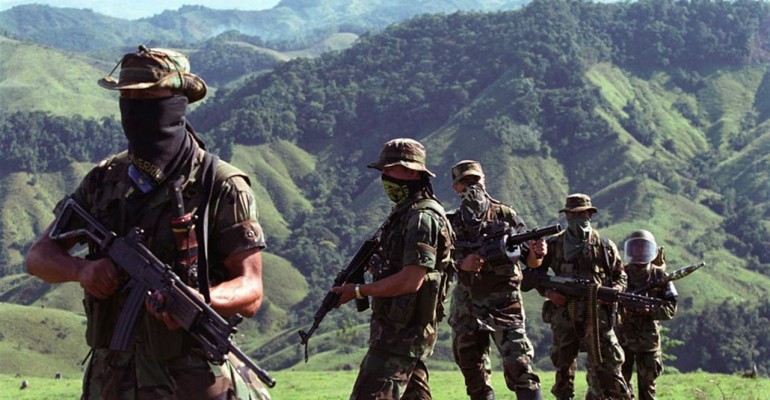
In Episode 128 of the CounterVortex podcast, Bill Weinberg provides an in-depth analysis of the under-reported multi-sided armed conflict and deepening human rights crisis in Colombia on the eve of an historic run-off election that poses two populist "outsider" candidates for the presidency: Gustavo Petro, a former guerilla leader and Colombia’s first leftist presidential contender, versus Rodolfo Hernández, a right-wing construction magnate whose pugnacious swagger inevitably invites comparison to Donald Trump. This turning point comes as Colombia has established a new "partnership" with NATO, obviously in response to Venezuela's deepening ties with Russia. Yet Colombia's armed forces continue to collaborate with the outlaw paramilitary groups that terrorize campesino and indigenous communities. If elected, Petro will face the challenge of breaking the state-paramilitary nexus, and charting a course independent of the Great Powers. Listen on SoundCloud or via Patreon.

Production by Chris Rywalt

We ask listeners to donate just $1 per weekly podcast via Patreon—or $2 for our new special offer! We now have 43 subscribers. If you appreciate our work, please become Number 44!

Photo: Contagio Radio

Multi-sided warfare across Colombia

Arauca

Despite a peace process that has faltered under President Ivan Duque, the internal war in Colombia continues nearly across the country—now involving multiple armed actors: remnant guerilla groups, resurgent paramilitary forces, regional cartels, and the official security forces. Thousands have been displaced in recent months, as campesino and indigenous communities are either caught in the crossfire or explicitly targeted.

Arauca: struggle for the borderlands
The year began with an upsurge of violence in Arauca department, on the eastern plains along the Venezuelan border, where various armed factions vie for control of smuggling corridors either side of the line. On Jan. 4, the office of the UN Secretary-General expressed concern for the situation in Arauca, and called for a ceasefire. That month, at least 50 were reported killed, and some 1,500 displaced, in Arauca and the adjacent Venezuelan state of Apure. According to local media accounts, a three-way conflict involves guerilla forces of the National Liberation Army (ELN) and two "dissident" factions of the FARC that have remained in arms despite the peace deal—the 10th Front and the Segunda Marquetalia. (El Espectador, Feb. 7; Contagio Radio, Feb. 2; Contagio Radio, Jan. 4)

On Jan. 17, when President Duque arived in the border town of Arauquita to announce a new "major operation" against the guerillas, ELN fighters were openly patrolling the streets. (El Tiempo, Jan. 17)

On April 10, Duque announced the capture of the supposed commander of the 10 Front, Juan Gabriel Granados AKA "Orlando La Muerte," in an operation in Villavicencio, Meta department, further south on the eastern plains. (InfoBae, April 11) His principal rival in the struggle for Arauca, ELN Eastern War Front commander Gustavo Aníbal Quinchía AKA "Pablito," remains at large. (El Espectador)

And the 10th Front remained active. On April 29, the military announced that an air-strike in Aruaca killed six 10th Front fighters, including the front's new leader, "Jaime Chucula." But community leaders in El Progreso vereda (hamlet), Puerto Rondón municipality, said those slain were actually local campesinos. (Prensa Rural, May 9)

Segunda Marquetalia commander Miguel Santanilla Botache, AKA "Gentil Duarte," was killed in an apparent bomb attack on his camp in Jesús María Semprún municipality, in Venezuela's Zulia state, on May 4. A Segunda Marquetalia statement said he was killed in an operation by the Colombian army, implying a cross-border raid. Gentil Duarte had actually been a negotiator for the FARC at the Havana talks that led to the 2016 peace accord. (El Espectador, May 31; El Colombiano, May 30; El Colombiano, May 27; El Espectador, May 25 

Clan del Golfo stages 'armed strike'
Dairo Antonio Úsuga David AKA "Otoniel," leader of the Clan del Golfo cartel, who was arrested in October in the northern Gulf of Urabá region, was extradited to the US on May 5 to face drug trafficking charges. To facilitate extradition, the Council of State lifted the "precautionary measure" in his case that had been requested by victims' organizations—who wanted him to face justice within Colombia for human rights abuses. The extradition was approved by the Supreme Court of Justice. Otoniel pleaded not guilty at a federal court in Brooklyn, NY. (Contagio Radio, DoJ press release, May 6; BBC Mundo, April 7)

But the Clan del Golfo responded to the extradition by staging an "armed strike"—a tactic usually employed by their guerilla enemies. Violent protests swept Urabá region and beyond, with scores of vehicles torched in 90 municipalities in nine of Colombia's 32 departments. The departments of Antioquia, Chocó and Córdoba were particularly affected. The government mobilized thousands of troops to put down the protests, which were led by the Clan's paramilitary wing, the Gaitanistas. (BBC News, May 9; Contagio Radio, May 5)

But there was speculation that the government wanted Otoniel out of the country to silence him. In April, Otoniel had testified before Colombia's Special Jurisdication for Peace (JEP) that he had met sevral times with then-presidential candidate Luis Pérez, ex-governor of Antioquia and ex-mayor of Medellín, to discuss paramilitary collaboration. (El Colombiano, April 25)

On May 26, authorities announced that fugitive Clan operative Juan Castro AKA "Matamba," who had escaped from La Picota maximum-security prison in Bogotá in March, was killed in an operation in the town of Bolívar, Santander department. Matamba was said to command a new paramilitary formation in the orbit of the Clan del Golfo, called the Cordillera Sur. (BBC News, El Espectador, May 27; El Espectador, May 26)

Mass displacement in Chocó
Chocó department, which stretches from the Gulf of Urabá down the Pacific coast, has been the most impacted by the conflict in recent weeks. June has seen repeated clashes between government troops and Gaitanistas—inlcuding within the "humaniatarian zone" of Nueva Vida, in Cacarica municipality. This is an area declared by the local Afro-Colombian residents as off-limits to armed actors—which neither side is now respecting. (Contagio Radio, June 10)

On May 30, residents of Embera Katío indigenous communities in Carmen de Atrato municipality blocked the Medellín-Quibdó highway to protest the presence of armed actors on their lands. In recent weeks, hundreds of Embera Katío residents had fled the zone amid inter-factional fighting, with many seeking shelter from municipal authorities in Medellín. (TeleSur, June 4; El Espectador, May 31; El Espectador, May 26)

May 13 saw a massacre at the Embera Dobida indigenous resguardo of Peña Alta, Alto Baudó municipality, with three indigenous residents and an Afro-Colombian friend slain. The perpetrators remain unknown, but the area had recently seen fighting between Gaitanistas and the ELN. (Contagio Radio, May 17)

On March 23 the National Police acknowledged carrying out aerial bombardment of Clan del Golfo targets in the Urabá region of Chocó, reporting three deaths. (El Tiempo, March 23)

And on June 8,  the social activist Jesusita Moreno Mosquera, who had been advocating for a ceasefire between the warring factions in Chocó, was assassinated in an attack by unknown gunmen at the home of her son in Cali. (El Tiempo, June 9; El Tiempo, June 8)

Elsewhere around the country
Localized conflict also persists in several other regions of Colombia. More than 6,000 have been displaced this year in southern Nariño department by inter-factional fighting, especially in the Telembí Triangle area near the border with Ecuador. Doctors Without Borders is assisting local municipal authorities in providing shelter for those fleeing violence in outlying veredas. (El Tiempo, May 14)

In northern Magdalena department, over 150 killings are reported this year in a contest between the Clan del Golfo and a rival criminal network, Los Pachenca. Some 700 have been displaced in the Sierra Nevada de Santa Maria, the rugged mountain range that straddles the department, overlooking the Caribbean coast. (El Tiempo, June 2; El Tiempo, April 22)

In Vegachí municipality, Antioquia department, Alconides Vallejo Álvarez, vice president of Communcal Action Committee at the vereda of La Clarita, was killed in a National Police operation against the Gaitanistas on May 25. (Contagio Radio, May 26)

Controversy surrounds a March 28 military operation in Puerto Leguízamo, Putumayo department, in the Amazon basin along the Ecuador border. On that day, 11 people were killed by the armed forces in a raid on El Remanso vereda. Duque and the Defense Ministry said that those "neutralized" were members of an unnamed illegal armed group. However, family members of the victims said that those killed were non-combatants. Minors and a pregnant woman were among the dead, raising the possibility that this was a case of "false positives"—civilian deaths reported as combatant deaths. (Contagio Radio, April 12; PBI-Colombia, April 3; WOLA, March 31; Cambio, March 29)

On Feb. 5, three brothers were killed by unknown gunmen at Diamante vereda, also in Puerto Leguízamo. (Contagio Radio, Feb. 7)

And amid all this, campesinos meet with deadly repression as they continue to struggle for justice over historical wrongs. On May 1, a local Nasa indigenous leader, Luis Antonio Tombé, was killed by National Police during a protest for recovery of usurped lands in Cauca department. The Jornada for the Liberation of Mother Earth was taking place in a rural area of Corinto municipality. Two police officers have been suspended pending an investgation. (El Espectador, May 14)

Photo: INDEPAZ via Contagio Radio

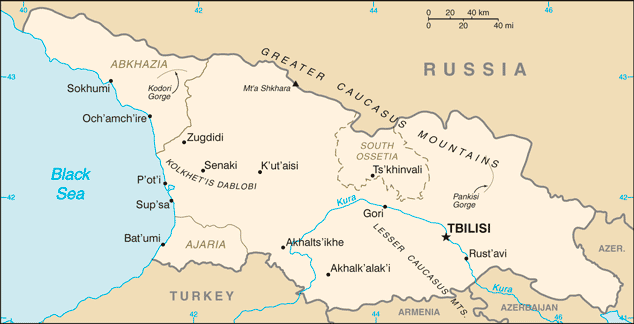
South Ossetia suspends referendum to join Russia

Georgia

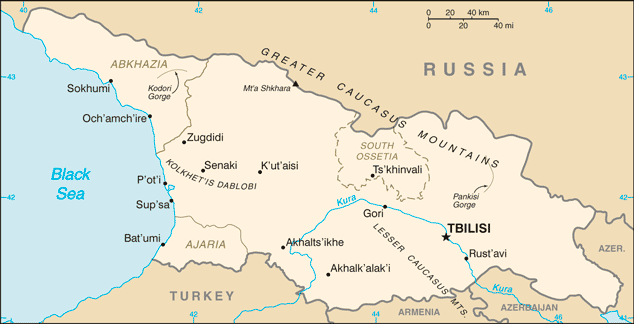
The de facto president of South Ossetia, Alan Gagloev, on May 30 suspended a planned referendum to determine whether the breakaway region of Georgia should join the Russian Federation. The referendum, scheduled for July, had been ordered by decree of Gagloev's predecessor Anatoly Bibilov, and was widely seen as a play to cement his grip on power. However, Bibilov lost his bid for reelection earlier in May, bringing his rival Gagloev to the presidency. In calling off the vote, Gagloev said that the Kremlin must be consulted on "issues related to the further integration of South Ossetia and the Russian Federation." Georgian officials had denounced any moves by South Ossetia to join Russia as "unacceptable."

Russia recognized South Ossetia and another region, Abkhazia, as independent countries after fighting a brief war with Georgia in 2008. Moscow maintains thousands of troops in both regions. Syria, Venezuela, Nauru, and Nicaragua are the only other nations that recognize the two regions' independence from Georgia. The Georgian government has said that "it is unacceptable to discuss any referendums while Georgia's territory is occupied by Russia." (Jurist, Civil.ge, Civil.ge, Moscow Times, RFE/RL)

Map: PLC

Podcast: whither Khazaria?

Khazaria

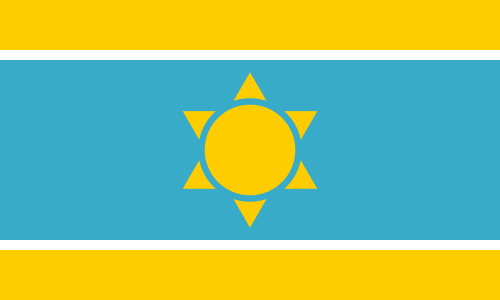
In Episode 123 of the CounterVortex podcast, Bill Weinberg discusses the history of Khazaria, the medieval Turko-Jewish empire in what is now southern Russia and eastern Ukraine. While the fate of the mysterious Khazars has won much attention from scholars—and controversy—because of what it may reveal about the origin of the Jews of Eastern Europe, this question also touches on the origins of the Ukrainian people and state. Whatever the validity of the "Khazar Thesis" about the ethnogenesis of the Ashkenazim, it is the Ukrainian Jews—such as President Volodymyr Zelensky—who are the most likely to trace a lineage to the Khazars. In 2021, Zelenksy and the Ukrainian parliament passed a law recognizing the cultural and autonomous rights of three indigenous peoples of the Russian-annexed Crimean Peninsula: the Muslim Tatars and the Jewish Krymchaks and Karaites. Of any Jews on Earth, it is these last two groups that have the best claim to the Khazar inheritance—and are now a part of the struggle for a free and multicultural Ukraine, in repudiation of the Russian neo-imperialist project. Listen on SoundCloud or via Patreon.

Books discussed: The Jews of Khazaria by Kevin Alan Brook; The Thirteenth Tribe: The Khazar Empire and its Heritage by Arthur Koestler; The Kuzari: In Defense of the Despised Faith by Rabbi Yehuda HaLevi

Research assistance: David Bloom

Production by Chris Rywalt

We ask listeners to donate just $1 per weekly podcast via Patreon—or $2 for our new special offer! We now have 36 subscribers. If you appreciate our work, please become Number 37!

Fanciful rendering of Khazaria flag via AlternateHistory.com

Afghanistan: Taliban diktat imposes burqa

burqa

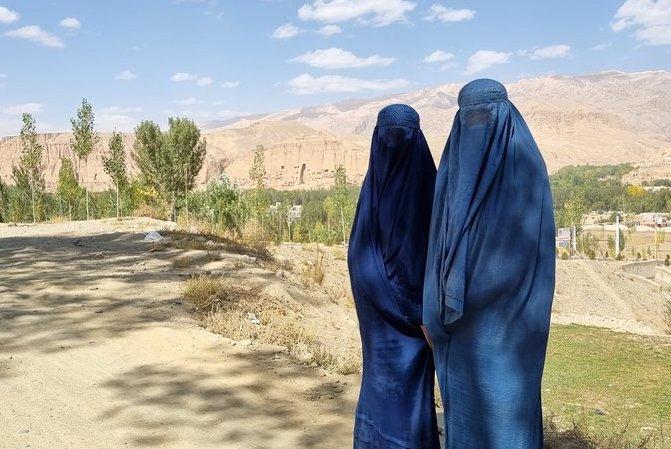
At a May 7 press conference in Kabul, the Ministry for the Propagation of Virtue & Prevention of Vice released an order from Taliban supreme leader Hibatullah Akhundzada, stating that women outside the home must cover their faces. The all-encompassing blue burqa, or chadari, which became a global symbol of the Taliban's previous extremist rule from 1996 to 2001, was proposed as a suitable covering. The text of the decree calls such covering "obligatory" for all "mature and noble" women. The mandate is imposed "in order to avoid provocation when meeting men who are not mahram," or immediate family. Tellingly, the order does not impose penalties on women themselves but on their male guardians. The fathers and husbands of women accused of going barefaced are to be summoned and, on repeat offenses, fired from government jobs or imprisoned.

The news was met with dismay by women's rights advocates. "So much pain & grief for women of my country, my heart is exploding," tweeted leading Afghan voice for human rights Shaharzad Akbar, who now lives in exile. (Khaama Press, Jurist, NPR)

See our last reports on the politics of the hijab, and the women's struggle in Afghanistan.

Photo: Khaama Press

Confused DRC peace dialogue in Kenya

DRC

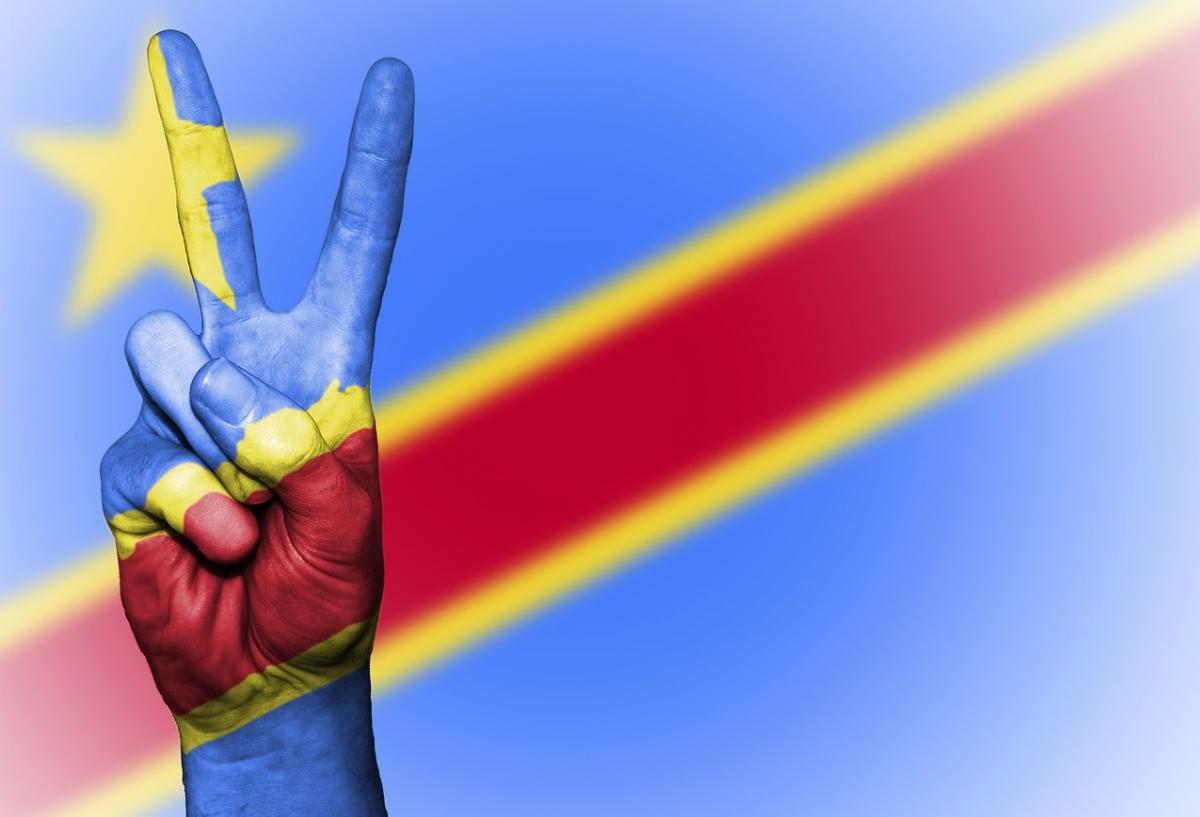
The first round of talks between armed groups and the government of the Democratic Republic of the Congo concluded April 28 in Nairobi. The Islamist Allied Democratic Forces (ADF) wasn't invited, however, while the Ituri-based CODECO was approached but didn't attend. M23 representatives were meanwhile ordered out after their forces resumed clashes with the DRC military. The list of participants was initially unclear and analysts seemed confused by the meeting's strategy as rebels arrived in dribs and drabs.

The talks followed an East African Community summit in which heads of state agreed to set up a regional military force to fight rebels unwilling to lay down their arms—or return home, in the case of foreign groups. A UN peacekeeping mission operates in the DRC but is making drawdown plans. The Ugandan army is also intervening in the country, while martial law has been declared in the volatile eastern provinces of Ituri and North Kivu since May 2021. Still, rebel attacks and abuses by soldiers continue, and nearly three million people were displaced last year alone.

From The New Humanitarian, April 29

Image: Pixabay

Win for Nicaragua in maritime dispute with Colombia

San Andres

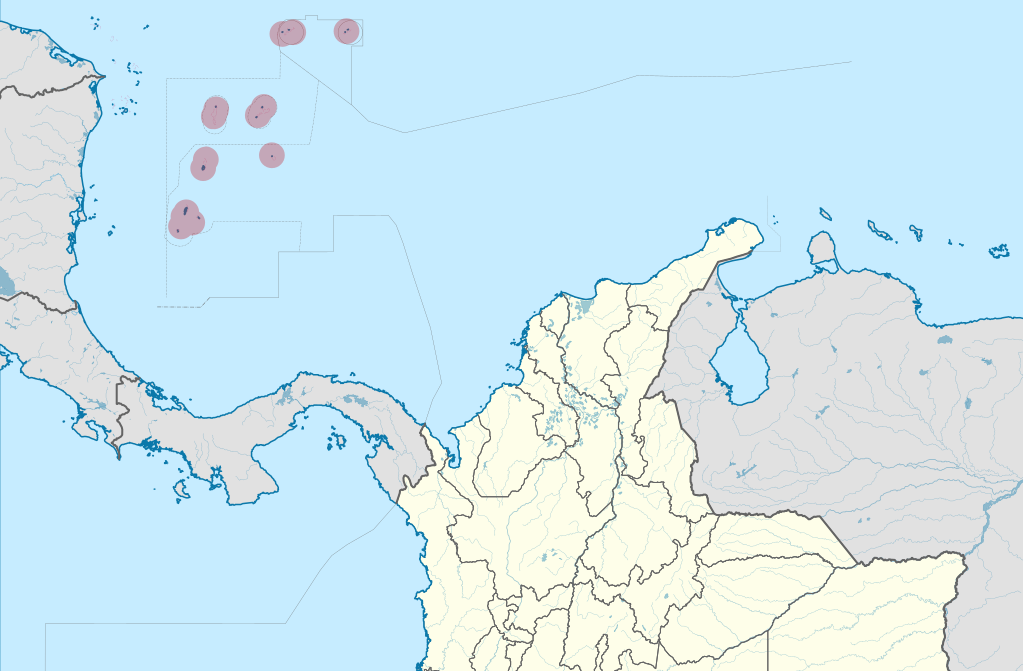
The International Court of Justice (ICJ) at The Hague on April 21 ruled that Colombia must end its "interference" in parts of the Caribbean off the coast of Nicaragua, and bring under control fishing and other activities in the zone. This culminates a long conflict between Nicaragua and Colombia. In two rulings in 2007 and 2012, the ICJ recognized the sovereignty of Colombia in the islands constituting the Archipelago of San Andrés. However, the rulings also recognized the jurisdiction of Nicaragua in the surrounding waters. Colombia continued its activities in those waters, prompting Nicaragua to file a new complaint with the Court in 2013. Colombia argued that its actions were necessary to fight drug trafficking and secure environmental protection of the waters. In its new ruling, the ICJ found that these waters are within the exclusive economic zone of Nicaragua, and the "intervention" of another state is contrary to international law.

From Jurist, April 22. Used with permission.

Note: Colombia rejected the previous ICJ rulings on the matter. Neither Colombia nor Nicaragua have recognized the claims of the independence movement that has emerged in the Archipelago. 

Map: Wikipedia

EU ends Mali training as junta turns to Russia

EUTM

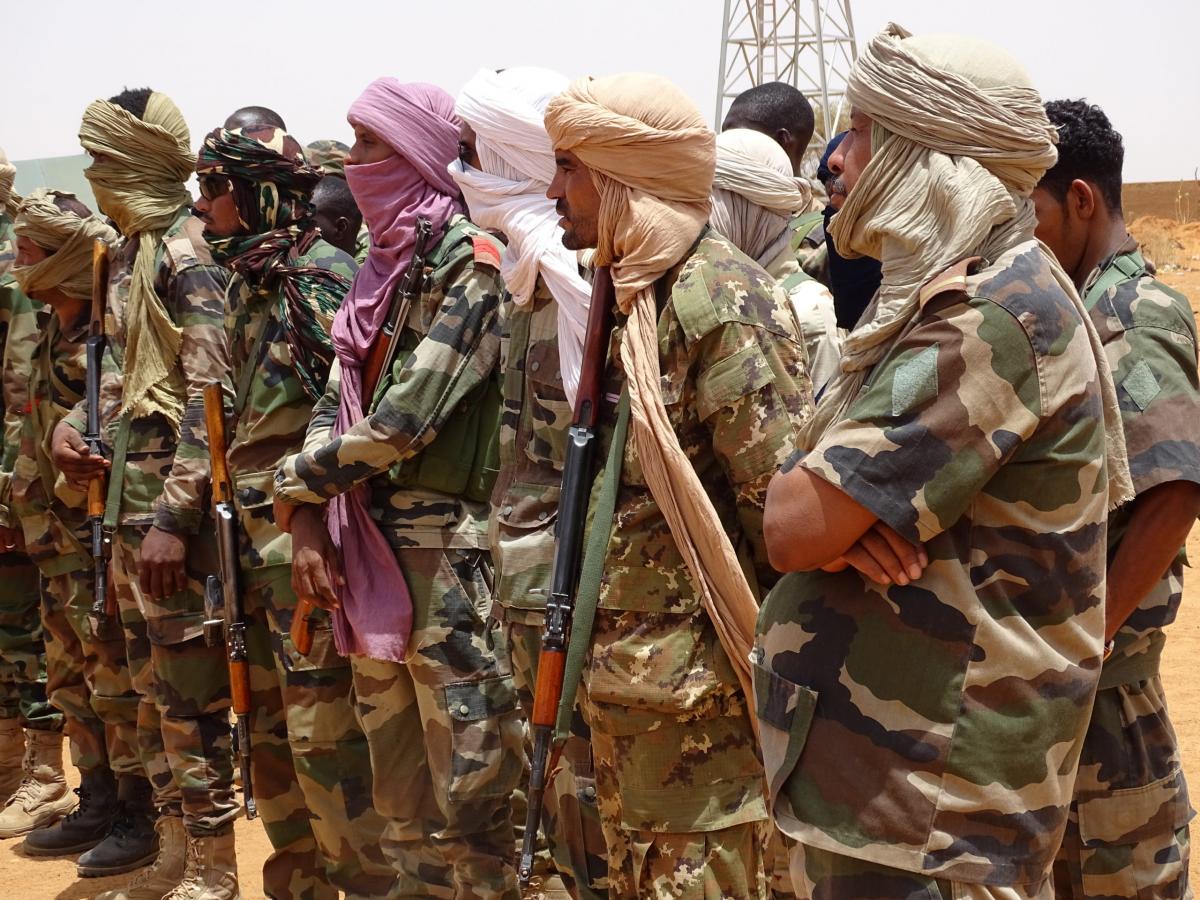
The European Union announced April 11 that it is halting its military training mission in Mali, citing the presence of Russian mercenaries from the Wagner Group, who are said to have committed a slew of abuses in recent weeks alongside the Malian armed forces. The training mission, known as EUTM Mali, was launched in 2013 to help restore state authority after much of the country's north had been captured by jihadist and separatist rebels. Thousands of Malian troops benefited from courses, although the soldiers were not vetted for involvement in rights abuses before their training, or monitored for violations after. The EU was therefore accused of supporting an army that has killed more civilians than jihadists in some years. The EUTM suspension comes two months after France announced the withdrawal of its counter-jihadist forces in Mali following its feud with the country's ruling junta. Humanitarian needs are deepening amid the diplomatic and security shifts, while rights abuses have exploded since Wagner Group's arrival.

From The New Humanitarian, April 15

Note: The Wagner Group is accused in the massacre of some 300 non-combatants tr a town in central Mali last month.

Photo of Malian troops with EU advisors via EUTM Mali

Podcast: the looming breakup of Russia

Russia

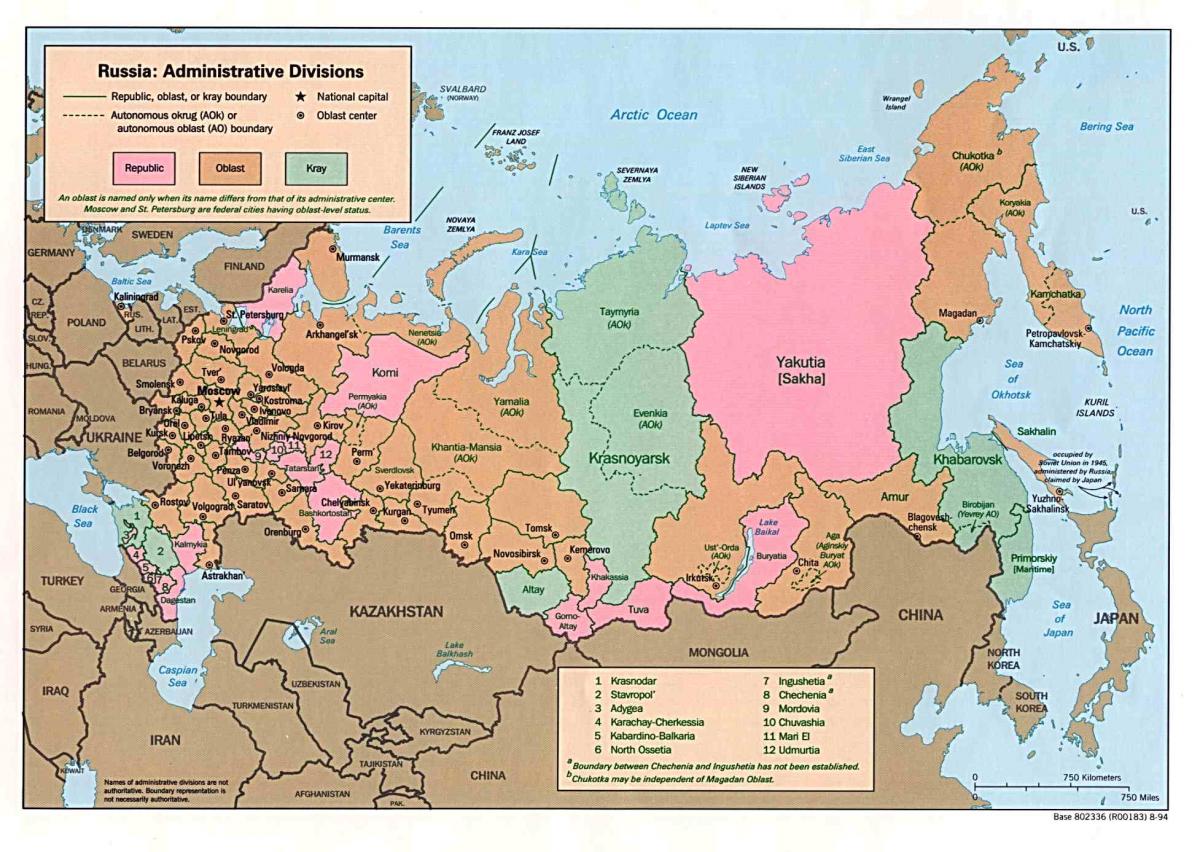
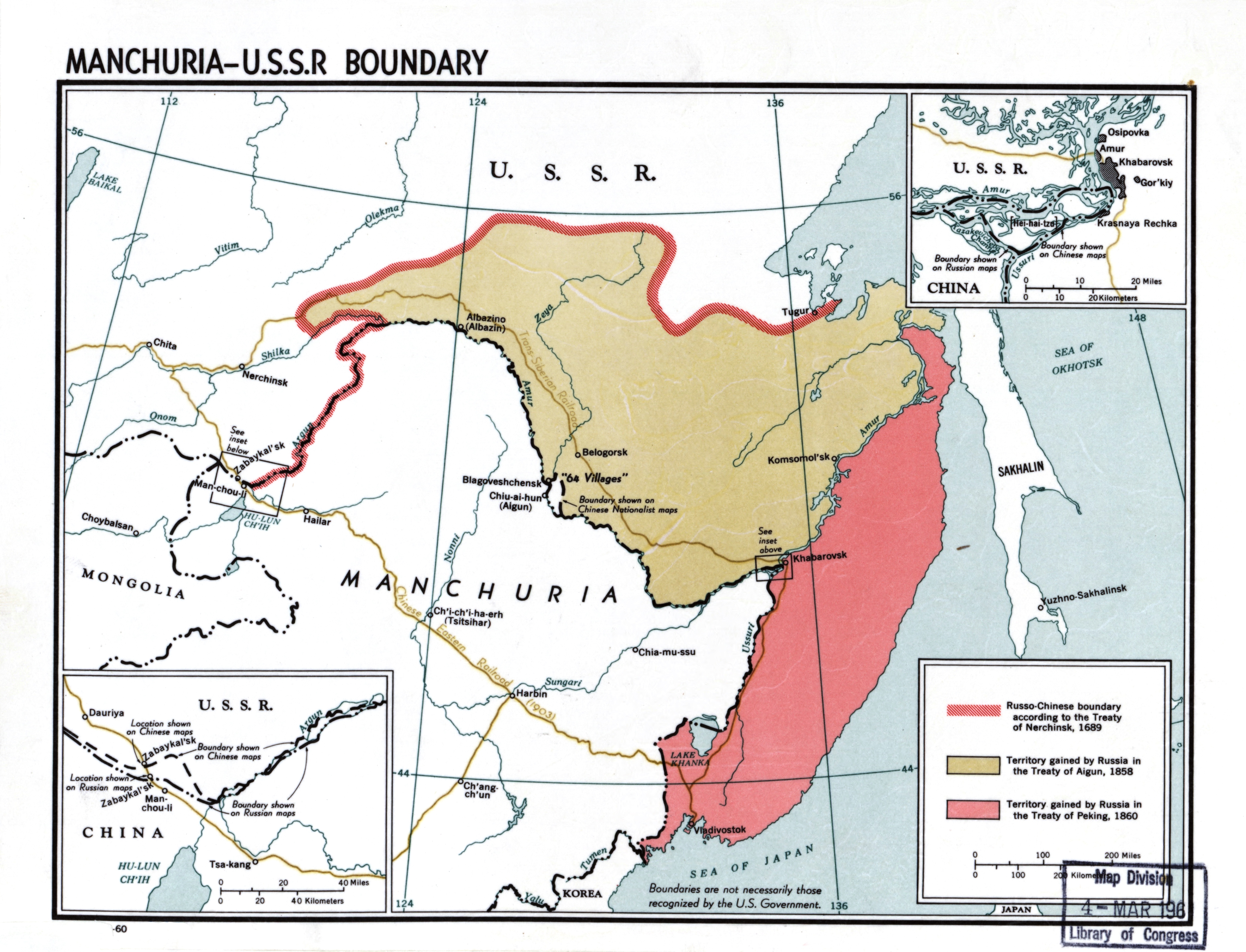
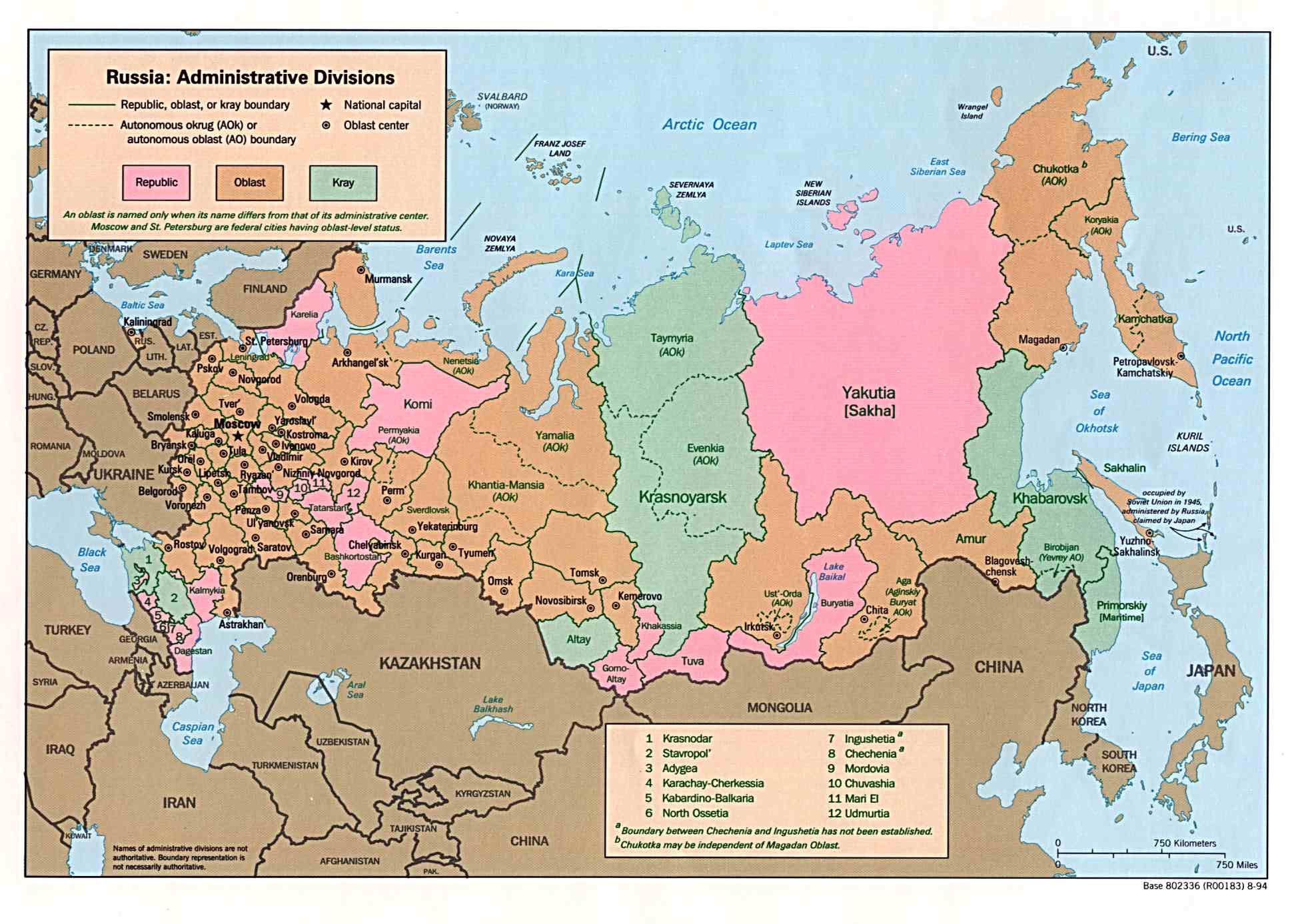
In Episode 118 of the CounterVortex podcast, Bill Weinberg explores the possibility that Putin's criminal adventure in Ukraine could backfire horribly, actually portending the implosion of the Russian Federation into its constituent entities, the "autonomous" republics, oblasts and krais. Troops from Russia's Far East were apparently involved in the horrific massacre at the Kyiv suburb of Bucha. But indigenous leaders from Siberia and the Russian Arctic are breaking with Moscow over the Ukraine war. Rumblings of separatist sentiment are now heard from Yakutia (Sakha), Khabarovsk, Kalmykia, Kamchatka, Tatarstan, Tuva, the Altai Republic, and the entirety of Siberia. China, which controlled much of what is now the Russian Far East until the 1850s, has its own expansionist designs on the region. Frederick Engels called for the "destruction forever" of Russia during the Crimean War, but it may collapse due to its own internal contradictions rather than Western aggression.

Listen on SoundCloud or via Patreon.

Books discussed: The Soviet Myth of World War II: Patriotic Memory and the Russian Question in the USSR by Jonathan Brunstedt; The Coming War Between Russia and China by Harrison E. Salisbury; The Breakdown of Nations by Leopold Kohr

Production by Chris Rywalt

We ask listeners to donate just $1 per weekly podcast via Patreon—or $2 for our new special offer! We now have 31 subscribers. If you appreciate our work, please become Number 32!

Map: PCL

Podcast: against pseudo-pacifist war propaganda

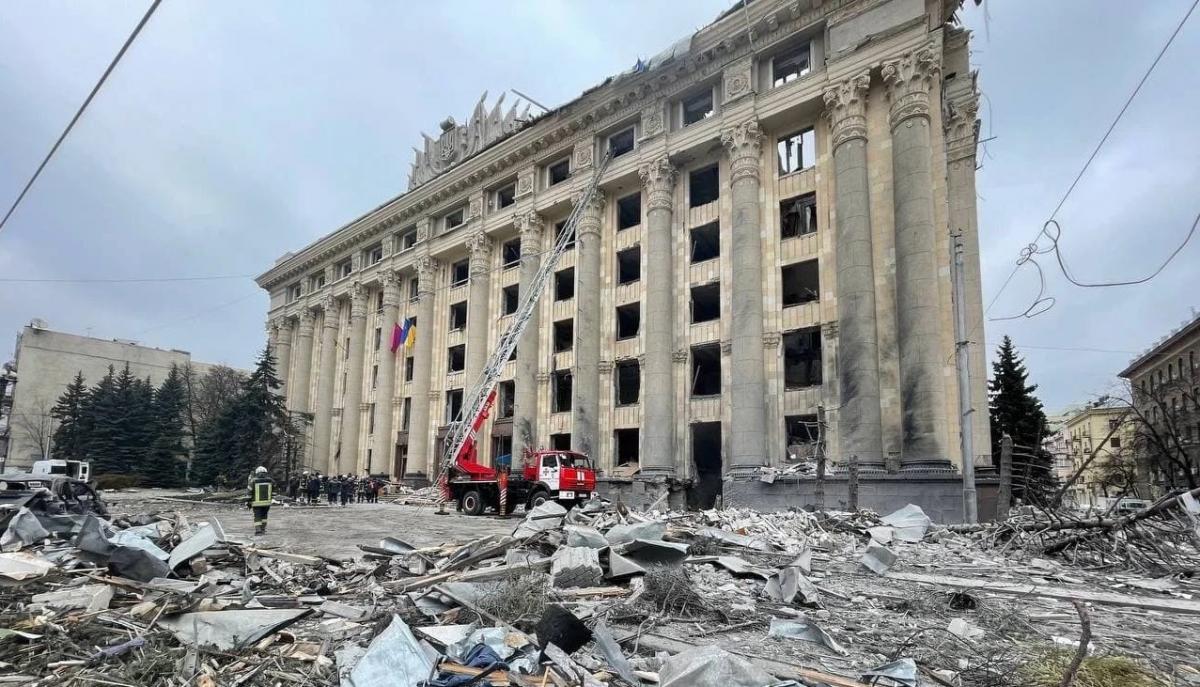
Kharkiv

In Episode 114 of the CounterVortex podcast, Bill Weinberg continues to dissect Vladimir Putin's cynical fascist pseudo-anti-fascism—now abetted by pseudo-pacifist war propaganda. "Anti-war" voices in the West join with Putin in relentlessly portraying Ukraine as a neo-Nazi state on the dubious basis of right-wing paramilitary groups on the Ukrainian side—while turning a blind eye to the totalizing dictatorship now unfolding in Russia, and the plethora of equally ugly right-wing paramilitary groups on the Russian side. The inevitable Noam Chomsky sees fit to protest a hypothetical No-Fly Zone (which has been rejected by NATO) rather than Russia's very real bombardment and aggressive war against Ukraine. "Anti-war" clicktivists are also avidly sharing a video from the right-wing pundit John Mearsheimer, who essentially blames the Ukrainians for getting invaded. "Leftists" closing ranks with their supposed right-wing enemies behind Putin's illegal war of aggression reveals the growing hegemony of Red-Brown Politics, and recalls George Orwell's observation that pacifism "is secretly inspired by an admiration for power and successful cruelty." 

Also: legacy of Taras Shevchenko.

Listen on SoundCloud or via Patreon.

Production by Chris Rywalt

We ask listeners to donate just $1 per weekly podcast via Patreon—or $2 for our new special offer! We now have 29 subscribers. If you appreciate our work, please become Number 30!

Photo via Wiadomosci

New wave of anti-war protest sweeps across Russia

anti-war

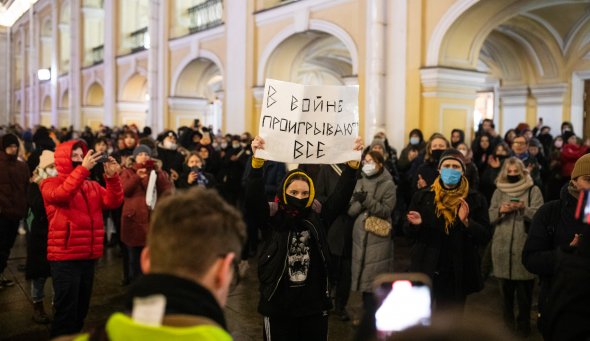
Police detained more than 4,300 people in over 50 cities across Russia on March 6, as activists mounted a second wave of protests against the invasion of Ukraine. From Moscow and St. Petersburg to the Siberian city of Irkutsk and the Pacific port of Vladivostok, thousands of unpermitted demonstrators chanted "No to war!" and "Shame on you!"—a message directed at President Vladimir Putin. In the Urals city of Yekaterinburg, a mural glorifying Putin was defaced—prompting a charge by the riot police. The independent monitoring group OVD-Info reports that over 8,000 have now been arrested in anti-war protests across Russia since the Ukraine invasion was launched last week.

Since the first wave of protests on Feb. 25, the Duma has passed a law imposing a 15-year prison term for anyone who opposes the war—or even calls it a "war." Reporters have been arrested for defying the edict that the invasion only be referred to as a "military operation."

"The screws are being fully tightened—essentially we are witnessing military censorship," OVD-Info's Maria Kuznetsova told Reuters by telephone from Tbilisi, the Georgian capital. (Al Jazeera, NPR, BBC News)

On March 4, the entire staff of Russian television station Dozhd (also online in English as TV Rain) resigned live on-air after declaring "No to war" in their final broadcast. The decision was taken by the staff and management alike after authorities suspended the channel's operations over its coverage of the Ukraine war. (NDTV)

Anti-war protests have also spread to Belarus, which is serving as a staging ground for Russia's invasion of Ukraine.

Photo: protesters in St. Petersburg. Sign reads "In war we will lose everything." Via  OVD-Info

Anti-war protests sweep across Russia

antiwar

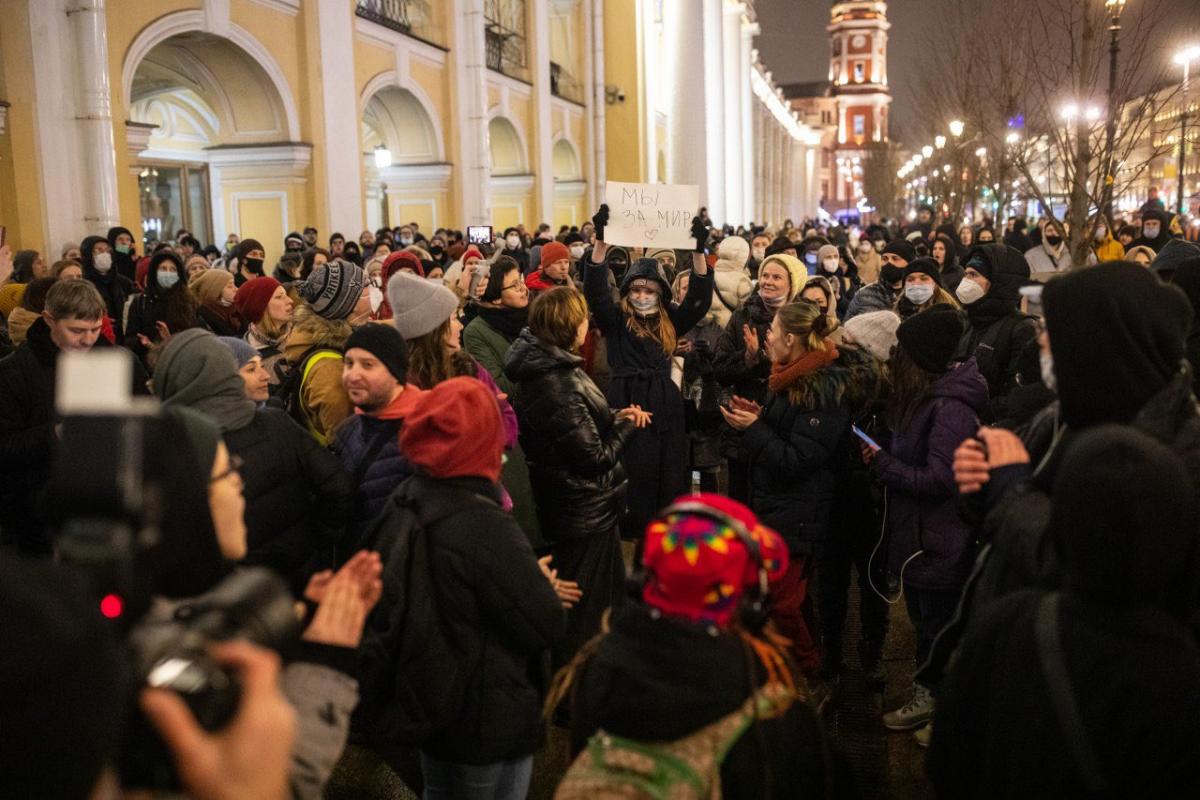
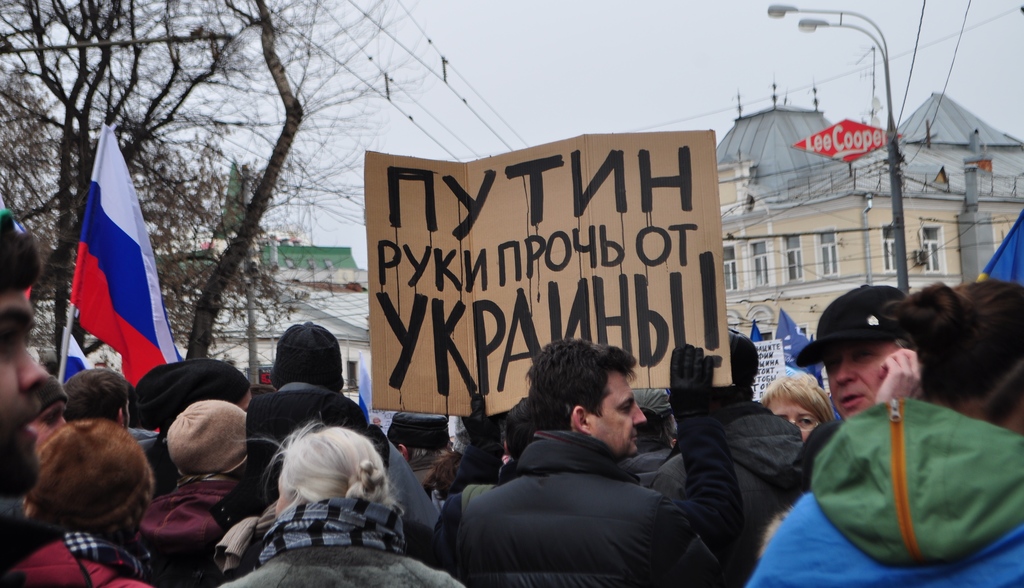
Thousands of people have taken to the streets of cities across Russia in open protest of Putin's invasion of Ukraine—from Kaliningrad in the west to Vladivostok in the east. What began as isolated "solo pickets"—essentially the only legal form of public protest in Russia—quickly snowballed into mass unpermitted marches and rallies. The largest demonstrations were reported from Moscow and St Petersburg, where they were met with riot police in full body armor. In Moscow, Red Square was closed off by military vehicles, preventing protesters from marching on the seat of government power. Independent monitoring group OVD-Info counted some 1,800 protesters arrested by security forces in some 60 cities, including Tyumen, Kazan, Rostov-on-Don, Novgorod, Novosibirsk, Irkutsk and Yekaterinburg. Popular slogans include "No to war" and "Hands off Ukraine." Many demonstrators were heard to shout "Arrest Putin, not me!" as they were dragged away by police. (Euronews, Moscow Times, Al Jazeera, Al Jazeera, The Guardian, LBC, CBC, NYT, OVD-Info, OVD-Info)

One prominent opposition activist who called for anti-war protests was detained by police at her home in Moscow Feb. 24. Marina Litvinovich had just posted a video statement on Facebook, saying: "I know that many of you right now feel desperate, powerless, and ashamed over the attack by Vladimir Putin on the friendly people of Ukraine. But I call on you not to despair, and to come out to the central squares of your cities at 7 PM today and clearly and explicitly say that we, the people of Russia, are against the war unleashed by Putin." (Reuters, RFE/RL)

Russian authorities have since then restricted access to Facebook, with communications regulator Roskomnadzor accusing the network of "censorship" and violating "the rights and freedoms of Russian citizens."  Facebook said it had refused Russian demands to stop fact-checking and labelling of content from state-controlled news sources. (BBC News)

The popular Russian rap artist Miron Fyodorov, known by his stage name Oxxxymiron, announced that he has canceled six sold-out concerts in Moscow and St. Petersburg in protest of the war. "I cannot entertain you when Russian missiles are falling on Ukraine," he said in a statement on his Instagram page. "When residents of Kyiv are forced to hide in basements and in the metro, while people are dying." He called upon Russians to mount an anti-war movement akin to the US movement against the war in Vietnam in the 1960s. (Pitchfork, NYT)

Before the invasion actually began, there had been few voices of anti-war dissent in Russia, a testament to the current atmosphere of totalizing repression in Russia.

Photo of St Petersburg protest: OVD-Info

EU sanctions over Russian elections in annexed Crimea

Crimea

The European Union imposed new sanctions Feb. 21 on five Russian individuals involved in elections in the Crimean peninsula. The EU sanctions framework was established in March 2014, when Russian forces invaded and annexed the peninsula from Ukraine. At the time, the EU declared the move a "clear violation of Ukraine's sovereignty and territorial integrity by acts of aggression by the Russian armed forces." The new sanctions target five individuals responsible for election of members to represent the annexed peninsula in the Russian Duma. Three of the individuals are newly elected Duma representatives for the Crimean cty of Sevastopol. The other two are the head and deputy head of the Sevastopol electoral commission. The elections took place on Sept. 19, 2021.

The new sanctions impose an asset freeze and travel ban on all five individuals. This means that sanctioned individuals are prohibited from accessing EU funds and are no longer able to enter or travel through EU territories. With the new sanctions in place, the EU has now issued a total of 241 sanctions against persons and entities found to be involved in attacks on Ukraine's territorial sovereignty.

The EU has refused to recognize Russia's annexation of Crimea and Sevastopol as legitimate. In a statement regarding the new sanctions, the EU again emphasized this point and doubled down on its commitment to Ukraine's territorial sovereignty.

From Jurist, Feb. 22. Used with permission.

Map via Wikimedia Commons

Glimmers of anti-war dissent in Russia

anti-war

More than 100 Russian writers, activists and academics have signed a petition in protest of the war drive on Ukraine, which was published on the independent news site Echo of Moscow on Jan. 30. The "Declaration by supporters of peace against the Party of War in the Russian government" charges: "The citizens of Russia are…becoming prisoners of criminal adventurism." It has especially harsh words for Russia's state media: "On state TV there is only one point of view, and that is the point of view of the supporters of war… [A]ggression pours out, and hate towards Ukraine, America, and Western countries… [W]ar is treated as an acceptable and inevitable development of events."

Ironically, this was reported by Kremlin state media outlet RT, which does not fail to remind us that one of the initiators of the petition, human rights advocate Lev Ponomaryov, "has been labeled a 'foreign agent' by Moscow's Ministry of Justice over links to funding from abroad." (RT does fail to mention that in addition to being thusly labeled, Ponomaryov was also imprisoned in 2018 for a Facebook post calling for peaceful protests on behalf of jailed activists.) Other signatories include Boris Vishnevksy, a leader of the liberal opposition party Yabloko, and Lev Gudkov of the Levada Center think-tank—who RT emphasizes is also officially designated a "foreign agent."

The comments from RT's readers are perfectly predictable: "Almost sure that Victoria Nuland, CIA and NED are behind this petition signatories." "Is 100 imbeciles even news?" Et cetera.

The US State Department-linked Radio Free Europe/Radio Liberty reported last March that Ponomaryov was forced to shut down his organization For Human Rights after being labelled a "foreign agent." In September, RFE/RL reported that the walls of the Moscow apartment bloc where Ponomaryov lives were vandalized with "hate messages" on his 80th birthday. Spray-paint reading "Hide-out for the defender of terrorists" was scrawled on the wall outside his flat. Ponomaryov greeted the graffiti defiantly, calling the scrawlings "congratulatory messages" and a "gift." 

The UK's openDemocracy recalls that mass protests were held in Moscow in March 2014, when Putin's last Ukraine intervention was launched—in contrast to the relative silence this time around. Interviewed is Sergei Davidis, a board member of the Memorial Human Rights Center, who has this to say about the difference between 2014 and now: "Russia's repressive apparatus has tightened the screws on society even further. Both the scale and cruelty of repressions against protesters and activists have grown."

The Memorial Human Rights Center is also now threatened with closure under the "foreign agents law." Strangely, amid all this, the Kremlin media machine continues to be looked to as some kind of positive "alternative" by "anti-war" (sic) types in the West. 

Photo: Sign reads "Putin, hands off Ukraine!" Moscow, March 2014. Via RS21

Another climate ‘wake-up call’ for southern Africa

Mozambique

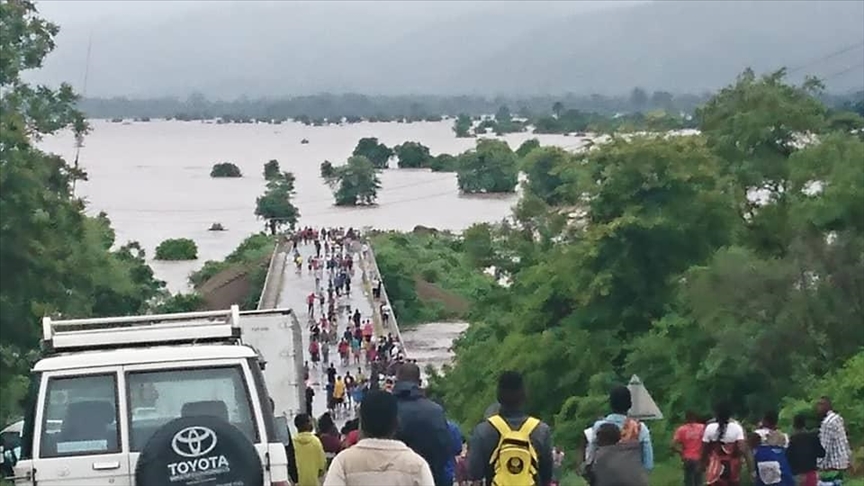
Tropical Storm Ana battered three southern African countries this week, killing more than 70 people, washing away houses and infrastructure, and leaving around 350,000 people homeless and without public services. Ana began over Madagascar's eastern Analamanga region on Jan. 24, with wind speeds of up to 100 kmph, causing flooding and landslides that killed more than 40 people and forced 72,000 from their homes. It then made landfall in Mozambique, causing significant damage to the central provinces of Zambezia, Nampula and Tete, and leaving at least 15 people dead. Next hit was Malawi on Jan. 25, where 19 were killed and more than 217,000 people fled their homes. The storm downed power lines and forced the closure of the country's main hydropower plant. That also affected water pumping stations, resulting in water shortages in the main cities of Blantyre, Zomba, Lilongwe and Mzuzu. A new storm, Batsirai, is brewing in the Indian Ocean and may follow a similar path.

From The New Humanitarian, Jan. 29

Note: When southern Africa was devastated by Tropical Cyclone Eloise exactly a year earlier, the UN regional coordinator warned that the "yearly rendezvous with the cyclonic season" has become a "wake-up call" on the impacts of climate change.

Photo: Malawi Red Cross

Mining disaster wipes out community in Ghana

Apiate

A rural community in Ghana's Western Region was virtually flattened Jan. 20 when a truck carrying explosives to a gold mine collided with a motorcycle, setting off a massive blast. Some 40 have been hospitalized, and the official death toll of 17 is expected to rise. The truck, owned by a local mining services company called Maxam, was en route to the Chirano gold mine, operated by Toronto-based Kinross Gold. The explosion left a huge crater and reduced dozens of buildings to dust-covered piles of wood and metal in the community of Apiate, near the city of Bogoso, some 300 kilometers west of the capital Accra. Isaac Dasmani, chief executive of Prestea Huni-Valley municipality, told local media "the whole community is gone" after the blast. (Mining.com, RFI, TRT World, Reuters)

Kinross Gold has operations across West Africa.

Photo: Prestea Huni-Valley Municipal Assembly via Mining.com

Migrant protest camp broken up in Libya

Tripoli protest

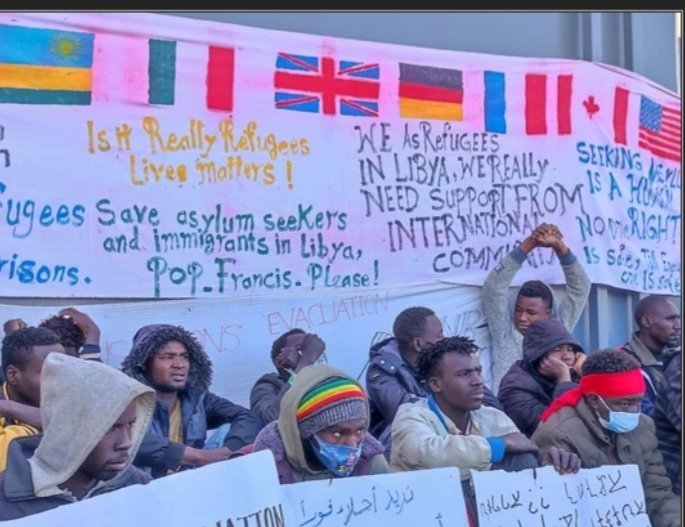
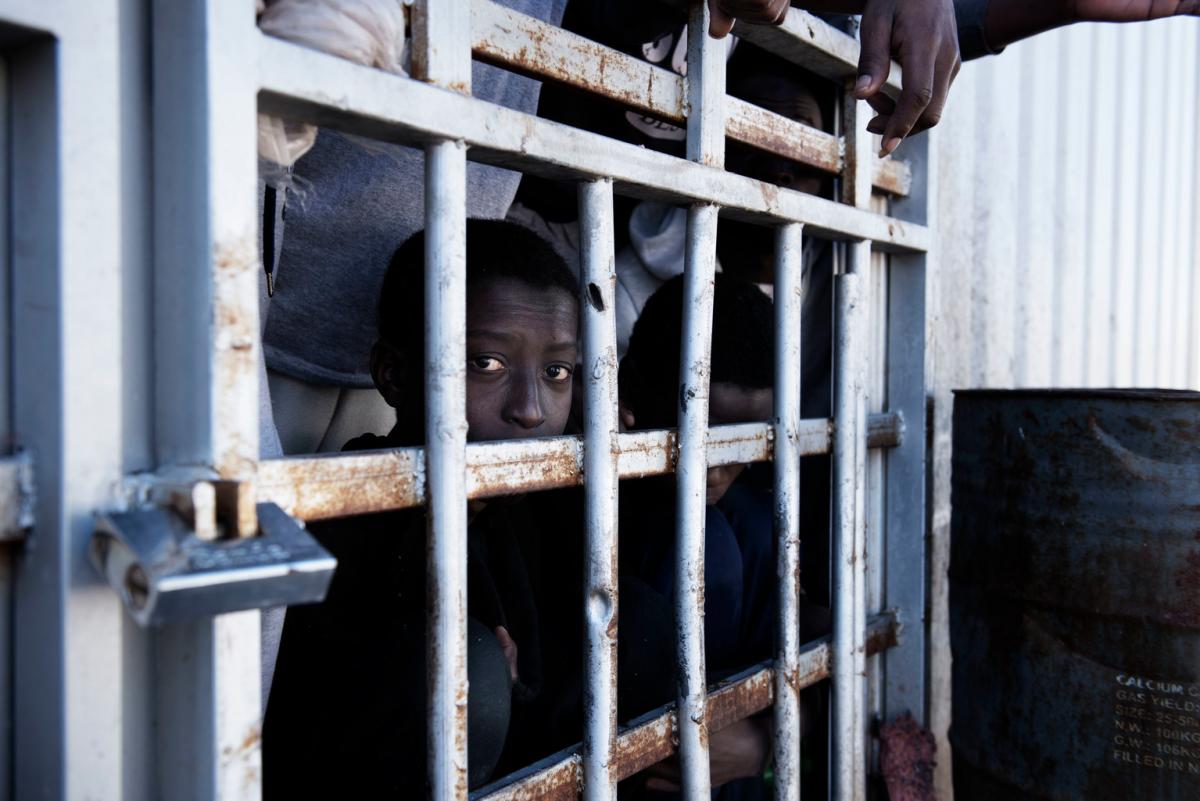
More than 600 asylum-seekers and migrants were detained on Jan. 10 when Libyan security forces cleared a protest encampment in front of an aid center run by the United Nations refugee agency, UNHCR, in the capital city of Tripoli. The protesters—who were asking for protection, and evacuation from Libya—had been camped out since last October, when Libyan security forces violently rounded up more than 5,000 asylum-seekers and migrants, forcing them into notoriously grim detention centers. Before the raid on the protest camp, UNHCR permanently closed the center in Tripoli, leaving thousands without humanitarian assistance. The Norwegian Refugee Council said the most recent arrests were the "culmination of a disastrous situation," and Médecins Sans Frontières called on the EU to "stop supporting…an unending system of detention, abuse, and violence in Libya." The EU backs the Libyan Coast Guard, which intercepted more than 32,000 asylum-seekers and migrants at sea last year, returning them to detention centers. 

From The New Humanitarian, Jan. 14. Used with permission.

See our last report on the migrant crackdown in Libya.

Photo: Kaka Fur via InfoMigrants

Anti-war protests in northeast Colombia

Arauca

Rural communities in Colombia's northeastern Arauca department held anti-war protests amid inter-factional guerilla violence that has been terrorizing the region. Demanding attention from the government and international human rights organizations, some 1,200 marched in the hamlet of Puerto Jordan on Jan. 4, and another 500 in nearby Botalón, both in Tame municipality. Mayerly Briceño, an organizer of the protests in Tame, told El Espectador: "The state has no presence here, absolutely none; they only come here to protect the oil companies, to safeguard the petroleum. This is not about them coming to militarize… More zones are leaving behind fear and taking to the streets to demand peace. It is the only thing we can do as a people, to demand that peace comes to our territory." 

The previous days had seen an outbreak of fighting in the area between the National Liberation Army (ELN) and "dissident" factions of the demobilized FARC guerillas that have refused to lay down arms, in defiance of a 2016 peace agreement. At least 23 were killed in the clashes, which were said to be over control of smuggling routes across the nearby Venezuelan border. Reports were unclear on how many of the slain were combatants. About a dozen local families were also forced to flee their homes. Colombia's official human rights ombudsman, the Defensoria de Pueblo, expressed "deep concern for the escalation of the armed conflict in Arauca, due to the confrontations between illegal armed groups that put the civilian population at imminent risk." (Colombia Reports, Al Jazeera)

Colombian authorities are calling upon Argentina to extradite Roberto Jorge Rigoni, a former official of the Italian oil services company SICIM, who is accused of making protection payments to the ELN over the past years to avoid attacks on the Bicentenario Pipeline, a new artery for export of the region's oil. (El Espectador)

Photo: Arauca Online via Colombia Reports

European rights court intervenes against Russia

memorial

Exercising a form of injunction reserved for exceptionally serious cases, the European Court of Human Rights (ECHR) has instructed Russia to halt efforts to shutter Memorial International and its subsidiary organization, the Court announced Dec. 29. The move follows two high-profile decisions by Russian courts this week to dissolve respected non-governmental organizations that were created to shed light on the victims of historical and contemporary political repression in the country.

On Dec. 28, the Russian Supreme Court ordered the liquidation of Memorial International, an organization that documents the crimes of the Soviet regime. The next day, the Moscow City Court ordered the closure of its subsidiary organization, the Memorial Human Rights Center, which focuses on claims of political persecution in present-day Russia. "Moscow City Court Judge Mikhail Kazakov…ruled in favor of Moscow prosecutors, ordering the liquidation of the Memorial Human Rights Center," the organization said in a statement, adding that it plans to appeal the judgment.

Both decisions were based on the country's controversial "foreign agent" law, which has in the past been used to pressure NGOs in the country—an issue brought to the fore in the ECHR complaint Ecodefence and others v. Russia, a case concerning one of Russia's oldest environmental groups, which is currently pending, and to which the two Memorial organizations are parties.

In the aftermath of these decisions, Memorial International and the Memorial Human Rights Center appealed to the Strasbourg-based ECHR to apply an interim measure preventing the dissolution orders from taking immediate effect. The ECHR has jurisdiction over Russia by virtue of the country’s 1998 ratification of the European Convention on Human Rights. The Court adjudicates cases between individual claimants and member states when the former accuse the latter of having violated their fundamental rights.

The procedural rules of the ECHR state that it can demand that parties to a pending action enact interim measures aimed at protecting rights or safeguarding procedural conduct. Court documents note that interim measures can only be enacted in cases "when the applicant would otherwise face a real risk of serious and irreversible harm."

The ECHR agreed to impose interim measures in response to the NGOs' requests in this case, stating that it had "decided to indicate to the Government of Russia…that…the enforcement of decisions to dissolve the applicant organizations should be suspended for a period that would be necessary for the Court to consider" the pending complaints. The Court warned that failure by Russia to comply with interim measures would place it in breach of its duties under the European Convention of Human Rights.

Memorial International was established in the twilight of the Soviet period to shed light on the victims of summary executions, gulags, famine and other atrocities of the era. Due to a combination of various factors, including archival access issues, poor record-keeping, and differing definitions of victim groups, historians have yet to reach a consensus on the number of casualties brought about by Soviet policies, but even the more charitable estimates are in the millions. Memorial International has played a key role in shining a light not only on the vast scale of these atrocities, but on the individuals whose lives were lost or forever altered by them. Memorial Human Rights Center focuses a lens on political repression in modern Russia by maintaining comprehensive lists of individuals it defines as political prisoners.

These organizations have been targeted against the backdrop of surging popular sentiment toward Soviet leader Josef Stalin. Respected independent pollster the Levada Center revealed earlier this year that some 56% of Russians now view Stalin as a "great leader," despite his legacy of political purges and other atrocities.

From Jurist, Dec. 30. Used with permission.

Note: We have been following the human rights crackdown in Russia here.

See more on Ecodefense and its activities here.

Photo via Critical Mass

‘Great Leap Backward’ for press freedom in China

Tiananmen

Reporters Without Borders (RSF) has issued a new report, The Great Leap Backwards of Journalism in China, revealing the extent of the regime's campaign of repression against the right to information. The report especially examines the deterioration of press freedom in Hong Kong, which was once a world model but has now seen an increasing number of journalists arrested in the name of "national security."

Throughout China, to receive and renew their press cards, journalists will soon have to undergo a 90-hour annual training partly focusing on "Xi Jinping Thought." Journalists are already required to download the "Study Xi, Strengthen the Country" propaganda application that can collect their personal data. 

At least 127 journalists (professional and non-professional) are currently detained by the regime. The simple act of investigating a "sensitive" topic or publishing censored information can result in years of detention. And the number of forbidden topics keeps rising. Not only those typically deemed "sensitive"—such as Tibet, Taiwan and the 1989 Tiananmen Square massacre—are subject to censorship, but now also natural disasters, the #MeToo movement, and the government's handling of the COVID-19 crisis. At least 10 journalists and online commentators were arrested in 2020 for attempting to inform the public about the COVID-19 crisis in Wuhan. To this date, two of them, Zhang Zhan and Fang Bin, are still detained.

The media blockade in Xinjiang remains in place, with ethnic Uyghur journalists and commentators especially targeted. Seventy-one Uyghur journalists are currently detained, comprising more than half of the journalists imprisoned in China.

And of course Hong Kong journalists are endangered by the new National Security Law. Deliberately vague, the law, imposed by Beijing on Hong Kong last year, has since been used to prosecute at least 12 journalists and press freedom defenders, including Apple Daily founder Jimmy Lai, all of whom risk life sentences.

The People's Republic of China ranks 177th out of 180 in the 2021 RSF World Press Freedom Index, only two spots above North Korea. The special administrative region of Hong Kong, once a bastion of press freedom, has slipped from 18th place upon the index's creation in 2002, to 80th place in 2021.

Worldwide trend
China is, alas, merely among the worst offenders in a global trend over the past years. A new report from the Committee to Protect Journalists (CPJ) finds that the number of reporters who are behind bars worldwide reached a global high in 2021. CPJ finds 293 journalists were imprisoned, at least 24 were killed as a result of their work, and another 18 died under mysterious circumstances as of Dec. 1 this year.

2021 marks the sixth consecutive year that CPJ has recorded over 250 imprisoned journalists worldwide. The finding signals "a growing intolerance of independent reporting." The report charges that "emboldened autocrats are increasingly ignoring due process and flouting international norms to keep themselves in power."

According to CPJ, the world's five worst jailers of journalists are China, Burma, Egypt, Vietnam and Belarus, with Turkey and Saudi Arabia close behind.

Photo: chinaworker.info

French troops hunt outlaw miners in Guiana

Guianas

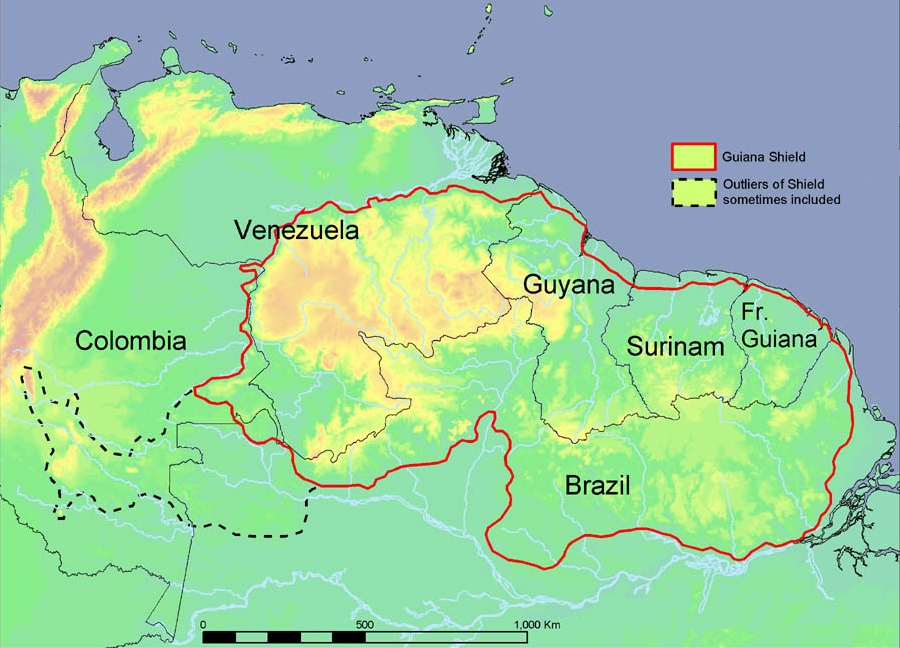
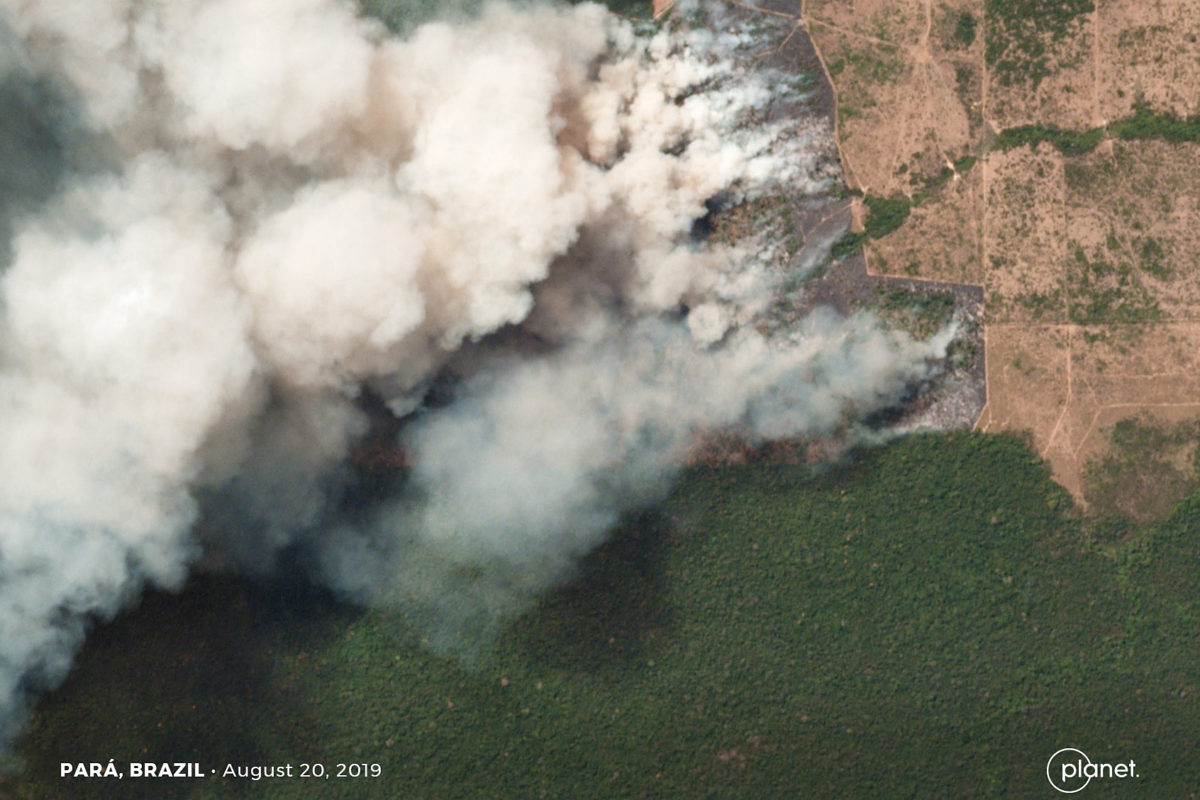
France has dispatched hundreds of army troops to the overseas territory of French Guiana, to hunt down outlaw gold miners who have destroyed thousands of hectares of rainforest along the Maroni River over the past months. But apprehending the garimpeiros is nearly impossible; they abandon their camps and dredges and melt into the jungle as the troops approach. Some 9,000 illegal miners are believed to be operating at around 150 sites across the territory—up from little more than 100 a decade ago. The garimpeiros, however, are the smallest links in a chain, paid a pittance—while the dealers they sell the gold to race up and down the river in speedboats. "We're only catching the little guys," admitted French Guiana's public prosecutor Samuel Finielz. (AFP)

Meanwhile in Brazil, President Jair Bolsonaro responded to weeks of mounting pressure by sending army troops to the Rio Madeira in Amazonas and Rondônia states, where a new "gold rush" has seen an sudden massive influx of garimpeiros, with hundreds of camps established. The two-month mission falls under Operation Samaúma, launched in June to combat insecurity in Brazil's vast and lawless stretch of the Amazon rainforest. 

Bolsonaro, who was a no-show at the Glasgow climate summit, has gutted environmental enforcement since taking office in 2019, ignoring invasions of protected public and indigenous lands by illegal miners, loggers and cattle ranchers. (Sky News, BBC News, The Guardian, SecomVc, Paraná Portal, Bem Paraná, Brasil de Fato)

Map of Guiana Shield: WikimediaCommons

‘Environmental uprising’ in Serbia —and Kosova

Belgrade

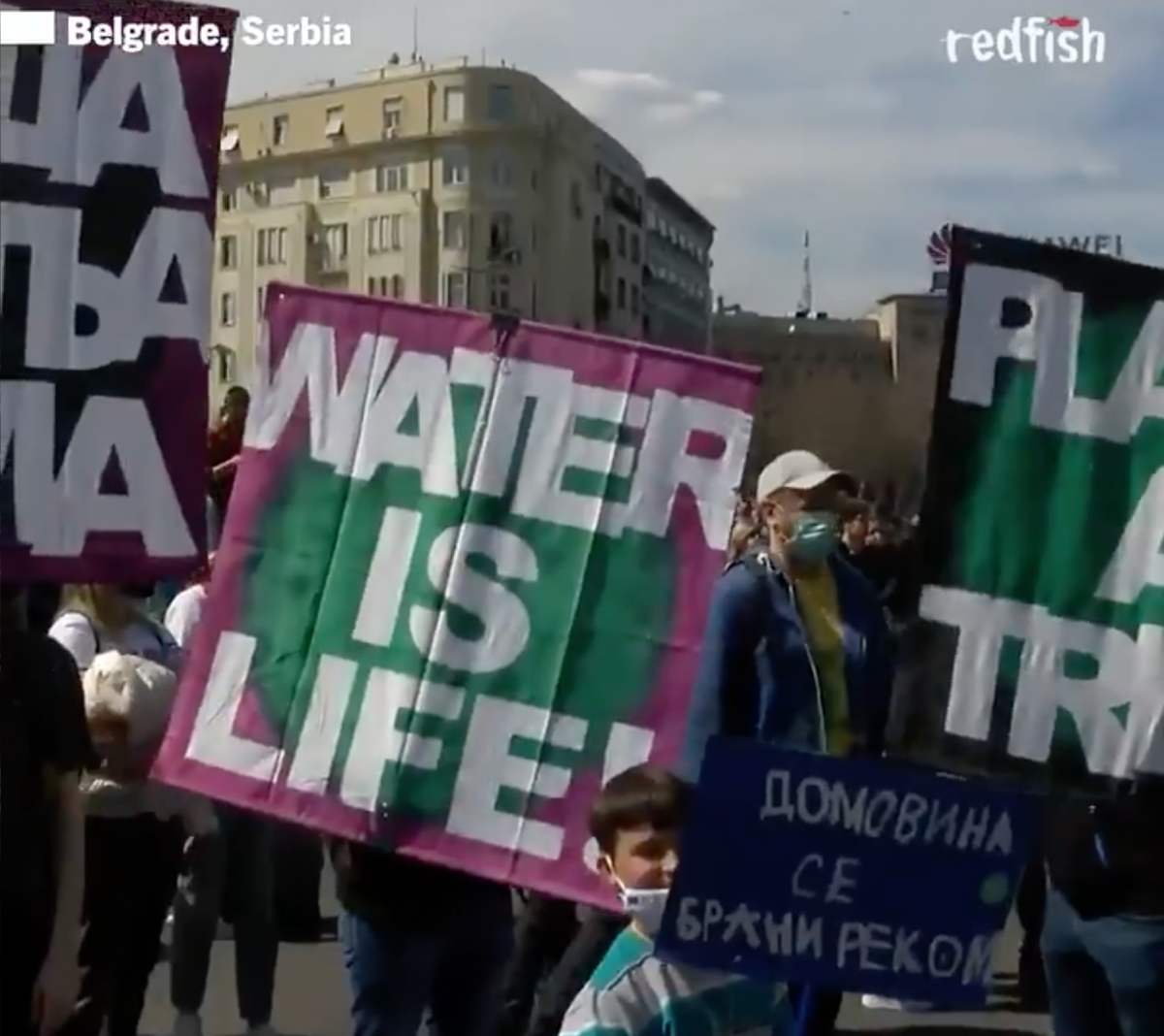
In what local media are calling an "environmental uprising," protesters blocked roads and occupied public squares in Belgrade and other towns across Serbia on Nov. 27 to oppose plans for a lithium mine at Loznica, on the Drina River. Anglo-Australian company Rio Tinto has been buying up land in the area, in anticipation of final approval of the project. But concerns over a toxic threat to local waters have sparked widespread outrage over the plan.

Civil society organizations are also angry over a recent reform of Serbia's referendum law, which they say is aimed at effectively stopping popular initiatives against polluting projects by imposing hefty administrative fees. They are also opposed to a new expropriation law, which allows mandatory sale of private lands to the state for development projects, with only eight days prior notice. (AFP, Al Jazeera, Balkan Insight)

Scattered clashes with police were reported during the Nov. 27 demonstrations. At the town of Šabac a group of unidentified masked men assaulted protesters at a road-block and attempted to drive a bulldozer through the human blockade. (European Western Balkans)

The legal reforms were clearly pushed through to facilitate a new thrust of mineral exploitation in Serbia. China's Zijin Mining Group just began operations at the Cukaru Peki copper and gold mine near the town of Bor. The project is anticipated to make Serbia Europe's second top copper producer after Russia.

But Zijin's plans for a mine at nearby Jama, also part of the overall Timok mega-project, were held up by a court order earlier this year. The court found the company failed to comply with environmental standards, and ordered construction of a waste water treatment plant before the facility can open. (Mining.com, Reuters)

Water is life —regardless of ethnicity
Meanwhile, across the border in Kosova, environmentalists claimed a victory Nov. 29 as the country's Supreme Court suspended the permit for the proposed Brezovica hydro-power plant on the Lepenc River. Legal challenge had been brought by the local Group for Legal & Political Studies (GLPS) and GAIA Kosovo. Over the past years, plans for the project, to be built by the private Matkos Group, have repeatedly sparked angry protests by residents of the nearby village known to ethnic Albanians as Shterpce and to Serbs as Štrpče. Albanians and Serbs alike came together to oppose the project, which would flood agricultural lands while depriving water to downstream communities. (BIRN, BIRN, Prishtina Insight)

Both the movements against the Loznica mine and Brezovica dam have adopted the slogan "Water is life." The protesters at Shterpce/Štrpče coming together across ethnic lines is a very significant sign of hope. Kosova declared independence from Serbia in 2008, nine years after a bitter war that pitted its ethnic Albanian and Serb populations against each other. Since then, many countries around the world—prominently excluding Serbia—have come to recognize Kosova's independence, but NATO continues to maintain a troop presence in the country. More than a generation after the outbreak of the last round of Balkan Wars, it looks like the peoples of the ex-Yugoslavia are starting to grasp an inevitable reality… The ethno-nationalist extremism that has caused so much suffering in the region has been concommitant with a loss of any real local control over land, labor and resouces to multi-national entities like Rio Tinto and Zijin Mining Group. And, a corollary: reclaiming any real local control will entail rebuilding cross-ethnic solidarity.

See our last post on the global lithium wars.

Photo: RedFish Media via Twitter

Book review: Underground Asia

Underground Asia

Underground Asia
Global Revolutionaries and the Assault on Empire
by Tim Harper
Harvard University Press, 2021

This dauntingly detailed book on the roots of Asia's anti-colonial movements documents the early influence of anarchism, and how it was ultimately displaced by nationalisms of different stripes.

India's advocate of old-fashioned bomb-throwing anarchism, Har Dayal, who met Emma Goldman in Berkeley in 1912, warned of a "dismal nationalism" that would result "only in a change of masters."

A turning point was the Moscow-sponsored Congress of the Peoples of the East, held in 1920 in Baku, Soviet Azerbaijan. This opened the era of Soviet support for (and cooptation of) Asian national liberation struggles. Ho Chi Minh and Indonesia's Tan Malaka exemplified the marriage of Leninism and nationalism.

The stamp of a Tolstoyan anarchism can still be seen in the movement of Mohandas Gandhi, but this would be superseded after his assassination. His assassin was an adherent of a different authoritarian nationalism—this one looking to the political right.

During World War II, Subhas Chandra Bose sought Axis aid for armed resistance against India's British rulers. Indian independence agitator Vinayak Savarkar, while imprisoned by the British in 1923, wrote the founding manifesto of the right-wing Hindutva movement which rules India today.

The early vision of a universalist, libertarian anti-colonialism evokes a tantalizing sense of what might have been. A timely book for a moment of re-emerging popular rebellion, from the militant farmer protests in India to the pro-democracy upsurges in Thailand, Burma and Hong Kong.

From the Fall edition of Fifth Estate.

Image: Harvard University Press

Crimes against humanity in Libya?

Libya

At least six people were killed and dozens more wounded by guards who opened fire at asylum seekers and migrants attempting to escape en masse from an overcrowded detention center in Tripoli on Oct. 8. This came after the Libyan authorities rounded up and detained at least 5,000 asylum seekers and migrants in the capital, starting on Oct. 1. Earlier this month, the UN Human Rights Council said it believes "crimes against humanity" have been committed in Libya's detention centers. So far this year, more than 26,000 migrants and asylum seekers have been intercepted by the EU-backed Libyan Coast Guard and returned to the centers, where they face a well-documented cycle of abuse. Despite the human rights concerns, the EU's executive body, the European Commission, is reportedly aiming to deliver new patrol boats to the Libyan Coast Guard.

From The New Humanitarian, Oct. 15

See our last report on the migrant crackdown in Libya.

Map: Perry-Castañeda Library

Drought deepens crisis in northeast Kenya

Kenya

Kenya is facing its worst drought in a decade, with 2.4 million people expected to be going hungry by November. The fast-emerging humanitarian crisis is not only the result of two consecutive poor rainy seasons in the Arid & Semi-Arid Lands region—an arc of under-developed territory in the north and east of the county. Needs are compounded by the COVID-19 pandemic, chronic insecurity, as well as by pests and other diseases. Household maize stocks are well below the five-year average, and both livestock productivity and milk production have fallen, driving up prices. A glut in the livestock market, as people sell off their animals, is further eroding pastoralists' earnings. They are already forced to walk longer distances in search of water and forage, resulting in a spike in inter-communal tensions. Upcoming rains, due to fall from October to December, are also forecast to be below average, resulting yet again in poor harvests and worsening livestock conditions next year.

From The New Humanitarian, Oct. 1

Photo via Twitter

Migrants ‘disappearing’ in Libya

Libya detention

Of more than 24,000 asylum seekers and migrants intercepted at sea this year by the EU-supported Libyan Coast Guard, only 6,000 are accounted for in Libya's official detention centers, a spokesperson for the International Organization for Migration (IOM) told the Associated Press last week. The fate of thousands of others returned to the country remains unknown, and it is suspected that many are being sold to human traffickers.

The situation has been worsening for months. The IOM told The New Humanitarian last year of an uptick in people vanishing off its radar, and said it suspects that some returnees are being taken to so-called "data-collection and investigation facilities" under the direct control of the Ministry of Interior. Unlike official detention centers run by the Directorate for Combating Illegal Migration (DCIM), neither IOM nor the UN's refugee agency, UNHCR, has access to these "data-collection facilities."

"We have been told that migrants are no longer in these [data-collection] facilities," Safa Msehli, the spokesperson for IOM in Libya, told TNH. "These are people going missing by the hundreds… We feel the worst has happened, and that these locations are being used to smuggle or traffic people." (TNH)

See our last report on the migrant crackdown in Libya.

Photo: Alessio Romenz/UNICEF

Protest ongoing Turkish intervention in Iraq, Syria

Kurdish march

Kurdish rebels launched a mortar attack on a Turkish military position in northern Iraq, killing one soldier Aug. 13. The troops were stationed at the outpost as part of Ankara's "Operation Claw-Lightning" to hunt down fighters of the Kurdistan Workers' Party (PKK). Turkey's Defense Ministry said its forces immediately retaliated for the attack, and three PKK fighters were "neutralized" (killed). (Al Jazeera) The following day, thousands of Kurds marched in Dusseldorf, Germany, to protest ongoing Turkish military operations in Turkey's eastern Kurdish region, in northern Iraq, and in Syria's Rojava region. The demonstration was timed for the 37th anniversary of the start of the PKK's armed struggle against the Turkish state. Organizers reported that local police banned slogans calling for the release of imprisoned PKK leader Abdullah Ocalan. (Rudaw)


Photo: Defend Kurdistan via Twitter

Survivors struggle four years after battle of Raqqa

Raqqa

Children in Raqqa, northeast Syria, are still living among ruins, with limited water, electricity, and access to education, four years after the city was taken from ISIS, according to a new report by Save the Children. Thousands of people have returned to Raqqa since the battle for the city ended in 2017, and the report estimates that up tp 330,000 people are currently living there. But levels of rebuilding and rehabilitation of housing remain low, with children living in constant fear of their homes collapsing on top of them. Research estimates that 36% of the city's buildings remain entirely destroyed.

The report, 'I must live amidst the rubble': Inclusive recovery in Al Raqqa, found:

In four years there has been little rehabilitation of the city that at the peak of the bombing campaign faced 150 air-strikes a day, leaving children living in damaged homes and with nowhere to learn or play but among ruins;

Three quarters of Raqqa's population are reliant on support to buy food and other basic goods and services;

80% of the city's schools are still damaged, as the conflict and its aftermath have decimated the entire education sector;

The worst drought in nine years in northeast Syria has led to a lack of access to clean water for families in Raqqa, creating a public health crisis with a reported increase in waterborne diseases and challenges in preventing the spread of COVID-19.

Sonia Khush, Syria response director for Save the Children, said: "Four years on from the intensity of the battle in Al Raqqa, children and their families live in and navigate rubble, damage and risk every day, much of it caused by airstrikes by the Coalition to Defeat ISIS. The Coalition's members include some of the largest donors to Syria's humanitarian response. They bear responsibility to subsequently address the consequences of their military action. Needs-based humanitarian assistance, independent of military and security objectives, is urgently needed." (Save the Children)

See our last post on the long aftermath of the liberation of Raqqa.

Photo: Mahmoud Bali/VOA via Wikipedia

South Africa’s eruption: not just about Zuma

South Africa uprising

The violence and looting that left at least 117 people dead in South Africa may have diminished after thousands of troops were deployed onto the streets of the main hotspot provinces. But the unrest was the worst seen since the end of apartheid, and has disrupted a stuttering vaccination program amid a Delta-driven COVID-19 third wave that is straining health services. Protests erupted after the July 7 imprisonment of former president Jacob Zuma, who had refused to appear before a corruption inquiry into the "state capture" allegations that blighted his rule. However, the unrest reflects broader frustrations, as pandemic restrictions result in job losses and deepen poverty in one of the world's most unequal countries. As one bystander in Johannesburg told a television crew: "The matter is not about Zuma. People are hungry."

From The New Humanitarian, July 16

Photo: MwanzoTV

Mass protests break out across Cuba

Havana

Seemingly spontaneous protests broke out in Cuba on July 11, with demonstrations reported across the island—from Pinar del Río in the west to Santiago in the east. In Havana, hundreds gathered along the Malecón seawall, which was the scene of a brief uprising known as the Maleconazo in August 1994, amid the economic agony of the "Special Period." The demonstrators later marched on the iconic Capitolio building. Slogans included "Freedom," "Down with the dictatorship," "We are not afraid," "Homeland and life" (a reference to the official slogan "Homeland or death"), and "Díaz-Canel, singao [jerk, asshole]," a reference to President Miguel Díaz-Canel.

Emulating Fidel Castro's response during the Maleconazo, Díaz-Canel went to San Antonio de los Baños, a town outside the capital where the protests began after long power outages, and issued an appeal to "the revolutionary people mobilized against the imperialist campaign and its salaried agents." He concluded: "The order to battle is given: revolutionaries, take to the streets!" In Camagüey, there were reports of security forces opening fire on protesters.

The unprecedented outburst of protest comes as economic conditions in Cuba have deteriorated nearly to the crisis point of the Special Period in the 1990s. The island is also suffering its worst moment in terms of new infections and deaths from COVID-19 since the start of the pandemic. (Havana Times, Havana Times, Cuba Encuentro, 14yMedio)

In a televised address, Diaz-Canel blamed the protests on "economic asphyxiation" as well as intentional subversion by the US. It is true that tightened sanctions instated under President Trump have been kept in place by Biden, contributing to harsh austerity on the island. In March, 80 US Democratic representatives urged Biden to repeal Trump's "cruel" sanctions on Cuba and renew engagement. (Reuters, Reuters, In Defense of Marxism)

On June 23,  the UN General Assembly voted overwhelmingly to approve a resolution condemning the United States' six-decade embargo on Cuba. The US and Israel cast the only dissenting votes, with 184 nations voting in favor. The same resolution has passed easily every year since it was first introduced in 1992. Only once, in 2016, did the US, then under the Obama administration, abstain from the vote. (CBS)

The Cuban opposition seems to be itself divided on the question of sanctions. Prominent dissident Eliécer Ávila, who has been live-blogging the protests from Miami, led a counter-protest in Coral Gables on June 27 when Cuban-American activist Carlos Lazo of the group Puentes de Amor (Bridges of Love) held a demonstration against the embargo. (CiberCuba) Ávila also garnered controversy last year for his provocative pro-Trump rallies in the Miami area. (El Nuevo Herald, July 28, 2020)

Photo: Marcos Evora via Havana Times

Podcast: democracy or separatism for China?

anti-CCP

In Episode 78 of the CounterVortex podcast, Bill Weinberg offers a report and analysis of the "100 Years of Chinese Communist Party Oppression"  rally outside the Chinese consulate in New York City, jointly organized by groups including Project Black Mask Hong Kong, Students for a Free Tibet, the Regional Tibetan Youth Congress NY-NJ, and the Southern Mongolian Human Rights Information Center. But amid all the cries to free Hong Kong, free Tibet, free East Turkestan and free Southern Mongolia, it was only Tiananmen Square massacre survivor Fengsuo Zhou of the group Humanitarian China who raised the demand "Free China!" Will liberation of the Hongkongers, Tibetans, Uyghurs and Southern Mongolians be possible without building solidarity against the dictatorship with Han Chinese? Listen on SoundCloud or via Patreon.

Production by Chris Rywalt

We ask listeners to donate just $1 per weekly episode via Patreon. We now have 24 subscribers. If you appreciate our work, please become Number 25!

Photo: CounterVortex

Podcast: George Orwell’s wartime dilemma

Orwell

In Episode 76 of the CounterVortex podcast, Bill Weinberg discusses and critiques The Duty to Stand Aside: Nineteen Eighty-Four and the Wartime Quarrel of George Orwell and Alex Comfort by Eric Laursen. Orwell and Comfort were divided on the question of Allied bombardment of Germany in World War II—although they both united to support the free-speech rights of anarchist anti-war dissidents. With fascism and genocide again emerging on the world stage, their quarrell sheds light on the contemporary wars in Syria, Libya and elsewhere—and how progressives and especially anarchists in the West should respond. Listen on SoundCloud or via Patreon.

Production by Chris Rywalt

We ask listeners to donate just $1 per weekly episode via Patreon. We now have 24 subscribers. If you appreciate our work, please become Number 25!

Photo: The Orwell Archive

Will Biden reverse Trump policy on Western Sahara?

Western Sahara

US-led forces are currently carrying out war games in Morocco, the periodic "African Lion" exercises which this year also involve troops from Tunisia and Senegal. The games are taking place near the disputed region of Western Sahara, which Morocco is trumpeting this as a re-affirmation of US recognition of its claim to the territory. Prime Minister Saad-Eddine El Othmani said on Twitter ahead of the exercises that the event "marks the consecration of American recognition of the Moroccan Sahara." (The Defense Post, Africa News, June 15)

The Trump administration last year formally recognized Moroccan sovereignty over Western Sahara in exchange for Moroccan diplomatic recognition of Israel as a part of the so-called Abraham Accords. But Spain, the disputed territory's former colonial ruler, is opposing Morocco's current push for international recognition of its claim. Just before the war games opened, Spanish Foreign Minister Arancha González Laya called US Secretary of State Antony Blinken, urging him to reverse Washington's recognition of Moroccan rule in Western Sahara. (Morocco World News, June 12)

The United Nations officially designates Western Sahara a "non-self-governing territory," and the US is now alone in recognizing Moroccan sovereignty there. Some 40 countries currently recognize the the Sahrawi Arab Democratic Republic (SADR), proclaimed by the Polisario Front rebels who are seeking independence for the territory. The SADR is based at Tindouf, just across the border in Algerian territory. (Al Jazeera, June 13; Yabiladi, May 26)

This appears to have been at issue in last month's crisis at Ceuta, Spain's increasingly militarized holding on Morocco's Mediterranean coast. In mid-May, some 8,000 migrants entered the enclave, swimming in or climbing over the border fence, after Moroccan border guards apparently allowed them to pass. Morocco's government explicitly stated that this was retaliation for Madrid allowing Polisario leader Brahim Ghali to enter Spain for medical treatment after he contracted COVID-19.

"What did Spain expect from Morocco, which sees its neighbor hosting the head of a group that took up arms against the kingdom?" said Morocco's human rights minister El Mustapha Ramid in a Facebook post. Madrid, in turn, accused Morocco of "blackmail," describing as "unacceptable" the use of minors "as an instrument to breach Spain's territorial borders." (DW, June 1; DW, May 20; Reuters, May 19)

During Ghali's stay in a hospital in the city of Logroño, a Spanish prosecutor sought to have him arrested on war crimes charges originating from Moroccan authorities. But Spain's Supreme Court turned down the prosecutor's request for an arrest warrant, citing lack of evidence. Ghali has since returned to Algeria. (Al Jazeera, AFP, June 2; Reuters, June 1)

Map: Perry-Castañeda Library

FARC ‘dissidents’ bring insurgency to Venezuela

Apure

So-called "dissident"  FARC factions that have refused to accept the Colombian peace accords and taken refuge across the border in Venezuela now appear to be waging a local insurgency against the Nicolás Maduro regime. A group calling itself the Martin Villa 10th Front announced in early May that it had captured eight Venezuelan soldiers on April 23 during a battle in Apure state, near the Colombian border. On May 31, Venezuela's National Bolivarian Armed Forces announced that the soldiers had been freed in a rescue operation. But the independent Caracas Chronicles reports that the eight were actually released under terms of a deal negotiated in Cuba. The deal was said to have been brokered with the help of the National Liberation Army (ELN), a second Colombian guerilla group which remains in arms and whose leadership is based in Havana.

The Martin Villa 10th Front is reported to have some 1,500 men under arms, and to be led by Gentil Duarte, a veteran FARC commander who was expelled in 2016 for refusing to demobilize. Before taking refuge in Venezuela he was leading renegade forces in Colombia's Amazonian department of Guaviare.

On May 17, a key dissident FARC leader was reportedly killed by Colombian troops who made an illegal incursion into Venezuela. Seuxis Hernandez Solarte AKA Jesús Santrich had actually been a chief negotiator in the FARC's peace talks with the Colombian government. But he disavowed the 2016 peace deal less than two years after its signing when he was indicted in the US for cocaine trafficking. News of his death was released by Santrich's new rebel group, the Second Marquetalia Movement. (AP, EFE)

Photo of captive soldiers being released via FANB

Libya: UK slaps sanctions on Haftar-aligned militia

Libya

The UK government on May 20 imposed sanctions on Libya's al-Kaniyat militia and its leaders for violations of international law. The militia is reportedly responsible for 27 mass graves containing the remains of hundreds of residents reported missing in the Libyan town of Tarhuna, on the southern outskirts of Tripoli. The group, aligned with the forces of eastern warlord Khalifa Haftar, is additionally held responsible for atrocities such as torture, murder, arbitrary detention, and enforced disappearance between 2014 and 2020. The UK has imposed the sanctions under the Sanctions & Anti-Money Laundering Act 2018.

James Cleverly, the UK Minister of the Middle East and North Africa, stated upon the imposition of the sanctions:

These new sanctions send a clear message that those responsible for serious human rights violations or breaches of international humanitarian law in Libya will face consequences. The al-Kaniyat militia and its leaders, Mohamed al-Kani and Abdurahem al-Kani, oversaw a reign of terror in Tarhuna, Libya, which included enforced disappearances, torture, and the killing of civilians. The persistent climate of impunity in Libya must be addressed and justice provided for the victims.

Of the five permanent members of the UN Security Council, the UK and the US are the only two that have imposed sanctions on the militia. A Security Council resolution that would have placed international sanctions on the militia was last November blocked by Russia, Haftar's principal foreign patron. (Jurist, Libyan Express, EU Today)

Map: CIA

Abuses, aid blocking continue in Ethiopia

Tigray

International pressure on parties to the conflict in Ethiopia's northern Tigray region is building, but abuses of civilians and aid blockages and looting continue. The United States and the EU have continued to pause some non-emergency aid to Ethiopia. The UK government should consider pursuing UN sanctions against individuals "found to be obstructing the delivery of essential humanitarian supplies and using starvation as a weapon of war," according to a parliamentary committee. The Eritrean military remains in Tigray, and is accused of looting and abuses despite a pledge by Ethiopia's Prime Minister Abiy Ahmed a month ago that its forces would pull back. The AFP news agency obtained documents from Tigray's Abiy-appointed interim government describing harassment of aid workers and looting of supplies by Eritrean troops. Meanwhile, AP reported the rounding up and detention of thousands of Tigrayans, amounting to a purge of the military and civil service on grounds of ethnicity. The UN says 90% of displaced people have still not received help with shelter, and a major road into the region was blocked by hostilities for 12 days.

From The New Humanitarian, April 30. Used with permission.

See our last post on the Tigray conflict.

Photo: UNHCR

Massacres, assassinations continue in Colombia

Cauca

Police killed at least eight people in Colombia's southwestern city of Cali, amid national protests against President Iván Duque's proposed reform of the tax code, local human rights defenders said April 30. The city's independent Francisco Isaías Cifuentes Human Rights Network (REDDHFIC) put the number dead at 14. Clashes between police and protesters also took place in Bogotá, Medellin and other cities on May 1. In response to the protest wave, Duque said he would revise his proposed "Sustainable Solidarity Law," and that the new taxes on sales of food and gasoline would be dropped. (Reuters, BBC Mundo, Colombia Reports, May 1; InfoBae, April 30; BBC Mundo, April 29)

The protest campaign comes amid ongoing political violence nearly across Colombia, but especially the southwest. On April 20, Sandra Liliana Peña Chocué, the Nasa indigenous governor of La Laguna resguardo, in Caldono municipality of southwestern Cauca department, was abducted from her home and shot dead by four unidentified gunmen. The slaying came as the reserve's Indigenous Guard have launched a campaign against the planting of coca within their territory without the consent of traditional authorities. Two days after the killing of Peña Chocué, several were injured in a clash that broke out as Indigenous Guard members were eradicating unauthorized coca crops in La Laguna.

Rights groups say Peña Chocué was at least the 52nd social leader slain this year in Colombia, amid an ongoing campaign of assassinations. Last year saw 439 assassinations nationwide, with over 1,100 activists and land defenders killed since Colombia's 2016 peace deal was signed, according to the Bogotá-based Center for Popular Investigation & Education (CINEP). (El Tiempo, April 26; Havana Times, April 23; Colombia Reports, April 22; El Espectador, April 21; FrontLine Defenders, April 20)

Demobilized members of the FARC guerillas are also being targeted by presumed right-wing paramilitaries. In the space of five days in mid-April, four ex-FARC fighters were killed in the departments of Meta, Chocó, Arauca and Caquetá. According to the investigation unit of the Special Jurisdiction for Peace (JEP), since the signing of the peace accords in November 2016, a total of 289 homicides of demobilized FARC fighters has been registered. (El Tiempo, April 24; Contagio Radio, April 23)

Amid the escalating violence, a locally-organized "Caravan for Peace" is making its way through the Pacific coastal region of Cauca, calling for a dialogue with armed actors and civil society to arrive at a new "Pact for Life & Peace," addresing needs for security, access to land, and economic sustenance. (Colombia Informa, April 27)

Photo: Colombia Informa

Pipeline project threatens Lake Victoria

Lake Victoria

More than 260 organizations issued an open letter to banks and financial institutions involved in the construction of the East African Crude Oil Pipeline (EACOP), which would carry oil from fields in western Uganda to a port on the northern coast of Tanzania. The human rights and environmental organizations say the line's construction poses "unacceptable" risks to communities in the immediate 1,445-kilometer (898-mile) path of the project and beyond. They are calling on banks not to fund the $3.5 billion project, and asking government leaders to shift funding away from infrastructure for fossil fuels to renewable energy.

The EACOP is a joint project of the French firm Total and the China National Offshore Oil Corporation (CNOOC). Opponents say more than 400 villages would be affected by the line. The report says that works out to some 14,000 households that could lose land on the pipeline's path, from Hoima in western Uganda to Tanga on Tanzania's coast. In fact, the report found that Total had blocked access to farmlands for 5,000 households as early as 2018, as crews prepared for construction—and those households have not yet been compensated for the lost income or food production.

The March 1 letter also notes that almost one-third of the pipeline's length would run through the Lake Victoria Basin. As Africa's largest lake, Lake Victoria provides livelihoods to 40 million people in the region and water for millions. Its fringes host wetlands critical to hydrological cycles, fish and wildlife. EACOP's opponents say that both the risk of spills and the construction itself could threaten this vital resource.

The authors of the report also estimate that the oil flowing through the pipeline would release 33 million metric tons of CO2 into the atmosphere, which is more that the annual emissions of Uganda and Tanzania put together.

"Banks have been made aware of the tremendous risks posed by this pipeline, and they have been made aware of the groundswell of opposition from communities and civil society locally and internationally," Ryan Brightwell, a researcher at the finance and sustainability NGO BankTrack, said in a statement. "Any bank that chooses to finance the EACOP in the face of this opposition will show itself to be among the most irresponsible in the industry."

Condensed from Mongabay, March 1

Photo: Wikimedia Commons via Mongabay

Biden’s first air-strikes: the Great Game in Syria

Syria

In the first air-strikes on Syria under the Joseph Biden administration, US warplanes on Feb. 26 struck positions of Iran-backed militia forces at Imam Ali airbase outside al-Bukamal, Deir ez-Zor province, near the Iraqi border in the country's desert east. Pentagon spokesman John Kirby said the strikes "destroyed multiple facilities at a border control point used by a number of Iranian-backed militant groups," including Kataib Hezbollah and Kataib Sayyid al-Shuhada. It was also a Tehran-backed paramilitary formation that claimed responsibility for last week's missile attack on al-Harir airbase outside Erbil, in northern Iraq, which is used by US forces. Biden's strikes are clearly retaliation for that attack—which was itself undertaken to avenge the killing of Qassem Soleimani and an allied militia commander in the US drone strike on the Baghdad airport a year earlier. Reports put the number killed in the new strikes at 17, presumably all militia fighters. Imam Ali airbase is overseen by Iran's Revolutionary Guards, whose commanders are also said to be among the slain. (France24, CNN, Middle East Eye, EA Worldview, Al Jazeera, Israel Hayom)

Asked by reporters about the new strikes, Biden commented, in words clearly aimed at the authors of the Erbil attack: "You can't act with impunity. Be careful."

On the subject of impunity… Expect the requisite howls out outrage over these air-strikes (oops, here they come) from people who issued not a peep of protest when US warplanes virtually destroyed the city of Raqqa, with thousands of civilian casualties. For these hypocritical "anti-war" (sic) forces in the West, as for the generals in the Pentagon, the Syrians are completely invisible in their own country. Iran-backed paramilitary forces are evidently what matter—whether you oppose them like Biden and his generals, or support them, like the "anti-war" hypocrites.

Note that this was one of but a small handful of times over the course of the nine-year Syrian war that the US has bombed targets allied with the Assad regime—each time winning big headlines and (hypocritical) protests. Meanwhile, the city of Raqqa can be virtually destroyed by US air power, and it's like it didn't even happen. Why is that? The US was bombing the people of Raqqa because they had the misfortune of their city being occupied by ISIS—which opposes the Assad regime. So in the Raqqa bombardment, the Pentagon was basically serving as Assad's air force. And indeed, Assad's troops re-entered "liberated" Raqqa last year. This is in line with what has been the logic of US intervention in Syria all along. Shifting alliances are an endemic part of the Great Game. But, all in all, the US has been tilting to Assad throughout the war.

So the crowning irony is that these "anti-war" hypocrites are actually on the same side as the White House and Pentagon! This is also true across the border in Iraq. These strikes were not the first of the Biden administration. On Jan. 29, in a raid undertaken jointly with Iraqi forces, the US claimed to have killed a prominent ISIS leader (identified as Jabbar Salman Ali Farhan al-Issawi AKA Abu Yasser) outside Kirkuk. (NYT)

So the US is actively collaborating with the same Iraqi military that is also collaborating with the Iran-backed militias the US ostensibly opposes. You can't make this shit up.

Please note: US bombing of the significant Iranian military presence in Syria in retaliation for, say, an attack on a US base in Iraq has nothing to do with the struggles and aspirations of the Syrian people. It is a textbook example of how the country has been turned into a playing field in the Great Power game. This is what needs to be repudiated, and the Iranian state is no less guilty than the US here.

Image: Pixabay

Turkey upholds sentence of MP for ‘terror propaganda’

Gergerlioğlu

Turkey's Court of Cassation on Feb. 19 upheld the two-and-a-half-year prison sentence given to Ömer Faruk Gergerlioğlu, a human rights activist and MP belonging to the Peoples' Democratic Party (HDP), on charges of "making propaganda for a terrorist organization." In 2016, Gergerlioğlu raised alarm in parliament and on social media platforms about detained women being subjected to unlawful strip searches by police in the city of Uşak for "security reasons." He was later accused by the Uşak Police and several members of the ruling Justice & Development Party (AKP) of being involved in terrorist activities. Gergerlioğlu was initially sentenced by the Kocaeli 2nd High Criminal Court in February 2018, and the decision was affirmed on appeal by the Istanbul Regional Court of Justice. Following this, an appeal was made to the Court of Cassation.

Gergerlioğlu argued that MPs receive immunity from arbitrary and unfounded criminal prosecutions and arrests under provisions of the European Convention on Human Rights and the Turkish Constitution. The court ruled that the investigation against Gergerlioğlu began before he was elected as a deputy in 2018, and as a result immunity from prosecution cannot be afforded in the current case.

Several human rights organizations and civil society groups, including the International Observatory of Human Rights, wrote to President Recep Tayyip Erdoğan to express concerns about Gergerlioğlu's treatment. Noting that he had received personal threats after the charges were made against him, they called upon the authorities "to investigate and stop all threats directed by public officials, politicians and prosecutors at Mr. Gergerlioğlu and other human rights defenders."

From Jurist, Feb. 21. Used with permission.

Note: The case hinged on social media posts by Gergerlioğlu that supposedly included photos of armed fighters from the PKK guerillas. (BIANet)

See our last posts on the HDP and PKK, and the crackdown on political opposition in Turkey.

Photo: Wikimedia Commons

End impunity for chemical weapons use in Syria

Aleppo

The United Nations' top disarmament official on Feb. 3 stressed the urgent need to identify those who have used chemical weapons in Syria, and hold them accountable for their deeds. "Without such an action, we are allowing the use of chemical weapons to take place with impunity," Izumi Nakamitsu, UN High Representative for Disarmament Affairs, told the Security Council in a virtual briefing. "It is imperative that this Council shows leadership in demonstrating that impunity in the use of these weapons will not be tolerated," she added. Nakamitsu was briefing Council members on implementation of Resolution 2118, in which unanimous agreement was reached in 2013 to condemn "in the strongest terms" any use of chemical weapons in Syria. The Resolution also expressed "strong conviction" that those responsible for use of chemical weapons in Syria must be held accountable.

In a Jan. 26 report, the Organization for the Prohibition of Chemical Weapons (OPCW) summarized 19 "outstanding issues" that remain, six-and-a-half years after the Bashar Assad regime claimed that it had handed over all chemical agents and destroyed all facilities. The OPCW expressed concern that at least one chemical weapons production facility (CWPF) in the country remains operational:

One of the 19 outstanding issues pertains to a CWP declared by the Syrian National Authority as never having been used for the production of chemical weapons. The review of all the information and other materials gathered…since 2014, including samples, indicates that production and/or weaponisation of chemical warfare nerve agents took place at this CWPF. Acting under the Chemical Weapons Convention, the OPCW asked the regime "to declare the exact types and quantities of chemical agents produced and/or weaponised at the site in question." However, it had "not yet received a reply to this request."

Noting continued chemical attacks in Syria in spite of numerous UN resolutions intended to put an end to them, Norway's Ambassador Mona Juul stated, "No one has been held accountable for these atrocious acts. This is unacceptable."

Juul expressed "full confidence in the OPCW and its Technical Secretariat." Without explicitly naming Russia and the Assad regime, she referenced the internet conspiracy theories aimed at undermining the ongoing investigations: "Norway firmly rejects attempts to discredit or bring into disrepute the OPCW… Such attempts against the international community's efforts in securing accountability and preventing use of chemical weapons are deeply concerning." (UN News, EA Worldview)

Resolution 2118, the first resolution on chemical weapons in Syria, emerged from the Russian-brokered deal to avoid air-strikes after the Ghouta chemical attack of August 2013.

Photo of ruins of Aleppo, where chemical weapons were used in 2017: OCHA/Halldorsson via UN News

Pro-autonomy protesters killed in Angola

Cafunfo

Angolan security forces killed more than 10 people on Jan. 30 as they protested over living conditions in the diamond-rich town of Cafunfo, in northeastern Lunda Norte province. The demonstration was organized by the Lunda-Tchokwé Protectorate Movement, part of its push for autonomy for a region whose diamond wealth has long lined the pockets of senior ruling party and military figures. The group denied allegations by the security forces that the protesters were armed secessionists who had attempted to break into the police station.

Human Rights Watch, which interviewed survivors, said the demonstrators had gathered to demand better public services, including water and electricity, but had been fired upon by the police. A graphic video circulating on social media showed several bodies on a road, and one police officer stepping on the head of a severely wounded man. Amnesty International said the authorities have continued to hunt down survivors, and OMUNGA, a local NGO, alleged many activists remain unaccounted for. Both HRW and Amnesty have called for an independent inquiry.

From The New Humanitarian, Feb. 5

Image via Twitter

Military re-seizes power in Burma

Burma

Burma's military announced Feb. 1 that it has taken control of the country and imposed a state of emergency. The country's civilian leader Aung San Suu Kyi was detained in an early morning raid along with President U Win Myint and other figures associated with the ruling National League for Democracy (NLD). Although the internet was cut off by the military, Suu Kyi managed to get out a statement to social media calling on Burma's people to "protest against the coup." The military, officially known as the Tatmadaw, said the state of emergency will last for a year, during which time armed forces chief Gen. Min Aung Hlaing will rule and oversee new elections. The Tatmadaw is justifying the move by asserting that there was voter fraud in the November parliamentary elections, in which the military-linked Union Solidarity Development Party (USDP) suffered a crushing defeat to the NLD. No official election observers had made any claims of fraud. (The Irrawady, The Irrawady, The Irrawady, BBC News, BBC News, Burma Campaign)

Although hidden from international headlines, multiple ethnic conflicts continue in Burma's remote northern and eastern mountains. Tatmadaw aggression against the Karen people has been again escalating in recent weeks, despite an uneasy 2012 ceasefire with the Karen National Union (KNU) rebels that was supposed to end years of warfare. The European Karen Network reports that military attacks on villages in Kyauk Gyi township, Karen state, left thousands displaced last month. A statement issued Jan. 27 said that "4,000 people are now hiding in the jungle without food and shelter as a direct result of mortar shelling and increased militarization by the Burma Army." (Karen News)

US and international sanctions against Burma were eased when the country's democratic transition began in 2011, after decades of dictatorship. Chevron, Total and Shell are among major oil companies that have resumed operations in Burma, and are warily viewing talk of renewed sanctions. (Argus Media) 

Oil exploitation with international investment in Burma has been linked to atrocities against tribal peoples in the northern and eastern mountains, as well as the genocide against the Rohingya Muslim minority in western Rakhine state.

Photo: The Irrawaddy

US forces sent back in to northern Syria?

Rojava

On Jan. 22, two days after President Biden's inauguration, a large convoy of US military vehicles reportedly entered northern Syria from across the Iraqi border. The convoy, consisting of some 40 trucks and armored vehicles accompanied by helicopters, was reported by Syrian state news agency SANA, citing sources on the ground. (i24News, Israel) The putative sighting has raised speculation that Biden is reversing the withdrawal of US troops from northern Syria, which had been ordered by Trump in October 2019.

The report comes as the uneasy peace between Kurdish forces in the region and the Assad dictatorship appears to be breaking down. The US withdrawal provided a "green light" for Turkish intervention against the Kurdish autonomous administration in northern Syria, effectively forcing the Kurds to cut a separate peace with the Assad regime. But the regime's refusal to recognize Kurdish autonomy remained an obstacle to any formal peace between the two sides.

On Jan. 16, clashes broke out in the town of Qamishli between the Kurdish Asayish militia and the National Defense Forces, a paramilitary extension of the regime's Syrian Arab Army. Each side accused the other of carrying out arrests of its local followers and leadership, in violation of the de facto power-sharing arrangement in Qamishli. (VOA)

The Kurdish autonomous leadership, officially the Autonomous Administration of North & East Syria (AANES), meanwhile sent a letter to the Secretary-General of the United Nations repudiating claims reportedly made to the UN by the Assad regime. The regime statement apparently sought to implicate the Kurdish-led Syrian Democratic Forces (SDF) as complicit in ongoing Israeli air-strikes on Syrian territory (which have almost exclusively targeted Iranian forces).  On Jan. 13, Israel allegedly carried out strikes uncharacteristically deep in Syria‚ in Deir ez-Zor province—in or near territory controlled by the SDF. The AANES statement denied any SDF responsibility in the Israeli strikes, and accused the regime of "hypothetical conspiracies." (North Press Agency, Anadolu Agency)

The Kurdish leadership also expressed a desire to rebuild unity with the Syrian opposition to the Assad regime. The Kurdish movement and Arab-led opposition have been effectively pitted against each other by Great Power intrigues since their period of formal unity some six years ago. Ilham Ahmed, chair of the Syrian Democratic Council (SDC, the civilian arm of the SDF), said on Jan. 17 that the SDC and AANES are planning to convene a national conference of all Syrian opposition forces this year. (North Press Agency)

As a seeming step toward this, last August the SDC signed a memorandum of understanding in Moscow with the Popular Will Party, a formation of the Syrian left led by Qadri Jamil (a former deputy pime minister who ostensibly broke with the regime upon outbreak of the Syrian Revolution in 2011). The memorandum called for a political solution to the Syrian crisis in accordance with UN Security Council Resolution 2254, and for the drafting of a new Syrian constitution.

But the head of the opposition Syrian Interim Government (linked to the Istanbul-based National Coalition of Syrian Revolutionary & Opposition Forces) condemned the pact, and implied that the Popular Will Party is a pseudo-opposition group still beholden to the regime. "This agreement was reached with the sponsorship and mediation of Russia that has waged war and carried out massacres against the Syrian people," Abdurrahman Mustafa told Turkey's official Anadolu Agency. (Daily Sabah)

Indeed, even in criticizing Assad, the Kurdish leadership also seemed to hold out the possibility of rebuilding unity with the regime. North Press Agency, media arm of the AANES, quoted Jamal Sheikh Baqi, leader of the Syrian Kurdish Democratic Party (KDPS), a formation which has traditionally been at odds with the autonomous administration, but now appears to be cooperating with it. Sheikh Baqi said that in rebuffing peace with the Kurds, Assad was guilty of "abandonment of a third of the country," and complicit in the "partition of Syria." He recalled Assad's 2015 "Useful Syria" speech, which posed the regime retreating to the most populous, developed and economically central areas of the country (Damascus, Aleppo, Homs, Hama, and the coastal zone), while abandoning marginal areas such as the heavily Kurdish northeast.

The war in Syria has effectively been on hold since the COVID-19 pandemic hit last year. If a renewed conflagration seems imminent in the northeast, it is still uncertain how the lines will be drawn. Biden may want to have US forces well-positioned to control what territory and resources may be up for grabs in a carve-up of Syrian territory.

Photo: North Press Agency

ECHR to rule on Russian rights violations in Crimea

Crimea

The European Court of Human Rights (ECHR) announced Jan. 14 that it will hear a case by Ukraine alleging human rights violations by Russia in the Crimean Peninsula. The peninsula was unilaterally annexed by Russia in 2014. Soon after Russian forces seized control there, Moscow oversaw a referendum in which Crimea, which has a Russian-speaking majority, voted to join Russia. The results of this referendum were deemed illegal by Ukraine and the West. In addition to the legality of the annexation, human rights violations in the peninsula have been a cause of great concern. There have been claims of violations on 12 counts, including arbitrary detentions, enforced disappearances, and persecution of Crimean Tatars. The issue was brought forth by Ukraine for adjudication by the ECHR, which has agreed to take up the case.

On the jurisdictional issue, the ECHR concluded that it has the competence to examine the application. On the admissibility issue, all 12 counts of human rights violations alleged by the Ukrainian government were found to be admissible. A judgment will follow at a later date.

From Jurist, Jan. 15. Used with permission.

Note: Ukraine also has a case challenging the legality of Russia's Crimea annexation pending before the ECHR.

Photo: chief39/Pixabay

Youth revolt rocks Tunisia

Tunisia protest

The army was ordered into the streets in Tunisia Jan. 18 following four days of angry protests by disaffected youth that have led to hundreds of arrests. Enraged over widespread unemployment, youth have erected roadblocks of burning tires, clashed with police, ransacked shops and banks, and hurled rocks and Molotov cocktails at government buildings. The protests began in poor districts of Tunis, but quickly spread to other cities, including Kasserine, Gafsa, Sousse, Siliana and Monastir. At the more organized demonstrations, marchers carry placards reading "Employment is a right."

The new revolt comes just a month after the ten-year anniversary of the self-immolation of informal worker Mohammed Bouazizi, which sparked the Arab Revolution. Tunisia is widely seen as the one success story of the wave of revolutions, with a democracy established after the January 2011 overthrow of long-ruling Zine El Abidine Ben Ali. But the current democratically elected President Kaïs Saied has been unable to turn around an economy on the verge of bankruptcy. (Al Jazeera, Arab News, EuroNews, Middle East Online)

Image via Twitter

Sudan: ‘peace’ with Israel, war with Ethiopia?

Sudan

In a victory for the Trump White House, Sudan has officially signed on to the so-called "Abraham Accords," agreeing to peace and normalization of diplomatic ties with Israel. Justice Minister Nasredeen Abdulbari signed the document in the presence of US Treasury Secretary Steven Mnuchin Jan. 6. While Khartoum announced its intent to join in late October, the government waited to formally proceed until the US removed Sudan from its list of "state sponsors of terrorism" last month. Sudan paid $335 million in compensation to US victims of terrorism and their families as a condition of the removal process.

However, Sudanese political parties rejected the government's decision to normalize relations with Israel at the time it was announced, with some saying they will form an opposition front against the agreement. In a statement, the Popular Congress Party, a prominent component of the Forces of Freedom & Change political coalition, said in October that the Sudanese people are not obligated to accept the normalization deal. (Jerusalem Post, Al Jazeera)

Meanwhile, there are alarming signs that the war in Ethiopia is spilling into Sudanese territory. The Sudanese army this week reported repulsing two attacks carried out by Ethiopian forces in a contested enclave on the border between the two countries. Khartoum said Ethiopian troops were expelled from the Grand Fashaga enclave, which they had occupied for 26 years with the complicity of long-ruling dictator Omar al-Bashir.

The Grand Fashaga, in Sudan's breadbasket Gedaref state, is adjacent to Ethiopia's conflicted Tigray region, and has seen an influx of refugees from the fighting across the border. (Sudan Tribune, BBC News)

Map: Perry-Castañeda Library Map Collection

Crisis-hit Iraq mortgages oil to China

KRG pipeline

Iraq has won an up-front $2 billion infusion from a state-owned Chinese oil company, as it continues to struggle amid the pandemic-triggered collapse in energy prices. After numerous bids to Iraq's State Organization for Marketing of Oil (SOMO), the deal was clinched by ZhenHua Oil Co, a subsidiary of state-owned China North Industries Group Corp (Norinco). The deal marks the first in which Iraq has sought a pre-payment for crude, with oil effectively used as security for a loan. According to Bloomberg, SOMO is to supply some 130,000 barrels a day of crude for five years. Norinco is primarily a defense company, with investments in oil and minerals in several countries.

Hydrocarbons account for some 90% of Iraq's government revenues. Last month, Baghdad devalued its currency, the dinar, for the first time in decades, immediately raising prices on almost everything in a country that relies heavily on imports. And last week, Iran cut Iraq's supply of electricity and natural gas, citing an arrears in payment, leaving large parts of the country without power for hours a day. (MEE, WorldOil, NYT)

Photo via Iraqi News Agency

UN rights chief sees heightened violence in Colombia

paramilitaries

UN High Commissioner for Human Rights Michelle Bachelet urged state authorities in Colombia on Dec. 15 to respond to heightened violence with concrete action and stronger protection. According to the UN Human Rights Office, 375 killings have been recorded in Colombia thus far in 2020. Of these killings, 255 people were slain in 66 massacres, and 120 human rights defenders have also been killed. What is more, since Colombia's peace agreement was signed in November 2016, a total of 244 demobilized FARC fighters have been slain. The killings continue to be committed "by non-state armed groups, criminal groups and other armed elements," in mostly in remote areas of Colombia, and particularly targeting "peasants, indigenous and Afro-Colombian people."

One of the most affected groups has been the Nasa indigenous people in Cauca department, which saw 66 of its members killed this year. Five were slain Dec. 5 in vereda San Pedro, Santander de Quilichao, when unknown gunmen arrived at a farm and "fired indiscriminately" on villagers working the fields.  

Two days earlier, the killing of Miguel Tapí Rito, an indigenous leader in Chocó department, prompted 900 people, mostly women and children, to flee the community of Bahía Solano.

Bachelet urged state authorities to strengthen protections, reminding them of their duty "not only to clamp down on those responsible for the violence, but also to provide basic services and safeguard the fundamental rights of the population." Bachelet also called for urgent investigations into allegations of human rights violations.

From Jurist, Dec. 16. Used with permission.

See our last post on the ongoing wave of assassinations in Colombia.

Photo via Contagio Radio
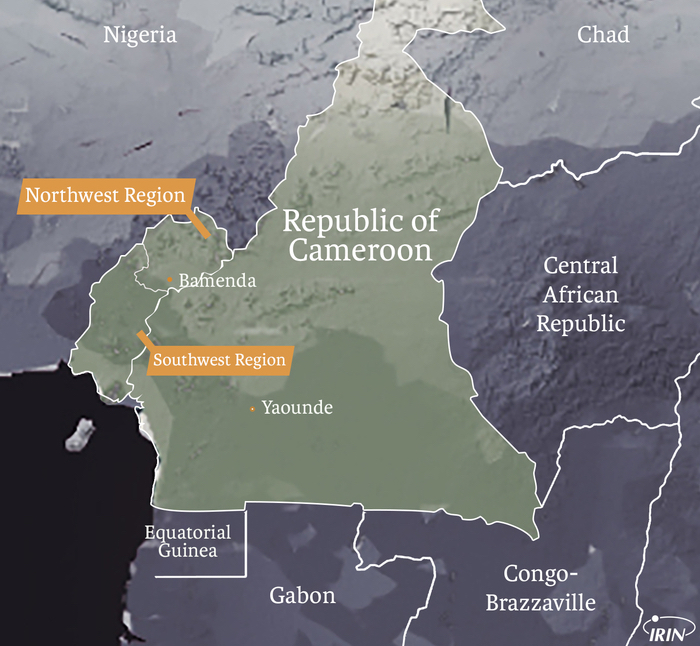
Electoral violence rocks Uganda

Museveni

At least 16 people have been killed in protests in Uganada since the arrest of two leading opposition candidates in upcoming presidential elections Nov. 18. One of the detained candidates, popular musician-turned-politician Bobi Wine (real name Robert Kyagulanyi), was accused of breaking COVID-19 restrictions at campaign rallies. Both he and fellow candidate Patrick Amuriat Oboi were detained while on their way to attend rallies. Four candidates, including two former military generals, have suspended their campaigns following the arrests. The military has been deployed to put down the protests in Kampala and other cities. Protesters are tearing down and burning campaign billboards of incumbent President Yoweri Museveni who has been in power since 1986, before the majority of Ugandans were born.

A post on Bobi Wine's Twitter account reads: "More than 24 hours after his brutal arrest and detention in Nalufenya, Bobi Wine has been denied access to his lawyers and his medical team. Only the army and police officers have access to him. All persons of good conscience must condemn the violation of his rights. The regime accuses him of holding big meetings and processions. On the other hand, general Museveni continues to hire crowds to hold processions and rallies everywhere! The regime is in so much panic. COVID-19 is an excuse." (Quartz Africa, Music Africa, NYT)

Photo: Badru Katumba

Renewed war in Ethiopia draws in Eritrea

Ethiopia

The already horrific conflict in Ethiopia's northern Tigray state seems set to escalate after Prime Minister Abiy Ahmed announced Nov. 17 that a three-day ultimatum for local forces to surrender had expired, clearing the way for a government offensive on the regional capital Mekele. At least 20,000 refugees have fled to Sudan amid air-strikes and mounting reports of atrocities on both sides. Neighboring Eritrea has also apparently entered the conflict—ironically on the side of the Ethiopian government, long its bitter enemy. The state government of the Tigray People's Liberation Front (TPLF) accuses Eritrea of sending tanks and thousands of troops over the border to support Ethiopian federal forces. Although this is denied by Eritrea, Tigray state forces have fired rockets into the Eritrean capital, Asmara. Mekele has also fired rockets at the airports in Bahir Dar and Gondar in Ethiopia's Amhara state, whose local forces have joined the conflict on the side of the central government. (CNN, UN News, Reuters, Jurist, Jurist, TNH, Horn Daily, Al Jazeera)

The reversal in Eritrea's alignment has to do with the TPLF being removed from power as the de facto ruling party of Ethiopia in a 2018 shake-up of the coalition it had formerly led, the Ethiopian People's Revolutionary Democratic Front (EPRDF). That shake-up brought to power Abiy Ahmed, who is of the Oromo people—Ethiopia's largest ethnic group, but traditionally exlcuded from power. There are now disturbing reports of Tigrayans, the favored ethnicity under the TPLF, being targeted by the central government for persecution. Police reportedly visited an office of the UN World Food Program in Amhara region to request a list of ethnic Tigrayan staff members, raising fears of ethnically based sweeps. (Al Jazeera)

Map: Perry-Castañeda Library

Post-electoral repression in Tanzania

Tanzania

Opposition presidential candidate Tundu Lissu was arrested Nov. 2, two days after disputed presidential elections in Tanzania. Incumbent John Magufuli won the election by a landslide according to official results following a contest dismissed by the opposition as a "travesty" because of widespread irregularities. Lissu joins a growing list of opposition leaders who have been rounded up since the results came in, as authorities move to head off post-election demonstrations. Lissu's center-right Chadema party and the left-wing ACT Wazalendo have jointly issued a call for people to take to the streets and demand fresh polls. They accuse Magufuli and his long-ruling Revolutionary Party, or Chama Cha Mapinduzi, of seeking to establish a "one-party system." (Al Jazeera, Al Jazeera, AllAfrica, Africa News, NYT)


Map: Perry-Castañeda Library

Colombia: indigenous ‘minga’ marches on Bogotá

minga

Some 10,000 participated in a cross-country march and motorcade through Colombia's southern Andes, dubbed the "Minga for Life, Territory, Democracy and Peace," culminating in a mass demonstration in Bogotá on Oct. 21. The Bogotá rally was swelled by thousands of students, teachers and labor unionists who walked out of classes and off their jobs. Called by Nasa and Guambiano indigenous leaders in the southern department of Cauca, the Minga (a traditional Andean word for "collective labor") was joined by Afro-Colombian and mestizo campesino communities in its 10-day trek to the capital. Chief among the marchers' grievances is the ongoing wave of assassinations of social leaders by illegal armed groups operating on indigenous lands. They charge that their communities have been betrayed by President Iván Duque's failure to fully implement terms of the peace accords with the demobilized FARC guerillas.

"We want this president, who governs with his back to the country, to listen to social organizations, to build a national agenda from the streets, with farmers, indigenous people and students," said Minga co-organizer Jhonatan Centeno. (Bogotá Post, City Paper Bogotá, Colombia Reports, NYT, TNH, NACLA)

Similar national mingas were held in 2008 and in 2005.

Photo: Colombia Reports

Anti-police uprising rocks Nigeria

#EndSARS

Protesters have continued to fill the streets of Lagos in defiance of a round-the-clock curfew imposed after the Oct. 20 Lekki Massacre, when soldiers and police fired on demonstrators who were occupying a toll bridge in the city's Lekki district. Authorities initially dismissed the massacre as "fake news," but now acknowledge that at least 38 were killed by security forces in Lagos that day. The massacre only succeeded in escalating what had been a largely peaceful protest campaign against police brutality into a general uprising. Several buildings were set on fire or ransacked, including banks, the TVC television headquarters, port facilities, and the palace of the Oba of Lagos, the traditional ruler of the city. Protests have also spread to Akure, the Ondo state capital, and other cities. 

Two days after the massacre, President Muhammadu Buhari appeared on TV to appeal for "understanding and calm," but also admonished the international community to "know all the facts" before condemning his government. In an unsubtle threat, he warned: "This government will not allow anybody or [any] groups to disrupt the peace of the nation." He urged protesters to "resist the temptation of being used by some subversive elements to cause chaos with the aim of truncating our nascent democracy." Nigerian netizens are dismissing his address as "12 minutes of nonsense."

At least 56 people have been killed across Nigeria since nationwide protests broke out on Oct. 8 under the hashtag #EndSARS—a reference to the Special Anti-Robbery Squad, an elite police unit accused of killings, corruption and other abuses. As the protests mounted, Buhari pledged to disband the SARS, but protesters are pressing demands for a more sweeping reform of the security forces. (Sahara Reporters,  Sahara Reporters, Sahara Reporters, The Africa Report, SkyNews, AP, Reuters)

Photo: Sahara Reporters

Russian-backed ‘crimes against humanity’ in Syria

White Helmets

Human Rights Watch condemned Russia and the Syrian government in a report Oct. 15 for launching at least 46 documented deadly attacks on civilians and civilian infrastructure in Syria's northern Idlib province. The report reveals that the Russian-backed offensive targeted hospitals, schools, markets, and other essential facilities for over 11 months from April 2019. HRW contends that these attacks violated international humanitarian law and may constitute crimes against humanity. The HRW claims are supported by a similar report from Amnesty International in May 2020, which detailed 18 unlawful air and ground attacks on schools, hospitals and other civilian infrastructure in northwest Syria.

These numbers represent only a fraction of the attacks occurring in the region. Witnesses and local authorities say the 46 documented attacks killed at least 224 civilians and wounded 561 others. Healthcare workers report that most victims suffered from wounds inflicted by munition fragments and building debris. In addition to harming civilians directly, the attacks have also adversely impacted public health, education, and the standard of living in Idlib by restricting access to food, water, and housing. Both the Syrian government and Russia exacerbated this crisis by blocking humanitarian aid to the region.

Having interviewed more than 113 victims and witnesses, HRW found no evidence of military targeting in these attacks. Instead, most attacks occurred far away from active battle zones between pro-government forces and rebels. Moscow and Damascus contend that the attacks were "counterterrorism" measures.

Despite repeated allegations from the United Nations, senior Damascus and Moscow officials have continued to deny that their military actions have violated any international laws of war. Russia and the Bashar Assad government have been widely criticized for these denials during the last 21 United Nations Security Council meetings and at least two United Nations Human Rights Council sessions.

From Jurist, Oct. 17. Used with permission.

Note: A UN Human Rights Council report released in July most recently concluded that air-strikes on civilian infrastructure by Assad regime and Russian forces in Idlib and elsewhere in Syria's northwest amounted to war crimes.

One year ago, Russia officially pulled out of Additional Protocol I to the 1949 Geneva Convention, on protection of civilians in international armed conflict. Additional Protocol I was ratified by the Soviet Union's Supreme Council in 1989. In an October 2019 letter announcing Russia's withdrawal, Vladimir Putin said that the International Fact-Finding Commission established to enforce Protocol I had become politicized: "In the current international environment, the risks of the commission's power abuse by the states, which are acting in bad faith, are increasing significantly." Russia is now the only signatory country to have pulled out of Protocol I. The Unied States signed in 1977, but is one of a handful of signatory states that have failed to ratify. 

Both Russia and the United States were among the initial signatories to the Rome Statute that established the International Criminal Court, but the US announced its intention not to ratify in 2002, and Russia formally withdrew from the statute in 2016. Neither country is today among the parties to the statute.

Photo via EA Worldview

Mass strike against neolib reform rocks Indonesia

Indonesia strike

Riot police used tear-gas and water cannons in Indonesia's capital on Oct. 8 to disperse large protests against a sweeping new law that rolls back protections for workers and the environment. Hundreds were arrested in Jakarta, and rallies took place in cities across the archipelago nation. The National Police have issued a notice to regional departments with directives on how to control the protests. The Omnibus Law, plugged as a "Job Creation" bill, was passed three days earlier, despite calls for a general strike by the country's trade unions. It revises more than 70 laws and regulations in an effort to cut "red tape" and improve the investment climate. Most controversially, it abolishes the national minimum wage, reduces severance pay, and relaxes the criteria for environmental impact statements on development projects.

President Joko Widodo aggressively plugged the bill, saying: "We want to simplify the licensing and bureaucracy, we want speed, so a harmonization of law is needed to create speedy services, speedy policymaking, so that Indonesia would be faster to respond to every world change." But Congress Alliance of Indonesian Labor Unions (KASBI) chair Nining Elitos said the legislative process itself had been too fast, with debate on the bill carried out in a "clandestine" manner. The bill was also opposed by the All-Indonesia United Workers Confederation (KPBI) and Indonesian Trade Union Confederation (KSPI). (NYT, NYT, BBC News, Jakarta Post, SCMP, The Star, Malaysia)

Image: Global May Day

Mysterious ‘ecological catastrophe’ in Kamchatka

Kamchatka

Fears are mounting over an environmental disaster of still unknown origin in Russia's Far East after residents reported finding dozens of dead sea animals washed onto a beach from the Pacific. Greenpeace Russia said tests conducted on water samples taken from Khalaktyrsky beach in Kamchatka krai showed petroleum levels four times higher than usual, and phenol levels 2.5 times higher. "The scale of the contamination has not yet been determined, but the fact that dead animals are found all along the coast confirms the seriousness of the situation," the organization said in a statement, warning of an "ecological catastrophe." Images shared on social media, including by popular blogger Yuri Dud showed dead fish, octopuses, sea urchins, crabs and other marine animals washed up on the shore.

Residents who used local beaches also complained of vomiting, fever, rashes and swollen eyelids. Local surfers first reported symptoms three weeks ago.

Russia's TASS news agency stated that a leak from a commercial oil tanker was the cause of the contamination, citing unnamed sources. But environmentalists have questioned the notion of an oil spill, telling independent media outlet Novaya Gazeta they fear contamination from a highly secretive industrial facilities located in the area.

Some have suggested that rocket fuel may have leaked into the sea from the military's Radygino firing range, which is about six miles from the seashore and was used for missile test drills as recently as August.

Vladimir Burkanov, a biologist who has studied marine mammals in the region, told Novaya Gazeta that old stores of rocket fuel kept at Radygino could have leaked into streams from rusted containers.

Local authorities initially sought to downplay the matter, publishing videos of a spotless beach, and stating: "The color of the water is normal, the smell of the air is normal, the beach is completely clean."

However, as images continued to surface, that approach changed over the weekend. Speaking to reporters on the beach Oct. 4, Kamchatka governor Vladimir Solodov said that regional authorities are launching an investigation into the contamination and would take more samples of the beach, sea water and animal carcasses for further testing. He threatened to fire anyone from the local administration found to have sought to either cover up or exaggerate the situation. (Moscow Times, BBC News, PhysOrg, The Guardian)

Photo: Einar Fredriksen via WikiTravel

Water protector slain in Baja California

Oscar Eyraud Adams

Oscar Eyraud Adams, a community activist in the Mexican border town of Tecate, Baja California, was assassinated in an attack on his home by what local accounts described as an "armed commando" Sept. 24. The following day, his brother-in-law, Óscar Sotelo, was gunned down in a convenience store along the Tecate-Ensenada highway. Adams had been a prominent advocate for the Kumiai (also rendered Kumeyaay) indigenous people in their struggle for irrigation concessions for their remote communities in outlying rural areas of Tecate and Ensenada municipalities, which have been denied by the National Water Commission (ConAgua). Friends and supporters of Adams are blaming the assassinations on the "narco-state" and demanding that authorities investigate them as political crimes.

Adams was the cousin of Tecate's mayor, Zulema Adams Pereyra, who has been in a public feud with Baja California's governor, Jaime Bonilla Valdez, although they are both with the ruling left-populist Morena coalition. In July, the mayor filed a formal complaint with Mexico's Fiscalía General accusing Bonilla of threats and harassment. (Zeta Tijuana, Mexico News Daily, InfoBae, Sept. 26; Zeta Tijuana, Sept. 25; Zeta Tijuana, Sept. 23; Web24 News, LatinUS, Border Report, July 7)

Although now serving with the left-wing Morena and reportedly close to Mexico's President Andrés Manuel López Obrador, Bonilla previously lived across the border in Otay Mesa, Calif., where he held dual citizenship and was a prominent figure in the local Republican party. He also served as a board member of the Otay Water District. In 2003, he was implicated in a corruption scandal concerning bribes for irrigation concessions. (San Diego Union Tribune via Wayback Machine, Sept. 16, 2003)

The traditional lands of the Kumeyaay are bisected by the US-Mexico border, and they have been involved in fights for their water rights either side of the line. (Kumeyaay.com, Viejas Band of Kumeyaay Indians, San Diego Integrated Regional Water Management Plan)

Photo: @AguaParaTodxsMX

Monumental controversy hits Colombia

Belalcazar

Local indigenous people on Sept. 16 toppled the statue of the conquistador Sebastián de Belalcázar in Popayán, capital of Colombia's southwestern Cauca department. The statue came down 84 years after local authorities had erected it atop of Morro de Tulcán, a hill that had been a sacred site for the Misak indigenous people. The Movement of Indigenous Authorities of the Southwest (MAIS) issued a statement saying the move to overturn the monument was taken following a decision by traditional elders of the Misak community. The monument to Belalcázar, who founded Popayán in 1537, had long been viewed as an insult to the native population of Cauca, Colombia's most heavily indigenous region. Maria Violet Medina, a leader from the local Nasa indigenous people, said: "The conquistadors brought disease, both physical and spiritual, to indigenous people. It was a genocide. That history isn't told. The statue of Belalcázar represents pain, revictimization, and causes resentment."

Although police stood by as the protestors took down the statue, Popayán Mayor Juan Carlos Lopez called the incident an act of violence and vowed to restore the monument.

Many Colombians across the country have celebrated the toppling of the statue, calling the act of protest "historic." Tweeted left-opposition senator Gustavo Petro, "The monuments to the conquistadors and slaveholders are an insult to the people of Colombia, its indigenous and its Black ethnicity."

Supporters of right-wing President Iván Duque, however, are appalled. His culture minister, Carmen Vázquez, also condemned the incident as a "violent act" and defended such monuments as a part of Colombia's cultural heritage.

Misak leaders issued a statement Sept. 25 reporting an increase in threats and harassment from National Police troops since the statue was brought down. (El Tiempo, Bogotá, Sept. 25; La Razón, Montería, Sept. 19; Colombia Reports, Thomson Reuters Foundation, Semana, Bogotá, Sept. 17)

Photo via Colombia Reports

UN report: ‘crimes against humanity’ in Venezuela

Venezuela protests

A UN report published Sept. 16 accused Venezuelan state authorities, including the president, of being complicit in human rights violations and abuses "amounting to crimes against humanity." An Independent International Fact-Finding Mission on the Bolivarian Republic of Venezuela found cases of extrajudicial executions, disappearances, arbitrary detentions and torture committed by the government or its agents. The Mission investigated 223 cases and reviewed an additional 2,891 cases to compile a pattern of violations. High-level authorities, including the ministers of the Interior and Defense, as well as President Nicolás Maduro himself, were not only aware of the violations but gave the orders and provided the resources to carry them out. "Far from being isolated acts," said Marta Valiñas, chairperson of the Mission, "these crimes were coordinated and committed pursuant to State policies, with the knowledge or direct support of commanding officers and senior government officials."

The violations have been ongoing since 2014, the report said. Among the findings were accounts of intelligence and police services being given the green light to execute suspects in simulated "confrontations," where the authorities plant weapons on the victims to allow security forces to claim they had to kill in their own defense. There have been no prosecutions for the vast majority of these killings, which "appear part of a policy to eliminate unwanted members of society under the cover of combating crime," said Valiñas.

Political dissidents, human rights activists and others perceived to be opponents of the government were targeted for unlawful detentions that involved the use of torture to extract confessions or simply as a form of punishment. Officials within the Bolivarian National Intelligence Service (SEBIN) and General Directorate of Military Counter-Intelligence (DGCIM) had full knowledge of the detentions and torture, and the report recommended that they be investigated and prosecuted. "Other jurisdictions in accordance to their national laws, as well as the International Criminal Court, should also consider legal actions against individuals responsible for violations and crimes the Mission identified," the report concluded.

From Jurist, Sept. 17. Used with permission.

Note: In 2018, an Amnesty International report stated that Venezuela is experiencing the "worst human rights crisis" in its history.

Photo: WikiMedia Commons

Insurgency re-emerging in regime-controlled Syria

Daraa

Bashar Assad's Russian-backed reconquest of most of Syria over the past two years is beginning to look like a Pyrrhic victory, as protest and even armed resistance re-emerge in regime-controlled territory. Insurgency is especially mounting in southern Daraa province—where the revolution first began back in 2011. Brig. Gen. Talal Qassem of the army's 5th Division was shot dead Sept. 9 by gunmen on a motorcycle near Busra Harir in the northeast of Daraa. He was the second regime general slain in the province since Assadist forces retook southern Syria in July 2018. They were among more than 200 regime soldiers and officials slain in attacks over this period, and the pace of attacks is escalating. Among regime figures slain in the past month are the mayor of the town of Lajat, a military intelligence officer, and a member of the "reconciliation committees" attempting to rebuild regime support.

On Aug. 20, there were clashes in eastern Daraa after regime security raided a village to arrest suspects. Multiple casualties were reported before Russian troops were deployed to put down the fighting. (EA Worldview)

A wave of anti-government protests has meanwhile been mounting elsewhere in regime-controlled territory, amid an atmosphere of deepening crisis.

Photo: EA Worldview

Rights group sees ‘political persecution’ in Bolivia

Mauricio Jara

Human Rights Watch released a report on Sept. 11, asserting that Bolivia's interim government, led by President Jeanine Añez, uses the judiciary to attack former President Evo Morales, his supporters, and former members of his administration. The report claims Añez's government "has publicly pressured prosecutors and judges to act to further its interests, leading to criminal investigations of more than 100 people linked to Morales government and Morales supporters for sedition and/or terrorism." The report states that many of these investigations "appear to be politically motivated." Among those charged is Morales himself, who was accused of terrorism after he fled the country last November.

The government's terrorism charge against Morales stem from a phone call he made after he left office. Morales allegedly urged protestors to mobilize and "fight" the interim government during the call. The terrorism charge is punishable with up to 20 years in prison, which the report asserts is "disproportionate to the conduct reflected in the phone call, and appears to be a political attack on Morales and his supporters rather than enforcement of the law." 

Also noted is the case of Patricia Hermosa, Morales' attorney and former chief of staff, who was charged with terrorism and sedition based on the mere fact that she had telephone contact with Morales after he resigned. She is currently under house arrest.

One Morales supporter, Mauricio Jara, was charged with sedition, instigation to commit a crime, and crimes against public health, on the basis of WhatsApp messages in which he called the government a "tyranny" and "dictatorial," and urged people to protest. Police also cited as evidence that Jara had called the killing of at least 10 protestors in Senkata in November 2019 a "massacre"—a term also used by the Inter-American Commission on Human Rights to describe the case. He remains in pre-trial detention.

The report states that Morales and members of his government "have become victims of the same political interference in the justice system that they exerted when in power."

Bolivia's presidency minister, Yerko Núñez, responded to the report, rejecting the allegations of political persecution against Morales. He added that the former president's actions demonstrated "a simple desire for power."

A Bolivian court this month rejected an appeal by Morales against a ruling that banned him from running for a senate seat in the new elections. The court made its ruling on the grounds that Morales is no longer a Bolivian resident, as he now lives in Argentina.

From Jurist, Sept. 13. Used with permission, with additional material from the HRW report.

Note: Morales, from exile in Argentina, denies the charges against him. Bolivia saw a new wave of protest in August over Añez's postponement of the new elections as a supposed measure to contain COVID-19. The killings at Senkata took place last November, shortly after the ouster of Morales.

Photo: Guider Arancibia via HRW

Colombia: anti-police protests rock Bogotá

Bogotá riots

Colombia's capital Bogotá has seen nightly protests since the Sept. 9 slaying of a law student at the hands of the police. Video footage taken by a friend showed Javier Ordoñez, an attorney and father of two, being repeatedly shocked with a stun-gun before being taken to a police station, after he was stopped for public drinking in violation of COVID-19 containment measures. He died in a hospital later that night. Protests erupted after his death, with hundreds gathering outside the station where he had been held in Villa Luz district, and police responded with tear-gas and flash-bang grenades. At least seven people have been killed and 80 arrested since then, as protests have spread throughout the city, and into neighboring Soacha. The Defense Ministry says that 53 police stations and posts have been attacked, with 17 incinerated. The military as well as elite National Police anti-riot force ESMAD have been mobilized to put down the protests.

Activists are stressing the irony that Ordoñez was killed on Colombia's Human Rights Day.

Bogotá police, who are under the command of the National Police, have been accused of abusing and arbitrarily detaining protesters in the past. In November police killed 17-year-old Dilan Cruz  when shooting projectiles at a group of protesters. (Jurist, Reuters, Colombia Reports, Colombia Reports, Colombia Reports, Alliance for Global Justice)

Photo via Colombia Reports

Maya villagers attacked by gunmen in Guatemala

Cubilguitz

Q'eqchi Maya campesinos in Guatemala's central Alta Verapaz department were attacked by a group of unknown gunmen who violently evicted them from their homes before setting them to the torch on Aug. 16. At least 40 families lost their homes in the attack at the hamlet of Balbatzul, in Cobán municipality. President Alejandro Giammattei said National Civil Police troops have taken control of the hamlet, and the Fiscalía has opened an investigation. Some of the targetted homes were on occupied lands of a large farm, Finca Cubilguitz, which appears to have been at issue in the conflict. Local campesinos moved onto the lands last year, but leadership of the occupation has been contested between followers of the Committee for Campesino Unity (CUC) and ex-guerilla commander César Montes.

Montes became a prominent campesino leader after Guatemala's 1996 peace accords, but has returned to clandestinity since being accused in a September 2019 attack at Semuy, El Estor municipality, Izabal department, that left three soldiers dead. CUC national coordinator Daniel Pascual protested the Cubilguitz attack to authorities, implying that the victims were his followers.  

Finca Cubilguitz is owned by the Dieseldorff family, part of Guatemala's traditional oligarchy. The country's Association for the Defense of Private Property (ACDEPRO) issued a statement condemning both sides after the attack and calling for all occupiers to be removed. ACDEPRO protested that more than 1,000 properties are currently under occupation across Guatemala. (AFP, CUC, La República, La República, La República, La República, Guatemala)

Photo: CUC

Mass protests paralyze Bolivia

Bolivia protest

Protesters have launched blockades across main roads through Bolivia over the past days, effectively cutting off La Paz and other cities, to oppose the government's postponement of new presidential elections. The blockades have raised fears of food and gasoline shortages, with throngs of La Paz residents lining up outside markets and petrol stations. Chancellor Karen Longaric portrayed the protests as being masterminded from exile by ousted president Evo Morales, saying "Ex-president Morales and groups aligned with the Movement Toward Socialism have initiated violent and inhuman acts."

The government's perceived inaction on the COVID-19 pandemic is another grievance of the protesters. But the Organization of American States General Secretariat issued a statement accusing some protesters of "preventing the passage of oxygen tankers and ambulances necessary to attend the pandemic." One such incident was reported from Tiraque, Cochabamba department, where three tanker-trucks carrying oxygen were halted at a roadblock. Government sources said the drivers were threatened and had to flee. (Eju!, Aug. 9; FT, Aug. 8; NYT, Erbol, Aug. 7)

Counter-protesters are beginning to mobilize, attacking the roadblocks and attempting to clear the thoroughfares. A particularly violent clash was reported from Samaipata, Santa Cruz department, where rocks were hurled and dynamite set off. (Pagina Siete, Aug. 10; Los Tiempos de Cochabamba, Aug. 8)

People infected with the coronavirus are dying before they can access medical care across Bolivia. The country's overwhelmed hospitals are turning critically ill patients away, leaving anguished families to watch their loved ones die. (DW, Aug. 8)

Photo: Página Siete

Colombia: campesinos massacred in Huila

Huila

A band of armed men in trucks and on motorcycles invaded two veredas (hamlets) in the rural zone of Algeciras municipality, in Colombia's central-south department of Huila, on the night of July 16, terrorizing local residents. The approximately 10 armed men entered various homes in the veredas of La Danta and Quebradón Sur, menacing the families at gunpoint, before finally identifying one family they had apparently marked for death. Four family members were killed, and two more wounded, including an eight-year-old boy. The gunmen fled before they could be identified. However, both "dissident" elements of the FARC guerillas who have remained in arms in defiance of the peace deal and right-wing paramilitary groups are active in the area. Accounts indicate the attack targeted the family of an ex-guerilla of the FARC's demobilized Teófilo Forero Column.

The attack also came hours after the official security forces had announced the capture in Algeciras of an "Organized Armed Group" leader identified by his nom de guerre "Hermes." Reports did not indicate which faction "Hermes" was associated with, but he was said to be responsible for the assassination of 10 community leaders and ex-guerillas in the rural areas of Algeciras. (El Tiempo, July 17)

Assassinations of social leaders continue across Colombia. A tally by the Bogotá-based Institute for Peace & Development Studies (INDEPAZ) places the number of such slayings nationwide so far this year at 166. The most recent was in Algeciras, on July 5, when Gentil Pasos Lizcano, president of the Junta for Communal Action in El Puente vereda, was slain by gunmen who entered the small shop he owned.

Ex-FARC combatants are also being targetted for assassination, with INDEPAZ counting 36 such slayings so far this year. (PressEnza, July 17; El Tiempo, July 6)

Photo via El Tiempo

UN Rights Council sees Russian ‘war crimes’ in Syria

White Helmets

A United Nations Human Rights Council report released on July 7 concluded that air-strikes on civilian infrastructure by Syrian government and Russian forces in Idlib and Aleppo provinces amounted to war crimes. The report, prepared by the UN-mandated Independent International Commission of Inquiry on the Syrian Arab Republic, assessed incidents that occurred from November 1, 2019, to June 1, 2020. The Syrian government and Russian Aerospace Forces carried out both land and air attacks, which destroyed civilian infrastructure. The report documented 52 "emblematic attacks" that led to civilian casualties or damage to civilian infrastructure. These included 17 attacks on hospitals and medical facilities as well as 14 attacks on schools. 

These 52 attacks were overwhelmingly attributed to Syrian "pro-government" and Russian forces, although a small percentage were attributed to Hayatt Tahrir al-Sham (HTS), a UN-designated "terrorist group" which is now the most significant armed opposition force in Idlib. All but one of the 17 attacks on medical facilities were attributed to Russian or "pro-government" forces. Of the 14 attacks that damaged schools, three were attributed to HTS. Of the nine attacks on markets, two were attributed to HTS. Of 474 civilian casualties documented in the attacks, 46 were attributed to HTS. However, the report concluded that HTS as well as "pro-government" and Russian forces are likely guilty of war crimes.

"It is completely abhorrent that, after more than nine years, civilians continue to be indiscriminately attacked, or even targeted, while going about their daily lives," said Commission of Inquiry chair Paulo Pinheiro. "Children were shelled at school, parents were shelled at the market, patients were shelled at the hospital…and entire families were bombarded even while fleeing. What is clear from the military campaign is that pro-government forces and UN-designated terrorists flagrantly violated the laws of war and the rights of Syrian civilians." (Jurist)

United Nations reports have repeatedly found substantial evidence of Russian warplanes being directly involved in "war crimes" in Syria, including the bombing of hospitals and civilian areas in Idlib and elsewhere in the northwest.

Photo via EA Worldview

Anti-Assad protests re-emerge in Syria

Suwayda

Amid spiraling inflation and fast-rising prices for food and other basic goods, protests are again emerging in regime-controlled areas of Syria—some reviving slogans of the 2011 revolution. On June 7, an angry protest was held in the southwestern city of Suweida. Crowds moved through the city's central streets, eventually gathering in front of the governorate building, where they chanted, "The people want to topple the regime!" "Revolution, freedom, social justice!" and "Down with Bashar al-Assad!" Discontent has been simmering in the city since local youth launched a campaign dubbed "We Want to Live" at the beginning of the year. The protest was particularly significant, as the Druze-majority province of Suweida has remained loyal to Damascus throughout the nine years of the Syrian uprising. 

Rumblings of discontent are also reported from the western province of Latakia, another traditional stronghold of support for Assad, where anti-regime slogans are now appearing on walls. And on the same day as the protest in Suweida, an elderly man in Damascus' central market, the Souq al-Hal, incensed at high prices, attracted attention from onlookers by shouting "God curse Bashar al-Assad, he destroyed us and the country!" (Syrian Observer, Syrian Observer, Syrian Observer, Syria Call, Al Jazeera, AFP)

Photo: Suwayda-24 via Syria Call

Amnesty sees Russian-backed ‘war crimes’ in Syria

White Helmets

A report published by Amnesty International on May 11 found that the Syrian government, supported by Russia, committed a series of war crimes in northwest Syria in late 2019 and 2020. The report found that "attacks from the air and the ground repeatedly struck residential areas and crucial infrastructure." The findings are based on interviews of Syrians on the ground and international aid workers, as well as videos, photographs, satellite imagery, logs of aircraft observations and intercepted aircraft radio communication. The attacks mainly occurred in opposition-held areas of Idlib province, western Aleppo province and northwestern Hama province. The report documents 18 attacks in these areas on schools and medical facilities. The report calls these attacks "serious violations" of international humanitarian law.
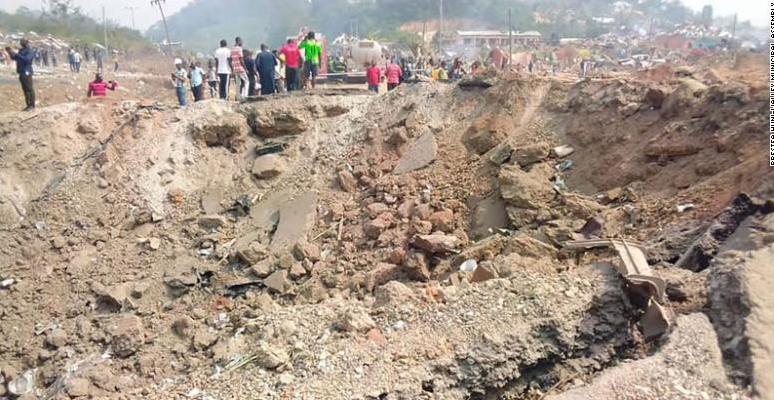
These attacks "were not directed at a specific military object" and thereby "violated the immunity from direct attack of civilians and civilian objects, as well as the special protection afforded to specific persons and objects, particularly medical facilities, medical personnel and children."

Entitled "'Nowhere Is Safe for Us': Unlawful Attacks and Mass Displacement in North-west Syria," the report describes the "humanitarian crisis" that unfolded as close to 1 million people fled their homes to escape bombardment between December 2019 and early March 2020, when a ceasefire was reached. "Families converged on displacement camps that had already been packed to the brim; schools, abandoned sports facilities and other public buildings were turned into temporary shelters. Unable to afford exorbitant rents and down payments requested by property owners, many families also resorted to staying in unfinished buildings. At one point, the UN was reporting that tens of thousands of people were staying in the open in sub-zero temperatures."

The report also asserts that the international community, including the UN Security Council, has been "largely paralyzed" in the face of these atrocities, "as even the most basic humanitarian norms were politicized." On April 15, Amnesty International sent a letter about its findings, requesting related information, to the permanent missions of Syria and Russia to the UN in New York, as well as to the leadership of Hayat Tahrir al-Sham, the largest armed rebel group in northwest Syria. Amnesty did not receive any responses.

From Jurist, May 12. Used with permission.

Note: United Nations reports have repeatedly found substantial evidence of Russian warplanes being directly involved in "war crimes" in Syria, including the bombing of hospitals and civilian areas in Idlib and elsewhere in the northwest. Hayat Tahrir al-Sham (HTS) is also accused of abuses against the civilian population.

Photo: White Helmets

Politicians exploit COVID-19 in Peru, Bolivia

Paradita

Peru's right-wing opposition leader Keiko Fujimori, who had been jailed in January while corruption charges are pending against her, was released from pre-trial detention at Lima's Chorrillos prison on May 4, ostensibly on fears she could be exposed to the coronavirus. Fujimori will be under "restricted release," meaning she cannot leave Lima without prior authorization and must check in every 30 days with judicial authorities. Of course there has been no general discharge from Peru's dangerously overcrowded prisons, and one leading anti-corruption prosecutor in the Fujimori case, Rafael Vela, is protesting her release as "illegitimate." (Milenio, Japan Times, Diario Uno)
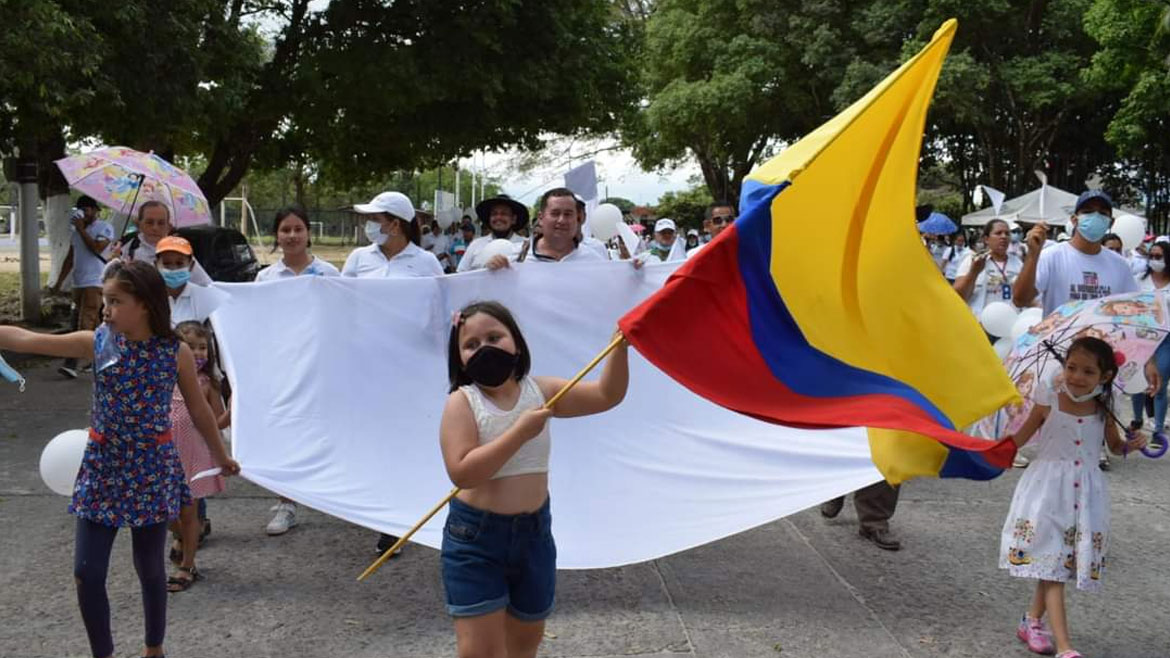
Ironically, just two days earlier, the Peruvian government issued a decree authorizing mining operations to resume in the country—supposedly with strict health and safety protocols. Operations at Peru's mines, critical to the country's economy, had been suspended in mid-April in response to the pandemic.  (Mining.com)
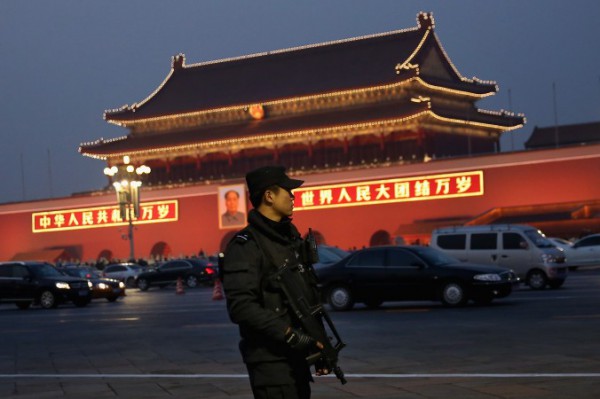
The administration of President Martín Vizcarra has won a degree of support from the popular classes for its handling of the crisis, which has now claimed some 1,400 lives. Finance Minister Maria Antonieta Alva is especially hailed for crafting an ambitious recovery package that emphasizes aid to small businesses and ordinary citizens. (Bloomberg, NYT)

But struggling family businesses, along with migrant workers, are disproportionately impacted by the government's harsh lockdown orders. Market-stall operators have repeatedly protested being shut down and even having their goods confiscated as police fumigate premises. Evicted merchants held a street demonstration outside La Paradita market in Lima's Victoria district May 5, demanding the return of their seized inventory. (Diaro Uno, Diario Uno)
Bolivia meets the new boss
Bolivia's Mining Minister Carlos Huallpa also announced a multi-ministerial resolution May 2 allowing operations to resume at the country's mines, which had likewise been idled as a measure to contain the pandemic. Companies will have to seek individual approval from the ministry for their "biosafety" protocols. (Mining.com)
The COVID-19 crisis is also contributing to Bolivia's general crisis of legitimacy. After last November's ouster of Evo Morales, it was assumed that interim president Jeanine Añez would be in power for only a matter of weeks, until new elections could be held. Since then, excuses have mounted to postpone new elections. After repeatedly stating she would not run in the new polls, Añez changed her tune in January and threw her hat into the ring. Elections which had been initially scheduled for this week have been indefinitely postponed.  

On April 30, the country's congress passed a law stating the poll must be held by Aug. 2, but Añez vetoed it, saying the election should be held "when the pandemic allows us to." Morales noted cynically from exile in Argentina that the pandemic fit her plans "like a ring on a finger." There have been 59 coronavirus deaths in Bolivia. (Financial Times, Nodal)

This is ironically redolent of the constitutional shenanigans Morales used to extend his tenure in office, and many of the social contradictions that sparked protest under his rule are only deepening under the new regime.

Wildfires that devastated much of the eastern lowlands last year, helping to fuel popular unrest in the region, have not abated. In the first four months of 2020, Bolivia registered more than 15,000 wildfires—a figure three times higher than that for the same period last year. Bolivia's Fundación Amigos de la Naturaleza warned that this year "threatens to repeat" the grave environmental damage that the country's rainforests suffered in 2019. (AFP)

Photo: Diaro Uno

Land conflicts escalate in Indonesia

Borneo

Agribusiness and resource companies embroiled in land disputes with rural communities in Indonesia appear to be using the lull in oversight during the COVID-19 outbreak to strengthen their claims to contested areas. Since the first confirmed cases of the disease were reported in the country on March 2, two local land defenders have been killed and four arrested in connection with disputes in Sumatra, Java and Borneo.

Two killed in Sumatra
On March 21, security personnel from the palm oil firm PT Artha Prigel clashed with farmers in Lahat district, in South Sumatra province. Two farmers were killed in the fighting, the latest flare-up in a conflict that goes back nearly three decades. Locals accuse the company—a subsidiary of the Sawit Mas Group, which supplies oleochemicals to Procter & Gamble—of stealing their land. In September 2018 the locals took over nearly a tenth of the company's 2,000-hectare (5,000-acre) plantation and began cultivating their own crops. The clash last month broke out as security guards arrived to clear the locals from the area they had taken over. The two farmers died of stab wounds.

"This shows that the company has no humanity," said Muhammad Hairul Sobri, director of the South Sumatra chapter of the Indonesian Forum for the Environment (WALHI). "During an emergency like this, instead of focusing on handling COVID-19, they're using the situation to grab people's lands."

Repression in Java
On East Java's Mount Tumpang Pitu, locals have erected tents to protest mining activity by PT Bumi Suksesindo and PT Damai Suksesindo. They especially oppose a plan to expand gold mining operations into nearby Mount Salakan, where PT Damai Suksesindo has a permit.

Rere Jambore Christanto, the director of WALHI's East Java chapter, said the government ordered the encampment to be disbanded and the tents torn down, citing coronavirus prevention control measures. "But the biggest threat is actually from outside people, not from the locals," Rere said, adding that locals had reported an increase in the companies' activity, including equipment being brought in. "To date, there has been no local indicated to be infected with the coronavirus."

Protesters refused to dismantle their tents, and on March 26 blockaded the road leading to the mining area. Police broke up the blockade the next day, and later a fight broke out between the protesters and a group of people claiming to support the mine. Dozens of vehicles and homes were damaged in the clash, and on April 1, police arrested one of the protesters.

Persecution in Borneo
In the Bornean province of Central Kalimantan, three indigenous farmers were recently arrested for allegedly stealing oil palm fruit from plantation company PT Hamparan Masawit Bangun Persada (HMBP). The company itself stands accused of stealing the farmers' lands; local officials and rights groups have since 2010 declared that the company has been operating illegally on community lands.

The farmers filed a pretrial motion in a bid to drop the case. The court was supposed to hold a hearing on March 30, but police failed to show up, saying they were occupied with the government's COVID-19 response. The pretrial hearing was postponed to April 6, the same date as the start of their trial. As a result, the pretrial motion was rendered null, according to Dimas Hartono, the director of WALHI's Central Kalimantan chapter.

"The pandemic is being used as an excuse to delay…the pretrial hearing," Dimas said. He noted the police appeared to have no problem pursuing the criminal investigation, while claiming they couldn't attend the pretrial hearing because of the pandemic. "What the police did was merely an excuse to speed up the legal process."

Business as usual in remote areas
Indonesia has recorded 5,136 COVID-19 infections and 469 deaths as of April 15, giving it the highest number of fatalities in Asia outside of China. Non-essential businesses have been ordered to shut down in Jakarta, the national epicenter of the outbreak, and other regions are due to follow over the coming week. In many rural and remote areas, however, it's still business as usual.

Sandrayati Moniaga of the National Commission on Human Rights, known as Komnas HAM, said the government should bar companies from operating during emergencies like a pandemic. "In a situation like this there should be no activities in areas with ongoing conflicts. There has to be a status quo," she said, according to local media. (Mongabay, April 15)

Photo: Mongabay

Protesters demand food across Bolivia

Bolivia protest

Ten days into a national "quarantine" declared in Bolivia, protesters are taking to the streets to demand food in working-class districts of cities across the country—in defiance of lockdown orders. Residents are calling for either greater flexibility in the lockdown, which has paralyzed the economy, or food distribution in their barrios. Street protests have been reported in El Alto, Cochabamba, Santa Cruz, Tarija, Trinidad and Riberalta. The government of interim leader Jeanine Áñez has pledged one-time payments of $60 for elders, the disabled, pregnant women and others with special needs. Her supporters on social media are portraying the protests as fomented by the ousted Movement Toward Socialism (MAS).

The "quarantine" is to last until April 15, with an option for the government to renew it. (Los Tiempos, Cochabamba, April 4; El País, Madird, April 2)

The government has also suspended the presidential elections, originally scheduled for May 3, in response to the COVID-19 crisis. The Supreme Electoral Tribunal (TSE) announced the suspension on March 21, with Áñez calling it a "tough but necessary decision." No new date for elections has been set, but a postponement of up to six months has been broached. The Pact of Unity, a coalition of social organizations linked to the MAS, has pledged to protest the postponement. The TSE has disqualified exiled former president Evo Morales from running for a Senate seat in the election, saying he does not meet residency requirements—a decision that Morales assailed as a "blow to democracy." Morales' MAS reportedly did not an attend a March 19 meeting called by the TSE to discuss plans to postpone the election. (Anadolu Agency, March 22; InfoBae, March 20)

When the suspension was announced, there were 17 confirmed COVID-19 cases in Bolivia, and no deaths. The figure now stands at 139 cases and 10 deaths. (Página Siete, April 3)

Concern is alo mounting for some 480 Bolivians who were working in Chile and were ordered home in response to the pandemic. They are now being held in 14-day quarantine at a makeshift camp that has been established at the border town of Pisiga. Their family members protest that conditions at the camp are overcrowded and unsanitary, without even sufficient access to potable water. (Los Tiempos, Los Tiempos, April 4)

Photo via Los Tiempos, Cochabamba

COVID-19 sparks prison massacre in Colombia

Modelo prison

Inmates' fears that prison authorities are not doing enough to prevent COVID-19 outbreaks inside Colombia's notoriously overcrowded and unhygienic prisons exploded into violence on March 21, with uprisings reported at facilities across the country. The Justice Ministry acknowledged "revolts at different penitentiary centers in the country," including the prisons in Ibague, Jamundi and Combita, two prisons in Medellín and another two in the capital Bogotá. Justice Minister Margarita Cabello said 23 had been killed in suppressing a "massive and criminal escape attempt" at Bogotá's La Modelo prison, one of the country's largest and most overpopulated. Local residents reported on social media hearing gunfire and explosions at the facility. (Colombia Reports, El Espectador, CNN, AP)

See our last post on the prison crisis in Latin America.

Photo: Colombia Reports

UN: Russia commits ‘war crimes’ in Syria

White Helmets

The UN Commission of Inquiry on Syria issued a report March 2 charging that Russia is responsible for war crimes in the ongoing Syrian conflict. The report focuses on indiscriminate bombing of civilian areas from July 2019 through January 2020, and apparently intentional attacks by "pro-government forces" on civilian targets such as hospitals and medical facilities. The commission focused on two incidents in which it found substantial evidence that Russian warplanes were directly involved in the bombing of civilian areas.

The first incident was a series of air-strikes on a market place in Ma'arrat al-Nu'man, a town south of Idlib City, on July 22. The report describes the attack as a "double tap" strike, in which a second wave of bombing hit the same target when rescue workers were on the site. Forty-three civilians, including four children, were killed and at least 109 injured.

The second attack investigated was the Aug. 16 bombing of a compound for displaced civilians that had been built in fields just outside Haas in the south of Idlib governorate. That attack killed 20 people, including eight women and six children, and injured 40 others.

"Based on the evidence available, including witness testimonies, video footage, data imagery as well as reports by flight spotters, flight communication intercepts and early warning observation reports, the commission has reasonable grounds to believe that a Russian aircraft participated in each incident described above," the report stated. "In both incidents, the Russian Air Force did not direct the attacks at a specific military objective, amounting to the war crime of launching indiscriminate attacks in civilian areas." (The Guardian) 

On March 5, Turkish President Recep Tayyip Erdogan and his Russian counterpart Vladimir Putin announced a new ceasefire in Idlib, after a meeting in Moscow. The deal creates a new "security corridor," to be jointly patrolled by Russian and Turkish forces. But the deal represents a territorial gain for Assad, as the new corridor, along the Idlib's M4 highway, is to the north of the previous buffer zone that Russia and Turkey had been jointly recognizing before the new regime offensive. Areas south of the highway are effectively ceded to the Assad regime, and the line of control is several kilometers closer to Idlib's capital, which remains in opposition hands. (BBC News, The Drive)

Photo: White Helmets

Ukraine to lift ‘water blockade’ of Crimea?

Crimea Canal

Ukrainian lawmakers from the ruling party this week proposed resuming the water supply to the Russian-occupied Crimean Peninsula, leading to public outrage. After Russia's 2014 seizure and unilateral annexation of Crimea, Ukraine ceased supplying water to the arid peninsula. Before the occupation, water was supplied from the Ukrainian mainland through the North Crimean Canal. Today, a dam blocks the canal on the de facto border with Ukraine's Kherson Oblast. The shortage of water has hurt Crimean agriculture and industry, although most households rely on local wells. MPs from the ruling Servant of the People party proposed either selling the water to Crimea or using it to leverage a withdrawal of Russian military forces from the conflicted Donbas region in Ukraine's east. But Refat Chubarov, the Crimean Tatar leader who was exiled from the peninsula by Russia after the take-over, responded that any agreement to supply water to Crimea, regardless of the conditions, would be a betrayal of the 500,000 Tatars living in the peninsula. (EuroMaidan Press)


Map: EuroMaidan Press

Podcast: BorderTalk with Tej Hazarika

Buphen Hazarika

In Episode 47 of the CounterVortex podcast, Bill Weinberg speaks with Punnag Tej Hazarika of the Brooklyn-based small-press imprint Coolgrove and affiliated BorderTalk blog, which explores questions of cultural intersection. Among Coolgrove's recent titles is Winged Horse: 76 Assamese Songs, a collection of translated lyrics by Tej's father, Bhupen Hazarika, the "Bard of Brahmaputra," who campaigned  through his music for a dignified place in India for the peoples of Assam and other minority ethnicities. Last year, Tej traveled to New Delhi to receive the Bharat Ratna, India's highest civilian award, on behalf of his late father. But the honor came with India—and especially Assam and the restive Northeast—on the cusp of exploding into protest over the controversial Citizenship Amendment Act. The politics of the situation, and the dilemmas of interculturality from Assam to New York, are discussed in a wide-ranging interview. Listen on SoundCloud, and support our podcast via Patreon.

Music: Xomoyor Agrogoti (Winged Horse of Time) by Bhupen Hazarika

Excerpt: Motherland Assam by Cosmic Horizon (contemporary protest song with xenophobic overtones)

Production by Chris Rywalt

We ask listeners to donate just $1 per episode via Patreon. A total of $30 per episode would cover our costs for engineering and producing. We are currently up to $25.

Photo via Time 8, Guwahati

Indigenous rainforest dwellers massacred in Nicaragua

Bosawas

Six members of the Mayagna indigenous people are dead and another 10 missing following an attack by gunmen on the community of Alal, within the UN-recognized Bosawás Biosphere Reserve in Nicaragua's eastern rainforest. Sebastián Lino, a member of the autonomous Mayagna Territorial Government of Sauni As, said that some 80 men armed with rifles and shotguns entered the community Jan. 29, firing indiscriminately on residents and setting homes on fire. Lino described the assailants as colonos, or peasant colonists who have been invading the reserve in growing numbers, illegally clearing forest and settling on indigenous lands. "The situation has gotten serious," he said, demanding government action.

Nicaragua's National Police force said in a statement that the attack is being investigated, but put the death toll at only two. The Nicaragua Human Rights Collective "Never Again" (Colectivo de Derechos Humanos Nicaragua Nunca+) issued a statement charging that deadly attacks on indigenous communities in the country have been "practically systematic for more than a decade," and are "only possible…with the complicity of the National Police and the Army of Nicaragua, whether by action or omission…"

The remote Bosawás region has long been targeted for colonization by landless peasants, but the Mayagna and their ecologist allies fear the zone is ultimately coveted by development interests. (Associated Press, Confidencial, Confidencial, Nicaragua)

Photo: Global Justice Ecology Project

‘Anti-terrorist’ militarization in Bolivia

FELCC

The new Bolivian regime's Government Minister Arturo Murillo has announced creation of a special "Anti-Terrorist Group" (GAT), drawn from elite units of the National Police force, to "completely disarticulate all the terrorist cells" operating in the country. Murillo made the announcement at a Dec. 2 meeting of the National Police Special Anti-Crime Struggle Force  (FELCC) in Santa Cruz, where he charged that recent political violence in the country had been instrumented by foreign "terrorist" operatives financed by Venezuela as part of a plan to "destabilize" the countries of South America. He particularly mentioned Martín Serna Ponce, a supposed operative of Peru's defunct Tupac Amaru Revolutionary Movement (MRTA), and Facundo Morales Schoenfeld, a veteran of Colombia's FARC. (Aristegui Noticias, Mexico, Dec. 3; La Razón, La Paz, Dec. 2)

Lawmaker Tomás Monasterio, a leader of the right-opposition under the recently deposed government of Evo Morales, is meanwhile calling for the imprisonment of Alpacino Mojica, a Santa Cruz candidate for the Chamber of Deputies with Morales' Movement Toward Socialism (MAS) in the recently annulled elections, claiming that his campaign was financed by Serna Ponce. (Los Tiempos, Cochabamba, Dec. 4; Página Siete, La Paz, Dec. 3) 

Morales Schoenfeld was arrested Nov. 30 on "criminal association" charges related to the recent unrest in Bolivia, and remains detained in Santa Cruz. (Diario Popular, Argentina, Nov. 30) Although the new reports are vague on his current whereabouts, Serna Ponce was convicted in 1999 on charges of kidnapping Bolivian businessman Samuel Doria Medina, and was a fugitive for several years after escaping from a prison in La Paz. He was recaptured by Bolivian authorities in January 2012, and presumably remains incarcerated. (La Información, Madrid, Jan. 9, 2012)

Murillo also told Reuters Dec. 6 that he will seek Israeli help to fight "terrorism," again citing a supposed Venezuelan conspiracy to destabilize regional governments. "We've invited them to help us," he said of the Israelis. "They're used to dealing with terrorists. They know how to handle them." He added, without irony: "The only thing we want is to bring peace."

Bolivian diplomatic ties with Israel, broken in 2009 by the Evo Morales government, have been restored by the interim regime.

Days earlier, Murillo said Bolivia's interim government would file a case against Evo Morales with the International Criminal Court (ICC)  for "crimes against humanity," Murillo has already opened a criminal case in Bolivia accusing Morales of sedition and terrorism. Murillo said Morales "must answer to justice for what he has done, and is doing, in addition to his accomplices who have participated in the tragic events that Bolivians have experienced."

Murillo meanwhile darkly warned an Argentine delegation of human rights activists who had just arrived in Bolivia: "We recommend these foreigners who are arriving…to be careful. We are looking at you. We are following you… There is no tolerance for terrorism, sedition or armed movements. Zero tolerance."

The Argentina Delegation in Solidarity with the Bolivian Poeple, led by left-wing academic Juan Grabois, tweeted in response: "While the de facto government accuses us of being terrorists, we have started what we came to do, take testimony of the different human rights violations that the Bolivian people are enduring."

When the delegation arrived at Viru Viru airport in Santa Cruz, it was met with jeers and threats by a crowd of right-wing militants. Some members were repotedly detained by the police for interrogation, prompting the mediation of the Argentine consulate in the city. The group intends to continue to La Paz by land. (AFP, Dec. 1 La Diaria, Uruguay, Nov. 30; InfoBae, Argentina, Nov. 29)

The exiled Evo Morales this week flew from Mexico to Cuba for medical treatment. Before his departure, he was interviewed by Mexico's Heraldo Media Group, and seemed to accept the recent political deal in Bolivia that calls for new elections, without him as candidate. He named as possible MAS presidential candidates his former cabinet members Diego Pary and David Choquehuanca, and Andrónico Rodríguez, leader of the Six Federations of the Tropic of Cochabamba, the cocalero alliance formerly led by Morales himself. (Los Tiempos, Cochabamba, Dec. 9)

Photo: La Razón

Controversy at UN migrant facility in Libya

Libya migrant center

The UN's holding facility for undocumented migrants in Libya was unveiled last year as an "alternative to detention," but critics say it is coming to mirror the notoriously harsh detention centers it was supposed to replace. The Tripoli facility is overcrowded with nearly 1,200 migrants—about twice the number it was built for—including hundreds who fled from abuse at other detention centers in hopes of sanctuary. Conditions inside are deteriorating fast, and there are accusations that the UN refugee agency, UNHCR, is planning to force migrants, refugees and asylum-seekers to leave by cutting off food (a claim the agency denies). The people inside are among an estimated 600,000 migrants in Libya, including more than 45,000 registered refugees and asylum-seekers. Some have come in search of work, others are hoping to make the incredibly dangerous trip to Europe. Those who risk it are often "rescued" by the Libyan coast guard and returned to land, and end up in the country's oppressive detention centers—which is among the reasons a recent French plan to give the Libyan coast guard more boats met with strong opposition. (The New Humanitarian, AP, Dec. 6)


Photo: Sara Creta/MSF via TNH

Russia deploys Cossacks to police Crimea

Cossacks

Russia's Interior Ministry has announced that "Cossacks" will be deployed, together with the de facto police, in patrolling occupied Crimea, as well as in "carrying out anti-drug measures and educational work with young people." So-called "Cossacks" were used, together with other paramilitaries, during the annexation of the peninsula in 2014 to carry out violence and brutality that Russia did not want attributed to official security fources, and the group Human Rights in Ukraine believes there are strong grounds for fearing that a similar role is planned again, and that "educational work" means propaganda for the Russian military.

In its Nov. 25 announcement, the Interior Ministry stated that there are already around 40 Cossack units in what they called the "regional register of people's militia" in occupied Crimea. These, it was claimed, provide "serious assistance in averting and stopping crimes, take part in protecting public order, looking for missing people, and in circulating legal knowledge and explaining norms of behavior in public places."

It was also acknowledged that militiamen "often" act as official witnesses during searches and arrests, "and take part in investigative measures." The FSB and other Russian enforcement officers invariably bring their own "witnesses" when they burst into the homes of Crimean Tatars or other Ukrainians in Crimea. Since they usually prevent lawyers from being present, such "witnesses" are clearly not in any way independent.

Iryna Sedova of the Crimean Human Rights Group says that the group has recorded cases where Cossacks have been involved, first in helping the police to exert pressure on suspects, and then in falsifying evidence against Crimean activists. "Bluntly speaking, the police themselves, through these paramilitary formations, can commit illegal actions."

Cossacks are also believed responsible for a large number of enforced disappearances in Crimea, not one of which was ever seriously investigated by the occupation authorities.

The "educational" activities Cossacks are taking part in are clearly aimed at glorifying war, the Russian military and enforcement bodies among young children. In October 2018, school children from Kerch, in eastern Crimea, were involved in a "swearing in" ceremony for cadets of the "Gryphon Cossack military-patriotic club" and a "Friends of the FSB unit." Later that month, a monument to Cossacks who fought against Ukraine in Donbas and Crimea was unveiled in Simferopol at the newly-dubbed "Avenue of Cossack Glory." 

In October 2019, the Crimean Human Rights Group reported that Cossacks are involved in both Russia's illegal conscription campaign in Crimea and attempts to promote the Russian army among children. These have again involved children being obliged to "swear allegiance" to a Cossack unit. All of this is in violation of international law which strictly prohibits an occupying power from carrying out conscription and engaging in any propaganda of military service on occupied territory. (Kharkiv Human Rights Protection Group, Dec. 2)

Photo via Kharkiv Human Rights Protection Group

Massacre of indigenous protesters in Bolivia

Sacaba

Several are reported dead after National Police and army troops opened fire on indigenous demonstrators marching on the Bolivian city of Cochabamba Nov. 15. A march demanding the reinstatement of ousted president Evo Morales started that morning from the town of Sacaba, gateway to the Chapare region where Morales began his career as a campesino leader in the 1990s and still the heartland of his support base. When it arrived at the pueblo of Huayllani, on the edge of Sacaba municipality, security forces attempted to block their way over a bridge, and a clash ensued. The Defensoría del Pueblo, Bolivia's official human rights office, has confirmed the death of five, with 29 injured, but local media put the death toll at nine. Some 200 were also detained. The National Police claimed on Twitter that protesters attacked troops with "improvised firearms." No casualties among the security forces were reported.

Campesinos from the coca-growers union formerly led by Morales, the Six Federations of the Tropic of Cochabamba, launched a new mobilization from Sacaba the following day, and actually reached the outer periphery of Cochabamba city before they were turned back by a police charge and tear-gas. The elite anti-riot force, UTOP, the first unit of the security forces to rebel against Morales in the prelude to his resignation, lead these operations.

Over the past days, scattered clashes between protesters and police were reported at various places in the country, with two killed Nov. 13 at Yapacaní in Santa Cruz department.  Police also fired tear-gas to disperse demonstrators outside the presidential palace in La Paz that day, where a march from the outlying working-class city of El Alto had culminated to oppose the power transfer to Jeanine Áñez, the conservative Senate leader now assuming the role of interim president. Many of the protesters from El Alto were armed with clubs and shields improvised from metal sheets, and chanted "¡Ahora si, guerra civil!" (Yes now, civil war!)

The Defensoría issued a statement Nov. 16 counting 18 killed across the country "throughout the days of the conflict," although it did make clear if this just means in the days since Morales' resignation Nov. 10 or also in the preceding weeks of unrest.  (Los Tiempos,  Los Tiempos, Los Tiempos, Cochabamba, Nov. 16; Los Tiempos, Los Tiempos, La Razón, La Paz, InfoBae, Argentina, Nov. 15; BBC News, DeIinformemonos, Nov. 14)

Hours after the killings at Sacaba, de facto interim president Áñez issued a decree exempting the security forces from legal responsibility for acts of repression, for an unspecified period. "Personnel of the Armed Forces who participate in operations for the restoration of order and public security will be exempt from penal responsibility when in compliance with their constitutional functions, acting in legitimate defense or a state of necessity," the decree read. (La Gaceta, Tucumán, Argentina, Nov. 16)

Áñez—who has now been recognized by several foreign governments, including the US, Russia and Brazil—met with UN envoy Jean Arnault after the Sacaba violence. UN human rights chief Michelle Bachelet issued a statement calling the deaths "an extremely dangerous development." She added: "I am really concerned that the situation in Bolivia could spin out of control if the authorities do not handle it sensitively and in accordance with international norms." (AP, Nov. 16; Moscow Times, Nov. 14)

After the Sacaba bloodshed, Evo Morales, now exiled in Mexico, tweeted: "The dictatorship of Jeanine Áñez and the coup-plotters [golpistas] Mesa and Camacho enjoy the complicity of ex-defenders of the people Albarracín and Villena to massacre the humble people who march peacefully to return to democracy. They will have to answer for serious crimes against humanity." This is a reference to opposition leaders Carlos Mesa and Luis Fernando Camacho, and to  Waldo Albarracín and Rolando Villena, rights advocates who had both served as chief of the Defensoría del Pueblo under Morales but threw in their lot with the opposition after last month's contested elections. On Oct. 22, Amnesty International issued an alert saying that Albarracín had been attacked by Morales supporters during a protest.

Morales later tweeted, "To justify the coup, Mesa and Camacho accused us of 'dictatorship'. Now their self-appointed 'president' and her cabinet of defenders of rapists and repressors massacre the people with the Armed Forces and the Police, like the real dictatorship. #NoAlGolpeDeEstadoEnBolivia"

In another tweet, he noted that the Sacaba massacre took place on the same day the Aymara revolutionary leader Tupac Katari was executed by the Spanish in 1781. "Now, the coup-plotters [golpistas] massacre indigenous and humble people for asking for democracy."

Morales told reporters in Mexico that Washington "is the great conspirator" behind the "coup d'etat." He added: "I want to say that we are going to have to recover democracy, but with great patience, with peaceful struggle." He admitted that there is no "guarantee" that he will return to power. (Nación, Mexico, Nov. 16)

Image: Alba TV via Twitter

World Court to rule on discrimination in Crimea

Crimean Tatar leader

The International Court of Justice ruled Nov. 8 that it has jurisdiction to hear a case filed by Ukraine against Russia over claims of ethnic discrimination in annexed Crimea, as well as Moscow support of pro-Russian separatists in Ukraine's east. The case argues that Russian abrogation of the rights of the Crimean Tatars violates the International Convention on the Elimination of All Forms of Racial Discrimination. The claims concerning the eastern separatists invoke the International Convention for the Suppression of the Financing of Terrorism. Moscow had asked the court to dismiss the case, arguing that Kiev was attempting to use the proceedings to reach a ruling on the legality of Russia's 2014 annexation of Crimea. This argument was rejected, meaning that the case may now move forward—five years after it was brought.

On the same day as the ruling, Ayshe Seitmuratova, an 82-year-old veteran of the Crimean Tatar national movement, Soviet-era dissident, former political prisoner, and historian, was detained by Russian security forces on the border between Russian-occupied Crimea and mainland Ukraine. She was apparently detained at a chekpoint while attempting to cross into the Ukrainian mainland at Chaplynka. Russian FSB officers at Chaplynka refused to allow her through the checkpoint, claiming that she is a "foreigner" and must cross at Chonhar, over 120 kilometers away. After being briefly held, she was allowed to return to her home in Simferopol, Crimea's capital. (WaPo, DW, Kharkiv Human Rights Protection Group)

Separately, Ukraine has a case actually challenging the legality of Russia's Crimea annexation penidng before the European Court of Human Rights (ECHR). The case is based on the European Convention on Human Rights, to which Russia is a signatory (although it has not ratified). (Ukrainian News, Ukrinform)

Photo: Kharkiv Human Rights Protection Group

‘Dubia Cardinal’ rages against Pachamama

Pachamama

Cardinal Walter Brandmüller, one of the two remaining "dubia cardinals" who dissented from a perceived liberal tilt in the Catholic Church, praised the men who removed the controversial "Pachamama statues" from a church in Rome during last month's Amazon Synod and threw them into the Tiber River. The German cardinal hailed the perpetrators as "courageous…prophets of today" in an Oct. 29 interview with the conservative Catholic LifeSiteNews, adding: "These two young men who threw these tasteless idols into the Tiber have not committed theft, but have done a deed, a symbolic act as we know it from the Prophets of the Old Covenant, from Jesus—see the cleansing of the Temple—and from Saint Boniface who felled the Thor Oak near Geismar."

The incident took place Oct. 21, when two men entered Santa Maria in Traspontina Church near St. Peter's Basilica in Rome, removed several of the Pachamama statues that had been on display there, and then threw them into the Tiber. The statues were subsequently recovered, and four days later Pope Francis issued an apology for the act, speaking in his capacity as Bishop of Rome. "As bishop of this diocese," he wrote, "I ask forgiveness from those who have been offended by this gesture."

The statues, identical carved wooden images of a naked pregnant indigenous Amazonian woman, had been used in several events and rituals during the Oct. 6-27 Amazon Synod, which brought together 185 bishops from across the Amazon Basin. In his statement, the Pope referred to the statues as representing Pachamama, the Earth Mother deity of many traditional peoples in South America. They had also been described during the Synod as representing "Our Lady of the Amazon," suggesting an identification with the Virgin Mary. (Catholic News Agency, Oct. 25; National Catholic Reporter, Oct. 21)

Brandmüller was one of the four cardinals who in 2016 sent a letter to Pope Francis raising questions (or dubia, Latin for "doubts") about his Amoris Laetitia (Joy of Love) document, which broached allowing divorced and remarried believers to receive communion. Earlier this year, Brandmüller joined with the other surviving "dubia cardinal," Raymond Leo Burke of Missouri, to issue a letter asserting that the "horrible crime" of clerical sexual abuse of minors is part of the "plague of the homosexual agenda" that has "been spread within the Church…promoted by organized networks and protected by a…conspiracy of silence." (Catholic News Agency, Feb. 20; National Catholic Register, Nov. 14, 2016)

The Amazon Synod—officially the Synod of Bishops for the Pan-Amazon Region—clearly represented an opposite current in the Church. Indigenous leaders from throughout the Amazon joined the bishops from Brazil, Bolivia, Peru, Ecuador, Colombia, Venezuela, Guyana, French Guiana and Suriname. Although only the bishops had voting power, the indigenous leaders—some in face paint and traditional headdresses—presided at rituals and consultations attended by the prelates. The Synod's final document called for allowing married deacons to become priests, and said that the idea of ordaining women as deacons had been "very present" during their discussions

The document also invoked an "indigenous theology" and the need for an "Amazonian rite" in the Church. It set forth a proposed definition of "ecological sin," as "an action or omission against God, against others, the community and the environment… It is a sin against future generations and manifests itself in acts and habits of pollution and destruction of the environmental harmony, transgressions against the principles of interdependence and the breaking of solidarity networks among creatures and against the virtue of justice." It called for grappling with "the political and ethical dimension of our word of faith" in the face of the "prevailing destructive and extractive development model."

"We denounce the violation of human rights and extractivist destruction," the document stated. Making explicit reference to the threat of climate change, it called for a "a radical energy transition and the search for alternatives."  (National Catholic Reporter EarthBeat, NPR, Oct. 26; Vatican News, Oct. 24)

Photo: National Catholic Reporter

Protests, ethnic violence rock Ethiopia’s Oromia

Oromo protest

Nearly 70 people have been killed in Ethiopia's central Oromia region following a week of unrest and ethnic violence. The eruption began after Jawar Mohammed, director of the Oromia Media Network and prominent advocate for the Oromo people, posted on social media Oct. 23 that security forces had surrounded his house, implying an imminent attempt on his life. Supporters surrounded his house and police retreated, but violence quickly spread, and the army has now been deployed to put down the protests. 

Illegal sales of traditional Oromo lands, particularly to facilitate urban expansion on the outskirts of Addis Ababa, have long been a grievance of the Oromo people. But anger has been unleashed on ethnic minorities in Oromia.  In Sebeta, a town within the Oromia Special Zone surrounding the capital, eight members of Gamo people were killed, reportedly by a mob of Oromo youth. Followers of the Ethiopian Orthodox Tewahedo Church as well as Muslims have also apparently been targeted, with both churches and mosques attacked. The Oromo militant youth movement Qeerroo is said to be behind many of the attacks.

The violence comes less than a month after Prime Minister Abiy Ahmed won the Nobel Peace Prize for ending the war with Eritrea, and he has been assailed for his silence on the crisis. Protesters are now demanding his resignation. (Garowe Online, AfricaNews, Geeska Africa, Addis Standard, Satenaw News, OkayAfrica, New African, Borkena, Ezega News, Reuters, FT)

Photo of gathering outside Jawar Mohammed's home via Twitter

Student strikes shake Costa Rica

Costa Rica protest

A mass student protest filled the streets of San José Oct. 22, opposing new budgetary terms being imposed on Costa Rica's public universities. The demonstration, which was also attended by staff and even rectors of the universities, was called after the Ministry of Finance ordered an increase in the percentage of the Special Fund for Higher Education (FEES) that goes to capital expenditures—which effectively means a cut in salaries for teachers and staff. Banners read "The education of our children is not up for negotiation" and "Hands off the UCR," a reference to the University of Costa Rica. University authorities and students did meet for several hours with government officials after the march in search of an agreement, while thousands of supporters maintained a vigil outside the presidential palace. President Carlos Alvarado, elected as leftist last year but now accused of imposing a neoliberal program, was among those who met with the protest leaders. Coordinated marches were also held in cities around the country. (Tico Times, El Mundo, Semanario Universidad, Costa Rica)

The mobilization followed a wave of student walk-outs over budget cuts earlier this year. In July, hundreds of high schools were closed around the country as students left their classes to march on government offices. (Tico Times)

Photo: Poder Popular

Language rights advocate slain in Chihuahua

Servín Herrera

Enrique Alberto Servín Herrera, a promoter of indigenous language preservation in northern Mexico's Chihuahua state, was found Oct. 10 slain by a blow to the head at his home in the state capital, Chihuahua City. Authorities have made no arrests, nor named a motive in the attack. Servín Herrera headed the Department of Ethnic Cultures & Diversity at the state Secretariat of Culture, and was especially known for his efforts to help revive and sustain the language of the Tarahumara people. (La Izquierda Diario) The Sierra Tarahumara, homeland of this indigenous people, has been torn by violence related to control of lands by narco-gangs and timber mafias in recent years. Oct. 17 saw the abduction of Cruz Soto Caraveo, an advocate for the thousands displaced from their homes in the Sierra by violence. According to Mexico's National Human Rights Commission (CNDH), 338,000 people were displaced by violence across the country from 2016 to 2018. (La Silla Rota, DF)

Photo via La Izquierda Diario

Podcast: against Arab-Kurdish ethnic war in Syria

FSA-YPG

In Episode 41 of the CounterVortex podcast, Bill Weinberg warns that the Turkish aggression in northern Syria holds the risk of a generalized Arab-Kurdish ethnic war. But he recalls the inspiring moment in 2014 when the Free Syrian Army and Rojava Kurds were united in a common front against both the Assad regime and ISIS. This alliance was exploded by imperial intrigues. The FSA, under military pressure from Assad, accepted Turkish patronage—and Turkey is bent on destruction of the Kurdish autonomous zone. Now, under military pressure from Turkey, the Kurds have entered an alliance with the Assad regime—which the Arab-led opposition has been fighting for eight brutal years. In the brief "ceasefire" that has now been declared, it is urgent that anti-war voices around the world raise a cry against the Turkish aggression—but in a single-standard way that also opposes the ongoing Russian and Assadist war crimes. Listen on SoundCloud, and support our podcast via Patreon.

Production by Chris Rywalt

We ask listeners to donate just $1 per episode via Patreon. A total of $30 per episode would cover our costs for engineering and producing. We are currently up to $25.

Photo of 2014 FSA-YPG united front via Rojava Breaking News

‘Ceasefire’ or ethnic cleansing in northeast Syria?

Bardarash Camp

After meeting in Ankara Oct. 17, US Vice President Mike Pence and Turkish President Recep Tayyip Erdogan reached a deal to suspend Turkey's military offensive in northern Syria over the next five days to allow Kurdish forces to withdraw from a designated area along the border. This is being widely reported as a "ceasefire." However, the 13-point agreement does not use the word "ceasefire," but states: "The Turkish side will pause Operation Peace Spring in order to allow the withdrawal of YPG from the safe zone within 120 hours. Operation Peace Spring will be halted upon completion of this withdrawal." Operation "Peace Spring" is the utterly Orwellian code-name for the Turkish offensive, and the YPG is the People's Protection Units, the Kurdish militia in northeast Syria. The YPG was not a party to the "ceasefire," but nonetheless agreed to abide by it. Still, fighting has continued, with at least eight civilians reported killed less than 24 hours into the deal. There is also no consensus on the geographic limits of the area covered by the deal. The official text does not define it, and Turkey and the US remain at odds on the size the "safe zone" (another Orwellian construction) that Ankara seeks to establish in Syria. Ankara is still asserting it will be 100 kilometers deep, while Washington is calling for 20 kilometers. (Rudaw, Middle East Eye, AP)

It remains to be seen if the YPG will succumb to what amounts to an ultimatum that they withdraw from the ill-defined "safe zone"—which would leave the Kurdish population in the area defenseless. More than 160,000 people (overwhelmingly Kurds, of course) have now fled the Turkish advance. Of these, some 1,000 have crossed the border into Iraq, where the UN Refugee Agency has scrambled to establish a rudimentary encampment for them at Bardarash, Duhok governorate. (UNifeed, Arab24)

Turkish forces and their allied Syrian militias have displayed a "shameful disregard for civilian life" in the offensive, carrying out "serious violations and war crimes," Amnesty International says, citing summary executions of captives and targeting of civilians, including medical and rescue workers.

Said Kumi Naidoo, secretary general of Amnesty International: "The Turkish military offensive into northeast Syria has wreaked havoc on the lives of Syrian civilians who once again have been forced to flee their homes and are living in constant fear of indiscriminate bombardment, abductions and summary killings. Turkish military forces and their allies have displayed an utterly callous disregard for civilian lives, launching unlawful deadly attacks in residential areas that have killed and injured civilians."

France24 has posted horrifying video footage of extrajudicial executions of captive Kurds by forces of Ahrar al-Sharqiya, a constituent militia of the Turkish-backed Syrian National Army. The Daily Mail has posted truly hideous footage taken at a hospital in Tal Tamr, near the border city of Ras al-Ayn which has seen the heaviest fighting, showing a young boy with deep burns to his entire upper body. This certainly loans credence to Kurdish claims, reported by France24, that Turkish forces are using napalm and white phosphorus.

The website Verify-Sy, which supports the Syrian opposition and has been working to expose false propaganda about the conflict, accuses supporters of the Kurds on social media of recycling footage of white phosphorus falling elsewhere in Syria and trying to pass it off as from the current Turkish offensive. This is contemptible and counter-productive, if true. But it is equally contemptible to point to such subterfuges to try to cast doubt on the Turkish atrocities clearly now taking place in northeast Syria.

Anti-Kurdish propaganda
The Turkish state is, of course, resorting to its own cynical propaganda. On PBS News Hour, Foreign Minister Mevlut Cavusoglu actually states with refreshing honesty: "This is not a ceasefire. Ceasefires can be done only between two legitimate sides. We are only pausing the operation to allow the terrorist groups, which are the targets of the operation, to withdraw from the safe zone."

But Serdar Kilic, Turkish ambassador to the US, refers to the YPG and the Kurdish-led political party in northern Syria, the PYD, as "an existential threat to us. We have lost 40,000 people at the hands of PKK terrorists, 40,000. You have lost only 3,000 in 9-11 in New York."

There are two subterfuges here. The first is conflating the YPG/PYD with the Kurdistan Workers Party (PKK), the armed Kurdish opposition group in Turkey. The PKK and Syrian Kurdish leadership are ideologically aligned, but organizationally distinct. The YPG/PYD is not active in Turkish territory. Even more seriously, the 40,000 figure refers not to those killed by the PKK over the 35-year conflict in eastern Turkey, but those killed in the conflict overall—including those killed by the Turkish state. (This is made clear by a primer on the conflict from the Crisis Group.)

Even more blatantly, Kilic stated that the PYD/YPG is recognized by the US as a "terrorist organization"—a total fabrication that interviewer Judy Woodruff was apparently too out of her depth to call him on. (When US military support for the Syrian Kurds against ISIS began in 2014, the White House publicly stated that the PYD/YPG is separate from the PKK, and thus not considered a terrorist organization by the United States.)

As for what the White House is saying now…. It is amazing how fast the Syrian Kurds have gone from heroic freedom fighters and coalition partners to terrorist vermin. Almost explicitly invoking "ethnic cleansing," Trump stated yesterday: "For many, many years, Turkey, in all fairness, they’ve had a legitimate problem with [northeast Syria]… They had terrorists… and they had to have it cleaned out." (HuffPo)

This is a step beyond what he said the previous day of the Syrian Kurds: "They are no angels, by the way." (The Independent) And another gem: "It's not our problem… They've got a lot of sand over there… There's a lot of sand they can play with." (Daily News)

The PKK has issued its own statement in response to the propaganda barrage: "We refuse comparisons being made between our movement and the inhumane thugs of ISIS… We are not guilty of terrorism; we are victims of state terrorism. But we are guilty of defending our people. We believe that the American people will be able to judge for themselves who the dangerous terrorists of this world are." (ANF)

Assadist forces advance
Assad regime forces are advancing into northeast Syria from the south under the military pact struck with the YPG/PYD to resist the Turkish offensive. Assadist forces are reported to have entered Raqqa, marking their return to the city for the first time since 2013. (Daily Sabah) Regime forces are also reported to have arrived in Kobani, near the Turkish border, scene of the Kurds' heroic and iconic resistance against ISIS in 2014. (AP) Russian troops, backing up the Assadists, are reported to have arrived in Manbij—taking over the former US military outpost there that was just abandoned. (Newsweek)

Adding a surreal element to this tragedy, anarchist volunteers are reported (by social media) to be fighting alongside the Kurdish forces in the border town of Serê Kaniyê. This means that anarchists may now be allied (even on a de facto basis) with the fascist Assad. We've warned before that dynamics in northern Syria were leading toward an ultra-paradoxical anarcho-fascist convergence.

The residents of Deir ez-Zor, one of the Arab-majority towns that has been occupied by the YPG-led Syrian Democratic Forces (SDF) since the defeat of ISIS, have meanwhile issued their own statement on the situation: "We refuse any attempt to negotiate an agreement with the Assad regime and its allied terrorist militias that will facilitate the regime’s entry into our areas or allow it to manipulate and endanger the safety and security of the population. We consider any party, group or individual(s) working for or with the Assad regime our enemies and the enemies of the people of Deir Ezzor. We demand that the Autonomous Administration [of the Kurdish leadership] and the Syrian Democratic Forces to respect the security concerns of local citizens and that they abide by the political decisions of the civil and military forces representing the people of Deir Ezzor." (Syrian Observer)

Crackdown widens in Turkey
The crackdown on political opposition within Turkey is now extending to anti-war dissent. Nearly 200 people have been detained in Turkey for posting comments on social media critical of the offensive in Syria. Most were detained in raids coordinated by a cyber-security unit within the Interior Ministry. Many of those detained were released, but many others have been formally arrested and are facing criminal charges. These include Sezai Temelli and Pervin Buldan, co-presidents of the leftist and Kurdish-led People’s Democratic Party (HDP). (Middle East Eye)

Erdogan's annexationist agenda
Amid all this, Turkish Defense Minister Hulusi Akar posted on his Facebook page a map showing the borders of Turkey expanded to encompass northern Syria as well as northern Iraq, all of Cyprus, much of Greece, and a portion of Bulgaria. The caption read (in Turkish and Arabic, and seemingly without intentional irony): "We have no eyes on anyone's land. We're just gonna get back what's ours." (Defence Point)

This is not the first time that Erdogan's regime has displayed openly annexationist ambitions.

Photo: UNHCR via Twitter

UN warns Turkey over rights violations in Syria

Ahrar al-Sharqiya

A spokesperson for the UN Office of the High Commissioner for Human Rights warned Oct. 15 that Turkey may be held responsible for executions and civilian casualties that have occurred as a part of its military offensive in northern Syria. Rupert Colville stated that the office has received reports detailing civilian casualties as well as "summary executions carried out by fighters belonging to the Ahrar al-Sharqiya armed group, which is affiliated with Turkey."

Especially mentioned was an apparent Turkish air-strike on a civilian convoy in which four were killed, including two journalists, and many more injured. The strike took place two days earlier on the  Tel-Tamor-Ras al-Ain highway. 

The office also noted videos widely shared on social media that seem to show Ahrar al-Sharqiya fighters executing three Kurdish captives on the al-Hassakeh-Manbij highway. Only one of the captives appeared to be wearing a military uniform.

The office also received reports "indicating that a well-known Kurdish female politician, Hevrin Khalaf, was also executed on the same highway, apparently also by Ahrar al-Sharqiya fighters." Colville emphasized that civilians and captured fighters "are to be protected" and that summary executions are "serious violations" of international humanitarian law. He warned that the reported executions "may amount to a war crime" and that Turkey may ultimately be held responsible.

From Jurist, 16. Used with permission.

Photo via Twitter

Forest devastation sparks protest in Bolivia

Chiquitania

Hundreds of thousands of protesters marched in Bolivia's eastern lowland city of Santa Cruz Oct. 4, calling for President Evo Morales to be "punished" at the polls in the upcoming elections later this month. Although the march was called by the city's Comité Cívico, a voice of the right-wing opposition, a key issue was the devastation of the country's eastern forests in the wildfires that have swept across the Amazon Basin over the past months. Comité Cívico leaders accused Morales of failing to respond adequately to the fires. Last month, the Comité held a mass assembly in Santa Cruz, where they declared a state of "national disaster" over the fires. (Reuters, Oct. 5; InfoBae, Oct. 4; InfoBae, Sept. 11)

Over 4 million hectares of Bolivia's eastern forests have been consumed by the flames over the past weeks. The Chiquitano dry forest, much of which is covered by the Tucavaca Valley Municipal Reserve, has been particularly impacted, with vast areas shorn of vegetation. The fires are believed to be largely the result of intentional burning to convert forest to farmland. Activists say this practice has intensified since Evo Morales signed a decree in July expanding land demarcated for livestock production and the agribusiness sector. The newly opened lands include Permanent Forest Production Lands in the eastern departments of Santa Cruz and Beni. (Mongabay, Sept. 6)

Four days after the march in Santa Cruz, Morales announced the mobilization of some 4,000 volunteers, army and National Police troops to fight the fires in the Chiquitano. By then, heavy rains had fallen across eastern Bolivia, abating the fires somewhat. The fires have also receded in neighborig Brazil over the past weeks, due to improved weather conditions and a belated government response. (The Guardian, Oct. 7; ABI, Oct. 8)

Photo: InfoBae

Troops occupy ‘autonomous’ pueblo in Oaxaca

Yucuquimi

Tired of what they call political paralysis and corruption in the local municipal seat of Tezoatlán de Segura y Luna, in Mexico's Oaxaca state, the Mixtec indigenous community of Yucuquimi de Ocampo last month declared itself to be a "free municipality" under its own "autonomous" self-government.  Since then, the state and central government have had the community flooded with troops both from the army and newly created National Guard force. On Sept. 24, local residents clashed with National Guard troops. The following day, local followers of the Agrarian Indigenous Zapatista Movement (MAIZ) marched on the state capital to demand withdrawal of the troops from the community. The Zapatista rebels in neighboring Chiapas state have issued a statement in support of the "free municipality." (APRO, ADN, Imparcial, Imparcial, Oax., RiOaxaca, Pagina3)


Photo: Pagina3

Drone wars over Libya

drone

With the forces of eastern strongman Khalifa Hifter stalled outside Tripoli in his drive to oust Libya's Government of National Accord (GNA), both sides have been sniping at each other with drone strikes. Experts say that Haftar has procured Chinese-made Wing Loong drones from his main backer, the United Arab Emirates. The GNA, meanwhile, has turned to Ankara, its own increasingly open backer, which is believed to be supplying Turkish Bayraktar drones. All of this is in defiance of a supposed arms embargo, just renewed by the UN Security Council in June. Over 1,000 have been killed, close to 6,000 injured, and 120,000 displaced in the battle for Tripoli, which opened a year ago. (SCMP, Spet. 19)

The US has meanhwile resumed air-strikes on ISIS targets in Libya. Twice this month, US warplanes struck a presumed ISIS stronghold at Murzuq, in Libya's desert south. Several militans were reported killed in each. (TLW, Sept. 25; Libya Herald, Sept. 28)

Photo of Wing Loong II drone via Xinhua

Environmental defender slain in Guatemala

Diana Isabel Hernández

Environmental activist Diana Isabel Hernández was slain Sept. 14 in an attack by armed men on a religious procession in her community of Monte Gloria, Santo Domingo municipality, in the Guatemalan department of Suchitepéquez. Hernández was a leader of the Mujeres Madre Tierra Association, a group linked to the local Catholic church that worked to protect forests and promote organic agriculture. The Alianza por la Solidaridad human rights network denounced the slaying as a "cowardly murder that adds to the many cases of attacks on leaders who work for the common good." The network counts 16 social leaders assassinated in Guatemala last year—compared to three in 2017. 

The Alianza por la Solidaridad is also demanding the release of Bernardo Caal Xol, a community leader in Alta Verapaz department, who was imprisoned last year on "delinquency" charges related to his protests against the local Renace hydro-electric project on the Río Cahabón, which would flood traditional lands of the Qeqchi Maya people. (InfoLibre, Spain, Religión Digital, Spain)

Photo via InfoLibre

UN, African Union to evacuate refugees from Libya

Libya detention

The government of Rwanda, the UN Refugee Agency (UNHCR) and the African Union on Sept. 10 signed a memorandum of understanding to set up a transit mechanism for evacuating refugees out of Libya. According to a joint statement, around 4,700 people are currently being held in detention centers in Libya and urgently need to be transferred to safety. Under the agreement, refugees and asylum-seekers currently being held in Libya will be transferred to Rwanda on a "voluntary" basis. Evacuees will then either be resettled to third countries, be helped to return to countries where asylum had previously been granted, be returned to their home countries if it is safe to do so, or be given permission to remain in Rwanda subject to agreement by the competent authorities.

Evacuation flights will be carried out in cooperation with Rwandan and Libyan authorities. The African Union will provide strategic support in the evacuations, while UNHCR will provide humanitarian assistance.

From Jurist, Sept. 10. Used wth permission.

Photo: Alessio Romenz/UNICEF

Scores of Ukrainian detainees remain in Russia

Oleg Sentsov

Ukrainian filmmaker Oleg Sentsov  was among 70 detainees from Russia and Ukraine released in a long-awaited prisoner swap—35 from each side. Among those Sentsov was exchanged for is a suspect in the downing of Flight MH-17 that killed 298 people in 2014.. Last year, Sentsov spent 145 days on a hunger strike, demanding the release of all Ukrainians held in Russia and Russian-annexed Crimea on politically motivated charges. In October 2018, he won the Sakharov Prize, the European Parliament's award for freedom of thought. (HRW, CNN) Human Rights in Ukraine decried the fact that, despite the swap, at least 87 Ukrainian political prisoners remain imprisoned in Russia or occupied Crimea, in addition to at least 225 hostages held by Russian-backed separatists in the Donbas region. In light of this reality, the group said the "upbeat noises" in Western media about a "normalization" in Ukrainian-Russian relations "seem at very least premature."

Human Rights in Ukraine especially noted the case of 54-year-old Volodymyr Dudka, now in failing health in a Russian prison in Crimea. Prison authorities are providing only "minimum treatment," and have refused to release the results of his last medical examination, carried out almost a year ago. Dudka is believed to be suffering from a stomach ulcer and enlarged prostate. He was arrested last November by Russia's security agency, the FSB , as a member of a "sabotage-terrorist group" supposedly under the command of the Ukrainian Defense Ministry. Dudka was sentenced in April to 14 years imprisonment, despite what the rights group calls "gross falsification" of evidence in his case.

Photo via Kyiv Post

Podcast: the politics of separatism in China

East Turkistan

In Episode 39 of the CounterVortex podcast, Bill Weinberg explores the politics of the Hong Kong protests—and especially how they have been playing out in New York's Chinatown. It is natural that the Hong Kong protesters have made common cause with the Tibetans, Uighurs and Mongols also struggling for their rights and dignity against China's ruling party-state. But some supporters of these movements have come to embrace a separatist position, actually seeking independent states in Hong Kong, Tibet, East Turkistan and South Mongolia. This position inevitably raises certain contradictions. Will self-determination for these regions and peoples be possible without active solidarity with the struggles for democracy and political empowerment by the Han Chinese majority of the People's Republic? Listen on SoundCloud, and support our podcast via Patreon.

Production by Chris Rywalt

We ask listeners to donate just $1 per episode via Patreon. A total of $30 per episode would cover our costs for engineering and producing. We are currently up to $25.

Map: East Turkistan National Awakening Movement

India, China mirror each other in Islamophobia

Xinjiang camp

Well, this is grimly hilarious. Genocide Watch has issued two "warning alerts" for India—one for Kashmir and the other for Assam, with Muslims held to be at grave imminent risk  of persecution and mass detention in both. Pakistan's semi-official media, e.g. Dawn newspaper, are jumping all over this news, which is hardly surprising. But Pakistan is closely aligned with China due to their mutual rivalry with India, so it is also hardly surprising that Pakistani media have failed to similarly jump on the Genocide Watch report on the Uighurs of Xinjiang—despite the fact that the group categorizes the situation there as "preparation" for genocide, a more urgent level than "warning." Even more cynically, China itself has issued a protest to India over the situation in Kashmir. South China Morning Post reports that Delhi shot back that Kashmir is an internal matter "that has no impact on China at all." Beijing has been similarly dismissive of India's protests over the mass detention of the Uighurs in Xinjiang. Most perversely of all, an editorial in the officialist Pakistan Today, protesting the abuses in Kashmir and Assam, absolves China of running "illegal detention centres in Xinjiang."

The Pakistan Today editorial falsely claims that the UN Committee on Human Rights sent a team to Xinjiang which "found no trace" of the detention centers. In fact, UN human rights commissioner Michelle Bachelet is still demanding that China permit a fact-finding visit to the region, with free access to the detention centers. 

In other words, India and China are each eager to exploit the other's treatment of its own Muslims for propaganda purposes, while each pursuing similar anti-Muslim policies. Pakistan, tha champion of Muslims in India and especially Kashmir, is happy to betray the Muslims in Xinjiang. Soon, it will be a perfect anti-Muslim police state either side of the Himalayas, as Beijing and Delhi continue to point fingers at each other.

That's why they call it a Great Game.

Photo via Bitter Winter

Did Assad sign off on Israeli air-raid in Syria?

Israeli drone

After years of presumed Israeli air-strikes on Iranian forces in Syria, the IDF finally carried out air-strikes that were publicly acknowledged Aug. 24, hitting a compound near Damascus supposedly shared by the Revolutionary Guards' elite Quds Force and Hezbollah militants. Three were said to be killed in the attack, suposedly launched to head off a planned Quds Force drone attack on West Bank settlements. (Jerusalem Post) Two days later, an Israeli drone struck a supposed compounds of the Popular Front for the Liberation of Palestine-General Command (PFLP-GC), a Damascus-aligned faction, in Beirut and the Bekaa Valley. Lebanon's President Michel Aoun called the attacks a "declaration of war." (Jerusalem Post)

These strikes come just after the dubious Israeli website Debka (supposedly linked to the intelligence establishment) claimed that Syrian dictator Bashar Assad had a lengthy direct phone call with Israeli Prime Minister Benjamin Netanyahu, "mediated by the Kremlin and greenlighted by the White House." In the call, the two leaders supposedly reached terms for Israeli military operations in Syria. Under the terms, Israel will be free to strike Iranian targets in Syria in exchange for diplomatic assistance in regional normalization of the Assad regime. (Syria Call)

Debka is by no means a reliable source, but the far more credible Haaretz also reported after the air-strikes that there is an "undeclared pact between Netanyahu and Putin…that Israel can go after Iran's offensive capacities when these threaten Israel." Haaretz likewise reported in March that secret talks were underway between Netanyahu and Damascus, in which a phased Israeli withdrawal from the Golan Heights is being offered in exchange for Assad pushing Iran out of Syria.

These reports come amid signs that the Russia-Iran alliance in Syria is unraveling, while the Israeli security establishment is tilting to Assad, viewing him as a safer bet than Syria's rebels.

Photo: Israel Aerospace Industries via Jerusalem Post

Amazon forest fires spread to Bolivia

Amazon fires

President Evo Morales announced Aug. 21 that Bolivia has contracted a Boeing 747 "Supertanker" to help extinguish huge forest fires in the Amazon have that have spread over the border from Brazil. The giant air-tanker, capable of carrying up to 19,200 gallons (72,680 liters) of water or fire retardant, was flown from California to Viru Viru International Airport in Bolivia's eastern city of Santa Cruz, on lease from the firm Global Supertanker. Morales has also mobilized army helicopters to evacuate affected communites deep in the rainforest. Some 500,000 hectares of forest are now said to be in flames in Bolivia. (Fire Aviation, TeleSur, Folha de S.Paulo, Aug. 22)

Smoke from hundreds of fires across the Amazon Basin on Aug. 19 plunged the Brazilian city of Sao Paulo into darkness in the middle of the day, blanketed in fumes that were pushed hundreds of miles south by a cold front. (Wildfire Today, Aug. 20) Brazil's National Institute for Space Research (INPE) has recorded more than 74,000 fires so far this year—an 84% increase on the same period in 2018, and the highest number since records began in 2013. (Global News, Aug. 21)

Although Brazil's President Jair Bolsonaro has been openly encouraging the destruction of the Amazon, dropping barriers to the clearing of forest by agribusiness and resource interests, he is now floating the baseless conspiracy theory that the fires were set by NGOs that oppose his government in an effort to discredit him. (Al Jazeera, Aug. 21)

Yet just earlier this month, Bolsonaro portrayed rainforest protection measures in Brazil's Amazonian states as a needless barrier to resource exploitation and economic development. "With technology, in 20 years we could have in Roraima an economy close to that of Japan. Everything is there, but 60% of the territory is immobilized by indigenous reserves and other environmental questions." (EFE, Aug. 6)

Indigenous and environmental groups in Bolivia, however, accuse the supposedly left-wing Evo Morales of more quietly enacting similar policies. Morales last month issued Supreme Decree 3973, which allows the wider cutting of forest on both private and communal lands in the Amazon Basin, under the guise of "integral management of forests and lands." Under the decree, 28,190,265 hectares have been designated as open to cutting "without restriction."

Environmentalists are assailing the measure as a green light to cattle and agribusiness interets to invade indigenous territories. Juan Carlos Ojopipi of the Amazon Defense Committee (Comité Defensor de la Amazonía) called for the overturn of the "predatory decree," saying: "To give a legal tool to those who think only of themselves is insensitive and inhuman, and not in accord with the time we are living in." (La Izquierda Diario, July 22; ANF via BioDiversidadLA, July 15)

Image: Planet Labs Inc via Mongabay

Net silence in strife-torn West Papua

West Papua

The Indonesian military and National Police are rushing hundreds of additional troops to the provinces of Papua and West Papua in an attempt to restore order amid a popular uprising in the region. The government has also shut internet access in the two provinces. Thousands of Papuans have taken to the streets in Jayapura, Sorong, Manokwari and other major towns of Indonesia's Papuan territories following a wave of mass arrests, police violence and attacks on Papuan students and activists. The repression was unleashed after an incident in Surabaya, Java, on Aug. 16, the eve of Indonesia's Independence Day, when Papuan students were accused of disrespecting the Indonesian flag. The repression has only sparked a general uprising in the Papuan territories, further fueling demands for independence.

On Aug. 19, several government buildings were torched in the ctiy of Sorong—including the local jail, allowing some 250 inmates to escape. (Jakarta Post, Peoples Dispatch, Aug. 22; BBC News, BBC News, Aug. 21)

The independence movment calls the entire region West Papua, although Indonesia has broken it up into two provinces. The region was the colony of Dutch New Guinea until 1963, when Indonesia took it over. It was formally incorporated into Indonesia in a controversial 1969 referendum where only some 1,000 people were able to vote. The region is the poorest in Indonesia, despite vast wealth in natural resources, and there are persistent claims of human rights abuses by authorities there.

An armed insurgency has emerged, with three main factions recently coming together under the name of the United Liberation Movement for West Papua (ULMWP). In December, a guerilla attack on an army patrol left some 15 dead on both sides, and triggered a military crackdown that caused 35,000 civilians to flee their homes as troops tried to flush rebels out of the mountains. (Al Jazeera, Aug. 21; Prensa Latina, Aug. 19)

Photo: Veronica Koman/Twitter via Peoples Dispatch

Venezuela further opens oil sector to China

Sinovensa

The Venezuelan government has announced an expansion of Chinese investment in the country's oil industry, with the aim of increasing production by 120,000 barrels per day. The investment, placed at $3 billion, will underwrite the construction of a new oil blending plant inaugurated this month as the first part of the two-stage plan. The "Jose" plant, in Barcelona, Anzoátegui state, is to be run by Sinovensa, a joint venture 49% owned by the China National Petroleum Corporation (CNPC) and 51% by Venezuela's  PDVSA state oil company. The facility will blend extra-heavy grades from Venezuela's Orinoco Oil Belt into the exportable Merey crude, primarily for Asian markets. Sinovensa currently produces 110,000 barrels per day, a figure officials say will increase to 165,000 bpd with the addition of the new blending plant. A second stage of the project is projected to increase this figure to 230,000 bpd, but details have been disclosed. (VenezuelAnalysis, Aug. 12)

Last week, following years of tightening sanctions, President Donald Trump announced a full embargo of Venezuela with an executive order barring US companies from doing business with President Nicolas Maduro's government. The executive order freezes the assets of the Venezuelan government and prohibits any economic transactions with it, unless specifically exempted. Exemptions include official business of the federal government and transactions related to the provision of humanitarian aid. (CNN, Aug. 6)

Photo via VenezuelAnalysis

Internecine cocalero violence in Bolivia

cocaleros

Violent tensions are flaring in Bolivia's capital between rival factions of one of the country's coca-grower unions, which oversee sales to the legal market. Clashes broke out in early August between two factions of the Departmental Association of Coca Producers of La Paz (ADEPCOCA)—one loyal to President Evo Morales and his ruling Movement Toward Socialism (MAS), the other to imprisoned union leader Franklin Gutiérrez. The former group staged "parallel" elections for new union leaders in late July, but the latter refuses to recognize the poll, and continues to demand the release of Gutiérrez and other imprisoned unionists. The first clashes on Aug. 2 came as MAS supporters besieged the ADEPCOCA headquarters in the Villa Fátima district of La Paz, demanding that the Gutiérrez supporters surrender the offices.

Gutiérrez was arrested last year on charges of masterminding the murder of National Police officer Daynor Sandoval. The death occurred Aug. 24, 2018, when a group of coca growers reportedly ambushed members of a police-military Joint Task Force, charged with eradicating illegal coca plantations. The incident took place in La Asunta municipality, in the Yungas region of La Paz department, one of Bolivia's principal coca cultivation zones. Charges are still pending against Gutiérrez, who may face 30 years in prison. (InSIght Crime, Aug. 13; El Diario, La Paz, Aug. 2; La Razón, La Paz, July 31; ABI, July 7)

Indigenous and campesino opposition in Bolivia accuse the government of a "parallelism" strategy, setting up state-controlled "parallel" organizations to divide and co-opt popular movements.

Photo: La Razón

As Russia bombs Idlib, Turkey threatens Rojava

White Helmets

Some 100 civilians have been killed over the past week as Russia and the Assad regime step up aerial attacks on Idlib, the northern Syria province that remains outside regime control. White Helmets rescuer workers on July 24 reported at least 10 fatalities in Tubish village, near the "ghost town" of Khan Sheikhoun where the 2017 chemical attack took place. The search for victims under the rubble continues. Horrifying images of a five-year-old girl's desperate attempt to save her baby sister trapped under rubble following an air-strike in the town of Ariha has gone viral. The footage was shot by the independent Syrian media outlet SY24, which reports that the girl, named Riham, later died of her own injuries—one of 31 killed in air-strikes on Ariha this week. (EA Worldview, Al Jazeera, BBC News)

Meanwhile, at a meeting in Ankara with US special envoy for Syria, James Jeffrey, Turkish officials again warned of an offensive against the Kurdish-controlled area in northeast Syria, known to the Kurds as Rojava. Foreign Minister Mevlüt Çavuşoğlu said Ankara has "no patience left" with Washington's perceived accommodation of the Syrian Kurds. At issue is the size of the "safe zone," as Ankara is now calling the military "buffer zone" it seeks to create along the border in northern Syria. The US has agreed to a "safe zone" that would cut through the Rojava autonomous cantons of Kobani and Cezire. However, the two sides differ over the depth of the zone. Ankara wants a 40-kilometer (25-mile) belt while the US is supporting only 10 kilometers (six miles). Turkey is also demanding the complete departure of the Kurdish YPG militia from the area, and full control by Ankara's forces. (EA Worldview)

Photo of White Helmets in Idlib via EA Worldview

France backing Haftar bid to rule Libya?

Haftar forces

Libya's weak UN-backed government is bracing for an offensive on Tripoli by the country's strong eastern warlord Khalifa Haftar, generally referred to as a "renegade general." Haftar ordered his "Libyan National Army" forces amassed on the outskirts to advance on Tripoli and "conquer" it whether by peaceful means or force. Militias loyal to the "official" government are scrambling to erect defenses. (Libyan Express, Al Jazeera) Tellingly, the newly-formed Western Region coalition of anti-Hafter forces are calling their operation to defend the capital "Wadi [Ouadi] Doum 2." This is a reference to an airstrip built by Qaddafi in northern Chad to support local rebels, where Hafter was defeated and captured by Chadian government forces in 1987, in an operation backed by French support. (Libya Herald) Today, the tables have turned, and both France and Hafter oppose the rebels fighting the current Chadian government. Several hundred fighters from Chad's rebel Union of Forces for Democracy and Development (UFDD) were expelled from southern Libya by Hafter's LNA last month, and reportedly surrendered to the French-backed Chadian military. (Defense Post)

Already backed by Russia, Haftar now appears to be making a bid for French support as the man who can bring stability to Libya. He is now said to have established "delegations" in Paris as well as Moscow. Officially, France is calling for a "de-escalation" in Libya, and continued support for UN political mediation. But a commentary on Middle East Forum writes: "Under Emmanuel Macron France has also been depicted as a supporter of Haftar, or at least more open to his role in Libya since 2017."

Photo: Libya Observer

Indigenous land-rights activist slain in Costa Rica

Sergio Rojas

Sergio Rojas, a leader of the indigenous Bribrí people in Costa Rica, was slain March 18 in an attack by unknown gunmen at his home in the indigenous territory of Salitre, in Buenos Aires canton of Puntarenas province. Rojas was president of the Association for the Development of the Indigenous Territory of Salitre and coordinator of Costa Rica's National Front of Indigenous Peoples (FRENAP), and had long been leading a campaign for the recovery of Bribri traditional lands. He was reportedly shot 15 times in the attack. An investigation into the murder has been opened by the Judicial Investigation Police.

The local conflict stems from a 1977 law that gave the Bribrí and Teribe peoples rights to 11,700 hectares of usurped lands but did not allocate funds to compensate non-indigenous farmers who already occupied those lands.  In 2012, Rojas was shot at six times in an apparent assassination attempt near the Salitre reserve.

Costa Rica has 24 indigenous territories inhabited by eight ethnic groups, with occupation and encroachment on their lands by ranchers causing ongoing conflicts since the 1960s. In 2015, the Inter-American Court of Human Rights ordered the government to provide Bribri and Teribe peoples with protection, stating that they were at risk because of their campaigns to recover lost lands. (TeleSur, Tico Times, VOA)

Photo via Tico Times

  1. Another indigenous defender slain in Costa Rica

    A Costa Rican indigenous defender was killed by an armed mob while trying to reclaim ancestral land on Feb. 24. Yehry Rivera, 45, from the Brörán community in Térraba territory, was shot dead after being surrounded by a group of angry locals armed with sticks, machetes, stones and at least one gun.

    The National Front of Indigenous Peoples (FRENAPI) issued a statement denouncing the "racist violence that has perpetrated a new murder," and noted that groups of landowners had come to Térraba to intimidate and attack indigenous people participating in four new territorial recoveries. (The Guardian, Tico Times)

  2. Another indigenous defender slain in Costa Rica

    A Costa Rican indigenous defender was killed by an armed mob while trying to reclaim ancestral land on Feb. 24. Yehry Rivera, 45, from the Brörán community in Térraba territory, was shot dead after being surrounded by a group of angry locals armed with sticks, machetes, stones and at least one gun.

    The National Front of Indigenous Peoples (FRENAPI) issued a statement denouncing the “racist violence that has perpetrated a new murder,” and noted that groups of landowners had come to Térraba to intimidate and attack indigenous people participating in four new territorial recoveries. (The Guardian, Tico Times)

Podcast: Ilhan Omar, anti-Semitism and propaganda

Ilhan Omar

In Episode 29 of the CounterVortex podcast, Bill Weinberg advances a progressive and anti-Zionist critique of Rep Ilhan Omar's controversial comments, which have posed the problem of US support for Israel in terms of "allegiance to a foreign country"—the nationalist and xenophobic language of our enemies. As a Somali-American woman in a hijab, Omar is ultimately legitimizing reactionary forces that threaten her with the use of such nationalist rhetoric. As the massacres of Christchurch and Pittsburgh all too clearly demonstrate, Islamophobia and anti-Semitism are fundamentally unified concerns—and the way Jews and Muslims have been pitted against each other by the propaganda system is part of the pathology. Contrary to the canard of "dual loyalty," Weinberg declares himself a "zero-loyalist," repudiating both Zionism and America-first nationalism, calling for an anti-Zionism based on solidarity with the Palestinians, not "allegiance" to the imperial state. Listen on SoundCloud, and support our podcast via Patreon.

Production by Chris Rywalt

We ask listeners to donate just $1 per episode via Patreon. A total of $30 per episode would cover our costs for engineering and producing. We are currently up to $20.

Photo: Wikipedia
Photo: Wikipedia

Arab Revolution back on in Sudan, Algeria

Sudan protest

Tens of thousands of Algerians took to the streets March 1 to oppose plans by long-ruling President Abdelaziz Bouteflika to seek a fifth term in office. Police fired tear-gas at protesters in Algiers, and more than 50 officers were reported injured, with at least 45 people arrested. The mass demonstration—dubbed the Million Man March—followed week-long protests in more than 30 cities against incumbent President Abdelaziz Bouteflika's reelection bid for a fifth term in office. On Feb. 26, the University of Algiers camus was locked down by riot police as hundreds of students Around 500 students shouted "No to a fifth term!" and "Bouteflika get out!" (BBC News, Al Jazeera, AhramOnline)

Sudan's President Omar al-Bashir has meanwhile declared a national state of emergency in response to ongoing protests across the country. Last week he  dismissed his entire government and sacked all state governors, replacing them with high officials of the security forces. But the move came as Sudan's National Security and Intelligence Services (NISS) announced that Bashir would be stepping down, possibly indicating a power struggle in the political establishment. Protesters have continued to take to the streets and clash with police, in defiance of the state of emergency.  (BBC News)

Newly established Emergency Courts have been imposing harsh sentences pn those arrested in the protests. To quell the first nationally coordinated protest organized by the Sudanese Professionals Association Feb. 28, security forces arrested hundreds of demonstrators in Khartoum, Omdurman and other cities. (Sudan Tribune)

Photo via Sudan Tribune

UN sees possible crimes against humanity in Gaza

Gaza protester

The UN Human Rights Council released the Report of the Independent International Commission of Inquiry on the Protests in the Occupied Palestinian Territory on Feb. 28, finding potential crimes against humanity committed by Israel. The report focuses on the period from May 30 to December 31, 2018, when the Gaza protest campaign known as the "Great March of Return and the Breaking of the Siege" was taking place. During the seven months studied, 6,106 unarmed protesters were shot by military snipers, resulting in 189 Palestinian deaths. "[B]ullet fragmentation, rubber-coated metal bullets or…hits from tear gas canisters" injured an additional 3,098 Palestinians. The UN Independent Commission of Inquiry found 35 of the fatalities were children, three were clearly marked paramedics, and two were clearly marked journalists. Four Israeli soldiers were injured at protest sites, and one soldier was killed outside of the protest sites.

The Commission conducted 325 interviews with witnesses, victims and sources, and compiled more than 8,000 documents before releasing the report.

The intentional shooting of a civilian, unless in self-defense, is a war crime. The Commission found reasonable grounds that the actions of Israeli military may constitute war crimes or crimes against humanity.

In a press release, Sara Hossain, a representative on the Commission from Bangladesh, said: "There can be no justification for killing and injuring journalists, medics, and persons who pose no imminent threat of death or serious injury to those around them. Particularly alarming is the targeting of children and persons with disabilities."

From Jurist, Feb. 28. Used with permission.

Photo: Ma'an News Agency

  1. 100 Israeli air-strikes across Gaza

    Four Palestinians were injured as Israeli warplanes carried out airstrikes targeting several sites across the besieged Gaza Strip hours after missiles were reportedly fired from Gaza. The Israeli army announced that 100 sites were targeted across the Gaza Strip Palestinian factions denied responsibility for any missiles fired from Gaza. (Ma'an)

Kashmiris under attack across India

Kashmir violence

As India and Pakistan exchange military strikes in the wake of last week's massive suicide blast in Kashmir, many cities across India report cases of targeted violence against Kashmiri students and businesses by right-wing groups. Members of Yuva Sena, youth wing of the Hindu nationalist Shiv Sena, reportedly attacked Kashmiri students in Maharashtra on Feb. 20. Two private colleges in Dehradun expelled Kashmiri students for posting objectionable content on social media about the suicide attack. Two nursing students from Bhopal in Madhya Pradesh were expelled by college authorities for comments on social media after the attack. A video surfaced on social media showing a Kashmiri man being beaten in Kolkata, West Bengal, by a mob which forced him to chant patriotic slogans like "Vande Mataram" and "Bharat Mata ki Jai" ("Mother, I praise thee" and "Victory to Mother India," two phrases appropriated by the Hindu-nationalist right).

The new crisis began Feb. 14, with the deadliest attack targeting security forces in Indian-controlled Kashmir since the insurgency began there. More than 40 members of the Central Reserve Police Force (CRPF) were killed in a suicide blast on a convoy near Letpora, 20 kilometers from the capital Srinagar. The Jaish-e-Mohammad militant network claimed responsibility for the attack. On Feb. 18, Indian security forces killed three JeM militants in a clash near the site of the attack. Shelling across the Line of Control in Kashmir ensued. Then, on Feb. 26, Indian Air Force fighters struck a supposed JeM training camp at Balakot in Pakistan's Khyber Pakhtunkhwa province—the first Indian air-strikes inside Pakistan since the 1971 war. The following day, the Pakistan Air Force brought down two Indian warplanes in strikes across Line of Control. The two planes reportedly came down on opposite sides of the LoC. The airman who fell on the Pakistani side was taken captive.

Pakistan's Prime Minister Imran Khan later went on national TV to call for talks to de-escalate the crisis, warning that a "miscalculation" could lead to nuclear war. (The Diplomat, BBC News, Kashmir Watch, SCMP, India Today)

Photo via KashmirWatch

  1. Pakistan accuses India of ‘eco-terrorism’

    Pakistan’s Ministry of Climate Change said March 1 that it plans to lodge a complaint with the UN accusing India of "eco-terrorism," asserting that its air-strikes on in response to recent air strikes on Balakot damaged a "forest reserve" created under a Ministry reforstation program. (Jurist) Local villagers are meanwhile contesting India's claim that the air-strikes killed hundreds of "terrorists." (Thomson Reuters)

Syria: new chemical attack in Eastern Ghouta

DoumaEstimates of the dead vary from 70 to 150 after the latest and worst chemical attack on the besieged enclave of Eastern Ghouta, in the Damascus suburbs. The number is likely to rise, as rescue workers are still reporting new casualties following the gassing at the town of Douma, the last in the enclave that remains in rebel hands. The White Helmets volunteer civil defense group said on Twitter: “More families were found suffocated in their houses and shelters in #Douma. The number of vict?ms is increasing dramatically, and the ambulance teams and the @SyriaCivilDefe volunteers continue their search and rescue operations.” The apparent strike by a “barrel bomb” filled with either sarin or chlorine gas targeted a building where displaced families were sheltering from the ongoing air-raids on Douma.

“Seventy people suffocated to death and hundreds are still suffocating,” Raed al-Saleh, head of the White Helmets, told Al Jazeera as news of the attack broke early April 8. “White Helmet volunteers are trying to help the people but all that we can do is evacuate them to another area by foot because most of the vehicles and centers went out of service.”

The Ghouta Media Center, a body of the civil resistance, said on Twitter  that more than 75 people had “suffocated,” while a further 1,000 people had suffered the effects of the attack. The victims are overwhelmingly civilians, and many are said to be children

The attack has also been confirmed by the Union of Medical Care and Relief Organizations (UOSSM), and the Syrian American Medical Society.

The Assad regime said through its official news agency SANA said the reports are a “fabriaction” invented by the Jaish al-Islam rebels who remain in control in Douma. (More at The Independent, BBC News,  Reuters)

There have been more than 400 regime and Russian air-strikes hit Douma over the past 48 hours, the Outer Damascus Civil Defense said. “Douma’s remaining doctors and emergency personnel are “almost totally paralyzed before the massive numbers of injured”, said doctor Muhammad a-Shami. (EA Worldview)

On Twitter, Donald Trump has pledged a US military response to the Douma attack.

Image: Syria Solidarity Campaign

  1. Bogus ‘anti-war’ responses to Ghouta chemical attack

    You can already hear them coming. Expect to see on Facebook and the "anti-war" (sic) blogosphere in the coming days the following propaganda tactics:

    1. "False flag." Even the increasingly problematic Noam Chomsky is parroting this malarky. Every time there is a chemical attack in Syria, it is speculated, on no evidence, that the rebels did it as a provocation—even as the attacks come amid massive Assad-Putin bombardment of the same locales. Funny how the rebels have so much poisonous gas yet they only ever seem to use it against themselves. Has there been one single report of a gas attack on regime-held territory throughout the course of the war? This is contemptible denialist bullshit of the lowest order.

    What's particularly ironic is that those who spew this jive think they are such cognescenti, seeing through the lies of the dreaded "mainstream media." In fact, mainstream outlets like Newsweek increasingly float such theories, most recently in the writings of a self-promoting ex-spook named Ian Wilkie. Meanwhile, his transparent lies are called out by truly alternative media such as EA Worldview, which closely and seriously monitors the Syrian war, and independent investigative websites like Eliot Higgins' Bellingcat.

    Serial pro-Assad propagandist James Carden has also engaged in such baseless theorizing in The Nation—a publication which has now repeatedly served as a vehicle for the Assad regime's lying propaganda. (Carden may protest that he is not "pro-Assad," but when you rally to the defense of the regime every time it carries out some ghastly atrocity, we would love to know in what sense this does not constitute support.)

    2. "Not our problem." This response is an exercise in America-first imperial narcissism which makes every question about "us."  There are obvious problems with any extension of US military power in Syria or anywhere else, which we presumably do not have to elaborate on here. But if you have greater outrage for whatever military action Trump takes in response to this attack than you do for the attack itself, there is something seriously wrong with your moral compass.

    It was just a year ago, when "anti-war" types took to the streets of New York to protest Trump's air-strikes in response to the chemical attack on Khan Shaykhun, that I was quoted on Eyewitness News calling out their hypocrisy. Even if you think we have no responsibility to protest any atrocity not directly carried out by the US or its client states such as Israel (itself a problematic position), note that in the weeks prior to Trump's air-strikes in response to Khan Shaykhun, some 600 (overwhelmingly civilians) had been killed in the US bombardment of ISIS-held Raqqa and Mosul—eliciting no street protests whatsoever. But an Assad regime airbase gets bombed and a few warpanes destroyed, and then they all take to the streets. Whatever else this may be, it is certainly not a consistent "anti-war" position! Sadly, we are probably looking at a replay of such morally depraved "anti-war" (sic) protests in the coming days.

    3. "But what about Gaza?" Amnesty International calls this tactic "Whataboutery," and notes that Bashar Assad uses it himself when cornered by interviewers about his campaigns of mass murder. When you talk about Syria, you have to talk about Syria, and not immediately change the subject. Those who use Gaza as a distraction from Ghouta are exploiting dead Palestinians. Why is the response to the latest ghastly news from Gaza never "What about Ghouta?" (Except, of course, from reactionary Zionists who we're all supposed to hate.)

    4. "The CIA stirred up trouble, so Assad isn't to blame." File this one under "blame the victim." For starters, it is based on a lie. The Syrian revolution was sparked by an incident in which school-children were tortured after painting anti-regime slogans on a wall in Deraa in March 2011. And now, seven years later, Assad is getting a pass for gassing children. Even if the Syrian Revolution was entirely CIA astroturf (which is total ahistorical baloney), it would in no sense justify mass murder and chemical attacks.

    5. "The rebels are all al-Qaeda." Again, that is (first of all) not true (the make-up of the rebel factions at Ghouta is clear for those who care to look), and (more to the point) irrelevant even if it were true. Justifying war crimes and acts of genocide as necessary to counterinsurgency against a demonized enemy is the logic of Guernica and My Lai. Nice company you are in, "anti-war" (sic) fools.

    It's an indication of just how far through the looking glass we are that Seymour Hersh, who broke the My Lai story in 1968, has now become an open supporter of the genocidal Assad regime.

    Once again, there is nothing worse than pro-war "anti-war" jive.

  2. More bogus ‘anti-war’ responses to Ghouta chemical attack

    6. "Do you want a nuclear war?" This is some high irony. The "anti-war" (sic) left has basically been saying for five years that the Syrians should submit to genocide as the price of world peace. It's really been working out great, hasn't it? All the "anti-war" fools who abetted Assad's genocide over the past five years by denying it or making excuses for it are utterly complicit in having brought the world to the brink. They helped make use of WMD acceptable. They helped place us on the slippery slope to Armageddon that they now sanctimoniously warn against.

    7. "I'll bet you believed there were WMD in Iraq too." Talk about fighting the last war! To say this days after a deadly chemical attack (once again) betrays an unthinking analogy to Iraq, overlooking obvious, overwhelming context. This is akin to denying that Saddam had WMD after the Halabja chemical attack in 1988, when he bloody well did—not in 2003, when he had long since been disarmed and Dubya was looking for an excuse to go to war. Assad has had a blank check to carry out acts of genocide for years now. That analogy is bogus to the core.

    Alas, we're even hearing this crap on the deplorable Amy Goodman's ironically named Democracy Now, in which co-host Juan Gonzalez joins with the left's perennial Mideast expert Phyllis Bennis to spin this as Iraq redux, recalling "the horrific stories about the invasion force of Saddam Hussein in Kuwait marching into a hospital and killing babies." This is of course a reference to "Nurse Nayirah," whose bogus testimony about non-existent Iraqi war crimes in Kuwait helped lubricate Operation Desert Storm in 1991. Except that Nayirah testified before Congress months after the Kuwait invasion, and was groomed by the Kuwaiti regime's public relations firm Hill & Knowlton. So what does this have to do with fresh reports from aid workers from several organizations on the ground in Douma (Syrian-American Medical Society, White Helmets, Syria Civil Defence), with harrowing video evidence (plenty of it), and not even enough time for any PR grooming? Oh that's right, nothing.

    Bennis skirted the edges of denialism after the 2013 Ghouta chemical attack. She seems to be getting worse. (Note, by the way, that Nurse Nayirah was invoked by some paranoid bloggers to plug the notion that the shooting of Malala Yousafzai was a hoax.)

    8. "Assad is innocent until proven guilty." This is more high irony. The same people who will refuse to believe what the facts all indicate until there is an exhaustive investigation are the last ones to protest when Russia uses its Security Council veto to block an investgation. Apparently, they prefer the comfort of their ignorance.

    Putin's useful idiots on the Internet are also avidly reposting clips from Russian state media (RT, Sputnik, TASS) to the effect that the Red Crescent found no evidence of poisonous gas having been used at Douma. Look past the headlines (heaven forbid), and the claims come from two individual workers with the Syrian Arab Red Crescent, and the quotes make it ambiguous whether they are refering to the current attack or previous ones. These are completely misleading headlines, and those who share them without even bothering to read them (let alone vet them) are spreading bullshit. Go to the actual website of the Syrian Arab Red Crescent, and there is not a word about any of this. Their most recent update from Eastern Ghouta is dated Feb. 23.

    BBC also quotes Moscow's foreign minister Sergei Lavrov saying: "Our military specialists have visited this place, along with representatives of the Syrian Red Crescent… and they did not find any trace of chlorine or any other chemical substance used against civilians." OK, could we please get a quote from the Red Crescent on this? They can presumably speak for themselves, rather than through the Russian foreign minister. Thank you.

    This innocent-until-proven-guilty line is kind of a soft-sell on the "false flag" tack, but possibly even loopier when you really scratch it, since it implies the attack didn't even happen. Maybe all those traumatized children in the videos are "crisis actors"?

    9. "You sound like John Bolton." OK, we are to judge facts on the basis of their convenience to imperial propaganda (or our own)? Talk about "post-truth." And you denialists, by the way, sound like Fox News. Their predictable Tucker Carlson was last night spewing identical shit: "All the geniuses tell us that Assad killed those children. But do they really know that? Of course, they don’t really know that, they’re making it up. They have no real idea what happened. Actually, both sides in the Syrian Civil War possess chemical weapons. How would it benefit Assad, from using chlorine gas last weekend?"

    As Mediaite notes, Carlson then brought on the grievous Glenn Greenwald (who is turning into a regular on Fox News) to spin bankrupt Iraq analogies.

    So don't lecture me about strange bedfellows, Assad-suckers.

Oil execs play anti-Arab card to rape Alaska

On May 21, as oil prices leaped to an unprecedented $133 a barrel, Big Oil’s biggest executives got grilled on the Senate floor. “Where is the corporate conscience?” Sen. Dick Durbin asked execs from ExxonMobil, Chevron, BP America, Shell Oil and ConocoPhilips. Together the five companies earned $36 billion during the first three months of 2008. Their answers trotted out all the usual propaganda tactics…

Baited about their obscene salaries, they blame Congress for daring to keep the Arctic National Wildlife Refuge and other protected areas out of their hands—or even daring to think about raising taxes. AP, May 21:

It was the second time this year the executives had been summoned to testify before Congress. When they came in early April oil cost about $98 a barrel.

This time the exchanges got personal.

Simon was asked what his total compensation was at Exxon, a company that made $40.6 billion last year. Simon replied it was $12.5 million.

John Lowe, executive vice president of ConocoPhillips Co., said he didn’t recall his total compensations. So did Peter Robertson, vice chairman of Chevron Corp. Hofmeister said his was “about $2.2 million” but was not among the top five salaries at his company’s international parent. Robert Malone, chairman of BP America Inc., put his “in excess of $2 million.”

Sen. Arlen Specter, R-Pa., noting that Exxon’s profits had nearly quadrupled from $11.5 billion in 2002, said he had heard nothing from the oilmen that would explain “why profits have gone up so high when the consumer is suffering so much.”

The executives, appearing under oath, cited tight global supplies with scant spare production capacity and the fact that large areas of land and offshore waters remain offlimits to drilling. And they said they’re worried Congress was talking of requiring the five companies to pay more taxes.

“I urge you to resist these punitive policies,” said Hofmeister.

Don’t forget the obligatory (if slightly veiled) jab at the Arabs and OPEC for having the temerity to place their national interests above the USA’s inalienable right to cheap oil. CNN, May 21:

“You have to sense what you’re doing to us – we’re on the precipice here, about to fall into recession,” said Sen. Richard Durbin, D-Ill. “Does it trouble any one of you – the costs you’re imposing on families, on small businesses, on truckers?”

The executives said it did, and that they are doing all they can to bring new oil supplies to market, but that the fundamental reasons for the surge in oil prices are largely out of their control.

“We cannot change the world market,” said Robert Malone, chairman and president of BP America Inc. “Today’s high prices are linked to the failure both here and abroad to increase supplies, renewables and conservation.”

Malone’s remarks were echoed by John Hofmeister, president of Shell.

“The fundamental laws of supply and demand are at work,” said Hofmeister. The market is squeezed by exporting nations managing demand for their own interest and other nations subsidizing prices to encourage economic growth, he said.

Meanwhile, OPEC, if you ask them, will similarly say the situation is out of their hands. Next comes the anti-communist card. Anything short of ultra-savage capitalism is creeping socialism:

In addition, Hofmeister said access to resources in the United States has been limited for the past 30 years. “I agree, it’s not a free market,” he said.

The executives pushed the idea that large parts of the U.S. that are currently closed to drilling – like sections of Alaska, the Rocky Mountains and the continental shelf – should be opened.

“The place to start the free market is in our own country,” said one executive. [The drilling ban] sets the stage for OPEC to do what we are doing in our own country, and that is effectively limiting supplies.”

Bush also called for opening up the ANWR last month. (Yielding Wealth, April 29) Finally, and most obnoxiously, noblesse oblige. The New York Times May 22:

“To me it was just a litany of complaints that you are all just hapless victims of a system, you blame one thing or another, which most people would say is just simply the cost of doing business,” [Sen. Dianne] Feinstein said. “Yet you rack up record profits, record profits, quarter after quarter after quarter, and apparently have no ethical compass about the price of gasoline.”

Peter J. Robertson, the vice chairman of Chevron, replied: “I don’t feel like a victim at all.”

“I feel very proud of the fact that we are investing all of our earnings,” he said. “We invest in future supplies for the world, so I am very proud of that.”

In other words, if we make things too onerous for them, Atlas will shrug, and everything will go to hell.

Time to call their bluff.

See our last posts on the oil shock, petro-oligarchic rule and the struggle for Alaska

Al-Qaeda in Gaza?

A group calling itself the “Army of Believers/Al-Qaeda in Palestine Organization” attacked the American International School in the northern Gaza Strip Jan. 13, setting ablaze five buses and a car. “Armed men entered the school in Beit Lahiya during the night and ransacked rooms as well as adminstration offices, and stole several computers,” school director Rabhi Salem told AFP. Four days earlier, armed men fired anti-tank rockets at the school, causing serious damage to the building. A message left behind in the second attack read: “Polytheists and enemies of Islam are pursuing each day their work to destroy our youths, who are falling by the dozens into the swamps of vice and moral decadence. That is why we must re-establish the truth and warn everyone who might try to corrupt our youths or try to open such places of corruption.”

Hamas officials in the Gaza Strip denounced the attacks and said an investigation has been launched. The school, which was also the target of a bomb attack in April 2007, is the only private school in the Gaza Strip, with an enrollment of 150 students. (AFP, Jan. 13)

The group’s rhetoric appears similar to that of the “Lions of Monotheism” apparently active in the West Bank.

See our last posts on Palestine/Gaza, al-Qaeda and al-Qaeda in Gaza.

Vile hypocrisy of Terri Schiavo hysteria #2

From Digby’s Blog:

Tom DeLay of Texas says:

"Mrs. Schiavo’s life is not slipping away – it is being violently wrenched from her body in an act of medical terrorism… Mr. Schiavo’s attorney’s characterization of the premeditated starvation and dehydration of a helpless woman as ‘her dying process’ is as disturbing as it is unacceptable. What is happening to her is not compassion – it is homicide. She doesn’t need to die, and as long as Terri Schiavo can breathe and her supporters can pray, we will not rest."

By now most people who read liberal blogs are aware that George W. Bush
signed a law in Texas that expressly gave hospitals the right to remove
life support if the patient could not pay and there was no hope of revival,
regardless of the patient's family's wishes. It is called the Texas Futile
Care Law. Under this law, a baby was removed from life support against his
mother's wishes in Texas just this week. A 68 year old man was given a
temporary reprieve by the Texas courts just yesterday.

Those of us who read liberal blogs are also aware that Republicans have
voted en masse to pull the plug (no pun intended) on medicaid funding that
pays for the kind of care that someone like Terry Schiavo and many others
who are not so severely brain damaged need all across this country.

Those of us who read liberal blogs also understand that that the tort
reform that is being contemplated by the Republican congress would preclude
malpractice claims like that which has paid for Terry Schiavo's care thus
far.

Those of us who read liberal blogs are aware that the bankruptcy bill will
make it even more difficult for families who suffer a catastrophic illness
like Terry Schiavo's because they will not be able to declare chapter 7
bankruptcy and get a fresh start when the gargantuan medical bills become
overwhelming.

And those of us who read liberal blogs also know that this grandstanding
by the congress is a purely political move designed to appease the
religious right and that the legal maneuverings being employed would be
anathema to any true small government conservative.

Those who don't read liberal blogs, on the other hand, are seeing a
spectacle on television in which the news anchors repeatedly say that the
congress is "stepping in to save Terry Schiavo" mimicking the unctuous
words of Tom Delay as they grovel and leer at the family and nod
sympathetically at the sanctimonious phonies who are using this issue for
their political gain.

This is why we cannot trust the mainstream media. Most people get their
news from television. And television is presenting this issue as a round
the clock one dimensional soap opera pitting the "family", the congress and
the church against this woman's husband and the judicial system that
upheld Terry Schiavo's right and explicit request that she be allowed to
die if extraordinary means were required to keep her alive. The ghoulish
infotainment industry is making a killing by acceding once again to trumped
up right wing sensationalism.