Russia escalates threats of nuclear war

ICBM

In the wake of Vladimir Putin's barely veiled nuclear threat upon announcing a mobilization of Russia's reserve forces to reverse his recent losses in Ukraine on Sept. 21, official and semi-official Moscow commentators have made such menacing completely explicit. Later that same day, former Putin advisor Sergei Markov was interviewed by BBC Radio, whose anchor politely began with "Good morning to you." Markov replied: "It's not a good morning for everybody. In Russia there's partial mobilization and for Western countries, for your British listeners, I would say that Vladimir Putin told you that he would be ready to use nuclear weapons against Western countries, including nuclear weapons against Great Britain. Your cities will be targeted." (Daily Beast, Indy100)

Russian-backed separatists in Russian-occupied Donetsk, Luhansk, Kherson and Zaporizhia are currently holding "referendums" on becoming part of Russia. The Russian parliament could move to formalize the annexation within days. By incorporating the four areas into Russia, Moscow could portray Ukrainian attempts to retake them as attacks on Russia itself, meeting Moscow's stated criteria for use of nuclear weapons. (Al Jazeera)

This was made clear by former Russian president Dmitry Medvedev, who stated: "The Donbas republics and other territories will be accepted into Russia… Russia has announced that not only mobilization capabilities but also any Russian weapons, including strategic nuclear weapons and weapons based on new principles, could be used for such protection." (Reuters)

Russian Foreign Minister Sergey Lavrov in his terse comments before walking out on the UN General Assembly meeting in New York on Sept. 23 again displayed the propaganda trick of fascist pseudo-anti-fascism, saying that Ukraine has "become a completely totalitarian, Nazi-like state, where the norms of international humanitarian law are trampled upon. Therefore, there is no surprise that their armed forces…are using peaceful civilians as human shields." (Economic Times, Asian News Internatonal)

Photo: Wikipedia

UN: more than 300,000 civilians dead in Syria war

Aleppo

More than 306,000 civilian were killed in Syria between March 2011 and March 2021, according to new estimates released June 28 by the United Nations Human Rights Council. According to the latest findings, civilians represent an overwhelming majority of the estimated 350,209 total deaths identified since the start of the civil conflict.

In a statement, UN High Commissioner for Human Rights Michelle Bachelet condemned the violence and emphasized the severity of the situation, saying:

The conflict-related casualty figures in this report are not simply a set of abstract numbers, but represent individual human beings. The impact of the killing of each of these 306,887 civilians would have had a profound, reverberating impact on the family and community to which they belonged… And let me be clear: these are the people killed as a direct result of war operations. This does not include the many, many more civilians who died due to the loss of access to healthcare, to food, to clean water and other essential human rights, which remain to be assessed.

According to the report, these numbers indicate that more than 1% of Syria's pre-war population has been killed as a result of the conflict. This is compounded by estimates from the World Bank that more than half the country's pre-war population has been displaced. According to the World Bank, prior to the war "extreme poverty in Syria ($1.90 2011 PPP [purchasing power parity] per day) was virtually inexistent. It is now affecting more than 50 percent of the population."

From Jurist, June 28. Used with permission.

Note: Other sources have placed the figure for total deaths in the Syrian war as high as 500,000. Not included in the new figures are those detained and "exterminated" by regime forces, which may be as many as 100,000. The Assad regime is now credibly accused of genocide.

See our last report on the dilemmas of arriving at a body count in Syria

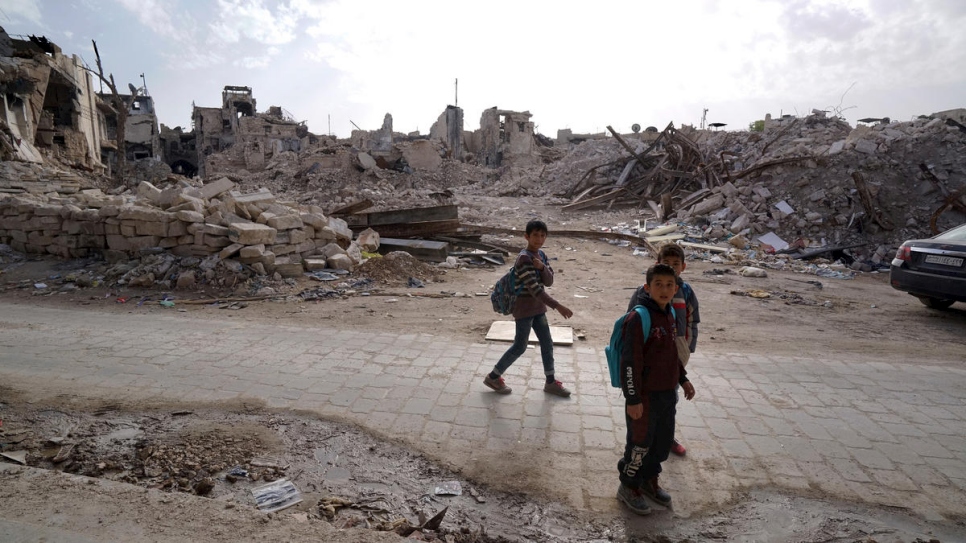
Photo of Aleppo ruins from UNHCR

ICC issues warrants for crimes in Russo-Georgian War

Georgia

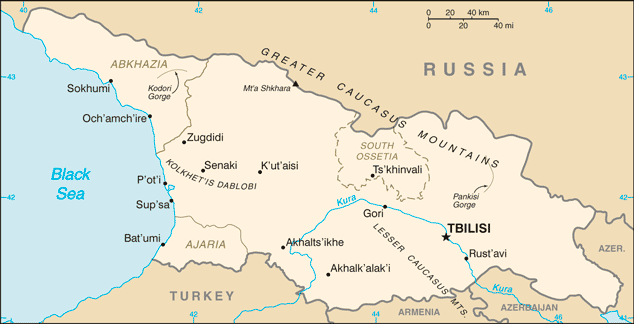
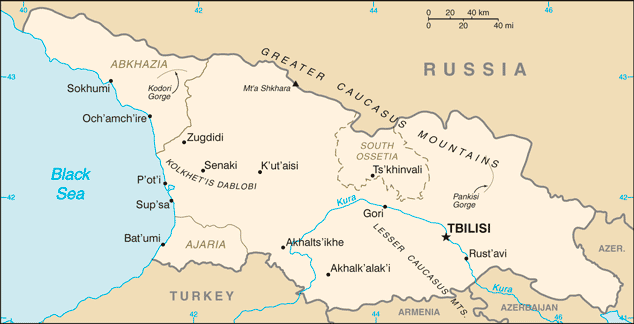
The International Criminal Court's Pre-Trial Chamber I on June 30 issued arrest warrants for three individuals for alleged war crimes committed during the Russia-Georgia war in 2008. Russian nationals Mikhail Mayramovich Mindzaev and Gamlet Guchmazov, along with Georgian national David Georgiyevich Sanakoev are charged with various war crimes, including illegal detention, torture and inhumane treatment, hostage-taking, and illegal transfer of civilians. The ICC says the crimes were committed in August 2008, when the three were fighting for the Russian-backed South Ossetian separatist forces.

On June 24 the ICC accepted the Prosecutor's application for the arrest warrants, filed on March 10. In accepting the application, the ICC observed that:

There are reasonable grounds to believe that civilians perceived to be ethnically Georgian were arrested in the South Ossetian part of Georgia, and subsequently detained, mistreated, and kept in harsh detention conditions in a detention centre in Tskhinvali, before being used as a bargaining tool by Russia and the South Ossetian de facto authorities, and used for an exchange of prisoners and detainees. As a result of the exchange, the detainees were forced to leave South Ossetia.

In August 2008 the Russian military intervened in Georgia's conflict with the Russian-backed forces in South Ossetia. The intervention claimed hundreds of lives and displaced tens of thousands of ethnic Georgians. In January 2016 the ICC began to investigate allegations of crimes against humanity and war crimes allegedly committed in and around South Ossetia between July 1 and Oct. 10, 2008. These accusations involved murder, forced evictions, persecution and other crimes.

From Jurist, June 30. Used with permission.

Map: PLC

Mali massacre: jihadism or ethnic war?

Mali

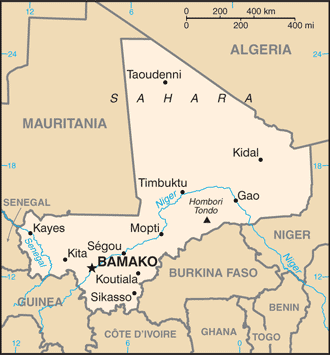
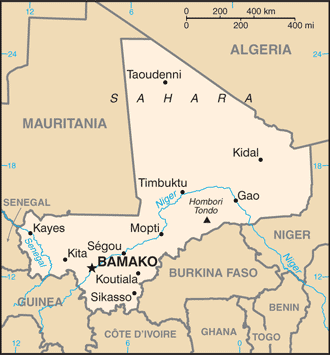
Scores of Malians demonstrated June 21 in the town of Bankass, in central Mopti region, to demand state protection after more than 130 civilians were killed by presumed jihadist militants in three nearby villages over the past days. The massacres in Diallassagou, Dianweli and Deguessagou localities are said to have been carried out by the Katiba Macina, a militant group led by Fulani preacher Amadou Kouffa. The gunmen burned huts and stole cattle in addition to killing villagers. The Katiba Macina is apparently an offshoot of the Qaeda-aligned Group for Support of Islam & Muslims (JNIM). However, in Mopti region, traditionally known to the Fulani as Macina, the violence appears to have taken on an ethnic cast. In March 2019, more than 160 Fulani civilians were massacred at the village of Ogossagou. (Africa News, Africa News, TRT, AFP, El Pais)

Fulani were also targeted in a March 2022 massacre attributed to Russian mercenaries from the Wagner Group.

The past year has seen mounting massacres across the Sahel nations.

Map: PCL

Oil spike sparks national uprising in Ecuador

quito

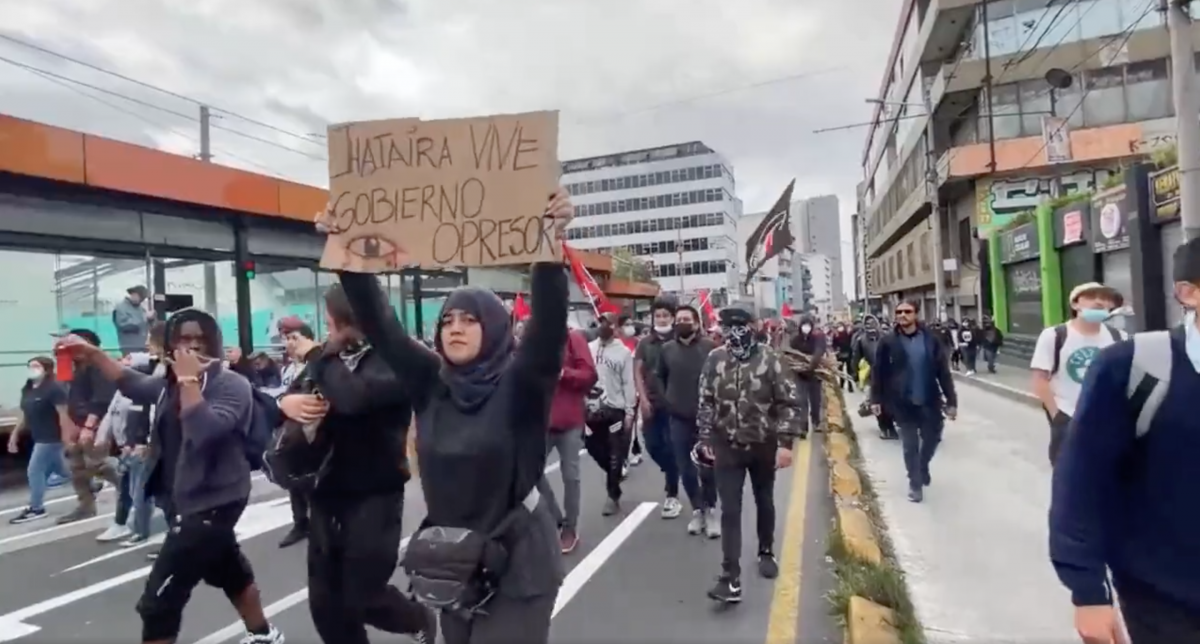
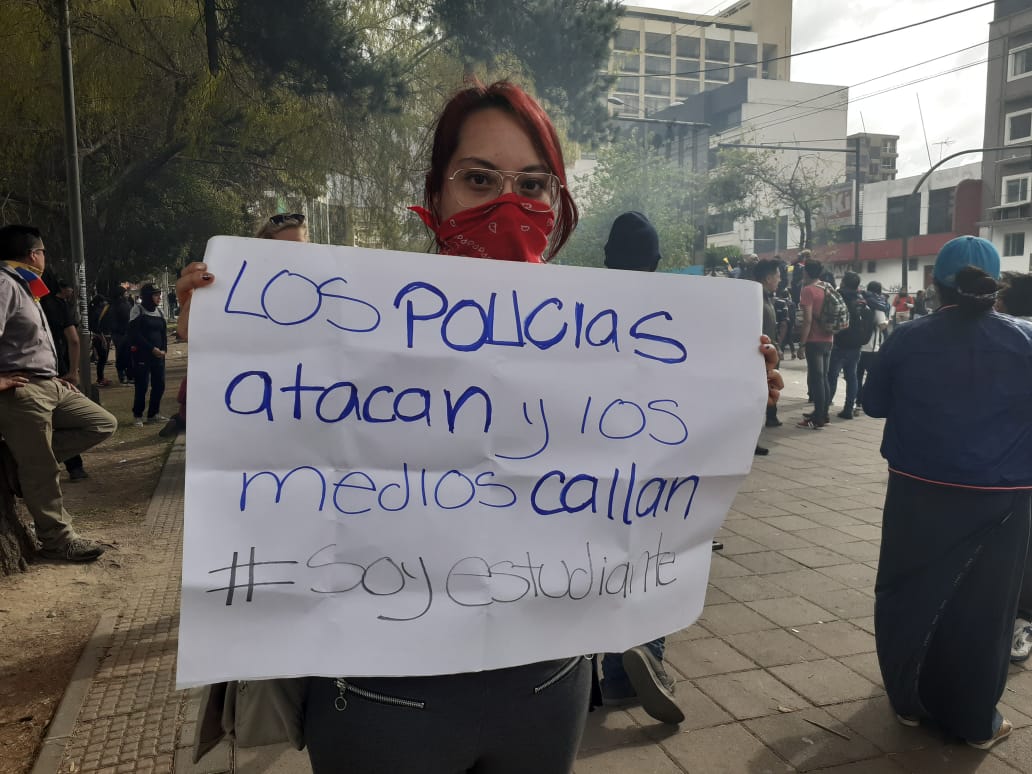
Ecuador's national indigenous alliance CONAIE announced an "indefinite" paro (general strike) June 13, in response to a sudden jump in petrol prices. Things escalated the following day, when prominent CONAIE leader Leonidas Iza was arrested at Pastocalle, Cotopaxi province, where he was apparently participating in a blockade of the Panamerican highway. He was held at a military base at Latacunga, but released the next day following angry protests over his detention and a CONAIE call for "radicalization" of the campaign. Roadblocks are reported in at least 14 of the country's 24 provinces, including Pichincha, where the capital Quito is located. CONAIE has presented the government of President Guillermo Lasso with a list of 10 demands. These include, in addition to a drop in fuel prices, a moratorium on new oil and mineral leases, and reparations to communities impacted by extractive projects. (Al Jazeera, Al Jazeera, EFE, El Comercio, Quito; El Universo, Guayaquil)

Since Russia invaded Ukraine in March, soaring oil prices have resulted in waves of protest in countries across the world. 

See our 2003 interview with Leonidas Iza.

Photo: Kawsachun News

Belarus: anarchist statement on Ukraine war

ABCBelarus

From Anarchist Black Cross Belarus, June 10:

A full-scale war in Ukraine has been going on for over three months now. The anarchist movement has responded to the Russian invasion in different ways during these three months—some have begun unconditionally supporting their comrades in Ukraine, while others continue to repeat the story of NATO aggression in the region. We also felt it necessary to make a statement about our view of events.

After the collapse of the USSR many people hoped that the sharp impoverishment of a large part of the population would be compensated to some extent by civil liberties. In Belarus, this period ended rather quickly with Lukashenko's accession and the gradual creation of a dictatorship. In Russia, hopes for liberalism were still floating in the air for a long time, despite the constant calls to restore the imperialist project—the war in Chechnya was one of the first examples of the brutality of Moscow's "elites" against "peripheral" peoples.

Building the Belarusian dictatorship was impossible without the support of the Kremlin. And it was happening even before Putin came to power. Unscrupulous dictatorship in the Belarusan republic did not bother Yeltsin at all. Russia tried to influence not only Belarus, but also other countries of the former Soviet Union through its politicians and economic pressure. And if in Kazakhstan, for example, the project of support for Nazarbayev resulted in loyalty to Moscow, the 2004 elections in Ukraine and the subsequent protests with the "Orange Revolution" greatly limited the political influence of Putin's government on the country. Ten years later, the popular uprising on Maidan showed that Ukrainians would not tolerate authoritarianism in their country. Their willingness to resist state violence was one of the reasons for their continued fight against the Russian occupation.

In turn, the Lukashenko regime continued to receive support from Moscow in developing a dictatorship. The suppression of the uprising of 2020 is a logical continuation of the state terror against Belarusian society. Protests against Lukashenko took place almost every presidential election, and were met with a brutal response each time. Beatings, torture, and prison sentences for opponents of the regime existed before 2020 and even before the 2010 elections. It was Russia's support that allowed the Belarusian regime to continue to exist, and the suppression of the 2020 movement opened the door to the invasion of Ukraine. With thousands of prisoners and tens of thousands forced into exile, this sweep ensured the weakness of the anti-invasion movement in Belarus. Had Putin invaded Ukraine before 2020, resistance in Belarus would have made war launched from the territory of Belarus an extremely risky project.

Putin's stated reasons for invasion are secondary. It doesn't matter how many times he repeats the story about NATO or chemical weapons in Ukraine (a kind of postmodern irony: Bush and Blair were allowed to lie so shamelessly, why can't we?) The full-scale invasion of Ukraine today is a continuation of Moscow's attempt to crush the 2014 popular uprising and drag the country into the so-called "Russian world": a far-right project involving the permanent growth of the Russian Empire.

In this context, the question arises: how can anarchists respond to this kind of aggression? Let us begin with a rather simple point. As anarchists, we believe that everyone has the right to defend personal freedom, the very freedom that is extended in the freedom of another person. We see the need for a collective defense against the constant encroachment on those small freedoms we seek through constant struggle. If the state comes with a rifle to take our freedoms, we believe that everyone has the right to take a rifle and rebel against the state trying to take those freedoms. The right to rebel against despots is the basis for the formation of a free society. We are not radical pacifists advocating the preservation of peace by any means necessary. We see calls to stop resisting the Russian invasion as a simple misunderstanding of the rather obvious: even if we capitulate, the Kremlin's violence will not stop. We are anti-militarists who believe that all states need disarmament (including the elimination of nuclear weapons) to preserve peace in the long term. But surrendering at the mercy of the aggressor is not our choice.

The situation in Ukraine is quite complicated, but the right to protection from state violence remains for everyone. In the case of war, we see that the violence comes primarily from the Russian state. The example of Mariupol shows that Putin's military is ready to destroy entire cities to achieve its own goals, and by raping, killing, and kidnapping people. The Ukrainian state remains a state and a barrier to freeing people from power, but no Ukrainian politician would allow himself the level of state violence that the Putin regime allows. We would like to point out that the Kremlin's atrocities in Ukraine are only a continuation of its policy of suppressing freedoms within Russia itself. Torture, murder, and kidnapping are a daily occurrence for peoples under Putin's control. We see political and social persecution throughout Russia, as well as dictatorial regimes across the planet supported by the Kremlin.

And in resisting the violence of Russian authoritarianism, the Ukrainian people have found a temporary ally in the Ukrainian state, which has its own goals in this war. We can already see that Ukrainian politicians are trying to push through their own political projects to control the workers under the cover of this war, and the struggle in this direction will be difficult. But this fight will be impossible if Putin wins and the level of violence of the Russian empire spreads throughout Ukraine.

We consider a temporary truce between the anarchists and leftists on one side and the Ukrainian state on the other as forced [by circumstances] and inevitable in the conditions of the modern European war. But this does not mean that we forget our revolutionary aims and advocate the strengthening of the state. The participation of anarchists in military structures should in no way become the formation of a new state patriotism. The alliance with the Ukrainian authorities was and remains temporary, as long as the Russian state continues to shoot at everyone… The rise of the ultra-right can only be countered by the rise of the anarchist revolutionary movement. Not the one that calls for peace by all means, but the one that is ready to take up rifles for self-defense.

A Russian victory in this war would be a complete disaster not only for Ukraine, but for all of Eastern Europe. The Russian world, like the plague, will continue to spread across the continent in an attempt to build a new Empire. In such an environment, it is difficult to imagine the success of a new uprising in Belarus, Kazakhstan, or other countries under Moscow's control. We Belarusian anarchists, who find ourselves in exile, will lose everything we have tried to build over the past 30 years. That is why armed resistance by anarchists against Putin is a revolutionary necessity. Right now, we see the most effective anti-war activity to be joining armed anarchist units in Ukraine, supporting anti-war and anarchist activities in Russia and Belarus as much as possible, and criticizing the nationalist and imperialist sentiments that divide the people living in the region. The fall of Putin and the defeat of the Russian army will lead to the liberation of Belarus…

Meanwhile, our resistance to the "Russian world" continues in the form of support for our imprisoned comrades. Unfortunately, we have received almost no monetary donations in recent months, while the costs of trials and trips to the [ptrion] colonies continue to rise. That is why we are now running a fundraising campaign on the Firefund platform. We need 25,000 euros to cover our debts and court costs. You can make donations on the fundraising page: firefund.net/abcbelarus.

Lightly edited for clarity by CounterVortex

‘Massive’ human rights violations in El Salvador

Salvador

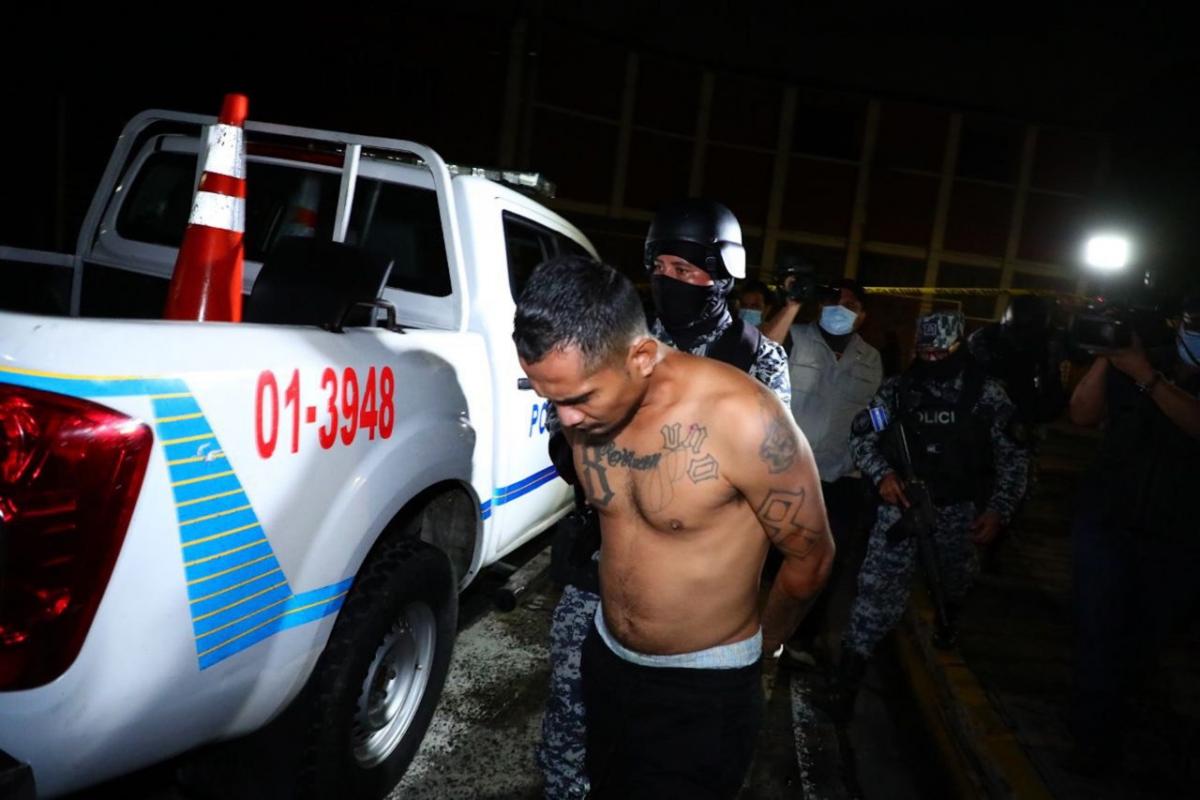
Amnesty International reported June 2 that authorities in El Salvador have committed "massive" human rights violations, including arbitrary detentions, due process violations and torture, under cover of an ongoing state of emergency. Amnesty found that 35,000 individuals have been illegally detained without due process since President Nayib Bukele declared a state of emergency in response to gang violence in March, suspending constitutional guarantees. At least 1,190 minors are among the detained, and more than 18 detainees have died in custody. The National Assembly has twice extended the so-called "regime of exception" by 30-day intervals. The day after Amnesty issued the report, the Inter-American Commission on Human Rights (IACHR) urged El Salvador's government to comply with international human rights obligations in implementing security measures. (Jurist, Jurist)


Photo: Presidencia de El Salvador

Sahel: deadly violence in mining sector

Sahel

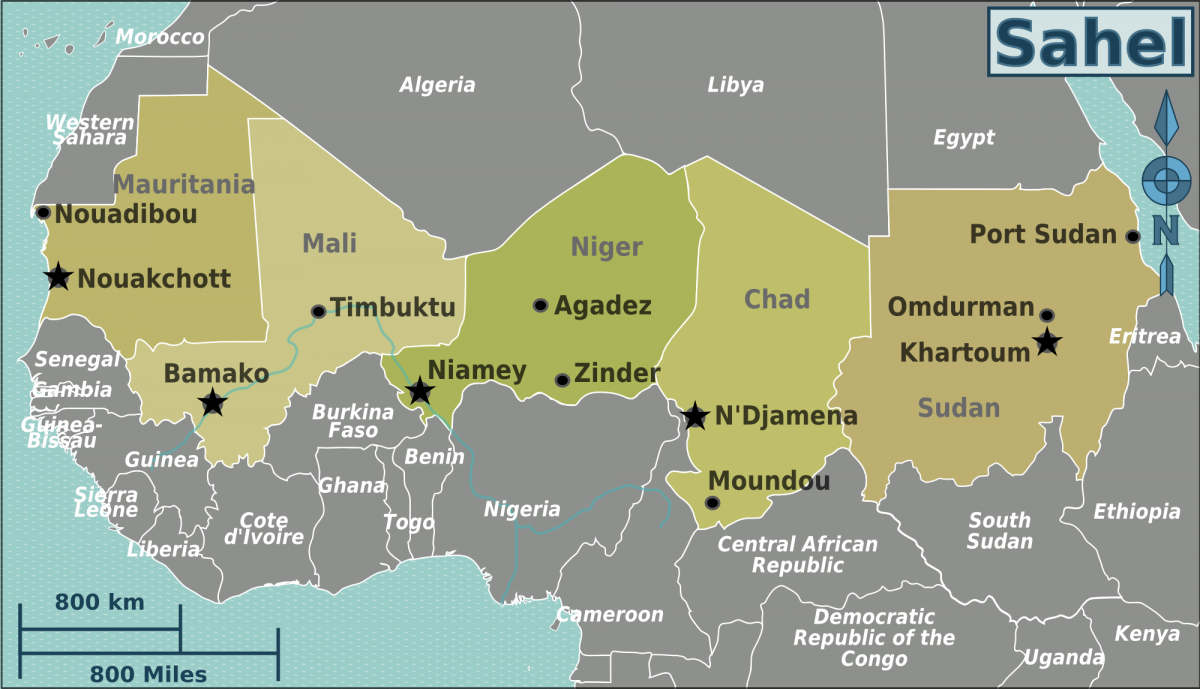
At least two were killed May 24 as security forces clashed with protesting gold miners at Burkina Faso's western Houndé commune, Tuy province. The protesters were demanding the release of 12 of their comrades who had been arrested a week earlier, when informal miners angered by government moves to expel their camps overran and ransacked the facilities of Houndé Gold Operation, a subsidiary of the UK-based multinational Endeavour Mining. (AfricaNews, AFP) Rescue workers meanwhile recovered the bodies of four miners who had gone missing after floodwaters submerged a zinc mine operated by Canada's Trevali Mining at Perkoa, in nearby Sanguié province. (CNN, BBC News Gahuza)

In far greater violence, fighting between rival groups of informal gold miners in the remote north of Chad on May 23 left an estimated 200 dead. The clashes at Kouri Bougoudi, in the Tibesti mountains on the Libyan border, apparently pitted ethnic Arabs against members of the Tama community. (AFP, Al Jazeera)

Map: Wikivoyage

Iran: protest, repression as food prices soar

#Internet4Iran

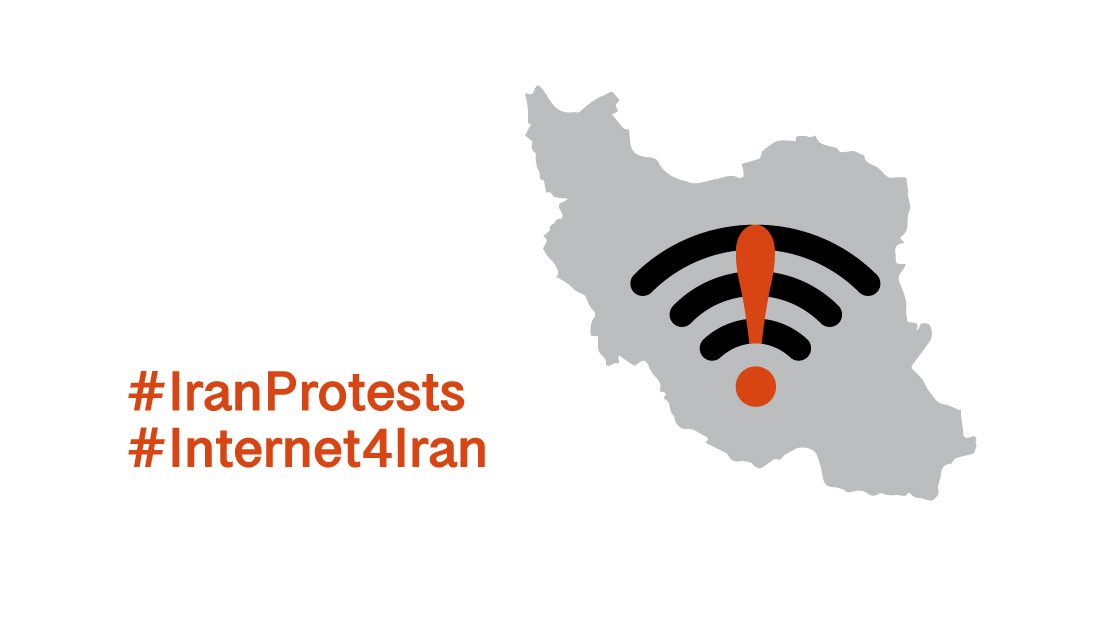
Angry protests have swept through several provinces of Iran over the past two weeks amid an economic crisis exacerbated by subsidy cuts that have seen the price of basic goods soar as much as 300%. According to reports on social media, at least six people have been killed as security forces have been deployed across the country to quell unrest. The protests have turned political in many areas, such as the Isfahan provincial capital of Golpayegan, with crowds calling for an end to the Islamic Republic. The government has cut off the internet to a number of areas hit by protests, including traditionally restive Khuzestan province.

Last month, Iran's government, led by the newly elected President Ebrahim Raisi, announced a decision to cut subsidies for wheat and flour, calling it necessary "economic surgery." (Middle East Eye, Iran Briefing, Al Arabiya)

Iran witnessed a wave of protests over similar issues in 2019. There have since been intermittent protests by the Ahwazi Arab people in Khuzestan over access to contested water resources. The new protests come amid a harsh drought and rising food prices across the Middle East region, worsened by a cut-off of Ukrainian wheat exports due to the war.

Image: Hajar Morad via Twitter

Iraq: thousands displaced in new battle for Sinjar

Sinjar

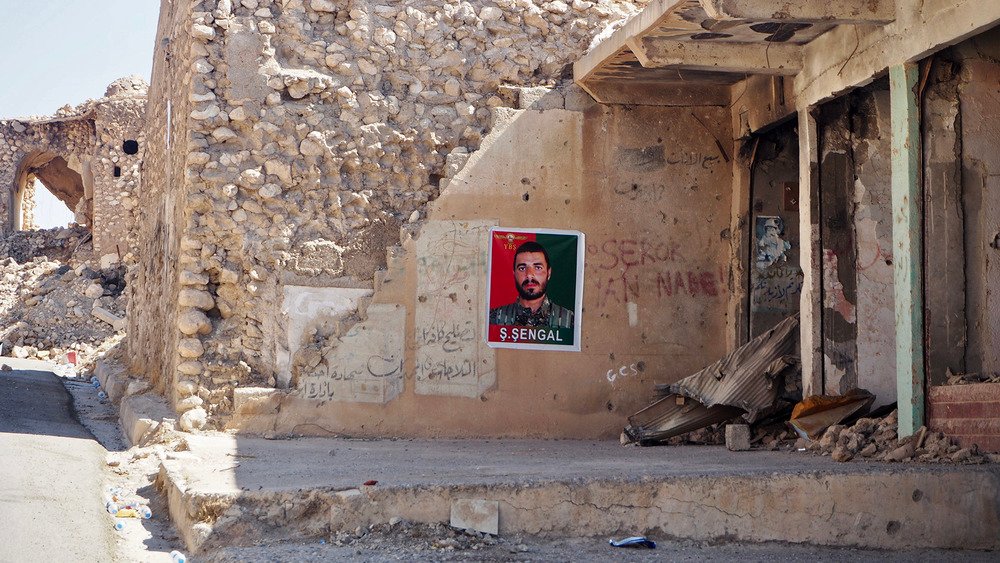
Clashes between the Iraqi military and a local Yazidi militia have forced more than 3,000 people to flee the northern town of Sinjar. Fighting erupted May 1, when the military launched an operation to clear the area of the Sinjar Resistance Units (YBS), a militia with ties to the Kurdistan Workers Party (PKK). Many of those displaced are Yazidis who survived the 2014 Islamic State genocide against the ethnicity. They are now distributed in camps across Iraq's Kurdish region. In 2020, Baghdad and the Kurdistan Regional Government (KRG) signed a pact to restore their joint control to the autonomous Yazidi enclave, known as Ezidikhan. The deal has not been implemented until now, despite growing pressure from Turkey, which has carried out intermittent air-strikes on the Sinjar area. (WaPo, AP, TNH)

Photo: A poster commemorating a slain YBS fighter on a bombed-out building in Sinjar. Credit: TNH

French forces out of Mali, into Niger

Niger

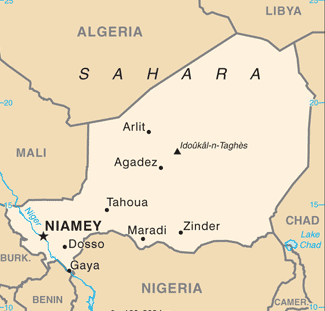
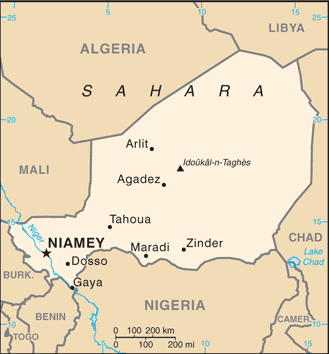
Lawmakers in Niger have approved a bill that clears the way for more foreign troops to be deployed in the country, which is fighting several jihadist insurgencies. The move comes as French and European forces withdraw from neighboring Mali, having fallen out with the ruling junta there. Niger's President Mohamed Bazoum had already announced plans in February to absorb some of the departing soldiers. But passing the bill through parliament formalizes the decision, amid rising anti-French sentiment in the country and the wider region.

Alongside the military approach, Bazoum has also been trying to initiate dialogue with jihadist leaders, even releasing militants from custody.

Burkina Faso's junta leader, Paul-Henri Sandaogo Damiba, appears to be adopting a similar strategy—calling for dialogue and off-ramps for insurgents while maintaining military pressure at the same time.

From The New Humanitarian, April 29

Map: PCL

Transnistria blasts signal spread of Ukraine war

Druzhba

A series of blasts tore through the building of the de facto "Ministry of State Security" in Tiraspol, capital of Moldova's separatist-controlled enclave of Transnistria, on April 25. Officials said the building was fired on by unknown assailants with grenade launchers. Video footage showed windows and doors blown out, although there were no reports of casualties. (Reuters) Ominously, the attack comes one day after a Russian military commander openly broached extending Moscow's war in Ukraine to neighboring Moldova.

Speaking before a meeting of the Union of Defense Industry Enterprises of Sverdlovsk Region, Maj-Gen Rustam Minnekayev, deputy commander of Russia's central military district, said that Moscow's current offensive is aimed at establishing a "land corridor to Crimea," and added: "Control over the south of Ukraine would also give the Russian army access to Transnistria, where evidence of oppression of the Russian-speaking population has also been observed." (Politico, CBS, TASS)

Since the collapse of the Soviet Union, Transnistria has been a "phantom republic," one of several around the world—effectively independent, but with no international recognition. With the support of Soviet troops stationed there, ethnic Russian leadership in the region declared their own independence from newly independent Romanian-speaking Moldova in 1991. Even Moscow does not officially recognize Transnistria, while still maintaining some 1,500 Russian troops there.

Transnistria is only recognized by three other phantom republics: Artsakh, the Armenian-governed enclave in Azerbaijan; and Abkhazia and South Ossetia, the Russian-backed breakaway regions of Georgia. These four entities have jointly established a Community for Democracy & Rights of Nations (formerly the Commonwealth of Unrecognized States) to pressure for their international recognition. (Nationalia)

It should be noted, however, that Transnistria is hardly "democratic." There are periodic elections, but the only monitors are from the Russian-led Commonwealth of Independent States. The latest Amnesty International report on Moldova notes that last year "critics of the de facto authorities faced criminal prosecution."

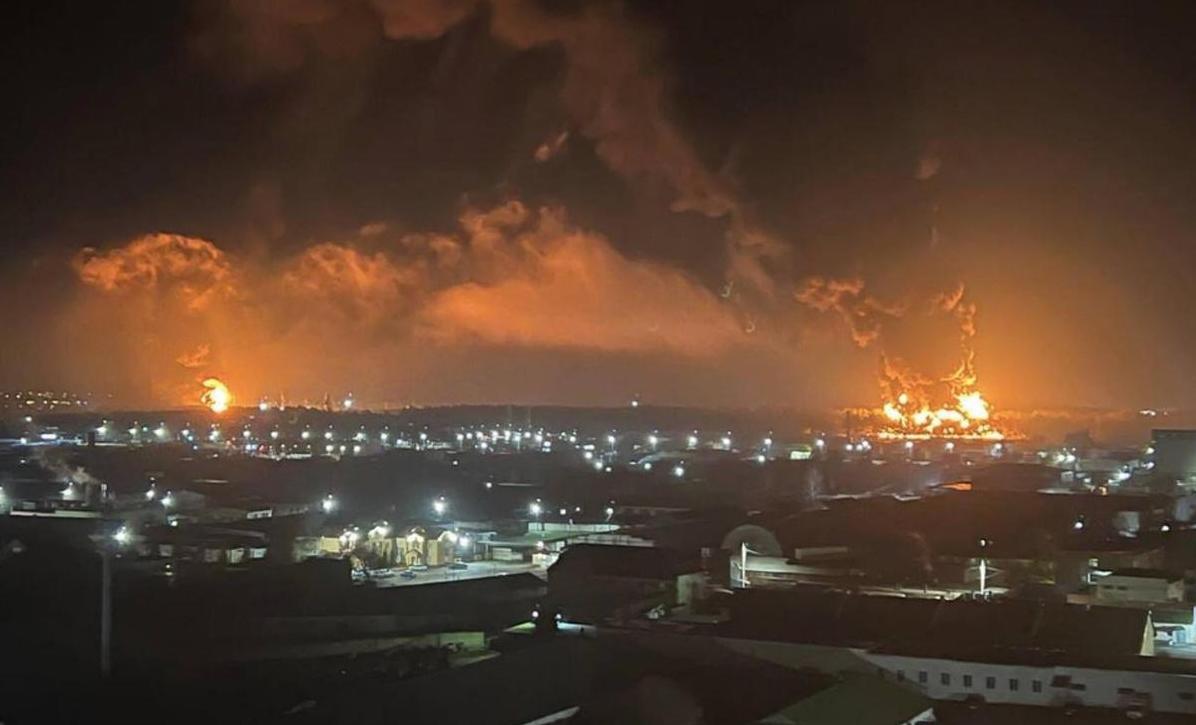
Interestingly, April 25 also saw two large explosions in Bryansk, a Russian town some 100 miles the Ukrainian border, which is serving as a key staging area for the invasion. The town is also a hub on the Druzhba oil pipeline, and the flames engulfed a petroleum depot operated by Transneft, the Russian company that runs the line. There has been no word yet on the cause of the blast, but Russian officials last week said that Ukrainian helicopters attacked residential buildings in the area, injuring seven people. (Reuters)

Ukraine's Euromaidan Press notes "unconfirmed speculation" that Kyiv's forces were behind the Bryansk blasts, and recalls that there were similar accusations after an attack on an oil depot in Belgorod, another Russian town near the border, on April 1. Euromaidan writes that the "attacks on fuel facilities in Bryansk may also be Russian false flag operations."

It is practically inevitable that we will soon be hearing the same thing about the Tiraspol attack. We've noted since the Ukrainian conflict began in 2014 the use of "black propaganda" by both sides.

Photo of Druzhba blasts: Anonymous Operations

Russia: student journalists sentenced to labor

Doxa

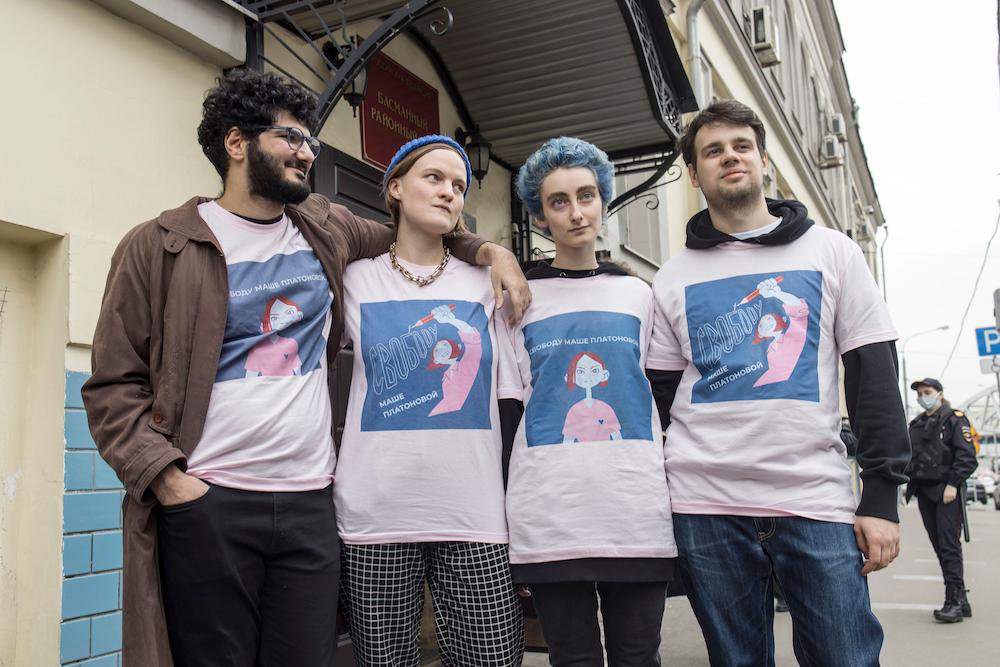
Four journalists who worked for the independent Moscow student magazine Doxa were sentenced to two years' "correctional labor" April 12 over an online video in which they defended the right of young Russians to engage in peaceful protest. The four—Alla Gutnikova, Armen Aramyan, Natasha Tyshkevich and Volodya Metelkin—had been under house arrest for nearly a year after being detained for posting the three-minute video on YouTube. In the video, posted in January 2021, they asserted that it was illegal to expel and intimidate students for participating in demonstrations in support of imprisoned Kremlin critic Alexei Navalny. Prosecutors claimed that the video encouraged the "involvement of minors" in anti-Kremlin protests, leading to the arrest of over 100 people under the age of 18 in the demonstrations then sweeping Russia.

Under Russian law, those handed "correctional labor" sentences must pay the government up to 20% of their wages if they are employed. If they are unemployed, they must work at jobs assigned by the prison service during the term of their sentence.

The four journalists were detained in April 2021 for questioning by the state Investigation Committee. Their homes and the Doxa offices were also searched in the raids. (The Guardian, openDemocracy, RFE/RL)

In a statement on the Doxa website and social media upon her sentencing, defendant Alla Gutnikova invoked literary and cultural figures including Walter Benjamin, Hannah Arendt, Audre Lorde, bell hooks, Madina Tlostanova, Joseph Brodsky, Sergei Rachmaninoff and Mahmoud Darwish, before urging her supporters:

Be like children. Don't be afraid to ask (yourselves and others), what is good and what is bad. Don’t be afraid to say that the emperor has no clothes. Don't be afraid to yell, to cry. Repeat (to yourselves and others): 2+2=4. Black is black. White is white. I am a person, strong and brave. A strong and brave woman. A strong and brave people.

Access to the Doxa website has apparently been blocked in Russia.

See our last report on the fast-escalating crackdown on dissent and independent media in Russia.

Photo via openDemocracy

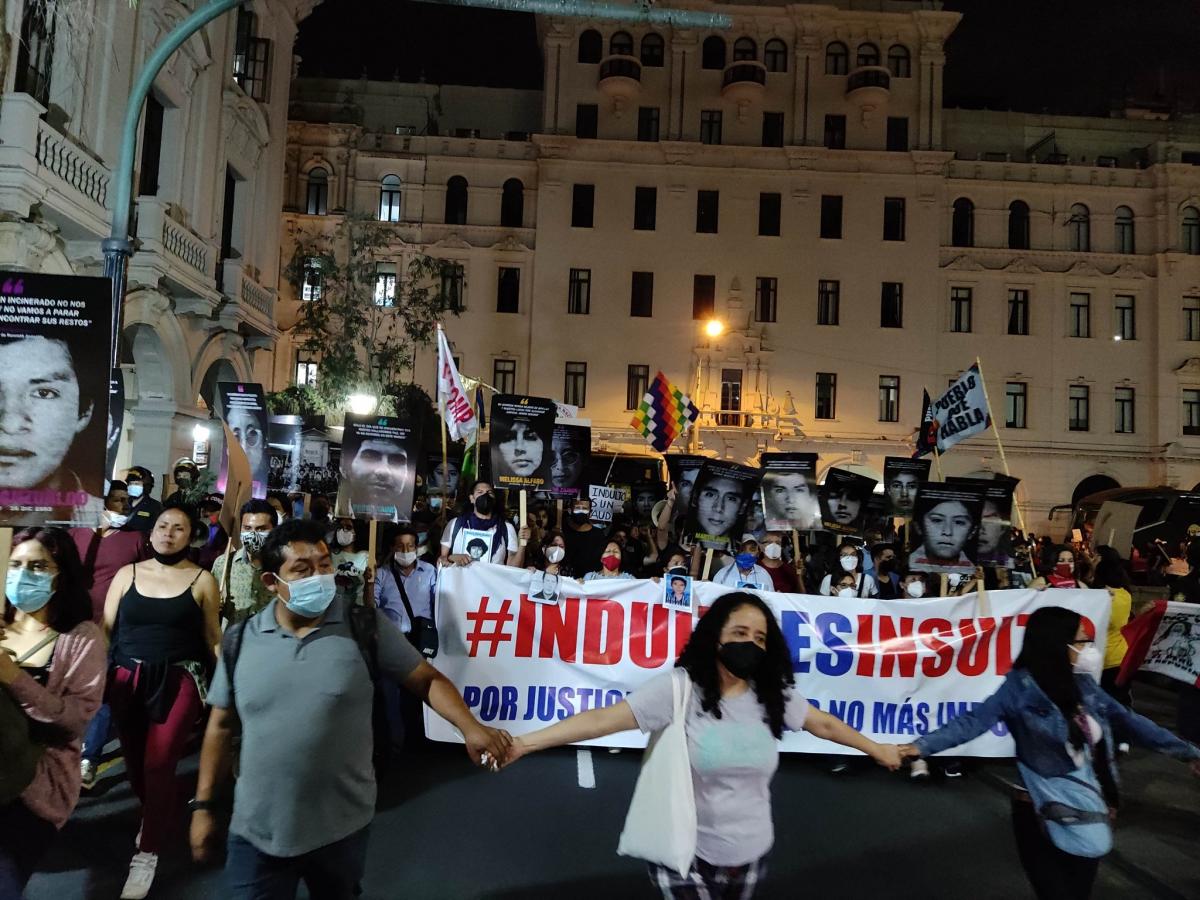
Peru: protests over pending pardon for ex-dictator

indulto

Protests broke out in Lima, Cuzco and other cities in Peru after the country's Constitutional Tribunal on March 17 overruled a lower court annulment of a pardon for former dictator Alberto Fujimori. Further protests were ignited on March 28, when the Tribunal ordered his release from prison.  On March 31, however, the Inter-American Court of Human Rights (IACHR) ruled that the Peruvian state must refrain from executing the release order while the IACHR weighs provisional measures requested by representatives of the victims of the 1991 Barrios Altos and 1992 Cantuta massacres, for which Fujimori was convicted and sentenced in 2009. Fujimori has also been facing a judicial process over accusations of mass forced sterilizations under his government. (Jurist)


Photo via Twitter

South Sudan headed ‘back to war’

South Sudan

South Sudan's Vice President Riek Machar warned March 28  that the country is heading "back to war" following attacks on his Sudan People's Liberation Movement/Army-in Opposition (SPLM/A-IO) by government forces under President Salva Kiir. The warring parties signed a 2018 peace agreement that led to a unity government two years later. But key parts of the deal have not been implemented, and violence has flared in the countryside. Machar's party suspended its participation in peace deal monitoring mechanisms after claiming that his house had been surrounded by government forces on March 27. As tensions build, humanitarian needs are deepening: more than 70% of South Sudan's population are expected to face extreme hunger this year, while funding constraints and attacks on aid convoys will likely continue to complicate relief efforts.

From The New Humanitarian, April 1

Photo: Sam Mednick/TNH

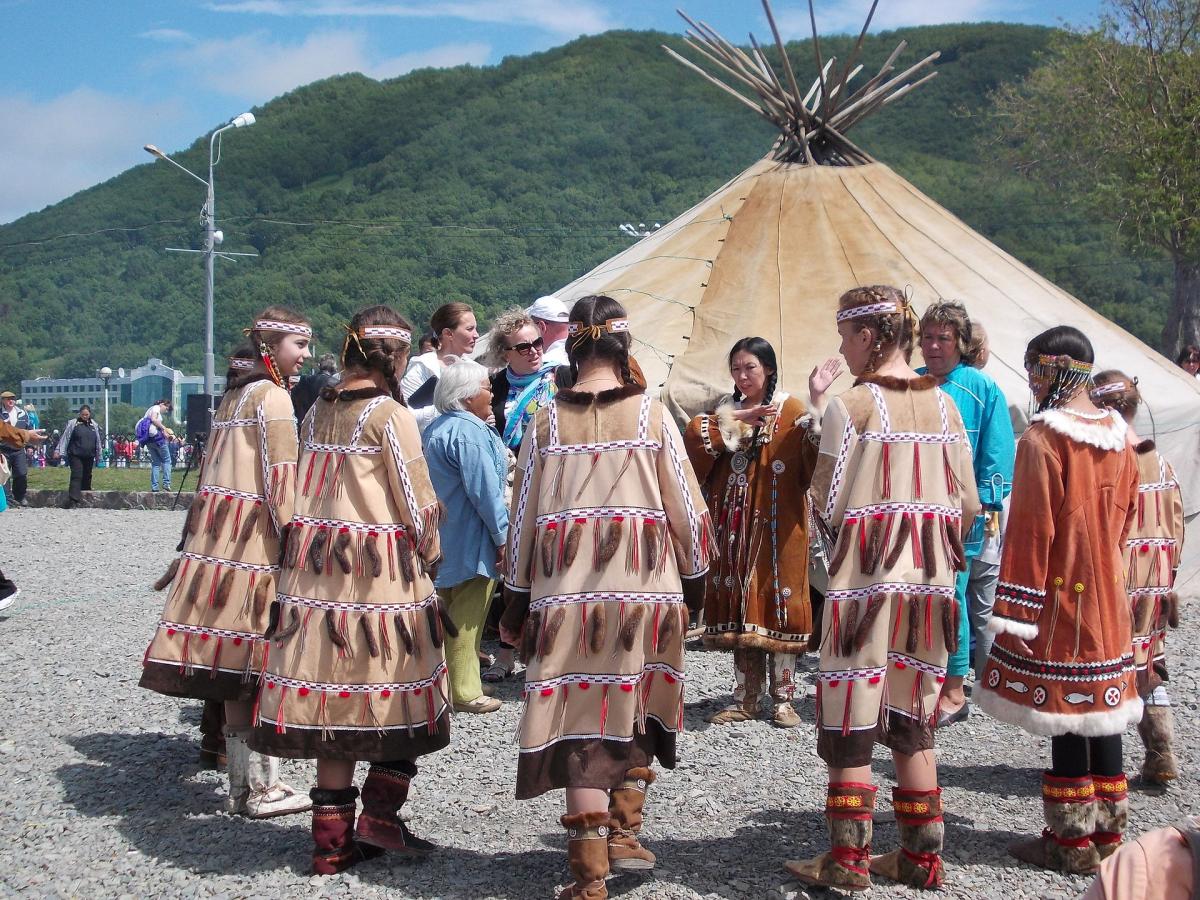
Russian indigenous leaders protest Putin’s war

Itelmens

Exiled leaders of Russia's Itelmen, Kamchadal, Udege, Shor, Saami and Selkup indigenous peoples issued a statement on March 10 declaring that they are "outraged by the war President Putin has unleashed against Ukraine. At the moment, the entire population of Ukraine is in grave danger. Old people, women and children are dying. Cities and towns of an independent country are being destroyed because their inhabitants did not want to obey the will of a dictator and a tyrant." The statement adds: "As representatives of Indigenous peoples, we express solidarity with the people of Ukraine in their struggle for freedom and are extremely concerned about ensuring the rights of Indigenous peoples during the war on Ukrainian territory, including the Crimean Peninsula that remains illegally occupied by Russia."

The seven exiled leaders also express outrage at statements by the Russian Association of Indigenous Peoples of the North (RAIPON) in support of Putin's war effort. The exiled leaders charge that RAIPON leaders Grigory Ledkov, Alexander Novyukhov and Anna Otke, who signed the pro-war statement, "should be also treated as war criminals, not merely accomplices of the war, because they voted for military action as members of the Russian Parliament."

The exiled leaders call upon the United Nations, the Council of Europe and the Arctic Council to withdraw recognition of RAIPON as a representative organization of Russia's native ethnicities. They announce the creation of a new, independent organization—the International Committee of Indigenous Peoples of Russia. (Indigenous Russia)

See our last post on anti-war dissent in Russia.

Photo of Itelmen people in the Kamchatka Peninsula via Wikipedia

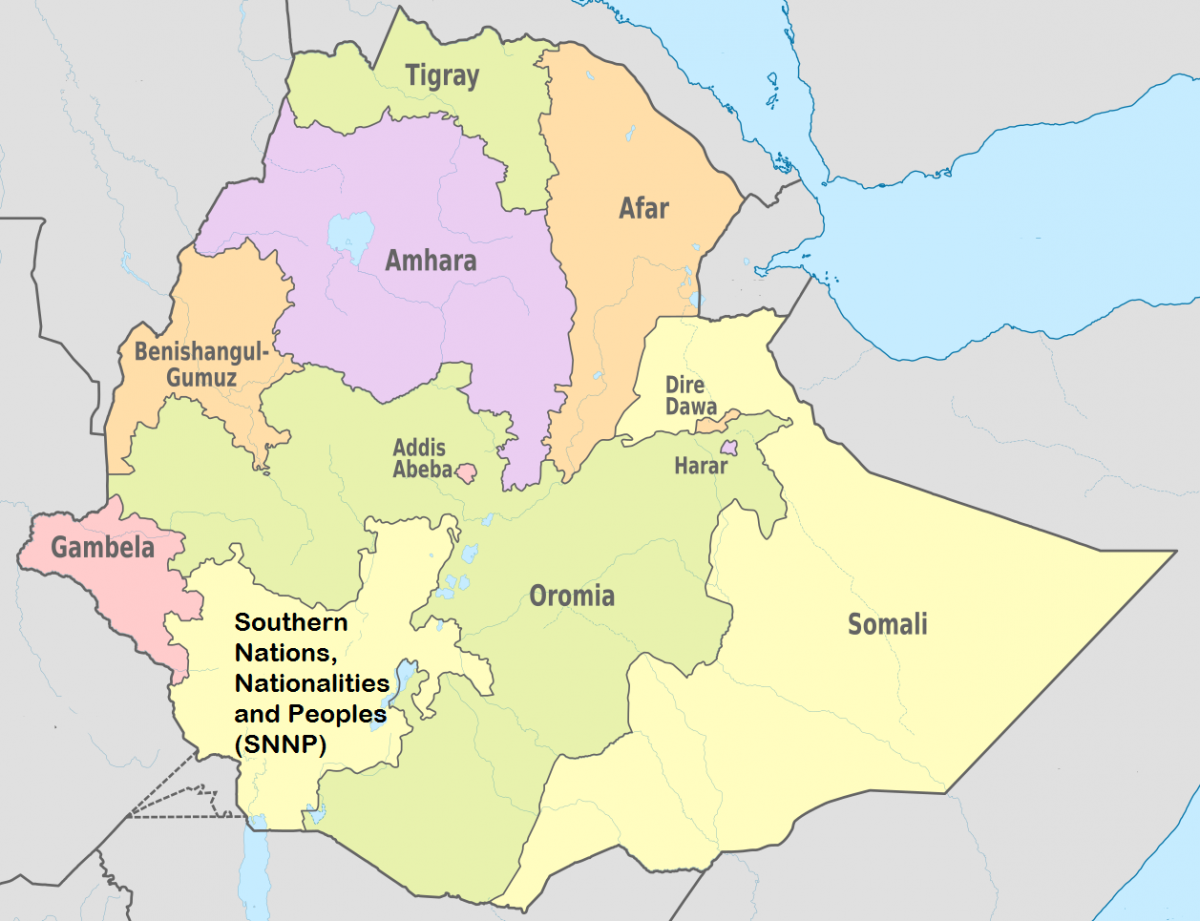
‘Emergency’ ends in Ethiopia — but not the war

Ethiopia

Ethiopia's parliament voted on Feb. 15 for an early end to a six-month state of emergency, with the government citing its improved military position. The measure—introduced as Tigrayan rebel forces threatened Addis Ababa in November—gave the government power to detain citizens without charge, and thousands of Tigrayan civilians were rounded up. Tigrayan forces have since withdrawn to their stronghold in the country's north. Before doing so, they committed atrocities, including gang rapes, in the contested Amhara region, according to a report by Amnesty International. Government forces and their Eritrean allies are also accused of widespread abuses. Both sides are under international pressure to find a political solution to the war—with the release of detainees held under the state of emergency seen as an important step to dialogue. But fighting continues in Tigray and Afar, and the humanitarian situation remains dire. Medical supplies this month reached Tigray for the first time since July 2021—but there is no fuel for distribution of these critical supplies. The last time the government allowed in fuel for humanitarian operations was in August.

From The New Humanitarian, Feb. 18

Map via EthioVisit

Pipeline rupture in Ecuador’s Amazon fouls river

OCP

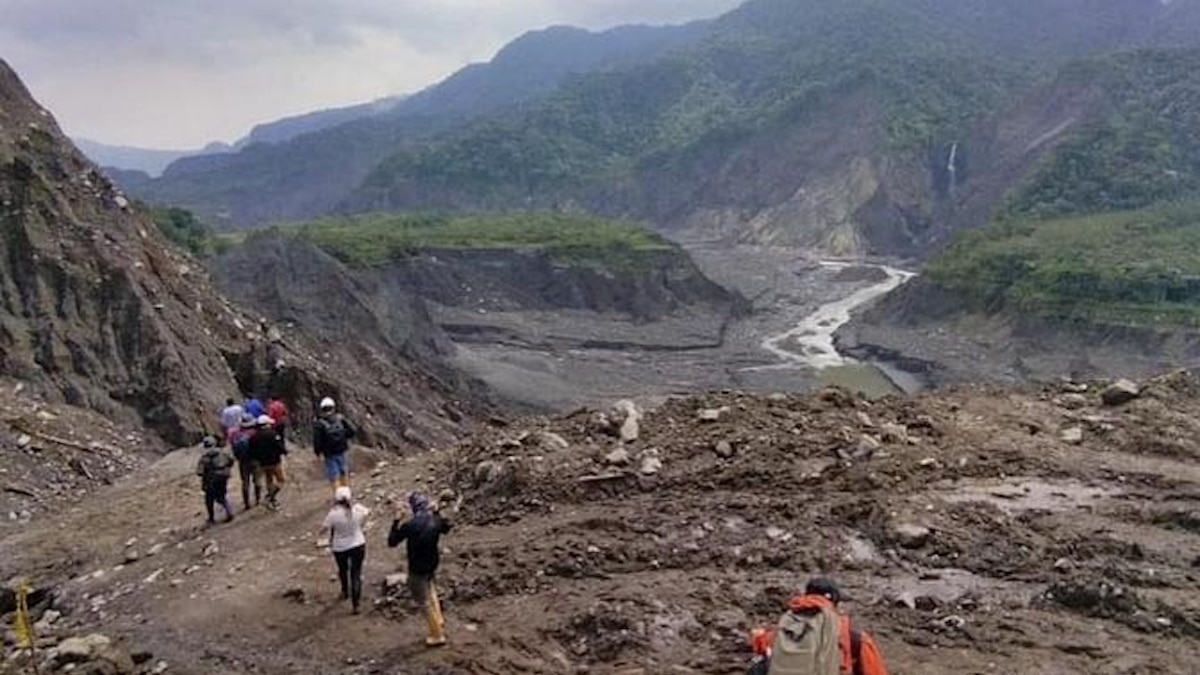
Ecuador's trans-Andean Heavy Crude Pipeline (OCP) ruptured amid heavy rains Jan. 28, spilling oil into a sensitive area of Napo province and contaminating several rivers draining into the Amazon Basin, including the Napo, Piedra Fina, Quijos and, most seriously, the Coca. The contamination also penetrated Cayambe-Coca National Park. Pipeline operator OCP Ecuador didn't announce that it had stopped pumping through the stricken line until the following day, and at first denied that any waterways had been contaminated. This was repudiated in a statement from the Confederation of Amazonian Indigenous Nationalities of Ecuador (CONFENIAE), which cited reports from impacted Kichwa communities. 

"The impact of the oil spill has reached the Kichwa community of Panduyaku in the province of Sucumbíos," CONFENIAE tweeted Jan. 29, along with a video showing crude polluting the Rio Coca.

In April 2020, both the OCP and the state-owned Trans-Ecuadoran Oilduct System (SOTE) pipeline burst in the same area, in an accident blamed on erosion, triggering a major spill into the Rio Coca. (EcoWatch, DW, Mongabay)

There was also a major oil spill on the Rio Coca in June 2013.

Photo: Ecuador Ministry of Environment via EcoWatch

Honduras transition in the New Cold War

Honduras

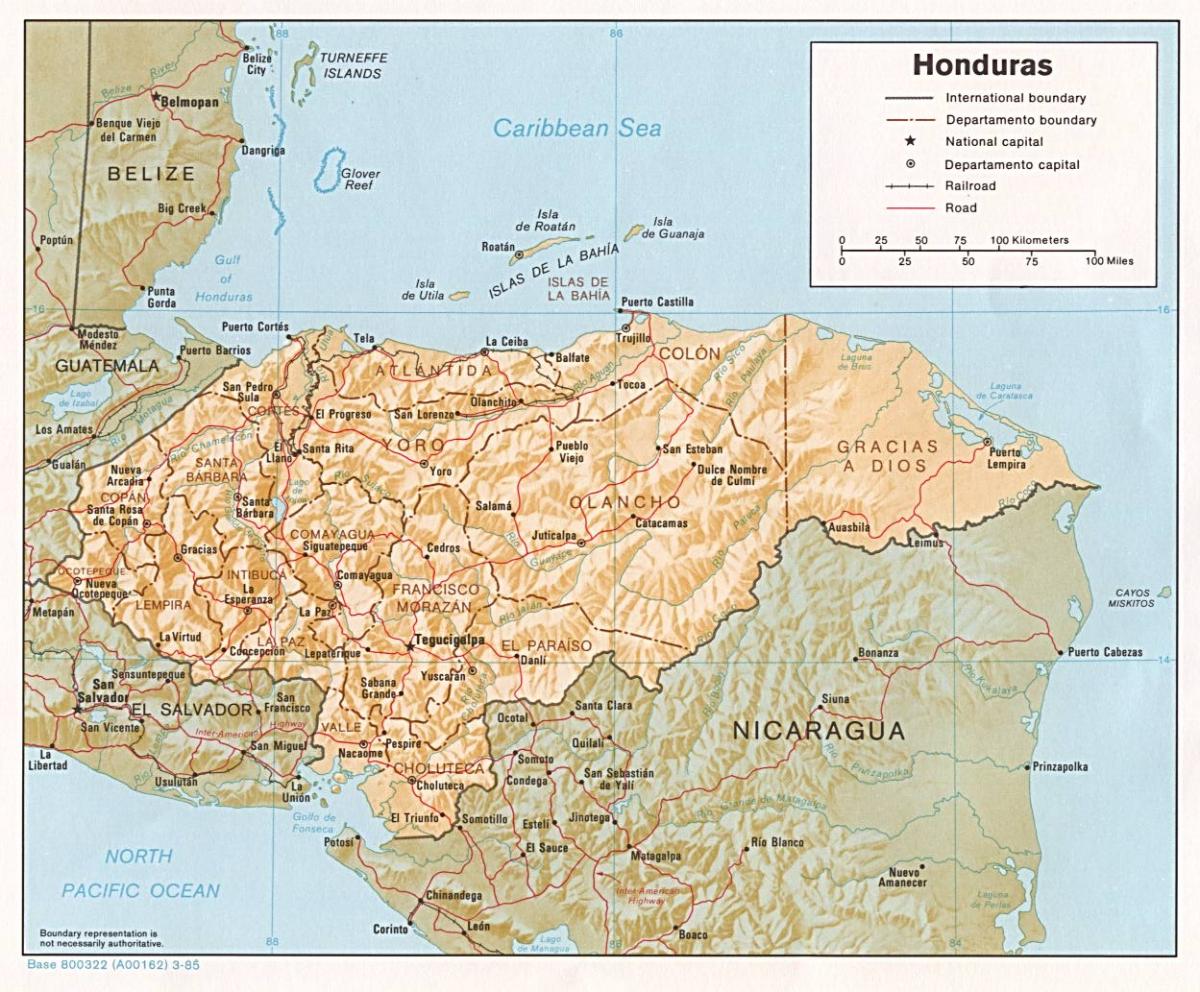
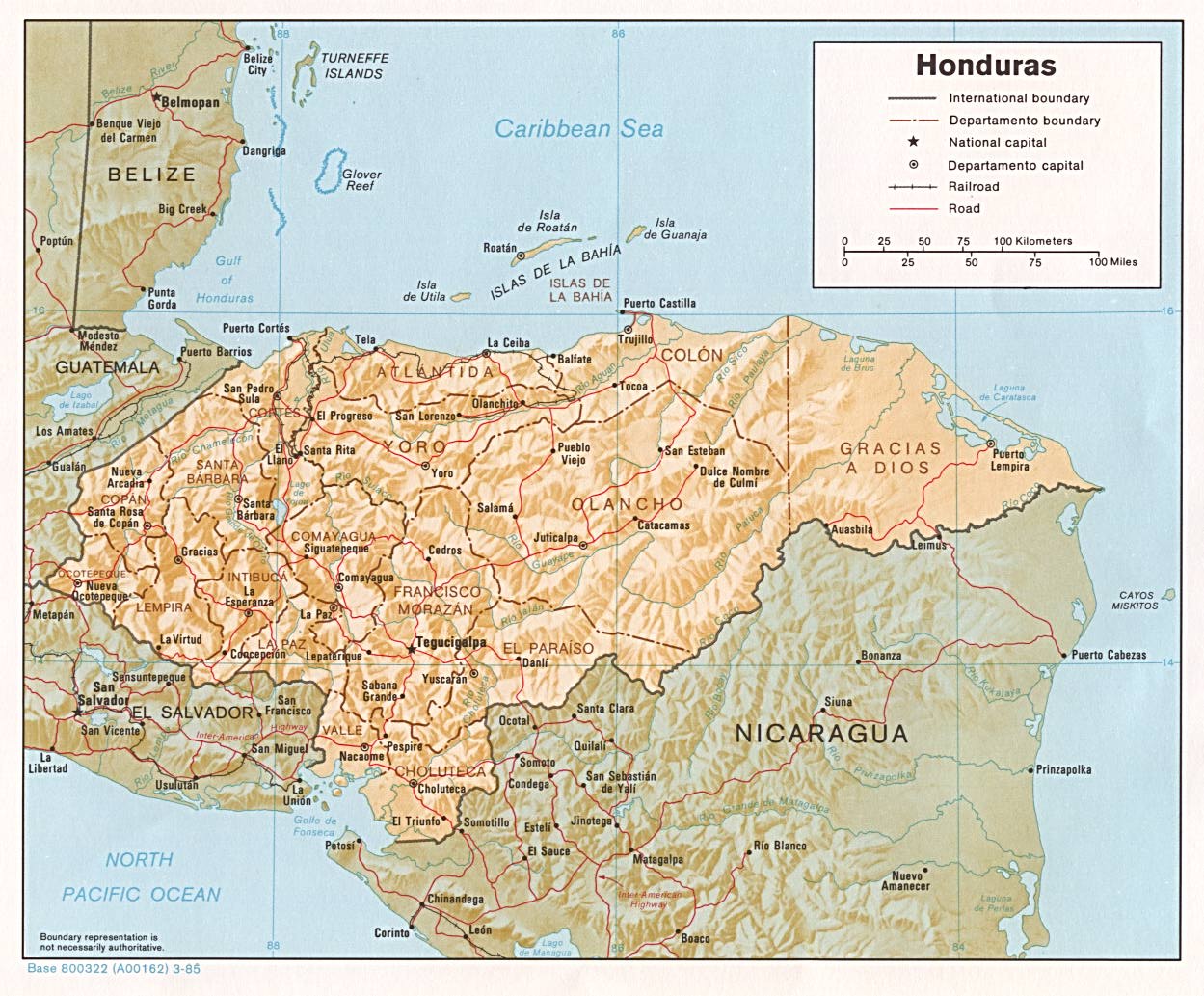
Hondurans last month elected Xiomara Castro of the left-populist LIBRE Party to be the country's first woman president, defeating Nasry Asfura of the conservative National Party. Taking office next month, Castro is to replace the National Party's President Juan Orlando Hernández, whose term has been plagued by scandal and accusations of ties to narco-trafficking. The wife of Manuel Zelaya, the populist president who was removed in a coup in 2009, Castro seems poised to revive his program—and take it much further.  "Never again will the power be abused in this country," she declared upon her victory. She has proclaimed herself a "democratic socialist," and pledges to govern through a new model of "participatory democracy," placing a series of reforms before the voters through referenda or "consultas."

Castro also pledged during her campaign that she will "open diplomatic and commercial relations with continental China," which was widely taken as meaning a switch of diplomatic recognition. Honduras is currently one of only 14 countries that recognize Taipei rather than Beijing. (The Hill, NYT, El Economista, Mexico, El Heraldo, Honduras, Taipei Times)

"It's an attempt to balance the hegemony of the United States," economist Ismael Zepeda of the Honduran thinktank FOSDEH told The Guardian. "Honduras wants to enter into the dynamic of saying if you do not support me internally, I have another ally who will give me the resources I need if I want to build megaprojects."

One of these megaprojects is the Patuca III hydro-electric dam in marginalized Olancho department, La Miskitia region—being built by the Chinese firm SinoHydro, and bitterly opposed by the local Tawahka, Pech, Miskitu and Garifuna indigenous peoples. (Cultural Survival, Cultural Survival, International Rivers, BankTrack) SinoHydro was also involved in construction of the Agua Zarca dam—that which was being opposed by the martyred indigenous environmentalist Berta Caceres. 

According to World Bank data, Honduras owes 4% of its $10 billion external debt to China compared to 0.01% to the US. The country's principal creditors are international bondholders, the Inter-American Development Bank (IDB), the Central American Bank for Economic Integration (CABEI), and the World Bank.

But Honduras has traditionally been strategically important to the US; it has long hosted Joint Task Force Bravo, the Pentagon's principal component for hemisperic policing. "The US will not let Honduras go because it is crucial for homeland security," Antonio Yang, a Taiwanese Latin America expert and honorary professor at the National Defense University in Tegucigalpa. told the Financial Times. 

And indeed, the incoming Castro administration has already started to equivocate. Gerardo Torres, the LIBRE Party's secretary of international relations and a member of Castro's transition team, this week said: "The new government will maintain relations with Taiwan. President-elect Xiomara Castro has been clear, these ties will be maintained. Nobody in the party wants to enter government distancing ourselves from the United States." (Al Jazeera)

One senses quiet pressure from the US embassy behind this back-pedalling. In the past five years, three countries in Central America and the Caribbean have switched their recognition from Taipei to Beijing: El Salvador, Panama and the Dominican Republic. In all three cases, the US responded by symbolically recalling its ambassadors. But the hypocrisy of the US position is obvious: Washington itself has recognized Beijing instead of Taipei since 1979.

On Dec. 10, Nicaragua became the latest country to switch diplomatic recognition from Taiwan to China, which is what prompted the seeming back-pedalling from the LIBRE Party. (BBC News, Al Jazeera)

It is the archaic fiction of "One China" that reduces Central America and Taiwan alike to diplomatic pawns in the New Cold War between Washington and Beijing. It is tragic to see the Central American republics, in their struggle to break free of Washington's orbit, acquiesce in Beijing's design to incorporate Taiwan into its own orbit—or, more ambitiously, its national territory. Yet another illustration of how a global divide-and-rule racket is the essence of the state system.

Map: Perry-Castañeda Library

India: Northeast marks 2021 without journo-murder

Assam

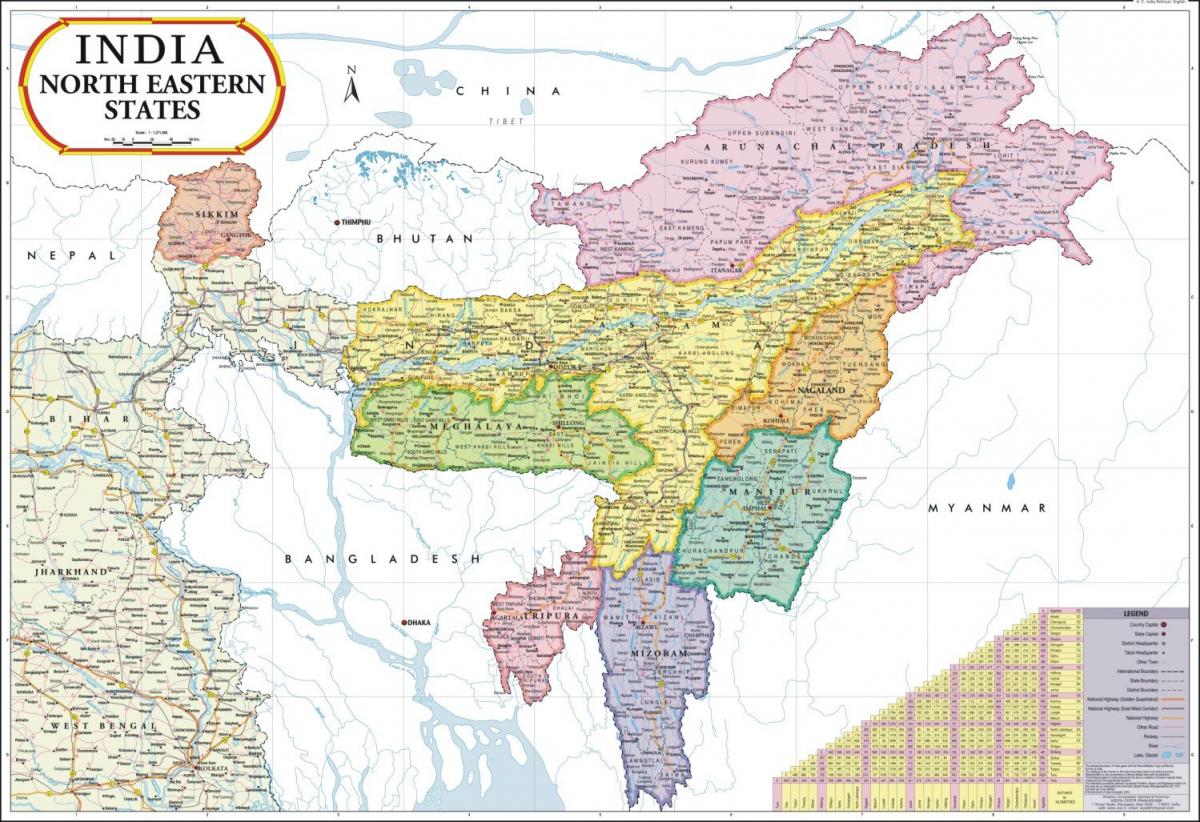
If nothing sad happens in the next weeks, India's restive Northeastern region will complete another year without any incident of journo-murder, maintaining the trend for the last four years. The region, comprising eight states with a population of over 60 million, witnessed the slaying of journalists for the last time in 2017. However, the country as a whole continues to lose scribes to targeted killings. To date, the nation in 2021 has witnessed the murder of five journalists, while acclaimed Indian photojournalist Danish Siddiqui was killed in Afghanistan. India lost 15 scribes to assailants in 2020, one of the worst records on Earth.

Many of the Indian journalists killed over the past generation were in the Northeastern states, which are beset by multiple armed insurgencies. The state of Assam alone has witnessed the homicide of over 30 reporters, correspondents and editors since 1991. Particularly emblematic is the case of Kamala Saikia, an elderly veteran of India's independence struggle assassinated by the United Liberation Front of Asssam (ULFA), apparently targeted for his criticisms of the militant group. The outspoken media columnist was dragged out of his residence on the night of Aug. 9, 1991; his body was recovered next morning on a roadside with signs of torture.

The murder of journalist and human rights activist Parag Kumar Das on May 17, 1996, in the heart of Assam’s capital Guwahati, also created a massive public outcry. The executive editor of Asomiya Pratidin newspaper had also been critical of both armed militants and the state and national governments.

However, the COVID-19 pandemic has snatched away the lives of over 20 Northeastern journalists since March 2020, while the national volume of media-corona casualties has crossed the 300 mark. A blow for the region was the loss of Rantu Das, 54, publisher of the popular Assamese daily Asomiya Khobor, who died of corona complications in July 2020.

Nava Thakuria in Guwahati for CounterVortex

Map via TFI Post

Solomon Islands uprising in the New Cold War

Solomon Islands

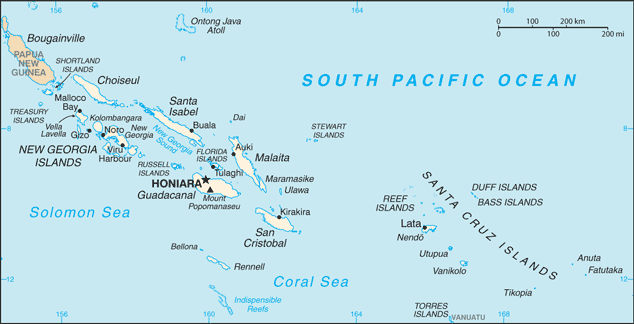
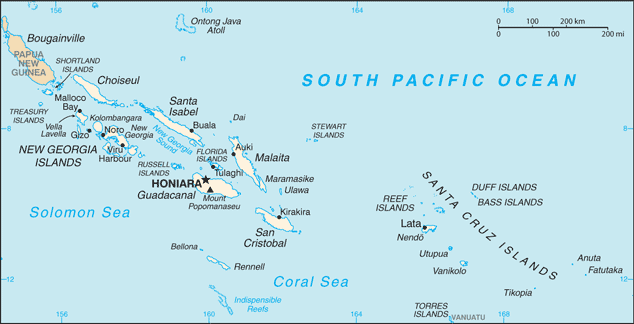
Australia has dispatched some 100 police and military troops to the Solomon Islands following days of rioting and looting in the capital Honiara. Papua New Guinea has also sent in troops, and Fiji says a contingent is en route. Calling for Prime Minister Manasseh Sogavare to resign, protesters attempted to set the parliament building ablaze, and torched and looted shops, causing millions of dollars in damages. The looting centered on the city's Chinatown, where three charred bodies have been found amid the ruins.

Most of the protesters are reportedly from the island of Malaita, where people have long complained of neglect by the central government. Settlers from Malaita have increasingly been moving to Honiara, on the central island of Guadalcanal, for work over the past generation. This had led to tensions between the Malaita islanders and the "Guales," which erupted into violence in 1999, with a four-month state of emergency imposed. 

Malaita's provincial government also strongly opposed the central government's decision to switch diplomatic recognition from Taiwan to the People's Republic of China. The Solomons were among a dozen Pacific island states that recognized Taiwan until the 2019 "switch," as it is locally known. Taipei accused Beijing of using "dollar diplomacy" to sway small countries in the region to shift recognition. In the lead-up to the "switch," Chinese firms poured investment into the Solomons, especially for roads and other infrastructure to revive the mothballed Gold Ridge mine on Guadalcanal. There was even a bid, ultimately rejected by the central government, for Beijing's China SAM Enterprise Group to lease the entire island of Tulagi as a port facility.

Malaita's premier Daniel Suidani meanwhile issued an "Auki Communique" (named for the provincial capital) dissenting from the switch, and barring all Chinese investment from the province. The Communique played to social conservatism, citing the "Christian faith" of the local population and the "atheist ideology" of the Chinese state. Suidani also pointedly traveled to Taiwan this June for medical treatment—a trip condemned by the central government as "unauthorized."

Sogavare responded to the uprising by saying it had been fomented by foreign powers with an "evil intention" to topple him, adding that they have a "very big…influence. I don't want to name names. We'll leave it there." But there was little doubt he was talking about the United States and Taiwan.

Only 15 countries around the world now continue to maintain diplomatic recognition of Taiwan. (Reuters, AP, AP, NYT, WaPo, SCMP, Al Jazeera, Al Jazeera, Al Jazeera, The Diplomat, The Guardian, Asia Pacific Report)

A few observations… First, it is maddening that (yet again) doubtlessly legitimate economic grievances are being siphoned off into pointless xenophobia. Even if those grievances are in part linked to Chinese neo-mercantilism in the Solomon Islands, venting deadly rage on Chinese immigrant shop-owners is ugly scapegoating that only serves to delegitimize the uprising. That said, it is certainly a perverse historical irony to see China treating the Solomon Islands the same way the Great Powers of yestercentury treated China during its "Century of Humiliation"—a point we have made before.

As for the diplomatic angle at work here, we will point out that if it weren't for the absurd "One China" fiction, governments could recognize both Taiwan and the PRC. If the long taboo on this solution is now eroding in Taiwan, it is more of an entrenched dogma than ever in Beijing.

It is a final irony that Australia, now notoriously spatting with China, is basically serving here as Beijing's regional enforcer. This responsibility falls to Australia because it is officially under the same sovereign (Queen Elizabeth) as what had been until 1978 the British Solomon Islands Protectorate. So the remnant structures of British colonialism are now effectively serving the interests of Chinese neo-mercantilism. For all the resurgent inter-imperial rivalry, the contemporary world powers ultimately have everything invested in "stability"—the uninterrupted functioning of the global capitalist leviathan—and will close ranks when push comes to shove. That's why they call it a Great Game.

Map: University of Texas Libraries

Feminist, humanitarian groups raided in El Salvador

Salvador

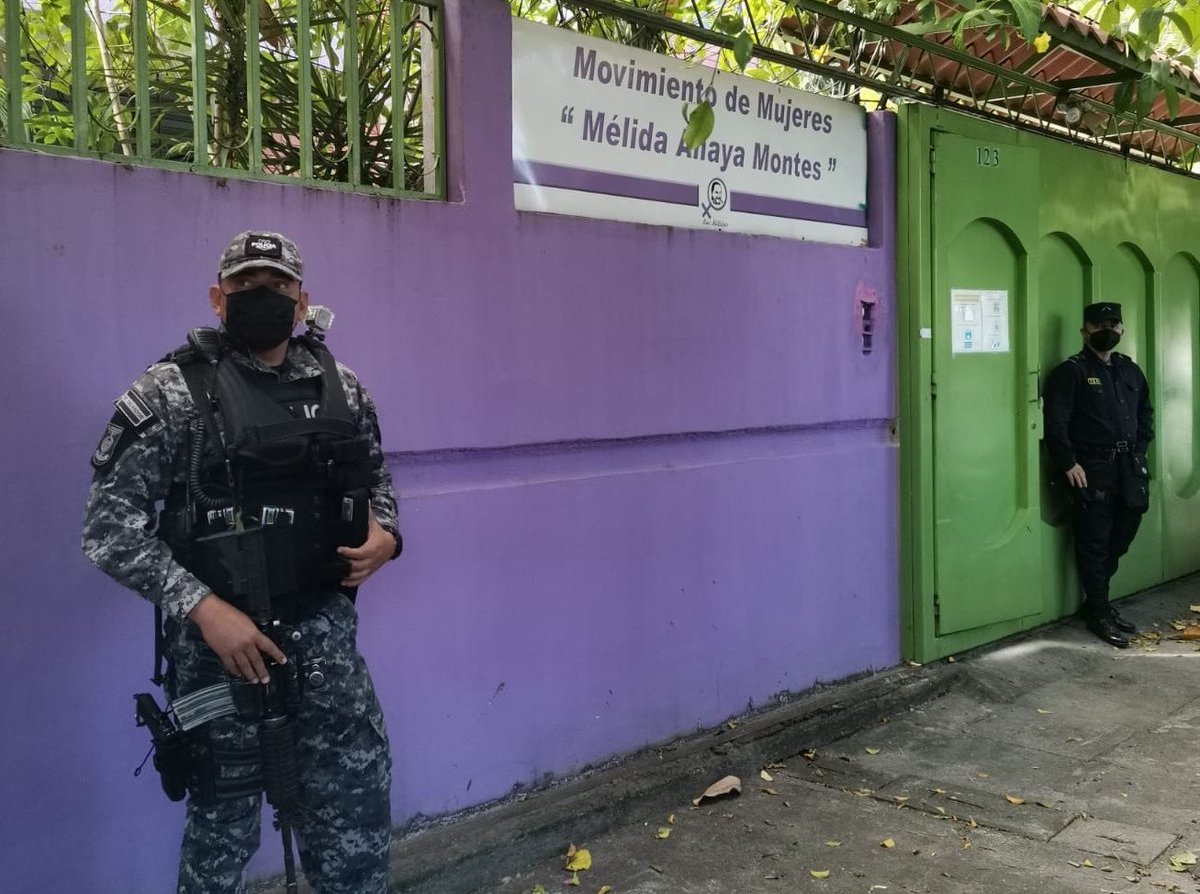
Agents of El Salvador's Fiscalía, backed up by police troops, raided seven non-governmental organizations Nov. 22, ostensibly on the grounds of investigating "corruption." The Salvadoran popular movement describes the raids as the latest in an escalating campaign of political persecution by President Nayib Bukele against voices critical of the regime. Among the groups targeted were Las Mélidas, a long-standing women's rights organization, and PRO-VIDA, a humanitarian group that works in areas of healthcare, ecology, and strengthening of democratic institutions. Also targeted were the Coordinator of Communal Projects of El Salvador (PROCOMES), the Salvadoran Foundation for Democracy & Social Development (FUNDASPAD), the Helping Hand Foundation (Una Mano Amiga), the Association of Tecleña Women (AMTSV), and the Environmental Association of Santa Ana (FUNDASAN).

No arrests were made, but the legal respresentative for Bukele's office warned that criminal charges will likely be brought against members of the targeted organizations.

In a statement following the raids, a representative of Las Mélidas condemned them as "unjustified" and meant to "criminalize" the group's initiatives, which include literacy, violence prevention, sexual health campaigns, and other programs serving the country's most marginalized women. 

The raids take place as the Salvadoran legislature considers a proposed "Foreign Agents Law" meant to delegitimize and suppress organizations that receive international funding by forcing them to register as "foreign agents" and prohibiting them from carrying out "political" activities that are deemed to "disturb public security" or threaten "social and political stability." Violations would result in massive fines and the loss of legal status, thus giving the administration broad license to selectively target opposition groups.

If approved by the legislature, the law would also place heavy taxes on all international donations to NGOs, in essence appropriating funds meant to respond to the urgent needs of some of the country's most vulnerable populations.

The proposed law has been widely denounced, including by the United Nations, which described it as a "clear violation of El Salvador's international human rights commitments."

From CISPES, Nov. 23, with additional coverage from La Prensa Gráfica, El Diario de Hoy

Photo via Twitter

Podcast: 007 in the New Cold War

Kurils

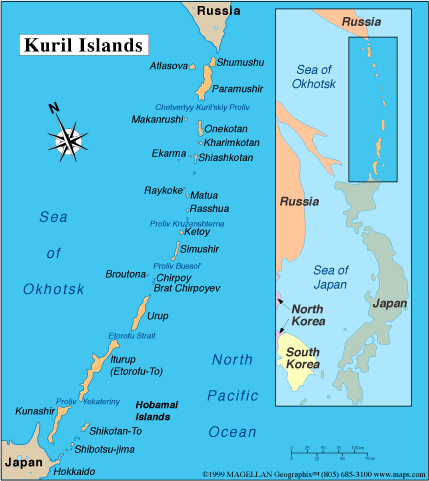
In Episode 97 of the CounterVortex podcast, Bill Weinberg dissects the geopolitics of the new James Bond movie, No Time to Die, and how the Daniel Craig reboot of the series has finessed the cultural icon's role in the New Cold War. Famously, the film was produced pre-pandemic, with its release postponed a year due to the lockdown—and its key plot device is a mass biological warfare attack, anticipating the conspiranoid theories about COVID-19. Yet it could also be prescient in warning of a superpower confrontation over the Kuril Islands—disputed by Russia and Japan, and an all too likely flashpoint for global conflict. 

Listen on SoundCloud or via Patreon.

Production by Chris Rywalt

We ask listeners to donate just $1 per weekly podcast via Patreon—or $2 for our new special offer! We now have 22 subscribers. If you appreciate our work, please become Number 23!

Map: International Kuril Island Project

Escalation on the EU’s eastern frontier

Belarus border

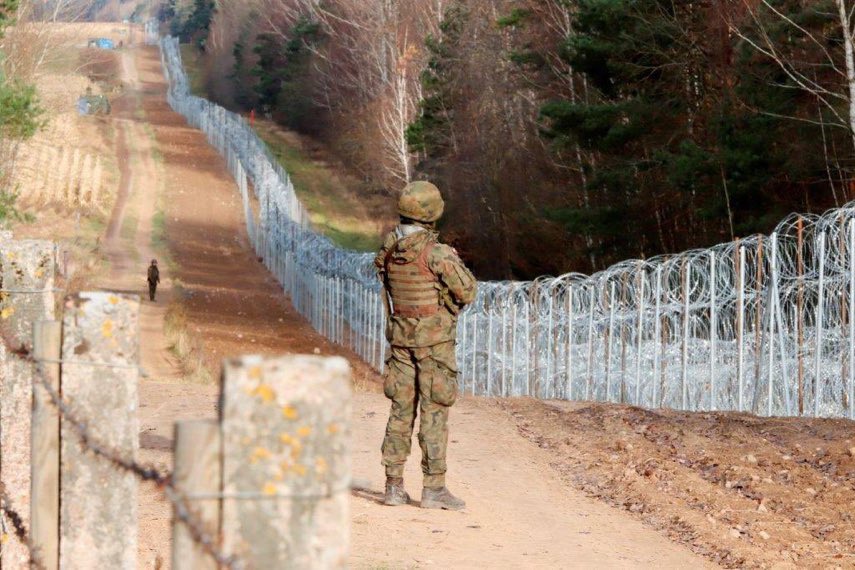
Tensions on the European Union's eastern border escalated sharply this week as Polish border guards repulsed a wave of some 4,000 asylum seekers and migrants seeking to cross from Belarus. Poland has mobilized 15,000 soldiers to the region to prevent people from crossing, and Belarusian security forces are not allowing the migrants to turn back. The migrants are sleeping rough as temperatures plunge below freezing; a 14-year-old boy froze to death, becoming at least the eleventh person to have died attempting to cross the border. There are fears the situation could result in a military confrontation.

Russian President Vladimir Putin—an ally of Belarus' authoritarian president, Alexander Lukashenko—brushed off an appeal from German Chancellor Angela Merkel to intervene. The Polish parliament on Oct. 14 approved a bill calling for building a border wall on the frontier with Belarus, which is now under construction. Poland accuses Belarus of allowing migrants to transit through the country and enter Poland as revenge for the EU imposing sanctions against Belarus earlier this year in response to human rights abuses. European Commission president Ursula von der Leyen accused Belarus of using the migrants in a "hybrid attack." The EU is now threatening more sanctions, and Belarus is threatening to cut off gas supplies to the EU through the Yamal-Europe pipeline. (TNH, Jurist, DW)

Photo: Visegrad24

Looming oil spill off Yemen coast portends disaster

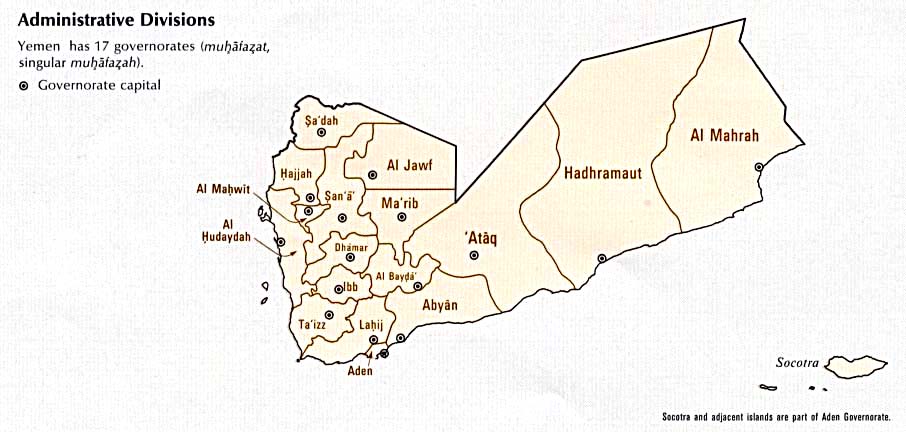
Yemen

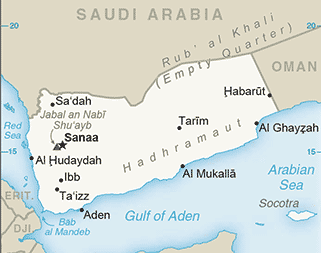
A prospective massive spill from an abandoned oil tanker in the Red Sea could lead to catastrophic public health effects in war-torn Yemen and neighboring countries unless urgent action is taken, according to a study led by researchers at the Stanford University School of Medicine. The FSO Safer is one of the world's largest tankers and is anchored five nautical miles (approximately nine kilometers) off the coast about 60 kilometers north of the port of Hodeidah, a key lifeline for aid supplies to much of Yemen's population. It holds 1.1 million barrels of oil—more than four times the amount spilled in 1989 by the Exxon Valdez. Abandoned since 2015 due to the conflict in Yemen, the dilapidated vessel is increasingly likely to leak oil due to deterioration of its hull, or to catch fire through the build-up of volatile gases or through a direct attack.

Currently, the Safer is in waters under the control of the Houthi rebels. Despite the impending emergency, negotiations between the United Nations and the Houthis to inspect and repair the Safer have stalled, and no long-term solutions, such as offloading the oil, have been publicly proposed. (Stanford Medicine News Center, Greenpeace)

Ben Huynh, lead author of the Stanford study, warned that the closure of Yemen's ports due to a devastating spill from the Safer could mean "millions of people will go without food and clean water—10 million people in terms of drinking water, around 8 million in terms of losing food. If you're asking about ecological or environmental damage, that's the entire Red Sea region. So that's hundreds of millions of people." (PRI)

Map: Perry-Castañeda Library

Russia-led bloc in war games on Afghan border

Tajikistan

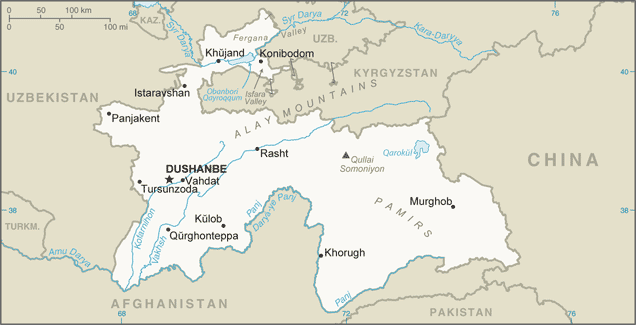
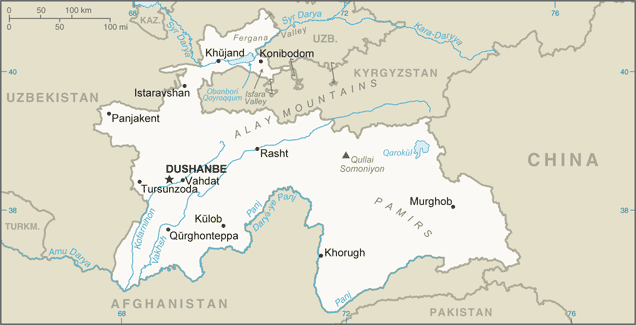
Some 5,000 troops from member states of the Russian-led Collective Security Treaty Organization (CSTO) on Oct. 18 initiated military maneuvers code-named "Echelon-2021," Search-2021" and "Interaction-2021" in Tajikistan near the border with Afghanistan. More than half of the troops involved are Russian. Gen. Anatoly Sidorov, head of the CSTO joint staff, said in a statement: "We pay special attention to the Central Asian region. The situation around the Islamic Republic of Afghanistan remains the main source of instability. This is why we are holding three drills simultaneously for the first time as part of the joint training."

Zamir Kabulov, President Vladimir Putin's special representative on Afghanistan, said that officials from Russia, China and Pakistan are to meet in Moscow this week to come up with a united position on the changing situation in Afghanistan. The United States has declined to attend after its special envoy for Afghanistan, Zalmay Khalilzad, resigned following criticism over the hasty US military withdrawal from Kabul. 

China is said to have taken over an old Soviet outpost in Tajikistan near the Wakhan Corridor, Afghanistan's eastern "panhandle," where the People's Liberation Army is conducting joint drills with Tajik forces and monitoring the situation on the border. (TASS, Reuters, AssumeTech, Xinhua, EFE, RFE/RL)

Map: CIA via PCL Map Collection

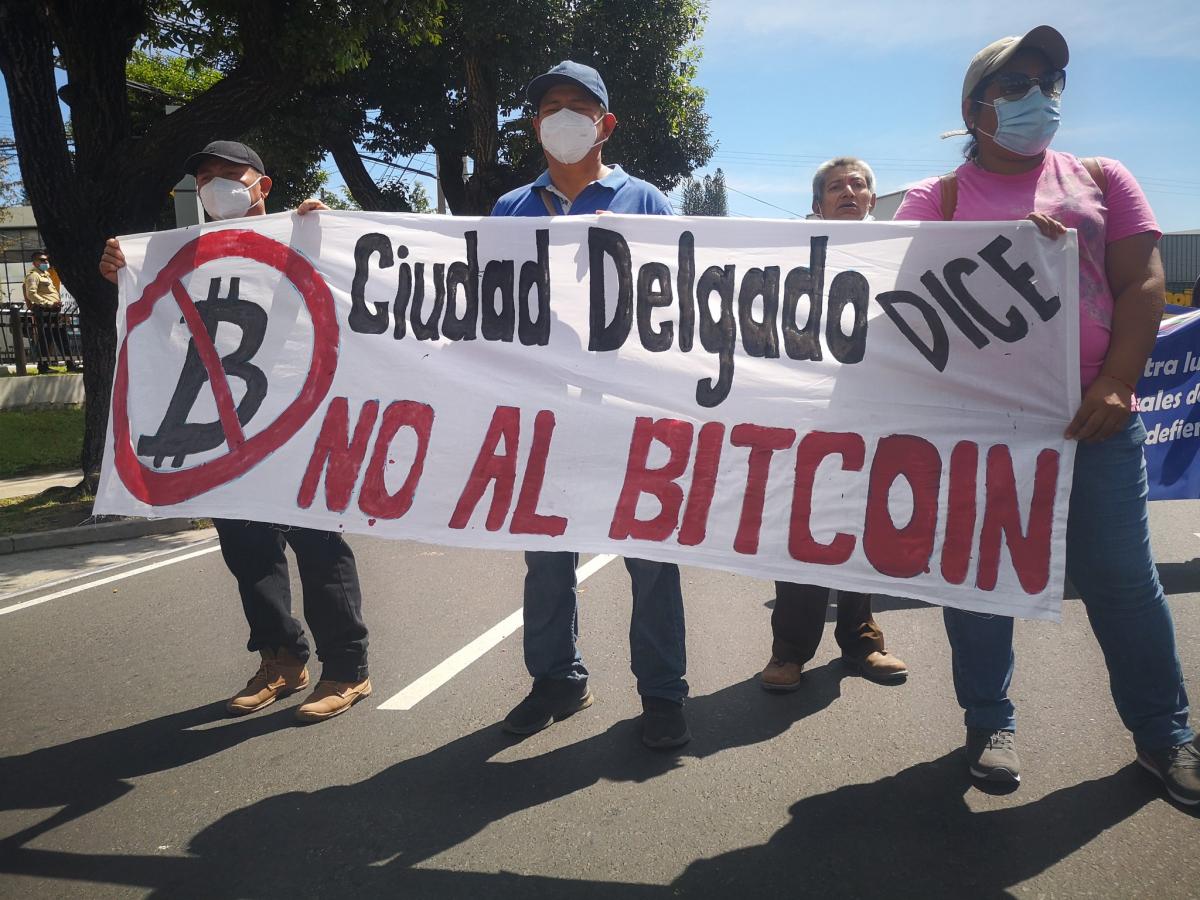
Anti-Bitcoin protests shake El Salvador

#NoAlBitcoin

Protests have repeatedly erupted in El Salvador over the past week as the country became the first to make Bitcoin legal tender. The US dollar also remains official currency, but the law pushed through by President Nayib Bukele mandates that all vendors also accept Bitcoin. Small merchants and especially those in the informal sector complain of problems in trying to download the official phone app needed to use the currency. Protesters say the new law will deepen poverty by further excluding the already marginalized from the economy. They also assert that it will further enable corruption. "This is a currency that's not going to work for pupusa vendors, bus drivers or shopkeepers," one protester told Reuters. "This is a currency that's ideal for big investors who want to speculate with their economic resources."

The public-sector workers' union AGEPYM has joined the protests, also opposing Bukele's proposed pension reform. Mario Gómez, a digital analyst and prominent critic of the Bitcoin conversion, was arbitrarily detained during the protests, when the National Civil Police intercepted the vehicle he was driving in with his mother. Protesters accuse Bukele of attempting to establish a dictatorship. (The Conversation, El Faro, La Prensa Grafica, ElSavlador.com)

Opponents of the digital currency have also pointed to the vast amounts of energy needed to "mine" (sic) Bitcoins.

Photo via Twitter

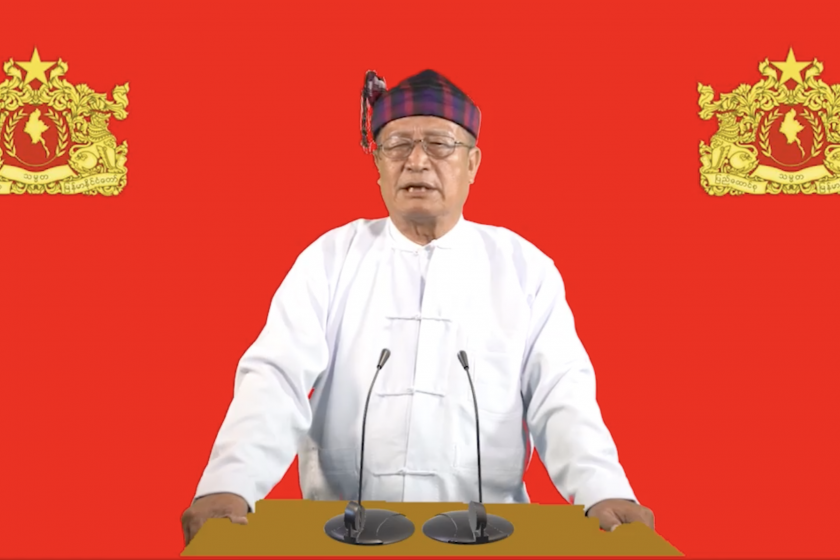
Burma shadow government declares ‘resistance war’

Duwa Lashi La

The acting president of Burma's shadow National Unity Government (NUG) announced Sept. 7 that the people's "resistance war" against the coup-installed regime has started, and urged the public across the country to revolt against the military junta. In the video statement from an unknown location, Duwa Lashi La also called on the NUG's People’s Defense Force (PDF) and allied ethnic rebel armies to target "every pillar of the junta's ruling mechanism," as well as to protect the lives of Burma's people. He warned local administrators working under the junta's authority to resign immediately. He urged citizens to stock up on food and medical supplies, and to help the PDF and civilian resistance forces by informing them of the military’s activities. "This revolution is a just and fair revolution and is necessary to build a federal union with sustainable peace," Duwa Lashi La said in the speech. (Myanmar Now)


Photo: Myanmar Now

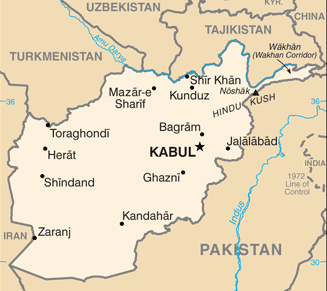
Afghanistan: no, the war is not over

Afghanistan

With absurd hubris, Biden in his speech on Aug. 31—the day the last US troops left Kabul under the deadline agreed to with the Taliban—declared that "the United States ended 20 years of war in Afghanistan." It's perverse enough that he called the US evacuation of some 120,000 Afghans and Americans an "extraordinary success"—despite the fact that more than 100 US nationals and many thousands of desperate Afghans were left behind. But this reality-denying "ended the war" rhetoric is being uncritically echoed by media accounts.

The war in Afghanistan began in 1979, with the massive Soviet military intervention to put down the Mujahedeen, and the country hasn't seen a moment of peace since then. Nor is there much prospect for peace any time in the foreseeable future. This is the same imperial narcissism we heard with the much-hyped US "withdrawal" from Afghanistan in 2014, and the "withdrawal" from Iraq in 2011. But this time, Afghanistan is essentially being turned over to the Taliban as a US-collaborationist or even near-proxy force to fight ISIS. The Taliban remain a brutal, intolerant and ultra-reactionary Islamist entity, but are now baited as co-opted moderates by the even more extremist ISIS.

This is the bitter fruit of the long Global War on Terrorism. It now appears nearly inevitable that the real if limited advances for women and minorities in Afghanistan over the past 20 years will prove to have been borrowed from the future. Women have been flogged and killed as the Taliban overran the country over the past weeks, while journalists and human rights defenders have been attacked and slain. In the first fatwa issued by Taliban officials in Herat province, mixed-gender classes have been prohibited at the colleges and universities. 

Hundreds of Hazara families are reported to have fled their homes in central Bamiyan and Ghazni provinces, seeking shelter with the incipient resistance forces organizing in the Panjshir Valley. The Shi'ite Hazara were targeted for genocide by the Taliban when they were in power 20 years ago, and Amnesty International now reports that new massacres have already begun. Eyewitnesses told Amnesty that when the Taliban seized Malistan district, Ghazni province, last month, a group of nine Hazara men in Mundarakht village were rounded up and summarily put to death—several of them tortured first. 

While there is an urgent moral imperative to loan what voice and solidarity we can to feminists and secularists left behind in the country, there is little reason to believe that there isn't much worse to come.

Afghanistan's new independent media like Khaama Press Agency continue to report the abuses, but there is a sense that their silencing is a matter of time. Prominent social media "influencers" in the country are now going dark, as activists scramble to scrub their digital lives.

And is this likely to be, at least, an authoritarian "stability" of the kind beloved by Beltway "pragmatists" and paleocons? No. Khaama now reports that the Taliban have launched an offensive against the resistance forces in the Panjshir Valley. This portends a three-way war in Afghanistan—pitting the Taliban, the resistance, and ISIS against each other. It remains to be seen how the international lines will be drawn up—whether the US will continue to groom the Taliban as a proxy force or throw its support to the resistance, whether a competitor power (Russia or China) will do either of these things, or whether (in a truly pathological cycle) ISIS territorial gains will eventually prompt one of the imperial powers to yet again intervene militarily. 

A humanitarian disaster of massive proportions looms in the country. The South Asia regional director for UNICEF, George Laryea-Adjei, said that some 300,000 children are among those that have been forced to flee their homes this year, "and too many of them have witnessed scenes that no child should ever see." (Afghanistan Times)

Two evaluations of what has brought us to this horrific scenario offer remarkably similar conclusions. One is from Human Rights Watch (HRW), entitled "How US-Funded Abuses Led to Failure in Afghanistan." It especially notes how continued civilian casualties from US air-strikes squandered the credibility of the Afghan government those strikes were ostensibly backing up:

[C]ivilian casualties from airstrikes soared as the Trump administration vastly increased air operations while removing directives prohibiting strikes on residential buildings and loosening rules on targeting. Between 2016 and 2020, 40 percent of all civilian casualties from US and Afghan government airstrikes in Afghanistan—almost 1,600—were children. In mid-2019, civilian casualties caused by Afghan government and US forces briefly surpassed those carried out by the Taliban and Islamic State.

There is no question airstrikes significantly weakened Taliban forces (and decimated much of the Islamic State’s strongholds in Nangarhar), and no question that the Taliban’s own atrocities in urban areas increased, as Human Rights Watch documented in a 2018 report. But the psychological impact of so many civilian deaths and injuries from air operations, and the terror in rural Afghanistan inspired by the constant raids and special operations, may have done far greater damage in undermining support for the Afghan government than any military advantage gained.

It is extremely telling that civilian casualties began to increase as intra-Afghan "peace" talks began early this year, reaching a decade high.

The other report is from the Pentagon's own Special Inspector General for Afghanistan Reconstruction (SIGAR), entitled "What we Need to Learn: Lessons from Twenty Years of Afghanistan Reconstruction."  Its sobering opening paragraphs:

The US government has now spent 20 years and $145 billion trying to rebuild Afghanistan, its security forces, civilian government institutions, economy, and civil society. The Department of Defense (DOD) has also spent $837 billion on war fighting, during which 2,443 American troops and 1,144 allied troops have been killed and 20,666 U.S. troops injured. Afghans, meanwhile, have faced an even greater toll. At least 66,000 Afghan troops have been killed. More than 48,000 Afghan civilians have been killed, and at least 75,000 have been injured since 2001—both likely signicant underestimations.

The extraordinary costs were meant to serve a purpose—though the definition of that purpose evolved over time. At various points, the US government hoped to eliminate al-Qaeda, decimate the Taliban movement that hosted it, deny all terrorist groups a safe haven in Afghanistan, build Afghan security forces so they could deny terrorists a safe haven in the future, and help the civilian government become legitimate and capable enough to win the trust of Afghans. Each goal, once accomplished, was thought to move the US government one step closer to being able to depart.

While there have been several areas of improvement—most notably in the areas of health care, maternal health, and education—progress has been elusive and the prospects for sustaining this progress are dubious. The US government has been often overwhelmed by the magnitude of rebuilding a country that, at the time of the US invasion, had already seen two decades of Soviet occupation, civil war, and Taliban brutality.

The SIGAR report emphasizes how connivance with warlords in governance, especially of Afghanistan's provinces, played into Taliban hands. What SIGAR somewhat euphemistically calls inadaquate "monitoring and evaluation" allowed corrupt warlodism to thrive:

By legitimizing warlords with political and financial support, the United States helped empower a class of strongmen at the local and national levels who had conflicted allegiances between their own power networks and the Afghan state. Indirectly, the United States helped to lay a foundation for continued impunity of malign actors, weak rule of law, and the growth of corruption. Although U.S. agencies recognized the dangers of aligning with warlords, they did not fully appreciate the risks this posed to the mission in Afghanistan.

Those warlords came out of the Northern Alliance, the rebel force that the US began backing after 9-11, which in turn came out of the brutal and inept government led by veteran Mujahedeen commanders that was overthrown by the Talban in 1996. History has just repeated itself, while now the Taliban themselves stand to be opposed by a still more thoroughly nihilist and radicalized ISIS. There is no cause to hope that any end is in sight to this dystopian cycle. This is not "peace." The Taliban take-over of Afghanistan represents a massive step backward for all of humanity.

Map: Perry-Castañeda Library

Afghanistan: Taliban unleash first terror

Kabul protest

As the Taliban, now in full control of Kabul, pledge an "inclusive" Afghan government in prepared press statements, deadly repression against anti-Taliban protesters is reported from the eastern city of Jalalabad. On Aug. 18, the day before Afghanistan's independence day, protesters took to the streets of Jalalabad waving the black, red and green national flag—and tearing down the white and black Tawhid flag of the Taliban. Witnesses said Taliban fighters fired on protesters indiscriminately, and at least three were killed. (Khaama, Khaama, Sky News, UNILAD, TOLO News) On Aug. 19, the day Afghanistan won full independence from Britain in 1919, a similar protest was held in Khost, where social media videos again show Taliban fighters firing on demonstrators. No casualties were reported, but the city has been placed under a 24-hour curfew. (AP, CNN, Latestly)

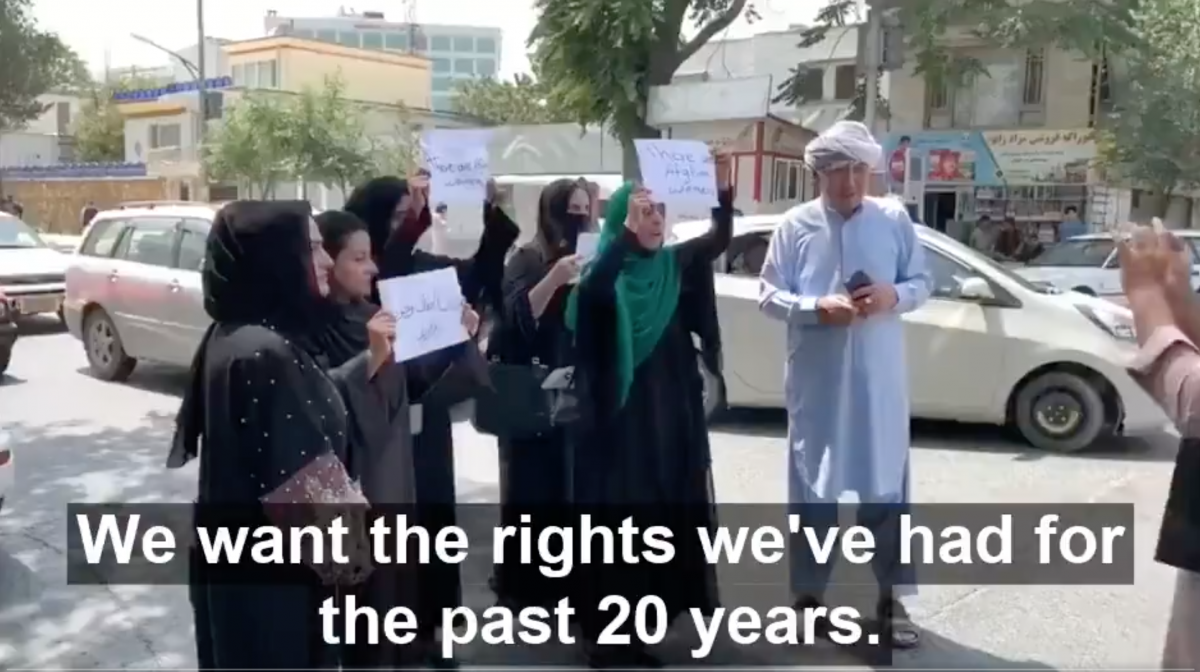
A small demonstration by women demanding that their rights be respected was held Aug. 17 outside a police precinct in Kabul. "We want the rights we've had for the past 20 years," signs read. Taliban fighters looked on but did not interfere. (Khaama, Indian Expess) Independence Day also saw protests in Kabul, with hundreds marching to the presidential palace, holding aloft large national flags. (NYT) Social media videos show Taliban fighters raising their rifles at protesters but not firing. An evening curfew has also been imposed in Kabul. (Khaama)

Who is in charge?
Social services are paralyzed in Kabul, and aid organizations warn of a "humanitarian disaster" in the city and throughout the country if effective governance is not restored soon. (NYT) On Aug. 18, a delegation of Taliban leaders led by Sirajuddin Haqqani met in Kabul with former president Hamid Karzai and the head of High Council for National Reconciliation, Abdullah Abdullah. Fazal Haid Muslimyar, speaker of the House of Elders (upper chamber of the National Assembly), was also said to be at the closed-doors meeting, from which media were barred. (Khaama) The Taliban's most visible leader, Mullah Abdul Ghani Baradar, has reportedly flow in from Qatar to Kandahar, and is expected to arrive in Kabul. (Khaama)

While Haibatullah Akhundzada is the Taliban’s official leader, Baradar is its effective political chief. A veteran of the Mujahedeen war against the Soviets in the 1980s, Baradar established Kandahar as the Taliban's support base in the '90s, together with his reported brother-in-law, the organization's late first leader Mullah Mohammad Omar. After the US invasion of 2001, he helped direct the Taliban insurgency from exile in Pakistan. The CIA tracked him down to Karachi in 2010, and in February of that year the US persuaded Pakistani authorities to arrest him.  However, he was freed in 2018—at the behest of Washington. Donald Trump’s Afghan envoy, Zalmay Khalilzad, asked the Pakistanis to release him so he could lead the negotiations in Qatar. In February 2020, US Secretary of State Mike Pompeo met with Baradar at a highly publicized conference, where Khalilzad and the Mullah signed the Doha Agreement, ostensibly ending the US war against the Taliban. (MEAWW, The Guardian)

Hazara face fear, exodus
There is especially fear in central Bamiyan province, homeland of the Hazara Shi'ite minority, who were targeted for genocide by the Taliban when they were in power in the '90s. Taliban fighters now in control of the provincial capital have blown up a statue there of the Hazara Mujahedeen leader Abdul Ali Mazari, who was executed by the Taliban in 1995. In addition to being seen as direct threat to the Hazara, for many this was a grim reminder of the Taliban's destruction of the nearby Bamiyan Buddhas in 2001. (NDTV)

Hundreds of Hazara families are reported to have fled Bamiyan, seeking shelter with the incipient resistance forces organizing in the Panjshir Valley.

The website Hazara.net protests that the ethnicity was put at risk by the release of 5,000 Taliban prisoners by Afghan authorities last year, which the US signed off on as  part of the Doha Agreement. Hazara.net also bitterly recalls the release of the so-called Gitmo 5 in 2014—Taliban leaders flown from Guantánamo Bay to Qatar in exchange for captured US Army soldier Sgt. Bowe Bergdahl. According to Hazara.net, these included figures "involved in massacres of peaceful Hazaras."

India's Hindustan Times provides a breakdown of the Gitmo 5. They were: Khairullah Khairkhwa, who went on to become a key strategist of the Taliban's resurgence; Mohammed Nabi, who served as Taliban chief of security in Qalat in the '90s; Abdul Haq Wasiq, who served as the Taliban deputy minister of intelligence; Mullah Norullah Nori, a senior Taliban commander in Mazar-e-Sharif; and Mohammad Fazl, who according to human rights groups "presided over the mass killing of Shiite Muslims in Afghanistan in 2000 and 2001."

Photo via Twitter

CounterVortex meta-podcast: our special offer!

CounterVortex

In Episode 84 of the CounterVortex podcast, Bill Weinberg unveils a special offer for new Patreon subscribers. Become a Supporter for two dollars per weekly podcast, and you get to choose a topic for Bill to rant about for an episode. Any conflict anywhere on the planet, any hot political issue, any aspect of Bill's far-ranging interests and work: human rights, indigenous peoples, drug policy, ecology, pro-autonomy and anti-militarist movements worldwide. Choose a book to review, ask Bill any question about his life, research, activism or analysis. We want to make CounterVortex a more interactive and participatory project, and we need your support to sustain us! Listen on SoundCloud or via Patreon.

Production by Chris Rywalt

We ask listeners to donate just $1 per weekly podcast via Patreon—or $2 for our new special offer! We now have 26 subscribers. If you appreciate our work, please become Number 27!

Podcast: lessons of the Colonial Pipeline disaster

Colonial Pipeline

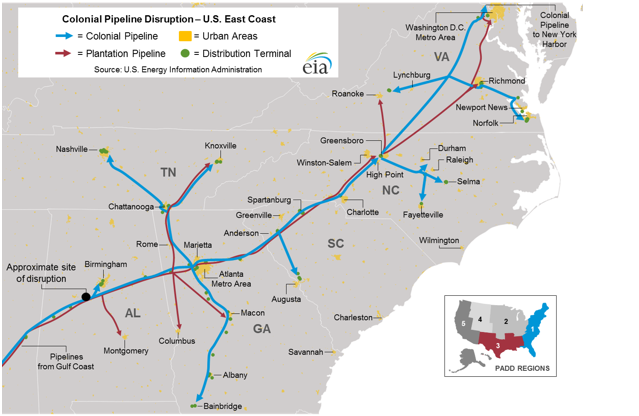
In Episode 75 of the CounterVortex podcast, Bill Weinberg examines distorted reportage on the shutdown of the Colonial Pipeline by Russian hackers. The disaster illustrates the urgent need for a crash conversion from fossil fuels—but also from digital technology. Signs of hope are seen in the cancellation of the Keystone XL pipeline, the recent indigenous-led protests against the Line 3 Pipeline in Minnesota, and the gas bill strike launched by Brooklyn residents to oppose the North Brooklyn Pipeline that would cut through their neighborhoods. Listen on SoundCloud or via Patreon.

Production by Chris Rywalt

We ask listeners to donate just $1 per weekly episode via Patreon. We now have 23 subscribers. If you appreciate our work, please become Number 24!

Map: US Energy Information Administration

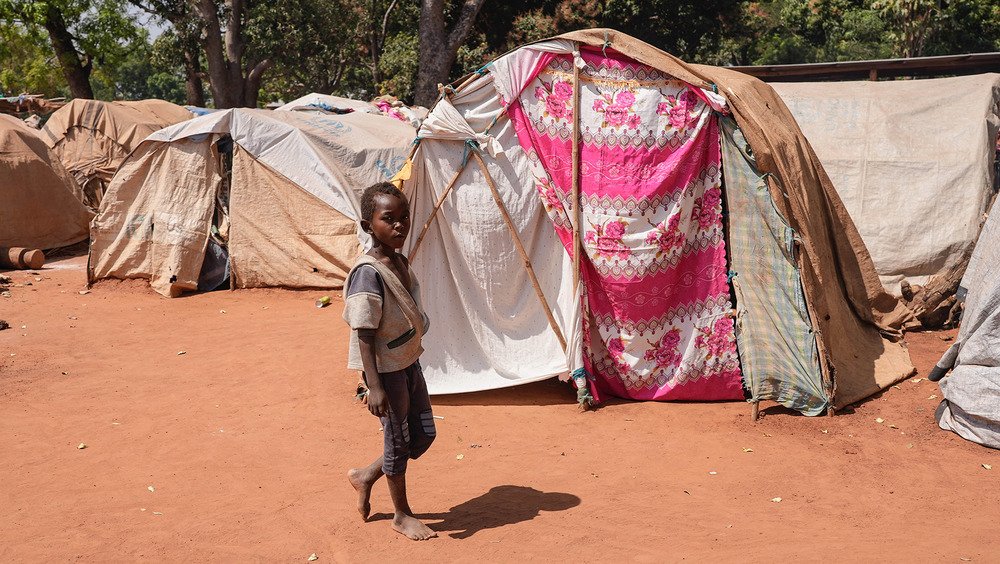
Chad accuses CAR troops of ‘war crime’ at border

Central African Republic

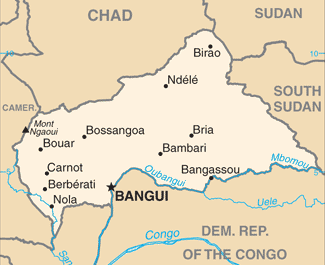
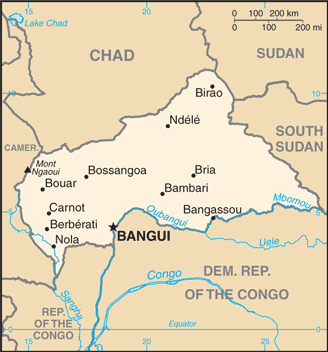
Chad's defense ministry charged May 30 that troops of the neighboring Central African Republic (CAR) attacked a Chadian military post, and that this amounted to a war crime. Chad's Foreign Minister Cherif Mahamat Zene said: "The Central African armed forces attacked the outpost of Sourou in Chad [and] killed a Chad soldier, injured five and kidnapped five others who were then executed in Mbang on the Central African Republic side."

The relationship between Chad and the CAR has been tense for many years, with a history of harboring each other's insurgent groups. Thousands of refugees have fled waves of violence related to armed insurgency in the CAR since 2013.

CAR's Communications Minister Ange Kazagui said a firefight had broken out by mistake when CAR troops pursued a rebel group near the Chadian border. The identity of the alleged rebels is yet to be confirmed, but a senior Chad security official told AFP news agency, speaking anonymously, that the rebels were members of Unity for Peace in Central Africa.

Chad's embassy in the Central African Republic released a statement saying it was told by the head of the CAR police to collect the bodies of the five soldiers who were executed, and called it "extremely serious war crime and this premeditated murderous attack, planned and carried out within Chad…cannot go unpunished."

From Jurist, June 1. Used with permission.

Note: Unity for Peace in Central Africa is a member of the Coalition of Patriots for Change (CPC), but recently announced that it is withdrawing from the rebel coalition. (France24)

Map via Perry-Castañeda Library Map Collection

Armenia-Azerbaijan border stand-off —over water

Lake Sev

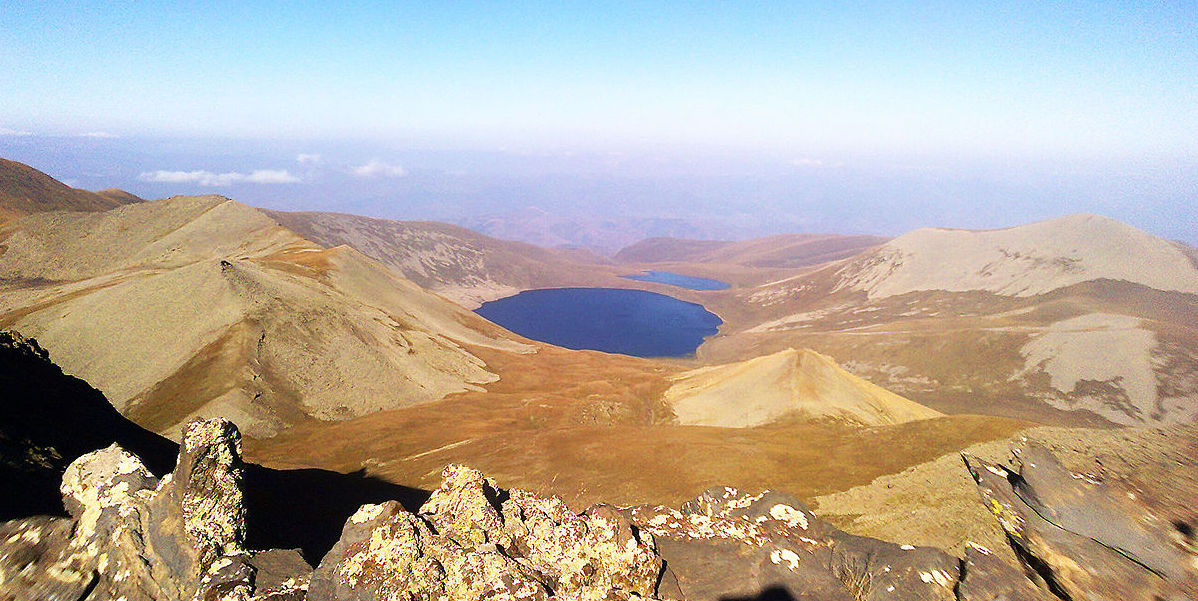
Armenia's Security Council held an emergency meeting May 12 in response to a reported border incursion by Azerbaijan. Local authorities in southern Syunik province issued urgent reports that Azerbaijan's forces had crossed the border and completely surrounded Lake Sev. The glacial lake, which provides water for irrigation in the area, is bisected by the frontier between the two countries, with its northern third lying within Azerbaijan. But the territory on the Azerbaijan side had been held by Armenia between the 1991-4 war and last November's ceasefire, under which it was ceded back. The two sides remain at odds on the precise demarcation of the line, which had not been formalized in Soviet times.

Armenia's acting Prime Minister Nikol Pashinyan on May 14 officially called on Russian President Vladimir Putin to provide assistance. "I have appealed to President Putin for assistance to Armenia including military, after Azerbaijan failed to withdraw an estimated 250 troops from the southern Armenian province of Syunik," Pashinyan told lawmakers in the capital Yerevan. Pashinyan said he was considering invocation of a "rapid response" by the Collective Security Treaty Organization (CSTO), which would oblige Russia and its post-Soviet allies to come to Armenia's aid.

The situation apparently de-escalated after a brief stand-off later that day. The Armenian Defense Ministry confirmed that Azerbaijani forces "tried to carry out some works at one of the border sections of Syunik under the pretext of 'border demarcations'" and retreated after Yerevan sent army units to the area. "Right now negotiations are underway to resolve the situation."

The escalation came just as a controversy was ignited on Capitol Hill over US aid to Azerbaijan. On May 3, the White House notified Congress that the administration is extending a waiver of Section 907 of the 1992 Freedom Support Act, which barred military assistance to Azerbaijan in light of the war then underway. The 1992 act established terms for US aid to the post-Soviet republics, and Section 907 was added at the petitioning of the Armenian-American community. It has been waived annually since 2002, ostensibly in the interest of counter-terrorism cooperation.

This constitutes a flip by Biden, who on the campaign trail last year had baited President Trump for waiving Section 907. In October, amid the renewed war sparked by Azerbaijan's attack on the Armenian autonomous enclave of Artsakh, then-candidate Biden said: "The [Trump] administration must fully implement and not waive requirements under Section 907 of the Freedom Support Act to stop the flow of military equipment to Azerbaijan."

Armenian-American leaders noted the irony that President Biden issued the waiver just days after he announced that his government is formally recognizing the World War I-era mass murder of Armenians by Ottoman Turkey as a genocide. The announcement came on April 24, Armenian Genocide Memorial Day.

"American recognition of the Armenian Genocide comes with responsibilities, among them not arming or abetting Azerbaijan's drive to complete this crime," Armenian National Committee of America executive director Aram Hamparian said in a statement. "Any action by President Biden that greenlights US aid to [Azerbaijan President Ilham Aliyev's] regime runs counter to his clear stand and, more profoundly, the spirit of his recent recognition of the Armenian Genocide."

The US State Department did call on Azerbaijan to pull back its forces from the Armenian border on May 14. (Armenian Weekly, Armenian Mirror-Spectator, Asbarez, Asbarez, The Hill, The Hill, Public Radio of Armenia, NYT, Lawfare)

Photo: Albero/Wikimedia Commons via Armenian Weekly

Kyrgyz-Tajik border clash over water

Kyrgyzstan

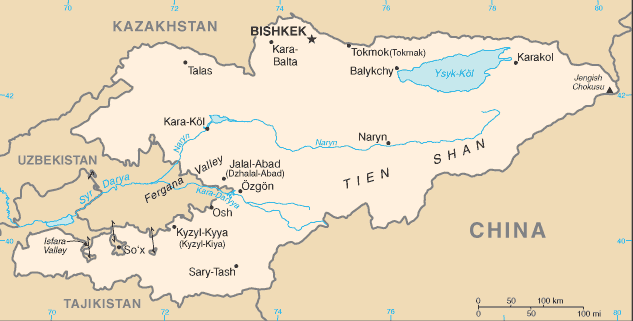
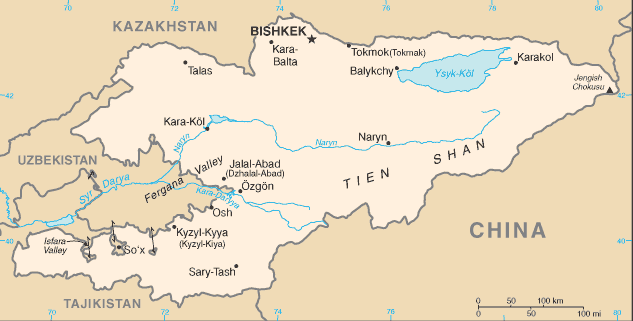
The armed forces of Kyrgyzstan and Tajikistan clashed at a disputed section of their border on April 29, leaving 30 dead and thousands displaced before a ceasefire was declared. The fighting broke out near the strategic Golovnoi (also rendered Golovnaya) water pumping facility, in the Tajik-controlled exclave of Vorukh. Kyrgyz protesters gathered on their side of the de facto border after Tajik authorities installed surveillance cameras at the facility. The two sides began hurling rocks at each oher across the line before military troops intervened, and the situation escalated. The Golovnoi facility pumps water from the Isfara River, a tributary of the Syr Darya, to irrigate agriculture in the area. It is in the Fergana Valley, a small fertile pocket in the arid Central Asia region. Soviet authorities drew the boundaries so that Kyrgyzstan, Tajikistan and Uzbekistan each got a portion of it. However, this meant intricate, twisting borders between these nations, and territorial disputes have arisen.

Kyrgyzstan and Tajikistan jointly operate the Golovnoi station, with portions of the water it pumps going to territories in both nations. But tensions over its administration have mounted in recent weeks. Tajik authorities accuse Kyrgyzstan of seeking to seize the Vorukh exclave, while social media users in Kyrgyzstan are circulating photos of Soviet-era archival documents supposedly proving that the exclave is legally within their nation's territory. (BBC News, NYT, AP, Al Jazeera, RFE/RL, EurasiaNet)

Map: Perry-Castañeda Library

Dominican Republic to build wall on Haitian border

Haitians in Dominican Republic

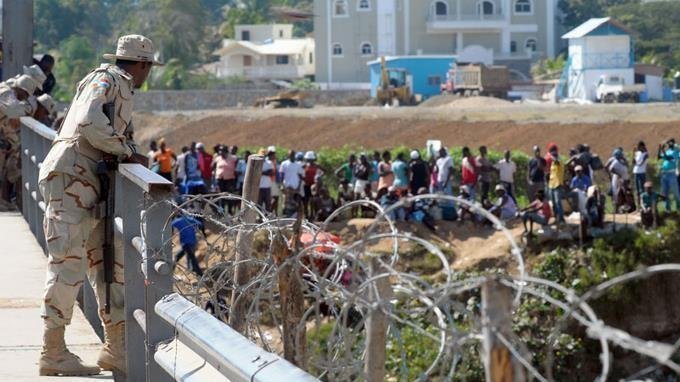
The Dominican Republic's President Luis Abinador announced Feb. 27 that work will begin this year on a wall along the country's 376-kilometer border with Haiti. "Within two years we want to end the serious problems of illegal immigration, drug-trafficking and the transport of stolen vehicles that we've suffered from for two years," said Abinader. Two weeks earlier, Abinader and his Haitian counterpart Jovenel Moise signed an agreement that included a commitment to take measures against "the wave of illegal migration" and to "reinforce border security and vigilance." (AFP)

In January 2019, Dominican authorities started erecting a section of fence along the Haitian border at El Carrizal, Elías Piña province. But this sparked angry protests by Haitian immigrants living in the area, who threw stones at troops and erected barricades of flaming tires to block construction equipment. One protester was killed in clashes with security forces. (Dominican Today)

Some half million Haitians live in the Dominican Republic, with a population of 10.5 million, and have faced growing persecution in recent years.

Photo: Movimiento Socialista de los Trabajadores via Change.org

Landmark verdict against Syrian ex-officer

Syrian Revolution

The Higher Regional Court in Koblenz, Germany, on Feb. 24 convicted a former officer of Syria's General Intelligence Directorate, Eyad A., on charges of aiding and abetting crimes against humanity—specifically, torture and deprivation of liberty committed against 30 persons. Eyad received a sentence of four years and six months in prison for his role in arresting people who were later tortured. The 30 persons, who were all civilians, had been participating in anti-government protests in Douma in 2011 when they were rounded up and sent by bus to Branch 251, or the al-Khatib detention center in Damascus. At Branch 251, they suffered grave physical, emotional and psychological abuse, in addition to being subjected to inhumane and degrading conditions. The court stated that "Eyad A. had already known about the regular and systematic torture in the prison of department 251 when the demonstrators were arrested… He also expected that the torture was part of a planned, organized action by the government to suppress opposition forces."

According to the Syrian Observatory for Human Rights, 88,000 civilians have died as a result of torture in state-run prisons and detetnion centers since the beginning of the Syrian Revolution nearly 10 years ago. The Syrian Network for Human Rights estimates that 130,000 people are currently held in detention centers.

The verdict in Koblenz marks the first time that a court anywhere in the world has ruled on torture inflicted by the Syrian regime, and it sets the stage for the prosecution of high-ranking officers. The trial of the officer who headed Branch 251, Anwar Raslan, is pending before the same court in Germany.

From Jurist, Feb. 26. Used wth permission.

Note: The Assad regime is now credibly accused of genocide, as well as war crimes and crimes against humanity. Critics have decried that in the case of Eyad A, it is a low-ranking officer that was charged. A group of Syrian refugees have announced that they are preparing to bring war crimes charges against dictator Bashar Assad before the International Criminal Court at The Hague.

Photo of early Arab Revolution protest in Syria via Fightback

Spain: protests follow arrest of Catalan rapper

Hasel

The arrest of Catalan rapper Pablo Hasél on charges of glorifying terrorism and insulting the monarchy has sparked angry protests in Barcelona, Madrid, Valencia and other Spanish cities. Facing charges in relation to his tweets and song lyrics, Hasél barricaded himself alongside supporters inside Catalonia's University of Lleida on Feb. 16. His supporters sprayed fire-extinguishers at troops when the building was raided later that day by the Catalan police force, the Mossos d'Esquadra. As he was led away, supporters shouted, "They will never silence us; death to the fascist state!" Hasél was turned over to Spanish authorities to begin serving a nine-month term. Angry protests immediately broke out, with several demonstrators arrested that night. Protests have continued throughout the week.

Hasél was convicted in 2018 over Twitter messages and song lyrics that allegedly praised terrorism and insulted the Spanish monarchy. Under Spanish law, prison sentences can be imposed for such charges. However, the use of such sentences is criticized by human rights organizations such as Amnesty International, which in a 2018 report found that the country’s counter-terrorism laws give rise to a chilling effect on freedom of expression.

Last May, Spain's supreme court, Tribunal Supremo, reduced Hasél's prison sentence from two years to nine months. Amnesty International criticized the conviction, with Esteban Beltrán, director of Amnesty International Spain, calling it, "an excessive and disproportionate restriction on his freedom of expression." Last week, hundreds of Spanish public figures, including film director Pedro Almodóvar, signed a petition against the conviction.

In response to the conviction, the Spanish government recently announced that it will look into reforming the country's free speech laws.

Adapted from Jurist, Feb. 19. Used with permission.

Note: The charges against Hasél appear to be related to his support of protest movements in Spain. Fellow Spanish rapper Valtònyc, who fled to Belgium in 2018 after being convicted of similar offenses, told reporters he felt "shame" and "anger at seeing a colleague treated like this for doing what artists do, which is to provoke." (BBC News)

Photo: Wikimedia Commons

ICC convicts former Uganda rebel commander

ICC

The International Criminal Court (ICC) handed down convictions Feb. 4 in the case of Dominic Ongwen, a former brigade commander of the Ugandan rebel group Lord's Resistance Army (LRA), on 70 counts of war crimes and crimes against humanity committed from July 2002 to December 2005. In a 1,077-page judgment, the ICC found Ongwen guilty of ordering attacks against civilians, including murder, attempted murder, torture, enslavement, outrages upon personal dignity, pillaging, destruction of property, and persecution. These were committed successively on four camps for Internally Displaced Persons (IDPs) set up by the government in northern Uganda, where the LRA was active for four decades.

Ongwen was also found guilty of sexual and gender-based crimes, namely forced marriage, torture, rape, sexual slavery, enslavement, forced pregnancy and outrages upon personal dignity against seven women who were abducted and held in his home. The ICC thus became the first international court to convict for the crime of forced pregnancy. It also found him guilty of the crimes of forced marriage, torture, rape, sexual slavery, and enslavement against girls and women within his brigade. The enslaved female civilians were made sexual slaves, "wives" and domestic servants to Ongwen and other members of the LRA. Lastly, Ongwen was found guilty of conscripting children aged below 15 years into the brigade and using them to participate actively in the hostilities.

The Ugandan government referred the armed conflict  to the ICC in 2004. An arrest warrant for Ongwen was issued in 2005, but his trial began only in 2016.

The ICC found Ongwen's defense of suffering from a mental disease or disorder at the time of the commission of the crimes unsubstantiated. It similarly rejected claims that the crimes were committed under duress or threats from Joseph Kony, the leader of the LRA. It found that he committed the crimes as a commander of the LRA who was a fully responsible adult, and noted that he rose in ranks from July 1, 2002, to December 31, 2005—the period of the commission of these crimes—and commanded several hundred soldiers.

The LRA routinely abducted and conscripted a large number of children under 15 and made them participate in the hostilities. The court acknowledged that Ongwen was himself abducted when he was nine and conscripted as a child soldier. It might consider this factor at the stage of sentencing.

The judgment includes witness testimonies detailing the gruesome crimes. While announcing the decision of the court, presiding judge Bertram Schmitt read the names of the victims, wherever known, and said, "These victims have a right not to be forgotten. They have the right to be mentioned explicitly."

Ongwen's lawyer, Krispus Ayena Odongo, told the BBC that he would appeal the decision on all charges. A hearing is scheduled for April, when further submissions and any additional evidence is to be heard.

From Jurist, Feb. 4. Used with permission.

Note: The conviction of Dominic Ongwen marks five convictions by the ICC, but one of those was overturned on appeal.

2016)_in_The_Hague.png”>WikiMedia

India extends internet restrictions in Kashmir

Kashmir

The government in the Indian union territory of Jammu & Kashmir issued an order Dec. 25 extending the suspension of high-speed 4G internet services for a further two weeks. The order is efffective across the territory, excluding the districts of Ganderbal and Udhampur. The government said it received credible reports of terrorists attempting to infiltrate from across the Line of Control that separates the territory from Pakistan-controlled Kashmir. The order ostensibly seeks to deter recruitment of youth into terrorist groups, and the circulation of provocative videos and "fake news" on social media.

Internet services were completely cut off in Jammu & Kashmir in August 2019, hours before the central government revoked Article 370 of the Indian Constitution and split the state into the union territories of Jammu & Kashmir and Ladakh, sparking unrest. While 2G internet services were restored in January 2020, restrictions on 4G services have been in place continuously since.

The government also concluded panchayat (village council) elections in December, recording large-scale voter turnout and participation by political parties across the spectrum. The order extending the internet restrictions notes that the success of the elections did not go down well with the "elements inimical to public peace and tranquility, as apparent from the multiple incidents of hurling of grenades by the terrorists since the conclusion of the election process" at civilians, police personnel and security forces.

The restrictions have been placed by the principal secretary to the territoral government under the Indian Telegraph Act, 1885 and the Temporary Suspension of Telecom Services (Public Emergency or Public Safety) Rules, 2017.

From Jurist, Dec. 28. Used with permission.

Note: The internet restrictions were extended for a further two weeks on Jan. 8, and are held to constitute the longest such outage ever imposed by a "democratic" government. The restrictions have been protested by international human rights groups, including Amnesty International. Last year, the Jammu-Kashmir Coalition of Civil Society (JKCCS) called the outage a form of "collective punishment" against Kashmiris and accused New Delhi of practicing "digital apartheid." (Scroll, Greater Kashmir, Al Jazeera)

Photo: Daniel Bachhuber/Flickr via Oxford Human Rights Hub

Demand Turkey release detained Kurdish leader

Selahattin Demirtaş

The European Court of Human Rights (ECHR) held Dec. 22 that Turkey must take all necessary measures to secure the immediate release of Selahattin Demirtaş, a Kurdish politician held by the government on terrorism charges. The Grand Chamber found that there had been multiple violations of the European Convention of Human Rights in his case. It also found no evidence supporting Demirtaş' detention that linked his actions and the alleged offenses. The Court concluded that "the purposes put forward by the authorities for the applicant's pre-trial detention were merely cover for an ulterior political purpose, which is a matter of indisputable gravity for democracy."

Between 2014-18, Demirtaş was a co-chair of the Peoples' Democratic Party (HDP), a left-wing pro-Kurdish political party. In 2016, a Turkish court ordered the pre-trial detention of Demirtaş for membership in an armed terrorist organization and public incitement to commit an offense. This was made possible by a temporary constitutional change, approved by parliament in May 2016, which lifted the parliamentary immunity of 154 members under investigation at that time for criminal offenses.

Demirtaş was charged with being a leading member of the outlawed Kurdistan Workers' Party (PKK), deemed a terrorist organization by the US, EU, and Turkey. However, the HDP and Demirtaş have consistently denied any formal connection with the group. If convicted of being a leading member of the PKK, Demirtas faces up to 142 years in prison for his actions during protests in 2014 that turned violent and led to the deaths of 37 people.

In 2018, the ECHR ordered the release of Demirtaş, holding that his imprisonment had the "ulterior purpose of stifling pluralism and limiting freedom of political debate." However, Turkey’s President Erdogan said the ECHR rulings were not binding, and pre-trial detention of Demirtaş was approved.

From Jurist, Dec. 23. Used with permission.

See our last posts on the detention of Selahattin Demirtaş, the HDP, the PKK, and the crackdown on political opposition in Turkey.

Photo: Demirtaş' presidential campaign launched outside Edirne prison where he is incarcerated, May 2018, via Wikipedia

Katie Halper: ‘Useful Idiot’ or Russian ‘infiltrator’?

Kremlin

The popular vlogger and comedian Katie Halper, whose journalistic take-downs of the Democratic Party establishment have certainly been deftly exploited (at least) by the Kremlin propaganda machine, wears the accusation that she is a "useful idiot" for Russia as a badge of pride—"Useful Idiots" is actually the (presumably sarcastic) name of the podcast she co-hosts with the equally problematic Matt Taibbi. We've always wondered, in an academic way, if such figures really are useful idiots, or something more sinister—knowing propagandists for Vladimir Putin's deeply reactionary global ambitions. The debate has suddenly exploded onto the left-wing vlogosphere.

This was occasioned by the flap around Michael Moore's movie Planet of the Humans, which apparently (we haven't seen it) replicates the old error in certain environmentalist sectors of substituting misanthropy for anti-capitalism, portraying renewable energy solutions as a false hope. There have been calls to remove the film from YouTube on the basis of counter-factual content. Now, the dilemma of how to deal with dishonest propaganda on social media is a vexing one, and we will not weigh in on it here. But some very illuminating discussion has emerged from the debate.

Josh Fox, producer of the anti-fracking documentary Gasland, appeared Nov. 24 on Nomiki Konst's modestly named The Nomiki Show to accuse Russian state media such as RT of plugging Moore's film for cynical reasons (discussed below), and added: "You have all this Russian media, and clearly there are infiltrators among sites that are very popular with the progressive left right now." Halper was among the figures he name-checked in this regard.

Halper appeared on a subsequent episode of The Nomiki Show to defend herself, and it turned into a cringe-inducing snipefest between Katie and Nomiki. She also counter-attacked on her own show, and posted the clip on YouTube with the sarcasm-dripping title "Katie Halper EXPOSED As Russian Infiltrator." In both appearances, she donned a Russian fur cap and affected an exaggerated Russian accent to mock the claims. 

It's not funny, Katie. Russia's propaganda effort to co-opt and neutralize the American left is real. If you want to defend yourself against the charge of being an "infiltrator," fine—but don't belittle the problem.

It's also a case of "methinks she doth protest too much." In addition to obsessively bashing what she calls the "Russiagate Racket," Halper echoes the Russian line on Syria, even featuring an interview with the Assad-regime flack Rania Khalek whose Kremlin-front platform "In the Now" is directly funded by RT.

Big Oil's 'bait-and-switch'
Now, let's examine in greater detail what Josh Fox actually said. The discussion begins with controversies around the Dakota Access pipeline. During the protests against the pipeline in late 2016, the private security firm TigerSwan (evidently linked to the notorious Blackwater) apparently sent agents in as infiltrators to disrupt, co-opt or neutralize the demonstrations. Fox sees this as but one side of an equation of threats facing the stateside petro-resistance: "There's the oil companies and Blackwaters of the world infiltrating the movement on the frontline. But then there's another part of this which is, actually, Vladimir Putin. Because RT and all of their networks spend a lot of time getting cred with the environmental movement. If you're an environmentalist in America over the past 10 years, the one place you can always go [to get quoted] is RT. Because RT is [uses air-quotes] 'anti-fracking.' They love to have anti-fracking people on RT—constantly."

But did you ever ask yourself—Why is that? Fox breaks it down: "Valdimir Putin's Russia is basically a petro-state. That's what they do—they sell oil and natural gas." And the former East Bloc states are still "100% dependent on gas from Russia. So when American fracking companies—ExxonMobil, Chevron and Shell—discovered shale deposits in those countries they went in, under cover of Obama's and Hillary Clinton's State Department, to establish fracking in those countries, so they won't be dependent on Russia. It was a Cold War gambit."

We've noted that Chevron and Shell (actually an Anglo-Dutch firm) have sought drilling contracts in Ukraine and in Romania. Certainly it is a very revealing irony that Russia has positively plugged the protests against the Dakota Access pipeline, while the US is opposing Russian pipelines that would export more of Moscow's gas to Europe.

With refreshing self-criticism, Fox adds: "The useful idiot in this scenario is me, because Vladimir Putin sees my film, and he starts pushing it all throughout Eastern Europe." To his credit, Fox did not welcome this publicity: "Energy independence is not a choice between being dependent on [ex-Exxon CEO] Rex Tillerson or being dependent on Vladimir Putin."

Fox accuses the Russian and American petro-oligarchs of pulling a "bait-and-switch" on us, noting that Russian energy giant "Rosneft and Exxon are making a pact in the Arctic to drill the entire place." (Yes, this is actually true, although the US sanctions on Russia have slowed progress on the collaboration.)

This commonality of interest is seen in the Moscow media machine's plugging of Planet of the Humans. Fox accuses Halper as well as Tiabbi and Aaron Maté (another exponent of the Russian propaganda echo-chamber) of embracing the "new narrative embedded in Michael Moore's movie that renewable energy doesn't work." (Indeed, pro-industry voices are increasingly switching from the ever-less tenable position of denying the climate crisis to  pushing the line that climate change in inevitable. As Fox points out, the Yale climatologist Michael Mann has a book coming out about this, The New Climate War, which is predictably generating a backlash.)

Don't take divide-and-rule bait
Fox's accusations against Maté have already sparked a Twitterstorm, which those sufficiently interested may view. He next goes on to charge that Lee Camp (the supposedly progressive comedian whose primary platform is RT) and the ultra-odious Max Blumethal jumped to the defense of Planet of the Humans. (And yes, it appears that they did. And so did Useful Idiots.)

On an aside, Blumenthal was also recently featured by Halper and Taibbi as a guest on Useful Idiots, where they responded to accusations of backing Syria's Moscow-supported genocidal dictator Bashar Assad. (Which Blumenthal certainly does.)

OK, a couple of caveats about Fox's position. First, we recognize that there is a case for keeping Planet of the Humans (no matter how odious it may be) on YouTube on free speech grounds—as we acknowledged, it's a tricky question. And we also acknowledge the dangers of playing fast and loose with the word "infiltrator." Even conscious propagandists are not necessarily, strictly speaking, "infiltrators."

But terminology aside, we are totally with him on the basics: "When we're talking about infiltration, whether it's Jeff Bezos or TigerSwan or Vladimir Putin, we have to maintain our sanity and bring it back home to the roots—which is these people sitting around a table figuring out how to stop this industry and doing it."

As we've said many times before: a global divide-and-conquer scam is the essence of the state system. And it is maddening to see activists get caught up in it.
 

Photo: Wikipedia

US imposes sanctions on ICC chief prosecutor

Bensouda

US Secretary of State Mike Pompeo on Sept. 2 announced economic sanctions against the chief prosecutor of the International Criminal Court (ICC), Gambian lawyer Fatou Bensouda. Characterizing the ICC as "a thoroughly broken and corrupted institution" and noting that the United States is not a member of the court, having never ratified the Rome Statute, Pompeo condemned what he called the ICC's "illegitimate attempts to subject Americans to its jurisdiction," referring to Bensouda's investigation into possible war crimes committed by US forces in Afghanistan.

On June 11, President Donald Trump issued Executive Order 13928, authorizing the Secretary of State to level economic sanctions against any ICC personnel engaged in any attempt to investigate or prosecute US personnel. The order considers any such attempt by the ICC to constitute "an unusual and extraordinary threat to the national security and foreign policy of the United States."

Pompeo did not give any specific reason why the US was imposing sanctions now, only saying that the ICC "continues to target Americans." Along with Prosecutor Bensouda, sanctions were also imposed on the ICC's head of the Jurisdiction, Complementary & Cooperation Division, Phakiso Mochochoko, for "materially assist[ing]" Bensouda. In addition, Pompeo announced that the State Department has restricted visas for certain unnamed individuals who are involved in the ICC's investigation of US personnel.

Condemning the sanctions, the ICC called the actions an attempt to interfere with the court's independence. It stated that the measures are "unprecedented" and "constitute serious attacks against the Court." 

Bensouda has held her position since 2012, when she replaced Argentinian Luis Moreno Ocampo, the ICC's first chief prosecutor. Bensouda had previously served as Ocampo's assistant.

From Jurist, Sept. 3. Used with permission.

Note: Balkees Jarrah, senior counsel at Human Rights Watch, condemned the sanctions as a "shameful new low for US commitments to justice for victims of the worst crimes." Pompeo's move marks a "stunning perversion of US sanctions, devised to penalize rights abusers and kleptocrats, to target those prosecuting war crimes," she tweeted.

"The Trump administration's perverse use of sanctions, devised for alleged terrorists and drug kingpins, against prosecutors seeking justice for grave international crimes, magnifies the failure of the US to prosecute torture,"  Richard Dicker, international justice director at Human Rights Watch, added in a statement. "The administration's conjuring up a 'national emergency' to punish war crimes prosecutors shows utter disregard for the victims."

The Rome Treaty, which created the ICC, has been ratified by 123 countries. But the US—along with China, Russia and India—has refused to join. Some African nations have accused the body of being unfairly focused on Africans, and have broached withdrawing from the treaty.

The ICC formally approved the Afghanistan investigation in March.

Photo: Wikimedia Commons via +972

Syrian opposition marks seven years of chemical terror

Khan Sheikhoun

On Aug. 21, seventh anniversary of the chemical weapon attack on the Damascus suburb of Ghouta, which left 1,400 civilians dead, the Syrian opposition issued a statement protesting that the responsible parties are still yet to be held accountable—while gas attacks have continued in Syria. The National Coalition of Syrian Revolutionary & Opposition Forces (SMDK) demanded that the perpetrators of the attack be tried by the International Criminal Court. "The collapsed international system is the one that allowed this massacre to happen and left those responsible unjudged," the statement said. The regime of Syrian dictator Bashar Assad has carried out hundreds of chemical attacks since 2013.

Chemical attacks on the Syrian towns of Douma and Khan Sheikhoun led US President Donald Trump to carry out missile strikes on Assad regime targets in April 2018 and April 2017, with the backing of France and the UK. (Daily Sabah, Turkey)

Last year, a group of Syrian refugees announced that they were preparing to bring war crimes charges against Bashar Assad before the International Criminal Court at The Hague.

Photo from April 2017 Khan Sheikhoun attack via EA Worldview

Mali: now a three-way war —or four?

JNIM

Jihadist militants continue to wage a low-level insurgency in Mali, targetting government troops and their French allies. Last week, the Group for Support of Islam & Muslims (Jama’at Nusrat al-Islam wal Muslimin, or JNIM) claimed responsibility for a suicide attack on French forces in northern Mali. The assault with two explosive-laden vehicles on a base in the Gossi area of Timbuktu region left one French soldier dead. (LWJ, July 30) But internecine fighting between jihadist factions has also started to take an increasing toll. Since an apparent truce broke down in February, there have been repeated clashes between JNIM, an al-Qaeda affiliate, and the self-declared Islamic State in the Greater Sahara (ISGS, or EIGS by its French rendering). The ISGS has also engaged another Qaeda-aligned faction active along the border with Burkina Faso, the Macina Liberation Front. 

In a speech in May, a spokesman for the global leadership of ISIS, Abu Hamza al-Qurashi, slammed al-Qaeda affiliates in West Africa as "apostates" who are collaborating with Western "crusaders." (WSJ, June 28; The Africa Report, June 4; BBC News, May 11)

Amid all this, the National Movement for the Liberation of Azawad (MNLA), seeking self-rule for the Tuareg people in the desert north of the country, maintains a precarious independence from both the jihadist and government forces. In a telephone interview with a Spanish reporter, MNLA secretary-general Bilal ag Acherif, who also now serves as rotating president of the Coordinating Body of Azawad Movements (CMA), accused the government of undermining a 2015 peace deal with the Tuareg rebels, which called for regional autonomy in Mali's north. Ag Acherif said the government is fomenting conflict in the region as a strategy to avoid ceding autonomy to the Tuaregs. He warned that the MNLA would not surrender its arms until terms of the peace accord are instated. (EFE, July 12)

Protesters meanwhile continue to fill the streets of Mali's capital Bamako, demanding the resignation of President Ibrahim Boubacar Keita. The protests represent the most serious threat 75-year-old Keita, commonly known as IBK, has faced since he was elected in 2013, a year after a military coup sparked by rebel groups seizing much of the north. Tensions have been rising across Mali since a disputed legislative election in March. Some of the results were later overturned by the country's constitutional court in a decision that was perceived to benefit IBK's party, sparking the protest wave. (TNH, July 10)

The Economic Community of West African States (ECOWAS) has been attempting to mediate a political settlement. Last month it called for some 30 parliamentarians to resign, including the speaker of the National Assembly, to allow for new elections. Following inaction, it warned of sanctions against those who block efforts at resolving the crisis. (Al Jazeera, July 28)

Photo of JNIM militants via Long War Journal

Saudi Arabia imprisons Yemeni dissident blogger

al-Bokari

A court in Saudi Arabia has sentenced a Yemeni blogger to 10 months in prison, a fine of 10,000 riyals ($2,600) and deportation for a social media post supporting equal rights for people in same-sex relationships, Human Rights Watch announced July 28. Mohamad al-Bokari was arrested in Riyadh on April 8, after posting a video on social media, which authorities said contained "sexual references" and "violated public order and morals." This was apparently a reference to the line: "Everyone has rights and should be able to practice them freely, including gay people." Sources told HRW that al-Bokari was subjected to a forced anal exam, an internationally discredited practice used to seek "proof" of homosexual conduct. HRW says the practice has no scientific basis, violates medical ethics, and constitutes cruel, degrading, and inhuman treatment that may rise to the level of torture. Al-Bokari was charged with "violating public morality" and "imitating women." 

"Saudi Arabia's relentless policing of free expression reveals the hypocrisy of a government that has promised to carry out reforms," said Michael Page, deputy Middle East director at Human Rights Watch. "A government that arrests someone who merely speaks out on sensitive social issues eliminates the space for dialogue and reform." (HRW, Pink News, Al-Monitor, Reuters)

Saudi Arabia is among the handful of countries where consensual same-sex sexual relations remain punishable by death.

Image: Amnesty International

Migrants stranded on Russian-Kazakh border

Uzbek migrants

Thousands of migrant workers from Uzbekistan have been stranded for weeks at the Russia-Kazakhstan border. Left without work in Russia amid the COVID-19 pandemic, they sought to make their way home by land through Kazakhstan—only to find the border closed by Kazakh authorities. The migrants have set up a makeshift camp in an open field, where they are struggling without adequate food, water or supplies in severe summer heat.

The camp is in the locality of Mashtakov, on the border between Orenburg and Samara oblasts. It is being watched over by a detachment of the Russian Guards paramilitary border police. Water is brought in by truck twice a day by local authorities in Samara's Bolshechernigovsky district, but little other aid is being provided. (Meduza)

Fears of COVID-19 were heightened in Kazakhstan with the news that the country's "First President" Nursultan Nazarbayev, 80, has tested positive for the novel coronavirus, as acknowledged by his own press service. Known as "Elbasy"—Leader of the Nation—Nazarbayev resigned from the presidency in March 2019, but retained not only his formal titles, including First President, but significant positions of power. Nazarbayev, who ruled for 29 years, is lifetime chair of Kazakhstan's Security Council, giving him effective control of the armed forces. Upon his resignation, the capital, Astana, was formally renamed Nur-Sultan in his honor. (The Diplomat, Astana Times)

Photo: Meduza

Trump signs immigration suspension order

border wall

President Donald Trump on April 22 signed an executive order suspending the admission of new permanent residents into the United States for the next 60 days, with an option for renewal, citing "a potentially protracted economic recovery with persistently high unemployment if labor supply outpaces labor demand." The order bars the entry of several categories of immigrants who are currently outside of the US and do not already have a valid immigrant visa to enter the country. This includes those seeking green cards for work, with certain exceptions, as well as the spouses and children of legal permanent residents or green-card holders, and the siblings, parents and adult children of US citizens.

Exempted are foreign nationals who already are in the US and are applying to become green-card holders. Also unaffected are US citizens' spouses and children under age 21; most health-care workers, particularly those fighting COVID-19; wealthy immigrant investors; members of the US military; special immigrant visa-holders such as interpreters for the military; and a broad category of immigrants needed for police investigations or because their entry is considered in the "national interest." (WaPo, Newsweek)

Trump announced his intentions two days earlier with a tweet proclaiming: "In light of the attack from the Invisible Enemy, as well as the need to protect the jobs of our GREAT American Citizens, I will be signing an Executive Order to temporarily suspend immigration into the United States!" (Politico)

Anti-immigration pressure groups are blasting the executive order as falling far short of what his tweet had promised. The Federation for American Immigration Reform (FAIR) has sent a letter to Trump saying the order "does not deliver," and accusing the president of "placating to business interests" (sic) by including exemptions for temporary workers. "The American public understands that a meaningful pause of immigration must include all immigration, especially guestworkers," FAIR president Dan Stein wrote. (The Hill)

Some critics of the order are also portraying it as a political stunt. "In practice, this is just red meat for Trumps base," immigration attorney Nicolette Glazer commented. "Consular processing is suspended right now and even after they re-open, the time to boot up the bureaucratic machine [means] it is highly unlikely that many applicants are going to be actually affected greatly by 21 June." 

But Seattle-based immigration law firm Boundless finds that if applied to the 1.1 million green cards typically issued in the US every year, the rules outlined in the order would block more than 350,000 of them. The group also found that the order would favor migrants from western Europe, Canada and Australia. (TPM)

Photo: Savitri Arvey, The Conversation

Bangladesh arrests fugitive in assassination of founder

bangabandhu

Bangladeshi counter-terrorism authorities announced the arrest in Dhaka April 7 of Abdul Majed, who faces the death penalty for involvement in the 1975 assassination of the country's founder, Sheikh Mujibur Rahman. Independence leader "Bangabandhu" Rahman served as the country's first prime minister from 1971 until the 1975 coup in which he was killed along with his family. Only his daughters Sheikh Hasina Wazed and Sheikh Rehana Siddiq survived, as they were in West Germany at the time. Although forbidden from returning to Bangladesh during the subsequent 15-year period of military rule, Sheikh Hasina became prime minister in 1997 and then again in 2009. Majed has publicly admitted his involvement in the massacre, but, like the others involved, faced no legal consequences during the period of military rule. After Sheikh Hasina first became prime minister, Majed went into hiding. In 1998, he was tried in absentia and sentenced to death. The Supreme Court of Bangladesh in 2009 upheld the sentences of Majed and 11 others convicted in the case. In 2010, five of the convicts were hanged; five remain at large, and one has died of natural causes.

After his arrest, Majed admitted he spent the last 22 years hiding in Kolkata, India. Exactly why he returned to Bangladesh remains unclear. According to officials from India's Intelligence Branch, Majed frequently moved between rental houses while living in Kolkata.

From Jurist, April 9. Used with permission.

Photo: Bangabandhu Commission

Afghanistan headed for four-way war?

Kunar

Five months after Afghanistan's September presidential elections, a winner has finally been declared—the incumbent, Ashraf Ghani. But hours after the announcement, rival Abdullah Abdullah declared himself the victor, claiming irregularities in the vote and calling the results "national treason." Abdullah, who still serves as chief executive (a separate post from president) has issued a decree barring all election commission workers from leaving the country. The showdown portends a divided government just as US is attempting to broker a withdrawal agreement with the Taliban, ostensibly to be followed by "intra-Afghan talks" between the Taliban and the government in Kabul. (The Guardian, Al Jazeera, CNN)

In addition to the ongoing war with the Taliban, NATO-backed government forces are continuing to battle the Islamic State's "Khorasan Province" in Afghanistan. Following a long offensive, President Ghani in November triumphantly declared that ISIS had been "obliterated." However, air-strikes continue against the group in its remaining stronghold in the Spin Ghar mountains of eastern Kunar province. (Khaama Press, WaPo)

Map via Khaama Press

Internationalization of Libya war

Darfur rebels

A senior UN official charged Feb. 16 at a press conference in Munich that numerous countries are violating the Libya arms embargo and that they must be held accountable. UN Deputy Special Representative to Libya Stephanie Williams said that "the arms embargo has become a joke." Williams' comments follow a UN Security Council resolution passed just a week earlier expressing "grave concern" for the humanitarian situation in Libya, noting especially "deteriorating living standards and insufficient provision of basic services" and "the situation faced by migrants, refugees, and internally displaced people." The Libyan National Army (LNA), led by Khalifa Haftar, has been fighting with the internationally recognized Government of National Accord (GNA) for control of Tripoli since April of last year. Russia, Egypt and the UAE are said to be supporting the LNA, while Turkey supports the GNA. Foreign powers are violating the arms embargo "by land, sea and air," Williams said. (Jurist)

A new report by the UN Panel of Experts on Sudan charges that Haftar has brought in Sudan Liberation Army rebels from the conflicted Darfur region as mercenaries to fight for the LNA. (Libya Observer) Last month, there were widespread media reports that Turkey has brought in Syrian rebels to fight for the GNA. (The Guardian)

Photo: Libya Observer

Court bars oil exploitation in Peru’s Sierra del Divisor

Sierra del Divisor

A court in Peru's Loreto region on Jan. 22 issued an order blocking all oil exploration or exploitation within a vast area of the Amazon rainforest along the Brazilian border, citing the presence of isolated or "uncontacted" peoples in the zone and the impossibility of obtaining their "prior consultation." The order affects Lots 135, 138 and 31B, which lie within Sierra del Divisor National Park, straddling the regions of Ucayali and Loreto. The case was brought in 2017 by the Regional Organization of Indigenous Peoples of Oriente (ORPIO), challenging the move by state agency PeruPetro to auction leases for the designated blocs.

"This ruling is historic because it is the first in favor of indigenous people in voluntary isolation against oil companies. Almost 98% of the territory of the indigenous people in voluntary isolation was above three oil lots," said Maritza Quispe, a lawyer for Peru's Legal Defense Institute (IDL), which represented ORPIO in the case.

ORPIO and allied anthropologists documented the presence of indigenous peoples in isolation or initial contact (PIACI) within the Sierra del Divisor. They are believed to be of the Shipibo, Conibo and Isconahua ethnicities. Under Peru's Prior Consultation Law, their informed consent is necessary before any development proceeds within their territory, yet their isolated status must be respected. PeruPetro may appeal to Peru's Constitutional Tribunal. (Gestión, Reuters, Jan. 22; CounterVortex interview with IDL)

Photo: Mongabay

Taiwan repudiates fascist world order

Workers Struggle

Following a bitter campaign dominated by "fake news" generated from China and punctuated by sexist personal attacks on President Tsai Ing-wen, the incumbent was re-elected in the Jan. 11 race, overwhelmingly defeating her main challenger, Kaohsiung mayor Han Kuo-yu of the Kuomintang (KMT). Tsai, of the Democratic Progressive Party (DPP), received 8.17 million votes, or some 57% of the total, to Han's 5.52 million votes, or 39%. A third candidate, James Soong of the People First Party (PFP), garnered 608,590 votes, or 4.26%. Tsai's total was the highest ever recorded for any candidate in a presidential election in Taiwan.

With Han and the KMT calling for closer integration with China, the repression in Hong Kong was an inevitable and pressing context in the vote. "The results of this election carry an added significance because they have shown that when our sovereignty and democracy are threatened, the Taiwanese people will shout our determination even more loudly back," Tsai said after her victory. "Today, I want to once again call upon the Beijing authorities to remind them that peace, parity, democracy and dialogue are the key to positive cross-strait interactions and long-term stable development. I also hope that the Beijing authorities understand that democratic Taiwan and our democratically-elected government will not concede to threats and intimidation."

The populist Han, described as Taiwan's Donald Trump, revived Republic of China patriotic songs on the campaign trail, openly playing to nostalgia for the Chiang Kai-shek dictatorship among a certain conservative and aging segment of the electorate. In addition to such controversial stances as his pledge to drill for oil in the contested South China Sea and bring casinos and Formula One motor races to Taiwan, he cultivated an "everyman" image despite his own lavish lifestyle. (Does this sound familiar?)

His bogus populism seemed to be working. In November 2018, the so-called "9-in-1" regional elections saw the KMT sweep nine districts—including Kaohsiung, the DPP's traditional home turf, where Han was elected mayor. But as protests mounted in Hong Kong over the course of the presidential campaign, voters apparently became increasingly wary of the KMT’s embrace of the "1992 Consensus," under which Beijing and Taipei both acknowledged there is only "One China," and they are both part of it. The DPP, in turn, officially supports the island's de jure independence—even if in practice that really means accepting the status quo of de facto independence, in which Taiwan is what some have called a "phantom republic."

Han's March visit to Hong Kong, where he met with officials from Beijing's Liaison Office, proved to be extremely ill-timed. Tsai used the visit to speculate that the KMT was willing to accept a "one country, two systems" solution for Taiwan—just as this model was to be delegitimized in the protest wave that began in Hong Kong in June. (CNA, Time, Ketagalan Media, Taipei Times, Taiwan News, New Bloom, Lao Ren Cha)

The lead-up to the election also saw two big protest mobilizations in Taipei—with a refreshing lack of police repression. On Dec. 29, the annual environmental demonstration led by the Air Clean Taiwan (ACT) coalition demanded action on air pollution in the capital metro area, and Taiwan's contribution to greenhouse gas emissions.

Then, Jan. 4 saw the annual  Workers' Struggle demonstration in support of labor rights. The Worker's Struggle movement held a weeks-long protest encampment in Taipei in late 2017 against the Tsai administration's changes to the Labor Standards Act, which weakened worker protections. This year, the January demonstration culminated in a march on the Legislative Yuan, signaling that protest will continue against all three major parties, and regardless of the electoral outcome. (New Bloom)

This also is refreshing. If Tsai attempts further such neoliberal "reform," she can expect more such militant civl opposition. But meanwhile, Han's defeat was also a defeat for empty populism that derails independent people's struggle, a defeat for China's revanchist Great Power ambitions—and for the fast-consolidating Fascist World Order.

Photo of Workers' Struggle demonstration in Taipei via New Bloom

Mexico: 60,000 ‘disappeared’ in drug war

desaparecidos

Mexican authorities announced Jan. 6 that an estimated 61,637 people have disappeared amid the country's drug war. A previous analysis in April 2018 put the figure at just 40,000. The new figure was calculated based on analysis of data from state prosecutors. While the cases analyzed date back as early as the 1960s, more than 97% of the cases have occurred since 2006, when then-president Felipe Calderón began a military crackdown on drug traffickers. More than 5,000 people disappeared last year, according to Karla Quintana, head of Mexico's National Search Commission (Comisión Nacional de Búsqueda de Personas).

Forced disappearances in Mexico have been a growing human rights concern since the 1970s and 1980s, and the crisis has become one of the greatest of its kind in Latin American history. Guatemala's 36-year civil war resulted in an estimated 40,000 disappearances, and 30,000 disappeared in Argentina's "dirty war" from 1976 to 1983.

The increased figure is, in part, a result of an increased recognition and focus on the crisis by the administration of President Andrés Manuel López Obrador. However, according to Falko Ernst, senior Mexico analyst of the International Crisis Group, "What is being done to curb conflict, thus prevent numbers from rising further, is still unclear." While López Obrador has created a new police National Guard to curb violence, few have signed up.

US President Donald Trump has volunteered to send troops into Mexico to help confront drug-trafficking groups, and has threatened to designate cartels as terrorist groups. Mexico has so far rejected all offers of American military deployment.

From Jurist, Jan. 7. Used with permission.

See our last posts on the body count in Mexico's drug war, and the human rights crisis.

Photo: WikiMedia

New ethnic conflagration in Darfur

Darfur

At least 40 people were killed and some 30 injured in a new outbreak of inter-communal violence in Sudan's Darfur region. The fighting erupted Dec. 31 east of El-Geneina, the capital of West Darfur state, reportedly sparked by the killing of an Arab man near Crendingue, a camp for displaced persons from the Masslit tribe. Most of the dead appear to be Masslit. Thousands more have fled across the border into Chad, fearing attack. Reports from the area say gunmen have prevented families of the victims from collecting the bodies. and continue to fire in the air. In the pro-democracy revolution that has been ongoing in Sudan for months, many Massalit youth formed Resistance Committees, and established security patrols around the camp and neighboring villages. Many local Arabs, however, supported the former regime, fueling the current conflict. (Sudan Tribune)


Map: Wikipedia

Iran on edge following death of Sufi leader

Gonabadi

The Dec. 24 death of 92-year-old Noor-Ali Tabandeh, also known as Majzoub Ali Shah, leader of Iran's Gonabadi Sufi order, apparently prompted the regime to take pre-emptive measures against a fresh outbreak of protests. Radio Farda (linked to the US State Department) noted than a local activist reported on Twitter after the passing of the Sufi leader, that "riot police in armor who are equipped with batons, firearms and tear-gas have completely taken over all the streets leading to Zartosht Street," where the hospital he was held is located. Tabandeh was a harsh critic of Velayat-e Faqih (Guardianship of Islamic Jurists), the system by which Iran's orthodox Shi'ite religious establishment has final say over all laws. He had been under effective house arrest since February 2018, when a wave of protests by Gonabadi dervishes against persecution of their Order (including blocking of its websites) led to hundreds of arrests. Since Tabandeh's death, his followers on social media have been speculating that he was poisoned by the authorities.

Tensions have been high in Iran since nationwide protests over economic grievances broke out in November. On Dec. 25, authorities restricted mobile internet access in several provinces in response to online calls for new demonstrations.

On Dec. 20, a panel of UN human rights experts released a statement calling on Iranian authorities "to release all individuals arbitrarily detained and mistreated during recent protests," and expressing concern over the hundreds who have been killed in repression since the November outbreak. Official sources indicate that at least 7,000 protesters were arrested, with thousands still in detention.

"Reports suggest that detainees are being tortured or are suffering other forms of ill-treatment, sometimes to extract forced confessions," the statement said. "Some are also reportedly being denied medical treatment, including for injuries caused by the security forces' use of excessive force, and are being held in overcrowded detention centres. Some are being held incommunicado or subjected to enforced disappearances."

Photo: Center for Human Rights in Iran

Chile to vote on new constitution next year

Chile protest

Chile's President Sebastian Piñera signed a law on Dec. 23 allowing a referendum on a new constitution for the country. The law was passed by the Chilean congress last week following more than two months of mass protests. The referendum is scheduled for April 26, and asks voters two questions: should Chile have a new constitution; and who should write it, an assembly of elected citizens or an assembly that would include a mix of current lawmakers?

Protests began after the government raised fares for Santiago's metro service on Oct. 4, with people jumping turnstiles and evading the fare en masse. After protestor occupations of metro stations, with some set on fire, the government declared a state of emergency on Oct. 18, imposing curfews and limits on movement and assembly. Despite the restrictions, more than 1.2 million people marched in a demonstration in the capital Oct. 25, as the protest broadened to encompass widespread discontent with the government.

Chile on the whole successfully transitioned from the dictatorship of General Augusto Pinochet to a democracy in the 1990s, but significant economic growth since then has largely benefited the elites. The current protests are motivated by high levels of income inequality and inadequate social services. In response lawmakers came to an agreement to replace the Pinochet-era constitution.

The demonstrations have caused major disruptions across the country, including forcing the 2019 UN climate change conference to move from Chile to Spain. The UN Human Rights Office this month released a report detailing allegations of police violence against demonstrators, including accusations of torture and rape of detainees. Almost 5,000 people have been injured over the last two months, with at least 26 people killed, including a protestor run over by an armored vehicle last week.

From Jurist, Dec. 24. Used with permission.

Photo: Carlos Figueroa/Wikimedia via Jurist

UN tells migrants to leave Libya ‘transit center’

Libya detention

The UN says it is unable to help most residents of an overcrowded refugee center in the Libyan capital it once touted as a safe haven. To encourage people to go, it is offering money and aid—and even telling them they won't be able to register as refugees to leave the war-torn country if they remain. Originally intended as a temporary residence for a small fraction of refugees—just those already vetted by the UN's refugee agency (UNHCR) and scheduled for evacuation or permanent residency in other countries—the Gathering and Departure Facility (GDF) now has some 1,150 residents, well over its stated capacity. Most arrived over the last eight months of clashes in Tripoli, including 900 who UNHCR says entered "informally"; some even bribed their way in. As the fighting has intensified, numbers in the center have risen and many of the people inside are hoping for—or demanding—a way out of the country, even though the UN says it can't offer that to everyone.

A flyer UNHCR began distributing late November at the GDF offers food, cash, primary healthcare, and medical referrals to those willing to leave. "You will not be considered for evacuation or resettlement if you stay," stresses the flyer—the latest in a series of attempts to encourage those who entered informally to leave. Aid, including cash, was also offered earlier. About 100 people have taken up the offer since late November, but others have also likely entered the facility since then.

A source within UNHCR Libya, who requested anonymity, criticized the effort to push people out, calling it tantamount to "blackmail" to promise them help if they go and threaten their ability to secure refugee status if they do not.

The agency has defended its actions. UNHCR Special Envoy for the Central Mediterranean Situation Vincent Cochetel pointed out that there are only two locations in Libya, both in the Tripoli area, where people can officially register their claim as a refugee with UNHCR, and the GDF is not one of them. Cochetel said the agency can no longer provide for or protect the people inside the GDF, given that it has become overcrowded and dangerous.

"We believe the urban environment is safer for them, as long as they have a roof over their heads," he said, adding that his agency provides various services in Tripoli, where the vast majority of migrants already live and rent accomodations.

UNHCR "is not in charge of the GDF," and never was, according to a spokesperson, who said that the center is under the jurisdiction of Libya's Ministry of Interior, which allows UNHCR and a local NGO, LibAid, to provide services there, including healthcare and food.

But it was the refugee agency that proposed the project, and a statement released after the GDF's opening late last year said the facility is "managed by the Libyan Ministry of Interior, UNHCR, and UNHCR's partner LibAid."

According to internal UN documents and several sources, the $6 million facility—paid for by international donors—has now become unsanitary and is in disarray.

How it got this bad
There are more than 600,000 migrants in Libya, including 46,000 registered refugees and asylum seekers. Some came to work, but others aim to make their way to Europe, through a country that has become notorious for the rape, abduction and extortion of migrants, and for squalid detention centers run by militias and gangs. The Triq al-Sikka migrant detention center is across the street from the GDF, and some people have allegedly paid guards to pass between the two facilities.

Originally intended as a way-station for those on their way out of Libya, a UNHCR press release issued last December called the then-new GDF was a place to "bring vulnerable refugees to a safe environment while solutions including refugee resettlement, family reunification, evacuation to emergency facilities in other countries, return to a country of previous asylum, and voluntary repatriation are sought for them."

The GDF is no longer the gleaming facility shown off in promotional videos and photos when it opened a year ago, when families posed with their packed bags, and kids smiled in a playground.

An internal UNHCR report from early November, obtained by The New Humanitarian, paints a starkly different picture, as do the numerous accounts of those living inside the center. "Sewage water flooded days ago," the report says, adding, "the toilets in all the housing are extremely dirty [and people] are complaining of the smell." According to the report, some people had tuberculosis, scabies had begun to spread, and "food is stored in bad conditions."

Some of this may be due to overcrowding, although the GDF's capacity is not entirely clear: last December UNHCR said the facility could hold 1,000 people, but that number was adjusted in subsequent statements—in September, it was 700, and in October 600.

Numbers at the center began to increase not long after it opened, although roughly in line with capacity until fighting broke out in Tripoli—with the internationally recognized government in Tripoli and the militias that back it on one side, and eastern forces led by general Khalifa Haftar on the other.

Thousands of people found themselves trapped in detention centers on front lines, and UNHCR began evacuations to the GDF, including some of the "most vulnerable people" who had survived a July double air-strike on a center called Tajoura that killed 52 people.

From The New Humanitarian, Dec. 10

See our last posts on the GDF, Khalifa Hifter's Tripoli offensive, and the Tajoura attack.

Photo of Triq al-Sikka migrant detention center via TNH

State of emergency as protests erupt in Ecuador

Ecuador protest

Ecuador's government declared a "state of exception" Oct. 3 after protesters opposed to a fuel price hike blocked streets and disrupted transport nationwide. A national paro, or general strike, was called after President Lenín Moreno announced his decision to end a 40-year-old subsidy for fuel—widely perceived as a move taken in response to belt-tightening demands made by the International Monetary Fund (IMF) following a recent  $4.2 billion loan package. At least 350 have been arrested in the "paquetazo" protests, whch have been led by transport unions, indigenous organizations and student groups. (TeleSur, Al Jazeera, NPR, BBC News)

Global oil prices remain low, but several countries around the world have seen exploisions of protest over domestic fuel price spikes in recent months.

Photo via Twitter

Dorian’s devastation portends climate disaster

Dorian

Hurricane Dorian's slow, destructive track through the Bahamas fits a pattern scientists have been seeing over recent decades, and one they expect to continue as the planet warms: hurricanes stalling over coastal areas and bringing extreme rainfall. Dorian made landfall in the northern Bahamas on Sept. 1 as one of the strongest Atlantic hurricanes on record, then battered the islands for hours on end with heavy rain, a storm surge of up to 23 feet and sustained wind speeds reaching 185 miles per hour. The storm's slow forward motion—at times only 1 mile per hour—is one of the reasons forecasters were having a hard time predicting its exact future path toward the US coast. With the storm still over the islands on Sept. 2, the magnitude of the devastation and death toll was only beginning to become clear. "We are in the midst of a historic tragedy in parts of our northern Bahamas," Prime Minister Hubert Minnis told reporters. 

Recent research shows that more North Atlantic hurricanes have been stalling as Dorian did, leading to more extreme rainfall. Their average forward speed has also decreased by 17%—from 11.5 mph to 9.6 mph—between 1944 and 2017, according to a study published in June by scientists at NASA and NOAA. Researchers don't understand exactly why storms are stalling more, but they think it's caused by a general slowdown of atmospheric circulation, both in the tropics, where the systems form, and in the mid-latitudes, where they hit land and cause damage.

Hurricanes are carried by global wind currents, "like a cork in a stream," said Tim Hall, a hurricane researcher with NASA's Goddard Institute for Space Studies and author of the study. So, if those winds slow or shift direction, it affects how fast hurricanes move forward and where they end up. 

How that slowing is connected to global warming is still an area of debate. There are different mechanisms at work in the tropics and mid-latitudes, but "in the broadest sense, global warming makes the global atmospheric circulation slow down," said NOAA hurricane expert Jim Kossin, co-author of the June study.

He said scientists suspect the overall slowing of winds is at least partly due to rapid warming of the Arctic. The temperature contrast between the Arctic and the equator is a main driver of wind. Since the Arctic is warming faster than lower latitudes, the contrast is decreasing, and so are wind speeds.

Rising global temperatures also influence storms in other ways: A warmer atmosphere holds more moisture, which means hurricanes can bring more rain, and warmer oceans provide additional energy that can make them stronger.

Hurricane Harvey dumped 60 inches of rain on parts of Texas in 2017 and stalled over the Houston area for days. Hurricane Florence stalled in 2018, flooding parts of coastal North Carolina. Kossin said Hurricane Sandy, in 2012, also took an unusual path that may have been affected by shifting global wind patterns, turning west and slamming into New Jersey instead of being carried eastward, out to sea and away from land, by prevailing westerly winds.

"Stalling hurricanes wreak much more havoc than those that blow through quickly,"  said Hall. "Dorian definitely fits the pattern that we found in our paper."

Dorian is the fifth Category 5 hurricane in just four years in the Atlantic, and only the 35th on record going back nearly a century.

Scientists have seen a trend toward stronger hurricanes in the Atlantic, although not an increase in the total number of storms, said Kevin Trenberth, a climate scientist with the National Center for Atmospheric Research.

"The environment for all such storms has changed because of climate change. The oceans are warmer, especially in the upper 100 meters, which is most important for such storms," Trenberth said. "This makes available more energy via water vapor for the storms and makes for more activity: more intensity, bigger and longer lasting storms, with heavier rainfalls."

Condensed from Inisde Climate News

See our last post on the mega-storm phenomenon.

Photo: NOAA via Inisde Climate News

Yemen: now a three-way war —or four?

Yemen

Over the past weeks, the two biggest members of the international coalition supporting the official government of Yemen against the Houthi rebels have fallen out, with Saudi Arabia continuing to back President Abd-Rabbu Mansour Hadi and the United Arab Emirates switching its support to southern separatists. Last week, the UAE-backed Security Belt militia, armed wing of the Southern Transitional Council (STC), seized effective control of the port city of Aden after days of fighting with Saudi-backed forces of the official government.

Hadi's government had been based in Aden since Iran-backed Houthi rebels sezied the capital Sanaa in 2014. Aden had been the capital of South Yemen before it united with North Yemen in 1990. Hadi's government characterized the STC's seizure of Aden as a "coup."  STC forces have since seized a number of military bases in southern Abyan province. (Al-Qaeda, Aug. 20; BBC News, Aug. 11)

In addition to Hadi's government, the STC and the Houthis, militants of al-Qaeda in the Arabian Peninsula (AQAP) continue to wage an insurgency in the south. On Aug. 2, AQAP fighters stormed al-Mahfad base in Abyan province, remaining in control of the installation for several hours before reinforcements arrived. (Middle East Eye, Aug. 3; TRT World, Aug. 2)

See our last post on the impending balkanization of Yemen.

Map via  Perry-Castañeda Library

Worker protests in China’s automotive sector

Hubei Meiyang protest

Employees at Hubei Meiyang Automobile Industry Co., Ltd. staged a demonstration on July 25 to protest "illegal dismissals, wage arrears and compensation payments." Meiyang Auto, a "new energy" start-up based in the central city of Xiangyang, had been in production for less than two years before halting operations. One day earlier, workers at Eastone Automotive in Shanghai's Pudong district staged a protest claiming they were owed around 40 million yuan in wages in arrears stretching back to the beginning of the year. Employees claimed they were being forced to leave without any compensation, and appealed to the local government for help. And on July 23, workers staged a protest demanding the payment of wages in arrears from a Cadillac dealership in Taizhou, Zhejiang, that had suddenly closed down without warning. So far this year, China Labour Bulletin's Strike Map has recorded 25 collective protests by workers in the automotive sector, up from just five in the same period last year. The protests, mostly related to layoffs and wage arrears, have occurred in car plants, components factories, dealerships and service centers, and even car rental agencies.

The Financial Times reported July 29 that passenger vehicle sales in China fell by four percent to 23 million last year, and have continued to decline this year, dropping by 14 percent in the first half of the year compared with the same period in 2018. Foreign manufacturers have been hit hard by the decline, the newspaper said, with Ford and PSA (which owns Peugeot) operating at well below full capacity. Ford's plants in China operated at just 11% of their potential output in the first half of the year.

Around 220,000 jobs, or about five percent of the automotive sector, have been lost since the downturn in the industry began in July last year, according to official statistics. While many were laid off, it is understood that many others resigned because production levels were so low that they could not work overtime or earn any bonuses, leaving only their basic wage, which was barely enough to live on.

China's auto workers have long been at the forefront of the workers' movement in China, most notably in the summer of 2010 when auto factory workers in southern China led a series of largely successful strikes demanding higher pay. Later, in 2016 and 2017, thousands of agency workers at FAW-Volkswagen in the northeastern city of Changchun staged several protests demanding equal pay for equal work. They won a partial victory at the end of 2017 but many say their grievances have still not been fully resolved.

This year, however, workers are mostly fighting a mainly defensive battle to ensure that their legal rights are protected during the economic downturn.

From China Labor Bulletin, July 30

See our last posts on protests and labor actions in China.

Photo via China Labor Bulletin

Militarization as Delhi prepares to dismantle Kashmir

Kashmir

India's government has flooded the northern state of Jammu & Kashmir with troops and cut off internet access upon announcing Aug. 5 the revocation of its constitutionally protected autonomy, and plans to divide the disputed territory into two new political entities with reduced power. Section 144 of India's criminal code, imposing emergency measures, has been instated in the capital Srinagar, and two leading opposition politicians in the territory's legislature, Omar Abdullah of the National Conference and Mehbooba Mufti of the Peoples Democratic Party, have been placed under house arrest.

Article 370 of India's constitution grants Jammu & Kashmir a high degree of autonomy, a concession to the demands of the territory's Muslim majority, many of whom favor independence or union with Pakistan. In addition to abrogating Article 370, Delhi announced plans for a bill to divide India-controlled Kashmir into two "union territories," which have lesser powers of self-government than states. A reduced Jammu & Kashmir Union Territory would continue, at least, to have a legislature. But it would be separated from the Buddhist-majority region of Ladakh, which is to become its own union territory, without a legislature. Complicating matters further is that the populace of Ladakh itself is divided along sectarian and regional lines. News of the plan to separate Ladakh from Jammu & Kashmir was met with jubilation in the principal Buddhist town of Leh, but with foreboding in Kargil, an enclave within Ladakh inhabited by Ismaili Muslims. (India Today, TNW, The Hindu, Times of India)

Pakistan has already broken up its portion of divided Kashmir, separating the "Northern Areas" of Hunza, Gilgit and Baltistan from "Azad Kashmir." Gilgit is also an Ismaili enclave, where the populace has been agitating for greater autonomy or even independence from Sunni-dominated Pakistan.

Map via Wikipedia

Brazil: garimpeiros kill indigenous leader

Wajãpi

Brazilian authorities are investigating the murder of an indigenous leader in the northern state of Amapá, in the Amazon region, where violence has escalated since a group of some 50 heavily armed men—believed to be garimpeiros, or outlaw gold-miners—reportedly invaded the Wajãpi indigenous reserve. On the morning of July 23, indigenous chief Emyra Wajãpi was found stabbed to death close to Waseity village where he lived, according to the Council of Wajãpi Villages (APINA). Three days later, the group of armed men appeared in the neighboring Yvytotõ indigenous village and threatened residents, forcing them to flee to the nearby village of Mariry, according to APINA.

The Wajãpi indigenous reserve, an area of about 6,000 square kilometers rich in gold and other minerals, was demarcated as a protected area in 1996. Half of its territory lies within the National Copper and Associated Reserve (RENCA), created in 1984 to conserve the zone's natural resources. Then-president Michel Temer tried to abolish the RENCA in 2017, allowing mining companies in. Temer was forced to step back from his decision after international outcry accused him of selling out the Amazon to foreign mining interests. Invasion of indigenous territories by ostensibly illegal mining outfits has escalated dramatically under current President Jair Bolsonaro. (Mongabay)

Photo of Wajãpi indigenous people via Mongabay

China: justice sought in death of ‘barefoot lawyer’

Ji Sizun

International rights groups are demanding accountability from China in the death of Ji Sizun, the most recent victim of the ongoing crackdown on dissident lawyers in the People's Republic. On July 10, two months after being released from prison, Ji, 69, died from unknown illnesses, guarded by state security in a hospital in his native Fujian province. He had reportedly been ill-treated in detention. One of China's most prominent "barefoot lawyers," or self-taught legal advocates, Ji spent most of the past 10 years in prison. His release in April came after serving four and a half years on dubious charges of "gathering a crowd to disrupt public order" and "picking quarrels." Upon release, reportedly in a comatose state, he was taken straight to the intensive care unit of Xiangcheng District Hospital in his hometown of Zhangzhou. Police allowed only very limited visits by his family, prevented his friends from visiting, and warned family and friends alike not to speak publicly about his condition.

"Chinese authorities need to investigate Ji Sizun's hospitalization and death and hold accountable anyone responsible for wrongdoing," said Yaqiu Wang, China researcher with Human Rights Watch. "For human rights defenders in China, prison sentences are increasingly turning into death sentences."

The loss of Lao Ji, or "Old Ji," has been acutely felt in Fujian province, where he had long helped residents in confrontations with local authorities, operating from a small storefront in Fuzhou, the provincial capital. His clients, who he often represented for free, included peasants attempting to recover usurped lands. He was himself arrested on multiple occassions for assisting clients in "petitioning" authorities to address their grievances. In one such case, he was detained in the lead-up to the 2008 Beijing Olympics.

n June, Ji received the news that he had won a prestigious human rights distinction, the Cao Shunli Memorial Award, named in honor of the veteran Chinese activist who died in police custody, after being denied needed medical treatment for months. (The Guardian, HRW)

Photo: Chinese Human Rights Defenders

Italy hands down sentences in ‘Operation Condor’

Operation Condor

An appeals court in Rome sentenced 24 to life in prison on July 8, including former senior officials of the military dictatorships in Chile, Argentina, Paraguay, Uruguay, Brazil, Bolivia and Peru. The officials were found to have been involved in Operation Condor, under which opponents of military rule were tracked down and eliminated across South America's borders in the 1970s and early '80s. The exact number of people who were killed through this operation is not known. The case before the court focused on the disappearance of 43 people, 23 of whom were Italian citizens. The prosecutors applied the universal jurisdiction precedent from the 1998 arrest in London of Chilean ex-dictator Augusto Pinochet. They also referenced the 2016 conviction of leaders of Argentina's military dictatorship, which confirmed the existence of Operation Condor for the first time.

The trial began in 2015, after years of pressure from the families of the victims who were kidnapped and assassinated. Only one of the 24 convicted and sentenced to life is in Italy. The other 23 were sentenced in absentia, and some are already serving prison time in their home countries. While Article 6 of the European Convention on Human Rights protects the right to a fair trial, the European Court of Human Rights has found that a trial in absentia does not infringe this right, provided that specific conditions are met. Those accused must have "effective knowledge of the proceeding," they must be "legally represented and have effective assistance of counsel," and they should have "the right to retrial."

Among those sentenced were Peruvian ex-president Francisco Morales Bermudez, former Bolivian interior ministor Luis Arce Gomez, former Uruguayan foreign minister Juan Carlos Blanco, and Pedro Espinoza Bravo, a former deputy intelligence chief from Chile. The only defendant who attended the trial was Jorge Troccoli, an exiled Uruguayan army officer with Italian citizenship, who had been previously cleared but faced a retrial.

Before the sentences can be carried out, the ruling must be confirmed by the Supreme Court of Cassation, which considers whether the judgements made by other courts were reached in accordance with the law.

From Jurist, July 9. Used with permission.

Image via Deep Dives

Libya: did Haftar bomb migrant detention center?

Tajoura

UN Secretary General Antonio Guterres is calling for an independent investigation of the "outrageous" bombing of a migrant detention center at Tajoura, outside Libya's capital Tripoli July 2. The attack killed at least 44 migrants and refugees, including women and children, and injured more than 130. Guterres noted that the UN had given its exact coordinates to the warring parties in the ongoing Libyan conflict. This was also emphasized by the United Nations refugee agency, UNHCR, which said in a statement: "Coordinates of such centres in Tripoli are well known to combatants, who also know those detained at Tajoura are civilians." UN High Commissioner for Human Rights, Michelle Bachelet said, with requisite caution: "This attack may, depending on the precise circumstances, amount to a war crime."

Libya's UN-recognized Government of National Accord (GNA) issued a statement blaming warlord  Khalifa Haftar and his self-proclaimed Libyan National Army for the air-strike, and called for the UN support mission to urgently establish a fact-finding committee to investigate. (CBC, BBC News, Libyan Express)

Haftar, whose forces have for months been attempting to seize Tripoli, is believed to be supported by France and Russia. He has now also apparently established contact with Washington.  The White House admitted on April 19 that President Trump had spoken by phone with Haftar that week and discussed "ongoing counter-terrorism efforts." A White House statement said that in the call, Trump "recognized Field Marshal Haftar's significant role in fighting terrorism and securing Libya's oil resources, and the two discussed a shared vision for Libya's transition to a stable, democratic political system."  (Reuters, April 19)

Egypt has also been accused of backing Haftar, and the head of the GNA's High Council of State  accused Egypt of the Tajoura bombing. "The country that is currently presiding over the African Union is the same country that bombarded the African immigrants last night in Tajura." Khalid al-Mishri said on Twitter (Libyan Express)

International rights groups have long been protesting the ghastly conditions faced by thousands of detained migrants in Libya. 

Photo via Libya Observer

Mexico: new security force to Guatemalan border

Mexico police

The first mission of the new security force created by Mexican President Andres Manuel Lopez Obrador will be blocking migrants on the Guatemalan border, evidently part of a deal struck with the Trump administration. Mexico has pledged to deploy up to 6,000 National Guard troops to its southern border in an effort to avoid Trump's threatened tariff on all exports to the United States, the Washington Post reports. The deal was announced as Foreign Secretary Marcelo Ebrard is leading a Mexican delegation in talks with White House officials in Washington. Mexican officials said that 10 National Guard contingents of 450 to 600 troops each will be assigned to the border with Guatemala by September. The deployment would represent a fourfold increase on the 1,500 federal troops currently patrolling the border. A further three units will be deployed to the Isthmus of Tehuantepec in southern Mexico, to set up roadblocks and checkpoints to stop the movement of migrants.

Both a Mexican and a US official told the Post that the two countries are negotiating a plan to overhaul asylum rules across the region. Under the plan, Central Americans would be required to seek asylum in the first country they reach after leaving their homeland, meaning that the United States could deport Guatemalans who enter the US to Mexico, and Hondurans and Salvadorans to Guatemala. Mexico has said repeatedly that it will not enter into such a "Safe Third Country" arrangement as the United States has had with Canada, but the unnamed Mexican official said the government is prepared to make changes in order to have a coordinated regional approach. Trump dropped his tariff threat immediately after the Mexican border mobilization was announced. (Mexico News Daily, June 6)

Photo: Mexico News Daily

Syria: Idlib displaced march on Turkish border

Idlib protest

Thousands of displaced residents of Idlib province in northwest Syria—under a Russian-backed bombardment by the Assad regime, which has killed about 300 over the past month and displaced more than 300,000—marched on the sealed Turkish border on May 31, demanding entry or international action to stop the bombing. With more than 3.6 million refugees already in Turkey, Ankara's authorities have blocked any further entries since 2016. But the regime bombing campaign, and accompanying a ground offensive that has shattered a so-called "demilitarized zone," now threatens a "humanitarian catastrophe," in the words of the United Nations. Abou al-Nour, an administrator at the overcrowded Atmeh camp, told Reuters that more than 20,000 families are now sleeping in an olive grove near the border. "They don't have any shelter or water, and this is beyond our abilities. We are doing all we can," he said. (EA Worldview)  A video posted to YouTube showed protesters rallying at the border wall with the Free Syria flag, and signs assailing the international community for its inaction. One spokesman said, "These civilians came here today to tell the world, if you cannot save us, we will break the border and come to Europe to find a safer place to live."


Photo via EA Worldview

Shi’ite militia forces ‘sweep’ Iraq-Syria border

Syrian militia

Baghdad's irregular Hashd al-Shaabi militia has joined with the National Defense Forces, one of the Assad regime's paramilitary militias, to conduct "sweeps" along the Iraqi-Syrian border for remnant ISIS cells. "The Syrian Army and the National Defense Forces in Deir Ezzor in cooperation with the Iraqi Army and [other Iraqi] forces, are participating in combing the border strip between Syria and Iraq, departing from the city of Al-Bukamal towards the outskirts of the Tanf oil field," an NDF statement read. These are both sectarian Shi'ite formations backed by Iran, which has a massive military presence in Syria and has also been backing Iraqi pro-government forces against ISIS. (Defense Post)

The use of such sectarian militias has been concomitant with widespread abuses of the Sunni population of the region. Human Rights Watch is now urging the Iraqi government to reject a plan for the indefinite detention of whole families with suspected ISIS affiliations. Baghdad's Orwellianly named "National Reconciliation Committee" presented the plan to Prime Minister Adil Abdul-Mahdi, calling for the internment of up to 280,000 people, primarily women and their children. Under the plan, the Migration & Displacement Ministry is to build or repurpose residential compounds outside of cities to house the families.

"The Iraqi government proposal to confine alleged families of ISIS members not only violates international law but is also contrary to the government's stated aim of reconciling populations post-ISIS," said Lama Fakih, deputy Middle East director at Human Rights Watch. "Detaining families not accused of any crimes is a form of collective punishment that will fuel resentment and put the lives of thousands of people on endless hold."

Amid all this, a ghastly case from the height of the US occupation of Iraq has resurfaced in the news, providing a reminder of how Iraq got into this horrific situation. President Trump last week issued a pardon for a former US soldier who shot to death a naked Iraqi prisoner. Lt. Michael Behenna, a platoon leader in the 101st Airborne Division, was convicted of unpremeditated murder and sentenced to 25 years for killing a suspected insurgent at a detention center in Iraq in 2008. Behenna, who stripped Ali Mansur Mohamed and interrogated him at gunpoint before shooting him, nonetheless claimed he acted in self-defense. His term had already been reduced to 15 years when he received parole in 2014. (The Independent)

Photo: Defense Post

Muslim leaders had warned of Sri Lanka terror

Sri Lanka

After claiming responsibility for the Easter Sunday bomb attacks in Sri Lanka that killed over 320 people, ISIS has released a photo and video of the supposed mastermind of the attack and other of the alleged suicide bombers. The video and the photo released through the terrorist network's Amaq News Agency purport to show the Sri Lankan militants pledging allegiance to ISIS leader Abu Bakr al-Baghdadi, in his presence. (Colombo Page) Sri Lankan authorities had named a little-known militant group called National Thowheeth Jama'ath as behind the attacks—a name roughly translated as  "group in the name of the oneness of God." Prime Minister Ranil Wickremesinghe acknowledged that his security services had been tipped off that the group was planning attacks, admitting that the "information was there." (Al Jazeera, Gulf News, Time)

Hilmy Ahamed, vice president of the Muslim Council of Sri Lanka, said he warned military intelligence officials about National Thowheeth Jama'ath three years ago. "Targeting the non-Muslim community is something they encourage—they say you have to kill them in the name of religion," Ahamed told Bloomberg in a phone interview from Colombo. "I personally have gone and handed over all the documents three years ago, giving names and details of all these people. They have sat on it. That’s the tragedy."

In the coordinated Easter Sunday attacks, eight blasts targeted three churches during services in the cities of Colombo, Negombo and Batticaloa. Three luxury hotels in Colombo were also targeted. An indefinite curfew has been put in place, and social media networks have been temporarily blocked by authorities. (BBC News)

Photo: Sahad Shady via Twitter

Hazaras targeted with relentless terror

Hazara

In Quetta, capital of Pakistan’s restive Baluchistan province, at least 16 people were killed and over two dozen injured in a blast that targeted members of the Shi'ite Hazara community April 12. Eight of those killed in the blast at a crowded vegetable market were Hazara. "Members of the Hazara community go to the market every day to shop, and we provide them with a security escort," Quetta police chief Abdul Razzaq Cheema told Al Jazeera. This was the latest in a relentless wave of terror against the Hazara people in both Pakistan and Afghanistan. On March 7, three were killed and some 20 injured when a mortar attack struck a gathering in Kabul commemorating the 24th anniversary of the death of Abdul Ali Mazari, leader of the Hazaras' Hizb-e-Wahdat Party and a key figure in the Mujahedeen resistance movement of the 1980s. Assassinated in 1995 by the Taliban, he was recently awarded the title of "Martyr of National Unity." The Kabul ceremony was attended by high officials and billed as a step toward national reconciliation. ISIS took credit for the attack, but the ongoing terror campaign leaves many Afghan Hazaras concerned about the current peace talks with the Taliban. (Dawn, Pakistan, TOLO, Afghanistan, The National, UAE)


Photo via Twitter

Red-Brown politics in Christchurch terror

Christchurch massacreThe mass shootings at two mosques in Christchurch have left at least 49 dead and some 20 wounded, many gravely, including children. The attacks took place when the mosques were packed for Friday prayers, and many of the dead were immigrants from Indonesia, Malaysia and the Arab world. An Australian-born man named Brenton Tarrant has been arrested as the gunman, and three suspected accomplices also detained. Marking a new extreme in depravity, the gunman live-streamed the massacre on Facebook as he carried it out, with a camera mounted on his head. The video has been removed from the web. Alas, so has his lengthy manifesto, in which he laid out his motivations for the attack. (Ma’an; BellingCat)
The removal is ill-considered, as being ignorant of the rhetoric employed to justify mass murder only makes potential recruits more vulnerable to such propaganda. CounterVortex was able to review the document before it was scrubbed from the web, and it is a study in Red-Brown politics—employing populist phrases appropriated directly from the left and wedding them to a white-supremacist ideology.

California-based journalist Matthew Keys posted a link on his Twitter account  to Tarrant’s manifesto on the doucment-hosting site Scribd. It has since been removed from Scribd, although exceprts can still be seen in Keys’ tweets. Entitled “The Great Replacement” (a reference to white Christians being “replaced” by Muslim immigrants), it has the hippie-sounding subhead of “Towards a New Society.” Below this is a logo that vaguely resembles an eight-spoked Buddhist wheel, with each section invoking a political principle. These include “anti-imperialism,” “environmentalism,” “workers’ rights” and “responsible markets,” as well as “law & order,” “ethnic autonomy” and “protection of heritage & culture.” The image seems to have originated with a US-based outfit called the Patriot Front, which Southern Poverty Law Center identifies as an offshoot of the now possibly defunct Vanguard America, whose Red-Brown procilivities was have noted before.

After an introduction ranting about “White Genocide,” the document lists among the reasons for the attack, “to drive a wedge between the nations of NATO that are European and the Turks… and thereby ensure that never again can a situation such as the US involvement in Kosovo ever occur (where US/NATO forces fought beside muslims and slaughtered Christian Europeans attempting to remove the Islamic occupiers from Europe).”

Tarrant openly admits to being a “fascist,” but more specifically an “eco-fascist.” He cites British wartime fascist leader Oswald Mosley as an inspiration, and says, “The nation with the closest political and social values to my own is the People’s Republic of China.”

In a Q&A format, worded to acknowledge the uncertainty that he would survive the attack, are the following exchanges:

Were/are you “right wing”?
Depending on the definition, sure.

Were/are you “left wing”?
Depending on the definition, sure.

Were/are you a socialist?
Depending on the definition. Worker ownership of the means of proudction? Depends who the workers are…. [as long as they’re white, we may assume.]

Were/are you a supporter of Donald Trump?
As a symbol of renewed white identity and common purpose? Sure.

[Tho not as a “policy maker and leader”…]

Also cited as an “influence” is conservative commentator Candace Owens, and as an “inspiration” Anders Breivik, the author of the 2011 Oslo massacre who likewise penned a lengthy and pretentious manifesto before his attack.

Tarrant writes that he expects “an eventual Nobel peace prize. As was awarded to the Terrorist Nelson Mandela once his own people took power and acheived victory.”

His page on protecting the “natural environment” is entitled “Green nationalism is the only true nationalism.”

A section entitled “Support Your Brother Nations” bizarrely lists “even Venezuela” along with Poland, Austria, France and more likely suspects as places where the “movement may begin.” He writes that “Globalized capitalist markets are the enemy of racial autonomists.”

Yet his message “To Antifa/Marxists/Communists” concludes: “SEE YOU ON THE STREETS YOU ANTI-WHITE SCUM.”

The appropriation of left-wing rhetoric in the service of white supremacy should come as no surprise to those who understand the rise of classical fascism in the 1920s and ’30s. Fascism always exploits populism, especially in its incipient phases. Failing to understand this renders the disaffected more susceptible to fascist entryism. So does purging Tarrant’s sick manifesto from the Internet—no matter how well-intentioned this decision was.

Photo via Ma’an
Photo via Ma'an

  1. Christchurch terror and the ‘left’

    Here are some cute ironies.

    Prior to the shooting, a video on Twitter showed the gunman driving and playing a song honoring Radovan Karadzic, the convicted Bosnian Serb war criminal. He also apparently scrawled Serbian war propaganda on his rifle before the massacre, including a reference to the 1389 Battle of Kosovo. (Al Jazeera) We have noted before that both the radical right and idiotic sectors of the "left" were on the same side in Bosnia and Kosova.

    Note also that the "we will not be replaced" meme was also heard at the 2017 hate-fest in Charlottesville, where Vanguard America also had a presence—which also saw a paradoxical convergence with elements of the "left" around support for another war criminal, Bashar Assad.

    We can also imagine that Tarrant is enamoured of the People's Republic of China for its harsh treatment of Muslims, which some on the "left" have actively made excuses for.

  2. Christchurch copycat terror in Buffalo

    The alleged perpetrator of the May 14 mass shooting at a Buffalo supermarket livestreamed the racist attack online. Using a GoPro camera attached to a military-style helmet, the shooter streamed live on the site Twitch for around two minutes before the site took the livestream down. (NPR)

    The New York Times notes a string of evident copycat attacks. In the self-important “manifestos” of these mass murderers, the Buffalo suspect Payton Gendron cited the Christchurch attack, as well as the mass shooting at a Walmart in El Paso in 2019. The El Paso perp also issued a “manifesto” citing “replacement theory.” The Christchurch “manifesto” cited that of Anders Breivik, perpetrator of the 2011 Oslo massacre.

  3. Christchurch copycat terror in Buffalo

    The alleged perpetrator of the May 14 mass shooting at a Buffalo supermarket livestreamed the racist attack online. Using a GoPro camera attached to a military-style helmet, the shooter streamed live on the site Twitch for around two minutes before the site took the livestream down. (NPR)

    The New York Times notes a string of evident copycat attacks. In the self-important "manifestos" of these mass murderers, the Buffalo suspect Payton Gendron cited the Christchurch attack, as well as the mass shooting at a Walmart in El Paso in 2019. The El Paso perp also issued a "manifesto" citing "replacement theory." The Christchurch "manifesto" cited that of Anders Breivik, perpetrator of the 2011 Oslo massacre.

Solomon Islands: ‘irreversible’ oil spill disaster

Rennell Island

The Solomon Islands' caretaker Prime Minister Rick Hou is threatening to "blacklist" the companies involved in a 100-ton oil-spill near a UNESCO World Heritage Site.  "My government is prepared to go as far as putting the companies on a black list internationally if they do not take on their responsibilities," he told a press conference March 7, without elaborating on how this would actually sanction the companies involved. He did say the lease for the Bauxite mine could be suspended. Hou, who faces an election next month, has called in Australia's assistance to clean up the spill, which he described as causing "irreversible damage," acknowledging his country's resources were inadequate for the task. "The impact on the marine life and the coral is already massive with much of it irreversible," he said.

The bulk carrier MV Solomon Trader ran aground Feb. 4 in Kangava Bay, Rennell Island, while loading bauxite ore in a cyclone. Because of the storm, it took salvage crews several days before they could reach the stricken craft. Compounding the damage, Indonesian-owned Bintan Mining Ltd, which chartered the vessel, continued to operate as the oil flowed into the sea, with other ships maneuvering around the wreckage, churning up the oil even more. Rennell Island, known locally as Mugaba, is home to some 1,840 people, who overwhelmingly rely on fishing for their livelihood. The spill threatens the East Rennell World Heritage Site, the world's largest raised coral atoll.

Bintan Mining is owned by Indo Bauxite Mining Group, which also has operatons in the Dominican Republic, and mostly supplies the Chinese market. (Radio Australia, Radio New Zealand, Weather Channel, UNESCO)

Photo via Radio Australia

Syria: civil wars in the civil war

A split in the Syrian rebel forces could actually be salubrious. The Free Syrian Army (FSA) is a broad and very loose alliance that includes both secular pro-democratic elements and "moderate" (sic) Islamists—the latter considerably more hostile to the very secular-minded Kurds. A clean break between those who support or oppose a multi-ethnic secular post-Assad Syria is inevitable and would clear the political air. Unfortunately, this split is also breaking down along ethnic lines—and is embroiled with the Russo-Turkish game being played for northern Syria. The specter of ethnic warfare and Great Power intrigues threatens to further derail the Syrian revolution and escalate the already confused civil war. 

The Kurdish-led People's Defense Units (YPG) reports ongoing attacks from ISIS at the villages of Ayn Isa, Jarablus and Qereqozax in Kobani canton. Simultaneously, in what appears to be a coordinated campaign, the Turkish military continues to harass YPG forces at the border village of Tal Abyad, also in Kobani canton. And YPG enclaves in Aleppo city are under attack from the Qaeda-aligned Nusra Front and its ally Ahrar al-Sham.

The recent formation of the Syrian Democratic Forces (SDF), a coalition uniting the YPG with more progressive elements of the Free Syrian Army, appears to be drawing the lines clearly within the FSA. A video released on YouTube shows fighters from Liwa Suqour al-Jabal—an FSA faction reportedly vetted by the CIA—burning SDF flags while chanting "Allahu Akbar!" (ANF, Nov. 30; Middle East Eye, Nov. 29) 

The pro-YPG Lions of Rojava group, in turn, posted an extremely graphic Facebook video purporting to show casualties from jihadist mortar-shelling of the Kurdish neighborhood of Sheikh Maqsoud in Aleppo—explicitly charging that Turkey is backing these jihadi factions.

Then there's the Russian factor… We are not sure whether to believe it, but Turkish news site Yeni Safak claims Russian helicopters are backing up the YPG in its campaigns against ISIS and other jihadis. (If true, this would mean that the US and Russia are in at least a de facto alliance on the ground in northern Syria, as the Pentagon has a small contingent of Special Forces backing up the SDF.)

Russian forces are meanwhile accused of a campaign of "ethnic cleansing" against the Turkmen (ethnic Turkish minority) of northern Syria. Abdurrahman Mustafa, president of the Syrian Turkmen Assembly, charged that Moscow is waging a relentless campaign of aerial bombardment intended to "drive out" the Turkmen people from their homeland in northwestern Syria. In an interview with The Independent, Mustafa said thousands of Turkmen civilians had been forced from their homes in the Bayirbucak region. "There are not many left," he said. "It is nearly impossible to survive amid this bombing."

Speaking to Turkey's Daily Sabah, Mustafa openly contrasted the international mobilization for Kobani canton in its struggle against ISIS last year with the silence now that Bayirbucak is under attack. He asserted that the Turkmen have also been resisting ISIS. "Why [is it that] Daesh [ISIS] cannot take Azaz [town]? We are fighting against Daesh in Syria. The Sultan Murad Brigade has lost 150 fighters. Nobody knows anything about it." The Kurds and Turkmen may have common enemies in both ISIS and Assad, but the Russo-Turkish game seems to be pitting them against each other.

There is little doubt that Russia's air-strikes are taking an horrific toll. The watchdog website Airwars.org has been counting the number of civilians killed in air-strikes by foreign forces in Syria and Iraq. It accuses the US-led coalition of low-balling its casualty count, and puts the actual figure not at the absurd six confirmed by the Coalition but at upwards of 680 (with a high estimate of over 2,000). But that is over the course of more than a year. In contrast, just one month of Russian bombardment has already claimed between 250 and 375 civilian lives. "That is a very worrying toll," Airwars' Chris Woods told Public Radio International.

Even more worrying than the actual body-count is what the political impact on the ground could mean for Syria's revolutionary forces.

  1. Russia leading in Syria air-strikes

    A CNN chart provides a breakdown of the total foreign air-strikes in Syria since the US campaign began over a year ago. US air-strikes number 2,776 with another 158 carried out by US allies. Russian strikes are already at 2,716—in just a matter of weeks.

Fukushima: containment core breached at reactor Number 2?

NucNet, “The Nuclear Communications Network,” citing the Japan Atomic Industrial Forum (JAIF), reports March 15 that following the explosions at the Fukushima Dai-ichi plant, “damage is suspected to unit 2’s inner or primary containment vessel (PCV).” Additionally, “spent fuel storage pool at unit 4 has been on fire with radioactivity being released directly into the atmosphere.” TEPCO apparently told JAIF that the fuel pond fire has now been extinguished. But wire reports indicate that the fire in reactor Number 4 is getting worse.

Get ready for a propaganda war over nuclear power’s future in the wake of the Fukushima disaster. From The Guardian:

The UN’s nuclear watchdog, the International Atomic Energy Agency, has come under fire for its response to Japan’s nuclear crisis and its record in monitoring nuclear safety.

The scrutiny has focused on the agency’s secretary general, Yukiya Amano, a Japanese diplomat who got the job in 2009 after energetic lobbying by Tokyo. Amano and his team have been blamed for long delays in issuing updates on the disaster at Fukushima.

Nuclear officials argued that the fault lay not so much with the agency in Vienna as with its largely toothless mandate, which leaves it dependent on member states for voluntary compliance and control of information.

The fiercest criticism came from a former Soviet nuclear expert who helped organise the clean-up after the Chernobyl disaster in 1986. Iouli Andreev said that corporations had deliberately ignored the lessons of Chernobyl in the pursuit of profit and had been abetted by the negligence of the agency.

“After Chernobyl, all the force of the nuclear industry was directed to hide this event, for not creating damage to their reputation. The Chernobyl experience was not studied properly because who has money for studying? Only industry. But industry doesn’t like it,” Andreev told Reuters news agency.

This history may now repeat itself, with hubristic crowing already heard about how the disaster actually proves nuclear power is safe (!!!) because the plants withstood the earthquake and tsunami without going into meltdown (yet). Of course, the disaster was sparked by a simple power loss—not by structural damage from the quake itself.

The New York Times reported March 13 that “several plant workers are ill from radioactive exposure,” while of course adding that “the radiation risk to the public appears low so far, experts said.” News accounts over the weekend of four workers killed indicated they were casualties of the explosions, not radiation exposure. The Sydney Morning Herald reports March 16 that two workers are missing among the “Fukushima 50” who remain at the plant (after more than 700 were evacuated over the weekend). It is unclear if these are among those now counted as dead.

See our last post on the nuclear crisis.

Please leave a tip or answer the Exit Poll.

PCV
PCV

Pakistan: more sectarian terror

A suicide blast outside the emergency ward of a hospital crowded with Shi’ite Muslim mourners in Pakistan’s volatile northwest killed at least 27 people, including two police. The Pakistani Taliban claimed responsibility for the blast in Dera Ismail Khan, NWFP. A local Shi’ite leader shot earlier in the day had just died from his wounds when the blast went off. The attack, the latest in a wave of sectarian violence in the region, occurred a day after Pervez Musharraf stepped down as Pakistan’s president. Maulvi Umar, spokesman for Pakistan’s Taliban movement, claimed responsibility in an interview with the AP, but denied the mourners were the target, saying “This is not a sectarian attack.”

Security forces also killed 11 suspected militants and five civilians in the Bajaur tribal area Aug. 19. On Aug. 12, a bombing in the main northwest city of Peshawar destroyed a military transport truck and killed up to 14. The Taliban said they staged it in response to recent military offensives. (AP, Reuters, Aug. 19; Pakistan Daily Times, Aug. 13)

See our last post on Pakistan.

Iraq: arrests in killing of Sana TV reporter

A statement from the Iraq Freedom Congress, June 7:

IFC Members Find and Arrest the Killers of Dr. Mohammed Jassim, Sana TV Program Director

In coordination with IFC safety force and police, the leadership of Iraq Freedom Congress (Wasit Chapter 180 km south East of Baghdad) was able to arrest the two criminals who carried out the assassination of Dr. Mohammed Jassim on June 2, 2008.

Dr. Jassem was known for being an active IFC member and program director of Sana TV (IFC official satellite TV).

The criminals (Adib Obeid Rad and Haidar badr) admitted their heinous action and confessed that they were assisted by Iranian agents (who were killed recently by other unknown gunmen) to commit their crime.

It is worth mentioning that after news spread out about the arrest of these criminals; a large number of people contacted IFC office in Wasit and provided information and material evidences on the acts of these criminals such as relations with the Iranian intelligence, how funds and weapons were made accessible to them and their relations with terrorist networks.

Media Centre

Iraq Freedom Congress
June 7, 2008


See our last posts on Iraq’s civil resistance, and attacks on the press.

Colombia extradites paramilitary leader

Colombia has for the first time extradited an imprisoned paramilitary leader to the US to face drug-trafficking charges. Bogotá agreed to the extradition of Carlos Jiménez Naranjo AKA Macaco because he was found to be continuing to run his criminal network from inside his prison cell—in violation of an agreement he had signed with the Colombian government, and the terms of the Justice and Peace Law.

Victims rights groups opposed the extradition and tried to halt it in the Colombian courts. They argued that Jiménez had yet to give up a fortune in illegally acquired assets—including thousands of acres of farmland in the lush Magdalena River valley taken from ranchers and peasants. One court three weeks ago found in favor of the victims’ groups, finding Jiménez could not be extradited until he had returned ill-gotten gains and completed his testimony before special courts set up under the demobilization law. But on May 6, an appeals court, the Superior Judicial Council, ruled that the extradition could go forward because it did not constitute “irremediable damage” to victims. The government of President Alvaro Uribe took this as a green light to send Jiménez to face a US federal indictment.

In a press release, US Immigration & Customs Enforcement said the charges against Jiménez include “engaging in drug trafficking with the intent to provide something of pecuniary value to a terrorist organization (narco-terrorism).”

In comments to reporters, US Ambassador William Brownfield said victims would still be able to file claims against Jimenez and that “the only thing that has changed is alias Macaco’s physical location.”

Bogotá human rights attorney Alirio Uribe Muñoz said that of the more than 30,000 paramilitary soldiers who have been officially “demobilized,” only 54 are in prison. (ICE press release, May 9; LAT, May 8; Radio Netherlands, AP via Univision, May 7)

See our last posts on Colombia and the paramilitaries.