Turkey accused of chemical attacks in Iraqi territory

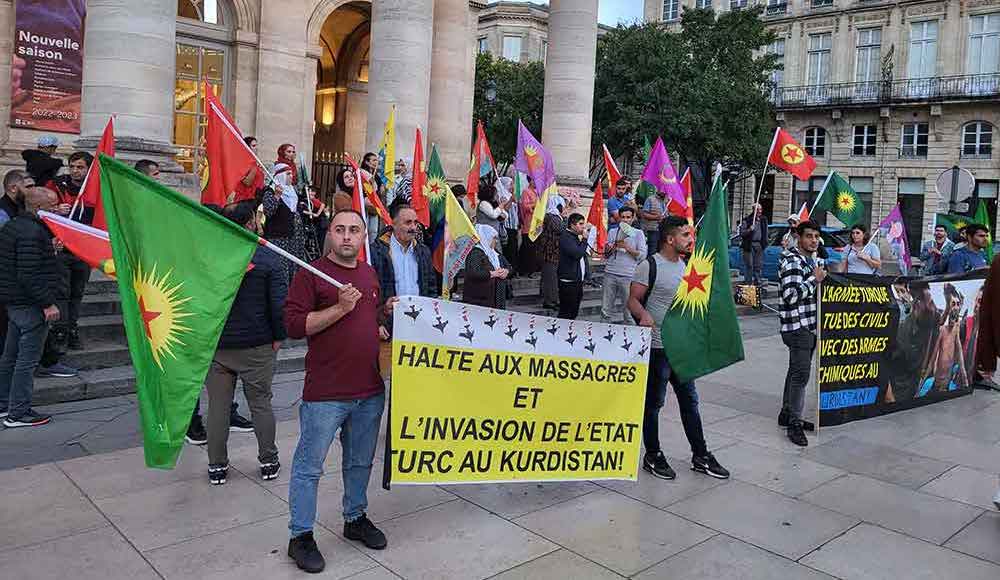
Bordeaux

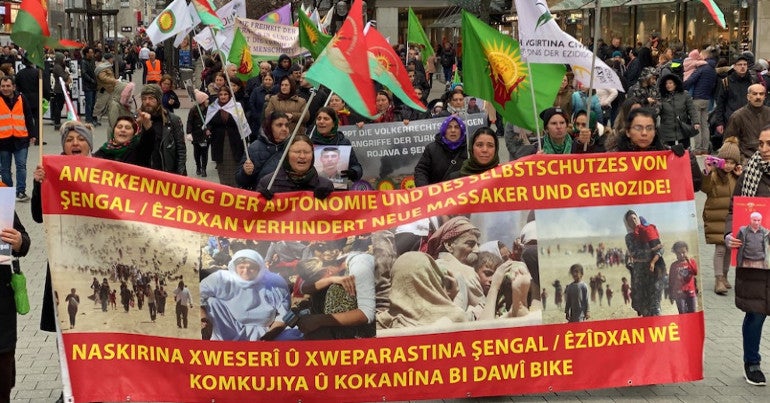
Kurdish communities in cities across Europe held protests Oct. 19, demanding action on claims that the Turkish military has repeatedly used chemical weapons in its ongoing intermittent air-strikes against strongholds of the Kurdistan Workers Party (PKK) in northern Iraq. The Nobel-winning International Physicians for the Prevention of Nuclear War (IPPNW) said it found evidence of chlorine and other "improvised chemical agents" during an investigative mission to Iraq. The IPPNW urged international bodies including the Organization for the Prohibition of Chemical Weapons (OPCW) to launch formal investigations. The PKK has released the names of 17 guerrillas it says were killed by Turkish chemical attacks in Southern Kurdistan (northern Iraq) over the past year. The pro-Kurdish Fırat News Agency (ANF) published a video that has been circulating on social media, showing two PKK fighters apparently suffering under influence of a chemical agent.

The Turkish defense ministry dismissed the claims as "completely baseless and untrue." Iraq's parliament has established a commission to examine the charges. (Medya News, ANF, ANF, ANF, ANF, SCF, Rudaw)

In the Kurdish-controlled town of Qamishli in northeast Syria (Rojava), protesters attacked the local United Nations office during a protest over global inaction on the charges against Turkey. (Rudaw)

Turkey has also launched ground incursions into Iraq to hunt down PKK fighters.

Photo: ANF

EuroParliament: Hungary no longer a democracy

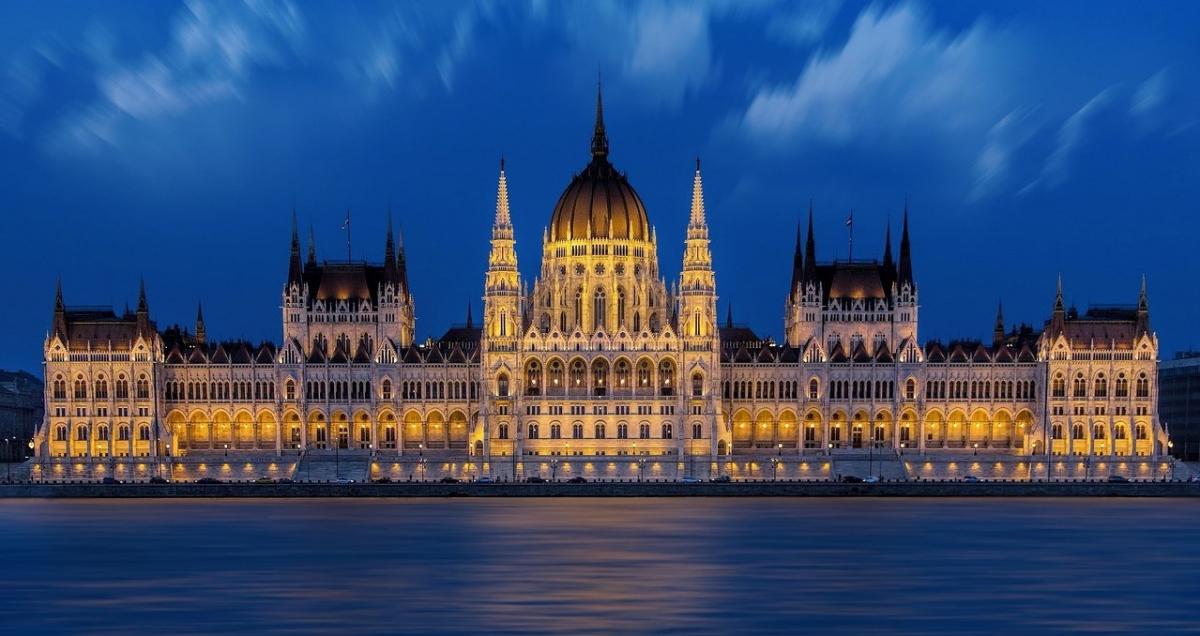
Budapest

The European Parliament on Sept. 15 voted to adopt an interim report finding that Hungary is no longer a democracy, but is becoming a "hybrid regime of electoral autocracy"—a constitutional system in which elections occur, but respect for democratic norms and standards are absent. The report was mandated in 2018, when EuroParliament passed a resolution asking European Union member states to determine whether Hungary is at risk of breaching the EU's founding values, in accordance with Article 7(1) of the Treaty on the European Union. EuroParliament raised concerns about judicial independence, freedom of speech and religion, and the rights of migrants and LGBTQ persons.

From Jurist, Sept. 16. Used with permission.

Photo: Pixabay

Nuclear war would cause global starvation: study

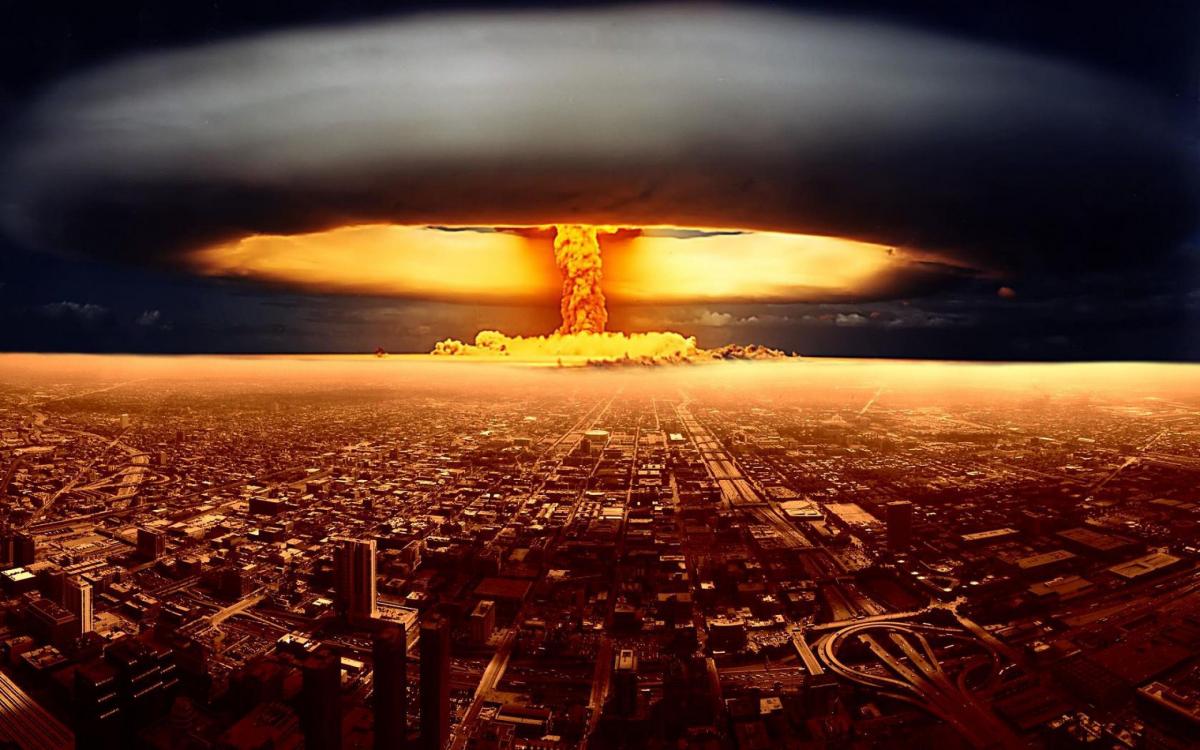
nuclea blast

More than 5 billion people would die of hunger following a full-scale nuclear war between the US and Russia, according to a global study led by Rutgers climate scientists, published Aug. 15 in the journal Nature Food. The team estimated how much sun-blocking soot would enter the atmosphere from firestorms that would be ignited by the detonation of nuclear weapons. Researchers calculated soot dispersal from six scenarios—from a regional India-Pakistan exchange to a large US-Russia war.

The data then were entered into the Community Earth System Model (CESM), a climate forecasting tool supported by the National Center for Atmospheric Research (NCAR). The CESM Community Land Model was used to estimate productivity of major crops (maize, rice, wheat and soybean) on a country-by-country basis. The researchers also examined projected changes to livestock pasture and in global marine fisheries.

Under even the smallest nuclear scenario, a localized war between India and Pakistan, global average caloric production decreased 7% within five years of the conflict. In the largest scenario—a full-scale US-Russia nuclear conflict—global average caloric production decreased by about 90% three to four years after the exchange.

"The data tell us one thing: We must prevent a nuclear war from ever happening," said Alan Robock, professor of climate science with the Department of Environmental Sciences at Rutgers University and co-author of the study. (Phys.Org)

Other studies have found that a full-scale US-Russia exchange could bring on nuclear winter and potentially mean human extinction.

Image: MoreSky

Iran demolishes houses, farms of Baha’i community

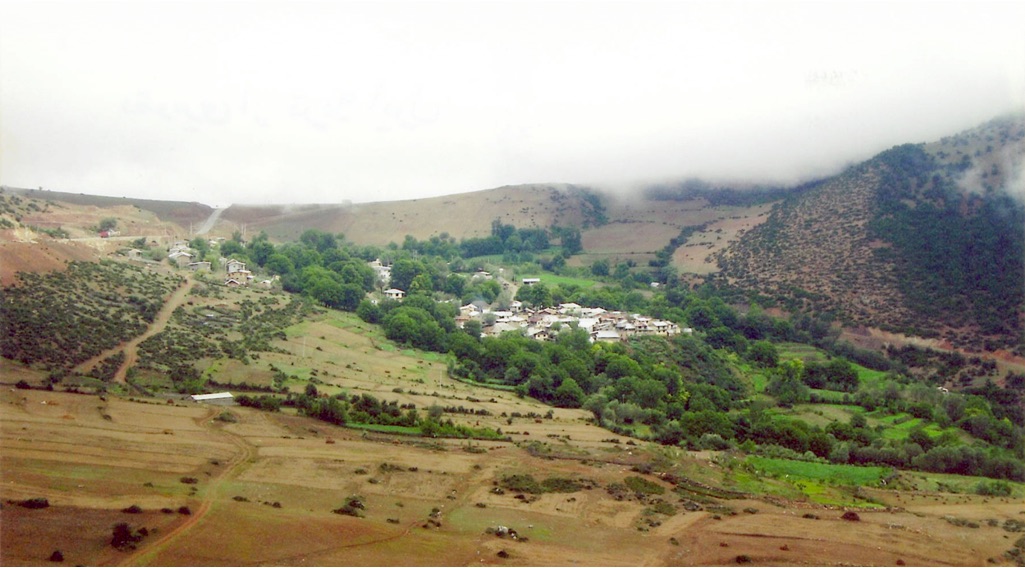
Ivel

Security forces laid siege to a village in northern Iran on Aug. 2, demolishing houses and farms belonging to members of the persecuted Baha'i faith. Over 200 troops were deployed to Roshankouh, in Mazandaran province, blocking the road into the village and confiscating residents' cell phones before commencing demolition of several properties. However, video footage of heavy machinery demolishing buildings was posted to social media by the Baha'i International Community. The organization reports that six homes were destroyed and over 20 hectares of land were confiscated. Troops used tear-gas and fired shots in the air to disperse residents who gathered to protest the demolitions.

The demolitions were ordered by a local court, on the basis that the lands in question were formally titled to Baha'i institutions, which were banned in 1979 by the Islamic Republic, and formally dissolved in 1983. Last year, some 50 Baha'i homes were demolished in the village of Ivel, also in Mazandaran province. The confiscated lands are turned over to parastatal companies.

Since early June, Iranian authorities have intensified pressure on the followers of Baha'i, raiding over a dozen households, arresting several leaders, and shutting down businesses. The Intelligence Ministry says those detained are linked to the Baha'i Universal House of Justice in Haifa, Israel, and had engaged in intelligence-gathering on behalf of the body.

The Universal House of Justice is the nine-member supreme ruling body of the Baha'i faith. The global institutions of the Bahaʼi faith have been based in what is today Israel since the 1860s—when the territory was Ottoman Palestine. The universalist and pacifistic Baha'i movement originated in Iran, but its leadership was exiled to Palestine following a wave of harsh repression against the faith by the Qajar shahs.

Nonetheless, Iranian authorities today stigmatize the Baha'i as agents of Israel.

The Islamic Republic recognizes minority faiths including Christianity, Judaism and Zoroastrianism, but does not extend the same recognition to Baha'i, which has an estimated 300,000 followers in Iran, among some 5 million worldwide. (Iran International, WION, ToI)

Baha'is also face growing persecution in Yemen.

Photo of Baha'i village in Mazandaran: Baha'i Community of Canada

Russia using cluster bombs in Kharkiv: Amnesty

Kharkiv

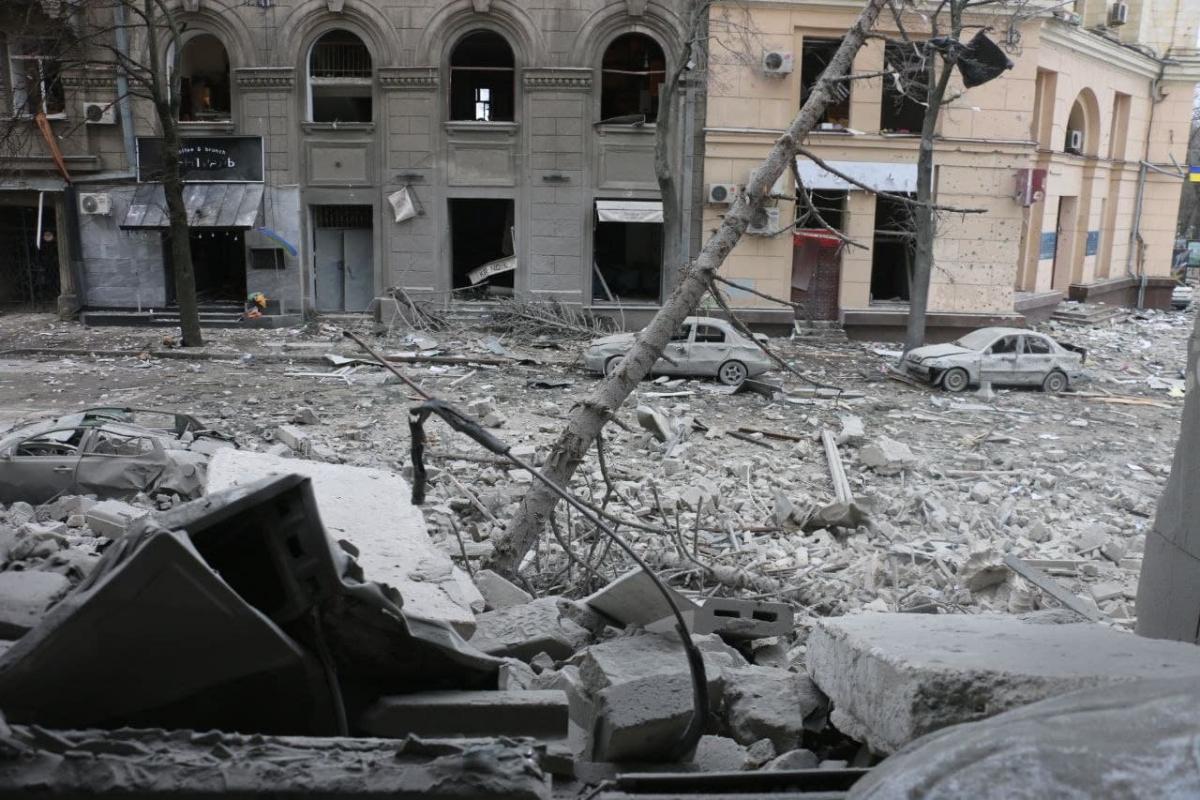
Hundreds of civilians have been killed in the Ukrainian city of Kharkiv by indiscriminate Russian shelling using widely banned cluster munitions and inherently inaccurate rockets, Amnesty International said June 13. A new report, entitled 'Anyone Can Die at Any Time', documents how Russian forces have shelled residential neighborhoods in Ukraine's second largest city almost daily since the start of the invasion, causing "wholesale destruction." Amnesty found evidence of Russian forces repeatedly using 9N210 and 9N235 cluster munitions as well as scatterable mines, both of which are subject to international treaty bans because of their indiscriminate effects.

"The repeated use of widely banned cluster munitions is shocking, and a further indication of utter disregard for civilian lives," said Donatella Rovera, Amnesty's senior crisis response adviser. "The Russian forces responsible for these horrific attacks must be held accountable for their actions, and victims and their families must receive full reparations."

The director of the medical department at the Kharkiv Regional Military Administration told Amnesty International that 606 civilians had been killed and 1,248 injured in Kharkiv oblast since the conflict began. Most of the strikes investigated by Amnesty inflicted multiple casualties over widespread areas.

While Russia is not a party to either the Convention on Cluster Munitions or the Convention on Anti-Personnel Mines, international humanitarian law prohibits indiscriminate attacks, and the use of weapons that are indiscriminate by nature. Indiscriminate attacks resulting in death or injury to civilians, or damage to civilian infrastructure, constitute war crimes. (Amnesty International)

Amnesty first reported Russian use of cluster munitions in Ukraine in early March. Russia is also accused of having widely used cluster munitions in Syria.

Both the International Criminal Court and UN Human Rights Council have opened investigations into possible war crimes in Ukraine.

Photo: Wikimedia Commons

Chomsky and Kissinger: paradoxical unity

chomsky & kissinger

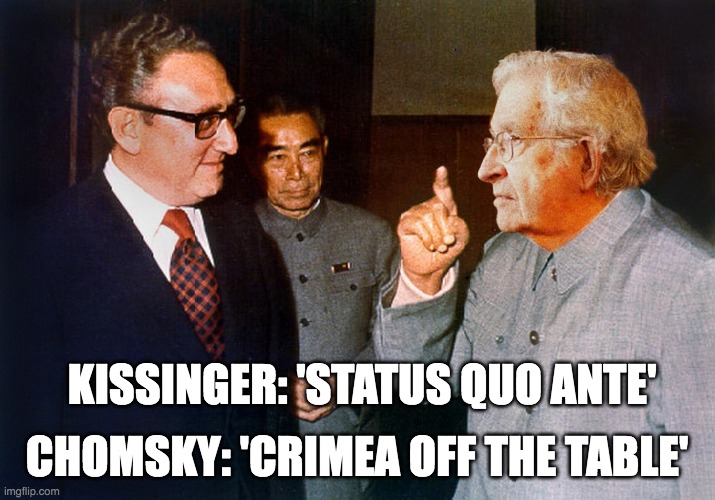
In Episode 125 of the CounterVortex podcast, Bill Weinberg continues his deconstruction of the increasingly sinister, aggression-abetting politics of Noam Chomsky. In his recent interview with Current Affairs, Chomsky echoes Henry Kissinger's lecturing to the Ukrainians that they must capitulate to Russian aggression in the interests of global stability—a directive promptly repudiated by Ukrainian President Volodymyr Zelensky. Chomsky has long been peddling historical revisionism on Ukraine, but his current convergence with Kissinger is a case study in imperial narcissism—an internalization of the imperialist perspective he has ostensibly dedicated his life to opposing. Fortunately, there is growing dissent on the left to Chomsky's paradoxical Kissingerian line, including from Ukrainian-American scholars—and from Chomsky's own Ukrainian translator, Artem Chapeye.

Listen on SoundCloud or via Patreon.

Essay discussed: Politics and the English Language by George Orwell, 1945

Production by Chris Rywalt

We ask listeners to donate just $1 per weekly podcast via Patreon—or $2 for our new special offer! We now have 41 subscribers. If you appreciate our work, please become Number 42!

Altered photo from Kissinger's 1973 meeting with Mao Zedong. Fair use rights asserted.

ICC reveals Libya investigation strategy

Libya

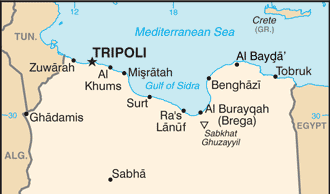
International Criminal Court (ICC) prosecutor Karim AA Khan on April 28 revealed a new strategy for the ongoing investigation into the situation in Libya to the UN Security Council. The ICC investigation focuses on accusations of war crimes and crimes against humanity committed in Libya since the outbreak of the revolution against Moammar Qaddafi's government in February 2011. The investigation also covers three unexecuted arrest warrants issued by the ICC. The ICC began its investigation in March 2011. Libya is not a party to the Rome Statute. Therefore, the ICC derives its jurisdiction for this investigation from a unanimous reference by the Security Council in Resolution 1970.

In March, the Office for the UN High Commissioner for Human Rights (OHCHR) expressed concern over the "deepening crackdown" on civil society in Libya, including arbitrary arrests and vilification campaigns on social media. The OHCHR noted a "seriously chilling effect" on human rights defenders, humanitarian workers and other civil society actors. The UN Independent Fact-Finding Mission on Libya found in its March report that international human rights and humanitarian law are being violated in the country.

The new strategy unveiled by the ICC prosecutor places emphasis on survivors, empowering them to participate in the investigation process. 

From Jurist, May 2. Used with permission.

Note: Libyan presidential hopeful Saif al-Islam Qaddafi is among those wanted by the International Criminal Court, for alleged war crimes committed during the revolution that overthrew his father 10 years ago.

Map: Perry-Castañeda Library

Ukraine war windfall for US fracking industry

refinery

US President Joe Biden and European Commission president Ursula von der Leyen on March 25 announced a joint Task Force to reduce Europe's dependence on Russian hydrocarbons and "strengthen European energy security as President Putin wages his war of choice against Ukraine." The press release states: "The United States will work with international partners and strive to ensure additional LNG volumes for the EU market of at least 15 bcm [billion cubic meters] in 2022, with expected increases going forward." This means liquified natural gas from the US fracking industry.

The press release did add: "The United States and the European Commission will undertake efforts to reduce the greenhouse gas intensity of all new LNG infrastructure and associated pipelines, including through using clean energy to power onsite operations, reducing methane leakage, and building clean and renewable hydrogen-ready infrastructure."

But environmentalist critics were not appeased. Murray Worthy, gas campaign leader at Global Witness, responded: "Today's agreement puts the EU and the US on a misguided and dangerous path by fast-tracking new infrastructure to import fossil gas into Europe. Europe already has enough capacity to import the amount of gas the US intends to supply, and building new import terminals would mean locking in fossil gas imports for years to come, long after the EU needs to quit this climate-wrecking fuel for good… If Europe truly wants to get off Russian gas the only real option it has is phasing out gas altogether." (DW)

Over the weekend, hundreds were arrested in England as the activist group Just Stop Oil disrupted petrol supplies from seven critical facilities near London and Birmingham to press their demand that the United Kingdom call a halt to new oil and gas projects. In a statement, Just Stop Oil said it is "calling on the UK government to get a grip and implement an emergency programme to reduce our reliance on oil and gas through insulation, renewables and free public transport." (Jurist)

World oil prices have surged to $100 a barrel in the wake of Russia's invasion of Ukraine.

Image: FracTracker

ICC takes CAR war crimes suspect into custody

The International Criminal Court (ICC) on March 14 announced that former militia leader Maxime Jeoffroy Eli Mokom Gawaka (Mokom), who is suspected to have committed war crimes and crimes against humanity in the Central African Republic (CAR), has been surrendered by the Republic of Chad. A warrant for Mokom's arrest was issued in December 2018, when the ICC's Pre-Trial Chamber II determined that Mokom was the "National Coordinator of Operations" for the Anti-Balaka militia. In this capacity, he is believed to have committed murder, deportation, imprisonment, torture, persecution and other crimes against humanity. He also allegedly committed war crimes by targeting civilians. 

The ICC issued the arrest warrant following the Chamber's determination that a "non-international armed conflict" occurred in the CAR between September 2013 and December 2014, with the Seleka and the Anti-Balaka the principal antagonists. The Seleka is a coalition of armed groups comprising Muslims who took up arms against then-president François Bozizé. The Anti-Balaka then rose in support of Bozizé, and to fight the Seleka. The Chamber found that attacks had been carried out by the Anti-Balaka against the Muslim civilian population, Seleka supporters, and others perceived to be "foreigners." As leader of the Anti-Balaka, Mokom allegedly committed the crimes in pursuit of "an organisational policy to target primarily the Muslim population in Bangui," the country's capital.

In 2014, the CAR government referred the situation involving crimes committed by both the Seleka and the Anti-Balaka to the ICC. The ICC Prosecutor then opened an investigation. The violence caused thousands of deaths and large-scale displacement.

From Jurist, March 15. Used with permission.

IPCC: ‘rapidly closing window’ for humanity

climate change

The threat that climate change poses to human well-being and the health of the planet is "unequivocal," says the latest report from the United Nations  Intergovernmental Panel on Climate Change (IPCC). The expansive review—which forms the second part of the IPCC's sixth assessment report (AR6)—warns that any further delay in global action to slow climate change and adapt to its impacts "will miss a brief and rapidly closing window of opportunity to secure a liveable and sustainable future for all." 

The report, "Climate Change 2022: Impacts, Adaptation and Vulnerability," follows publication of the first part of AR6, released in August last year, which set out the physical science basis of how and why the Earth's climate is changing. 

Over the two weeks before the report was released on Feb. 28, government delegations had been meeting in an online approval session to agree on the high-level "summary for policymakers" section.

The final report is published against the backdrop of Russia's invasion of Ukraine, which forced some members of the Ukrainian delegation to pull out of the approval session and sequester in bomb shelters on Feb. 25. The head of the delegation, Svitlana Krakovska, pledged when back online that "we will not surrender in Ukraine and we hope the world will not surrender in building a climate resilient future." The head of the Russian delegation, Oleg Anisimov, actually responded: "Let me present an apology on behalf of all Russians not able to prevent this conflict."

From Carbon Brief, Feb. 28

Image: blende12/Pixabay

Human Rights Watch assails NYC housing policy

NYCHA

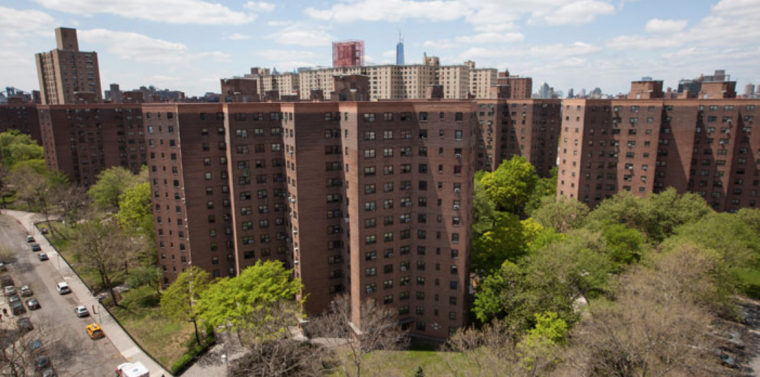
A New York City program that has privatized management and effective control of much public housing stock lacks adequate oversight and protections for residents' rights, Human Rights Watch charges in a report issued Jan. 27. The 98-page report, 'The Tenant Never Wins': Private Takeover of Public Housing Puts Rights at Risk in New York City, examines the impact of the New York City Housing Authority (NYCHA) program called Permanent Affordability Commitment Together (PACT), which utilizes a federal program developed by the US Department of Housing & Urban Development (HUD) called the Rental Assistance Demonstration (RAD) to permit the semi-privatization of public housing.

Under PACT, which was launched in December 2016, NYCHA leases its public housing developments to private companies for 99 years, effectively privatizing management of the buildings. Human Rights Watch found that PACT conversions also mean the loss of key protections for residents, and may have contributed to increased evictions.

Public housing is a critical source of affordable housing for low-income New Yorkers, especially for people of color, older people, and people with disabilities. NYCHA's public housing accounts for 57% of the units affordable to those with incomes below 30% of the area median, while making up just nine percent of New York City's occupied rental housing stock. Given the chronic shortage of affordable housing in the United States, the need for public housing is immense. NYCHA's public housing waiting list has over 160,000 applications, and those lucky enough to get off the "waitlist" can still wait over a year before being placed in an apartment.

Over the past decades, Congress has dramatically cut the budget for public housing, which relies heavily on federal funding. Funding for major repairs declined by 35%, in real terms, between 2000 and 2021, and funding for day-to-day operations and maintenance has been consistently insufficient to cover operating needs. As a result, NYCHA housing has gone from being of equal or better quality compared to similar private-sector housing to being plagued by severe issues such as mold, peeling lead paint, and failing heat.

To compensate for chronic government underfunding, HUD created the RAD program, which allows local governments to "convert" public housing from Section 9 of the Housing Act to Section 8. This legal change enables the involvement of the private sector, and the ability to take out mortgages on the buildings. Many cities, including New York, have used RAD to significantly involve for-profit companies in the operation of public housing. These companies profiting from subsidies and tenant rents.

PACT has enabled NYCHA to secure financing for needed repairs at the cost of losing certain key protections for tenants, including provisions of a monitoring agreement between NYCHA and the federal government concerning oversight of conditions in NYCHA's buildings. Many resident protections, including those obligating PACT managers to make repairs and meet federal Housing Quality Standards, are invoked in the contracts for PACT deals. But these contracts do not provide for residents' rights to enforce these protections.

Human Rights Watch reviewed eviction data provided by NYCHA and found that, of the six PACT developments that converted before 2020, when an eviction moratorium was enacted, evictions increased in two large PACT conversions that together house 6,500 people. One of these developments, Ocean Bay in Far Rockaway, Queens, was NYCHA's inaugural PACT conversion. Between 2017 and 2019, it had an eviction rate more than three times higher than the NYCHA average. They "put you out faster," one Ocean Bay resident told Human Rights Watch.

Evictions also increased post-conversion at the Betances Houses in the South Bronx. NYCHA plans to place 62,000 units, or one-third of its 175,000 apartments, under PACT management. To date, NYCHA has thusly converted 11,000 apartments.

New York City and New York State should update their eviction laws to conform with international human rights standards, which prohibit evictions that place tenants at risk of homelessness or of other rights violations, Human Rights Watch said. Nationally, Congress should fully fund public housing to ensure that local governments are able to maintain this critical resource, HRW further urged. (HRW, The City, Save Section 9)

Photo via NYS Senate

Chad: protests over Ouaddai sultanate autonomy

Ouaddai

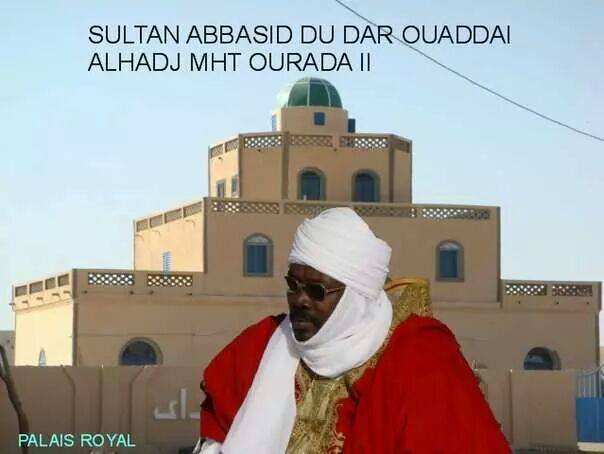
At least 14 protesters were killed in Chad's Ouaddai province Jan. 28, climaxing several days of mounting violence and unrest. Protests broke out in provincial capital Abéché after the central government suspended the powers of Ouaddai's traditional sultan, Cherif Abdelhadi Mahdi. The appointed prefect of the province is to assume his traditional powers over the ethnic Ouaddai community. The traditional Ouaddai chieftain of the locality of Bani Halba has also had his powers dissolved by decree. The appointed replacements are apparently to be Arabs, exacerbating tensions between the Arab and ethnic Ouaddai communities. Local rights groups say some were killed by security forces in the preceding days' protests as well, and are demanding an investigation. The heretofore autonomous sultanate of Dar Ouaddai is a survival of the Wadai Empire, which ruled much of the region from the 15th century through the consolidation of French colonial rule in 1914. (TchadInfos, AlWihdaInfo, AFP)

Cherif Abdelhadi Mahdi was himself appointed by the central government in August 2019, replacing the previous sultan, Ibrahim Mahamat Ourada II. This also sparked local protests, and the sultan's palace was occupied by army troops during the transition. Recent years have seen sporadic violence in the province between Ouaddai farmers and Arab and Zaghawa herders, exacerbated by shrinking water resources. (TchadInfos, Pulse News Agency)

Chad's ruling junta announced Jan. 27 that a national forum designed to chart the country's future following last year's seizure of power will be postponed by nearly three months. An "inclusive national dialogue" that the junta had announced on New Year's Eve would start Feb. 15 "is postponed until May 10," the presidency said on Facebook, without giving further details. Preliminary talks in Qatar with armed Chadian rebel groups, aiming at bringing them into the dialogue, have also been postponed. (AFP)

Photo: Sultan Dar Ouaddaï

UAE ‘cybercrime’ law restricts free speech: civil society

UAE

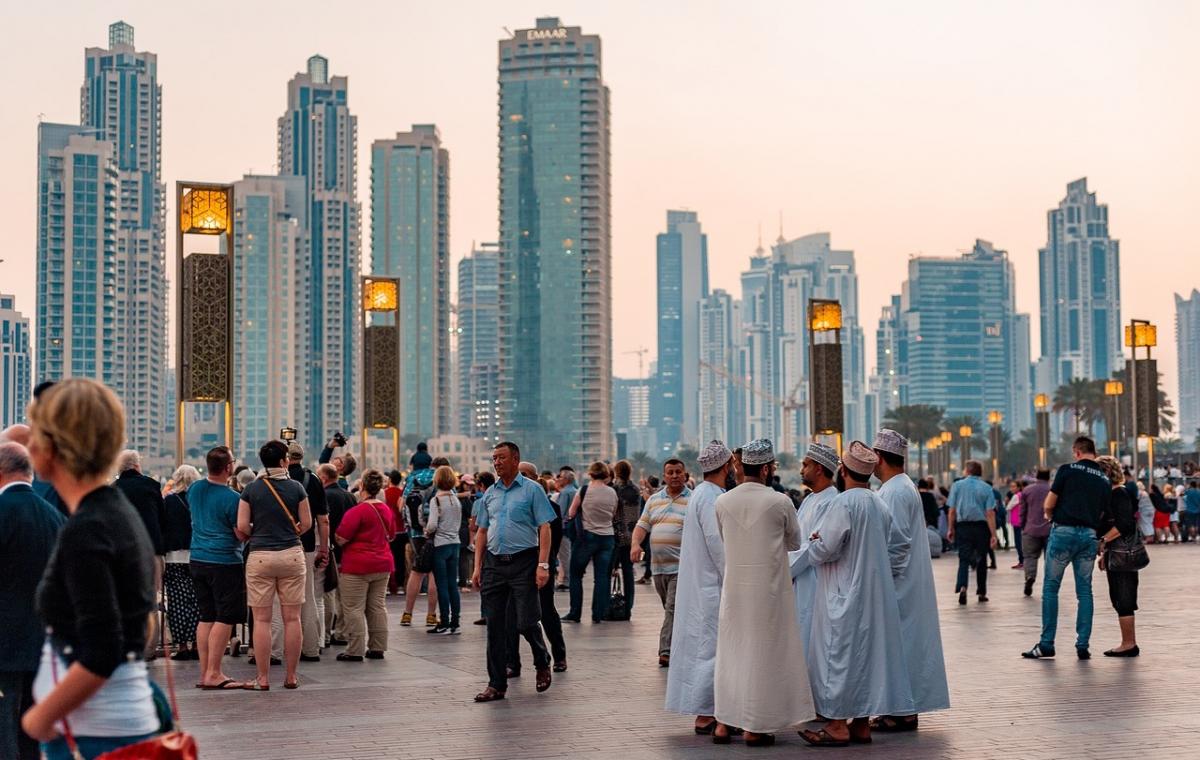
A coalition of 15 human rights and civil society organizations on Jan. 25 published a joint statement protesting the United Arab Emirates' new cybercrime law, saying it "severely threatens and unduly restricts the right to freedom of expression (both online and offline) and the rights to freedom of association and of peaceful assembly" in the country.

Federal Decree-Law No. 34 of 2021, which came into effect on Jan. 2, replaced the UAE's former Federal Law No. 5 of 2012 on Combatting Cybercrime. Like its predecessor, the new law criminalizes acts that are otherwise protected under international law such as calls for peaceful assembly without obtaining approval from authorities. However, it also implements greater restrictions on civic space and free speech.

The letter says that the language of the statute creates ambiguity prone to misuse, especially regarding issues related to "national security," which provide the authorities with "excessive discretion to…impose lengthy prison sentences on individuals exercising their rights to freedom of expression and peaceful assembly." The wording of these provisions is so broad that they can be used to target journalists, whistle-blowers, activists, and peaceful critics of the government.

The letter notes that the law stipulates no maximum prison sentence for acts that "harm the State's interests," which violates Article 19 of the Universal Declaration of Human Rights.

The organizations called on the UAE administration to repeal the law or significantly amend it so that it is in consonance with international human rights standards and laws.

From Jurist, Jan. 26. Used with permission.

Photo: Pixabay

UN experts condemn Gitmo on grim anniversary

Gitmo

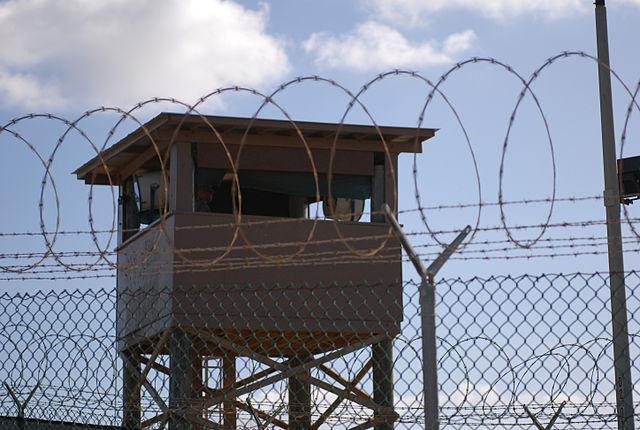
A group of United Nations experts have condemned the US Guantánamo Bay detention facility in Cuba, calling it a site of "unparalleled notoriety." The statement came on the eve of Jan. 11, which marks the twentieth anniversary of the arrival of the first terrorism suspects at Guantánamo. The independent experts, appointed by the UN Human Rights Council, said: "Twenty years of practicing arbitrary detention without trial [and] accompanied by torture or ill treatment is simply unacceptable for any government, particularly a government which has a stated claim to protecting human rights."

In the 20 years the detention center has been operating, a total of 780 prisoners have been held there, with 39 detainees remaining today. Of those, only nine have been charged or convicted.

The experts described the facility as a site of the systematic use of torture, and of cruel, inhuman, or degrading treatment of the prisoners detained there. They also said the prison is a symbol of the lack of accountability for "state-sponsored torture." They expressed concern for the aging and ill prisoners, many of whom lack adequate medical assistance or rehabilitation for the torture they suffered. The experts called on the US to close the site and return the detainees home, or to safe third countries.

They also expressed concern that military commissions were continuing with pre-trial proceedings on motions to suppress the evidence of torture. They said there is a need for openness in the trials and called for transparency and fairness. They specifically highlighted "the failures of the United States judicial system to play a meaningful role in protecting human rights…and enabling a legal black hole to thrive in Guantanamo with their apparent approval and support."

On Jan. 9, the Watson Institute for International and Public Affairs at Brown University released a paper on the costs of US detentions and interrogations since 9-11. It noted that no US official has been held accountable for the creation or authorization of the detention programs. It called for bold action from President Biden, starting with the closing of the facility at Guantánamo Bay. It also said the president should authorize the attorney general to appoint a special prosecutor to hold the authors of the program to account, and recommends an official apology and remedies to the victims.

From Jurist, Jan. 10. Used with permission.

Photo via Jurist

Podcast: against ‘normalcy’

freeway

In Episode 105 of the CounterVortex podcast, Bill Weinberg rants against the ubiquitous propaganda that normalizes the oppressive and dystopian pre-pandemic normality. Amid the relentless COVID-19 denialism, even mainstream voices are calling for a return to "normalcy" (sic)—which is not even a word. The opportunity for a crash conversion from fossil fuels that was posed by 2020's pandemic-induced economic paralysis, when already depressed oil prices actually went negative, is now being squandered. President Biden just released oil from the Strategic Reserves to control soaring prices. Simultaneously, the administration is moving ahead with the largest offshore oil and gas lease sale in US history. While during the 2020 lockdown. the usually smog-obscured Himalayas became visible from northern India for first time in decades, Delhi is now choked with emergency levels of toxic smog. While during the 2020 lockdown, the total US death rate actually dropped because people were staying off the roads, US traffic deaths are now soaring. New York's new Mayor Eric Adams wants to stake the city's economic future to the cryptocurrency industry, even as China is cracking down on Bitcoin "mining" (sic) because of its "extremely harmful" carbon footprint. And even amid all the empty hand-wringing about climate change, airlines are flying thousands of empty "ghost flights" in order to keep their slots at congested airports. The much-vaunted "return to normalcy" must be urgently resisted. As Bruce Cockburn observed long ago, the trouble with normal is it always gets worse. Listen on SoundCloud or via Patreon.

Production by Chris Rywalt

We ask listeners to donate just $1 per weekly podcast via Patreon—or $2 for our new special offer! We now have 27 subscribers. If you appreciate our work, please become Number 28!

Photo: malingering via The Source Metro

Another assassination at Colombian ‘peace community’

Apartado

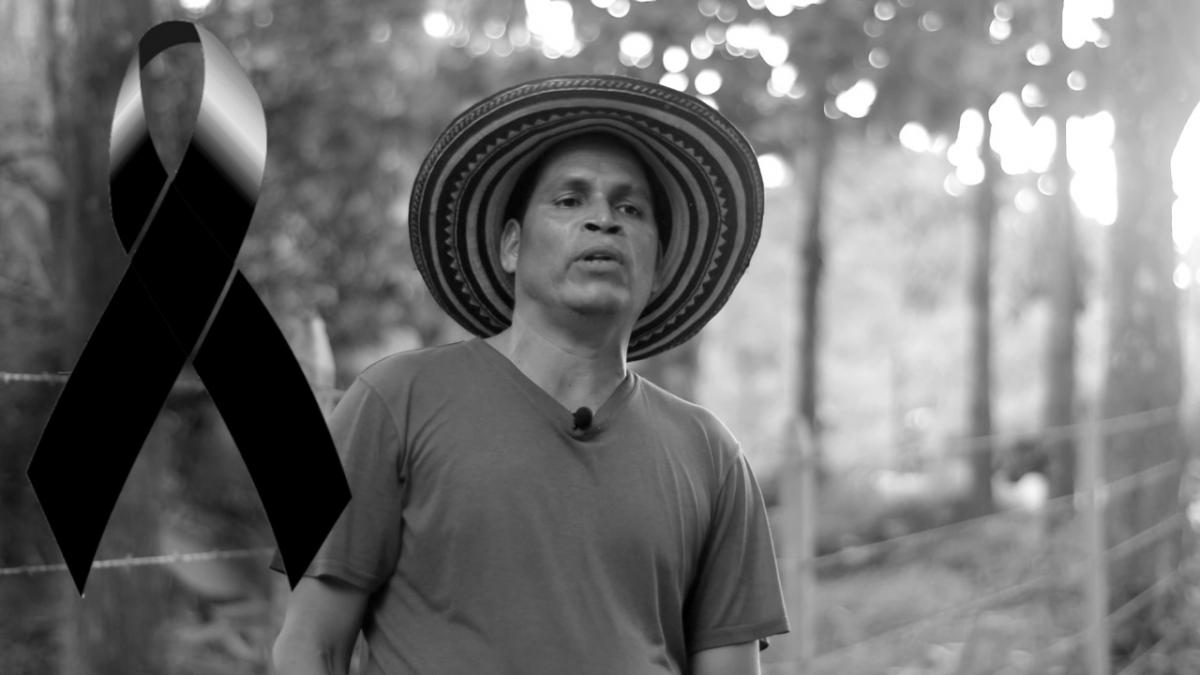
A new assassination of a campesino leader is reported from the self-declared "peace community" of San José de Apartadó, in Colombia's conflicted northern Urabá region. On Dec. 17, Uber Velásquez was slain by unknown assailants in the vereda (hamlet) of La Balsa, one of those adhering to the "peace community" which for more than 20 years has refused all cooperation with armed actors in Colombia's conflict—and whose leaders have been repeatedly targeted for death. Velásquez had recently been involved in a citizen oversight committee monitoring a road improvement project in the area, and had reported delays that could point to corruption.

This was the latest in an ongoing wave of assassinations of social leaders across Colombia, mostly at the hands of right-wing paramilitary groups. The group Indepaz, which has been monitoring Colombia's peace process, stated that with the death of Velásquez, the number of social leaders and human rights workers killed in Colombia in 2021 came to 165. The group counts 1,280 killed since the peace accords with the FARC guerillas were signed five years ago. (Prensa Rural, Dec. 23; Prensa Rural, InfoBae, Dec. 19)

On Jan. 7, Colombia's Special Jurisdiction for Peace (JEP) formally declared that the February 2005 massacre at San José de Apartadó—in which eight residents were slain, including three children—was a "crime against humanity." The ruling found that the paramilitary massacre was carried out in the context of a counter-insurgency operation code-named "Fénix," with the probable involvement on the Colombian army's 17th Brigade. (Semana, Bogotá, Ecos del Combeima, Ibagué, Jan. 7)

Ironically, the ruling comes a year after Colombia's high court found the peace community liable for making defamatory statements against the 17th Brigade. The Constitutional Court ruled in December 2020 that the peace community made unsubstantiated claims on its website of the Brigade's complicity in assassinations. Criminal counts against the peace community were put on hold as a petition for "nullification" of the charges, filed on behalf of the community by human rights groups, was weighed. (El Tiempo, Bogotá, May 5, 2021)

Photo via Twitter

Burma junta leader accused of crimes against humanity

Burma

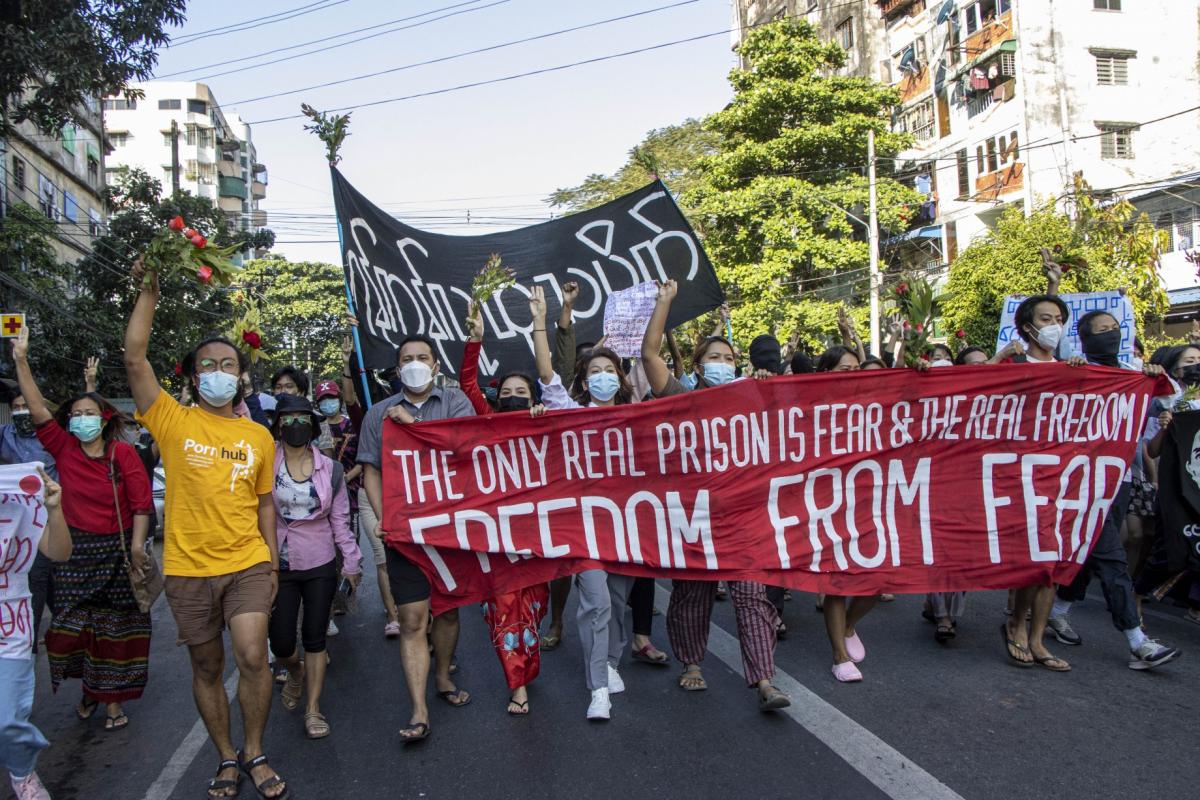
Burma's military junta leader Gen. Min Aung Hlaing was accused of crimes against humanity in a complaint to the International Criminal Court (ICC) filed Dec. 10 by the Myanmar Accountability Project (MAP). Article 15 of the Rome Statute empowers the ICC prosecutor to initiate an investigation upon receiving information on crimes within the jurisdiction of the Court. MAP, a human rights advocacy group, has requested that the ICC under Article 15 launch a criminal investigation into "the use of torture as part of the violent crackdown against the protest movement in Myanmar." MAP's submission is accompanied by evidence of the widespread and systematic use of torture in Burma (Myanmar) since the military seized control from the democratically elected government in February.

A recent finding of the Independent Investigative Mechanism for Myanmar (IIMM), set up by the UN in 2018, supports these allegations. The IIMM, in its third annual report to the Human Rights Council, made a preliminary finding that crimes against humanity "including murder, persecution, imprisonment, sexual violence, enforced disappearance and torture, have likely been committed."

In a recent statement to the UN Human Rights Council, IIMM head Nicholas Koumjian said that "the Mechanism has collected over 219,000 information items related to post-coup events." He also argued that "evidence shows security forces acting in a coordinated manner across different regions, systematically targeting specific categories of persons, such as journalists and medical professionals."

MAP also relied in its submission on the findings of the Assistance Association for Political Prisoners, which has found that since the coup in February, over 1,300 people have been killed, and over 7,000 have been arrested, charged, or sentenced.

MAP director Chris Gunness has stated that "the leader of the illegal coup is criminally responsible for the security forces under his command committing mass atrocity crimes." He believes that the "prospects of a conviction are good," and that "grounds for issuing an arrest warrant against Min Aung Hlaing are overwhelming."

From Jurist, Dec. 13. Used with permission.

Photo: Myanmar Now

Podcast: R2P in the 21st Century

Aleppo

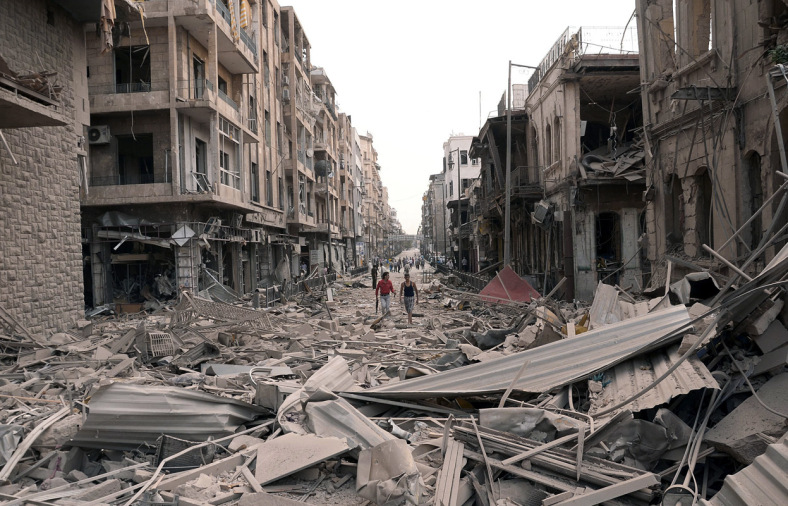
In Episode 101 of the CounterVortex podcast, we present the audio from a panel at the Ninth Biennial International Conference of the Herbert Marcuse Society, held in October at Arizona State University in Tempe. The panel, "The Responsibility to Protect in the Twenty-First Century," features two presentations. Javier Sethness speaks on "Realism, Egalitarianism, and Internationalism," providing a theoretical and historical framework for the question, including a discussion of Herbert Marcuse's work with US intelligence in World War II. Bill Weinberg, speaking via Zoom from New York, follows with "For Solidarity; Against Dictators and Campism," discussing contemporary examples, including Syria, Libya, Burma and Taiwan. A third presentation was to have been offered by Anner G. in Ethiopia, on "The Responsibility to Protect in Tigray," but she was unable to join. The work of her group, Horn Anarchists, is briefly discussed in Weinberg's presentation. Listen on SoundCloud or via Patreon.

The panel is also on YouTube.

Production by Chris Rywalt

We ask listeners to donate just $1 per weekly podcast via Patreon—or $2 for our new special offer! We now have 23 subscribers. If you appreciate our work, please become Number 24!

Photo: Destruction of Aleppo, via 7ee6an

Ecuador: president extends state of emergency

Quito police

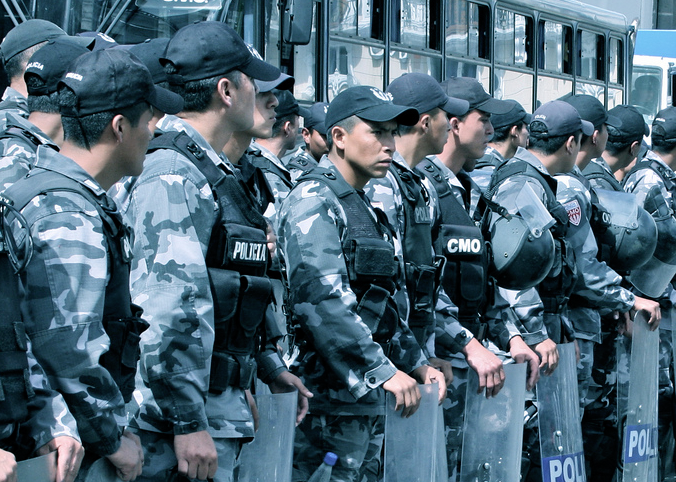
Ecuador's President Guillermo Lasso on Nov. 18 extended the country's state of emergency by a second 30 days. The decree is ostensibly an attempt to combat the insecurity generated by drug-related crime and re-establish public order. It provides for the mobilization of military forces in certain provinces to assist the functions of the National Police in several provinces.

The emergency was originally declared on Oct. 18, for a period of 60 days, but the duration was reduced to 30 days by Ecuador's Constitutional Court. The renewed state of emergency will be enacted in nine of the 24 provinces in the country: El Oro, Guayas, Santa Elena, Manabí, Los Ríos, Esmeraldas, Santo Domingo de los Tsáchilas, Pichincha and Sucumbíos.

Ecuador's Interior Ministry has stated that the results obtained in the 234,804 operations carried out during the first month of emergency reveal that the measure has been effective. The ministry also stated that in the first 30 days of the state of emergency, 16 tons of drugs, and 634 firearms have been seized. Additionally, at least 76 "narco-criminal" organizations have been dismantled, and 6,894 people have been arrested. The homicide rate was also cut in half during November to 0.63 per 100 thousand inhabitants, whereas in October it was 1.20 per 100 thousand inhabitants.

From Jurist, Nov. 22

See our last report on the state of emergency in Ecuador.

Photo via Wikipedia

Belarus officials charged in ‘crimes against humanity’

Belarus

Two international human rights organizations accused six high-ranking members of the Belarusian security authorities of committing crimes against humanity in a criminal complaint filed in Germany Nov. 1. The complaint was filed with the German Public Prosecutor General by the Geneva-based World Organization against Torture (OMCT) and the Berlin-based European Center for Constitutional and Human Rights (ECCHR). The complaint was filed in Germany because of its universal jurisdiction doctrine, which allows its courts to prosecute crimes against humanity that are committed anywhere in the world. As ECCHR program director for international crimes Andreas Schüller, stated: "We expect the initiation of preliminary proceedings by the Federal Prosecutor General against those responsible, as there is no foreseeable investigation into these violations of international law in Belarus itself."

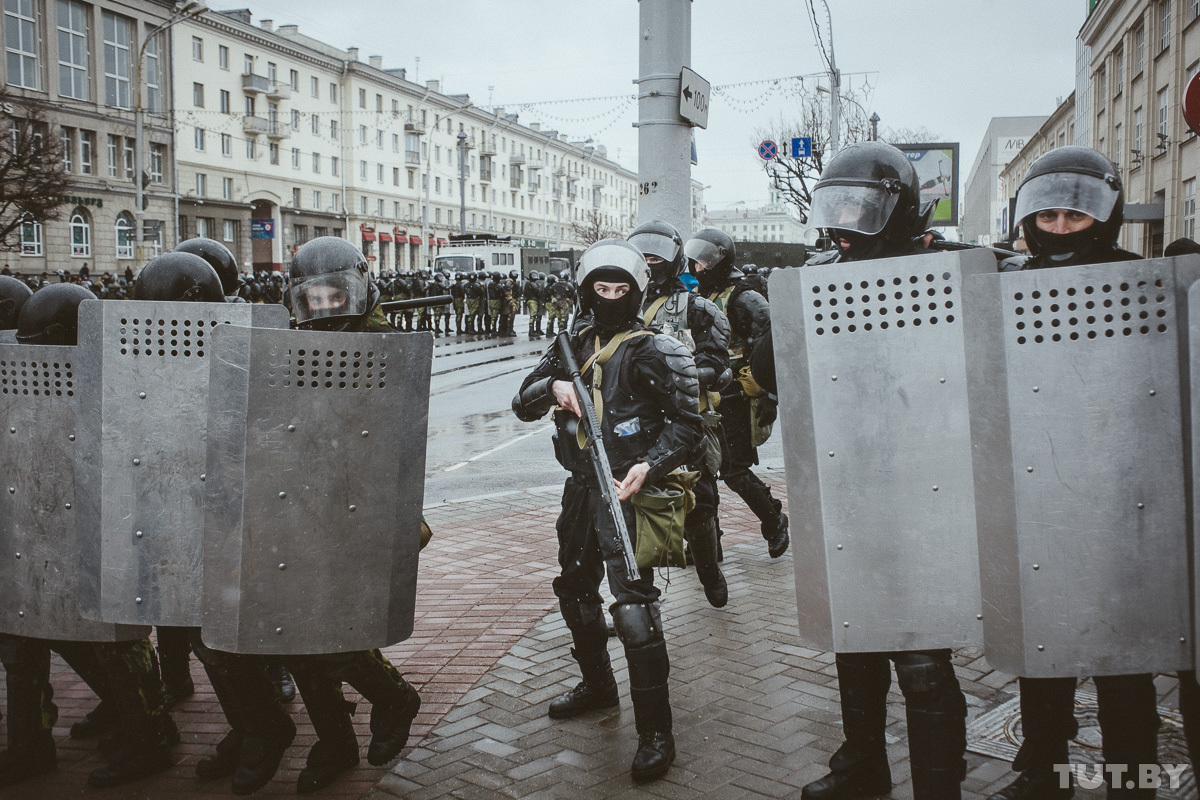
The complaint asserts that security forces have reacted with extreme violence to popular protests since the contested presidential elections in Belarus in August 2020. The groups accuse the six officials of systematic repression amounting to crimes against humanity.

OMCT secretary general Gerald Staberock stated:

There is clear evidence that torture was used intentionally and that it was widespread and systematic, thus reaching the threshold of crimes against humanity. This was confirmed by various international investigations, including by the Moscow Mechanism of the OSCE. Our own reporting has demonstrated that Belarus has taken no action to punish these crimes, whose perpetrators enjoy 100% impunity.

The German prosecutor’s office and foreign ministry did not immediately respond to requests for comments.

From Jurist, Nov. 2. Used with permission.

Note: The Moscow Mechanism of the Organization for Security & Cooperation in Europe (OSCE) provides for the formation of special expert panels on internal conflicts. The Mechanism was invoked for Belarus in September 2020, and the panel turned in its report that November. 

Photo: Pramen

Chile: new escalation in Mapuche country

Mapuche

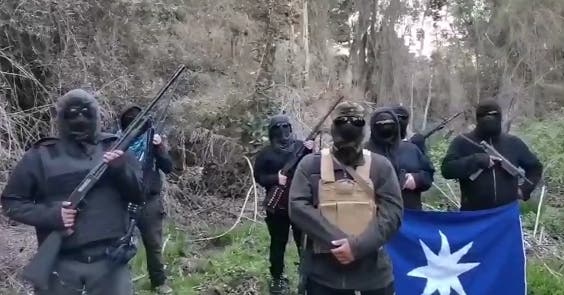
A group of masked armed men calling themselves Mapuche Territory Resistance seized control of Malleco National Reserve in Chile's La Araucanía region Oct. 9, occupying the administrative offices and releasing a video of the action in which they declare their readiness to resist "any violent act on the part of the State." The statement accused the Chilean Forestry Corporation (CONAF), which runs the reserve, of "usurpation" of traditional Mapuche lands and opening them to timber exploitation. President Sebastian Piñera responded by lodging a criminal complaint against the occupiers and demanding their eviction.

On Oct. 10 a woman was killed at a protest in support of the Mapuche in Santiago, apparently hit in the head by a police tear-gas cannister. (MercoPress, EFE, T13, Santiago)

Héctor Llaitul Carillanca, leader of the Arauco Malleco Coordinating Committee (CAM), a militant organization pressing for restitution of traditional Mapuche lands, accused the government of "attacking the communities" that are in struggle "against big capital." (EFE) 

Photo via T13

Afghanistan: massacre and cleansing of Hazaras —already

Hazara

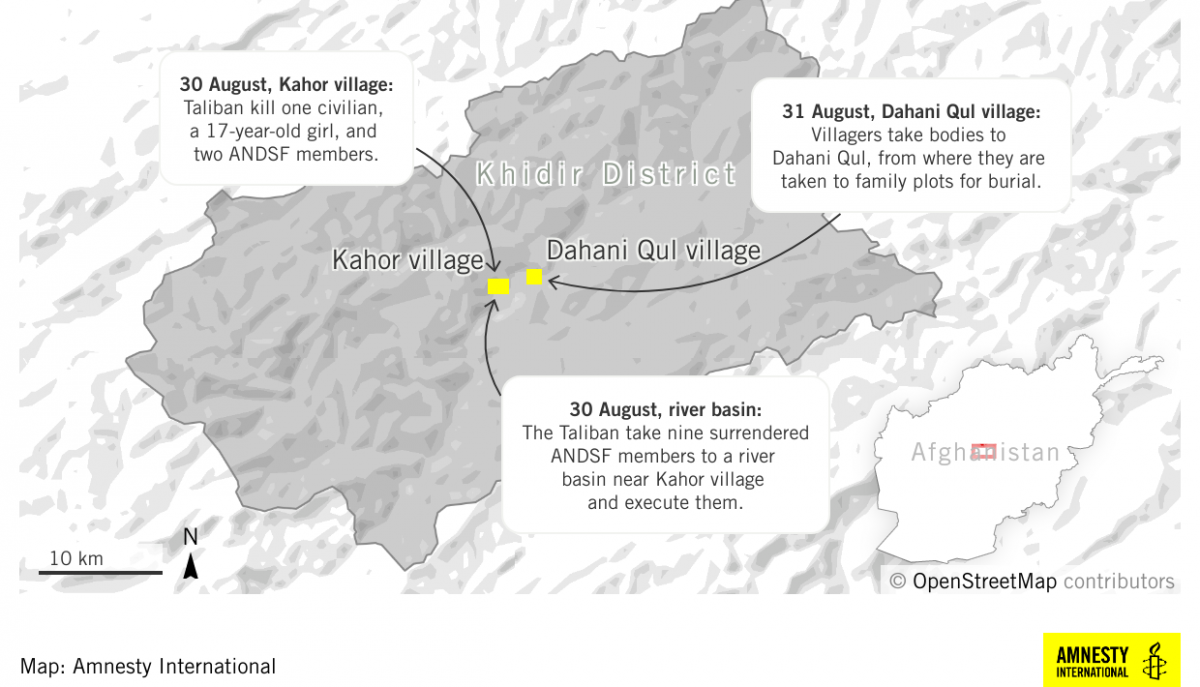
The Shi'ite Hazara people of Afghanistan were targeted for genocide by the Taliban when the fundamentalist militant group was last in power, and Amnesty International now reports that new massacres targeting the ethnicity have already started. Taliban forces unlawfully killed 13 ethnic Hazaras, including a 17-year-old girl, in Daykundi province after members of the security forces of the former government surrendered, the Amnesty investigation revealed. The killings happened in Kahor village of Khidir district on Aug. 30. Eleven of the victims were former members of the Afghan National Defense Security Forces (ANDSF), and two were civilians. According to eyewitness testimony, the Taliban extrajudicially executed nine of the ANDSF members at a nearby river basin after they had surrendered, killings that "appear to be war crimes." The two civilians were killed as they attempted to flee, including a 17-year-old girl shot when the Taliban opened fire on a crowd of people.

Hazaras have also been forced from their homes by Taliban forces. On July 3, as fighting intensified in Ghazni province, villagers fled into the mountains, to traditional iloks, their summer grazing land, where they have basic shelters. There was little food for the 30 families that fled. The next morning, five men and four women returned to the village to gather supplies. On their return, they found that their homes had been looted, and that Taliban fighters were lying in wait for them.

Such reports have been corroborated by Public Radio International, which spoke to Hazaras in Kabul who have been forced to flee their homes in the countryside. Residents of Daykundi province said that the Taliban ordered them to leave, sometimes giving them only three or four days to pack up and go. Then, after families are gone, Taliban fighters set fire to their homes or blew them up—some of those who fled say they have watched it happen from afar.

Verifying human rights abuses committed by the Taliban since they took control of Afghanistan in August has proven difficult, as the group have cut mobile phone service in many regions. Shortly after the fall of Kabul, Amnesty International documented how Taliban fighters massacred nine ethnic Hazara men after taking control of Ghazni province. 

Hundreds of Hazara families are reported to have fled their homes in central Bamiyan and Ghazni provinces.

Map: Amnesty International

Podcast: rage against the technocracy

anti-bitcoin

In Episode 89 of the CounterVortex podcast, Bill Weinberg takes heart at the national uprising in El Salvador against the imposition of Bitcoin as legal tender, and draws the connection to his own incessant struggles against corporate cyber-overlords Verizon—as well as the to the automated drone terror in Afghanistan. As we are distracted (or, at any rate, should be distracted) by the more obviously pressing issues such as police brutality and climate destabilization, the digitization of every sphere of human activity lurches forward at a terrifying pace—with zero resistance. Until now. The heroic protesters in El Salvador have launched the long overdue revolution of everyday life. Listen on SoundCloud or via Patreon.

Production by Chris Rywalt

We ask listeners to donate just $1 per weekly podcast via Patreon—or $2 for our new special offer! We now have 27 subscribers. If you appreciate our work, please become Number 28!

Photo via Twitter

Eritrean troops returning to Tigray

Ethiopia

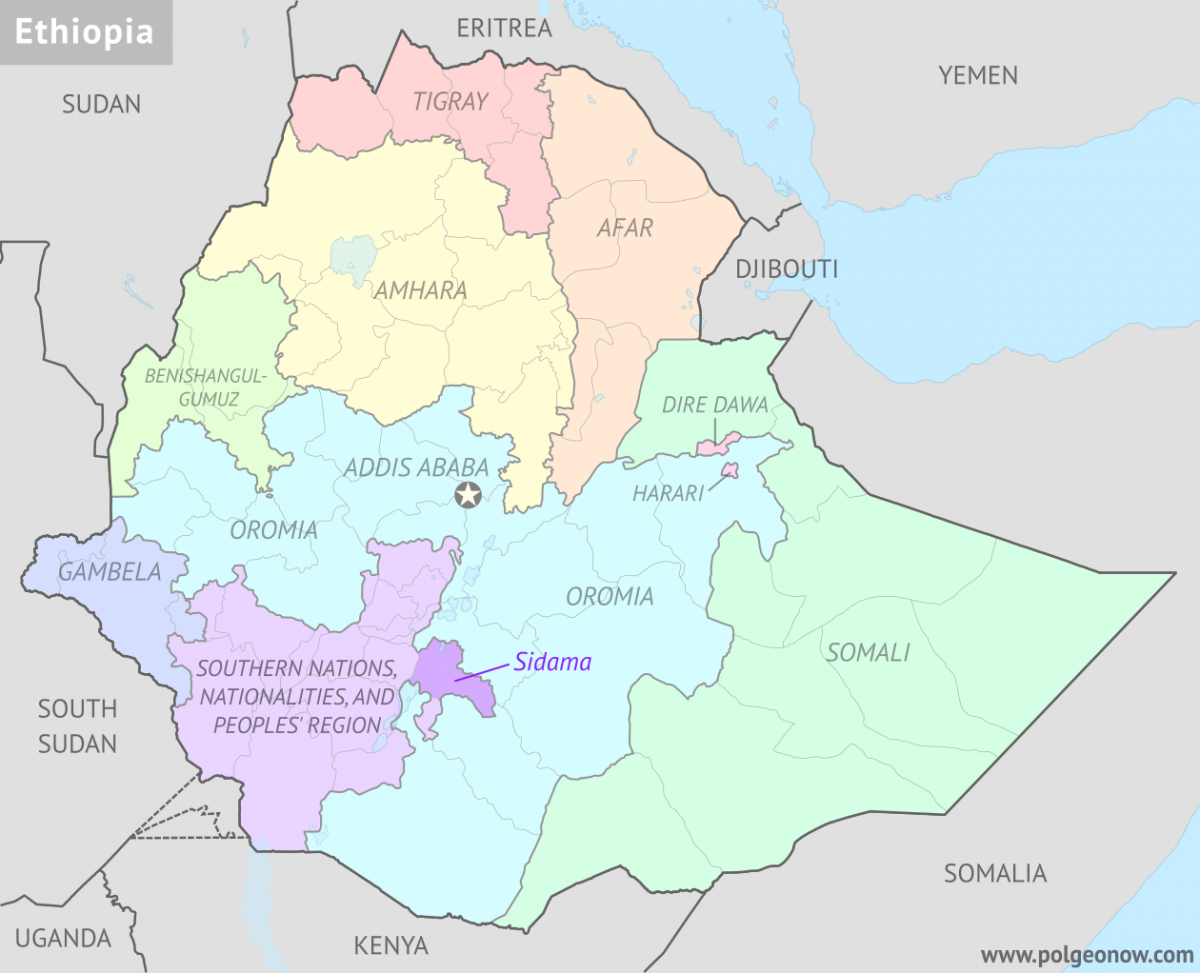
Eritrean troops have re-entered the northern Ethiopian province of Tigray—a region they had largely vacated in June under military pressure from the rebel Tigray People's Liberation Front (TPLF). The new Eritrean deployment, in support of the Ethiopian government, is reportedly to the contested western part of Tigray, around the towns of Adi Goshu and Humera—a target for the TPLF. The United States has demanded the withdrawal of all Eritrean forces from Ethiopia and on Aug. 23 imposed sanctions on Eritrea's top general, Filipos Woldeyohannes, for "despicable acts" of rights violations. While much of Tigray has been declared "fully" accessible for aid deliveries, fighting in Afar province—a key supply route—between the government and TPLF has blocked aid getting into Tigray itself. Since July 15, only some 320 trucks have entered the region, a fraction of the cargo required to meet the humanitarian needs of at least 5.2 million people, according to the UN relief agency, OCHA.

From The New Humanitarian

See our last post on the Tigray conflict.

Map: Political Geography Now

Haiti: gang warfare hinders earthquake recovery

Les Cayes

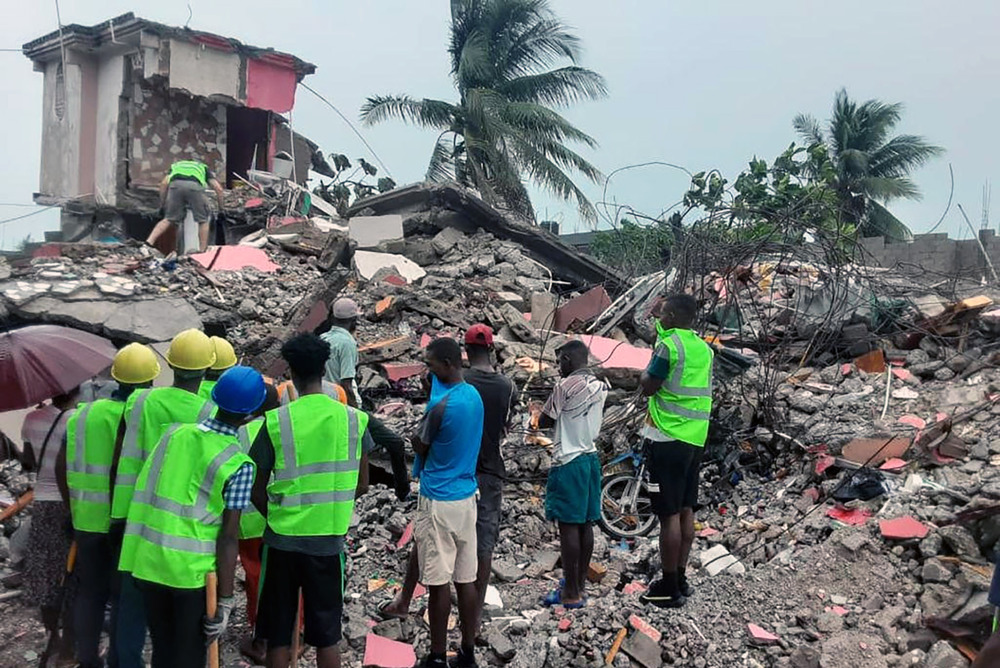
More than 500,000 people are in need of emergency assistance in Haiti's southern peninsula, where last week's 7.2-magnitude earthquake has killed more than 2,100 people and injured more than 12,200. Aid and medical efforts are hampered by debris-strewn roads, rain from Tropical Storm Grace, a shortage of working hospitals, and gang violence. The private Bernard Mevs Hospital in the capital, Port-au-Prince, where some of the injured have been sent, was closed Aug. 19 as part of a two-day shutdown to protest the kidnapping of two doctors. In recent years, Haiti has been beset by violent gangs who patrol many of the country's transport routes. Some villagers were also reportedly blocking aid shipments, saying they were also desperate for help. The southern peninsula has yet to recover from Hurricane Matthew, which killed at least 546 people in 2016. Prime Minister Ariel Henry has promised to speed up aid efforts—more than 30,000 families have been displaced, and there are fears of cholera due to lack of safe water, sanitation, and shelter. The United States has deployed several helicopters, aircraft, and the USS Arlington to help with relief efforts. France also sent a ship with humanitarian cargo, a helicopter, and more than two dozen soldiers.

From The New Humanitarian, Aug. 20

Photo: Evens Mary/The New Humanitarian

Brazil: Bolsonaro accused of crimes against humanity

burning Amazon

The Articulation of Indigenous People of Brazil (APIB) filed a statement before the International Criminal Court (ICC) Aug. 9 requesting an investigation into genocide and crimes against humanity committed by President Jair Bolsonaro. The complaint centers on "systematic anti-indigenous" policies enacted by Bolsonaro since his term began in January 2019, and deepened during the COVID-19 pandemic. APIB claims that Bolsonaro's government has dismantled protections for indigenous communities and their territories, resulting in increased invasion of indigenous lands and consequential deforestation, fires, and illegal mining. The complaint further charges that Bolsonaro has directly encouraged attacks against indigenous peoples, and refused to demarcate new indigenous territories.

Stated APIB legal coordinator Eloy Terena: "We believe there are acts in progress in Brazil that constitute crimes against humanity, genocide and ecocide. Given the inability of the justice system in Brazil to investigate, prosecute and judge these conducts, we denounce them to the international community, throughout the International Criminal Court."

To succeed in its claim of crimes against humanity, APIB must establish under Article 7 of the Rome Statute that Bolsonaro's policies constitute a systematic attack directed at Brazil's indigenous peoples with the aim of extermination, persecution, or inhumane acts causing serious injury to physical or mental health. APIB's claim of genocide under Article 6 must demonstrate deliberate infliction of conditions aimed at the destruction of indigenous peoples.

The statement was written by several indigenous leaders, organizations, and academics, and was supported by the Lawyers Collective on Human Rights (CADHu). If the case is accepted, it will mark the first time in history that indigenous peoples stand before the ICC, supported by indigenous attorneys.

ICC Chief Prosecutor Karim Khan is now to decide whether to pursue the case.

From Jurist, Aug. 10. Used with permission.

Note: President Jair Bolsonaro has largely gutted and defunded Brazil’s environmental regulatory, protection and enforcement agencies, and has issued a  raft of measures to roll back indigenous land rights. CADHu submitted a similar recommendation to the ICC's then-chief prosecutor Fatou Bensouda in 2019. Legal experts earlier this year presented a legal definition of the crime of ecocide to the ICC.

Photo: pixundfertig/Pixabay via Jurist

UN climate report: ‘Code Red for Humanity’

dixiefire

Climate change is "unequivocal" and rapidly intensifying, and some of the changes already in motion—such as continued sea level rise—are irreversible over hundreds to thousands of years, finds the latest report from the Intergovernmental Panel on Climate Change (IPCC), released Aug. 9. The IPCC Working Group I report, "Climate Change 2021: the Physical Science Basis," was approved by 195 member governments of the IPCC, having been prepared by 234 scientists from 66 countries. The report concludes that human influence has warmed the planet at a rate that is unprecedented in at least the last 2,000 years. Human-induced climate change is already affecting many weather and climate extremes in every region across the globe—including heatwaves, droughts, and tropical cyclones.

In 2019, atmospheric concentrations of carbon dioxide (CO2) were higher than at any time in at least two million years, and concentrations of methane and nitrous oxide higher than at any time in the last 800,000 years. Global surface temperature has increased faster since 1970 than in any other 50-year period over a least the last 2,000 years. Temperatures during the most recent decade (2011–2020) exceed those of the most recent multi-century warm period, around 6,500 years ago, the report states.

The global mean sea level has risen faster since 1900 than over any preceding century in at least the last 3,000 years.

The report emphasized that there is still time to act. Wth strong and sustained cuts in emissions of CO2 and other greenhouse gases, global temperatures could stabilize within 20 to 30 years.

"It has been clear for decades that the Earth's climate is changing, and the role of human influence on the climate system is undisputed," said IPCC Working Group I co-chair Valérie Masson-Delmotte of France. "Yet the new report also reflects major advances in the science of attribution—understanding the role of climate change in intensifying specific weather and climate events."

The United States joined the other 194 IPCC member governments in approving the Working Group I report. "The Intergovernmental Panel on Climate Change's (IPCC) newest report makes it clear–climate change is already a crisis," said US Secretary of State Antony Blinken. "Most importantly, the report finds we are already edging closer to a 1.5 degrees Celsius warmer world, and every day emissions rise the prospects for averting the worst impacts of climate change become dimmer. This is why it is essential that all countries—in particular the major economies—do their part during this critical decade of the 2020s to put the world on a trajectory to keep a 1.5 degrees Celsius limit on warming within reach."

"This is why the United States has committed to a 50-52 percent reduction in emissions from 2005 levels in 2030 and is marshaling the entire federal government to tackle the climate crisis," Blinken added.

UN Secretary-General António Guterres said the Working Group's report is nothing less than "a code red for humanity."

"We are at imminent risk of hitting 1.5 degrees in the near term," Guterres said. "The only way to prevent exceeding this threshold is by urgently stepping up our efforts, and pursuing the most ambitious path. We must act decisively now, to keep 1.5 alive."

Condensed from Environment News Service, Aug. 9

Note: The 2015 Paris Agreement sets a 2 C rise within the current century as a maximum, but urges countries to work toward a 1.5 C rise. Recent studies have found that the 1.5 C rise will be reached within five years.

Photo: CalFire

Brazil’s Amazon is now a carbon source: study

Amazon

The Amazon has long played a vital part in balancing the global carbon budget, but new evidence suggests the climate scales are tipping in the world's largest rainforest. Now, according to a study published July 14 in Nature, the Brazilian Amazon is emitting more carbon than it captures. Southeastern Amazonia, in particular, switched from being a carbon sink to a carbon source during the study period. Emissions were high in 2010, when the study began, because of a dry El Niño year, and researchers expected to see emissions return to normal afterward. But this never happened. The reason: emissions from fires.

In the Amazon, forests are often cut during the wet season and then burned during the dry season to make way for agriculture, particularly cattle pasture. According to the study, emissions from fires in the southeastern Amazon are three times larger than the Net Biome Exchange (NBE; also rendered Net Ecosystem Exchange, NEE), a measure of the forest's carbon uptake offset against all emissions from decomposition and non-fire human sources such as burning fossil fuels.

"The Amazon is a carbon source. No doubt," Luciana Gatti, a researcher at Brazil's National Institute for Space Research (INPE) and lead author of the study, told Mongabay. "By now we can say that the budget for the Amazon is 0.3 billion tons of carbon per year [released] into the atmosphere. It's a horrible message."

Without emissions from fires, Gatti says, the Amazon would be a carbon sink. "In other words, the Amazon is a source because of biomass burning."

Using a small aircraft, Gatti and colleges measured carbon dioxide, carbon monoxide, and other greenhouse gases above four locations across the Brazilian Amazon. Between 2010 and 2018, they collected air samples seasonally from near the treetops to up to 4,500 meters (14,800 feet) above sea level, creating nearly 600 vertical profiles of atmospheric carbon levels.

Their conclusion: Eastern Amazonia is emitting more carbon than the wetter western Amazonia, and southern Amazonia is a net carbon source.

Deforestation rates have been higher under Brazil's current president, Jair Bolsonaro, than any past president and they show no sign of slowing. In 2020, Brazil lost 158 hectares (390 acres) of forest per hour—an area half the size of New York City's Central Park—according to a report by MapBiomas, a network of NGOs, universities and tech firms that include Google.

In May of this year, forest clearing in the Brazilian Amazon increased 67% over May 2020, according to INPE's satellite-based deforestation tracking system, DETER. This puts deforestation in 2021 on pace with last year's rate.

Decades of deforestation and fires in the Amazon coupled with the global climate crisis have caused the dry season to get longer and made mega droughts more common, contributing to a feedback loop that degrades forests. These degraded conditions mean trees are dying at a faster rate. As more plants and trees die, the Amazon's ability to absorb carbon from the atmosphere is declining.

"If you're thinking a tipping point [for] the Amazon [is when] it becomes a carbon source, this region is at a tipping point," Gatti said. "My question is, if we stop now with fires and deforestation and start the very important repair process for forests, could we reverse the picture? I don’t know."

Condensed from Mongabay, July 14

The study vidnicates what scientists have been predicting at least as far back as a decade ago. President Jair Bolsonaro has largely gutted and defunded Brazil's environmental regulatory, protection and enforcement agencies.

Photo via Mongabay

SCOTUS: pipeline companies may take state property

PennEast

The US Supreme Court ruled 5-4 on June 29 in PennEast Pipeline Co. v. New Jersey that the Natural Gas Act can grant private companies authority to take state-owned property to build a pipeline. Under the Natural Gas Act (NGA), a company seeking to build an interstate pipeline must obtain a certificate from the Federal Energy Regulatory Commission (FERC). This certificate authorizes the holder to exercise federal eminent domain in securing property for the pipeline.

PennEast Pipeline obtained a certificate to build a 116-mile gas pipeline from Pennsylvania to New Jersey and sought to exercise its federal eminent domain authority by taking public land in New Jersey. The state of New Jersey moved to dismiss the company's request on sovereign immunity grounds. A district court ruled in favor of PennEast Pipeline, but the Third Circuit Court of Appeals vacated the order.

In an opinion delivered by Chief Justice John Roberts, the Supreme Court reinstated the district court order in favor of PennEast Pipeline. The court held that the NGA can constitutionally grant pipeline companies authority to take state-owned property because states "surrendered their immunity from the exercise of the federal eminent domain power when they ratified the Constitution." The court also noted that the US has long asserted its eminent domain authority to take private property and state-owned property.

Justice Amy Coney Barret, joined by three other justices, wrote a dissenting opinion to remind the court that "Congress passed the Natural Gas Act in reliance on its power to regulate interstate commerce, and [the Supreme Court has] repeatedly held that the Commerce Clause does not permit Congress to strip the States of their sovereign immunity." Hence, Barret argued that the NGA cannot authorize certificate holders to take state-owned property.

PennEast Pipeline released a statement to express their satisfaction pleased with the decision. The statement said that "energy crises in recent years in California, Texas, and New England, have clearly demonstrated why interstate natural gas infrastructure is so vital for our way of life, public safety, and enabling clean energy goals."

New Jersey Attorney General Gurbir Grewal tweeted, "We're disappointed by today's SCOTUS ruling on the PennEast pipeline, but our fight is far from over. I'm proud to continue standing up for our residents & championing environmental protection. I urge the feds to take another look at this harmful proposal."

From Jurist, June 30. Used with permissiion.

Note: The PennEast pipeline would carry fracked Marcellus Shale natural gas from Luzerne County, PA, north of Wilkes-Barre, to the edge of Mercer County, NJ, near Trenton. The route would cross the Delaware River at a point within the Lower Delaware National Scenic & Recreational River protected area, administrated by the National Park System. (Sierra Club)

Photo via WHYY

Burma: urban warfare erupts in Mandalay

Mandalay

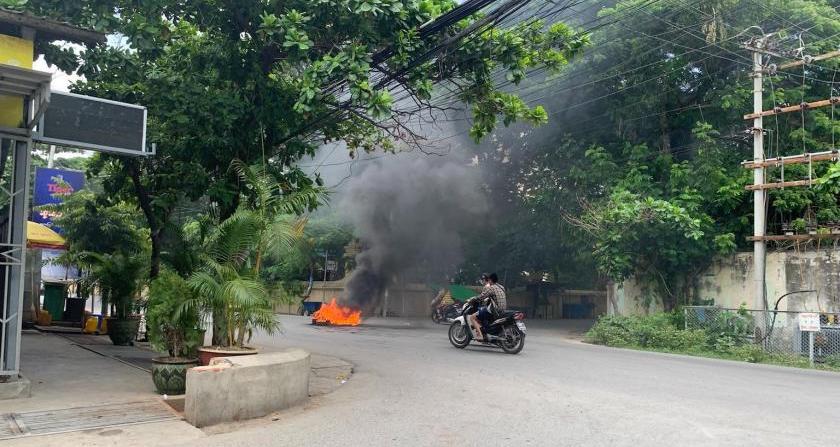
Gunfire erupted in the streets of Mandalay, Burma's second largest city, as regime troops raided a building where a cell of the incipient armed resistance movement was sheltering early on June 22. The raid, at Chanmyatharzi township, sparked hours of running street battles. PDF fighters erected barricades of flaming tires to slow the advance of troops. Both the military, known as the Tatmadaw, and the rebel People's Defense Force (PDF) claimed casualties on the opposing side and denied deaths among their own forces. "We've declared war," the Mandalay PDF said in a statement. "The day we've been waiting for is finally here." The PDF has previously targeted Tatmadaw and police patrols in Mandalay. On June 1, a soldier was killed and another injured when the PDF fighters opened fire on military trucks in the city. On June 8, two police officers were shot dead.​ (Myanmar Now, TRT World, NYT)


Photo: Myanmar Now

‘Genocide’ seen in PRC Uighur birth-control policy

Uighurs

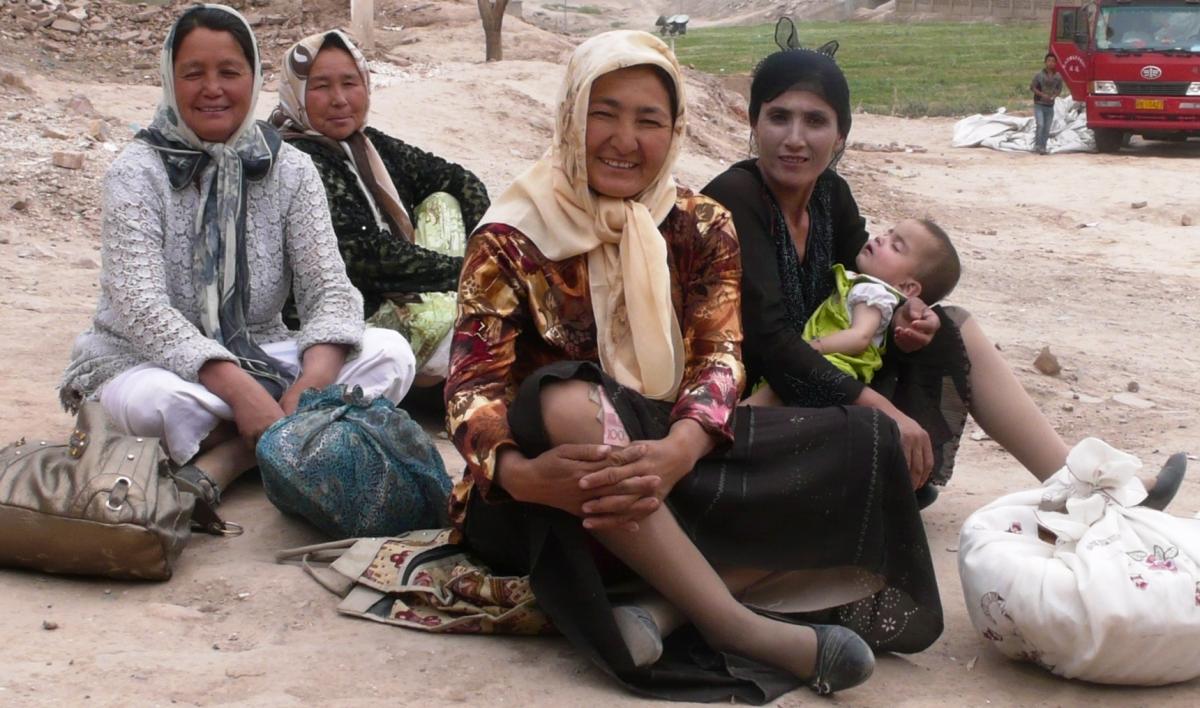
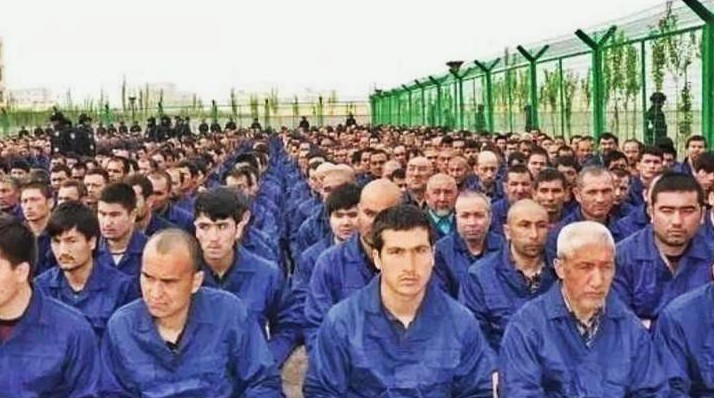
An Australian think-tank released a report on the declining birth rates among the Uighur population in China's western Xinjiang province, concluding that birth-control policies imposed on the Uighurs by the People's Republic of China may constitute genocide. The Australian Strategic Policy Institute (ASPI) analyzed the publicly-available data on birth rates in China from 2011 to 2019, and found that birth rates among the Uighur ethnic minority dropped precipitously starting in 2017. The birth rate fell by almost half in the predominately Uighur province of Xinjiang, where a campaign to eliminate "illegal births" is being carried out.

China's "one-child policy" started during the rule of Deng Xiaoping in 1979, and actually allowed ethnic minorities such as the Uighurs to have up to three children. However, while the policy is now being relaxed for the Han majority, the limits on the Uighurs are being more striclty enforced. The report notes that the 1948 Convention on the Prevention & Punishment of the Crime of Genocide, to which China is a signatory, prohibits states from "imposing measures intended to prevent births within the group."

ASPI stated that China's policies in Xinjiang may constitute genocide against the Uighurs, and urged the Chinese government to provide more data and details to researchers.

China pushed back against the report, with Foreign Ministry spokesperson Hua Chunying calling it an "anti-China narrative" that deliberately mischaracterizes the evidence. She asserted that over the last 40 years the Uighur population has more than doubled from 5.5 million to over 12 million, and said that targeted birth rates are "simply non-existent."

From Jurist, May 16. Used with permission.

Photo of Uighur women in Xinjiang: mikepryan via Wikimedia

AFL-CIO files labor suit against Mexico factory

SINTIS

The American Federation of Labor & Congress of Industrial Organizations (AFL-CIO) announced May 10 that they have filed a complaint against Tridonex, a Mexican auto parts factory and subsidiary of the Philadelphia-based Cardone Industries, located in the city of Matamoros, Tamaulipas state. The AFL-CIO is joined in the suit by the Service Employees International Union (SEIU), adocacy group Public Citizen, and a Mexican union, the National Independent Syndicate of Industrial & Service Workers (SNITIS), 

This case will be one of the first lawsuits to test the United States-Mexico-Canada Act (USMCA), which was implemented by the Trump administration and now supersedes the 27-year-old North America Free Trade Agreement (NAFTA). The USMCA essentially upgraded NAFTA, adding new chapters to regulate digital trade, intellectual property, and anti-corruption and regulatory practices, as well as updating tariff schedules and environmental protections. The USMCA also focused on labor standards, requiring Mexico to make significant changes to its heavily-criticized labor laws. So-called "protection unions," in league with management, have long been entrenched across Mexico's industries.

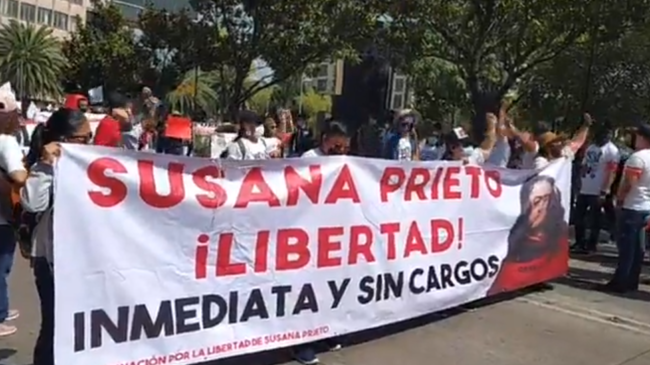
The AFL-CIO complaint is brought under the new "rapid response" mechanism of the USMCA, added at the urging of congressional Democrats, which allows complaints of labor violations to be brought against individual factories, and not just against a corporation as a whole. The complaint comes after Tridonex workers attempted to organize with SNITIS, replacing the "protection union" at the plant. Over 600 workers were fired for their association with the union. Susana Prieto Terrazas, the lawyer representing the Tridonex workers, was also arrested and jailed by the Tamaulipas governor on "trumped-up charges," and was only released after agreeing to leave the state of Tamaulipas.

In a press release, AFL-CIO president Richard Trumka said, "USMCA requires Mexico to end the reign of protection unions and their corrupt deals with employers… The ongoing harassment of Susana Prieto and SNITIS members is a textbook violation of the labor laws Mexico has pledged to uphold."

This lawsuit will test how the Biden administration will respond to the first challenge under the USMCA, and whether the Democrat-led Congress will continue to push for labor reform in North America.

From Jurist, May 11. Used with permission.

Photo: Prensa Obrera

Podcast: Bill Weinberg’s oral history

Bill Weinberg

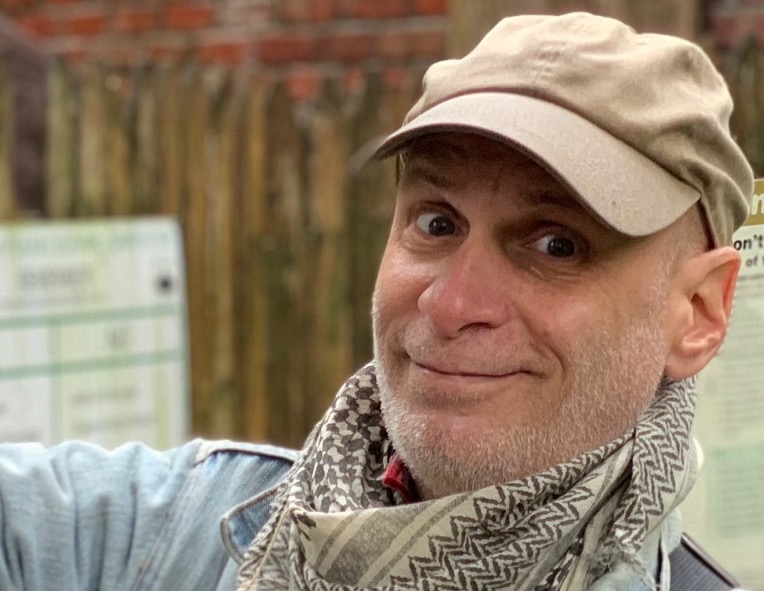
In Episode 71 of the CounterVortex podcast, host Bill Weinberg is himself interviewed by Kimberly Springer, curator of the Oral History Archives at Columbia University. Weinberg traces his life trajectory, from his early radicalization as a teenage anarchist, through the Tompkins Square uprising on the Lower East Side in the 1980s, his 20 years as co-producer of the Moorish Orthodox Radio Crusade on WBAI, his purge from the airwaves for his political dissent, and finally his contemporary work as an organic historian with the Museum of Reclaimed Urban Space. Listen on SoundCloud or via Patreon.

Production by Chris Rywalt

We ask listeners to donate just $1 per episode via Patreon. We have made it to our initial goal of $30 per episode! Thank you for your support, and please keep it coming!

Photo: MoRUS

Podcast: solidarity with Tigray

Tigray

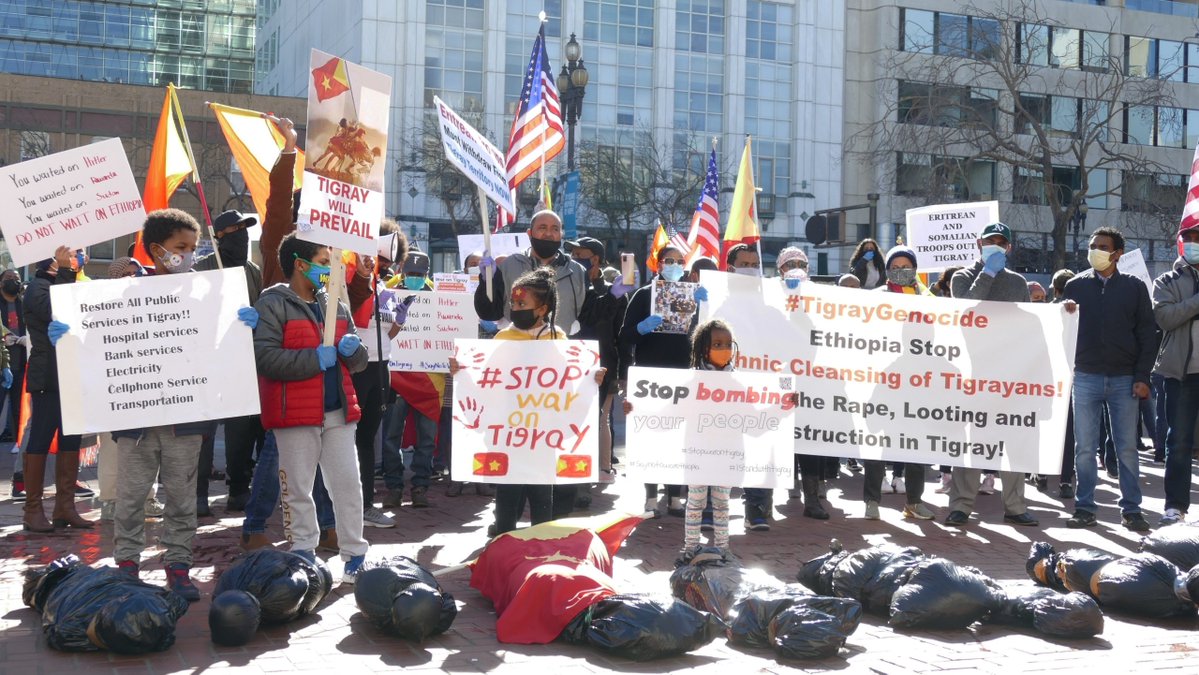
In Episode 70 of the CounterVortex podcast, Bill Weinberg interviews Daniel Woldu, US representative of Omna Tigray, an international network calling for action to halt the genocide in the Tigray region of Ethiopia. Woldu discusses the abrogation of Tigray's self-rule under the Ethiopian regime of Abiy Ahmed, atrocities that have taken place under cover of an information blockade imposed on the region, the ongoing plunder and weaponization of humanitarian aid, why Eritrea has intervened on the side of the Ethiopian central government, and the urgent need for accountability and an independent investigation into war crimes and genocide. Listen on SoundCloud or via Patreon.

Production by Chris Rywalt

We ask listeners to donate just $1 per episode via Patreon. We have made it to our initial goal of $30 per episode! Thank you for your support, and please keep it coming!

Photo: Omna Tigray via Twitter

Hong Kong: pro-democracy activists found guilty

Hong Kong

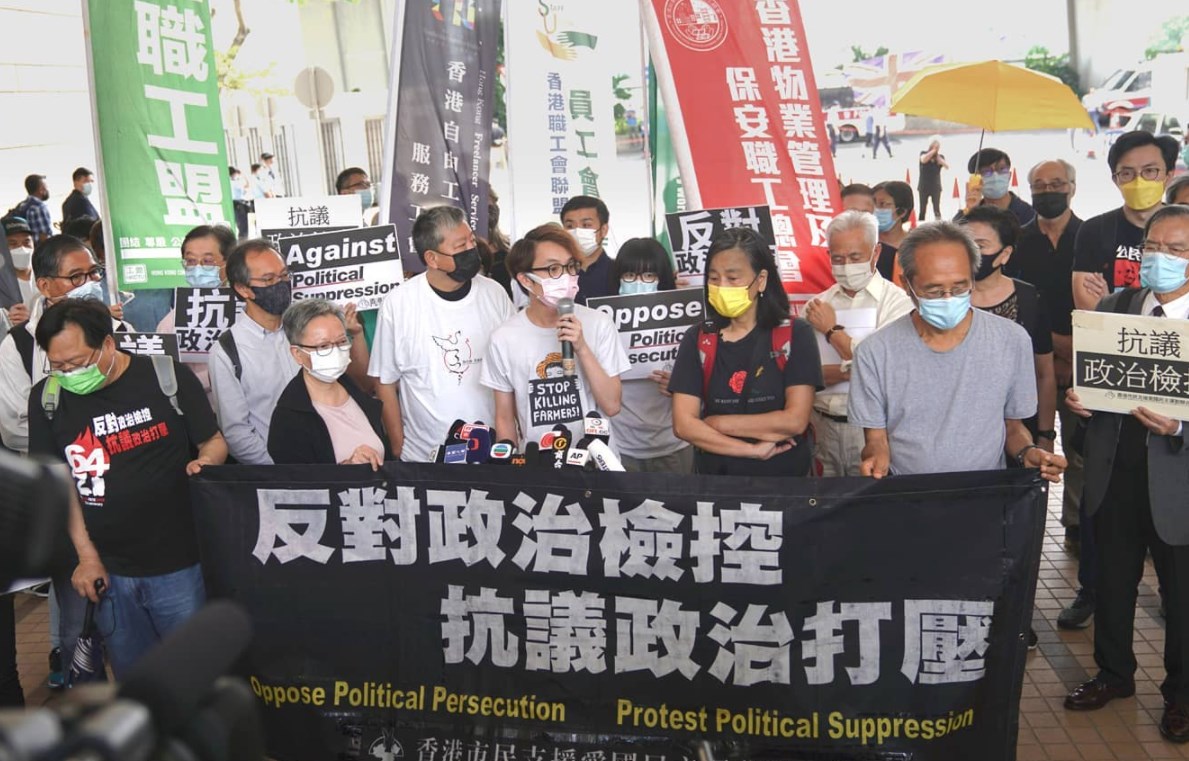
A Hong Kong court on April 1 found seven prominent democracy activists guilty of unauthorized assembly for their involvement in a 2019 peaceful anti-government protest. The defendants, all 60 years or older, include media figure Jimmy Lai and veteran Democratic Party lawmaker Martin Lee, hailed as Hong Kong's "Father of Democracy." Also appearing in the West Kowloon Magistrates' Court were former Labour Party lawmakers Lee Cheuk-yan and Cyd Ho, former League of Social Democrats lawmaker "Longair" Leung Kwok-hung, former Civic Party lawmaker Margaret Ng, and former Democratic Party chair Albert Ho. "Shame on political prosecution! Peaceful demonstration is not a crime!" Leung Kwok-hung shouted from dock after the conviction was delivered.

Judge Amanda Woodcock found the seven defendants guilty of organizing and knowingly taking part in an unauthorized assembly. Two other defendants facing the same charges, former Democratic Party lawmaker Au Nok-hin and Leung Yiu-chung of the Neighbourhood & Worker's Service Centre, pleaded guilty prior to trial. 

The charges concern a mass demonstration on Aug. 18, 2019, which drew hundreds of thousands to Victoria Park in Causeway Bay, who then marched peacefully to Chater Road in Central. Although the rally had been permitted in one part of the city, its move to a different area led prosecutors to classify it as an unauthorized assembly. No police action was taken against the defendants until April 2020.

Woodcock wrote in her opinion that "there are no authorities that suggest an offender may rely on a defence of reasonable excuse when he has knowingly participated in a banned public assembly because it was ultimately peaceful." She also ruled that the lack of any violence at the gathering did not make the charges disproportionate as this "would give the law no teeth and make a mockery of it."

Sentencing for the defendants is set for April 16. They face up to five years in prison.

Jimmy Lai and Leung Kwok-hung face separate charges under the National Security Law. They were remanded in custody, while the other five were released on bail until their sentencing. However, they are barred from leaving Hong Kong and had to turn over their travel documents. (Jurist, HKFP, SCMP)

Photo via HKFP

March revolution in Paraguay?

Paraguay

Paraguay is witnessing an explosion of mass protest over government mishandling of the COVID-19 crisis. With hospitals overwhelmed and infections soaring, teachers refused orders for a mandatory return to classes on March 2. The following day, nurses, doctors, patients and their families demonstrated outside the main hospital in the capital Asunción to protest the lack of vaccines, protective equipment and basic medications. On March 5, widespread protests escalated to clashes with the riot police, leaving one demonstrator dead and several injured. President Mario Abdo Benítez of the conservative Colorado Party offered dialogue and forced the resignation of several cabinet members, including health minister Julio Mazzoleni. But protesters are continuing to mobilize, demanding the resignation of Abdo himself and his entire government, under the slogan !Que se vayan todos! (Throw them all out!)

Protests are being organized under the hashtag #EstoyParaElMarzoParaguayo2021, or "I am for the Paraguayan March 2021." This is a reference to several political upheavals in the country's history that took place in the month of March: the 1947 military rebellion against a Colorado Party dictatorship, which sparked a brief civil war; the 1999 "Marzo Paraguayo" popular uprising against another corrupt government of the still-ruling Colorado Party, which did succeed in forcing the resignation of the president, and the exile and later imprisonment of longtime party patriarch Lino Oviedo; and the 2017 protests against the attempt of yet another Colorado Party president, Horacio Cartes, to change the constitution to allow him to stand for another term of office. (Telam, AFP, NYT, Rio Times, In Defense of Marxism)

Deadly prison uprising
Two weeks before the current protest wave began, Latin America’s deepening prison crisis saw its latest irruption in Paraguay, A riot at the country's largest penitentiary, Tacumbú in Asunción, left six inmates dead—including three by decapitation. Several guards were also taken hostage before the uprising was put down at the dangerously overcrowded facility. Authorities said the riot began with fighting between members of the local Paraguayan crime network, the Clan Rotela, and followers of Brazil's more powerful criminal machine, the First Capital Command. (Daily Mail, Feb. 18; El País, Feb. 17)

Photo via Twitter

Did Biden cave to ICE mutiny?

ICE

The Department of Homeland Security (DHS) issued a memo Feb. 18 with "temporary guidelines for…enforcement and removal operations" by Immigration & Customs Enforcement (ICE), giving ICE agents discretion on enforcement actions and essentially overturning the "100-day pause on certain removals" instated by President Biden's executive order of Jan. 20, his first day on office. Naureen Shah, senior policy counsel for the American Civil Liberties Union (ACLU), responded to the move in a statement: "The memo is a disappointing step backward from the Biden administration's earlier commitments to fully break from the harmful deportation policies of both the Trump and Obama presidencies. While the Biden administration rightly acknowledges that immigrants are our family members, our coworkers, and our neighbors, for now it has chosen to continue giving ICE officers significant discretion to conduct operations that harm our communities and tear families apart."

Litigation was already pending over the "pause." On Feb. 23, a federal judge in Corpus Christi granted a preliminary injunction blocking the moratorium, extending a temporary injunction he had issued Jan. 26. This was a victory for Texas Attorney General Ken Paxton, who had filed a lawsuit against the "pause." (Politico) Ironically, by the time of this ruling, the "pause" was already partially lifted by the new DHS memo.

Ominously, the "pause" was meeting with overt, defiant non-compliance from ICE. The New York Times decried in an editorial on Feb. 10 that the US is sending deportees rather than aid to crisis-stricken Haiti: "A plane arrived [in Port-au-Prince] from the United States on Monday. But instead of help or hope, it carried several dozen Haitians, including a 2-month-old and 21 other children, deported by US Immigration and Customs Enforcement. President Biden had ordered a 100-day moratorium on such deportations, but a Texas judge temporarily blocked the order, prompting the agency to defy the administration's wishes and accelerate deportations. More such flights to Haiti are expected through the week."

A whistle-blower complaint filed on Feb. 1 charges that a top Trump DHS official sought to undermine Biden's new immigration policy by agreeing to hand effective control to the union representing ICE agents. An attorney at the Government Accountability Project filed the complaint with Congress, the DHS inspector general and the Office of the Special Counsel, which protects whistle-blowers. He attached copies of three "memorandums of understanding" signed by DHS official Kenneth Cuccinelli and union president Chris Crane. The memos were signed on Jan. 19, Cuccinelli's  last full day in office, granting "extraordinary power and benefits" to the union, including the ability to indefinitely delay changes to immigration enforcement policies and practices. The union, the National ICE Council, of course endorsed Trump for the presidency. (NYT, CNN)

The memos were supposedly approved by a union contract signed by the Trump administration, which Biden abrogated after the whistle-blower came forth. (The Hill) 

Cuccinelli's tenure as acting deputy secretary of Homeland Security and acting director of Citizenship & Immigration Services (USCIS) was clouded by a federal court ruling last March finding that his appointment to the posts by Trump had been unlawful. Under the Federal Vacancies Reform Act, an official temporarily filling a cabinet-level position before Senate confirmation must be next in the line of succession. Trump had apparently cut the line when appointing Cuccinelli in 2019 in order to have DHS under the de facto control of someone who shared his hardline anti-immigrant agenda. (NYT, NPR)

Photo: Wikimedia Commons

Taiwan & Puerto Rico: forbidden symmetry

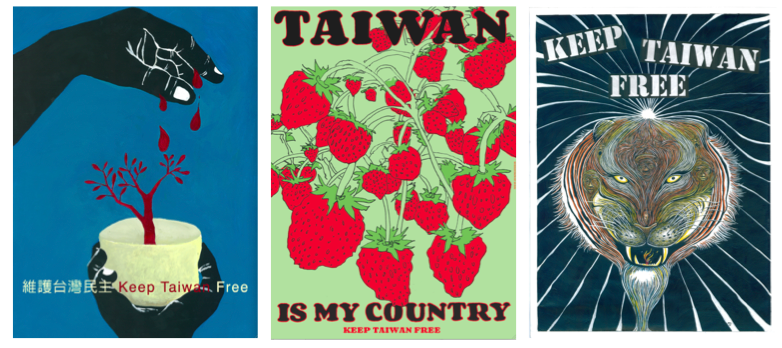
Free Taiwan

In Episode 63 of the CounterVortex podcast, Bill Weinberg draws a parallel between the self-determination struggles in Taiwan and Puerto Rico. Each is an island nation in the "backyard" of a great imperial power, struggling for its independence. Taiwan is de facto independent from China, with a movement to make it official. Puerto Rico is a de facto colony (officially "unincorporated territory") of the United States, with a movement for independence. Taiwan is being particularly threatened at this moment by the imperial power that covets it; Puerto Rico particularly fucked over at this moment by the imperial power that controls it. Yet the emergence of Taiwan-Puerto Rico solidarity is held back by the fact that their respective imperial metropoles are rivals on the geopolitical chessboard—another illustration of how a global divide-and-rule racket is the essence of the state system.

Listen on SoundCloud or via Patreon.

Books discussed: Taiwan's 400 Year History by Su Beng; Decolonization Models for America's Last Colony: Puerto Rico by Angel Collado-Schwarz

Production by Chris Rywalt

We ask listeners to donate just $1 per episode via Patreon. We have made it to our initial goal of $30 per episode! Thank you for your support, and please keep it coming!

Image: Wang LeWei, Josh MacPhee, Mac McGill via Art for a Free Taiwan

Pakistan: crackdown on internet ‘blasphemy’

Ahmadiyya

The Pakistan Telecommunication Authority (PTA) has issued notices to Google and Wikipedia censuring them for "disseminating sacrilegious content" through their platforms. The notices, issued Dec, 24, accused these sites of hosting "misleading" content referencing the present khalifa (spiritual head) of Islam. The PTA specifically cited articles and search results allegedly portraying Mirza Masroor Ahmad, the current leader of the Ahmadiyya Muslim sect, as the "present khalifa of Islam." Additionally, the PTA demanded the platforms remove an "unauthentic" version of the Quran published by the Ahmadiyya community from the Google Play Store. The PTA warned the platforms "to remove the sacrilegious content to avoid any legal action" under the Prevention of Electronic Crimes Act.

Ahmadiyya is a persecuted Islamic sect in Pakistan whose followers are regarded by the orthodox as non-believers (kafirs) for their belief that their 19th century founder Mirza Ghulam Ahmad was the prophesized Messiah. Orthodox Muslims believe that Muhammad was the "final" prophet, which clashes with Ahmadiyya belief. The penal code of Pakistan explicitly discriminates against religious minorities and targets Ahmadis, prohibiting them from identifying as "Muslim," declaring or propagating their faith publicly, calling their places of worship a masjid (mosque), or making the Muslim call for prayer.

Successive Pakistani governments have failed to protect the Ahmadiyya community from targeted killings and other rights abuses, which have been fueled by charges of blasphemy. Pakistan's blasphemy laws are among the harshest in the world. Insulting the Prophet Mohammad carries a mandatory death penalty, while lesser offences can lead to prison time.

From Jurist, Dec. 27. Used with permission.

See our last post on persecution of the of the Ahmadiyya Muslim Community.

Image: Ahmadi Answers

New Zealand declares ‘climate emergency’

Aotearoa

The New Zealand parliament has passed a motion declaring a "climate emergency" in recognition of the ongoing global crisis, joining a growing number of nations that have formally acknowledged the crisis and approved similar declarations. The motion approved Dec. 2 was supported by the Labour Party, the Greens and Te Pāti Māori, while the National Party and ACT opposed it. Prime Minister Jacinda Ardern moved the motion, calling climate change "one of the greatest challenges of our time," and citing the "devastating impact that volatile and extreme weather will have on New Zealand and the wellbeing of New Zealanders." The motion also notes "the alarming trend in species decline and [the] global biodiversity crisis, including the decline in Aotearoa's indigenous biodiversity."

Arden committed the government to lead by example by reducing its waste and emissions in pursuit of a "carbon-neutral government" by 2025. The government plans to achieve this by phasing out large coal boilers and its petrol-vehicle fleet, adopting electric cars. All public-sector buildings will also be required to meet a set standard of energy efficiency. The State Sector Decarbonization Fund, a $200 billion program, will be a source of funding for the initiative.

The initiative picks up from where the previous Labour government left off. In 2007 it had initiated a move toward carbon neutrality, to be achieved within five years. The program was cut by the subsequent National Party government. Labour returned to power with Ardern's election in 2017.

From Jurist, Dec. 5. Used with permission.

Photo: Shutterstock via The Conversation

China elected to UN rights council: Orwellian irony

Uyghurs

Another one to file under #OrwellWouldShit. The UN General Assembly has elected China to the Human Rights Council—despite the country holding some one million Uighur Muslims in concentration camps. China was supported by 139 of the 191 nations that voted, and was one of 16 nations that sought the 15 available seats. (The General Assembly also elected Russia, Cuba, Uzbekistan and Pakistan, all similarly accused of human rights violations, if not quite such ambitious ones.) US Secretary of State Mike Pompeo criticized the election of countries with "abhorrent human rights records," stating: "These elections only further validate the US decision to withdraw and use other venues and opportunities to protect and promote universal human rights." The US left the Human Rights Council in June 2018. (Jurist)

A week before the General Assembly vote, China's UN ambassador Zhang Jun read a statement before the body, denouncing the US for "systematic racial discrimination and violence," which was endorsed by 25 other nations. "Instances like the death of George Floyd and the shooting of Jacob Blake continue to take place and vulnerable people continue to suffer or lose their lives to racism and police brutality," the statement read. Co-signatory nations included Russia, Iran and North Korea. (American Military News)

Of course the perverse, hilarious irony of all this is that Mike Pompeo and Zhang Jun are both correct. And therefore neither has any moral credibility to be criticizing the other. Nor are China's co-signatories in the statement any better positioned. Russia is establishing a concentration camp system for the Crimean Tatars. Iran is guilty of "systematic racial discrimination and violence" against the Kurds and Ahwazi Arabs. And North Korea is a totalitarian state that rules in the name of racial purity and superiority.

Now, we were heartened by the news in June that several African countries, led by Burkina Faso, called on the Human Rights Council to investigate systemic racism and police violence in the US. Not that these nations do not have grave human rights issues of their own. Burkina Faso's armed forces are accused of war crimes in their counter-insurgency campaign against Islamist militants. Nigeria is just now seeing a wave of protest demanding the disbanding of a police unit called the Special Anti-Robbery Squad (SARS), that is accused of widespread abuses. Protests against the squad were sparked by a video of a man being killed by officers. Since the protests erupted more than a week ago, at least 10 people have been killed and hundreds injured. (AP, BBC News)

But the African nations, having been subject to European colonialism, have greater moral authority to protest white supremacy in the United States—and are certainly doing so for less hypocritical reasons than China, Russia, Iran and North Korea.

Photo: Xinjiang Judicial Administration via The Diplomat

No prosecution for soldiers in Bloody Sunday

Bloody Sunday

Northern Ireland's Public Prosecution Service (PPS) announced Sept. 29 that after reviewing the evidence against 15 British soldiers suspected of killing civilians in Derry on "Bloody Sunday," Jan. 30, 1972, they will maintain the decision not to pursue prosecution. The final decision, announced in a statement from the PPS, upholds an earlier one from March 2019, which found that "the available evidence is insufficient to provide a reasonable prospect of conviction." After the 2019 announcement, families who lost loved ones and survivors injured in the massacre asked for a review of the decision. In her statement, PPS senior assistant director Marianne O'Kane said, "It is understandable that a number of the bereaved families and injured victims subsequently exercised their right to request a review of decisions relating to 15 of those suspects originally reported." However, she went on to say, "I have concluded that the available evidence is insufficient to provide a reasonable prospect of conviction of any of the 15 soldiers who were the subjects of the reviews."

The persistence of the families and the wide attention that the PPS decisions have attracted are evidence of the lingering wounds from the early 1970s in Northern Ireland. Catholics, then a minority in Northern Ireland, demanded equal rights—especially an end to discrimination in public housing, and to an electoral system that allowed multiple votes for rich landowners and businessmen (nearly all Protestant). Taking inspiration from Martin Luther King and the civil rights movement in the United States, Catholics organized marches in a civil rights movement of their own, starting in 1968. As in the US, peaceful marches ended in bloodshed when the government responded with violence. The deadliest such incident was Bloody Sunday, when 13 marchers were killed and several more wounded as members of the Army's Parachute Regiment opened fire on civil rights demonstrators.

The final decision from the PPS means that only one prosecution will proceed for the deaths in Derry in January 1972. The PPS is prosecuting a man referred to as Soldier F, a former member of the Parachute Regiment, for two murders on Bloody Sunday and attempted murders of four other men at a separate peaceful civil rights march in Northern Ireland.

From Jurist, Sept. 30. Used with permission.

Photo: Wikimedia Commons

Saudi detention state under scrutiny

Lujain al-Hathloul

Saudi Arabia has denied prominent detainees contact with their family members and lawyers for months, Human Rights Watch said Sept. 6 in a letter requesting access to the country and private prison visits with detainees. The situation raises serious concerns for the detainees' safety and well-being, the rights group said. Saudi authorities have banned in-person visits with prisoners across the country since March to limit the spread of COVID-19. But Saudi activists and other sources say that authorities have also unduly denied numerous imprisoned dissidents and other detainees regular communication with the outside world.

"Saudi authorities appear intent on making certain detainees and their loved ones suffer even further by denying them the ability to hear each other's voices and know for certain they are OK," said Michael Page, deputy Middle East director at Human Rights Watch. "All prisoners should be allowed unfettered communication with their families and the world outside their prison cells, but especially so during these trying times."

Prominent women's rights activist Loujain al-Hathloul had been on hunger strike for six days before authorities finally allowed her parents to visit at the prison where she is being held on Aug. 31, according to family members. Al-Hathloul had spent almost three months before that under incommunicado detention. (HRW) 

Conditions in facilities for detained migrants appear to be even worse. Hundreds of African migrants have been trapped for months in "squalid" detention centers in Saudi Arabia, driving some to commit suicide while others have died of heat stroke, a report released Aug. 30 said. British newspaper the Sunday Telegraph published cellphone images of shirtless, emaciated African men lying in tight rows on the floor in a bare room with barred windows.

One image showed a man who hanged himself from a window grate, while another showed what appeared to be a blanket-wrapped corpse in the middle of the room—a man the migrants say died of heat stroke.

"A young boy, about 16, managed to hang himself last month. The guards just throw the bodies out back as if it was trash," one migrant was quoted by the newspaper as saying. "Plenty of inmates are suicidal or suffering from mental illnesses as a result of living this for five months," said another. "The guards mock us, they say 'your government doesn't care, what are we supposed to do with you?" (Daily Sabah)

Image: social media post with the word "traitor" stamped on the faces of activists detained in 2018, including Loujain al-Hathloul, top center. Via Middle East Eye.

Colombia: indigenous journalist slain by army

Abelardo Liz

An indigenous journalist was among two killed when army troops were called in to evict a land occupation in Colombia's southern Cauca region Aug. 13. The lands of three haciendas had been under occupation for months by Nasa indigenous campesinos at El Guanábano, in Corinto municipality, as part of a land reclamation campaign dubbed "Liberación de la Madre Tierra." The elite National Police riot squad ESMAD was first mobilized to clear them, burning their huts and destroying crops. When the occupiers fought back, the army was sent in as back-up, and troops opened fire. Abelardo Liz, who was covering the confrontation for Nación Nasa community radio station, was shot in the abdomen, and died while being rushed to the hospital in Corinto. (El Tiempo, Las2Orillas, Las2Orillas, Bogotá, La Opinión, Cúcuta, Aug. 13)

Colombia was the deadliest country on Earth for land rights and environmental activists in 2019, according to a new report released by advocacy group Global Witness July 29.  The report, entitled "Defending Tomorrow," found 64 land and environmental defenders were killed in Colombia last year—up from 25 in 2018, and the highest level Global Witness has ever recorded in the country. Globally, 212 land and environmental defenders were registered killed in 2019, the highest number in a single year. Global Witness warned the real figure is likely much higher, as many cases are not recorded. (Reuters, July 30)

The wave of assassinations of social leaders continues to escalate across Colombia. In previous years, Global Witness has named the Philippines, Honduras and Brazil as the deadliest country on Earth for land rights and environmental defenders.

Photo via RSF

Rojava Kurds cut deal with US oil company

Syria oil map

In the imperial carve-up of northern Syria, US troops have since late last year been controlling the oil-fields of Deir ez-Zor province, in collaboration with the Kurdish-led Syrian Democratic Forces (SDF). Now reports are emerging that the Kurdish autonomous administration in the region has signed a 25-year contract with a little-known US company for exploitation of oil in SDF-held territory. The company, Delta Crescent Energy, incorporated in Delaware in February 2019, still apparently lacks a website. But its partners are said to include former US ambassador to Denmark James Cain; James Reese, a former officer in the US Army's elite Delta Force; and John P. Dorrier Jr., a former executive at UK-based GulfSands Petroleum. The GulfSands website indicates the British company has oil contracts in Syria that are "currently under Force Majeure as a result of EU sanctions."

Delta Crescent is apparently taking over Kurdish-held oil-fields that had previously been under contract to GulfSands by the Assad regime. This is the Bloc 26 site, in Hasakah province, in the extreme northeast of Syria. Reports indicate the contract was arranged more than a year ago, but Delta Crescent only received a waiver from US sanctions on Syria from the Treasury Department's Office of Foreign Assets Control (OFAC) in April. The Deir ez-Zor fields are said to have been excluded from the deal, in deference to local Arab tribes at odds with the SDF. The deal calls for some of the oil to be used locally but also for export to foreign markets through Turkey and northern Iraq.

The deal was confirmed by Secretary of State Mike Pompeo in July 30 testimony before the Senate Foreign Relations Committee on the State Department's budget for the next fiscal year. The Assad regime's Foreign Ministry called the deal illegal and accused the US of "stealing" Syria's oil. (Al-Monitor, Kurdistan24, Politico, Reuters)

It is all too telling that Trump acquiesced in the Turkish invasion of the Kurdish autonomous region last year by withdrawing the US troops who were embedded there. After the Kurds had been usurped of their traditional heartland along the Turkish border, known as Rojava, Trump then ordered the troops back in—to "secure the oil," as he put it.

The current deal concerns oil-fields that were already under production by the Kurdish autonomous administration before the Turkish aggression, and remain just outside Ankara's occupation zone in the north. This leaves the fate of the Deir ez-Zor oil-fields an open question—and a politically trickier one. The Deir ez-Zor fields are not even in Rojava, but territory far to the south that the SDF had taken from ISIS, where they are increasingly viewed as an occupying force by the local Arab inhabitants. And the presence of US troops there doubtless deepens local suspicions.

Observing the perverse spectacle late last year of the White House green-lighting the Turkish usurpation of Rojava by withdrawing US troops only to send them back in to help an increasingly desperate SDF secure oil-fields in territory held outside Rojava, we recalled Trump's 2016 campaign trail boast of his plans for Syria: "I'll take the oil"—and turn the seized fields over to Exxon!

It turned out not to be Exxon, but a company seemingly created especially for this purpose. And the Rojava Kurds, hailed internationally as an inspiring anarchist-influenced model of direct democracy, are at risk of being reduced to collaborators in an imperialist resource grab.

It's heart-breaking.

Map: Energy Consulting Group

ISIS franchise claims attack on Nigerian military

ISWAP

The self-proclaimed Islamic State West Africa Province (ISWAP) issued a statement July 9 claiming its fighters killed 40 Nigerian soldiers in an ambush along the Damboa-Maiduguri highway in northern Borno state. The statement said ISWAP fighters captured five all-terrain vehicles, weapons and ammunition, and burned an armored vehicle during the attack, at the locality of Bulabulin. The Nigerian military confirmed the attack but said only two soldiers were killed.

Boko Haram split into two factions in mid-2016. One, under longtime leader Abubakar Shekau, is notorious for suicide bombings and indiscriminate killings of civilians. Shekau pledged allegiance to ISIS leader Abu Bakr al-Baghdadi in March 2015, but ISIS only gives formal recognition to the rival faction, which calls itself ISWAP. (Sahara Reporters)

Photo: Sahara Reporters

Hongkongers defy police on Tiananmen anniversary

HK Tiananmen vigil

Thousands gathered in Hong Kong's Victoria Park to attend the annual candlelight vigil commemorating the 1989 Tiananmen Square massacre on June 4—in defiance of an unprecedented police ban, ostensibly imposed as a measure to contain COVID-19. Attendees wearing surgical masks clambered over police barriers to enter the park. Organizers, the Hong Kong Alliance in Support of Patriotic Democratic Movements in China, said that participants would enter the park in groups of eight, as per the official restrictions on public gatherings. Thousands of police were on stand-by in the area, but did not intervene. The solemn occasion usually attracts tens of thousands of participants, as Hong Kong is the only place on Chinese soil where such an event can be held. (HKFP)

Police did act to prevent gatherings marking the anniversary elsewhere in the city. At least four were arrested as riot police used pepper-spray to break up a gathering of hundreds in the Mong Kok commercial district. Some participants reportedly chanted pro-independence slogans, such as "Hongkongers, build a nation" and "Hong Kong independence, the only way out." Small commemorations were also held inside several churches around the city, without police interference. (HKFP)

In what appears to be a symbolic statement, on the same day as the commemoration Hong Kong's Legislative Council (LegCo) approved a controversial bill that criminalizes "insult" of the Chinese national anthem. Security around the LegCo complex was beefed up before the vote, with riot police stationed around the perimeter. Offenders who are found guilty of deliberately altering the words to March of the Volunteers may now face fines of up to HK$50,000 or three years in prison. (HKFP)

Exactly a week earlier, on May 28, China's National People's Congress passed a first draft of the controversial "National Security Law" that extends Beijing's control over Hong Kong. The law bans "subversion, separatism and acts of foreign interference," and allows mainland Chinese police agencies to operate freely within Hong Kong for the first time. It also allows new "security organs" to be set up by Beijing to carry out surveillance of political opposition in Hong Kong, and make arrests. (The Guardian, BBC News, Al Jazeera, chinaworker.info)

LegCo member Dennis Kwok, of the pro-democracy Civic Party, said that passage of the National Security Law means "the end of Hong Kong, the end of one-country-two-systems." He added: "What was supposed to be a 50-year guarantee of a high degree of autonomy has come to an end only after just 23 years. (GZERO)

Last month, a shake-up in the semi-autonomous LegCo meant a demotion for Kwok, paving the way for pro-Beijing legislation. LegCo president Andrew Leung appointed pro-Beijing lawmaker Chan Kin-por as presiding member of the House Committee, replacing Kwok. (HKFP)

Photo: HKFP

Podcast: for Minneapolis-Hong Kong solidarity

HK-Minneapolis

In Episode 53 of the CounterVortex podcast, Bill Weinberg discusses the pathological propaganda game in which Donald Trump exploits the pro-democracy uprising in Hong Kong and Xi Jinping exploits the uprising that has exploded across the US since the police killing of George Floyd in Minneapolis. With Trump scolding China over the Hong Kong repression even as he threatens to unleash military troops on protesters in the US, the contradictions could not be more evident. Weinberg urges the Hong Kong protesters to put down their American flags, and stateside protesters not to be fooled by Chinese Foreign Ministry statements in support of the uprising in the United States. Protesters in Hong Kong and the US are natural allies of each other—not of each other's respective oppressors. Listen on SoundCloud.

Production by Chris Rywalt

We ask listeners to donate just $1 per episode via Patreon. A total of $30 per episode would cover our costs for engineering and producing. We are currently up to $25.

Photo composite by Chris Rywalt, with images from AP and Reuters; fair use asserted

Yes, ‘peak oil’—but demand, not supply

KRG pipeline

After oil prices went negative for the first time ever last month, they are now starting to rise again as lockdowns imposed by the COVID-19 pandemic are gradually lifted. US crude is now back to nearly $30 a barrel. But this is less than half what the price was a year ago, and a third what it was a dozen years ago. Iraq, OPEC's second-largest producer, is at the forefront of the cartel's effort to squeeze supply to consumer nations, as part of its recent deal to curb output. Baghdad just announced a 30% cut of exports to Asia. But it remains to be seen if such measures will jack up prices and ease the economic pain that has led to a remobilization of anti-regime protests, despite pandemic fears. (Reuters, Bloomberg, Al Jazeera)

In a piece optimistically (in our view) entitled "Has Demand For Oil Already Peaked?," OilPrice.com comments: "[D]emand destruction on the order of nearly 30 million barrels per day (mb/d) may have been brief, but we are a long way from a 100-mb/d oil market." Quoted is BP's CEO Bernard Looney, who admitted the pandemic could entrench societal changes with the potential to permanently erode consumption. "It's not going to make oil more in demand. It's gotten more likely [oil will] be less in demand," Looney said in an interview with the Financial Times. "I don't think we know how this is going to play out. I certainly don't know. Could it be peak oil? Possibly. Possibly. I would not write that off."

Note that Looney is using the term "peak oil" in precisely the opposite way that it was being used just a few years ago. Then, it referred to the notion that the planet's reserves will inevitably be exhausted before demand for oil is diminished. Now it suddenly seems to mean the notion that demand for oil will be exhausted, mandating that remaining reserves be left in the ground. This rather vindicates what we have been saying for years: Oil prices are driven by politics, not geology.

This is why this grim moment for humanity holds utopian as well as apocalyptic potentialities. But there are twin related challenges here: First, to assure that the adaptations that are now eroding oil demand are indeed made permanent; and secondly, to assure that the inevitable pain for this transition be borne by the ruling class—not the common people, whether of Iraq or consumer countries such as the United States…

Photo via Iraqi News Agency

Tribesman killed for resisting Saudi robot city?

NEOM

Saudi activists and dissidents are disputing official accounts alleging that a northern tribesman who refused government orders to surrender his home to make way for a new mega-project was killed in a shoot-out with security forces. Authorities say Abdul Rahim Ahmad al-Hwaiti, from Tabuk province on the Red Sea, was a "wanted terrorist" who opened fire on State Security agents when they arrived at his home in Khraybah town April 15. But the incident came two days after al-Hwaiti posted a video statement saying he and other local residents were being pressured by the government to give up their properties and accept financial compensation. Al-Hwaiti, a member of the powerful al-Huwaitat tribe, said: "Anyone who refuses to leave the area would be arrested by government agents." He accused the government of a policy of "forced displacement."

"This is my home," he asserted in the statement, insisting that he would not move elsewhere in Saudi Arabia because he considers his tribal area his "own homeland." He added: "I am against the forced removal of people. I don't want to leave, I want to stay in my home. I do not want compensation, I don't want anything. I only want my home." Seeming to predict what would happen just days later, he said: "Nine people from my area have been arrested so far and I am sure I will be next—or even killed… I am sure if they kill me they would put weapons around my body and claim I was a terrorist."

The mega-project at issue is the NEOM, a planned hub for "tourism, innovation and technology" under Crown Prince Mohammed bin Salman's Vision 2030 scheme to transform Saudi Arabia and diversify its oil-based economy. Covering an area nearly the size of Belgium, the NEOM is conceived as a high-tech "special economic zone." The name is a portmanteau of the Latin prefix "neo," meaning new, with the letter M representing "mostaqbal," the Arabic word for future. It is said that robots will actually outnumber human residents in the NEOM. (Last October, Saudi Arabia became the first country to bestow "citizenship rights" on a robot, a humanoid named "Sophia.")

Saudi activists have dubbed al-Hwaiti the "Martyr of NEOM," which is being used as a hashtag on social media. Authorities waited over a week before returning his body, and there was a heavy State Security force at his funeral. (PRI, Al Jazeera, Al Jazeera, Al Jazeera, Middle East Monitor, SaudiLeaks, Supply Management, KCRW, The Hill, Saudi24)

Plans for similar corporate techno-cities have been announced in recent years from the United Arab Emirates to Honduras.

Image via NeoScribe

Podcast: COVID-19 and conspiracy theory

conspiranoia

In Episode 51 of the CounterVortex podcast, Bill Weinberg rants against the dangerous, irresponsible and politically weaponized claims being avidly propagated about COVID-19. In addition to paving the way for Facebook and other platforms being given greater power to censor content, these claims serve to delegitimize any critique of actual abuses of power by the medical establishment, government and corporations. Worse, claims originating from social-media trolls and the yellow press are being weaponized by the US State Department and Chinese Foreign Ministry as propaganda in their New Cold War. Whether the virus originated in a Chinese government lab in Wuhan or the US government lab at Fort Detrick is probably unknowable, and of limited relevance to the dilemma of how to resist the fast-consolidating biological police state. Listen on SoundCloud.

Please support our podcast via Patreon.

Production by Chris Rywalt

We ask listeners to donate just $1 per episode via Patreon. A total of $30 per episode would cover our costs for engineering and producing. We are currently up to $25.

Photo via Twitter

First Yazidi genocide trial opens in Germany

Yazidis

The trial of an accused former high-ranking ISIS member charged with taking part in the genocide of the Yazidi people of northern Iraq opened in Frankfurt April 24. The suspect, identified only as Taha al-J., is under indictment in the murder of a five-year-old girl who he had "purchased" along with her mother at a "slave market" in 2015. The girl is said to have died of thirst while chained up for hours in blazing heat as "punishment" for having wet the bed. The girl, named Rania, was taken captive with her mother when ISIS seized the Yazidi enclave of Sinjar in 2014. They changed hands repeatedly before ending up as slaves in the home of the accused in Fallujah. The suspect faces charges of genocide, crimes against humanity, war crimes, and human trafficking.

Al-J. was arrested in Greece in May 2019, and extradited to Germany in October, where he has since been held in pre-trial custody.

His wife, a German woman named as Jennifer Wenisch, has been on trial for a year at a Munich court. Her case is believed to be the first related to ISIS perseuction of the Yazidis, although she is only charged with murder. Lebanese-British lawyer Amal Clooney and Yazidi activist Nadia Murad—herself a survivor of ISIS sexual slavery and a 2018 Nobel Peace Prize winner—have represented Rania's mother at Wenisch's trial.

Taha al-J. is charged under Germany's 2002 Code of Crimes Against International Law (CCAIL), which extends "universal jurisdiction" for acts of genocide, crimes against humanity, and war crimes. (Rudaw, Al Jazeera, Just Security)

Photo: Wikimedia Commons

Chile: protest against ‘new normality’

Plaza Dignidad

For the first time since Chile was shut down by the COVID-19 pandemic a month ago, protesters on April 21 gathered in Santiago's Plaza Italia—which had been renamed "Plaza Dignidad" during last year's popular uprising. Demonstrators were opposing President Sebastián Piñera's call the previous day for the country to return to work under a "new normality," in spite of the COVID-19 threat. The protesters wore masks, but were nonetheless quickly dispersed by the Carabineros, with 14 arrested. Gatherings of more than 50 continue to be banned nationwide.

Piñera sparked outrage on April 3,  when he posed for photographs at the empty Plaza Italia amid the strict lockdown, seeming to gloat at the defeat of the national protest movement that had demanded his resignation. Piñera's pledged referendum on a new constitution, his one concession to the protesters, was originally scheduled for this month, but has been postponed to Ocotber. 

Piñera declared a "state of catastrophe" throughout the country on March 18, but is now considering issuance of "immunity passports" allowing approved employees to return to work. The plan is being protested by the country's leading medical institutions, who call the scheme reckless and say they were not consulted. Chile has thus far registered 160 COVID-19 fatalities. (BBC News, Reuters, AP, WaPo, Europa Press, Al Jazeera, CNA, CNN Chile, El Mostrador, Santiago, Cooperativa, Santiago)

Photo via Twitter

Israel demolishes emergency clinic in Jordan Valley

Ibziq

On the morning of March 26, officials from Israel's "Civil Administration" for the West Bank arrived with a military jeep escort, a bulldozer and two flatbed trucks with cranes at the Palestinian community of Khirbet Ibziq in the northern Jordan Valley. They confiscated poles and sheeting that had been brought in to erect tents, emergency housing and a field clinic in response to the COVID-19 outbreak. The force also confiscated a tin shack in place for more than two years, as well as a power generator and sacks of sand and cement. Four pallets of cinder blocks intended for the tent floors were taken away and four others demolished.

Israeli human rights group B'tselem stated: "As the whole world battles an unprecedented and paralyzing healthcare crisis, Israel’s military is devoting time and resources to harassing the most vulnerable Palestinian communities in the West Bank, that Israel has attempted to drive out of the area for decades. Shutting down a first-aid community initiative during a health crisis is an especially cruel example of the regular abuse inflicted on these communities, and it goes against basic…humanitarian principles during an emergency." (B'tselem)

Photo: B'tselem

From revolution to genocide: Syria’s grim anniversary

Syrian refugee children

Nine years ago this week, the Syrian Revolution began with peaceful pro-democracy protests. The first demonstrations broke out in the city of Deraa after local schoolchildren painted a mural depicting scenes and slogans from the recent revolutions in other Arab countries, and were detained and brutalized by the police. The Bashar Assad regime responded to the demonstrations with serial massacres. After months of this, the Free Syrian Army emerged, initially as a self-defense militia to protect protesters. But the situation soon escalated to an armed insurgency. The regime lost control of areas of the country, and local civil resistance committees backed by the FSA seized control. Assad then escalated to levels of violence rarely seen on Earth since World War II.

In areas still under regime control, opposition activists were "disappeared" and exterminated on a scale exponentially exceeding that of the Pinochet dictatorship in Chile in '70s. Areas under control of the rebels were subject to massive aerial bombardment—and serial use of chemical weapons. Regime figures have been charged in foreign courts with crimes against humanity. The systematic mass killing has arguably reached the point of genocide. 

After Russia intervened in defense of the regime in 2015, the city of Aleppo was virtually destroyed. When the rebel-held section of the city finally fell the following year, the population faced massacres at the hands of regime forces, in what one UN representative called "a complete meltdown of humanity." Finally the UN brokered a mass evacuation to Idlib province, which was still in rebel hands. Now, the last patch of rebel territory in Idlib is itself facing an offensive by Assad and his Russian backers, with the civil population again under massive bombardment, over a half million displaced, and a grave humanitarian crisis at hand.

While counting the casualties in a war zone is always a fraught exercise, and the UN stopped trying in Syria several years ago, the available estimates provide some scale of the massive death toll. The UK-based Syrian Observatory for Human Rights puts the number of people killed since March 2011 at more than 380,000, including over 115,000 civilians. The Violations Documentation Center in Syria, registered as a nonprofit in Switzerland but with most of its team on the ground in Syria, has documented more than 215,000 battle-related deaths, including nearly 130,000 civilians. (New Humanitarian)

Nearly 5.6 million people have fled Syria and become registered refugees, and another 6.1 million remain displaced within the country's borders. Many of those now displaced in Idlib had already fled Aleppo, and are now uprooted for a second time.

Multiple foreign powers (most prominently Russia, Turkey and the United States) have intervened and sought to turn the Syrian conflict into a proxy war. Ultra-reactionary jihadist forces (most prominently ISIS and the Nusra Front) have also exploited the situation to seize territory and win a following among the desperate and traumatized. But through all this, a civil resistance movement loyal to the secular and democratic ideals of the Arab Revolution of 2011 has survived, and actually continues to hold self-governing territories within Idlib.

Revolutionary Kurdish forces also created their own autonomous zone in the northeast region of Rojava in 2012, instating an inspiring and explicitly anarchist-influenced model of direct democracy. But last year, this autonomous zone was expunged by a Turkish invasion. And as Turkey has backed the Arab rebels in Idlib against Assadist and Russian aggression, the Arab and Kurdish revolutionaries have been tragically pitted against each other.

Throughout these nine years, the position of the American "left" has been deeply disgraceful.  Every step of the way, "progressives" in the US and the West have been on the side of Assad. Protestations that they are merely in opposition to US intervention are transparently bogus. The Syrian Revolution is routinely portrayed as US-fomented "regime change" astroturf. Every use of chemical weapons by the regime is met with baseless theorizing that the rebels gassed their own territory as a provocation. The worst factions, which are not insignificant, actually march with portraits of the genocidal dictator and war criminal Bashar Assad at their hypocritical "anti-war" rallies.

Most tellingly, the "anti-war" forces in the US were utterly silent as US warplanes virtually destroyed the city of Raqqa in support of the Kurdish-led ground campaign to take the city from ISIS in 2016 and 2017. The massive toll in civilian casualties in Raqqa was meaningless to the "anti-war" forces. But on the two occasions that the US bombed Assad regime air-bases in retaliation for chemical attacks, both sparked waves of "anti-war" protest across the US. It is not Syrian lives that matter to the American "left," but Assad regime warplanes. This is a pro-war position masquerading as an anti-war position.

More anarchist-oriented elements of the American left have, at least, sought to build solidarity with the Kurdish autonomous zone in Syria. But they have been slow to grapple with the fact that the quasi-anarchist Rojava Kurds have been active collaborators with US imperialism. They have arguably been forced into this position under pressure from ISIS and Turkey—exactly as the Arab rebels have been forced to become Turkey's collaborators under pressure from Assad and Russia. But it is still a painful reality that must be reckoned with.

And voices on the American and Western left in support of the general Arab-led Syrian Revolution have been few and marginal. 

Contrary to incessant claims to the contrary, the war in Syria is not over. In Idlib, it has escalated horrifically in recent weeks. Overlooked in the world media and utterly betrayed by progressives in the West, the final remnants of the Syrian Revolution are making a last stand.

Will the flame still be alive this time next year, a full decade after the schoolchildren of Deraa courageously called for the downfall of the regime?

Photo of refugee children on Jordanian border: Peter Biro/ECHO via The New Humanitarian

SCOTUS lets stand ‘Remain in Mexico’ policy

Let Them In

Some 60,000 asylum-seekers sent back by the United States to Mexico until their claims can be heard in US courts face a longer wait in Mexican limbo after the US Supreme Court issued an order on March 11 that allowed a controversial anti-immigration policy to stand. An appeals court in San Francisco had ruled that the policy—officially called the Migrant Protection Protocols, but known as "Remain in Mexico"—was unlawful in the two border states under its jurisdiction: Arizona and California. The new order means asylum-seekers must now pin their hopes on the outcome of an expected formal appeal by President Donald Trump's administration—but that might not play out through the courts until early 2021.

Critics and rights advocates accuse the Trump administration of sending tens of thousands of mostly Honduran and Guatemalan asylum-seekers back into harm's way, as many end up in crowded border camps or Mexico's dangerous northern cities. 

From The New Humanitarian, March 12.

80987).jpg”>Wikimedia Commons

Podcast: The Yip Harburg legacy

Yip Harburg

In Episode 48 of the CounterVortex podcast, Bill Weinberg speaks with Ernie Harburg, co-author of Who Put the Rainbow in The Wizard of Oz? Yip Harburg, Lyricist, and Deena Rosenberg, author of Fascinating Rhythm: The Collaboration of George and Ira Gershwin. Ernie and Deena are, respectively, son and daughter-in-law of the legendary Yip Harburg, who penned the lyrics to the beloved songs of The Wizard of Oz movie. Born to poverty on the Lower East Side, Yip's breakthrough song was the Depression-era populist anthem "Brother, Can You Spare a Dime?" Known as the social conscience of Broadway and Hollywood, he would be "blacklisted" in the McCarthy era—despite his antipathy to all forms of totalitarianism, fascist or communist. Ernie and Deena and their family are keeping his legacy alive today through the Yip Harburg Foundation and Yip Harburg Lyrics Foundation. Listen on SoundCloud, and support our podcast via Patreon.

Music: "Brother, Can You Spare a Dime?" as performed by Tommy Hollis  

Production by Chris Rywalt

We ask listeners to donate just $1 per episode via Patreon. A total of $30 per episode would cover our costs for engineering and producing. We are currently up to $25.

Niger: displacement crisis amid counterinsurgency

Niger displaced

The French-backed military campaign against Islamist militants in Niger is claiming victories against the insurgency that has mounted in the country since 2015. Niger's Defense Ministry said in a statement Feb. 20 that over the past month, "120 terrorists have been neutralized," a presumed euphemism for killed. The statement said there had been no losses among Nigerien or French troops, and that vehicles and bomb-making equipment had been seized. The operation has centered on the Tillabéri region near the borders with Mali and Burkina Faso, where a state of emergency has been in place for two years.

The claimed progress comes amid a massive displacement crisis, however. According to UNICEF, growing insecurity has exacerbated needs in Tillabéri and Tahoua regions, where nearly 78,000 people have been displaced. Deteriorating security on the border with Nigeria has addittionally caused tens of thousands to seek refuge in border villages of central Niger's Maradi region. Nearly 3 million people in Niger, more than half children, are said to be in need of humanitarian assistance, amid risks posed by insecurity, malnutrition, recurrent disease epidemics and outbreaks, cyclical floods, droughts and displacement. (AFP, UN News)

Photo: UNHCR

ISIS behind Mozambique insurgency?

Mozambique refugees

UNHCR, the UN refugee agency, is boosting its response in Mozambique's northern Cabo Delgado province, where a recent escalation of violence has forced thousands to flee for their lives. At least 100,000 people are now displaced throughout the province. There has been a dramatic increase of brutal attacks by armed groups, with recent weeks being the most volatile period since the outbreak began in October 2017. Bands of gunmen have been targeting local villages and terrorizing the populace. Those fleeing report random killings, maiming and torture, torched homes and shops, and crops burned in the fields. There have been reports of beheadings, kidnappings and disappearances of women and children.

Over the past days, five villages in Quissanga district were attacked. In Mahate village, the local health center was burned down, and seven residents beheaded after being waylaid while walking to work in their fields. 

Jasmine Opperman, South Africa-based analyst with the UK monitoring group Islamic Theology of Counter Terrorism, says that at least 20 of the Cabo Delgado attacks have been claimed in the name of the Islamic State. The Mozambique Defense Armed Forces has reportedly contracted Russian mercenaries from the Wagner Group to battle the insurgency. (ReliefWeb, AllAfrica, Irish Times)

Photo: UNHCR

Palestinians reject ‘Swindle of the Century’

Gaza march

Trump's Israel-Palestine "peace" plan (sic), unveiled at the White House Jan. 29 in a joint press conference with Benjamin Netanyahu, has been anointed by the media with the very Trumpian epithet "Deal of the Century"—although he appears not to have used that actual phrase. Trump boasted the plan, officially dubbed "Peace to Prosperity: A Vision to Improve the Lives of the Palestinian and Israeli People," as a "win-win solution for both sides" and a "realistic two-state solution." With typical bluster, he said: "Today, Israel takes a big step towards peace. I was not elected to do small things or shy away from big problems." Netanyahu went on Fox & Friends the next day to hail the scheme as an "opportunity of a lifetime for Israel and the Palestinians and for peace."

Among the plan's key points:

Establish Jerusalem as Israel's "undivided" capital, with a potential Palestinian capital on the outskirts to the east and north of the city.

Recognize the vast majority of Israeli settlements on occupied Palestinian territory as part of Israel—an open embrace of annexation. A Palestinian state would receive territory, mostly desert, near the Gaza Strip to compensate for the loss of about 30% of the West Bank. Gaza and the West Bank would be linked by high-speed rail. Ten border towns in Israeli territory along the Green Line are also named as possible compensation to a putative Palestinian state.

The Jordan Valley, a fertile breadbasket that makes up about a third of the West Bank, woud be recognized as part of Israel.

Offer a path to some form of Palestinian "statehood"—but with no army, and with overarching Israeli security control in some areas, including over the Gaza seacoast. The plan also sets a series of conditions the Palestinians would have to meet before receiving independence, including the "complete dismantling of Hamas," which governs Gaza. The Palestinians would also be obliged to drop their case against Israel at the Interational Criminal Court, and refrain from joining any international organizations without Israel's "consent."

Palestinian refugees displaced from homes within what is now Israel would be refused "right of return." 

In a true Trumpian touch, the Palestinians will be allowed to "develop a resort area" on the north shore of the Dead Sea, "without prejudice to the State of Israel's sovereignty at such location."

In other words a take-it-or-leave-it ultimatum to the Palestinians to accept the status quo of bantustans, surrender much territory to actual Israeli annexation, give up their long-standing demand for justice for refugees—and call it "peace."  Palestinian President Mahmoud Abbas predictably responded with "a thousand no's" to the plan.

It was also rejected by UN Secretary-General António Guterres. His office said in a statement: "The position of the United Nations on the two-State solution has been defined, throughout the years, by relevant Security Council and General Assembly resolutions by which the Secretariat is bound… The United Nations remains committed to supporting Palestinians and Israelis in resolving the conflict on the basis of United Nations resolutions, international law, and bilateral agreements and realizing the vision of two States—Israel and Palestine—living side by side…within recognized borders, on the basis of the pre-1967 lines." 

Clinging to the two-state solution at this late date may seem guileless, but certainly unilateral changes to the pre-1967 borders in Israel's overwhelming favor constitute a blatant land-grab, presumably designed to be rejected by the Palestinians. (The Guardian, Al Jazeera, Jurist, MEMO, CommonDreams)

And Palestinians immediately mobilized in outrage. Hundreds marched across an Israeli checkpoint in the northern West Bank to protest the plan the day after t was announced. Some 500 gathered in the Palestinian town of Tubas and crossed the Tayseer checkpoint between Nablus and the Jordan Valley, overwhelming Israeli troops who attempted to bar their way. Tayseer checkpoint had actually been unmanned over the past few years, but soldiers were again stationed there as Israel sent reinforcements to the West Bank in the lead-up to Trump's announcement. (+972)

Youth organizations also marched in Gaza, and issued a statement charging that Trump's plan "aims to liquidate the legitimate and just Palestinian national rights" and "serves to consolidate the law of the jungle and the policies of the fait accompli, contrary to peace agreements and legitimate international resolutions." (Maan News)

Photo: Maan News

Protest Turkish bombardment of Yazidi territory

Yazidi protest

The Turkish air force on Jan. 15 again carried out raids targeting the Sinjar Resistance Units (YBS), a Yazidi militia, in the autonomous Sinjar area of Iraq's Ninevah province. Reports said at least four people were killed, including militia commander Zardasht Shingali. The YBS, aligned with the Kurdistan Workers Party (PKK), played a key role in liberating the Sinjar area from ISIS after the Islamic State's genocide against the Yazidis in 2014. After the new air-strikes, the Kurdish Freedom Movement umbrella group called for protests against the Turkish aggression in cities across Europe. Demonstrations were reported from Athens, Nuremberg, Frankfurt, Marseille, Stockholm and Utrecht. (Al Monitor, The Canary)

Photo via The Canary

Podcast: the struggle for James Bay

James Bay

"Who is James Bay?" That's the frequent reaction from New Yorkers when it is brought up—despite the fact that James Bay is not a "who" but a "where," and a large portion of New York City's electricity comes from there. In Episode 44 of the CounterVortex podcast, Bill Weinberg takes on Mayor Bill de Blasio's so-called "Green New Deal," and how maybe it isn't so green after all. The mayor's plan is centered on new purchases of what is billed as "zero-emission Canadian hydro-electricity." But supplying this power is predicated on expansion of the massive James Bay hydro-electric complex in Quebec's far north, which has already taken a grave toll on the region's ecology, and threatens the cultural survival of its indigenous peoples, the Cree and Inuit. And it isn't even really "zero-emission." Listen on SoundCloud, and support our podcast via Patreon.

Production by Chris Rywalt

We ask listeners to donate just $1 per episode via Patreon. A total of $30 per episode would cover our costs for engineering and producing. We are currently up to $25.

Photo: Orin Langelle

Congo warlord gets life for crimes against humanity

DRC tribunal

A military court in the Democratic Republic of Congo (DRC) sentenced Frederic Masudi Alimasi to life in prison on Nov. 19 after a two-month trial. Alimasi, also known as Kokodikoko, was head of the Raia Mutomboki, one of the most powerful militia groups operating in the Eastern DRC. He and four others were arrested in April on multiple charges including murder, rape and enslavement committed against the civilian populations of two villages from February to August 2018. Two of the other militiamen were sentenced to 15 and 20 years in prison, respectively, and the remaining two were acquitted because none of the victims mentioned them.

The case saw the use of mobile courts, conducting hearings where the victims live. This relieved them of the burden of travel, and enabled victims who had not been able to take part in the initial investigation to appear and have their testimony entered into the record.

The three-judge panel also found that the government had failed its duty to protect the villagers and ordered the state to pay medical fees and compensation to 307 victims.

From Jurist, Nov. 21. Used with permission.

Photo: JusticeInfo.net

Syrian officers charged with crimes against humanity

Syria prisoners

German federal prosecutors charged two former Syrian intelligence officers with "more than 4,000 alleged cases of torture" in the Higher Regional Court in Koblenz in October. The case, which is anticipated to start in 2020, will be the "first criminal trial worldwide" over alleged crimes against humanity in Syria. The defendants are identified as Anwar R. and Eyad A., with their last names withheld under German law. The two left Syria in 2012 and 2013, respectively, and sought asylum in Germany. However, both were arrested by authorities in February. The European Center for Constitutional and Human Rights (ECCHR) confirmed the allegations against them in a press release, saying:

The trial in Koblenz is the result of a series of criminal complaints regarding torture in Syria, which ECCHR and nearly 50 Syrian torture survivors, relatives, activists, and lawyers have filed since 2016 in Germany, Austria and Sweden.

Anwar R. is suspected of being involved in the torture of at least 4000 people between 2011 and 2012 in the General Intelligence Al-Khatib Branch in Damascus. This torture resulted in the death of 58 people, and included two cases of sexual violence. Anwar R.'s colleague, Eyad A., has been charged with torture in at least thirty cases.

The two men are believed to have been members of the General Intelligence Directorate (GID), Syria's most powerful civilian intelligence branch. The GID has faced accusations that it participated in the violent repression of opposition to the Assad regime and systematically employed torture in its prisons. Anwar is believed to have "assigned and directed operations" at one such prison where detainees were subjected to "systematic and brutal torture."

The court is hearing the case under the legal doctrine of universal jurisdiction, under which a national court may prosecute individuals for "serious crimes against international law" committed in a different country, on the grounds that such crimes harm the international community.

German courts have also issued arrest warrants for other Syrian officials in connection with charges of torture and violence. Most prominently, Germany's Federal Court of Justice, the highest authority in German criminal matters, has issued an arrest warrant for Jamil Hassan, the former head of the Syrian Air Force Intelligence Service.

From Jurist, Oct. 29. Used with permission.

Note: The Assad regime is now credibly accused of genocide, as well as war crimes and crimes against humanity. Earlier this year, a group of Syrian refugees announced that they are preparing to bring war crimes charges against Bashar Assad himself before the International Criminal Court at The Hague.

Photo of hunger strikers at Syrian prison via Foreign Policy. Credit: Louai Beshara/AFP/Getty Images

Ecuador: celebration as protesters score victory

Quito protests

Celebrations broke out across Ecuador Oct. 13 after President Lenin Moreno agreed to overturn Decree 883, which would have eliminated fuel subsidies. Moreno's capitulation followed 10 days of nationwide protests that left at least eight dead, hundreds injured and more than 1,000 detained. After suspension of the decree was announced, thousands of indigenous activists, local residents and student volunteers took to the streets of Quito to clean up the city. Teams worked their way through El Arbolito park, epicenter of the protest movement, which was still littered with burning tires and pavement slabs that had been used as barricades. Moreno and protest leaders are to open a dialogue to find alternative means to cut Ecuador's public spending.

Jaime Vargas, president of the indigenous confederation CONAIE, thanked all who had joined the protests or helped those that came to Quito for the mobilization.

The protests had spread to the Amazon region, where demonstrators occupied facilities at the Sacha, Auca and Libertador oil-fields in Sucumbios and Orellana provinces, halting production and causing the loss of some 100,000 of Ecuador's 550,000 barrel-a-day oil output. (CONAIE, TeleSur, El Comercio, Quito, La República, Lima, The Guardian, Bloomberg)

Photo: CONAIE via Twitter

Russia admits: Syria is test war for weaponry

Vityaz

Russia has effectively used the Syrian war to perfect weaponry, Moscow's Defense Minister Sergei Shoigu said Sept. 22. Russia intervened in support of the Bashar Assad regime in 2015 and has since been held responsible for some of the most devastating aerial bombings experienced by civilians since the onset of the conflict more than eight years ago. Shoigu has previously said the intervention has given Moscow a testing ground for new weaponry, including long-range missiles fired from ships, submarines and warplanes. The defense minister now told Moskovsky Komsomolets around 300 weapons had been "fine-tuned" through the Syria intervention. Among them was the Kalibr cruise missile, generally launched from Russia's war fleet off the Syrian coast. Previous to use in Syria, Shoigu said, technical difficulties meant the Kalibr missile often missed targets, but that is no longer the case.

While Moscow and Damascus claim their air-strikes are directed against "terrorist" targets, civilians have borne the brunt of the bombardment. The most recent joint offensive has seen pro-regime forces attempt to retake rebel-held Idlib province in Syria's northwest. Hundreds have been killed and hundreds of thousands displaced amid heavy bombardment over the past weeks. The United Nations announced earlier this month that it has formed a team to investigate a series of hospital bombings in Syria by Russia. Dozens of clinics and hospitals have been damaged or destroyed in suspected Russian bombing this year, despite their locations being shared with the UN and then passed on to Moscow to avoid being hit. Both Moscow and Damascus have been accused of intentionally striking civilian targets including hospitals and schools over the course of the war.  (The New Arab, Sept. 24)

Photo of Vityaz missile launcher via Wikipedia

Venezuela revives claim to Guyana territory

Esequibo

Well, this is all too telling. Venezuelan prosecutors finally announced charges against opposition leader Juan Guaidó for "high treason"—but not for colluding with foreign powers to overthrow the government. No, Guaidó is to face charges for his apparent intent to renounce Venezuela's claim to a disputed stretch of territory that has been controlled by neighboring Guyana since the end of colonial rule. Fiscal General Tarek William Saab told AFP that Guaidó is under investigation for negotiating to renounce "the historical claim our country has on the territory of Esequibo." 

"We have initiated an investigation," Saab said in a televised press conference, of Guaidó's involvement "in an illegal negotiation behind the country's back that intends to withdraw the historical claim our country has on the territory of Esequibo." He added: "The facts imply a crime of treason."

A BBC Mundo account from last year details the long dormant but recently enflamed territorial dispute. The Esequibo region (also rendered Essequibo or Guayana Esequiba) covers 159,000 square kilometers—nearly two-thirds of Guyana's national territory. In colonial times, the Spanish, Dutch and British all made claims to the territory, and the Spanish claims were inherited by Venezuela after it won independence. In 1897, Venezuela and Britain agreed to international arbitration. Two years later, a Russian judge in a Paris court awarded the territory to the British Empire. But in 1962, Venezuela revived its claim in the United Nations, asserting that there was collusion between the judge and Britain in the 1899 ruling. After Guyana won independence from Britain in 1966, it entered into the Geneva Agreement with Venezuela, in which both sides agreed the territory would be administered by Guyana until the dispute was resolved. However, a four-year timetable for resolution was not adhered to, and the issue languished. The conflict was only revived in 2015, when ExxonMobil announced discovery of a big offshore deposit in waters along the Esequibo coast.

This came just as Venezuela was sliding into crisis—Esequibo was for President Nicolás Maduro both a potential goad of more oil to exploit, if he could actually get it, and (probably more importantly) a nationalist rallying cry amid the crisis of his regime. Under petition by Venezuela, UN Secretary-General Antonio Guterres last year referred the dispute to the International Court of Justice. (AFP, Jan. 31, 2018)

Ironically, from the perspective of current politics, the Esequibo dispute was also at issue in 1964, when a US-aligned Venezuela helpfully offered to intervene in Guyana (then still British Guiana, with only limited self-rule) to remove the left-populist government of Cheddi Jagan—then target of a joint CIA-British destabilization effort. This intrigue, revealed in US State Department documents obtained by Guyana's Stabroek News in 2015, involved a plot to put Jagan's rival Forbes Burnham in power, with Venezuela grabbing a chunk of the Esequibo in return for its efforts. This was a special fixation of Venezuela's then-president, Raúl Leoni, who in 1968 issued the so-called Leoni Decree, claiming a nine-mile wide strip of Guyana's waters off the Esequibo coast. (Jagan was in fact forced to resign in favor of Burnham by CIA-British intrigues in 1964, although it never came to Venezuelan intervention.)

Meanwhile, a grimly amusing development in the interminable Venezuela mess is that both sides are now animatedly accusing the other of collaboration with Colombian narco gangs. Maduro's supporters are making much of a photo that has emerged of Guaidó posing alongside two men identified as "El Brother" and "El Menor," supposed leaders of the Rastrojos criminal gang and paramilitary network. The photos appear to have been taken at a February outdoor benefit concert to raise money for (opposition-controlled) "aid" for Venezuela in the Colombian city of Cúcuta, near the border. "I took hundreds of photos that day," Guaidó protested to Colombia's Blu Radio. "It was hard to know who was asking for a photo. Misconstruing these photos means playing the Maduro regime's game." But Venezuela's Fiscalía says it is opening an investigation into Guaidó's possible involvement with Colombian paramilitaries. (The Guardian) To which we say—better that than ceding the Esequibo claim, thank you!

The Wall Street Journal meanwhile claims to have seen documents filed by US federal prosecutors seeking the extradition of Hugo Carvajal, Venezuela's ex-intelligence chief, from Spain, on cocaine trafficking charges. The documents reportedly allege a conspiracy by the government of Hugo Chávez and Colombia's FARC guerillas, discussed at a 2005 meeting in Caracas. "During the meeting, Chávez urged the group, in substance and in part, to promote his policy objectives, including to combat the United States by 'flooding' the country with cocaine," according to an affidavit by DEA agent among the documents.

Maduro has recently revived centuries-old territorial claims to Colombia in his rivalry with his neighbor to the west. There is more than a whiff of desperation to all this.  

Map via El Tiempo Latino

Chiapas: Zapatistas expand autonomous territory

EZLN

In a communiqué entitled "And We Break the Siege," signed by Insurgent Subcomandander Moisès, the Zapatista Army of National Liberation (EZLN) in Mexico's southern state of Chiapas on Aug. 17 announced an expansion of their zone of autonomous self-governing territory. The statement said the EZLN has created seven new "Caracoles" (regional self-governing bodies) and four new Zapatistas Rebel Autonomous Municipalities (MAREZ). These 11 new bodies add to the five Caracoles and 27 MAREZ already in existence, bringing to 43 the number of self-governing territories within the Zapatista autonomous zone. The new rebel entities are within the "official" municipalities of Ocosingo, San Cristóbal de las Casas, Chilón. Tila, Amatenango del Valle, Motozintla and Chicomuselo. The Zapatistas have named their new campaign of expanding their territory in Chiapas "Samir Flores Soberanes," after the indigenous leader who was assassinated in Morelos state this year. (Roar, Excelsior, TeleSur)


Photo via Solidarity

Peru: anti-mine protesters score victory

Tia Maria

Peru's Ministry of Energy & Mines (MINEM) on Aug. 9 officially suspended the license of the giant copper mine planned for Tia Maria, in the agricultural Tambo Valley of Arequipa region. The project had been the focus of years of protest mobilizations by local residents, and a new general strike, dubbed the Paro Macro-Regional, had been declared after MINEM finally issued a construction permit to the project's developer, Southern Copper Corporation, on July 8. In revoking the permit, MINEM implicitly invoked the protests, saying the "spaces for dialogue had not been generated" before the license was granted. Although the suspesion is indefinite, MINEM chief Francisco Ismodes said a review process for the social impacts of the project should take three months. Before the suspension, the Tambo Valley had been girding for a new wave of repression; days earlier, the Public Ministry issued an order allowing the use of military troops against protesters in the area. (AP via SinEmbergo, Aug. 11; Diario Uno, Diario Uno, Aug. 10; Reuters, Aug. 9; Peoples Dispatch, July 23)


Photo: Diario Uno

Duterte defiant in ‘crimes against humanity’

drug war

Both UN human rights experts and Amnesty International are accusing Philippine President Rodrigo Duterte of "crimes against humanity" in his "war on drugs," and calling for the International Criminal Court to investigate. The statement from the rights experts, issued by the UN Office on Human Rights last month, noted the "staggering number" of unlawful killings in the context of the "drug war." Then, on July 8, Amnesty issued its report, "'They Just Kill': Ongoing Extrajudicial Executions and Other Violations in the Philippines' 'war on drugs'." The report charges that rights violations in the Philippines have "reached the threshold of crimes against humanity." It called the supposed anti-drug campaign a "government-orchestrated attack against poor people." On July 11, the UN Human Rights Council approved an Iceland-drafted resolution calling on High Commissioner for Human Rights Michelle Bachelet to launch a "comprehensive" investigation into the situation in the Philippines. Duterte responded by threatening to break diploamtic relations with Iceland.

The International Criminal Court launched a preliminary examination into the anti-drug campaign in February 2018, but Duterte quickly announced the Philippines' withdrawal from the court's founding treaty, the Rome Statute.

Amid this growing international scrutiny, on June 29, a three-year-old girl, Mica Ulpina, was killed in a drug raid in Rizal, east of Manila—along with her father, another man and a police officer. Sen. Ronald "Bato" dela Rosa, a Duterte ally and his former National Police chief, sparked outrage by dismissing the death as "collateral damage," saying that "shit happens" in an "imperfect world." It was later announced that 20 police officers are to face administrative charges in the massacre.

In the week follwing the Rizal massacre, 10 more were were killed in anti-drug operations in the Central Luzon provinces of Nueva Ecija, Bulacan and Laguna. These raids targeted shabu or methamphetamine, but there were also massive marijuana eradication operations in the cordilleras of Luzon. More than 8,000 plants were reported destroyed in raids in Benguet province. (Philippine News Agency, July 18; Channel News Asia, July 16; Inquirer, July 9; Rappler, July 8; Inquirer, Inquirer, InterAksyon, July 5; Philippine Star, July 4; Jurist, June 10)

Photo via Rappler

Protest shakes Hong Kong… and Wuhan: solidarity?

Wuhan

Hong Kong protesters stormed and occupied the city's legislative chamber on July 1, which marked the 22nd anniversary of the handover from British to Chinese rule. The protesters, many wearing helmets, spray-painted the walls with slogans including "Oppose Chinese colonialism." But some, at least, betrayed a nostalgia for the earlier colonialism. Hong Kong Free Press writes: "A British colonial flag—often used in protesters—was also unfurled at the president's chair." And sure enough, the former colonial power has emerged as defender of the protest movement. UK Foreign Secretary Jeremy Hunt warns China of "serious consequences" over the Hong Kong repression, and will not rule out sanctions, BBC reports.

All of this is convenient to China's propaganda that the Hong Kong pro-democracy movement is a foreign-inspired neo-colonialist enterprise. A Chinese Foreign Ministry spokesman said of Hunt: "He seems to be fantasizing in the faded glory of British colonialism and in the bad habit of gesticulating while looking down on other countries' affairs." Comments of course eagerly jumped on by Kremlin state media outlet RT. And a line also parroted by organs of the idiot left in the West, and even some "progressive" leading lights such as the odious Max Blumenthal.   

Meanwhile, a city in central China was rocked by protest just days before the latest rowdiness in Hong Kong.  On June 28, residents of Yangluo district in Wuhan, Hubei province, took to the streets to oppose the construction of a "waste-to-energy" plant. An estimated 10,000 protesters chanted "Give us back our clean environment"—before being set upon by the riot police,  leading to the detention of some 20. Photos of the repression circulated on Weibo, with "netizens" across China condemning the repression. (The Diplomat, RFA)

The fears of the Wuhan residents are real. The ongoing wave of industrial disasters in China is testament to the atmosphere of unregulated capitalism in the "communist" state. Six people were killed in an explosion at the Xumei Biotech plant in Weishi, Henan province, on June 26. (BioSpace) Executives at the Tianjiayi chemical plant in Chenjiagang, Jiangsu province, were arrested in March after a massive explosion killed more than 70 people, injured hundreds more, and polluted areas up to several kilometres away. (SCMP, CLB)

The Wuhan protests barely made headlines in the West. But such "mass incidents" (as they are called in official parlance) are a growing phenomenon in China—urban anti-pollution protests as well as wild-cat strikes in the industrial zones and demonstrations by peasants trying to keep hold of their village lands now threatened by both industrial and real-estate development. How long before the widespread but scattered protests across China manage, despite the restrictions on communication and independent organizing, to coalesce into a nationwide movement for land, ecology and democracy?

Nobody is even asking this question, and so much is riding on it for the whole planet's future. And it is also critical to the ultimate odds for success by the Hong Kong protesters. Solidarity with pro-democratic forces on the mainland is what holds out hope for restraining Beijing's dictatorial agenda for Hong Kong. Looking to Britain for protection is a hindrance to any such solidarity. So is the hardcore "localist" stance among some of the Hong Kong protesters, that seeks independence rather than a democratic China.

It is easy to criticize from the other side of the planet (we readily acknowledge). Still, we would be very encouraged by any signs of Hong Kong-Wuhan solidarity.

Photo  of Wuhan protest via RFA

China: repression ahead of Tiananmen anniversary

Tiananmen

The Chinese authorities must end a wave of persecution targeting those seeking to commemorate the victims of the 1989 Tiananmen Square massacre, Amnesty International said ahead of the 30th anniversary of the bloodshed. Over recent weeks, police have detained, placed under house arrest or threatened dozens of activists who are seeking to mark the June 4 anniversary, as well as relatives of those killed. "Thirty years on from the Tiananmen bloodshed the very least the victims and their families deserve is justice. However, President Xi continues to read from the same tired political playbook, cruelly persecuting those seeking the truth about the tragedy in a concerted effort to wipe the June 4 crackdown from memory," said Roseann Rife, East Asia research director at Amnesty.

"The Chinese government must accept that no amount of suppression will ever erase the horror of the wholesale slaughter that took place in and around Tiananmen Square. A first step towards justice would be to finally allow people in China, including elderly parents whose children were killed in the crackdown, to commemorate the victims of June 4," Rife added.

Any references to the Tiananmen crackdown continue to be systematically censored in China. Anyone who seeks to commemorate the victims does so at great personal risk and is likely to be harassed or detained.

In April, activist Chen Bing of Sichuan province was sentenced to three and a half years in prison after he and three fellow activists—Fu Hailu, Luo Fuyu and Zhang Junyong—were found guilty of "picking quarrels and provoking trouble" for their unique commemoration of the Tiananmen anniversary on special bottles of a Chinese liquor. As Radio Free Asia notes, Chen's twin brother Chen Wei was  involved in the 1989 pro-democracy movement, and was imprisoned in the wake of the military crackdown.

Another Sichuan activist, Deng Chuanbin, was placed under criminal detention on suspicion of "picking quarrels and provoking trouble" on May 18. His detention is believed to relate to a tweet he posted with a photo of the liquor bottle label. As Hong Kong Free Press describes, the label read "ba jiu," a near-homophone of "89," above an illustration depicting the iconic "tank man"—an unidentified man who stood in front of a row of tanks on June 5, 1989, the morning after the crackdown.

On May 20, police ordered 82-year old Ding Zilin, whose then-17-year-old son Jiang Jielian was killed by troops during the June 4 crackdown, to leave her home in Beijing and travel more than 1,100 kilometers to her hometown Wuxi, Jiangsu province. This is a common tactic the authorities use against activists in an effort to silence them during politically sensitive periods and to make it less likely they will speak with foreign media.

Ding Zilin is a founding member of Tiananmen Mothers, a group of families of victims who year after year have demanded an investigation into the June 4 bloodshed. Other members of the group have also been placed under police surveillance in recent weeks.

The suppression of those seeking to publicly mark the 30th anniversary of the Tiananmen crackdown is the latest in a wider assault against activists in China, Amnesty charges. Under President Xi's rule, the Chinese authorities have decimated the ranks of human rights lawyers and activists calling for political and legal reforms. The relentless crackdown has been marked by arbitrary arrests, incommunicado detentions, torture and other ill-treatment.

"Time is running out for the elderly parents whose children were murdered to see truth and justice. We urge the Chinese authorities to do the decent thing and launch an open and independent investigation into the violent crackdown of 1989," said Roseann Rife.

In a rare public statement on the 1989 repression, a Chinese cabinet member defended the regime's actions. "That incident was a political turbulence and the central government took measures to stop the turbulence which is a correct policy," defense minister Gen. Wei Fenghe told a regional security forum in Singapore on May 2. (The Guardian)

Photo: chinaworker.info

Nepal blasts bid to reboot Maoist insurgency?

Nepal Maoists

Four people were killed and three others injured in three explosions in Kathmandu on May 26, a grim reminder of the Maoist insurgency the shook Nepal for a decade before a 2006 peace agreement. Three were killed at a hairdressing salon; another improvised explosive device went off in a private home, and a third in a brickyard, possibly in transit toward the intended target. A dissident Maoist faction that has remained in arms since the peace agreement claimed credit for the blasts. The Netra Bikram Chand-led "Communist Party of Nepal" had declared a nationwide general strike for the following day. And in fact many businesses and transportation services were shut down, seemingly more due to fear of attack than support for the strike. (Kathmandu Post, Asia News, ANI)

The Netra Bikram Chand faction broke from the Unified Communist Party of Nepal-Maoist (UCPN-M) when the latter laid down arms and joined the government in 2006. There has since been criticism that the UCPN-M leadership have established themselves as a "red bourgeoisie." (Libcom)

Photo: Libcom

Netanyahu pledges to annex West Bank territory

West Bank demolition

Prime Minister Benjamin Netanyahu threatened to annex areas of the occupied West Bank ahead of the coming week's Israeli Knesset elections. In an April 5 interview on Israeli Channel 12 TV, he was asked about plans to annex Israeli settlement blocs in the occupied territory, and responded: "Will we go to the next phase? The answer is yes. We will go to the next phase to extend Israeli sovereignty… I will impose sovereignty, but I will not distinguish between settlement blocs and isolated settlements. From my perspective, any point of settlement is Israeli, and we have responsibility, as the Israeli government. I will not uproot anyone, and I will not transfer sovereignty to the Palestinians." (Times of Israel, NPR)

In a part of the interview seemingly reported in English only by the independent Palestinian Ma'an News Agency, Netanyahu also appeared to broach annexation of all Area C, the zone of mixed Israeli and Palestinian control, which covers 62% of the West Bank's territory. Asked about the future status of Area C, he reportedly replied: "I promise that you will be surprised. I cannot talk about the plan, but Trump is a big friend and I doubt there will ever be any bigger friend than him."

Israeli authorities continue to issue demolition orders to Palestinian homes and structrues in Area C. The most recent such order was delivered this week to Palestinian-owned home and adjacent structures in the South Hebron Hills, or Masafer Yatta area. Around 3,000 Israeli settlers live in illegal Jewish-only settlements in the Yatta region. (Ma'an News Agency)

Photo: Ma'an

Algerian protesters claim partial victory

Algeria protests

Following weeks of mass protests across Algeria, long-ruling President Abdelaziz Bouteflika announced March 11 that he will not run for a fifth term—but also said elections that were set for April will be postponed, with no new date set for the polls. There has also been a government shake-up, with Prime Minister Ahmed Ouyahia to be replaced by Interior Minister Noureddine Bedoui, who has been tasked with forming a new administration. But protesters vow to keep up the pressure, demanding that Bouteflika cede power immediately, and, increasingly, that his entire government step down. The protests are on a scale unprecedented since the 1990s when a military coup aborted a democratic process, precipitating a civil war. Algeria's army chief invoked this period in a stern warning to the protesters. "There are some parties who want Algeria to return to the era of extreme pain," Lt. Gen. Gaed Salah said. (Middle East Eye. North Africa Post, BBC News)


Photo via Albawaba
Photo via Albawaba

Nazis occupy Afghanistan —really

Two years ago when we reported revelations that two Czech NATO commanders in Afghanistan had worn Nazi SS regalia while on duty, everyone told us it was an isolated incident and not to make a big deal of it. What do you say now, pronoiacs?* From MSNBC, Feb. 9:

Marines posed with flag resembling Nazi SS logo in Afghanistan
SAN DIEGO — The US Marine Corps confirmed Thursday that a sniper team in Afghanistan posed for a photograph in front of a flag with a logo resembling that of the notorious Nazi SS.

Use of the SS symbol is not acceptable, and the Marine Corps has addressed the issue, Lt. Col. Stewart Upton said in a statement. He did not specify what action was taken.

Upton said the Marines in the photograph, posted on an Internet blog, are no longer with the unit. The picture was taken in September 2010 in Sangin province, Afghanistan.

The photo shows a flag with what appear to be the letters “SS” in the shape of jagged lightning bolts. The symbol resembles that used by SS units in World War II.

Another photograph, which showed a stylized “SS” on a rifle held by a Marine, also recently began circulating, the Marine Corps Times reported…

Master Gunnery Sgt. Mark Oliva, a spokesman at Camp Pendleton, Calif., said the photo was brought to the attention of the 1 Marine Expeditionary Force inspector general in November, and he found there was no intent on the part of the Marines to identify themselves with a racist organization.

Oliva said the investigation found that the SS symbol was meant to identify the Marines as scout snipers, not Nazis, but it was nonetheless not acceptable.

This is the second time this year the Marine Corps has had to do damage control for its troops’ actions.

The Marine Corps is also investigating a separate group of Marines recorded on video urinating on the dead bodies of Taliban fighters.

*Pronoia: The dangerous illusion that the world isn’t out to get you.

See our last posts on Afghanistan, the urination scandal and the radical right.

Please leave a tip or answer the Exit Poll.


Iraq: civil war in the insurgency

The “Islamic State of Iraq,” having claimed responsibility for an ambush on a US patrol south of Baghdad May 12, has warned the US military to stop searching for three soldiers missing after the incident, if they want them to remain safe. (The Guardian, May 15) In a Web statement, a rival coalition of Sunni insurgent groups—the “Jihad and Reform Front”—accused al-Qaeda of killing 12 of its senior members in Baghdad’s Dora neighborhood. The coalition claimed to represent the “Islamic Army of Iraq,” the “1920 Revolution Brigade” and the “Mujahedeen Army.” (Newsday, May 15)

See our last posts on Iraq, the insurgency and al-Qaeda.

Colombia: another killing at “peace community”

On May 14 at 7 AM, Francisco Puerta, a leader of the Colombian “peace community” of San José de Apartadó, was assassinated by paramilitaries outside the bus terminal in the town of Apartadó, the municipal seat. Two para gunmen approached him in the store where he sitting and fired several times—then calmly walked away and escaped, despite the presence of numerous police in the vicinity.

Puerta was humanitarian coordinator for the vereda (hamlet) of Miramar, one of the outlying communities in the hills around of San José de Apartadó. San José, some 25 miles from Apartadó town, has declared itself as a “peace community,” refusing to collaborate with any armed actors in Colombia’s civil war. Most peace community supporters have been forced by threats and violence from San José over the past two years, and have taken refuge in a small settlement they have established outside the village, called San Josesito.

The killing of Puerta comes after paramilitary gunmen had been spotted on the road to Apartadó in recent days. On May 9, armed men who identified themselves as members of the Aguilas Negras (Black Eagles) paramilitary group, briefly detained three campesino women at Mangolo, a settlement on the road. A merchant from Apartadó who came to San Josesito to sell piglets May 13 warned that paramilitaries were gathering in the town to prepare a new massacre of peace community followers. (San José de Apartadó Peace Commmunity statement, May 14)

See our last posts on Colombia, the paramilitary scandal and San José de Apartadó.

Fear in New York City

New York City’s tabloids are having a field day today with the arrest of a Bronx martial arts instructor, Tarik Ibn Osman Shah, on charges of “providing material support” to al-Qaeda. The NY Post does not fail to emphasize that Osman Shah is the son of Lieutenant X, a key aide to slain Black Muslim leader Malcolm X, according to “police sources.” “It is particularly gratifying that someone using New York City as a base for terrorist support is now in custody,” said Police Commissioner Ray Kelly. Also arrested was Dr. Rafiq Sabir, a Columbia medical school graduate in Boca Raton, FL. Both men are US citizens.

The post notes ominously: “Shah told an FBI undercover agent posing as an al Qaeda recruiter that he wanted to get training in ‘chemical stuff’ and firearms at camps overseas, the feds said.” However, a less lurid account from Reuters notes that Shah and Sabir made their incriminating statements “during multiple meetings with a confidential source and an undercover FBI agent posing as an al Qaeda operative and recruiter.” So this whole case could be the result of another illegal FBI fishing expedition, in which all the nasty ideas actually originated from the government infiltrator. Of course we aren’t supposed to talk about this today, but an objective look at the evidence indicates that this was precisely the case in the 1993 terror attack on the World Trade Center, as we noted at the ten-year anniversary of the blast.

Meanwhile, Newsday is the only metro area daily to take a serious interest in the trial of Osama Awadallah, a Jordanian college student who was actually arrested in (somewhat tenuous) connection to the 9-11 attacks, but who’s case is going nowhere fast. Awadallah’s telephone number was apparently found on a slip of paper inside a car that Nawaf al-Hazmi abandoned at Dulles International Airport on Sept. 11. Al-Hazmi was one of the hijackers aboard American Airlines Flight 77, which slammed into the Pentagon. But Awadallah is only being charged with perjury for denying under oath that he knew al-Midhar. Awadallah charges he was physically abused by jail guards during his cross-country trip from San Diego (where he was busted) to New York, held incommunicado, deprived of proper Muslim food and not allowed to practice his religion while in federal custody. The cincher is that he was–illegally–handcuffed to a chair during the 2001 grand jury testimony in which he allegedly perjured himself. US District Court Judge Shira Scheindlin has warned she may dismiss all charges against Awadallah on the grounds that he was denied his rights during testimony.

New York’s media have gone into similar feeding frenzies in the past months over specious orange alerts, innocent teen-age girls arrested as would-be suicide bombers, vague rumors of imminent attacks on city landmarks, and high-profile trials of al-Qaeda suspects.