
Podcast: climate change and the global struggle II

desertification

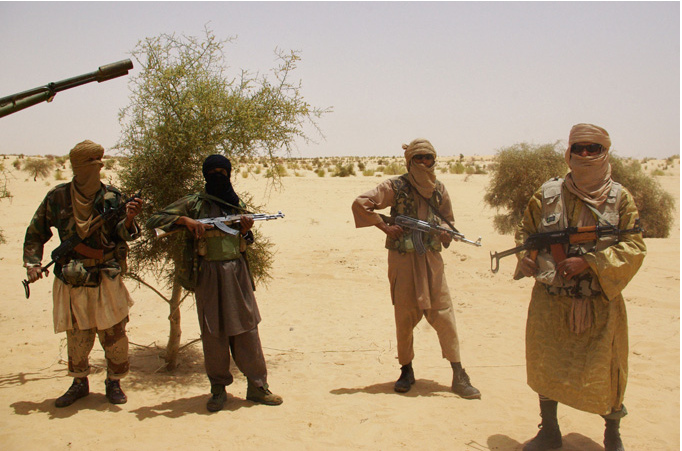
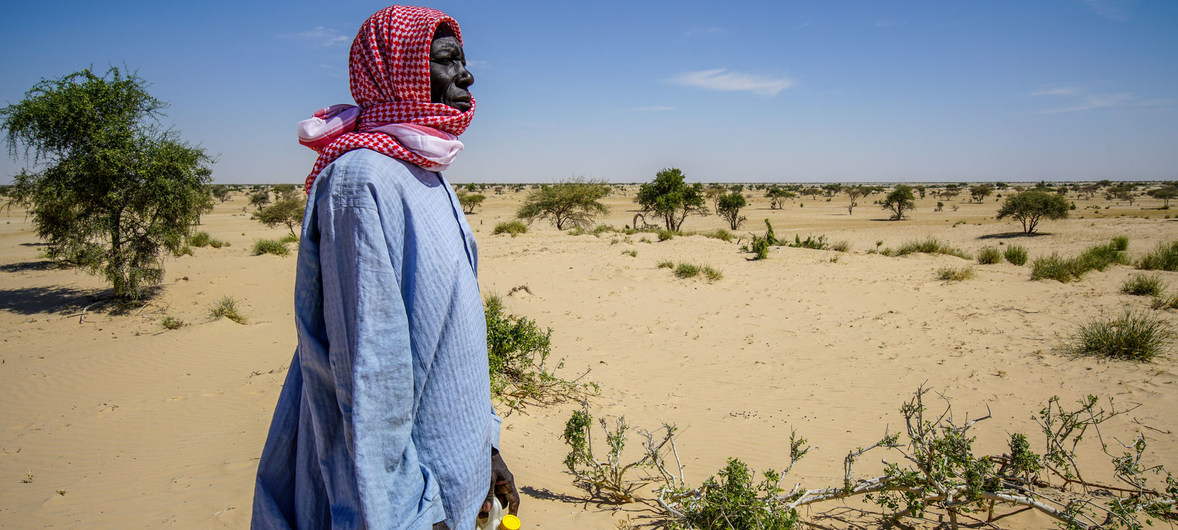
In Episode 147 of the CounterVortex podcast, Bill Weinberg notes the recent statement from the UN Environment Program that "only a root-and-branch transformation of our economies and societies can save us from accelerating climate disaster." Studies from similarly prestigious global bodies have raised the prospect of imminent human extinction. An International Energy Agency report released last year warned that new fossil fuel exploration needed to halt by 2022 in order to keep warming within the limits set by the 2015 Paris Agreement. Adoption of new technologies and emissions standards does mean that CO2 emissions from energy generation (at least) are likely to peak by 2025. But the IEA finds that this would still lead to global temperatures rising by 2.5 C above pre-industrial levels by century's end—exceeding the Paris Agreement limits, with catastrophic climate impacts. And the catastrophic impacts, already felt in places like (just for example) Chad and Cameroon, win but scarce media coverage. Climate-related conflict has already escalated to genocide in Darfur, and possibly in Syria. The oil companies, meanwhile, are constitutionally incapable of writing off the "stranded assets" of vast hydrocarbon investments. Climate protests in Europe—at oil terminals and car shows (as well as, less appropriately, museums)—do win some attention. But the ongoing resistance to still-expanding oil mega-projects in places like Uganda and Tanzania are comparatively invisible to the outside world. The dire warnings from the UN and IEA raise the imperative for a globalized resistance with an explicitly anti-capitalist politics. Listen on SoundCloud or via Patreon.

Production by Chris Rywalt

We ask listeners to donate just $1 per weekly podcast via Patreon—or $2 for our special offer! We now have 49 subscribers. If you appreciate our work, please become Number 50!

Photo of Tantaverom region of Chad via UNDP

Ukrainian self-determination: Bandera or Makhno? II

Makhno

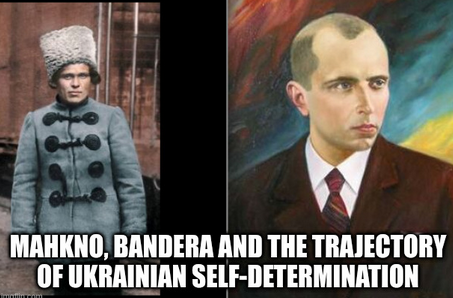
In Episode 130 of the CounterVortex podcast, Bill Weinberg continues his comparison of the two legendary and diametrically opposed exponents of Ukrainian armed resistance to Russian rule: the World War II-era right-wing nationalist Stepan Bandera and the World War I-era revolutionary anarchist Nestor Makhno. Much contemporary left commentary in the West echoes Russian propaganda in portraying Bandera simply as a Nazi collaborator, while many contemporary anarchists (at least) glorify Makhno as a visionary of agrarian utopia. Much is left out of both these narratives. Bandera was quickly betrayed by the Nazis and slapped in a concentration camp after he refused to renounce his declaration of Ukrainian independence. And while historians have had much to say about anti-Semitic pogroms by all factions in the multi-sided 1917-21 civil war in Ukraine, it is only recent scholarship that has brought to light reprisals and atrocities by Makhno's forces against Mennonite agricultural colonies. Listen on SoundCloud or via Patreon.

Books discussed: Makhno and Memory: Anarchist and Mennonite Narratives of Ukraine’s Civil War, 1917–1921 by Sean Patterson; The Gates of Europe: A History of Ukraine by Serhii Plokhy; Antisemitism and the Russian Revolution by Brendan McGeever; Nestor Makhno and Rural Anarchism in Ukraine, 1917-1921 by Colin Darch; The Unknown Revolution, 1917-1921 by Voline; The Russian Anarchists by Paul Avrich; Anarchy Comics: The Complete Collection by Jay Kinney  

Production by Chris Rywalt

We ask listeners to donate just $1 per weekly podcast via Patreon—or $2 for our new special offer! We now have 43 subscribers. If you appreciate our work, please become Number 44!

Graphic: CounterVortex with images via Marxists Internet Archive, Ukrainian Youth Union

Podcast: Ukraine between East and West II

Ukraine

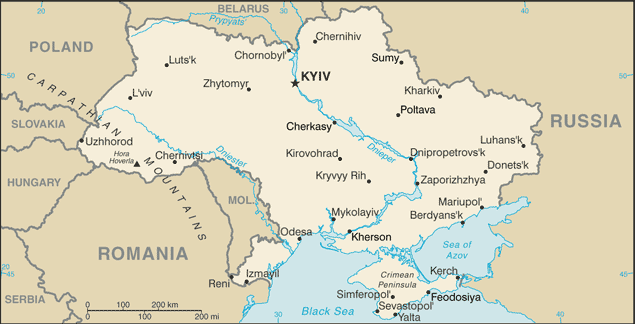
In Episode 129 of the CounterVortex podcast, Bill Weinberg discusses the book Ukraine & the Empire of Capital: From Marketisation to Armed Conflict by Yuliya Yurchenko of the Ukrainian left-opposition group Sotsialniy Rukh (Social Movement). In the book, written in 2018, Yurchenko takes a rigorous neither/nor position between Russia and the West, tracing the roots of the current crisis to the rise of regional oligarchs and a "criminal-political nexus" in the post-communist transition a generation ago. The West, in its rush to effect a crash capitalist conversion in the East, was deeply complicit in this. But these regional fiefdoms were later exploited by Vladimir Putin to effect a division of Ukraine as East-West rivalry re-emerged. This January, as Putin amassed forces on Ukraine's borders, Sotsialniy Rukh issued a statement appealing for "anti-war solidarity." In interviews since the invasion was launched the next month, Yurchenko has been unequivocal in supporting the Ukrainian "popular resistance." Similar statements from socialists and anarchists in Ukraine, Belarus and elsewhere in Eastern Europe have called, first and foremost, for the defeat of Putin's neo-imperial project. Listen on SoundCloud or via Patreon.

Production by Chris Rywalt

We ask listeners to donate just $1 per weekly podcast via Patreon—or $2 for our new special offer! We now have 43 subscribers. If you appreciate our work, please become Number 44!

Map via Perry-Castañeda Library Map Collection

Syria: Turkish drones target Kobani

Kobani

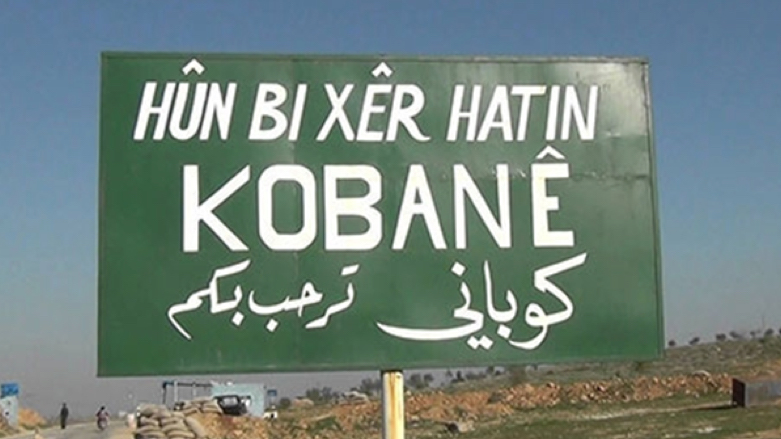
Two drone strikes targeted the Kurdish city of Kobani in northern Syria on May 11, the Rojava Information Center (RIC) said in a tweet. For the past weeks, Turkish-backed Syrian rebel factions have been shelling villages in the countryside around Kobani with howitzers and mortars. The attacks are apparently being launched from the area of Jarabulus immediately to the west, which is held by Turkish occupation forces and allied militias. According to the RIC, some 35 drone attacks on the Kobani area have already "killed at least 13 people & injured 34 in 2022 alone." (Kurdistan24, Kurdistan24, ANHA)

Kobani became iconic in 2014, when the city's Kurdish defenders waged a heroic resistance against ISIS. But since the Turkish invasion of the Kurdish autonomous zone, known as Rojava, in late 2019, the city has been a precarious enclave of remnant Kurdish control, in an uneasy alliance with Assad regime forces.

Photo: Kurdistan24

Russian ‘denazification’ goes full Nazi

Russo-Nazis

Russian Foreign Minister Sergei Lavrov, just days after issuing blatant nuclear threats, now engages in the classic anti-Semitic trope of blaming Nazism on the Jews. Speaking to Italian TV, Lavrov responded to a reminder that Ukraine's President Volodymyr Zelensky is Jewish thusly: "When they say 'What sort of nazification is this if we are Jews,' well I think that Hitler also had Jewish origins, so it means nothing. For a long time now we've been hearing the wise Jewish people say that the biggest anti-Semites are the Jews themselves." 

The statement has prompted the requisite protests from Israel, which may perhaps now rethink its shameful accommodation of the Putin regime. (BBC News, Reuters)

This trope has been heard much on the radical right in the West in recent years. Trying to launder their Nazi-nostalgia with pseudo-anti-fascist rhetoric about the "jack-booted thugs" of US federal agencies (when Democrats are in power), they are faced with an obvious cognitive dilemma. How do they square it?

By applying Hitler's own ideology and propaganda techniques to Hitler himself.

In Hitler's world, everything bad was the creation of evil Jews in high places, like the much-hyped notorious Rothschilds. So, as we've noted, if Hitler was bad he must have been either the creation of Jews, placed in power by the Rothschilds or Elders of Zion or whatever—or, going one better, was a Jew himself.

All of this seizes on the popular rumor in Germany that Hitler's grandmother was impregnated by a Rothschild baron for whom she worked as a maid. The more sophisticated propagandists will cite a book by a US intelligence analyst, Walter Langer, who looked into this theory after the war and in 1972 published his findings under the title The Mind of Adolf Hitler. If you go to the library and read the book for yourself, you'll find that Langer ultimately decided the rumor was insubstantial.

But Russia is now taking this fascist pseudo-anti-fascism to truly Orwellian levels. Russian state media have issued what has been dubbed a "blueprint for genocide" in Ukraine—openly calling for disolution of the Ukrainian state and "punishment" of the civil population, in the perversely paradoxical name of "de-nazification." Russian state media voices have also called for the "total annihilation" of Ukraine.

This thinking is being effectuated on the ground in Ukraine through mass murder of the populace. More mass graves are being discovered daily. It with reason that Ukraine has formally accused Russia of "genocide"—and called for the United Nations and world community to similarly recognize the actions of the Russian military in Ukraine as genocide of the Ukrainian people. 

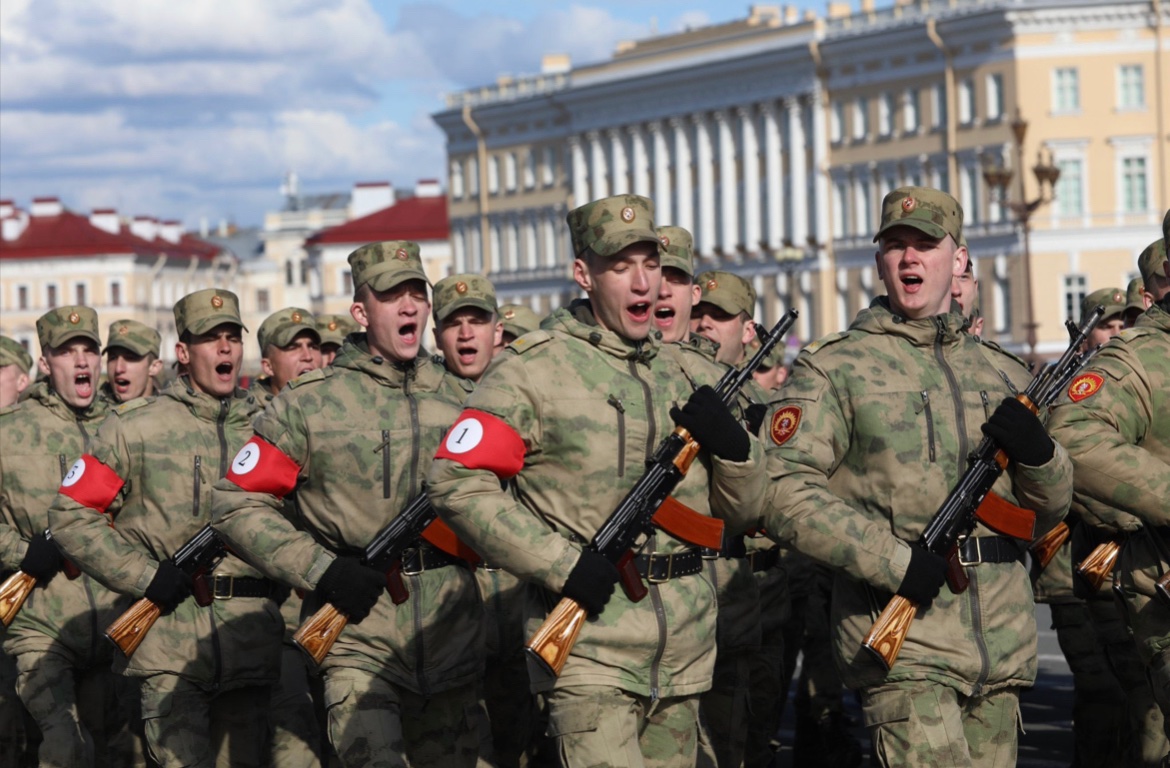
And all of this as Russia is preparing for massive military parades on May 9, commemorating the Soviet Union's 1945 victory over Nazi Germany. Photos circulating on social media show a dress rehearsal in Saint Petersburg, with paramilitary troops marching in black or camo uniforms with red-and-white armbands sporting black insignia. Does this sound familiar?  Not even attempting to hide the Nazi aesthetic to match the exterminationist rhetoric and campaign of massacre.

You almost have to admire the chutzpah.

Photo via Twitter

Podcast: against ‘normalcy’ III

Verizon

In Episode 107 of the CounterVortex podcast, Bill Weinberg continues his rant against the ubiquitous propaganda that normalizes the oppressive and dystopian pre-pandemic normality—or, as it is now incorrectly rendered, "normalcy" (sic). The opportunity for a crash conversion from fossil fuels that was posed by 2020's pandemic-induced economic paralysis is now being squandered. The fashionable COVID denialism of the anti-vaxxers is ironically complicit in the actual crimes of the pharmaceutical industry, such as the instating of a "vaccine apartheid"—failing to make the vaccine available to Africa and the much of the Global South. Just at the moment that socialist ideas are being legitimized in mainstream discourse again, the drum-beat for "normalcy" (sic) means less pressure for an urgently mandated public expropriation of corporate cyber-overlords such as Verizon, as well as Big Pharma and Big Oil. Meanwhile, consumerist and technocratc pseudo-solutions, such as the bogus notion of reducing one's personal "carbon footprint," obscure the systemic nature of the problem. Listen on SoundCloud or via Patreon.

Production by Chris Rywalt

We ask listeners to donate just $1 per weekly podcast via Patreon—or $2 for our new special offer! We now have 27 subscribers. If you appreciate our work, please become Number 28!

Photo: IBEW

Podcast: against ‘normalcy’ II

anthropocene

In Episode 106 of the CounterVortex podcast, Bill Weinberg continues his rant against the ubiquitous propaganda that normalizes the oppressive and dystopian pre-pandemic normality—or, as it is now incorrectly rendered, "normalcy" (sic). The opportunity for a crash conversion from fossil fuels that was posed by 2020's pandemic-induced economic paralysis is now being squandered. As fossil-fuel prices soar, the Biden administration is continuing a Trump-era policy to aggressively open public lands to coal mining, refusing to return to an Obama-era moratorium on new leases. US greenhouse gas emissions dramatically bounced back in 2021, which was one of the five hottest years on record. A record was made for highest temperature ever recorded in the Southern Hemisphere. (The Northern Hemisphere record was reached in 2020.) The global mean sea level is rapidly rising, and will keep rising for centuries even if the Paris Agreement goals are met, as seems less likely each day. And all this as hospitals remain overwhelmed coast to coast, and the National Guard is being mobilized to keep them functioning. Listen on SoundCloud or via Patreon.

Production by Chris Rywalt

We ask listeners to donate just $1 per weekly podcast via Patreon—or $2 for our new special offer! We now have 27 subscribers. If you appreciate our work, please become Number 28!

Photo: CounterVortex

Podcast: antivax is fascist II

antivax

In Episode 103 of the CounterVortex podcast, Bill Weinberg, still suffering from possible COVID-19 symptoms, again notes how the radical right, including neo-Nazi elements, is in the vanguard of anti-vax and anti-mask protests, from Germany to Romania to England to Brooklyn. A virtual industry churns out relentless online disinformation that is easily refuted by anyone who makes the effort to break out of the confirmation-bias bubble. Contrary to the conspiranoid propaganda, COVID-19 deaths are actually being underestimated. The juvenile Nazi-baiting of the anti-vax machine is another example of the propaganda device of fascist pseudo-anti-fascism. Meanwhile, Tuskegee experiment survivors are encouraging vaccinations, and the Peoples Vaccine Alliance protests the actual crimes of Big Pharma—failing to make the vaccine available to Africa and the much of the Global South, in what has been decried as "vaccine apartheid." Listen on SoundCloud or via Patreon.

Production by Chris Rywalt

We ask listeners to donate just $1 per weekly podcast via Patreon—or $2 for our new special offer! We now have 26 subscribers. If you appreciate our work, please become Number 27!

Photo via Twitter

Podcast: the countervortex of global resistance II

CounterVortex

In Episode 100 of the CounterVortex podcast, Bill Weinberg discusses recent uprisings in two disparate parts of the world—the South Pacific archipelago nation of the Solomon Islands and two of the states that have emerged from the former Yugoslavia. In both cases, people who were pissed off for damn good reason took to the streets to oppose foreign capital, and corrupt authoritarian leaders who do its bidding. But in the Solomon Islands, popular rage was deflected into campism and ethnic scapegoating, while in Serbia and Kosova the people on the ground actually overcame entrenched and bitter ethnic divisions to make common cause against common oppressors. The contrast holds lessons for global protest movements from Hong Kong to New York City. Listen on SoundCloud or via Patreon.

Music: Pause & Effect, featuring Rose Tang on vocals

Production by Chris Rywalt

We ask listeners to donate just $1 per weekly podcast via Patreon—or $2 for our new special offer! We now have 23 subscribers. If you appreciate our work, please become Number 24!

Podcast: the dialectics of cannabis liberation II

cannabis

In Episode 94 of the CounterVortex podcast, Bill Weinberg presents a special cannabis harvest season interview with Karla Avila in Northern California's Emerald Triangle. A licensed producer of artisanal outdoor cannabis for the legal market through her homestead-based company Flowerdaze Farm, Avila is an advocate for small-scale "legacy" growers through her work with the Trinity County Agriculture Alliance. She is also a founding member of the statewide Origins Council, which is seeking to establish official "appellations" for cannabis, certifying a strain's regional origin. Avila discusses the challenges now facing small legacy growers who are struggling to keep alive heirloom genetics and ecologically sound cultivation methods in a legal market increasingly dominated by large-scale enterprises on an agribusiness model. Listen on SoundCloud or via Patreon.

Production by Chris Rywalt

We ask listeners to donate just $1 per weekly podcast via Patreon—or $2 for our new special offer! We now have 25 subscribers. If you appreciate our work, please become Number 26!

Photo via Wikimedia Commons

Russian mercenaries to Mali?

Mali

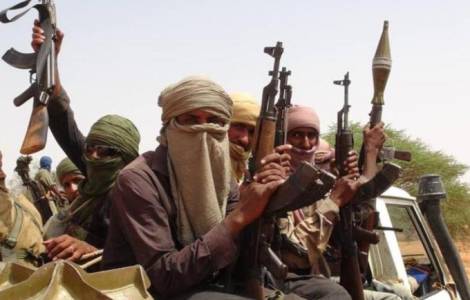
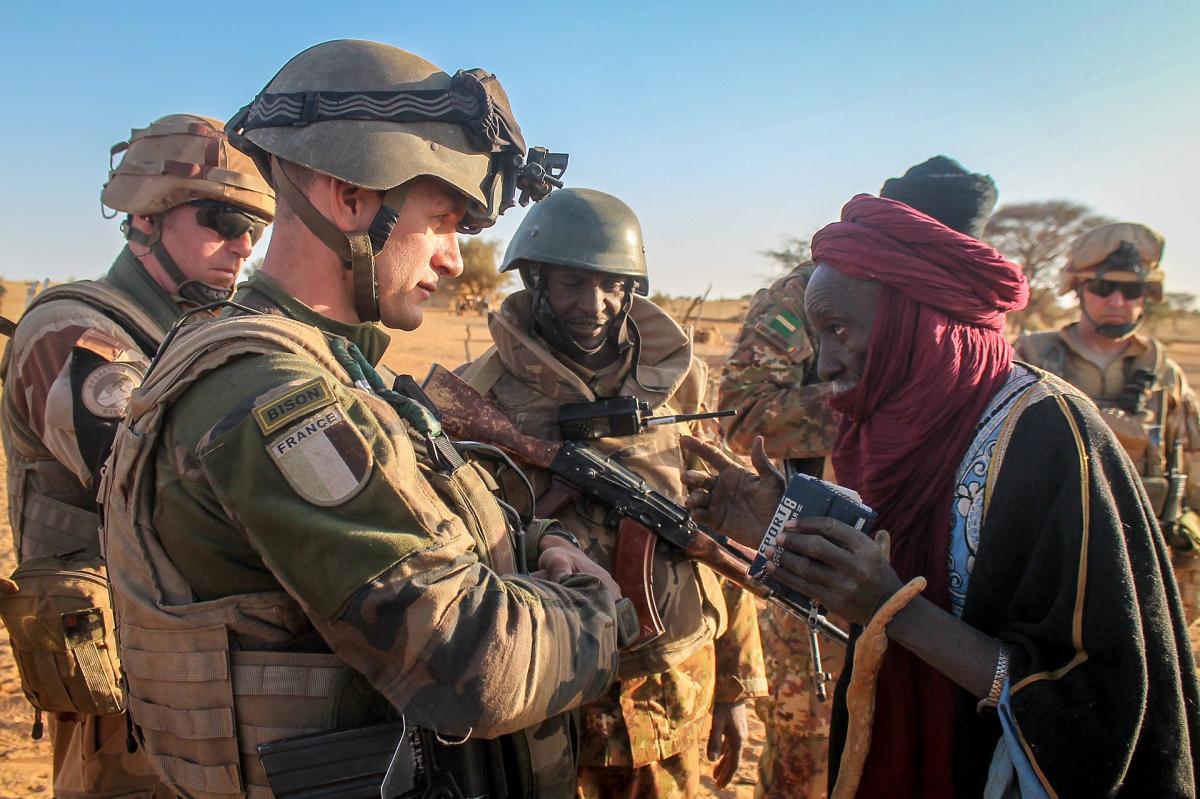
France, now in the process of drawing down its military presence in West Africa's Sahel nations, has criticized plans that could see Russian mercenaries brought to Mali, where jihadist groups tied to ISIS or al-Qaeda operate in large parts of the country. Reports suggest that Mali's transitional government is considering a deal with the Wagner Group, which has close links to Vladimir Putin and is also active in Central African Republic. The Coordinating Body of Azawad Movements (CMA), a coalition of Tuareg rebel groups that signed a peace deal with the Malian government in 2015, likewise expressed its "firm opposition" to any agreement to bring in the Wagner Group. (TNH)


Photo: FIDES

Podcast: humanitarian intervention reconsidered II

Aleppo

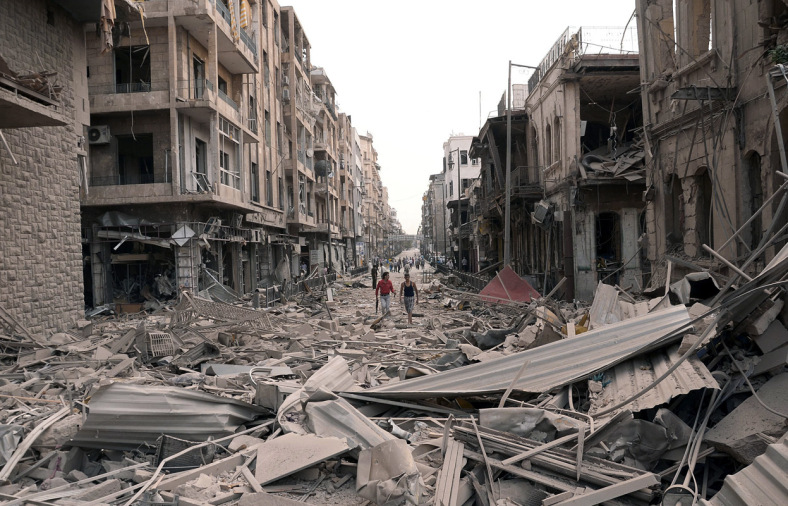
In Episode 86 of the CounterVortex podcast, Bill Weinberg returns to the book The Responsibility to Protect in Libya and Syria: Mass Atrocities, Human Protection, and International Law by Syrian American legal scholar Yasmine Nahlawi, exploring applicability of its analysis to the current disaster in Afghanistan. This discussion is taken up at the request of Eric Laursen, author of The Duty to Stand Aside: Nineteen Eighty-Four and the Wartime Quarrel of George Orwell and Alex Comfort. Laursen is the first to take up the CounterVortex special offer, by which new Patreon subscribers get to choose a topic for exploration on the podcast. When do we have a responsibility to protect, and when do we have a duty to stand aside, and how can these imperatives be reconciled? Listen on SoundCloud or via Patreon.

Production by Chris Rywalt

We ask listeners to donate just $1 per weekly podcast via Patreon—or $2 for our new special offer! We now have 28 subscribers. If you appreciate our work, please become Number 29!

Photo: Destruction of Aleppo, via 7ee6an

Uprising and repression in Eswatini

Eswatini

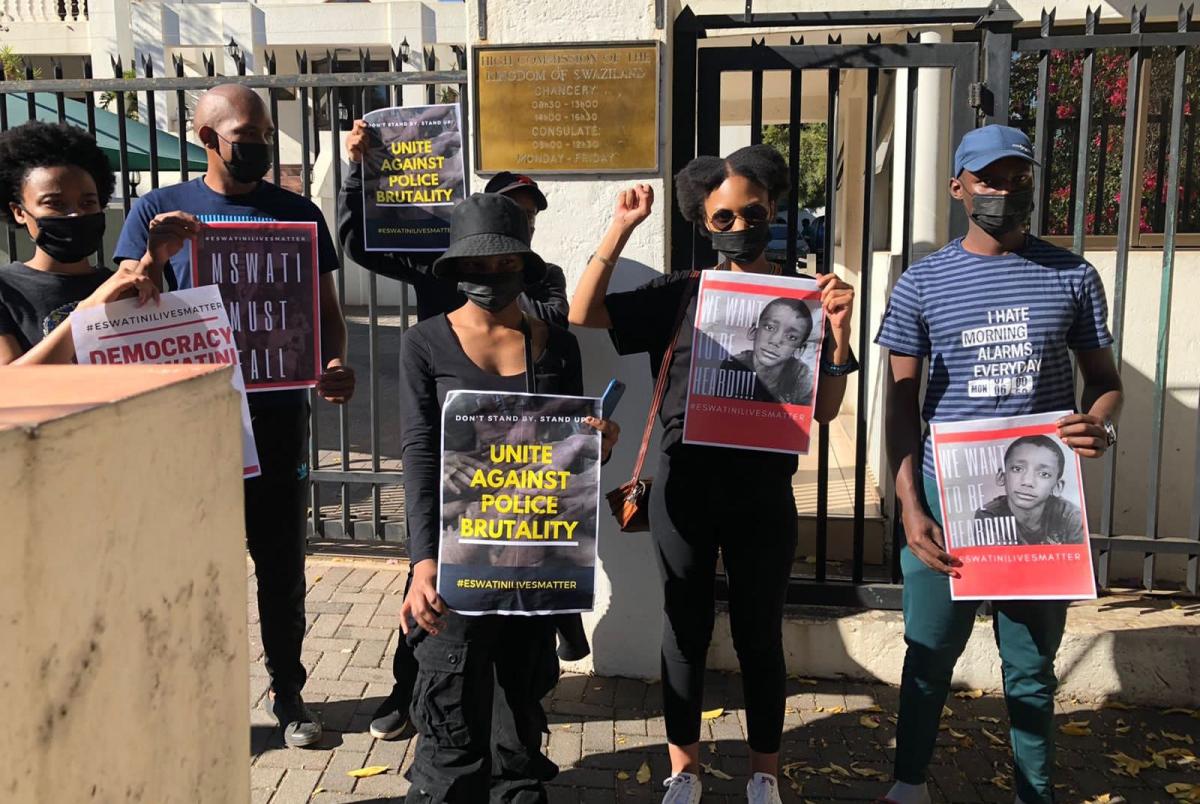
The government of Eswatini, Africa's last absolute monarchy, has launched what Amnesty International calls a "ruthless crackdown" in response to pro-democracy protests, with dozens killed and many others tortured, detained or abducted. At least 150 protesters have been hospitalized for injuries, including gunshot wounds sustained from live ammunition fired by the police. The military has also been deployed to the streets. Protests broke out last month, following the mysterious death of a 25-year-old law student, Thabani Nkomonye, in May, allegedly at the hands of the police. His body was found on a field in Nhlambeni, outside the city of Manzini. In late June, these protests grew into daily marches in several cities and towns around the kingdom. While the demonstrations were mostly peaceful, there were instances in which businesses linked to the monarchy were looted and torched. The protests have waned since the wave of repression was unleashed, but the opposition People's United Democratic Movement (PUDEMO) pledges to carry on the struggle.

"I think asking for our people to go back to work while there are soldiers in the streets, just to show the international community that you are in control or the situation has normalized, is irresponsible. The situation here is still tense, volatile and dangerous," PUDEMO leader Mlungisi Makhanya told the South African Broadcasting Corporation. .

Amnesty charges that Eswatini authorities use repressive laws, including the 1938 Sedition & Subversive Activities Act and the 2008 Suppression of Terrorism Act, to silence critics. Journalists, human rights defenders and political activists have been imprisoned simply for speaking out against this repression of dissent for many years.

Eswatini, formerly known as Swaziland, gained independence from Britain in 1968, and has been ruled by King Mswati III since 1986. He chooses the prime minister and cabinet, and has the power to dissolve Parliament. While the royal family flaunt an opulent lifestyle, some six out of 10 of citizens live in poverty. Many in the small and mountainous landlocked nation are on the brink of hunger and have to cross into South Africa to find work. (UN News, NYT)

Eswatini last saw an outburst of protest 10 years ago, inspired by the Arab Revolution.

Photo: Swazi students from University of Pretoria protest at Eswatini embassy. Via Twitter

Outrage over French air-strike in Mali

A French airstrike killed 19 civilians attending a wedding celebration in a remote central Malian village, according to an investigation by the UN peacekeeping mission in the country, MINUSMA. The report based its findings on hundreds of interviews, satellite images, and evidence gathered from a trip to Bounti, the village hit by the Jan. 3 strike. The French defense ministry rejected the report, maintaining the casualties were Islamist militants. French troops were hailed as heroes by many Malians when they drove out militant groups from major towns in the country's desert north in 2013. But criticism has grown as a more than 5,000-strong regional counter-insurgency force—called Operation Barkhane—has failed to prevent the militants from regrouping and expanding across West Africa's Sahel. Despite some recent battlefield gains, the operation is drawing increasing comparisons to the US war in Afghanistan.

From The New Humanitarian, April 2.

French forces have been accused of mistaken air-raids in the context of Operation Barkhane before. See our last posts on the January air-strike on the village of Bounti, and the crisis in the Sahel.

Photo: Wikipedia

UN to investigate ‘crimes against humanity’ in Mali

Mali

UN investigators into political violence in Mali reported to the Security Council that they found evidence that government forces have committed "war crimes," while jihadists and other armed groups perpetrated "crimes against humanity." The allegations are made in a 338-page report compiled by the International Commission of Inquiry, a three-member panel examining events in Mali over the six years after it spiralled into conflict in 2012. The Commission was created in January 2018 as part of the Agreement for Peace & Reconciliation between rebels and the government, which was signed in 2015 after years of fighting. The report, which has not yet been made public, recommends establishing a special court to try accused perpetrators. (France24, Dec. 23)

The report's recommendations are being met with some wariness in Mali. Pape Diallo, an activist with the opposition June 5 Movement-Rally of Patriotic Forces (M5-RFP), called for foreign militaries operating in the country to be covered in the scope of the investigation—including France. If France is not also investigated, Diallo said it would raise "questions of double standards that…highlight the very dubious intentions of the international community in the management and final resolution of the crisis in Mali." (TRT World)

See our last post on war crimes in Mali.

Photo via Andy Morgan Writes

Podcast: What will it take to stop Trump? III

Trump Hitler

In Episode 57 of the CounterVortex podcast, Bill Weinberg makes the odious but essential case for a tactical vote to defeat Trumpism, a political phenomenon that represents an updated variant of fascism. This alone will not be sufficient, as Trump will almost certainly not leave office willingly, but attempt to cling to power by any means. If he succeeds, we could be at the moment Italy experienced in 1922, and Germany in 1933. Biden is a domesticated Beltway mediocrity, and even if he wins the country is still going to be in deep crisis. A mass movement strong enough to defeat Trump's power-grab could also be strong enough to press its offensive against Biden, and wrest concessions to a progressive agenda—or even (much more ambitiously) begin to build parallel power. But it begins with defeating Trump, and this must mean a sound electoral defeat as well as mass mobilization in the streets.

Listen on SoundCloud or via Patreon.

Production by Chris Rywalt

The text of this rant is online at Yellow Scene Magazine

We ask listeners to donate just $1 per episode via Patreon. A total of $30 per episode would cover our costs for engineering and producing. We are currently up to $25.

Image: APhilosophicalEnquiry

Podcast: What will it take to stop Trump? II

Lafayette Park

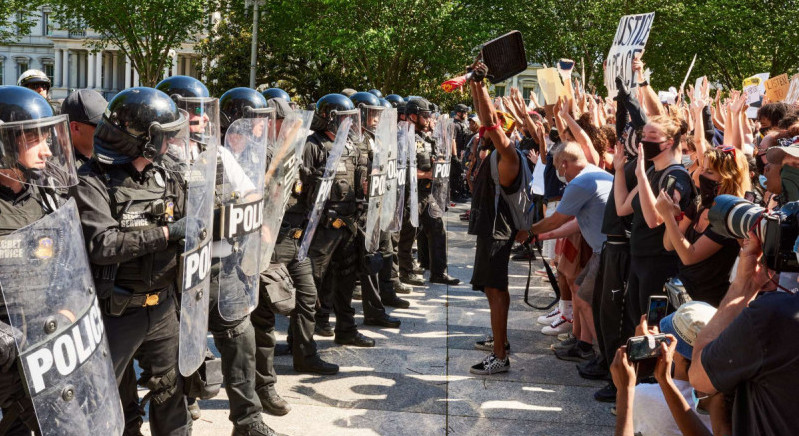
In Episode 56 of the CounterVortex podcast, Bill Weinberg takes stock of the evident reality that Trump is getting ready to steal the November election—whether by undermining the Postal Service, suspending the election entirely under pretext of the pandemic, or simply refusing to recognize the result and sparking a constitutional crisis that could potentially involve the military. The Transition Integrity Project, recently established to assess the looming dilemma, warns: "A show of numbers in the streets—and actions in the streets—may be decisive factors in determining what the public perceives as a just and legitimate outcome." As the RNC delegates openly call for making Trump president for life, Weinberg examines examples from around the world where people are currently filling the streets to resist an illegitimate power-grab by a would-be dictator—from Belarus to Bolivia, from Hong Kong to Mali, from Thailand to Lebanon. 

The question of whether the populace of the US can similarly rise to the occasion has been posed before. But this year's nationwide protests over racial justice may bring us closer than ever before to the critical capacity to stop Trump's impending putsch.

Weinberg emphasizes that such a movement in the United States must have no illusions about Joe Biden and the Democrats—noting that their platform (just for example) for the first time embraces nuclear power. On the contrary, a popular movement powerful enough to prevent a Trump power-grab must maintain the momentum to keep a Biden White House on the defensive, push for long-overdue reforms such as abolition of the Electoral College, or even a more truly revolutionary agenda. But the most critical task at this dangerous moment is to avoid a fascist take-over of the country.

Listen on SoundCloud or via Patreon.

Production by Chris Rywalt

We ask listeners to donate just $1 per episode via Patreon. A total of $30 per episode would cover our costs for engineering and producing. We are currently up to $25.

Photo: GGWash.org

Mexico creates justice commission for Yaqui

Yaqui

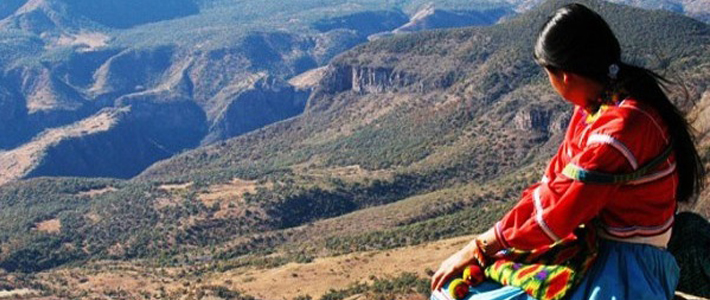
Mexican President Andrés Manuel López Obrador has signed a decree that sets up a Justice Commission for the Yaqui People, seeking to resolve problems of land, water, health, education and infrastructure faced by the indigenous group. The decree was signed Aug. 6 during a visit by López Obrador to the Yaqui community of Vícam, in Guaymas municipaliy, Sonora state. The decree seeks to redress a long history of oppression, massacres, slavery and land theft faced by the Yaqui. López Obrador said that the Yaqui have been Mexico's most persecuted indigenous group, stating, "All the original inhabitants suffered robbery, but no people suffered as much as the Yaqui." The president also said that he had agreed to modify the route of the planned Guaymas-El Oro gas pipeline that was supposed to run through Yaqui territory.

On creating the commission, López Obrador said, "[W]e are not going to betray you, we are not going to fail you, we are going to fulfill all our commitments," calling it mandate of "historical justice."

From Jurist, Aug. 10. Used with permission.

Note: Yaqui protests over the Guaymas-El Oro pipeline turned violent in 2016. Also at issue in the territory is the "Independence Aqueduct" that would divert water from the Río Yaqui to the Sonora state capital Hermosillo. 

Photo via Articulo 19

Podcast: Verizon delenda est II

Verizon

In Episode 55 of the CounterVortex podcast, Bill Weinberg exposes the hidden agenda behind Verizon's abandonment of landline service. Far from being driven by public demand, the ubiquity of wireless has been instrumented by Verizon and imposed on the populace as a design to finally extinguish the public entitlement of telephone service. Verizon is the most recent inheritor of this public trust responsibility that goes back to the establishment of the New York Telephone Company as a state utility in 1896. But the trust responsibilities go with the old copper wires—once they are gone, Verizon no longer has legal obligations as a "carrier of last resort." Weinberg calls for a public expropriation of Verizon, and making internet access as well as phone service a public entitlement. Those who are refusing to give up their landlines are, consciously or not, on the frontline of resistance to corporate rule—and the attendant digitization of all reality. Listen on SoundCloud or via Patreon.

See Weinberg's written exposé, "New Yorkers Stand Up to Wireless Tyranny," in The Village Sun. See also Weinberg's reportage in The Tenant on the potential risks from drilling through walls for cable installation—which is why Spectrum cable service is not a vialble option in aging Lower Manhattan tenements.

Production by Steph Rywalt

We ask listeners to donate just $1 per episode via Patreon. A total of $30 per episode would cover our costs for engineering and producing. We are currently up to $25.

Photo: IBEW

Libya: Haftar’s forces retreat from Tripoli

Haftar

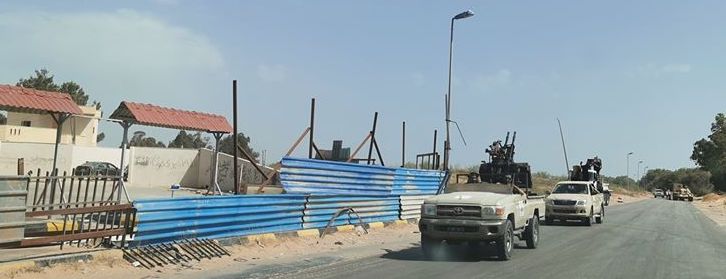
Libya's UN-recognized Government of National Accord (GNA) regained full control of Tripoli with the recapture of the city's airport on June 4—the last pocket held by the eastern warlord Khalifa Haftar, whose forces had been besieging the capital since April 2019. Haftar's forces fled east toward Tarhouna and Bani Walid, their last remaining strongholds in the west, with the GNA forces in pursuit. The GNA advance, dubbed Operation Volcano of Rage, follows reports last month that mercenaries from Russia's Wagner Group, who had been fighting for Haftar, were being evacuated from Libya. This suggests that Russian support for Haftar may have been sacrificed in Moscow's new rapprochement with Turkey, the main foreign sponsor of the GNA. (BBC News, Libya Observer, Al Jazeera)


Photo: Libya Observer

‘Crimes against humanity’ seen in DRC’s Ituri

Ituri

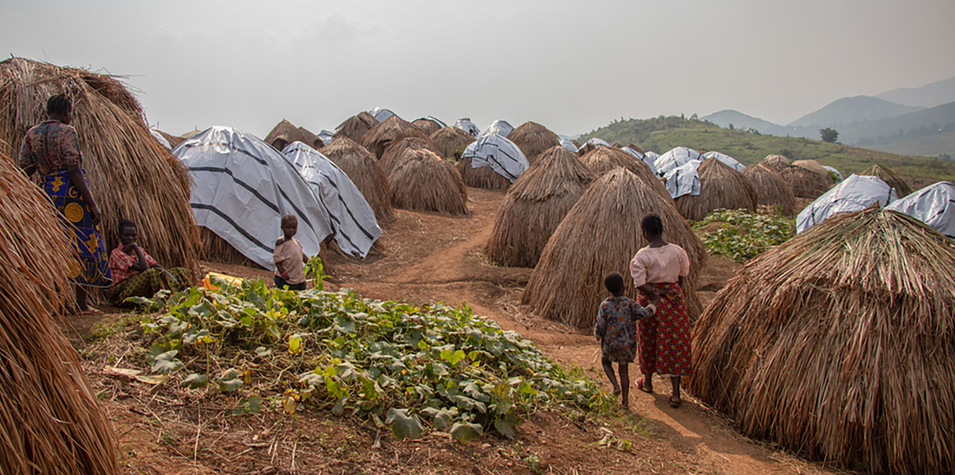
Ethnically targeted attacks in the Democratic Republic of the Congo's resource-rich Ituri province may be reaching the point of "crimes against humanity," United Nations officials warned May 27. A report by the UN Joint Human Rights Office (UNJHRO) documents a dramatic escalation in hostilities between the Hema and Lendu ethnic groups. In the six months to April 2020, at least 296 people were killed, 151 wounded and 38 raped, including children, mostly by fighters linked to the Cooperative for the Development of Congo (CODECO) armed group, whose members are predominantly of the Lendu ethnicity.

The government launched an offensive against the group last December. But violence only escalated after the CODECO leader, Ndudjolo Duduko Justin, was killed in a March ambush, leading to reprisal attacks on Hema communities, as well as internecine fighting for control of the group.

Some 200,000 have been displaced by the new violence. Rupert Colville, spokesperson for the UN High Commissioner for Human Rights, stated that "the brutality of the attacks, with perpetrators using machetes to kill women and children, raping, looting property, destroying houses and killing livestock, suggests the aim is to inflict lasting trauma on the affected populations, forcing them to flee."

The UNJRHO included these words of caution: "The persistence of this violence is likely to push members of the communities targeted by the attacks, who have so far shown restraint, to form self-defence militias. This could increase the likelihood of large-scale inter-communal violence in the region." (Reuters, RFI, Reliefweb)

Photo of displaced persons camp in Ituri: Alexis Huguet/MSF via TNH

Podcast: COVID-19 and impending bio-fascism II

peruvian army

In Episode 50 of the CounterVortex podcast, Bill Weinberg notes frightening advances toward a fascist world order amid the COVID-19 crisis. With police-state measures being imposed worldwide, Donald Trump is claiming "total" executive power and threatening to "adjourn" Congress. That he is doing so in the name of lifting rather than enforcing the lockdown is certainly an irony, but either way it represents exploitation of the crisis for a power-grab. Even under a best-case scenario of a post-pandemic return to "normality," it will be in the context of an unprecedented totalizing surveillance state.

Yet at this grim moment for humanity, there are utopian as well as apocalyptic potentialities. Paradoxically, the number of deaths per week in the US has actually dropped over the past month, due to reduced highway carnage—a trend that we also saw during the last economic downturn, but was dramatically reversed over the past years of low oil prices. Air pollution has been dramatically reduced in Italy. In India, the usually smog-obscured Himalayas are visible for first time in decades, and the waters of the Ganges are drinkable for the first time in generations. Emergency measures to restrict motor vehicles and open city streets to pedestrians and bicyclists, from New York to Oakland, are a sign of hope.

This crisis affords the opportunity to go beyond the insufficient notion of a "Green New Deal," and demand a controlled collapse of the fossil fuel economy and global industrial leviathan. As a recent Hong Kong graffito put it: "We can't return to normal, because the normal that we had was precisely the problem." But the inevitable pain for this transition must be borne by the ruling class—not the common people. Or, as a slogan taken up by the South American left now demands: #QuePaguenLosRicos—make the rich pay.

Listen on SoundCloud, and support our podcast via Patreon.

Production by Chris Rywalt

We ask listeners to donate just $1 per episode via Patreon. A total of $30 per episode would cover our costs for engineering and producing. We are currently up to $25.

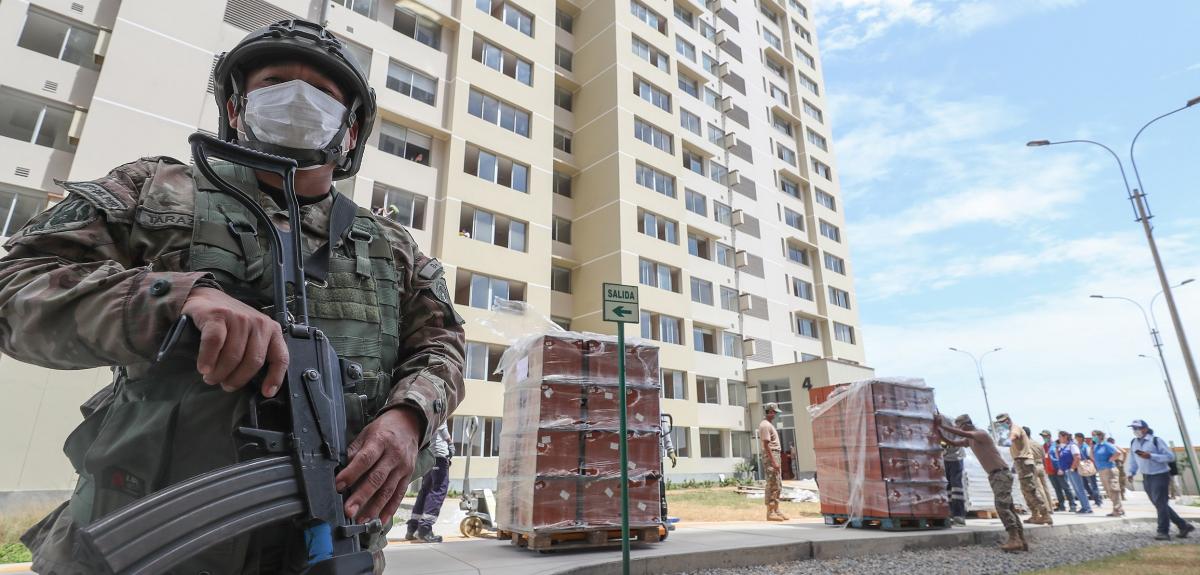
Photo: Peruvian Ministry of Defense via Flickr

Death sentences in murder of Jamal Khashoggi

Jamal Khashoggi

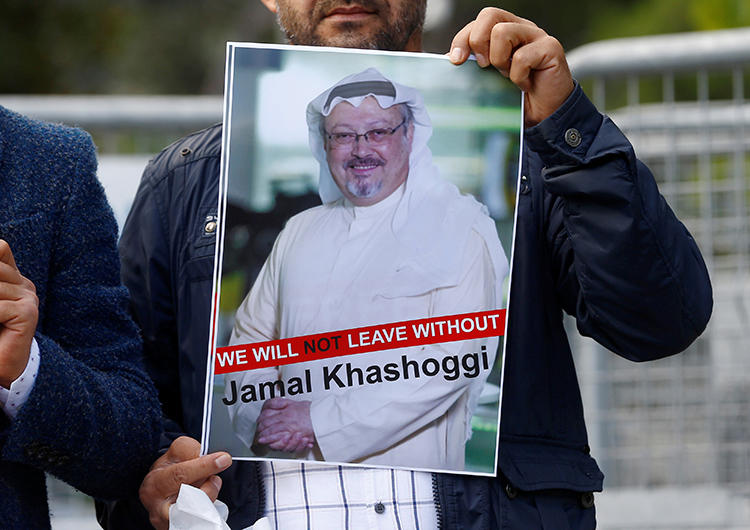
Saudi Arabia's public prosecutor announced Dec. 23 that five people have been sentenced to death and three sentenced to prison terms in connection with the murder of journalist Jamal Khashoggi at the Saudi consulate in Istanbul last year. The verdict revealed that charges had been dismissed for the remaining three of the 11 that had been on trial. The trial did not find that the killing was premeditated. Among those not indicted were two top Saudi officials, who were exonerated due to lack of evidence. Khashoggi, a Saudi journalist and columnist for the Washington Post, entered the consulate to obtain marriage documents in October 2018, only to be killed there, his body dismembered and later taken from the consulate. The remains have yet to be found.

Following Khashoggi's death there was an international outcry, calling for an investigation into Saudi Crown Prince Mohammad bin Salman. Khashoggi was an outspoken critic of Crown Prince Mohammad; the CIA later determined that he had ordered the murder.

The United Nations issued its own report in October 2019, squarely placing the blame on Saudi Arabia for the murder, calling it premeditated and criticizing both the Saudi and Turkish governments for interfering with the investigation.

Criticism still remains surrounding the exoneration of two top officials connected to the Crown Prince, Saud al-Qahtani and Ahmed al-Assiri. Both al-Qahtani and al-Assiri were dismissed from their positions; al-Assiri was tried and released and al-Qahtani was investigated but not charged.

The Trump administration responded to the murder in November 2018 by imposing sanctions against 17 Saudi citizens suspected of being involved, including al-Qahtani, who was one of the Crown Prince's media advisors.

These death sentences still must be confirmed by Saudi higher courts. 

Adam Coogle, a researcher for Human Rights Watch, told the New York Times that the "opaque nature of the trial" and the complete exoneration of Saudi leadership called for further independent investigation. Coogle stated, "Saudi Arabia's handling of the murder, from complete denial to hanging the murder on lower-level operatives in a trial that lacked transparency, demonstrates the need for an independent criminal inquiry."

From Jurist, Dec. 23. Used with permission.

Note: The Committee to Protect Journalists condemned what it called a "sham trial" in the case, noting that the prosecutor's office did not identify the convicted by name, and described the killing as "spontaneous." Only those who actually carried out the killing appear to have been convicted, and none of the intellectual authors. 

Photo: Committee to Protect Journalists

China and Japan can’t stop fighting World War II

In a slightly surreal case, Kyodo news agency reports April 20 that a Shanghai Maritime Court ordered the seizure of a vessel owned by Japanese shipping giant Mitsui OSK Lines at a port in Zhejiang province for failing to pay compensation in "a wartime contractual dispute." It seems that in 1936, Mitsui's predecessor, Daido Shipping Co, rented two ships on a one-year contract from China's Zhongwei Shipping Co. The ships were commandeered by the Imperial Japanese Navy, and later sank at sea. The suit was brought against Mitsui by grandsons of the founder of Zhongwei Shipping, and has been batted around in China's courts for years. In 2012, the Supreme People's Court rejected Mitsui's petition for retrial, affirming the Maritime Court's finding that the company must pay. The decision to seize the ships now seems pretty clearly retaliation for Japanese cabinet minister Keiji Furuya's visit to the Yasukuni shrine days earlier. Prime Minister Shinzo Abe himself sent a "ritual offering" to the shrine ahead of Japan's spring festival, which starts this week. All of this is happening (again less than coincidentally) exactly as Japan has started construction of a military radar station on Yonaguni Island—just 150 kilometers from the disputed gas-rich Senkaku archipelago, claimed by China as the Diaoyu Islands. (Reuters, Singapore Today, Xinhua, BBC News)

As we've said before, China and Japan have got way too much invested in trade with each other to actually intend to go to war. But brinkmanship is a dangerous game, and there is plenty of potential here for things to spiral out of control very quickly. Japan's spring festival, which will likely see more high-profile homages to war criminals at Yasukuni, will actually overlap with President Obama's visit to the country this week. Hopefully, he will have a little talk with Abe, telling him that such behavior is not helpful. Of course, there is no reason whatsoever to hope that Obama will rein in Japan's military expansion, which the US is avidly facilitating…

  1. Japanese rightists hail Hitler on birthday

    It seems to have received no coverage in English, but Korean news portal Chosun Online shows photos of Japanese ultra-rightists marching in Tokyo on April 20—in honor of Hitler's birthday. They carry both the Japanese war-era flag as well as flags emblazoned with the Nazi swastika. Slogans denied the Holocaust, Rape of Nanking and "comfort women" as lies… And called for a "Greater East Asia Co-Prosperity Sphere"…

  2. Neo-Nazi link in Japan cabinet scandal

    The Independent reports on a particularly sinister element to the otherwise prosaic financial scandal that has already caused two members of Shinzo Abe’s cabinet (both women, appointed in a touted effort to "womanize" Japanese politics) to resign—METI Minister Yuko Obuchi and Justice Minister Midori Matsushima (see WaPo report). In the latest episode, Eriko Yamatani, head of the National Public Safety Commission, rejected claims that she had a 15-year association with the former leader of an ultra-right group that spouts crude racism against Koreans. the Japanese press published a 2009 photo of Yamatani posing with ex-Zaitokukai leader Shigeo Masuki, who says he has known Yamatani for 15 years. Yamatani in turn said she had "no memory" of where or how many times the two had met.

    The group, Zaitokukai, wants Japan to expel its ethnic Korean population. It has 12,000 members, who descend on Korean communities in Japanese cities, screaming such slogans as "cockroaches" and "kill, kill Koreans." Police have mostly turned a blind eye to the group but in July, a court in Osaka ordered Zaitokukai to stop its tirades against an elementary school in Kyoto with links to North Korea, and ordered the group to pay 12 million yen to the school in compensation.

    Two more of Abe's recent appointees have been accused of neo-Nazi links. Internal Affairs Minister Sanae Takaichi and LDP policy chief Tomomi Inada appeared in separate, undated photos with the leader of the National Socialist Japanese Workers Party, Kazunari Yamada. In online videos, Yamada can be seen in street demonstrations wearing a "modified swastika." Takaichi also appeared in a magazine ad endorsing a 1994 book titled Hitler's Election Strategy. Both ministers deny endorsing Nazi ideology.

    Just charming.

  3. China and Japan back from brink?

    China and Japan have agreed to try to reduce tensions over the disputed Diaoyu/Senkaku islands in the East China Sea, setting up a "crisis management mechanism" to prevent escalation. Shinzo Abe and Xi Jinping did meet at the APEC summit in Beijing, but media have all noted that their handshake was "awkward"—no doubt calculatedly so. (BBC News, Foreign Policy)

  4. Rape of Nanking: propaganda uses

    Chinese President Xi Jinping presided over a high-profile ceremony Dec. 13 marking the 77th anniversary of the start of the Rape of Nanking, a six-week period of mass murder and mass rape committed by Japanese troops against the civilian population of the city. Estimates of the number of deaths range from 40,000 to 300,000, the higher estimate being the official number recognized by the current Chinese government. A post-war Allied Tribunal counted 142,000 deaths. Legislation establishing the Memorial Day, as well as Sept. 3 as Victory Day over Japan, was ratified by the National People's Congress in February. The ceremony was held at Nanjing's Memorial Hall for the Victims in the Nanjing Massacre by Japanese Invaders. (Beyond Chinatown)

    We're all for remembering the Rape of Nanking, and opposing the revisionism, minimization and denialism about it (as well as outright celebration of it) now alarmingly popular in Japan. But we'd like a little acknowledgement that this remembrance day is being orchestrated by Xi Jinping now for rather base political reasons… It certainly isn't a coinicidence that China has increasingly up-played commemorations of the massacre as it has contested with Japan over disputed offshore fields in recent years…