Africa
Gezira

New atrocities by RSF reported in Sudan’s Gezira

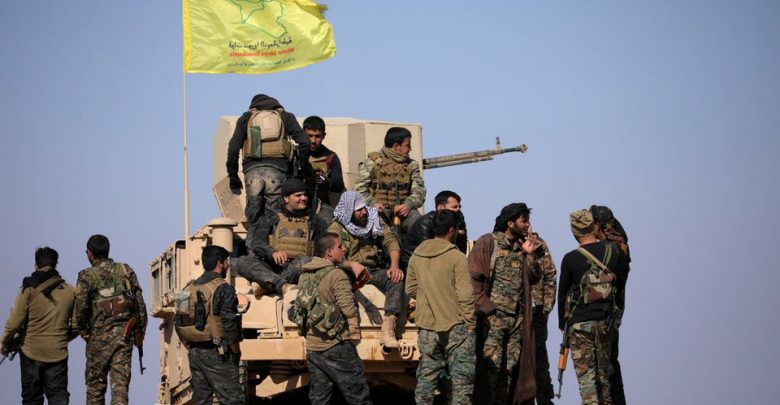
Brutal attacks by the Rapid Support Forces on villages and towns in Sudan’s Gezira state, south of Khartoum, have displaced around 120,000 people over the past two weeks, resembling the kind of violence used by the paramilitary group in the Darfur region beginning last year. The attacks were triggered by the defection to the army of the RSF’s top commander in Gezira, Abu Aqla Kayka; villages under his control were reportedly targeted. The UN said the attacks left at least 124 people dead and resulted in more than 27 women and girls being raped, though these numbers are likely a massive undercount given survivor testimonies, activist reports, and videos that show rows of bodies wrapped in shrouds. The attacks are among the worst to take place in Gezira since the RSF took over the state in December 2023. The state is considered the country’s breadbasket, but farmers have been forced to flee and cropland has been deliberately burnt. (Map: Sudan War Monitor)

Palestine
Barghouti

Marwan Barghouti beaten in Israeli prison: report

The Commission of Detainees & Ex-Detainee Affairs, a Palestinian prisoner rights organization, reported that Israeli prison staff brutally assaulted Marwan Barghouti, a Palestinian political leader and member of the Central Committee of Fatah. During a visit to Megiddo prison, Barghouti’s lawyer learned of the apparent assault, which took place Sept. 9 in a solitary confinement cell. The attack led to injuries to his head, ribs, and arms, resulting in bleeding from his ear and severe pain in his upper body. The report says that Barghouti has struggled with motor function and suffered ear infections due to being denied medical assistance. In the past year, Barghouti had already been assaulted twice. He has been held in solitary confinement since the start of the Gaza war. (Photo: Wikimedia Commons)

The Caribbean
Jarry

Guadeloupe: curfew following strike at power plant

The government of the French Caribbean island of Guadeloupe imposed a territory-wide curfew after a strike by workers at the central power plant shut down the island’s electricity supply. Amid ongoing complaints over salaries, workers at the Pointe Jarry facility entered the control room of the thermal plant and caused an emergency shutdown of the engines. After police secured the plant, the government requisitioned the employees needed to operate the power station through a prefectural decree. This ordered employees deemed essential to the operation of the station to return to work based on an “observed or foreseeable damage to good order, public health, tranquility and safety.” (Photo: Region Guadeloupe)

The Caribbean
Cuba

Power outages persist in storm-wracked Cuba

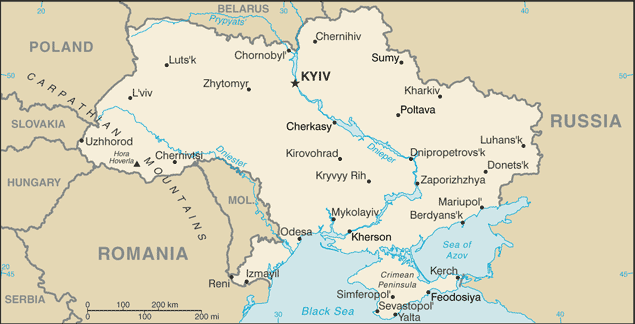
The collapse of the electrical grid plunged the entire island of Cuba into darkness last week—a situation worsened by the arrival of Hurricane Oscar. The national blackout, which caused many families to lose most of the little food they had, sparked rare protests amid a broader economic crisis marked by soaring inflation and widespread shortages of medicine, food, and water. Power has now been restored in the capital, Havana, but many rural areas remain in the dark, while schools and workplaces across the country remain closed due to ongoing energy-saving measures. (Map: Perry-Castañeda Library)

The Andes
Bolivia

Bolivia: police attack protest roadblocks

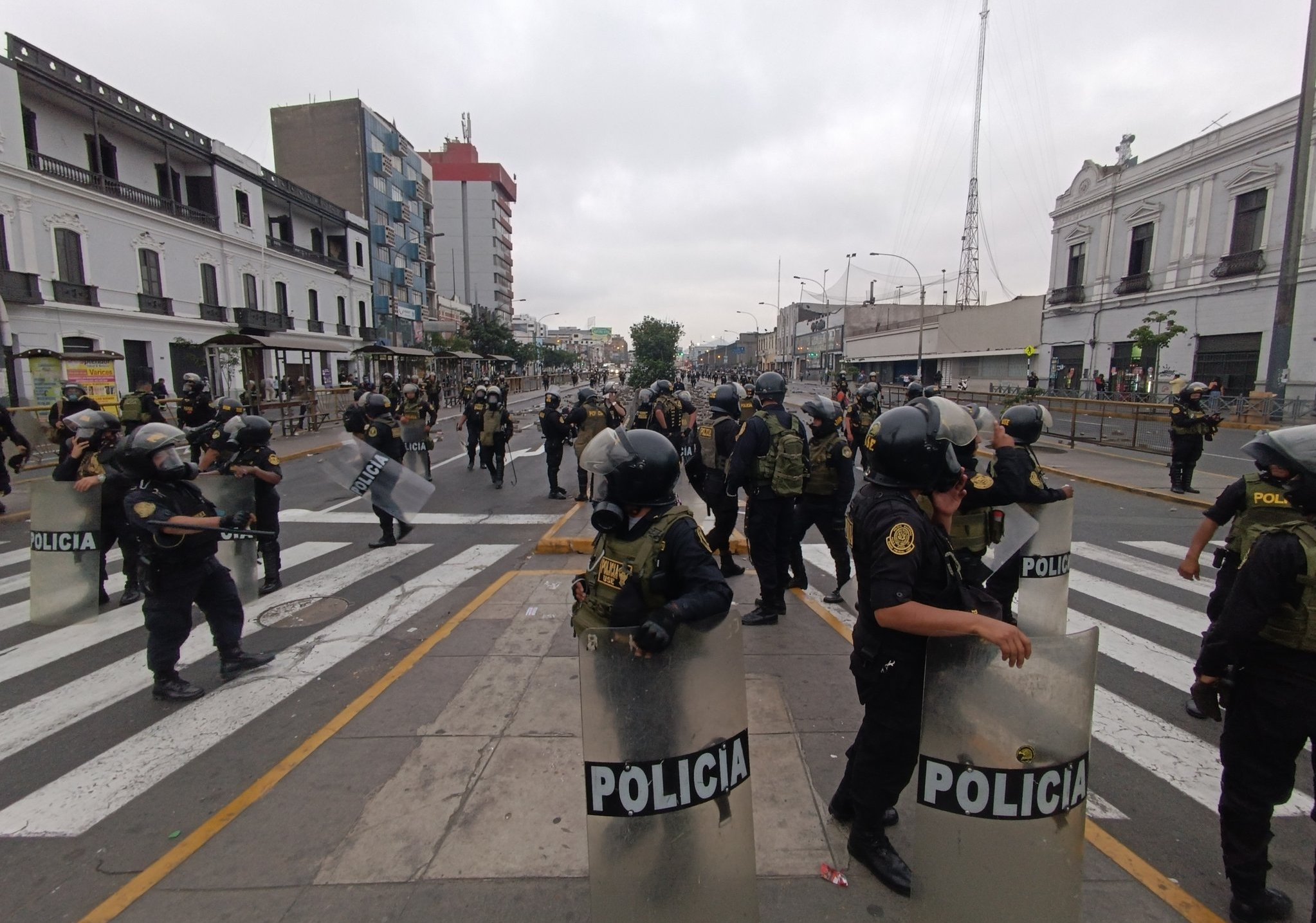
The national police force of Bolivia announced that they arrested 44 protesters after supporters of former president Evo Morales set up more than 20 roadblocks on highways across the country to prevent his arrest. The police accused protestors of crimes including attacks on transportation, usurpation of functions, armed robbery and terrorism. The interior ministry condemned the the protesters’ use of weapons including dynamite, rifles and shotguns, claiming that several officers have been injured. YPFB, the state-owned oil and gas company, stated that due to the highway blockades some regions of the country face a natural gas shortage. (Photo: HormigaInsurgente)

Palestine
Gaza

UN human rights chief: Gaza faces ‘darkest moment’

United Nations High Commissioner for Human Rights Volker Türk warned that “the darkest moment of the Gaza conflict is unfolding in the north of the Strip.” Calling for urgent action by the international community, Türk stated: “Unimaginably, the situation is getting worse by the day. The Israeli Government’s…practices in northern Gaza risk emptying the area of all Palestinians. We are facing what could amount to…crimes against humanity.” Türk asserted that under the Geneva Convention, member states have “an obligation to act when a serious violation of international humanitarian law has been committed.” (Photo: badwanart0/Pixabay via Jurist)

Greater Middle East
Iran protests

Podcast: neither Jewish State nor Islamic Republic

Israel’s long-awaited strikes on Iran targeted military and industrial installations in Tehran, Khuzestan and Ilam, with air-strikes also reported in the Syrian cities of Damascus and Homs. It is now Iran’s turn to retaliate in the escalatory tit-for-tat game, as the brink of regional and even world war looms ever closer. In Episode 249 of the CounterVortex podcast, Bill Weinberg advocates a neither/nor position that rejects the militaristic and reactionary regimes of both Zionism and political Islam, and looks to a secular order in the Middle East. Listen on SoundCloud or via Patreon. (Image: @iranprotest2019)

Europe
Gjader

Meloni maneuvers to save offshore migrant camp plan

Italy’s right-wing government, led by Prime Minister Giorgia Meloni, issued a decree aimed at bypassing judicial obstacles to a controversial deal with Albania to hold and process the claims of asylum-seekers intercepted at sea by Italian forces. The move came days after a special immigration court in Rome ruled that the first group of 12 migrants sent to the repurposed military camp at Gjader, Albania, must be returned to Italy. The court found that the migrants’ countries of origin—Egypt and Bangladesh—are “unsafe,” making their offshore detention illegal. Meloni’s decree asserts the executive alone has the power to make such determinations, setting the stage for a showdown between her government and the judiciary. (Photo: Melting Pot Europa)

Greater Middle East
Iran

Turkey strikes Syria, Iraq after Ankara attack

Turkey launched air-strikes on supposed Kurdistan Workers’ Party (PKK) targets in Syria’s Rojava autonomous enclave and Iraq’s Kurdistan region in retaliation for an attack on the headquarters of a defense contractor in Ankara. Five were killed and two attackers reported “neutralized” in the explosion and armed assault at the Turkish Aerospace Industries (TUSAS) facility in Ankara’s Kahramankazan district. No group has claimed responsibility for the attack, but Turkish authorities quickly blamed the PKK. Strikes were reported on the Rojava towns of Qamishli, Derik, Kobane, Tal Rifaat, and Manbij. Rojava’s autonomous authorities said that at least four civilians were killed, including a five-year-old child, and 15 people injured. (Image: Pixabay)

Mexico
Marcelo Pérez

Indigenous pastor assassinated in Chiapas

Father Marcelo Pérez, an indigenous Tzotzil Maya priest with the Diocese of San Cristóbal de las Casas in Mexico’s conflicted southern state of Chiapas, was assassinated immediately after celebrating Mass. He was returning to his car from the church at the barrio of Cuxtitali in the highland city of San Cristóbal when he was shot by gunmen on a motorcycle. Hundreds of mourners attended his funeral the following day in the village of his birth, San Andrés Larráinzar, chanting “Long live Father Marcelo, priest of the poor.” He had received threats for his outspoken opposition to the criminal organizations and paramilitary groups fueling violence in Chiapas. The murder was condemned in a statement by the Mexican Bishops’ Conference, which said the act “not only deprives the community of a dedicated pastor but also silences a prophetic voice that tirelessly fought for peace with truth and justice in the region of Chiapas.” (Credit: Diocese of San Cristóbal de las Casas via CNA)

Europe
poland border

Condemn Poland plan to suspend asylum rights

Over 40 human rights groups have warned Poland’s Prime Minister Donald Tusk against implementing his plan to temporarily suspend the right to claim asylum. Among the groups are Amnesty International, several asylum law organizations, and the Auschwitz-Birkenau Foundation. In an open letter, the organizations stressed that the fundamental right to asylum is binding on Poland under international law, as the country has ratified the Geneva Convention, and under EU law as provided by Article 18 of the Charter of Fundamental Rights. Tusk justified his move as necessary in light of Belarus’ mass transfers of migrants across the border, which he called an act of “hybrid warfare” to threaten Polish national security. (Photo: Visegrad24)

South Asia
Pashtun Tahaffuz Movement

Pakistan: Pashtun rights movement faces repression

The government of Pakistan has placed a ban on the activities of the Pashtun Tahaffuz Movement, a grassroots organization that advocates for the rights of the Pashtun minority, which has been subjected to decades of abuse. The government officially listed the PTM as a “proscribed organization,” essentially labelling it a terrorist group. The order came days before the PTM was slated to hold a large demonstration. Amnesty International described the action as “part of a systematic and relentless clampdown by the Pakistani authorities on peaceful protests and assemblies by dissenting groups.” (Photo: Osama Ahmad/TNH)