Europe
tolstoy

Podcast: Tolstoy would shit

In Episode 132 of the CounterVortex podcast, Bill Weinberg notes that deputy Duma speaker Pyotr Tolstoy, one of the most bellicose supporters of Putin’s Ukraine war, is a direct descendent of Leo Tolstoy—and recently invoked his great-great-grandfather’s “slaughter” of British and French troops during the Crimean War as a warning to the West. This is, of course, an utterly perverse irony given that the literary giant’s anarcho-pacifist beliefs were antithetical to everything that his descendant Pyotr stands for. Indeed, it was Leo Tolstoy’s experiences in the Crimean War that turned him into a committed pacifist. His final novel, Hadji Murat, vivdly depicts the brutality of Russia’s counterinsurgency campaign in Chechnya in the 1850s—a history that repeated itself in Chechnya in the 1990s. This is bitterly recalledby the Chechen volunteers now fighting for Ukraine, where this history is repeating itself yet again. Listen on SoundCloud or via Patreon. (Image adopted from Europeana Foundation)
North America
russian alaska

Russia: irredentist claims on Alaska

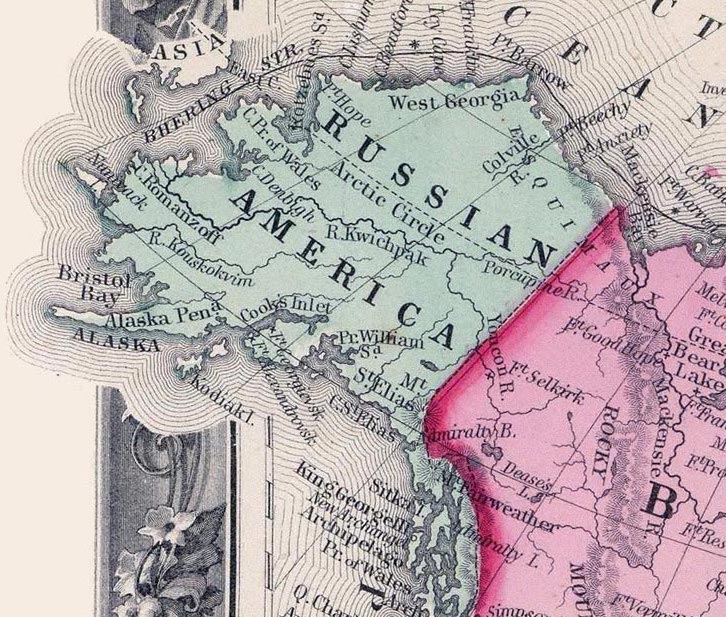
The speaker of Russia’s lower house of parliament threatened to “claim back” Alaska if the United States freezes or seizes Russian assets in retaliation for its invasion of Ukraine. “Let America always remember: there’s a piece of territory, Alaska,” Vyacheslav Volodin said at the last session of the State Duma before summer break. “When they try to manage our resources abroad, let them think before they act that we, too, have something to take back,” Volodin said. He noted that deputy speaker Pyotr Tolstoy had recently proposed holding a referendum in Alaska on joining Russia. The day after Volodin’s comments, billboards proclaiming “Alaska Is Ours!” appeared in the Siberian city of Krasnoyarsk, apparently placed by a local “patriot.” (Map via Wikipedia)

Europe
Ukraine

Podcast: against pseudo-left disinformation on Ukraine

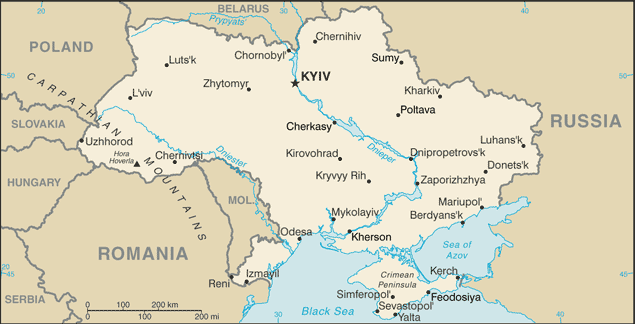
In Episode 131 of the CounterVortex podcast, Bill Weinberg calls out the ironically named Fairness & Accuracy in Reporting (FAIR) for openly spreading Russian disinformation. FAIR serially portrays the 2014 Maidan Revolution as a US-instrumented, Nazi-tainted, unconstitutional “coup.” FAIR commentators Luca Goldmansour, Gregory Shupak and Bryce Greene are all guilty of this. They do not bother to consult voices of Ukrainian civil society—academics, media watchdogs and human rights groups—that refute this notion. Glomming onto the notorious Nuland phone call to dismiss a grassroots pro-democracy uprising as a Washington “regime change” intrigue reveals chauvinistic contempt for the Ukrainians. And hyping the supposed “Nazi” threat in Ukraine (while ignoring the Nazi-nostalgist and neo-fascist elements on the Russian side) abets Putin’s ultra-cynical propaganda stratagem of fascist pseudo-anti-fascism. Rather than calling out Fox News for its propaganda service to Putin, FAIR instead joins them. How did a supposed progressive media watchdog become a de facto arm of Kremlin war propaganda? Listen on SoundCloud or via Patreon. (Map: PCL)

Planet Watch
#ariseghana

Ghana to Peru: more ripples from Ukraine storm

Governments around the world are scrambling to shore up economies hard hit by rising oil and wheat prices as a resut of the Ukraine war. Ghana has opened talks with the International Monetary Fund (IMF) for emergency relief after angry protesters flooded the streets of the capital Accra, clashing with police. Protests were called under the slogan “Arise Ghana” to pressure President Nana Akufo-Ad to address a dramatic spike in the cost of food and fuel. Meanwhile, the Central Reserve Bank of Peru is to raise its key interest rate in a bid to quell inflation, after freight shipping was briefly paralyzed across the country. The truckers’ union, the National Council of Terrestrial Transport, announced an “indefinite” strike, although it was suspended following a pledge by the government of President Pedro Castillo to bring soaring fuel prices under control. (Image via Twitter)

The Amazon
Trujillo Arana

Indigenous leader slain in Venezuelan Amazon

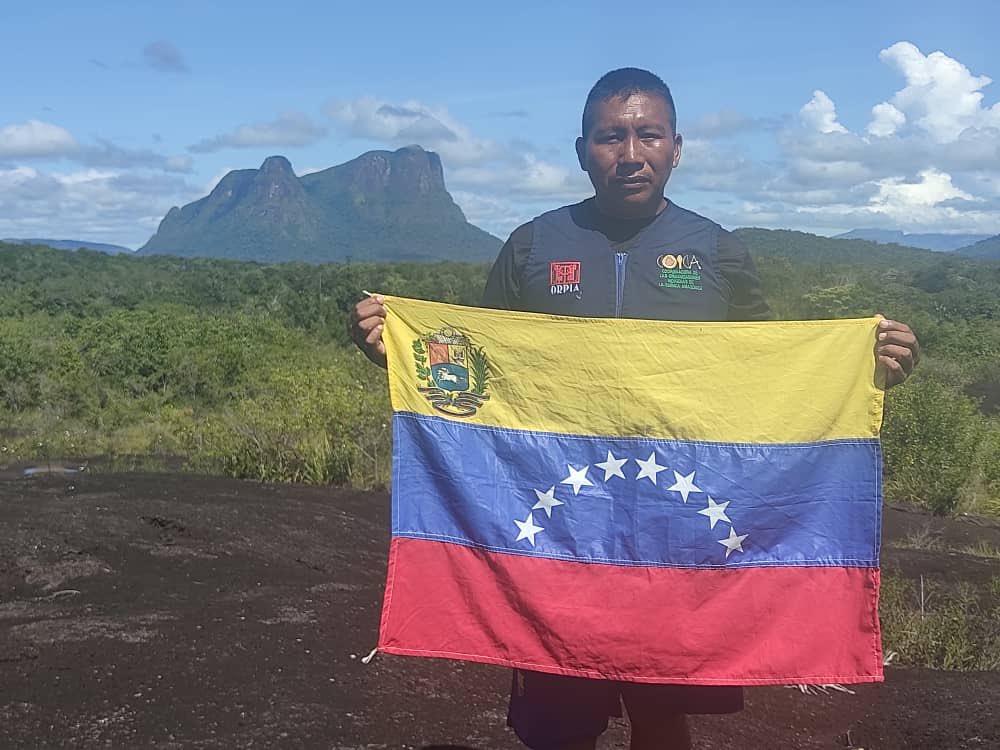
A Venezuelan indigenous leader who fought against incursions by Colombian armed groups and outlaw gold miners into the country’s southern rainforest was shot dead in Puerto Ayacucho municipality, capital of Amazonas state. Virgilio Trujillo Arana, a member of the Uwottujja people, was the leading force in creation of the Sipapo Territorial Guards in Autana municipality, Amazonas. The Territorial Guard patrols were launched with support from the Amazonas Indigenous Peoples’ Regional Organization (ORPIA). (Photo: SOS Orinoco)

Inner Asia
Karakalpakstan

Karakalpakstan retains right to secede after unrest

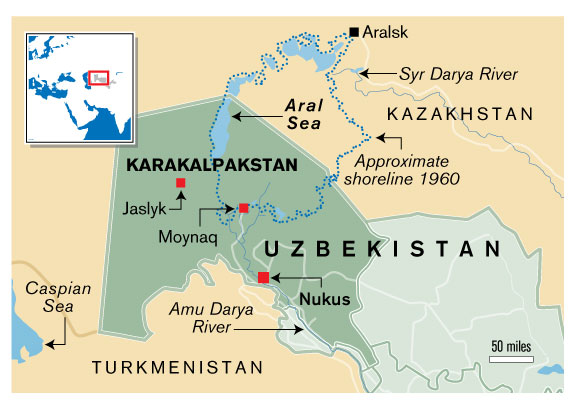
Following a day of angry protests that left 18 dead and hundreds wounded, Uzbekistan’s President Shavkat Mirziyoyev announced that he will not proceed with a planned constitutional change to revoke the right of the autonomous Republic of Karakalpakstan, in the country’s remote northeast, to secede via referendum. The announcement came as Mirziyoyev made an emergency visit to Nukus, the riot-stricken regional capital of Karakalpakstan. He also imposed a month-long state of emergency in the region, which has been ecologically devastated by the shrinking of the Aral Sea. (Map: Wikipedia)

Europe
Makhno

Ukrainian self-determination: Bandera or Makhno? II

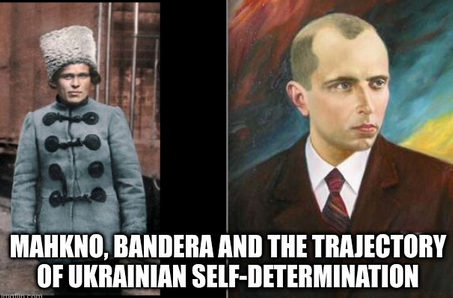
In Episode 130 of the CounterVortex podcast, Bill Weinberg continues his comparison of the two diametrically opposed exponents of Ukrainian armed resistance to Russian rule: the World War II-era right-wing nationalist Stepan Bandera and the World War I-era revolutionary anarchist Nestor Makhno. Contemporary left commentary in the West echoes Russian propaganda in portraying Bandera simply as a Nazi collaborator, while many contemporary anarchists (at least) glorify Makhno as a visionary of agrarian utopia. Much is left out of both narratives. Bandera was quickly betrayed by the Nazis and slapped in a concentration camp after he refused to renounce his declaration of Ukrainian independence. And while historians have had much to say about anti-Semitic pogroms by all factions in the multi-sided 1917-21 civil war in Ukraine, it is only recent scholarship that has brought to light atrocities by Makhno’s forces against Mennonite agricultural colonies. Listen on SoundCloud or via Patreon. (Graphic: CounterVortex with images via Marxists Internet Archive, Ukrainian Youth Union)

mariupol ruins

RUSSIAN GENOCIDE OF THE UKRAINIAN NATION

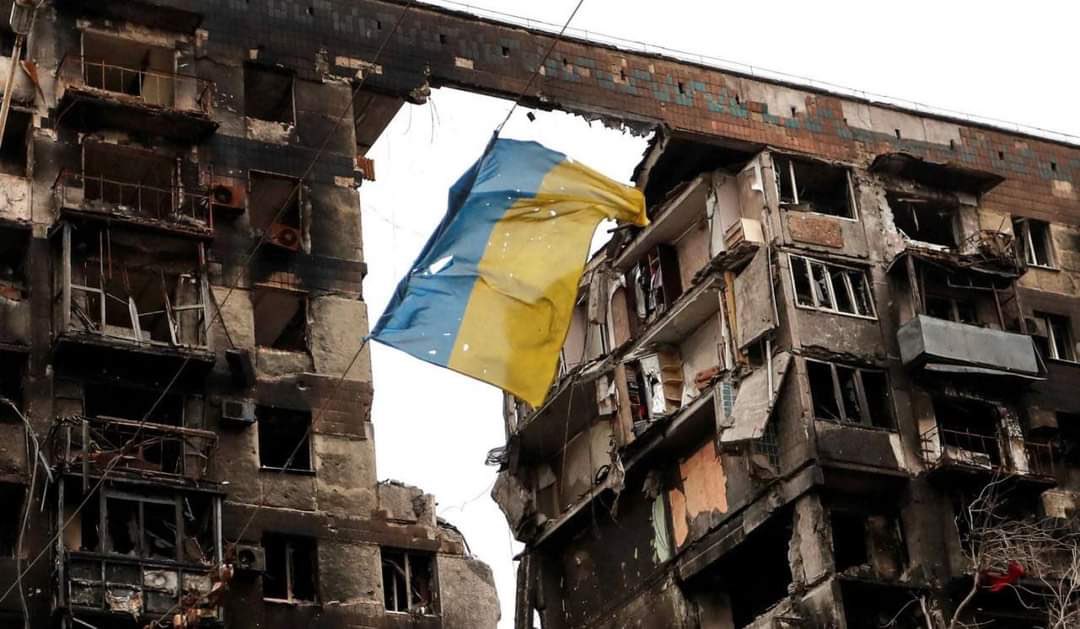
Russia’s unprovoked aggression against Ukraine has sparked a strong international reaction, with most states referring to the actions of the Russian army as war crimes. A number of parliaments and heads of state have recognized that yet another international crime—genocide—is being committed by the occupation’s troops. Poland’s parliament, the Sejm, was the first to pass a resolution in March, strongly condemning “acts of genocide…committed on the territory of sovereign Ukraine by the Russian Federation armed forces, together with its allies, at the behest of military commanders being under the direct authority of President Vladimir Putin.” Since then, especially after the infamous Bucha massacre, other parliaments have joined Poland in condemning Russia’s actions as genocide, including those of Lithuania, Estonia, Latvia, Canada, Czechia and Ireland. However, the International Criminal Court investigation has been slow to examine charges of genocide, and any binding action by the UN against Russia is effectively blocked by its veto on the Security Council. The dilemma is explored by Ukrainian law student Nastya Moyseyenko in a commentary for Jurist.

Continue ReadingRUSSIAN GENOCIDE OF THE UKRAINIAN NATION 
Europe
antitank

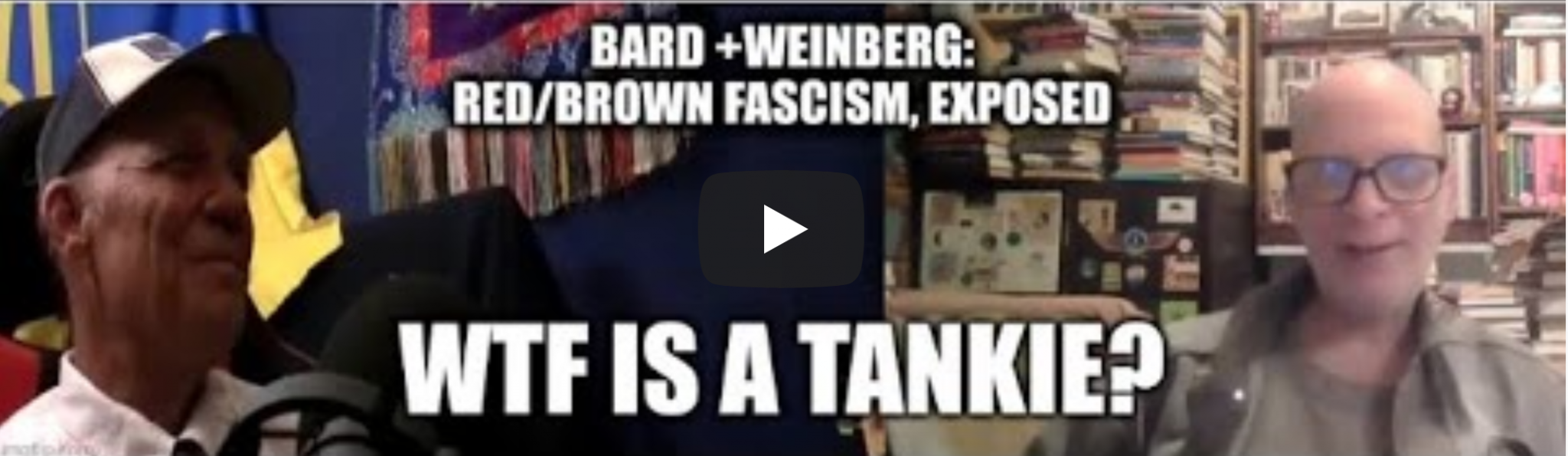
Bill Weinberg slams ‘tankie’ pseudo-left on YouTube

In a series of brief interviews with vlogger and activist songster Geof Bard, CounterVortexproducer Bill Weinberg dissects the sinister “tankie” phenomenon on the contemporary Western “left,” which paradoxically supports Russian imperialism in the name of a misguided “anti-imperialism.” This absurd double standard is enabled by the so-called “Chomsky Rule,” which holds that we are only permitted to protest the crimes of US imperialism—and thereby renders the crimes of rival imperialisms invisible to the activist-left milieu. The pseudo-left betrayal of Ukraine to imperialist aggression actually undermines our moral authority to oppose the crimes of the US and its client states in places like Gaza and Yemen.

The Andes
castillo

Peru: populist president prevails amid polarization

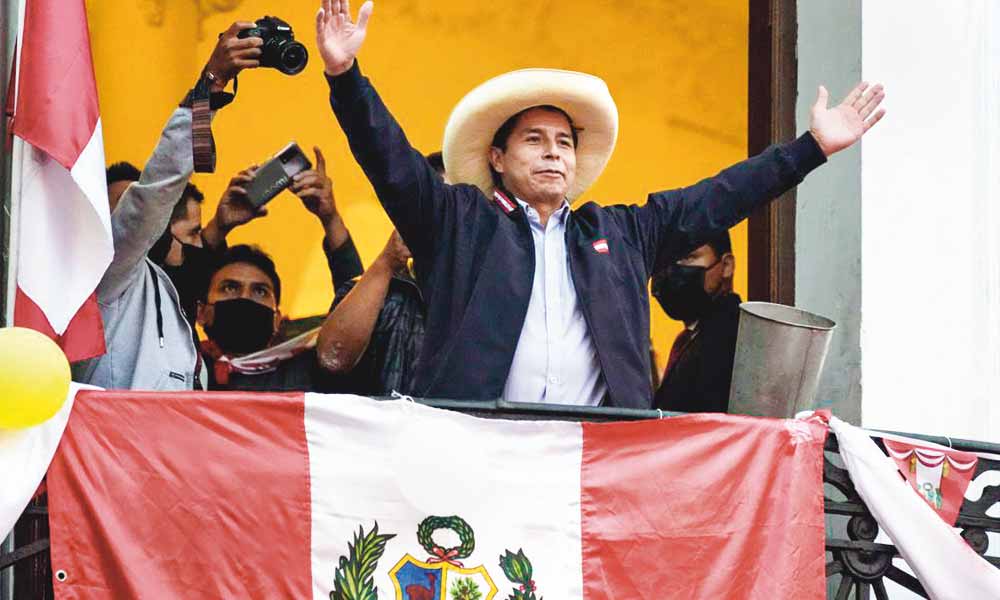
Proclaiming that “change is coming,” Pedro Castillo, a left-populist former school teacher, was sworn in as Peru’s new president on the bicentennial of the country’s independence. He pledged to redraft the constitution, raise taxes on mines, and form a “Binational Cabinet” with neighboring left-led Bolivia. But Castillo assumes office amid a profound political crisis and growing polarization—as well as the highest COVID-19 death rate in the world. His far-right opponent Keiko Fujimori, who challenged his victory with baseless claims of voter-fraud, has a formidable bloc in Congress and promises to obstruct his agenda. (Photo: Diario Uno)

Afghanistan
afghanistan

Podcast: Afghanistan and the politics of withdrawal

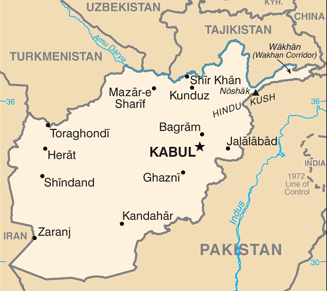
In Episode 82 of the CounterVortex podcast, Bill Weinberg calls out the Orwellian pronouncements from media and politicians that Biden is “ending the war” in Afghanistan—as the war is actually escalating. This is the same imperial narcissism we heard with the much-hyped US “withdrawal” from Afghanistan in 2014, and the US “withdrawal” from Iraq in 2011. In both cases, the war went on—and actually got worse, with the emergence of ISIS and the genocide of the Yazidis. Weinberg recalls with grim vindication that he similarly called out the glib optimism about a  withdrawal from Iraq in CounterVortex commentaries during the occupation. Meanwhile, Hazara women—who face the threat of genocide if the Taliban re-take power—are arming to resist the Taliban advance. The critical task now is to loan what solidarity and visibility we can to such efforts—not to engage in hubristic crowing about the “end of the war.” Listen on SoundCloud or via Patreon. (Map: Perry-Castañeda Library)

Syria
Raqqa

Survivors struggle four years after battle of Raqqa

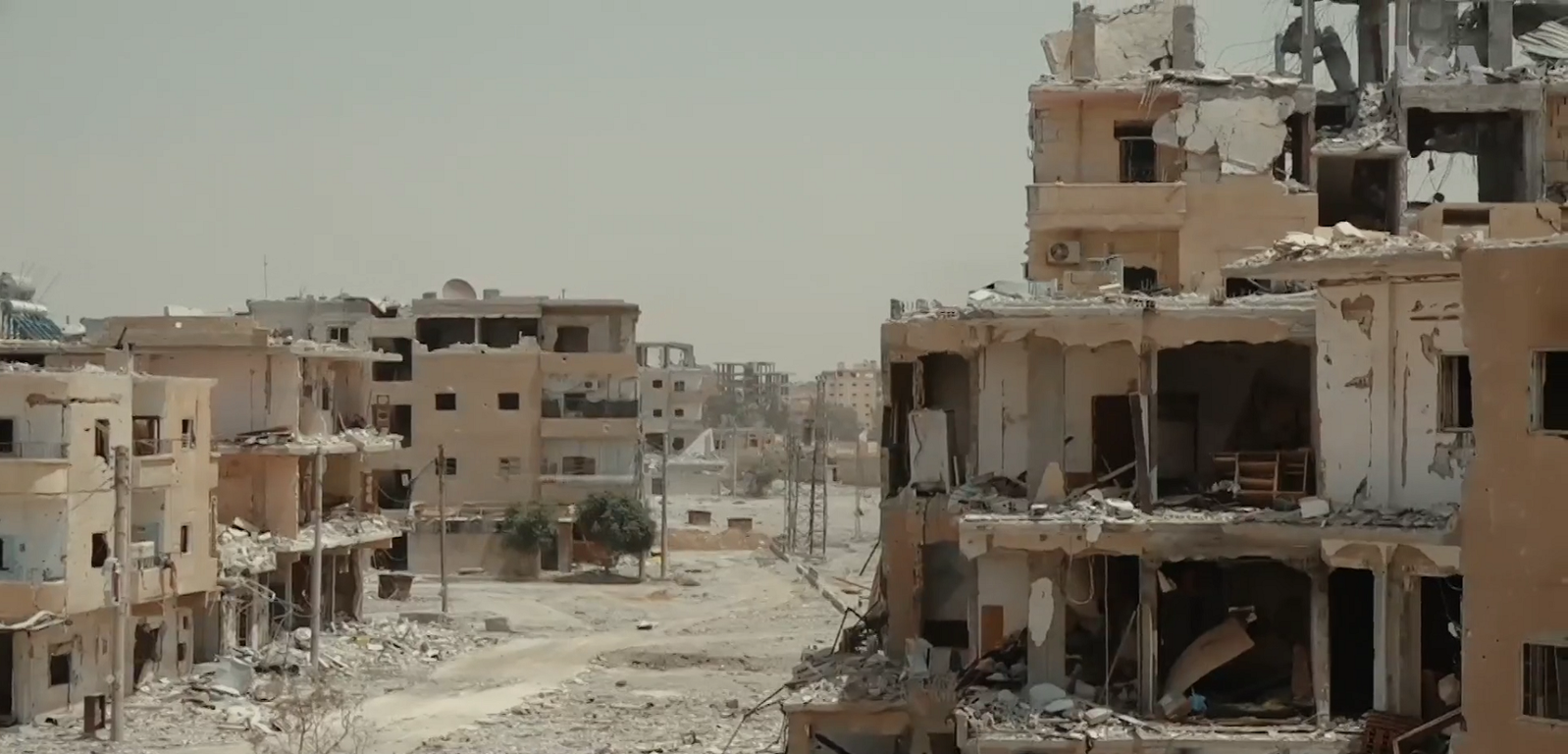
Children in Raqqa, northeast Syria, are still living among ruins, with limited water, electricity, and access to education, four years after the city was taken from ISIS, according to a new report by Save the Children. Thousands of people have returned to Raqqa since the battle for the city ended in 2017. But levels of rebuilding and rehabilitation of housing remain low, with children living in constant fear of their homes collapsing on top of them. Research estimates that 36% of the city’s buildings remain entirely destroyed. At the peak of the bombing campaign, Raqqa faced 150 air-strikes a day. (Photo: Mahmoud Bali/VOA via Wikimedia)