Afghanistan
afghanistan

Afghanistan: Taliban kill, ‘disappear’ ex-officials

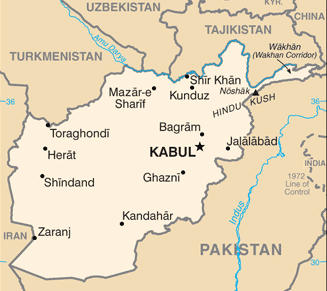
Taliban forces in Afghanistan have summarily executed or forcibly disappeared more than 100 former police and intelligence officers in just four provinces since taking over the country in August, despite a proclaimed amnesty, Human Rights Watch charges. The report, ‘No Forgiveness for People Like You’—Executions and Enforced Disappearances in Afghanistan under the Taliban, documents the killing or disappearance of 47 former members of the Afghan National Security Forces (ANSF)—military personnel, police, intelligence service members, and militia—who had surrendered or were apprehended by Taliban forces. HRW gathered credible information on more than 100 killings from Ghazni, Helmand, Kandahar, and Kunduz provinces alone. (Map: Perry-Castañeda Library)

Planet Watch
countervortex

Podcast: the countervortex of global resistance II

In Episode 100 of the CounterVortex podcast, Bill Weinberg discusses recent uprisings in two disparate parts of the world—the South Pacific archipelago nation of the Solomon Islands and two of the states that have emerged from the former Yugoslavia. In both cases, people who were pissed off for damn good reason took to the streets to oppose foreign capital, and corrupt authoritarian leaders who do its bidding. But in the Solomon Islands, popular rage was deflected into campism and ethnic scapegoating, while in Serbia and Kosova the people on the ground actually overcame entrenched and bitter ethnic divisions to make common cause against common oppressors. The contrast holds lessons for global protest movements from Hong Kong to New York City. Listen on SoundCloud or via Patreon.

South Asia
North East India

India: Northeast marks 2021 without journo-murder

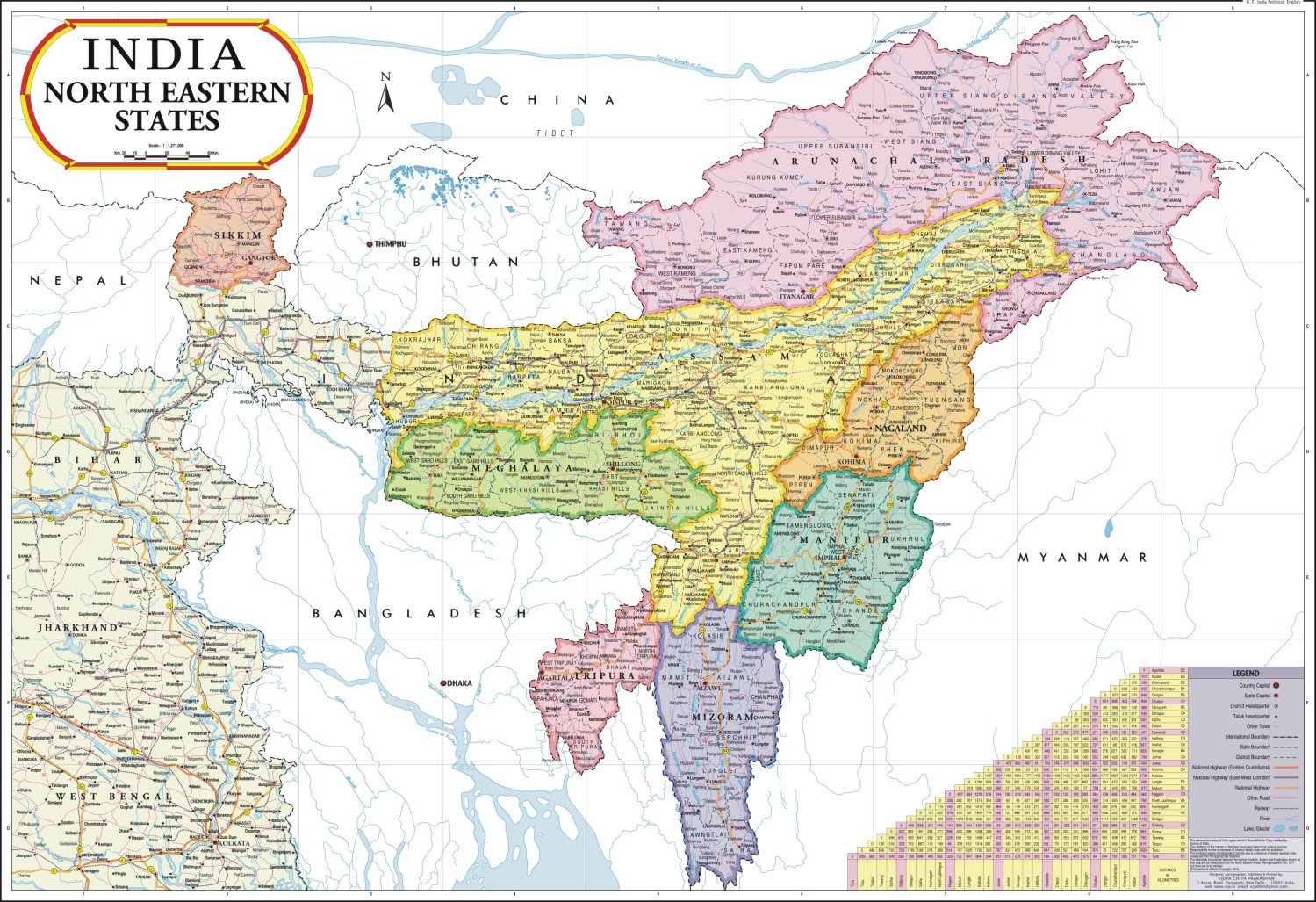
If nothing sad happens in the next weeks, India’s restive Northeastern region will complete another year without any incident of journo-murder, maintaining a hopeful trend. The region, comprising eight states with multiple armed insurgencies, witnessed the slaying of journalists for the last time in 2017. However, the country as a whole continues to lose scribes to targeted killings. To date, the nation in 2021 has seen the murder of five journalists, while acclaimed Indian photojournalist Danish Siddiqui was killed in Afghanistan. India lost 15 scribes to assailants in 2020, one of the worst records on Earth. (Map via TFI Post)

The Amazon
Guiana shield

French troops hunt outlaw miners in Guiana

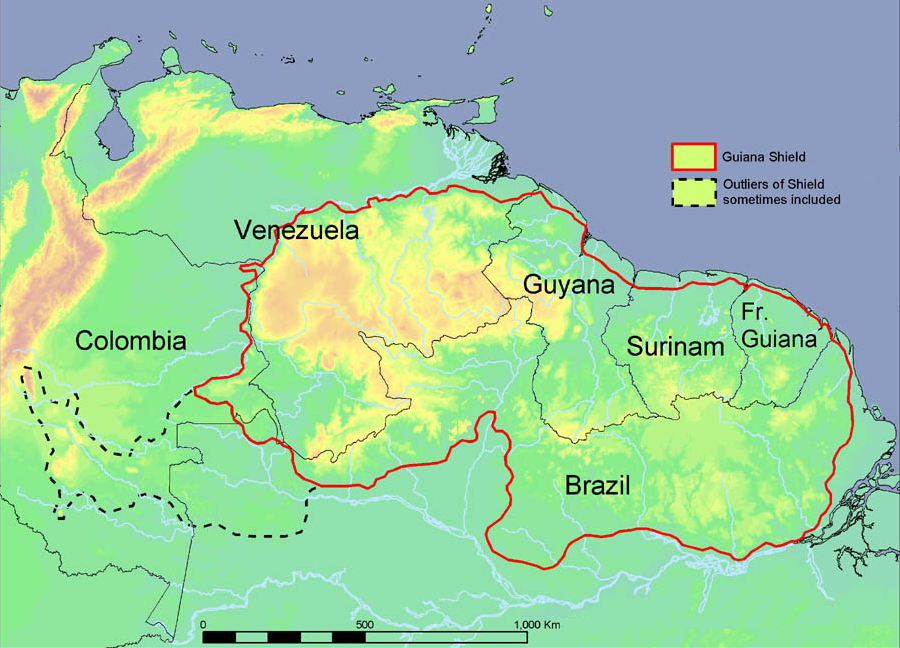
France has dispatched hundreds of army troops to the overseas territory of French Guiana, to hunt down outlaw gold miners who have destroyed thousands of hectares of rainforest along the Maroni River. But apprehending the garimpeiros is nearly impossible; they abandon their camps and dredges and melt into the jungle as the troops approach. Some 9,000 illegal miners are believed to be operating at around 150 sites across the territory—up from little more than 100 a decade ago. The garimpeiros, however, are the smallest links in a chain, paid a pittance—while the dealers they sell the gold to race up and down the river in speedboats. “We’re only catching the little guys,” admitted French Guiana’s public prosecutor Samuel Finielz. (Map of Guiana Shield: WikimediaCommons)

Europe
Belgrade protest

‘Environmental uprising’ in Serbia —and Kosova

In what local media are calling an “environmental uprising,” protesters blocked roads and occupied public squares in Belgrade and other towns across Serbia to oppose plans for a lithium mine at Loznica, on the Drina River. Transnational Rio Tinto has been buying up land in the area, in anticipation of final approval of the project. But concerns over a toxic threat to local waters have sparked widespread outrage over the plan. Meanwhile, across the border in Kosova, environmentalists claimed a victory as the country’s high court suspended the permit for the proposed Brezovica hydro-power plant on the Lepenc River. Local Albanians and Serbs alike came together to oppose the project, which would flood agricultural lands while depriving water to downstream communities (Photo: Masina)

Oceania
solomon islands

Solomon Islands uprising in the New Cold War

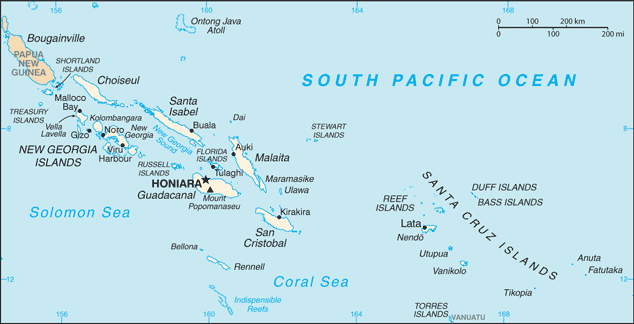
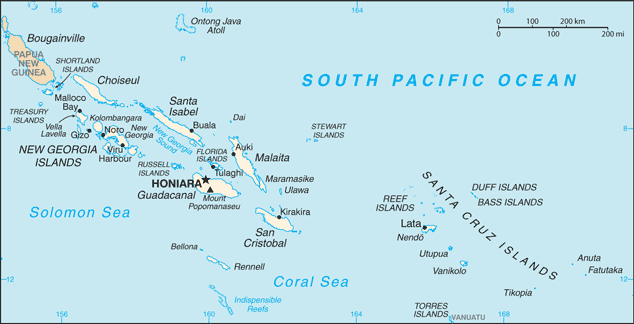
Australia has dispatched some 100 police and military troops to the Solomon Islands following days of rioting and looting in the capital Honiara. Calling for Prime Minister Manasseh Sogavare to resign, protesters set the parliament building ablaze, and torched and looted shops, causing millions of dollars in damages. The looting centered on the city’s Chinatown, where three charred bodies have been found amid the ruins. Tensions between Guadalcanal and Malaita islanders have been enflamed by massive Chinese capital flows into the former island, while the latter remains comparatively impoverished. The two provincial governments are bitterly at odds over Sogavare’s recent decision to switch diplomatic recognition from Taiwan to the People’s Republic. (Map: University of Texas Libraries)

The Amazon
Peter Gorman

Podcast: entheogenic adventures with Peter Gorman

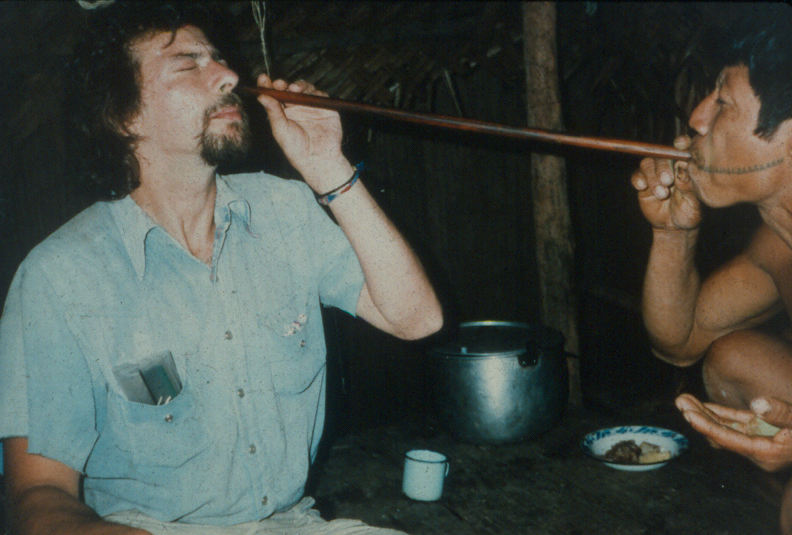
In Episode 99 of the CounterVortex podcast, Bill Weinberg interviews an old friend and colleague—legendary journalist, naturalist and adventurer Peter Gorman, who reflects on his long years collecting (and personally sampling) psychoactive and shamanic plants, from the Peruvian Amazon, to the Rif Mountains of Morocco, to the Palani Hills of southern India. Now approaching 71, Peter is about to head back down to the Amazon to revisit the remote Matsés indigenous people, who he first contacted in 1985. His latest collection of first-hand accounts is Magic Mushrooms in India & Other Fantastic Tales. Listen on SoundCloud or via Patreon. (Photo courtesy of Peter Gorman)

Central America
Mélidas

Feminist, humanitarian groups raided in El Salvador

Agents of El Salvador’s Fiscalía, backed up by police troops, raided seven non-governmental organizations, ostensibly on the grounds of investigating “corruption.” The Salvadoran popular movement describes the raids as the latest in an escalating campaign of political persecution by President Nayib Bukele against voices critical of the regime. Among the groups targeted were Las Mélidas, a long-standing women’s rights organization, and PRO-VIDA, a humanitarian association that works in areas of healthcare, ecology, and strengthening of democratic institutions. In a statement following the raids, a representative of Las Mélidas condemned them as “unjustified” and meant to “criminalize” the group’s initiatives, which include literacy, violence prevention, sexual health campaigns, and other programs serving the country’s most marginalized women. (Photo via Twitter)

Africa
khartoum

Sudan: civil resistance rejects ‘power-sharing’ deal

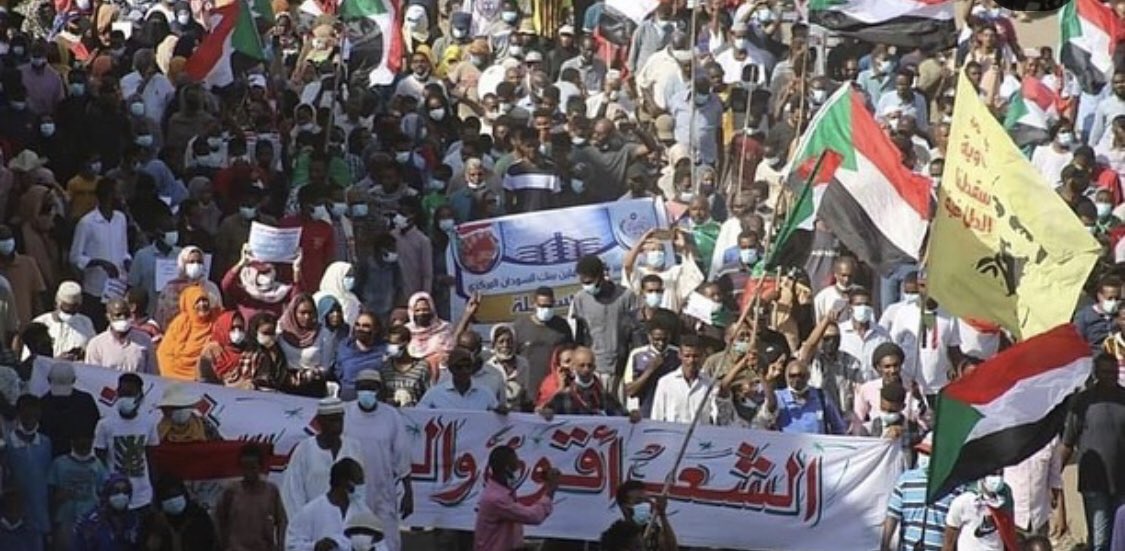
Sudan’s ousted Prime Minister Abdalla Hamdok, who had been placed under house arrest with last month’s military coup, appeared on TV to sign a new power-sharing agreement with putsch leader Gen. Abdel Fattah al-Burhan. But the deal officially restoring Hamdok as prime minister was immediately rejected by the pro-democracy movement in the streets. Just after the announcement, security forces in Khartoum fired tear-gas at protesters marching toward the presidential palace to demand the military’s complete withdrawal from politics. “The future of the country will be determined by the young people on the ground,” said Siddiq Abu-Fawwaz of the Forces for Freedom & Change coalition. (Photo via Twitter)

North America
standwithmashpee

Podcast: Thanksgiving and Atonement

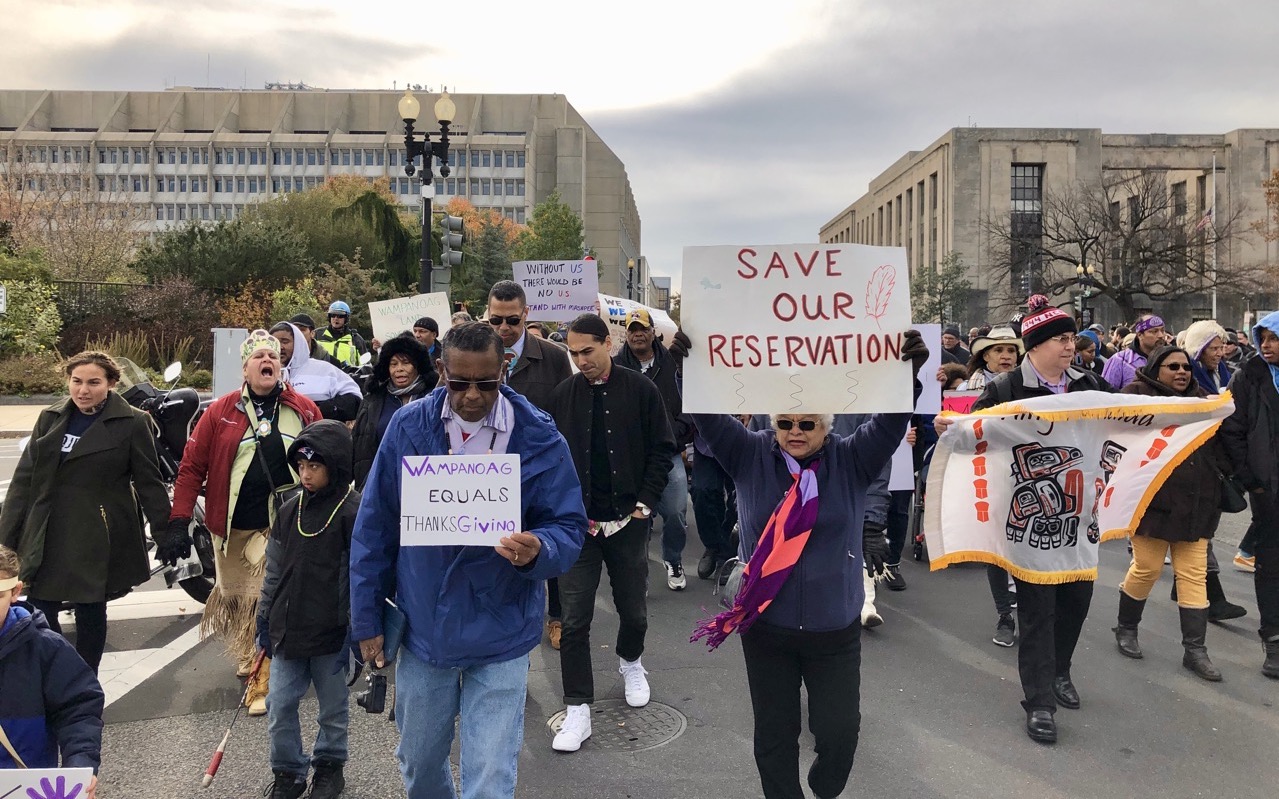
In Episode 98 of the CounterVortex podcast, Bill Weinberg discusses the book Thanksgiving: The Holiday at the Heart of the American Experience by Melanie Kirkpatrick. A work of Thanksgiving boosterism, it nonetheless recognizes the dissidents who reject the holiday as a celebration and sanitization of genocide, and even call for replacing it with a day of atonement. The idealized portrayal the first Thanksgiving in 1621 belies the bloody realities of the Pequot War and King Philip’s War that shortly followed. Perversely, the Wampanoag indigenous people, who shared in that first Thanksgiving and were later defeated in King Philip’s War, were the target of a new attempt at “termination” by the Trump administration, which sought to disestablish their reservation at Mashpee, on Cape Cod just 30 miles south of Plymouth Rock. Listen on SoundCloud or via Patreon. (Photo: Indianz.com)

The Caribbean
Osorbo

Imprisoned Cuban rapper on hunger strike

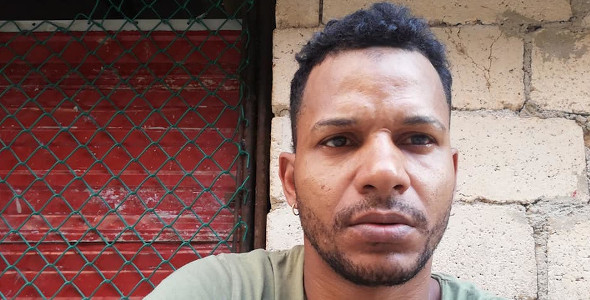
Supporters of imprisoned Cuban rap artist Maykel Castillo, better known by his stage name “El Osorbo,” warn that his life is in danger one week into a hunger strike, and that he has been removed to a “punishment cell” where he is being held incommunicado. Castillo is a leader of the San Isidro Movement, a collective of Cuban dissident artists and intellectuals, and co-author of the viral song “Patria y Vida,” which became an anthem of the protest wave across the island in July. He has been repeatedly arrested since 2015, including for protesting the controversial Decree 349, which places restrictions on artistic expression. He has been held at the maximum-security Pinar del Río prison since his May arrest for the vague crimes of “resistance” and “contempt.” He launched his total hunger and thirst strike in protest of his own detention and the crackdown on freedom of expression in Cuba. (Image: FreeMuse)

Planet Watch
spacedebris

Dangerous debris from Russian space kablooie

Russia destroyed one of its own satellites with a ground-based missile, in a test of its PL-19 Nudol DA-ASAT (direct-ascent anti-satellite) system. The blast created thousands of pieces of debris that have spread out into Earth orbit. The US says it has identified more than 1,500 trackable pieces of debris from the strike, and many thousands of smaller ones. That same day, the Russia’s RosCosmos space agency reported that the astronauts aboard the International Space Station had to shelter in place due to a cloud of debris passing by the station every 90 minutes, the time it takes for the ISS to orbit the Earth. It was unclear if the debris threatening the space station came from Russia’s ASAT test. But Washington charges that the new debris field poses a danger to the space station. (Image: MIT News)