Europe

Podcast: Toward Lakota-Tatar solidarity

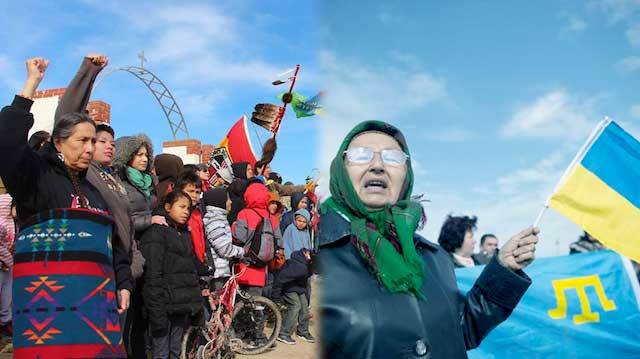
In Episode 17 of the CounterVortex podcast, Bill Weinberg discusses growing repression against the Tatar people of the Crimea, and the abrogation of their autonomous government by the Russian authorities since Moscow's illegal annexation of the peninsula. This is a clear parallel to violation of the territorial rights of the Lakota people in the United States through construction of the Dakota Access Pipeline, and the legal persecution of indigenous leaders who stood against it. The parallel is even clearer in the cases of the Evenks and Telengit, indigenous peoples of Siberia, resisting Russian construction of pipelines through their traditional lands. Yet the US State Department's Radio Free Europe aggressively covers the Tatar struggle, while Kremlin propaganda organ Russia Today (RT) aggressively covered the Dakota Access protests. Indigenous struggles are exploited in the propaganda game played by the rival superpowers. It is imperative that indigenous peoples and their allies overcome the divide-and-rule game and build solidarity across borders and influence spheres. Listen on SoundCloud, and support our podcast via Patreon.

Planet Watch

Canada: court halts Trans Mountain pipeline plan

Canada’s Federal Court of Appeal overturned the government’s approval of the Trans Mountain pipeline expansion. A number of groups challenged the approval, including several First Nations and two municipalities, asserting that the indigenous communities that would be impacted by the expansion were not adequately consulted on the project. Following the Federal Court’s decision, Alberta Premier Rachel Notley said she is pulling her province out of Canada’s national climate change plan until construction resumes. (Photo: Robzor)

Syria

Syria: did Kurdish militia fire on protesters?

A disturbing report from the Assyrian Policy Institute provides details on an incident in the northern Syrian town of Qamishli in which Kurdish militia fighters supposedly opened fire during a protest by local Assyrian Christians. The incident began when militia forces attempted to carry out an order by Rojava regional authorities to close Assyrian parochial schools in the town following their refusal to accept a new curriculum that school administrators said emphasized Kurdish nationalism. It ended when militiamen fired in the air to disperse the protesters who gathered at the scene. (Image: Assyrian Policy Institute)

Syria

Russian naval build-up ahead of Idlib offensive

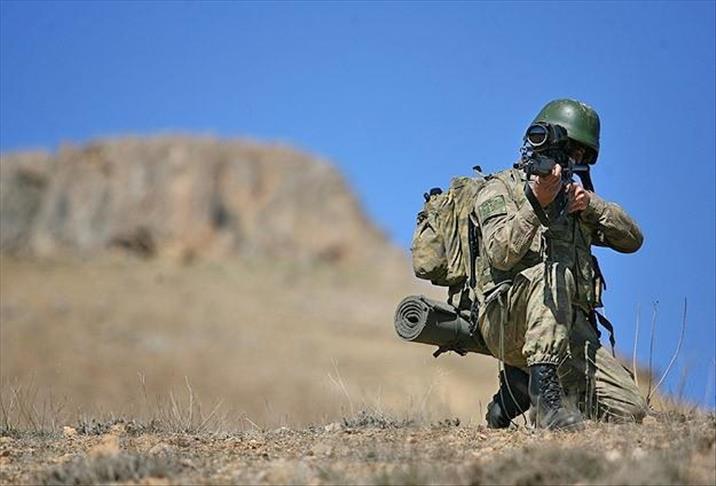
The Russian Ministry of Defense released a statement explaining its unprecedented build-up of naval force in the Mediterranean as part of a week-long exercise would begin on 1 September. It said the exercise would involve 26 warships and naval vessels, including two submarines, with 34 aircraft, including missile-armed long-range bombers. But it is obvious that this build-up is timed to coincide (at least) with the planned Assad regime offensive on Idlib, the last Syrian province that remains under opposition control. Russia will certainly be massively backing the regime offensive, which the UN warns could spark a humanitarian catastrophe. With Turkey closing its borders to new refugees, it is unclear that civilians have any place left to flee. Many are already living in camps in Idlib under desperate conditions, with two million in need of humanitarian aid. (Photo: Syria News)

Palestine

US to reject Palestinian right of return

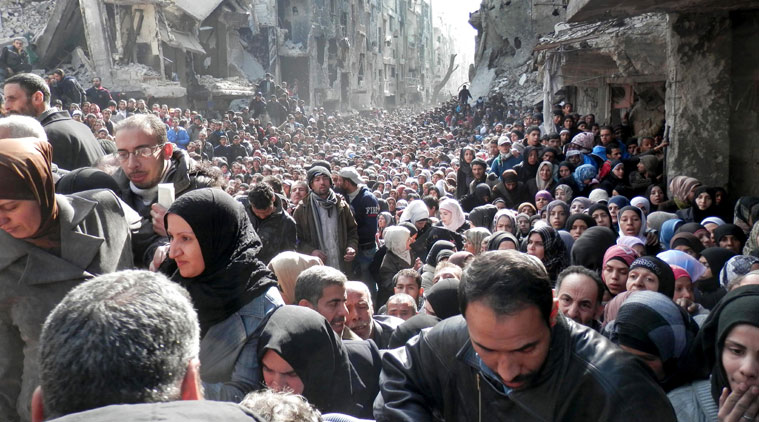
The Trump administration is to announce a suspension of funding to the United Nations Relief and Work Agency for Palestinian refugees (UNRWA) and rejection of the right of return for Palestinian refugees. According to Hebrew-language news outlets, the US administration is expected to announce its new policy early September, recognizing the existence of only half a million Palestinian refugees, out of the total of 5.3 million estimated by UNRWA. The administration intends to form a plan that rejects the United Nations designation under which millions of descendants of the original refugees are also considered refugees. Sources reported that the administration's new policy would "essentially cancel the right of return." (Photo of war-torn Yarmouk refugee camp in Syria via PTI)

Syria

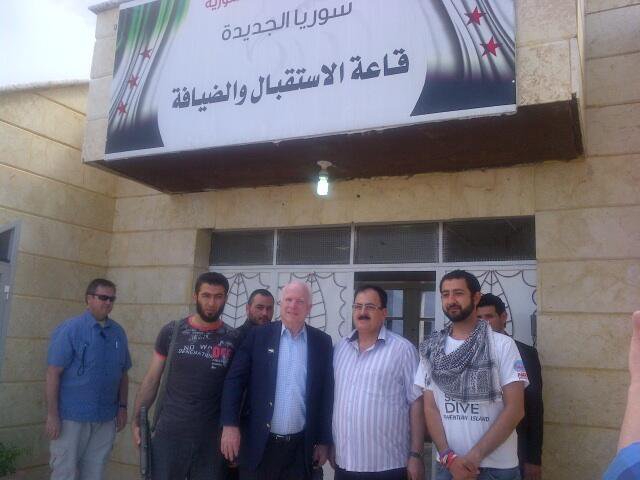
Did John McCain meet with jihadists in Syria?

Upon his death, many are reviving the discredited claim that John McCain met with ISIS on his Syria trip in 2013. But some are settling for the less ambitious, and perhaps plausible, claim that he met with jihadists who were implicated in atrocities. Ben Norton tweets: “John McCain was a staunch supporter of the CIA-backed, al-Qaeda-linked Salafi extremist opposition in Syria. In fact the late senator posed in a photo with a rebel who was involved in kidnapping 11 Lebanese Shia civilians.” But Norton is repeating as “fact” what are actually unproven claims—while he still equivocates about “alleged” chemical attacks by the Assad regime. It’s a bitter irony. McCain participated in war crimes in Vietnam. Two generations later, those who gloat at his death are covering up for equivalent war crimes by Assad and his allies. It fell to McCain, who was unapologetic about his Vietnam role, to try to drum up some support for the resistance in Syria. (Photo: John McCain Twitter feed)

North America

Japanese-Peruvian veteran of US concentration camps dies waiting for justice

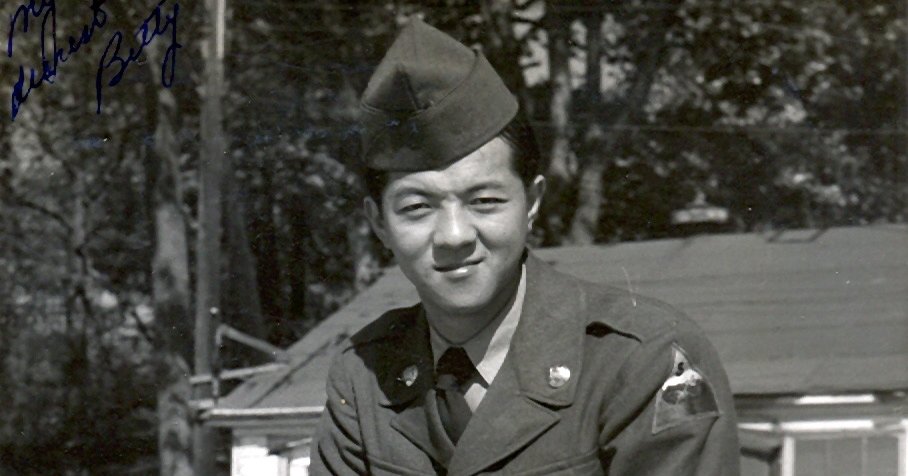
Isamu (Art) Shibayama, a rights advocate for Latin Americans of Japanese descent who were detained in prison camps in the United States during World War II, died July 31 at his home in San Jose, Calif. Born in Lima, Peru, in 1930, Shibayama was 13 when his family was detained and forcibly shipped to the United States. They were among some 2,000 Japanese-Peruvians who were rounded up and turned over to the US military for detention after the Pearl Harbor attack. Upon their arrival in New Orleans, the family was transported to the “internment camp” for Japanese-Americans at Crystal City, Texas. The family would remain in detention until 1946. Shibayama eventually won US citizenship, but was denied restitution for his wartime detention on the basis that he had not at the time been a US citizen or legal resident. He was still seeking justice from the Inter-American Commission on Human Rights at the time of his death. (Photo via the New York Times)

Greater Middle East

Woman activist faces execution in Saudi Arabia

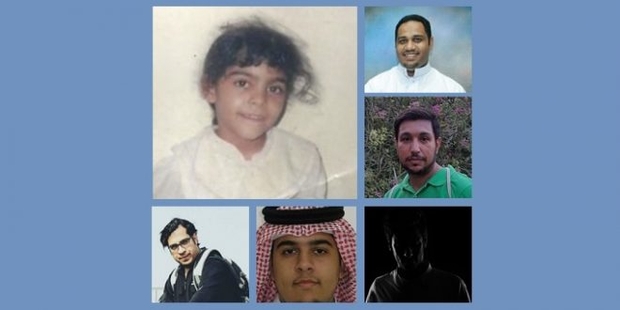
Saudi rights advocates are warning of the possible imminent beheading of detained activist Israa al-Ghomgham, who has been provisionally sentenced to death by a Riyadh court. At a hearing before the Specialized Criminal Court in the capital, the Public Prosecutor recommended the death penalty for six defendants, including Ghomgham and her husband, Moussa al-Hashem, who have been held for nearly three years on charges related to anti-government protests in the Shi'ite-majority eastern region of Qatif. The charges include "participating in protests," "incitement to protest," "chanting slogans hostile to the regime," "attempting to inflame public opinion," "filming protests and publishing on social media," and "providing moral support to rioters." The prosecutor called for their execution based on the Islamic law principle of ta'zir, in which the judge has discretion over the definition of what constitutes a crime. A judge is expected to either confirm or reverse the death penalty recommendation at Ghomgham's next hearing in October. (Photo of Israa al-Ghomgham as a child, with her co-defendants, via Middle East Eye)

Iraq

Turkey bombs Yazidi territory in Iraq

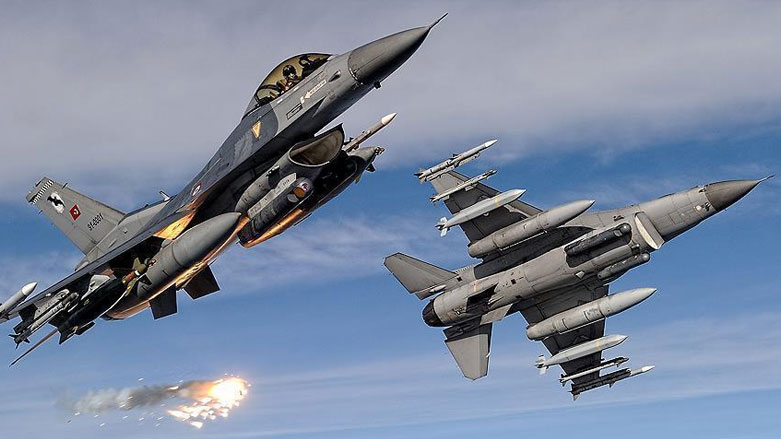
Authorities in Ezidikhan, the self-declared Yazidi autonomous homeland in northern Iraq, issued a statement protesting a Turkish air-raid on their territory. The attack was apparently a targeted assassination of Yazidi leader Zeki ?engali, who is a representative of the Union of Communities in Kurdistan (KCK), the international body in the political orbit of the Kurdistan Workers Party (PKK). Four members of the Yazidi territorial militia, the Sinjar Protection Units (YBS), were also killed in the attack, and a home destroyed. The raid actually took place as Iraqi Prime Minister Haider al-Abadi was on an official trip to Turkey, sparking outrage from some Iraqi officials. (Photo: Kurdistan 24)

North Africa

Podcast: Toward Berber-Palestinian solidarity

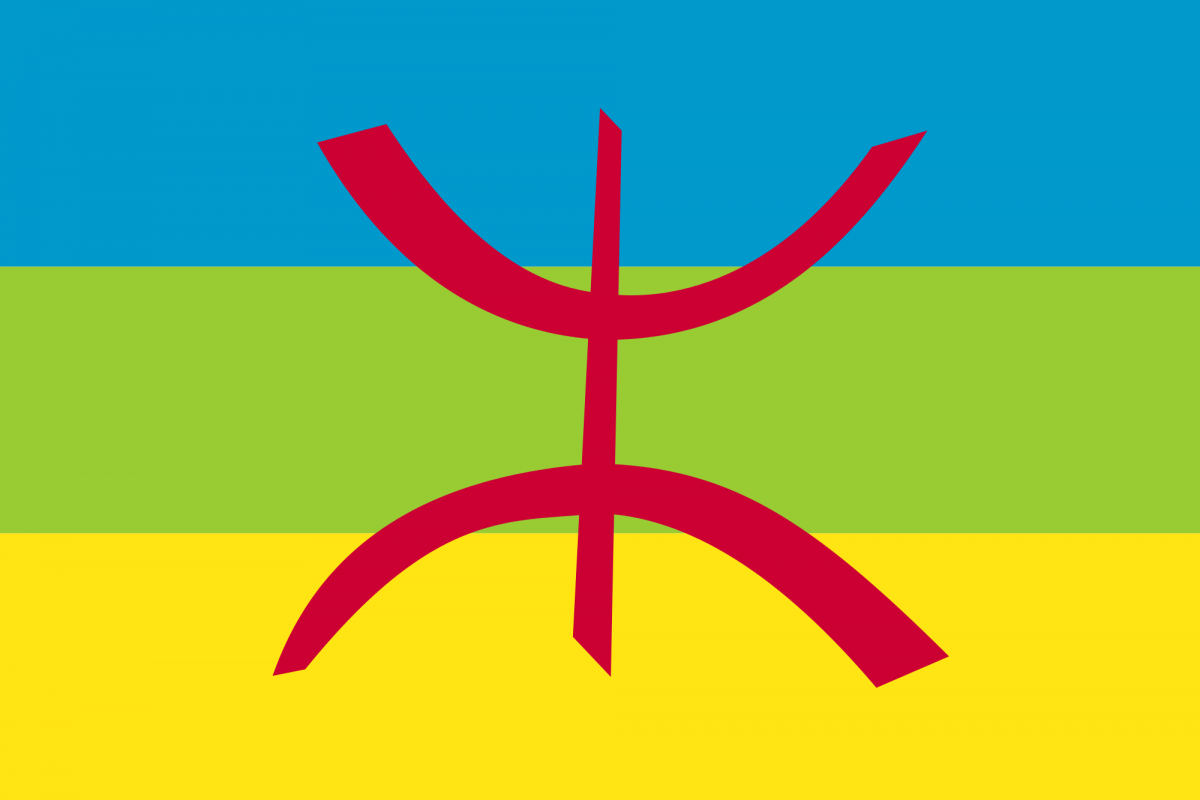
In Episode 16 of the CounterVortex podcast, Bill Weinberg discusses how Berbers, Palestinians, Sahrawi Arabs and other subjugated peoples of the Middle East and North Africa are pitted against each other by the Great Game of nation-states. Berbers in North Africa and Palestinians in the Occupied Territories face identical issues of cultural erasure, yet the Arab states' support for the Palestinians and retaliatory Israeli support for the Berbers constitute an obstacle to solidarity. The Sahrawi Arabs meanwhile fight for their independence from Morocco in the occupied territory of Western Sahara. But the Arab-nationalist ideology of their leadership is rejected by the territory's Berbers—leading to Sahrawi-Berber ethnic tensions in Morocco. Yet there are also signs of hope. Arabs and Berbers were united in the 2011 "Arab Revolution" protests in Morocco, and greater Berber cultural rights were a part of the constitutional reform won by those protests. And the new protest wave in Morocco's Rif Mountains over the past year has again united Arab and Berber. Listen on SoundCloud, and support our podcast via Patreon. (Image of Berber flag via Kabylia Information Agency)