Africa
Guinea

Guinea: deadly repression amid fear of power-grab

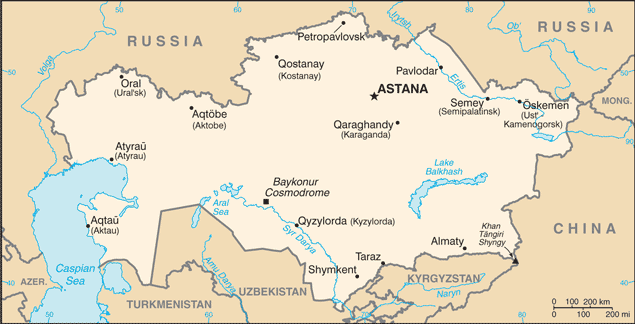
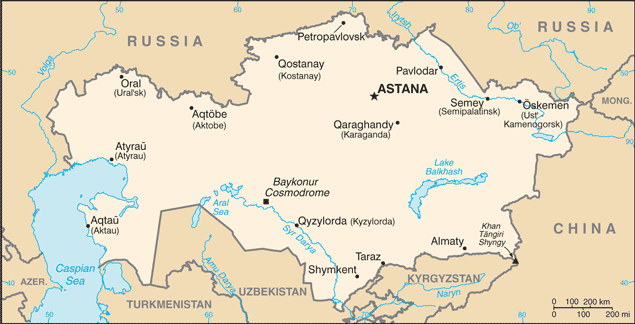
A new Amnesty International report warns of rising political violence in Guinea amid growing public concern that President Alpha CondĂ© will amend the constitution to run for a third term. Nine protestors were killed last month alone, and scores arrested, inlcuding leaders of pro-democracy movements. Dozens of protesters have been sentenced to a year in prison for attending an “illegal assembly.” (Map: Perry-Castañeda Library Map Collection)

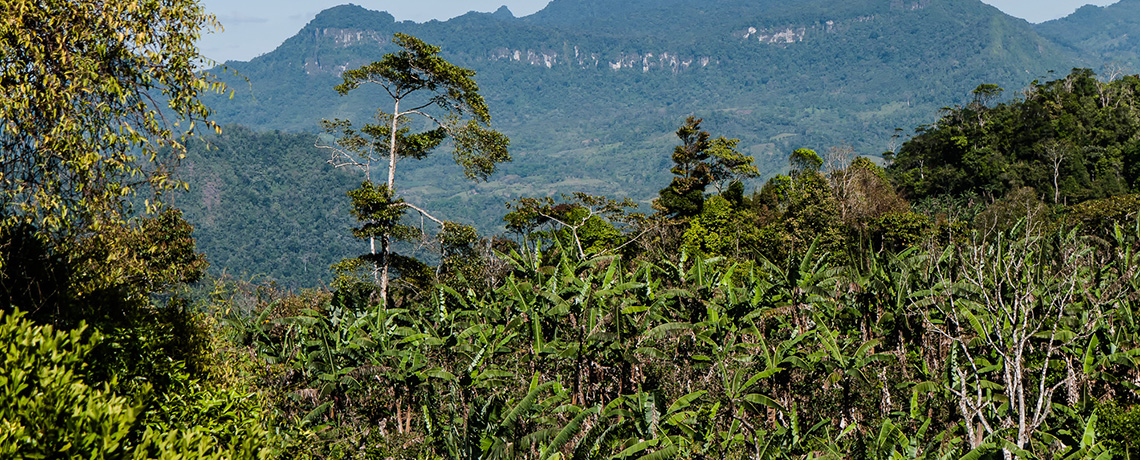
The Amazon
Pachamama

‘Dubia Cardinal’ rages against Pachamama

Cardinal Walter BrandmĂĽller, one of the two remaining “dubia cardinals” who dissented from a perceived liberal tilt in the Catholic Church, praised the men who stole the controversial “Pachamama statues” from a church in Rome during last month’s Amazon Synod and threw them into the Tiber River. The German cardinal hailed the perpetrators as “courageous prophets of today.” The statues, representing the Earth Mother deity of many traditional peoples in South America, had been used in events and rituals during the Amazon Synod, which brought together 185 bishops from across the Amazon Basin. The Synod was also attended by indigenous leaders, and issued a final statement stressing the threat of climate change and the need for a concept of “ecological sin.” (Photo: National Catholic Reporter)

Iraq
Sinjar

Iraq: Turkish jets attack Yazidi villages

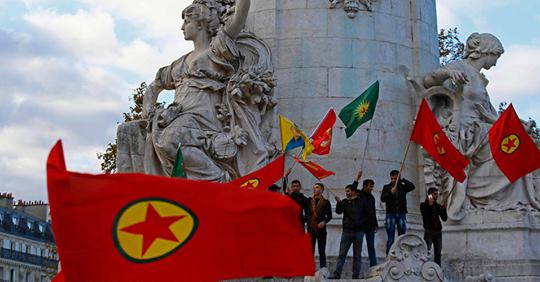
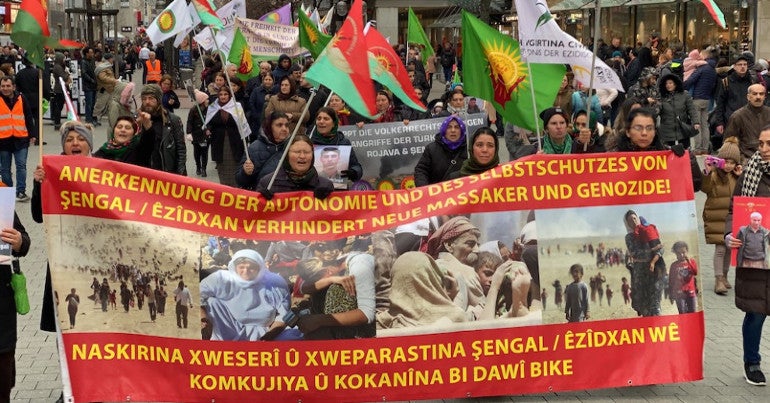
The Yazidi village of Bara in northern Iraq was struck by Turkish warplanes for the second time in two days, injuring at least three. There were also strikes on the nearby village of Khanasor, targeting a base of the Shingal Protection Units (YBS), a Yazidi militia operating in the area. The YBS played a key role in liberating the area from ISIS after the Islamic State’s genocide against the Yazidis in 2014. Turkey calls the YBS an affiliate of the Kurdistan Workers Party (PKK), and justifies its strikes by claiming the area is host to PKK positions. (Photo: Provisional Government of Ezidikhan)

New York City
Yoseph Needleman-Ruiz

Podcast interview: Yoseph Needleman-Ruiz

In Episode 42 of the CounterVortex podcast, Bill Weinberg interviews Yoseph Leib Needelman-Ruiz (Ibn Mardachya), author of Cannabis Chassidis: The Ancient and Emerging Torah of Drugs. In a far-ranging meeting of the minds, the pair explore the dilemmas of Jewish identity in both Israel and the diaspora, Zionism and gentrification (with parallels from the West Bank to Williamsburg), nationalism and anarchism, and such contradictions as the embrace of cannabis by Israel’s right-wing political establishment. Listen on SoundCloud, and support our podcast via Patreon. (Photo by Adam Gregory)

The Amazon
Forest Guardian

‘Forest Guardian’ assassinated in Brazilian Amazon

A young indigenous Guajajara leader was murdered in the Brazilian Amazon, raising concerns about escalating violence against forest protectors under the government of President Jair Bolsonaro. Paulo Paulino Guajajara, 26, was shot in the head and killed in an ambush in the AraribĂłia Indigenous Reserve, in the northeast state of MaranhĂŁo. Paulo was a member of “Guardians of the Forest,” a group of 120 indigenous Guajajara that organize volunteer patrols to fight illegal logging in the AraribĂłia reserve, one of the country’s most threatened indigenous territories. (Photo of Paulo Paulino Guajajara via Mongabay)

The Andes
Cauca massacre

‘Genocide’ charges follow Colombia massacre

Indigenous leaders in Colombia are raising accusations of “genocide” following the latest massacre, in which five members of the Nasa people were killed in southwestern Cauca department. Cristina Bautista, a Nasa traditional authority, or neehwesx, was killed along with four members of the Indigenous Guard, an unarmed community self-defense patrol, when they tried to stop a car of gunmen at a checkpoint. Indigenous peoples have been particularly targeted in the ongoing wave of deadly attacks on social leaders across Colombia. The National Indigenous Organization of Colombia (ONIC) names President Ivan Duque as complicit, for his refusal to talk to indigenous authorities, and his opposition to implementation of the peace deal with the FARC rebels. (Photo: Colombia Reports)

Southeast Asia
Indonesia anarchists

Indonesia: inauguration amid revolt, repression

Indonesia’s President Joko Widodo was sworn in for a second term amid an official ban on protests, and Jakarta’s streets flooded with military troops. The inauguration was preceded by a wave of mass protests, led by students but joined by labor unions and radicalized anarchist youth. The demonstrations were sparked by a new law that weakens Indonesia’s anti-corruption agency, and another instating such moralistic measures as a ban on extramarital sex. But anger was also directed at plans for a tough new criminal code, at troops mobilized to put down unrest in Papua region, and failure to stem forest fires in Sumatra and Borneo now causing toxic haze across Southeast Asia. (Photo: Anarchist Communist Group)

Africa
Oromo protest

Protests, ethnic violence rock Ethiopia’s Oromia

Nearly 70 people have been killed in Ethiopia’s central Oromia region following a week of unrest and ethnic violence. The eruption began after Jawar Mohammed, prominent advocate for the Oromo people, posted on social media about an imminent attempt on his life by security forces. Supporters surrounded his house and police retreated, but violence quickly spread. The army has now been deployed to put down the protests. Illegal sales of traditional Oromo lands to facilitate urban expansion on the outskirts of Addis Ababa has long been a grievance of the Oromo people. But anger has been unleashed on ethnic minorities in Oromia. In Sebeta, a town within the Oromia Special Zone surrounding the capital, eight members of Gamos people were killed, apparently by a mob of Oromo youth. Followers of the Ethiopian Orthodox Church as well as Muslims have also been targeted, with both churches and mosques attacked. (Photo of gathering outside Jawar Mohammed’s home via Twitter)

Central America
Costa Rica protest

Student strikes shake Costa Rica

A mass student protest filled the streets of San JosĂ©, opposing new budgetary terms being imposed on Costa Rica’s public universities. The demonstration, which was also attended by staff and even rectors of the universities, was called after the Ministry of Finance ordered an increase in the percentage of the Special Fund for Higher Education (FEES) that goes to capital expenditures—which effectively means a cut in salaries for teachers and staff. Banners read “The education of our children is not up for negotiation” and “Hands off the UCR,” a reference to the University of Costa Rica. University authorities and students did meet for several hours with government officials after the march in search of an agreement, while thousands of supporters maintained a vigil outside the presidential palace. President Carlos Alvarado, elected as leftist last year but now accused of imposing a neoliberal program, was among those who met with the protest leaders. (Photo: Poder Popular)

Mexico
ServĂ­n Herrera

Language rights advocate slain in Chihuahua

Enrique Alberto ServĂ­n Herrera, a promoter of indigenous language preservation in northern Mexico’s Chihuahua state, was found slain by a blow to the head at his home in the state capital, Chihuahua City. Authorities have made no arrests, nor named a motive in the attack. ServĂ­n Herrera headed the Department of Ethnic Cultures & Diversity at the state Secretariat of Culture, and was known for his efforts to help revive and sustain the language of the Tarahumara people. The Sierra Tarahumara, homeland of this indigenous people, has been torn by violence related to control of lands by narco-gangs and timber mafias in recent years. (Photo via La Izquierda Diario)

Southern Cone
Montevideo protest

Uruguay: mass march against militarization

Some 60,000 marched in Montevideo against the “Vivir sin Miedo” (Live Without Fear) campaign, an anti-crime initiative that goes before the voters in this week’s elections in Uruguay. The referendum, pushed by Sen. Jorge Larrañaga of the right-wing National Party, would create a new military police force, the National Guard; allow security forces to carry out night raids; and impose mandatory life terms for serious crimes. The group Madres y Familiares de Detenidos Desaparecidos, made up of survivors of those “disappeared” during the years of military rule in Uruguay, issued a statement warning that approval of the initiative could be a step back toward dictatorship. (Photo: La Izquierda Diario)

Central America
Honduras protest

Honduras: uprising against narco-president

Militant protests have swept through Honduras since the conviction by a federal jury in New York of the brother of President Juan Orlando Hernández on narco-trafficking charges. Thousands have filled the streets of cities and towns across the Central American country to demand the resignation of Hernández. Protesters have repeatedly blocked traffic arteries, erecting barricades with stones and flaming tires. A police transport truck was set on fire in Tegucigalpa. Opposition leader Salvador Nasralla of the Anticorruption Party has thrown his support behind the protests and called on the security forces to stand down, invoking a “right to insurrection” in Article 3 of the Honduran constitution. (Photo via AMW)