Africa
Gambia

Gambia: protesters demand president step down

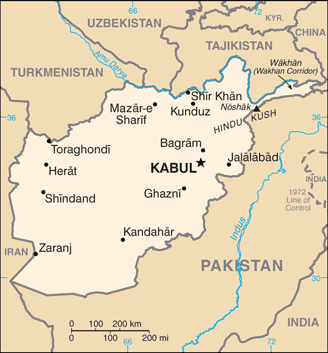
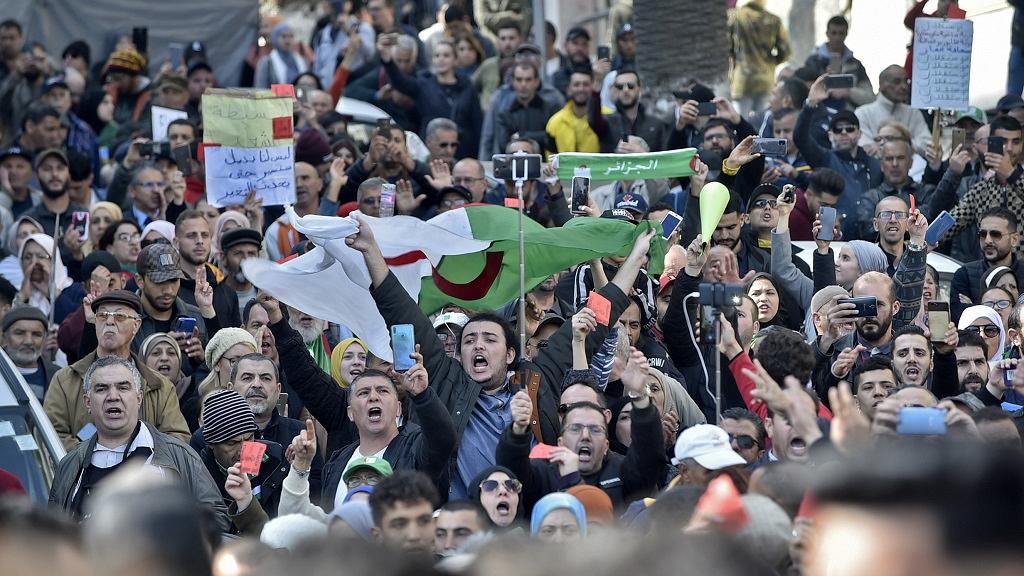
Thousands of Gambians took to the streets in the capital Banjul, demanding that President Adama Barrow honor the agreement he signed with the opposition to step down after three years in office. Barrow, a relative unknown at the time, defeated long-ruling Yahya Jammeh in elections in the small West African state in 2016. He promised to rule for three years before stepping down, but he has since said he will govern until 2021, serving a full presidential term. The protests were organized by the movement “Operation Three Years Jotna,” which means “three years enough” in a mix of English and the Wolof language. (Map: CIA)

Southern Cone
Chile protests

UN documents rights abuses in Chile protests

The Office of the UN High Commissioner for Human Rights (OHCHR) said in a new report that international human rights norms had been violated by both police and army personnel during the recent mass protests in Chile which led the government to declare a state of emergency. The report said that these rights violations should be prosecuted. The 30-page report, based on research during the first three weeks of November, extensively details multiple allegations, including of torture, and rape and other forms of sexual violence, against people held in detention. The leader of the OHCHR mission in Chile, Imma Guerras-Delgado, told journalists in Geneva, that the overall management of demonstrations by the police “was carried out in a fundamentally repressive manner.” (Photo: KaosEnLaRed)

South Asia
CAA

Protests sweep India over citizenship law

India’s northeastern state of Assam has exploded into protest over the passage of a new national citizenship law. The army has been deployed, a curfew imposed in state capital Guwahati, and internet access cut off. At least five people have been killed as security forces fired on demonstrators. The new law allows religious minorities from Pakistan, Bangladesh and Afghanistan to apply for Indian citizenship. This means it effectively excludes Muslims, and mostly apples to Hindus and Sikhs. Critics of the ruling Hindu-nationalist government say it therefore violates India’s founding secular principles. But while secularists and Muslims are protesting the Citizenship Amendment Act on this basis elsewhere in India, the biggest protests have been in Assam—motivated by fear that the state will be overrun by an influx from Bangladesh, threatening its cultural and linguistic identity. (Image: Sowmya Reddy)

Oceania
Bougainville

Bougainville votes for independence from PNG

In a referendum held over two weeks, the people of Bougainville, an archipelago in the South Pacific’s Solomon Sea, voted overwhelmingly to seek independence from Papua New Guinea (PNG). The referendum was the centerpiece of the 2001 Bougainville Peace Agreement between the PNG government and Bougainville independence leaders to end a devastating decade-long war that claimed nearly 20,000 lives—nearly a tenth the territory’s total population. Negotiations between PNG and Bougainville about the road forward will now begin and could continue for years, with the PNG parliament having the final say. Control of the territory’s rich mineral resources has been a key issue in the conflcit. (Photo via UNPO)

New York City
James Bay

Podcast: the struggle for James Bay

“Who is James Bay?” That’s the frequent reaction from New Yorkers when it is brought up—despite the fact that James Bay is not a “who” but a “where,” and a large portion of New York City’s electricity comes from there. In Episode 44 of the CounterVortex podcast, Bill Weinberg takes on Mayor Bill de Blasio’s so-called “Green New Deal,” and how maybe it isn’t so green after all. The mayor’s plan is centered on new purchases of what is billed as “zero-emission Canadian hydro-electricity.” But supplying this power is predicated on expansion of the massive James Bay hydro-electric complex in Quebec’s far north, which has already taken a grave toll on the region’s ecology, and threatens the cultural survival of its indigenous peoples, the Cree and Inuit. And it isn’t even really “zero-emission.” Listen on SoundCloud,and support our podcast via Patreon. (Photo: Orin Langelle)

North Africa
Libya migrant center

Controversy at UN migrant facility in Libya

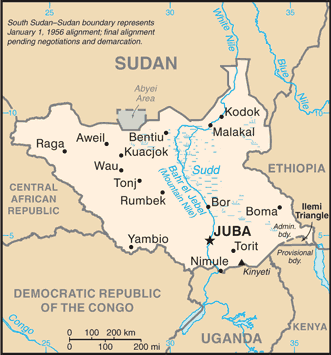
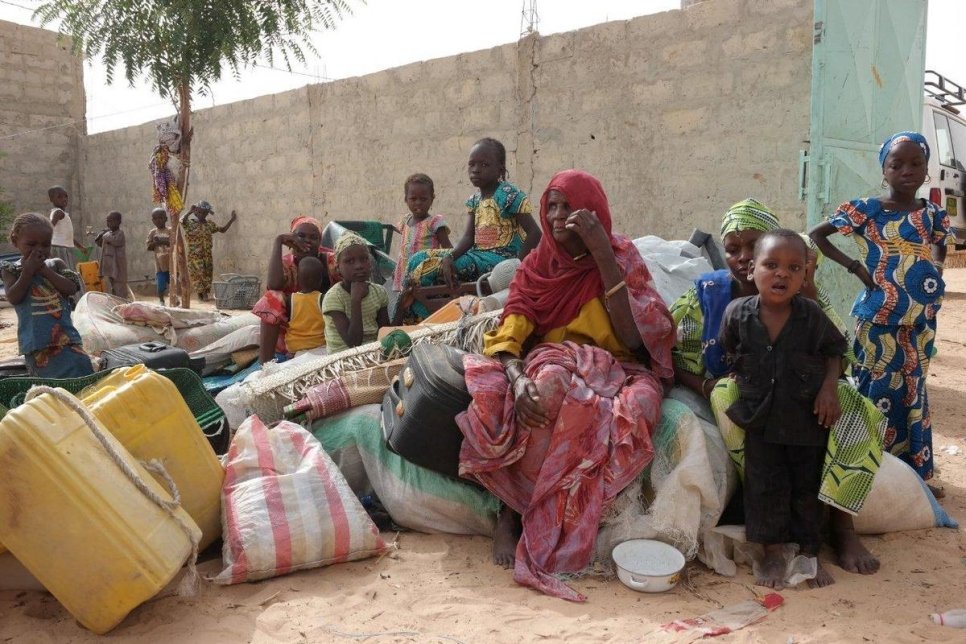
The UN’s holding facility for undocumented migrants in Libya was unveiled last year as an “alternative to detention,” but critics now say it is coming to mirror the notoriously harsh detention centers it was supposed to replace. The facility is overcrowded with nearly 1,200 migrants—about twice the number it was built for—including hundreds who fled from abuse at other detention centers in hopes of sanctuary. Conditions inside are deteriorating fast, and there are accusations that the UN refugee agency, UNHCR, is planning to force migrants, refugees, and asylum-seekers to leave by cutting off food (a claim the agency denies). The people inside are among an estimated 600,000 migrants in Libya, including more than 45,000 registered refugees and asylum-seekers. Some have come in search of work, others are hoping to make the incredibly dangerous trip to Europe. Those who risk it are often “rescued” by the Libyan coast guard and returned to land, and end up in the country’s oppressive detention centers—which is among the reasons a recent French plan to give the Libyan coast guard more boats met with strong opposition. (Photo: Sara Creta/MSF via TNH)

Europe

Russia deploys Cossacks to police Crimea

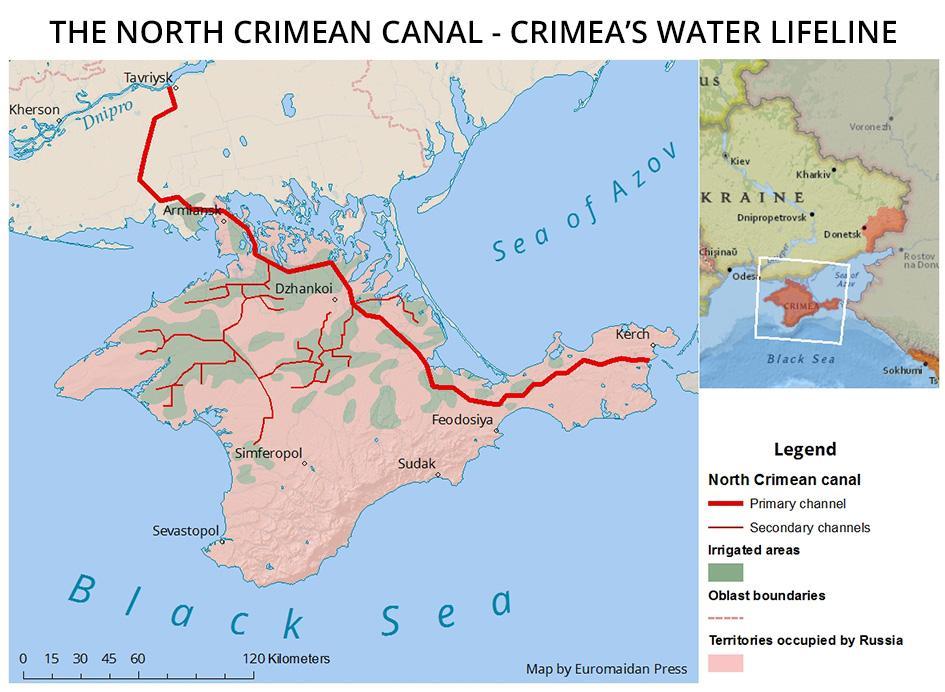
Russia’s Interior Ministry has announced that “Cossacks” will be deployed, together with thede facto police, in patrolling occupied Crimea, as well as in “carrying out anti-drug measures and educational work with young people.” So-called “Cossacks” were used, with other paramilitaries, during the annexation of the peninsula in 2014 to carry out violence that Russia did not want attributed to official security fources. The group Human Rights in Ukraine believes a similar role is planned again, and that “educational work” means propaganda for the Russian military. (Photo via Kharkiv Human Rights Protection Group)

The Andes
Cauca blast

War escalating in Colombia’s south

As Colombia’s major cities exploded into protest amid a national strike, a truck-bomb attack targeted a police station in the southern department of Cauca, leaving three officers dead. Authorities blamed the blast in the town of Santander de Quilichao on “dissident” elements of the FARC guerillas who have remained in arms despite the peace accords. The blast came two weeks after Colombia’s defense minister Guillermo Botero resigned amid outrage over an air-strike on a supposed guerilla camp in the neighboring department of Caquetá, in which several children were revealed to have been killed. (Photo via Colombia Reports)

The Andes
Bogota protest

Duque starts dialogue after Colombia strike

Colombia’s President Ivan Duque has convened his National Labor Concord Commission to begin the “National Conversation” he pledged this week in a bid to quell a fast-mounting anti-government protest wave. Social leaders, mayors and departmental governors from across the country are to participate in the talks. The protests escalated when trade unions, including the giant Unitary Workers Central (CUT), called a nationwide general strike, and repressive measures by the National Police only fueled the mass mobilization. (Photo: Hollman Morris via Colombia Reports)

Africa
Almas Elman

Somali rights activist killed in Mogadishu

Almas Elman, a prominent Somali rights activist, was killed in Mogadishu, struck by a bullet while riding in a car. She was apparently heading to the airport after attending a meeting at the Elman Peace Centre, which was founded by her mother Fartuun Adan in 1990. Elman came from a long line of activists. She was the sister of aid worker Ilwad Elman who was recently short-listed for the Nobel Peace Prize. Her father was the respected Somali activist Elman Ali Ahmed, who was himself assassinated in Mogadishu in 1996. In recent years, the Elman Peace Centre has documented rights abuses in Somalia by government troops, Islamist insurgents, Ethiopian occupation forces, rival clan militias, (Photo: RTN-TV via OkayAfrica)

Planet Watch
Chile protester

Podcast: world revolution in 2020?

In Episode 43 of the CounterVortex podcast, Bill Weinberg takes stock of the current wave of popular protest and uprisings around the world, and asks if the planet is approaching another moment of revolutionary possibilities, such as was seen in 2011. He examines the prospects for these disparate movements to build solidarity across borders, repudiate ethnic and national divide-and-rule stratagems, and recognize the enemy as transnational capital and the authoritarian states that serve it. With discussions of Hong Kong, mainland China, Indonesia, Bolivia, Chile, Ecuador, Peru, Uruguay, Honduras, Costa Rica, Haiti, Puerto Rico, Iraq, Lebanon, Turkey Iran, Egypt, Algeria, Sudan, Uganda, Ethiopia and Guinea. Listen on SoundCloud, and support our podcast via Patreon. (Photo: David Lynch via Twitter)

Europe
Ayshe Seitmuratova

World Court to rule on ethnic discrimination in Crimea

The International Court of Justice ruled that it has jurisdiction to hear a case filed by Ukraine against Russia over claims of ethnic discrimination in annexed Crimea, as well as Moscow support of pro-Russian separatists in Ukraine’s east. The case argues that Russian abrogation of the rights of the Crimean Tatars violates the International Convention on the Elimination of All Forms of Racial Discrimination. The claims concerning the eastern separatists invoke the International Convention for the Suppression of the Financing of Terrorism. On the same day as the ruling, Ayshe Seitmuratova, an 82-year-old veteran of the Crimean Tatar national movement, Soviet-era dissident, former political prisoner, and historian, was detained by Russian security forces. (Photo: Kharkiv Human Rights Protection Group)