Iran
Iran protests

Podcast: solidarity with Iran —the people, not the state

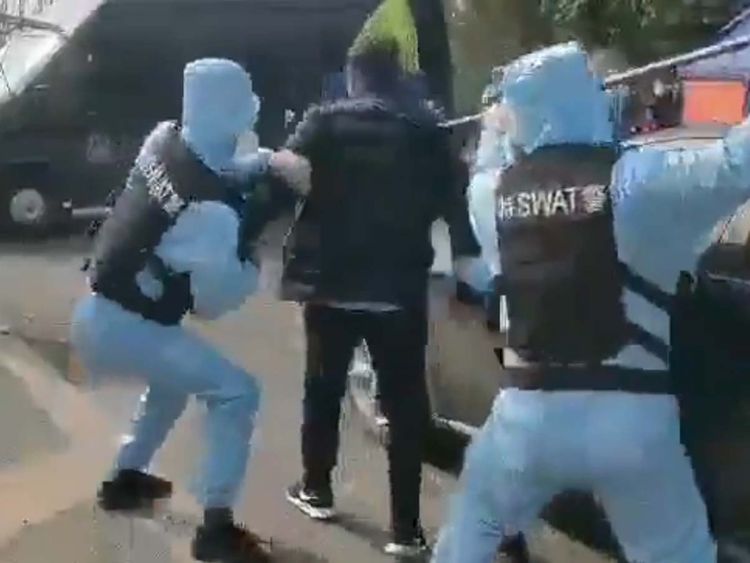
In Episode 46 of the CounterVortex podcast, Bill Weinberg calls out the racist imperial narcissism in coverage of the assassination of Qassem Soleimani—all of which (left, right and center) is solely concerned with whether he was responsible for the deaths of “hundreds of Americans.” Safely invisible is the reality that Soleimani and his militia networks were responsible for the deaths of hundreds of thousands of Iraqis and Syrians. Iranian forces in Syria have been carrying out a campaign of sectarian cleansing, with Shi’ite militia leaders usurping the lands of displaced Sunnis. Soleimani’s militias in Iraq have meanwhile been serially massacring protesters. Over this same period, hundreds of protesters have been killed in state repression in Iran itself. Anti-war forces in the West must not be confused by Trump’s cynical pretense of support for the Iranian protesters. Our opposition to Trump’s war moves must be in explicit solidarity with Iran —meaning the people of Iran, not the state. And that includes solidarity with the struggle of the Iranian people against an oppressive regime. Listen on SoundCloud, and support our podcast via Patreon. (Image: @iranprotest2019)

Iran
Syria shepherds

Syria: ‘retaliatory’ massacre after Soleimani killing

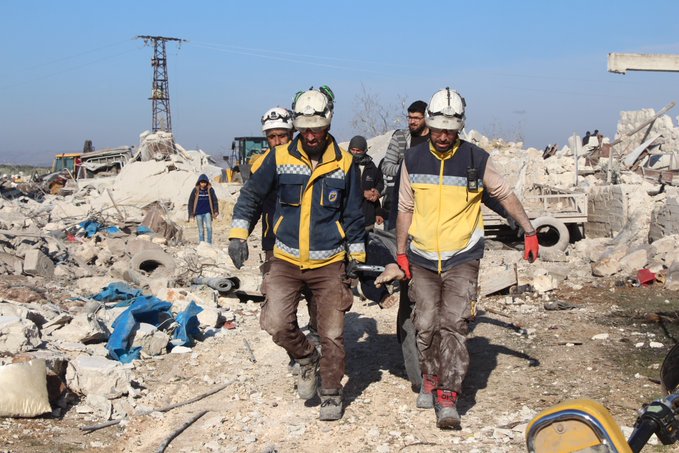
More than 20 shepherds were killed in eastern Syria, with pro-opposition activists claiming that Iran-backed militias were responsible. The shepherds were slain in the Maadan area, on the border of Raqqa and Deir ez-Zor provinces, and also near the line between territory held by the Assad regime and that held by the Kurdish-led Syrian Democratic Forces. The regime is being massively backed by Iranian forces, and Iran-backed militia units had establsihed checkpoints along the border of the zones of control. The media-activist network Raqqa is Being Slaughtered Silently claimed that the shepherds were shot and stabbed in retaliation for the US assassination of Iranian commander Qasem Soleimani in Iraq. Damascus state media blamed the massacre on ISIS. Soleimani’s elite Quds Force intervened in Syria to prop up the Assad regime along with Russia in 2015.  (Photo: EA Worldview)

Southeast Asia
Indonesia

China-Indonesia maritime stand-off

Dozens of Chinese vessels that were fishing in Indonesia’s Exclusive Economic Zone off the disputed island of Natuna began leaving the area after days of stand-off. Indonesia deployed eight warships and four fighter jets to the area, and summoned Beijing’s ambassador to complain. China reportedly sent three coast guard cutters into the area during the stand-off. The Natuna archipelago, off the northwest coast of Borneo, occupies a strategic spot in the South China Sea. Its waters contain significant oil and gas reserves, and it guards the eastern opening of the narrow Malacca Strait, a critical chokepoint for shipping lanes. The archipelago falls within China’s “nine-dash line,” covering nearly the entirety of the South China Sea. (Map: Perry-Castañeda Library)

North Africa
Libya

Who was behind new Tripoli air-strike?

The Presidential Council of Libya’s internationally-recognized government issued a statement condemning the air-strike on Hadba Military College in Tripoli, in which some 30 cadets were killed and many more injured. “The attackers aim to destabilize Tripoli in order to seize power via such repeated terrorist attacks, disregarding the safety of civilians,” the statement read. The Tripoli-based Government of National Accord blamed the strike on warlord Khalifa Haftar, who is loyal to the rival government based in Libya’s east and has been besieging the capital for months. Haftar’s forces, in turn, denied responsibility for the attack. (Map: CIA)

East Asia
Tiananmen

China detains activists in year-end crackdown

Over a dozen Chinese lawyers and activists were detained or went missing in the final days of 2019, in a crackdown targeting participants who attended a private pro-democracy gathering in the coastal city of Xiamen, rights groups reported. The meeting had been called to discuss a “democratic transition in China,” said Human Rights Watch researcher Wang Yaqiu. The period around New Year is traditionally when Beijing chooses to arrest prominent dissidents in an effort to minimize international media attention, “so it is not a surprise that they chose this particular time to launch a manhunt of activists.” The meeting involved a small group “peacefully discussing politics in a private space.” (Photo: chinaworker.info)

Africa
Zalingei

New ethnic conflagration in Darfur

At least 40 were killed and some 30 injured in a new outbreak of inter-communal violence in Sudan’s Darfur region. The fighting erupted east of El-Geneina, capital of West Darfur state, reportedly sparked by the killing of an Arab man near Crendingue, a camp for displaced persons from the Masslit tribe. Most of the dead appear to be Masslit. Thousands more have fled across the border into Chad, fearing attack. Gunmen have reportedly prevented families of the victims from collecting the bodies. and continue to fire in the air. In Sudan’s ongoing pro-democracy revolution, many Massalit youth formed Resistance Committees, and established security patrols around the camp and neighboring villages. Many local Arabs, however, supported the former regime, fueling the current conflict. (Map: Wikipedia)

North Africa
Libya

Turkey prepares Libya intervention

The Turkish parliament voted overwhelmingly to send troops to Libya, to back up the UN-recognized government in Tripoli, now under siege from an offensive by warlord Khalifa Haftar, who is loyal to the rival government in the country’s east. Lawmakers voted in an emergency session to give Ankara a one-year mandate to deploy forces to the North African country. US President Donald Trump responded to the vote by calling his Turkish counterpart Recep Tayyip Erdogan, warning him against intervening in the Libyan conflict. Weeks earlier, the US State Department issued a statement calling on Haftar to halt his offensive, and also warned against “Russia’s attempts to exploit the conflict.” Russia is believed to be backing Haftar. The Libya Observer reports that “random shelling continues to take civilian lives” as Haftar’s forces and “foreign mercenaries” mount an advance on Tripoli’s airport. (Map: CIA)

Europe
berkut

Maidan martyrs betrayed in Ukraine prisoner swap

Activists in Ukraine are protesting a judicial ruling they say defers accountability in the massacre of scores of protesters during the Maidan Square occupation of 2014, popularly known as “Heaven’s Hundred.” Five ex-officers of the Berkut, the former regime’s now-disbanded political police, faced charges of killing 48 protesters and wounding 80 others during the February 2014 repression. Another 21 sought in the violence, also members of the Berkut’s elite Black Company, managed to escape to Russia after the fall of the Viktor Yanukovich regime later that month, and some are now believed to have been incorporated into paramilitary groups by the Vladimir Putin government. The five were ordered released from custody by the Kyiv Court of Appeals—among the 200 prisoners freed in a swap between the Ukrainian authorities and Russia-backed separatists. Their release was protested in an open letter to President Volodymyr Zelensky by the group Families of the Heaven’s Hundred Heores, who asserted that it violates international law.  (Photo: EuroMaidan)

Southern Cone
lithium

Chile: indigenous win a round in lithium struggle

The First Environmental Tribunal in the Chile’s northern city of Antofagasta ruled in favor of indigenous communities that had brought suit against Sociedad Quimica y Minera (SQM), the world’s second-largest miner of lithium. The court found SQM’s compliance plan for water preservation submitted to Chile’s Environment Superintendency (SMA) was “insufficient,” citing the “particular fragility” of the lithium-rich but extremely arid salt-flats where the company hopes to expand operations, the Salar de Atacama. Under the ruling, SQM must submit a new compliance plan, pay multi-million fines to the SMA for being out of compliance, or suspend operations. “We must protect sensitive ecosystems even more when they constitute the ancestral habitat of our native peoples whom the State of Chile is obliged to protect,” the court’s chief justice, Mauricio Oviedo, said in a statement. The case was brought by the local Council of Atacameño Pueblos, representing the impacted indigenous communities of Peine and Camar. (Photo: First Environmental Tribunal of Antofagasta)

Watching the Shadows

Podcast: against the global detention state

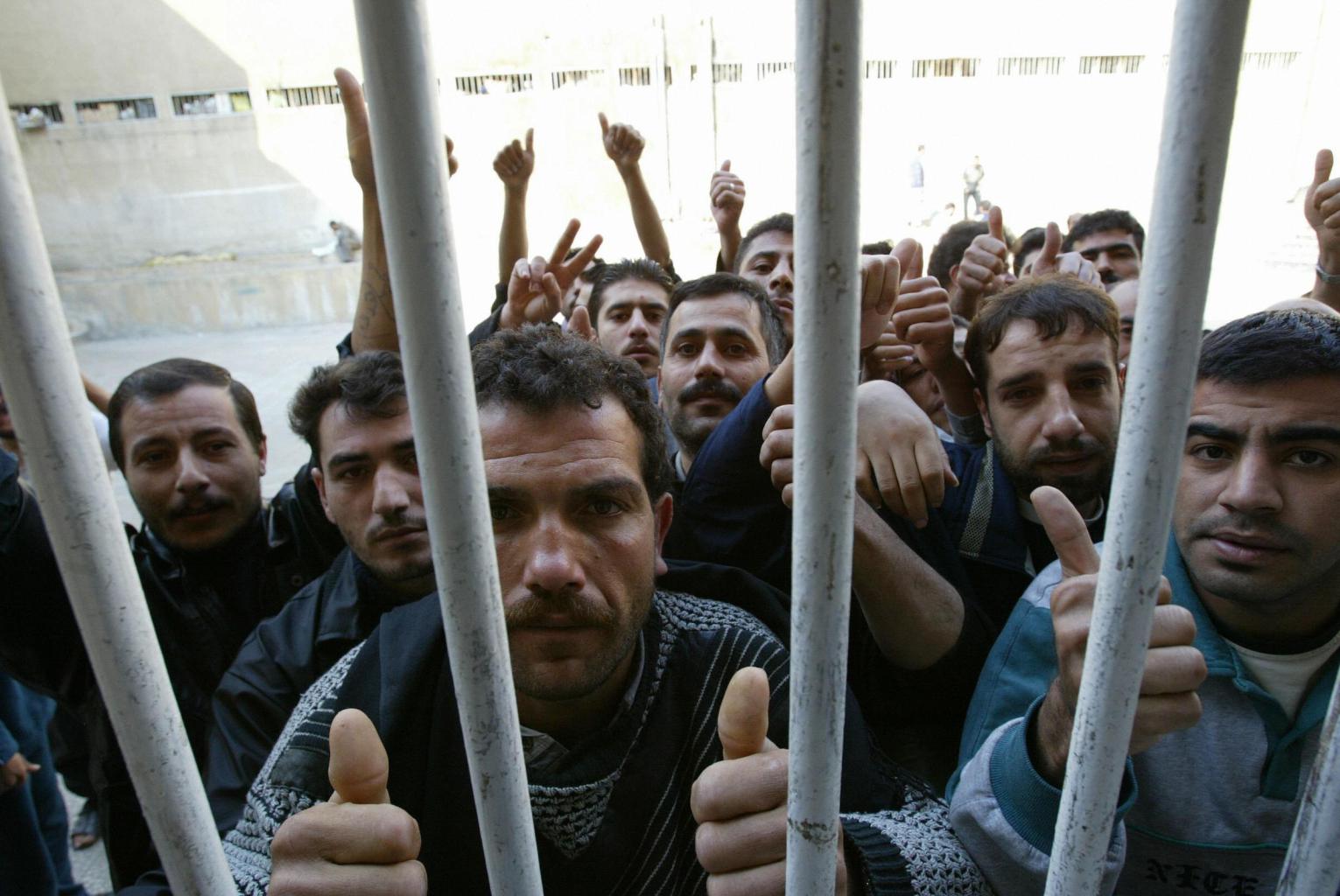
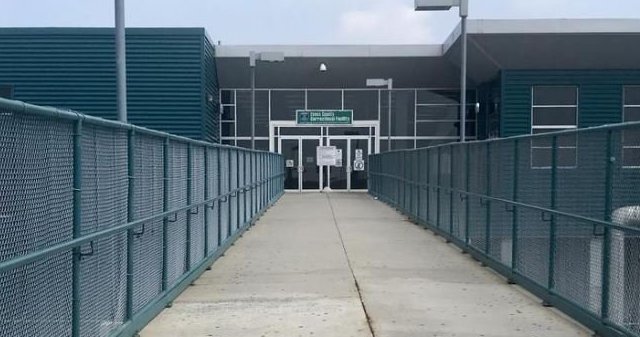
In Episode 45 of the CounterVortex podcast, Bill Weinberg notes with alarm the rapid consolidation of a global detention state, extending across borders and rival power blocs. In the United States, Trump moves toward indefinite detention of undocumented migrants, with horrific rights abuses widespread in the fast-expanding camp system. In China, up to a million Uighurs have been detained in “re-education camps,” and are facing such abuses as forced sterilization. As India hypocritically protests China’s treatment of the Uighurs, it is also preparing mass detention of its own Muslim population. Russia’s Vladimir Putin is similarly preparing mass detention of the Crimean Tatars. In Syria, the Bashar Assad regime has detained hundreds of thousands, and is carrying out a mass extermination of prisoners, almost certainly amounting to genocide. In Libya, countless thousands of desperate migrants have been detained, often by completely unaccountable militias, and an actual slave trade in captured Black African migrants has emerged. Yet Trump exploits the mass internment of the Uighurs to score propaganda points against imperial rival China—and some “leftists” (sic) in the US are so confused as to actually defend China’s detention state. International solidarity is urgently needed at this desperate moment to repudiate such divide-and-rule stratagems. Listen on SoundCloud, and support our podcast via Patreon. (Photo of Homeland Security’s Otay Mesa Detention Center from BBC World Service via Flickr)

Southeast Asia

Killings of ecological defenders rise in Philippines

Named the most dangerous country in the world for land and environmental defenders, the Philippines has become an even deadlier place for activists in 2019, with 46 recorded deaths so far this year, according to the Kalikasan People’s Network for the Environment. The same organization recorded 28 killings of land and environmental defenders in 2018. Global Witness, an environmental watchdog, tallied 30 such killings in the Philippines that year and designated the country the most dangerous in the world for defenders based on sheer number of deaths. Small farmers and agricultural workers accounted for the majority of the deaths recorded by Kalikasan PNE this year with 29, or 63%. This was followed by forest rangers or government officials involved in environmental oversight, at 35%. Next were members of the Philippines’ indigenous peoples at 20%, and finally lawyers and church workers at four percent. (Image of man from the Manobo tribe of Mindanao via Mongabay)

Southeast Asia

Philippines: convictions in Maguindanao massacre

More than a decade after 58 people were killed in the worst case of election-related violence in Philippine history, a court in Quezon City found Datu Andal Ampatuan Jr. and his brother Zaldy Ampatuan guilty of overseeing the November 2009 massacre at Maguindanao. They were sentenced to 40 years without parole. The pair were convicted on 57 counts of murder in the attack on a convoy that included journalists covering an opposition candidate for the governorship of Maguindanao province. Police said 58 were killed in the massacre, but the body of one victim was never found. Their father, then-incumbent governor Andal Ampatuan Sr., was arrested in connection with the case and died in prison while awaiting trial in 2015. The court sentenced a further 15, including more Ampatuan family members and police officials, to between six and 10 years as accessories to the crime. (Photo: Relatives of victims burn portraits of Ampatuan clan members during visit to massacre site. Credit: MindaNews)