Syria

Podcast: Solidarity with Idlib and Rojava

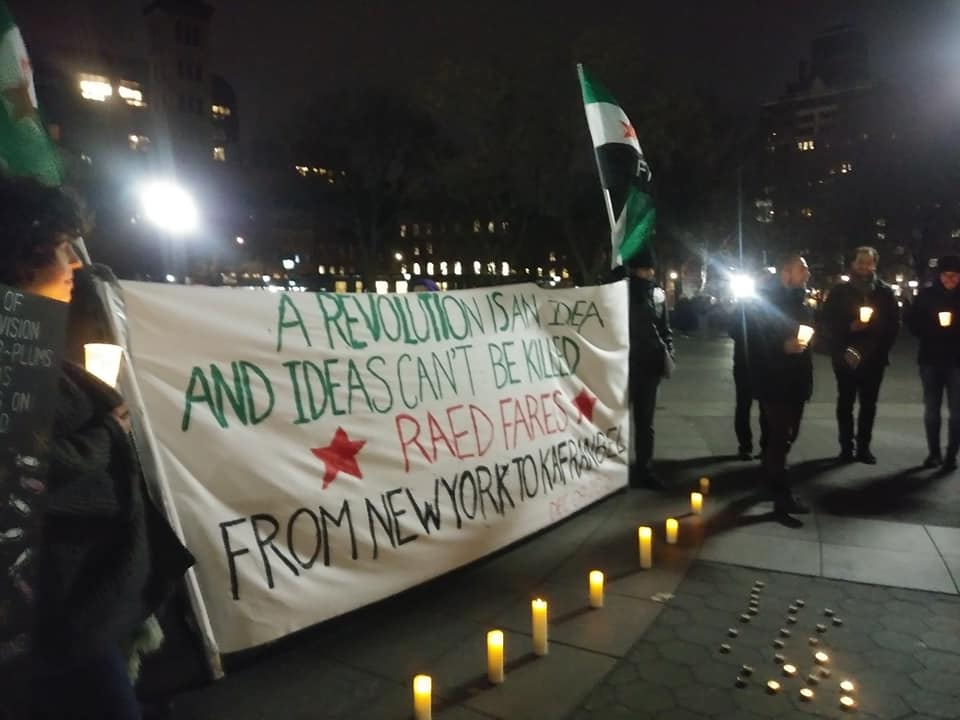
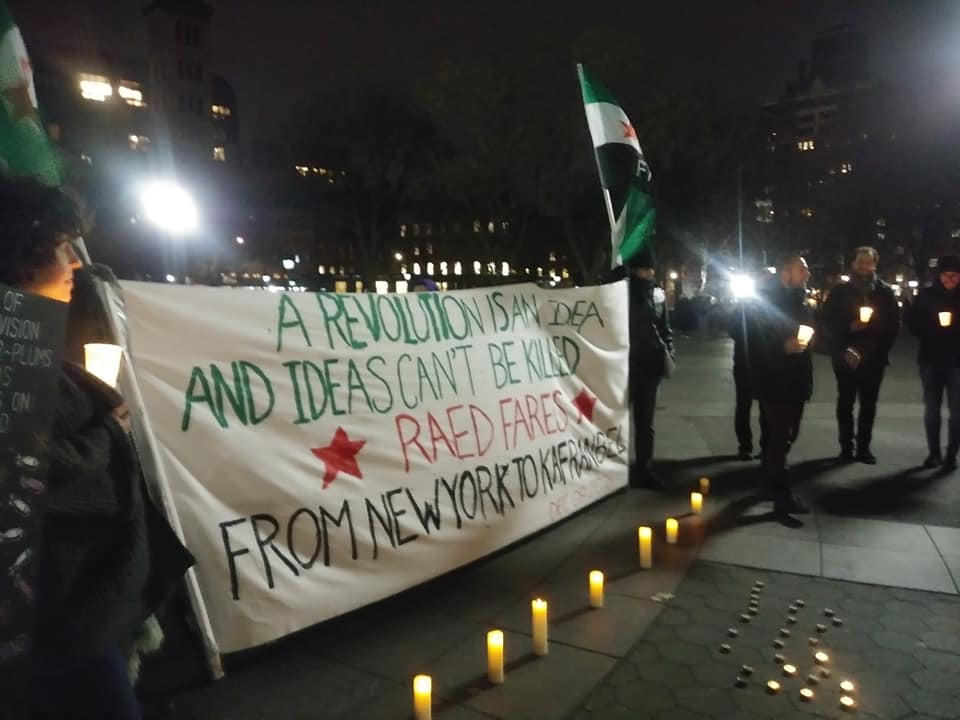
In Episode 23 of the CounterVortex podcast, Bill Weinberg notes the assassination of Raed Fares, a courageous voice of the civil resistance in besieged Idlib province, last remaining stronghold of the Syrian Revolution. The resistance in Idlib, which liberated the territory from the Bashar Assad regime in popular uprisings seven years ago, is now also resisting the jihadist forces in the province, expelling them from their self-governing towns and villages. Their hard-won zones of popular democracy face extermination if this last stronghold is invaded by Assad and his Russian backers. As Assad and Putin threaten Idlib, Trump’s announced withdrawal of the 2,000 US troops embedded with Kurdish forces in Syria’s northeast is a “green light” to Turkey to attack Rojava, the anarchist-inspired Kurdish autonomous zone. The two last zones of democratic self-rule in Syria are each now gravely threatened. Yet with Turkey posing as protector of Idlib, the Arab revolutionary forces there have been pitted against the Kurds. The Free Syrian Army and Rojava Kurds were briefly allied against ISIS and Assad alike four years ago, before they were played against each other by imperial intrigues. Can this alliance be rebuilt, in repudiation of the foreign powers now seeking to carve up Syria? Or will the US withdrawal merely spark an Arab-Kurdish ethnic war in northern Syria? Weinberg calls for activists in the West to repudiate the imperial divide-and-rule stratagems, and demand survival of liberated Idlib and Rojava alike. Listen on SoundCloud, and support our podcast via Patreon. (Photo: NYC Syria Peace Vigil Group)
Europe

Car industry behind Hungary’s ‘slave law’

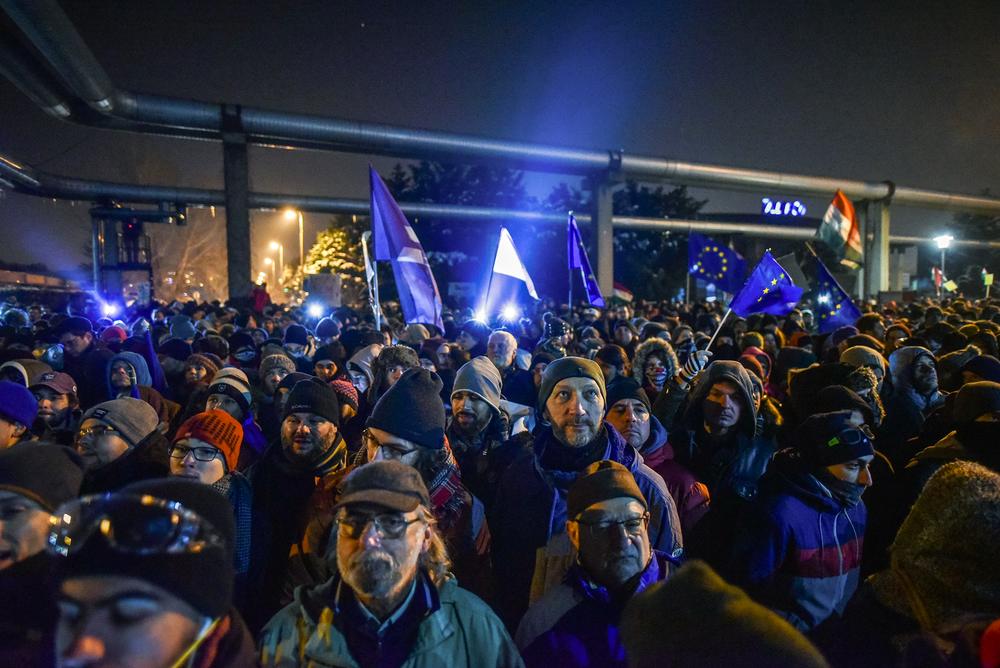
In the biggest demonstrations since the fall of communism, thousands have repeatedly taken to the streets in Hungary to oppose Prime Minister Viktor Orba''s controversial "slave law." The square outside the parliament building in Budapest was massively occupied Dec. 12 as the law was approved. It was subsequently signed by President Janos Ader. Orban said the law scraps "silly rules," and will help those who want to earn more by working more. In fact, the law will allow employers to demand workers put in up to 400 extra hours per year of overtime, compared with the current limit of 250. Meanwhile, payment for this overtime may be delayed by up to three years. Local media in Hungary report that Orban pushed through the law in a bid to lure German auto-maker BMW to invest a billion euros in a new plant in Debrecen, Hungary's second city, situated in the poorest region of the country, the northeast. The move is portrayed as intended to undercut labor costs in Slovakia, where BMW was initially considering investment. (Photo: KaosEnLaRed)

North Africa
Sharara

Force majeure at Libya’s top oil-field —again

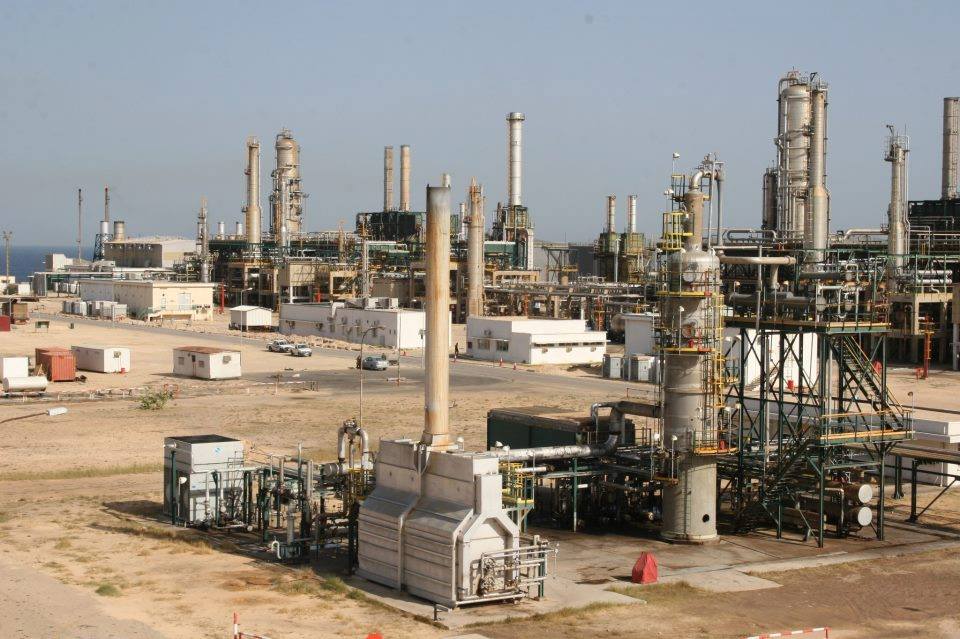
Libya’s National Oil Company (NOC) declared force majeure at the country’s largest oilfield, a week after announcing a contractual waiver on exports from the 315,000-bpd Sharara field following its seizure by armed militants. The Sharara facility was seized by a force of desert tribesmen under the banner or the Fezzan Anger Movement, which is demanding better living conditions for the remote and impoversihed southern region of the country. Sharara is located in the Fezzan region, which produces most of Libya’s oil but lacks basic services such as electricity and hospitals. The Fezzan militants were actually joined by members of the Petroleum Facilities Guard, demanding back wages be paid by the UN-backed Government of National Accord. Oil production in Libya has been repeatedly paralyzed by unrest, and the NOC is still struggling to restore output to pre-2011 levels. (Photo: Libya Observer)

Syria

Trump’s Syria withdrawal: bad news for Kurds

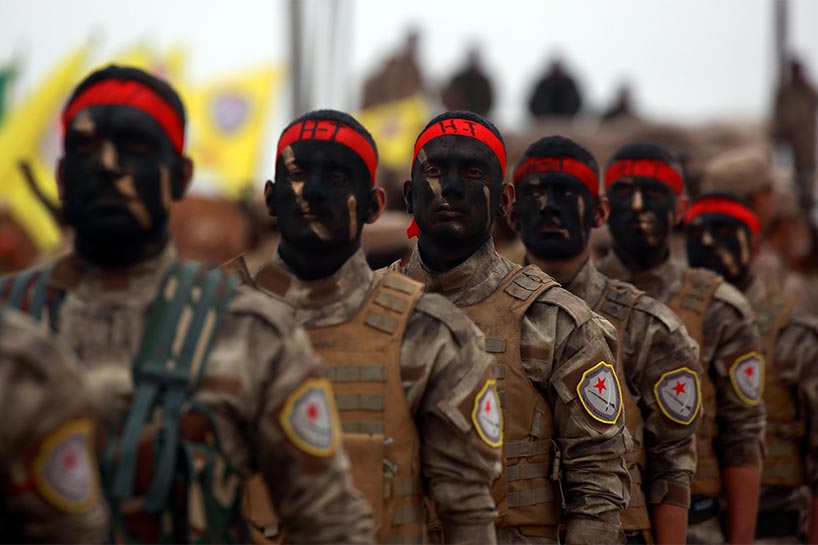
President Trump has ordered a rapid withdrawal of all 2,000 United States ground troops from Syria within 30 days. Hardly coincidentally, this comes just as the Kurdish-led Syrian Democratic Forces (SDF), the Pentagon’s main partner on the ground, are on the brink of capturing the last town in Syria still under ISIS—Hajin, on the banks of the Euphrates River. Also not coincidentally, Turkish President Recep Tayyip Erdogan just days earlier warned of an imminent offensive against the People’s Protection Units (YPG), the Kurdish militia that makes up the core of the SDF. Erdogan said that Turkey will launch an operation against the YPG “in a few days,” adding that it is “time to realize our decision to wipe out terror groups east of the Euphrates.” The Euphrates River has until now served as a border between Turkey’s “buffer zone”in northern Syria and areas still under Kurdish control. Turkey is now preparing to cross it—with evident US connivance. (Image of SDF fighters via Rudaw)

Africa

US air-strikes target Shabaab ‘encampment’

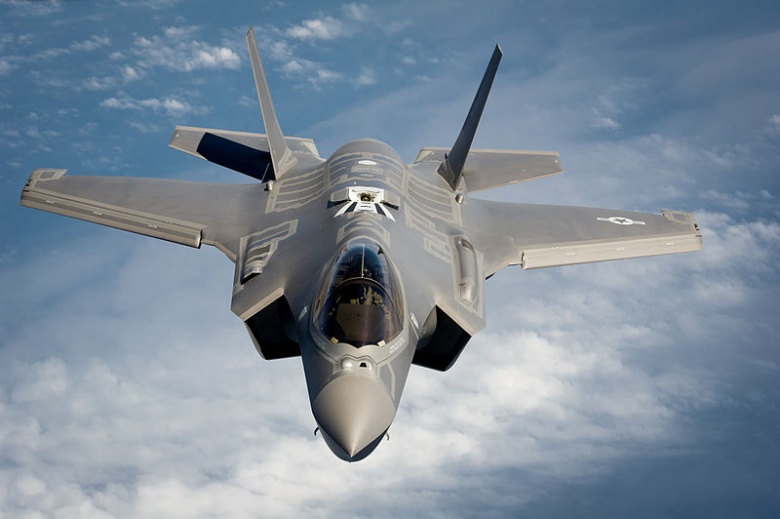
More than 60 were killed in US air-strikes that targeted "a known al-Shabaab encampment" near southern Somalia's Gandarshe town. US Africa Command asserted that no civilians were killed and that the strikes were launched to "prevent terrorists from using remote areas as a safe haven to plot, direct, inspire, and recruit for future attacks." These were the deadliest air attacks in Somalia since November 2017 when the US said it killed 100 militants. The targeting of Shabaab increased after March 2017, when the Trump administration loosened restrictions on the US military to use force against the insurgent army. The US military has now struck Shabaab targets 45 times in 2018, compared with 31 times last year. The US has a huge military base in neighboring Djibouti, from where it launches air-raids on the militants. (Image: Lockheed Martin)

Syria

Twins of genocide schmooze in Damascus

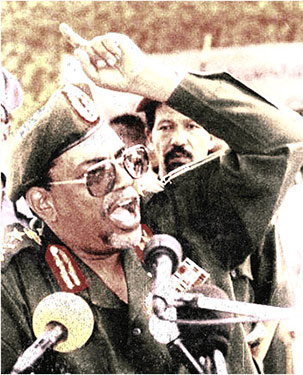
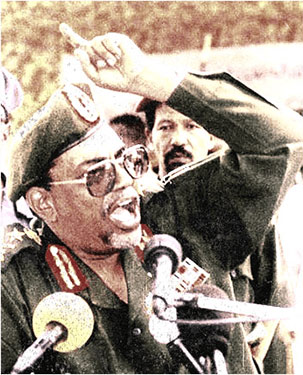
Omar BashirSeeking to legitimize his regime now that he’s reconquered most of Syria (with massive Russian military help), Bashar Assad has just welcomed the first Arab League leader to Damascus since the war began in 2011—none other than President Omar Bashir of Sudan, who is wanted by the International Criminal Court for crimes against humanity and genocide in Darfur. The Assad regime’s official news agency SANA said the two dictators discussed the “situations and crises faced by many Arab countries,” stressing the need to build “new principles for inter-Arab relations based on the respect of the sovereignty of countries and non-interference in internal affairs.” The Assad regime is itself now credibly accused of genocide, with a mass extermination of detainees amply documented, not to mention serial use of chemical weapons and massive bombardment of civilian populations. Assad and his generals may yet face war crimes charges before the ICC. (Photos: Pinterest, BashirWatch)

Central America
Berta Caceres

Honduras: justice at last for Berta Cáceres?

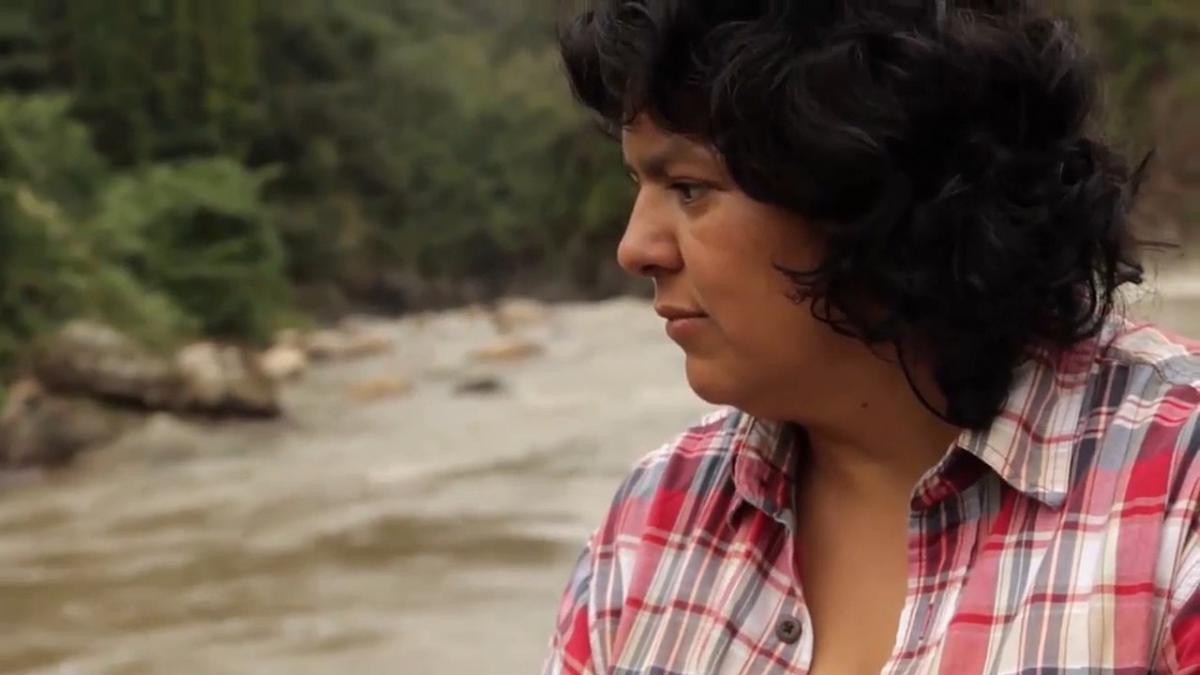
A court in Honduras convicted seven men in the 2016 murder of indigenous rights activist Berta Cáceres. Until her assassination Cáceres had been leading a campaign against the Agua Zarca dam, a joint project by Honduran company Desarrollos Energéticos SA (DESA) and Chinese-owned Sinohydro. The dam was being built on the Rio Gualcarque without prior consultation with the Lenca indigenous community that depends on the river for their food and water. Cáceres, who won the prestigious Goldman Environmental Prize in 2015, had received numerous threats for her activism against the dam before she was killed by gunmen at her home in the town of La Esperanza. Two of those convicted are former DESA managers. (Photo by UN Environment/ONU Brasil via Wikimedia Commons)

Syria

More than half million killed in Syria since 2011

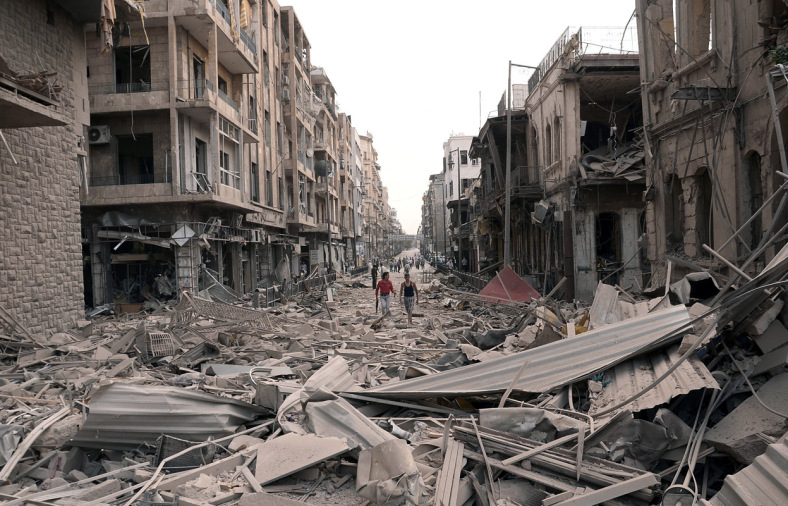
The Syrian Observatory for Human Rights issued a statistical report on the number of Syrian war victims on the occasion of World Human Rights Day. The statistics show that 560,000 people have been killed since March 2011, including civilians, soldiers, rebel fighters, and “martyrs” who died under torture in the regime prisons. The Observatory found: “Over 93 months…Syrians have been crushed between the jaws of death, with each day declaring a decrease in their numbers…” The Observatory documented the deaths of 104,000 Syrians in the regime’s prisons, likely under torture in most cases, with 83% executed in these prisons between May 2013 and October 2015. In this period, 30,000 were killed in Saydnaya prison alone, according to the Observatory. The remainder of the total were killed in fighting, with civilians constituting a large plurality at 111,330. The rest were from various armed factions. (Photo of Aleppo following regime bombardment: 7ee6an)

Europe

The Yellow Vests and the carbon wars

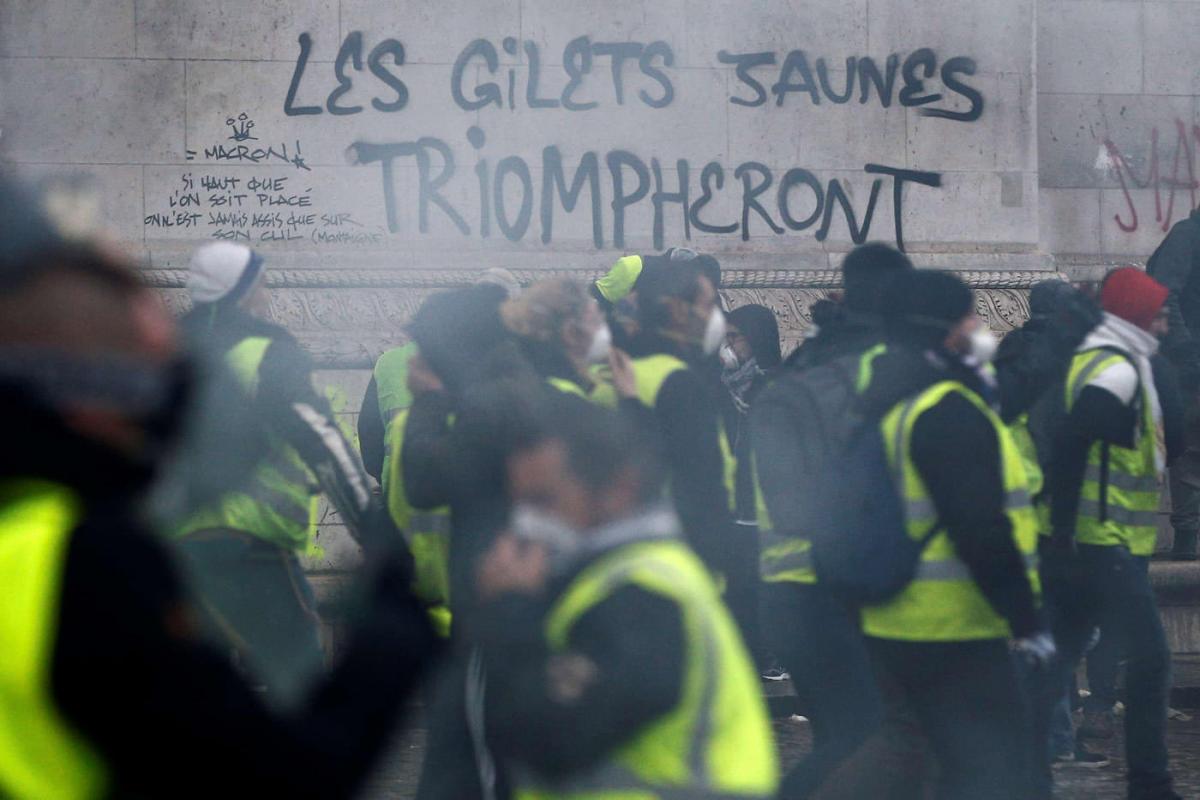
The Yellow Vest movement in France scored a victory, as President Emmanuel Macron agreed to suspend a controversial fuel tax after weeks of increasingly violent protests. This may be concretely a win for the working class, but the fact that Macron imposed the tax in the name of reducing carbon emissions has provided fodder for anti-environmental content to the movement. Exploiting this moment, Donald Trump blamed the uprising on the Paris climate accord, tweeting: “The Paris Agreement isn’t working out so well for Paris. Protests and riots all over France. People do not want to pay large sums of money, much to third world countries (that are questionably run), in order to maybe protect the environment. Chanting ‘We Want Trump!’ Love France.” (Photo via CrimethInc)

CounterVortex on three-week hiatus

CounterVortex will be on hiatus through mid-December, as your editor Bill Weinberg will be traveling in Italy, networking with squatters and migrant rights activists. He may post some material from the road. But we will resume regular updates to the Daily Report upon his return. This, of course, is contingent upon Verizon actually making net access available—sporadic outages have considerably slowed our work over the past two weeks. Help CounterVortex win its fight against Verizon, and make them provide the services they are required to supply under New York state law. For further details, listen to our latest podcast. Your continued support is more urgent than ever. Please give what you can to sustain our efforts. No donation is too small. (Hell, five bucks is a cup of coffee in New York City. It's also about 5% of our annual operating costs. Every little bit helps.) (Photo: IBEW)

Iraq
Iraq pipeline

Iraq: Baghdad and KRG in Kirkuk pipeline pact

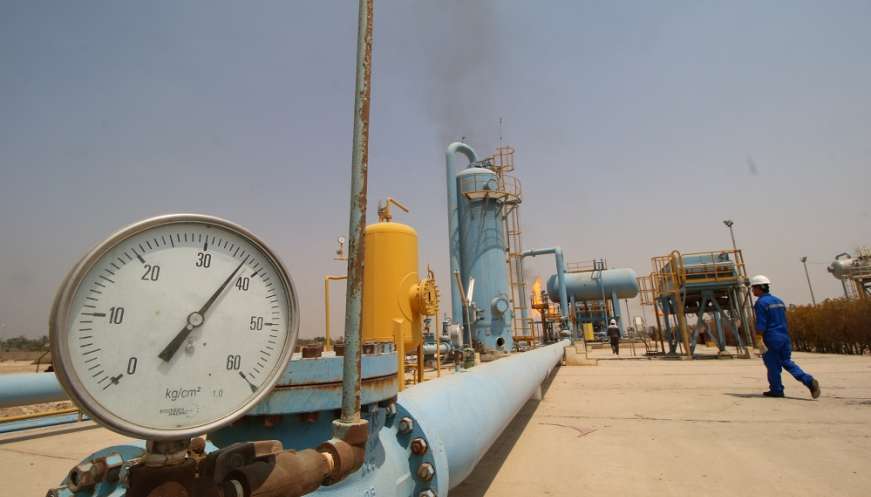
The export of oil from northern Iraq's contested enclave of Kirkuk is to resume under a deal struck between Baghdad and the Kurdistan Regional Government (KRG), Iraq's Ministry of Oil announced. With Baghdad's Kirkuk-Ceyhan pipeline disabled during fighting with ISIS, the so-called KRG pipeline is currently the only method of delivering Kirkuk oil to foreign markets other than through Iran. That route has now also been cut off by the resumption of US sanctions against the Islamic Republic. But Baghdad and the KRG have long been at odds over terms, and the situation was worsened with the central government's seizure last year of Kirkuk and its oil-fields, which had been in Kurdish hands since the KRG routed ISIS from the enclave in 2014. US National Security Advisor John Bolton welcomed the agreement between Baghdad and the KRG as a "promising first step to return to 2017 levels." The KRG pipeline is jointly owned by the Erbil-based KRG, BP and Russia's Rosneft. (Photo via Iraqi News Agency)