The Amazon
paro

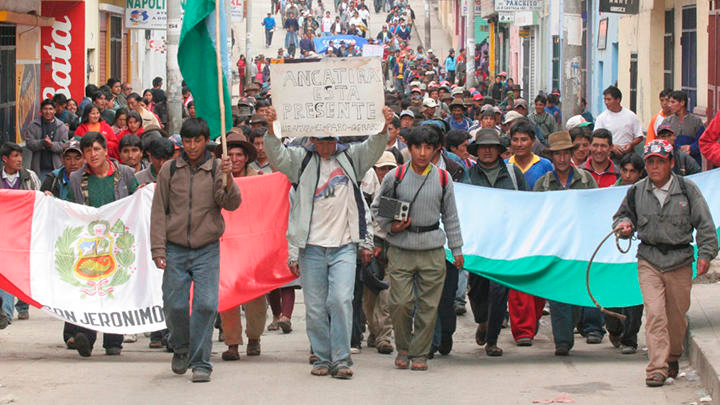
Peru: high court rules ‘social protest’ protected

In a decision made very timely amid new mobilizations against oil and mineral operations on peasant and indigenous lands, Peru’s high court struck down a provision of the country’s penal code that rights advocates said criminalized the right to “social protest.” The ruling by the Constitutional Tribunal voided an amendment to Article 200 of the Penal Code that had been instated under Legislative Decree 1237, issued by then-president Ollanta Humala in September 2015. The decree expanded the definition of “extortion” to apply not only to use of force to gain “economic advantage” but also “advantage of any other nature.” This expanded definition has been used to bring criminal charges against protesters who have blocked roads or occupied oil-fields or mining installations. (Photo: IDL)
North Africa
tripoli

Libya: Tripoli protests met with repression

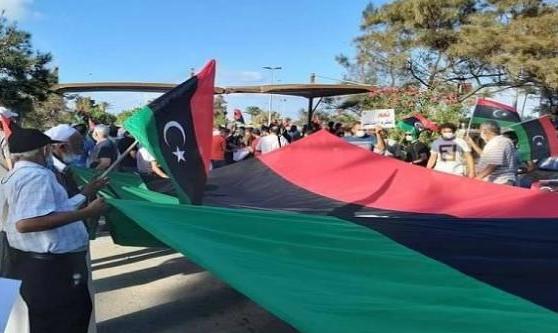
At least six protesters were abducted and several others wounded when armed men fired into the crowd to disperse a demonstration in the Libyan capital. The gunmen, who used truck-mounted heavy machine-guns as well as small arms, apparently belonged to a militia under the informal command of the Interior Ministry. In the aftermath, Prime Minister Fayez al-Sarraj of the Tripoli-based Government of National Accord suspended Interior Minister Fathi Bashaga while an investigation is underway. Protests have continued to fill Tripoli’s Martyrs Square, and have spread to other cities controlled by the GNA, including Misrata and al-Zawyia. Demonstrators are denouncing official corruption and calling for the provision of essential services such as electricity. They are also demanding an end to impunity for lawless militias and a transition to full democracy. (Photo: Libya Observer)

Mexico
ocosingo

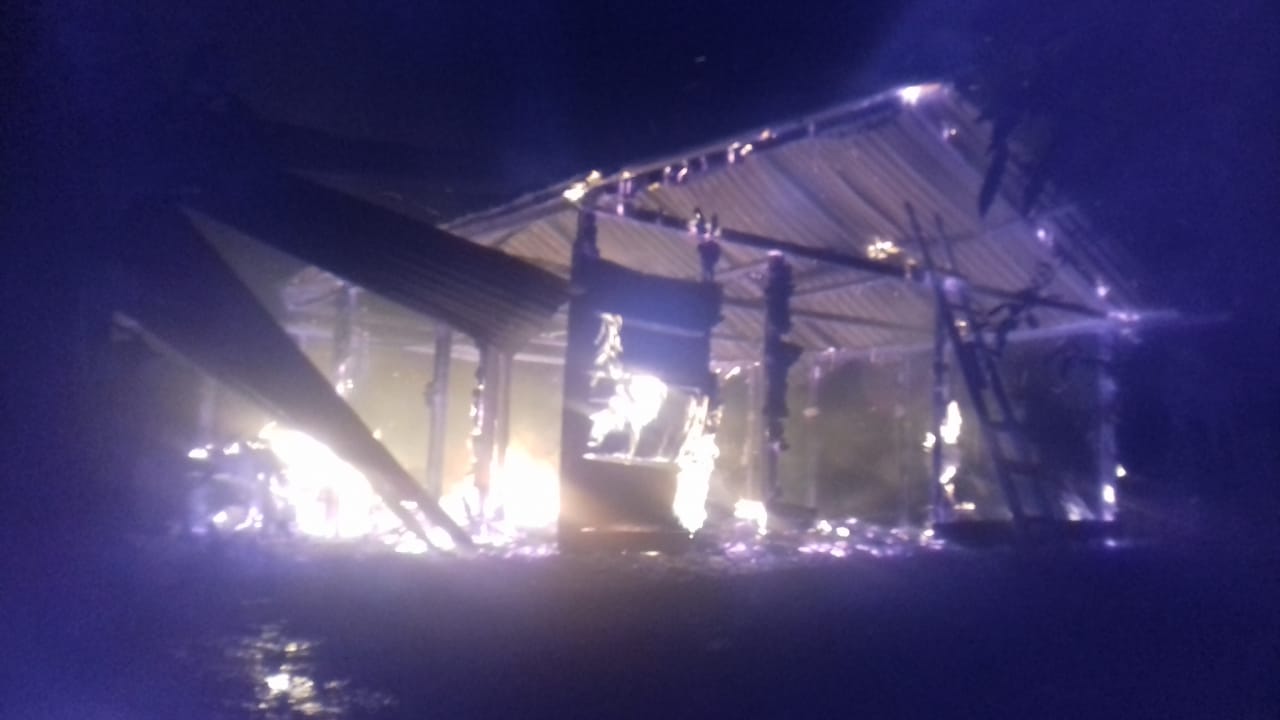
Mexico: Zapatista community attacked in Chiapas

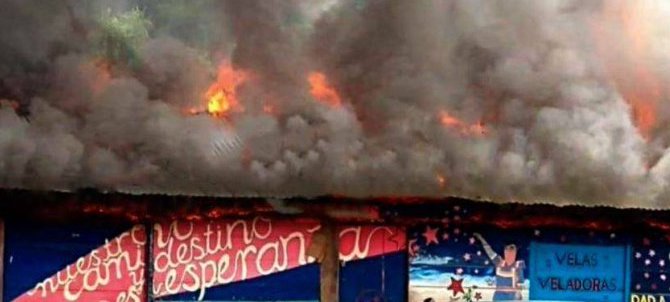
A communal coffee warehouse in one of the rebel Zapatista base communities in Mexico’s southern state of Chiapas was burned down in an attack by a rival campesino group that operates a paramilitary force in the area. The New Dawn of the Rainbow Commercial Center, maintained by small coffee cultivators loyal to the Zapatista rebel movement, was attacked by followers of the Regional Organization of Ocosingo Coffee Growers (ORCAO), according to a statement from the National Indigenous Congress. In response to the attack, a group of prominent Mexican cultural and intellectual figures, including popular singer Julieta Venegas, issued a statement, protesting: “This new aggression is part of the intensification of the war of attrition in the state of Chiapas, characterized by an increase in violence by paramilitary groups and organized crime.” (Photo via EspoirChiapas)

The Andes
paramilitaries

Colombia: Duque denies ongoing massacres

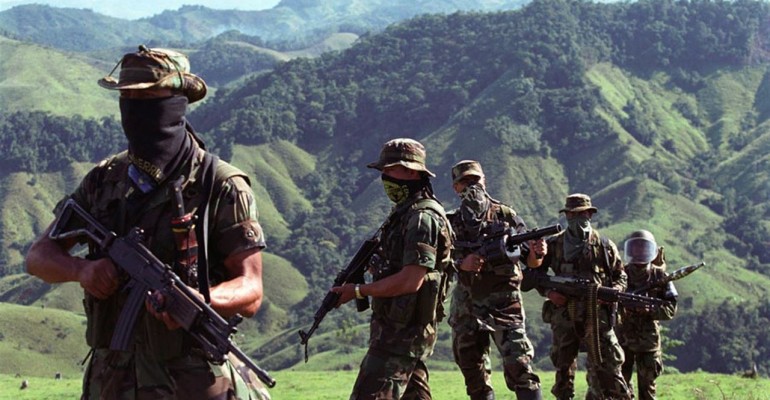
Amid the relentless and escalating wave of massacres and assassinations in Colombia, President Iván Duque is adopting openly euphemistic terminology in an attempt to downplay the crisis. This week he acknowledged that massacres at various points around the country over the past days had left more than 30 dead—but refused to call them “massacres.” Visiting Pasto, capital of Nariño department which has been the scene of several recent attacks, he said: “Many people have said, ‘the massacres are returning, the massacres are returning’; first we have to use the precise name—collective homicides.” (Photo via Contagio Radio)

North America
Lafayette Park

Podcast: What will it take to stop Trump? II

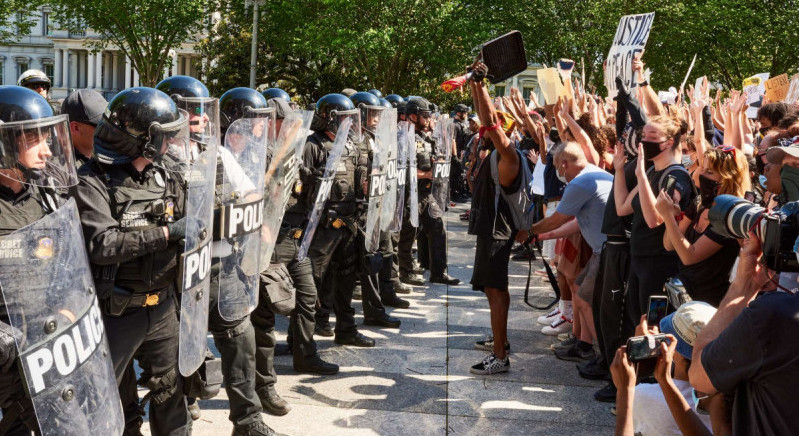
In Episode 56 of the CounterVortex podcast, Bill Weinberg takes stock of the evident reality that Trump is getting ready to steal the November election—whether by undermining the Postal Service, suspending the election entirely under pretext of the pandemic, or simply refusing to recognize the result and sparking a constitutional crisis that could potentially involve the military. The Transition Integrity Project, created to assess the impending dilemma, warns: “A show of numbers in the streets—and actions in the streets—may be decisive factors in determining what the public perceives as a just and legitimate outcome.” As the RNC delegates openly call for making Trump president for life, Weinberg examines examples from around the world where people are currently filling the streets to resist an illegitimate power-grab by a would-be dictator—from Belarus to Bolivia, from Hong Kong to Mali, from Thailand to Lebanon. Listen on SoundCloud or via Patreon. (Photo: GGWash.org)

Syria
Khan Sheikhoun

Syrian opposition marks seven years of chemical terror

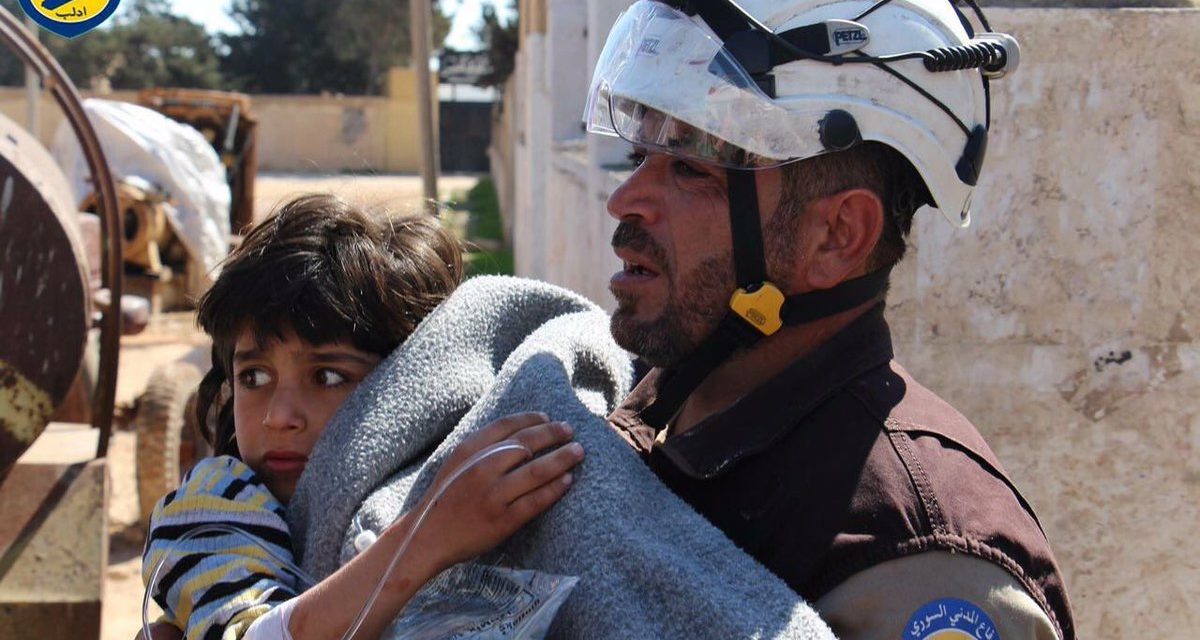
On the seventh anniversary of the chemical weapon attack on the Damascus suburb of Ghouta, which left 1,400 civilians dead, the Syrian opposition issued a statement protesting that the responsible parties are still yet to be held accountable—while gas attacks have continued in Syria. The National Coalition of Syrian Revolutionary & Opposition Forcesdemanded that the perpetrators of the attack be tried by the International Criminal Court. “The collapsed international system is the one that allowed this massacre to happen and left those responsible unjudged,” the statement said. The regime of Syrian dictator Bashar Assad has carried out hundreds of chemical attacks since 2013. (Photo from April 2017 Khan Sheikhoun attack via EA Worldview)

North America
nazi krishna

Hare Krishna Nazis (yes) strike in Los Angeles

A banner with the phrase “THE JEWS WANT A RACE WAR” was hung from an overpass above the heavily trafficked Interstate 405 in Los Angeles. An accompanying banner plugged the perpetrators’ website, GoyimTV.com. The site prominently displays a video of their followers standing on the overpass with the banners. The especially surreal twist is the evident involvement of some renegade Hare Krishna devotees. The site heavily promotes the vloggery of one Mukunda Dasa, a white Krishna convert who spouts an amalgam of Hindu and Nazi propaganda and imagery. This creepy convergence is not as strange as it may superficially seem, given the Hindu fascism of India’s ruler Narendra Modi. (Photo via JTA)

North Africa
Libya Refinery

Russian mercenaries occupy Libyan oil terminals

Libya’s eastern warlord Khalifa Haftar, his long siege of Tripoli broken by the city’s defenders in June, continues to hold the country’s principal oil terminals, and has established effective control over the Petroleum Facilities Guard. The UN this week brokered a ceasefire between Haftar and the Tripoli-based Government of National Accord, seeking to re-open exports from the terminals. Haftar agreed to the ceasefire after the US threatened sanctions against him. Russia, in turn, is apparently backing Haftar, sending arms and mercenaries to help his forces secure the terminals. Russia’s paramilitary Wagner Group is especially said to be present at Es-Sider terminal, outside the port city of Ras Lanuf. (Photo via Libyan Express)

Syria
Tal Al-Zahab

Syria: US troops clash with Assad regime forces

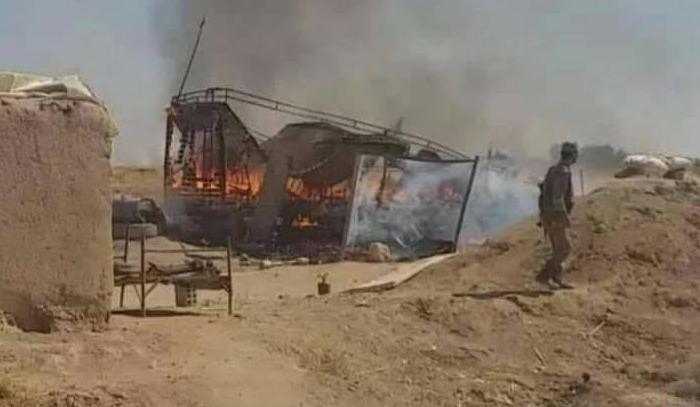
US troops clashed with an Assad regime unit in northeast Syria, an incident that illustrates the uneasy patchwork of power in the region. One regime soldier was reportedly killed and two wounded. Both Pentagon and Damascus accounts agreed the confrontation began when a joint convoy of US and Kurdish forces encountered a regime roadblock, but differed on which side fired first. The regime also claimed a US warplane fired on the roadblock, contrary to the Pentagon account. US-backed Kurdish forces have controlled much of the northeast since driving out the Islamic State last year. However, the regime, supported by Russia, also occupied part of the area as ISIS was defeated. (Photo: QalaatM via Twitter)

The Andes
samaniego

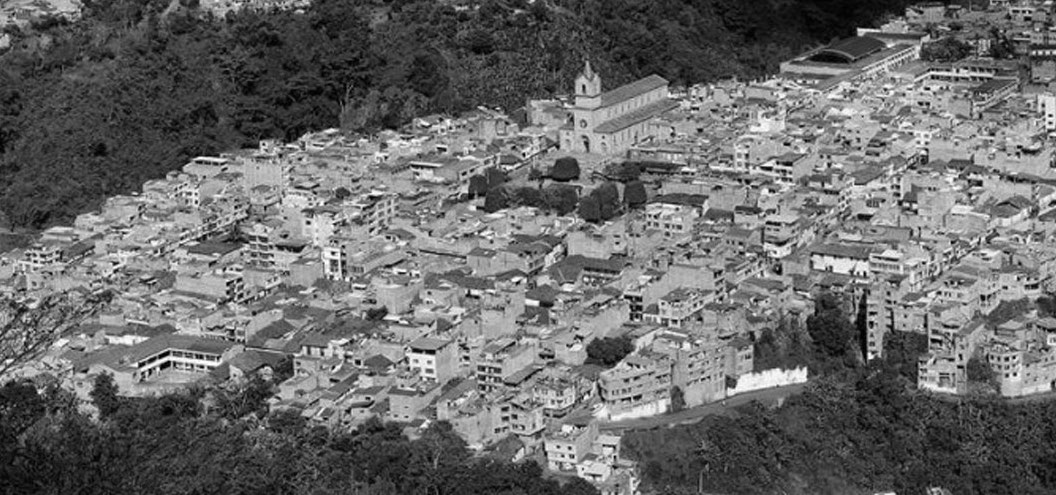
Students massacred in Colombian village

Eight young people at a social gathering were killed in Colombia’s southern Nariño department when unknown gunmen barged in and opened fire. The victims, between the ages of 17 and 25, were university students who had returned to the village of Samaniego due to the pandemic. They were enjoying a small party at a family farm on the edge of the village when the attack took place. One woman and one minor were among the dead. Nariño Gov. Jhon Rojas did not name any group as responsible for the attack, but noted presence in the area of ELN guerillas, “dissident” FARC factions that have remained in arms despite the peace accord, and right-wing paramilitaries. Rojas called on national authorities to “return tranquility to the region” by fulfilling terms of the 2016 peace accords, which President Ivan Duque has opposed. (Photo: Colombia Reports)

Southern Cone
quilombo

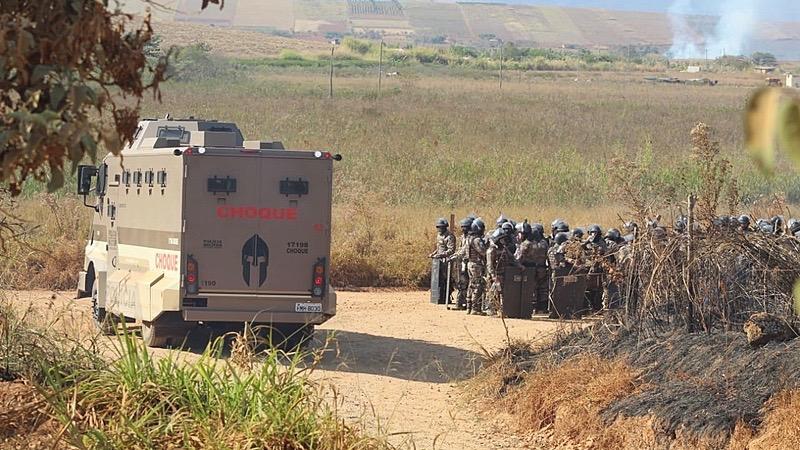
Military Police evict land occupation in Brazil

Brazilian Military Police completed the eviction of a long-standing land occupation called Quilombo Campo Grande in Minas Gerais state, after a struggle of almost three days. Police brought in armored vehicles and fired tear-gas to clear the community from the land, before moving in to destroy homes and crops. Also demolished was the Eduardo Galeano Popular School, where children, youth and adults studied together. The Landless Rural Workers Movement (MST), whose followers established the squatter community on the abandoned lands of a bankrupt sugar mill 22 years ago, protested that the mass eviction leaves some 450 families homeless in the midst of a pandemic. (Photo: MST via Brasil de Fato)

Central America
Cubilguitz

Maya villagers attacked by gunmen in Guatemala

Q’eqchi Maya campesinos in Guatemala’s central Alta Verapaz department were attacked by a group of unknown gunmen who violently evicted them from their homes before setting them to the torch. At least 40 families lost their homes in the attack at the hamlet of Balbatzul, in Cobán municipality. President Alejandro Giammattei said National Civil Police troops have taken control of the hamlet, and the Fiscalía has opened an investigation. Some of the targetted homes were on occupied lands of a large farm, Finca Cubilguitz, which appears to have been at issue in the conflict. Local campesinos moved onto the lands last year, but leadership of the occupation has been contested between followers of the Committee for Campesino Unity (CUC) and ex-guerilla commander César Montes. (Photo: CUC)