

South Asia
hazara

Pakistan: Hazara massacre sparks hunger strike

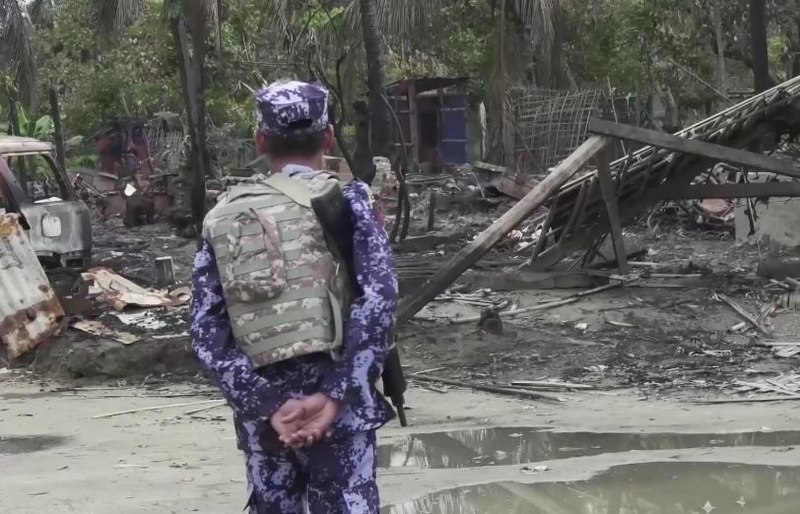
Members of Pakistan’s Hazara people have launched a sit-in and public hunger strike after a massacre targeted the Shi’ite minority at a coal-field in a remote area of Balochistan province. Hundreds have been blocking a major thoroughfare through the provincial capital, Quetta. Interior Minister Sheikh Rashid was sent in to meet with a delegation of the Majlis-e-Wahdatul Muslimeen, the organization leading the sit-in, but his offer of compensation to victims’ families was rebuffed. In the attack, armed men rounded up miners from worker housing at the coal-field. Those determined to be Hazara, 11 in all, were marched into the hills and summarily shot. Many had their throats slit or were otherwise mutilated. The local franchise of the “Islamic State” claimed responsibility for the massacre. Families of the victims are refusing to bury their loved ones, but have brought the bodies to the site of the sit-in, demanding the Balochistan government either arrest the killers or resign. (Photo via Twitter)

Iraq
Iraq pipeline

Crisis-hit Iraq mortgages oil to China

Iraq has won an up-front $2 billion infusion from a state-owned Chinese oil company, as it continues to struggle amid the pandemic-triggered collapse in energy prices. After numerous bids to Iraq’s State Organization for Marketing of Oil (SOMO), the deal was clinched by ZhenHua Oil Co, subsidiary of China North Industries Group Corp (Norinco). The deal marks the first in which Iraq has offered a pre-payment for crude, with oil effectively used as security for a loan. According to Bloomberg, SOMO is to supply some 130,000 barrels a day of crude for five years. Norinco is primarily a defense company, with investments in oil and minerals in several countries. (Photo via Iraqi News Agency)

Planet Watch
tongass

Alaska Native tribes challenge Tongass logging

Five Alaska Native tribes filed a lawsuit to challenge the Trump administration’s move to allow logging in the 17 million-acre Tongass National Forest. In October, the Trump administration announced that it would exempt the Tongass from the Clinton-era Roadless Area Conservation Rule, or the “roadless rule.” The roadless rule blocks logging and road construction in specified forests. Alaskan state leadership petitioned for the reversal, which puts nine million acres of the Tongass at risk. According to the United States Forest Service, the Tongass is the “largest intact temperate rainforest in the world.” The complaint details the environmental criticality of the Tongass as a carbon sink and sole habitat of rare endemic species, as well as its importance to indigenous groups. The suit states: “The Tongass National Forest is central to the life ways of the Tlingit, Haida, and Tsimshian people who have lived in and depended on the forest since time immemorial.” (Photo via EBEB)

The Andes
sillazo

Bolivia: Evo Morales warns of new coup

Former Bolivian president Evo Morales, back in his country from exile in Argentina after October’s elections returned his Movement to Socialism (MAS) to power, warned of the ongoing danger of a new coup d’etat and asked his followers to debate how to best defend new President Luis Arce and the “process of change.” The comments came at a meeting of the MAS in Chapare region, Morales’ traditional heartland of support. Recalling his own ouster in November 2019, Morales said: “The issue of the coup is still compelling; it is an ideological, programmatic struggle; it is a cultural, social, communal and, of course, an electoral struggle.” Invoking divided loyalties in the military, he added: “I am also convinced that in the Armed Forces there are not only those who respect and admire the MAS, but there are also anti-imperialist soldiers.” However, he added that “they are not many,” and others have “submitted to the North American empire.” (Photo: Los Tiempos de Cochabamba via Twitter)

Inner Asia
uighur women

China-Turkey extradition treaty to target Uighurs

China announced the ratification of an extradition treaty with Turkey that it intends to use,inter alia, to accelerate the return of refugees and Uighur Muslims suspected of “terrorism.” Since the 1950s, Turkey has welcomed Uighurs fleeing persecution in China. Uighurs and Turks have linguistic, cultural and religious ties. Currently, more than 50,000 Uighurs call Turkey home. While the treaty does provide grounds for refusal of extradition on the basis of Turkish citizenship, it is feared by many Uighurs that Chinese persecution will follow them to Turkey. “This extradition treaty will cause worry among Uighurs who have fled China and do not yet have Turkish citizenship,” Dilxat Raxit, spokesman for the Germany-based World Uyghur Congress, told AFP. (Photo of Uighur women in Xinjiang: mikepryan via Wikimedia)

Greater Middle East
Cumhuriyet

Turkey convicts newspaper editor on ‘terrorism’ charges

Can Dündar, the former editor-in-chief of Turkish newspaper Cumhuriyet, was convicted on charges of terrorism in Turkey and sentenced in absentia. The Istanbul court found Dündar guilty of aiding a terrorist organization and espionage, sentencing him to 27 years and six months in prison. Dündar was first sentenced to five years in 2016 on espionage charges and attempting to overthrow the government for publishing footage that allegedly showed Turkey’s state intelligence agency transporting weapons to Syrian rebels in 2014. Dündar was later released when the matter went to appeal. Upon his release, Dündar fled the country while Turkish authorities ordered the seizure of his property and froze his bank accounts. He is now living in exile in Germany. (Photo: WikiMedia via Jurist)

Africa
Mali

UN to investigate ‘crimes against humanity’ in Mali

UN investigators into political violence in Mali reported to the Security Council that they found evidence that government forces have committed “war crimes,” while jihadists and other armed groups perpetrated “crimes against humanity.” The allegations are made in a 338-page report compiled by the International Commission of Inquiry, a panel examining events in Mali over the six years after it spiralled into conflict in 2012. The report, which has not yet been made public, recommends establishing a special court to try accused perpetrators. But the recommendations are being met with some wariness in Mali. The opposition Rally of Patriotic Forces demands that foreign militaries operating in the country be covered in the scope of the investigation—including France. (Photo via Andy Morgan Writes)

Watching the Shadows

Podcast: Rule of the Strongmen

In Episode 59 of the CounterVortex podcast, Bill Weinberg takes stock of Trump’s evident preparation for a coup d’etat and what could be a culminating moment for the current crisis of American democracy. In the context of this dilemma, he discusses two very timely new books with similar titles that both examine the mechanics by which dictators seize and maintain power: Strongman: The Rise of Five Dictators and the Fall of Democracy by Kenneth C. Davis and Strongmen: Mussolini to the Present by Ruth Ben-Ghiat. Listen on SoundCloud or via Patreon. (Image via Macmillan)

Afghanistan
Badakhshan

Did China plan ‘false flag’ attacks in Afghanistan?

India’s Hindustan Times reports that Afghanistan has busted a conclave of 10 Chinese espionage agents that was supposedly “operating a terror cell” in Kabul. Citing unnamed diplomats and security officials, the account claims the spies were in contact with the Haqqani Network, now the inner core of the Taliban insurgency, and were gathering information on the activities of Uighur militants in Badakhshan province. Badakhshan includes Afghanistan’s eastern “panhandle” that extends to the border with China’s Xinjiang region, and has been named before as a stronghold of Uighur militancy. The account states: “One view within the Afghan security establishment is that the detainees were creating a fake East Turkestan Islamic Movement (ETIM) module in Afghanistan to entrap ETIM operatives in Afghanistan.” ETIM is the supposed Uighur network blamed by Chinese authorities for sporadic armed attacks within the People’s Republic over the past generation, although there is skepticism that it actually exists in any organized sense. (Map via Afghan War Blog)

North Africa
Libya

Libya: Turkish troop presence threat to ceasefire

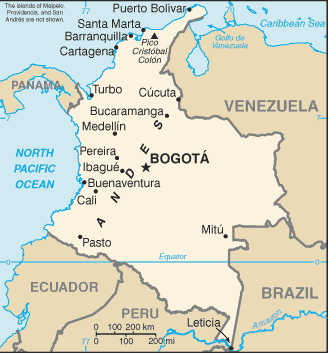
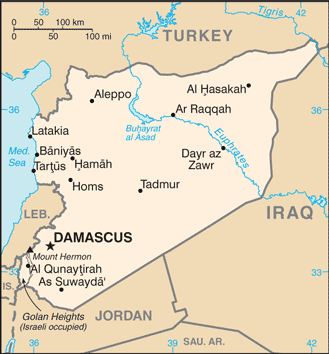
Libya’s eastern warlord Gen. Khalifa Haftar, who launched an offensive last year to capture the capital Tripoli from the UN-recognized Government of National Accord (GNA), threatened to launch attacks on Turkish forces if Ankara doesn’t withdraw troops and mercenaries sent in to back up the GNA. Haftar’s comments came in response to the Turkish Parliament’s move to extend for 18 months a law that allows the deployment of Turkish troops in Libya. Turkey’s defense minister responded that any attack by Haftar on its personnel would be met with force. “A war criminal, murderer Haftar and his supporters must know that they will be seen as a legitimate target in case of any attack on Turkish forces,” Hulusi Akar said in an address to Turkish units in Tripoli. The ultimatum is a threat to the ceasefire that has largely held since it was signed in October. (Map: CIA)

Planet Watch
Line 3

Global petro-resistance greets 2021

As the year comes to a close, Native American activists and their allies in Minnesota are launching a weekly protest vigil against the planned Line 3 pipeline, that would bring more Canadian shale-oil to US markets. The self-proclaimed “water protectors” pledge to continue the campaign into the winter. The Conservation Council of Western Australia meanwhile launched legal challenge against approval of the new Burrup Hub liquified natural gas facility, asserting that it is the “most polluting fossil fuel project ever to be proposed in Australia,” and “undermines global efforts [to mitigate climate change] under the Paris Agreement.” While Denmark has pledged to end North Sea oil exploitation by 2050 as a step toward meeting the Paris accord goals, other Scandinavian governments remain intransigent. The Supreme Court of Norway has upheld a judgment allowing the government to grant oil licenses in new sections of the country’s continental shelf. The decision was challenged by environmental groups including Nature & Youth Norway, who claimed that it violates the European Convention on Human Rights. (Photo: Stop Line 3)

South Asia
Karima Baloch

Pakistani rights activist found slain in Toronto

Pakistani human rights activist Karima Baloch, 37, was found dead in Toronto, Canada. Baloch went missing the previous day. The Toronto Police stated that “officers have determined this to be a non-criminal death and no foul play is suspected.” But Baloch, from Pakistan’s restive Balochistan region, fled her country in 2015 because of threats on her life. As a campaigner with the Baloch Students’ Organization, she harshly criticized the Pakistani military and state over ongoing rights abuses in the region. She continued to campaign for the rights of people in Balochistan while in exile, and the threats against her did not stop after she left Pakistan. Baloch’s close friend, Lateef Johar Baloch, told reporters that she had recently received anonymous threats. (Photo via TimesNowNews, India)