Africa
Ethiopia

Ethiopia: ‘war crimes’ seen in Tigray conflict

UN High Commissioner for Human Rights Michelle Bachelet addressed allegations of human rights and humanitarian law violations in Ethiopia, calling for an investigation into the claims, and urgent protection of civilians. The conflict between central government forces and the Tigray People’s Liberation Front (TPLF) began seven weeks ago, in the Tigray region of northern Ethiopia. The claims include bombardment of civilian populations and ethnically targeted massacres. Abuses were reportedly carried out by both central government and TPLF forces—as well as by the armed forces of neighboring Eritrea, which has entered the conflict on the side of the Ethiopian central government. (Map via EthioVisit)

Greater Middle East
Selahattin Demirtaß

Demand Turkey release detained Kurdish leader

The European Court of Human Rights (ECHR) held that Turkey must take all necessary measures to secure the immediate release of Selahattin Demirtaß, a Kurdish politician held by the government on terrorism charges. The Grand Chamber found that there had been multiple violations of the European Convention of Human Rights in his case. It also found no evidence supporting Demirtaß’ detention that linked his actions and the alleged offenses. The Court concluded that “the purposes put forward by the authorities for the applicant’s pre-trial detention were merely cover for an ulterior political purpose, which is a matter of indisputable gravity for democracy.” (Photo: Demirtaß’ presidential campaign launched outside Edirne prison where he is incarcerated, May 2018, via Wikipedia)

The Andes
paramilitaries

UN rights chief warns of heightened violence in Colombia

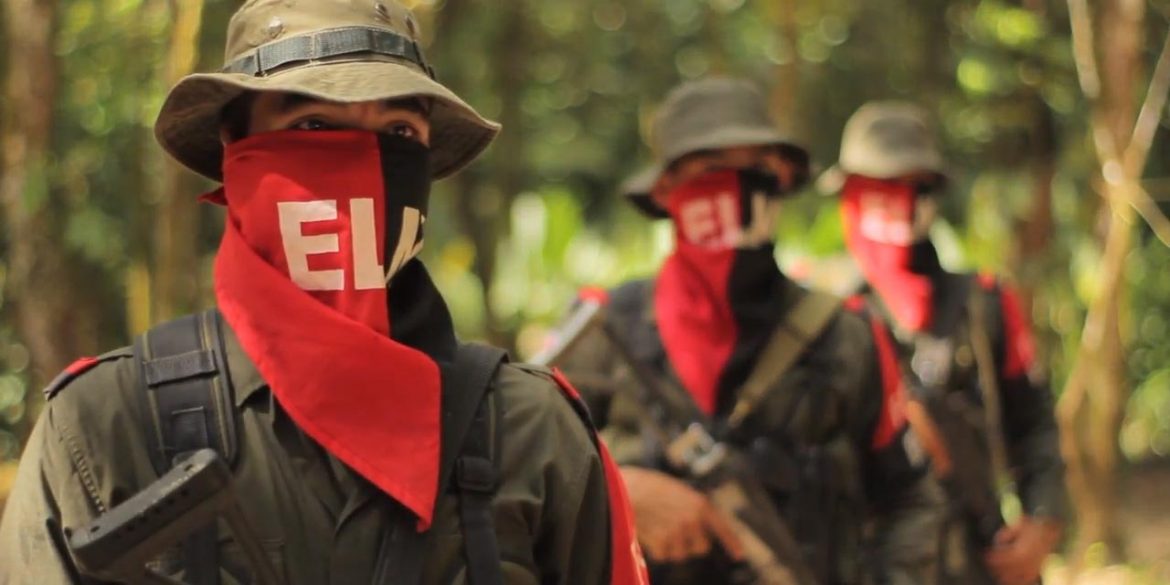
UN High Commissioner for Human Rights Michelle Bachelet urged state authorities in Colombia to respond to heightened violence with concrete action and stronger protection. According to the UN Human Rights Office, 375 killings have been recorded in Colombia thus far in 2020. Of these killings, 255 people were slain in 66 massacres, and 120 human rights defenders have also been killed. What is more, since Colombia’s peace agreement was signed in November 2016, a total of 244 demobilized FARC fighters have been slain. The killings continue to be committed “by non-state armed groups, criminal groups and other armed elements,” moslty in remote areas of Colombia, and particularly targeting “peasants, indigenous and Afro-Colombian people.” (Photo via Contagio Radio)

Southern Cone
Chile

Chile: indigenous seats in constitutional convention

The Chilean Senate unanimously approved a bill to reserve 17 of its 155 seats for indigenous peoples in the country’s upcoming constitutional convention. The bill provides a fixed number of seats for representatives of designated indigenous communities in the country. The Mapuche, the largest indigenous group, are to have seven seats. Indigenous people constitute around 11.3% of Chile’s total population of 19 million, and their under-representation in politics has contributed to social and economic inequalities. However, despite demands, the Senate did not reserve seats for Afro-descendants, another under-represented group in Chilean society. (Photo: Pixabay via Jurist)

Planet Watch
maori

New Zealand declares ‘climate emergency’

The New Zealand parliament has passed a motion declaring a “climate emergency,” joining a growing number of nations that have formally acknowledged the crisis and approved similar declarations. The motion was supported by the Labour Party, the Greens and Te Pāti Māori, while the National Party and ACT opposed it. Prime Minister Jacinda Ardern moved the motion, calling climate change “one of the greatest challenges of our time,” and citing the “devastating impact that volatile and extreme weather will have on New Zealand and the wellbeing of New Zealanders.” The motion also notes “the alarming trend in species decline and [the] global biodiversity crisis, including the decline in Aotearoa’s indigenous biodiversity.” (Photo: Shutterstock via The Conversation)

Oceania
torres strait

Strategic strait at issue in Australia-China rift

Amid trade wars, diplomatic tiffs and propaganda sniping, the ugliness between China and Australia seems set to escalate as Beijing enters an agreement with Papua New Guinea to establish an industrial foothold within the narrow Torres Strait. Radio Australia reports that community leaders in North Queensland, just across the strait from New Guinea, fear that China’s plan to construct the facility will jeopardize border security and threaten the commercial fishing sector. There are also concerns that Beijing will attempt to militarize the outpost, seeking to counterbalance the new US-Australian naval base planned for PNG’s Manus Island. (Map: Torres Strait Regional Authority)

The Caucasus
Nagorno-Karabakh

Azerbaijan arrests four soldiers for war crimes

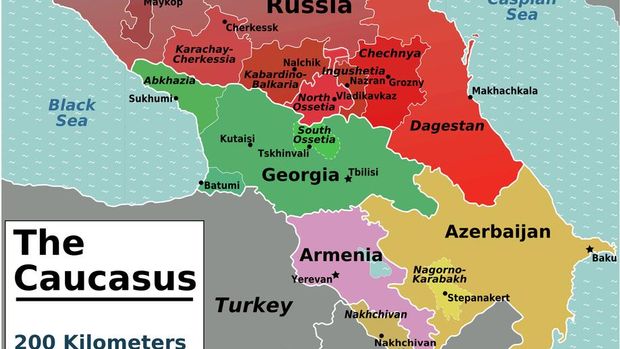
The Azerbaijan Prosecutor General’s Office announced that it has detained four soldiers accused of war crimes against Armenians in the recent Nagorno-Karabakh conflict. Two of the detained servicemen are accused of recording their “offensive acts” against the bodies of killed Armenian soldiers and sharing the videos via social media. The other two are accused of destroying Armenian gravestones in a village cemetery. They also apparently recorded their actions and shared the videos through social media. But the Prosecutor General’s report was careful to exonerate Azerbaijani officials, including President Ilham Aliyev, and claimed that some videos depicting war crimes “were found to be fake.” (Map: Wikipedia)

Europe
Ukraine

ICC prosecutor to open investigation into Ukraine

The International Criminal Court (ICC) chief prosecutor said that a preliminary examination has found that there is a reasonable basis to believe crimes against humanity and war crimes have been committed in Ukraine, justifying the opening of an investigation. The preliminary examination was opened in 2014 when Ukraine, not formally a member of the ICC, lodged a declaration under Article 12(3) of the Rome Statute, accepting the jurisdiction of the court over possible crimes committed on its territory. Some of the war crimes allegations concern Crimea, a Ukrainian territory that was unilaterally occupied and annexed by Russia in March 2014. Ukraine is accepting the court’s jurisdiction while Russia does not, which could open a dilemma for the ICC. (Map via Perry-Castañeda Library Map Collection)

Inner Asia
ET-Gulag-Archipelago

ICC prosecutor rejects Uighur genocide complaint

International Criminal Court (ICC) prosecutors rejected a complaint filed by exiled Uighurs calling for an investigation of China on charges of genocide and crimes against humanity. The complaint was dismissed on jurisdictional grounds; the People’s Republic of China, like the United States, does not recognize the ICC. But on the question of forcible removal from countries where the ICC does have jurisdiction, the text of the rejection parsed definitions very closely. While acknowledging forced deportations of Uighurs from Tajikistan and Cambodia back to China to face potential internment and persecution, the ICC stated: “Not all conduct which involves the forcible removal of persons from a location necessarily constitutes the crime of forcible transfer or deportation.” (Photo: ETNAM)

Africa
Jubaland

Breakaway regions at issue in Somalia-Kenya rift

Somalia severed diplomatic ties with neighboring Kenya, accusing it of violating Somali sovereignty and meddling in its internal affairs. Although the statement cited no specific grievances, it came exactly as Kenyan President Uhuru Kenyatta was hosting in Nairobi the president of Somaliland, a breakaway region in Somalia’s northwest that declared independence in 1991. Kenyatta and Somaliland’s President Musa Bihi Abdi signed a pact on increased security and economic cooperation—which is clearly viewed by Mogadishu as a step toward formal recognition. Two weeks earlier, Somalia ordered the expulsion of Kenya’s ambassador, accusing Nairobi of interfering in the electoral process in Jubaland, an autonomous region along the Kenyan border. Kenya maintains a military force of some 3,500 troops in Jubaland, where elections last year solidified the rule of the incumbent regional president, Ahmed Madobe, who is harshly at odds with Mogadishu. (Map: African Executive)

Iran
ahwaz women

Iran: sweeps target Ahwazi women activists

Rights advocates in Iran’s Khuzestan province, homeland of the marginalized Ahwazi Arab people, report another wave of sweeps and incommunicado detention of local activists. Among those detained in raids by the Islamic Revolutionary Guards Corps (IRGC) are Zeinab Sawari, a teacher and prominent Ahwazi advocate for women’s and children’s rights, who had recently been involved in fundraising for victims of the severe flooding that devastated the region this year. Also detained by IRGC agents were Maryam Ameri and Fatema Tamimi, whose homes were searched and ransacked, with computers and extensive archival material confiscated. Maryam and Fatema had worked on Ahwazi cultural programs together, cataloguing traditional folk songs and producing short documentaries about Ahwazi music, lore and history. Azhar Alboghbiesh, a young activist volunteer for the project, was likewise arrested in a raid on her home, in which agents reportedly fired in the air to intimidate her family. All remain in detention at undisclosed locations. (Photo of Azhar Alboghbiesh and Maryam Ameri via Dur Untash Studies Center)

countervortex

Keep CounterVortex alive with a year-end donation

We at CounterVortex understand that we have a niche audience. Our ultra-dissidentperspective as well as the fact the we cover “obscure” wars, conflicts and social struggles outside the media spotlight, means that we will never have a mass readership that can raise thousands of dollars (as do our frankly rival websites that successfully play to the crowd). We accept this, and indeed wear it as a badge of pride. But we need to know that we have, at least, a small and dedicated readership that can raise hundreds of dollars once a year. Our modest goal for our year-end fund-drive is just $500—less than half of our annual operating costs (web-hosting, domain registration, site maintenance & development, etc). With multiple crises now converging—preparations for a domestic coup d’etat, war moves against Iran, the political weaponizing of a pandemic—the world situation is actually far more desperate now than when we first launched our website, long ago, in the immediate aftermath of 9-11. We are convinced that our voice, marginal as it may be, is at this moment more imperative than ever. We need your support. Please come through for us.