Europe
antiwar

Anti-war protests sweep across Russia

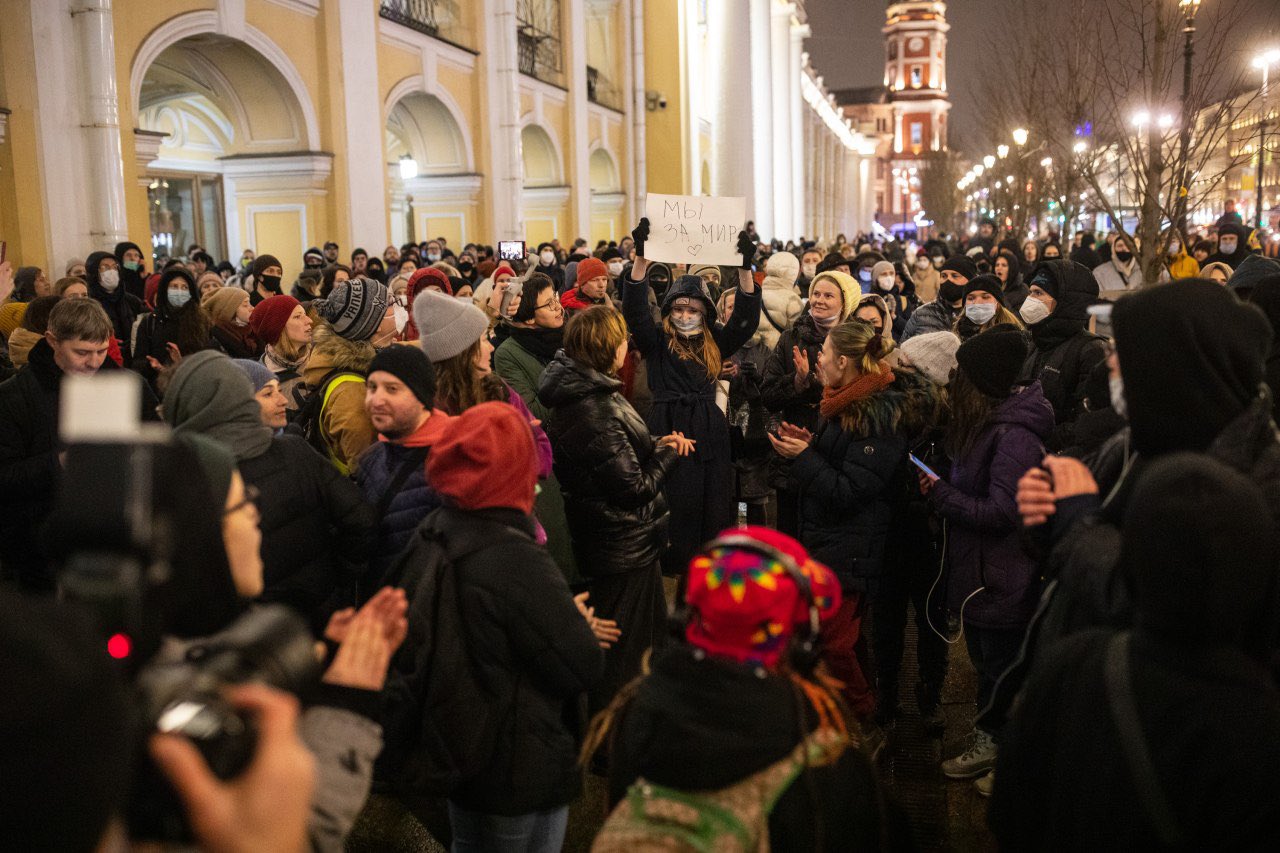
Thousands have taken to the streets of cities across Russia in open protest of Putin’s invasion of Ukraine—from Kaliningrad in the west to Vladivostok in the east. What began as isolated “solo pickets”—essentially the only legal form of public protest in Russia—quickly snowballed into mass unpermitted marches and rallies. The largest demonstrations were reported from Moscow and St Petersburg, where they were met with riot police in full body armor. In Moscow, Red Square was closed off by military vehicles, preventing protesters from marching on the seat of government power. Independent monitoring group OVD-Info counted some 1,800 protesters arrested by security forces in some 60 cities, including Tyumen, Kazan, Rostov-on-Don, Novgorod, Novosibirsk, Irkutsk and Yekaterinburg. Popular slogans include “No to war” and “Hands off Ukraine.” Many demonstrators were heard to shout “Arrest Putin, not me!” as they were dragged away by police. (Photo of St Petersburg protest: OVD-Info)
Europe

Russian anarchists call for anti-war resistance

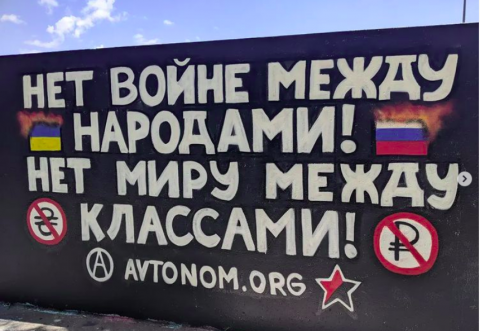
As Putin finally ordered his forces across the Ukrainian border into the breakaway Donbas region, the Russian anarchist group Autonomous Action issued a statement to the world, entitled “Against annexations and imperial aggression.” It reads: “We urge you to counter the Kremlin’s aggression by any means you see fit. Against the seizure of territories under any pretext, against sending the Russian army to the Donbas, against militarization. And ultimately against the war. Take to the streets, spread the word… Do not be silent. Take action. Even a small screw can jam the gears of a death machine.” (Banner reads: “No war between peoples, no peace between classes.” Via Autonomous Action)

Watching the Shadows
pegida

Podcast: Russia and the new fascism

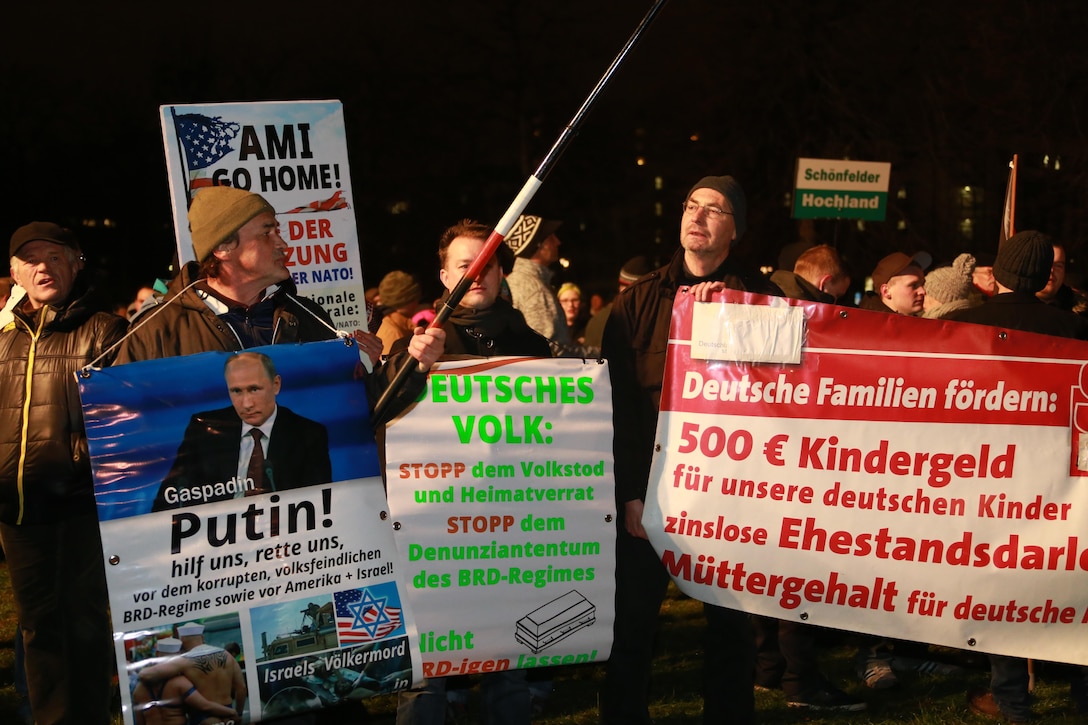
In Episode 111 of the CounterVortex podcast, Bill Weinberg explores the legacy of Francis Parker Yockey and other exponents of the fast-growing current in the Western fascist tradition that looks to Russia as a patron and ally. Under the leadership of Alexander Dugin, “Putin’s Rasputin” and the theorist of a “Eurasian” bloc against Western democracy, resurgent far-right Russo-nationalism is building ties to neo-fascist organizations across Europe—as well as to supposed “anti-war” leftists in the United States. The Putin propaganda machine’s Nazi-baiting of the Ukrainians is yet another example of the sinister trend of fascist pseudo-anti-fascism. It is imperative that progressives in the West do not take the toxic bait of this “Red-Brown Alliance.” Any genuine anti-war position must begin with repudiating Putin’s threats and aggression against Ukraine. Listen on SoundCloud or via Patreon. (Photo: Far-right protesters in Germany with sign reading “Putin, save us!” Via PRISM)

East Asia
kurils

Submarine incident in flashpoint Kuril Islands

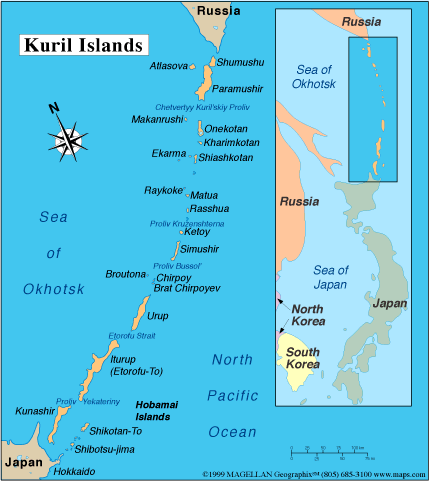
Amid quickly escalating tensions over Ukraine, Russia lodged a diplomatic protest with the US embassy in Moscow, claiming that a US nuclear submarine penetrated Russian territorial waters near the Kuril Islands. According to Moscow’s Defense Ministry, a Virginia-class US Navy submarine was detected off Urup Island, where Russia’s Pacific Fleet was conducting exercises. The Defense Ministry said the submarine was chased off by Russian vessels, and retreated at “maximum speed.” The statement accused the US of a “violation of Russia’s state border.” Media accounts did not emphasize that whether this purported incident indeed took place in Russian waters is questionable, as the Kurils are in part claimed by Japan—a dispute which has prevented Moscow and Tokyo from entering a treaty to formally end their World War II hostilities. Russia over the past weeks has conducted naval maneuvers in the Mediterranean, the North Sea, and northeast Atlantic Ocean, as well as the Pacific and Sea of Okhotsk, where the Kurils are located.  (Map: International Kuril Island Project)

Inner Asia
GBAO

Tajikistan: internet darkness in Gorno-Badakhshan

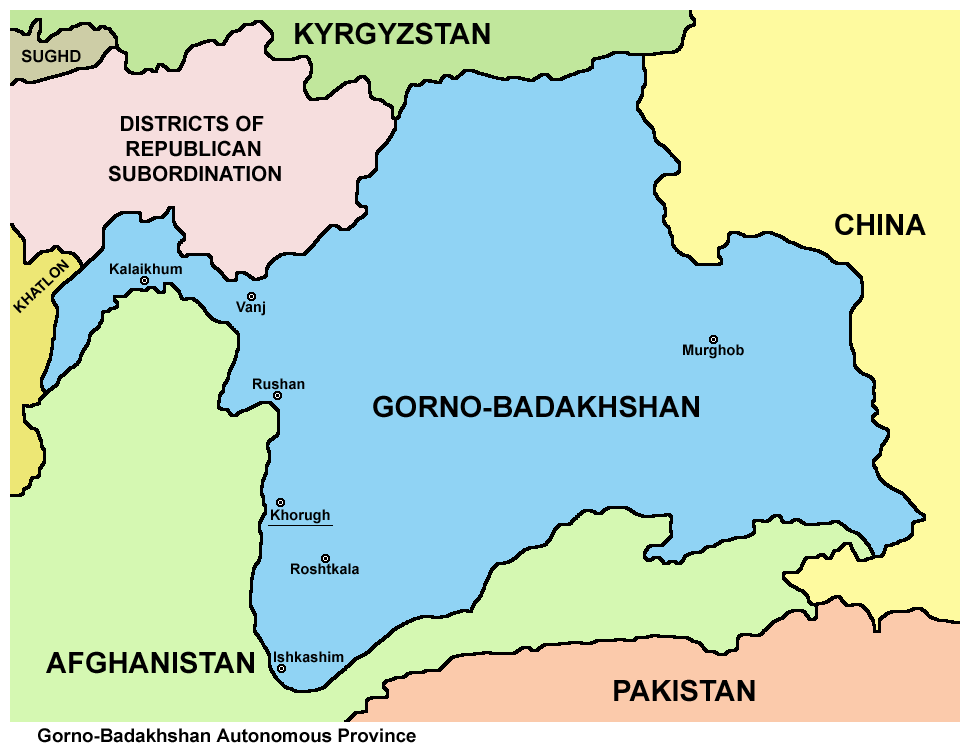
Human Rights Watch urged Tajikistan’s authorities to restore internet connectivity in Gorno-Badakhshan Autonomous Region (GBAO, by its Russian acronym), and called on the national government to ensure due process for detained political activists. The trouble in the GBAO began in late November, when the shooting of a local man during an arrest sparked protests in the regional capital, Khorog. Protests calmed several days later, after local authorities vowed to undertake an investigation into the shooting, as well as the deaths of two demonstrators. The government also pledged that it would not prosecute arrested protesters, and would restore internet connectivity—but two months on, it has not done so. The GBAO is the home of the increasingly restive Pamiri ethnic minority, and was recently the scene of Russian-led military maneuvers on the border with Afghanistan. (Map: Wikipedia)

Europe
anti-war

Glimmers of anti-war dissent in Russia

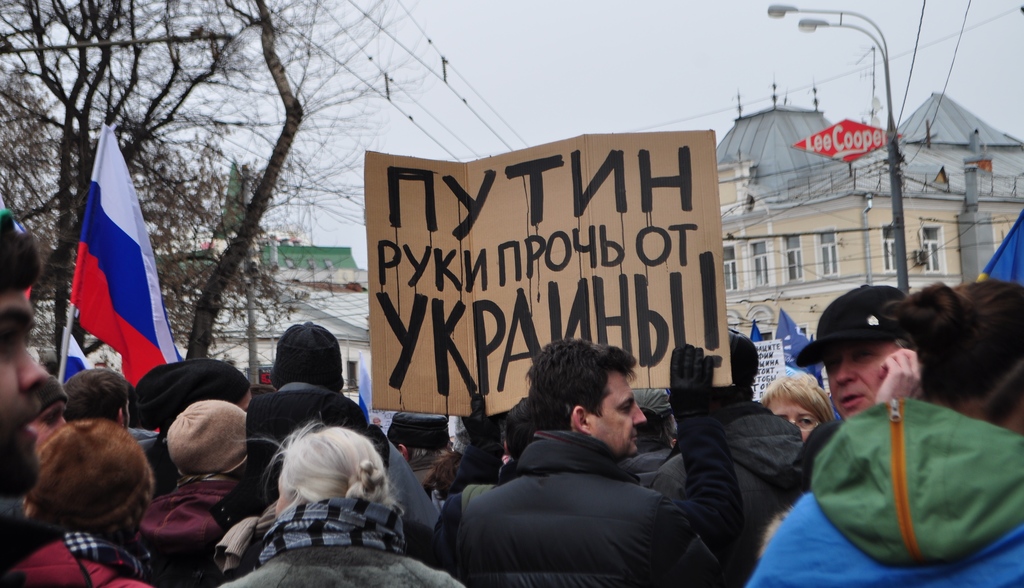
More than 100 Russian writers, activists and academics have signed a petition in protest of the war drive on Ukraine, which was published on the independent news site Echo of Moscow. The “Declaration by supporters of peace against the Party of War in the Russian government” charges: “The citizens of Russia are…becoming prisoners of criminal adventurism.” It has especially harsh words for Russia’s state media: “On state TV there is only one point of view, and that is the point of view of the supporters of war… [A]ggression pours out, and hate towards Ukraine, America, and Western countries… [W]ar is treated as an acceptable and inevitable development of events.” Some signatories have been officially designated as “foreign agents” by the Russian government, limiting their right to political activity. (Photo: Sign reads “Putin, hands off Ukraine!” Moscow, March 2014. Via RS21)

Europe
Ukraine

Podcast: Ukraine between East and West

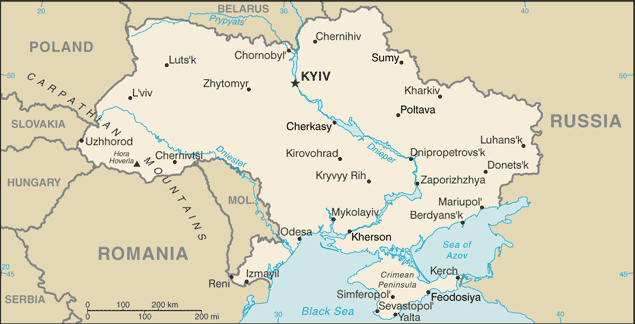
In Episode 108 of the CounterVortex podcast, Bill Weinberg takes stock of the frightening East-West escalation over Ukraine. Beyond the front-line on that country’s eastern borders, the forces of Russia and its allies and those of NATO are preparing for war from the Mediterranean to the Pacific. The “anti-war” (sic) left in the US is, with perfect predictability, lining up with Russia. Contrary to pseudo-left misconceptions, the post-Cold War promises to Russia that NATO would not expand east were never formalized. However, the promises made to Ukraine that its sovereignty and territory would be protected were formalized. The prevailing double standard on the Western “left” sensationalizes a “Nazi” threat in Ukraine while ignoring the actual consolidation of fascistic dictatorships in Russia and Belarus. Putin’s propaganda, spread by the Kremlin media machine, is an exercise in fascist pseudo-anti-fascism. Ukrainian socialists and democratic-left forces advance a “Neither East Nor West” position that demands solidarity against Russian aggression from the world anti-war forces. Listen on SoundCloud or via Patreon. (Map via Perry-Castañeda Library Map Collection)

Europe
bosnia

Bosnia re-balkanizing?

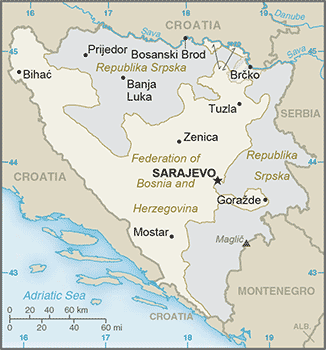
The US administration imposed sanctions on several Bosnian officials and a TV station for alleged corruption and for trying to destabilize the state of Bosnia & Herzegovina. Last month lawmakers in the Serb Republic National Assembly voted to begin pulling their republic out of Bosnia’s armed forces, judiciary and tax system. Largely at issue is legislation in the unified Bosnian parliament banning the denial of genocide. Bosnian Serb political leaders refuse to acknowledge that the 1995 massacre of some 8,000 Bosnian Muslims at the town of Srebrenica constituted genocide. (Map: University of Texas Libraries)

Syria
idlib

Russian warplanes bomb Idlib water station

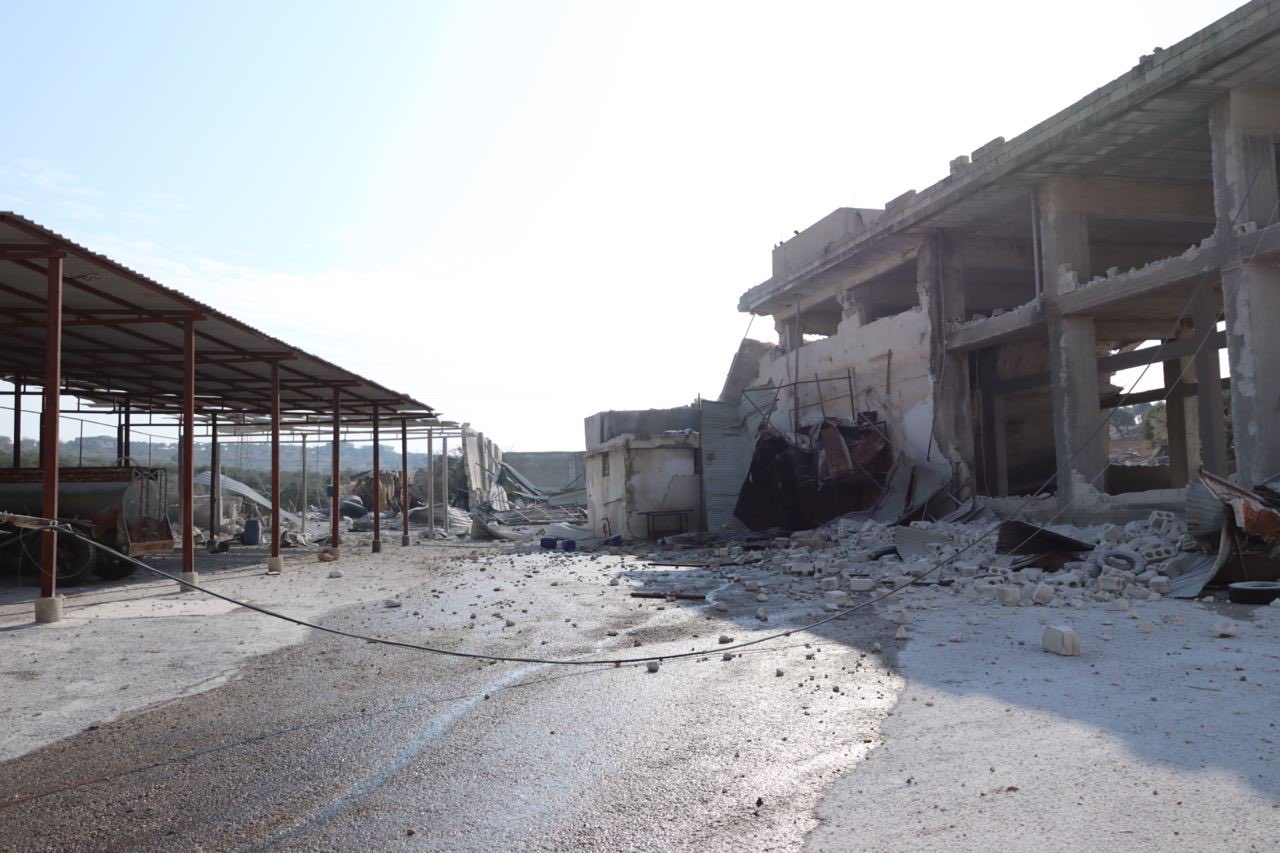
Russian warplanes are reported to have carried out an air-raid on the main water pumping station for the city Idlib, capital of the besieged province of that name in Syria’s north. Witnesses on the ground said Russian Sukhoi jets dropped bombs on the water plant as well as several towns outside the provincial capital. A UN humanitarian official acknowledged the air-raid without naming the perpetrators, tweeting: “The country is already facing a water crisis & continued destruction of civilian infrastructure will only cause more suffering of civilians.” An official in the opposition administration of the city said the plant is now out of operation, charging: “The Russians are focusing on infrastructure and economic assets. This is to add to the suffering of people.” (Image via Twitter)

Planet Watch
F-35A

Rapid nuclear escalation, East and West

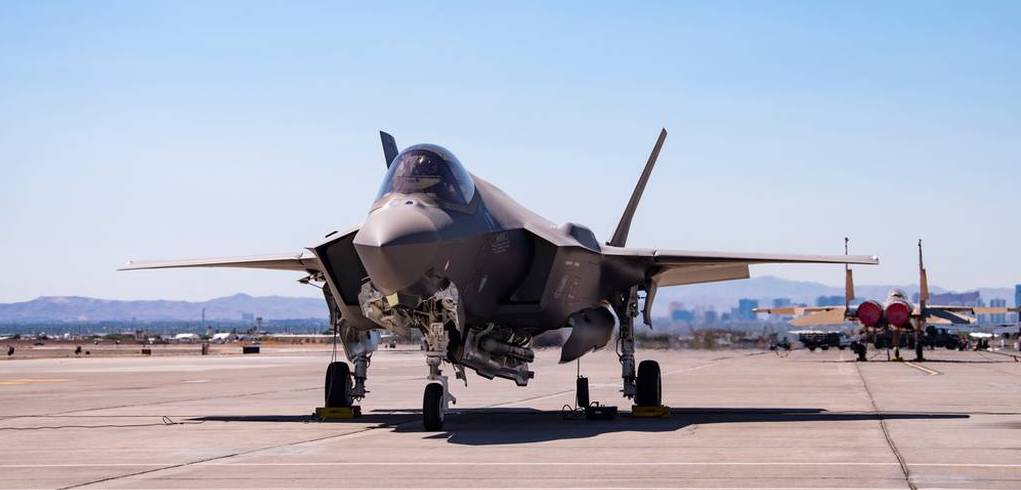
Russia’s Deputy Foreign Minister Sergei Ryabkov warned that Moscow will deploy intermediate-range nuclear weapons if NATO does not accede to demands to stop arming Ukraine and guarantee an end to eastward expansion of the alliance. His remarks come amid tensions over Russian military movements near Ukraine’s borders, where the Kremlin is estimated to have amassed some 100,000 troops. Amid similar tensions over Chinese incursions into the Taiwan Strait, a Pentagon report warns that the People’s Republic is undertaking an expansion and “modernization” of its nuclear arsenal to “provide Beijing with more credible military options in a Taiwan contingency.” And the US is meanwhile replacing gravity bombs with digitally guided nuclear missiles on its new design of the F-35A fighter jet. (Photo of F-35A via Air Force Times)

Planet Watch
spacedebris

Dangerous debris from Russian space kablooie

Russia destroyed one of its own satellites with a ground-based missile, in a test of its PL-19 Nudol DA-ASAT (direct-ascent anti-satellite) system. The blast created thousands of pieces of debris that have spread out into Earth orbit. The US says it has identified more than 1,500 trackable pieces of debris from the strike, and many thousands of smaller ones. That same day, the Russia’s RosCosmos space agency reported that the astronauts aboard the International Space Station had to shelter in place due to a cloud of debris passing by the station every 90 minutes, the time it takes for the ISS to orbit the Earth. It was unclear if the debris threatening the space station came from Russia’s ASAT test. But Washington charges that the new debris field poses a danger to the space station. (Image: MIT News)

East Asia
kurils

Podcast: 007 in the New Cold War

In Episode 97 of the CounterVortex podcast, Bill Weinberg dissects the geopolitics of the new James Bond movie, No Time to Die, and how the Daniel Craig reboot of the series has finessed the cultural icon’s role in the New Cold War. Famously, the film was produced pre-pandemic, with its release postponed a year due to the lockdown—and its key plot device is a mass biological warfare attack, anticipating the conspiranoid theories about COVID-19. Yet it could also be prescient in warning of a superpower confrontation over the Kuril Islands—disputed by Russia and Japan, and an all too likely flashpoint for global conflict. Listen on SoundCloud or via Patreon. (Map: International Kuril Island Project)