Inner Asia

Podcast: Tibet and the struggle for cyberspace

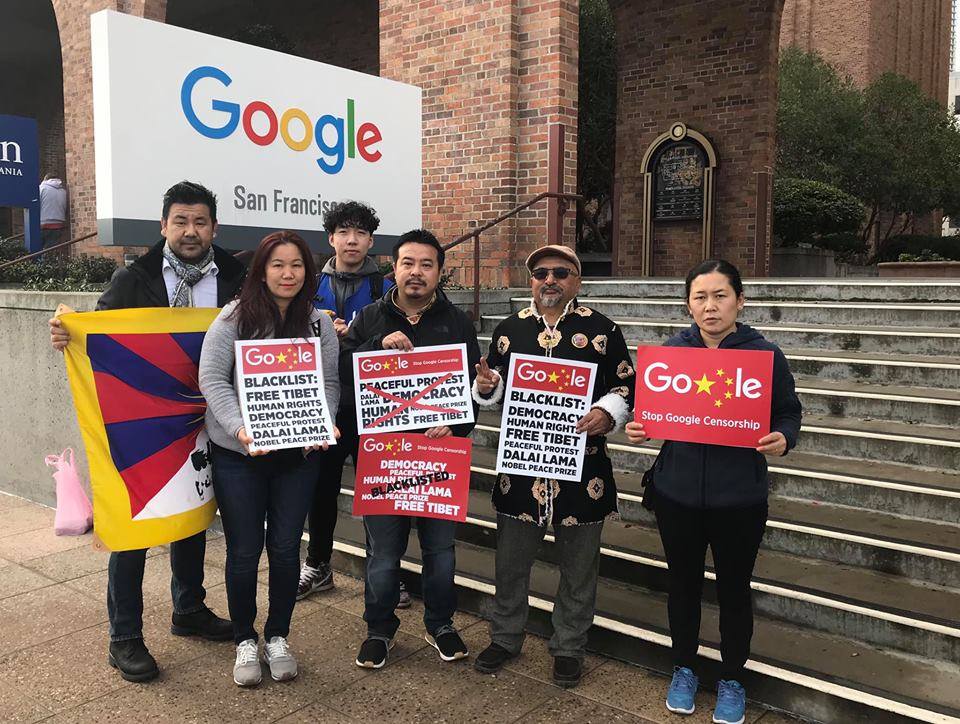
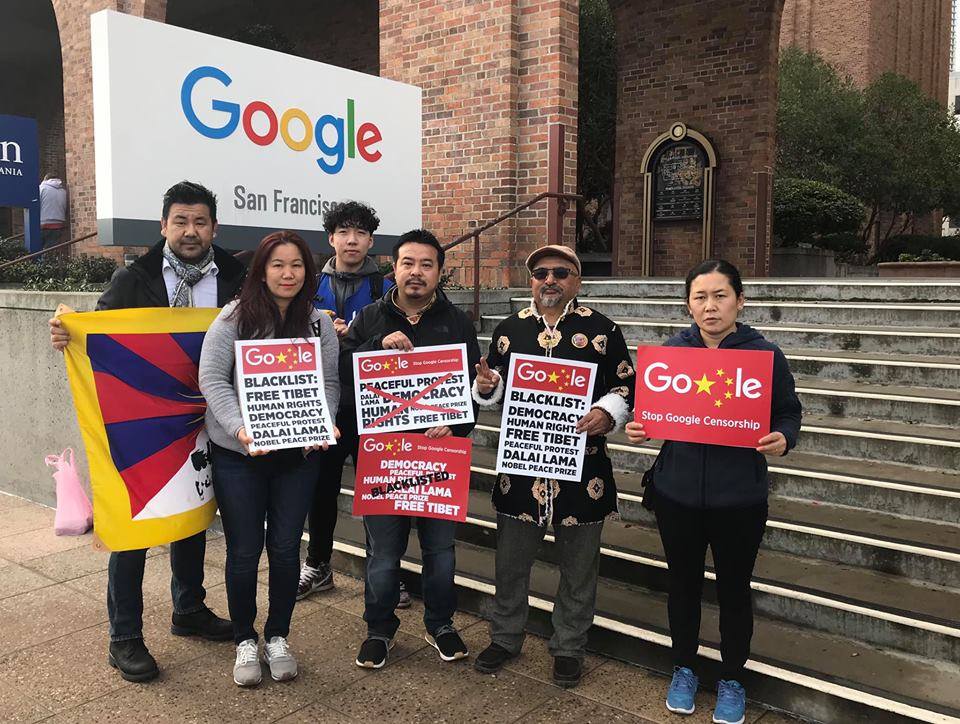
In Episode 28 of the CounterVortex podcast, Bill Weinberg notes with trepidation Google’s plans to develop a censored search engine for China, and thereby be allowed back through the Great Firewall to access the world's largest market. But the next and more sinister step is imposing China's draconian standards for control of information on all Internet users, worldwide. Harbingers of this are already seen in Facebook's censorship of the Tibetan struggle, and of the Kurdish struggle in Turkey, as well as initiatives to suppress footage of Israeli war crimes. While protesting such moves is imperative, the potential for such abuses in inherent to the technology—and this, ultimately, is a deeper and more complex problem that also demands a thoroughgoing critique. Listen on SoundCloud, and support our podcast via Patreon. (Photo: Students for a Free Tibet)

North Africa

Arab Revolution back on in Sudan, Algeria

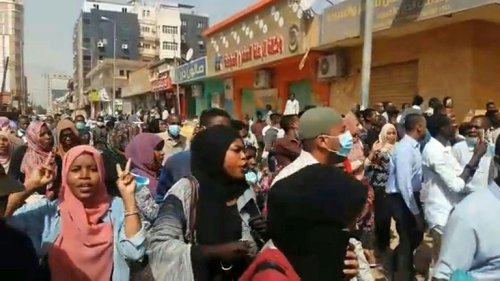
Tens of thousands of Algerians took to the streets to oppose plans by long-ruling President Abdelaziz Bouteflika to seek a fifth term in office. Police fired tear-gas at protesters in Algiers, and more than 50 officers were reported injured, with at least 45 people arrested. Sudan's President Omar al-Bashir has meanwhile declared a national state of emergency in response to ongoing protests across the country. Last week he dismissed his entire government and sacked all state governors, replacing them with high officials of the security forces. But protesters have continued to take to the streets and clash with police, in defiance of the state of emergency. (Photo via Sudan Tribune)

South Asia

Kashmiris under attack across India

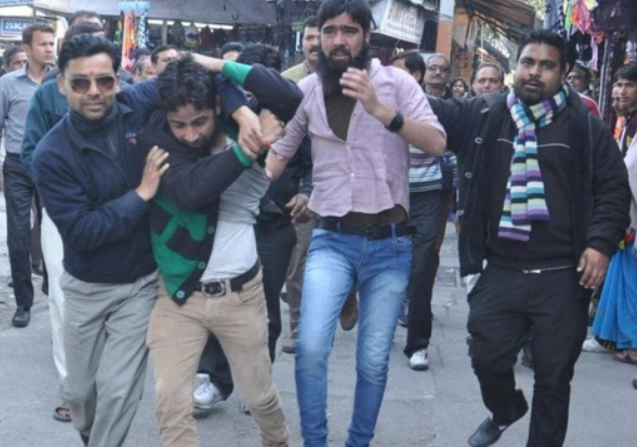
As India and Pakistan exchange military strikes in the wake of last week's massive suicide blast in Kashmir, many cities across India report cases of targeted violence against Kashmiri students and businesses by right-wing groups. Members of Yuva Sena, youth wing of the Hindu nationalist Shiv Sena, attacked Kashmiri students in Maharashtra. Colleges in Dehradun and Bhopal expelled Kashmiri students for posting objectionable content on social media about the suicide attack. A video surfaced on social media showing a Kashmiri man being beaten in Kolkata, West Bengal, by a mob which forced him to chant patriotic slogans like "Vande Mataram" and "Bharat Mata ki Jai" ("Mother, I praise thee" and "Victory to Mother India," two phrases appropriated by the Hindu-nationalist right). (Photo via KashmirWatch)

The Andes

Bolivia: indigenous opposition leader arrested

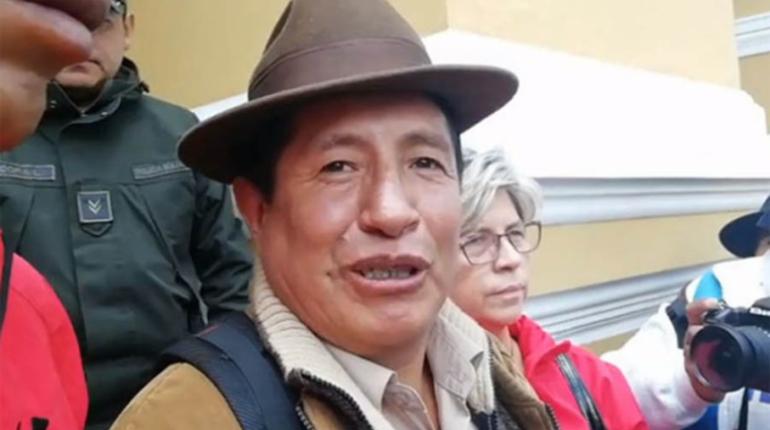
Aymara indigenous leader and opposition lawmaker Rafael Quispe says he will file "abduction" charges against the Bolivian government after he was arrested in La Paz, and shortly released when a judge found there was no grounds for his detention. Quispe, of the left-opposition Unidad Demócrata party, was brought before the Second Anti-corruption Tribunal for having supposedly missed court appearances in a legal case against him for alleged "harassment" of Felipa Huanca, a militant of the ruling Movement Towards Socialism (MAS) and former candidate for governor of La Paz department. The case stems from Quispe's accusations that Huanca was involved in embezzlement of funds slated for development of indigenous communities when she was La Paz head of the Bartolina Sisa Federation of Campesina Women in 2014. (Photo: Erbol via Los Tiempos de Cochabamba)

Mexico

Indigenous eco-activist slain in Morelos, Mexico

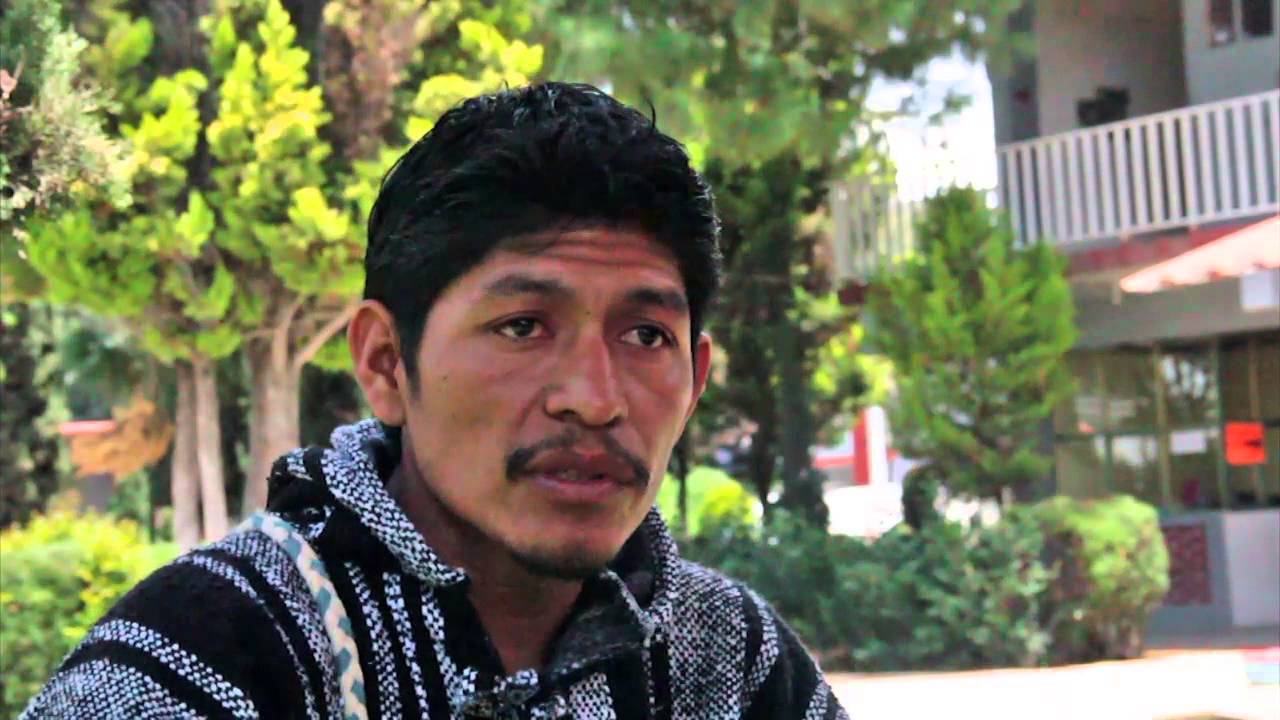
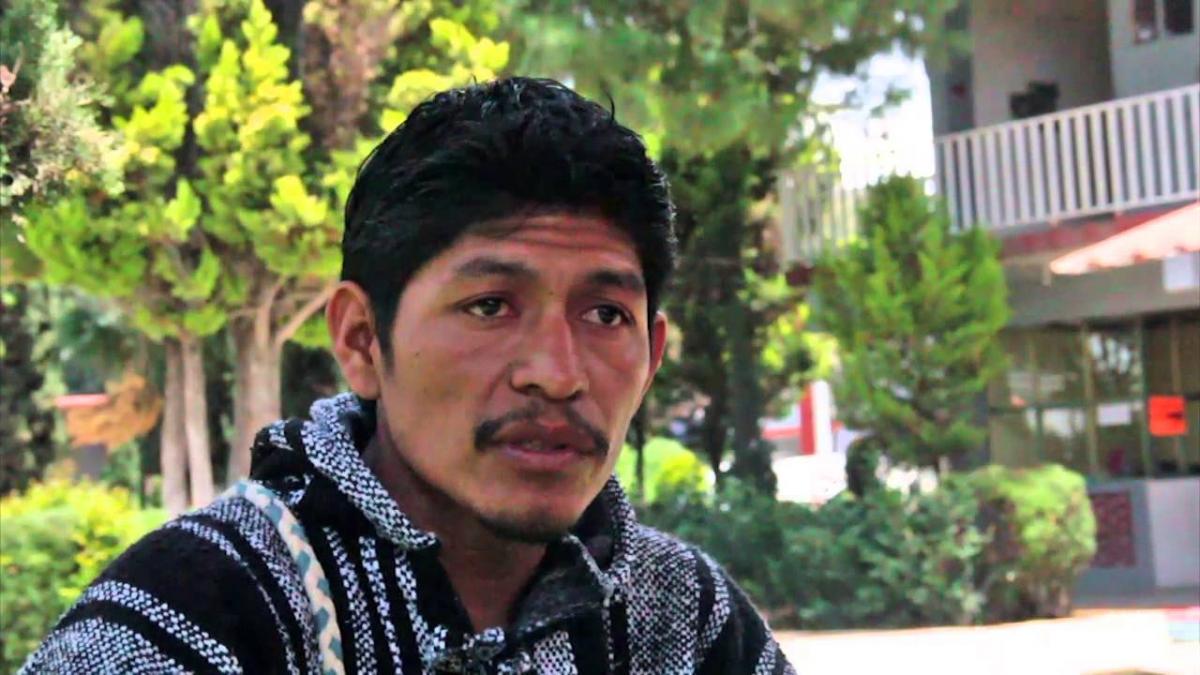
An indigenous environmental activist was killed in Mexico's south-central state of Morelos, three days ahead of a planned referendum on an energy development project that he opposed. Samir Flores Soberanes was a leader of the local Peoples in Defense of Land and Water Front and community radio station Amilzinko. He was slain by unknown gunmen in an attack at his home in the village of Amilcingo, Temoac municipality. He was a longtime figure in local opposition to the planned Huexca power plant and associated natural-gas pipeline, pushed by the government under the Morelos Integral Project. (Photo: Somos el Medio)

Africa

Ambazonia leaders on trial in Cameroon

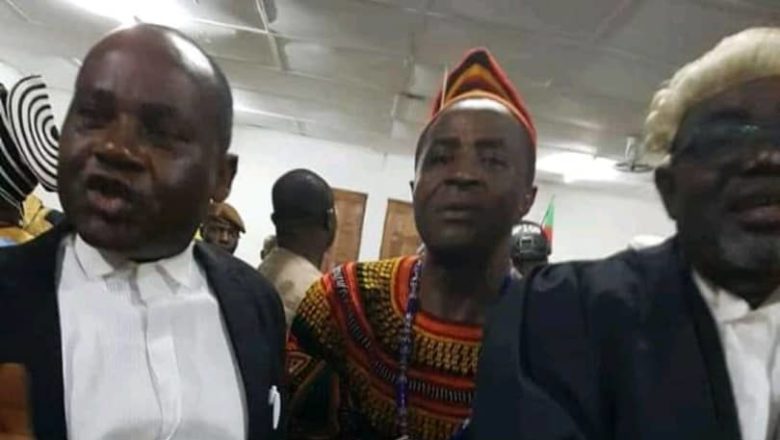
The 10 Ambazonian leaders facing trial before a military tribunal in Cameroon's capital Yaounde are disputing the tribunal's authority to judge them, denying Cameroonian sovereignty over their homeland. They also deny their own Cameroonian nationality. asserting that they are citizens of Ambazonia, or the former British Southern Cameroons—a country the Yaounde tribunal says "does not yet exist." The defendants are known as the "Nera 10," for the hotel in Abuja, Nigeria, where they were detained by security agents in January 2018 and forcibly deported to Cameroon. They had been seeking asylum in Nigeria following Cameroon's violent crackdown on the Ambazonia independence movement. The lead defendant is Sisiku Julius Ayuk Tabe, president of the declared Ambazonian government. Since the trial opened in November, violence has again escalated in Ambazonia, where some 400,000 have now been displaced. (Photo via Journal du Cameroun)

ambazonia

The struggle in Ambazonia

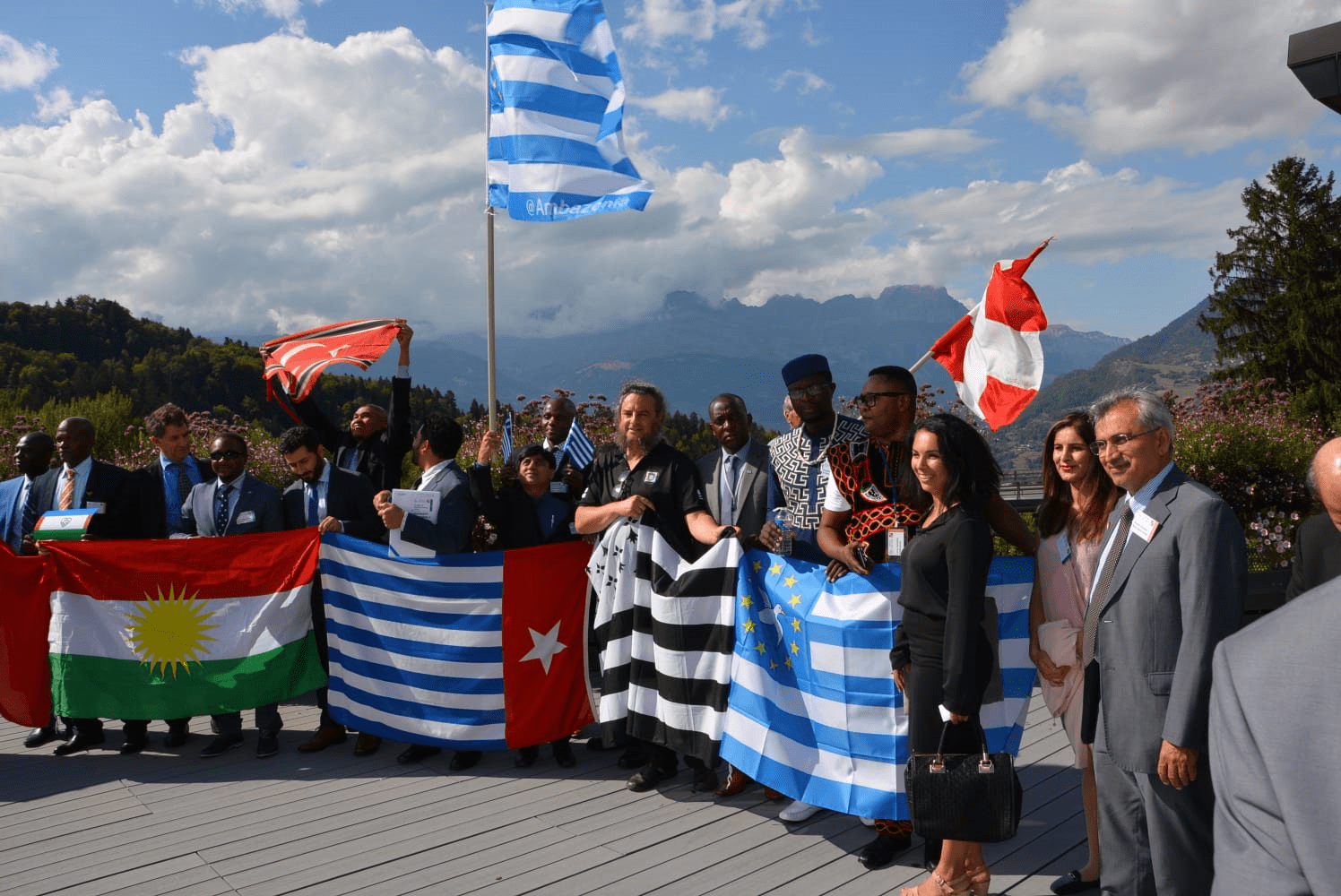
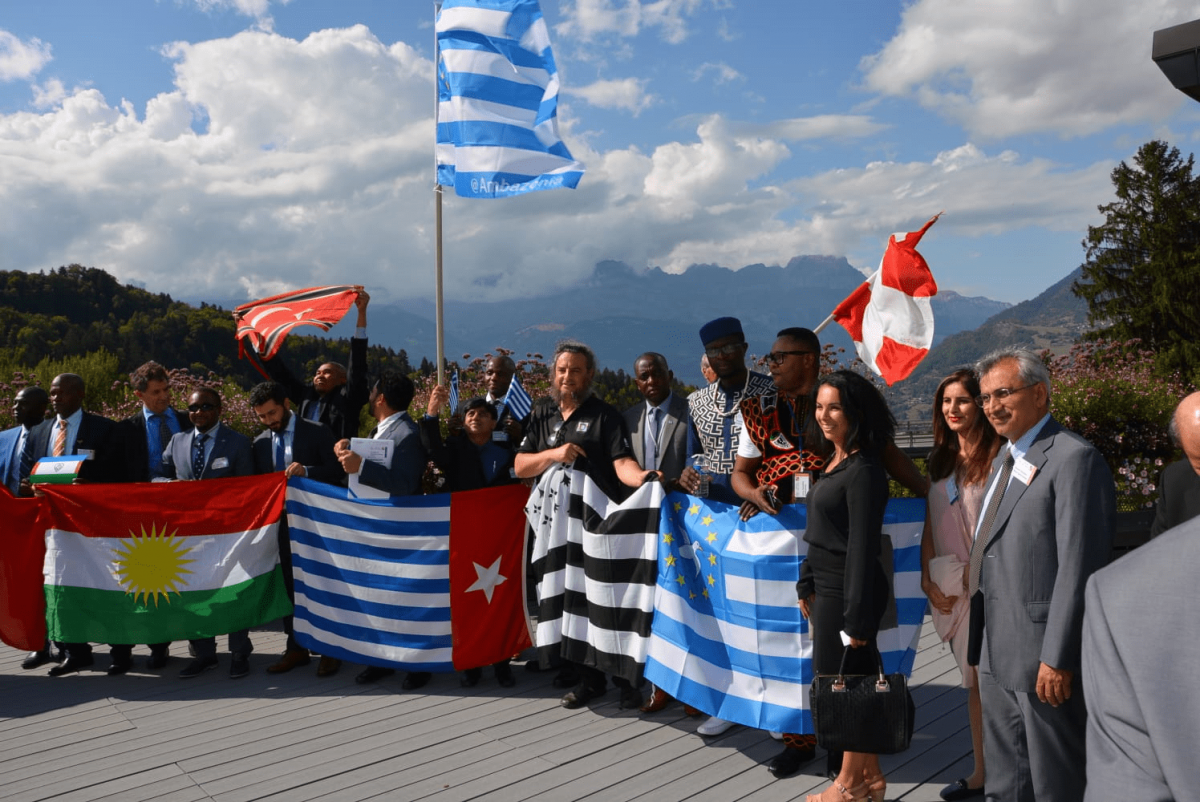
Meeting in the Savoy region of France of the Unrepresented Nations and Peoples Organization (UNPO), showing flags of Kurdistan, West Papua, Britanny and, at far left, Ambazonia—a territory that was illegally annexed by Cameroon following the end of colonial rule in 1960. The… Read moreThe struggle in Ambazonia

Africa

Podcast: the struggle in Ambazonia

In Episode 27 of the CounterVortex podcast, Bill Weinberg interviews Eben Egbe and Amy Dalton of the Global Initiative to end the Cameroons Colonial Conflict (Gi3C), who discuss the independence struggle in Ambazonia—a territory that was illegally annexed by Cameroon following the end of colonial rule in 1960. The past year has seen a terrible increase in state terror in Ambazonia from the French-backed neo-colonial Cameroon authorities, with protesters fired upon by helicopter gunships, and finally villages burned by military forces, sending the residents fleeing into the bush. Some 400,000 people have been internally displaced, with a further 20,000 having crossed the border into Nigeria as refugees. Cameroon also receives military aid from the US, ostensibly for the fight against Boko Haram in the north of the country—but this same military is now being unleashed against the civilian populace in the unrelated conflict in Ambazonia in the south. The Gi3C has issued an urgent call for the UN Human Rights Council, which convenes for it's 40th annual meeting this week in Geneva, to send a fact-finding delegation to the region. Listen on SoundCloud, and support our podcast via Patreon. (Photo: Ambazonia representatives with flag, far right, at France meeting of the Unrepresented Nations and Peoples Organization, via Bareta News)

The Andes
paramilitaries

Colombia sliding deeper into internal war

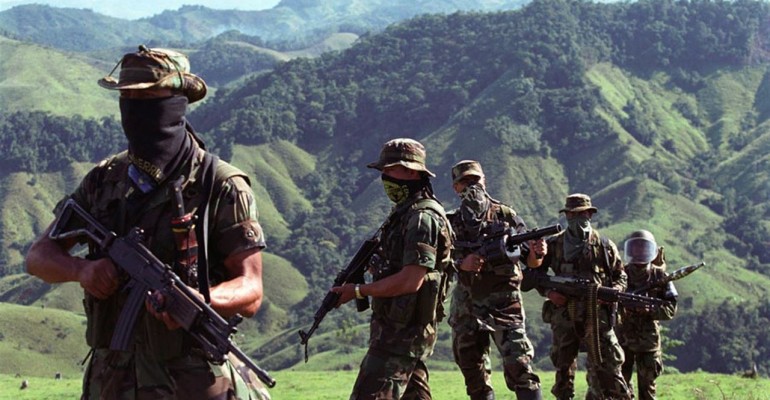
Under pressure to address the ongoing wave of targeted assassinations in Colombia, President Iván Duque for the first time spoke before the National Commission to Guarantee Security, formed by the previous government to address continuing violence in the country—which has only worsened since he took office last year. Duque said 4,000 people are now under the government's protection program for threatened citizens. But his office implied that the narco trade is entirely behind the growing violence. Interior Minister Nancy Patricia Gutiérrez told the meeting: "This great problem is derived from the 200,000 hectares of illicit crops that we have in Colombia." However, it is clear that the narco economy is but part of a greater nexus of forces that fuel the relentless terror—all related to protecting rural land empires and intimidating the peasantry. (Photo via Contagio Radio)

The Caribbean

Venezuela crisis at issue in Haiti unrest

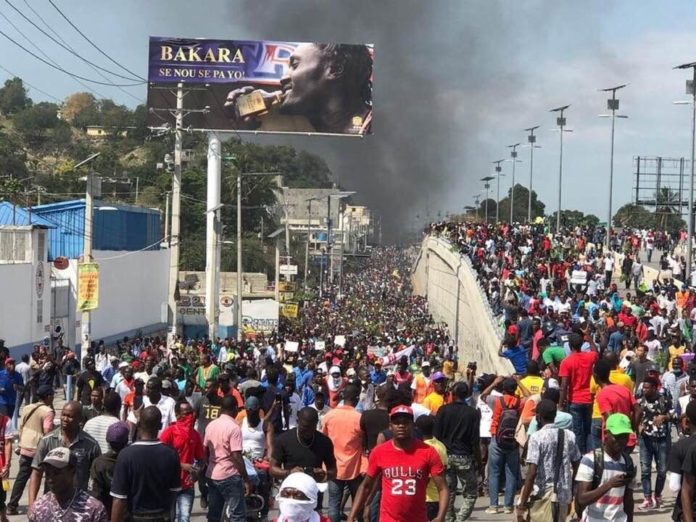
Thousands of Haitians filled the streets of Port-au-Prince and several provincial cities to demand the resignation of President Jovenel Moise on the anniversary of the 1986 ouster of long-ruling dictator Jean-Claude “Baby Doc” Duvalier. Demonstrators also called for the arrest of officials responsible for the plundering of monies from the Venezuela-provided PetroCaribe fund over the past 10 years. At least two were reported dead in the protests, with vehicles burned, a police station attacked, some 40 arrested, and many wounded. Haiti faces a fast-deepening crisis, with hunger, unemployment and inflation all growing. Protesters are additionally angered by the government’s vote with Washington in the OAS not to recognize the presidency of Venezuela’s Nicolás Maduro. (Photo: Haiti Liberté)