


Southeast Asia

Arakan Army escalates insurgency in Rakhine state

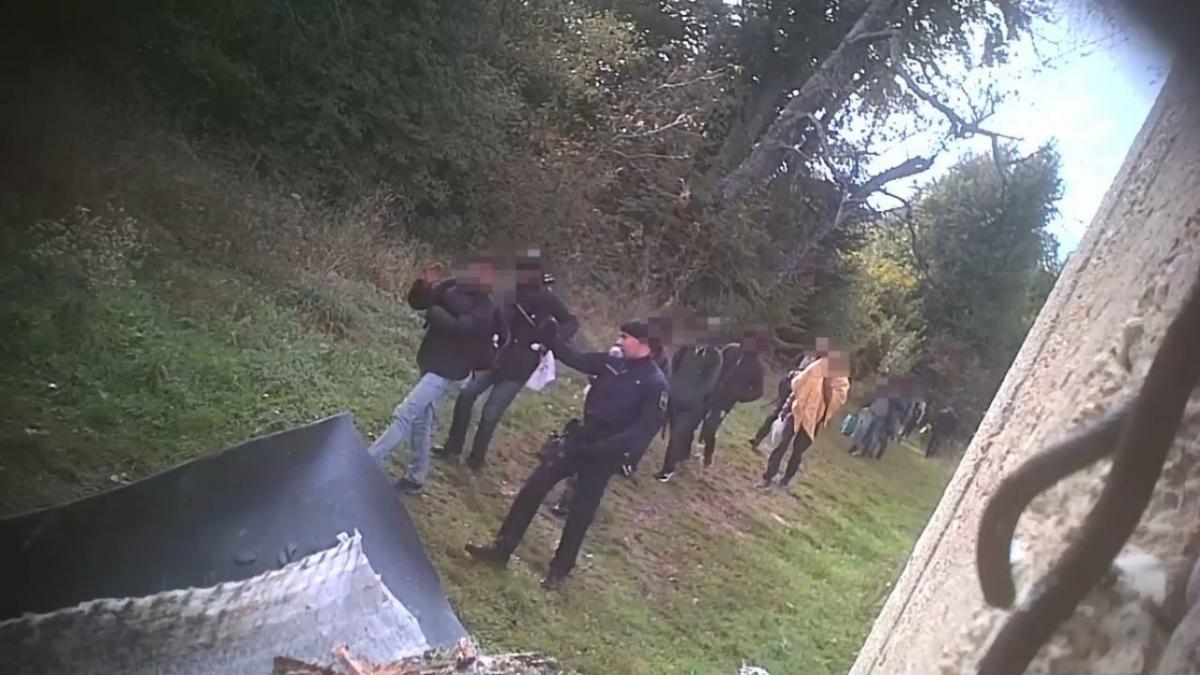
Over 700,000 Rohingya Muslims have been driven from Burma's northern Rakhine state into neighboring Bangladesh by the Burmese army's brutal "clearance operations," ostensibly launched in response to attacks by the Arakan Rohingya Salvation Army (ARSA) in August 2017. But over the past weeks, the state has seen a new outbreak of attacks—this time by the Arakan Army, an ethnic Rakhine insurgent group opposed to the central government's Burman-centric rule. Ambushes by Arakan Army fighters have targeted both the Burmese army, or Tatmadaw, and the Border Guard Police. Fighting in several townships has left some 2,500 displaced. Last month, the Tatmadaw announced a four-month ceasefire in Burma's north to facilitate peace talks with multiple armed groups fighting for local autonomy, but that announcement excluded Rakhine state. (Photo via Asia Times)

The Amazon

US accuses Peru of violating FTA forestry provisions

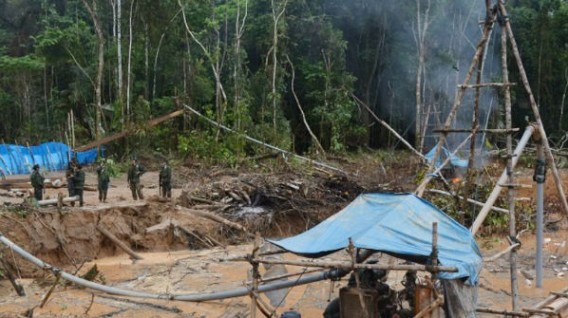
The White House is accusing Peru of violating its commitment to protect the Amazon rainforest, threatening to hold Lima in violation of the US-Peru Free Trade Agreement . Robert Lighthizer, President Trump's top trade negotiator, announced that he is seeking consultations with Lima to address concerns about its recent move to curtail the authority of Peru's auditor for timber exports, the Organism for the Supervision of Forestry Resources (OSINFOR), established as a provision of the trade agreement. The move move had been demanded by Peru's logging industry following an OSINFOR seizure of illegal timber. The White House needs support from congressional Democrats to pass the pending US-Mexico-Canada Agreement, Trump's replacement for NAFTA, which is supposed to have tougher labor protections. The forestry annex in the Peru agreement was conceived as a model for a new inspection system that could include confiscation at the border of goods found to violate treaty provisions, and the prosecution of companies that import noncompliant products. (Image via Sierra Club)

Mexico

Zapatistas vow to oppose López Obrador

Speaking at a ceremony marking the 25th anniversary of their New Year's Day 1994 uprising in Mexico's southern state of Chiapas, leaders of the Zapatista rebels pledged their opposition to Mexico's new left-populist president, Andrés Manuel López Obrador. Anger was particularly directed at the planned "Maya Train" project, which would link the tourist resort of Cancún on the Caribbean coast with the Palenque archeological site in Chiapas, spearheading a new thrust of tourism mega-development. At the ceremony, held at the rebel-controlled settlement of La Realidad and dubbed the "Meeting of the Networks of Resistance and Rebellion," thousands of supporters from across Mexico gathered to watch Zapatista troops march in formation—although wielding symbolic bastónes (staffs) rather than rifles. (Photo: Pozol)

The Amazon

Bolsonaro starts term with assault on indigenous

On his first day in office, President Jair Bolsonaro issued a measure taking away responsibility for indigenous land demarcation from the indigenous affairs agency, FUNAI, and handing it over to the Agriculture Ministry. In the same decree, Bolsonaro shifted authority over regularization of quilombos (Afro-Brazilian collective lands) from the agrarian reform institute, INCRA, to the Agriculture Ministry. The measure greatly weakens FUNAI, taking away its most important function. In practice, key areas of indigenous and quilombo policy will now be in the hands of agribusiness advocates—a long-time demand of the Bancada Ruralista (agribusiness lobby) in Congress. Bolsonaro is openly calling for abolition of Brazil's large indigenous reserves, a move with grave implications for the Amazon rainforest and global climate. (Photo: Kayapo women in Brazilian Amazon, via FUNAI)

Africa
Fulani

Fulani herders massacred in Mali

A village of semi-nomadic Fulani herders was attacked  in Mali New Years Day, with at least 33 residents slain and several homes set aflame. Survivors said the attackers were traditional Dogon hunters, known as dozos. The army was rushed to Koulogon village in central Mopti region to control the situation. But the perpetrators may have been assisted by the armed forces. Dogon residents of the area have formed a self-defense militia, known as Dana Amassagou, to prevent incursions by jihadists from Mali's conflicted north into the country's central region. The militia is said to have received weapons and training from the official armed forces. However, driven by conflicts over access to land and shrinking water resources, the militia has apparently been attacking local Fulani villages. Hundreds were killed in clashes between Dogon and Fulani last year, and a Senegalese rapid reaction force under UN command was deployed to Mopti in response to the violence. (Photo of Fulani elder via IRIN)

Palestine

500-plus West Bank demolitions in 2018: report

Israel demolished 538 Palestinian homes and facilities across the occupied West Bank and Jerusalem in 2018, leaving 1,300 Palestinians and 225 children homeless, according to a year-end report by the Abdullah Al-Hurani Centre, an affiliate of the Palestine Liberation Organization (PLO). The report stressed that these demolitions were carried out in violation of the Fourth Geneva Convention and other international norms. It charged that Israel "continues its policy of ethnic cleansing against the Palestinians in the occupied West Bank and Jerusalem," pointing out that, in addition to the demolitions, Israel had issued 460 "stop-building orders" during the same period. (Photo via Middle East Monitor)

The Andes

Protests over re-election broil Bolivia

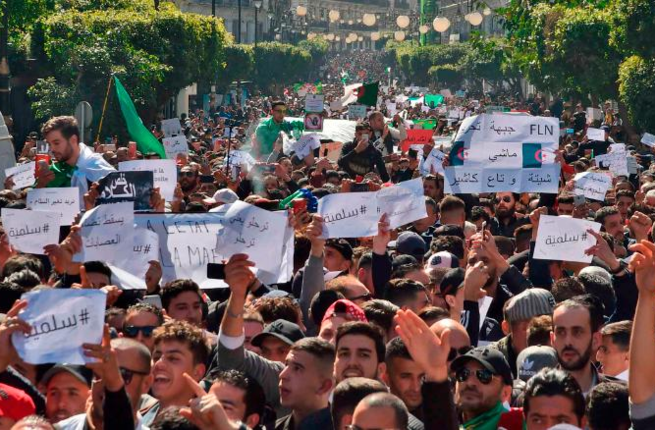
Bolivia has seen strikes and protests since the ruling by the Supreme Electoral Tribunal allowing President Evo Morales to run for a fourth consecutive term in the 2019 election. The ruling was met with marches, road blockades and work stoppages that caused varying degrees of disruption in eight of Bolivia's nine departments. A student mobilization in the hydrocarbon-rich eastern department of Santa Cruz, heart of anti-Morales sentiment, ended in violence, with the regional offices of the electoral tribunal burned to the ground. Hunger strikes were launched in six cities, with at least 20 still ongoing. (Photo via NACLA)

Europe

Russia completes Crimea-Ukraine border wall

Russia completed a high-tech security fence along annexed Crimea’s border with mainland Ukraine. The fence, more than 60 kilometers long, is topped with barbed wire and equipped with hundreds of sensors. Russia’s FSB security agency called the fence a “boundary of engineering structures,” and said it is necessary to prevent “infiltration attempts by saboteurs,” also citing traffic in drugs, arms and other contraband. The statement boasted of “the most complicated system of alarm sensors in the Isthmus of Perekop,” the stretch of land where annexed Crimea borders the Ukrainian mainland. (Photo via РИА Новости)

Syria

Podcast: Solidarity with Idlib and Rojava

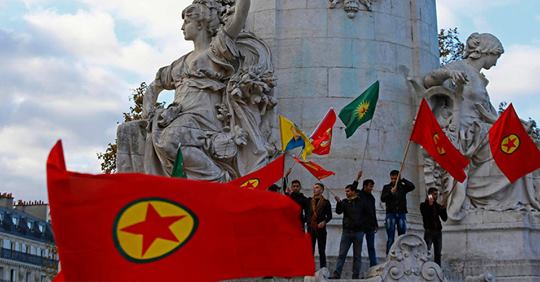
In Episode 23 of the CounterVortex podcast, Bill Weinberg notes the assassination of Raed Fares, a courageous voice of the civil resistance in besieged Idlib province, last remaining stronghold of the Syrian Revolution. The resistance in Idlib, which liberated the territory from the Bashar Assad regime in popular uprisings seven years ago, is now also resisting the jihadist forces in the province, expelling them from their self-governing towns and villages. Their hard-won zones of popular democracy face extermination if this last stronghold is invaded by Assad and his Russian backers. As Assad and Putin threaten Idlib, Trump’s announced withdrawal of the 2,000 US troops embedded with Kurdish forces in Syria’s northeast is a “green light” to Turkey to attack Rojava, the anarchist-inspired Kurdish autonomous zone. The two last zones of democratic self-rule in Syria are each now gravely threatened. Yet with Turkey posing as protector of Idlib, the Arab revolutionary forces there have been pitted against the Kurds. The Free Syrian Army and Rojava Kurds were briefly allied against ISIS and Assad alike four years ago, before they were played against each other by imperial intrigues. Can this alliance be rebuilt, in repudiation of the foreign powers now seeking to carve up Syria? Or will the US withdrawal merely spark an Arab-Kurdish ethnic war in northern Syria? Weinberg calls for activists in the West to repudiate the imperial divide-and-rule stratagems, and demand survival of liberated Idlib and Rojava alike. Listen on SoundCloud, and support our podcast via Patreon. (Photo: NYC Syria Peace Vigil Group)

Europe

Car industry behind Hungary’s ‘slave law’

In the biggest demonstrations since the fall of communism, thousands have repeatedly taken to the streets in Hungary to oppose Prime Minister Viktor Orba''s controversial "slave law." The square outside the parliament building in Budapest was massively occupied Dec. 12 as the law was approved. It was subsequently signed by President Janos Ader. Orban said the law scraps "silly rules," and will help those who want to earn more by working more. In fact, the law will allow employers to demand workers put in up to 400 extra hours per year of overtime, compared with the current limit of 250. Meanwhile, payment for this overtime may be delayed by up to three years. Local media in Hungary report that Orban pushed through the law in a bid to lure German auto-maker BMW to invest a billion euros in a new plant in Debrecen, Hungary's second city, situated in the poorest region of the country, the northeast. The move is portrayed as intended to undercut labor costs in Slovakia, where BMW was initially considering investment. (Photo: KaosEnLaRed)

North Africa
Sharara

Force majeure at Libya’s top oil-field —again

Libya’s National Oil Company (NOC) declared force majeure at the country’s largest oilfield, a week after announcing a contractual waiver on exports from the 315,000-bpd Sharara field following its seizure by armed militants. The Sharara facility was seized by a force of desert tribesmen under the banner or the Fezzan Anger Movement, which is demanding better living conditions for the remote and impoversihed southern region of the country. Sharara is located in the Fezzan region, which produces most of Libya’s oil but lacks basic services such as electricity and hospitals. The Fezzan militants were actually joined by members of the Petroleum Facilities Guard, demanding back wages be paid by the UN-backed Government of National Accord. Oil production in Libya has been repeatedly paralyzed by unrest, and the NOC is still struggling to restore output to pre-2011 levels. (Photo: Libya Observer)