


EU foreign ministers must use their upcoming meeting with Nikolai Mladenov, director-general of the Board of Peace (BoP) and “High Representative” for Gaza, to ensure that Palestinians’ rights are among the board’s highest priorities, Amnesty International urged in a statement Feb. 23.
“The ‘Board of Peace’ is a dangerous assault on international law, a mechanism designed to bypass the UN, weaken international justice institutions, and entrench the power dynamics that have long enabled Israel’s unlawful occupation, apartheid, and ongoing genocide in Gaza,” said Erika Guevara-Rosas, senior director for research and advocacy at Amnesty International.
Guevara-Rosas added: “Any EU engagement that does not place Palestinians’ rights at its core risks complicity in violations, which are [more] likely to occur if this fundamentally flawed mechanism is not urgently made rights-compliant and aligned with international law.”
Guevara-Rosas further urged: “The EU and its member states must be absolutely clear: this body is no substitute for the UN, the international human rights framework, or the global justice system painstakingly built over decades to uphold universal values, cooperation, and equality.”
On Jan, 22, US President Donald Trump ratified the Charter of the Board of Peace, establishing the board as an official international organization. Trump serves as the chairman, with no mechanism for succession. Last November, the UN Security Council endorsed the BoP in Resolution 2803, as an international entity to maintain peace and security in Gaza, develop its infrastructure, disarm militants, and establish a viable Palestinian Authority.
Notably, the BoP Charter does not actually include any mention of Gaza, and Israeli news reports indicate that the US envisions the BoP resolving other global conflicts. Ali Khan, emeritus professor at the Washburn University School of Law, argues that “the BoP’s expanded scope in the Charter conflicts with Resolution 2803 and diverts attention from the work needed in Gaza to Trump’s self-authorizing roving agenda to settle wars.”
From JURIST, Feb. 23. Used with permission. Internal links added.
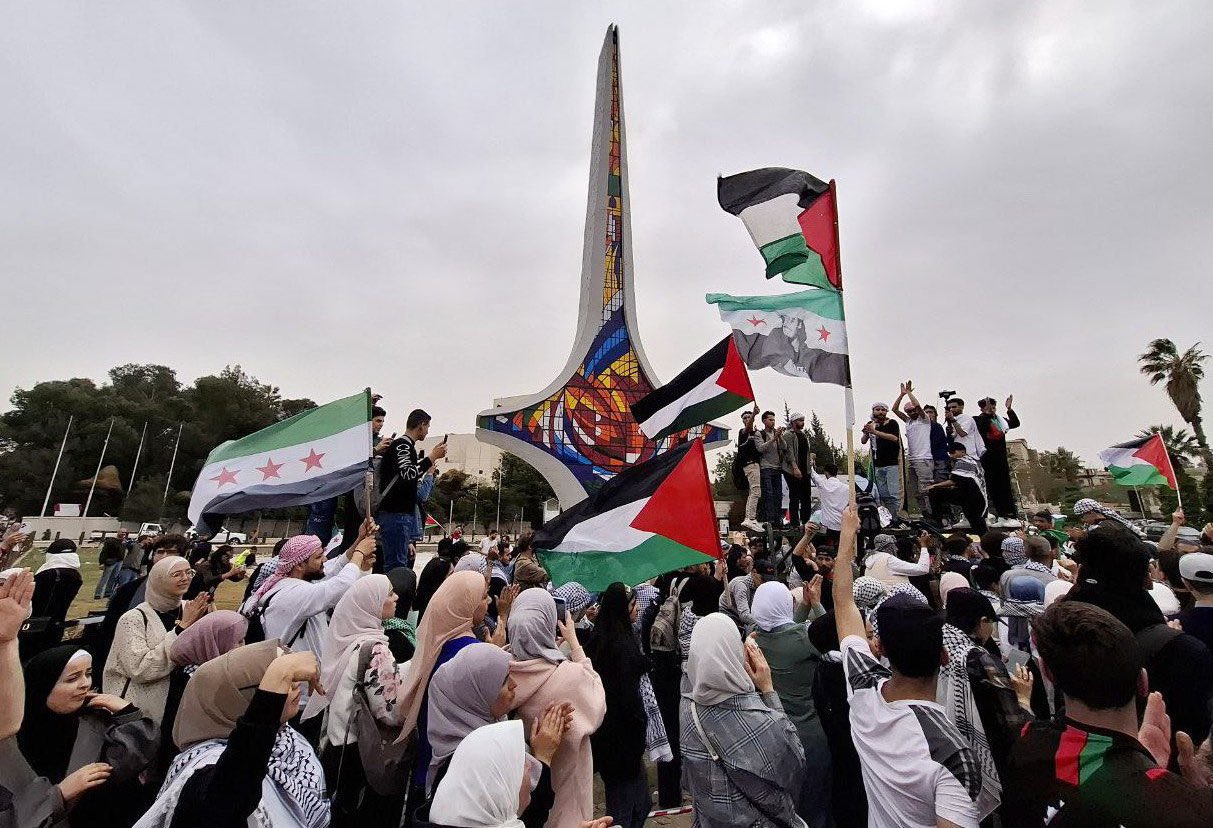
Photo: WAFA via WikimediaCommons


Aid groups face expulsion from Gaza, West Bank
Dozens of humanitarian aid groups, including Doctors Without Borders and Oxfam, face expulsion from Gaza and the West Bank as soon as this weekend, unless they hand over detailed personal information about their staff to Israeli authorities. (PRI)
Reprieve for aid groups in Gaza and West Bank
Israel’s High Court has temporarily halted a ban on international aid groups from working in the occupied Palestinian territories unless they meet strict new rules. The injunction came ahead of an Israeli deadline for 37 well-known organizations to stop work, something the groups warn will remove a lifeline for vulnerable people and cause “irreparable harm.” (BBC News)
Gaza braces for renewed siege
Israel’s widening war with Iran is deepening Gaza’s humanitarian crisis, as new security measures effectively seal the territory off from the outside world. Israel, on Feb. 28, closed all crossings into Gaza—including the Rafah border with Egypt—while also tightening movement restrictions and carrying out raids across the occupied West Bank. Israeli forces killed two Palestinian men in one March 2 raid.
The restrictions came as Israeli and US attacks on Iran triggered an eruption of air and missile strikes across the region. Despite the reopening of the Rafah crossing on March 3, aid groups have warned that the remaining closures are swiftly draining supplies. Food stocks could run out within days, and panic buying and price spikes are spreading. The measures have revived memories of last year’s famine, which caused hundreds of hunger-related deaths. (TNH)
Human development in Gaza set back by 77 years
The UN and the European Union on April 20 released their final Gaza Rapid Damage and Needs Assessment (RDNA), estimating Gaza’s recovery needs at $71.4 billion over the next decade.
The RDNA states: “The scale and extent of deprivation across living conditions, livelihoods/income, food security, gender equality, and social inclusion, have pushed back human development in the Gaza Strip by 77 years.” This is reflected in the projected collapse of the Human Development Index (HDI) to 0.339 on the 1.0 scale.
The report found an estimated $35.2 billion in physical damages and $22.7 billion in economic losses. The greatest needs fall within a few key sectors requiring billions in funding commitments. This includes $16.2 billion for housing, $10.5 billion for agriculture and food systems, $10 billion for health, and commerce and industry requiring $9 billion.
Less than 50% of hospitals remain even partially functional. Nearly 1.2 million Palestinians have lost their housing, and 1.9 million have been displaced, often numerous times. The report also addressed the severe impacts on women and the mental health needs of nearly 100 percent of children.
More than 71,000 Palestinian fatalities and over 171,000 injuries, resulting in a vast increase in disabilities, have been reported in the last two years. Many people remain missing under the rubble. (Jurist)
EU declines to suspend Israel trade agreement
A panel of UN experts on April 20 unsuccessfully pleaded with the European Union to immediately suspend the EU-Israel Association Agreement at the EU foreign ministers meeting in Luxembourg held on Tuesday.
A motion to suspend the agreement was supported by Spain, Slovenia and Ireland. However, Germany and Italy blocked the bid. Ireland and Spain had pushed to suspend the agreement in 2024, spurring findings that Israel had “likely” breached its obligations under the agreement.
The EU is Israel’s top trade partner. Through the EU-Israel Association Agreement, Israel gains preferential access to European markets and “tariff-free entry of key agricultural products.”
Arguing for the agreement’s suspension, the expert panel cited Article 2, which states that all parties to the agreement must respect human rights and democratic principles. (Jurist)
PA gains a foothold in Gaza?
Loyalists of President Mahmoud Abbas won most races in Palestinian municipal elections, April 25—a vote that for the first time in nearly two decades included a city in the besieged Gaza Strip. This was Deir al-Balah, one of the few places where the Israeli military did not conduct a large-scale ground invasion during two years of war, though it still bears many signs of bombardment.
The election was organized by the Palestinian Authority, which governs the West Bank, and its involvement is notable given that it was forcibly removed from power in Gaza by Hamas in 2007. Since then, Hamas has controlled the appointment of mayors and municipal council members across the territory. The ballot marked the first elections of any kind in Gaza since 2006, and the first Palestinian polls since Israel’s war in the territory began in October 2023. (NYT, Al Jazeera)
Hamas is also set to hold a long-delayed internal election to choose a new leader and political bureau in the coming weeks. Hamas has not had an elected leader since July 2024, when a bomb planted by Israel in Tehran killed head of the Political Bureau Ismail Haniyeh, who had been elected to a second term in 2021. Following the assassination, Hamas announced that Yahya Sinwar, its top official in Gaza, would take over as leader, without holding internal elections.
Sinwar, credited as the mastermind of the October 7 assault, assumed the role while in hiding from Israeli air-strikes on the Strip, and his tenure lasted just three months before he was killed in the Rafah area. Since his death, Hamas has not formally named a successor or interim leader. (ToI)
An area of Khan Younis controlled by the al-Mujaida clan is effectively outside Hamas’ rule.
EU rebukes Israel over advance beyond Gaza ceasefire line
Israel’s military advance beyond a Gaza ceasefire line has prompted a rebuke from the European Commission.
Speaking to reporters in Brussels on May 4, European Commission spokesperson Anouar El Anouni says the EU rejects any attempt at territorial change in the Gaza Strip. “Let me also recall here that the Trump peace plan itself has been clear, in the sense that Israel will not occupy or annex Gaza,” he said, also citing UN Security Council resolution 2735.
The comments follow an IDF expansion into Gaza, pushing past the so-called yellow and orange lines. The “yellow line” marks a physically-delineated boundary of Israeli-controlled territory, established under the US-brokered ceasefire in October that effectively places around 53% of Gaza under Israeli military control.
Beyond it lies the so-called “orange line,” an unmarked buffer zone extending roughly 200 to 500 meters into IDF-declared restricted zones, where Israeli tanks have reportedly advanced in the Jabalia area. (EU Observer)
UN: systematic abuse of Palestinians by both Israel and Hamas
A UN report published on June 9 found that Palestinian civilians are systematically subjected to human rights violations by both Israeli settlers and security forces and by Hamas.
The report, conducted by the UN Independent International Commission of Inquiry on the Occupied Palestinian Territory, found that both Israeli settlers and Hamas-affiliated forces are creating hostile and harmful environments for civilians, describing the situation of Palestinians as being “trapped between Israeli forces and settlers on one side and the fear-based rule of Hamas on the other.” (Jurist)
As Board of Peace meets, what’s in store for Gaza’s future?
The US-backed Board of Peace held meetings in Cyprus on June 30 and July 1 to discuss“the next stage” of its plans for post-ceasefire Gaza. Implementation of last October’s cessation of hostilities agreement between Israel and Hamas has almost entirely stalled. But, according to Israeli media reports, the Board of Peace may be aiming to open “Hamas-free humanitarian zones” within weeks. These would be located in the around 65% of Gaza’s territory under direct Israeli control, where Palestinians are currently barred from entering. What little is known about the plans conforms with long-floated ideas to establish “temporary communities” with access to food, housing, healthcare and education for vetted Palestinians—all things Israel has systematically destroyed throughout Gaza. The plans have been criticized as using the provision of aid and essential services to lure Palestinians into what former Israeli prime minister Ehud Olmert said would amount to a “concentration camp.” It is doubtful whether the plans and timeline are even remotely viable: funding for the Board of Peace and the International Stabilization Force that is supposed to deploy to Gaza have both failed to materialize. And Israel’s political leadership appears to have different plans altogether for the areas of Gaza under its control, with Finance Minister Bezalel Smotrich calling for establishment of settlements. (TNH)
Hamas announces dissolution of Gaza governance
Leaders of Hamas announced July 6 that it will dissolve its governance structure in Gaza, complying with the terms of the US-brokered peace deal and welcoming an interim “technocratic” governing committee. Hamas has governed the Gaza Strip for nearly two decades.
Dr. Ismail al-Thawabta, director general of the Government Media Office in Gaza, announced at a press conference that Hamas is disbanding its Government Emergency Committee. He called on “all concerned and competent parties to expedite the immediate steps” for the “National Committee of the Administration of Gaza (NCAG) to exercise its duties and responsibilities” on behalf of the Palestinian people.
However, Israeli Foreign Minister Gideon Saar expressed doubt about the genuineness of the announcement, writing on X that it was a “trick.” The foreign minister said that Hamas is attempting to “prevent its own disarmament” and seeks to replicate the Lebanese paramilitary network Hezbollah. He called for the “complete demilitarization of the Gaza Strip.”
The US-brokered peace plan, implemented by President Donald Trump’s Board of Peace, includes 20 comprehensive terms for both Israel and Hamas. Among these are terms to “demilitarize” Gaza “under the supervision of independent monitors.”
The general commissioner of the NCAG, Dr. Ali Shaath, welcomed the announcement in a statement on X. He said the NCAG “stands fully prepared to assume its national responsibilities.”
July 2 marked 1,000 days of the Israel-Hamas war in Gaza. Gaza’s Government Media Office announced that since the start of the war, at least 73,066 Palestinians have been killed. (Jurist)
Two more Israeli atrocities in Gaza
Mohamed al-Wahidi, an aid worker who organised widely attended World Cup football screenings across Gaza, was killed in an Israeli missile strike on a car he was travelling in shortly before the Egypt-Argentina game on July 7. Fari and Hamza al-Deri, eight- and 10-year-old brothers who were on their way home from playing football, were also killed in the strike, which took place in Gaza City, as well as another man.
In a separate incident, an Israeli soldier killed Palestinian truck driver Ahmad Esleem, who was bringing food into Gaza for the World Central Kitchen (WCK). The convoy Esleem was travelling in, which was fully coordinated with Israeli authorities through the World Food Program and WCK, stopped on a military road in southern Gaza when one of the trucks broke down. Israeli soldiers ordered the drivers to get out of their trucks, and one of the soldiers shot Esleem in the head while his hands were raised, according to another truck driver.
These killings come as Hamas announced it is dissolving its government in Gaza and handing power to a technocratic committee operating under the US-backed Board of Peace. It is unclear what effect the move will have on the ground. (TNH)
‘Board of Peace’ drastically scales back Gaza reconstruction plans
The US-backed Board of Peace has been desperately trying to signal that it is makingprogress toward some sort of reconstruction in the Gaza Strip in recent weeks. But the details in a new report from The Guardian are damning: The board has abandoned ambitious plans touted by US President Donald Trump’s son-in-law Jared Kushner at the beginning of the year and is instead trying to launch one small pilot project in southern Gaza. If the project—a camp with temporary housing for a small fraction of Gaza’s population—gets off the ground, the timeline for anything actually happening isn’t until the end of the year. Even that looks to be far from certain. Israeli officials are increasingly talking about a return to war being inevitable, and there is growing speculation that Prime Minister Benjamin Netanyahu may launch a new campaign before elections in October. Already, Israel is continuing to carry out near-daily attacks, with over 1,120 people killed since last October’s ceasefire. (TNH)