Syria

Arrest warrants issued for top Damascus officials

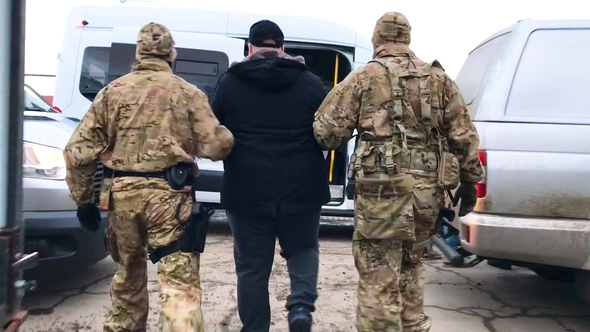
French prosecutors issued international arrest warrants for three prominent Syrian officials charged with collusion in crimes against humanity, in what human rights lawyers are calling a major victory in the pursuit of those believed responsible for mass torture, abuse and summary executions in the regime’s detention facilities. The warrants name three leading security officials—including Ali Mamlouk, a former intelligence chief and senior adviser to President Bashar al-Assad, as well as head of the Air Force Intelligence security branch, Jamil Hassan. A third, Abdel Salam Mahmoud—an Air Force Intelligence officer who reportedly runs a detention facility at al-Mezzeh military base near Damascus—was also named. Hassan and Mamlouk are the most senior Syrian officials to receive an international arrest warrant throughout the course of the conflict. (Photo of hunger strikers at Syrian prison via Foreign Policy. Credit: Louai Beshara/AFP/Getty Images)

Afghanistan

Report: Afghan government control lowest yet

In its latest quarterly report to Congress, the US watchdog for Afghan reconstruction finds that the security situation is at an all-time low since monitoring began. Since the Special Inspector General for Afghanistan Reconstruction (SIGAR) began tracking district control in 2015, Afghan government-controlled or "influenced" districts have declined 16% to 55.5%. In the same period, areas of insurgent control or influence rose 5.5% while "contested" districts increased 11%. As of late July, the US military assessed that the Kabul government controls or influences 226 of Afghanistan's 407 districts, while the Taliban controls/influences 49. The remaining 132 districts are identified as "contested." Since the prior quarterly report, Operation Resolute Support downgraded eight districts from "government influenced" to "contested." SIGAR said Afghan security forces "made minimal or no progress in pressuring the Taliban" in the period covered by the report. (Photo via Stars & Stripes)

Southeast Asia

Philippines: who killed the ‘Sagay 9’?

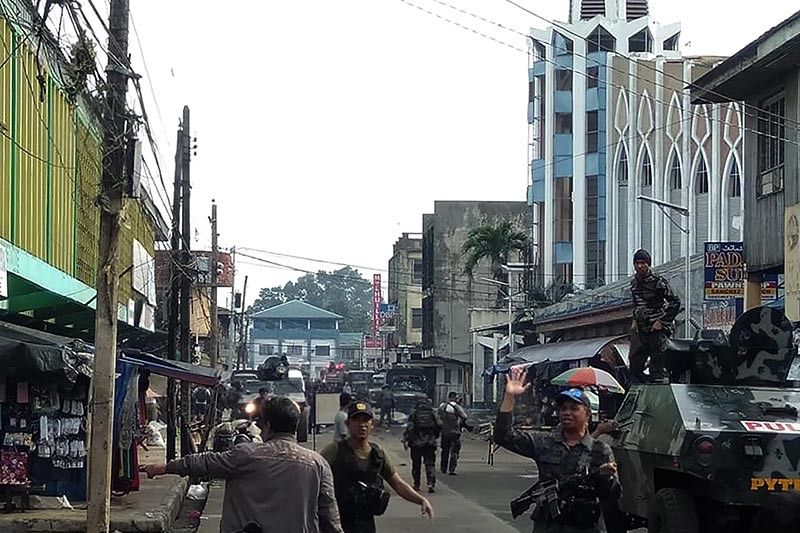
The massacre of nine farmworkers, including two minors, at Hacienda Nene, outside Sagay City in the central Philippines, constituted the single most deadly attack against peasant activists under the Rodrigo Duterte administration. A fact-finding mission led by human rights and civil society groups has pointed to members of the Special Civilian Auxiliary Army, a private militia associated with the Armed Forces of the Philippines, as the most likely perpetrators of the "Sagay 9" massacre. But the Philippine National Police have charged two members of the farmworkers' union for inciting the violence by launching a land occupation at the hacienda. Duterte issued a new warning that his troops will shoot to kill if landless peasants begin any new occupations. (Photo via Philippine Inquirer)

The Amazon

Brazil: Bolsonaro threatens genocide —openly

Brazil's far-right Jair Bolsonaro campaigned on a plan to privatize vast swaths of the Amazon rainforest, turning it over to agribusiness and mining. In addition, he seeks to expand hydro-power and other energy mega-projects the region. Since his election, Bolsonaro's team has announced that his administration will merge the ministries of agriculture and the environment into a new "super ministry" to oversee the plan. Brazil has some 720 indigenous reserves, ranging from a single hectare to nearly ten million hectares. Bolsonaro says he wants to put all of those lands—13% of Brazil's territory—on the auction block. "Minorities have to adapt to the majority, or simply disappear," he said on the campaign trail, adding that under his administration, "not one square centimeter" of Brazil will be reserved for the country's indigenous peoples. (Photo: Kayapo women in Brazilian Amazon, via FUNAI)

Syria

SDF halt anti-ISIS drive after Turkish bombardment

The US-backed, Kurdish-led Syrian Democratic Forces (SDF) announced that they have temporarily halted their campaign against ISIS after they were bombarded for the second time in four days by Turkish forces. With Turkish President Recep Tayyip Erdo?an promising to “wipe out” the Kurdish YPG militia, calling them “terrorists,” his forces in northern Syria attacked YPG positions east of the Euphrates River. The YPG, or People’s Protection Units, constitute the central pillar of the US-backed SDF, which Washington continues to support with some 2,000 embedded troops. At least 10 YPG fighters were reported killed in the Turkish shelling of territory in the Kurdish autonomous canton of Kobani. The SDF said in a statement: “Turkish attacks in the north and ISIS attacks in the south against our troops had forced us to stop our current operation temporarily against ISIS in its last pocket… We call upon the international community to condemn the Turkish provocations.” The statement claimed that YPG fighters responded to the shelling with artillery and machine-gun fire, destroying a Turkish military vehicle and border post. (Image of SDF fighters via Rudaw)

Iran

Iran: repression escalates against Ahwazi Arabs

Iran's government has unleashed a wave of arrests in western Khuzestan province since the Sept. 22 deadly attack on a military parade in the city of Ahwaz, with sweeps targetting dissidents, journalists, intellectuals, human rights activists and members of the Ahwazi Arab minority generally. Some 1,000 Ahwazis have been detained in the weeks since the attack, with at least 600 still being detained. Many of the detained have been taken to unknown destinations, with their families denied any contact or even information on their whereabouts. Local rights groups report that security forces have raided activists' homes, and the detained include women and the elderly. Karim Dahimi, an Ahwazi human rights worker based in London, said that the Iranian government has been systematically detaining Ahwazi activists in clandestine torture facilities known as "black sites." Ahwazi Arabs in the international diaspora have been holding demonstrations at Iranian consulates demanding an end to the regime's anti-Arab racism and repression (Image: The Herald Report)

North America
neo-Nazis

Podcast: looming fascism and the digital dystopia

In Episode 21 of the CounterVortex podcast, Bill Weinberg rants in anguish about how he has been forced by market and technological forces beyond his control into the same matrix of digital media that is fast eroding the very concept of truth and lubricating the consolidation of a fascist order in the United States and the world. In the aftermath of the Pittsburgh synagogue massacre, Weinberg documents Trump's complicity and virtual green-lighting of the attack, and calls out his rote condemnation as rank hypocrisy. From the wave of hate unleashed immediately upon his inauguration through the "false flag" theory he floated about the MAGA-bomber, Trump has played to anti-Semitism in barely veiled terms. The doublethink that now lets him get away with his blatantly disingenuous disavowal of the massacre is related to the post-truth environment fundamentally inherent to digital media. Listen on SoundCloud, and support our podcast via Patreon. (Photo via Germ)

North America

Native Americans unite against ‘termination’ threat

At its annual convention in Denver, the National Congress of American Indians spoke strongly against the Trump administration’s decision to halt the restoration of ancestral lands to the Mashpee Wampanoag tribe of Massachusetts, invoking a return to the disastrous policies of the “termination era.” At issue are 321 acres where the Wampanoag sought to build a casino. The US Interior Department issued a decision in 2015 to take the lands into trust for the trib, and ground was broken on the casino the following year. But opponents challenged the land transfer in the courts. In April 2016, a federal judge found the Interior decision had bypassed the Supreme Court’s 2009 ruling in Carcieri v Salazar, concerning a land recovery effort by the Narragansett Indian Nation of Rhode Island. In the Carcieri case, the high court ruled that the federal government had no power to grant land in trust for tribes recognized after passage of the Indian Reorganization Act of 1934. In September of this year, the Interior decision was reversed by Tara Sweeney, the new assistant secretary for Indian Affairs. Sweeney determined that the Mashpee Wampanoag-—whose ancestors welcomed some of the first settlers to the Americas more than 300 years ago—could not have their homelands restored because they were only federally recognized in 2007. (Photo: Indianz.com)

Mexico

Tarahumara leader assassinated in Chihuahua

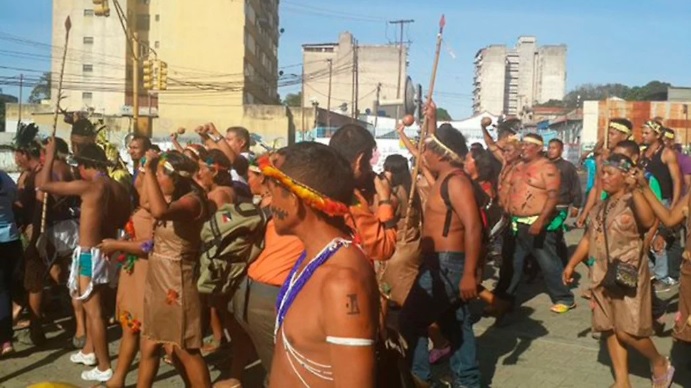
Julián Carrillo Martínez, a Tarahumara indigenous leader at the community of Coloradas de la Virgen, Guadalupe y Calvo municipality, in northern Mexico's Chihuahua state, was assassinated by unknown assailants, according to local advocacy group Alianza Sierra Madre. Carrillo Martínez was leading an effort by Coloradas de la Virgen to recover usurped traditional lands, with a case pending before the Agrarian Tribunal for the local district 5. Community residents were also petitioning Mexico's Secretariat of the Environment and Natural Resources (SEMARNAT) to halt logging operations in forested areas of the disputed lands. Several community residents have been assassinated in Coloradas de la Virgen since the community began its land recovery effort. (Photo: Amnesty International)

Inner Asia

China fast expanding detention camp system

With China accused of detaining hundreds of thousands of Uighur Muslims without trial in its western province of Xinjiang, a BBC investigation analyzed satellite data to determine that the detention camp system in the region is rapidly expanding. Reviewing images from the European Space Agency's Sentinel satellite service, the BBC finds at least 40 such facilities across Xinjiang, half built within last two years—with a big thrust of construction just in the past six months. Among the largest is a "massive, highly secure compound" still being built at Dabancheng, about an hour's drive from the provincial capital, Urumqi. It is enclosed within a two kilometer-long exterior wall punctuated by 16 guard towers. (Photo via UNPO)