Syria
Atareb

Protest WHO board seat for Syrian regime

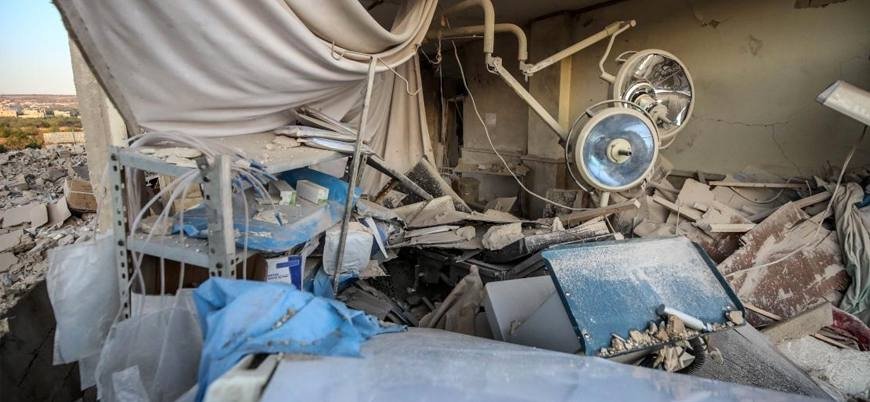
Doctors and healthcare workers held a demonstration outside a hospital in the Syrian city of Idlib, to protest the election of the Bashar Assad regime to the executive board of the World Health Organization (WHO)—the latest coup for normalization of the regime. “How can we trust WHO [when] one of its executive board members is the murderer who is killing my colleagues?” said Dr. Salem Abdan, head of health services for opposition-administered Idlib. Read a banner at the protest: “We reject that he who destroyed our hospitals be represented on the executive board.” Idlib province is part of a remaining rebel-held pocket in the northeast of the country, where Assad regime warplanes have for years been bombing hospitals and clinics. (Photo of bombed hospital in northern Syria via Daily Sabah)

Afghanistan
afghanistan

Afghan pullout: unanswered questions for civilians

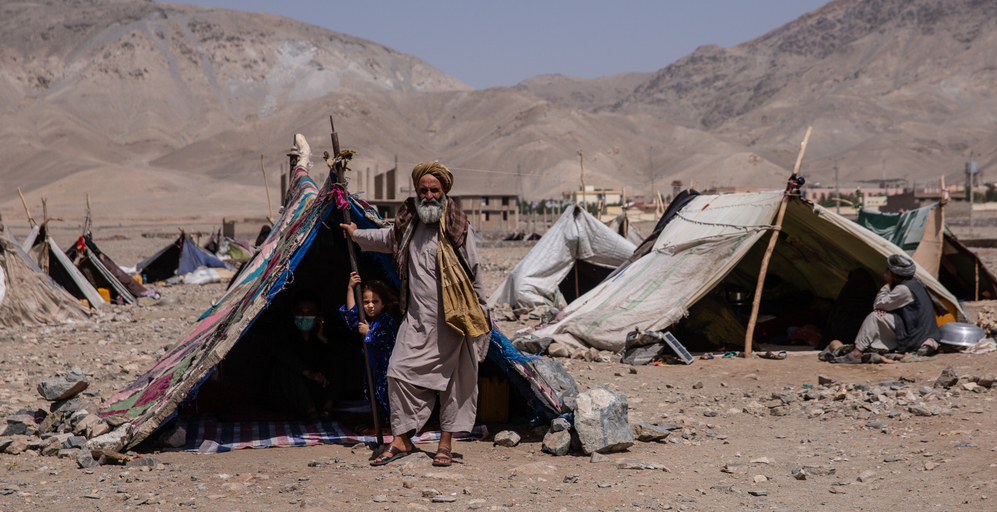
Afghanistan now has a clearer timeline for when US and international troops will leave, but the questions surrounding what this means for civilians and aid operations in the country remain the same. US President Joe Biden confirmed plans to withdraw American forcesbefore Sept. 11—the 20th anniversary of the terrorist attacks that led to the Afghanistan invasion. NATO also said 9,500 international soldiers—including 2,500 US troops—would leave, beginning May 1. But the implications of the pullout are as volatile as they were when Biden’s predecessor first inked a peace deal with the Taliban last year. Will the Taliban pursue a decisive military victory or continue with sporadic peace negotiations with the government? How will women and minorities fare? How will this affect local and international aid operations, and the roughly 16 million Afghans—more than 40% of the population—who rely on humanitarian relief? Will there be a future for reconciliation after decades of war? And what about the militias still active in many areas? More than 1,700 civilians were killed or injured in conflict in the first three months of 2021, the UN said the same day as Biden’s announcement. (Photo of displaced persons camp in Herat: Stefanie Glinski/TNH)
Africa
Coalition for the Sahel

Outrage over French air-strike in Mali

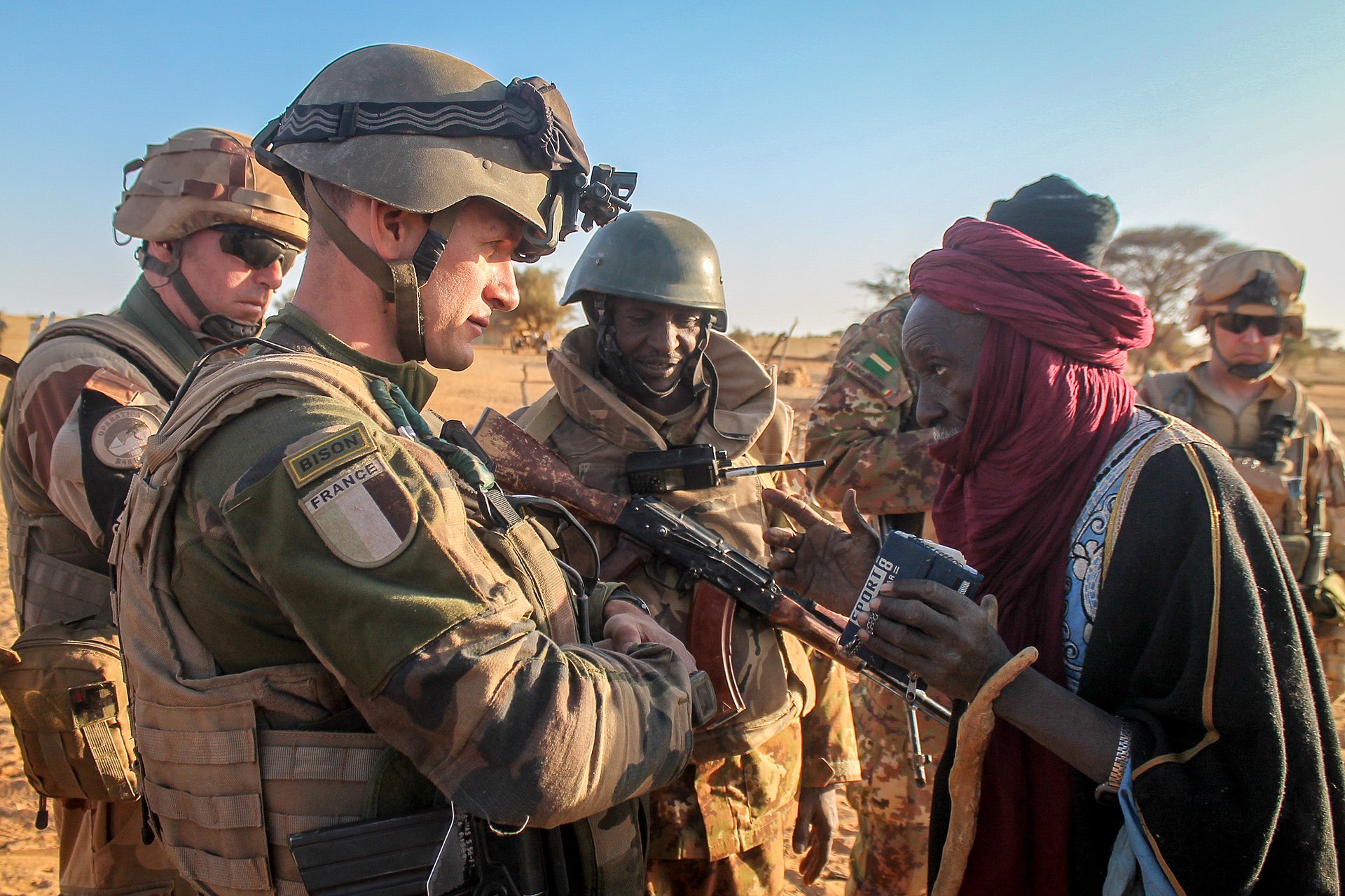
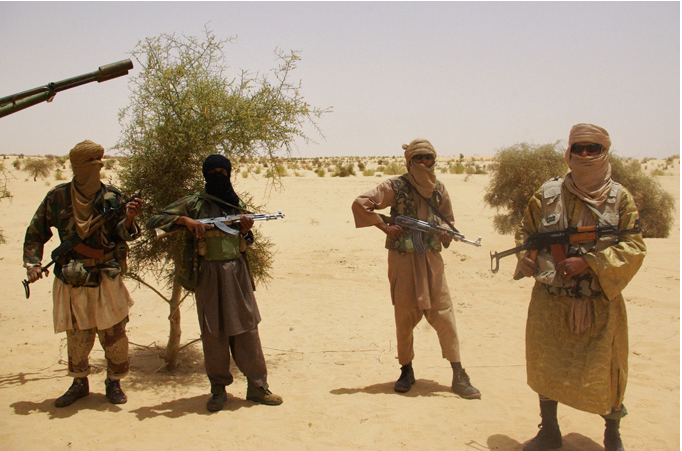
A French airstrike killed 19 civilians attending a wedding celebration in a remote Malian village, according to an investigation by the UN peacekeeping mission in the country, MINUSMA. The report based its findings on hundreds of interviews, satellite images, and evidence gathered from a trip to Bounti, the village hit by the January strike. The French defense ministry rejected the report, maintaining the casualties were Islamist militants. French troops were hailed as heroes by many Malians when they drove out militant groups from the country’s desert north in 2013. But criticism has grown as a 5,000-strong regional counterinsurgency force—called Operation Barkhane—has failed to prevent militants from regrouping and expanding across West Africa’s Sahel. Despite recent battlefield gains, the operation is drawing increasing comparisons to the US war in Afghanistan. (Photo: Wikipedia)

Syria
Atareb

Syria: outrage after Assad regime attack on hospital

Aid groups working in besieged northern Syria are expressing outrage after a hospital in the town of al-Atareb was destroyed by artillery fire. Six people were killed in the strikes, including a child, and at least 16 injured. The hospital was within the rebel-held pocket of Aleppo province, which has come under renewed bombardment by the Assad regime and Russia in recent weeks after a year-long lull in the fighting. The hospital was jointly supported by the International Rescue Committee and the Syrian-American Medical Society (SAMS). All the casualties were civilians. The IRC said in a statement: “Although SAMS shared the hospital’s coordinates through the UN’s notification system, it came under attack and has now been damaged so severely that it can no longer be used.” (Photo via Daily Sabah)

Afghanistan
afghan army

Afghanistan: US withdrawal on hold?

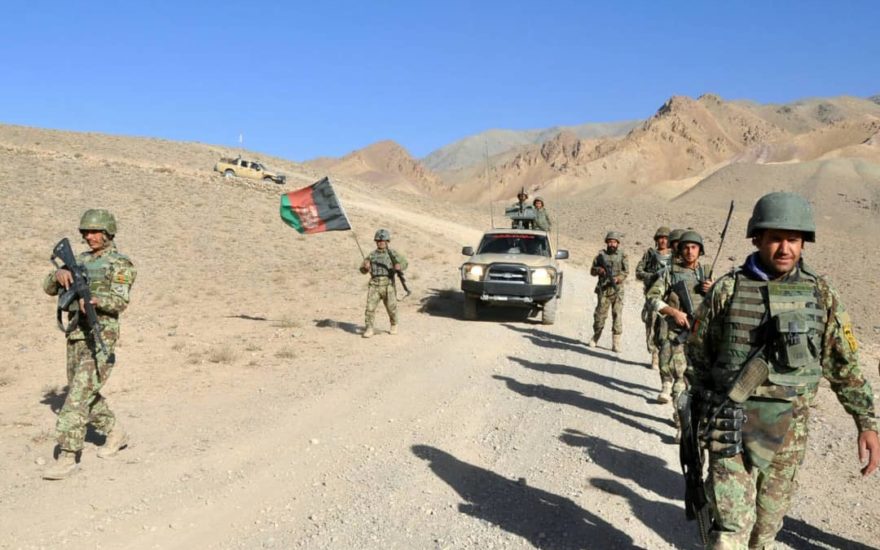
With a May 1 deadline for withdrawal of US forces from Afghanistan approaching but a final peace deal stalled, the White House is said to be considering an extension beyond this date for removal of its 2,500 troops remaining in the country. “Intra-Afghan” negotiations between the Taliban and Kabul opened in Doha in September, but remain deadlocked over fundamentals of the power-sharing deal—with the Taliban rejecting President Ashraf Ghani’s insistence on remaining in office for the remainder his five-year-term. Predictably, they haven’t even got around to discussing protection of minority and women’s rights, or the role of sharia law in the new order. Meanwhile, civilian casualties are mounting, and the Taliban has just launched a spring offensive. (Photo: Khaama Press)

Iran
syria

Biden’s first air-strikes: the Great Game in Syria

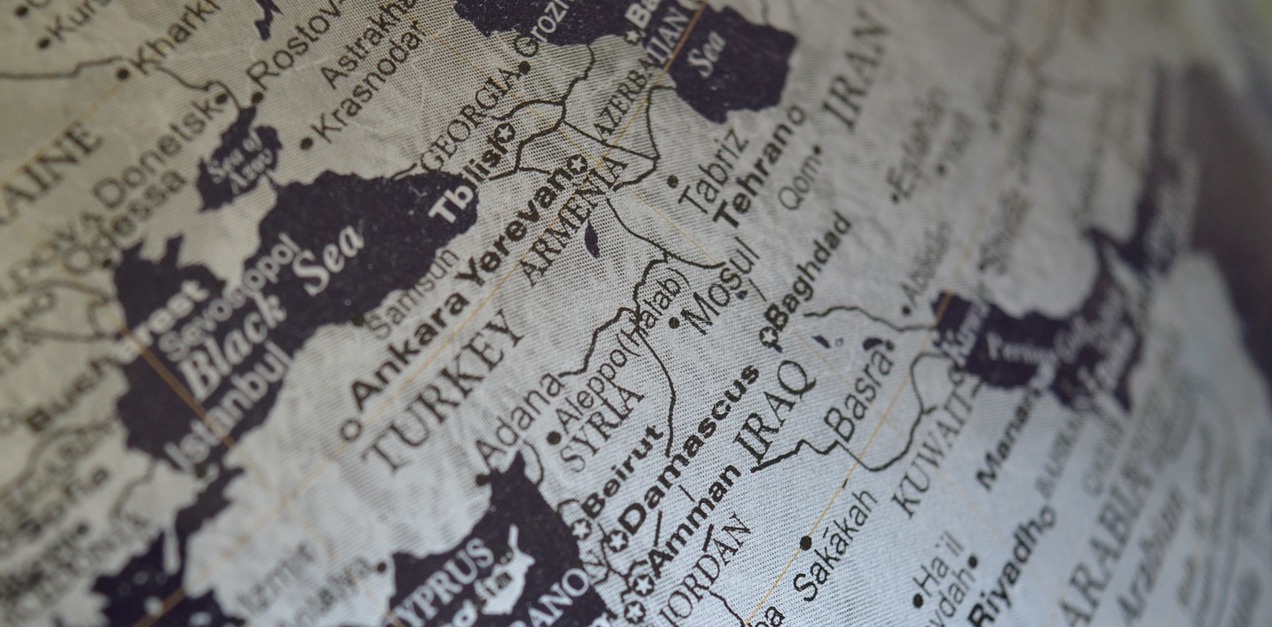
In the first air-strikes on Syria under the Joseph Biden administration, US warplanes struck positions of Iran-backed militia forces at a Revolutionary Guards base near the Iraqi border in the country’s desert east. The Pentagon said the strikes “destroyed multiple facilities at a border control point used by a number of Iranian-backed militant groups,” including Kataib Hezbollah. It was also a Tehran-backed paramilitary formation that claimed responsibility for last week’s missile attack on the US airbase at Erbil, in northern Iraq. The US bombing an Iran-backed militia in retaliation for an attack in Iraq is a textbook example of how Syria has been turned into a playing field in the Great Power game. (Image: Pixabay)

Africa
Mali

UN to investigate ‘crimes against humanity’ in Mali

UN investigators into political violence in Mali reported to the Security Council that they found evidence that government forces have committed “war crimes,” while jihadists and other armed groups perpetrated “crimes against humanity.” The allegations are made in a 338-page report compiled by the International Commission of Inquiry, a panel examining events in Mali over the six years after it spiralled into conflict in 2012. The report, which has not yet been made public, recommends establishing a special court to try accused perpetrators. But the recommendations are being met with some wariness in Mali. The opposition Rally of Patriotic Forces demands that foreign militaries operating in the country be covered in the scope of the investigation—including France. (Photo via Andy Morgan Writes)

Africa
Somalia

Trump announces (pseudo-) withdrawal from Somalia

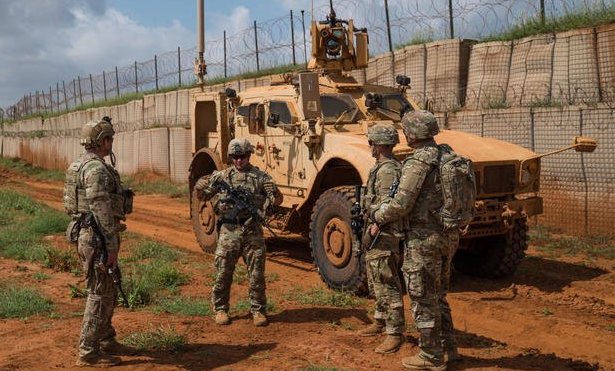
President Trump has ordered the withdrawal of nearly all the approximately 700 US troops in Somalia by mid-January. But the troops are not coming back to the US—they will be stationed just outside Somalia’s borders, in Kenya and Djibouti, ready to go back in as circumstances mandate. Air-strikes and drone warfare are to continue. Also remaining in Somalia will be a team of Pentagon advisors and a significant force of private contractors from the DC-based firm Bancroft Global, working with a US-trained elite commando unit to fight al-Shabaab and ISIS insurgents. (Photo: Nick Kibbey/US Air Force via Military Times)

Africa
Jubaland

Somalia clashes escalate regional tensions

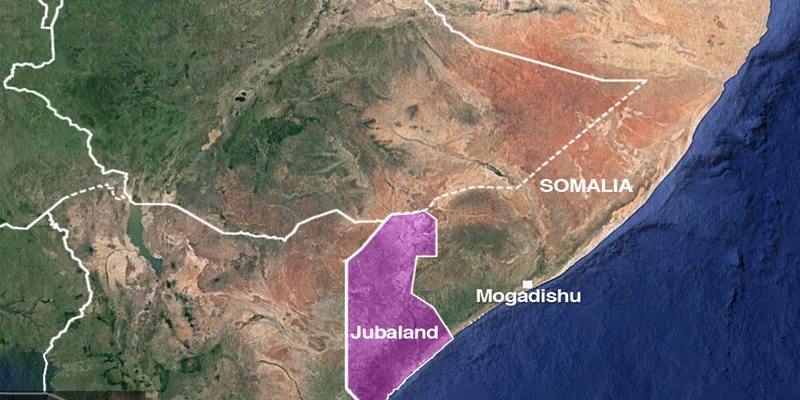
Somali troops clashed with forces from the country’s semi-autonomous Jubaland region in a flare-up of violence that is raising tensions with neighboring countries and may play into the hands of the militant group al-Shabab. Tensions have been rising since August, when Jubaland’s incumbent president, Ahmed Madobe, won regional elections that Mogadishu described as “not free and fair.” The central government wanted a loyalist candidate to win, as it seeks greater control over Somalia’s regions ahead of upcoming national elections. Kenya, which has troops deployed as part of an African Union peace enforcement operation, is on the side of Madobe, who it sees as an ally against al-Shabab, while Ethiopia has aligned with Mogadishu. Kenya accused Somali troops of encroaching on its territory and destroying property during the new violence, while the US said that the clashes are a distraction in efforts against al-Shabab. An estimated 56,000 people have been uprooted by the recent fighting. according to the UN. (Map: African Executive)

Afghanistan
Special Forces

ICC approves Afghanistan war crimes investigation

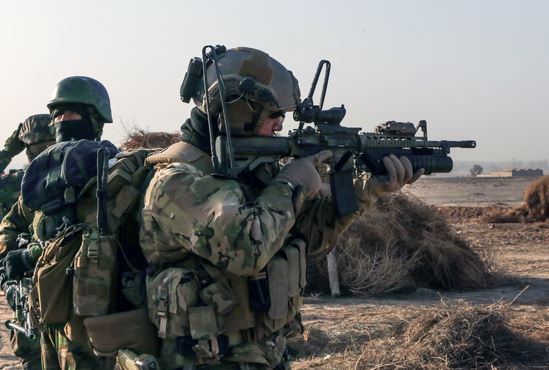
The Appeals Chamber of the International Criminal Court  unanimously approved an investigation into allegations of war crimes committed by both sides in the Afghanistan conflict. The investigation will focus on “alleged crimes committed on the territory of Afghanistan in the period since 1 May 2003, as well as other alleged crimes that have a nexus to the armed conflict in Afghanistan.” The Pre-Trial Chamber had rejected a request to open an investigation last year, but the prosecutor appealed. The case names three primary parties as the focus of its investigation: the Taliban and affiliated groups for crimes against humanity and war crimes; the Afghan National Security Forces for war crimes; and the US armed forces and its Central Intelligence Agency for war crimes. (Photo:AiirSource Military)

Afghanistan
Afghanistan

Will human rights be betrayed in US-Taliban deal?

More than a year of US-Taliban negotiations bore formal fruit with the signing in Doha of what is being called a “peace deal” by Washington’s envoy Zalmay Khalilzad and Mullah Abdul Ghani Baradar. The pact calls for the US to withdraw its forces from Afghanistan in 14 months if the Taliban fulfills its commitments under the agreement. “Intra-Afghan” talks are to follow, with the aim of negotiating a permanent ceasefire. Amnesty International, however, raised concerns about what the  deal could mean for Afghanistan’s women and religious minorities, urging: “Any peace process involving the parties to the conflict in Afghanistan must not ignore the voice of victims.” (Map: Perry-Castañeda Library)

Afghanistan
Afghan army

UN rights office protests Trump military pardons

A spokesman for the UN Office of the High Commissioner for Human Rights (OHCHR) said that he is “very concerned” by President Donald Trump’s pardons of two army officers and restoration of rank of a Navy SEAL. The president granted full pardons to two officers accused of killing noncombatants or disarmed captives, and restored rank to a SEAL accused of posing with the body of a slain fighter in Iraq. Rupert Colville, spokesman for the OHCHR, said the pardons sent “a disturbing signal to militaries” around the globe, noting that international law requires the investigation and prosecution of war crimes, and that the pardons “simply void[ed]” the legal process. (Photo: Army Amber via Pixaby)