North Africa

Berber language rights at issue in Libya, Morocco

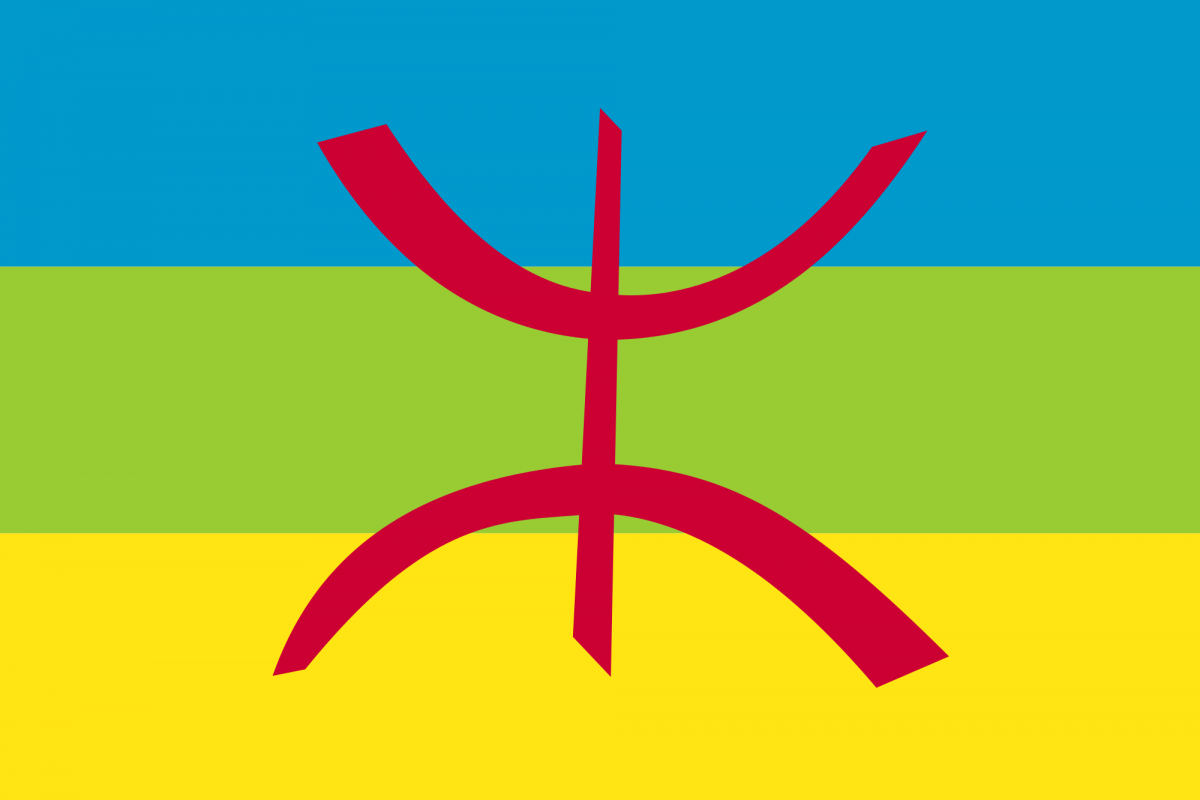
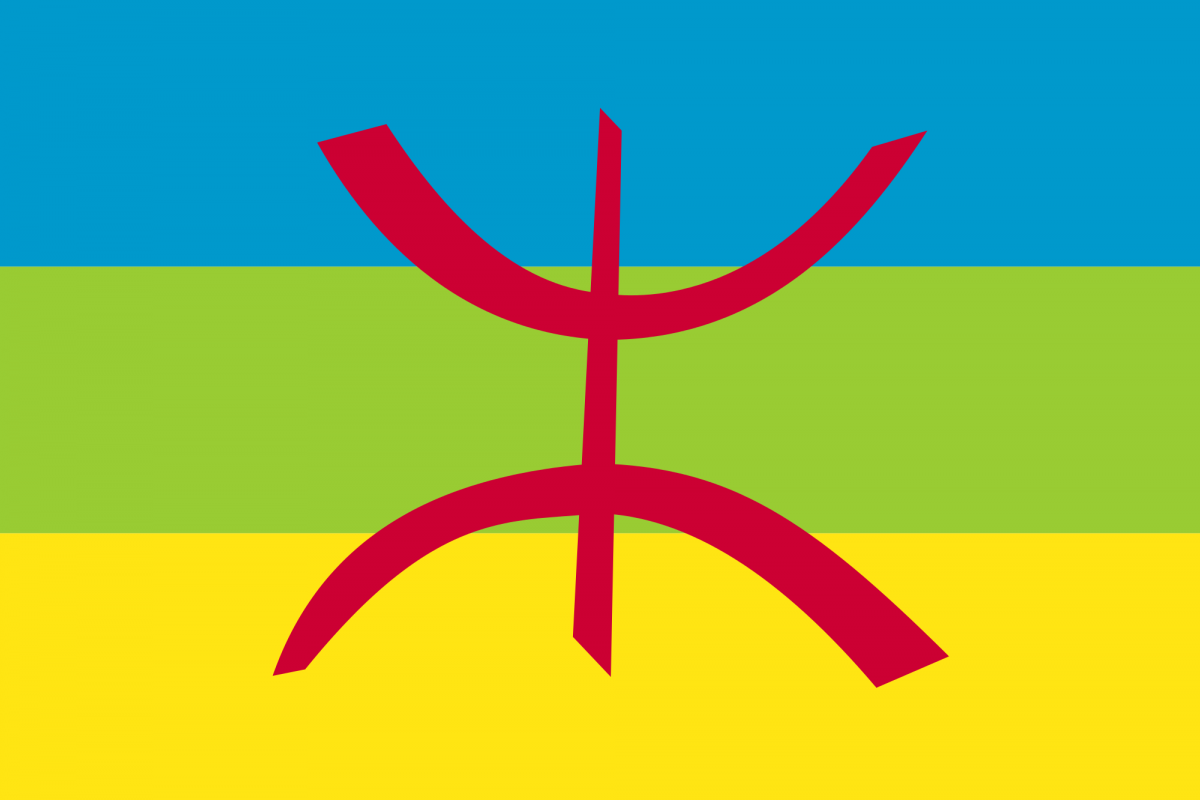
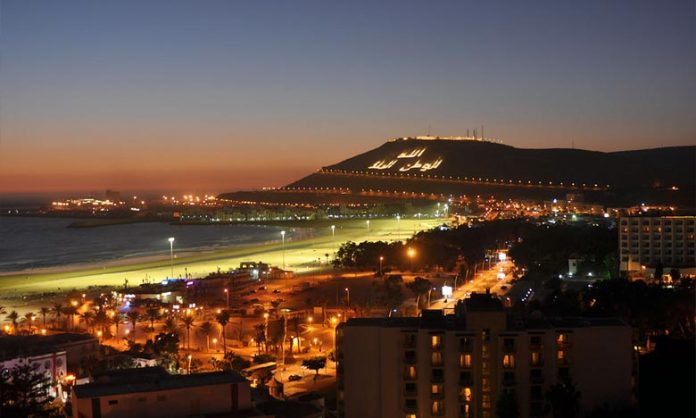
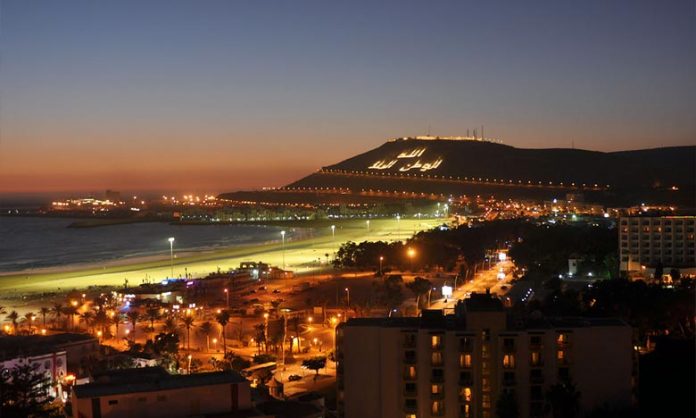
The Libyan Amazigh Supreme Council, representing the country's Berber ethnic minority, has decided to boycott the referendum on the country's newly released draft constitution, in protest of the lack of provisions for their language and cultural rights. Berbers want their language to be official in the Libyan constitution, given equal status with Arabic in administration and education. Meanwhile in Morocco, Berber leaders are protesting a move by the city of Agadir to remove street names in the Berber language, Tamazight. The Agadir city council voted to change Tamazight street names to the names of Palestinian cities, ostensibly as a show of support for Palestinians. Abdullah Badou, head of Morocco's Amazigh Network, said: "We do not have a problem with Palestine. Certainly, we support the Palestinians, but we do not agree with those who ignore the nature of the area and the history of Morocco." (Photo of Agadir port via Morocco World News)

Inner Asia

2008 Tibetan uprising remembered in Queens

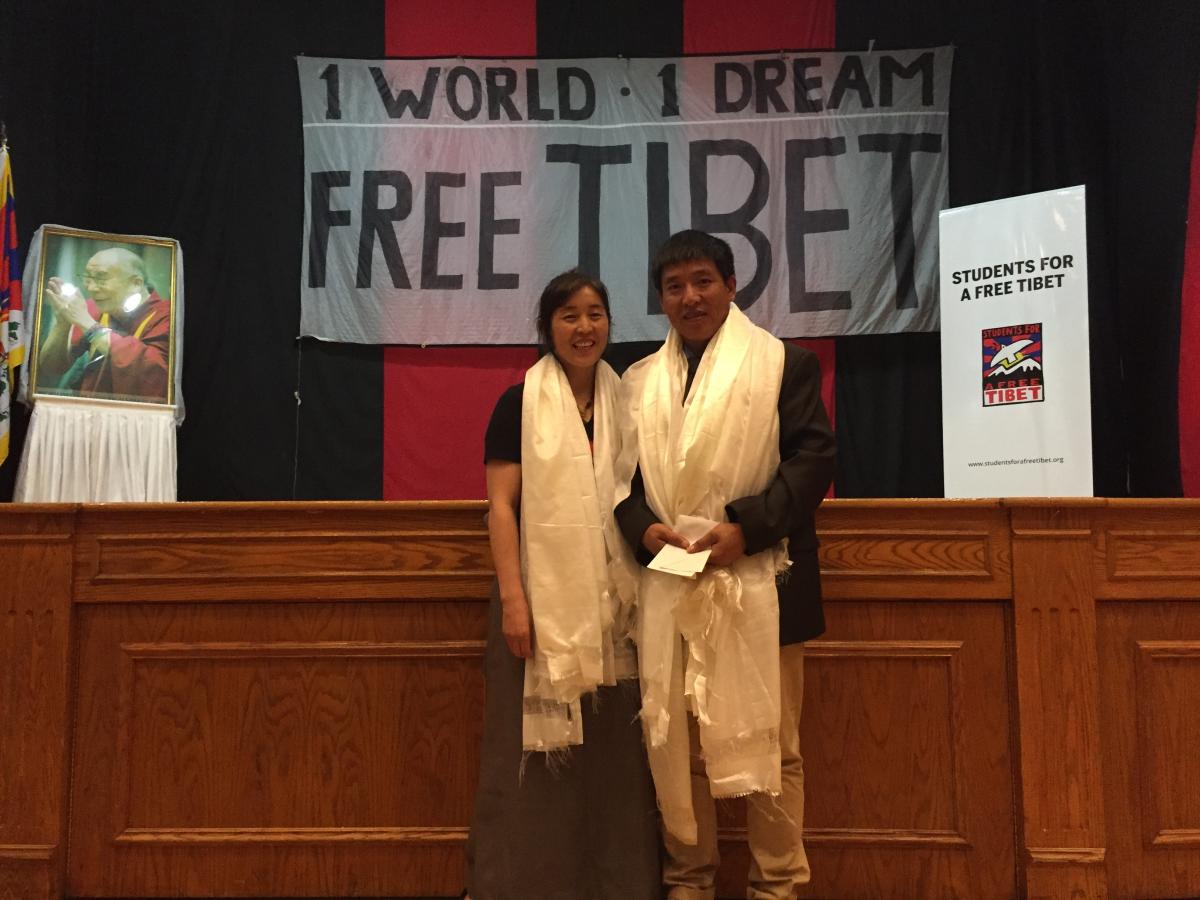
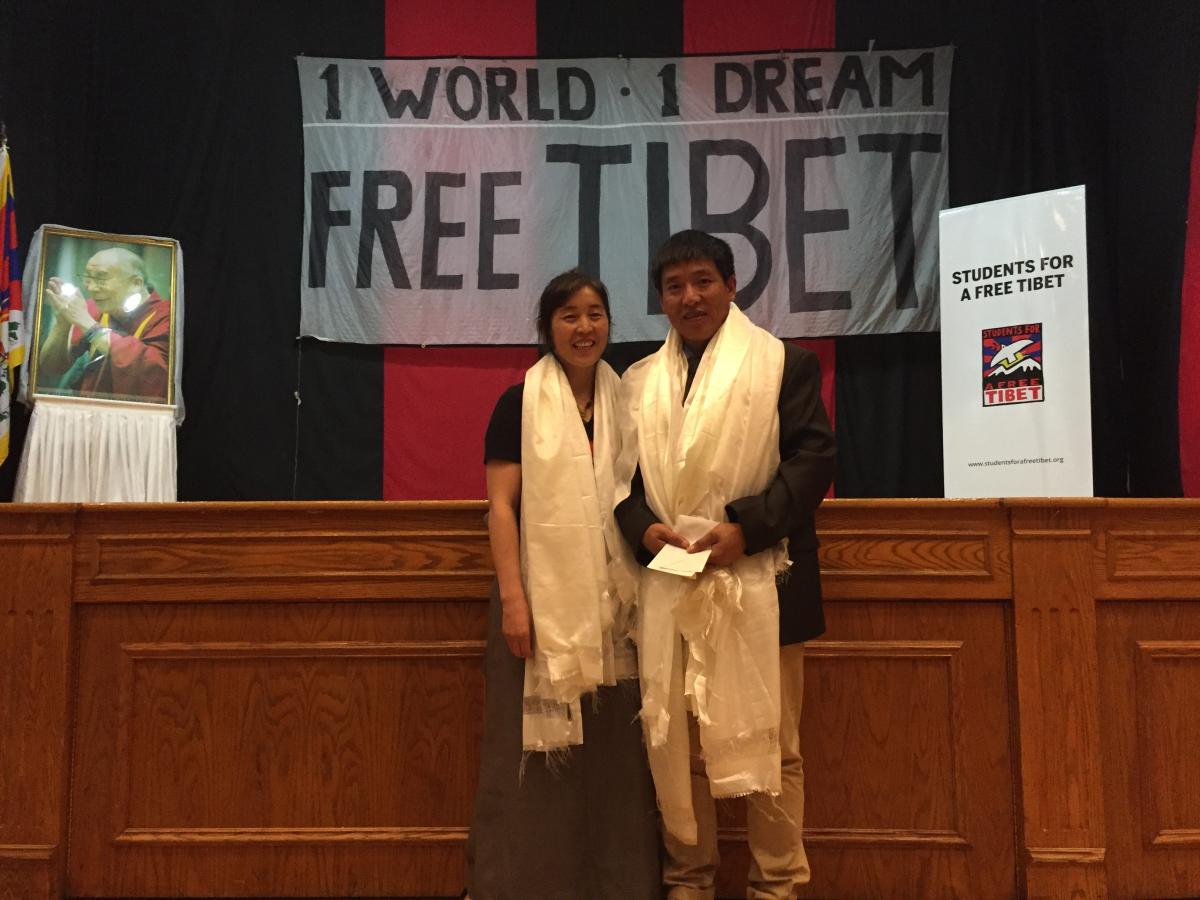
Students for a Free Tibet held a 10-year commemoration of the 2008 Tibetan uprising at a hall n the Queens neighborhood of Astoria, New York City. The 2008 uprising, which began in Lhasa in March, continued for weeks and spread across the Tibetan plateau. It was put down at a cost of some 20 lives, by official Chinese figures. But Tibetan rights groups and the government-in-exile in Dharamshala, India, claim that hundreds were "disappeared" in a subsequent wave of repression, with some 200 presumed killed. Guest of honor at the commemoration was Dhondup Wangchen, producer of the 2008 documentary film Leaving Fear Behind, made in the prelude to the uprising, in which ordinary Tibetans spoke of their feelings about China hosting the Summer Olympics. Wangchen was subsequently arrested, convicted of "subversion," and served six years in prison. Upon his release, he fled Tibet and was granted asylum in the United States. He is shown here with his wife, Lhamo Tso, who waged a campaign for his release. (Photo: Rose Tang)

Iraq

Yazidis reject hand-over of Sinjar to KRG control

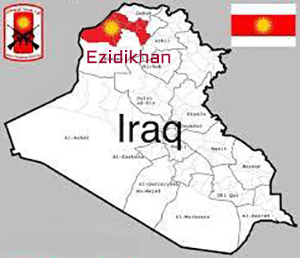
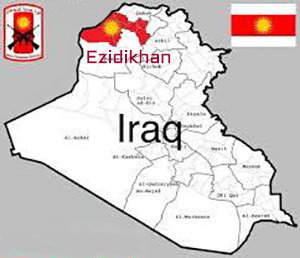
The Provisional Government of Ezidikhan—the self-declared autonomous homeland of the Yazidi people in northern Iraq, centered around the town of Sinjar—issued a statement flatly rejecting a political deal cut between Baghdad and Kurdish authorities in Irbil to hand control over the enclave to the Kurdistan Regional Government. Said Ezidikhan Prime Minister Waheed Mandoo Hammo: "The Yezidi people reject the Iraq government’s attempt to install the Kurdish Regional Government as the military and political authority over the nation of Ezidikhan without our consent. The Ezidikhan Provisional Government is the sole, legitimate government representing the peoples of Ezidikhan. No decisions regarding the political, economic or strategic actions [of] the nation of Ezidikhan can legitimately be made without our free, prior and informed consent." (Map: Ezidikhan.net)

Syria

Syria endgame: Rojava seeks deal with Assad

Representatives of the US-backed Kurdish-led alliance known as the Syrian Democratic Forces are holding talks in Damascus with the Assad regime, apparently with an eye toward regime recognition of the Kurdish autonomous zone in exchange for unity against further Turkish expansion in northern Syria. The SDF controls more than 27% of Syrian territory. In effect, that means this region is under the Rojava autonomous administration, which is the real political force behind the SDF. The Rojava leadership’s cooperation in a Syrian carve-up deal may be the price of survival for their autonomous zone. But it would certainly vindicate the long-standing accusations of Kurdish collaboration with Assad—despite Assad’s previous refusal to recognize the autonomous zone. It would also yet further heighten the risk of Kurdish-Arab ethnic war in northern Syria. (Photo of Kurdish fighters in Rojava via Rudaw)

Syria

Syria endgame: whither Idlib?

With the fall of Syria’s southern province of Daraa to Assad regime forces, only Idlib in the north remains as a last pocket of opposition control. The besieged rebel forces there are anticipating a final offensive by Assad and his Russian backers. But a complicating factor is that Turkey is occupying areas of Idlib, which means an offensive there threatens international escalation. Speaking to reporters before heading for a summit of emerging market countries in South Africa, Turkey’s Recep Tayyip Erdogan said he would speak there with Vladimir Putin about how to resolve “the issue of Idlib.” This points to a possible carve-up deal, in which the bulk of Syria falls under Assad with Russian protection, Idlib remains under rebel control with Turkish protection, and the northeastern Rojava region will remain a Kurdish autonomous zone under US protection. (Photo: Syria News)

Africa

DRC opens rainforest to oil, logging interests

Concern is mounting for the Democratic Republic of Congo’s vast forests and rich wildlife as logging concessions and licenses to explore for oil in protected areas are prepared ahead of presidential elections later this year. A moratorium on industrial logging, in place since 2002, has been broken with three concessions reportedly handed out by the DRC environment ministry to Chinese-owned logging companies. A further 14 logging concessions are expected to be granted within months, according to a Greenpeace investigation. In addition, the government is preparing to reclassify large areas of Salonga and Virunga national parks—both UNESCO World Heritage sites—to allow oil exploitation. (Photo via Global Forest Watch)

Inner Asia

China: Mongol historian faces ‘separatism’ charges

Respected Mongol historian Lhamjab A. Borjigin was placed under house arrest in Inner Mongolia's Xilingol League to await trial on charges of "national separatism" and "sabotaging national unity." At issue is his self-published book that purports to document the deaths of 30,000 in a campaign of "genocide" against ethnic Mongols during China's Cultural Revolution of the 1960s. Although Lhamjab, 74, is the author of several books on the history of the region, all state-run publishing houses refused to publish this work, and he resorted to taking the risk of self-publishing through an "underground" press. The book became popular, distributed through informal networks in Inner Mongolia. It was also reprinted by a formal publishing house in Mongolia. Lhamjab potentially faces a lengthy prison term. (Photo of traditional Mongol herder via UNPO)

South Asia

ISIS terror targets restive Baluchistan

A suicide bomber killed at least 130 at a campaign rally in Pakistan’s Balochistan province— the deadliest attack in the country since 2014. A local candidate with the Balochistan Awami Party was among the dead. The local franchise of the Islamic State took credit for the attack. Radio Free Europe portrays the BAP as part of the Pakistani military establishment’s plan to undermine Baluch ethno-nationalist groups. Balochistan province is part of the larger region of Baluchistan, homeland of the Baluch people, long divided between Iran, Pakistan and Afghanistan. There are movements for Baluch independence in each of these countries, but they have been unable to unite across the nation-state boundaries. The attack may point to an ISIS strategy to disrupt electoral ethno-nationalist initiatives, and co-opt the Baluch struggle across all three borders, wedding it to Sunni extremism. (Map via Atheer)

Syria

Raqqa ‘annihilation’ reveals Kurdish contradiction

A new Amnesty International report accuses the US of “war crimes” in the bombardment of Raqqa, and the virtual “annihilation” of the city. The fact that the US-led bombardment was in support of the Kurdish-led Syrian Democratic Forces in their campaign to take the city from ISIS has contributed to pitting Kurd against Arab and brought northern Syria closer to ethnic war. Ironically (if predictably), now that the Syrian Kurds have served their purpose in defeating ISIS, Washington is about to kick them overboard—just as Assad and Erdogan alike are preparing offensives against them. (Photo: SDF)

Greater Middle East

UAE-Saudi plan to divide Yemen seen

A crisis over the Yemeni island of Socotra was resolved as the United Arab Emirates agreed to withdraw and turn control over to Saudi forces, which will in turn restore full Yemeni rule. The island is a UNESCO World Heritage Site for its unique flora and fauna, hailed as the "Galapagos of the Indian Ocean." Emirati forces seized Socotra at the start of the month, and raised their flag over the airport and other strategic points—sparking angry protests from residents. Socotra's governor condemned the move as an "occupation" and "a flagrant violation of Yemeni sovereignty." Even after the de-escalation, suspicions remain. Yemen's ambassador to UNESCO, Ahmad al-Sayyad, accused Saudi Arabia and the UAE of "a hidden inclination to divide Yemen." (Map via University of Texas)

UN concerned over new fighting in Burma’s north

With international eyes on the crisis facing the Rohingya in Burma’s Rakhine State, the UN human rights rapporteur for the Southeast Asian country expressed grave concern over a sharp escalation in hostilities in northern Kachin State—where peace talks with ethnic rebels have broken down. Special Rapporteur Yanghee Lee said she had received reports that the military had carried out aerial bombings, and used heavy weapons and artillery fire against civilian areas, forcing thousands to flee their homes. “What we are seeing in Kachin State over the past few weeks is wholly unacceptable, and must stop immediately,” Lee said. (Photo of Kachin Independence Army fighters via WikiMedia Commons)

North Africa

Western Sahara headed back towards war?

The UN Security Council extended the mandate of the peacekeeping force for Western Sahara (MINURSO) through the end of October 2018, while calling for Morocco and the Polisario Front to finally negotiate an end to the decades?old conflict. Western Sahara is claimed by Morocco, while the Polisario Front seeks independence for the territory. The territory has since the 1975-1991 war that followed its independence from Spain been divided by a series of sand berms and a "buffer zone." These separate the territory's Morocco-occupied west and a Polisario-controlled eastern strip. Recent months have seen growing tension between Morocco and Polisario over the borders of the buffer zone, with Polisario seeking to expand control into contested areas. (Photo: MINURSO via Yabiladi)