
South Asia
hijab

India: hijab at issue in Karnataka unrest

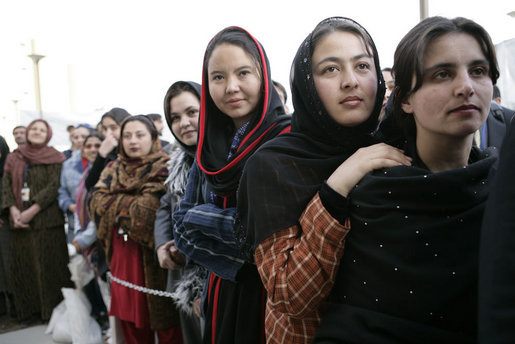
Protests for and against the right of young women to wear the hijab in classrooms have swept across the Indian state of Karnataka, with incidents of stone-pelting and “lathicharge” (police baton-charge). The dispute began when hijab-wearing Muslim students were denied entry at colleges, or segregated from the main student body. Muslim students challenged this before the Karnataka High Court, which denied injunctive relief while the matter is pending. The Chief Minister of Karnataka, Basavaraj S. Bommai of the Bhartiya Janata Party (BJP), meanwhile ordered the closure of all schools and colleges. The National Federation of Indian Women (NFIW) condemned the exclusion of the Muslim students, saying: “It is deplorable that instead of upholding constitutional values and fundamental rights, the administration of these institutions have become willing participants in an agenda set by Brahminical forces.” (Image: Counterview)

Inner Asia
GBAO

Tajikistan: internet darkness in Gorno-Badakhshan

Human Rights Watch urged Tajikistan’s authorities to restore internet connectivity in Gorno-Badakhshan Autonomous Region (GBAO, by its Russian acronym), and called on the national government to ensure due process for detained political activists. The trouble in the GBAO began in late November, when the shooting of a local man during an arrest sparked protests in the regional capital, Khorog. Protests calmed several days later, after local authorities vowed to undertake an investigation into the shooting, as well as the deaths of two demonstrators. The government also pledged that it would not prosecute arrested protesters, and would restore internet connectivity—but two months on, it has not done so. The GBAO is the home of the increasingly restive Pamiri ethnic minority, and was recently the scene of Russian-led military maneuvers on the border with Afghanistan. (Map: Wikipedia)

Syria
Manbij

Syria: Rojava authorities crack down on media

Two media outlets were ordered closed and two journalists arrested by the autonomous administration in Kurdish-controlled northeast Syria. Kurdish broadcaster and news site Rudaw—based in Erbil, Iraq—was suspended from working in the enclave, known as Rojava, by order of the Autonomous Administration of North & East Syria. In a statement on its website, Rudaw Media Network called the order “a crime against freedom of the press in Western Kurdistan.” Rudaw is affiliated with the Kurdistan Democratic Party (KDP), the ruling party of Iraq’s Kurdistan Regional Government, which also operates as an internal oppositionin Syria’s Rojava region. (Photo: Sgt. Nicole Paese/US Army via Kurdistan24)

North Africa
Tunis

Tunisia: president dissolves Supreme Judicial Council

Tunisian President Kais Saied officially dissolved the Supreme Judicial Council, sending police to seal the chamber where the body meets. The Council’s head, Youssef Bouzakher, called the dissolution “illegal,” and said it is aimed at bringing Tunisia’s jurists under control of the executive. Established in 2016, the Council is a constitutional body entrusted with ensuring the independence of the judiciary, responsible for appointing judges and taking disciplinary action. Bouzakher said the Council intends to continue working in defiance of the president’s announcement. The move is a further consolidation of Saied’s power following his “self-coup” last year, in which Tunisia’s parliament was suspended. (Photo: XLR Media via Twitter)

South Asia
naga

Podcast: solidarity with Nagaland

In Episode 109 of the CounterVortex podcast, Bill Weinberg explores the under-reported conflict in India’s northeastern state of Nagaland, which has seen a multi-generational pro-independence insurgency. Popular protest is rising there since an army massacre of coal-miners in December. The armed conflict began in 1956, when the Naga National Council declared independence from India in the face of Delhi’s intransigence on recognizing local autonomy, and adopted a constitution emphasizing village self-rule. The traditional Naga territory is divided by the border with Burma, which has complicated their self-determination struggle. With Burma now going over the edge into civil war, there are growing fears that India’s conflicted Northeast could be further enflamed. Listen on SoundCloud or via Patreon. (Photo: Naga Student Union Delhi via My Nagaland)

New York City
NYCHA

Human Rights Watch assails NYC housing policy

A New York City program that has privatized management and effective control of much public housing stock lacks adequate oversight and protections for residents’ rights, Human Rights Watch charges in a new report. The 98-page report, entitled The Tenant Never Wins,examines the impact of the New York City Housing Authority (NYCHA) program called Permanent Affordability Commitment Together (PACT), which utilizes a federal program developed by the US Department of Housing & Urban Development (HUD) called the Rental Assistance Demonstration (RAD) to permit the semi-privatization of public housing. Under PACT, which was launched in December 2016, NYCHA leases its public housing developments to private companies for 99 years, effectively privatizing management of the buildings. Human Rights Watch found that PACT conversions also mean the loss of key protections for residents, and may have contributed to increased evictions. (Photo via NYS Senate)

Inner Asia
Zhanaozen

Arbitrary arrests continue in Kazakhstan

Human Rights Watch (HRW) charged that during and since last month’s popular uprising in Kazakhstan, security forces have arbitrarily detained protestors, tortured some detainees, and interfered with their access to lawyers. The nationwide protests, which began over of a rise in energy prices, turned bloody after President Kassym-Jomart Tokayev ordered his armed forces to “shoot and kill without warning,” leading to the deaths of at least 227 people. HRW says it has received dozens of credible accounts of arbitrary detentions, with some of those arrested being beaten with batons or given electric shocks. Media have reported at least two cases of deaths in custody in Almaty, Kazakhstan’s largest city, apparently as a result of police mistreatment, and one such case in Kyzylorda. Authorities say some 10,000 people have been detained across the country, and 898 are facing criminal charges, including for “terrorism.” (Photo: San Francisco protest following 2011 Zhanaozen massacre in Kazakhstan, by Amineshaker/Wikipedia via The Ecologist)

Afghanistan
Fort Lee

Afghan refugees lack path to citizenship: report

Some 36,400 Afghan refugees lack a clear path to US citizenship or permanent residency, according to a report released by the Department of Homeland Security (DHS). The report surveys the immigration status of more than 76,000 Afghan refugees now under the supervision of Operation Allies Welcome (OAW), a DHS-coordinated program aimed at resettling Afghans within the United States. OAW, initiated last August, is the domestic counterpart to Operation Allies Refuge (OAR), the military effort to evacuate select Afghan citizens after their country fell to the Taliban that month. Those who worked with the US government or NATO in Afghanistan are eligible for Special Immigration Visas (SIVs), but their immediate and extended family members frequently are not. (Photo of evacuees arriving at Fort Lee, Va., via Homeland Security Today)

The Amazon
OCP

Pipeline rupture in Ecuador’s Amazon fouls river

Ecuador’s trans-Andean Heavy Crude Pipeline (OCP) ruptured amid heavy rains, spilling oil into a sensitive area of Napo province and contaminating several rivers draining into the Amazon Basin, including the Napo, Piedra Fina, Quijos and, most seriously, the Coca. The contamination also penetrated Cayambe-Coca National Park. Pipeline operator OCP Ecuador didn’t announce that it had stopped pumping through the stricken line until the following day, and at first denied that any waterways had been contaminated. This was repudiated in a statement from the Confederation of Amazonian Indigenous Nationalities of Ecuador (CONFENIAE), which cited reports from impacted Kichwa communities and tweeted a video showing crude polluting the Rio Coca. (Photo: Ecuador Ministry of Environment via EcoWatch)

Europe
anti-war

Glimmers of anti-war dissent in Russia

More than 100 Russian writers, activists and academics have signed a petition in protest of the war drive on Ukraine, which was published on the independent news site Echo of Moscow. The “Declaration by supporters of peace against the Party of War in the Russian government” charges: “The citizens of Russia are…becoming prisoners of criminal adventurism.” It has especially harsh words for Russia’s state media: “On state TV there is only one point of view, and that is the point of view of the supporters of war… [A]ggression pours out, and hate towards Ukraine, America, and Western countries… [W]ar is treated as an acceptable and inevitable development of events.” Some signatories have been officially designated as “foreign agents” by the Russian government, limiting their right to political activity. (Photo: Sign reads “Putin, hands off Ukraine!” Moscow, March 2014. Via RS21)

Africa
Ouaddai

Chad: protests over Ouaddai sultanate autonomy

At least 14 protesters were killed in Chad’s Ouaddai province, climaxing several days of mounting violence and unrest. Protests broke out in provincial capital Abéché after the central government suspended the powers of Ouaddai’s traditional sultan, Cherif Abdelhadi Mahdi. The appointed prefect of the province is to assume his traditional powers over the ethnic Ouaddai community. The traditional Ouaddai chieftain of the locality of Bani Halba has also had his powers dissolved by decree. The appointed replacements are apparently to be Arabs, exacerbating tensions between the Arab and ethnic Ouaddai communities. Local rights groups say several more were killed by security forces in the days of protest, and are demanding an investigation. The heretofore autonomous sultanate of Dar Ouaddai is a survival of the Wadai Empire, which ruled much of the region from the 15th century through the consolidation of French colonial rule in 1914. (Photo via Twitter)

Africa
Malawi

Another climate ‘wake-up call’ for southern Africa

Tropical Storm Ana battered three southern African countries, killing more than 70 people, washing away houses and infrastructure, and leaving around 350,000 people homeless and without public services. Ana began over Madagascar’s eastern Analamanga region, with wind speeds of up to 100 kmph, causing flooding and landslides that killed more than 40 people and forced 72,000 from their homes. It then made landfall in Mozambique, causing significant damage to the central provinces of Zambezia, Nampula and Tete, and leaving at least 15 people dead. Next hit was Malawi, where 19 were killed and more than 217,000 people fled their homes. The storm downed power lines and forced the closure of the country’s main hydropower plant. That also affected water pumping stations, resulting in water shortages in the main cities of Blantyre, Zomba, Lilongwe and Mzuzu. (Photo: Malawi Red Cross)