Europe
Ukraine

Podcast: Ukraine between East and West

In Episode 108 of the CounterVortex podcast, Bill Weinberg takes stock of the frightening East-West escalation over Ukraine. Beyond the front-line on that country’s eastern borders, the forces of Russia and its allies and those of NATO are preparing for war from the Mediterranean to the Pacific. The “anti-war” (sic) left in the US is, with perfect predictability, lining up with Russia. Contrary to pseudo-left misconceptions, the post-Cold War promises to Russia that NATO would not expand east were never formalized. However, the promises made to Ukraine that its sovereignty and territory would be protected were formalized. The prevailing double standard on the Western “left” sensationalizes a “Nazi” threat in Ukraine while ignoring the actual consolidation of fascistic dictatorships in Russia and Belarus. Putin’s propaganda, spread by the Kremlin media machine, is an exercise in fascist pseudo-anti-fascism. Ukrainian socialists and democratic-left forces advance a “Neither East Nor West” position that demands solidarity against Russian aggression from the world anti-war forces. Listen on SoundCloud or via Patreon. (Map via Perry-Castañeda Library Map Collection)

Planet Watch
offshore

US judge invalidates massive offshore oil sale

A federal judge in Washington DC invalidated an oil and gas lease sale in the Gulf of Mexico, finding that the Biden administration failed to properly account for the auction’s environmental impact. In 2017, the Outer Continental Shelf Oil & Gas Leasing Program issued a five-year plan which proposed 10 region-wide lease sales. One of those was Lease Sale 257, for 80.8 million acres of Gulf waters, the largest offshore lease sale in United States history. President Biden had initially blocked the sale by executive order, but this was overturned by the courts in a case brought by Louisiana and other states. (Photo: Pixabay)

Greater Middle East
UAE

UAE ‘cybercrime’ law restricts free speech: civil society

A coalition of human rights and civil society organizations published a joint statement protesting the United Arab Emirates’ new cybercrime law, saying it “severely threatens and unduly restricts the right to freedom of expression (both online and offline) and the rights to freedom of association and of peaceful assembly.” The letter says that the language of the statute creates ambiguity prone to misuse, especially regarding issues related to “national security,” which provide the authorities with “excessive discretion to impose lengthy prison sentences” for political dissent. The wording of these provisions is so broad that they can be used to target journalists, whistle-blowers, activists, and peaceful critics of the government. The letter notes that the law stipulates no maximum prison sentence for acts that “harm the State’s interests,” which violates Article 19 of the Universal Declaration of Human Rights. (Photo: Pixabay)

North America
Fort Bliss

SCOTUS hears cases on indefinite migrant detention

The US Supreme Court heard oral arguments for two immigration cases that address the right of detained non-citizens to have a bond hearing after six months of detention. Both cases were brought by asylum-seekers who had been detained for extended periods without bond hearings following the issuance of a removal order. The cases re-examine the 2001 Zadvydas v. Davis, in which the Supreme Court ruled that pre-removal detention may not be extended beyond six months unless there is a realistic chance that the non-citizen could be removed. The US Constitution forbids imprisonment without due process of law and guarantees the right of habeas corpus. (Photo via Border Report)

Syria
Khan Sheikhoun

UN: Syria must come clean on chemical weapons

Syria’s declaration to the United Nations of its chemical weapons program cannot be considered accurate due to gaps, inconsistencies and discrepancies, the High Representative for Disarmament Affairs told the Security Council. Izumi Nakamitsu urged the country to cooperate with the Organization for the Prohibition of Chemical Weapons (OPCW), adding that “full cooperation” is “essential to closing these outstanding issues.” The disarmament chief was presenting an update on implementation of Security Council Resolution 2118 (2013) regarding the elimination of Syria’s chemical weapons program. Nakamitsu said that 20 outstanding issues remain unresolved, involving undeclared research, production, and the arming of unknown quantities of chemical weapons. (Photo from April 2017 Khan Sheikhoun attack via EA Worldview)

Syria
Idlib

Deadly snow days for Syria’s displaced children

Heavy rains, wind and snow have hit displaced people living across northern Syria hard this month, as camps flooded and tents collapsed. Forecasts predict even lower temperatures in the coming days. Three children are already reported to have died—one when snow caused a family’s tent to collapse; two more when a heater set their tent on fire. These deaths have become a tragically predictable feature of the Syrian war, as a large number of the country’s 6.7 million internally displaced people live in shelters that can’t withstand winter weather. The same is true for many Syrian refugees in places like neighboring Lebanon, who are forced to brave the cold in makeshift settlements. Fuel is costly and can be hard to come by, so some people take dangerous steps to stay warm. As Sherine Ibrahim, country director of CARE Turkey, said in a statement: “During the cold winter, mothers are usually the last ones to eat, and children are usually the first ones to freeze.” (Photo via Twitter)

The Andes
Playa Cavero

Peru demands Repsol pay in coastal oil spill

Peru’s authorities declared an environmental emergency after announcing that 21 beaches around the Lima area were contaminated by an oil spill at a refinery run by Spanish multinational Repsol, calling it the “worst ecological disaster” in the city’s history. The Environmental Evaluation & Control Organism (OEFA) estimated some 6,000 barrels of crude had spilled—dramatically above the mere seven gallons that Repsol had initially reported to authorities when the disaster occurred days earlier. Some 1,740,000 square meters of coastline and 1,1187,000 square meters of sea have been covered in sludge that has blackened beaches and killed marine life. Peru is demanding compensation from Repsol, accusing the company of trying to cover up the scale of the disaster and not having a contingency plan in place. (Photo: Andina)

Planet Watch
Verizon

Podcast: against ‘normalcy’ III

In Episode 107 of the CounterVortex podcast, Bill Weinberg continues his rant against the ubiquitous propaganda that normalizes the oppressive and dystopian pre-pandemic normality—or, as it is now incorrectly rendered, “normalcy” (sic). The opportunity for a crash conversion from fossil fuels that was posed by 2020’s pandemic-induced economic paralysis is now being squandered. The fashionable COVID denialism of the anti-vaxxers is ironically complicit in the actual crimes of the pharmaceutical industry, such as the instating of a “vaccine apartheid“—failing to make the vaccine available to Africa and the much of the Global South. Just at the moment that socialist ideas are being legitimized in mainstream discourse again, the drum-beat for “normalcy” (sic) means less pressure for an urgently mandated public expropriation of corporate cyber-overlords such as Verizon, as well as Big Pharma and Big Oil. Meanwhile, consumerist and technocratic pseudo-solutions, such as the bogus notion of reducing one’s personal “carbon footprint,” obscure the systemic nature of the problem. Listen on SoundCloud or via Patreon. (Photo: IBEW)

Africa
Apiate

Mining disaster wipes out community in Ghana

A rural community in Ghana’s Western Region was virtually flattened when a truck carrying explosives to a gold mine collided with a motorcycle, setting off a massive blast. Some 40 have been hospitalized, and the official death toll of 17 is expected to rise. The truck, owned by a local mining services company called Maxam, was en route to the Chirano gold mine, operated by Toronto-based Kinross Gold. The explosion left a huge crater and reduced dozens of buildings to dust-covered piles of wood and metal in the community of Apiate, near the city of Bogoso, some 300 kilometers west of the capital Accra. The chief executive of Prestea Huni-Valley municipality told local media “the whole community is gone” after the blast. (Photo: Prestea Huni-Valley Municipal Assembly via Mining.com)

Afghanistan
afghanwomen

Afghanistan: Taliban repress women’s protest

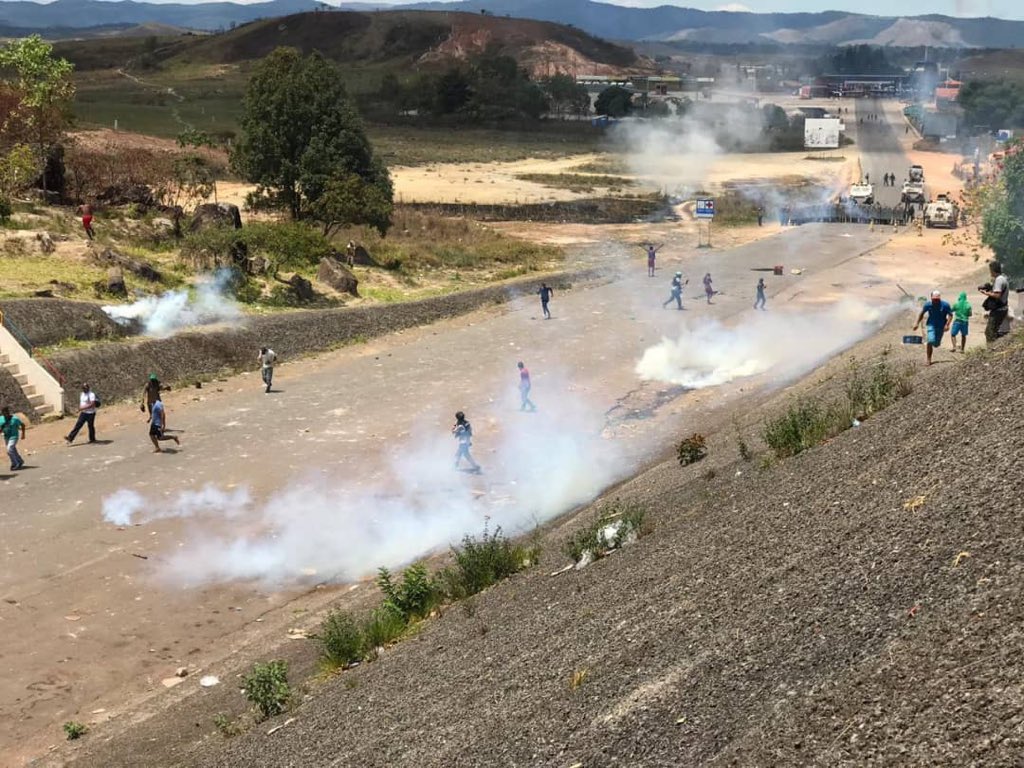
Taliban fighters—now acting as the security forces of the self-declared “Islamic Emirate of Afghanistan”—used tear-gas to break up a protest by women in Kabul, called under the banner of “Rights and Freedom Now.” The small demonstration in the vicinity of Kabul University especially called attention to two incidents in recent days—the detention of three women activists at a protest in the northern city of Balkh, in Mazar province, who have yet to be released; and the slaying of two young women of the Hazara ethnic minority by Taliban gunmen at a checkpoint in Kabul. In the continuing protests since the Taliban seizure of power, women have been in the vanguard. (Photo: TOLO News)

Mexico
narco-fosa

Mexico approaches 100,000 ‘disappeared’

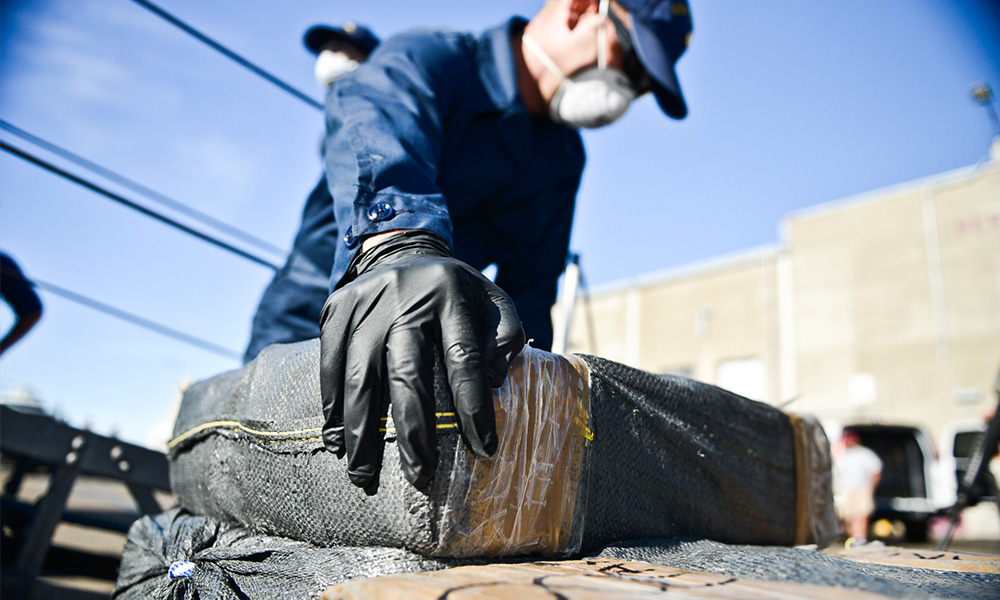
A year-end report by Mexico’s government registered a figure of 95,000 missing persons nationwide, with an estimated 52,000 unidentified bodies buried in mass graves. The report by the Comisión Nacional de Búsqueda de Personas (National Missing Persons Search Commission) found that the great majority of the disappearances have taken place since 2007, when Mexico began a military crackdown on the drug cartels. Alejandro Encinas, the assistant interior secretary for human rights, said that there are 9,400 unidentified bodies in cold-storage rooms in the country, and pledged to form a National Center for Human Identification tasked with forensic work on these remains. He admitted to a “forensic crisis that has lead to a situation where we don’t have the ability to guarantee the identification of people and return [of remains] to their families.” (Photo via openDemocracy)

Iran
Baktash Abtin

Iran: political prisoners on hunger strike

Six political prisoners began a hunger strike at Tehran’s notorious Evin Prison after poet and filmmaker Baktash Abtin died of COVID-19 at the facility. Abtin, who expired after being put into an induced coma during temporary transfer to a hospital, had been serving a five-year sentence on the charge of “assembly and collusion against national security.” Ardeshir Zarezadeh, director of the Toronto-based International Centre for Human Rights (ICHR), said in a statement: “The government of Iran must immediately and unconditionally release the political prisoners, and prisoners of conscience, specially due to the serious concern over the spread of coronavirus (COVID-19) in Iran’s overcrowded jails.” Abtin was the second known political prisoner to die in Iran in the first week of 2022. On New Years Day, writer Kian Adelpour died at Sheiban Prison in Ahvaz province after going on hunger strike a week earlier to protest being imprisoned without a fair trial. (Photo: Center for Human Rights in Iran)