Africa
tigray

Ethiopia: security threats thwart Tigray relief

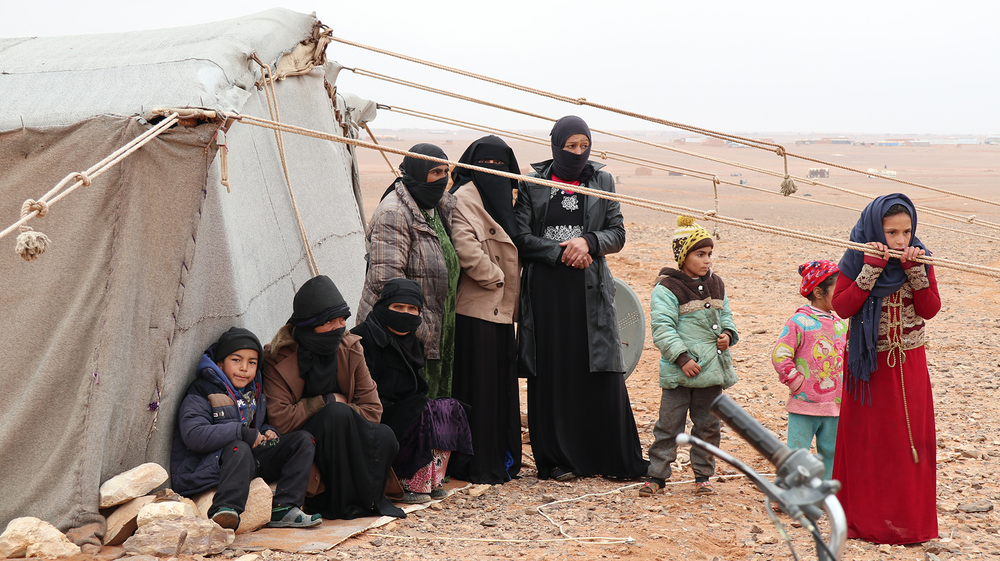
Security threats are preventing aid groups from bringing relief supplies into Ethiopia’s northern Tigray region, even as the government has declared a unilateral truce following 17 months of conflict with the Tigray People’s Liberation Front (TPLF). Federal authorities promised to facilitate aid access into Tigray, having imposed a months-long blockade that has left a population of six million people bereft of basic health supplies and facing extreme food shortages. But passage for aid convoys is currently constrained by insecurity along the only overland corridor open to relief groups. That route runs through the neighboring Afar region, where local militias have been supporting the federal government’s cause. Ongoing clashes between Tigrayan forces and Afar militia could derail the truce. (Photo: TNH)

Central America
salvador

El Salvador: state of emergency over gang violence

El Salvador’s Legislative Assembly approved a state of emergency at the request of President Nayib Bukele, in response to a sharp increase in the number of killings by criminal gangs. The emergency regimen seeks to dismantle criminal structures by prohibiting associations and disrupting their communications. It also extends the “administrative detention” period, and suspends certain constitutional freedoms. The declaration invokes Article 29 of El Salvador’s Constitution, which allows for the suspension of constitutional guarantees in times of “serious disturbance of public order.” This includes the right to freedom of association and presumption of innocence. The state of emergency will remain in effect for 30 days, in conformity with Article 30, after which it may be renewed. (Map: University of Texas)

The Andes
Bambas

Peru: pueblos divided on Bambas mega-mine

Chinese-owned MMG Ltd announced that it has secured approval from Peru’s Ministry of Energy & Mines (MINEM) to expand its copper mine at Las Bambas, despite ongoing outrage from local campesino communities. The country’s fourth-largest copper mine and the world’s ninth-largest, Las Bambas has been repeatedly shut down by peasant protests since it opened in 2016. The most recent blockades were launched in February by residents of several pueblos, to oppose excavation of a second open pit at the facility. Ahead of approval of the expansion, MINEM secured a pledge by some 20 communities to lift their blockades and refrain from further protest actions in exchange for agricultural aid. However, the pueblo closest to the Chalcobamba pit rejected the deal. Huancuire pueblo, Apurímac region, said the community had agreed to take all necessary “legal and social” measures to prevent excavation of a second pit. (Photo: Wikimedia)

Africa
Senegal

Senegal: new offensive against Casamance rebels

Senegal’s military has launched a new offensive against a faction of the separatist Movement of Democratic Forces of Casamance (MFDC). The operation follows the death of four soldiers and the capture of seven others in fighting with the MFDC faction led by Salif Sadio, which has remained in arms in defiance of a 2014 ceasefire. A military statement said the offensive aims to “destroy all armed gangs conducting criminal activities” and “preserve the integrity of the national territory at all costs.” Casamance—the narrow southern strip of Senegalese territory sandwiched between Gambia to the north and Guinea-Bissau to the south—has seen a pro-independence insurgency since 1982, making it Africa’s longest-running conflict. Tens of thousands have been displaced, the rural economy is devastated, and large stretches of territory have become no-go zones due to landmines. (Map: PCL Map Collection)

Europe
Crimean war

Podcast: Ukraine & ‘the Russian menace to Europe’

In Episode 116 of the CounterVortex podcast, Bill Weinberg provides an overview of geostrategic and political thinking on the criticality of Eastern Europe and especially Ukraine, from the Crimean War to the contemporary catastrophe. Despite contemporary misconceptions, Karl Marx and Frederick Engels shared the perception of a “Russian menace to Europe” with theorists of Western imperialism such as Halford John Mackinder, Lord Curzon, Alfred Thayer Mahan, Nicholas J. Spykman, and Zbigniew Brzezinski. Arch-reactionary or openly fascist conceptions of “Eurasianism” were taken up by the German Karl Haushoferand the Russians Mikhail Katkov and Ivan Ilyin—the latter a formative influence on Alexander Dugin, the intellectual mastermind of Vladimir Putin’s revanchist imperial project. Listen on SoundCloud or via Patreon. (Map of Crimean War theaters via Wikimedia)

Africa
fact

Inauspicious start for Chad peace talks

Chad’s junta opened delayed peace talks with rebel and opposition groups in Qatar. But things got off to a bad start when one of the main rebel outfits–the Front for Change & Concord in Chad (FACT)–walked out amid confusion over Doha’s role as a mediator. Chad was plunged into uncertainty last April when long-time ruler Idriss Déby was killed while commanding troops combating a FACT offensive. Power was then seized by Déby’s son, Mahamat Idriss Déby, who outlined a transition plan. The Doha talks are considered a precursor to a national dialogue that the younger Déby is organizing before planned elections. But after decades of rebellion and repression, things are unlikely to proceed smoothly. Just last month a phone conversation surfaced in which Timan Erdimi, head of the Union of Resistance Forces (UFR), one of the rebel groups present in Doha, discussed plans to oust Déby using the Kremlin-linked mercenary Wagner Group. (Image via Twitter)

Europe
tatars

Russia imprisons more Crimean Tatars

A Russian military court sentenced two Crimean Tatar men to long prison terms for peaceful activities. Timur Yalkabov received 17 years and Lenur Seidametov received 13. Both were active in the Crimean Solidarity movement, formed to advocate for Tatar rights after the illegal annexation of the Crimean Peninsula by Russia in 2014. They were charged with membership in Hizb ut-Tahrir, a transnational Muslim civic organization that is legal in Ukraine. They were arrested in night raids on their homes by Russia’s FSB secret police, in which “prohibited” literature was supposedly found. Seidametov’s wife has said that the FSB agents planted the literature. Russia’s Supreme Court declared Hizb ut-Tahrir a “terrorist” organization in 2003, a ruling that has been widely used to prosecute Tatars for “involvement” in the organization. Both men are recognized as political prisoners by the Memorial Human Rights Center, Russia’s leading rights organization. (Photo via Kharkiv Human Rights Protection Group. Shirts read: “Faith is not terrorism” and “Deportation continues”)

Greater Middle East
yemen

‘Disappointing’ aid for hunger-stricken Yemen

As the country heads into an eighth year of war, Yemen is considered one of the world’s largest and most complex humanitarian crises: debilitated basic services, a collapsed economy, an estimated 20.7 million people (more than two thirds of the population) in need—all amid escalating conflict involving numerous different actors. Yet in the UN’s emergency appeal for $4.3 billion in aid for Yemen, donor states coughed up less than a third of that request, with pledges amounting to $1.3 billion. The United Arab Emirates and Saudi Arabia—top donors to Yemen in previous years—pledged nothing, while Kuwait pledged a surprisingly low $10 million. The UN humanitarian chief, Martin Griffiths, called the result “a disappointment.” The outcome is in stark contrast to Ukraine’s pledging conference just two weeks prior, considered the “fastest and most generous” response ever to a flash appeal. As the world’s attention is fixated on Ukraine, aid workers worry that it could draw resources away from other crises, such as Yemen. (Photo: OCHA)

Europe
belarus

Belarus: ‘partisans’ sabotage rail lines to Ukraine

Belarus has served as a staging ground for one leg of the Russian invasion of Ukraine, and Kyiv officials warn that Belarusian forces may join Putin’s war effort. But resistance to the Russian aggression is emerging in Belarus—apparently including acts of sabotage. Ukrainian Railways announces that the rail links into Ukraine from Belarus have been effectively cut, preventing the transport of Russian reinforcements and equipment. Belarusian news site Zerkalo reports that “in the Mogilev, Gomel and Minsk regions three cases of destruction of signaling equipment, blocking of railways were recorded.” Belarusian security forces acknowledge the sabotage was motivated by opposition to the war in Ukraine. Named as behind the sabotage are the banned groups Busly Lyatsyats, a pro-democracy social-media network ordered suppressed by the regime last year, and BYpol, a union of dissident Belarusian security officers. A representative of exiled opposition leader Sviatlana Tsikhanouskaya saluted the work of these “partisans,” adding: “Ukraine will win! Belarus will also be liberated!” (Map via Perry-Castañeda Library)

Africa
mali-hunger-displacement

Mali: crisis deepens as foreign forces withdraw

France and allied European countries are withdrawing their military forces from Mali after diplomatic relations broke down with the ruling junta that came to power in last year’s coup d’etat. The junta has meanwhile reportedly welcomed in hundreds of mercenaries from the Russian Wagner Group. The diplomatic crisis has overshadowed a worsening humanitarian emergency that has seen severe hunger hit the highest level since 2013, when the seizure of large parts of the country by jihadist rebels prompted the French intervention. Over 350,000 people have now fled violence linked to jihadist groups aligned to al-Qaeda and the so-called Islamic State—a nearly 70% increase from early 2020. (Photo of Mali displaced persons camp: The New Humanitarian)

The Amazon
Ato Pela Terra

Brazil: bill to open indigenous reserves to mining

Under the slogan “Ato Pela Terra” (Stand for the Earth), thousands of protesters, including some 150 indigenous leaders from eight ethnic groups, gathered for the biggest environmentalist demonstration ever held in Brazil’s capital, protesting a series of bills dubbed the “death package” by critics. The package being pushed by President Jair Bolsonaro would open indigenous reserves to a wide range of economic activities, including mineral exploitation. This measure, assailed as unconstitutional, is actually opposed by the Brazilian Mining Institute (IBRAM), which issued a statement calling it “inappropriate” and warning that it would give legal cover to informal “garimpo” mining in the Amazon rainforest. But Bolsonaro maintains the measure is mandated by the Ukraine war, which has threatened supplies of strategic minerals, including the key fertilizer ingredient potassium. Brazil, the world’s top soy producer, imports 80% of its fertilizer—20% from Russia, its biggest supplier. (Photo via Twitter)

Europe
Kremlin

Podcast: against Putin’s Big Lie

In Episode 115 of the CounterVortex podcast, Bill Weinberg continues to dissect Vladimir Putin’s ultra-cynical fascist pseudo-anti-fascism. Putin presides over Nuremberg-type mass rallies celebrating war and conquest, spews overtly genocidal rhetoric, and prepares concentration camps for the Crimean Tatars. Alexander Dugin, “Putin’s Rasputin” and the intellectual mastermind of his revanchist imperial project, has openly called for “genocide” of the Ukrainians. In areas of Ukraine occupied by Russia, a forced mass deportation of the populace is reported. Putin is clearly approaching a genocidal threshold in Ukraine—while imposting a totalizing police state within Russia. Yet, with unimaginable perversity, all this is done in the name of a campaign to “denazify” Ukraine. The painting of Ukraine as a “Nazi” state on dubious basis of a few ugly right-wing paramilitaries on the Ukrainian side is vigorously repudiated by the leadership of Ukraine’s Jewish community. Yet this “Big Lie” is credulously (or cynically) echoed by elements of the “left” as well as far right in the United States—who arrogantly refuse to listen to Ukrainians. Listen on SoundCloud or via Patreon. (Photo: Wikipedia)