Africa

Podcast: the struggle in Ambazonia

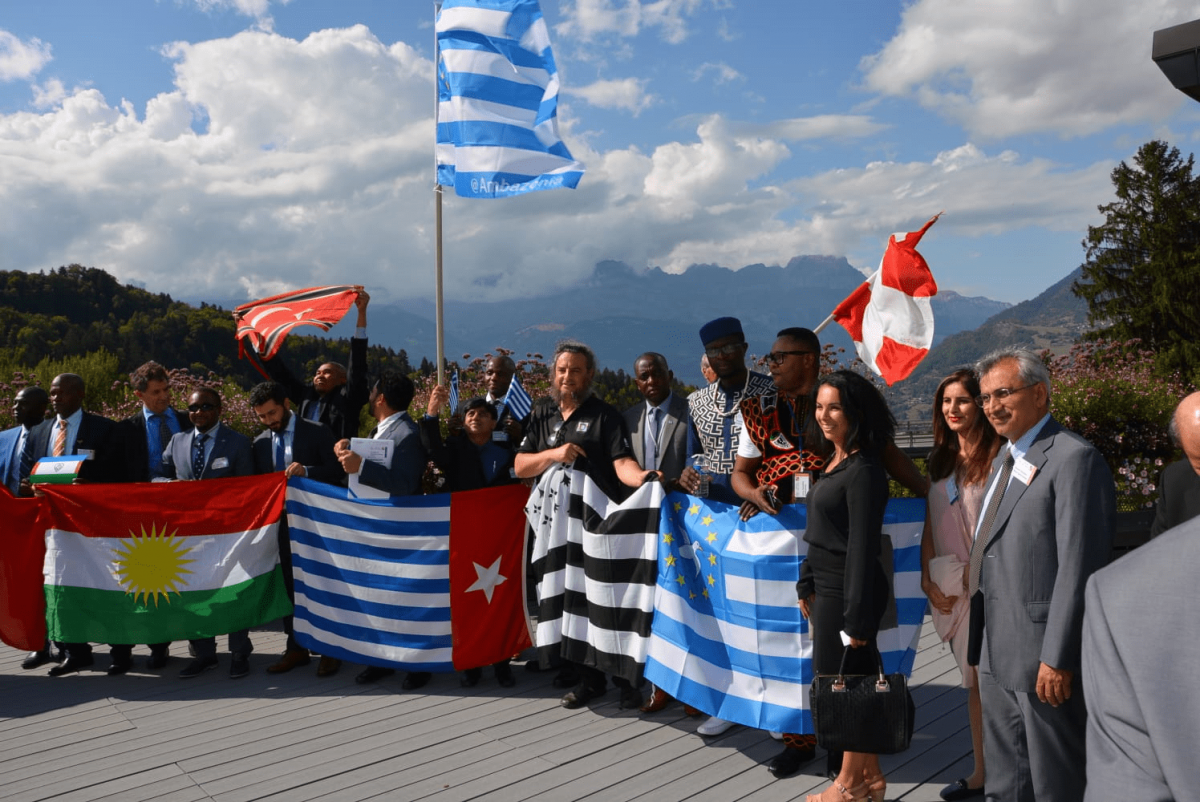
In Episode 27 of the CounterVortex podcast, Bill Weinberg interviews Eben Egbe and Amy Dalton of the Global Initiative to end the Cameroons Colonial Conflict (Gi3C), who discuss the independence struggle in Ambazonia—a territory that was illegally annexed by Cameroon following the end of colonial rule in 1960. The past year has seen a terrible increase in state terror in Ambazonia from the French-backed neo-colonial Cameroon authorities, with protesters fired upon by helicopter gunships, and finally villages burned by military forces, sending the residents fleeing into the bush. Some 400,000 people have been internally displaced, with a further 20,000 having crossed the border into Nigeria as refugees. Cameroon also receives military aid from the US, ostensibly for the fight against Boko Haram in the north of the country—but this same military is now being unleashed against the civilian populace in the unrelated conflict in Ambazonia in the south. The Gi3C has issued an urgent call for the UN Human Rights Council, which convenes for it's 40th annual meeting this week in Geneva, to send a fact-finding delegation to the region. Listen on SoundCloud, and support our podcast via Patreon. (Photo: Ambazonia representatives with flag, far right, at France meeting of the Unrepresented Nations and Peoples Organization, via Bareta News)
Syria

Anarcho-fascist convergence at State of Union?

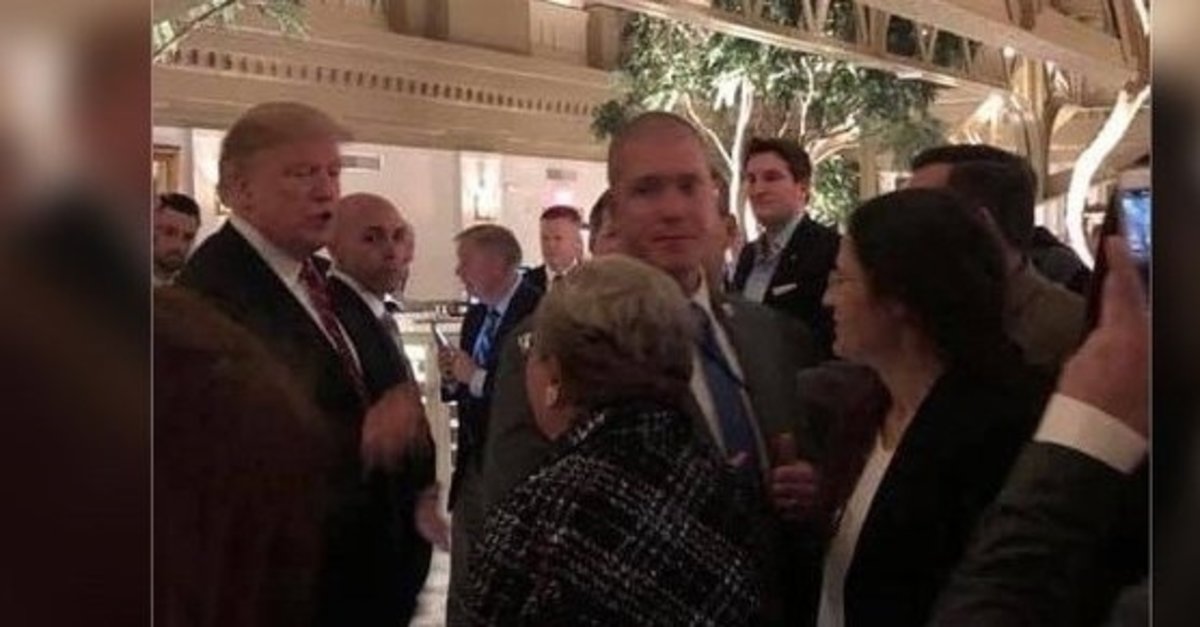
We’ve already noted the strange bedfellows in the Rojava Kurds’ political push to forestalll a US withdrawal from northern Syria, which would be a green light for Turkey to attack their autonomous zone. Well, they just got stranger with the arrival in Washington of Ilham Ahmed, co-president of the Syrian Democratic Council, civilian wing of the Kurdish-led US-backed Syrian Democratic Forces. She and her delegation met with Trump at the Trump International Hotel, where the prez reportedly told the group “I love the Kurds,” and promised that they are “not going to be killed” by Turkish forces. Making it even more surreal, Hawaii Rep. Tulsi Gabbard, best friend of fascist dictator Bashar Assad on Capitol Hill, brought Ahmed to the State of the Union address as her special guest. The Turkish newspaper Takvim ran a photo of Ahmed standing beside Trump at the SOTU. We wonder if Ahmed, who represents a radical-left Kurdish revolutionary movement that is influenced by anarchism, is aware that the presidential bid of her host Gabbard has been endorsed by David Duke—who shares Tulsi’s fondness for Assad.

Iran

White House exploits Iran democracy struggle

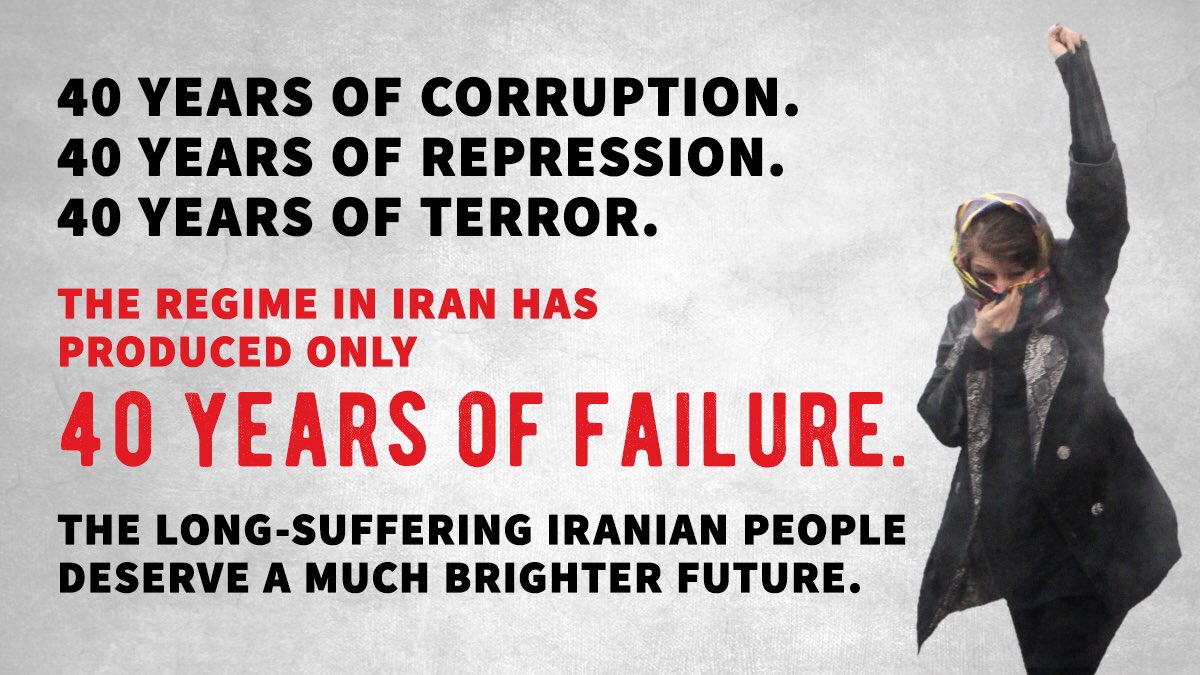
As in the Venezuela crisis, Donald Trump, the great enthusiast for dictators, is making a cynical pretense of concern for democracy in Iran. Fortunately, his latest bit of exploitation of the Iranian protesters has blown up in his face. Noting the anniversary of the 1979 revolution, he issued a tweet featuring a meme with an image of a student protester from the 2017 anti-austerity uprising and the words: "40 years of corruption. 40 years of repression. 40 years of terror. The regime in Iran has produced only #40YearsofFailure." Now, the courageous photographer who snapped the image at the University of Tehran in December 2017, Yalda Moayeri, comes forward to express her outrage at its co-optation by Trump. Alas, Masih Alinejad, the Iranian-American feminist who last week met with Secretary of State Mike Pompeo, seems not to get how she is endangering opposition activists in Iran, allowing the regime to paint them as pawns of imperialism. (Image via @realDonaldTrump)

The Andes

Who is behind Venezuela aid caravan?

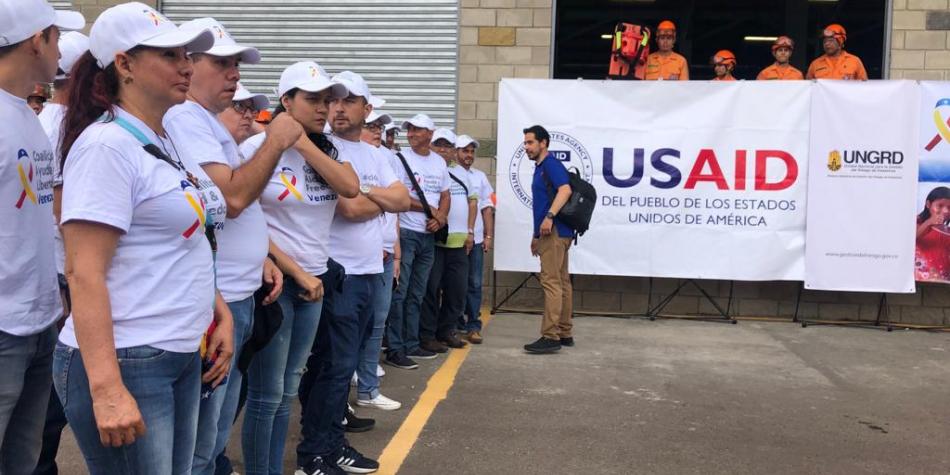
The US scored a propaganda coup against besieged Venezuelan leader Nicolás Maduro last week, sending planeloads of "humanitarian aid" to Colombia, where it was dispatched in a "caravan" toward the border. The aid was welcomed by the US-backed pretender to the presidency, Juan Guaidó, but rejected by Maduro, who thundered that Venezuelans are "not beggars." Maduro was put in the no-win situation of either having to turn away aid at a time of deprivation or accept assistance sent by a government that does not recognize him but recognizes his opposition. He opted for the prior, mobilizing troops to the border and blocking the three lanes of the international bridge between the two countries with a fuel tanker and shipping containers. The caravan is currently stalled at Cúcuta, the nearest city on the Colombia side. While the affair has occasioned much media bloviation either against Maduro for blocking the caravan or against Trump for politicizing aid, there has been an alarming paucity of information about who actually organized the caravan… (Photo: El Tiempo)

The Andes
paramilitaries

Colombia sliding deeper into internal war

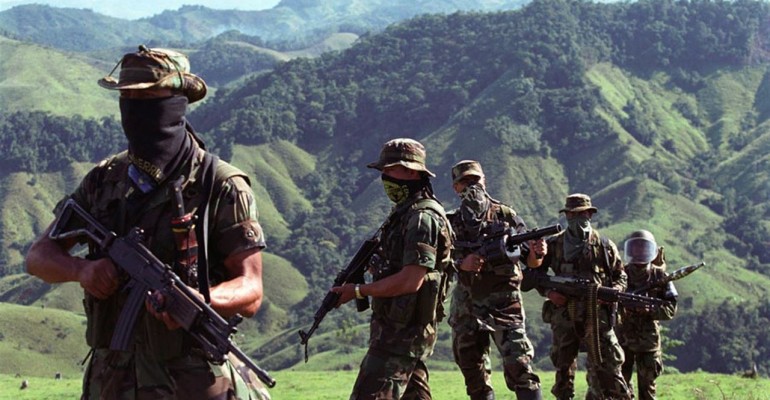
Under pressure to address the ongoing wave of targeted assassinations in Colombia, President Iván Duque for the first time spoke before the National Commission to Guarantee Security, formed by the previous government to address continuing violence in the country—which has only worsened since he took office last year. Duque said 4,000 people are now under the government's protection program for threatened citizens. But his office implied that the narco trade is entirely behind the growing violence. Interior Minister Nancy Patricia Gutiérrez told the meeting: "This great problem is derived from the 200,000 hectares of illicit crops that we have in Colombia." However, it is clear that the narco economy is but part of a greater nexus of forces that fuel the relentless terror—all related to protecting rural land empires and intimidating the peasantry. (Photo via Contagio Radio)

The Caribbean

Venezuela crisis at issue in Haiti unrest

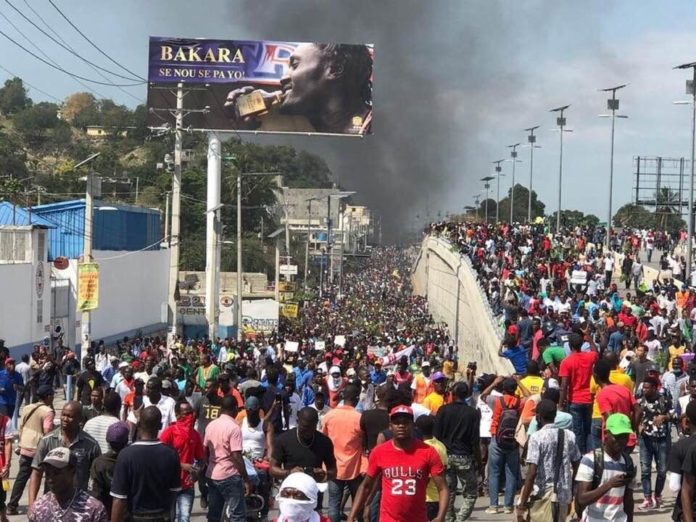
Thousands of Haitians filled the streets of Port-au-Prince and several provincial cities to demand the resignation of President Jovenel Moise on the anniversary of the 1986 ouster of long-ruling dictator Jean-Claude “Baby Doc” Duvalier. Demonstrators also called for the arrest of officials responsible for the plundering of monies from the Venezuela-provided PetroCaribe fund over the past 10 years. At least two were reported dead in the protests, with vehicles burned, a police station attacked, some 40 arrested, and many wounded. Haiti faces a fast-deepening crisis, with hunger, unemployment and inflation all growing. Protesters are additionally angered by the government’s vote with Washington in the OAS not to recognize the presidency of Venezuela’s Nicolás Maduro. (Photo: Haiti Liberté)

The Amazon

Peru: emergency threatened over pipeline paralysis

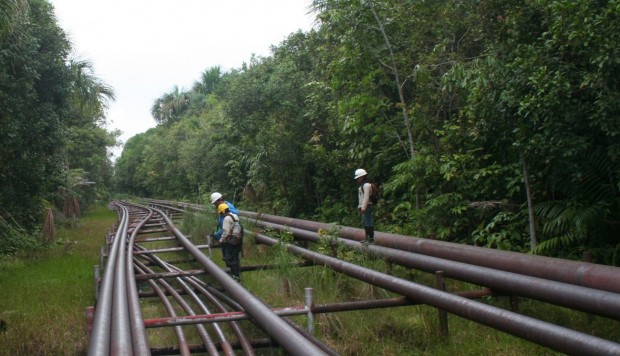
Lizardo Cauper, president of Peru’s alliance of Amazonian peoples, AIDESEP, issued an urgent call for authorities to open dialogue with indigenous communities in the northern region of Loreto rather than militarizing the area in response to mounting social conflicts and attacks on the North Peruvian Pipeline. Noting that the aging pipeline is in chronic disrepair, with repeated spills contaminating the rainforest, Cauper said: “We have made a call that, in place of militarization, they put in place a new pipeline. But it is not enough to have a new pipeline, but to respond to the demands of the people who are living around these oil activities.” Regional authorities have called upon Lima to declare a state of emergency in response to paralysis of the pipeline, which delivers crude from rainforest oilfields over the Andes. (Photo: Andina)

The Andes

Bolivia next for Latin ‘regime change’ offensive?

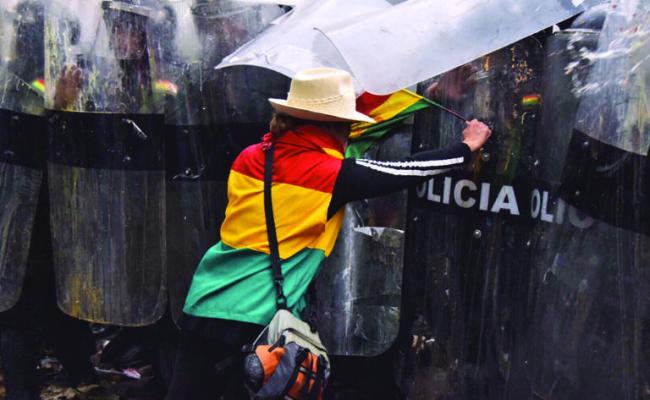
US senators Ted Cruz, Bob Menéndez and Dick Durbin introduced a resolution calling on Bolivia's President Evo Morales not to stand for re-election this October. Cruz said Bolivia is going in a "very dangerous direction, aligning itself with illegal and illegitimate regimes, including that of [Nicolás] Maduro in Venezuela. It is important that all parties respect the constitution of Bolivia, which includes term limits." Bolivia saw a wave of strikes and protests after a December ruling by the country's Supreme Electoral Tribunal allowing Morales to run for a fourth consecutive term in the 2019 election. The resolution comes just as Bolivia has announced a new partnership with Chinese company Xinjiang TBEA Group to exploit the country's valuable and largely untapped lithium deposits. China has for years been seeking deals to exploit Bolivia's strategic lithium reserves, in what some see as a global design to establish a "stranglehold" on the planet's rare earth minerals. (Photo via NACLA)

Oceania

Taiwan: indigenous seek Austronesian unity

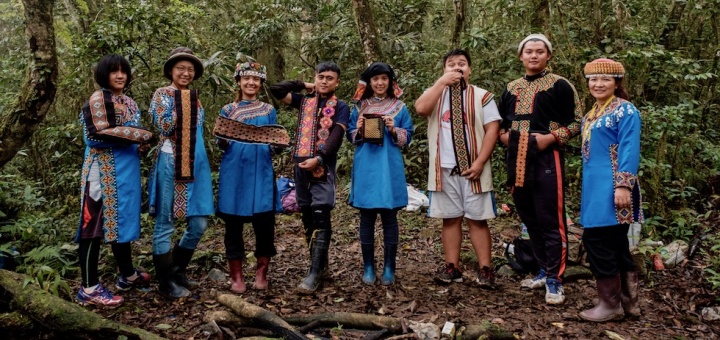
Taiwan’s Council of Indigenous Peoples signed an agreement with the Pacific Island state of the Marshall Islands aimed at increasing bilateral exchanges to promote Austronesian culture. The agreement seeks to promote cooperation between Taiwan’s indigenous communities and the linguistically related people of the Marshall Islands, particularly in the fields of language and preservation of traditional wisdom. The agreement, signed last month, coincides with the opening of the UN International Year of Indigenous Languages, which acknowledges to the critical state of many indigenous tongues, and seeks to promote their protection and use, both at national and international levels. (Photo of Bunum people via Mata Taiwan)

South Asia

Himalayan glaciers could be mostly gone by 2100

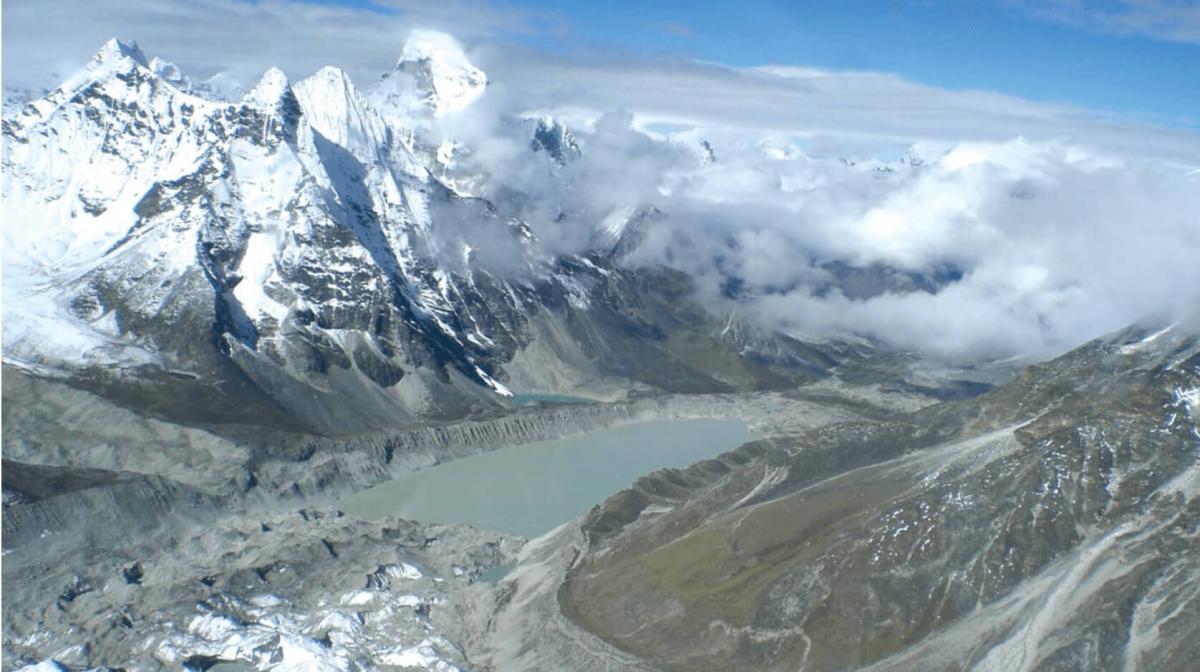
Rising temperatures in the Himalayas will melt at least one-third of the region's glaciers by the end of the century even if the world's most ambitious climate change targets are met, according to a new report. If those goals are not reached, the Himalayas could lose two-thirds of their glaciers by 2100, according to the Hindu Kush Himalaya Assessment, released by the Kathmandu-bsed International Centre for Integrated Mountain Development. Under that scenario, the Himalayas could heat up by 8 degrees Fahrenheit (4.4 degrees Celsius) by century's end, bringing radical disruptions to food and water supplies, and mass population displacement. Glaciers in the Hindu Kush-Himalayan Region, which spans over 2,000 miles of Asia, provide water to nearly a quarter of the world's population. (Photo via Nepali Times)

Planet Watch

Podcast: from Crimea to Venezuela

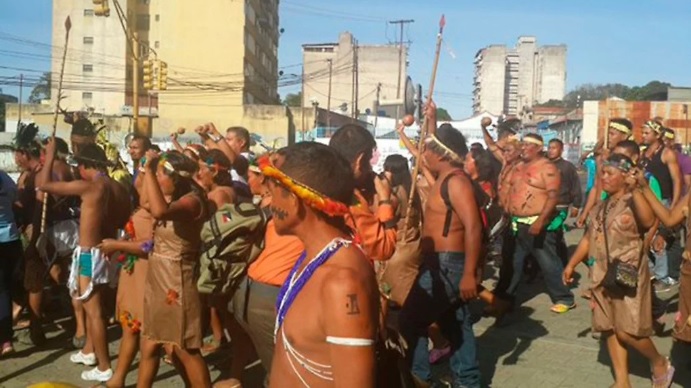
In Episode 26 of the CounterVortex podcast, Bill Weinberg notes contradictions and complexities in two world crises depicted in polarized terms by left, right and center alike. The indigenous Tatar people of Crimea, their autonomy and rights abrogated by the illegal Russian occupation, have been drawn into an alliance with Ukraine's ultra-nationalist Right Sector based on their mutual opposition to Putin's annexation of the peninsula. Ukrainian anarchists are meanwhile facing repression for their opposition to Right Sector. Putin, who is cracking down on Russian anarchists who oppose his own ultra-nationalist imperial agenda, has just sent a detachment of Cossack mercenaries to Venezuela to serve as a Praetorian Guard for the embattled Nicolás Maduro. In addition to being opposed by the right-wing pretender Juan Guaidó, Maduro faces a challenge from an independent left that rejects his undemocratic rule as well as US imperial designs on Venezuela. Indigenous peoples such as the Pemón of the Orinoco Basin are also mounting resistance to extractive designs on their territory—regardless of who holds power in Caracas. Can anarchists and the independent left in Ukraine, Russia and Venezuela unite with indigenous peoples such as the Tatars and Pemón to defend freedom and autonomy, and repudiate reactionaries and imperialists on all sides? Listen on SoundCloud, and support our podcast via Patreon. (Photo: EcoPolitica Venezuela)

Europe

Ukrainian anarchists targeted by security police

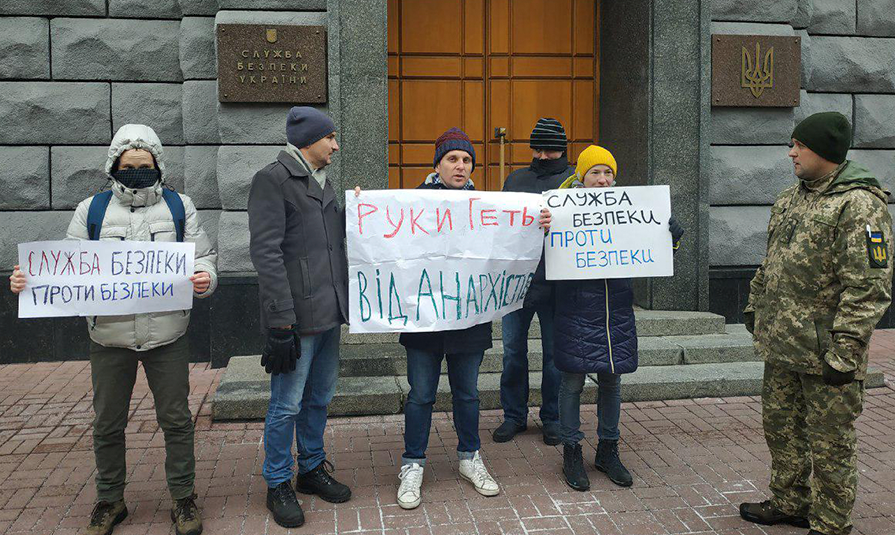
The Ukraine Security Service (SBU) appears to be targeting the country's anarchist youth following an attack on a leader of the neo-fascist Right Sector. In December, the SBU carried out searches at the homes of seven anarchists in the cities of Kiev, Brovary, Dnipro and Lviv. SBU officers reportedly forced two anarchists to sign a "cooperation agreement," and one of the activists had her passport confiscated. Those targeted were members of the groups Black Banner and Ecological Initiative. The searches were carried out as part of an investigation into an attack on a Right Sector militant Dmytro "Verbych" Ivashchenko, a veteran of the war in Ukraine's eastern Donbass region. (Photo: protest outside SBU office in Kiev, via Zaborona)