Africa
Sudan

Sudan: Omar Bashir plots comeback?

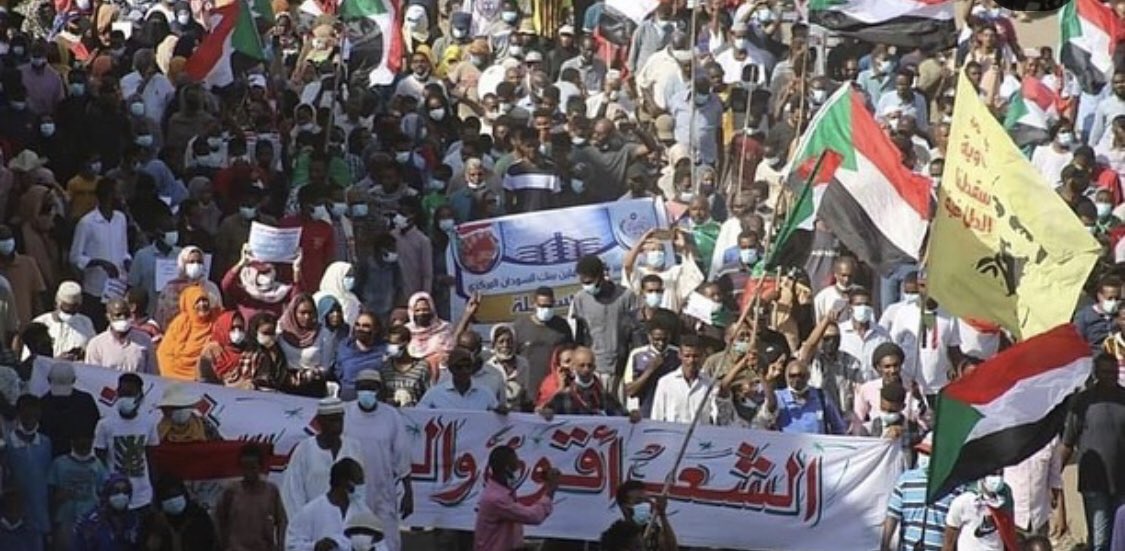
A failed coup by army officers allegedly linked to ousted long-ruling strongman Omar al-Bashir underscored the fragility of Sudan’s transition to civilian rule. Some 20 officers were arrested in the coup attempt. Military leaders from the country’s power-sharing government, the Sovereign Council, blamed their civilian counterparts for neglecting public welfare and opening the door to the coup plotters. Civilian cabinet minister Khalid Omer Yousif called the officers’ comments “astonishing” and “a direct threat to the transition.” Bashir, overthrown in 2019 after nearly 30 years in power, is presently in prison in Khartoum, where he faces multiple trials. He continues to be wanted on genocide charges by the International Criminal Court. (Map: Perry-Castañeda Library Map Collection)

Africa
jihadis

Russian mercenaries to Mali?

France, now in the process of drawing down its military presence in West Africa’s Sahel nations, criticized plans that could see Russian mercenaries brought to Mali, where jihadist groups tied to ISIS or al-Qaeda operate in large parts of the country. Reports suggest that Mali’s transitional government is considering a deal with the Wagner Group, which has close links to Vladimir Putin and is also active in Central African Republic. The Coordinating Body of Azawad Movements (CMA), a coalition of Tuareg rebel groups that signed a peace deal with the Malian government in 2015, likewise expressed its “firm opposition” to any agreement to bring in the Wagner Group. (Photo: FIDES)

East Asia
Hong Kong

Hong Kong: ‘patriots’ in, democrats out

The first “patriots only” vote under Hong Kong’s new political system was held to choose members for a 1,500-member Election Committee—although only some 360 of the seats were actually contested. Voting was restricted to some 5,000 individuals representing different professions and industries, chosen under a principle of “patriots administering Hong Kong.” The Election Committee is tasked with electing 40 members of the enlarged 90-seat Legislative Council in December as well as choosing the city’s new chief executive next March. The new and more controlled electoral system was adopted by an overwhelming majority vote of the National People’s Congress in Beijing this March. (Photo: HKFP)

New York City

Podcast: anti-Semitism and propaganda —again

In Episode 90 of the CounterVortex podcast, Bill Weinberg examines claims from New York’s Gov. Kathy Hochul and local politicians of “anti-Semitic graffiti” spray-painted along Manhattan’s Harlem River Drive on the eve of Yom Kippur. The governor’s press release did not tell us what the graffiti actually said. This is rather critical information, given the contemporary controversies about what constitutes an anti-Semitic slur, and the confusion between anti-Zionism and anti-Semitism. Yet most media coverage uncritically accepted Hochul’s claims. Weinberg parses the facts in the case, and (as usual) finds plenty to criticize on both sides: the spray-painters and the politicians. Listen on SoundCloud or via Patreon. (Photo via Twitter)

Afghanistan
afghan women

Taliban ‘stamping out human rights’ in Afghanistan

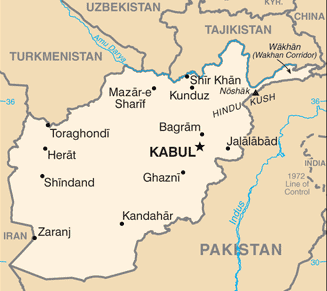
The Taliban are steadily “dismantling the human rights gains of the last 20 years,” said Amnesty International in a new briefing issued jointly with the International Federation for Human Rights (FIDH) and the World Organization Against Torture (OMCT), documenting the militant group’s wide-ranging crackdown since their seizure of Kabul little more than five weeks ago. Contrary to the Taliban’s repeated claims that they will respect the rights of Afghans, the briefing, entitled “Afghanistan’s Fall Into the Hands of the Taliban,” details a litany of human rights abuses including targeted killings of civilians and surrendered soldiers, and the blockading of humanitarian supplies into the Panjshir Valley, which constitute crimes under international law. Restrictions have also been re-imposed on women, freedom of expression and civil society. (Photo: Khaama)

Planet Watch
Fikile Ntshangase

Record number of ecologists slain in 2020

A record number of environmental defenders were murdered last year, according to a report by advocacy group Global Witness. The report, “Last Line of Defense,” counts 227 activists killed around the world in 2020—the highest number recorded for a second consecutive year. Many of the murders were linked to resource exploitation—logging, mining, agribusiness, and hydroelectric dams. Since the 2015 Paris Agreement on climate change, the organization found on average of four activists have been killed each week. (Photo via Groundwork)

Watching the Shadows
anti-bitcoin

Podcast: rage against the technocracy

In Episode 89 of the CounterVortex podcast, Bill Weinberg takes heart at the national uprising in El Salvador against the imposition of Bitcoin as legal tender, and draws the connection his own incessant struggles against corporate cyber-overlords Verizon—as well as the to the automated drone terror in Afghanistan. As we are distracted (or, at any rate, should be distracted) by the more obviously pressing issues such as police brutality and climate destabilization, the digitization of every sphere of human activity lurches forward at a terrifying pace—with zero resistance. Until now. The heroic protesters in El Salvador have launched the long overdue revolution of everyday life. Listen on SoundCloud or via Patreon. (Photo via Twitter)

Greater Middle East
drone

Turkish drones decisive in regional wars

The Turkish military is unveiling a new upgraded “unmanned combat aerial vehicle,” the Bayraktar Akıncı, developed by private drone manufacturer Baykar Defense, which is owned by President Recep Tayyip ErdoÄźan’s son-in-law Selçuk Bayraktar. The Akıncı is a more advanced version of Turkey’s iconic Bayraktar TB2, able to fly higher and carry more missiles. The TB2 has been used by Ankara against Kurdish guerillas in northern Iraq, and against Syrian regime forces. Turkey has also provided the TB2 to various foreign militaries; it is held to have been decisive in Azerbaijan’s victory over Armenian forces in last year’s Nagorno-Karabakh war, as well as the Libyan government’s victory over the warlord Khalifa Haftar. Ukraine, having already tested an initial dispatchment of the drone, is now ordering 24 more for use in its war against Russian-backed separatists. (Photo: Wikipedia)

South Asia
adivasis

India: tribal rights activists accused as ‘Naxals’

The Bombay High Court issued a notice to India’s National Investigation Agency (NIA), directing it to file a reply to the bail plea of Anand Teltumbde, a Goa-based professor and civil rights activist who faces charges under the draconian Unlawful Activities Prevention Act (UAPA) in relation to the notorious Bhima Koregaon case. In the case, dating to 2018, several advocates for Dalits (“untouchables”) and Adivasis (tribal peoples) are accused of links to the Maoist guerillas known as the Naxalites. Fifteen face lengthy prison terms and are still being denied bail. The case was back in the news in July, when a 16th among the accused, Jesuit priest Father Stan Swamy, 84, died in a hospital in Mumbai after taking ill in jail. His medical bail plea was still pending when he expired. (Photo via Intercontinental Cry)

Europe
ISIS

French firm charged with abetting ISIS atrocities

France’s highest court overturned a lower-court decision to dismiss charges of complicity in crimes against humanity by cement company LaFarge, which is accused of paying ISIS and other militant groups at least 13 million euros to keep its factory in northern Syria running. The ruling by the Court of Cassation marks a major setback for Lafarge, which contested its responsibility for acts committed with funds it provided to the extremists. The Paris Court of Appeal accepted the company’s argument that the payments were not aimed at abetting ISIS atrocities. But the Cassation Court found that “one can be complicit in crimes against humanity even if one doesn’t have the intention of being associated with the crimes committed. Knowingly paying several million dollars to an organization whose sole purpose was exclusively criminal suffices to constitute complicity, regardless of whether the party concerned was acting to pursue a commercial activity.” (Photo via MEMO)

Afghanistan
Kandahar

Afghan protests continue despite repression

Protests broke out in the traditional Taliban stronghold of Kandahar, as the city’s new administrators issued an order that the families of soldiers in the vanquished Afghan army vacate a military-owned housing complex where they had been living for years. In a demonstration led by women, thousands took to the streets and marched on the provincial governor’s house to protest the eviction order. The some 3,000 families, many of whom have lived in the complex for 20 years, were given three days to vacate. The demonstration came days after the UN High Commissioner for Human Rights released a statement condemning the Taliban’s mounting violence against peaceful protestors in Afghanistan. (Photo: Khaama)

Central America
antibitcoin

Anti-Bitcoin protests shake El Salvador

Protests repeatedly erupted in El Salvador as the country became the first to make Bitcoin legal tender. The US dollar also remains official currency, but the law pushed through by President Nayib Bukele mandates that all vendors also accept Bitcoin. Small merchants and especially those in the informal sector complain of problems in trying to download the official phone app needed to use the currency. Protesters say the new law will deepen poverty by further excluding the already marginalized from the economy. They also assert that it will further enable corruption. “This is a currency that’s not going to work for pupusa vendors, bus drivers or shopkeepers,” one protester told Reuters. “This is a currency that’s ideal for big investors who want to speculate with their economic resources.” (Photo via Twitter)