East Asia
HK47

Demand release of Hong Kong 47

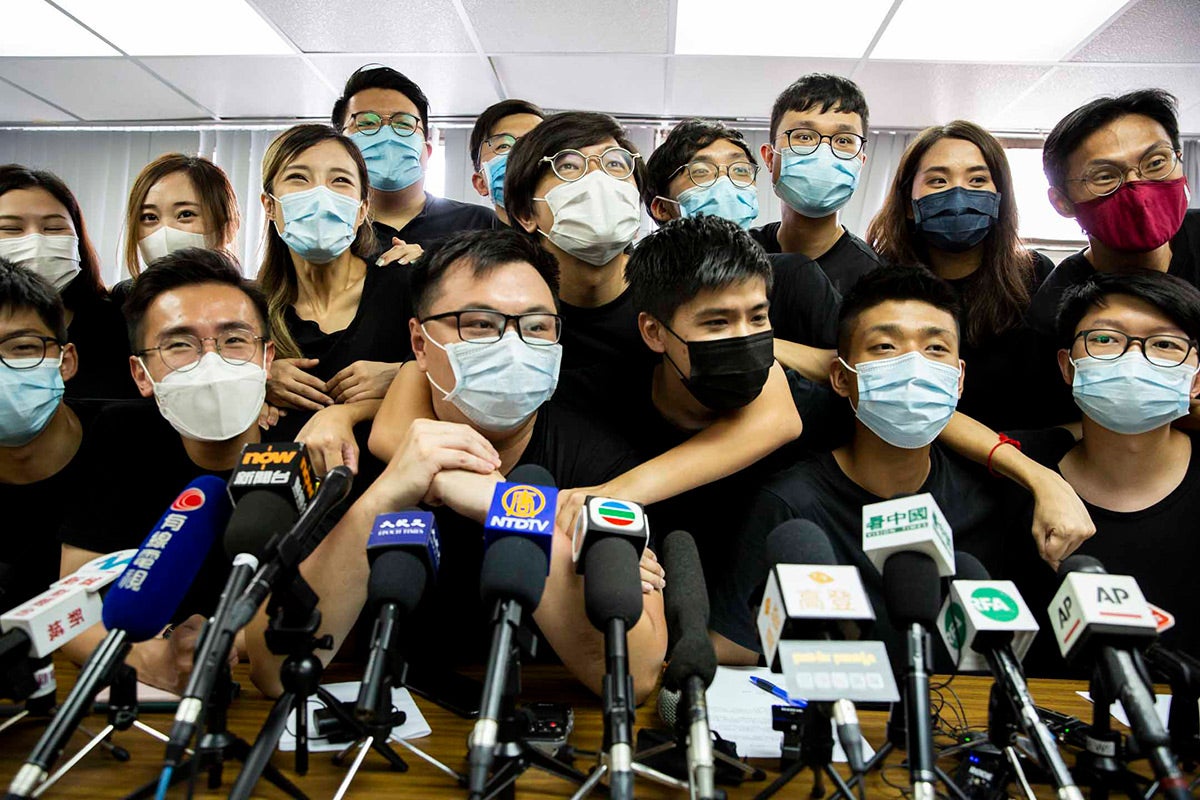
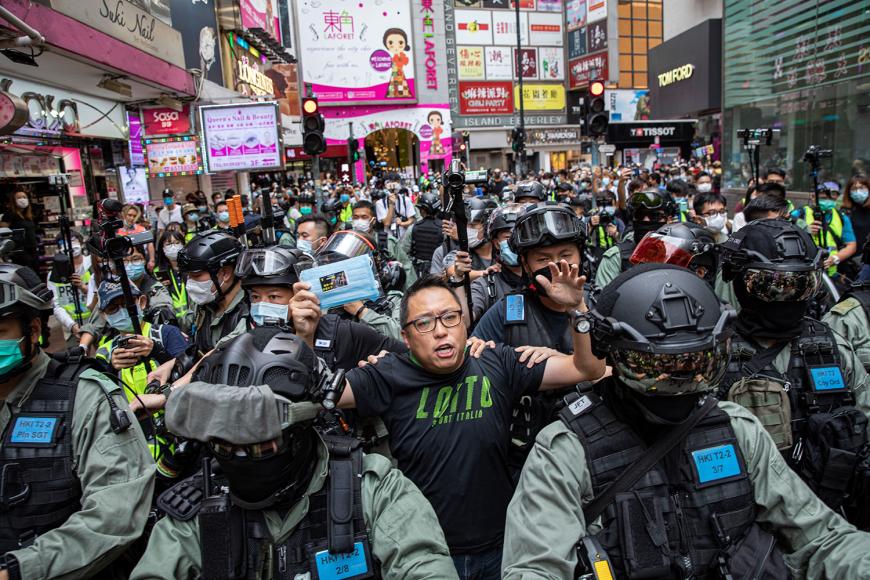
Human Rights Watch published a call for Hong Kong to end its unfair trial practices against 47 lawmakers and activists charged under the National Security Law imposed in 2020. After the media ban on coverage of the cases was lifted, the prosecution named five of them as “major organizers”—Benny Tai, a legal scholar; Au Nok-hin, ex-lawmaker; Chiu Ka-yin and Chung Kam-lun, ex-district council members; and Gordon Ng Ching-hang, an activist. In these cases, the prosecution is calling for harsh sentences including life imprisonment, saying that they sought to “paralyze the operations of the Hong Kong government.” Calling for the dropping of charges against the 47 and for their immediately release, HRW said the crimes established by the law are “overly broad and arbitrarily applied.” (Image: Lam Chun-tung/Initium via HRW)

East Asia
Tiananmen

Tiananmen Square: ‘6-4’ and ‘Xi Jinping Thought’

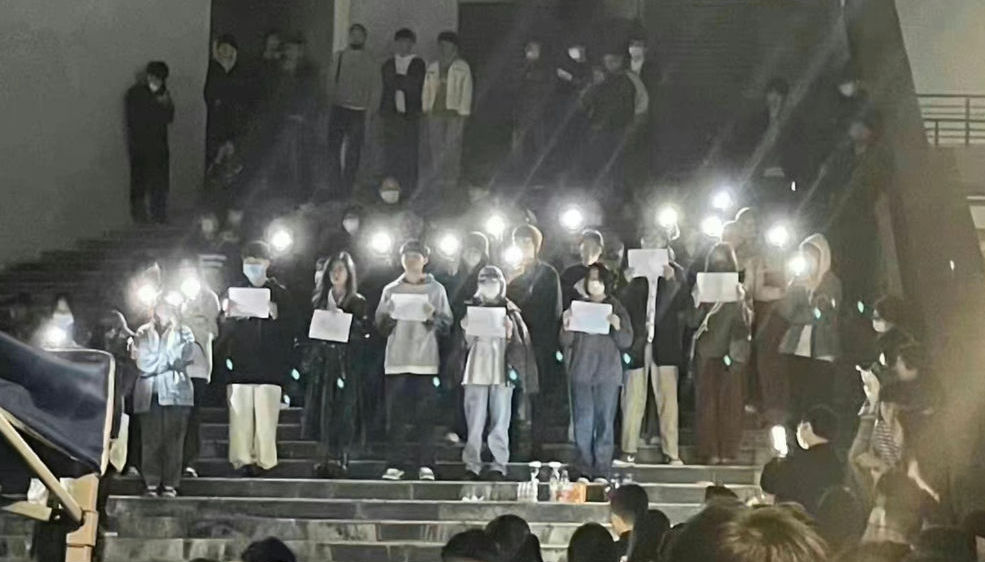
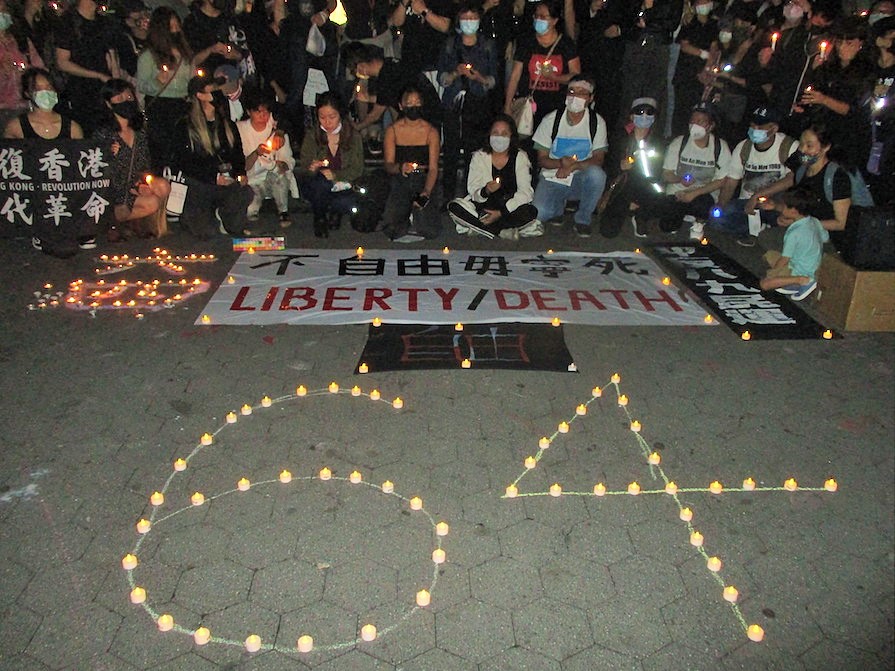
In Episode 126 of the CounterVortex podcast, Bill Weinberg marks the anniversary of the Tiananmen Square massacre of June 4, 1989—”6-4,” as it is known in China, to keep ahead of online censors. With the massacre commemoration first exiled from Beijing to Hong Kong, it has now been exiled from Hong Kong to New York City as police-state measures are extended from the mainland. But China’s official denialism about the massacre extends even to the US, where both the sectarian left and “paleoconservatives” echo Beijing’s revisionist line. Both regime proponents and detractors share the consensus that the massacre and subsequent wave of repression across China was a “red terror,” carried out as it was by a “Communist Party.” A case can be made, however, that it was actually a “white terror,” enforcing China’s capitalist conversion. The recent crackdown on dissident workers and Marxist student activists in China—complete with extrajudicial “disappearances“—reveals “Xi Jinping Thought” to be (like Putinism and Trumpism) an updated variant of fascism. Listen on SoundCloud or via Patreon. (Photo: The Village Sun)

East Asia
tamtakchi

Hong Kong activist jailed under colonial-era ‘sedition’ law

Pro-democracy activist and popular radio DJ Tam Tak-chi, also known as “Fast Beat,” was found guilty of “seditious speech” and sentenced to 40 months in prison by the Hong Kong District Court. The former vice-chair of the People Power party is the first person since Hong Kong’s 1997 handover to stand trial for “sedition” under a law dating to the period of British colonial rule. Tam was arrested in July 2020, shortly after China imposed a sweeping National Security Law on the city, and has been in detention ever since, having been denied bail. He was found guilty of using the slogans “Liberate Hong Kong” and “Revolution of our times” at protests between January and July 2020. He was also accused of cursing at the police. Tam said that he would appeal the decision, stating that “my sentencing will affect Hongkongers’ freedom of speech.” Human Rights Watch senior China researcher Maya Wang stated that Tam’s sentence “exemplifies the dizzying speed at which Hong Kong’s freedoms are being eroded.” (Photo: Chan Cheuk-fai/Initium via HRW)

East Asia
Tiananmen

‘Great Leap Backward’ for press freedom in China

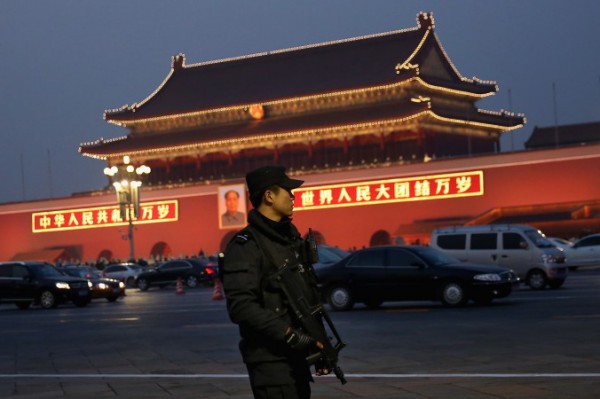
Reporters Without Borders issued a new report, The Great Leap Backwards of Journalism in China, revealing the extent of the regime’s campaign of repression against the right to information. At least 127 journalists (professional and non-professional) are currently detained by the regime. Simply reporting on a “sensitive” topic or publishing censored information can result in years of detention. The report especially examines the deterioration of press freedom in Hong Kong, which was once a world model but has now seen an increasing number of journalists arrested and prosecuted in the name of “national security.” (Photo: chinaworker.info)

East Asia

Podcast: China Unbound with Joanna Chiu

In Episode 102 of the CounterVortex podcast, Bill Weinberg interviews Joanna Chiu, author of China Unbound: A New World Disorder, on the precipitous rise of the People’s Republic as a world power, and the dilemmas this poses for human rights and democracy around the planet. How can we reconcile the imperatives to resist the globalization of China’s police state and to oppose the ugly Sinophobia which is rising in the West, especially in the wake of the COVID-19 pandemic? Some Chinese dissidents living in exile in the US have even been co-opted by Trumpism. Chiu argues that stigmatization and misinterpretation of Chinese, whether in the People’s Republic or the diaspora, plays into the hands of Beijing’s propaganda. Listen on SoundCloud or via Patreon. (Image: House of Anansi)

Planet Watch
countervortex

Podcast: the countervortex of global resistance II

In Episode 100 of the CounterVortex podcast, Bill Weinberg discusses recent uprisings in two disparate parts of the world—the South Pacific archipelago nation of the Solomon Islands and two of the states that have emerged from the former Yugoslavia. In both cases, people who were pissed off for damn good reason took to the streets to oppose foreign capital, and corrupt authoritarian leaders who do its bidding. But in the Solomon Islands, popular rage was deflected into campism and ethnic scapegoating, while in Serbia and Kosova the people on the ground actually overcame entrenched and bitter ethnic divisions to make common cause against common oppressors. The contrast holds lessons for global protest movements from Hong Kong to New York City. Listen on SoundCloud or via Patreon.

East Asia
beijing olympics

Corporate sponsors of Beijing Olympics under pressure

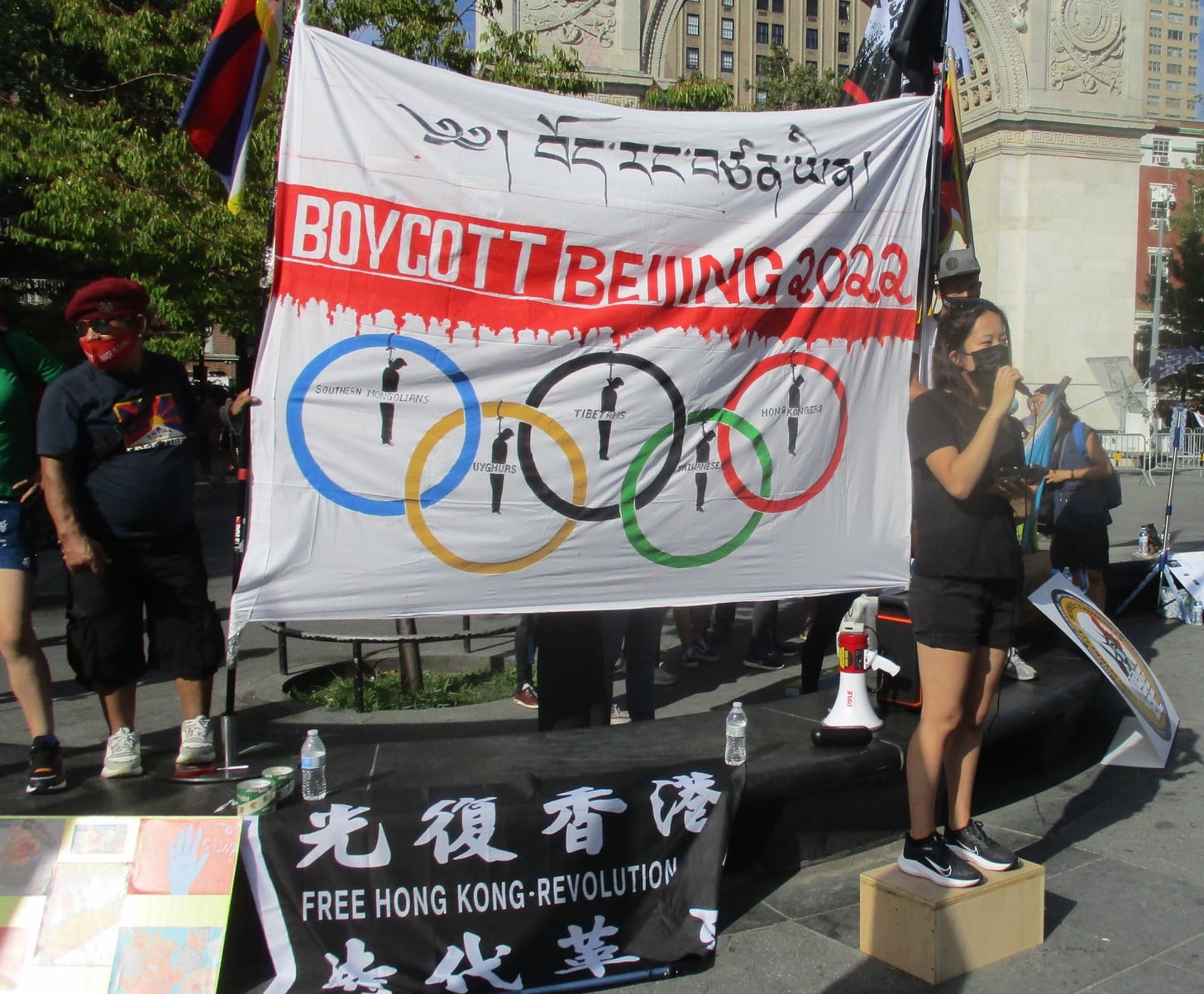
Human Rights Watch accused the corporate sponsors of the Beijing 2022 Winter Olympics of ignoring China’s crimes against humanity in its far western region of Xinjiang, thus “squandering the opportunity” to pressure China to address its “appalling human rights record.” Coca-Cola, Intel, Toyota and Airbnb are among the 13 Olympic Partners accused by name of overlooking China’s mass detention of ethnic Uyghurs and members of other Muslim ethnicities, as well as repression of free speech in Hong Kong. (Photo: CounterVortex)

East Asia
chunma

Hong Kong: second conviction under national security law

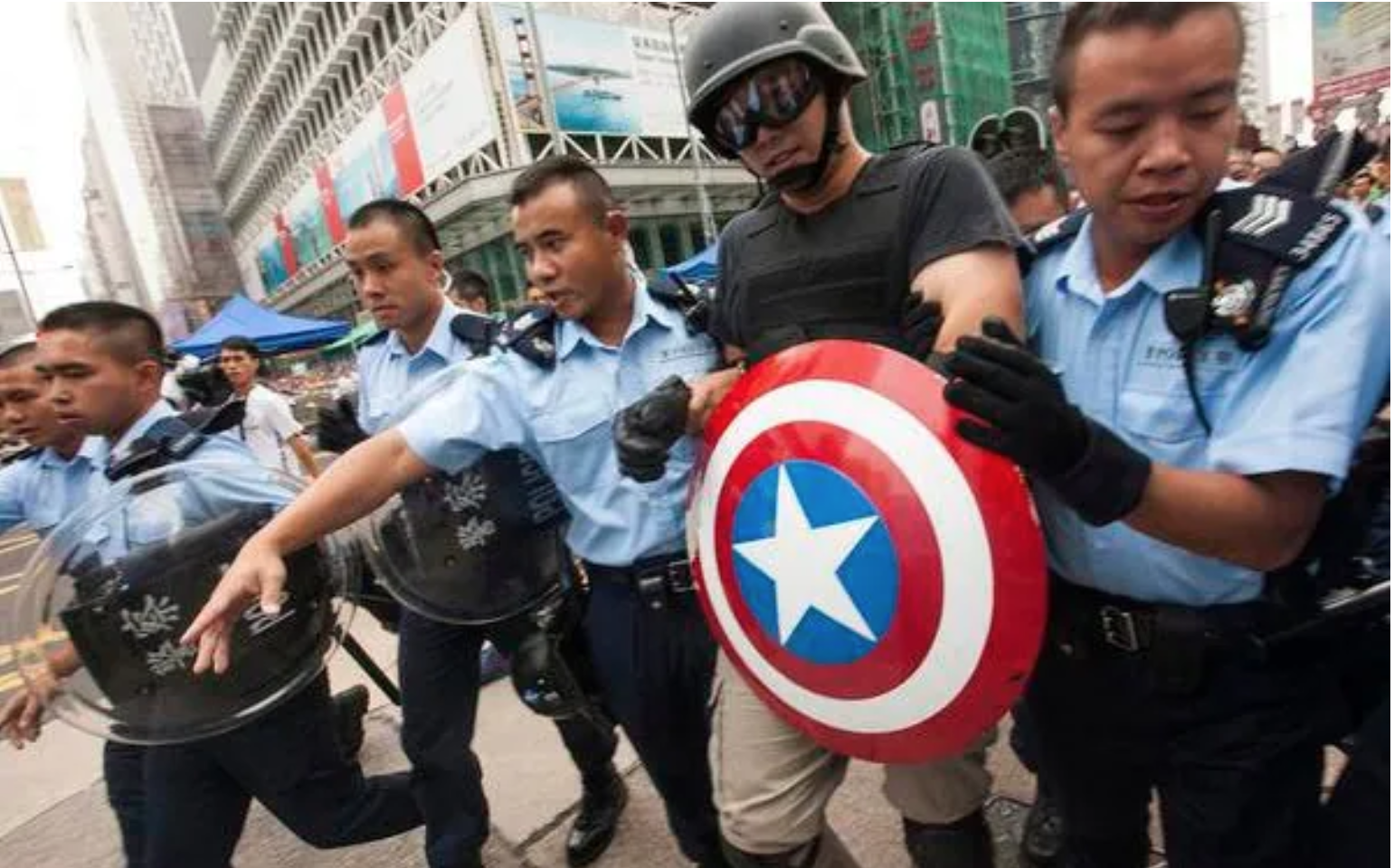
A Hong Kong district court found delivery worker-turned-activist Ma Chun-man guilty of incitement to secession for his actions at over 20 protests and in several interviews last year. Famously dubbed “Captain America 2.0” by local news media for dressing like the comic-book character at demonstrations, Ma is the second person to be convicted under China’s Law on Protection of National Security of Hong Kong. He was charged under articles 20 and 21 for advocating “separating Hong Kong from China, unlawfully changing its legal status or surrendering it to foreign rule.” (Photo: Twitter via The Telegraph)

South Asia
underground asia

Book review: Underground Asia

A dauntingly detailed book from Harvard University Press on the roots of Asia’s anti-colonial movements documents the early influence of anarchism, and how it was ultimately displaced by nationalisms of different stripes—from the Moscow-aligned Leninist nationalism of Ho Chi Minh, to the fascist-inspired Hindutva movement that effectively rules India today. The early vision of a universalist, libertarian anti-colonialism evokes a tantalizing sense of what might have been. A timely book for a moment of re-emerging popular rebellion, from the militant farmer protests in India to the pro-democracy upsurges in Thailand, Burma and Hong Kong. (Image: Harvard University Press)

East Asia
Hong Kong

Hong Kong: ‘patriots’ in, democrats out

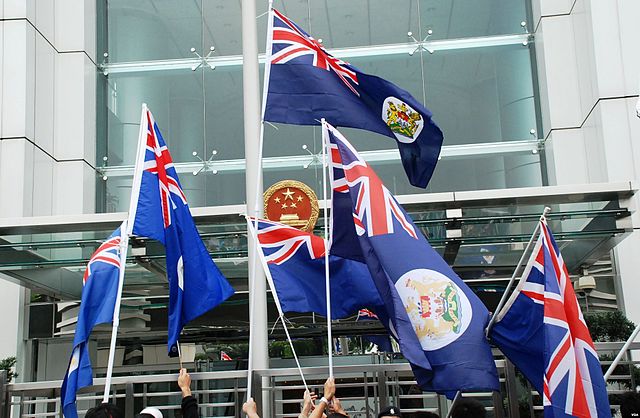
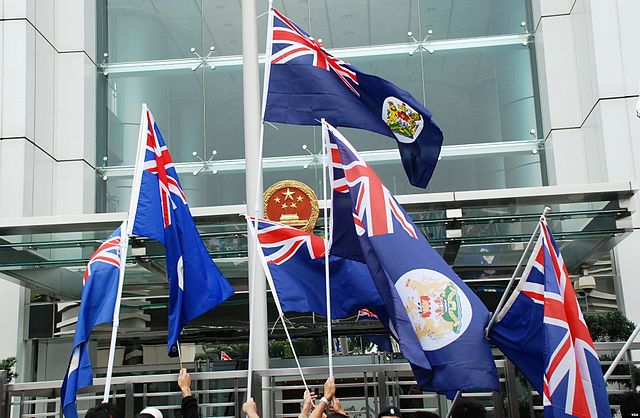
The first “patriots only” vote under Hong Kong’s new political system was held to choose members for a 1,500-member Election Committee—although only some 360 of the seats were actually contested. Voting was restricted to some 5,000 individuals representing different professions and industries, chosen under a principle of “patriots administering Hong Kong.” The Election Committee is tasked with electing 40 members of the enlarged 90-seat Legislative Council in December as well as choosing the city’s new chief executive next March. The new and more controlled electoral system was adopted by an overwhelming majority vote of the National People’s Congress in Beijing this March. (Photo: HKFP)

East Asia
tiananmen vigil

Members of HK Tiananmen vigil group arrested

Four key members of the Hong Kong Alliance in Support of Patriotic Democratic Movements of China, the group behind the city’s annual Tiananmen Massacre vigil, were arrested in an early-morning raid on the June 4 Memorial Museum. The arrests came the morning after the activists publicly refused a police demand for information as part of a “national security” probe into the 32-year-old group. Police confirmed the arrests, saying the four are being held for failing to comply with Article 43 of the National Security Law, which compels cooperation with investigations. The police had requested information from the group in a letter in late August under provisions of Article 43. The force also alleged that the group had been working with foreign agents, a potential violation of the Beijing-imposed legislation. (Photo: Tam Ming Keung/United Social Press via HKFP)

East Asia
anthony wong

Hong Kong: crackdown on dissident Cantopop

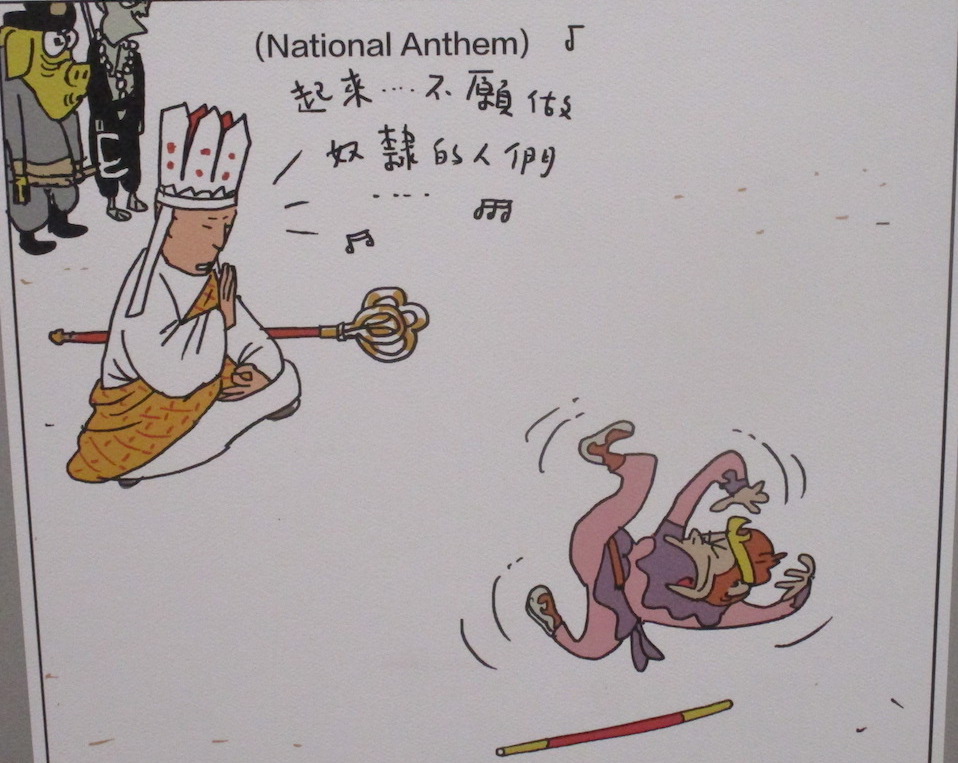
Hong Kong’s Independent Commission Against Corruption (ICACcharged pro-democracy activist Au Nok-hin and Cantopop singer Wong Yiu-ming, AKA Anthony Wong, with “corrupt conduct” for allegedly breaching election laws by having Wong perform two songs at a rally for Au in his 2018 run for the Legislative Council. The ICAC cited provisions of the Elections Corrupt & Illegal Conduct Ordinance, which define as corrupt conduct  meeting “all or part of the cost of providing food, drink or entertainment for another person for the purpose of inducing a third party to vote or not vote for a particular candidate at an election.” Hong Kong’s Department of Justice withdrew the charges against the pair two days after Wong was arrested, but they were placed under a “bind-over order.” Under terms of the order, they each put up a $2,000 bond and will face no criminal charges if they maintain “good behavior” for a period of 24 months. “Hongkongers keep singing, Hongkongers keep going,” Wong told reporters as he left the courtroom. (Image: IFC via Twitter)