

Watching the Shadows
estado de emergencia

Podcast: COVID-19 and impending bio-fascism II

In Episode 50 of the CounterVortex podcast, Bill Weinberg notes frightening advances toward a fascist world order amid the COVID-19 crisis. With police-state measures being imposed worldwide, Donald Trump is claiming “total” executive power and threatening to “adjourn” Congress. That he is doing so in the name of lifting rather than enforcing the lockdown is certainly an irony, but either way it represents exploitation of the crisis for a power-grab. Even under a best-case scenario of a post-pandemic return to “normality,” it will be in the context of an unprecedented totalizing surveillance state. Yet at this grim moment for humanity, there are utopian as well as apocalyptic potentialities. Listen on SoundCloud, and support our podcast via Patreon. (Photo: Peruvian Ministry of Defense via Flickr)

East Asia
wenzhou

China: internal resistance to bio-police state

“Citizen journalists” and “netizens” in China who are critical of the government’s handling of the COVID-19 (coronavirus) outbreak are being “disappeared”—but online criticism is spreading faster than official censors can contain it, in by far the biggest eruption of dissent under Xi Jinping’s rule. At least one city, Wenzhou, has seen a street protest over the draconian controls the government is instating, in open defiance of the lock-down. Even voices from within China’s political establishment are saying this could be the biggest challenge to the regime’s legitimacy since 1989. (Image via YouTube)

East Asia
Taiwan protest

Taiwan repudiates fascist world order

Following a bitter campaign dominated by “fake news” generated from China and punctuated by sexist personal attacks on President Tsai Ing-wen, the incumbent was re-elected, overwhelmingly defeating Han Kuo-yu of the Kuomintang (KMT). Tsai, of the Democratic Progressive Party (DPP), received the highest total ever recorded for any candidate in a presidential election in Taiwan. With Han and the KMT calling for closer integration with China, the repression in Hong Kong was an inevitable and pressing context in the vote. The populist Han, described as Taiwan’s Donald Trump, cultivated an “everyman” image despite his own lavish lifestyle. But his closeness to Beijing led to fears that the KMT was willing to accept a “one country, two systems” solution for Taiwan—just as this model was collapsing in Hong Kong. (Photo of Workers’ Struggle demonstration in Taipei via New Bloom)

East Asia
Tiananmen

China detains activists in year-end crackdown

Over a dozen Chinese lawyers and activists were detained or went missing in the final days of 2019, in a crackdown targeting participants who attended a private pro-democracy gathering in the coastal city of Xiamen, rights groups reported. The meeting had been called to discuss a “democratic transition in China,” said Human Rights Watch researcher Wang Yaqiu. The period around New Year is traditionally when Beijing chooses to arrest prominent dissidents in an effort to minimize international media attention, “so it is not a surprise that they chose this particular time to launch a manhunt of activists.” The meeting involved a small group “peacefully discussing politics in a private space.” (Photo: chinaworker.info)

Planet Watch
Chile protester

Podcast: world revolution in 2020?

In Episode 43 of the CounterVortex podcast, Bill Weinberg takes stock of the current wave of popular protest and uprisings around the world, and asks if the planet is approaching another moment of revolutionary possibilities, such as was seen in 2011. He examines the prospects for these disparate movements to build solidarity across borders, repudiate ethnic and national divide-and-rule stratagems, and recognize the enemy as transnational capital and the authoritarian states that serve it. With discussions of Hong Kong, mainland China, Indonesia, Bolivia, Chile, Ecuador, Peru, Uruguay, Honduras, Costa Rica, Haiti, Puerto Rico, Iraq, Lebanon, Turkey Iran, Egypt, Algeria, Sudan, Uganda, Ethiopia and Guinea. Listen on SoundCloud, and support our podcast via Patreon. (Photo: David Lynch via Twitter)

East Asia

Hong Kong: will protests spread to mainland?

Protesters are rejecting what they call Hong Kong Chief Executive Carrie Lam’s “fake concession,” with the demonstrations now in their fourteenth week. Contrary to widespread media reports, Lam’s supposed “withdrawal” of the extradition bill is actually only a promise to withdraw it when the Legislative Council reconvenes—with no date yet set. Lam refused the other four demands of the current unprecedented mass movement. ChinaWorker.info, a Hong Kong-based website that supports independent labor struggles in China and is now supporting the protest movement in the city, warns of an imminent escalation in repression: “What the CCP most fears is showing weakness towards Hong Kong protesters, which will damage the dictatorship’s authority and in turn inspire the mainland masses to rise up and fight, following the example of Hong Kong masses.” (Photo: ChinaWorker.info)

East Asia
East Turkistan

Podcast: the politics of separatism in China

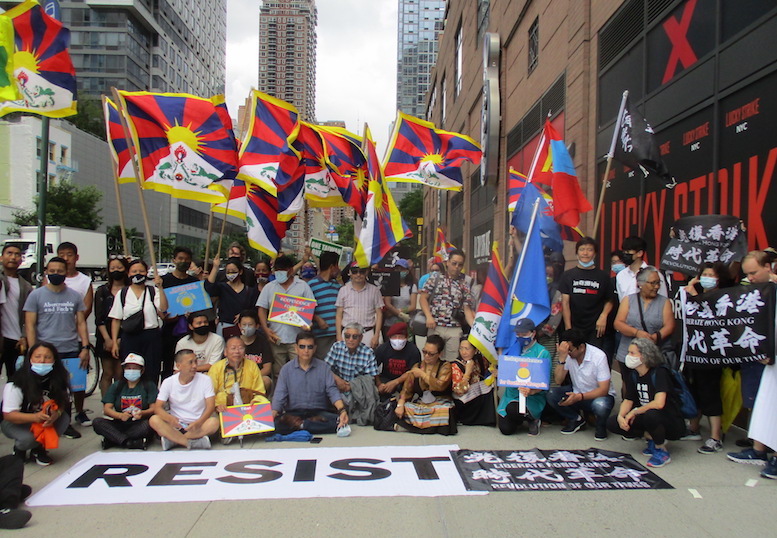
In Episode 39 of the CounterVortex podcast, Bill Weinberg explores the politics of the Hong Kong protests—and especially how they have been playing out in New York’s Chinatown. It is natural that the Hong Kong protesters have made common cause with the Tibetans, Uighurs and Mongols also struggling for their rights and dignity against China’s ruling party-state. But some supporters of these movements have come to embrace a separatist position, actually seeking independent states in Hong Kong, Tibet, East Turkistan and South Mongolia. Will self-determination for these regions and peoples be possible without active solidarity with the struggles for democracy and political empowerment by the Han Chinese majority of the People’s Republic? Listen on SoundCloud, and support our podcast via Patreon. (Map: East Turkistan National Awakening Movement)

East Asia

Street clashes as Hong Kong protesters defy ban

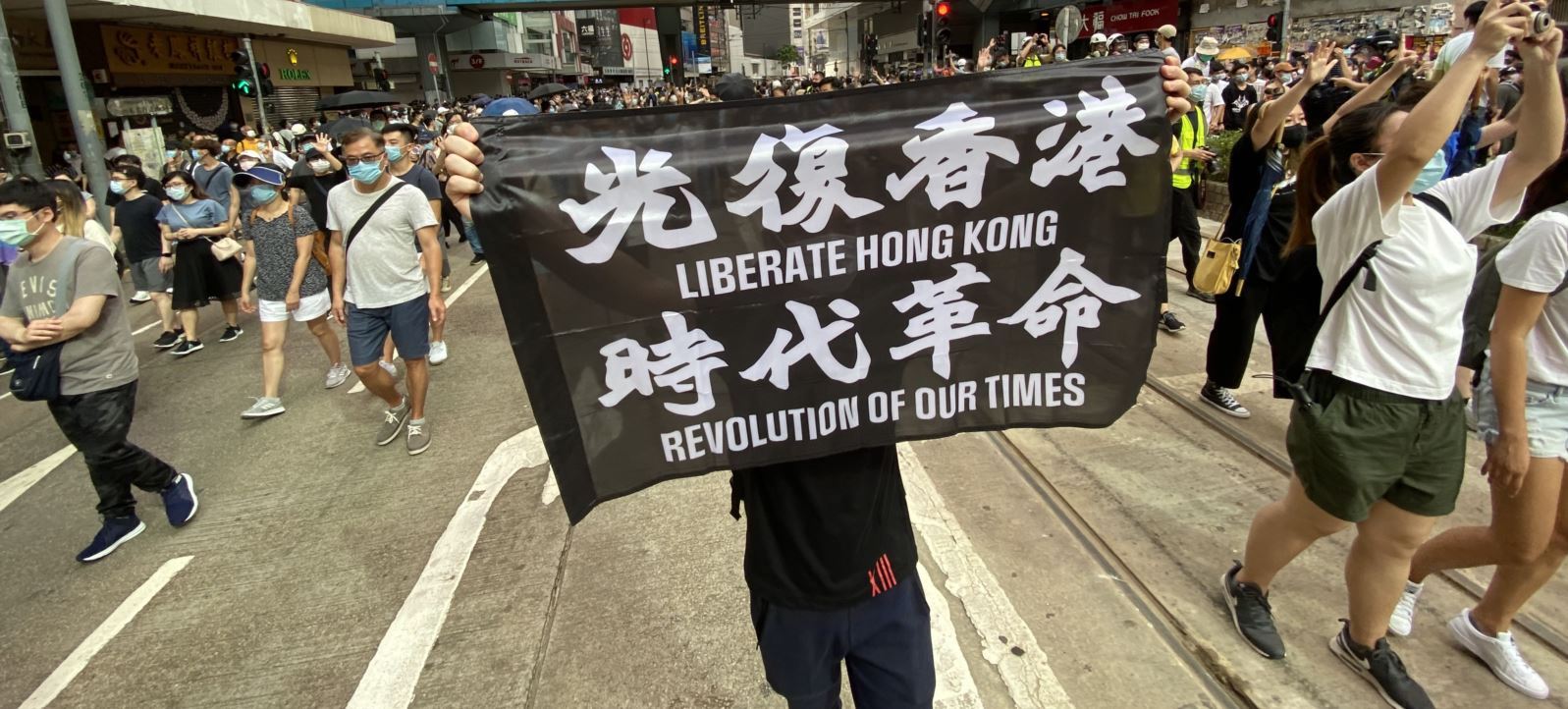
Hong Kong riot police used tear-gas, rubber bullets and water cannon to disperse protesters as tens of thousands marched in the city, defying a ban. Police fired live rounds over the heads of the crowd as “warning shots” in Causeway Bay. Some protesters set fires and threw Molotov cocktails and bricks at police lines. TV news footage showed riot police beating people with their batons inside commuter-train cars. In a first for Hong Kong, police water-cannon trucks fired dyed water at protesters near government headquarters in an effort to identify those who fled for later arrest. The Civil Human Rights Front, a coalition of around 50 pro-democracy groups, had cancelled the march in response to the ban, but many organizations pledged to carry on anyway—with some calling the march a “religious” procession in a bid to evade the government ban. (Photo: HKFP)

Inner Asia
East Turkistan

China’s rulers fear balkanization —with reason?

Chinese state media are promoting an official “white paper” entitled “Historical Matters Concerning Xinjiang,” denying the national aspirations and very identity of the Uighur people of China’s far western Xinjiang region. These are portrayed as inventions of Western-supported “separatists.” Yet some leaders of the Uighur exile diaspora have indeed launched an “East Turkistan” independence movement, and are seeking allies among Tibetans, Mongols, Manchus and Hong Kongers. China’s rulers may be creating exactly what they fear with their intransigent denialism on identity and ultra-draconian measures in Xinjiang, Tibet, Inner Mongolia and Hong Kong. (Map: East Turkistan National Awakening Movement)

East Asia

Protest shakes Hong Kong… and Wuhan: solidarity?

Days before protesters stormed and occupied the Hong Kong legislative chamber, some 10,000 marched in the central Chinese city of Wuhan to oppose construction of a waste incinerator. The Wuhan protesters chanted “Give us back our clean environment”—before being set upon by the riot police, leading to many arrests. Solidarity with pro-democratic forces on the mainland is what holds out hope for restraining Beijing’s dictatorial agenda for Hong Kong. Yet some Hong Kong protesters instead look to former colonial power Britain for protection—or promote a hardcore “localist” stance that seeks independence rather than a democratic China. (Photo  of Wuhan protest via RFA)

East Asia

Hong Kong: ‘leaderless’ protests pledge no retreat

Despite limited victories, leaders of the declaredly “leaderless” protest movement that has brought hundreds of thousands to the streets in Hong Kong pledge to keep up the pressure. The unpopular bill that would have allowed extradition to mainland China has now been suspended. But six student unions issued a call to escalate protest actions if the government does not respond to their outstanding demands in the coming days. These include that the extradition bill be formally withdrawn, that all charges be dropped against arrested protesters, and investigations be opened into cases of police brutality. Protesters are also demanding that Chief Executive Carrie Lam step down. (Photo: HKFP)

East Asia

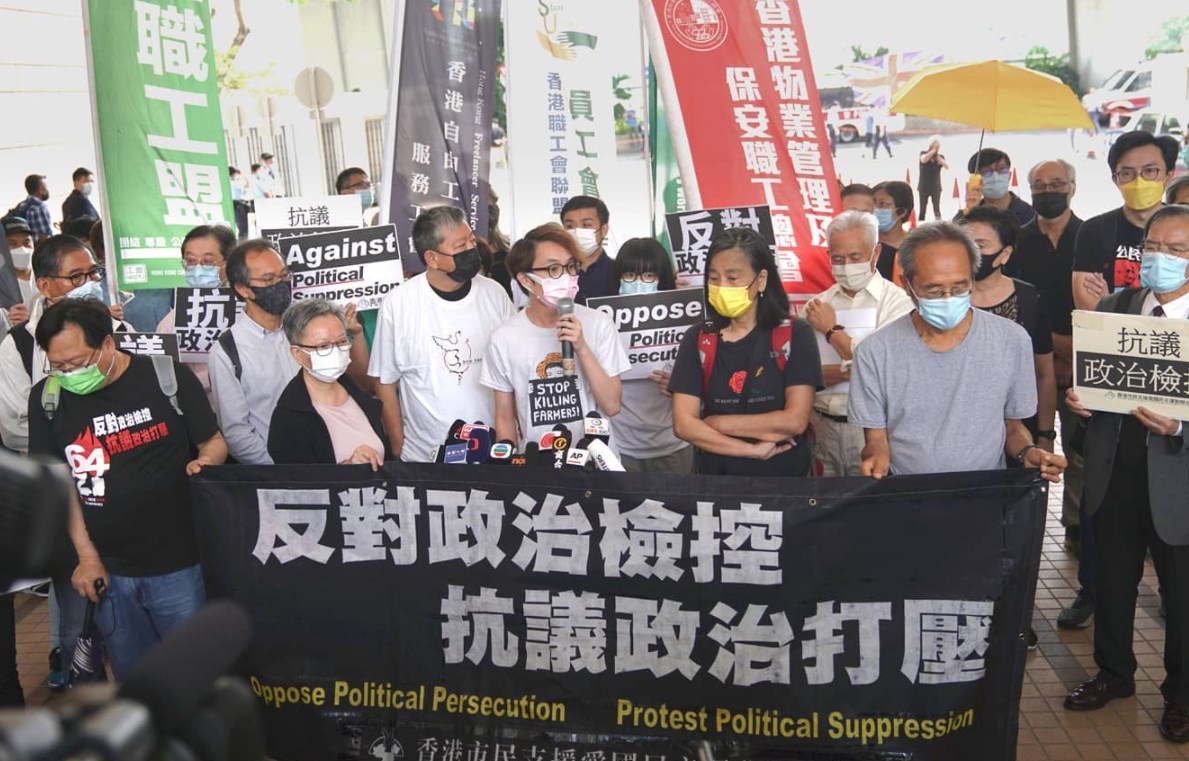
Umbrella activists convicted in Hong Kong

Nine leading activists of Hong Kong’s Umbrella Movement were convicted under colonial-era “public nuisance” laws, concluding the city’s most politically charged trial in years. The nine may face up to seven years in prison. They include the famous “Occupy Trio”—legal scholar Benny Tai, sociology professor Chan Kin-man and Rev. Chu Yiu-ming. The Umbrella Movement was the biggest pro-democracy protest in Hong Kong’s history, with thousands occupying the city’s central districts for several weeks between September and December 2014.