


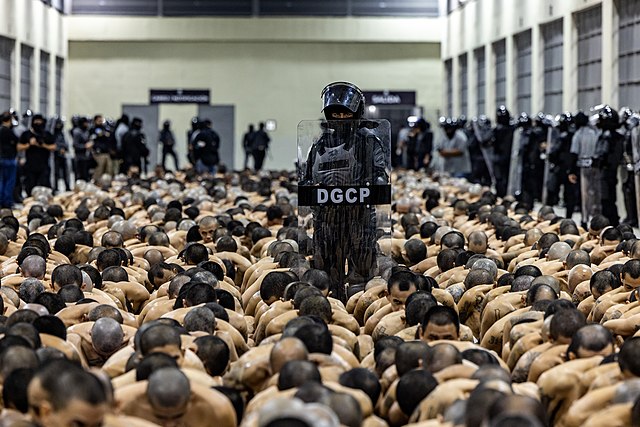
The UN Office of the High Commissioner for Human Rights (OHCHR) on March 28 called for authorities in El Salvador to urgently address human rights concerns as the nation marked one year under a state of emergency. Authorities enacted the state of emergency on March 27, 2022 following a wave of gang-related murders. The measure was initially for 30 days but has been regularly renewed. Since March 2022, 65,000 people have been detained, and 90 people have died in custody. OHCHR spokesperson Marta Hurtado stated that 7,900 complaints of abuses against prisoners have been lodged with El Salvador’s national human rights body. According to the report, many detentions were arbitrary and founded on “poorly substantiated” investigations or “crude profiling.” Conditions in detention have also declined significantly, and the UN has received reports of prolonged solitary confinement and inmates being denied prescribed medications. (Jurist)
Amnesty International reported April 3 that authorities in El Salvador are “systematically committing human rights violations” as a result of the country’s aggressive anti-gang policies. (Jurist)
Reports of rights violations have been mounting steadily over the past year since El Salvador launched its sweeping crackdown on the gang networks known as maras.
See our last report on the prison crisis in Latin America.
Photo: WikiMedia via Jurist


Women massacred in Honduras prison
At least 46 women were killed in a prison riot between two of Central America’s most dangerous gangs June 20. Women belonging to the Barrio 18 entered the precinct heavily armed and attacked members of a rival gang: the Mara Salvatrucha, or M-13. Half of the victims were shot, while others were burned to death. Seventy-three MS-13 survivors were later transferred to other installations, as the Barrio 18 is thought to remain heavily armed inside the prison. (TNH)
‘Coolest dictator’ Bukele declares victory in El Salvador
In El Salvador, the official results of the Feb. 4 presidential elections are still not in, but that didn’t stop President Nayib Bukele from declaring victory on social media. He was up for re-election in a country that doesn’t allow re-election in its constitution. It’s a safe bet he won, though, because he’s extraordinarily popular. But the prelude to the elections also saw protests by the families of the detained, demanding the release of their loved ones they say were unjustly imprisoned. (PRI)
Bukele ran on his record of restoring security to El Salvador, plugging himself as “the world’s coolest dictator,” seemingly without irony. (PRI)
Strongman Bukele heads for third term
Salvadoran strongman Nayib Bukele cleared the final hurdle to running for a third term in the country’s 2027 presidential elections, securing the ruling Nuevas Ideas party’s formal nomination in an uncontested internal primary. Bukele will run once again alongside Vice President Félix Ulloa in an election in which, given current polling, victory is all but certain. Bukele’s bid was made possible by constitutional changes pushed through last July by the Nuevas Ideas-controlled Legislative Assembly, which extended presidential terms from five to six years, eliminated the second round run-off, and authorized indefinite re-election. The electoral reform package also shortened Bukele’s current term by two years so that presidential and legislative elections would coincide.
This was only the latest in a series of attacks on the country’s democratic institutions by the Nuevas Ideas party. In 2021, shortly after the Legislative Assembly convened, the ruling bloc illegally replaced the magistrates of the country’s constitutional courts, which months later cleared the way for Bukele’s unconstitutional 2024 re-election by overturning the country’s longstanding ban on consecutive terms. As he has before, Bukele defended his candidacy by arguing that El Salvador was simply adopting a practice common in other countries that permit indefinite re-election. (NACLA Update)