


Uttarakhand disaster portends ‘Himalayan tsunamis’
The devastating floods in India's Uttarakhand state are being called a "Himalayan tsunami"—and a grim omen for millions living downstream from the world's highest range.
The closing of the US embassy in Yemen has coinicided with drone strikes and clashes in Marib province, and a gun-battle between rival factions in the capital Sanaa.
Efforts by pastoralist militias to bar refugees from returning to their lands in Darfur have sparked yet a new wave of fighting and displacement—with 250,000 uprooted this year.
Nicaraguan civil society groups in the Caribbean region have challenged plans by a Hong Kong company to build an interoceanic canal through the Central American country.
A court in Trujillo, Peru, issued a ruling absolving former National Police colonel Elidio Espinoza, who was charged with running a secret "death squad" within the force.
Egypt banned Yemeni activist and Nobel Peace Prize winner Tawakkol Karman from entering the country for “security reasons”—to protest from the Muslim Brotherhood.
Delhi had apparently warned its ambassador in Kabul of an impending attack plotted in Pakistan—immediately before the assault on the Indian consulate in Jalalabad.
Peru’s Vice-Ministry of Inter-Culturality blocked expansion of the Camisea gas project, asserting that “isolated” indigenous peoples could be made extinct if it goes ahead.
Venezuela’s opposition is distributing a supposed copy of President Maduro’s birth certificate, showing that he was born in Colombia. But Colombia dismisses it as a crude forgery.
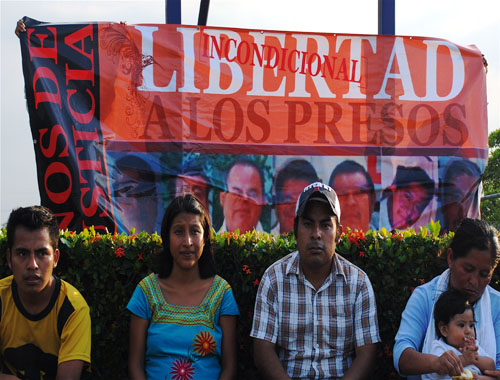
After spending nearly 17 years in the same prison cell just outside of Oaxaca City, seven indigenous Loxicha political prisoners were transferred in June—twice. The seven, accused of collaboration with the Popular Revolutionary Army (EPR), were first taken to Oaxaca’s… Read moreIndigenous Oaxacans in Mexico’s private prisons
After a lengthy dispute with global mega-firm AngloGold Ashanti, the people of the central Colombian town of Piedras passed a referendum to halt the company's operations.
FARC commander “Pablo Catatumbo” issued a public statement apologizing for “mistakes,” but also called on the US, Israel and other governments to apologize for funding the war.