Watching the Shadows
cellular

Podcast: resist cellular hegemony!

As the architecture of total surveillance falls inexorably into place, cellular technology comes to colonize more and more of daily human existence. Accepted in the banal interest of “convenience,” this trajectory ultimately ends in not only the extinction of human freedom, but the abolition of humanity itself—an idea openly embraced by the fascist tech bros as “transhumanism,” and warned of by CS Lewis in his eerily prescient 1943 work The Abolition of Man. In Episode 317 of the CounterVortex podcast, Bill Weinberg urges a revolution of everyday life, in which we start saying no to the relentless encroachment of cellular and digital technology. (Image: Wikipedia, modified by CounterVortex)


Southern Cone
Ushuaia

Argentina: Milei offers Trump part of Tierra del Fuego?

In a move sparking outrage from the country’s opposition, Argentina’s central government under President Javier Milei has taken control of the port of Ushuaia—the country’s southernmost seaport and a key gateway to Antarctica. Milei’s move places operation and administration of the port under his executive control for one year—over the objections of the Tierra del Fuego provincial government. The takeover came just days before a US Air Force jet landed at Ushuaia, bringing in a delegation of US lawmakers from the House of Representatives’ Energy & Commerce Committee. Milei, in power since December 2023, has already received two heads of the US Southern Command in Ushuaia. Both visited the Ushuaia Integrated Naval Base, which Argentina has been building since 2022. While Milei insists the base will be under full Argentine control, the country’s opposition press is full of speculation that on the sidelines of the Davos summit, Milei offered the base and all of Ushuaia to the US in exchange for an invitation to join the “Board of Peace” being touted by Trump as an alternative to the United Nations. (Photo: Wikipedia)

Central America
Costa Rica

Costa Rica emulates Salvador police state model

The right-wing populist Laura Fernández will be Costa Rica’s next president, securing nearly 50% of the vote in last week’s election. She is the first candidate in more than a decade to clear the threshold needed to win outright in the first round. She did so by promising to respond forcefully to the country’s exaggerated yet real insecurity crisis linked to the drug trade—the overwhelming concern for most voters. On the campaign trail, Fernández drew openly from the playbook of Salvadoran President Nayib Bukele, whose brutal anti-gang crackdown has inspired conservatives across the region. She called for a “state of exception” to combat crime, promised to complete the construction of a massive Bukele-inspired prison, and spoke with Bukele before any other foreign leader after her win. (Image: Grunge Love)

Planet Watch
moon

Podcast: lunar hubris and the end of the Earth

Plans by Trump’s fascist tech bros as well as Putin and Xi to build AI-run nuclear reactors on the Moon open jurisdictional dilemmas that far outpace the modest UN efforts to put a regulation regime in place for artificial intelligence. These plans are unveiled just as the Bulletin of the Atomic Scientists moves the symbolic hands of the Doomsday Clock to an unprecedented 85 seconds to midnight. The new Doomsday Clock Statement explicitly names AI, as well as nuclear weapons and climate change, as a potential threat to human survival. The International Campaign to Abolish Nuclear Weapons, in conjunction with the Doomsday Clock move, reiterated its position that “we must move beyond managing nuclear weapons and start phasing them out before midnight strikes.” In Episode 316 of the CounterVortex podcast, Bill Weinberg argues that we must take a similar abolitionist position on AI and space expansionism, citing unacceptable threats on ecological, epistemological and eschatological grounds. (Photo: NASA via Surfer Today)

moon

THE LUNAR JURISDICTIONAL TRAP

The recent unveiling of Russia’s Selena project, a nuclear power plant slated for the lunar surface by 2035 under the joint Russo-Chinese International Lunar Research Station program, has been hailed as an unprecedented ambition of engineering. But beneath the proposed cooling towers lies a volatile reality. We are about to place the highest-stakes technologies of the 21st century—autonomous artificial intelligence (AI) and nuclear fission—on a legal foundation that has been frozen since the Cold War. In a commentary for JURIST website, Vishal Sharma of NALSAR University in Hyderabad argues that we need a new Lex Spacialis to fill the vacuum of space before it is filled by the strongest unaccountable power, with no human oversight.

Continue ReadingTHE LUNAR JURISDICTIONAL TRAP 
Planet Watch
doomsday

Doomsday Clock moves: 85 seconds to midnight

The Science & Security Board of the The Bulletin of the Atomic Scientists moved the symbolic hands of the Doomsday Clock to an unprecedented 85 seconds to midnight. The decision came a year after the clock was set to an also unprecedented 89 seconds to midnight—and three years after it was moved to 90 seconds to midnight. Each increment since 2017, when it was set at 2.5 minutes of midnight, has brought the Clock closer to doomsday than ever before. This year’s statement reads: “A year ago, we warned that the world was perilously close to global disaster and that any delay in reversing course increased the probability of catastrophe. Rather than heed this warning, Russia, China, the United States, and other major countries have instead become increasingly aggressive, adversarial, and nationalistic. Hard-won global understandings are collapsing, accelerating a winner-takes-all great power competition and undermining the international cooperation critical to reducing the risks of nuclear war, climate change, the misuse of biotechnology, the potential threat of artificial intelligence, and other apocalyptic dangers.” (Image: misucell.com)

Syria
Rojava solidarity

Podcast: twilight of Rojava?

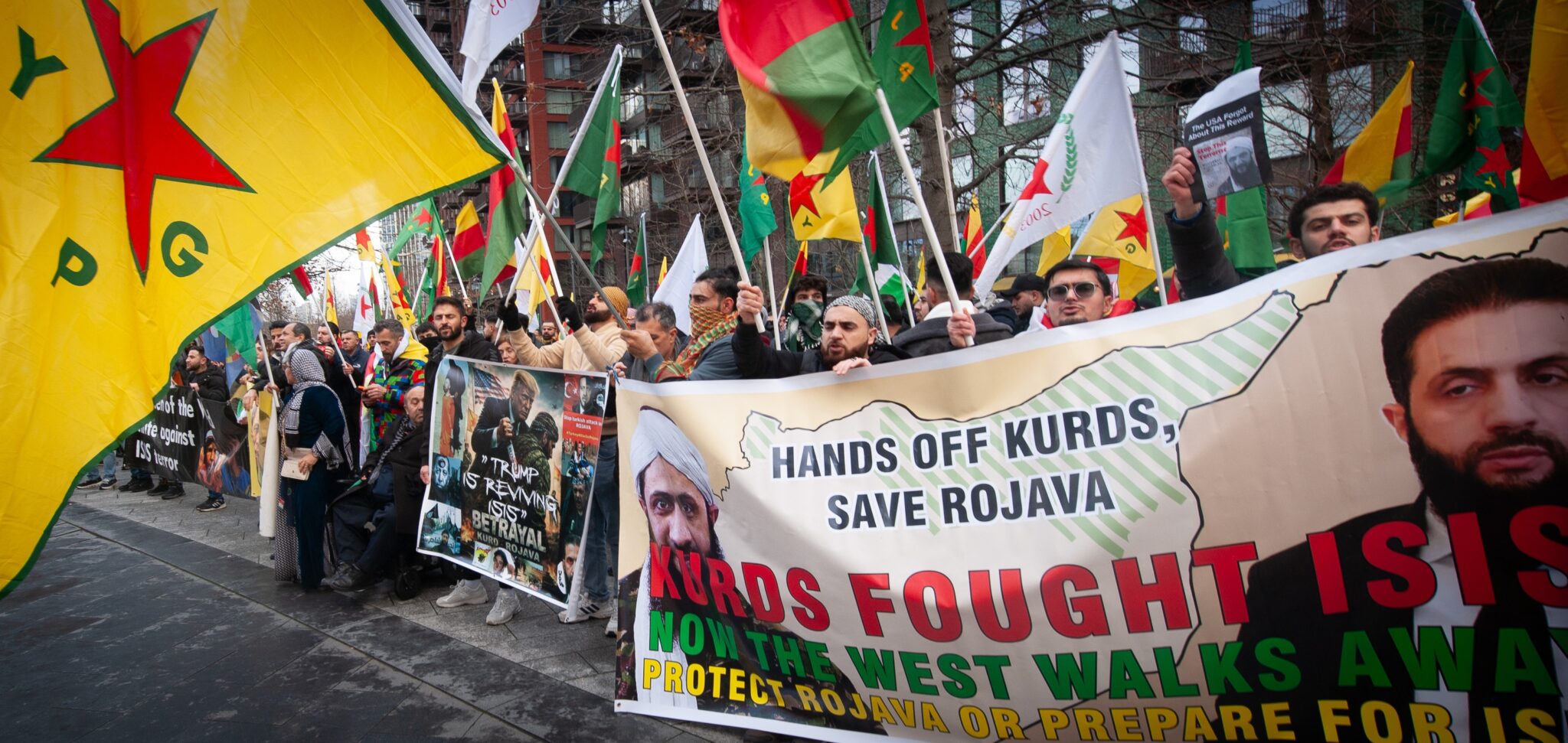
A last-minute “permanent ceasefire” may mean that northeast Syria is back from the brink of Arab-Kurdish ethnic war. But ceasefires have repeatedly broken down since fighting resumed earlier this year, with Damascus demanding disbandment of the Rojava autonomous zone, and the integration of its institutions—including its military wing, the Syrian Democratic Forces (SDF)—into the central government. While the new pact sets a more “gradual” pace for this integration, the Kurdish aspiration to regional autonomy and the central government’s insistence on centralization may prove a long-term obstacle to peace. In Episode 315 of the CounterVortex podcast, Bill Weinberg weighs the odds for avoiding a conflict that holds the potential for escalation to genocide, with the connivance of the Great Powers that so recently backed the SDF to fight ISIS. (Photo via Facebook)

North America
Andrew Jackson

Podcast: Andrew Jackson and MAGA-fascism

Trump’s mounting threats to defy the growing court decisions against his dictatorial program recall Andrew Jackson’s famous words of defiance following the Supreme Court’s 1832 decision in Worcester v Georgia, which upheld the sovereign rights of the Cherokee Nation. Jackson’s subsequent forced relocation of the Cherokee in the Trail of Tears is now echoed in Trump’s hubristic and criminal plan to clear Gaza of Palestinians. On the 222nd anniversary of Marbury v Madison, in which it was established that the Supreme Court has the last word on what is and isn’t constitutional, Bill Weinberg explores the historical parallel. Listen on SoundCloud or via Patreon. (Image: CounterVortex)

Leonard Peltier,

LEONARD PELTIER HEADS HOME —AT LAST

Native American activist Leonard Peltier, one of the longest-serving federal prisoners in US history, has been released to home confinement after spending nearly five decades behind bars. His imprisonment stems from a controversial 1977 conviction in the shooting deaths of two FBI agents on South Dakota’s Pine Ridge Indian Reservation, a case that has been harshly contested between activists and law enforcement for generations. As Peltier returns to his birthplace on North Dakota’s Turtle Mountain Indian Reservation, his case continues to raise questions about justice, reconciliation, and the relationship between the federal government and Native American nations. In an explainer for JURIST, Ingrid Burke Friedman looks back on his case and its legacy.

Continue ReadingLEONARD PELTIER HEADS HOME —AT LAST 
Planet Watch
rare earth mine

Ukraine, Greenland and the global struggle for lithium

In Episode 265 of the CounterVortex podcast, Bill Weinberg examines Trump’s ultimatum to Ukraine to hand over a large share of its wealth in strategic minerals such as lithium in exchange for continued US military aid—and whether a race with China for control of the lithium and rare earth elements needed for Elon Musk‘s industrial interests might also be the agenda behind the Trump regime’s annexationist designs on Greenland. Trump is meanwhile opening Native American lands in Nevada to lithium exploitation, while Musk’s Tesla has sought to grab a share of Bolivia‘s lithium reserves—now also coveted by China. Listen on SoundCloud or via Patreon. (Photo: rare earth mine at Mountain Pass, Calif. Credit: Tmy350 via Wikimedia Commons)

Europe
Ukraine

Trump prepares grab for Ukraine’s lithium

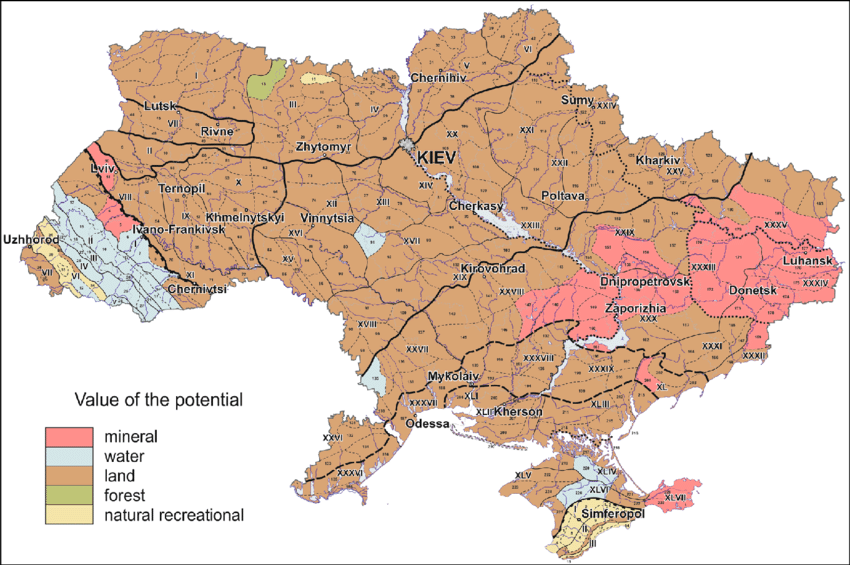
As Trump and Hegseth explicitly broach the surrender of Ukrainian territory to Russia, a poorly positioned Zelensky is acceding to demands that he turn a large portion of his country’s strategic mineral wealth over to the US in compensation for military aid. Especially at issue are Ukraine’s significant reserves of lithium—critical to de facto “co-president” Elon Musk’s e-vehicle interests. In announcing a new lithium refinery in Texas, Musk called the mineral “the new oil.” The premium on Ukraine’s strategic minerals is elevated by China’s perceived design to establish control over the planet’s rare earth elements. However, as Zelensky is quick to emphasize, nearly 20% of Ukraine’s mineral resources are in areas under Russian occupation. (Map: ResearchGate)

Southeast Asia
Regime Airstrikes

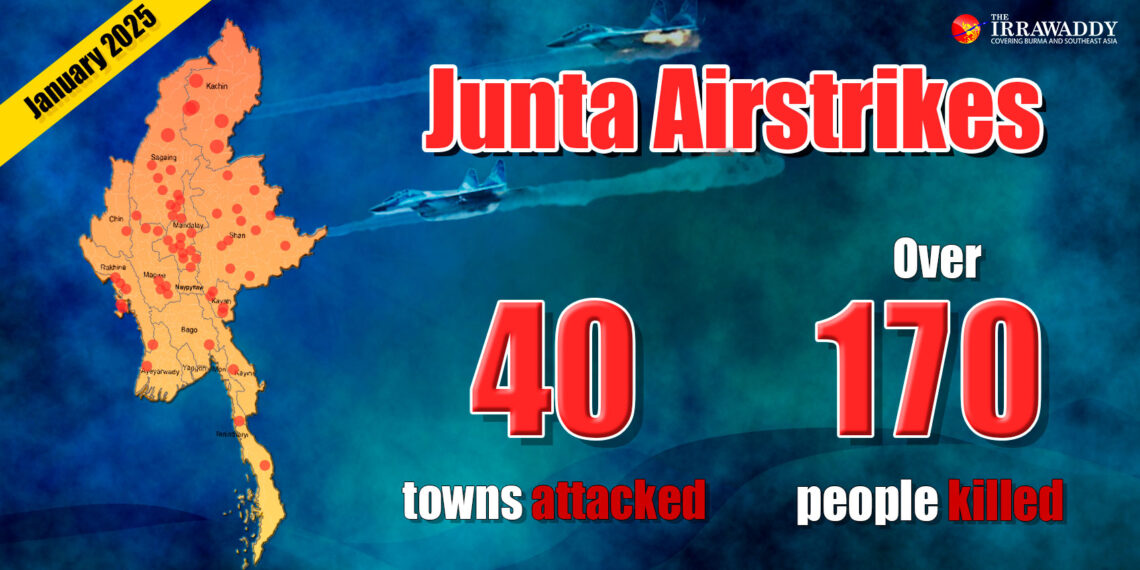
Burma: deadly junta air-strikes escalate

Junta air-strikes killed over 170 people across Burma in January, a fourfold increase over the previous month, according to an analysis by The Irrawaddy, an independent exile-based newspaper that maintains a network of reporters on the ground. The strikes hit villages, health facilities, a prison and a gold mine in various areas held by the resistance, although most of those killed were civilians. More than 1,800 people have been killed in air-strikes since the February 2021 coup. (Image: The Irrawaddy)