AGs challenge Trump bid to end birthright citizenship

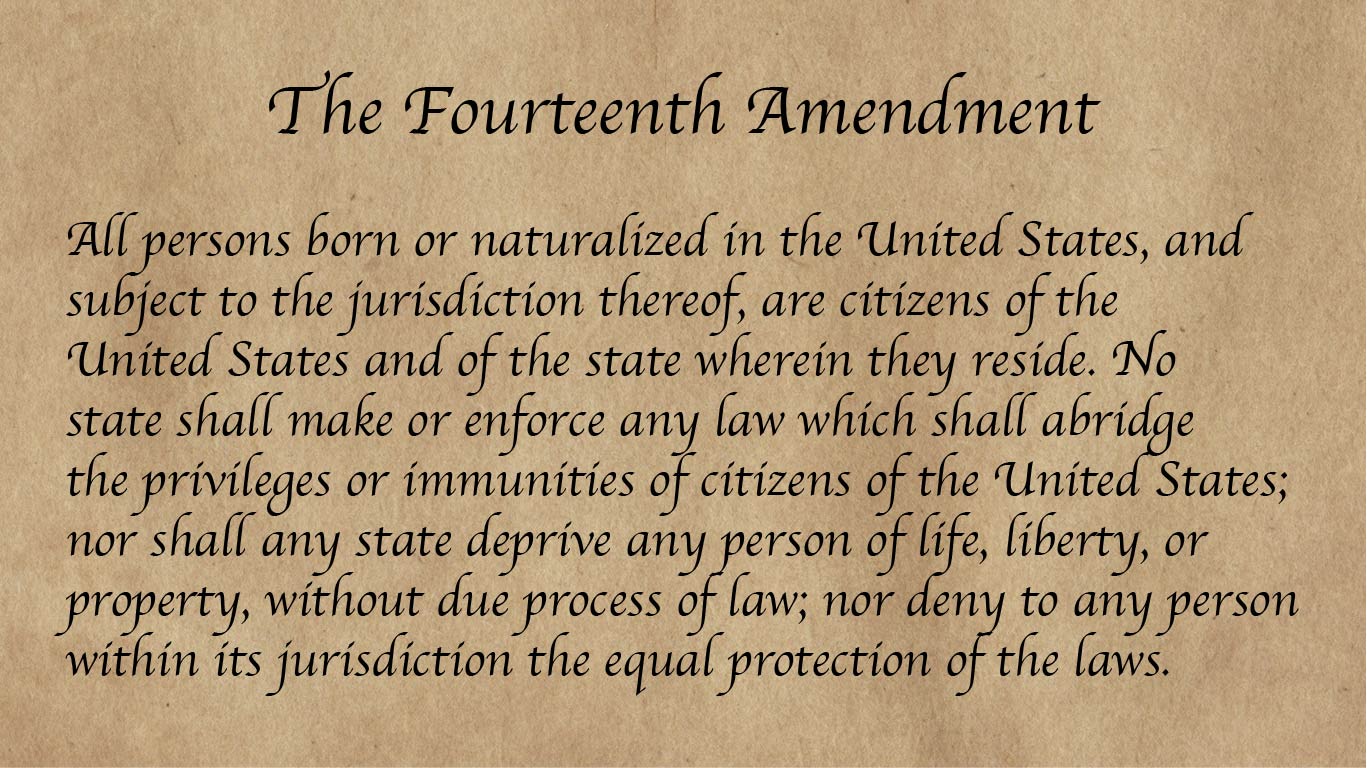
Fourteenth Amendment

Attorneys general from 22 states filed a lawsuit Jan. 21 challenging US President Donald Trump’s executive order aimed at ending birthright citizenship. Central to the lawsuit is the Fourteenth Amendment to the US Constitution, which states that “[a]ll persons born or naturalized in the United States…are citizens of the United States…” The clause was interpreted by the Supreme Court in 1898 in United States v. Wong Kim Ark as granting citizenship to all babies born in the country. The US follows the jus soli (right of the soil) principle, conferring citizenship based on birth within the country’s territory, as opposed to the jus sanguinis (right of blood) principle, which confers citizenship based on whether at least one parent is a citizen. Trump’s order would end birthright citizenship for babies born in the US to parents who entered the country illegally or temporarily.

Certain countries follow a mixed approach, such as Canada which primarily follows the jus soli principle but has certain exceptions, and India which primarily follows the jus sanguinis principle but with certain exceptions.

The coalition of attorneys general, representing states including Massachusetts, Illinois and New York, argue in the lawsuit that Trump’s executive order undermines constitutional principles and threatens to create a class of stateless individuals born within the United States. The Trump administration said it is willing to fight the lawsuit in court and is arguing that the original intent of the Fourteenth Amendment was not to grant automatic citizenship to the children of unauthorized immigrants. This all comes as Trump has vowed to carry out the “largest domestic deportation operation in American history.”

Critics of the executive order argue that Trump’s proposal is not only legally dubious but also contrary to American values. Omar Jadwat, director of the American Civil Liberties Union’s Immigrants Rights Project, stated: “This is a transparent and blatantly unconstitutional attempt to sow division and fan the flames of anti-immigrant hatred in the days ahead of the midterms.” The ACLU and several other rights organizations challenged the same executive order late on Jan. 20, hours after it was issued.

The executive order is currently set to go into effect on Feb. 19.

From JURIST, Jan. 21. Used with permission.

Image: PressBooks

  1. Judge blocks Trump’s order on birthright citizenship

    US Judge John Coughenour in Seattle issued a temporary restraining order Jan. 23 against Trump’s executive order restricting birthright citizenship for children of non-citizens, calling it “blatantly unconstitutional.”

    At the hearing, Coughenour said, “I have been on the bench for over four decades. I can’t remember another case where the case presented is as clear as it is here…This is a blatantly unconstitutional order.”

    The states of Washington, Arizona, Illinois and Oregon challenged the executive order Jan. 21, contending that it violates the Fourteenth Amendment of the US Constitution and the Immigration and Nationality Act, both of which guarantee birthright citizenship to those born in and subject to the jurisdiction of the US. Attorneys general from 22 states and several rights groups also filed similar lawsuits. (Jurist

  2. Judge blocks Trump’s order on birthright citizenship —again

    A judge for the US District Court for the District of Maryland granted a preliminary injunction at a hearing Feb. 5 against President Donald Trump’s executive order attempting to end all birthright citizenship. (Jurist)

  3. Judge blocks Trump’s order on birthright citizenship —again

    Judge John Coughenour of the US District Court for the Western District of Washington granted a nationwide preliminary injunction Feb. 6 blocking President Trump’s executive order seeking to end birthright citizenship. The lawsuit was brought by the states of Arizona, Illinois, Oregon and Washington.

    The block prevents the executive order from taking effect on Feb. 19. This decision is pending an appeal at the Ninth Circuit filed by US government yesterday. 

    This preliminary injunction is the second nation-wide block on the executive order. A federal judge in Maryland also granted a nation-wide preliminary injunction against the same executive order Wednesday. The plaintiffs in that case were two civil advocacy groups and five pregnant mothers. Additionally, 22 states and a group of civil rights organizations have filed their own challenges in Massachusetts and New Hampshire federal district courts, respectively, which are to be heard next week. (Jurist)

  4. Judge blocks Trump’s order on birthright citizenship —again

    A federal judge in New Hampshire granted a preliminary injunction Feb. 10, temporarily blocking the Trump administration from enforcing its executive order that would end birthright citizenship.

    Judge Joseph Laplante ruled that plaintiffs represented by the nonprofit organization New Hampshire Indonesian Community Support would likely suffer irreparable harm if the court failed to block the order by issuing a preliminary injunction. The preliminary injunction went into effect immediately and will continue throughout ongoing litigation. (Jurist)

  5. Appeals court upholds block on Trump’s abrogation of birthright citizenship

    The US Court of Appeals for the Ninth Circuit declined Feb. 18 to overturn a lower court’s injunction that blocked President Donald Trump’s executive order abrogating birthright citizenship. The rejection stated that the federal government had not made a “strong showing that they are likely to succeed on the merits,” as required by law. (Jurist)

  6. Appeals court upholds block on Trump birthright abrogation —again

    The US Court of Appeals for the First Circuit denied the Trump administration’s motion to stay a preliminary injunction on March 11, continuing to block the administration from enforcing an executive order to end birthright citizenship. (Jurist)

  7. Trump asks SCOTUS to lift birthright citizenship injunctions

    The administration of President Donald Trump has asked the Supreme Court to partially lift three nationwide injunctions that have blocked the implementation of an executive order on birthright citizenship, according to court documents filed March 13. In its application to the Supreme Court, Trump’s Justice Department called its request “modest,” seeking only to limit the scope of the injunctions to the specific plaintiffs who filed the lawsuits rather than applying nationwide. (Jurist)

  8. SCOTUS restricts injunctive relief in birthright citizenship case

    The US Supreme Court granted the government’s stay application in the birthright citizenship case on June 27, limiting the federal courts’ injunctive relief powers to plaintiffs with standing. In its opinion, the court held:

    Universal injunctions likely exceed the equitable authority that Congress has given to federal courts. The Court grants the Government’s applications for a partial stay of the injunctions entered below, but only to the extent that the injunctions are broader than necessary to provide complete relief to each plaintiff with standing to sue.

    The Supreme Court found that federal courts lack the authority to issue universal injunctions because it violates the Separation of Powers doctrine and breaches the powers granted to them under the Judiciary Act of 1789. (Jurist)

  9. Rights groups file class action to block Trump EO on birthright

    Two national immigrants’ rights organizations filed a federal class-action lawsuit on JUne 27 seeking to block President Donald Trump’s controversial executive order ending birthright citizenship. The filing comes just hours after the US Supreme Court issued a decision limiting the ability of lower courts to issue nationwide injunctions against federal policies, while leaving open the door for class-wide relief.

    The plaintiffs, CASA Inc. and the Asylum Seeker Advocacy Project (ASAP), along with a group of expectant and recent mothers, amended their lawsuit in the US District Court for the District of Maryland to seek class certification on behalf of all children born in the US on or after February 19, 2025, whose parents are neither US citizens nor lawful permanent residents. Such individuals were declared ineligible for citizenship under the president’s executive order.

    The plaintiffs argued that Trump’s order is a flagrant violation of the Fourteenth Amendment, longstanding Supreme Court precedent, and federal statute (8 USC § 1401), all of which guarantee birthright citizenship to children born on US soil, regardless of their parents’ immigration status.

    Citing the landmark 1898 Supreme Court decision in United States v. Wong Kim Ark, the complaint argues that the Fourteenth Amendment guarantees citizenship to virtually all individuals born in the US, with only narrow exceptions (such as children of foreign diplomats or enemy occupiers). Congress later codified this guarantee in federal law.

    “Without a class-wide injunction, Defendants will deny thousands of babies in the putative class their constitutional and statutory right to United States citizenship,” the plaintiffs said in their emergency motion for a temporary restraining order.

    The amended complaint follows the Supreme Court’s 6–3 ruling earlier on June 27 that curtailed the power of lower courts to issue nationwide injunctions that block federal policy. Writing for the majority in Trump v. CASA, Inc., Justice Amy Coney Barrett emphasized that such relief typically must be limited to the named plaintiffs, unless pursued through class actions.

    Justice Sonia Sotomayor dissented strongly, warning that limiting judicial remedies would make “constitutional guarantees meaningful in name only for any individuals who are not parties to a lawsuit.”

    The plaintiffs are now asking the Maryland federal court to grant emergency class-wide injunctive relief, a move the Supreme Court explicitly acknowledged as a permissible avenue for broader protection.

    The executive order, signed by Trump on Jan. 20, seeks to deny citizenship to children born to undocumented immigrants or individuals with only temporary legal status. With thousands of children being born each week to noncitizen parents, the plaintiffs argue that only class-wide relief can prevent the government from denying their constitutional rights. (Jurist)

  10. Court blocks Trump birthright citizenship order nationwide

    A US federal court on July 10 granted a nationwide injunction blocking President Donald Trump’s executive order restricting birthright citizenship, delivering a significant victory to civil rights groups in an escalating legal battle that has already reached the Supreme Court.

    Civil liberties organizations then filed a class action lawsuit in June challenging the executive order. The plaintiffs—including an expecting Honduran asylum seeker, a Taiwanese student visa holder whose child was born in April, and a Brazilian man whose child was born in March—argue that the executive order violates the Fourteenth Amendment.

    In the order issued today, Judge Joseph N. Laplante of the US District Court for the District of New Hampshire found for the class petitioners. The court enjoined multiple federal agencies from enforcing Trump's executive order. (Jurist)

  11. US appeals court blocks birthright citizenship order

    The US Ninth Circuit Court of Appeals upheld a block on the Trump administration’s birthright citizenship order July 23, concluding that plaintiffs are likely to succeed in demonstrating that the executive order is unconstitutional. (Jurist)

  12. Trump requests SCOTUS review of EO ending birthright citizenship

    The White House on Sept. 26 requested the US Supreme Court to review President Donald Trump’s executive order ending birthright citizenship.

    The government urged the court to grant certiorari because it has “a strong and legitimate interest in ensuring that only qualified persons are granted” entry to the US political community and help elect its political leaders. The government also asserted that the executive order “forms an integral part of the Administration’s broader effort to prevent illegal immigration.” The administration further argued that deferring to the lower courts “would have limited utility, given that the cases involve pure questions of law.” The White House also noted that the district courts’ injunctions now in place are nationwide in scope.

    The administration argued that the phrase “subject to the jurisdiction thereof” in the Citizenship Clause does not refer “merely to regulatory jurisdiction but political jurisdiction or allegiance—and the relationship (other than citizenship) that establishes such allegiance is lawful domicile in the United States.” This interpretation excludes “children of illegal aliens, birth tourists, and temporary visitors.” (Jurist)

  13. SCOTUS hears challenge to Trump order on birthright citizenship

    The US Supreme Court on April 1 heard oral arguments in Barbara v. Trump, a case that could potentially redefine the scope of the Fourteenth Amendment’s Citizenship Clause.

    The case involves a policy promulgated by an executive order from President Donald Trump. The policy was intended to restrict the citizenship of children who are US-born but have non-citizen parents. The plaintiffs, who are all US-born, have their citizenship directly impacted by the policy. They are represented by the ACLU on behalf of a birthright citizen named “Barbara,” along with others. The plaintiffs are suing to stop implementation of the policy on the grounds that it is in direct violation of the Constitution.

    Counsel for the petitioners, Cecilia Wang, argued that the Citizenship Clause has long been understood to confer near-universal birthright citizenship, regardless of parental immigration status. Wang emphasized that the plain text of the Fourteenth Amendment establishes a clear rule that birth on US soil is sufficient for citizenship, subject only to narrow historical exceptions such as children of foreign diplomats. She further relied on precedent, particularly United States v. Wong Kim Ark, which held that a child born in the US to noncitizen parents was a citizen under the Fourteenth Amendment. The court has repeatedly reaffirmed its holding for over a century. Wang further emphasized that the Fourteenth Amendment was enacted “swiftly to correct the grave error” from Dred Scott v. Sandford and was designed to remove citizenship from political discretion, establishing a clear and durable constitutional rule.

    The government, in contrast, argued that the phrase “subject to the jurisdiction thereof” read to exclude certain categories of individuals. Quoting its brief, the government contended that Wong Kim Ark recognized citizenship for children of aliens “enjoying a permanent domicil and residence” in the US, and suggested that the clause does not extend to children of aliens who are not “permitted by the United States to reside here.” The government urged the court to read Wong Kim Ark narrowly and to interpret the Fourteenth Amendment in light of modern immigration realities.

    Norman Wong, the great-grandson of Wong Kim Ark, came from San Francisco to hold vigil outside the Supreme Court building during the arguments. He urged the court to uphold Wong Kim Ark. He said the justices should “not reinvent our rights” but should uphold “the way birthright citizenship stood for 128 years of precedents.”

    Trump attended the oral argument alongside former Attorney General Pam Bondi and Commerce Secretary Howard Lutnick, marking a rare appearance by a sitting president at Supreme Court proceedings.

    A decision is expected by early summer, before the court’s term ends in late June. In the meantime, the executive order remains blocked, and existing rules remain in effect. (Jurist)

  14. Supreme Court upholds birthright citizenship

    The US Supreme Court ruled June 30 that children born in the United States to parents who are unlawfully or temporarily present are citizens under the 14th Amendment, holding unconstitutional an executive order President Donald Trump signed on his first day in office in January 2025 that sought to deny them that status.

    In Trump v. Barbara, Chief Justice John Roberts wrote for a five-justice majority holding the executive order unconstitutional. In a concurring opinion, Justice Brett Kavanaugh agreed the order is unlawful but on narrower grounds, writing that it contravenes a federal statute but that the Court should not have ruled on constitutional grounds. Justices Clarence Thomas, Samuel Alito and Neil Gorsuch dissented. The ruling upholds a decision from the US District Court for the District of New Hampshire, which last July certified a nationwide class of children who stood to lose citizenship under the order, and blocked the order from taking effect.

    The order, titled “Protecting the Meaning and Value of American Citizenship,” directed federal agencies to stop recognizing citizenship for children born in the US to mothers who were unlawfully present or whose presence was lawful but temporary, unless the father was a citizen or a lawful permanent resident. The order asserted that the 14th Amendment “has never been interpreted to extend to citizenship universally to everyone born within the United States.”

    Justice Roberts grounded his opinion in history, tracing the Amendment’s Citizenship Clause back through English common law. The opinion also noted widespread repudiation of the “odious” 1857 Supreme Court decision in Dred Scott v. Sandford, which had excluded the enslaved and their descendants from citizenship, after the Civil War. Roberts wrote that the Citizenship Clause was intended to constitutionalize the common-law rule, quoting Sen. Lyman Trumbull’s 1866 statement that the Amendment extended its promise to “every free-born person in this land.” The opinion also relied on the Court’s 1898 ruling in United States v. Wong Kim Ark, which upheld birthright citizenship for a child born in the US to Chinese immigrant parents who were themselves ineligible for naturalization.

    Justice Ketanji Brown Jackson filed a separate concurrence, joined by Sonia Sotomayor, arguing that the 14th Amendment was meant to do more than remedy slavery. It was, in her view, a broader strike against caste and subordination of any kind.

    Justice Kavanaugh, concurring in the judgment but dissenting in part, argued that the executive order violates federal statute but that the 14th Amendment itself would permit Congress to legislate new exceptions to birthright citizenship for children born to foreign citizens unlawfully or temporarily in the country.

    Justice Thomas, joined by Justice Gorsuch, dissented, arguing that the phrase “subject to the jurisdiction thereof” historically required that a child’s parents be “domiciled” in the United States—meaning they had established it as their permanent home—and that children of temporary visitors were never understood to be citizens under the Clause.

    Justice Alito filed a separate dissent arguing that the Citizenship Clause requires exclusive allegiance to the United States, a standard he said is not met when a child of foreign parents is automatically made a national of the country at birth. He warned that the ruling preserves incentives for “birth tourism” and produces results inconsistent with the Amendment’s original meaning.

    Justice Gorsuch also filed a brief separate dissent, emphasizing that while the executive order has lawful applications—particularly as to temporary visitors—he harbored “doubts” about whether it could constitutionally deny citizenship to children born to parents who have long made the United States their permanent home, even if unlawfully.

    Though the executive order was issued on Trump’s first day in office in January 2025, it had not yet entered into force, due to consistent the refusal of lower courts to uphold its constitutionality. (Jurist)

  15. Trump rejects (and misunderstands) birthright citizenship ruling

    Seeming to fundamentally misunderstand the Supreme Court decision on birthright citizenship, Trump wrote on Truth Social: “The Supreme Court upheld Birthright Citizenship, which is too bad for our Country, but we can easily make it up in Congress through Legislation, with the support of the President, that has now been determined during this process, No long and unwieldy Constitutional Amendment is necessary!”

    Trump said lawmakers should start the process “today” to end birthright citizenship, adding: “They will have my Complete and Total Support!”

    In separate post on Truth Social, the president appeared to sarcastically congratulate Chinese President Xi Jinping “and the Great Country of China, on their massive Birthright Citizenship WIN!” (The Hill)