


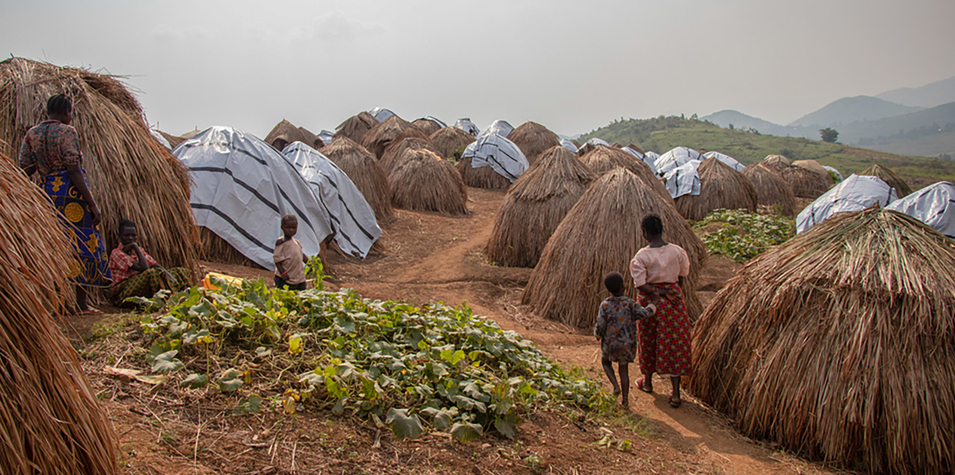
The head of the World Health Organization has appealed for a ceasefire in the Democratic Republic of Congo's Ituri province, where Ebola is rapidly spreading. Director-general Dr. Tedros Adhanom Ghebreyesus' statement said even a temporary truce would allow health workers through and save lives. "I urge you, I implore you: give us the space to help the people who need it most," he said, addressing the armed factions active in the province. Out of nearly a thousand suspected Ebola cases in the DRC and Uganda, over 220 people may have died, with the WHO warning that the outbreak could potentially be much larger.
Meanwhile, a court in Nairobi has temporarily blocked the Kenyan government from allowing the US to set up a quarantine facility in the country for Americans suspected of exposure to the virus. The US is among a number of countries that have imposed Ebola-related travel restrictions and border closures, despite WHO advice to the contrary.
From The New Humanitarian, May 29. Internal links added.


Kenya court lengthens suspension of US Ebola center
A Kenyan court on June 2 lengthened its suspension on building a US Ebola quarantine center near the Laikipia airbase following protests that left two people dead. After reviewing an emergency petition by the Katiba Institute, Justice Patricia Mande Nyaundi postponed the operation of the planned quarantine facility by another three weeks. (Jurist)
Ebola response struggles to slow virus’ spread
The Ebola response in the Democratic Republic of the Congo is failing to match the speed of the virus' spread, health authorities are warning. Tchomia, in the northeastern province of Ituri, is the latest outbreak zone. Countrywide there have been 136 confirmed deaths and 676 confirmed cases, according to the latest grim tally. Conflict-affected Ituri accounts for more than 94% of those cases, but the virus has also emerged in neighbouring North Kivu, South Kivu, and across the border in Uganda. Contact tracing remains a huge hurdle, with only around 12% of the connections of Ebola patients in Ituri reached. Uganda has imposed cross-border movement restrictions—although health experts say such measures could be counterproductive. (TNH)
Kenya protests against US Ebola quarantine facility turn deadly
Kenyan police killed a protester June 9 in Nanyuki, where residents have repeatedly marched against a 50-bed quarantine facility the US is building at Laikipia Air Base for Americans exposed to Ebola in DR Congo, Uganda and South Sudan. Two protesters were killed in similar protests a week ago. A court suspended work on May 28, but US military flights have continued ferrying staff and equipment in defiance of that order. President William Ruto insists Kenya is "doing the right thing," calling refusal to work with the Americans on the facility "inhuman," and citing decades of partnership with Washington. As the latest death unfolded, Trump adviser Massad Boulos was in Oslo thanking Ruto for his "steadfast partnership." (TNH)
Warnings multiply as Ebola cases surge in DRC
The Ebola outbreak in eastern Democratic Republic of the Congo (DRC) could become the "worst ever," senior health officials are warning. There have now been 915 confirmed cases and 234 deaths since the outbreak was declared on May 15—the highest death toll at this stage of an epidemic (although it may have been detected later than others).
Even before the very latest figures, the number of cases had increased 38% in less than a week and experts warn the outbreak is yet to peak. The virus is also spreading geographically in conflict-affected eastern DRC and, at the current rate of infection, the epidemic could last a year. The violence, population displacement, and distrust of authorities in the region makes contact tracing and care all the harder.
Financing is another hurdle. Donors have so far pledged $910 million, including $80 million from African Union member states. But less than 10% of those pledges have turned into cash, according to Africa CDC. The West Africa Ebola outbreak of 2014-2016 is currently the worst on record, killing more than 11,000 people. (TNH)
Ebola cases in DRC surpass 1,000, more than 300 dead
The number of confirmed Ebola cases in the Democratic Republic of the Congo has surpassed 1,000, with more than 300 deaths. The outbreak—the fastest-growing on record and already one of the largest ever documented—is centered on the conflict-affected Ituri region in the northeast. After a slow start, hospitalization and testing capacity are now increasing, and a clinical trial for two therapeutic drugs is due to begin next week. Efforts to contain regional spread are also ramping up, with the UN allocating $8 million to strengthen preparedness in Burundi and South Sudan—though the virus has already crossed borders, with cases reported in Uganda and France this week confirming its first.
Funding appeals are growing sharply, with the Africa Centres for Disease Control and Prevention calling for $1.4 billion—three times an original estimate. Still, as the response to the 2018-2020 DRC Ebola outbreak made clear, pouring money into a conflict setting where there is mistrust of governments and outsiders can create as many problems as it solves. (TNH)
Ebola outbreak reaches Kisangani
Trials of two antiviral drugs to treat the Bundibugyo strain of Ebola began this week as the death toll passed 400 and cases continued to spread, including to the major city of Kisangani. The outbreak is the fastest-growing on record and already one of the largest ever documented. (TNH)
Ebola response in trouble
The Ebola response in eastern Democratic Republic of the Congo is falling short. It's not only struggling with the fastest growing outbreak ever recorded—the true number of cases is also at least 2-4 times the official tally of 2,273 infections and 796 deaths so far, according to modelling by the World Health Organization. Worryingly, more than 80% of new cases are being detected outside known contact lists. Although clinical trials have begun for a vaccine for the current Bundibugyo strain, the virus is not waiting. Troubled Ituri province is the most intense zone of infection, but cases have now appeared in the northeastern provinces of Haut-Uele and Tshopo. Lack of funding is an ongoing problem. UNICEF says it has received only 25% of the financing it needs. Healthcare workers in Ituri—who account for a significant number of Ebola cases—have gone on strike over unpaid wages and inadequate working conditions.
Uganda, meanwhile, may provide an example of how the response can work. Its last remaining Ebola patient—out of 20 original cases—was discharged this week, starting a 42-day countdown to being declared Ebola-free. (TNH)
Calls grow to scale up community-led Ebola response
The Ebola outbreak in the eastern Democratic Republic of the Congo is the fastest-growing on record, with more than 4,000 confirmed cases across five provinces. Experts believe the true number of cases could be much higher, with 80% of deaths outside current contact lists. The United States this week announced plans to provide an additional $242 million, nearly doubling its financial commitment, for a response that has struggled with underfunding.
Meanwhile, CDC Africa and the World Health Organization have called for an urgent scale-up of a "community-led" response, with stronger early detection, contact tracing, access to care, and support for frontline health workers. Although priority is being given to "working with the community" (a recognition of the flawed response to the 2018-2020 outbreak), identifying the right local partners to build trust remains a challenge. Strengthening a neglected national health system is also a vital investment, researchers argue. (TNH)
Grim milestone in Ebola outbreak
The Ebola outbreak has reached another grim milestone—it has killed more than 2,000 people—and it is now on track to be the deadliest on record. With the current response not working, health workers are now planning to go door to door to identify cases in an effort to contain it. Meanwhile, new research has found the strain is genetically distinct from previous Bundibugyo Ebola viruses, suggesting a new animal-to-human transmission vector. (TNH)