

Syria
SDF

Syria: SDF cooperation with Pentagon suspended

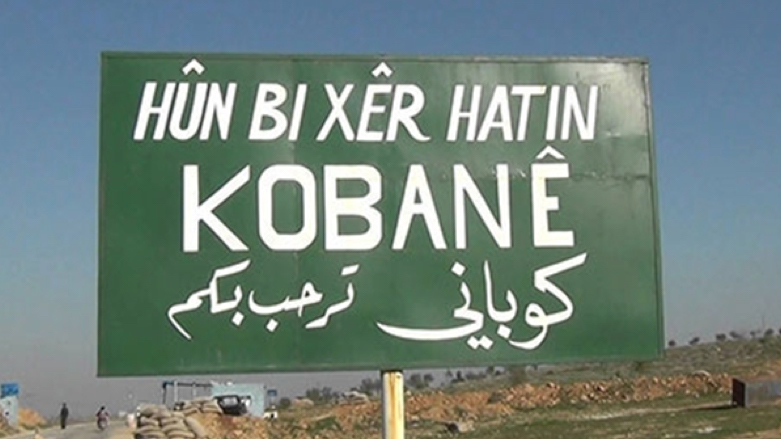
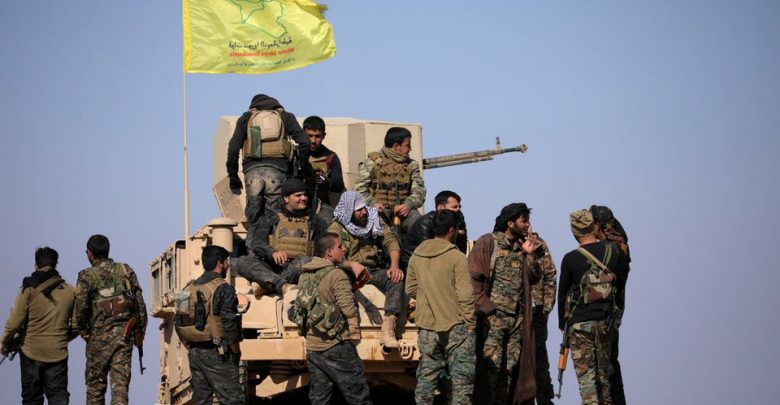
With Turkey preparing a new offensive against the reduced Kurdish autonomous zone in northern Syria’s Rojava region, the Kurdish-led Syrian Democratic Forces (SDF) have announced a halt to military cooperation with the United States. In a statement, the SDF said that “all coordination and joint counterterrorism operations” with the US-led coalition battling ISIS remnants in Syria have been suspended. The move is evidently intended to place pressure on the US to do more to constrain Turkish President Recep Tayyip Erdogan, who reportedly now has his sights on the remaining significant strongholds of the autonomous administration, Tal Rifaat, Manbij and Kobane. The US has some 600 troops embedded with the SDF in Syria. (Photo: SOHR)
Syria
rojava

Turkey bombs Rojava, pressures Sweden

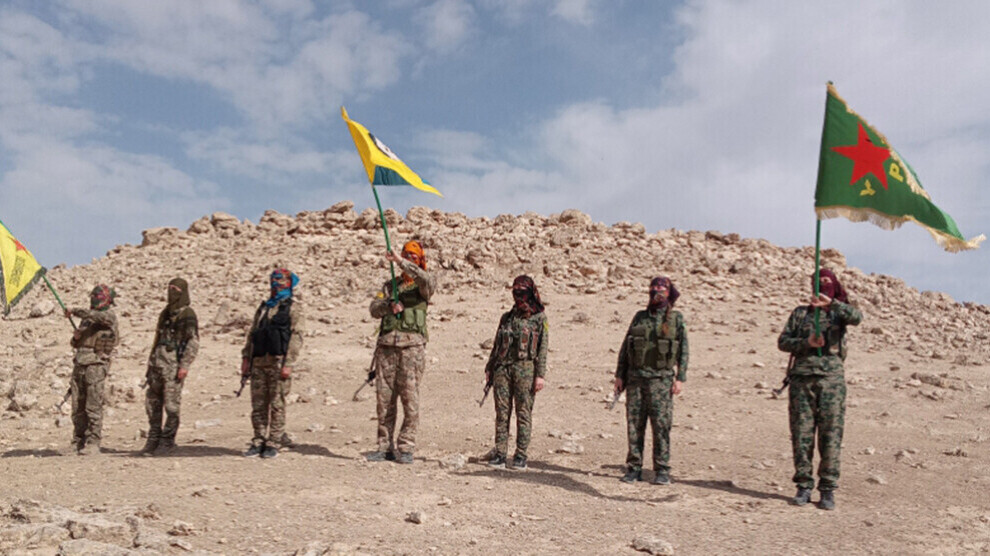
Turkish warplanes carried out air-strikes on several towns within the Kurdish autonomous zone in northern Syria, known as Rojava. Among the towns hit was Kobane, from where Ankara says the order was given for the suicide attack in Istanbul that left six dead. ”Kobane, the city that defeated ISIS, is subjected to bombardment by the aircraft of the Turkish occupation,” tweeted a spokesperson for the Kurdish-led Syrian Democratic Forces (SDF). Both the SDF and affiliated Kurdistan Workers Party (PKK), named by Turkish authorities as behind the Istanbul attack, deny any involvement. Three days after the blast, Sweden acceded to Turkish demands that it stiffen “anti-terrorist” measures as a precondition for joining NATO. The Swedish Riksdag adopted a constitutional amendment facilitating passage of laws to limit freedom of association for those who engage in or support “terrorism.” Turkey has long accused Sweden of giving harbor to exiled PKK sympathizers. (Photo via ANF)

Greater Middle East
Iran

Multiple interventions continue in Syria

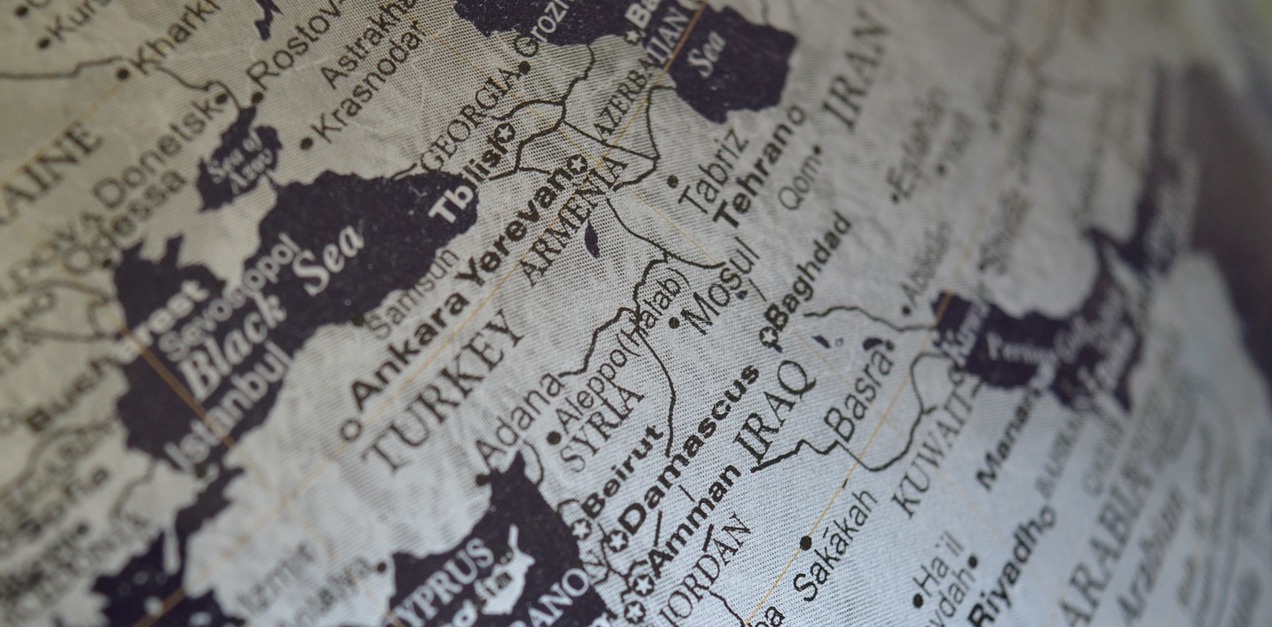
An air raid on the convoy of an Iran-backed militia in eastern Syria’s Deir az-Zor province left 14 presumed fighters dead and made brief headlines. There was immediate speculation that the raid was the latest in the small but growing handful of times over the course of the 10-year Syrian war that the US has bombed forces allied with the Assad regime. The strikes did immediately follow the slaying of a US aid worker in Iraq. However, Israel has for years also carried out sporadic air-strikes on similar targets in Syria, and has likewise come under suspicion in this attack. Getting far less media attention are ongoing air-strikes by Russia and the Assad regime on the remaining pocket of rebel control in Syria’s northwest. Just three days before the Deir az-Zor attack, Russian or regime strikes in Idlib province targeted a displaced persons camp, leaving at least seven noncombatants dead—and winning few international headlines. (Image: Pixabay)

Greater Middle East
Turkey

Turkey: hundreds of refugees deported to Syria

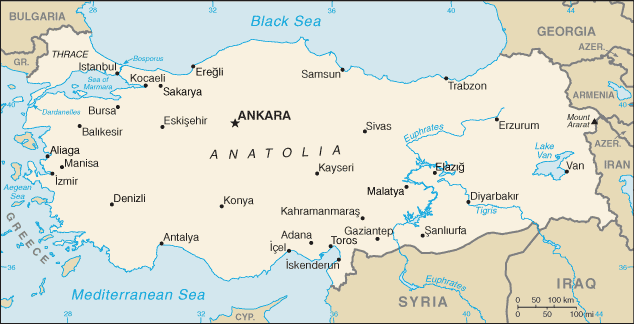
Human Rights Watch reports that Turkish authorities arbitrarily arrested, detained and deported hundreds of Syrian refugees between February and July 2022. The report found that refugees are arrested in their homes, workplaces and on the street, then detained in harsh conditions, and forced over the border to Syria. According to the UN, Turkey hosts the world’s largest refugee population with 3.7 million Syrians under temporary protection. The deportation of refugees is contrary to the prohibition of refoulement under international law—meaning the return of refugees to a place where they would face a real risk of persecution, torture or other ill-treatment, or a threat to life. HRW says the EU must “acknowledge that Turkey does not meet its criteria for a safe third country and suspend its funding of migration detention and border controls until forced deportations cease.” (Map: CIA)

Iraq
Bordeaux

Turkey accused of chemical attacks in Iraqi territory

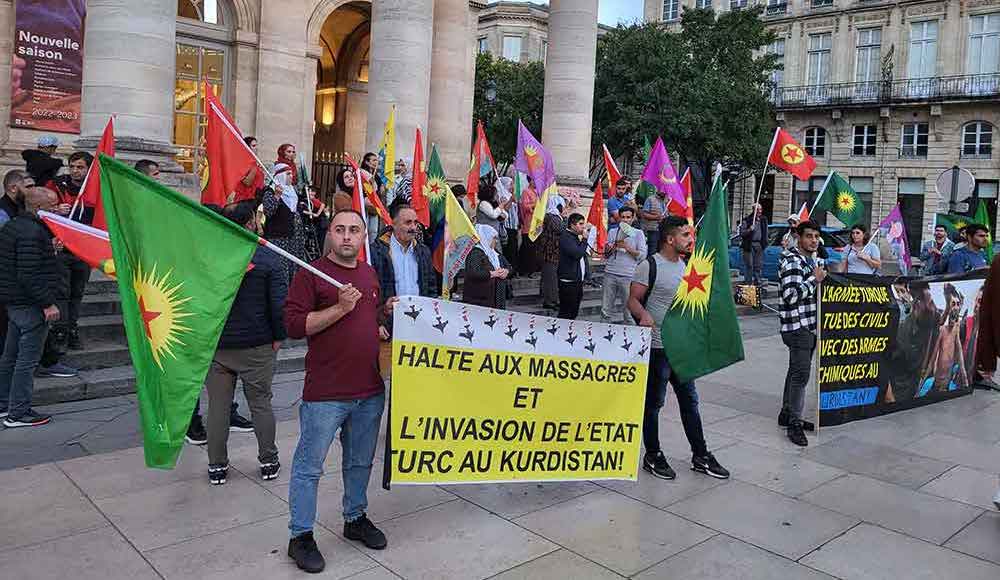
Kurdish communities in cities across Europe held protests demanding action on claims that the Turkish military has repeatedly used chemical weapons in its ongoing air-strikes against strongholds of the Kurdistan Workers Party (PKK) in northern Iraq. The Nobel-winning International Physicians for the Prevention of Nuclear War (IPPNW) said it found evidence of chlorine and other “improvised chemical agents” during an investigative mission to Iraq. The IPPNW urged international bodies including the Organization for the Prohibition of Chemical Weapons (OPCW) to launch formal investigations. The PKK has released the names of 17 guerrillas it says were killed by Turkish chemical attacks in Southern Kurdistan (northern Iraq) over the past year. Kurdish news outlets published a video that has been circulating on social media, showing two PKK fighters apparently suffering under influence of a chemical agent. The Turkish defense ministry dismissed the claims as “completely baseless and untrue.” Iraq’s parliament has established a commission to examine the charges. (Photo: ANF)

Watching the Shadows
internet ban protest

Internet censorship laws advance worldwide

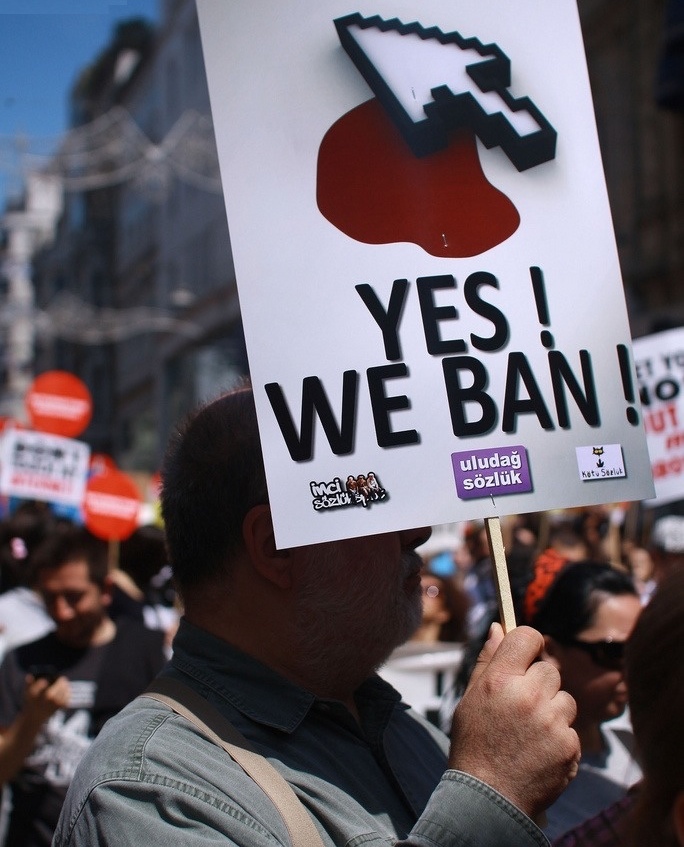
The United Nations Human Rights Office expressed concern over Turkey’s adoption of legal measures “that risk substantially curtailing freedom of expression in the country.” A package of laws passed by the Turkish parliament could see journalists and activists imprisoned for up to three years for spreading “disinformation.” Ugandan President Yoweri Museveni meanwhile signed the Computer Misuse (Amendment) Act into law, which advocacy group Unwanted Witness called a “looming nightmare to the freedom of expression and speech.” Last month, Tunisian authorities promulgated Decree No. 54 on Combating Crimes Related to Information & Communication Systems, imposing five years imprisonment for spreading “fake news.” (Photo of Turkish free-speech demonstration via Wikimedia Commons)

Europe
Smyrna

Erdogan invokes burning of Smyrna

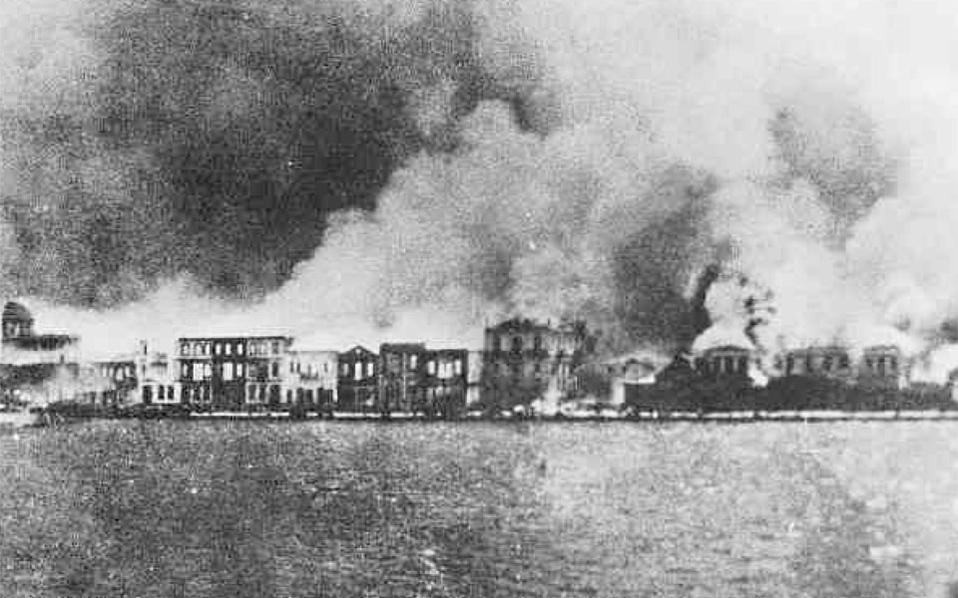
Amid rising tensions between NATO allies Turkey and Greece, Turkish President Recep Tayyip Erdogan explicitly invoked the burning of Smyrna at the end of the Greco-Turkish War. “We have only one word to tell Greece: Do not forget Izmir,” Erdogan warned, using the Turkish name for the coastal city that was the scene of atrocities targeting the substantial Greek populace after it was taken by Turkish forces in September 1922. “We may come suddenly one night,” Erdogan added. The current dispute stems from a treaty signed the year after the attack on Smyrna/Izmir, which gave offshore islands to Greece on condition that they remain unarmed. Ankara charges that Greece is militarizing the islands, in violation of the 1923 Treaty of Lausanne. (Photo via HALC)

Syria
#Wewillnotreconcile

Syria: protests against Turkish ‘reconciliation’ call

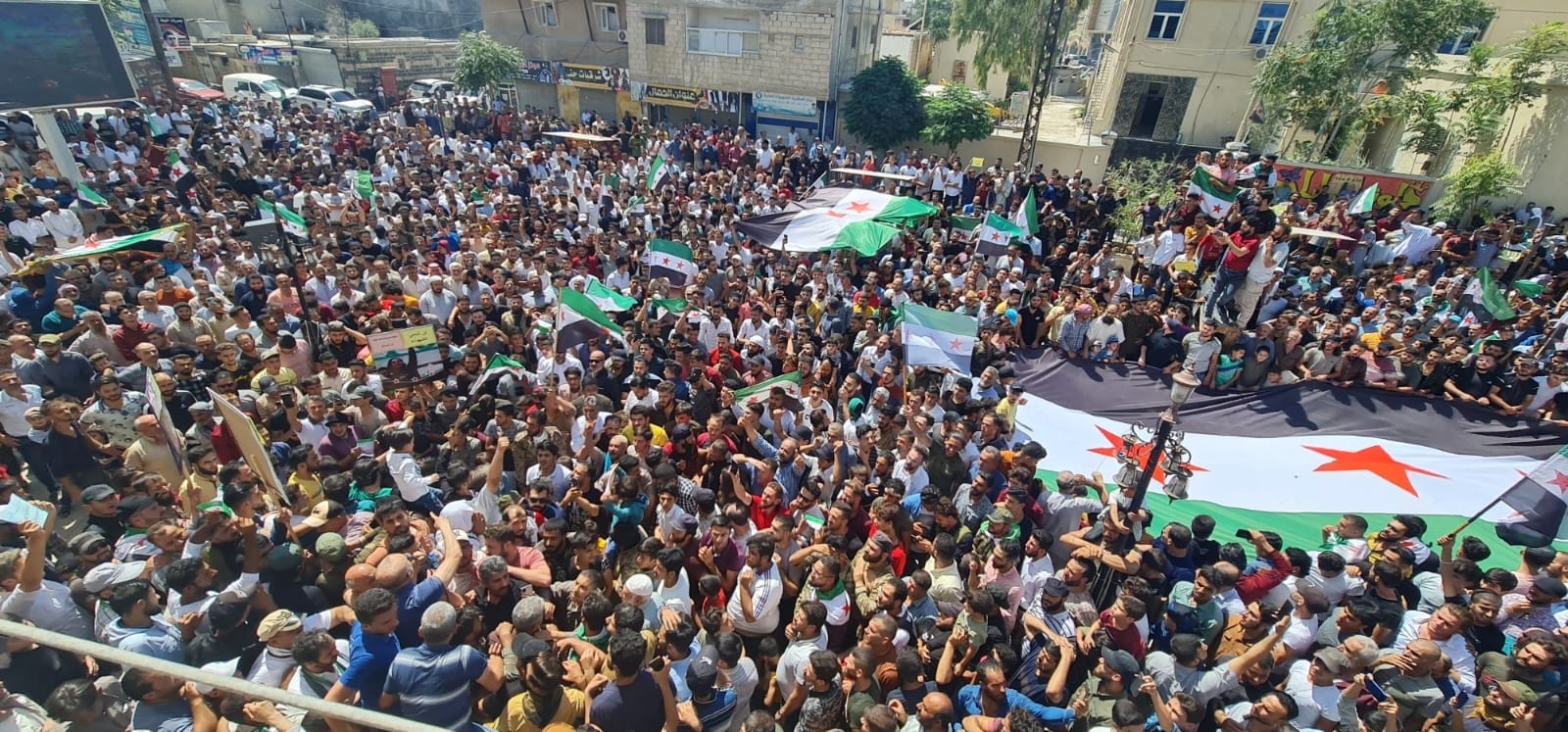
Thousands of local residents held protests across the Turkish occupation zone in northern Syria to oppose calls by Ankara for “reconciliation” with the Bashar Assad dictatorship. Foreign Minister Mevlut Cavusoglu, speaking to diplomats in Ankara the day before, said, “We have to somehow get the opposition and the regime to reconcile in Syria. Otherwise, there will be no lasting peace, we always say this.” Angry protests, under the slogan “We will not reconcile,” were held in the towns of al-Bab, Afrin and Jarablus. In the town of Azaz, a Turkish flag was burned by protesters. (Photo via Syria Direct)

Syria
drone

Turkey escalates drone strikes on Rojava

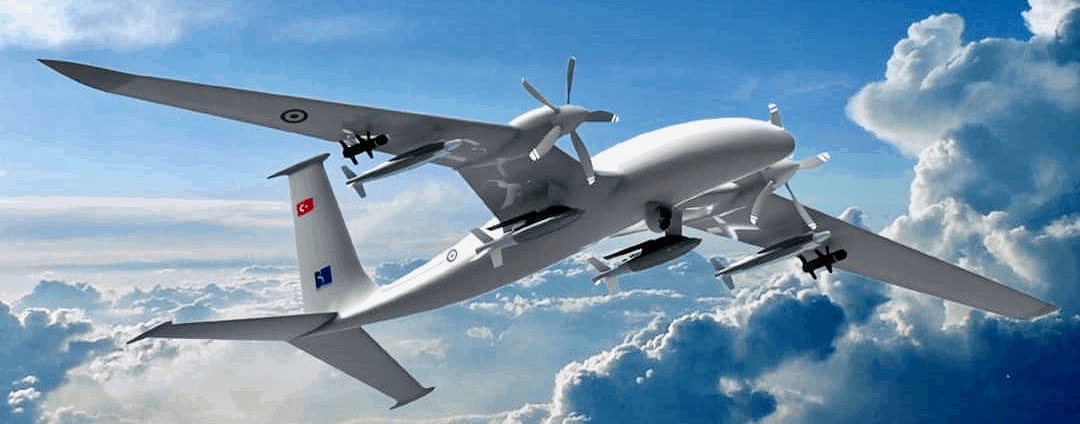
A Turkish drone strike targeted three members of the Women’s Protection Units (YPJ) who were driving in a vehicle near the northeast Syrian town of Qamishli. All three women were killed, and several passers-by injured by shrapnel. The Syrian Observatory of Human Rights (SOHR) said that it was the second drone strike on territory of the Kurdish-led Autonomous Administration in North & East Syria (AANES) in the past 48 hours. The YPJ is the women’s wing of the People’s Protection Units (YPG), the territorial defense force of the autonomous zone, in the region known to the Kurds as Rojava. Turkey has carried out repeated drone strikes within AANES territory this year, amid apparent preparations for a new military incursion into the autonomous zone. (Photo: Wikipedia)

Iraq
Rojava

Podcast: Rojava and Ezidikhan in the Great Game

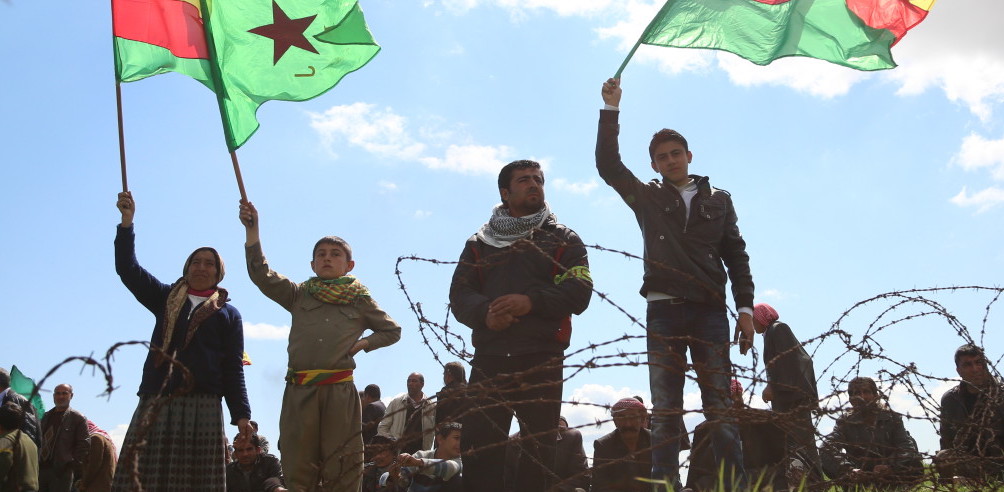
In Episode 127 of the CounterVortex podcast, Bill Weinberg notes that the Kurdish-controlled Syrian city of Kobani, which became a global icon of resistance to ISIS in 2014, is now under threat of Turkish aggression. The Syrian Kurds were betrayed in 2019, when their autonomous zone of Rojava was greatly reduced by Turkey’s first thrust into their territory. Erdogan is now threatening to extinguish it altogether, and incorporate all of Rojava into his “security zone.” There is growing speculation that the US could “green light” this aggression in exchange for Turkey dropping its objections to Sweden and Finland joining NATO. Meanwhile, the Yazidis of northern Iraq, who were subjected to genocide at the hands of ISIS in 2014, now face extermination of their hard-won autonomous zone of Ezidikhan at the hands of Baghdad’s military—acting under pressure from Turkey. Great Power meddling in Syrian and Iraqi Kurdistan alike is pitting the peoples of the region against each other, portending a disastrous Arab-Kurdish ethnic war. How can activists in the West help break this trajectory? Listen on SoundCloud or via Patreon. (Photo: Rojava Solidarity NYC)

North Africa
Libya

Russian mercenaries accused in Libya atrocities

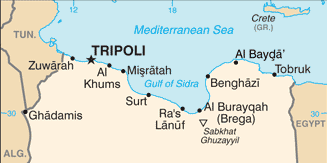
A report to the Security Council by a panel of UN human rights experts finds that foreign fighters and private military companies are responsible for grave abuses in Libya—especially naming Russia’s Wagner Group. The report was classified “confidential,” but a copy was leaked to the Associated Press. It finds that both Turkish-backed militias loyal to the Tripoli-based Government of National Unity (GNA) and the Wagner Group, apparently contracted by eastern warlord Khalifa Haftar, have employed mercenaries who were veterans of the war in Syria. GNA-aligned militias are implicated in abuses of migrants, who have been “regularly subjected to acts of slavery, rape and torture.” The Wager Group is accused of planting unmarked anti-personnel mines on the southern periphery of Tripoli, when the city was besieged by Haftar’s forces from April 2019 to October 2020. (Map: Perry-Castañeda Library)

Syria
Kobane

Syria: Turkish drones target Kobani

Two drone strikes targeted the Kurdish city of Kobani in northern Syria, after weeks of intermittent shelling of villages in the surrounding countryside. The attacks are apparently being launched from the area of Jarabulus immediately to the west, which is held by Turkish occupation forces and allied militias. According to the Rojava Information Center (RIC), some 35 drone attacks on the Kobani area have already “killed at least 13 people & injured 34 in 2022 alone.” Kobani became iconic in 2014, when the city’s Kurdish defenders waged a heroic resistance against ISIS. But since the Turkish invasion of the Kurdish autonomous zone, known as Rojava, in late 2019, the city has been a precarious enclave of remnant Kurdish control, in an uneasy alliance with Assad regime forces. (Photo: Kurdistan24)