China detains 81 Tibetans in “strike hard” campaign
Chinese state media report that 81 Tibetans have been detained for suspected criminal activity amid a security sweep. Two are being held for having “reactionary music” on their mobile phones.
Thousands of campesinos from across Mexico blocked central avenues of the capital, while others blocked the Córdova-Las Américas bridge that links the border city of Juárez with El Paso, TX.
Illegal gold-miners shot dead a Yekuana indigenous leader and injured his son last week in the Brazilian state of Roraima. The two men had refused to take the miners up dangerous rapids into Yanomami country.
Turkey's TRT World runs a report recalling the Chontal Maya blockades of the Pemex oil installations in Mexico's southern state of Tabasco in 1996, to protest the pollution of their lands and waters. This is a struggle that is still being waged today by the Chontal of Tabasco, but back in 1996 the figurehead of the movement was Andrés Manuel López Obrador (known as AMLO)—now Mexico's left-populist president-elect. The report asks if AMLO as president will remain true to the indigenous struggle that first put him on Mexico's political map. In a segment exploring this question, TRT World speaks with Melissa Ortiz Massó of the Business and Human Rights Resource Centre and CounterVortex editor Bill Weinberg.
The Constitutional Court of Ecuador issued a long-awaited ruling in favor of those affected by the transnational oil company Chevron, which operated through its subsidiary Texaco in Ecuador between 1964 and 1990. Chevron will now have to pay $9.5 billion for the repair and remediation of social and environmental damage that, according to audits and expert reports, were a result of oil company operations in the Amazonian provinces of Sucumbíos and Orellana. The court found that Chevron deliberately dumped billions of gallons of toxic oil waste on indigenous lands in the Amazon rainforest. (Photo via Mongabay)
A group of UN human rights experts, including the special rapporteurs on freedom of assembly, freedom of expression and extrajudicial exections, issued a statement urging the government of Nicaragua to "stop the repression" following 100 days of unrest in which at least 317 have been killed and 1,830 injured. "Reports indicate that there has been an increase in targeted repression, criminalization and alleged arbitrary detention, which is creating an atmosphere of fear," the statement said. "We are appalled that many human rights defenders, journalists and other opposition voices are being criminalized and accused of unfounded and overly punitive charges such as 'terrorism'." (Poto via Noticiias ONU)

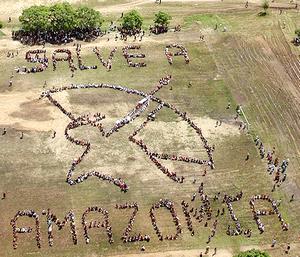
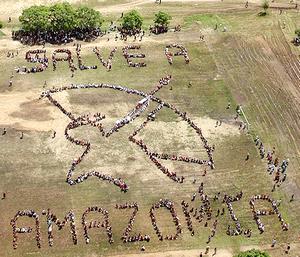
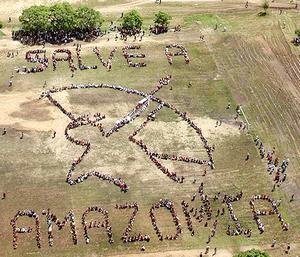
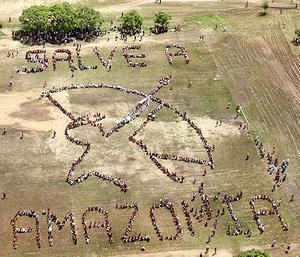
Indigenous people from across Latin America led more than 1,000 protesters, gathered in Belem, Brazil, for the World Social Forum, in formation of a human banner Jan. 27. Around the giant outline of a warrior taking aim with a bow… Read moreWorld Social Forum protests Amazon destruction
More than 250 farmers with tractors and work trucks blockaded the entrances to Chihuahua state office buildings to protest the high cost of diesel fuel and lack of opportunity in Mexico’s agricultural sector.
The “Juárez Citizens Command” issued a manifesto setting a deadline for authorities to restore order in the violence-plagued border city before it will begin killing a criminal every day.
Peru’s Energy Ministry announced that Anglo-French Perenco’s Amazon oil pipeline project needs to be “reevaluated” due to falling prices. The project is slated for an area where uncontacted tribes are said to exist.
UN Secretary General Ban Ki-moon hailed the “peaceful climate” in Bolivia during the constitutional referendum—but Facebook removed a group that advocated assassination of President Evo Morales.